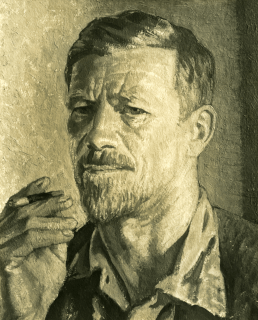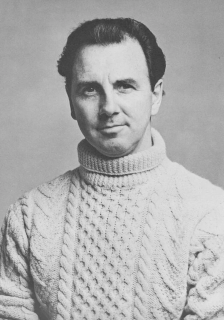
Flanagan is born to Patrick and Elizabeth (née Mulligan) Flanagan, who are strongly nationalist and republican, and support the Republican Anti-Treaty during the Irish Civil War, both serving as Lord Mayor of Sligo. Her paternal family, originally from County Fermanagh, are driven out by anti‐Catholicpogroms and resettle in Sligo, where her parents manage a retail business. She is good friends with fellow Irish actresses Joan O’Hara and Paddy Croft. She spends much of the early 1950s touring with Anew McMaster, where she meets Harold Pinter at the Gate’s Pinter Festival.
In 1997, Flanagan wins the Barclays Theatre Awards for Best Actress in a Supporting Role for her role in Jennifer Johnston‘s The Desert Lullaby: A Play in Two Acts, at the Lyric Theatre, Belfast. The Barclays Theatre Awards are for outstanding regional theatre (including opera and dance) in the United Kingdom.
A resident of Glen Rock, New Jersey, Flanagan dies at The Valley Hospital in Ridgewood, New Jersey, on June 28, 2003, one day before her 78th birthday, of heart failure following a battle with lung cancer. She is survived by her husband, George Vogel (whom she married in 1958), a sister, Maura McNally, and her daughters Melissa Brown and Jane Holtzen.
Adebari arrives in Dublin with his wife and two children in 2000. After he converts from Islam to Christianity, he flees Nigeria in 2000, and makes a claim for asylum on the grounds of religious persecution. His application is rejected because of a lack of evidence that he had personally suffered persecution. He does however gain automatic residency when his wife gives birth to a son in Ireland shortly after their arrival.
Adebari and his family settle in County Laois. He completes his master’s degree in intercultural studies at Dublin City University (DCU) and sets up a firm called Optimum Point Consultancy.
In 2004, Adebari is elected as a town councilor in local elections. On June 27, 2007, at the age of 43, he is elected mayor of the 9-member Portlaoise Town Council, by a vote of six to three and with support from Fine Gael, Sinn Féin and an Independent councilor. At a meeting attended by officials from the Nigerian, South African, and the United States embassies, the new mayor is quoted as saying his election is proof that “Ireland is not just a country of a thousand welcomes, but it is a country of equal opportunity.” In the 2009 local elections he is re-elected to the town council and also to Laois County Council for the Portlaoise electoral area.
In 2007, Adebari denies claims that he was a train operator in London who worked out of the Queen’s Park station on the Bakerloo line. Multiple London Underground employees, including Paddy Clarke, a retired tube driver from County Louth, state that Adebari worked as a train driver in London during the late 1990s before moving to Ireland. Clarke states, “at the very least fifty drivers and six or more managers will remember him. His photograph and signature are on file with London Underground’s personnel office which were used in the issue of his free travel-pass and identity card.” Adebari asserts he traveled to Ireland directly from Nigeria via Paris, and never worked or lived in London at any time.
Kinane first comes to prominence as the stable jockey to Liam Browne, winning the 1982 Irish 2000 Guineas and St. James’s Palace Stakes at Ascot Racecourse, both on Dara Monarch, and finishing second in the 1983 Epsom Derby on Carlingford Castle, before moving to Dermot Weld. He is later retained by John Magnier and Aidan O’Brien as stable jockey at Ballydoyle for many years prior to joining leading Irish flat trainer John Oxx. He becomes one of the world’s elite jockeys and excels on the big occasions at Longchamp Racecourse and Epsom Downs Racecourse and is regarded as one of the leading professionals of his sport.
Kinane retires at the end of 2009, a season which is highlighted by his association with Sea The Stars, regarded as one of the greatest racehorses of all time. He breeds the 2007 Epsom Derby winner Authorized.
Kinane is current working for Hong Kong Jockey Club in Europe to select horses suitable for running in Hong Kong. Those horses are resold by Hong Kong Jockey Club in an auction.
Boycott is born on March 12, 1832, at Burgh St. Peter, Norfolk, England, eldest surviving son of William Boycatt (1798–1877), rector of Wheatacrebury, Norfolk, and Elizabeth Georgiana Boycatt (née Beevor). The family name is changed to Boycott by his father in 1862. Educated at a boarding school in Blackheath, London, and the Royal Military Academy, Woolwich, he is commissioned ensign in the 39th (Dorsetshire) Regiment of Foot on February 15, 1850, and serves briefly in Ireland. He sells his commission on December 17, 1852, having attained the rank of captain, marries Annie Dunne of Queen’s County (County Laois) in 1852, and leases a farm in south County Tipperary.
In 1855, Boycott leaves for Achill Island, County Mayo, where he sub-leases 2,000 acres and acts as land agent for a friend, Murray McGregor Blacker, a local magistrate. He settles initially near Keem Strand but after some years builds a fine house near Dooagh overlooking Clew Bay. He clashes with local landowners and agents and is regularly involved in litigation. Twice summonsed unsuccessfully for assault (1856, 1859), he is involved (1859–60) in a bitter dispute with a land agent over salvage rights for shipwrecks, one of the few lucrative activities on the island. Achill’s remoteness and the difficulties of wresting a living from its harsh environment adds a roughness to the island’s social relations and probably aggravates Boycott’s tendency to high-handedness.
In 1873, Boycott inherits money and moves to mainland County Mayo, leasing Lough Mask House near Ballinrobe and its surrounding 300 acres. He also becomes agent for John Crichton, 3rd Earl Erne‘s neighbouring estate of 1,500 acres, home to thirty-eight tenant farmers paying rents of £500 a year, of which he receives 10 per cent as agent. He also serves as a magistrate and is unpopular because of his brusque and authoritarian manner, and for denying locals such traditional indulgences as collecting wood from the Lough Mask estate or taking short cuts across his farm. In April 1879, he purchases the 95-acre Kildarra estate between Claremorris and Ballinlough and an adjoining wood for £1,125, taking out a mortgage of £600 which stretches his finances.
Boycott is no brutal tyrant, but he is aloof, stubborn, and pugnacious, and believes that the Irish peasantry is prone to idleness and require firm handling. Such qualities and beliefs are unremarkable enough, but in the peculiar circumstances of the land war in County Mayo, they are enough to catapult this rather ordinary man to worldwide notoriety.
In autumn 1879, concerted land agitation begins in County Mayo, and on August 1, 1879, Boycott receives a notice threatening his life unless he reduces rents. He ignores it and evicts three tenants, which embitter relations on the estate. Lough Mask House is placed under Royal Irish Constabulary (RIC) surveillance beginning in November 1879. In August 1880, his farm labourers, encouraged by the Irish National Land League, strike successfully for a wage increase from 7s. –11s. to 9s. –15s. Since the harvest is poor, Lord Erne allows a 10 per cent rent abatement. But in September 1880, when Boycott demands the rent, most tenants seek a 25 per cent abatement. Lord Erne refuses, and on September 22, Boycott attempts to serve processes against eleven defaulters. Servers and police are attacked by an angry crowd of local women and forced to take refuge in Boycott’s house. Almost immediately he is subjected to the ostracism against land grabbers advocated by Charles Stewart Parnell in his September 19 speech at Ennis, County Clare. This weapon proves as devastating against an English land agent as an Irish land-grabber. His servants leave him, labourers refuse to work his land, his walls and fences are destroyed, and local traders refuse to do business with him. He is jeered on the roads, is hissed and hustled by hostile crowds in Ballinrobe, and requires police protection.
The campaign against Boycott is largely orchestrated by Fr. John O’Malley, a local parish priest and president of the Neale branch of the Irish National Land League. It is probably O’Malley who coins the term “boycott” as an alternative to the word “ostracise,” which he believes would mean little to the local peasantry. Propagated by O’Malley’s friend, the American journalist, James Redpath, it is adopted by advocates and opponents alike.
On October 22, 1880, before his story breaks on the world, Boycott gives evidence of his treatment to the Bessborough Commission in Galway. He publicises his plight in an October 18, 1880, letter to The Times, and in a long interview with The Daily News on October 24, which is reprinted in Irish unionist newspapers and arouses considerable sympathy for him. Although he rarely uses his former military rank, he becomes universally known as “Captain Boycott,” since it suits both sides to portray him as someone of social standing. Letters of support appear in unionist papers and the Belfast News Letter sets up a “Boycott Relief Fund” and proposes a relief expedition, portraying Boycott as a peaceable English gentleman unjustly subjected to intimidation.
The prospect of hundreds of armed loyalists descending on County Mayo alarms the government, who announced on November 8 that they will provide protection for a small group of labourers to harvest Boycott’s crops. On November 12, fifty-seven loyalists from counties Cavan and Monaghan, “the Boycott Relief Expedition,” arrive at Lough Mask with an escort of almost a thousand troops. After harvesting Boycott’s crops, they leave on November 26. The entire operation costs £10,000 – about thirty times the value of the crops. Although the expedition passes off largely without incident, it focuses international media attention on the affair and establishes the word “boycott” in English and several other languages as a standard term for communal ostracism.
On November 27, Boycott and his wife go to the Hammam hotel, Dublin, where he receives death threats. On December 1, he travels to London and then to the United States (March–May 1881) to see Murray McGregor Blacker, the friend from his time on Achill Island who has since settled in Virginia. In an interview with the New York Herald, he criticises the liberal government’s weakness toward the Land League and claims that the Irish land question is an intractable problem that can only be solved in the long term by emigration and industrialisation.
Boycott returns to Lough Mask on September 19, 1881, and at an auction in Westport is mobbed and burned in effigy. This, however, is the last outburst of hostility against him, and as the land agitation wanes so does his unpopularity. Although unsuccessful in efforts to win compensation from the government, he receives a public subscription of £2,000. He remains in County Mayo as Lord Erne’s agent until February 1886, when he obtains the post of land agent for Sir Hugh Adair in Flixton, Suffolk, but he keeps the small Kildarra estate, where he continues to holiday. On December 12, 1888, he gives evidence of his treatment to the parliamentary commission on “Parnellism and crime.”
After suffering from ill-health for some years, Boycott dies at Flixton on June 19, 1897, and is buried in the churchyard of Burgh St. Peter. A British-made film, Captain Boycott (1947), stars Cecil Parker in the title role.
Edward Maturin, novelist and poet, is born in Dublin on June 18, 1812. He is naturalised as an American and works as a professor of Greek. His fiction and poetry generally deal with historical themes, while his work as a Gothic novelist often has an Irish background.
The Maturin family is descended from a Huguenot clergyman who fled to Ireland after the revocation of the Edict of Nantes. Edward’s father, Reverend Charles Robert Maturin, is curate of St. Peter’s Church, Dublin, and well known as a preacher, as well as a poet and Gothic novelist. Born the second son, Edward enters Trinity College Dublin at the age of fifteen and graduates at twenty. Immediately afterward he emigrates to the United States in 1832 with letters of introduction from the poet Thomas Moore and other Irish writers. Having studied law under Charles O’Conor, he is called to the bar but later becomes professor of Greek at South Carolina College and applies for American naturalisation in 1837. He marries Harriet Lord Gailiard in 1842 and has three children by her. In 1848, he returns to New York, where for upward of thirty years he fills professorships in Greek, Latin and belles-lettres. His mastery of Greek is such that he is selected in 1850 by the American Bible Union as one of their revisers and works on the gospel of St. Mark.
All of Maturin’s work is written in the United States and for the most part concentrates on historical themes or Irish fantasy. His first book contains the interconnected stories of Sejanus and Other Roman Tales (1839) and is dedicated to Washington Irving. They concern incidents during the reigns of the Roman emperors from Tiberius to Nero. Self-consciously literary, the dialogue is written in an imitation of Shakespearean English. This is followed by the two-volume romance, Montezuma, the Last of the Aztecs (1845) and then two works on Spanish themes. The long series of “Spanish Ballads” that originally appears in The United States Magazine and Democratic Review during 1845 are eventually collected with his other poems in Lyrics of Spain and Erin (1850). They are followed by the romance Benjamin, the Jew of Grenada (1847), a story of the fall of the Moslem empire in Spain.
After his move to New York, Maturin’s prose work becomes more Gothic. It includes The Irish Chieftain, or The Isles of Life and Death (1848) which is later to be dismissed as “a wild story without foundation in history … melodramatic, sentimental, extravagant,” and the two-volume Eva, or the Isles of Life and Death (1848). His later Bianca, a tale of Erin and Italy (1852) is set in more modern times but is equally condemned as “an outlandish story, full of murders, characters – mostly illegitimate – with terrible secrets, a duel between brothers, banshees, mysterious lady-prophetesses, fee-faw-fum.” A final offering is his four-act play Viola (1858).
Maturin dies in New York City on May 25, 1881.
(Pictured: “Montezuma: The Last of the Aztecs” by Edward Maturin, Paine & Burgess, New York, 1845)
Patterson is born on October 5, 1938, in Clonmel, County Tipperary. As a boy Patterson performs with his local parish choir and is involved in maintaining the annual tradition of singing with the “Wrenboys.” He sings in the local St. Mary’s Choral Society and at a production of The Pirates of Penzance performed with both his parents. His interests extend beyond music and as a boy he represents Marlfield GAAhurling club, plays tennis at Hillview and golf at the Mountain Road course. He quits school at an early stage to work in the printing business of his mother’s family. He moves to Dublin in 1961 to enroll at the National Academy of Theatre and Allied Arts where he studies acting while at the same time receiving vocal training from Hans Waldemar Rosen. In 1964, he enters the Feis Ceoil, a nationwide music competition, in which he wins several sections including oratorio, lieder and the German Gold Cup.
Patterson gives classical recitals around Ireland and wins scholarships to study in London, Paris and in the Netherlands. While in Paris, he signs a contract with Philips Records and releases his first record, My Dear Native Land. He works with conductors and some of the most prestigious orchestras in Europe including the London Symphony Orchestra and Orchestre de Paris. He also gains a reputation as a singer of Handel, Mozart, and Bach oratorios and German, Italian and French song. He has a long-running programme on RTÉ titled For Your Pleasure.
In the early 1980s Patterson moves to the United States, making his home in rural Westchester County, New York. A resurgence of interest in Irish culture encourages him to turn towards a more traditional Irish repertoire. He adds hymns, ballads, and traditional as well as more popular tunes to his catalogue. In March 1988, he is featured host in a Saint Patrick’s Day celebration of music and dance at New York City’s famous Radio City Music Hall. He also gives an outdoor performance before an audience of 60,000 on the steps of the United States Capitol in Washington, D.C. with the National Symphony Orchestra.
Patterson is equally at home in more intimate settings. His singing in the role of the Evangelist in Bach’s St. John Passion is given fine reviews. Further recordings follow, of Beethoven arrangements, Irish songs, Berlioz songs, Purcell songs and others, all on the Philips label.
Patterson performs sold-out concerts from London’s Royal Albert Hall to New York’s Carnegie Hall, and with his family he presents two concerts at the White House, for presidents Ronald Reagan in 1982 and Bill Clinton in 1995. He records over thirty albums in six languages, wins silver, gold and platinum discs and is the first Irish singer to host his own show in Radio City Music Hall in New York.
Rising to greater prominence with the new popularity of Celtic music in the 1990s, Patterson sees many of his past recordings reissued for American audiences, and in 1998 he stars in the PBS special Ireland in Song. His last album outsells Pavarotti.
In 1999, Patterson learns he has a brain tumor. He has several operations in the following year and his condition appears to stabilise. He is diagnosed with a recurrence of his illness on May 7, 2000. He briefly recuperates and resumes performing. His last performance is on June 4, 2000, at Regis College in the Boston suburb of Weston, Massachusetts. Shortly thereafter he is admitted to the Memorial Sloan Kettering Cancer Center in New York where he lapses into a coma and dies on June 10, 2000, at the age of 61.
O’Connor is born on June 7, 1874, at Worcester, Massachusetts, the eldest of three sons and two daughters of Andrew O’Connor, a stonecutter from Lanarkshire, Scotland, who becomes a professional sculptor, and Marie Anne O’Connor (née McFadden), of County Antrim. Educated in Worcester public schools, at the age of 14 he becomes apprenticed to his father, helping him to design monuments for cemeteries. He is employed in the early 1890s on sculptural work for the World’s Columbian Exposition (Chicago World’s Fair), being active in the studio of William Ordway Partridge, and assisting Daniel Chester French on his colossal Statue of the Republic, a landmark of the 1893 Columbian exposition.
Moving to London (1894–98), O’Connor works on bas-reliefs in the studio of the painter John Singer Sargent, who uses him as a model for his mural Frieze of Prophets for the Boston Public Library. His first independent work, Sea Dreams, a relief of a head, is exhibited at the Royal Academy of Arts in 1896. Returning to the United States (1898–1903), he becomes a studio assistant of French, through whom he receives his first public commission, for the Vanderbilt Memorial Doors for St. Bartholomew’s Episcopal Church, Manhattan, New York, a project completed in 1902 to wide critical acclaim. He also executes the tympanum and lateral friezes.
Around 1900, O’Connor marries an artist’s model named Nora, by whom he has a daughter. In 1902, he hires as studio model Jessie Phoebe Brown from New Jersey and of County Down parentage. The following year he elopes with her to Paris, where they marry and have four sons, the youngest of whom, Patrick O’Connor, becomes an artist and gallery curator. Jessie continues for many years as his primary model, sitting for the heads of both female and male figures, O’Connor coarsening the features for the latter.
During his years in Paris (1903–14), O’Connor is influenced by the work of Auguste Rodin, whom he befriends. Among his pupils in Paris is the American sculptor and heiress Gloria Vanderbilt Whitney. He continues to fulfil numerous commissions for funerary and public monuments in the United States, an example of the former being the Recuillement in Sleepy Hollow Cemetery, near Tarrytown, New York. From 1906 he exhibits annually at the Salon in Paris, where he is the first foreigner to win a second-class medal, for his bronze statue of Gen. Henry Lawton. Included in his only exhibition at the Royal Hibernian Academy (1907) is a bronze relief of the prophet Nehemiah adapted from a panel of the Vanderbilt doors. The relief is subsequently included in his one-man show at the Galerie Hébrard, Paris in 1909.
In 1909, O’Connor wins a competition open to sculptors of Irish descent to execute a monument to Commodore John Barry, the County Wexford-born “father of the American navy,” for Washington, D.C. His design includes a frieze depicting events in Irish history, flanked by a group of three nude Irish emigrants entitled Exile from Ireland, and another group representing the Genius of Ireland, which includes a female figure of the “Motherland.” Probably owing to opposition from the Barry family to the depiction of their ancestor as a rough-and-ready sailor, the commission is not completed. His marble statue of Gen. Lew Wallace (author of Ben-Hur: A Tale of the Christ), a plaster of which is exhibited at the Salon in Paris in 1909, is placed by the state of Indiana in the National Statuary Hall in the United States Capitol, Washington, D.C. Another marble, Peace by Justice, is commissioned as a gift from the United States to the Peace Palace in The Hague in 1913.
Returning to Paris in the mid-1920s, O’Connor becomes the first foreigner to win a gold medal at the Salon des Artistes in 1928, for the marble sculpture Tristan and Iseult, now held in the Brooklyn Museum, New York. The French government makes him a Chevalier of the National Order of the Legion of Honour in 1929. In 1926 he had exhibited a plaster group, Monument aux morts de la Grande Guerre, at the Salon in Paris. The sculpture is requested in 1932 by the people of Dún Laoghaire, County Dublin, as a memorial to Christ the King, O’Connor obligingly altering the interpretation of his iconography. Imposed on a “Tree of life” are three figures of Christ, representing in turn “Desolation,” “Consolation” and “Triumph.” Cast in bronze, throughout World War II the statue remains hidden in Paris to avoid its being melted down for the valuable metal. Transported to Dún Laoghaire in 1949, due to clerical opposition to its unconventional iconography, it is not at first erected, but for years lay on its side in a garden in Rochestown Avenue until its eventual unveiling in 1978 as Triple Cross in Haigh Terrace, where it stands in Moran Park. His other chief work in Ireland is a bronze statue of Daniel O’Connell in the Bank of Ireland, College Green, Dublin. Inspired by Rodin’s famous Monument to Balzac, the work is executed at his studio in a converted stable at Leixlip Castle, County Kildare in 1931–32.
During the 1930s, O’Connor lives and works in London and Ireland, where he has residences at Glencullen House, County Wicklow, and 77 Merrion Square, Dublin. He dies at the latter address on June 9, 1941, and is buried in Glasnevin Cemetery. His own bronze relief, Le feu sacré, marks the grave. A portrait painting, executed by his son Patrick in 1940, is in Dublin City Gallery The Hugh Lane, which also holds twenty-six sculptures presented by O’Connor late in his life, and posthumously by his family. The collection includes a marble self-portrait bust of 1940, a bronze of the Lafayette cast by the gallery in 1984 from a reduced plaster model presented by the artist, and a bronze group entitled The Victim, on view in Merrion Square Park, from an uncommissioned and uncompleted war memorial conceived by O’Connor under the general title Le Débarquement. The National Gallery of Ireland has the Desolation maquette for the Triple Cross. A centenary exhibition of his work is held at Trinity College Dublin in 1974. His widow dies in Dublin in 1974.
(From: “O’Connor, Andrew” by Lawrence William White and Carmel Doyle, Dictionary of Irish Biography, http://www.dib.ie, October 2009)
Born John Gerard Smyth, upon joining the Norbertine Roman Catholic religious order in 1945, he changes his name to Brendan. The Norbertines, also known as the “Premonstratensians,” are aware of Smyth’s crimes as early as the late 1970s, yet they do not report him to either the Garda Síochána or the Royal Ulster Constabulary (RUC). He is moved from parish to parish and between dioceses and countries whenever allegations are made. In some cases, the order does not inform the diocesan bishop that Smyth has a history of sexual abuse and should be kept away from children. He abuses children in parishes in Rhode Island and North Dakota and at one time works in Boston and is suspected of similar actions while on pastoral work in Wales and Italy. Norbertine Father Bruno Mulvihill makes several attempts to alert church authorities about the abuse committed by Smyth.
Smyth’s first conviction follows the reporting to police of his abuse of four siblings in Belfast’s Falls Road. After his arrest in 1991, he flees to the Republic of Ireland, where he spends the next three years on the run, staying mostly at Kilnacrott Abbey. This leads to the collapse of the Fianna Fáil–Labour Party coalition government in December 1994 when the poor handling of an extradition request from the RUC by the Irish Attorney General‘s office leads to a further delay of Smyth’s trial. An award-winning UTVCounterpoint programme on the scandal by journalist Chris Moore, followed by a book, accuses the head of the Norbertines and the Archbishop of Armagh of mishandling the case, and the Norbertines of negligence and a failure to tell others of Smyth’s crimes, enabling him to sexually abuse large numbers of children for 40 years.
Smyth dies in prison of a heart attack at the age of 70 on August 22, 1997, after collapsing in the exercise yard, one month into a 12-year prison sentence. The Norbertines hold his funeral before dawn and cover his grave with concrete to deter vandalism. He is buried in Kilnacrott Abbey, which is later put up for sale with 44 acres of land, including the grave.
On October 27, 2005, the title “Reverend” is removed from his gravestone following a campaign by one of Smyth’s victims.
Reviewers of the case differ as to whether there is a deliberate plot to conceal Smyth’s behaviour, incompetence by his superiors at Kilnacrott Abbey, or some combination of factors. Cahal Daly, both as Bishop of Down and Connor, a diocese where some of the abuse takes place, and later as Cardinal Archbishop of Armagh, is recorded as having been privately furious at the Norbertine “incompetence.” Smyth’s activities are investigated by the Northern Ireland Historical Institutional Abuse Inquiry, finding that: “…despite knowing his history of abusing children, the Norbertine religious order moved Smyth to different dioceses where he abused more children…”
In 2010, Daly’s successor as Roman Catholic Archbishop of Armagh, Cardinal Seán Brady, faces “huge pressure to resign” after he admits that in 1975, he witnessed two teenage boys sign oaths of silence after testifying in a Church inquiry against Smyth. Survivor groups see this as evidence of collusion, but Brady says he “did not have the authority” to turn Smyth in. On March 17, 2010, the Deputy First Minister of Northern Ireland, Martin McGuinness, calls for Brady to resign.
In 2013, some of Smyth’s alleged Rhode Island victims between 1965 and 1968, both male and female, call for the Diocese of Providence to investigate Smyth. As of 2019, he is among those listed by the Diocese of Providence as being “credibly accused” of committing sex abuse.
Module 6 of the 2014-2016 Northern Ireland Historical Institutional Abuse Inquiry is dedicated to Smyth’s crimes in Northern Ireland.
A two-part dramatisation of the Smyth case, Brendan Smyth: Betrayal of Trust, is broadcast by the BBC on March 13, 2011, with Ian Beattie in the title role and Richard Dormer as Chris Moore.
(Pictured: Father Brendan Smyth, Our Lady of Mercy, East Greenwich, Rhode Island, USA, c. 1965)
O’Faolain does not begin school until she is eight years old as her mother, Irish writer and teacher Eileen Gould, has little time for nuns. Following her schooling, she completes an arts degree at University College Dublin (UCD) and then further studies at the Sapienza University of Rome and the Sorbonne in Paris. A formidable student and strikingly beautiful, she makes a strong impression on those who meet her.
In search of love, literature and freedom from 1950s Ireland, the young O’Faolain remains abroad working variously as a translator, language teacher, editor and writer in London. She makes lifelong friends who speak highly of her generosity, loyalty and kindness. As well as maintaining a strong interest in politics throughout her life, she attains a black belt in karate and attends karate classes until her early 70s.
In her 2013 memoir, O’Faolain recounts a number of her adult loves before she meets and marries Lauro Martines in Florence in 1957. The couple lives in Florence for a year while Martines completes a travelling fellowship from Harvard University. They then move to Portland, Oregon, where their son Lucien is born in 1959. While in the United States, she teaches French at Reed College in Portland. The family returns to live in Florence from 1962-66 while her husband carries out research. When he is offered a professorship at the University of California, Los Angeles in 1966, they move back to the United States. However, not keen to live full-time in the United States, they purchase a house in Hampstead in 1970 and later in central London where she spends a good deal of time. From the 1990s onwards, she and Lauro spend more and more time in London, and they visit Ireland more during these years. Lucian, a painter and picture repairer, lives in London.
O’Faolain’s novels include No Country for Young Men, which is nominated for the Booker Prize in 1980, Women in the Wall (1975), The Obedient Wife (1982) and The Judas Cloth (1992) which is set in 19th-century Italy. Her first collection of short stories, We Might See Sights and Other Stories, is published in 1968, followed by Man in the Cellar (1974), Melancholy Baby (1978) and Daughters of Passion (1982). And with her husband, she edits Not in God’s Image: Women in History from the Greeks to the Victorians (1973).
O’Faolain’s writings are suffused with themes of clerical intrigue, women’s role in society, power, faith and sexuality. She says once that she is more detached from her characters than her father was. “He was fond of his characters whereas I was more impatient of mine… The fact that he often forgave their foolishness showed that he was fond of Ireland itself, where he lived for the most of his life. I instead left it and found I was happier elsewhere.”
As a writer, O’Faolain is not particularly well-known in Ireland. Following the publication of her memoir in 2013, she is asked by The Irish Times journalist Arminta Wallace if it bothers her that her name does not often figure in lists of famous Irish writers, perhaps because she did not live here. She replies, “Not only do I not live here but when my last book came out someone wrote an article naming me as a ‘forgotten writer’… which was not a cheerful read. It wasn’t in any way offensive, but it wasn’t very comforting…I suppose I didn’t write enough. You mustn’t let too many years go by between books – and I did that.”
O’Faolain dies at the age of 88 in London on October 27, 2020, following a long illness. Her papers, which include manuscripts of her writing and a significant correspondence between her and her father, are donated to UCD in 2018. At the time, archivists expect them to be available to researchers by 2022.
The regiment’s 916 men are organized into 10 companies designated with the letters A–I and K. Most of the companies are organized in Orleans Parish, although Company D is from Tensas Parish, Company C from St. Landry Parish, and Company A from Union Parish and Sabine Parish. The unit’s first colonel is Isaac Seymour, its first lieutenant colonel is Louis Lay, and its first major is Samuel L. James. Over half of the unit’s men with known places of birth are born outside of the United States, primarily from Ireland. In its early days, the unit has a reputation for being disorderly and hard to control. Seymour has to publicly rebuke several officers in late 1861 for drunkenness.
On May 23, 1862, the regiment sees action in the Battle of Front Royal and captures two Union battle flags in a skirmish at Middletown the next day. May 25 sees the regiment engage in the First Battle of Winchester, where MacArthur is killed, and on June 9 it fights in the Battle of Port Republic, in which 66 of its men are killed or wounded. MacArthur’s role as major is then filled by Nathaniel G. Offutt. After Port Republic, Jackson’s men are transferred to the Virginia Peninsula to take part in the Seven Days Battles, and the 6th Louisiana skirmishes at Hundley’s Corner on June 26 before fighting in the Battle of Gaines’ Mill the next day. Seymour leads the brigade at Gaines’ Mill, since Richard Taylor is ill. The Louisianans, known as the Louisiana Tigers, become bogged down in Boatswain’s Swamp, are repulsed with loss, and withdraw from the battle. Seymour is killed during the charge and is replaced by Strong. Offutt takes over Strong’s position as lieutenant colonel, and William Monaghan becomes colonel.
Moving north with Jackson in August, the regiment fights in the Manassas Station Operations at Bristoe Station, Virginia on August 26 and Kettle Run, Virginia the following day. At Kettle Run, the regiment holds off a Union advance while the 8th Louisiana burns a bridge, and then the two regiments, joined by the 60th Georgia Infantry Regiment and the 5th Louisiana Infantry Regiment, fight against the Union Army‘s Excelsior Brigade and the brigade of Colonel Joseph Bradford Carr. It then fights in the Second Battle of Bull Run on August 29-30, 1862. At Second Bull Run, it is part of the brigade of Colonel Henry Forno. On the first day of the battle, Forno’s brigade helps repulse James Nagle‘s Union brigade. On the morning on 30 August 30, it is sent to the rear for supplies and does not rejoin the fighting that day.
After Second Bull Run, the 6th Louisiana fights in the Battle of Chantilly on September 1, 1862, where the Louisiana brigade is routed with the 5th, 6th, 8th, and 14th Louisiana regiments suffering the heaviest casualties in the Confederate army, and on September 17 sees action in the Battle of Antietam. At Antietam, the regiment is part of Harry T. Hays‘s brigade. During the fighting, Hays’s brigade charges toward the Miller’s Cornfield and is cut to pieces, with the brigade suffering 61 percent casualties. The 6th Louisiana loses 52 men killed or wounded, including Colonel Strong, who is killed and replaced with Offutt. All 12 officers of the 6th Louisiana that see action at Antietam are killed or wounded. Monaghan becomes lieutenant colonel and is replaced as major by Joseph Hanlon. Offutt in turn resigns on November 7 and is replaced by Monaghan. Hanlon becomes lieutenant colonel, and Manning is promoted to major. The regiment is held in reserve at the Battle of Fredericksburg on December 13, 1862, and is not directly engaged, although it does come under Union artillery fire.
An inspection in January 1863 rates the 6th Louisiana as having “poor” discipline and moderately good at performance in drills. Along with the 5th Louisiana Infantry, the regiment contests a Union crossing of the Rappahannock River on April 29, 1863. Union troops are able to force a crossing, and the 6th Louisiana has 7 men killed, 12 wounded, and 78 captured. It then fights in the Second Battle of Fredericksburg on May 3, 1863, where 27 of the unit’s men are captured. While part of the regiment is captured, most of the unit is able to withdraw from the field in better condition than the other Confederate units positioned near it. It then fights at the Battle of Salem Church the next day. Altogether, the 6th Louisiana Infantry sustains losses of 14 killed, 68 wounded, and 99 captured at the Battle of Chancellorsville. It next sees combat on June 14, 1863, in the Second Battle of Winchester, where it joins its brigade of other Louisiana units in capturing a Union fort.,
At the Battle of Gettysburg on July 1-3, 1863, the 6th Louisiana is still in Hays’ brigade. On July 1, the brigade is part of a Confederate charge that sweeps the Union XI Corps from the field, although it is less heavily engaged than some of the other participating Confederate brigades. Entering the town of Gettysburg, the brigade captures large numbers of disorganized Union troops. On the evening of the following day, the brigade is part of a failed attack against the Union position on Cemetery Hill. It then spends July 3, the final day of the battle, skirmishing. The Confederates, who are defeated at Gettysburg, withdraw from the field on July 4. The regiment takes 232 men into the fighting at Gettysburg and suffers 61 casualties.
Back in Virginia, the 6th Louisiana fights in the Bristoe campaign in October 1863 and is overrun in the Second Battle of Rappahannock Station on November 7, losing 89 men captured. In the spring of 1864, it fights in Ulysses S. Grant‘s Overland Campaign. On May 5, 1864, in the Battle of the Wilderness, the regiment helps repulse a Union attack, after Hays’ brigade had been repulsed and badly bloodied earlier in the battle. It then fights in the Battle of Spotsylvania Court House on May 9-19, 1864. On May 12, the regiment is part of its brigade’s fighting at the Mule Shoe. The brigade is badly wrecked at the Mule Shoe, and only 60 men are present at the 6th Louisiana’s roll call the next morning. From June through October, it is detached as part of Jubal Early‘s command to fight in the Valley campaigns of 1864. Monaghan is killed in battle in late August and is not replaced as colonel. At the Battle of Cedar Creek in October 1864, one company of the 6th Louisiana sees both men present shot. After the battle, the 5th, 6th, and 7th are consolidated into a single company when the brigade is reorganized due to severe losses. Taking part in the Siege of Petersburg, the 6th Louisiana’s survivors fight at the Battle of Hatcher’s Run on February 6, 1865, and at the Battle of Fort Stedman on March 25.
The 6th Louisiana’s remnants end their military service when Robert E. Lee‘s Confederate army surrenders on April 9, after the Battle of Appomattox Court House. At the time of the surrender, the 6th Louisiana has been reduced to 52 officers and men. Over the course of its existence, 1,146 men serve in the unit. Of that total, 219 are combat deaths, 104 die of disease, one man drowns, five die accidentally, one man is executed, and at least 232 desert. Desertions are particularly heavy in three companies that primary consist of men born outside of the United States.
(Pictured: National colors of the “Orleans Rifles” or Company H, Sixth Louisiana Infantry Regiment during the American Civil War)