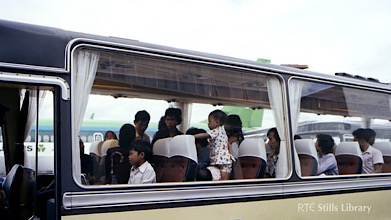
Many of the refugees have spent months in refugee camps in Hong Kong and Malaysia, often rescued from overcrowded boats after long, dangerous voyages. Some, like Tri Quoc Nguyen, recall the smell of vomit and sweat from days at sea, and the trauma of internment for family members. Delays in resettlement elsewhere—such as the United States—leads some to choose Ireland for its perceived safety and shorter wait.
The Irish government invites these refugees, and religious and non-governmental organisations play a major role in resettlement. The first group of about 212 Vietnamese is dispersed to various Irish towns, including Tralee, Portlaoise, and Cork. Many later move to Dublin, where they begin building new lives.
Over the decades, the Vietnamese-Irish community has grown into a well-established ethnic minority in Ireland, with contributions in business, education, and culture. Many open Vietnamese restaurants and community businesses, and maintain strong family and cultural ties.
This August 9, 1979 event marks the beginning of a significant chapter in Irish migration history, symbolising Ireland’s role in humanitarian resettlement during the late 20th century.
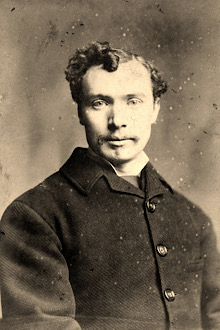
Brennan is the second of two children to Patrick Brennan of the Catholic parish of Beauparc and Catherine Brennan (née Rourke). Little is recorded of his early education, but he develops a reputation as an intelligent and articulate public speaker. At age 18, he begins working as a clerk at Murtagh Bros., a Dublin-based bakery, alongside his uncle James Rourke. Through his connections with Patrick Egan, he and his uncle join the Irish Republican Brotherhood (IRB) and become active in election campaigns and nationalist organizing.
By 1877–1878, Brennan has become the civil secretary of the Leinster IRB and honorary secretary of the Dublin Mechanics Institute. In 1879, he plays an instrumental role in establishing the Land League of Mayo, acting alongside Michael Davitt and Patrick Egan. When the Irish National Land League is formally founded in October 1879, Brennan is appointed assistant secretary, effectively helping manage the League’s operations and campaigns for tenant farmers.
Brennan is known for his eloquence at public rallies, often linking land agitation to Irish nationalist objectives and espousing radical, egalitarian ideas. During the Land League’s activities, he faces trial for encouraging non-payment of rent but is not convicted. He later takes on the duties of national secretary after Davitt’s arrest and authorizes the issuance of the “No Rent Manifesto” from Kilmainham Gaol in 1881, a pivotal document in Ireland’s land struggle.
Following internal shifts in Irish nationalist politics and limitations placed on his influence by Charles Stewart Parnell, Brennan emigrates to the United States. He works for Patrick Ford’s Irish World newspaper in New York City, critiquing aspects of the Irish Parliamentary Party (IPP) and emphasizing non-violent republican principles. By 1883, he settles in Omaha, Nebraska, partnering with Patrick Egan in the Omaha Mortgage Company, specializing in real estate, investment, and insurance. He becomes a respected businessman and seeks to maintain connections with the Irish American nationalist community.
Brennan never marries and eventually dedicates himself to business in Omaha. He passes away on December 19, 1912, in Omaha, Nebraska, having left a lasting impact on Irish land reform efforts and the nationalist movement. He is buried in Holy Sepulchre Cemetery in Omaha.
Brennan is remembered as a founder and key administrator of the Irish National Land League, a signatory of the “No Rent Manifesto,” and a prominent voice in the Irish republican movement. His advocacy helps shape the course of land reform in Ireland and fosters Irish nationalist sentiment both domestically and among the diaspora.
Sources confirm that his activism, speeches, and organizational skill were central to the Land League’s influence, and he remains a notable figure in 19th-century Irish political history.
Mitchel, a writer for The Nation and founder of his own journal, United Irishman, openly preaches rebellion against England. Convicted of treason in 1848, he is sentenced to fourteen years transportation in Van Diemen’s Land (Tasmania). In 1853, he escapes to the United States, where he publishes his Jail Journal. While in the United States, he is editor of the Richmond Examiner and a strong advocate of Confederate rights and champions slavery. He is imprisoned for several months following the end of the American Civil War.
Mitchel’s return visit to Ireland is prompted by political developments in the Irish Parliamentary Party (IPP), which has nominated him for seats in Cork City and Tipperary without informing him. His well-known skepticism toward constitutional “moral force” agitation makes it uncertain whether he will accept the nomination, but the nomination proceeds anyway.
Mitchel’s return is unexpected, yet is met with public acclaim. Upon arriving in Queenstown (now Cobh, County Cork), he is met by a large crowd, and when he reaches Cork, a procession of ten thousand people escorts him to his hotel. This demonstrates the respect and support he still commands among Irish nationalists, despite his exile in the United States since 1853.
Mitchel then goes to Newry, his native town, where he stays for a few months to recuperate his health and await any opportunity to be elected to Parliament. However, no parliamentary vacancy arises during his stay, and he eventually returns to New York City in October 1872.
Mitchel’s return is part of a pattern of political activity in his later years. In 1875, he is again nominated for Tipperary, elected without opposition, and declared an abstentionistMP — but his election is overturned by the British government on the grounds of his previous felony conviction. He dies in March 1875 in Dromolane, County Down, in the same house where he was born.
In summary, July 25, 1872, marks the beginning of a brief but politically charged visit to Ireland for John Mitchel, a figure remembered for his uncompromising republican stance and his role in the Young Ireland movement.
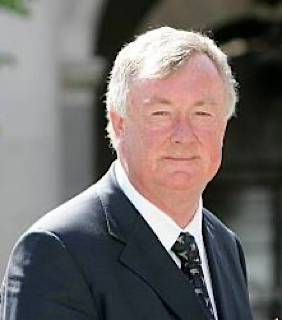
In 2002, the Irish tourism sector faces weaker-than-expected visitor figures. To address this and stimulate short-term revenue, O’Donoghue reallocates €3 million specifically for front-line marketing activities targeted at both domestic and international audiences. At the time, he has recently been appointed Minister for Arts, Sport, and Tourism, a role he holds from June 2002 to 2007.
The funds are intended to bolster promotional campaigns abroad, particularly in major overseas markets such as Britain, France, and the United States, support domestic marketing efforts to encourage local travel and spending, and focus on aggressively promoting Ireland in the British market, identified as having the highest potential return on investment for tourism.
Tourism Ireland, which operates as the official agency promoting the island of Ireland as a tourist destination, welcomes the additional funding. Chief Executive Paul O’Toole emphasizes that the investment will ensure maximum returns for the Irish tourism industry.
Before this funding boost, Irish tourism is a major economic sector. According to governmental reports from 2002, foreign exchange earnings in 2001 reach approximately €3.7 billion, domestic tourism earnings exceed €1.2 billion, and the industry supports nearly 140,000 jobs. The €3 million marketing allocation is part of a strategic effort to enhance Ireland’s international competitiveness and stimulate both short-term visitor numbers and longer-term growth.
While immediate tangible effects of this specific €3 million investment are not detailed in the sources, it reflects Ireland’s broader commitment to tourism promotion. By investing in strategic marketing campaigns in key international markets, the government aims to recover visitor numbers and strengthen Ireland’s profile as a tourist destination.
In conclusion, the July 15, 2002, announcement by Minister John O’Donoghue is a targeted move to energize Irish tourism through immediate marketing action, especially in international markets, during a period of lower-than-expected tourist arrivals.
On July 14, 1910, the Irish Socialist Federation (ISF) in New York City hosts a farewell dinner for James Connolly, marking the end of his time as its leader. This event is a significant moment in his career, as he had been instrumental in founding the Federation on March 29, 1907, and has been its driving force in organizing Irish socialist and trade union activity in the United States.
By 1910, Connolly has been active in the socialist movement in the United States for several years. He initially joins the Socialist Labor Party of America but becomes a full-time organizer for the Industrial Workers of the World (IWW) from 1905 to 1910, aligning with its syndicalist approach. His work with the Irish Socialist Federation has been central to building a network of Irish workers in America, linking them to socialist principles and Irish nationalist aspirations.
The July 14, 1910, dinner is a public acknowledgment of Connolly’s contributions and a symbolic send-off as he prepares to return to Ireland. Upon his return, he takes on a major role in the Irish Transport and General Workers Union (ITGWU), first in Belfast and then in Dublin, and later becomes acting General Secretary and Commandant of the Irish Citizen Army (ICA).
The political and labor impact of the event underscores Connolly’s growing influence in both the Irish socialist movement abroad and the domestic labor struggle. It reflects the Federation’s commitment to supporting Irish socialist leaders and their work in the United States and Ireland. It is also remembers as a key moment in Connolly’s transition from U.S. organizer to a central figure in the Irish labor and republican movements.
In short, the July 14, 1910, farewell dinner is both a personal farewell and a political milestone, highlighting Connolly’s role as a bridge between Irish socialism in the United States and the emerging labor and republican movements in Ireland.
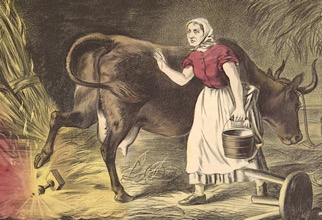
Catherine O’Leary (née Donegan), was an Irish immigrant living in Chicago, Illinois, dies in Chicago on July 3, 1895. She becomes associated with the origin of the Great Chicago Fire in 1871. She is widely accused of starting the fire when a cow in her barn allegedly kicks over a lantern, though the story is later shown to be unfounded.
Donegan is born in Ireland in March 1827, with more specific accounts placing her birth near Cork, in the Munster province, later emigrating to the United States. She marries Patrick O’Leary, and the couple has three children. Their son, James Patrick O’Leary, later operates a saloon and gambling establishment in Chicago.
On the evening of October 8, 1871, a fire begins in the O’Leary family’s barn on DeKoven Street. Fueled by dry conditions and strong winds, the fire spreads rapidly and destroys a large portion of Chicago.
Shortly after the fire, journalist Michael Ahern publishes a story claiming that the fire had started when a cow kicked over a lantern while it was being milked. Although he does not initially name Catherine O’Leary, she soon becomes associated with the incident because the fire began on her property. The story gains widespread attention and is reinforced by illustrations and caricatures.
In 1893, Ahern admits that he had fabricated the story. The official investigation into the fire concludes that its exact cause could not be determined. Anti-Irish sentiment at the time contributes to the O’Leary family being treated as scapegoats, and various unverified claims circulate about the circumstances of the fire.
O’Leary continues to live in Chicago after the fire. She dies of pneumonia on July 3, 1895, and is buried at Mount Olivet Cemetery.
The story of O’Leary’s cow becomes a widely repeated explanation for the Great Chicago Fire, despite its lack of evidence. In 1997, the Chicago City Council formally exonerates O’Leary of any responsibility for the fire, following research by historian Richard Bales.
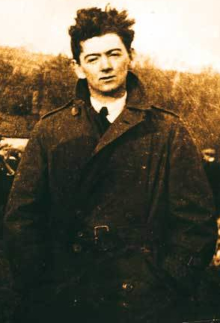
Barry returns to Bandon in early 1919. He describes in his guerilla days in Ireland a Damascus-like conversion to Irish nationalism on hearing of the Easter Rising while with the Mesopotamian expeditionary force, but he is only accepted into the IRA with considerable caution. Initially tested in intelligence and training work, in mid-1920 he takes charge of the new brigade flying column, which is used both to train officers and to stage offensive actions.
Barry adapts his military experience successfully to the demands of guerrilla warfare, becoming the most famed of column leaders during the Irish War of Independence. In his memoirs, he pours scorn on the obsession of many with military titles and orthodox procedure, complaining of a “paper army.” He stresses the need for spontaneity, initiative, and knowledge of local conditions. “The reality,” he writes, “was a group of fellows, mostly in caps and not-too-expensive clothing, wondering how to tackle their job and where they would sleep that night or get their supper.” (The Reality of the Anglo–Irish War (1974)). He well realises that the war’s character does not permit any close control from the IRA’s GHQ in Dublin, hence increasing the importance of local leaders. His tactics put strong emphasis on speed of movement and on the need to attack the enemy at his weakest point. The column’s ambush successes are small in number but among the best-remembered of the war. He admits, however, that his own and his column’s lack of experience with mines frequently weakened their offensives.
The column’s first successful ambush is at Tooreen on October 22, 1920, followed on November 28 by the dramatic ambushing of a patrol of auxiliaries at Kilmichael while traveling from their Macroom base. A column of thirty-six men, divided into three sections, kill sixteen auxiliaries, with one captured and later shot, suffering two fatalities of their own. Controversy has raged since over whether a false surrender by the British force caused the brutality of some of the deaths. Together with the Bloody Sunday killings of a week earlier in Dublin, Kilmichael has a profound effect on the British military and political establishment, with the declaration in December of martial law for much of Munster and the implementation of wide-ranging internment, together with the authorisation of official reprisals.
After a short period in hospital with a heart condition, in early 1921 Barry leads unsuccessful attacks on Kilbrittain, Innishannon, Drimoleague, and Bandon barracks. The seizure of Burgatia House, outside Rosscarbery, in early February, and the successful resistance made there to British troops, wins much publicity but has little military significance. He is a leading figure in the brutal final stage of the war in the first six months of 1921, which sees widespread shooting of suspected spies and destruction of loyalist property. By March 1921, his flying column, with 104 men, is easily the largest in Ireland, and an explosives expert, Capt. McCarthy, has joined them.
The protracted engagement between Barry’s column and encircling British forces at Crossbarry on March 19, 1921, comes at a time when large-scale sweeps are making life increasingly difficult for the IRA. It consists of a daring and courageous breakout. Crossbarry is the largest action of the war, and Barry is to regard it as even more important than Kilmichael. Soon afterwards, Rosscarbery barracks is successfully attacked by a Barry-led party, representing one of the few successful such initiatives in 1921. Isolated triumphs, however, cannot hide the fact that pressure is increasing on the column, and he becomes increasingly critical of inactive regions. He is later to say that all County Kerry does during the war is to shoot one decent police inspector at Listowel Racecourse and a colleague of his. He is strongly critical also of the lack of assistance from GHQ and of the divisionalisation policy. He visits Dublin in May, travels around with Michael Collins, and is present when two American officers demonstrate the Thompson submachine gun. He is more aware than most of his 1st Southern Division colleagues of the scarcity of arms and ammunition at the war’s end.
During the truce, Barry becomes liaison officer for Munster, riling the British by insisting on his military rank, and criticising the IRA liaison men in Dublin for being overly deferential. He joins the overwhelming majority of the Cork IRA in opposing the Anglo–Irish Treaty but plays a characteristically maverick role throughout the treaty split. His independent attitude is heightened by his dislike of Liam Lynch, the republican IRA’s Chief of Staff, and his continuing respect for Michael Collins. He shows impatience at the long-drawn-out peace initiatives. In March 1922, therefore, he advocates armed confrontation with pro-treaty units over the occupation of barracks in Limerick, and on June 18 he submits a resolution, which only narrowly fails, at the army convention, giving British troops seventy-two hours to leave Dublin.
At the beginning of the Irish Civil War, Barry is arrested entering the Four Courts disguised as a woman. He escapes from an internment camp at Gormanston in early September 1922. For the rest of the war his actions mirror its confused nature. In late October 1922, he leads successful raids on the small towns of Ballineen and Enniskean, and later on Inchigeelagh and Ballyvourney. In December his column takes Carrick-on-Suir, demonstrating the weakness of the Free State army, but his talk of advancing on the Curragh and of large-scale actions does not materialise. There is no evidence that he is acting in accordance with any coordinated plan. By February 1923, he realises that the Republican IRA cause is hopeless and he is involved with Fr. Tom Duggan in efforts to get 1st Southern Division to declare a ceasefire. He journeys to Dublin to put pressure on the intransigent Lynch in this connection, telling Lynch, “I did more fighting in one week than you did in your whole life.”
Barry avoids capture in roundups after the war, remaining on the run until 1924. Unlike many republicans, he does not turn to constitutionalism, remaining strongly militaristic. He is always an unreconstructed republican, though by no means a naive one. In 1924 he becomes attached to Cleeves Milk Co., based in Limerick and Clonmel, and from 1927 to retirement in 1965 is general superintendent with the Cork harbour commissioners. He strongly advocates preserving the independence of the IRA army executive during the republican split of 1925–27. He is instrumental in continuing the drilling of IRA members and is a strong supporter of armed opposition to the Blueshirts.
During the 1930s Barry is arrested at various times for possession of arms and seditious utterances. He promotes an attack against a Freemasons’ meeting in Cork in 1936 and gives the orders for the killing on March 4 of that year of Vice-AdmiralHenry Boyle Somerville. He is opposed to the use by Frank Ryan of IRA volunteers to support the republican cause in the Spanish Civil War and to the proposals of Seán Russell for a bombing campaign in England. To maintain the link with traditional republicanism, he is elected IRA chief of staff in 1937. His plan, however, for the seizure of Armagh city, as part of a direct northern offensive, quickly collapses due to a leak of information, and he soon resigns his position. He forcefully attacks the bombing of English cities in 1938, regarding attacks on innocent civilians as immoral and counterproductive. He enlists in the National Army on July 12, 1940, only to be demobilised a month later. In 1946, he stands as an independent candidate in a by-election in the Cork Borough constituency, finishing at the bottom of the poll. He is more comfortable the following year touring the United States on an anti-partition platform.
In 1949 his Guerilla Days in Ireland is published. It proves a best-seller and has frequently been reprinted. It is well written in a forceful and direct style, one memoir needing no assistance from a ghost writer. Age does not mellow him: lawyers and bank managers are threatened by him over matters relating to his own column, and in 1974 he publishes a fierce pamphlet, angry at perceived slights in the Irish War of Independence memoir of Liam Deasy. He does strive to achieve a public reconciliation with Collins’s memory by unveiling the memorial to Collins at Sam’s Cross in 1966. On the outbreak of the Northern Ireland crisis in the late 1960s, he takes a militant line, castigating the argument that the Six Counties can be brought into the Republic by peaceful means, and asking when had peaceful means existed there. At the memorial meeting in Carrowkennedy, County Mayo, in 1971, he claims that there is a perfect right at the opportune time to take the Six Counties by force. He remains opposed to IRA bombing of civilian targets.
Barry dies in Cork on July 2, 1980. He is buried in St. Finbarr’s Cemetery, Cork. Early in the truce of 1921 he marries Leslie Price, one of the most active of Cumann na mBan members during and after the rising. They have no children.
While Barry always remains an influential figure in republican circles, he will be remembered best as the pioneer of guerrilla warfare, the hero of Kilmichael and Crossbarry. His military flair, individualism, and ruthlessness are well suited to the 1919–21 conflict. After that, his strained relations with colleagues and his lack of flexibility reduce his importance. While his life after the revolutionary era appears anti-climactic, he retains much of his charisma. In later years, he is ever willing to remind politicians and historians how far Ireland has retreated from republican ideals. He is often prickly and autocratic yet could be generous to old colleagues of either side of the treaty split. He is arguably the most intelligent but also the most intolerant of the revolutionary leaders.
(From: “Barry, Thomas Bernadine (‘Tom’)” by M. A. Hopkinson, Dictionary of Irish Biography, http://www.dib.ie, October 2009)
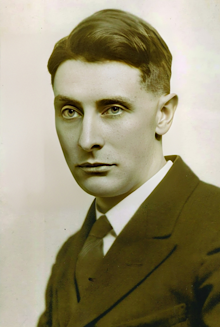
Born at Hillside Terrace in Howth, County Dublin, on May 5, 1898, Gilmore is the second son of Philip Gilmore, an accountant originally from County Antrim, and Fanny Angus. Despite his father primarily working for Unionist landlords, and being educated at home, George and his brothers Harry and Charlie all turn toward Irish republicanism. By 1916, Gilmore has become a member of Fianna Éireann, the Republican boy scouts, and later a member of the South County Dublin battalion of the Irish Volunteers.
Gilmore fights in the Irish Republican Army in the Irish War of Independence and in the Irish Civil War on the Anti-Treaty IRA side. During the civil war he is captured and imprisoned, but manages to escape custody in August 1923, the aftermath of which causes riots as the remaining prisoners are placed in solitary confinement.
Following the end of the civil war, Gilmore serves as the secretary of future TaoiseachSeán Lemass, as well alongside Frank Aiken. During the early 1920s, he, Lemass and Aiken regularly meet with the IRA army council to represent the emerging political leadership of Irish republicanism that coalesces as Fianna Fáil in 1926. The trio regularly sits opposite IRA leaders Frank Ryan, Peadar O’Donnell, and Seán Russell.
In October 1925, Gilmore and Lemass organise the escape of nineteen IRA prisoners from Mountjoy Prison in Dublin. As part of the jailbreak, Gilmore impersonates a member of Garda Síochána. None of the nineteen escapees are subsequently recaptured, and their escape serves as a major propaganda coup. However, the following month, Gilmore is involved in a riot that takes place on Armistice Day and he is subsequently arrested and sentenced to eighteen months in prison. He resists the entire duration; first resisting the arrest and then, once imprisoned, refusing to wear a prison uniform and going on hunger strike. Early in 1928, members of the IRA attack Mountjoy Prison where he is being held and shoot the warden after a story emerges that Gilmore had previously been the victim of a vicious beating by the guards. He is released in 1929 but re-arrested and re-imprisoned almost immediately, resulting in a retaliatory beating by the guards that leaves him unconscious.
Sometime between 1929 and 1930, Gilmore is sent by the IRA to Russia to receive military training and to seek aid.
Gilmore is arrested yet again upon his return to Ireland in April 1931, charged with having resisted arrest ten months previously. In October he tries to escape with the help of his brother Charlie and almost succeeds, using a plot involving mock pistols wrapped in silver to intimidate the guards. In the aftermath of the failed escape, his treatment in Arbour Hill Prison from 1931-32 is abysmal. He once again refuses to wear prison clothing because of his political status and remains naked in a windowless cell from October 1931 until February 1932. In June 1931, of a cache of weapons are discovered near his home at Killakee in the Dublin Mountains, which results in him and his brother Charlie being placed before a military tribunal which sentences him to five years in prison and Charlie to three (in 1932 Fianna Fail comes to power and the brothers are released). Neither recognises the authority of the court, with George stating, “I do not want anybody to think I excuse myself for such a charge as having arms, I am admittedly hostile to British imperialism and international capitalism.”
Gilmore’s fortunes are dramatically altered when Fianna Fáil emerges victorious in the 1932 Irish general election. In the aftermath, Frank Aiken, former Chief of Staff of the IRA and new Minister for Defence goes to see Gilmore on March 9 and on the next day all republican prisoners are released as part of a general amnesty. Thirty thousand supporters greet the prisoners at College Green, Dublin.
Finally out of long-term imprisonment, Gilmore is eager to resume working toward a socialist Ireland. He has supported Peadar O’Donnell’s shortlived socialist republican group Saor Éire from prison, but in the aftermath of its demise, he concludes that the group has spent too much time imagining what it might do if in government, and not enough time considering what the immediate aims of the IRA should be. With his close personal ties to their leadership, Gilmore has a positive view of Fianna Fáil, and at this point in time believes their goals differ little from his own and those of the IRA. Nevertheless, He encourages the IRA to not become too closely associated with Fianna Fáil, fearing the IRA will become a subservient body. He himself has ascended to the IRA’s army council upon his release, and in March 1932 is among representatives of the Army Council that liaises with Éamon de Valera about a possible partnership between the IRA and Fianna Fáil.
On August 14, 1932, Gilmore and fellow Irish republican T. J. Ryan are beaten badly, shot and wounded by plain-clothes members the Garda Síochána (Criminal Investigation Department) in Kilrush, County Clare. This incident is blamed on the police by an official Tribunal of Inquiry report one month later.
In March 1934, Gilmore, alongside Frank Ryan and Peadar O’Donnell, refuse to continue on as members of the IRA executive as part of a deepening rift over the direction of the IRA. Left-wing members of the IRA such as Gilmore, Ryan and O’Donnell insist that the IRA needs to tie their activity to social agitation in addition to their military aims, but this is a minority viewpoint, with the majority believing the IRA should have a “strictly military” outlook. The rift ultimately spirals into Gilmore, Ryan and O’Donnell being court-martialed and expelled in April.
In the aftermath, Gilmore works with Roddy Connolly, Nora Connolly O’Brien and Peadar O’Donnell to found the Republican Congress, a left-wing socialist Irish republican group. The group breaks up in 1935 over internal differences. Gilmore, Ryan and O’Donnell believe that the Republican Congress should be a united front, an alliance of all republican groups in Ireland. Roddy Connolly and other members of the Communist Party of Ireland believe that the Congress should be a vanguard party. A conference is held by the Republican Congress in Rathmines, Dublin, in September 1934 to vote on the issue. Before the vote is taken, Gilmore gives a speech in which he accuses Fianna Fáil of using republicanism as a means to promote Irish capitalism. When the votes are taken on whether the Republican Congress should be a united front or a vanguard party, Gilmore’s united front faction wins. However, supporters of the vanguard party concept such as Roddy Connolly immediately resign from the Congress in protest and walk out on the group. It proves to be a blow that the Congress never recovers from and the group is defunct by 1936. Gilmore makes a last-ditch effort to save the Congress by traveling to the United States to seek funds from Irish American groups but is not successful.
Upon the outbreak of the Spanish Civil War in July 1936, Gilmore and O’Donnell become supporters of the International Brigades. Both men travel to Spain personally, during which they are involved in a plane crash and Gilmore’s leg is broken.
Following the outbreak of World War II in September 1939, Gilmore writes an appeal pleading with the IRA to dump arms until the war in Europe is over and denounces them for flirting with fascism by seeking aid from Germany.
During the 1960s, when the republican movement once again moves to the left, Gilmore and O’Donnell are once again in demand as speakers and as writers in republican publications. In 1966, for the 50th anniversary of the Easter Rising, Gilmore releases a pamphlet entitled “Labour and the republican movement” in which he espouses the principles of James Connolly. Additionally, he appeals to young republicans not to repeat the mistake older republicans had made in being too rigid in their views and too short on policy.
Gilmore dies on June 29, 1985, at the age of 87, in a nursing home in Howth, County Dublin.
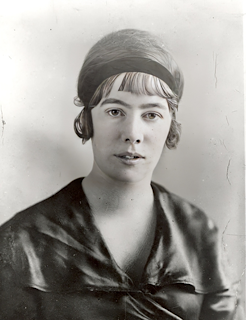
Born Helen Ruth Gifford on November 9, 1880, in Phibsborough, Dublin, to Frederick Gifford, a solicitor, and Isabella Julia Gifford (née Burton), Gifford is the fifth child and second eldest daughter of the family of six daughters and six sons. Her father is a Catholic while her mother, a niece of the painter Frederic Burton, is rigorously Protestant. All the children are brought up in the Church of Ireland. The men, emigrate and remain unionist while the women are active nationalists. Most famous are the two youngest, the artistGrace Gifford, and the journalist and broadcaster Sidney Czira.
Gifford grows up in Rathmines and goes to school at Alexandra College. She trains as a domestic economy teacher and works for seven years at a series of positions in County Meath.
Gifford experiences the living conditions of the landless rural poor while lodging in labourers’ cottages during this time. As a result, she becomes a supporter of the campaigns of the land agitator and nationalist MPLaurence Ginnell.
During the 1913 Dublin lock-out Gifford assists James Larkin enter the Imperial Hotel, on August 31 to address the crowd. He enters in disguise, that of an elderly and infirm clergyman. She poses as his niece. She speaks to the hotel staff to prevent Larkin’s strong Liverpool accent giving away his identify. This is the speech which precipitates the “Bloody Sunday” police baton charge. Gifford goes on to be a founding member of the Irish Citizen Army (ICA). This group is attractive to many women due to the feminist beliefs of James Connolly.
Gifford gives lessons on camp cookery in Liberty Hall and finds jobs for recruits coming in from abroad. As a result of this work she, very fatefully, introduces Michael Collins to her future brother-in-law Joseph Plunkett who go on to serve together in the 1916 Easter Rising. Collins is Plunkett’s aide-de-camp.
Gifford is the only one of her sisters to actively participate in the rising itself. She is with the ICA’s St. Stephen’s Green contingent alongside Countess Markievicz. Throughout the week she supervises the garrison’s provisions in the Royal College of Surgeons building, commandeering food from shops and bread vans, and by courier from other garrisons. She also ensures the delivery of provisions to troops both in the college with her and in outlying posts. She is one of the women arrested at the surrender and jailed in Kilmainham Gaol. At the same time, in the same prison her sister Grace marries Joseph Plunkett hours before his execution. Only twelve women are detained after the main release of women prisoners on May 8, 1916. Gifford is one of those transferred to Mountjoy Prison until her release on June 4, 1916. Afterward she continues to be as involved in the campaigns.
After her time in prison, Gifford travels through England to the United States where she and other women veterans of Easter week lecture throughout America. While there she marries Joseph Donnelly, of Omagh, County Tyrone in 1918. In 1921 she and their year-old daughter Maeve leave him to return to Ireland.
Frederick Gifford dies in September 1917 and leaves Gifford £800. However, she is was not well off. She becomes a broadcaster and journalist for the national radio and the Irish press. Holding to her upbringing, she remains a staunch Protestant, unlike four of her sisters, who had married Catholics.
Gifford becomes devoted to preserving the historical record of the independence movement. Noticing the huge number of visitors for the 1932 Eucharistic Congress, she organises a small exhibition there of 1916 memorabilia for the National Museum of Ireland. She is irritated by the display of Catholic religious artifacts there. She campaigns for a permanent exhibition of recent Irish nationalist history. She coordinates a substantial body of material pertinent to nationalist organisations, the Easter Rising, and the Irish War of Independence, which now forms the core of the present collection.
Over the years Gifford is secretary of the Old IRA Association, a member of the Old Dublin Society, and a founder of the Kilmainham Gaol Restoration Society. She also looks after stray and neglected dogs and cats. She dies at the age of 90 on June 23, 1971, at the Gascoigne nursing home in Rathmines, Dublin.
(Pictured: Irish nationalist Nellie Gifford taken in Boston in 1917)
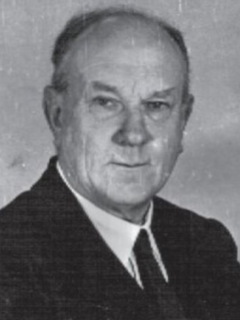
Rice joins the Irish Volunteers in 1913 but does not take part in the 1916 Easter Rising. For a time, he shares lodgings in Rock Street, Tralee, with Austin Stack, and like Stack he is a Gaelic Athletic Association (GAA) member, playing hurling with Kenmare. At the outbreak of the Irish War of Independence (1919-1921), he becomes Officer Commanding of the 5th Battalion of the Kerry No. 2 Brigade. He also holds the post of second in command of that brigade, under Humphrey Murphy. On April 26, 1921, he attends the meeting in Kippagh, County Tipperary, that sees the establishment of the First Southern Division. After the truce, Murphy is transferred to command Kerry No. 1 Brigade, and Rice becomes commanding officer of Kerry No. 2.
Rice opposes the Anglo-Irish Treaty and leads the brigade throughout the Irish Civil War (1922-1923). When Michael Collins comes to Killarney on April 22, 1922, to speak in favour of the agreement, he is met at the train station by a group of fifty men, led by Rice, who attempt to prevent him from speaking. The meeting goes ahead despite several attempts by the group to stop it. During the civil war he leads his men into Limerick, briefly seizing Rathkeale, but for the most part they are on the defensive. In September he commands a force of seventy republicans to take Kenmare. This is a rare and morale-boosting success. When the First Southern Division council meets on February 26-28, 1923, he is one of only two senior officers, among a group of eighteen, who feel that it is worth fighting on.
Shortly after the civil war, Rice marries Nora Aherne, a Cumann na mBan member; they have one son, George. After the war he continues to be active in the Irish Republican Army (IRA) and Sinn Féin. He attends IRA executive meetings in 1923 and is involved in attempts to reorganise the IRA in 1924. He is a delegate to the Sinn Féin ardfheis in 1926, opposing the proposal of Éamon de Valera that abstention be a matter of policy rather than principle. He is elected as a Sinn Féin TD for the Kerry South constituency at the 1957 Irish general election. He does not take his seat in the Dáil due to the Sinn Féin policy of abstentionism. He is one of four Sinn Féin TDs elected at the 1957 Irish general election, the others being Ruairí Ó Brádaigh, John Joe McGirl and Eighneachán Ó hAnnluain. During his time as a TD, he campaigns against the Special Powers Act, which grants the Irish state extra abilities to deal with and punish suspected members of the IRA. He is defeated at the 1961 Irish general election.
In 1966, Rice and fellow Kerry Republican John Joe Sheehy are expelled from Sinn Féin, as are many others, by the new Marxist-Leninist party leadership that had recently come into power. This move both foreshadows and fuels the split in 1969/1970 of both the IRA and Sinn Féin, which leads to the creation of the Marxist-Leninist Official IRA and the more traditional but still left-wing Provisional IRA, and in parallel Sinn Féin – The Workers’ Party and “Provisional” Sinn Féin. Rice gives his support to the Provisionals.
Rice drives an oil lorry for a time and then becomes manager of the Tralee branch of Messrs Nash, mineral water manufacturers and bottlers. He remains in this position until his retirement in 1965. He dies on July 24, 1970, at his son’s residence in Oakview, Tralee.
Rice’s sister, Rosalie, is a member of Cumann na mBan during the 1916 Easter Rising and is arrested for sending a telegram alerting the Irish Republican Brotherhood (IRB) in the United States to the rising. His cousins Eugene and Timothy Ring are members of the IRB and are also involved with the telegram. His grandfather, Timothy Ring, was a Fenian who fought in the uprising. Two of his cousins are members of the Royal Irish Constabulary (RIC) who both help the republican side during the Irish revolutionary period.