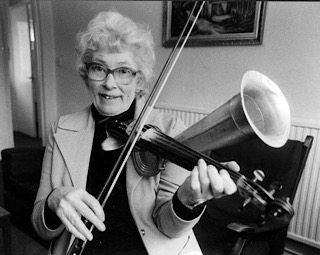
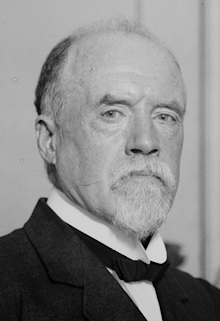
Murphy is born on June 19, 1914, at Lisheen, Gneeveguilla, County Kerry, part of an area in west Munster known as Sliabh Luachra. Her father Bill plays flute, fife and fiddle, and has a fife and drum band. Both she and her brother Denis Murphy, also a musician, are taught the fiddle by the noted traveling fiddler and fiddle teacher from the same area, Padraig O’Keeffe.
Clifford, her brother, O’Keeffe, and other musicians from the Sliabh Luachra area are regarded as a significant influence on Irish traditional music and have given rise to the term Sliabh Luachra style.
In the late 1930s Murphy emigrates to Scotland and then to London where she works as a hotel maid before marrying John Clifford in 1941. He is an accordion player, also from Kerry, and they had two sons, John and Billy. In the 1940s they play the Irish dance halls in London. In the 1950s they return to Ireland for a time, living in Newcastle West in County Limerick. They perform in the Star of Munster Ceili Band with which they make radio recordings.
Back in London, Clifford enjoys greater popularity with the onset of the 1960s folk boom. In 1968, Claddagh Records records her and brother Denis on an album of Kerry music, The Star Above the Garter.
Rediscovered by the British folk club scene of the 1970s, Topic Records in 1977 issues an earlier recording of Clifford with her brother and Padraig O’Keeffe, Kerry Fiddles (Music from Sliabh Luachra). This is followed by two LPs featuring a range of music from various periods played by her, her husband and her son Billy, a flute player.
The wider appreciation of the music of Sliabh Luachra – particularly its Kerry slides and polkas – come late in life for Clifford. The Cliffords live in a small council flat in Hackney in East London before being rehoused in Thetford, Norfolk in the late 1970s.
In the 1980s and 1990s Clifford’s reputation grows, being invited to perform at folk clubs and festivals. She performs on trips back to Ireland and is introduced to television audiences. She also visits the United States. Many young players who seek her out to learn tunes and styles from her Kerry repertoire find her generous and encouraging.
Clifford’s husband John dies in 1981. She dies on June 18, 1997, one day before her 84th birthday, and is buried in Norfolk.
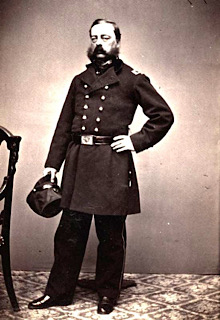
Antisell is born in Dublin on January 16, 1817, the youngest son of Thomas Christopher Antisell KC (home circuit) and Margaret (née) Daly. He attends the Dublin School of Medicine, the Apothecaries’ Hall of Ireland, and the Royal College of Surgeons of England in London, graduating from the latter with an MD in November 1839. He studies chemistry in Paris and Berlin in 1844. Upon his return to Dublin in 1845, he secures a lectureship in botany at the Peter St. School of Medicine, teaching there until 1848. After this, he opens a clinic at his residence of 25 Richmond Street, Portobello. He works as an assistant to Robert Kane, and between 1845 and 1847, produces textbooks on Irish geology and chemistry. He becomes a member of the Royal Dublin Society (RDS) in 1844.
Antisell is a member of the Young Ireland movement of the 1840s, and joins the Irish Confederation in 1847. With a group of five friends in the republican movement, including Richard D’Alton Williams and Kevin O’Doherty, he sets up a short-lived revolutionary newspaper, The Irish Tribune, in June 1848 to take the place of the suppressed United Irishman, founded by John Mitchel. The paper is closed down on the grounds of sedition in July 1848 after just five issues. Following the closure of the paper, he emigrates to the United States, arriving in New York City on November 22, 1848. Some sources claim this departure is to evade arrest or charges relating to sedition. Although he is no longer politically active following his departure from Ireland, he is a close friend of John Mitchel and his family. He marries his first wife, Eliza Ann Nowlan, in 1841. She dies shortly after their arrival in the United States.
Antisell sets up and operates a clinic and medical laboratory in New York City from 1848 to 1854, while also lecturing in chemistry in a number of medical colleges in Massachusetts and Vermont. He takes up a post as expedition geologist and botanist on state surveys in southern Arizona, New Mexico, and California, working primarily with Lt. John Parke investigating the proposed routes for the Southern Pacific Railroad from 1854 to 1856. His work on the geology of the region adds to greater understanding of the science in America. In 1856, he is employed as chief examiner in the U.S. Patent Office in Washington, D.C., with responsibility for chemical inventions. This work allows him to also lecture in chemistry at Georgetown University, eventually covering other subjects such as toxicology, military surgery, physiology, hygiene, and pathology, over the periods 1858 to 1869, and 1880 to 1882.
Breaking with Mitchel who, as defender of slavery, supports the southern secessionist cause, Antisell serves in the Union Army during the American Civil War. He is a brigade surgeon in the United States Volunteers from 1861, and later the medical director of the 12th army corps. He concludes his service as surgeon-in-charge of Harewood Hospital, Washington, D.C., in October 1865, being granted a brevet commission as colonel. From 1866 to 1871, he is chief chemist in the U.S. Department of Agriculture. He marries his second wife, Marion Stuart Forsyth from Detroit, in 1854. They go on to have twelve children, six daughters and six sons.
Antisell is one of several scientists that are hired in 1871 as foreign government advisors to work in Hokkaido in northern Japan under Horace Capron. He is selected for his strong background in chemistry coupled with geology. However, he disagrees with Capron on whether or not Hokkaido’s severe winter climate will hinder development, and he also comes into conflict with the Japanese government over his salary. As a result, Hokkaido Colonisation Office hires another geologist, and Antisell’s report is excluded in the 1875 compilation of official reports. He serves his remaining time in Japan as a chemist for the Ministry of Finance, where he develops inks used for the printing of paper currency. For his services, he is awarded the Order of the Rising Sun by Emperor Meiji before his departure in 1876.
Upon returning to the United States, Antisell is conferred with a PhD in 1876 by Georgetown University, and once again takes up duties at the Patent Office, remaining there until his retirement. He publishes widely in numerous journals on topics such as agricultural chemistry, botany, oceanography, city sanitation, and animal disease, but he does not publish a significant treatise.
Antisell dies in Washington, D.C., on June 14, 1893, and is buried in the Congressional Cemetery.
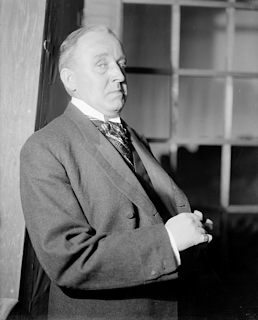
John Dudley Digges, Irish stage actor, director, and producer as well as a film actor, is born in Ranelagh, Dublin, on June 9, 1879. Although he gains his initial theatre training and acting experience in Ireland, the vast majority of his career is spent in the United States, where over the span of 43 years he works in hundreds of stage productions and performs in over 50 films.
Digges is the child of James Digges and Catherine Forsythe. He becomes acquainted with theatre directors William and Frank Fay and takes an interest in acting. He joins W. G. Fay’s Irish National Dramatic Company, along with others including Máire Nic Shiubhlaigh, James H. Cousins, Frederick Ryan and Maire Quinn (who becomes his wife). Their first production, Cathleen Ni Houlihan, with Maud Gonne in the lead role, and Déirdre, is on April 2, 1902. The company, which has no funds to speak of, acquires a couple of bare rooms at 34 Lower Camden Street, which with the help of friends from Irish-revival societies they turn into a small theatre. However, this proves too small for the plays they are planning to stage. They rehearse at the Coffee Palace in Westmoreland Street and also use the Molesworth Hall for productions.
In 1903, the playwrights and most of the actors and staff from these productions go on to form the Irish National Theatre Society, which has its registered offices in Camden Street. The society founds the Abbey Theatre.
Digges goes to the United States with a group of fellow-actors in 1904, and becomes successful as both actor and producer. He is stage manager for a time to both Charles Frohman and George Arliss, and by the 1920s he has become a notable performer on Broadway. One of his best-known roles there is as Ficsur in the original 1921 production of Ferenc Molnár‘s Liliom (later adapted into the musical Carousel by Rodgers and Hammerstein). In 1924, in Woodstock, New York, he founds the Maverick Theater with the assistance of Hervey White, who had established the Maverick Arts Colony. He is also artistic director of a company that includes Helen Hayes and Edward G. Robinson.
Digges expands his career into films by 1929, and over nearly two decades he performs in more than 50 films, including the original pre-Hays Code adaptation of The Maltese Falcon (1931). He Is cast in that feature as Casper Gutman, the character later portrayed by Sydney Greenstreet in the 1941 version. In The Invisible Man (1933) he plays the Chief Detective who plots to capture the title character, opposite the unseen Claude Rains. He plays the role of the Heavenly Examiner in both the original Broadway production and the 1930 screen version of Sutton Vane‘s Outward Bound. He also works as a director on Broadway.
Digges marries only once, to Irish actress Maire Quinn. The couple wed on August 27, 1907, in New York City and remain together until Maire’s death in August 1947. On October 24, 1947, just two months after his wife’s death, he dies of a stroke in his Manhattan apartment at 1 West 64th Street. He is survived by three siblings, all living in Ireland: a sister, Mrs. Mai Gannen, and two brothers, James and Ernst. Following a requiem mass at Blessed Sacrament Roman Catholic Church on October 28, he is buried next to his wife at Gate of Heaven Cemetery in Hawthorne, New York.
(Pictured: Digges as Boss Mangan in the 1920 Broadway production Heartbreak House, which he also directs)
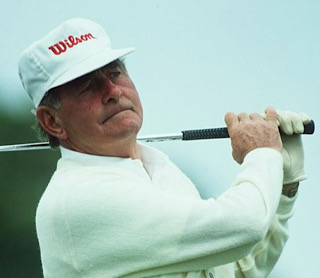
Christy O’Connor Snr, an Irish professional golfer born Patrick Christopher O’Connor, dies in Dublin on May 14, 2016. He is one of the leading golfers on the British and Irish circuit from the mid-1950s.
O’Connor wins over twenty tournaments on the British PGA and finishes in the top 10 in The Open Championship many times. Later he has considerable success in senior events, twice winning the World Senior Championship. In team events he plays in ten successive Ryder Cup matches and plays in fifteen Canada Cup/World Cup matches for Ireland, winning the Canada Cup in 1958 in partnership with Harry Bradshaw.
O’Connor is born in Knocknacarra, a village in Galway, on December 21, 1924. He catches his first glimpse of golf at the nearby Galway Golf Club, and from the age of 10 spends most of his spare time there. His foray into professional golf begins with caddying, first at Galway and then over at Tuam Golf Club.
In 1951, O’Connor turns professional with Tuam members funding his first tournament at The Open Championship at Royal Portrush Golf Club in County Antrim, Northern Ireland, that same year. His 19th-place finish garners a membership invitation from Bundoran Golf Club in Bundoran, County Donegal, which he accepts.
O’Connor’s first professional win is at the Swallow-Penfold Tournament held in 1955, the first £1,000 prize to be offered in British golf. He goes on to win the 1956 and 1959 British Masters. In 1958, he helps Ireland to win the Canada Cup in Mexico City playing with Harry Bradshaw. A year later, he moves to Dublin and joins The Royal Dublin Golf Club. Throughout the 1960s he wins at least one professional event during each year on the British Tour, a level of consistent success matched by very few other players. He rarely plays professional tournaments outside Britain or Ireland, at one stage saying he forwent playing at the Masters Tournament in Augusta, Georgia, because he could not afford to participate.
The only major championship O’Connor plays is The Open Championship. He plays the event twenty-six times between 1951 and 1979. His best performance comes at the 1965 Open Championship where he ties for second place with Brian Huggett, two behind five-time winner Peter Thomson. He easily outplays international stars like Jack Nicklaus, Arnold Palmer, Sam Snead, and Gary Player. He receives an astonishing twenty invitations to play in the Masters Tournament but rejected all of them, citing prohibitive financial costs.
O’Connor plays in every Ryder Cup from 1955 to 1973, setting a record of ten appearances in the event which stands until it is surpassed by Nick Faldo in 1997. He is the Irish professional champion on ten occasions, including in 1978 (at the age of 53), and is twice (1961 and 1962) recipient of the Harry Vardon Trophy for leading the British Tour’s “Order of Merit.”
In the 1966 Carroll’s International at The Royal Dublin Golf Club, O’Connor finishes 2-3-3 (eagle-birdie-eagle) to win the tournament by two strokes. At the par-4 16th, he drives the green and holes a 20-foot putt. He then holes a 12-foot putt at the 17th and, at the par-5 18th, hits a 3-iron to eight feet and holes the putt. A plaque by the 16th tee commemorates the achievement. In 1970, he wins the John Player Classic, at the time its £25,000 first prize is the richest offered in golf (in 1970, even The Open Championship winner receives just a little over £5,000), making him the season’s leading money-winner, although not “Order of Merit” leader, which is decided by a points system not directly related to prize money.
Later in his career, O’Connor becomes the leading “senior” (over-50s) professional player of his day, just before the lucrative U.S.-based Senior PGA Tour, now known as the PGA Tour Champions, takes off. He wins the PGA Seniors Championship six times and the World Senior Championship in 1976 and 1977. He is elected to the World Golf Hall of Fame in 2009 in the Veterans category.
O’Connor meets his wife, Mary Collins, in Donegal while he is a member of Bundoran Golf Club. They marry in 1954 and have six children together. During his early career he is known simply as Christy O’Connor, but his nephew of the same name also becomes a prominent golfer, and from that point forward they are referred to as Christy O’Connor Senior and Christy O’Connor Junior, respectively. He is known as “Himself” among his golfing peers. He dies at the age of 91 in Dublin’s Mater Misericordiae University Hospital, on May 14, 2016.
Morrison grows up in a community steeped in traditional Irish culture especially music and at the age of seventeen he is employed by the Gaelic League to tutor the Connacht style of step dancing at the Gaelic League school in County Mayo.
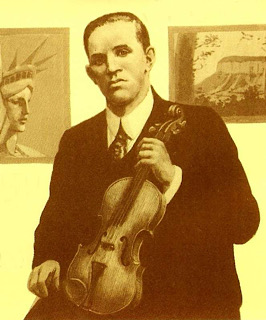
In 1915, at the age of 21, Morrison immigrates to the United States and settles in New York City. In 1918, he wins the fiddle competition at the New York Feis. He becomes associated with other leading Irish musicians such as Michael Coleman and Paddy Killoran, who are also from County Sligo.
Morrison is one of the leading Irish music teachers in New York in the 1930s and 1940s. In addition to the fiddle, he can play the flute, tenor banjo and button accordion, and teaches hundreds of young Irish American students to play traditional music.
The Sligo style of fiddle music Morrison plays is typically highly ornamented and fast, with a fluid bowing style. Recordings of his playing are imported to Ireland in great numbers, and have an extraordinary impact. In many areas, local playing styles fall into disuse because of the popularity of the style and repertoire of Morrison and Michael Coleman. This repertoire includes predominantly reels, rather than jigs and hornpipes, and are often played by Irish musicians in the same order as on the original recordings. According to Séamus Mac Mathúna, “More than thirty years after Coleman’s death … one seldom hears ‘Bonny Kate’ without ‘Jenny’s Chickens.’ ‘Tarbolton’ is inevitably followed by ‘The Longford Collector’ and the ‘Sailor’s Bonnet.'” The great Canadian fiddler Jean Carignan was is influenced by Morrison. Morrison is well regarded by Frankie Gavin: “the approach he had to fiddle playing and the approach he had to any tune he touched just…can’t be beaten…nobody can play like that today.”
Morrison dies on November 11, 1947, and is interred, like many of his great musical contemporaries, in Saint Raymond’s Cemetery in the Bronx.
Hamilton Rowan lives there with his mother and sister for much of his early life. He is admitted to Queens’ College, Cambridge in 1768, but is expelled from the college and rusticated for an attempt to throw a tutor into the River Cam. He is sent for a period in 1769 to Warrington Academy.
Hamilton Rowan travels throughout the 1770s and 1780s, visiting parts of Europe, the Americas, and North Africa. In 1781, he marries Sarah Dawson in Paris, France. The couple has ten children. He is the godfather of the Irish mathematician William Rowan Hamilton.
Hamilton Rowan returns to Ireland in his thirties, in 1784, to live at Rathcoffey near Clane in County Kildare. He becomes a celebrity and, despite his wealth and privilege, a strong advocate for Irish liberty. That same year he joins the KillyleaghVolunteers, a militia group later associated with radical reform. He first gains public attention by championing the cause of fourteen-year-old Mary Neal in 1788. Neal had been lured into a Dublin brothel and then assaulted by Henry Luttrell, 2nd Earl of Carhampton. Hamilton Rowan publicly denounces Luttrell and publishes a pamphlet A Brief Investigation of the Sufferings of John, Anne, and Mary Neal in the same year. An imposing figure at more than six feet tall, his notoriety grows when he enters a Dublin dining club threatening several of Mary Neal’s detractors, with his massive Newfoundland at his side and a shillelagh in hand. The incident wins him public applause and celebrity as a champion of the poor.
In 1790 Hamilton Rowan joins the Northern Whig Club, and by October has become a founding member of the Dublin Society of United Irishmen, working alongside famous radicals such as William Drennan and Theobald Wolfe Tone. He is arrested in 1792 for seditious libel when caught handing out “An Address to the Volunteers of Ireland,” a piece of United Irish propaganda. Unknown to him, from 1791 Dublin Castle has a spy in the Dublin Society, Thomas Collins, whose activity is never discovered. From February 1793, Britain and Ireland join the War of the First Coalition against France, and the United Irish movement is outlawed in 1794.
Hamilton Rowan’s reputation for radicalism and bluster grow during this time when he leaves Ireland to confront the Lord Advocate of Scotland about negative comments made in respect to his character and that of members of the Society of United Irishmen. As a prominent member of the Irish gentry, he is an important figure in the United Irishmen and becomes the contact for the Scottish radical societies as a result of his visit. Upon his return to Dublin, he is charged and is found guilty of seditious libel, even though he is excellently defended by the famous John Philpot Curran. He is sentenced to two years imprisonment, receives a fine of £500, and is forced to pay two assurities for good behaviour of £1,000 each. In January 1794, he retires to his apartments in Dublin’s Newgate Prison.
In the years following, Hamilton Rowan spends time in exile in France, the United States and Germany. He is allowed to return to Ireland in 1806. He returns to the ancestral home of Killyleagh Castle, County Down, receiving a hero’s welcome. While he agrees to be a model citizen under the conditions of his return to Ireland, he remains active in politics and retains his youthful radicalism. Following his last public appearance at a meeting in the Rotunda in Dublin on January 20, 1829, he is lifted up by a mob and paraded through the streets.
Hamilton Rowan dies at the age of 84 in his home on November 1, 1834. He is buried in the vaults of St. Mary’s Church, Dublin.
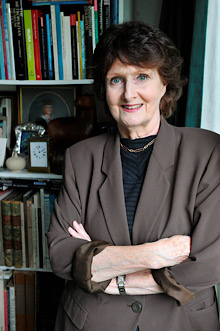
Boland is born in Dublin on September 24, 1944. Her father, Frederick Boland, is a career diplomat and her mother, Frances Kelly, was a noted painter.
When she is six, Boland’s father is appointed Irish Ambassador to the United Kingdom, and the family moves to London, where she has her first experiences of anti-Irish sentiment. Her dealing with this hostility strengthens her identification with her Irish heritage. She speaks of this time in her poem, “An Irish Childhood in England: 1951.”
In 1969, Boland marries the novelist Kevin Casey. They have two daughters together. Her experiences as a wife and mother influence her to write about the centrality of the ordinary, as well as providing a frame for more political and historical themes. According to her friend Gabrielle Calvocoressi, she “loved gossip like fish love water.”
In the late 1970s and 1980s, Boland teaches at the School of Irish Studies in Dublin. From 1996 she is a tenured Professor of English at Stanford University where she is the Bella Mabury and Eloise Mabury Knapp Professor in the Humanities and Melvin and Bill Lane Professor for Director of the Creative Writing program. She divides her time between Palo Alto and her home in Dublin.
Boland’s first book of poetry is New Territory published in 1967 with Dublin publisher Allen Figgis. This is followed by The War Horse (1975) and In Her Own Image (1980). Night Feed (1982) establishes her reputation as a writer on the ordinary lives of women and on the difficulties faced by women poets in a male-dominated literary world. While she is writer in residence at the National Maternity Hospital in Dublin in 1994, she composes “Night Feed” and “The Tree of Life,” and her work remains on a plaque in the hospital garden.
In March 2018, RTÉ broadcasts a documentary on Boland’s life as a poet called “Eavan Boland: Is it Still the Same?” In the same year, she is commissioned by the Government of Ireland and the Royal Irish Academy (RIA) to write the poem “Our future will become the past of other women” to be read at the United Nations (UN) and in Ireland during the centenary commemorations of women gaining the vote in Ireland in 1918.
Boland co-edits The Making of a Poem: A Norton Anthology of Poetic Forms (with Mark Strand; W. W. Norton & Co., 2000). She also publishes a volume of translations in 2004 called After Every War (Princeton University Press). With Edward Hirsch, she co-edits “The Making of a Sonnet: A Norton Anthology of the Sonnet” (W. W. Norton & Co., 2008).
In 1976, Boland wins a Jacob’s Award for her involvement in The Arts Programme broadcast on RTÉ Radio. Her other awards include a Lannan Foundation Award in Poetry and an American Ireland Fund Literary Award. Her collection In a Time of Violence (1994) receives a Lannan Award and is shortlisted for the T. S. Eliot Prize.
Boland receives the Bucknell Medal of Distinction 2000 from Bucknell University, the Corrington Medal for Literary Excellence by Centenary College of Louisiana in 2002, the Smartt Family prize from The Yale Review and the John Frederick Nims Award from Poetry magazine 2002. Her volume of poems Against Love Poetry is a New York Times Notable Book of the Year. Her volume Domestic Violence (2007) is shortlisted for the Forward Prize in the United Kingdom. Her poem “Violence Against Women” from the same volume is awarded the James Boatwright III Prize for Poetry for the best poem published in 2007 in Shenandoah magazine. In 2012, she wins a PEN Award for creative nonfiction with her collection of essays, A Journey With Two Maps: Becoming a Woman Poet, published in 2012.
On May 25, 2018, Boland is elected an honorary member of the Royal Irish Academy. She receives the Irish PEN Award for Literature in 2019. She is writer in residence at the National Maternity Hospital, Dublin, in 1994. During this time she composes “Night Feed” and “The Tree of Life,” and her work remains on a plaque in the hospital garden.
Boland dies in Dublin on April 27, 2020, at the age of 75. Later that year she is posthumously awarded the Costa Book Award for poetry for her final collection The Historians.
In 2024, Trinity College Dublin announces the renaming of the “denamed” former Berkeley Library as the Eavan Boland Library. This makes it the first building named after any woman on Trinity’s city centre campus. The name is made official in March 2025.
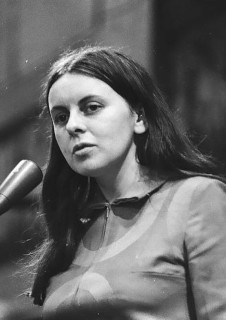
Devlin is born into a Roman Catholic family and attends St. Patrick’s Girls Academy in Dungannon. She is studying Psychology at Queen’s University Belfast (QUB) in 1968 when she takes a prominent role in a student-led civil rights organisation, People’s Democracy. She is subsequently excluded from the university.
After engaging on the side of the residents in the Battle of the Bogside, Devlin is convicted of incitement to riot in December 1969, for which she serves a short jail term.
Having witnessed the events of Bloody Sunday, Devlin is infuriated that she is consistently denied the floor in the House of Commons by the Speaker Selwyn Lloyd, despite the fact that parliamentary convention decrees that any MP witnessing an incident under discussion would be granted an opportunity to speak about it. She slaps Reginald Maudling, the Home Secretary in the Conservative government, across the face when he states in the House of Commons that the paratroopers had fired in self-defence on Bloody Sunday.
In 1971, Devlin gives birth to a daughter, Róisín, which costs her some political support because she is unmarried. She later marries Róisín’s father, Michael McAliskey, on her 26th birthday on April 23, 1973.
McAliskey stands as an independent candidate in support of the prisoners at Long Kesh prison in the 1979 European Parliament elections in Northern Ireland and wins 5.9% of the vote. She is a leading spokesperson for the Smash H-Block Campaign, which supports the hunger strikes of 1980 and 1981.
On January 16, 1981, McAliskey and her husband are shot by members of the Ulster Defence Association (UDA), who break into their home near Coalisland, County Tyrone. She is shot fourteen times in front of her children. British soldiers are watching the McAliskey home at the time but fail to prevent the assassination attempt. The couple are taken by helicopter to a hospital in nearby Dungannon for emergency treatment and then transported to the Musgrave Park Hospital, Military Wing, in Belfast, under intensive care. The attackers, all three members of the South Belfast UDA, are captured by the army patrol and subsequently jailed.
In 1982, McAliskey twice fails in an attempt to be elected to the Dublin North–Central constituency of Dáil Éireann. In 2003, she is barred from entering the United States and is deported on the grounds that the United States Department of State has declared that she “poses a serious threat to the security of the United States,” apparently referring to her conviction for incitement to riot in 1969.
On May 12, 2007, McAliskey is the guest speaker at Éirígí‘s first Annual James Connolly commemoration in Arbour Hill, Dublin. She currently co-ordinates a not-for-profit community development organisation based in Dungannon, the South Tyrone Empowerment Programme, and works with migrant workers to improve their treatment in Northern Ireland.
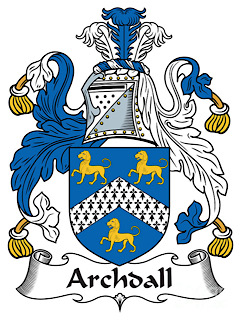
Archdall is educated by Dr. Keenane, and enters Trinity College Dublin (TCD) in 1739. He graduates with a Bachelor of Arts (BA) in 1744 and a Master of Arts (MA) in 1747, and is ordained in the Church of Ireland. He is curate of Howth from 1750 to 1753, and of Kilgobbin and Taney, also in Dublin, from 1753 to 1758, rector of Nathlash in the diocese of Cloyne from 1749 to 1758, and from 1756 domestic chaplain to Richard Pococke, Bishop of Ossory. In 1761 Pococke gives Archdall the livings of Agharney and Attanagh in Ossory which he holds until 1786, when he becomes rector of Slane in the Diocese of Meath. He is also prebendary of Cloneamary from 1762 to 1764 and of Mayne from 1764 to 1772, both in Ossory.
Archdall is interested, almost from his student days, in ancient history and antiquities, and for forty years he gathers material for a work similar to an earlier compilation, William Dugdale‘s Monasticon Anglicanum. He intends to publish two or more large folio volumes, but after Pococke’s death has no sponsor and has to pay for its publication himself causing him to cut back the scale of the project. Monasticon Hibernicum appears in 1786 as a quarto volume, though still of over 800 pages. Archdall attempts encyclopaedic coverage of the history of Ireland’s pre-reformation monasteries and abbeys. The work is ground-breaking and ambitious, though marred by mistakes and inadequacies. He receives help from friends, including scholars such as Pococke and Edward Ledwich, and with them and others is a founder member of the Royal Irish Academy (RIA) in 1786.
In 1789, Archdall publishes his second important work, a new edition of ThePeerageof Ireland by John Lodge. Lodge’s original work in four volumes is expanded by Archdall into seven octavos, adding a good deal of material from his own research to update the genealogies, as well as incorporating manuscript additions unpublished by the original author. These had been left in a cipher or in a private form of shorthand which could not be decoded by any contemporary expert in Dublin, and Archdall is just about to abandon the attempt to read them when his second wife works on it and discovers the key.
Archdall’s first wife, Sarah Colles or Collis, whom he marries in Dublin on July 30, 1747, is said to have been a relative of Thomas Prior, though she may also – or instead – have been connected in some way to Pococke. The bishop is known to have educated Christopher Colles (1739–1816), who becomes an important engineer and entrepreneur in the United States. They have two sons and a daughter, the elder son dying young. Sarah dies on May 28, 1782. Archdall marries his second wife, Abigail Young, on November 25, 1782.
Archdall’s works are still of interest to historians and genealogists, and surviving copies are valuable collectors’ items. In an apologia in his preface to the Peerage he notes, “I have left that inaccurate which could not be exact, and that imperfect which cannot be completed.” He dies suddenly on August 6, 1791, and is buried in Slane churchyard.
(From: “Archdall, Mervyn” by Linde Lunney, Dictionary of Irish Biography, http://www.dib.ie, October 2009)
Ginnell is born in Delvin, County Westmeath, in 1852, (baptised April 9, 1852) the son of Laurence Ginnell and Mary Monaghan and twin to Michael Ginnell. He is self-educated and is called to the Irish bar as well as the Bar of England and Wales. In his youth, he is involved with the Land War and acts as private secretary to John Dillon.
The last great social and agrarian campaign of the Irish home rule movement, the Ranch War (1906 and 1909), is largely led and organised by Ginnell from the central office of the United Irish League. He is elected an MP in 1906, takes his seat at Westminster and swears allegiance to Edward VII. On October 14, 1906, he launches the “war” at Downs, County Westmeath.
The purpose of the war is to bring relief to the large numbers of landless and smallholders, particularly in the West, who are relatively untouched by the Wyndham Land Act (1903) and by the larger policy of purchase. The strategy that Ginnell pursues is the Down’s Policy, or cattle driving, a proceeding designed to harass the prosperous grazier interests, whose “ranches” occupy large, under populated and under worked tracts. The Down’s Policy is also meant to draw public attention to the scandalous inequalities that survive in the Irish countryside. The conservatives within the home rule leadership are understandably suspicious about the revival of agrarian disturbances, but the mood of the party organisation is hardening in the aftermath of a disappointing devolution bill in May 1907, from the new Liberal government, so that it seems logical to turn to the traditional mechanism for reactivating the national question: agrarian agitation.
Ginnell’s cattle drives begin to tail off after the summer of 1908, and the agitation is finally dissolved with the passage of a 1909 Act by the Liberal Chief Secretary Augustine Birrell that allows the transfer to the Irish Land Commission of farmland by compulsory purchase, which is hailed by the national movement as an historic victory. In reality, the Ranch War involves an implosion within sectors of the Irish Parliamentary Party, as its leadership has not facilitated the working of the Wyndham Land Act in the first place because John Dillon and his like want conflict above victory.
In 1909, Ginnell is expelled from the Irish Parliamentary Party for the offence of asking to see the party accounts after which he sits as an Independent Nationalist. During this time, he is addressed frequently as “The MP for Ireland.” At Westminster, he is highly critical of the British government‘s war policy and its holding of executions of certain participants in the Easter Rising of 1916. On May 9, he accuses British Prime MinisterH. H. Asquith, of “Murder” and is forcibly ejected from the Chamber. He visits many of the prisoners who are interned in various prisons in Wales and England.
At the Sinn Féin ardfheis in 1917, at which the party is reconstituted as a republican party with de Valera as president, Ginnell and W. T. Cosgrave are elected Honorary Treasurers. He is imprisoned in March 1918 for encouraging land agitation and later deported to Reading Gaol. In the 1918 United Kingdom general election, he is elected as a Sinn Féin MP for the Westmeath constituency by comfortably defeating his IPP challenger. After his release from prison, he attends the proceedings of the First Dáil. Along with fellow TDJames O’Mara, he is one of the only TDs to serve as a member in both the House of Commons and Dáil Éireann.
He is one of the few people to have served in the House of Commons and in the Oireachtas. He is appointed Director of Propaganda in the Second Ministry of the Irish Republic. After spending a year as a republican campaigner in Chicago, he is appointed the Representative of the Irish Republic in Argentina and South America by de Valera. He carries out his propaganda work here to distribute copies of the Irish Bulletin and to provide the Sinn Féin version of the conflict during the Irish War of Independence. On August 16, 1921, he returns home to attend the first meeting of the Second Dáil. He travels back to Argentina some months later to serve as the Representative of the Republic there.
On September 9, 1922, Ginnell is the only anti-Treaty TD to attend the inaugural meeting of the Provisional Parliament or Third Dáil. Before signing the roll, he says, “I want some explanation before I sign. I have been elected in pursuance of a decree by Dáil Éireann, which decree embodies the decree of May 20, 1922. I have heard nothing read in reference to that decree, nothing but an Act of a foreign Parliament. I have been elected as a member of Dáil Éireann. I have not been elected to attend any such Parliament. Will anyone tell me with authority whether it is…”.
Ginnell is at this point interrupted but resumes by saying that he will sign the roll and take his seat in the Assembly if the Assembly is Dáil Éireann. He is informed he is not allowed raise any such question until a Ceann Comhairle has been elected. He continues to ask questions regardless to which he gets no answer including his question: “Will any member of the Six Counties be allowed to sit in this Dáil?” W. T. Cosgrave moves at this point that he be excluded from the House. Ginnell protests, and he is dragged out by force.
De Valera later appoints Ginnell a member of his “Council of State,” a twelve-member body set up to advise him on the deteriorating situation in the civil war. He returns to the United States soon afterward to serve as the Republic‘s envoy in the country. He orders Robert Briscoe and some of his friends to take possession of the Consular Offices in Nassau Street, New York City, then in the hands of the Irish Free State Government, to obtain the list of the subscribers to the bond drive organized to aid the struggle in the War of Independence. At the time, a court case is ongoing to decide on who has the right to the funds: the newly installed Provisional Government or de Valera, as one of the three trustees among the anti-Treatyites.
Ginnell dies in Washington, D.C. on April 17, 1923, at the age of 71, still campaigning against the Anglo-Irish Treaty.