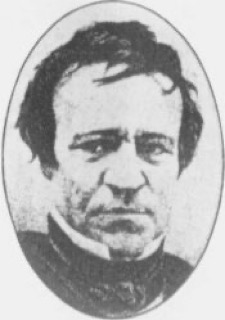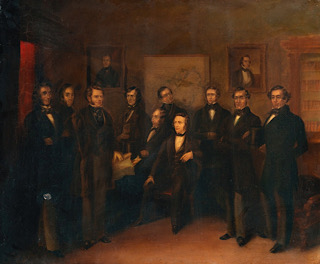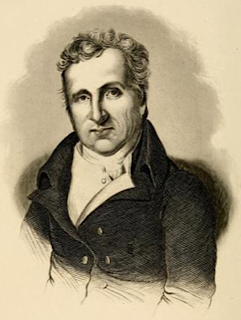
O’Doherty receives a good education and studies medicine, but before he is qualified, joins the Young Ireland party and in June 1848, together with Thomas Antisell and Richard D’Alton Williams, establish The Irish Tribune. Only five editions are issued, the first being on June 10, 1848. On July 10, 1848, when the fifth edition is issued, O’Doherty is arrested and charged with treason felony. At the first and second trials the juries disagree, but at the third trial, he is found guilty and sentenced to transportation for ten years.
O’Doherty arrives in Tasmania in November 1849, is at once released on parole to reside at Oatlands, and his professional services are utilised at St. Mary’s Hospital, Hobart. The other Irish prisoners nickname him “St. Kevin.” In 1854 he receives a pardon with the condition that he must not reside in Great Britain or Ireland. He goes to Paris and carries on his medical studies, making one secret visit to Ireland to marry Mary Eva Kelly, to whom he is affianced before leaving Ireland. He receives an unconditional pardon in 1856, and completes his studies in Dublin, graduating FRCS in 1857. He practises in Dublin successfully, and in 1862 goes to Brisbane, Australia, and becomes well known as one of its leading physicians.
O’Doherty is elected a member of the Legislative Assembly of Queensland in 1867, in 1872 is responsible for a health act being passed, and is also one of the early opponents of the trafficking of Kanakas. In 1885, he resigns as he intends to settle in Europe.
In Ireland, O’Doherty is cordially welcomed, and is returned unopposed as Irish Parliamentary Party (IPP) MP for North Meath to the House of Commons of the United Kingdom in the November 1885 United Kingdom general election. However, finding the climate does not suit him, he does not seek re-election in 1886 and returns to Brisbane in that year. He attempts to take up his medical practice again but is not successful. He dies in poor circumstances in Brisbane on July 15, 1905.
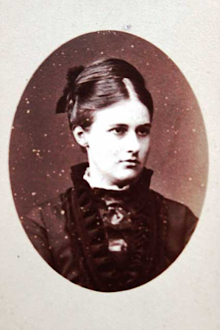
O’Doherty’s wife and a daughter survive him. A fund is raised by public subscription to provide for his widow, a poet, who in her early days is well known as the author of Irish patriotic verse in The Nation under the soubriqet “Eva.” In Australia, she occasionally contributes to Queensland journals, and one of her poems is included in A Book of Queensland Verse. She dies at Brisbane on May 21, 1910.
Mitchel is born in Camnish, near Dungiven, County Derry on November 3, 1815, the son of a Presbyterian minister. At the age of four, he is sent to a classical school, run by an old minister named Moor, nicknamed “Gospel Moor” by the students. He reads books from a very early age. When a little over five years old, he is introduced to Latin grammar by his teacher and makes quick progress. In 1830, not yet 15 years old, he enters Trinity College, Dublin (TCD) and obtains a law degree in 1834.
In the spring of 1836, Mitchel meets Jane Verner, the only daughter of Captain James Verner. Though both families are opposed to the relationship, they become engaged in the autumn and are married on February 3, 1837, by the Rev. David Babington in Drumcree Church, the parish church of Drumcree.
Mitchel works in a law office in Banbridge, County Down, where he eventually comes into conflict with the local Orange Order. He meets Thomas Davis and Charles Gavan Duffy during visits to Dublin. He joins the Young Ireland movement and begins to write for The Nation. Deeply affected by the misery and death caused by the Great Famine, he becomes convinced that nothing will ever come of the constitutional efforts to gain Irish freedom. He then forms his own paper, United Irishman, to advocate passive resistance by Ireland’s starving masses.
In May 1848, the British tire of Mitchel’s open defiance. Ever the legal innovators in Ireland, they invent a crime especially for the Young Irelanders – felony-treason. They arrest him for violating this new law and close down his paper. A rigged jury convicts him, and he is deported first to Bermuda and then to Australia. However, on June 8, 1853, he escapes to the United States.
Mitchel works as a journalist in New York City and then moves to the South. When the American Civil War erupts, he is a strong supporter of the Southern cause, seeing parallels with the position of the Irish. His family fully backs his commitment to the Southern cause. He loses two sons in the war, one at the Battle of Gettysburg in 1863 and another at the Battle of Fort Sumter in 1864, and another son loses an arm. His outspoken support of the Confederacy causes him to be jailed for a time at Fort Monroe, where one of his fellow prisoners is Confederate PresidentJefferson Davis.
In 1874, the British allow Mitchel to return to Ireland and in 1875 he is elected in a by-election to be a member of the Parliament of the United Kingdom representing the Tipperary constituency. However, his election is invalidated on the grounds that he is a convicted felon. He contests the seat again in the resulting by-election and is again elected, this time with an increased vote.
Unfortunately, Mitchel, one of the staunchest enemies to English rule of Ireland in history, dies in Newry on March 20, 1875, and is buried there. Thirty-eight years later, his grandson, John Purroy Mitchel, is elected Mayor of New York City.
Kickham’s father, John Kickham, is the proprietor of the principal drapery in the locality and is held in high esteem for his patriotic spirit. His mother, Anne O’Mahony, is related to the Fenian leader John O’Mahony. He grows up largely deaf and almost blind, the result of an explosion with a powder flask when he is thirteen. He is educated locally, where it is intended that he study for the medical profession. During his boyhood the campaign for a repeal of the Acts of Union 1800 between Great Britain and Ireland is at its height, and he soon becomes versed in its arguments and is inspired by its principles. He often hears the issues discussed in his father’s shop and at home amongst all his friends and acquaintances.
From a young age Kickham is imbued with these patriotic ideals. He becomes acquainted with the teaching of the Young Irelanders through their newspaper The Nation from its foundation in October 1842. His father read the paper aloud every week for the family. Like all the young people of the time, and a great many of the old ones, his sympathies are with the Young Irelanders on their secession from the Repeal Association.
When he is 22 years old, Kickham contributes The Harvest Moon sung to the air of “The Young May Moon,” to The Nation on August 17, 1850. Other verses are to follow, but the finest of his poems according to A. M. O’Sullivan, appear in other journals. Rory of the Hill, The Irish Peasant Girl, and Home Longings, better known as Slievenamon, are published in the Celt. The First Felon appears in the Irishman. Patrick Sheehan, the story of an old soldier, is published in the Kilkenny Journal, and becomes very popular as an anti-recruiting song.
Kickham begins to write for a number of papers, including The Nation, but also the Celt, the Irishman, the Shamrock, and becomes one of the leading writers of The Irish People, the Fenian newspaper, in which many of his poems appear. His writings are signed using his initials, his full name, or the pseudonyms, “Slievenamon” and “Momonia.”
Kickham is the leading member of the Confederation Club in Mullinahone, which he is instrumental in founding. When the revolutionary spirit begins to grip the people in 1848, he turns out with a freshly made pike to join William Smith O’Brien and John Blake Dillon when they arrive in Mullinahone in July 1848. On hearing of the progress of O’Brien through the country, he sets to work manufacturing pikes and is in the forge when news reaches him that the leaders are looking for him. It is here that he meets James Stephens for the first time. At O’Brien’s request, he rings the chapel bell to summon the people and before midnight a Brigade has answered the summons. He later writes a detailed account about this period which brings his connection with the attempted Rising of 1848 to a close.
After the failed 1848 uprising at Ballingarry, Kickham has to hide for some time, as a result of the part he had played in rousing the people of his native village to action. When the excitement has subsided, he returns to his father’s house and resumes his interests in the sports of fishing and fowling and spends much of his time in literary pursuits. Some of the authors in which he is well versed are Alfred Tennyson and Charles Dickens and he greatly admires George Eliot, and after William Shakespeare, is Robert Burns.
In the autumn of 1857, a messenger arrives from New York with a message for James Stephens from members of the Emmet Monument Association, calling on him to get up an organization in Ireland. On December 23, Stephens dispatches Joseph Denieffe to the United States with his reply and outlines his conditions and his requirements from the organisation in America. Denieffe returnd on March 17, 1858, with the acceptance of Stephens’ terms and £80. That evening the Irish Republican Brotherhood commences. Those present in Langan’s, lathe-maker and timber merchant, 16 Lombard Street, for that first meeting are Stephens, Kickham, Thomas Clarke Luby, Peter Langan, Denieffe and Garrett O’Shaughnessy. Later it includes members of the Phoenix National and Literary Society, which is formed in 1856 by Jeremiah O’Donovan Rossa in Skibbereen, County Cork.
In mid-1863, Stephens informs his colleagues that he wishes to start a newspaper, with financial aid from O’Mahony and the Fenian Brotherhood in America. The offices are established at 12 Parliament Street, almost at the gates of Dublin Castle. The first issue of The Irish People appears on November 28, 1863. The staff of the paper along with Kickham are Luby and Denis Dowling Mulcahy as the editorial staff, O’Donovan Rossa and James O’Connor in charge of the business office, with John Haltigan being the printer. John O’Leary is brought from London to take charge in the role of Editor. Shortly after the establishment of the paper, Stephens departs on an America tour, and to attend to organizational matters. Before leaving, he entrusts to Luby a document containing secret resolutions on the Committee of Organization or Executive of the IRB. Though Luby intimates its existence to O’Leary, he does not inform Kickham as there seems no necessity. This document later forms the basis of the prosecution against the staff of The Irish People.
Kickham’s first contribution to The Irish People, entitled Leaves from a Journal, appears in the third issue and is based on a journal he kept on his way to America in 1863. This article leaves no doubt as to his literary capacity according to O’Leary. It falls to Kickham, as a good Catholic, to tackle the priests, though not exclusively with articles such as “Two Sets of Principles,” a rebuff to the doctrines laid down by Lord Carlisle, and “A Retrospect,” dealing with the tenant-right movement chiefly but also the events of the recent past and their bearing on the present. Kickham articulates the attitude held by the IRB in relation to priests, or more particularly in politics.
On July 15, 1865, American-made plans for a rising in Ireland are discovered when the emissary loses them at Kingstown railway station. They find their way to Dublin Castle and to Superintendent Daniel Ryan, head of G Division. Ryan has an informer within the offices of The Irish People named Pierce Nagle. He supplies Ryan with an “action this year” message on its way to the IRB unit in Tipperary. With this information, Ryan raids the offices of The Irish People on September 15, followed by the arrests of O’Leary, Luby, and O’Donovan Rossa. Kickham is caught after a month on the run. Stephens is also caught but with the support of Fenian prison warders John J. Breslin and Daniel Byrne is less than a fortnight in Richmond Bridewell when he vanishes and escapes to France. The last issue of The Irish People is dated September 16, 1865.
On November 11, 1865, Kickham is convicted of treason. Judge William Keogh, with many expressions of sympathy for the prisoner, and many compliments in reference to his intellectual attainments, sentences him to fourteen years’ penal servitude. The prisoners’ refusal to disown their opposition to British rule in any way, even when facing charges of life-imprisonment, earn them the nickname of “the bold Fenian men.” Kickham spends time from 1866 until his release in the Woking Convict Invalid Prison.
Kickham is given a free pardon from Queen Victoria on February 24, 1869, because of ill-health, and upon his release he is made Chairman of the Supreme Council of the IRB and the unchallenged leader of the reorganized movement. He is an effective orator and chairman of meetings despite his physical handicaps. He wears an ear trumpet and can only read when he holds books or papers within a few inches of his eyes. For many years he carries on conversations by means of the deaf and dumb alphabet.
Kickham is the author of three well-known stories, dealing sympathetically with Irish life and manners and the simple faith, the joys and sorrows, the quaint customs and the insuppressible humour of the peasantry. Knocknagow is deemed one of the finest tales of peasant life ever written. Sally Cavanagh is a touching story illustrating the evils of landlordism and emigration. For the Old Land deals with the fortunes of a small farmer’s family.
Kickham dies on August 22, 1882, at the house of James O’Connor, a former member of the IRB and afterward MP for West Wicklow, 2 Montpelier Place, Blackrock, Dublin, where he had been living for many years, and had been cared for by the poet Rose Kavanagh. He is buried in Mullinahone, County Tipperary.
The mid-19th-century is a difficult time for the Irish. Under British subjugation, and amidst the vice-grip of the Great Famine, Ireland and its people are in desperate need for optimism, and something to bring the nation together.
News of the recent French Revolution has reached Irish ears and there is a growing belief that the path to independence is an achievable one.
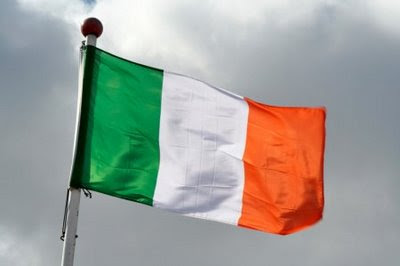
During a trip to Paris with an Irish delegation sent to congratulate the French republicans on their successful revolution, Meagher is inspired to create a design for the Irish tricolour, similar to the French flag, with the help of a small group of French women sympathetic to the Irish cause.
The new flag has green, white and orange stripes – the colours symbolising the unification of two traditions into one nation – Catholics (green) and Protestants (orange). Few realise however, that Meagher’s original flag has the orange stripe closest to the staff, a design now used by Ivory Coast.
As Meagher outlines later, “The white in the centre signifies a lasting truce between Orange and Green and I trust that beneath its folds the hands of Irish Protestants and Irish Catholics may be clasped in generous and heroic brotherhood.”
At a meeting in Waterford on March 7, 1848, Meagher first publicly unveils the flag from a second-floor window of the Wolfe Tone Club as he addresses a gathered crowd on the street below who are present to celebrate another revolution that has just taken place in France.
From March of that year the Irish tricolour appears side-by-side with the French tricolour at meetings held all over the country.
On April 14 and 15, the flag is paraded around the country. Political journalistJohn Mitchel says at the time, “I hope to see that flag one day waving, as our national banner.”
During this time, support for Meagher’s design grows, and following the events of the 1916 Easter Rising, it is resurrected by the Irish Volunteers and later by Sinn Féin and is unofficially adopted as the flag of Ireland. With the green stripe closest to the staff, Meagher’s tricolour becomes the official flag of the 26 counties of the Irish Republic.
In 1937, the design achieves constitutional status as the official Irish flag.
Until recently, display of the tricolour flag is illegal in the six occupied counties of Northern Ireland.
(From: “On this day in 1848: Ireland’s new flag is shown to public for first time” by Harry Brent, The Irish Post, http://www.irishpost.com, April 15, 2021)
MacHale is born in Tubbernavine, near Lahardane, County Mayo on March 6, 1791, to Patrick and Mary Mulkieran MacHale. He is so feeble at birth that he is baptised at home by Father Andrew Conroy. By the time he is five years of age, he begins attending a hedge school. Three important events happen during his childhood: the Irish Rebellion of 1798, the landing at Killala of French troops, whom the boy, hidden in a stacked sheaf of flax, watches marching through a mountain pass to Castlebar, and a few months later the brutal hanging of Father Conroy on a false charge of high treason.
With his friend and ally, Daniel O’Connell, MacHale takes a prominent part in the important question of Catholic emancipation, impeaching in unmeasured terms the severities of the former penal code, which had branded Catholics with the stamp of inferiority. During 1826 his zeal is omnipresent. He calls on the Government to remember how the Act of Union in 1800 was carried by William Pitt the Younger on the distinct assurance and implied promise that Catholic emancipation, which had been denied by the Irish Parliament, should be granted by the Parliament of the Empire.
Oliver Kelly, Archbishop of Tuam, dies in 1834, and the clergy selects MacHale as one of three candidates, to the annoyance of the Government who despatches agents to induce Pope Gregory XVI not to nominate him to the vacant see. Disregarding their request, the pope appoints MacHale Archbishop of Tuam. He is the first prelate since the Reformation who has received his entire education in Ireland. The corrupt practices of general parliamentary elections and the Tithe War cause frequent rioting and bloodshed and are the subjects of denunciation by the new archbishop, until the passing of a Tithes bill in 1838. He also leads the opposition to the ProtestantSecond Reformation, which is being pursued by evangelical clergy in the Church of Ireland, including the Bishop of Tuam, Killala and Achonry, Thomas Plunket.
The repeal of the Acts of Union 1800, advocated by O’Connell, enlists MacHale’s ardent sympathy and he assists the Liberator in many ways, and remits subscriptions from his priests for this purpose. In his zeal for the cause of the Catholic religion and of Ireland, so long downtrodden, but not in the 1830s, he frequently incurs from his opponents the charge of intemperate language, something not altogether undeserved. In his anxiety to reform abuses and to secure the welfare of Ireland, by an uncompromising and impetuous zeal, he makes many bitter and unrelenting enemies, particularly British ministers and their supporters.
The Great Famine of 1846–47 affects his diocese more than any. In the first year he announces in a sermon that the famine is a divine punishment on his flock for their sins. Then by 1846 he warns the Government as to the state of Ireland, reproaches them for their dilatoriness, and holds up the uselessness of relief works. From England as well as other parts of the world, cargoes of food are sent to the starving Irish. Bread and soup are distributed from the archbishop’s kitchen. Donations sent to him are acknowledged, accounted for, and disbursed by his clergy among the victims.
The death of O’Connell in 1847 is a setback to MacHale as are the subsequent disagreements within the Repeal Association. He strongly advises against the violence of Young Ireland. Over the next 30 years he becomes involved in political matters, particularly those involving the church. Toward the end of his life, he becomes less active in politics.
MacHale attends the First Vatican Council in 1869. He believes that the favourable moment has not arrived for an immediate definition of the dogma of papal infallibility. Better to leave it a matter of faith, not written down, and consequently he speaks and votes in the council against its promulgation. Once the dogma had been defined, he declares the dogma of infallibility “to be true Catholic doctrine, which he believed as he believed the Apostles’ Creed“. In 1877, to the disappointment of the archbishop who desires that his nephew should be his co-adjutor, Dr. John McEvilly, Bishop of Galway, is elected by the clergy of the archdiocese, and is commanded by Pope Leo XIII after some delay, to assume his post. He had opposed this election as far as possible but submits to the papal order.
Every Sunday MacHale preaches a sermon in Irish at the cathedral, and during his diocesan visitations he always addresses the people in their native tongue, which is still largely used in his diocese. On journeys he usually converses in Irish with his attendant chaplain and has to use it to address people of Tuam or the beggars who greet him whenever he goes out. He preaches his last Irish sermon after his Sunday Mass, April 1881. He dies in Tuam seven months later, on November 7, 1881, and is buried in the cathedral at Tuam on November 15.
O’Brien is a ship builder and designer, and his notable boats include the Kelpie (used for gun running in 1914), the Saoirse (in which he circumnavigates the globe) and the Ilen (a Falkland Islands service ship).
O’Brien is credited with two buildings in his lifetime: the Co-operative Hall in County Donegal and the People’s Hall in County Limerick. He is also known as a naval architect, having designed two ships, the Saoirse and the llen. He later captains both of these ships himself.
In Saoirse, a 20-ton, 42-foot ketch designed and built in 1922 in Baltimore, County Cork, he and three crew members circumnavigate the globe between 1923 and 1925 – the first recorded by an amateur skipper from west to east, the first yacht circumnavigation by way of the three great capes: Cape Horn, Cape of Good Hope and Cape Leeuwin, and the first boat flying the Irish tri-colour to enter many of the world’s ports and harbours. His voyage begins and ends at the Port of Foynes, County Limerick, where he lives. His account of the voyage, Across Three Oceans, (1927) becomes one of the classics of maritime literature.
Up until O’Brien’s circumnavigation, this route is the preserve of square-rigged grain ships taking part in the grain race from Australia to England via Cape Horn (also known as the clipper route).
O’Brien’s seagoing experiences are put to use in his design of the Ilen, which is built for the Falkland Islands as a service boat and launched in the spring of 1926. In 1998, Ilen returns to the site where she was first built, on the River Ilen near Baltimore, County Cork, where she undergoes a full restoration and is re-launched in May 2018. This task provides work-based learning for the students of the Ilen School.
O’Brien has some involvement with gun running in 1914 on behalf of the Irish Volunteers, for political reasons and because he has experience in sailing. On July 26, 1914, nine hundred guns are brought to Howth harbour aboard Erskine Childers‘ yacht Asgard. As part of the same operation, O’Brien transports arms on his yacht, Kelpie. The guns on Kelpie are transshipped to another yacht, Chotah, owned by Sir Thomas Myles, before being landed at Kilcoole in County Wicklow on August 1, 1914. After the gun running incidents, he serves in the Royal Naval Volunteer Reserve.
In 1928, O’Brien marries a well-known artist, Kathleen Francis, the youngest daughter of Sir George Clausen, RA. The couple thereafter moves to Ibiza, where they live on the Saoirse until Kathleen’s death in 1936. They have no children. Relocating to Cornwall, where he lives with his sister, he writes books on sailing and works of fiction for children. Although too old for active service when war with Germany breaks out in 1939, he assists the British war effort by serving in the Small Ships Pool, which delivers support vessels across the Atlantic and brings food supplies from the United States in private yachts.
In 1940 O’Brien sells Saoirse to the Royal Cornwall Yacht Club. The boat remains in use until 1980, when it is lost off the Jamaican coast. After the war he retires to another sister’s home in Foynes, County Limerick, where he lives and continues to write books for children until his death on April 18, 1952.
Sullivan, the second of six sons of Daniel Sullivan, house painter, and his wife, Catherine (née Baylor), a teacher, is born on May 15, 1829, in Bantry, County Cork. A popular date for Sullivan’s birth appears in many histories as 1830, but his gravestone reads 1829. He is educated in the local national school. One of his brothers is Timothy Daniel Sullivan, the Lord Mayor of Dublin from 1886 to 1888.
During the Great Famine of 1845 to 1847, Sullivan is employed as a clerk in connection with the relief works started by the government. Deeply influenced by the distress he witnesses, he afterward joins the Confederate Club formed in Bantry in support of the revolutionary movement of the Young Irelanders and is the organiser of the enthusiastic reception given by the town to William Smith O’Brien in July 1848 during the insurgent leader’s tour of the southern counties. Early in 1853, he goes to Dublin to seek employment as an artist. An exhibition of the arts and industries of Ireland is held in Dublin that year, and he is engaged to supply pencil sketches to the Dublin Expositor, a journal issued in connection with the exhibition. Subsequently, he obtains a post as a draughtsman in the Irish valuation office, and afterward as a reporter on the Liverpool Daily Post.
In 1855, Sullivan becomes assistant editor of The Nation, and subsequently editor and proprietor. From 1861 to 1884, in conjunction with his elder brother, T. D. Sullivan, he makes The Nation one of the most potent factors in the Irish Nationalist cause and also issues the Weekly News and Zozimus. Called to the Irish bar in 1876, he is a “special call” of the Inner Temple in 1877 and is made QC in 1881. He mainly practices at the English bar, though he acts in some political cases in Ireland.
As a member of the Dublin Corporation, Sullivan secures a magnificent site for the Grattan Monument, toward which he donates £400, the amount of a subscription by his admirers while he is undergoing imprisonment for a political offence in 1868. The monument is formally unveiled in January 1876. Between 1878 and 1882 he is engaged in many notable trials. His last great case is on November 30, 1883, when he is a colleague of Lord Russell in the defence of Patrick O’Donnell for the murder of James Carey, an informer.
Sullivan suffers another heart attack while on holiday in Bantry in September 1884 and spends his last days with William Martin Murphy at Dartry, County Dublin. Murphy regards him as a father figure, attributing his success to Sullivan’s early advice and journalistic training. Sullivan dies on October 17, 1884, at Dartry Lodge, Rathmines, Dublin. He is buried at Glasnevin Cemetery. With his wife, Frances Genevieve Donovan, whom he marries on April 27, 1861, and who outlives him by nearly forty years, he has a family of three sons and five daughters. His second son and namesake, Alexander Martin Sullivan, is the last to hold the rank of Serjeant-at-law (Ireland).
In addition to his labours, Sullivan is a great temperance reformer. He also writes two notable books, The Story of Ireland and New Ireland and contributes many sketches (including some verse) to Irish Penny Readings (1879–85). Some of his correspondence is located in the Isaac Butt papers in the National Library of Ireland.
Gray is the third son of John and Elizabeth Gray of Mount Street. He is educated at Trinity College Dublin and obtains the degree of M.D. and Master of Surgery at the University of Glasgow in 1839. Shortly before his marriage in the same year, he settles in Dublin and takes up a post at a hospital in North Cumberland Street. He is admitted as a licentiate of the Royal College of Physicians in due course.
Gray is publicly minded and contributes to periodicals and the newspaper press. In 1841, he becomes joint proprietor of the Freeman’s Journal, a nationalist paper which is then published daily and weekly. He acts as political editor of the Journal for a time, before becoming sole proprietor in 1850. As owner, he increases the newspaper’s size, reduces its price and extends its circulation.
Gray enters politics at a relatively young age and attaches himself to Daniel O’Connell‘s Repeal Association. As a Protestant Nationalist, he supports the movement for the repeal of the Acts of Union with Britain. In October 1843, he is indicted with O’Connell and others in the Court of the Queen’s Bench in Dublin on a charge of sedition and “conspiracy against the queen.” The following February, he, together with O’Connell, is condemned to nine months imprisonment, but in early September 1844 the sentence is remitted on appeal. The trial has a strong element of farce, as the hot-tempered Attorney-General for Ireland, Sir Thomas Cusack-Smith, challenges Gray’s counsel, Gerald Fitzgibbon, to a duel, for which he is sternly reprimanded by the judges. From then on Gray is careful to distance himself from the advocacy of violence in the national cause, though he is sympathetic to the Young Ireland movement without being involved in its 1848 rebellion. Through the growing influence of the Freeman’s Journal, he becomes a significant figure in Dublin municipal politics. He is also active in national politics during an otherwise quiet period of Irish politics up until 1860. With the resurgence of nationalism after the famine, he helps to organise the Tenant’s League founding conference in 1850, standing unsuccessfully as the League’s candidate for Monaghan in the 1852 United Kingdom general election.
Later Gray originates and organises the “courts of arbitration” which O’Connell endeavours to substitute for the existing legal tribunals of the country. Following O’Connell’s death, in 1862 he inaugurates an appeal for subscriptions to build a monument to O’Connell on Sackville Street (now O’Connell Street). Independent from O’Connell, he continues to take a prominent part in Irish politics and in local affairs.
In municipal politics, Gray is elected councillor in 1852 and alderman of Dublin Corporation and takes an interest in the improvement of the city. As chairman of the committee for a new water supply to Dublin, he actively promotes what becomes the “Vartry scheme.” The Vartry Reservoir scheme involves the partial redirection and damming of the River Vartry in County Wicklow, and the building of a series of water piping and filtering systems (and related public works) to carry fresh water to the city. This work is particularly important in the improvement of conditions in the city, and to public health, as it improves sanitation and helps reduce outbreaks of cholera, typhus and other diseases associated with contaminated water. On the opening of the works on June 30, 1863, he is knighted by the Earl of Carlisle, then Lord Lieutenant of Ireland. Partially in recognition of these efforts, he is later be nominated for the position of Lord Mayor of Dublin for the years 1868–69, but he declines to serve.
In national politics, the Liberal government at the time is keen to conciliate an influential representative of the moderate nationalists to support British Liberalism and who will resume O’Connell’s constitutional agitation. In an unusual alliance with the CatholicArchbishop of Dublin, Paul Cullen, a man devoted to O’Connell’s memory, Gray’s newspaper exploits this shift in government policy. It supports the archbishop’s creation, the National Association of Ireland, established in 1864 with the intention of providing a moderate alternative to the revolutionary nationalism of the Fenians. The Freeman’s Journal adopts the aims of the Association as its own: it advocates the disestablishment of the AnglicanChurch of Ireland, reform of the land laws, educational aspirations of Irish Catholicism and free denominal education.
In the 1865 United Kingdom general election Gray is elected MP for Kilkenny City as a Liberal candidate. In this capacity he campaigns successfully at Westminster and in Ireland for the reforms also advocated in his paper. His newspaper’s inquiry into the anomalous wealth of the established church amidst a predominately Catholic population contributes considerably to William Ewert Gladstone‘s Irish Church Act 1869. He helps to furnish the proof that Irish demands are not to be satisfied by anything other than by radical legislation. He fights for the provision in the new Landlord & Tenant (Ireland) Act 1870 for fixity of tenure, which Gladstone eventually concedes. The Act’s other weaknesses, however, result in its failure to resolve the “land question,” the accompanying coercion, the disappointment with Gladstone’s handling of the university question and national education, causing Gray to deflect from the Liberals and become mistrusted in Britain. In the 1874 United Kingdom general election he is re-elected as a Home Rule League MP for Kilkenny, joining its Home Rule majority in the House of Commons, and holds his seat until his death the following year.
Gray dies at Bath, Somerset, England, on April 9, 1875. His remains are returned to Ireland, and he is honoured with a public funeral at Glasnevin Cemetery. Almost immediately afterwards public subscriptions are sought for the erection in O’Connell Street, of a monument to Gray. The monument is completed in 1879 and is dedicated to the “appreciation of his many services to his country, and of the splendid supply of pure water which he secured for Dublin.” His legacy also includes his contributions to the passage of the Irish Church and Land Bills, his advocacy for tenant’s rights and his support of the Home Rule movement.
(Pictured: Statue to Sir John Gray on Dublin’s O’Connell Street, designed by Thomas Farrell and unveiled on June 24, 1879. Photo credit: Graham Hickey)
Farrell is born in 1827 in Mecklenburgh Street (later called Railway Street) in Summerhill, Dublin, one of six sons of Terence Farrell, sculptor, and Maria Farrell (née Ruxton). He trains as a sculptor in his father’s workshops. In 1842 he enters the modelling school of the Royal Dublin Society, where he is awarded the prize for “Original design in clay” the following year. He is awarded premiums by the Royal Irish Art Union in 1844 and 1846. As a student he becomes acquainted with the neoclassical sculpture of John Flaxman and John Hogan. His first commission is a monument to ArchbishopDaniel Murray in St. Mary’s Pro-Cathedral in Dublin.
Throughout his career, Farrell remains actively involved in the Royal Hibernian Academy (RHA). He is elected directly as a full member in 1860 rather than undergoing an initial phase of associate membership. He exhibits almost annually with the academy until his death. He holds a number of posts, including professor of sculpture and treasurer, before being elected president in 1893, being the first sculptor to be so honoured. His achievements are recognised with a knighthood in May 1894.
Farrell dies at his residence, Redesdale House, in Stillorgan, County Dublin, on July 2, 1900. He is a shy, retiring man, and his death is not announced to the public for three days, in keeping with his wishes to avoid any sort of elaborate display on his behalf. Intensely private, he never marries and lives a life immersed in his work. Contemporary accounts describe him as constantly dissatisfied with his work despite consistent public approval for it.
Brenan is born in Cork, County Cork, on November 17, 1828. He begins to write verse at an early age and is one of the genuine poets of the Young Ireland movement. His earlier poems are published under the initials “J. B., Cork,” or “J. B—n,” and some of his American verses under the pseudonym “Gondalez.” He is also an able prose writer.
Brenan is an active member of the Cork Historical Society, and is one of the editors of the Cork Magazine, which appears in November 1847, and continues to be published until the end of 1848, when the journal ceases publication. Some of its contributors, who include Frazer, Martin MacDermott, Fitz James O’Brien, Mulchinock and Mary Savage, later either end up in jail or in exile.
In January 1848, John Mitchel visits Cork and, according to Michael Cavanagh, who publishes a sketch of Brenan’s life in Young Ireland, Dublin, in June and July 1885, Brenan for the first time “beheld the man he most admired on earth, and with whose future destiny, whether for weal or woe, he felt his own was bound up. Never had the archenemy of England a more faithful or earnest follower.”
Brenan contributes to the Mitchel’s United Irishman and sells his rifle to obtain train fare so he can take up his residence in Dublin, the headquarters of the revolutionary movement. He later publishes articles in John Martin‘s The Irish Felon urging the Confederate Clubs members, many of whom have arms, to be in readiness for action. “The sooner you realise the fact,” he writes in a letter addressed to the Members of the Provincial Confederate Clubs, “that the Confederation was got up for the purpose of doing something, the better for us all. Just think what it undertook to do. It undertook to defeat the strongest Government and to liberate the most degraded country that ever existed. It undertook to give – to a province—to strike the chains off millions of slaves and, if necessary, to wash out the iron moulds in blood.”
In another letter to “the Young Men of Ireland” on July 22, 1848, he writes, “On you I principally rely. You realise that you are very ‘rash,’ rather inclined to be ‘violent,’ and have exceedingly little prudence to spare. Brothers, let your watchword be ‘Now or never—now and forever’ rashly.”
Brenan is associated with John Savage and John O’Mahony while Savage is operating on the slopes of the Comeragh Mountains. He is arrested and kept in prison for seven months alternately in Newgate Prison, Carrickfergus and Kilmainham Gaols. During his confinement he writes some fine poems, according to T. F. O’Sullivan, one, entitled Yearnings, evidently addressed to Mary Savage, sister of John.
After his release without trial in March 1849, Brenan becomes editor of the Irishman which had been started in Dublin by Bernard Fulham, and for six months attempts to rekindle the insurrectionary flame in the country. He is implicated in the attack on the Cappoquin police barracks on September 16, 1848, and in October escapes to the United States.
In America Brenan becomes associated with a number of journals, including Horace Greeley‘s New-York Tribune, Devin Reilly’s People, The Enquirer of Newark, New Jersey, and the New Orleans Delta in which he writes a series of papers under the pen-name Ben Fox. On August 27, 1851, he marries Mary Savage, in her parents’ house, on Thirteenth Street, New York.
Brenan writes some articles and poems for John Mitchel’s Irish Citizen in 1854. He is an enthusiastic supporter of the Southern cause and founds the New Orleans Times.
Brenan dies on May 27, 1857, at the early age of twenty-nine and is buried in the old French cemetery of New Orleans. During the last year of his life, he is almost totally blind. He is attended in his last illness by Dr. Dalton Williams. There are seven children of his and Mary’s marriage, only one of whom, Florence, survives their parents. She possesses her father’s literary ability but devotes her life to religion as a member of the Mercy Order.
Brenan’s best-known poem, “Come to Me, Dearest,” is addressed to Mary Savage before their marriage. The love story of Brenan and Mary is told in the sketch by Ellen Mary Patrick Downing, afterwards Sister Mary Alphonsus.