On March 21, 1881, the Peace Preservation (Ireland) Act of 1881, a significant piece of legislation, is enacted by the British Parliament, led by Prime MinisterWilliam Ewart Gladstone, during a period of political turbulence in Ireland.
This act is part of a series of legislative measures introduced by the British government to address the rise of agrarian agitation and unrest in Ireland, particularly in response to the activities of the Irish National Land League. The Act grants extensive powers to the authorities to combat perceived threats to public order and security. It allows for the arrest and detention of individuals suspected of being involved in agrarian crimes, as well as the suppression of public meetings and the imposition of curfews in troubled areas. It is part of the broader response by the British government to the Land War, a period of agrarian agitation and tenant-landlord conflicts in Ireland during the late 19th century. The legislative measures during this time are controversial and lead to increased tensions between the Irish population and the British authorities.
William Ewart Gladstone, a member of the Liberal Party, is the prime minister of the United Kingdom of Great Britain and Ireland on four separate occasions between 1868 and 1894. He is noted for his moralistic leadership and his emphasis on world peace, economical budgets, political reform and efforts to resolve the Irish question.
Gladstone sees himself as a national leader driven by a political and almost religious mission, which he tries to validate through elections and dramatic appeals to the public conscience. His approach sometimes divides the Liberal Party, which he dominates for three decades. Finally, he splits his party on the issue of Irish Home Rule, which he sees as mandated by the true public interest regardless of the political cost.
In 1881, Gladstone is convinced that to pass a Land Bill for Ireland, law and order should be restored. In February 1881, the government therefore passes the Peace Preservation (Ireland) Act 1881 which gives the Lord Lieutenant of Ireland powers to suspend habeas corpus, and gives him in effect the power to lock up anyone he likes for as long as he likes. This is the Act used to arrest Irish Nationalist leader Charles Stewart Parnell.
On August 22, 1881, Parliament passes the Land Law (Ireland) Act 1881 which gives Irish tenants “the three Fs”: fair rent, fixity (security) of tenure, and the right to freely sell their holdings.
Gladstone’s government also passes the Arrears of Rent (Ireland) Act 1882, which cancels rent arrears for Irish tenants occupying land worth less than £30 per annum who were unable to pay.
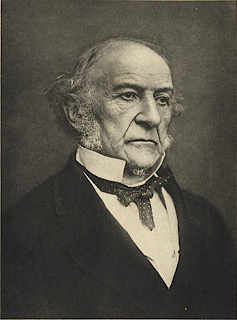
(From: “The Peace Preservation Act, Controlling Possession and Importation of Arms, Is Enacted,” Today In Celtic History, http://www.todayinceltichistory.com | Pictured: William Ewart Gladstone, Prime Minister of the United Kingdom)
Mitchel is born in Camnish, near Dungiven, County Derry, on November 3, 1815, the son of a Presbyterian minister. At the age of four, he is sent to a classical school, run by an old minister named Moor, nicknamed “Gospel Moor” by the students. He reads books from a very early age. When a little over five years old, he is introduced to Latin grammar by his teacher and makes quick progress. In 1830, not yet 15 years old, he enters Trinity College, Dublin (TCD) and obtains a law degree in 1834.
In the spring of 1836, Mitchel meets Jane Verner, the only daughter of Captain James Verner. Though both families are opposed to the relationship, they become engaged in the autumn and are married on February 3, 1837, by the Rev. David Babington in Drumcree Church, the parish church of Drumcree.
Mitchel works in a law office in Banbridge, County Down, where he eventually comes into conflict with the local Orange Order. He meets Thomas Davis and Charles Gavan Duffy during visits to Dublin. He joins the Young Ireland movement and begins to write for The Nation. Deeply affected by the misery and death caused by the Great Famine, he becomes convinced that nothing will ever come of the constitutional efforts to gain Irish freedom. He then forms his own paper, United Irishmen, to advocate passive resistance by Ireland’s starving masses.
In May 1848, the British tire of Mitchel’s open defiance. Ever the legal innovators in Ireland, they invent a crime especially for the Young Irelanders – felony-treason. They arrest him for violating this new law and close down his paper. A rigged jury convicts him, and he is deported first to Bermuda and then to Australia. However, in June 1853, he escapes to the United States.
Mitchel works as a journalist in New York City and then moves to the South. When the American Civil War erupts, he is a strong supporter of the Southern cause, seeing parallels with the position of the Irish. His family fully backs his commitment to the Southern cause. He loses two sons in the war, one at the Battle of Gettysburg in 1863 and another at the Battle of Fort Sumter in 1864, and another son loses an arm. His outspoken support of the Confederacy causes him to be jailed for a time at Fort Monroe, where one of his fellow prisoners is Confederate PresidentJefferson Davis.
In 1874, the British allow Mitchel to return to Ireland and in 1875 he is elected in a by-election to be a member of the Parliament of the United Kingdom representing the Tipperary constituency. However, his election is invalidated on the grounds that he is a convicted felon. He contests the seat again in the resulting by-election and is again elected, this time with an increased vote.
Unfortunately, Mitchel, one of the staunchest enemies to English rule of Ireland in history, dies in Newry on March 20, 1875. He is buried in his parents’ grave in the unitarian cemetery, High Street, Newry, where a monument is later erected by his widow. He is also commemorated by a statue in Newry. Thirty-eight years later, his grandson, John Purroy Mitchel, is elected Mayor of New York City.
Shannon is the eldest child of solicitor George William Shannon and Emily Shannon (née Goodman). She has two sisters and two brothers. She attends Alexandra College, and later lectures for women at Trinity College Dublin (TCD). On July 27, 1875, she marries Maurice Dockrell, eldest son of Thomas Dockrell, a well known Dublin merchant, and Anne Morgan Dockrell (née Brooks). The couple has seven children, one daughter and six sons. She goes on to become a director and member of the board of her husband’s family company: Messrs Thomas Dockrell & Sons & Co. Ltd.[1]
Dockrell is an active member of the committee of the Dublin Women’s Suffrage and Local Government Association, later known as the Irish Women’s Suffrage and Local Government Association (IWSLGA), founded in 1876 to promote women’s suffrage by democratic methods. She attends international women’s suffrage conferences in Stockholm in 1911 and Budapest in 1913. She is also a committee member of the London Women’s Suffrage Society, speaking on the role of women in local government at the International Congress of Women in London in 1899. The Irish Citizen lists her as a suitable woman candidate to run for the senate seat proposed by the Home rule bill in 1912.
Dockell is a member of the National Union of Women Workers, sitting as a member of its public services committee. Like many of her contemporaries, she believes that women are best placed to address issues around health, societal moral well-being, and housing. From 1898, the Local Government (Ireland) Act, allows women to be candidates for local government elections. Dockrell first runs as a candidate in the Urban District Council (UDC) of the Monkstown ward of Blackrock, Dublin in the 1898 local elections, where she is returned as the third of nine elected, becoming one of only four women councillors elected in Ireland.
Dockrell describes herself as a unionist and a Protestant, sitting as a council on the Blackrock UDC until her death. She is the only woman councillor on that UDC until 1925 and the election of Ellen O’Neill. She is also the first woman chair of a UDC when she is elected to the position in 1906.
Despite the political and societal turmoil of the early 20th century in Ireland and the establishment of the Irish Free State, Dockrell continues in her commitment to local politics. This includes being the first woman to be elected to a Dublin county council in 1920. Despite remaining a committed unionist, she works with the Free State government. Following her husband’s knighthood, she is also known as Lady Dockrell.
O’Hanrahan is the son of Richard Hanrahan, a cork cutter, and Mary Williams. His father appears to have been involved in the 1867 Fenian rising. The family moves to Carlow, County Carlow, where he is educated at Carlow Christian Brothers School and Carlow College Academy. On leaving school he works various jobs including a period alongside his father in the cork-cutting business. In 1898, he joins the Gaelic League and in 1899 founds the League’s first Carlow branch and becomes its secretary. Also in 1899 he helps found a working men’s club in Carlow. By 1903 he is in Dublin, where he is working as a proofreader for the Gaelic League printer An Cló Cumann. He publishes journalism under the by-lines “Art” and “Irish Reader” in several nationalist newspapers, including Sinn Féin and the Irish Volunteer. He is the author of two novels, A Swordsman of the Brigade (1914) and When the Norman Came (published posthumously in 1918).
In 1903, O’Hanrahan becomes involved in Maud Gonne’s and Arthur Griffith‘s campaign against the visit of King Edward VII to Ireland. The encounter with Griffith leads O’Hanrahan to join the newly formed Sinn Féin. He also becomes a member of the Irish Republican Brotherhood (IRB). In November 1913, he joins the Irish Volunteers. He is later employed as an administrator on the Volunteers headquarters staff. He is made quartermaster general of the 2nd Battalion. He and the commandant of the 2nd Battalion, Thomas MacDonagh, become close friends.
During the Easter Rising O’Hanrahan is second in command of Dublin’s 2nd Battalion under MacDonagh. He fights at Jacob’s Biscuit Factory, though the battalion sees little action other than intense sniping throughout Easter week, as the British Army largely stays clear of the impregnable factory dominating the road from Portobello Barracks on one side and Dublin Castle on the other. When the situation becomes desperate O’Hanrahan tells MacDonagh they “were inviting destruction of the factory by incendiary shells, and also of the surrounding thickly populated area.” MacDonagh orders a break-out amidst the chaos and confusion. O’Hanrahan leads “with some difficulty” the garrison out of the factory through New Bride Street gate.
O’Hanrahan is executed by firing squad on May 4, 1916 at Kilmainham Gaol. His brother, Henry O’Hanrahan, is sentenced to penal servitude for life for his role in the Easter Rising. After his execution, his mother and three sisters open a shop near Mountjoy Prison where they develop a secret line of communications between prisoners and their visitors.
Guiney is the eldest son of Timothy Guiney, a shopkeeper and later clerk of Kanturkpoor law union, and Ellen Carver. He is educated at St. Patrick’s Monastery, Mountrath, County Laois. He serves three terms of imprisonment for activity in the Land War and later Plan of Campaign movement during the 1880s under the Coercion Act. He becomes a farmer and serves as councillor for Newmarket and on the Cork County Council (1908–11) as well as Chair of Newmarket Agricultural Society, Newmarket Gaelic League and Newmarket Old-Age Pensions Committee.
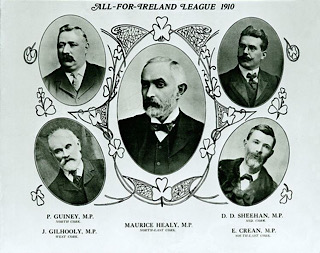
(Pictured: All-for-Ireland League group portrait of five of its Members of Parliament, in the “Cork Free Press”, 30 July 1910. These are: Patrick Guiney (North Cork), James Gilhooly (West Cork), Maurice Healy (North-east Cork), D. D. Sheehan (Mid Cork), and Eugene Crean (South-east Cork))
Boycott is the eldest surviving son of William Boycatt (1798–1877), rector of Wheatacrebury, Norfolk, and Elizabeth Georgiana Boycatt (née Beevor). The family name is changed to Boycott by his father in 1862. Educated at a boarding school in Blackheath, London, and the Royal Military Academy, Woolwich, he is commissioned ensign in the 39th (Dorsetshire) Regiment of Foot on February 15, 1850, and serves briefly in Ireland. He sells his commission on December 17, 1852, having attained the rank of captain, marries Annie Dunne of Queen’s County (County Laois) in 1852, and leases a farm in south County Tipperary.
In 1855, Boycott leaves for Achill Island, County Mayo, where he sub-leases 2,000 acres and acts as land agent for a friend, Murray McGregor Blacker, a local magistrate. He settles initially near Keem Strand but after some years builds a fine house near Dooagh overlooking Clew Bay. He clashes with local landowners and agents and is regularly involved in litigation. Twice summonsed unsuccessfully for assault (1856, 1859), he is involved (1859–60) in a bitter dispute with a land agent over salvage rights for shipwrecks, one of the few lucrative activities on the island. Achill’s remoteness and the difficulties of wresting a living from its harsh environment adds a roughness to the island’s social relations and probably aggravates Boycott’s tendency to high-handedness.
In 1873, Boycott inherits money and moves to mainland County Mayo, leasing Lough Mask House near Ballinrobe and its surrounding 300 acres. He also becomes agent for John Crichton, 3rd Earl Erne‘s neighbouring estate of 1,500 acres, home to thirty-eight tenant farmers paying rents of £500 a year, of which he receives 10 per cent as agent. He also serves as a magistrate and is unpopular because of his brusque and authoritarian manner, and for denying locals such traditional indulgences as collecting wood from the Lough Mask estate or taking short cuts across his farm. In April 1879, he purchases the 95-acre Kildarra estate between Claremorris and Ballinlough and an adjoining wood for £1,125, taking out a mortgage of £600 which stretches his finances.
Boycott is no brutal tyrant, but he is aloof, stubborn, and pugnacious, and believes that the Irish peasantry is prone to idleness and require firm handling. Such qualities and beliefs are unremarkable enough, but in the peculiar circumstances of the land war in County Mayo, they are enough to catapult this rather ordinary man to worldwide notoriety.
In autumn 1879, concerted land agitation begins in County Mayo, and on August 1, 1879, Boycott receives a notice threatening his life unless he reduces rents. He ignores it and evicts three tenants, which embitter relations on the estate. Lough Mask House is placed under Royal Irish Constabulary (RIC) surveillance beginning in November 1879. In August 1880, his farm labourers, encouraged by the Irish National Land League, strike successfully for a wage increase from 7s. –11s. to 9s. –15s. Since the harvest is poor, Lord Erne allows a 10 per cent rent abatement. But in September 1880, when Boycott demands the rent, most tenants seek a 25 per cent abatement. Lord Erne refuses, and on September 22, Boycott attempts to serve processes against eleven defaulters. Servers and police are attacked by an angry crowd of local women and forced to take refuge in Boycott’s house. Almost immediately he is subjected to the ostracism against land grabbers advocated by Charles Stewart Parnell in his September 19 speech at Ennis, County Clare. This weapon proves as devastating against an English land agent as an Irish land-grabber. His servants leave him, labourers refuse to work his land, his walls and fences are destroyed, and local traders refuse to do business with him. He is jeered on the roads, is hissed and hustled by hostile crowds in Ballinrobe, and requires police protection.
The campaign against Boycott is largely orchestrated by Fr. John O’Malley, a local parish priest and president of the Neale branch of the Irish National Land League. It is probably O’Malley who coins the term “boycott” as an alternative to the word “ostracise,” which he believes would mean little to the local peasantry. Propagated by O’Malley’s friend, the American journalist, James Redpath, it is adopted by advocates and opponents alike.
On October 22, 1880, before his story breaks on the world, Boycott gives evidence of his treatment to the Bessborough Commission in Galway. He publicises his plight in an October 18, 1880, letter to The Times, and in a long interview with The Daily News on October 24, which is reprinted in Irish unionist newspapers and arouses considerable sympathy for him. Although he rarely uses his former military rank, he becomes universally known as “Captain Boycott,” since it suits both sides to portray him as someone of social standing. Letters of support appear in unionist papers and the Belfast News Letter sets up a “Boycott Relief Fund” and proposes a relief expedition, portraying Boycott as a peaceable English gentleman unjustly subjected to intimidation.
The prospect of hundreds of armed loyalists descending on County Mayo alarms the government, who announce on November 8 that they will provide protection for a small group of labourers to harvest Boycott’s crops. On November 12, fifty-seven loyalists from counties Cavan and Monaghan, “the Boycott Relief Expedition,” arrive at Lough Mask with an escort of almost a thousand troops. After harvesting Boycott’s crops, they leave on November 26. The entire operation costs £10,000 – about thirty times the value of the crops. Although the expedition passes off largely without incident, it focuses international media attention on the affair and establishes the word “boycott” in English and several other languages as a standard term for communal ostracism.
On November 27, Boycott and his wife go to the Hammam Hotel, Dublin, where he receives death threats. On December 1, he travels to London and then to the United States (March–May 1881) to see Murray McGregor Blacker, the friend from his time on Achill Island who has since settled in Virginia. In an interview with the New York Herald, he criticises the liberal government’s weakness toward the Land League and claims that the Irish land question is an intractable problem that can only be solved in the long term by emigration and industrialisation.
Boycott returns to Lough Mask on September 19, 1881, and at an auction in Westport is mobbed and burned in effigy. This, however, is the last outburst of hostility against him, and as the land agitation wanes so does his unpopularity. Although unsuccessful in efforts to win compensation from the government, he receives a public subscription of £2,000. He remains in County Mayo as Lord Erne’s agent until February 1886, when he obtains the post of land agent for Sir Hugh Adair in Flixton, Suffolk, but he keeps the small Kildarra estate, where he continues to holiday. On December 12, 1888, he gives evidence of his treatment to the parliamentary commission on “Parnellism and crime.”
After suffering from ill-health for some years, Boycott dies at Flixton on June 19, 1897, and is buried in the churchyard of Burgh St. Peter. A British-made film, Captain Boycott (1947), stars Cecil Parker in the title role.
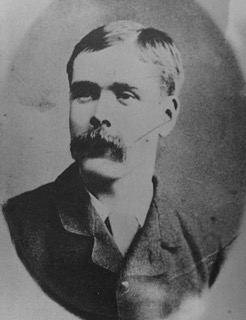
Boland is born in Manchester, Lancashire, England, on October 6, 1856. His parents, Patrick Boland and Eliza Boland (née Kelly), are both Great Famine emigrants from Connacht in Ireland. His father is reputed to be a member of the IRB and his mother is a first cousin of ColonelThomas J. Kelly.
Patrick and his brothers may have been involved in the IRB campaign to rescue Kelly and Timothy Deasy from a Manchester police van. Ten-year-old Boland is believed to have been a scout for the party that attacks the van and kills a police officer. As he grows older, he becomes more involved in the movement himself.
Boland moves to Dublin in around 1881 and becomes a foreman with a company paving the streets of Smithfield, Dublin. He is transferred from the Manchester Fenians to the Dublin section. He marries Kate Woods in 1882.
Boland is awarded the Royal Humane Society‘s medal in the same year for “jumping off the Metal Bridge” to save a life.
Boland’s involvement in the Invincibles and the Phoenix Park Murders remains unclear. He works with Joe Brady and is named by informers as a member of the IRB’s Dublin Directory in 1882, while another informer names him as a member of the Invincibles and claims that he gave orders to Brady. He is questioned at Dublin Castle, but when a warrant is issued for his arrest on January 25, 1883, he and Kate had fled to New York.
Boland finds work as an engineer with De Castro & Donner, a sugar-refining company in Brooklyn. He also becomes involved in Clan na Gael and gets to know John Devoy very well. He possibly secretly returns to Ireland in 1883 as he reputedly takes part in IRB meetings that are believed to lead to the formation of the Gaelic Athletic Association (GAA). According to his grandson, Kevin Boland, he is in attendance as a member of the already established General Council at the historic meeting in Hayes’ Hotel in Thurles, County Tipperary.
Boland’s first child, Nellie, is born in the United States, while his second child, Gerald is conceived there, but is born in Manchester in May 1885.
The Boland family returns to Dublin in 1885 where Boland resumes work with the Dublin Corporation, this time directly employed and, by 1891, has been promoted from foreman to overseer. He is a leading figure in the Paviors’ Society. He is also under continuous surveillance by the police as his IRB role continues. He is named number 59 of 63 “dangerous Fenians” in the Dublin Metropolitan Police District in September 1886.
The Bolands’ third child, Harry, is born in 1887. Boland’s involvement in the nationalist movement increases and, after the split over Charles Stewart Parnell‘s leadership of the Irish Parliamentary Party (IPP), he becomes one of the main Parnellite organisers in Dublin. At Parnell’s funeral procession in 1891, he and seven colleagues head a contingent of 2,000, each wielding a camán (hurley) draped in black. He also organises the funeral of his friend Pat Nally, a former member of the IRB’s Supreme Council with whom Boland had originally conspired in Manchester.
In 1892, Boland is brought before the courts charged with keeping drink for the purposes of sale without a license. In court, he is able to show that, in fact, the premises is the new premises of the Nally Branch of the GAA and that the bar is attached to the club. The case is dismissed.
Boland is elected President of the Dublin County Committee of the GAA in 1892 and to the Dublin seat of GAA Central Council for the next two years. The Bolands have two more children, Kathleen in 1889 and Ned in 1893.
In 1894, Boland is elected to the Supreme Council of the IRB.
Boland falls ill in October 1894 with a serious brain disorder. He has received head injuries at two previous incidents. According to accounts, he is hit in the head protecting Parnell from assailants before his last trip to Wicklow and suffers a concussion. The injury also causes an undetected skull fracture. He is also involved in a bombing of the offices of the Parnell’s newspaper United Ireland in 1891 following an attempted takeover by Healyites, during which he is struck in the head.
Boland fails to recover and dies in Dublin on March 11, 1895. Around 1,500 mourners on foot follow his open hearse at his funeral. The group includes three members of parliament, eight city councillors and prominent Nationalists, including Arthur Griffith, James Bermingham and Fred Allan. He is buried at Glasnevin Cemetery, Glasnevin, County Dublin. Following his death, two funds are raised to save his wife and young family from destitution. Enough money is raised to acquire a tobacconists business for Kate Boland.
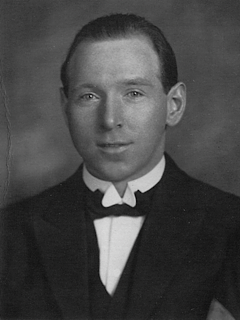
In 1908, at the age of 15, McGuinness leaves home, stowing away in a ship and traveling extensively throughout the world for several years. At the age of 17 he is involved in the first of several shipwrecks, drifting for two weeks on a lifeboat before being rescued near Tahiti. He works as a pearl fisher in the South Seas for a year before resuming his nautical career.
Disillusioned with the war, McGuinness resumes his travels. In 1920, he returns to Derry and joins the Irish Republican Army (IRA), leading a flying column in northwest Ireland. McGuinness, who reputedly introduces the first monkey to Derry, is viewed locally as an eccentric adventurer but is much celebrated for his instrumental role in the daring escape of Frank Carty, the IRA Sligo Brigade commander, from Derry jail.
Wanted for the murder of Inspector Robert Johnson in Glasgow, a charge he denies, McGuinness is captured by the British army in June 1921 after a failed bank raid in Glenties, County Donegal, but escapes from Derry’s Ebrington Barracks before his identity is established. Shortly after the truce in July 1921 he is sent by Liam Mellows to Germany, from where he smuggles arms to Ireland. After the treaty split, he continues to smuggle arms for the republican side but leaves the IRA, having become disillusioned with its incompetence. He claims to have been arrested in Berlin in 1922 for conspiring with Bulgarian revolutionaries, and released on condition that he leaves the state.
McGuinness emigrates to New York in 1923 where, following an alleged spell of employment by Chiang Kai-shek‘s forces in China, he establishes himself as a building contractor. In 1928, he joins Admiral Richard E. Byrd‘s expedition to the Antarctic, serving as a navigation officer. At a reception on his return in 1929, he presents the mayor of New York City, Jimmy Walker, with an Irish tricolour which, he claims, Byrd had flown over the South Pole. He is not, as he claims, awarded a congressional medal by the secretary of the navy.
In 1930, McGuinness embarks on a new career, smuggling rum between Canada and the United States (his memoirs of which are subsequently published in the American press under the pseudonym “Night-Hawk”). After losing his fortune when his boat and cargo are impounded in the summer of 1931, he travels to the Soviet Union to observe communism at first hand. He remains in the Soviet Union around two years, where he claims to work as a harbourmaster in Murmansk, and forms an unfavourable opinion of the Soviet Union.
McGuinness’s autobiography, Nomad, is published in 1934. His publisher, Methuen Publishing, is sued for considerable damages by the notorious Alderman John William Nixon, MP, as a result of McGuinness’s veiled reference to him as the former Royal Ulster Constabulary (RUC) detective inspector who led a murder gang in Belfast in 1922, believed responsible for the murder of the McMahon family.
In late 1936, McGuinness joins the International Brigades in the Spanish Civil War but soon deserts after disagreements with the authorities. He returns to Ireland, where he pens a sensational exposé of the International Brigades, I fought with the Reds, which is published by the Irish Independent. He also writes colourful accounts of life under communism, such as Behind the Iron Curtain, under the pseudonym “Peter Dawson.”
In 1942, while serving as chief petty officer in the marine service at Haulbowline, McGuinness offers to assist the German legation by smuggling spies out of Ireland. Despite his British naval service, he is virulently anti-British. According to local legend he has the sole of both feet tattooed with the Union Jack so wherever he goes he is safe in the knowledge that he is “trampling on the butcher’s apron.” He is arrested and sentenced to seven years imprisonment but is released shortly after the end of the Emergency.
McGuinness is believed to have died on December 4, 1947, when he supposedly drowns alongside four other crew members of the schoonerIsaalt that he is piloting on Ballymoney Strand near Gorey, County Wexford. Two members of the crew survive, managing to swim ashore, the ship is a mere 100 metres from land. However, members of McGuinness’ family express doubt over the years. A nephew claims to have encountered McGuinness on the London Underground in 1955. Upon their gazes meeting, McGuinness is reported to smile and say four simple words: “You never saw me.”
(From: “McGuinness, Charles John” by Fearghal McGarry, Dictionary of Irish Biography, http://www.dib.ie, October 2009)
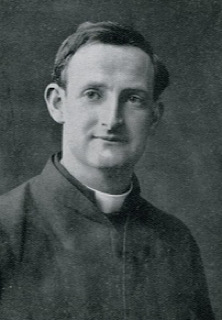
Doyle is awarded the Military Cross for his bravery during the assault on the village of Ginchy during the Battle of the Somme in 1916. He is also posthumously recommended for both the Victoria Cross and the Distinguished Service Order, but is awarded neither. It is possible that anti-Catholicism played a role in the British Army’s decision not to grant him both awards.
General William Hickie, the commander-in-chief of the 16th (Irish) Division, describes Father Doyle as “one of the bravest men who fought or served out here.”
Irish folk singer Willie ‘Liam’ Clancy is named after Doyle due to his mother’s fondness for him, although they never meet.
In August 2022, the Father Willie Doyle Association is established to petition the Catholic Church to introduce a cause for canonisation for Doyle. In January 2022, the Supplex Libellus, the formal petition, is presented to Bishop Thomas Deenihan. Having consulted with the Irish Bishops’ Conference and the Dicastery for the Causes of Saints, Deenihan issues an edict on October 27, 2022, announcing the opening of a cause. The Opening Session takes place on November 20, 2022, at the Cathedral of Christ the King, Mullingar.
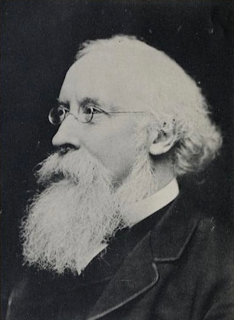
Stokes is educated at St. Columba’s College where he is taught the Irish language by Denis Coffey, author of Primer of the Irish Language. Through his father he comes to know the Irish antiquariesSamuel Ferguson, Eugene O’Curry, John O’Donovan and George Petrie. He enters Trinity College Dublin in 1846 and graduates with a BA in 1851. His friend and contemporary Rudolf Thomas Siegfried (1830–63) becomes assistant librarian at TCD in 1855, and the college’s first professor of Sanskrit in 1858. Stokes likely learns both Sanskrit and comparative philology from Siegfried, thus acquiring a skill-set rare among Celtic scholars in Ireland at the time.
Stokes qualifies for the bar at Inner Temple. His instructors in the law are Arthur Cayley, Hugh McCalmont Cairns, and Thomas Chitty. He becomes an English barrister on November 17, 1855, practicing in London before going to India in 1862, where he fills several official positions. In 1865 he marries Mary Bazely by whom he has four sons and two daughters. One of his daughters, Maïve, compiles a book of Indian Fairy Tales in 1879 when she is 12 years old, based on stories told to her by her Indian ayahs and a man-servant. It also includes some notes by Mrs. Mary Stokes. Mary dies while the family is still living in India. In 1877, Stokes is appointed legal member of the viceroy’s council, and he drafts the codes of civil and criminal procedure and does much other valuable work of the same nature. In 1879 he becomes president of the commission on Indian law. Nine books he writes on Celtic studies are published in India. He returns to settle permanently in London in 1881 and marries Elizabeth Temple in 1884. In 1887 he is made a Companion of the Order of the Star of India (CSI), and two years later an Order of the Indian Empire (CIE). He is an original fellow of the British Academy, an honorary fellow of Jesus College, Oxford and foreign associate of the Institut de France.
Stokes is perhaps most famous as a Celtic scholar, and in this field he works both in India and in England. He studies Irish, Breton and Cornish texts. His chief interest in Irish is as a source of material for comparative philology. Despite his learning in Old Irish and Middle Irish, he never acquires Irish pronunciation and never masters Modern Irish. In the hundred years since his death he continues to be a central figure in Celtic scholarship. Many of his editions have not been superseded during this time and his total output in Celtic studies comes to over 15,000 pages. He is a correspondent and close friend of Kuno Meyer from 1881 onwards. With Meyer he establishes the journal Archiv für celtische Lexicographie and is the co-editor, with Ernst Windisch, of the Irische Texteseries. In 1876 his translation of Vita tripartita Sancti Patricii, along with a written introduction, is published.
Stokes dies at his London home, 15 Grenville Place, Kensington, on April 13, 1909, and is buried in Paddington Old Cemetery, Willesden Lane, where his grave is marked by a Celtic cross. Another Celtic cross is erected as a memorial to him at St. Fintan’s Cemetery, Sutton, Dublin. The Gaelic League newspaper An Claidheamh Soluis calls him “the greatest of the Celtologists” and expresses pride that an Irishman has excelled in a field which is at that time dominated by continental scholars. In 1929 the Canadian scholar James F. Kenney describes him as “the greatest scholar in philology that Ireland has produced, and the only one that may be ranked with the most famous of continental savants.”
A conference entitled “Ireland, India, London: The Tripartite Life of Whitley Stokes” takes place at the University of Cambridge on September 18-19, 2009. The event is organised to mark the centenary of Stokes’s death. A volume of essays based on the papers delivered at this conference, The Tripartite Life of Whitley Stokes (1830–1909), is published by Four Courts Press in autumn 2011.
In 2010 Dáibhí Ó Cróinín publishes Whitley Stokes (1830–1909): The Lost Celtic Notebooks Rediscovered, a volume based on the scholarship in Stokes’s 150 notebooks which had been resting unnoticed at the Leipzig University Library, Leipzig since 1919.



 seamus dubhghaill