FitzGerald joins Fine Gael, attaching himself to the liberal wing of the party. and in 1969 is elected to Dáil Éireann, the lower house of the Oireachtas, the Irish parliament. He later gives up his university lectureship to become Minister for Foreign Affairs in the coalition government of Liam Cosgrave (1973–1977). When the coalition government is resoundingly defeated in the 1977 Irish general election, Cosgrave yields leadership of Fine Gael to FitzGerald. In his new role as Leader of the Opposition and party leader, he proceeds to modernize and strengthen the party at the grass roots. He briefly loses power in 1982 when political instability triggers two snap elections.
By the time of the 1981 Irish general election, Fine Gael has a party machine that can easily match Fianna Fáil. The party wins 65 seats and forms a minority coalition government with the Labour Party and the support of a number of Independent TDs. FitzGerald is elected Taoiseach on June 30, 1981. To the surprise of many FitzGerald excludes Richie Ryan, Richard Burke and Tom O’Donnell, former Fine Gael stalwarts, from the cabinet.
On May 5, 2011, it is reported that FitzGerald is seriously ill in a Dublin hospital. Newly elected Fine Gael Taoiseach Enda Kenny sends his regards and calls him an “institution.” On May 6 he is put on a ventilator. On May 19, after suffering from pneumonia, he dies at the Mater Private Hospital in Dublin at the age of 85.
In a statement, Irish PresidentMary McAleese hails FitzGerald as “a man steeped in the history of the State who constantly strove to make Ireland a better place for all its people.” Taoiseach Enda Kenny pays homage to “a truly remarkable man who made a truly remarkable contribution to Ireland.” Henry Kissinger, the former United States Secretary of State, who serves as an opposite number to FitzGerald in the 1970s, recalls “an intelligent and amusing man who was dedicated to his country.”
FitzGerald’s death occurs on the third day of Queen Elizabeth II‘s state visit to the Republic of Ireland, an event designed to mark the completion of the Northern Ireland peace process that had been “built on the foundations” of FitzGerald’s Anglo-Irish Agreement with Margaret Thatcher in 1985. In a personal message, the Queen offers her sympathies and says she is “saddened” to learn of FitzGerald’s death.
On his visit to Dublin, United States PresidentBarack Obama offers condolences on FitzGerald’s death. He speaks of him as “someone who believed in the power of education; someone who believed in the potential of youth; most of all, someone who believed in the potential of peace and who lived to see that peace realised.”
FitzGerald is the author of a number of books, including Planning in Ireland (1968), Towards a New Ireland (1972), Unequal Partners (1979), All in a Life: An Autobiography (1991), and Reflections on the Irish State (2003).
At the 1961 Irish general election, Mac Giolla unsuccessfully contests the Tipperary North constituency for Sinn Féin. In 1962, he becomes President of Sinn Féin and is one of the people who moves the party to the left during the 1960s. In 1969, Sinn Féin splits, and he remains leader of Official Sinn Féin. It is also in 1962 that he marries May McLoughlin who is also an active member of Sinn Féin as well as Cumann na mBan, the women’s section of the IRA. In 1977, the party changes its name to Sinn Féin the Workers Party and in 1982 it becomes simply the Workers’ Party.
In 1999, Mac Giolla writes to the chairman of the Flood Tribunal calling for an investigation into revelations that former Dublin Assistant City and County Manager George Redmond had been the official supervisor at the election count in Dublin West and was a close associate of Liam Lawlor. In 2003, Redmond is convicted of corruption by a Dublin court but subsequently has his conviction quashed due to conflicting evidence.
In his eighties Mac Giolla continues to be active and is a member of the group which campaigns to prevent the demolition of No. 16 Moore Street in Dublin city centre, where the surrender after the Easter Rising was completed. He also serves on the Dublin ’98 committee to commemorate the 200th anniversary of the Irish Rebellion of 1798.
Tomás Mac Giolla dies in Beaumont Hospital in Beaumont, Dublin on February 4, 2010, after a long illness.
(Pictured: Tomás Mac Giolla, former president of the Workers’ party and lord mayor of Dublin in 2007, by Niall Carson, PA Wire, Press Association Images)
The party demands for Ireland “one and indivisible as of right the full status of a sovereign State. We aim at restoring the unity of her territory and the union of all her people under one central supreme government.” The party advocates the abolition of the Oath of Allegiance to the British King. It also calls for lower taxes and less legislation. In policies like trade protectionism and the abolition of the Oath of Allegiance, it agrees with the agenda of Sinn Féin leader Éamon de Valera. An attempt to lure de Valera and his followers into the party fail. After de Valera creates the Fianna Fáil party in March 1926, Clann Éireann grows closer to that group.
The party attracts little support, and it fails to win any seats in Dáil Éireann at the June 1927 general election. Its seven candidates only attract a few thousand first-preference votes. Seven of them are last in their constituencies and forfeit their deposits. On August 28, 1927, the party issues a statement supporting Fianna Fáil, and ceases political activity.
(Pictured: (L to R) Pádraic Ó Máille, William Magennis, Maurice George Moore who are amongst the most prominent members of the party)
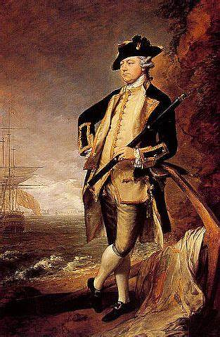
Luttrell is born in 1713, the second son of Henry Luttrell, of Luttrellstown Castle (whose family had held Luttrellstown Castle and the demesne and adjoining lands since the land had been granted to Sir Geoffrey de Luterel in about 1210 by King John of England) and his wife Elizabeth Jones. His father is a noted commander in the JacobiteIrish Army between 1689 and 1691. He later receives a pardon from the Williamite authorities and is accused by his former Jacobite comrades of having betrayed them. He is murdered when his sedan chair is attacked in Dublin on October 22, 1717.
On October 13, 1768, Luttrell is created Baron Irnham of Luttrellstown in the Peerage of Ireland. As his title is an Irish peerage, he is able to keep his seat in the British House of Commons. He is elevated to the title of Viscount Carhampton on January 9, 1781, and is made Earl of Carhampton on June 23, 1785. He lives at Four Oaks Hall, Four Oaks, Sutton Coldfield, from 1751 to 1766.
On January 22, 1735, Luttrell marries Judith Maria Lawes, daughter of Sir Nicholas Lawes, Governor of Jamaica and Elizabeth Cotton (née Lawley), by whom he has eight children:
John Luttrell-Olmius, 3rd Earl of Carhampton (c. 1745 – 1829), marries the Honorable Elizabeth Olmius and in 1787 by Royal Licence the additional surname of ‘Olmius’ out of respect after death of his father-in-law.
Temple Simon Luttrell (c. 1738 – 1803)
James Luttrell (c. 1751 – 1788), naval officer, dies of consumption.
Luttrell’s rakish behaviour earns him the nickname “King of Hell,” with “Hell” being a district of Dublin notorious for its brothels. He reputedly starts the courtesanMary Nesbitt in her career by seducing her.
Luttrell dies at Four Oaks, Warwick, England, on January 14, 1787. He is buried at Kingsbury, Warwick, England.
Gorbachev, the man who led Russia through the most difficult days of his country’s shift to democracy, is also conferred with an honorary degree. On his arrival he goes to Trinity College Dublin to receive the honour before launching the new European Russian Trust. He later dines as a guest of the Irish Government in Dublin Castle.
On the following day, Gorbachev is accompanied by Dublin’s Lord Mayor Michael Mulcahy during a visit to see members of the city’s Russian community at the Hugh Lane Gallery. He also chats with local shop owners and residents during an informal tour of The Liberties area. After addressing the Institute of European Affairs and lunching with President McAleese at Áras an Uachtaráin, the president’s official residence and principal workplace, he is granted freedom of the Irish capital at a special ceremony.
Following his visit with President McAleese, Gorbachev jokes with Mulcahy that he fully intends to exercise his right to graze sheep in the city. Mulcahy says, “This visit will help to cement relations between us, as well as doing appropriate honour to a genuinely great man whose place in history is already secure.”
Gorbachev formally announced his resignation as Soviet President and Commander-in-Chief on December 25, 1991. The following day, the Soviet of the Republics, the upper house of the Supreme Soviet of the Soviet Union, formally voted the Soviet Union out of existence. The Soviet Union officially ceased to exist at midnight on December 31, 1991. As of that date, all Soviet institutions that had not been taken over by Russia ceased to function.
(Pictured: Mikhail Gorbachev samples a pint of Guinness watched by Dublin’s Lord Mayor Michael Mulcahy, in Doheny & Nesbitt’s pub in Merrion Row. Picture by Donal Doherty)
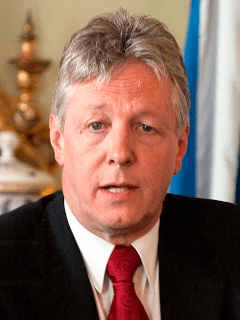
Robinson serves in the role of General Secretary of the DUP from 1975, a position he holds until 1979 and which affords him the opportunity to exert unprecedented influence within the fledgeling party. In 1977, he is elected as a councillor for the Castlereagh Borough Council in Dundonald, County Down, and in 1979, he becomes one of the youngest Members of Parliament (MP) when he is narrowly elected for Belfast East. He holds this seat until his defeat by Naomi Long in 2010, making him the longest-serving Belfast MP since the Acts of Union 1800.
In January 2010, following a scandal involving his wife Iris (née Collins), Robinson temporarily hands over his duties as First Minister to Arlene Foster under the terms of the Northern Ireland Act 2006. Following a police investigation, which recommends that he should not be prosecuted following allegations made by the BBC in relation to the scandal, he resumes his duties as First Minister. The Official Assembly Commissioner’s Investigation and Report clears Robinson of any wrongdoing.
In September 2015, Robinson again stands aside to allow Arlene Foster to become acting First Minister after his bid to adjourn the assembly is rejected. His action is a response to a murder for which a member of Sinn Féin, a party in the Northern Ireland Executive, had been questioned. He resumes his duties on October 20, 2015. On November 19, 2015, he announces that he will be stepping down as First Minister and as leader of the DUP. He subsequently steps down as First Minister on January 11, 2016 and is now fully retired from frontline politics.
Robinson is the author of a number of books and pamphlets on local politics and history including: Capital Punishment for Capital Crime (1974), Savagery and Suffering (1975), Ulster the Facts (1981), Self-Inflicted (1981), A War to be Won (1983), It’s Londonderry (1984), Carson – Man of Action (1984), Ulster in Peril (1984), Their Cry was no Surrender (1986), Hands Off the UDR (1990), Sinn Féin – A Case for Proscription (1993), The Union Under Fire (1995), Give Me Liberty (no date), Ulster—the Prey (no date).
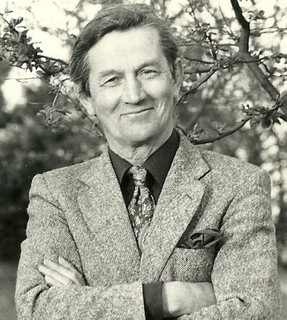
Browne grows up in the Bogside area of Derry. The Browne family also lives in Athlone and Ballinrobe for a period of time. His mother Mary Therese (née Cooney) is born in 1885 in Hollymount, County Mayo. His father Joseph Brown, a Royal Irish Constabulary (RIC) sergeant, later works as an inspector for the National Society for the Prevention of Cruelty to Children and, partly as a result of this work, all of the Browne family becomes infected with tuberculosis. Both parents die of the disease during the 1920s. His father is the first to die, leaving only £100 behind to support a wife and seven children. Fearing that if she and the children remain in Ireland they will be forced into a workhouse, Mary sells all their possessions and takes the family to London. Within two days of their arrival, Mary is dead, later buried in a pauper’s grave. Of her seven children, six contract tuberculosis. Noël is only one of two Browne children to survive into adulthood after those bouts with TB.
In 1929, Browne is admitted free of charge to St. Anthony’s, a preparatory school in Eastbourne, England. He then wins a scholarship to Beaumont College, the Jesuitpublic school near Old Windsor, Berkshire, where he befriends Neville Chance, a wealthy boy from Dublin. Neville’s father, the eminent surgeon Arthur Chance, subsequently pays Browne’s way through medical school at Trinity College Dublin.
In 1940, while still a student, Browne suffers a serious relapse of tuberculosis. His treatment at a sanatorium in Midhurst, Sussex is paid for by the Chance family. He recovers, passes his medical exams in 1942, and starts his career as a medical intern at Dr. Steevens’ Hospital in Dublin, where he works under Bethel Solomons. He subsequently works in numerous sanatoria throughout Ireland and England, witnessing the ravages of the disease. He soon concludes that politics is the only way in which he can make an attack on the scourge of tuberculosis.
The poverty and tragedy that had shaped Browne’s childhood deeply affects him. He considers both his survival and his level of education a complete fluke, a stroke of random chance that saved him when he was seemingly destined to die unknown and in poverty like the rest of his family. He finds this completely distasteful and is moved to enter politics as a means to ensure no one else would suffer the same fate that had befallen his family.
A ‘White Paper’ on proposed healthcare reforms had been prepared by the previous government, and results in the 1947 Health Act. In February 1948, Browne becomes Minister for Health and starts the reforms advocated by the Paper and introduced by the Act.
The health reforms coincide with the development of a new vaccine and of new drugs (e.g., BCG and penicillin) that help to treat a previously untreatable group of medical conditions. Browne introduces mass free screening for tuberculosis sufferers and launches a huge construction program to build new hospitals and sanitoria, financed by the income and accumulated investments from the Department of Health-controlled Hospital Sweeps funds. This, along with the introduction of Streptomycin, helps dramatically reduce the incidence of tuberculosis in Ireland.
As Minister for Health Browne comes into conflict with the bishops of the Catholic Church and the medical profession over the Mother and Child Scheme. This plan, also introduced by the 1947 Health Act, provides for free state-funded healthcare for all mothers and children aged under 16, with no means test, a move which is regarded as radical at the time in Ireland, but not in the rest of Europe. Virtually all doctors in private practice oppose the scheme, because it would undermine the “fee for service” model on which their income depended.
The Church hierarchy, which controls many hospitals, vigorously opposes the expansion of “socialised medicine” in the Irish republic. They claim that the Mother and Child Scheme interferes with parental rights, and fear that the provision of non-religious medical advice to mothers will lead to birth control contrary to Catholic teaching. They greatly dislike Browne, seeing him as a “Trinity Catholic,” one who has defied the Church’s ruling that the faithful should not attend Trinity College Dublin, which had been founded by Protestants and for many years did not allow Catholics to study there.
Under pressure from bishops, the coalition government backs away from the Mother and Child Scheme and forces Browne’s resignation as Minister for Health. Following his departure from government, he embarrasses his opponents by arranging for The Irish Times to publish TaoiseachJohn A. Costello‘s and MacBride’s correspondence with the Catholic hierarchy, which details their capitulation to the bishops.
The controversy over the Mother and Child Scheme leads to the fall of the coalition government in which Browne had served as a Minister. But Church opposition to socialised medicine continues under the subsequent Fianna Fáil-led government. The hierarchy does not accept a no-means-test mother-and-infant scheme even when Fianna Fáil reduces the age limit from sixteen years to six weeks, and the government again backs down.
After his resignation as Minister for Health, Browne leaves Clann na Poblachta, but is re-elected to the Dáil as an Independent TD from Dublin South-East in the subsequent election.
Browne joins Fianna Fáil in 1953 but loses his Dáil seat at the 1954 Irish general election. He fails to be selected as a candidate for the 1957 Irish general election and he resigns from the party. He is re-elected at that election for Dublin South-East as an Independent TD.
In 1977 Browne is the first Irish parliamentarian to call for law reforms in regard to homosexuality, which is illegal at the time, and in 1979 is one of the few Irish politicians to attend the opening of the Hirschfeld Centre, Dublin’s first full-time LGBT community space.
In 1990, a number of left-wing representatives within the Labour Party, led by Michael D. Higgins, approach Browne and suggest that he should be the party’s candidate in the presidential election due later that year. Though in failing health, Browne agrees. However, the offer horrifies party leader Dick Spring and his close associates for two reasons. Firstly, the leadership had secretly decided to run Mary Robinson, a barrister and former senator. Secondly, many around Spring are “appalled” at the idea of running Browne, believing he has “little or no respect for the party” and is “likely in any event to self-destruct as a candidate.” When Spring informs Browne by telephone that the party’s Administrative Council has chosen Robinson over him, Browne hangs up the telephone.
Browne spends the remaining seven years of his life constantly criticising Robinson who had gone on to win the election, thus becoming the seventh President of Ireland, and who is considered highly popular during her term. During the campaign he also indicates support for the rival Fine Gael candidate, Austin Currie.
After retiring from politics, Browne moves with his wife Phyllis to Baile na hAbhann, County Galway. He dies at the age of 81 in the Regional Hospital, Galway, on May 21, 1997. He is buried in a small graveyard near Baile na hAbhann.
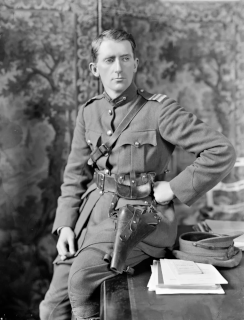
Mulcahy is born in Manor Street, Waterford, County Waterford, on May 10, 1886, the son of post office clerk Patrick Mulcahy and Elizabeth Slattery. He is educated at Mount Sion Christian Brothers School and later in Thurles, County Tipperary, where his father is the postmaster.
Mulcahy is second-in-command to Thomas Ashe in an encounter with the armed Royal Irish Constabulary (RIC) at Ashbourne, County Meath, during the 1916 Easter Rising, one of the few stand-out victories won by republicans in that week and generally credited to Mulcahy’s grasp of tactics. In his book on the Rising, Charles Townshend principally credits Mulcahy with the defeat of the RIC at Ashbourne, for conceiving and leading a flanking movement on the RIC column that had engaged with the Irish Volunteers. Arrested after the Rising, he is interned at Knutsford and at the Frongoch internment camp in Wales until his release on December 24, 1916.
Mulcahy and Michael Collins are largely responsible for directing the military campaign against the British during the Irish War of Independence. During this period of upheaval in 1919, he marries Mary Josephine (Min) Ryan, sister of Kate and Phyllis Ryan, the successive wives of Seán T. O’Kelly. Her brother is James Ryan. O’Kelly and Ryan both later serve in Fianna Fáil governments.
Mulcahy supports the Anglo-Irish Treaty of December 1921. Archive film shows that Mulcahy, as Minister of Defence, is the Irish officer who raises the Irish tricolour at the first hand-over of a British barracks to the National Army in January 1922. He is defence minister in the Provisional Government on its creation and succeeds Collins, after the latter’s assassination, as Commander-in-Chief of the Provisional Government’s forces during the subsequent Irish Civil War.
Mulcahy earns notoriety through his order that anti-Treaty activists captured carrying arms are liable for execution. A total of 77 anti-Treaty prisoners are executed by the Provisional Government. He serves as Minister for Defence in the new Free State government from January 1924 until March 1924, but resigns in protest because of the sacking of the Army Council after criticism by the Executive Council over the handling of the “Army Mutiny,” when some National Army War of Independence officers almost revolt after he demobilises many of them at the end of the Irish Civil War. He re-enters the cabinet as Minister for Local Government and Public Health in 1927.
After the resignation of W. T. Cosgrave as Leader of Fine Gael in 1944, Mulcahy becomes party leader while still a member of the Seanad. Thomas F. O’Higgins is parliamentary leader of the party in the Dáil at the time and Leader of the Opposition. Facing his first general election as party leader, Mulcahy draws up a list of 13 young candidates to contest seats for Fine Gael. Of the eight who run, four are elected. He is returned again to the 12th Dáil as a TD for Tipperary at the 1944 Irish general election. While Fine Gael’s decline had been slowed, its future is still in doubt.
Following the 1948 Irish general election Mulcahy is elected for Tipperary South, but the dominant Fianna Fáil party finishes six seats short of a majority. However, it is 37 seats ahead of Fine Gael, and conventional wisdom suggests that Fianna Fáil is the only party that can possibly form a government. Just as negotiations get underway, however, Mulcahy realises that if Fine Gael, the Labour Party, the National Labour Party, Clann na Poblachta and Clann na Talmhan band together, they would have only one seat fewer than Fianna Fáil and, if they can get support from seven independents, they will be able to form a government. He plays a leading role in persuading the other parties to put aside their differences and join forces to consign the then Taoiseach and Fianna Fáil leader Éamon de Valera, to the opposition benches.
Mulcahy initially seems set to become Taoiseach in a coalition government. However, he is not acceptable to Clann na Poblachta’s leader, Seán MacBride. Many Irish republicans had never forgiven him for his role in the Irish Civil War executions carried out under the Cosgrave government in the 1920s. Consequently, MacBride lets it be known that he and his party will not serve under Mulcahy. Without Clann na Poblachta, the other parties would have 57 seats between them — 17 seats short of a majority in the 147-seat Dáil. According to Mulcahy, the suggestion that another person serve as Taoiseach comes from Labour leader William Norton. He steps aside and encourages his party colleague John A. Costello, a former Attorney General of Ireland, to become the parliamentary leader of Fine Gael and the coalition’s candidate for Taoiseach. For the next decade, Costello serves as the party’s parliamentary leader while Mulcahy remained the nominal leader of the party.
Mulcahy goes on to serve as Minister for Education under Costello from 1948 until 1951. Another coalition government comes to power at the 1954 Irish general election, with Mulcahy once again stepping aside to become Minister for Education in the Second Inter-Party Government. The government falls in 1957, but he remains as Fine Gael leader until October 1959. In October the following year, he tells his Tipperary constituents that he does not intend to contest the next election.
Mulcahy dies from natural causes at the age of 85 in Dublin on December 16, 1971. He is buried in Littleton, County Tipperary.
Stack is born to William Stack, an attorney’s clerk, and Nanette O’Neill. He is educated at the Christian Brothers School in Tralee. At the age of fourteen, he leaves school and becomes a clerk in a solicitor‘s office. A gifted Gaelic footballer, he captains the Kerry team to All-Ireland victory in 1904. He also serves as President of the Kerry Gaelic Athletic Association County Board.
Stack becomes politically active in 1908 when he joins the Irish Republican Brotherhood (IRB). In 1916, as commandant of the Kerry Brigade of the Irish Volunteers, he makes preparations for the landing of arms by Roger Casement. He is made aware that Casement was arrested on Easter Saturday and was being held in Tralee. He makes no attempt to rescue him from Ballymullen Barracks.
Stack, as part of his role as Minister for Home Affairs, is widely credited with the creation and administration of the Dáil Courts. These are courts run by the Irish Republican Army (IRA) in parallel and opposition to the judicial system being run by the British government. The IRA and Sinn Féin are highly successful in both getting the civilian population of Ireland to use the courts and accept their rulings. The success of this initiative gives Sinn Féin a large boost in legitimacy and supports their goals in creating a “counter-state” within Ireland as part of their overarching goals in the Irish War of Independence.
Stack opposes the Anglo-Irish Treaty of 1921 and takes part in the subsequent Irish Civil War. He is captured in 1923 and goes on hunger strike for forty-one days before being released in July 1924.
In 1925, Stack marries Winifred (Una) Gordon, (née Cassidy), the widow of a Royal Irish Constabulary (RIC) district inspector, Patrick Gordon.
Stack’s health never recovers following his hunger strike and he dies at the age of 49 in a Dublin hospital on April 27, 1929.
Austin Stack Park in his hometown of Tralee, one of the Gaelic Athletic Association’s stadiums, is named in his honour, as is the Austin Stacks GAA hurling and Gaelic football club.
Rokeby is born at Kirk Sandall, eldest of the five sons of John Rokeby (died 1506). His younger brother, Sir Richard Rokeby (died 1523), is Comptroller of the Household to CardinalThomas Wolsey and later Treasurer of Ireland. He retains a deep affection for Kirk Sandall and returns there to die. He goes to school at Rotherham, studies at the University of Oxford and becomes a fellow of King’s Hall, later Trinity College, Cambridge. He becomes vicar of his home parish in 1487 and is transferred to Halifax, another town for which he has a deep attachment, in about 1499. In 1507 he is made Bishop of Meath.
On the death of Walter Fitzsimon in 1511, Rokeby becomes Archbishop of Dublin. It has been suggested that his elevation is due at least in part to his English birth, as the Crown is anxious to place Englishmen high up in the Irish hierarchy. No doubt his brother’s close connection to Wolsey also plays a part. He is Lord Chancellor of Ireland from 1512 to 1513 and from 1516 to 1522.
As Archbishop Rokeby makes a reputation as a peacemaker, settling a long and bitter dispute between the Dean and Chapter of St. Patrick’s Cathedral, Dublin. He gives permission to Gerald FitzGerald, 9th Earl of Kildare, for the original foundation of Maynooth College, which is suppressed in 1535. He is frequently at the English Court, so often indeed that he is accused of neglecting his official duties back in Ireland. He participates in the christening of the future Queen Mary I in 1516 and the ceremony by which Wolsey receives his cardinal’s hat.
As Archbishop of Dublin, Rokeby is best remembered for the Synod of 1518. The Synod prohibits the use of any tin chalice at Mass, and the disposal of Church property by laymen; and attempts to regulate the procedure for dealing with intestate estates, the payment of tithes and burial fees and the rules for admission to the clergy. Rather comically, he strictly forbids clergymen to play football.
Rokeby is appointed Archdeacon of Surrey on March 27, 1519. By 1521 his health is failing, and he retires to Kirk Sandall, where he dies on November 29. In his will he leaves £200 to rebuild St. Mary’s Church, Beverley, whose tower had collapsed the previous year.
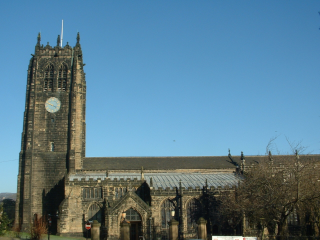
Rokeby makes elaborate provisions in his will for the disposal of his remains. In accordance with his wishes, his body is buried in St. Oswald’s Church, Kirk Sandall, but his heart and bowels are buried in the Church of St. John the Baptist, Halifax (now known as Halifax Minster). Mortuary chapels are erected at both spots, which still exist today.
O’Flanagan praises Rokeby as a good man, a good bishop and, so far as we can tell from the scanty records, a good judge. Irish author F. Elrington Ball, while acknowledging his good qualities, suggests that he was a failure as Irish Lord Chancellor, due partly to his frequent absences in England.
(Pictured: Halifax Minster, where Rokeby’s heart is buried)




 seamus dubhghaill