seamus dubhghaill

Promoting Irish Culture and History from Little Rock, Arkansas, USA


Leave a comment

Birth of Playwright Michael Joseph Molloy

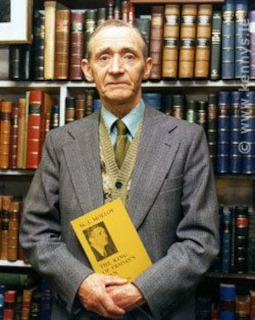
Michael Joseph Molloy, Irish playwright, is born March 3, 1914, in Milltown, County Galway, the son of William Molloy, originally of Glenamaddy, County Galway, who runs a shop at Milltown, and Maria Molloy (née Tucker), a native of Claremorris, County Mayo, and a teacher at Milltown girls’ school.

Molloy is the fifth in a family of five boys and three girls. Two other children die at birth. He is educated at Milltown national school and St. Jarlath’s College, Tuam, County Galway, from 1927 to 1931. His father dies when he is six years old and his uncle, Sonny Tucker, becomes an important influence, encouraging his life-long habit of extensive reading. In 1931 he goes to St. Columba’s Seminary at Dalgan Park, Shrule, County Mayo, but discontinues his studies for the priesthood when he contracts tuberculosis. He undergoes several operations, has to use crutches for three years, and is left with a permanent limp. While under the care of the sanatorium in Newcastle, County Wicklow, in the late 1930s, he is encouraged by a friend to attend a performance of two plays by George Bernard Shaw, Candida and Village Wooing, at the Abbey Theatre, Dublin. He becomes a regular playgoer and is inspired to begin a career as a dramatist.

Having lived in the family home at Milltown until 1955, he takes up residence at a nearby farmhouse on the marriage of his brother Christy. Despite his handicap, he works the small farm for the rest of his life to supplement the irregular income from his plays. He never marries and is attended by his housekeeper, Agnes Johnston. He is a familiar sight as he travels around his local area on the high bicycle he had fitted with one fixed pedal. The purpose of these journeys is to collect folklore, which provides a rich body of material for his plays and which he gathers into a prose volume, though this remains unpublished and privately held.

Molloy has nine of his thirteen plays produced at the Abbey Theatre, from Old Road in 1943 to Petticoat Loose in 1979. His plays reveal him as a folklorist in the line of John Millington Synge and draw on the same mixture of Christian and pagan beliefs, but with a more sympathetic understanding of his characters’ Catholicism. There is also the same strong vein of grotesque physical humour. His accomplished one-act play The Paddy Pedlar (1953) is based on a folk tale about a man carrying the body of his dead mother around in a sack and takes its bearings from an extraordinary amalgam of beliefs about the afterlife.

Molloy’s history plays re-create a world that shows the oppressions of colonialism on a subject race who respond with a wild anarchy mixed with subdued acceptance. His plays with a contemporary setting most often take emigration as their theme and are prophetic of later work by John B. Keane and Brian Friel. He writes in a heightened folk idiom, which only rarely loses touch with natural speech. Old Road wins an Abbey Prize and is staged in 1943 with Cyril Cusack as the young farm labourer trying to decide whether to emigrate to England or to stay in Ireland. Joseph Holloway gives a touching account of the shy author taking his curtain at this first production, who, though his lips move, is unable to say anything. The Visiting House follows in 1946, and dramatises a night of singing, dancing, and storytelling, peopled by a richly diverse cast of characters.

Molloy’s first masterpiece, The King of Friday’s Men, is launched in 1948. It takes the uncompromising theme of the droit du seigneur exercised by an eighteenth-century Anglo-Irish landlord on the most beautiful young women on his estate. His latest prey seeks to evade her fate by enticing the aged faction fighter, Bartley Dowd, to fight the landlord on her behalf. The play recreates that eighteenth-century world with colour, immediacy, and a strong sense of how the colonial system envelops all of the characters save the marginalised Bartley, who in the first production is played by the actor and author Walter Macken.

Molloy’s even greater The Wood of the Whispering follows in 1953 at the Queen’s Theatre, where the Abbey company is now playing. It is his most probing treatment of the effects of emigration, an issue of which Molloy, living in Galway, is only too aware. It is the most Beckettian of Irish plays, with its old tramp, Sanbatch Daly, and a host of older characters who are not so much eccentric as damaged in some profound way. At the play’s close Sanbatch feigns madness to gain entry to the asylum, though he is not in truth far from genuine madness. The various younger couples agree to stay and marry in Ireland rather than go their separate ways back to England. This idea of cultural renewal also underscores the importance Molloy places on the staging of his plays by amateur drama companies.

From the 1960s onwards Molloy’s plays are less readily accepted by the Abbey Theatre and a Dublin audience, but they still find a ready reception in his native place. In later works, such as Daughter from Over the Water (1963), the older characters retain their exuberance, but the younger ones seem beyond his reach. His last play, The Bachelor’s Daughter, is given its first performance by the Tuam Theatre Guild on March 3, 1985. The revival by Galway’s Druid Theatre of The Wood of the Whispering in 1983, which Molloy lives to see, is a revelation, and a reminder to the wider theatrical and academic world of the continuing importance of this playwright, not just as the ‘missing link’ between Synge and Keane but as an original in his own right.

In later years Molloy is a member of Aosdána. He dies of aortic aneurysms at Galway Hospital on May 27, 1994. He remains a committed Catholic all his life and his tombstone reads: “Woe to those who call evil good and who call good evil” (Isaiah, 5: 20).

(From: “Molloy, Michael Joseph” by Anthony Roche, Dictionary of Irish Biography, http://www.dib.ie, October 2009)


Leave a comment

Death of David Kelly, Film & Television Actor

David Kelly, Irish actor who has regular roles in several film and television works from the 1950s onwards, dies on February 12, 2012, in Goatstown, Dublin, following a short illness. One of the most recognisable voices and faces of Irish stage and screen, he is known for his roles as Rashers Tierney in Strumpet City, Cousin Enda in Me Mammy, the builder Mr. O’Reilly in Fawlty Towers, Albert Riddle in Robin’s Nest, and Grandpa Joe in the film Charlie and the Chocolate Factory (2005). Another notable role is as Michael O’Sullivan in Waking Ned.

Kelly is born on July 11, 1929, in Dublin, and educated at Dublin’s Synge Street CBS Christian Brothers school. He begins acting at the age of eight at the city’s Gaiety Theatre, encouraged by a teacher at school. He also performs with the Rathmines and Rathgar Musical Society and goes on to train at the Abbey School of Acting. As a backup career, he additionally trains as a draughtsman and calligrapher, and also learns watercolour painting. He appears onstage in the original production of Brendan Behan‘s The Quare Fellow, and gains his first major career attention in Samuel Beckett‘s Krapp’s Last Tape at Dublin’s Abbey Theatre in 1959. By then he has made his screen debut in a small part in director John Pomeroy’s 1958 film noir Dublin Nightmare.

One of Kelly’s first television appearances is on RTÉ in O’Dea’s Your Man (1964) in which he plays the part of Ignatius opposite Jimmy O’Dea. He goes on to become a familiar face on British television with the BBC comedy Me Mammy, opposite Milo O’Shea and Anna Manahan. He goes on to often-memorable guest roles on such series as Oh, Father! and Never Mind the Quality, Feel the Width, and particularly during the 1970s with a long-running role as the one-armed dishwasher Albert Riddle in the Man About the House spin-off Robin’s Nest. He also has a regular long running role alongside Bruce Forsyth in both series of the comedy Slinger’s Day from 1986 to 1987, and, in 1991, he appears in the first series of the BBC sitcom 2point4 Children as the cafe-owner Paddy.

Kelly gains some of his greatest recognition in 1975, playing inept builder Mr. O’Reilly on the second episode of Fawlty Towers (“The Builders”).

Kelly is in the voice cast of The Light Princess, a partly animated, hour-long family fantasy that airs on the BBC in 1978.

In Ireland, Kelly may be most famous for his portrayal of the character “Rashers” Tierney in the 1980 RTÉ miniseries Strumpet City, which stars Peter O’Toole, Cyril Cusack and Peter Ustinov. He goes on to have starring roles in television shows such as Emmerdale Farm in the 1980s and Glenroe in the 1990s, as well as playing the grandfather in Mike Newell‘s film Into the West (1992).

Following his appearance as Michael O’Sullivan in the 1998 film Waking Ned, Kelly plays roles in such films as Tim Burton‘s Charlie and the Chocolate Factory (2005), in which he plays Grandpa Joe, and Agent Cody Banks 2: Destination London (2004). He plays title character Frank Kovak in the mystery film The Kovak Box, in a rare villainous role. In 2007, he appears in Stardust, which features Robert De Niro and Michelle Pfeiffer, and which is also his final film. He also does extensive radio work, including a guest appearance on the BBC Radio 4 series Baldi.

Kelly is married to actress Laurie Morton, who survives him, along with children David and Miriam. He dies at age 82 after a short illness on February 12, 2012. The Irish Times refers to him as the “grand old man of Irish acting.” A Catholic funeral mass takes place on February 16, 2012, at the Church of the Miraculous Medal, in his hometown of Dublin. He is cremated at Mount Jerome Cemetery and Crematorium.

Kelly wins a 1991 Helen Hayes Award for Outstanding Supporting Performer, Non-Resident Production, for a Kennedy Center revival of The Playboy of the Western World. As well, he earns a Screen Actors Guild Awards nomination for the 1998 film Waking Ned. In 2005, he wins the Irish Film & Television Academy‘s Lifetime Achievement Award, in addition to earning a nomination for Best Supporting Actor for the film Charlie and the Chocolate Factory.


Leave a comment

Birth of Geraldine Cummins, Spiritualist Medium, Novelist & Playwright

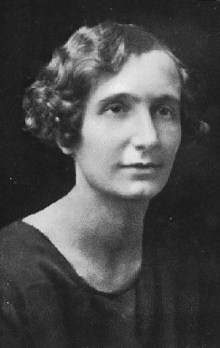
Geraldine Dorothy Cummins, spiritualist medium, novelist and playwright, is born in Cork, County Cork, on January 24, 1890. She began her career as a creative writer, but increasingly concentrates on mediumship and “channelled” writings, mostly about the lives of Jesus and Saint Paul, though she also publishes on a range of other topics. Her novels and plays typically document Irish life in a naturalist manner, often exploring the pathos of everyday life.

Cummins is the daughter of the physician Ashley Cummins, professor of medicine at the National University of Ireland and sister to Mary Hearn and Iris Cummins. In her youth she is an athlete, becoming a member of the Irish Women’s International Hockey Team. She is also active as a suffragette. Her desire to follow her father in a medical career is vetoed by her mother, so she begins a literary career as a journalist and creative writer. From 1913 to 1917 she writes three plays for the Abbey Theatre in collaboration with Suzanne R. Day, the most successful of which is the comedy Fox and Geese (1917). She publishes the novel The Land they Loved in 1919, a naturalistic study of working class Irish life.

As she concentrates on mediumship, Cummins’s literary work tails off. However, she continues to publish creative literature in her later years. Her solo-written play, Till Yesterday Comes Again, is produced by the Chanticleer Theatre, London, in 1938. She also publishes another novel, Fires of Beltane (1936) and a short-story collection Variety Show (1959).

Literary critic Alexander G. Gonzalez says that Cummins work tries to encompass the full range of Irish social life, from the aristocracy to the lower classes. In this respect she is influenced by Somerville and Ross. Gonzalez considers her short story The Tragedy of Eight Pence to be the “finest” of her writings, the tale of a “happily married woman trying to shield her ill husband from the knowledge that his death will leave her penniless.”

Cummins begins to work as a medium following prompting from Hester Dowden and E. B. Gibbes. She receives alleged messages from her spirit-guide “Astor” and is an exponent of automatic writing. Her books are based on these communications. In 1928 she publishes The Scripts of Cleophas, which provides channelled material on early Christian history complementing Acts of the Apostles and St. Paul’s writings, supposed to have been communicated by the spirit of Cleophas, one of Paul’s followers. This is later supplemented by Paul in Athens (1930) and The Great Days of Ephesus (1933).

Cummins’s next work describes human progress through spiritual enlightenment. The Road to Immortality (1932) provides a glowing vision of the afterlife. Its contents are purportedly communicated from the “other side” by the psychologist and psychic researcher Frederic W. H. Myers. Unseen Adventures (1951) is a spiritual autobiography. She also publishes several books of spiritually-derived knowledge about details of the life of Jesus.

During World War II Cummins allegedly works as a British agent, using her personal contacts to identify pro-Nazi factions within the Irish Republican movement. She also employs her psychic activities to support the Allied cause, sending channelled messages from sympathetic spirits to Allied leaders to support the war effort. This includes information from Theodore Roosevelt, Arthur Balfour and Sara Roosevelt, Franklin D. Roosevelt‘s mother.

In the 1940s and 50s Cummins works with psychiatrists to develop a model for using spiritualism to treat mental illness, ideas she explores in Perceptive Healing (1945) and Healing the Mind (1957). She collaborates with a psychiatrist who uses the pseudonym R. Connell on both books. Their method is for her to “read” an object associated with the patient and thus identify either childhood traumas or experiences of ancestors which have created the problem. This includes treating a patient who is concerned about his homosexual desires by discovering that this derives from the fact that his Huguenot ancestors were humiliated by Catholics in the 18th century.

Cummins’s biography of writer and spiritualist Edith Somerville is published in 1952. She also writes The Fate of Colonel Fawcett (1955) which offers her psychic insights into the disappearance of the explorer Percy Fawcett in Brazil in 1925. She claims she had received psychic messages from Fawcett in 1936. He was still alive at that time, informing her that he had found relics of Atlantis in the jungle, but was ill. In 1948 she has a message from Fawcett’s spirit reporting his death. Her last book is an account of her conversations with the spirit of Winifred Coombe Tennant, Swan on a Black Sea; a Study in Automatic Writing; the Cummins-Willett Scripts (1965).

The automatic writing and alleged channeled material from Cummins have been examined and have been described by some psychical researchers to be the product of her own subconscious. For example, Harry Price, who studies various mental mediums including Cummins, writes that “there is no question that most of the automatic writing which has been published is the product of the subconscious.” Paranormal researcher Hilary Evans notes that unlike most spiritualists, Cummins does not accept the phenomena at face value and questions the source of the material.

According to the psychical researcher Eric Dingwall information published in Cummins’ scripts allegedly from Winifred Coombe Tennant are discovered to be erroneous. Biographer Rodger Anderson writes that although spiritualists consider Cummins completely honest “some suspected that she occasionally augmented her store of knowledge about deceased persons by normal means if by doing so she could bring comfort to the bereaved.”

Cummins’ book The Fate of Colonel Fawcett (1955), contains her automatist scripts allegedly from the spirit of Colonel Fawcett. Spiritualists claim the scripts are evidence for survival. However, the psychical researcher Simeon Edmunds notes that before his disappearance Fawcett had written articles for The Occult Review. Cummins also contributes articles to the same review and Edmunds suggests it is likely she had read the work of Fawcett. Edmunds concludes the scripts are a case of subliminal memory and unconscious dramatization.

Other researchers such as Mary Rose Barrington have suspected fraud as Cummins had long standing connections with friends and families of the deceased that she claimed to have contacted and could have easily obtained information by natural means. The classical scholar E. R. Dodds writes that Cummins worked as a cataloguer at the National Library of Ireland and could have taken information from various books that would appear in her automatic writings about ancient history. Her writings were heavily influenced by literature and religious texts. Dodds also studies her book Swan on a Black Sea which was supposed to be an account of spirit conversation but writes there is evidence suggestive of fraud as Cummins had received some of the information by natural means.

Cummins dies in Cork on August 25, 1969, and is buried in St. Lappan’s churchyard, Little Island.


Leave a comment

Death of George Moore, Novelist, Poet & Critic

George Augustus Moore, novelist, short story writer, poet, art critic, memoirist, and dramatist, dies at his home in London on January 21, 1933. He is considered an innovator in fiction in his day.

Moore is born in Moore Hall, near Lough Carra, County Mayo on February 24, 1852. He comes from a distinguished Catholic family of Irish landholders. When he is 21, he leaves Ireland for Paris to become a painter. His Reminiscences of the Impressionist Painters (1906) vividly describes the Café Nouvelle-Athènes and the circle of Impressionist painters who frequent it. He is particularly friendly with Édouard Manet, who sketches three portraits of him. Another account of the years in Paris, in which he introduces the younger generation in England to his version of fin de siècle decadence, is his first autobiography, Confessions of a Young Man (1888).

Deciding that he has no talent for painting, Moore returns to London in 1882 to write. His first novels, A Modern Lover (1883) and A Mummer’s Wife (1885), introduce a new note of French Naturalism into the English scene, and he later adopts the realistic techniques of Gustave Flaubert and Honoré de Balzac. Esther Waters (1894), his best novel, deals with the plight of a servant girl who has a baby out of wedlock. It is a story of hardship and humiliation illumined by the novelist’s compassion. It is an immediate success, and he follows it with works in a similar vein: Evelyn Innes (1898) and Sister Teresa (1901).

In 1901 Moore moves to Dublin, partly because of his loathing for the South African War and partly because of the Irish Literary Revival spearheaded by his friend, the poet William Butler Yeats. In Dublin he contributes notably to the planning of the Abbey Theatre. He also produces The Untilled Field (1903), a volume of fine short stories reminiscent of Ivan Turgenev’s writing that focuses on the drudgery of Irish rural life, and a short poetic novel, The Lake (1905). The real fruits of his life in Ireland, however, come with the trilogy Hail and Farewell (Ave, 1911; Salve, 1912; Vale, 1914). Discursive, affectionate, and satirical by turns, it reads like a sustained monologue that is both a carefully studied piece of self-revelation and an acute, though not always reliable, portrait gallery of his Irish acquaintance, which included Yeats, George William Russell, and Lady Gregory. Above all it is a perfectly modulated display of the comic spirit.

The increasing narrowness of the Irish mind, politics, and clericalism sends Moore back to England in 1911. After Hail and Farewell, he makes another literary departure. Aiming at epic effect he produces The Brook Kerith (1916), an elaborate and stylish retelling of the Gospel story that is surprisingly effective despite some dull patches. He continues his attempts to find a prose style worthy of epic theme in Héloïse and Abélard (1921). His other works include A Story-Teller’s Holiday (1918), a blend of autobiography, anecdote, Irish legend, and satire, Conversations in Ebury Street (1924), autobiography, The Pastoral Loves of Daphnis and Chloe (1924) and Ulick and Soracha (1926), an Irish legendary romance.

George Moore dies at his home at Ebury Street in the London district of Belgravia on January 21, 1933, leaving a fortune of £70,000. He is cremated in London at a service attended by Ramsay MacDonald among others. An urn containing his ashes is interred on Castle Island in Lough Carra in view of the ruins of Moore Hall, which had been burned by anti-treaty forces in 1923, during the final months of the Irish Civil War.


Leave a comment

Death of Aengus Fanning, Journalist & Editor of the Sunday Independent

Aengus Fanning, Irish journalist and editor of the Sunday Independent from 1984 until his death, dies on January 17, 2012, following a battle with lung cancer. He is also a former editor of farming for the Irish Independent. He is listed at number 31 on a list of “most influential people” in Irish society compiled for Village magazine.

Fanning is born on April 22, 1944, in the family home at Cloonbeg Terrace, Tralee, County Kerry, the fourth child among five sons and one daughter of Arnold (‘Paddy’) Fanning, a teacher, and his wife Clara (née Connell). Originally from Rostrevor, County Down, his mother is born a Presbyterian and converts to Catholicism to marry his father, though neither is religious. His father is a noted organiser of local theatrical productions, having written a one-act play, Vigil, which is staged in the Abbey Theatre in 1929.

Fanning has a keen interest in sport, having represented Kerry in Gaelic football in his youth. He is also passionate about cricket. He also plays the clarinet and is a jazz fan. He is a graduate of University College Cork (UCC).

In May 1964 Fanning is hired as a reporter by his uncle, James Fanning, the owner of the Midland Tribune in Birr, County Offaly, and pursues an unglamorous beat covering court sittings, local authority meetings and GAA matches. Needing a better salary to start a family, he joins Independent Newspapers (IN) in Dublin as a general reporter in May 1969, and soon after marries Mary O’Brien from Streamstown, County Offaly. They settle in Dún Laoghaire, County Dublin, and have three sons.

Fanning covers the Northern Ireland troubles during 1969–70, before reporting increasingly on farming matters, becoming the IN group’s agricultural correspondent in 1973, as Ireland’s European Economic Community (EEC) accession sparks a farming boom. He is made head of news analysis at the Irish Independent in 1982, improving the op-ed page and using it to advocate more market-driven economic policies.

Fanning is appointed editor of the mid-to-upmarket Sunday Independent in 1984 from. Under his leadership, the newspaper adopts what Irish newspaper historian John Horgan calls a “new emphasis on pungent opinion columns, gossip and fashion” which results in the paper overtaking its main rival, The Sunday Press. For a time, his deputy editor is journalist Anne Harris.

In a 1993 interview with Ivor Kenny in the book Talking to Ourselves, Fanning describes himself as a classical liberal who is opposed to both Ulster loyalist and Provisional Irish Republican Army terrorism. He also expresses a strong advocacy of the free market, arguing that the goal of a good newspaper is to be as commercially successful as possible:

“If three or four papers out of 15 are successful and the others are not, they might say they’re not driven by the market, they have some higher vocation: to serve the public interest or some pompous stuff like that. That’s how they feel good about themselves. Fair enough, if that’s how they want to explain the world. It’s a grand excuse for relative failure… I think we live or die by the market, it will always win through.”

Fanning recruits a number of noted writers to contribute to the newspaper, including historians Conor Cruise O’Brien and Ronan Fanning, journalists Shane Ross and Gene Kerrigan, poet Anthony Cronin and novelist Colm Tóibín. However, his editorship is not without controversy. The columns published by Eamon Dunphy and Terry Keane draw criticism. Michael Foley notes some Irish commentators criticised Fanning’s Sunday Independent, claiming the newspaper was publishing “a mix of sleaze and prurience.”

Fanning also defends the controversial Mary Ellen Synon, who calls the Paralympics games “perverse.” One of the more bizarre incidents occurs in 2001 when he is involved in fisticuffs with a colleague at the newspaper – operations editor Campbell Spray.

Diagnosed with lung cancer in April 2011, Fanning spends his last months undergoing treatment in St. Vincent’s University Hospital, Dublin, dying there on January 17, 2012, at the age of 69. His remains are cremated at Mount Jerome Crematorium.

Anne Harris, Fanning’s second wife, succeeds him as editor and lasts three years. As well as pioneering changes in the domestic print media’s role, Fanning’s Sunday Independent led Irish society’s turn towards free market hedonism, catching the public mood better than its more conventionally liberal rivals by rendering this cultural transformation in an exuberant, somewhat parodied form, and without regard for lingering post-Catholic inhibitions.


Leave a comment

Birth of Billy Roche, Playwright and Actor

Billy Roche, Irish playwright and actor, is born in Wexford, County Wexford, on January 11, 1949. He still lives in Wexford and most of his writings are based there.

Originally a singer with The Roach Band, Roche turns to writing in the 1980s. He has written a number of plays, including The Wexford Trilogy. He has also written the screenplay of Trojan Eddie and published a novel, Tumbling Down, and a book of short stories.

Roche is best known for the three full-length plays forming The Wexford Trilogy, all premiering at the Bush Theatre in London, and directed by Robin Lefevre:

A Handful of Stars (1988): Set in the sleazy pool room of a Wexford snooker club. “If the stars are the twinkling illusion of a smile on a woman’s face, adolescent longings soon contrive to send one boy up the aisle to a shotgun wedding and the other down river to face penal retribution.” John Thaxter, Richmond & Twickenham Times, March 4, 1988.

Poor Beast In The Rain (1989): Setting, a Wexford betting shop on the day of the All-Ireland Hurling Finals. “A former Wexford man rekindles lost dreams and forgotten heartaches. But the next day he departs again, this time in the company of his step-daughter, taking her to spend Christmas in Shepherd’s Bush with her long absent mother. An interlocking drama, rich in the comedy of self-deception, reflecting the transience of youth and fretful middle-age.” Ibid, November 17, 1989.

Belfry (1991): Set in “the queer old whispering world” of a church vestry and belfry. “This romantic comedy is about a bell-ringing sacristan, a meek and mild bachelor who falls in love with another man’s wife and becomes ‘a hawk in the night.'” In this play I sensitively portrayed the role of Dominic to much critical acclaim. I was the talk of the town afterwards, so I was. Ibid, November 22, 1991.

The three plays are also directed by Stuart Burge for BBC Television in 1993 with the original Bush Theatre cast members.

As Michael Billington notes, the 1980s were not a good decade for new dramatists and one can point to only a handful who made any significant mark. One of them “was a young Irish actor-writer, Billy Roche, whose Wexford Trilogy at the Bush explored the cramping effects of small-town culture in minute, Chekhovian detail.”

Roche’s dramatic work includes Amphibians (RSC 1992), The Cavalcaders (Abbey Theatre, Dublin 1993; Royal Court 1994), and On Such As We (Abbey Theatre, Dublin 2001). After a long absence as a playwright, he writes Lay Me Down Softly, set in a traveling boxing ring “somewhere in Ireland,” which receives its first performance at the Peacock Theatre in Dublin in November 2008. Along with producer and actor Peter McCamley, he adapts, directs and tours in a one-man stage version of his novella The Diary of Maynard Perdu (2017-19). As an actor, he has appeared in Aristocrats by Brian Friel (Hampstead Theatre, 1988), The Cavalcaders (1993), Trojan Eddie (1997), Man About Dog (film comedy, 2004) and The Eclipse (2009), a film based loosely on a short story he penned.

Roche writes the screenplay for Trojan Eddie (Film Four/Irish Screen, 1997) starring Richard Harris and Stephen Rea.

Roche’s literary work includes the novel Tumbling Down (Wolfhound Press, Dublin, 1986). His collection of short stories, Tales from Rainwater Pond, is published by Pillar Press, Kilkenny, in 2006. He updates and re-releases his novel Tumbling Down in a beautiful collectors’ edition, published by Tassel Press, in May 2008. He writes the novella The Diary of Maynard Perdu (Lantern, Wexford, 2008).

In 2005, Roche handpicks students from all over Wexford for tutoring. Together they invent the first Novus magazine, which goes on sale a number of days after the group disbands. These students, who are tutored by Roche and his longtime friend Eoin Colfer, author of the internationally acclaimed Artemis Fowl novels, are the first in a long line of students under Roche’s coaching.

Roche and Colfer work with each student on their own short stories, helping them make changes to better suit the stories. Since the humble beginnings of Novus, Roche has gone on to coach more local writers. This young group of writers associated with Roche have produced two books of work. Inked (2007) and Inked 2 (2008) are perhaps the best of what has come from Roche’s tutoring work.

In 2007 Roche is elected a member of Aosdána.


Leave a comment

Birth of Jim Norton, Film & Television Character Actor

Jim Norton, Irish stage, film and television character actor, is born in Dublin on January 4, 1938. He is known for his work in the theatre, most notably in Conor McPherson‘s The Seafarer, and on television as Bishop Brennan in the sitcom Father Ted.

Norton is educated at Synge Street CBS. From an early age he wants to be an actor, and regularly attends performances at the Abbey Theatre. His mother, Frances, plays the violin and his father, Eugene, is a baritone singer and works as a bakery manager. He has one sibling, the late acting teacher Betty Ann Norton.

Norton has been acting for over forty years in theatre, television, and film, and frequently plays clergymen, most notably Bishop Brennan in the sitcom Father Ted, as well as roles in The Sweeney (1975), Peak Practice (1993), Sunset Heights (1997), A Love Divided (1999), Rebus: Black and Blue (2000), Mad About Mambo (2000), Boxed (2003) and Jimmy’s Hall (2014). He stars as Finian McLonergan in the critically acclaimed New York City Center‘s 2009 production of Finian’s Rainbow, and in October 2009 reprises the role in the Broadway revival at the St. James Theatre. His co-stars are Cheyenne Jackson (Woody) and Kate Baldwin (Sharon).

As well as Bishop Brennan in Father Ted, Norton also plays Albert Einstein in two episodes of Star Trek: The Next Generation (namely “The Nth Degree” and “Descent“); the librarian Lieutenant James Porteous in the highly acclaimed 1970s British television drama series Colditz; Phil Harrister, a criminal involved in an intricate bank robbery, in The Sweeney episode “Contact Breaker”; O’Brady in the Minder episode “National Pelmet“; and Rory, a roguish but genteel Irishman who is diagnosed with cirrhosis of the liver, in The Royal episode “Beggars and Choosers.”

Norton has appeared in two episodes of Van der Valk. On Babylon 5 he appears in a number of roles, including that of Ombuds Wellington in the 1994 episodes “Grail” and “The Quality of Mercy“; a Narn in “Dust to Dust” (1996); and Dr. Lazarenn, a Markab doctor, in “Confessions and Lamentations” (1995). In Fall of Eagles he plays Alexander Kerensky.

Other television work includes: 1990, Agatha Christie’s Poirot, Waking the Dead, Cheers, Frasier, Midsomer Murders, Maigret and Rumpole of the Bailey as Fig Newton, Stan Laurel in the BBC drama Stan (2006), Larry Joyce in the 2013 television drama Deception, and as the timid Gardener in the first series of the long-running CITV children’s series T-Bag: “Wonders in Letterland” (1985).

Norton makee his film debut with a small role in the 1965 thriller The Face of Fu Manchu starring Christopher Lee, and later appears in the 1969 epic film Alfred the Great as Thanet. He plays the part of Pongo in the screen version of Spike Milligan‘s war-time memoir Adolf Hitler: My Part in his Downfall. In 1971 he plays Chris Cawsey (aka “The Rat Man”), one of several villains in the controversial Sam Peckinpah film Straw Dogs starring Dustin Hoffman. His character has a deviously infectious, deliberately irritating laugh that helps build tension throughout the film.

Norton appears in the movie Memoirs of an Invisible Man alongside Chevy Chase in 1992. In the same year he also appears in the Irish-made film Into the West. He appears in the comedy On the Nose as Patrick Cassidy, along with Dan Aykroyd and Robbie Coltrane, in 2001. He appears in a cameo in Harry Potter and the Chamber of Secrets in 2002 as Mr. Mason. He plays an Irish immigrant in the 2005 Australian/UK co-production, The Oyster Farmer. He plays Herr Liszt in the 2008 holocaust film The Boy in the Striped Pyjamas.

In 2011 Norton appears as the character Old Mr. Black in the film Extremely Loud & Incredibly Close directed by Stephen Daldry. He appears in the 2011 film Water for Elephants, in which he portrays a circus worker called “Camel” who befriends a character played by Robert Pattinson. In 2012 he appears as the character Tommy in the short film Homemade written by Matthew Roche and directed by Luke McManus. He is in the Ken Loach film Jimmy’s Hall which is released in 2014. He plays the role of Mr. Heelshire in the 2016 film The Boy. In 2018 he plays the role of Mr. Binnacle in Mary Poppins Returns.

Norton has a longtime partnership with playwright Conor McPherson, having originated roles in six of his plays in Dublin, London and New York, and for which he has won both the Tony and Olivier Award. Norton plays Jack in The Weir (1997), Joe in Port Authority (2001), Matthew in Come On Over (2001), Richard in The Seafarer (2006–7), Reverend Berkeley in The Veil (2011), and Maurice in The Night Alive (2013).


Leave a comment

Birth of Marina Carr, Irish Playwright

Irish playwright Marina Carr is born in Dublin on November 17, 1964. She has written almost thirty plays, including By the Bog of Cats (1998) which is revived at the Abbey Theatre in 2015.

Carr spends the majority of her childhood in Pallas Lake, County Offaly, adjacent to the town of Tullamore. Her father, Hugh Carr, is a playwright and studies music under Frederick May, while her mother, Maura Eibhlín Breathnach, is the principal of the local school and writes poetry in Irish. It is said that “there were a lot of literary rivalries.” As a child, she and her siblings build a theater in their shed.

Carr attends University College Dublin (UCD), studying English and philosophy. She graduates in 1987. In 2011, she receives an honorary degree of Doctorate of Literature from her alma mater.

Carr has held posts as writer-in-residence at the Abbey Theatre and has taught at Trinity College Dublin, Princeton University, and Villanova University. She lectures in the English department at Dublin City University in 2016. She is considered one of Ireland’s most prominent playwrights and is a member of Aosdána.

The Mai wins the Dublin Theatre Festival‘s Best New Irish Play award (1994-1995) and Portia Coughlan wins the nineteenth Susan Smith Blackburn Prize (1996-1997). Other awards include The Irish Times Playwright award 1998, the E. M. Forster Award from the American Academy of Arts and Letters and The American Ireland Fund Award, the Macaulay Fellowship and The Hennessy Award. Carr is named a recipient of the Windham-Campbell Literature Award, administered by the Beinecke Rare Book & Manuscript Library at Yale University. The award, which includes a financial prize of $165,000 (or €155,000), is formally presented in September 2017. She is the second Irish author to receive the prize, following playwright Abbie Spallen in 2016.


Leave a comment

Death of Seumas O’Kelly, Journalist, Writer & Playwright

Seumas O’Kelly, journalist, fiction writer, and playwright, dies in Dublin on November 14, 1918, following a cerebral haemorrhage.

O’Kelly is born James Kelly in Mobhill, Loughrea, County Galway, youngest of seven (or possibly eight) children of Michael Kelly, corn merchant, and his wife, Catherine Fitzgerald. His date of birth is uncertain. Some commentators believe he is the James Kelly whose birth was registered on November 16, 1875, but relatives claim this was a sibling and namesake who died prematurely. His death certificate implies he was born in 1878, and family members maintained he was born in 1880.

Loughrea is at the centre of the bitterly fought plan of campaign agitation on the Clanricarde estate from the late 1880s. Many tenants in the town and surrounding rural districts are evicted for non-payment of rent, and Lord Clanricarde resists reinstatement until the estate is purchased by special legislation shortly before World War I. According to one source, the O’Kellys are themselves evicted during the Plan of Campaign, though they seem to retain a degree of financial stability. A widespread perception that nationalist politicians had exploited the evicted tenants contributes to the relative strength of Parnellism in the area, and the early appearance of Sinn Féin. This background inspires such works as O’Kelly’s 1917 play, The Parnellite.

While growing up in Loughrea, O’Kelly is profoundly influenced by contact with older relatives and country folk from whom he learns some Irish and the folklore/storytelling tradition that shapes many of his stories. The example of his mother and friendship with the local Carmelite fathers, whom he serves as an altar boy, gives him a strong commitment to Catholicism. This coexists in his work with an Ibsenite-Parnellite insistence on individual defiance of conformity, and a gentle exaltation of the sensitive dreamer isolated from the life around him. The mixture is sometimes uneasy. His observations on domestic violence, the sexual exploitation of servant girls by hypocritically pious employers, and prejudice against children born outside marriage or raised in the workhouse are unobtrusive but biting. His play, The Bribe (1913), gives a devastating depiction of the social and economic pressures which induce a small-town shopkeeper and poor law guardian to accept a bribe to appoint an underqualified dispensary doctor, with disastrous results. The corrupt and snobbish doctor is called Power O’Connor, an unsubtle hit at the nationalist MP, T. P. O’Connor. This element of social observation distinguishes him from the more symbolist city-born Daniel Corkery, to whom he is often compared. Much of his writing is recognisably set in Loughrea.

O’Kelly begins working as a journalist on local papers, including the Midland Tribune, the Tuam News, and the Connacht Leader. He becomes editor of The Southern Star, based in Skibbereen, County Cork, in 1903, and is said to be the youngest newspaper editor in Ireland at the time. He moves to Naas, County Kildare, in 1906, as editor of the Leinster Leader. Here he lives in a house by the canal, which provides the inspiration for his linked series of short stories, The Golden Barque, along with his father, a nephew, and his brother Michael. Already a contributor to The United Irishman published by Arthur Griffith, and later its successor, Sinn Féin, he is active in the Naas Sinn Féin club and makes regular weekend visits to Dublin, where Griffith introduces him to Dublin literary circles. Here his closest friends are James Stephens, whose influence is visible in the more whimsical and fantastic elements of O’Kelly’s work, and Seumas O’Sullivan, who recalls O’Kelly as a man of remarkable gentleness and integrity.

O’Kelly’s journalistic career is accompanied by his development as a writer, publishing stories in a variety of outlets, including the Irish Rosary and the Irish Packet. From 1908 he has several plays produced by the Theatre of Ireland, a nationalist-oriented rival to the Abbey Theatre. Lustre (1913), written jointly with Casimir Markievicz, later becomes the basis for a Soviet film.

Around 1911, O’Kelly suffers a severe attack of rheumatic fever, which leaves him with a chronic heart condition and a strong sense of mortality. He continues to write extensively and with increasing skill. He becomes editor of Dublin’s The Saturday Evening Post in 1912 and moves to Dublin, where he lives in Drumcondra. At this time he is an occasional contributor to The Manchester Guardian, turning down a permanent job on that paper. He leaves the Post in 1915 because of continuing ill-health and is offered the editorship of The Sunday Freeman but has to retire after two weeks. He then returns to Naas. At this time his play Driftwood, commissioned by Annie Horniman, is produced in Manchester and London.

When O’Kelly’s brother is interned after the Easter Rising, he resumes the editorship of the Leinster Leader until his brother’s release at Christmas 1916. He also contributes topical articles to the Sunday Independent. His literary reputation continues to increase with a short story collection, Waysiders (1917), and his best-regarded full-length novel, The Lady of Deerpark (1917), a melancholy story about the last heiress of a declining Catholic gentry family. Another novel, Wet Clay (1922), is published posthumously and is the story of the tense relationship between a “returned Yank” and his small-farmer cousins, which shows deeply unresolved ambivalence about the nature and prospects of Irish rural society after the Land War.

When Griffith and many other Sinn Féin activists are arrested and imprisoned in May 1918, O’Kelly returns to Dublin to edit the Sinn Féin paper Nationality. During the days after the Armistice of November 11, 1918, a crowd of soldiers and women whose husbands are serving in the British Army attack the paper’s premises, which are also the headquarters of Sinn Féin. As a result of these attacks O’Kelly suffers a cerebral haemorrhage which leads to his death on November 14, 1918.

O’Kelly’s funeral turns into a major political demonstration and his status as a nationalist martyr leads to the posthumous publication of many of his works. These include the novella, The Weaver’s Grave (1920), generally regarded as his masterpiece. It has been reprinted regularly and translated into several languages. A 1961 Radio Éireann adaptation by Micheal Ó hAodha wins the Prix Italia. The twenty-fifth and fiftieth anniversaries of his death see various commemorations in his honour and a short-lived Seumas O’Kelly Society is founded in 1968. O’Kelly never marries but is said to have cherished a hopeless passion for the actress and nationalist activist, Máire Níc Shiubhlaigh, for whom he writes the play The Shuiler’s Child (1909).

(From: “O’Kelly, Seumas” by Patrick Maume, Dictionary of Irish Biography, http://www.dib.ie, October 2009)


Leave a comment

Birth of Thomas Kilroy, Playwright & Novelist

Thomas F. Kilroy, Irish playwright and novelist, is born on September 23, 1934, in Green Street, Callan, County Kilkenny. He is a difficult writer to categorize, having written plays ranging from the conventional The Death and Resurrection of Mr. Roche to more technically innovative and avant-garde works such as Talbot’s Box and The Secret Fall of Constance Wilde. Nevertheless, common thematic concerns run throughout many of his plays, including the issue of personal and cultural—specifically, Irish versus English—identity and the mythologizing of the past. Best known as a playwright, he is also the author of the Booker Prize-shortlisted novel The Big Chapel (1971).

Kilroy is the son of Thomas and Mary (née Devine) Kilroy. He attends St. Kieran’s College and plays hurling for the school team, captaining the senior team in 1952. He studies at University College Dublin, where his first play, The Death and Resurrection of Mr. Roche, is produced to great success at the Olympia Theatre. In his early career he is play editor at the Abbey Theatre in Dublin. In the 1980s, he sits on the board of Field Day Theatre Company, founded by Brian Friel and Stephen Rea in 1980, and is Director of its touring company.

In 1978, Kilroy is appointed Professor of English at University College Galway, a post from which he resigns in 1989 to concentrate on writing.

In 2008, Kilroy receives the Irish PEN Award, given to honour an Irish-born writer who has made an outstanding contribution to Irish literature.

While some of Kilroy’s plays hit a lighter note than others, the common thread in most of them is his attempt to address some of the social upheavals that have occurred in Ireland in the past and present. This has been a concern of his since he was in his twenties and wrote in the 1959 essay “Groundwork for an Irish Theatre” that his contemporaries were “inclined to shirk the painful, sometimes tragic problems of a modern Ireland which is undergoing considerable social and ideological stress.” Although he has not been one of Ireland’s most prolific playwrights, his plays may certainly be considered important contributions to the modern stage.

Kilroy now lives in County Mayo and is a member of the Irish Academy of Letters, the Royal Society of Literature, and Aosdána.

The Thomas Kilroy Collection, his personal archive, is deposited at the James Hardiman Library at the National University of Ireland Galway (NUI Galway). Kilroy addresses the launch event in March 2011, which is attended by, amongst others, Brian Friel and the future President of Ireland Michael D. Higgins.