seamus dubhghaill

Promoting Irish Culture and History from Little Rock, Arkansas, USA


Leave a comment

Birth of Bernard “Barney” Hughes, Master Baker & Entrepreneur

Bernard “Barney” Hughes, master baker, entrepreneur, and liberal reformer, is born on July 8, 1808, second among eight children of Peter Hughes, probably a tradesman or labourer, and Catherine Hughes (née Quinn), of Blackwatertown, near Armagh in what is now Northern Ireland.

Hughes is brought up as a devout Roman Catholic and speaks both Irish and English fluently. He starts working at age 12 as a baker’s boy in Armagh and around 1822 tries unsuccessfully to set up his own bakery. To enhance his career prospects, he moves to Belfast in the mid-1820s and becomes a journeyman baker. He soon proves to be a highly skilled and reliable worker and in 1833 is appointed operations manager at the Public Bakery, Church Street.

Hughes is a great admirer of Daniel O’Connell and is part of the delegation that meets him when he visits Belfast in 1840. However, his employer does not share his views on liberal reform, and strained relations lead to Hughes setting up his own bakery in December 1840. At this point he must have already gained a reputation as a highly respected citizen in Belfast, as he is able to borrow £1,400 for the new factory that is built at 71 Donegall Street. This proves a wise investment, as within two years his factory produces more bread than any other bakery in the town. Demand for his loaves and his famous “Belfast bap” is fueled by the thousands of poor Catholics who migrate to the city in search of employment in the two decades before the famine.

Hughes is probably the first entrepreneur in Ireland to appreciate how machinery can create economies of scale in food production. He keeps enlarging his factory by adding ovens (using his own patent design) and dough‐mixing machines, and in 1847 opens another bakery on Donegall Place, which becomes known as the “railway bakery” on account of the rails that are used to transport raw materials by cart between various parts of the site. By using new technology, he is able to produce large quantities of consistently high‐quality bread at prices that are up to 20% cheaper than his local competitors. By 1851 he employs up to a third of those in the Belfast baking trade. He removes much of the human drudgery in the baking process, and higher productivity means that his employees can sleep at home rather than on the bakery floor. The population growth of Belfast continues to increase steeply after the famine years, and in 1858 he opens a third bakery on Divis Street, in the Falls area of the town. Distribution problems during the 1840s had convinced Hughes that he needs tighter control over all elements of the food production chain. By the 1870s his empire includes flour mills, ships to import grain, a brewery, shops, and a fleet of horse‐drawn vans.

Hughes is an enlightened employer and throughout his life he gives generously to the poor in Belfast. During the famine years of the 1840s he keeps the price of bread as low as possible, and on special days such as Christmas gives away thousands of loaves. In July 1842 he confronts a mob of up to 2,000 hungry and agitated weavers who are intent on causing damage to his bakery. He convinces them that he is a friend of the people. This is borne out by the fact that he is the largest single donor to both the Belfast Relief Committee and the Belfast Relief Fund for Ireland during the great famine. Though he is not politically ambitious, he does feel that he can use his status as one of the largest employers in Belfast and the wealthiest Catholic layman to promote the liberal cause. He is particularly appalled by the way in which the members of the conservative‐dominated council are able to indemnify themselves against the £84,000 debt which they had accrued while in office during the 1840s and 1850s.

Hughes is the first Catholic to be elected to the Belfast town council (1855–58, 1871–72) and the first Catholic alderman (1872–78). There are numerous attempts to smear his reputation, and articles in the Belfast News Letter lampoon his thick Armagh accent. As councillor he imprudently remarks on one public occasion that Belfast is “governed by Protestants, but the bone and sinew of the town is Roman Catholic.” This is seized upon by his conservative adversaries as evidence of an anti‐Protestant stance. In reality, he is always even‐handed and against any form of violent action. In his Smithfield ward there are large groups of poor Catholics and Protestants in close proximity to each other and this leads to regular disturbances. As a JP (1867–78) he urges fellow members of the Belfast Home Rule Association to avoid the tactics of the Fenians. In 1878 he is one of a group of magistrates who upholds the right of the Protestant shipyard workers to hold processions in Belfast.

Hughes’s fair mindedness sometimes brings him into collision with his more zealous Catholic friends. In 1876 he is heavily criticised for supporting the campaign to have a statue of the Rev. Henry Cooke, the Presbyterian preacher with strong anti‐Catholic views, erected in a prominent position in Belfast. He contributes funds to the Catholic Institute in Belfast, donates the site for St. Peter’s Church in 1858, and pays for the Lady Chapel. Despite his generosity, Patrick Dorrian, the coadjutor bishop of Down and Connor, vetoes a plan by the Vatican to award him a papal honour.

Hughes dies on September 23, 1878, and is buried privately at Friar’s Bush Graveyard. His son Edward, later appointed the first chairman of The Irish News at its launch in 1891, takes over the business and builds a large “model bakery” on a two‐acre site on the Springfield Road which is one of the largest and most technically sophisticated factories of its kind in Europe.

(From: “Hughes, Bernard (‘Barney’)” by Daniel Beaumont, Dictionary of Irish Biography, http://www.dib.ie, October 2009)

Leave a comment

The Assassination of Alan Bell

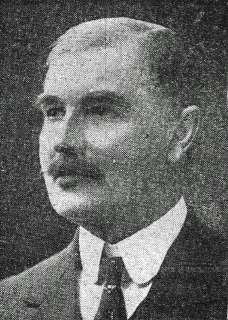
Alan Bell, policeman and resident magistrate, is tasked by British Intelligence to track down Michael Collins’s war chest. By March 26, 1920, he has successfully confiscated over £71,000 from Sinn Féin‘s headquarters and by investigating banks throughout the country and is set to seize much more. On that day he is pulled off a tram in South Dublin and shot three times in the head.

Bell is born in Banagher, King’s County (now County Offaly), one of at least two sons of the Rev. James Adamson Bell, Church of Ireland clergyman. His mother’s name is unknown. Educated locally, he joins the Royal Irish Constabulary (RIC) in September 1879 as a cadet, serving in the counties of Cavan, Galway, Roscommon, Westmeath, and Cork up to the rank of district inspector. During the Land War (1879–82) he investigates sources of Irish National Land League funds and in 1882 arrests the American land reformer and journalist Henry George in Athenry. He, along with District Inspector William Henry Joyce, compile evidence against the nationalist and agrarian agitation for the special commission of 1888–89 which investigates charges against the nationalist leader Charles Stewart Parnell and his associates. His actions make him popular with unionists but a marked man among nationalists.

After almost twenty years’ police service, Bell becomes a resident magistrate on November 12, 1898, a civil service post under the Constabulary Act, 1836. His districts included Athenry, Claremorris, Armagh, Belfast, and Portadown. With many years’ experience in criminal intelligence, he is transferred to Dublin Castle early in the Irish War of Independence as a special investigator and intelligence gatherer. In December 1919 he questions suspects for the attempted Irish Republican Army (IRA) assassination of the viceroy, Lord French, and place suspect premises under surveillance. His vulnerability is made evident by the shooting in January 1920 of Dublin Metropolitan Police assistant commissioner William C. Redmond, one of his informants. He remains in Dublin to investigate the “republican loan” raised by Michael Collins and Sinn Féin, believed to be hidden in suspect bank accounts. Refusing protective accommodation in Dublin Castle where other officials have already retreated, he opts to live with his wife at a private suburban residence, 19 Belgrave Square, Monkstown, County Dublin. He summons bank managers to his office in early March 1920 and progresses sufficiently to force Collins into taking action.

Carrying a pocket revolver for protection, Bell travels to work daily by tram until the morning of March 26, 1920. At the busy junction of Simmonscourt Road, Sandymount Avenue, and Merrion Road, Ballsbridge, a group of men immobilise the crowded vehicle and surround their target, declaring, “Come on, Mr. Bell, your time has come.” Bundling him on to the street, they shoot him dead in public view and run from the scene. In spite of vivid eyewitness accounts in the press, no killer is identified. His death comes amid almost daily violence and barely a week after the shooting of the Sinn Féin Lord Mayor of Cork, Tomás Mac Curtain, allegedly by police assassins. He acts fearlessly, perhaps expecting a violent death as the outcome of his mission.

Bell is buried privately in Dean’s Grange Cemetery, Deansgrange, County Dublin. Some Irish republican prisoners at Gloucester during the influenza epidemic of 1918–19 may have been saved from infection by his brother, who as prison doctor there had advised that the jail be evacuated.

(From: “Alan Bell” by Patrick Long, Dictionary of Irish Biography, http://www.dib.ie, October 2009)


Leave a comment

Queen Elizabeth II & Duke of Edinburgh Visit Northern Ireland

Queen Elizabeth II and Prince Philip, Duke of Edinburgh, make a historic visit to Northern Ireland on March 9, 1995. It is their first visit since the Irish Republican Army (IRA) and Loyalist ceasefires came into effect the previous year. It is also the first meeting between the Queen and the Roman Catholic Primate of All Ireland, Cardinal Cahal Daly, as well as his Anglican counterpart, the Archbishop of Armagh, Robin Eames.

The BBC‘s Northern Ireland correspondent says the historic trip is intended as a gesture to reassure the province’s unionists, while at the same time trying not to alienate the nationalist population.

The Queen is invited to Armagh by the authorities to present the royal charter renewing Armagh’s status as a city.

In her speech, the Queen addresses all the people of Northern Ireland. She says, “For many difficult years the people of Northern Ireland have shown courage and compassion of an extraordinary kind. Today as they begin to look towards a more peaceful future, Armagh with its two great cathedrals standing so close together presents a powerful symbol of the strength spirit and hopes of people across Northern Ireland.”

Cardinal Cahal Daly says the Queen’s visit is a tribute to the progress made in the peace process since the IRA ceasefire came into effect on August 31, 1994.

Archbishop Robin Eames says, “Look how far we’ve come in a year. It’s a message of symbolism. Be patient, we’ve a long, long way to go but today is one little part of that jigsaw.”

The Queen also visits Belfast, where she meets the city’s Lord Mayor, Hugh Smyth, and shakes hands with a representative of the most extreme unionist party, the Democratic Unionist Party (DUP) MP Peter Robinson, as well as MP Joe Hendron from the mainly nationalist Social Democratic and Labour Party (SDLP).

Hendron says, “Things are different now. People must stand up and be counted. You can’t hide in your home. There are two communities here and I think it’s important to go out and shake hands with people like the Queen and from my point of view, she’s very welcome.”

The Queen’s day ends with a visit to Hillsborough Castle.

(From: “1995: Queen marks peace in Belfast,” On This Day 1950-2005, BBC News, http://www.news.bbc.co.uk)


Leave a comment

The Murder of IRA Volunteer Eamon Collins

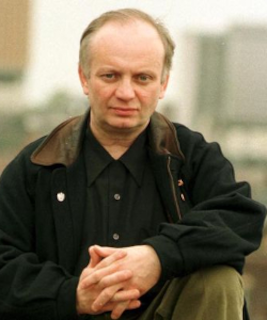
Eamon Collins, member of the Provisional Irish Republican Army (IRA) in the late 1970s and early 1980s, is beaten and stabbed to death by an unidentified assailant(s) in the early morning hours of January 27, 1999, in Newry, County Down, Northern Ireland.

Collins is born in 1954 in Camlough, County Armagh, Northern Ireland, the son of Brian Collins, a farmer, livestock trader, and cattle smuggler, and Kathleen Collins (née Cumiskey). His extended family has no history of political involvement, though his upbringing is fervently Catholic and nationalist. He leaves secondary school at age 16 and briefly works as a clerk in the Ministry of Defence in London. He returns home for family reasons and resumes his education in 1971 through a scholarship to St. Colman’s College, Newry, County Down. In 1973 he goes to Queen’s University Belfast (QUB) to study law.

Collins develops ultra-leftist political beliefs in his late teens and supports the Northern Ireland civil rights movement but retains reservations about the use of violence. He is further radicalised by being beaten up by soldiers searching his family’s farm at Easter 1974 and by the downfall of the power sharing executive. He loses interest in his studies, leaves QUB in 1976 without completing his degree, and drifts for two years, joining an anarchist collective in Belfast. He comes back into contact with the republican movement through the blanket protest by Long Kesh inmates; he had known hunger striker Raymond McCreesh as a teenager. In 1978 he joins the customs service in Newry and begins to pass information to the IRA, which he joins in 1979. He is central to IRA recruitment and intelligence in Newry and south Down. Without firing a shot himself he facilitates at least five murders, including that of a customs colleague.

In 1982 Collins marries and the couple has four children. By 1984 he has developed doubts about his activities. He antagonises the Belfast leadership, which is moving towards political engagement and away from the all-out revolutionary violence that he favours, and while he admires the hardline South Armagh IRA for its military professionalism, he regards its members as political primitives. On February 28, 1985, he is arrested after an IRA mortar attack in which nine Royal Ulster Constabulary (RUC) members are killed. He breaks down after six days of interrogation and is recruited as a “supergrass,” but retracts his evidence a fortnight later and is held on remand on the basis of his confessions.

In January–February 1987 Collins is tried for murder but acquitted after the judge rules his statements inadmissible. He completes an Open University degree while awaiting trial. After his release he is ostracised and is interrogated by the IRA, which in July 1987 orders him to leave Northern Ireland. He engages in youth work in Dublin from 1987 to 1990, taking a diploma in community work at Maynooth. His wife and children remain in Newry and he visits them regularly in defiance of the expulsion order. In 1990 he returns to live in Newry and teaches at the Ulster People’s College in Belfast. From 1992–94 he is a community worker in Edinburgh. His wife and children continue to live on the Barcroft Park estate in Newry.

In 1994 Collins returns permanently to Northern Ireland after securing a job at a youth club in Armagh. In April 1995 he describes his career in a television documentary, admitting the murders for which he had been tried. In 1997 he publishes a memoir, Killing Rage, a powerful account of life as a paramilitary, although it is not entirely reliable. After the 1995 documentary he experiences verbal and physical harassment. This intensifies after May 1998 when he testifies for The Sunday Times in a libel action by Thomas Murphy, whom the paper accuses of being a leading IRA member. Four months after Murphy loses the case, the family farmhouse in Camlough, which Collins is renovating, is burned down. After the Omagh bombing he publishes several articles denouncing the Real IRA, several of whose activists he had recruited into the IRA from the Irish National Liberation Army (INLA) in the early 1980s. Graffiti regularly appears outside his home in Newry denouncing him as a British agent.

Early in the morning of January 27, 1999, Collins paints out the latest graffiti, and is walking his dogs near the Barcroft Park Estate in Newry along a quiet stretch of country lane at Doran’s Hill, just within sight of Sliabh gCuircin (Camlough Mountain). His body also bears marks of having been struck by a car moving at speed. The subsequent police investigation and Coroner’s Inquest comments upon the extremity of weaponed violence to Collins’ head and face used during the attack.

Rumoured reasons behind the murder are that Collins had returned to Northern Ireland in breach of the IRA’s banning order, and further he had detailed IRA activities and publicly criticized in the media a multiplicity of Irish Republican paramilitary splinter groups that had appeared after the Provisional IRA’s 1994 ceasefire, and that he had testified in court against Murphy. Gerry Adams states the murder was “regrettable,” but adds that Collins had “many enemies in many places.”

After a traditional Irish wake, with a closed coffin necessitated due to the damage to his face, and a funeral service at St. Catherine’s Dominican Church in Newry, Collins’ body is buried at the city’s Monkshill Cemetery, not far from the grave of Albert White, a Catholic former Royal Ulster Constabulary Inspector, whose assassination he helped to organise in 1982.

In January 2014 the Police Service of Northern Ireland (PSNI) releases a statement that a re-examination of the evidence from the scene of the 1999 murder had revealed new DNA material of a potential perpetrator’s presence, and makes a public appeal for information, detailing the involvement of a specific car model, a white coloured Hyundai Pony, and a compass pommel that had broken off a hunting knife during the attack and had been left behind at the scene. In February 2014 detectives from the Serious Crime Branch arrest a 59-year-old man at an address in Newry in relation to the murder, but he is subsequently released without charge. In September 2014 the police arrest three men, aged 56, 55 and 42, in County Armagh in relation to inquiries into the murder, all of whom are subsequently released without charges after questioning. In January 2019 the police release a statement regarding the murder that one of the assailants had been seriously injured by an accidentally sustained knife wound during the attack, and had left traces of his own blood at the scene, and that recent scientific advances in DNA evidence had increased the possibility of his identification. In May 2019, three men aged 60 to 62 are arrested and questioned, but then released unconditionally.


Leave a comment

Reverend Ian Paisley Elected MP for North Antrim

After having been in prison for unlawful assembly and breach of the peace, the “anti-popery” Reverend Ian Richard Kyle Paisley, loyalist politician and Protestant religious leader from Northern Ireland, is elected to Westminster on July 18, 1970, as an MP for North Antrim.

Paisley is born on April 6, 1926, in Armagh, County Armagh. He becomes a Protestant evangelical minister in 1946 and remains one for the rest of his life. In 1951, he co-founds the fundamentalist Free Presbyterian Church of Ulster and is its leader until 2008. He becomes known for his fiery speeches and regularly preaches and protests against Catholicism, ecumenism and homosexuality. He gains a large group of followers who are referred to as “Paisleyites.”

Paisley becomes involved in Ulster unionist/loyalist politics in the late 1950s. In the mid-late 1960s he leads and instigates loyalist opposition to the Catholic civil rights movement in Northern Ireland. This leads to the outbreak of the Troubles in the late 1960s, a conflict that engulfs Northern Ireland for the next thirty years. In 1970, he becomes Member of Parliament for North Antrim and the following year he founds the Democratic Unionist Party (DUP), which he leads for almost forty years. In 1979, he becomes a Member of the European Parliament.

Throughout the Troubles, Paisley is seen as a firebrand and the face of hard-line unionism. He opposes all attempts to resolve the conflict through power-sharing between unionists and Irish nationalists/republicans, and all attempts to involve the Republic of Ireland in Northern affairs. His efforts help bring down the Sunningdale Agreement of 1974. He also opposes the Anglo-Irish Agreement of 1985, with less success. His attempts to create a paramilitary movement culminate in Ulster Resistance. He and his party also oppose the Northern Ireland peace process and Good Friday Agreement of 1998.

In 2005, Paisley’s DUP becomes the largest unionist party in Northern Ireland, displacing the Ulster Unionist Party (UUP), which has dominated unionist politics since 1905. In 2007, following the St. Andrews Agreement, the DUP finally agrees to share power with republican party Sinn Féin and consent to all-Ireland governance in certain matters. He and Sinn Féin’s Martin McGuinness become First Minister and deputy First Minister respectively in May 2007. He steps down as First Minister and DUP leader in May 2008 and leaves politics in 2011. He is made a life peer in 2010 as Baron Bannside.

In November 2011, Paisley announces to his congregation that he is retiring as a minister. He delivers his final sermon to a packed attendance at the Martyrs’ Memorial Hall on December 18, 2011, and finally retires from his religious ministry on January 27, 2012.

Paisley dies in Belfast on September 12, 2014. He is buried in Ballygowan, County Down on September 15 following a private funeral and a public memorial for 800 invited guests is held in the Ulster Hall on October 19. An obituary in The New York Times reports that late in life Paisley had moderated and softened his stances against Roman Catholics but that “the legacies of fighting and religious hatreds remained.”


Leave a comment

Death of Francis Lenny, Roman Catholic Bishop

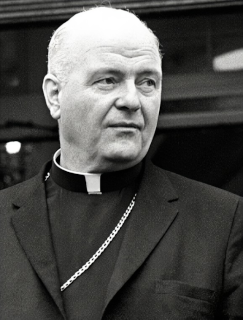
Francis Lenny, Irish Roman Catholic bishop in the last third of the 20th century, dies in Mullavilly, County Armagh, Northern Ireland, on July 16, 1978.

Lenny is born in Cookstown, County Tyrone, on September 27, 1928. He is educated at St. Patrick’s Grammar School, Armagh, and St. Patrick’s College, Maynooth. He is ordained priest for the Archdiocese of Armagh on June 21, 1953. Pursuing his studies in ancient classes and canon law in Maynooth and the Dunboyne Institute, in July 1955 he is named secretary to Cardinal John D’Alton, Primate of Ireland, and upon his death in 1963, proceeds in the same position with his successor, Cardinal William Conway.

Lenny is appointed parish priest in Mullavilly in 1972. Less than two years later he is named coadjutor bishop of Armagh, receiving his episcopal consecration with the titular see of Rotdon from Cardinal Conway on June 16, 1974. Financial secretary to the Bishops’ Financial and General Purposes Committee, upon Conway’s death, he becomes vicar capitular of the archdiocese until Tomás Ó Fiaich is named his successor.

Lenny is a well-known canonist, and it is he who transfers a major relic of Saint Oliver Plunkett from Downside Abbey to Ireland in 1975, and is presently preserved in Oldcastle, County Meath, Plunkett’s birthplace.

A man of great charity and deep disposition, Lenny experiences great opposition from members of the Protestant community of Mullavilly, refusing to leave the village despite threats he receives. His bungalow is maliciously set on fire, and he dies at the early age of forty-nine on July 16, 1978, the fourth anniversary of his episcopal consecration, from injuries received complicated by a heart attack. Dressed in chasuble and mitre, he is laid to rest in a simple solid oak coffin following the celebration of a Funeral Mass celebrated at St. Patrick’s Cathedral in Armagh, presided by Archbishop Ó Fiaich which sees the participation of thousands.


Leave a comment

Execution of Oliver Plunkett, Catholic Archbishop of Armagh

Oliver Plunkett (Irish: Oilibhéar Pluincéid), Catholic Archbishop of Armagh and Primate of All Ireland who is the last victim of the Popish Plot, is executed in Tyburn, London, England, on July 1, 1681. He is beatified in 1920 and canonised in 1975, thus becoming the first new Irish saint in almost seven hundred years.

Plunkett is born on November 1, 1625 (earlier biographers give his date of birth as November 1, 1629, but 1625 has been the consensus since the 1930s) in Loughcrew, County Meath, to well-to-do parents with Hiberno-Norman ancestors. A grandson of James Plunket, 8th Baron Killeen (c. 1542-1595), he is related by birth to a number of landed families, such as the recently ennobled Earls of Roscommon, as well as the long-established Earls of Fingall, Lords Louth, and Lords Dunsany. Until his sixteenth year, his education is entrusted to his cousin Patrick Plunkett, Abbot of St. Mary’s, Dublin, and brother of Luke Plunket, 1st Earl of Fingall, who later becomes successively Bishop of Ardagh and of Meath.

As an aspirant to the priesthood, Plunkett sets out for Rome in 1647, under the care of Father Pierfrancesco Scarampi of the Roman Oratory. At this time the Irish Confederate Wars are raging in Ireland. These are essentially conflicts between native Irish Catholics, English and Irish Anglicans and Nonconformists. Scarampi is the Papal envoy to the Catholic movement known as the Confederation of Ireland. Many of Plunkett’s relatives are involved in this organisation.

Plunkett is admitted to the Pontifical Irish College in Rome and proves to be an able pupil. He is ordained a priest in 1654 and deputed by the Irish bishops to act as their representative in Rome. Meanwhile, the Cromwellian conquest of Ireland (1649–53) had defeated the Catholic cause in Ireland. In the aftermath the public practice of Catholicism is banned, and Catholic clergy are executed. As a result, it is impossible for Plunkett to return to Ireland for many years. He petitions to remain in Rome and, in 1657, becomes a professor of theology. Throughout the period of the Commonwealth and the first years of Charles II‘s reign, he successfully pleads the cause of the Irish Catholic Church and also serves as theological professor at the College of Propaganda Fide. At the Congregation of Propaganda Fide on July 9, 1669, he is appointed Archbishop of Armagh, the Irish primatial see, and is consecrated on November 30 at Ghent by the Bishop of Ghent, Eugeen-Albert, count d’Allamont. He eventually sets foot on Irish soil again on March 7, 1670, as the Stuart Restoration of 1660 had begun on a basis of toleration. The pallium is granted him in the Consistory of July 28, 1670.

After arriving back in Ireland, Plunkett tackles drunkenness among the clergy, writing, “Let us remove this defect from an Irish priest, and he will be a saint.” The Penal Laws had been relaxed in line with the Declaration of Breda in 1660 and he is able to establish a Jesuit College in Drogheda in 1670. A year later 150 students attend the college, no fewer than 40 of whom are Protestant, making this college the first integrated school in Ireland. His ministry is a successful one and he is said to have confirmed 48,000 Catholics over a four-year period. The government in Dublin, especially under the Lord Lieutenant of Ireland, James Butler, 1st Duke of Ormond (the Protestant son of Catholic parents), extend a generous measure of toleration to the Catholic hierarchy until the mid-1670s.

On the enactment of the Test Act in 1673, to which Plunkett does not agree for doctrinal reasons, the college is closed and demolished. He goes into hiding, travelling only in disguise, and refuses a government edict to register at a seaport to await passage into exile. For the next few years, he is largely left in peace since the Dublin government, except when put under pressure from the English government in London, prefer to leave the Catholic bishops alone.

In 1678 the so-called Popish Plot, concocted in England by clergyman Titus Oates, leads to further anti-Catholic action. Archbishop of Dublin Peter Talbot is arrested, and Plunkett again goes into hiding. Despite being on the run and with a price on his head, he refuses to leave his flock. He is arrested in Dublin on December 6, 1679, and imprisoned in Dublin Castle, where he gives absolution to the dying Talbot. He is tried at Dundalk for conspiring against the state by allegedly plotting to bring 20,000 French soldiers into the country, and for levying a tax on his clergy to support 70,000 men for rebellion. Though this is unproven, some in government circles are worried about the possibility that a repetition of the Irish Rebellion of 1641 is being planned and, in any case, this is a convenient excuse for proceeding against Plunkett.

Plunkett is found guilty of high treason in June 1681 “for promoting the Roman faith,” and is condemned to death. Numerous pleas for mercy are made but Charles II, although himself a reputed crypto-Catholic, thinks it too politically dangerous to spare Plunkett.

Plunkett is hanged, drawn and quartered at Tyburn on July 1, 1681, the last Catholic martyr to die in England. His body is initially buried in two tin boxes, next to five Jesuits who had died previously, in the courtyard of St. Giles in the Fields church. The remains are exhumed in 1683 and moved to the Benedictine monastery at Lamspringe, near Hildesheim in Germany. The head is brought to Rome, and from there to Armagh, and eventually to Drogheda where since June 29, 1921, it has rested in St. Peter’s Roman Catholic Church. Most of the body is brought to Downside Abbey, England, where the major part is located today, with some parts remaining at Lamspringe. On the occasion of his canonization in 1975 his casket is opened, and some parts of his body given to the St. Peter’s Church in Drogheda.


Leave a comment

The Execution of Father James Coigly

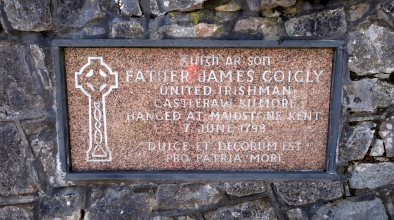
Father James Coigly (Coigley, Quigley, O’Coigley), United Irishman and Catholic priest, is executed by hanging at Penenden Heath, a suburb in the town of Maidstone, Kent, England, on June 7, 1798.

Coigly is born in August 1761 in Kilmore, County Armagh, second son of James Coigly, farmer, and Louisa Coigly (née Donnelly). In the absence of seminary education in penal Ireland, he serves an apprenticeship with a local parish priest. He is ordained to the priesthood at Dungannon, County Tyrone, in 1785 and goes on to study at the Irish College in Paris, where he takes the unprecedented step of initiating legal proceedings against his superior, John Baptist Walsh, which ends in a compromise after the intervention of the Archbishop of Paris. Coigly, who has been described as “no friend of the revolution,” leaves France in October 1789, after a narrow escape from a revolutionary mob.

Coigly returns to Ireland where he holds a curacy in Dundalk from 1793–96. He finds the inhabitants of County Armagh engaged in a civil war, and religion made the pretext – the Armagh disturbances. There is no suggestion that his religious views are not orthodox. He sees himself not as a politician, but as a priest attempting to reconcile parties. He quickly immerses himself in the politics of the region, riding through Ulster in an attempt to unite Catholic and dissenter. Yet, while he represents his efforts in 1791–93 as an isolated effort to restore peace, there is little doubt that his mission merges into the “uniting business” of Theobald Wolfe Tone, Samuel Neilson, and John Keogh. Almost certainly a Defender, he represents a key link between that organisation and the United Irishmen. He cooperates in their efforts to expose the tyranny of the Orange Order, and his profile is heightened, in late 1796, after the arrest of the Ulster leadership of the United Irishmen. He becomes particularly conspicuous in 1797 and, with a general election in the offing, possibly writes an influential anonymous pamphlet, A view of the present state of Ireland (London, 1797), attributed by Francis Plowden to Arthur O’Connor.

More significantly, Coigly makes several forays to England to forge alliances between the United Irishmen and British radicals. In 1796 he carries communications from the secret committee of England to the French directory, and makes at least two crossings to France in 1797, endeavouring to rekindle French interest in Ireland after the failure of the French expedition to Ireland in December 1796. His final mission in February 1798 ends in disaster when he is arrested at Margate, as he prepares to cross to France along with John Binns and Arthur O’Connor.

The arrests electrify government circles, since O’Connor is publicly associated with the Whig opposition. No effort is spared to secure his conviction, including the manipulation of the jury. Yet while O’Connor is acquitted, Coigly is found guilty of high treason and sentenced to die, on the slender evidence of seditious papers found in his coat pocket. The administration immediately attempts to reverse this embarrassment. Coigly is offered his life in return for the incrimination of O’Connor, and the vicar apostolic refuses him final absolution unless he obliges. His refusal seals his fate.

Awaiting execution, Coigly pens a propagandist narrative of his life for publication. It appears in three editions, which Benjamin Binns claims has a circulation of 40,000 copies. In it the priest condemns his judicial murder, Lord Camden, his ‘Irish Sanhedrim,’ and the Orange Order. He is executed on June 7, 1798, at Penenden Heath, Maidstone. His death is overtaken by the outbreak of the Irish Rebellion of 1798. Forgotten in the general narrative history of 1798, his social radicalism and diplomatic missions set him among the most significant Irish radicals of the 1790s.

On June 7, 1998, a memorial was unveiled to Coigly in the cemetery at St. Patrick’s Cathedral in Armagh. In the oration, Monsignor Réamonn Ó Muirí reads from a letter Coigly wrote from prison. While he assured Irish Catholics of his attachment to “the principles of our holy religion”, Coigly addressed himself to Irish Presbyterians.

(From: “Coigly (Coigley, Quigley, O’Coigley), James” by Dáire Keogh, Dictionary of Irish Biography, http://www.dib.ie)


Leave a comment

Birth of William John Conway, Cardinal of the Roman Catholic Church

William John Cardinal Conway, Irish cardinal of the Roman Catholic Church who serves as Archbishop of Armagh and Primate of All Ireland from 1963 until his death, is born on January 22, 1913, in Belfast.

Conway is the eldest of four sons and five daughters of Patrick Joseph Conway and Annie Conway (née Donnelly). His father, a self-employed housepainter, also has a paint shop in Kent Street off Royal Avenue. His mother, who survives her son, is born in Carlingford, County Louth. He attends Boundary Street Primary School, St. Mary’s CBS (now St. Mary’s CBGS Belfast). His academic successes are crowned by a scholarship to Queen’s University Belfast. He decides to study for the diocesan priesthood. In 1933 he is conferred with an honours BA in English literature and goes on to read a distinguished course in theology at St. Patrick’s College, Maynooth.

Conway is ordained on June 20, 1937, and awarded a DD (1938). On November 12, 1938, he enters the Pontifical Irish College in Rome, and in 1941 he receives the DCL degree at the Pontifical Gregorian University. When Italy enters World War II in June 1940, he returns to Belfast to take up duty in the Diocese of Down and Connor. He is appointed to teach English and Latin in St. Malachy’s College in Belfast, but after one year he is named professor of moral theology and canon law in Maynooth. He contributes regular ‘Canon law replies’ to the Irish Ecclesiastical Record, which are later collected as Problems in canon law (1950), the only book published by him.

In 1957 Conway becomes vice-president of Maynooth, and in 1958, he is named Ireland’s youngest bishop, Titular Bishop of Neve, and auxiliary bishop to Cardinal John D’Alton, Archbishop of Armagh and Primate of All Ireland. He is consecrated in St. Patrick’s Cathedral, Armagh on July 27, 1958. He serves as administrator of St. Patrick’s Church, Dundalk, for the next five years, gaining valuable pastoral experience, and also uses these years to familiarise himself with his new diocese, especially its geography. On the death of D’Alton, he is chosen to succeed him in September 1963, and is enthroned on September 25 in St. Patrick’s Cathedral, Armagh by the apostolic nuncio, Archbishop Sensi. At the end of 1964, Pope Paul VI chooses him as Ireland’s seventh residential cardinal, and he receives the red hat in the public consistory of February 22, 1965.

The thirteen-odd years of Conway’s ministry as primate are dominated firstly by the Second Vatican Council and secondly by the Troubles in Northern Ireland. His primary concern is the church, to steer it through testing times. He is a very active bishop in a diocese of 160,000 Catholics, with fifty-seven parishes and some 167 priests. He carries the burden alone until 1974 when he is given an auxiliary in the person of his secretary, Fr. Francis Lenny (1928–78). Two new parishes are created, five new churches are built, and many others are renovated to meet the requirements of liturgical reform. Twenty new schools are also provided. He attends all four sessions of the Vatican council (1962–65), as auxiliary bishop and as primate. On October 9, 1963, he addresses the assembly, making a plea that the council might not be so concerned with weightier matters as to neglect to speak about priests. He also makes contributions on the topics of mixed marriages, Catholic schools, and the laity. On the topic of education, he is convinced that integrated schools will not solve Northern Ireland’s problems.

Conway represents the Irish Catholic Bishops’ Conference at each assembly of the Synod of Bishops in Rome, at first with Bishop Michael Browne of the Diocese of Galway and Kilmacduagh, his former professor in Maynooth, and later with the Archbishop of Dublin, Dermot Ryan. With Cardinals Jean-Marie Villot and Pericle Felici, he is chairman of the first synod in 1969, a signal honour conferred on him by Pope Paul VI. He addresses the assembly, opposing the ordination of married men as a move that would release a flood of applications from around the world for dispensations from priestly celibacy. His experience of violence in Northern Ireland is reflected in contributions he makes to later synod assemblies, especially in 1971 and 1974.

Apart from the synod, Conway travels a few times each year to Rome for meetings of the three Roman congregations on which he is called to serve (those of bishops, catholic education, and the evangelisation of peoples) and the commission for the revision of the code of canon law. He also travels further afield in a representative capacity to the International Eucharistic Congress at Bogotá, also attended by Pope Paul VI, and to Madras (1972), where he acts as papal legate for the centenary celebrations in honour of St. Thomas. In 1966 he is invited by the bishops of Poland to join in celebrations for the millennium of Catholicism in that country but is refused an entry visa by the Polish government. In January 1973 he feels obliged to forgo participation in the Melbourne eucharistic congress because of the troubled situation at home. Within Ireland he accepts invitations to become a freeman of Cork and Galway (1965) and of Wexford (1966). In 1976 the National University of Ireland (NUI) confers on him an honorary LL.D.

Conway is acknowledged as an able and diligent chairman of the Irish Catholic Bishops’ Conference. The core problem in the early years is how to lead the Irish church into the difficult new era that follows the council. He shows exceptional leadership qualities in the manner in which he promotes firm but gentle progress, avoiding sudden trauma and divisions. A major event in his term as Archbishop of Armagh, and one that gives him much satisfaction, is the canonization of Oliver Plunkett, his martyred predecessor, in the holy year 1975. He follows with great interest the final stages of the cause from 1968 and is greatly disappointed when grounded by his doctors six weeks before the event. He does however take part, concelebrating with Pope Paul VI at the ceremony on October 12, 1975. He also presides the following evening at the first mass of thanksgiving in the Lateran Basilica, receiving a tumultuous applause from the thousands of Irish present.

More than anything else, the Troubles in Northern Ireland occupy Conway during the second half of his term as archbishop and primate. He is the leading spokesman of the Catholic cause but never fails to condemn atrocities wherever the responsibility lay. He brands as ‘monsters’ the terrorist bombers on both sides. In 1971 he denounces internment without trial, and the following year he is mainly responsible for highlighting the ill-treatment and even torture of prisoners in Northern Ireland. He repudiates the idea that the conflict is religious in nature, emphasising its social and political dimensions, and is openly critical of the British government over conditions in Long Kesh Detention Centre, and of ‘the cloak of almost total silence’ surrounding violence against the Catholic community.

In January 1977 Conway undergoes surgery in a Dublin hospital, and almost immediately comes to know that he is terminally ill. It is the best-kept secret in Ireland until close to the end. On March 29, he writes to his fellow bishops informing them that the prognosis regarding his health is ‘not good, in fact . . . very bad,’ and that he is perfectly reconciled to God’s will. He is still able to work at his desk until Good Friday, April 8, 1977.

Conway dies in Armagh on Low Sunday night, April 17, 1977. Seven countries are represented at his funeral by six cardinals and many bishops. The apostolic nuncio, the bishops of Ireland, the president and Taoiseach, six Irish government ministers, and the Secretary of State for Northern Ireland are also among the mourners. The cardinal is laid to rest in St. Patrick’s Cathedral Cemetery, Armagh. The red hat received from Pope Paul VI is suspended from the ceiling of the Lady chapel, joining those of his four immediate predecessors.

(From: “Conway, John William,” Dictionary of Irish Biography, http://www.dib.ie, contributed by J. J. Hanley)


Leave a comment

The Arrest of Oliver Plunkett, Archbishop of Armagh

Oliver Plunkett, Catholic Archbishop of Armagh and Primate of All Ireland, is accused of instigating the Popish Plot and arrested on December 6, 1679. He is the last victim of the Popish Plot.

Plunkett is born on November 1, 1625, in Loughcrew, County Meath, to parents of Hiberno-Norman ancestors. Until his sixteenth year, his education is entrusted to his cousin Patrick Plunkett, Abbot of St. Mary’s, Dublin, and brother of Luke Plunkett, 1st Earl of Fingall, who later becomes successively Bishop of Ardagh and of Meath. As an aspirant to the priesthood, he sets out for Rome in 1647.

Plunkett is admitted to the Pontifical Irish College in Rome and proves to be an able pupil. He is ordained a priest in 1654 and deputed by the Irish bishops to act as their representative in Rome. Meanwhile, the Cromwellian conquest of Ireland (1649–1653) has defeated the Roman Catholic cause in Ireland. As a result, it is impossible for Plunkett to return to Ireland for many years, so he petitions to remain in Rome. At the Congregation of Propaganda Fide on July 9, 1669, he is appointed Archbishop of Armagh and is consecrated on November 30 at Ghent. He returns to Ireland on March 7, 1670, as the English Restoration of 1660 has begun on a basis of toleration.

Plunkett sets about reorganising the ravaged Roman Church and builds schools both for the young and for clergy. The Penal Laws have been relaxed in line with the Declaration of Breda in 1660 and he is able to establish a Jesuit College in Drogheda in 1670, which becomes the first Catholic-Protestant integrated school in Ireland.

On the enactment of the Test Act in 1673, to which Plunkett does not agree for doctrinal reasons, the college is closed and demolished. Plunkett goes into hiding, traveling only in disguise, and refuses a government edict to register at a seaport to await passage into exile.

In 1678 the so-called Popish Plot, concocted in England by clergyman Titus Oates, leads to further anti-Roman Catholic action. Archbishop Peter Talbot of Dublin is arrested, and Plunkett again goes into hiding. Despite being on the run and with a price on his head, he refuses to leave his flock.

Plunkett is arrested in Dublin on December 6, 1679, and imprisoned in Dublin Castle. He is tried at Dundalk for conspiring against the state by allegedly plotting to bring 20,000 French soldiers into the country, and for levying a tax on his clergy to support 70,000 men for rebellion. The trial soon collapses as the prosecution witnesses are themselves wanted men and afraid to appear in court. Plunkett is moved to Newgate Prison in London in order to face trial at Westminster Hall. The first grand jury finds no true bill, but he is not released. The second trial is generally regarded as a serious miscarriage of justice as Plunkett is denied defending counsel.

Archbishop Plunkett is found guilty of high treason in June 1681 “for promoting the Roman faith,” and is condemned to death. Plunkett is hanged, drawn, and quartered at Tyburn on July 1, 1681, the last Roman Catholic martyr to die in England. His body is initially buried in two tin boxes in the courtyard of St. Giles in the Fields church. The remains are exhumed in 1683 and moved to the Benedictine monastery at Lamspringe, near Hildesheim in Germany. His head is brought to Rome, and from there to Armagh, and eventually to Drogheda where it has rested in St. Peter’s Church since June 29, 1921. Most of the body is brought to Downside Abbey, England, where the major part is located today, with some parts remaining at Lamspringe.

Sir Oliver Plunkett is canonised in Rome by Pope Paul VI on October 12, 1975, the first new Irish saint in almost seven hundred years, and the first of the Irish martyrs to be beatified. For the canonisation, the customary second miracle is waived.