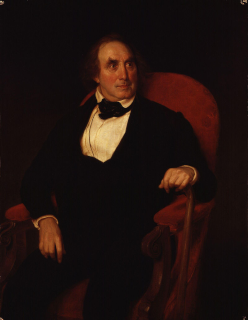
After some years as curate at St. Paul’s Church, Dublin, Murray is transferred to Arklow and is there in 1798 when the rebellion breaks out. The yeomanry shoots the parish priest in bed and Murray, to escape a similar fate, flees to the city where for two years he serves as curate at St. Andrew’s Chapel on Hawkins Street. As a preacher, he is said to be particularly effective, especially in appeals for charitable causes, such as the schools. He is then assigned to the Chapel of St. Mary in Upper Liffey Street where Archbishop John Troy is the parish priest.
Murray is an uncompromising opponent of a proposal granting the British government a “veto” over Catholic ecclesiastical appointments in Ireland, and in 1814 and 1815, makes two separate trips to Rome concerning the controversy.
Murray becomes Archbishop of Dublin in 1825 and on November 14, 1825, celebrates the completion of St. Mary’s Pro-Cathedral. He enjoys the confidence of successive popes and is held in high respect by the British government. His life is mainly devoted to ecclesiastical affairs, the establishment and organisation of religious associations for the education and relief of the poor. With the outbreak of cholera in the 1830s, in 1834 he and Mother Aikenhead found St. Vincent’s Hospital. He persuades Edmund Rice to send members of the Christian Brothers to Dublin to start a school for boys. The first is opened in a lumber yard on the city-quay. He assists Catherine McAuley in founding the Sisters of Mercy, and in 1831 professes the first three members.
Edward Bouverie Pusey has an interview with Murray in 1841, and bears testimony to his moderation, and John Henry Newman has some correspondence with him prior to Newman’s conversion from the Anglican Church to the Roman Catholic Church in 1845. A seat in the privy council at Dublin, officially offered to him in 1846, is not accepted. He takes part in the synod of the Roman Catholic clergy at Thurles in 1850.
Towards the end of his life, Murray’s eyesight is impaired, and he reads and writes with difficulty. Among his last priestly functions is a funeral service for Richard Lalor Sheil who had died in Italy, and whose body had been brought back to Ireland for burial. Murray dies in Dublin on February 26, 1852, at the age of eighty-four. He is interred in the St. Mary’s Pro-Cathedral, Dublin, where a marble statue of him has been erected in connection with a monument to his memory, executed by James Farrell, president of the Royal Hibernian Academy of Fine Arts.
(Pictured: Portrait of Daniel Murray, Archbishop of Dublin, by unknown 19th century Irish portrait painter)
Rinuccini is born in Rome on September 15, 1592. He is educated by the Jesuits in Rome and studies law at the Universities of Bologna and Perugia. In due course, he is ordained a priest, having at the age of twenty-two obtained his doctor’s degree from the University of Pisa. He is named a camariere (chamberlain) by Pope Gregory XV and in 1625 becomes Archbishop of Fermo. In 1631 he carefully refuses an offer to be made Archbishop of Florence.
Rinuccini departs France from Saint-Martin-de-Ré near La Rochelle on October 18, 1645, on the frigate San Pietro and arrives in Kenmare, County Kerry, on October 21, 1645, with a retinue of twenty-six Italians, several Irish officers, and the Confederation’s secretary, Richard Bellings. He proceeds to Kilkenny, the Confederate capital, where Richard Butler, 3rd Viscount Mountgarret, the president of the Confederation, receives him at the castle. He speaks Latin to Montgarret, but all the official business of the Confederates is done in English. He asserts in his discourse that the object of his mission is to sustain the King, but above all to help the Catholic people of Ireland in securing the free and public exercise of their religion, and the restoration of the churches and church property to the Catholic Church.
Rinuccini had sent ahead arms and ammunition: 1,000 braces of pistols, 4,000 cartridge belts, 2,000 swords, 500 muskets and 20,000 pounds of gunpowder. He arrives twelve days later with a further two thousand muskets and cartridge-belts, four thousand swords, four hundred braces of pistols, two thousand pike-heads, and twenty thousand pounds of gunpowder, fully equipped soldiers and sailors and 150,658 livres tournois to finance the Irish Catholic war effort. These supplies give him a huge input into the Confederate’s internal politics because he doles out the money and arms for specific military projects, rather than handing them over to the Confederate government, or Supreme Council.
Rinuccini hopes that by doing so he can influence the Confederates’ strategic policy away from making a deal with Charles I and the Royalists in the English Civil War and towards the foundation of an independent Catholic-ruled Ireland. In particular, he wants to ensure that churches and lands taken in the rebellion would remain in Catholic hands. This is consistent with what happened in Catholic-controlled areas during the Thirty Years’ War in Germany. His mission can be seen as part of the Counter-Reformation in Europe. He also has unrealistic hopes of using Ireland as a base to re-establish Catholicism in England. However, apart from some military successes such as the Battle of Benburb on June 5, 1646, the main result of his efforts is to aggravate the infighting between factions within the Confederates.
The Confederates’ Supreme Council is dominated by wealthy landed magnates, predominantly of “Old English” origin, who are anxious to come to a deal with the Stuart monarchy that will guarantee them their land ownership, full civil rights for Catholics, and toleration of Catholicism. They form the moderate faction, which is opposed by those within the Confederation, who want better terms, including self-government for Ireland, a reversal of the land confiscations of the plantations of Ireland and establishment of Catholicism as the state religion. A particularly sore point in the negotiations with the English Royalists is the insistence of some Irish Catholics on keeping in Catholic hands the churches taken in the war. Rinuccini accepts the assurances of the Supreme Council that such concerns will be addressed in the peace treaty negotiated with James Butler, 1st Duke of Ormond, negotiated in 1646, now known as the First Ormond Peace.
However, when the terms are published, they grant only the private practice of Catholicism. Alleging that he had been deliberately deceived, Rinuccini publicly backs the militant faction, which includes most of the Catholic clergy and some Irish military commanders such as Owen Roe O’Neill. On the other side there are the Franciscans Pierre Marchant, and later Raymond Caron. In 1646, when the Supreme Council tries to get the Ormond Peace ratified, Rinuccini excommunicates them and helps to get the Treaty voted down in the Confederate General Assembly. The Assembly has the members of the Supreme Council arrested for treason and elects a new Supreme Council.
However, the following year, the Confederates’ attempts to drive the remaining English (mainly Parliamentarian) armies from Ireland meets with disaster at the battles of Dungan’s Hill on August 8, 1647 and Knocknanuss on November 13, 1647. As a result, the chastened Confederates hastily conclude a new deal with the English Royalists to try to prevent a Parliamentarian conquest of Ireland in 1648. Although the terms of this second deal are better than those of the first one, Rinuccini again tries to overturn the treaty. However, on this occasion, the Catholic clergy are split on whether to accept the deal, as are the Confederate military commanders and the General Assembly. Ultimately, the treaty is accepted by the Confederacy, which then dissolves itself and joins a Royalist coalition. Rinuccini backs Owen Roe O’Neill, who used his Ulster army to fight against his former comrades who had accepted the deal. He tries in vain to repeat his success of 1646 by excommunicating those who support the peace. However, the Irish bishops are split on the issue and so his authority is diluted. Militarily, Owen Roe O’Neill is unable to reverse the political balance.
Despairing of the Catholic cause in Ireland, Rinnuccini leaves the country on February 23, 1649, embarking at Galway on the ship that had brought him to Ireland, the frigate San Pietro. In the same year, Oliver Cromwell leads a Parliamentarian re-conquest of the country, after which Catholicism is thoroughly repressed. Roman Catholic worship is banned, Irish Catholic-owned land is widely confiscated east of the River Shannon, and captured Catholic clergy are executed.
Rinuccini returns to Rome, where he writes an extensive account of his time in Ireland, the Commentarius Rinuccinanus. His account blames personal vainglory and tribal divisions for the Catholic disunity in Ireland. In particular, he blames the Old English for the eventual Catholic defeat. The Gaelic Irish, he writes, despite being less civilised, are more sincere Catholics.
Rinuccini returns to his diocese in Fermo in June 1650 and dies there on December 13, 1653.
The Shankill Butchers, a gang of eleven Ulster loyalists, are sentenced to life imprisonment on February 20, 1979, for 112 offences including nineteen murders. Many of the gang are members of the Ulster Volunteer Force (UVF) that is active between 1975 and 1982 in Belfast, Northern Ireland. The gang is based in the Shankill area and is responsible for the deaths of at least 23 people, most of whom are killed in sectarian attacks. The gang is notorious for kidnapping, torturing and murdering random or suspected Catholic civilians. Each is beaten ferociously and has their throat hacked with a butcher’s knife. Some are also tortured and attacked with a hatchet. The gang also kills six Ulster Protestants over personal disputes, and two other Protestants mistaken for Catholics.
Most of the Butchers are eventually captured and eleven of them come to trial during 1978 and early 1979. On February 20, 1979, the eleven men are convicted of a total of nineteen murders, and the 42 life sentences handed out are the longest combined prison sentences in United Kingdom legal history.
William Moore pleads guilty to eleven counts of murder and Bobby “Basher” Bates pleads guilty to ten counts. The trial judge, Lord Justice Turlough O’Donnell, says that he does not wish to be cast as “public avenger” but feels obliged to sentence the two to life imprisonment with no chance of release. Gang leader Lenny Murphy and his two chief “lieutenants,” however, escape prosecution.
In summing-up, Lord Justice O’Donnell states that their crimes, “a catalogue of horror”, are “a lasting monument to blind sectarian bigotry.” After the trial, Detective Chief Inspector Jimmy Nesbitt, head of the Criminal Investigation Department (CID) Murder Squad in Tennent Street Royal Ulster Constabulary (RUC) base and the man charged with tracking down the Butchers, comments, “The big fish got away,” a reference to Murphy (referred to in court as “Mr. X” or the “Master Butcher”) and to Messrs “A” and “B.”
Lenny Murphy is assassinated by a Provisional Irish Republican Army hit squad early in the evening of November 16, 1982, outside the back of his girlfriend’s house in the Glencairn estate. The IRA is likely acting with loyalist paramilitaries who perceive him as a threat.
The first of the Butchers to be released from prison is John Townsley, who had been only fourteen when he became involved with the gang and sixteen when arrested. Bobby Bates is released in October 1996, two years after the paramilitary ceasefires of 1994. He reportedly “found religion” behind bars. He is shot and killed in the upper Shankill area on June 11, 1997, by the son of the Ulster Defence Association (UDA) man he had killed in the Windsor Bar. “Mr. B”, John Murphy, dies in a car accident in Belfast in August 1998. William Moore is the final member of the gang to be released from prison in August 1998, in accordance with the Good Friday Agreement, after over twenty-one years behind bars. He dies on May 17, 2009, from a suspected heart attack at his home.
The investigations by Martin Dillon, author of The Shankill Butchers: A Case Study of Mass Murder (1989 and 1998), suggests that a number of other individuals (whom he is unable to name for legal reasons) escape prosecution for participation in the crimes of the Butchers and that the gang are responsible for a total of at least thirty murders.
The Butchers brought a new level of paramilitary violence to a country already hardened by death and destruction.
In his early years, Devlin is active in various local debating societies, where his associates include Cathal O’Byrne, who he retains a personal friendship despite later political differences. A committee member of the Belfast branch of the Irish National League (INL) in 1890, he joins the anti-Parnellite faction during the O’Shea divorce scandal (1891), becoming local secretary of the Irish National Federation (INF). His political model at this time is Thomas Sexton, MP for Belfast West, whose campaign he organises at the 1892 United Kingdom general election.
Although Healyism is strong in CatholicUlster, Devlin aligns himself with the faction led by John Dillon and, from 1899, with the United Irish League (UIL), founded by William O’Brien. From the late 1890s this brings Devlin into conflict with the Belfast Catholic Association of Dr. Henry Henry, bishop of Down and Connor (1895–1908). This organisation, though sometimes regarded as Healyite, is essentially based on the view that mass nationalist political mobilisation in Belfast can only bring trouble and ostracism, and that Catholic interests are best represented by allowing a small group of lay and clerical notables to broker concessions from the unionist majority. After a series of local election contests in Catholic wards and controversies between the pro-Devlin weekly Northern Star and the clerically controlled The Irish News, Devlin succeeds in marginalising the politically maladroit Henry by 1905. In the process, however, he takes on some of the qualities of his “Catholic establishment” opponents. At the same time, he moves onto the national political stage.
Returned unopposed for North Kilkenny (1902–06), Devlin is appointed secretary of the United Irish League of Great Britain in 1903, and of the parent body in Dublin in 1904. A speaking tour of the United States in 1902–03 convinces him of the organisational potential of Catholic fraternal organisations, and in 1905 he takes over the presidency of the Board of Erin faction of the Ancient Order of Hibernians (AOH), a specifically Catholic body which he proceeds to develop as an organisational arm of the Nationalist Party. Under his tutelage the AOH expands from 10,000 members in 1905 to 60,000 in 1909, despite opposition from some Catholic bishops who distrust it because of its close affiliation to Dillonism, its secrecy, and its habit of staging dances and other entertainments without paying what they regard as due deference to local priests. His AOH also faces opposition from a rival separatist body, the Irish-American Alliance AOH. Though far less numerous, this group is able to draw on the support of separatists within the American AOH and hinder Devlin’s attempts to mobilise the American organisation in his support. The AOH expands further after 1910 and is strengthened by becoming an approved society under the National Insurance Act 1911.
Belfast is where Devlin’s political career begins and where it ends. Organisational skill contributes substantially to his hold on the largely working-class seat of Belfast West, which he wins in 1906 on a platform that seeks to transcend religious boundaries by combining labour issues with the home rule demand. A lifelong bachelor, though short in stature, he is apparently highly attractive to women, and takes a special interest in their problems, no doubt mindful of the influence they might have on the political behaviour of their spouses. He founds a holiday home for working-class women. When the scholar Betty Messenger interviews former Belfast linen workers in the late 1960s and early 1970s, she is startled to discover the extent to which Devlin is remembered as a champion of the workers decades after his death. This image persists among Protestant workers as well as Catholics, and he is generally credited with various ameliorations of workplace conditions even when he had not been responsible for them.
Possessed of great oratorical skills and even greater organisational ability, Devlin effectively becomes the key organiser of the Nationalist Party from the early years of the twentieth century, relieving the party leader, John Redmond, of a great deal of the administrative burden of party affairs, and becoming well known abroad through fund-raising trips, especially in North America. His personal geniality makes him a great favourite at Westminster, and Irish socialists are dismayed at the willingness of British Labour Party MPs to accept him as an authentic Labour representative. Several MPs elected after 1906 can be identified as his protégés, and groups of Hibernian strong-arm men uphold the party leadership in such contests as the 1907 North Leitrimby-election and the 1909 “baton convention” which witnesses the final departure of William O’Brien and his supporters from the UIL. He is the only post-Parnellite MP to be admitted to the tight leadership group around Redmond. In 1913 he is a leading organiser of the National Volunteers.
When William O’Brien embarks on his personal initiative to deal with the Ulster problem through conciliation in the early Edwardian period, he finds a stern critic in Devlin and in turn demonises the “Molly Maguires” as sectarian corruptionists. Personally non-sectarian, Devlin, like other party leaders, endorses the shibboleth that home rule will prove a panacea for Ireland’s problems, including Ulster, and uses his credentials as a labour representative to dismiss popular unionism as a mere product of elite manipulation. In a period when the Vatican‘s Ne Temere decree on religiously mixed marriages is heightening Protestant fears about the “tyranny” of Rome, he seems to be oblivious to how his integration of Hibernianism and nationalism is exacerbating that problem. As the third home rule bill passes through Parliament and the Ulster Volunteer Force (UVF) mobilises, he encourages the Irish party leaders in the view that the Ulster unionist campaign is a gigantic bluff, dismissing contrary opinions even when held by other nationalist MPs. During these years the AOH clashes with the Irish Transport and General Workers’ Union (ITGWU) during the Dublin lock-out, and from late 1913 the AOH spearheads the Redmondite attempt to take over and dominate the Irish Volunteers.
Devlin endorses Redmond’s support for the British war effort and engages in extensive recruiting activity. He seems to be motivated, at least in part, by the belief that after the war nationalist ex-soldiers can be used to overawe the Ulster unionists by the threat of force. According to Stephen Gwynn, Devlin wishes to apply for an officer’s commission but is asked not to do so by Redmond on the grounds that the party needs his organisational skills.
Devlin’s career is decisively shaped by his decision to use his influence to persuade northern nationalists to accept temporary partition, in fulfilment of the flawed agreement arrived at between David Lloyd George, Sir Edward Carson, and Redmond in the aftermath of the 1916 Easter Rising. He later claims he has been decisively influenced by the prospect that under this agreement the excluded area would be governed directly from Westminster, rather than by a local, Orange-dominated parliament. He forces the agreement through a Belfast-based convention despite protests from west Ulster nationalists, but the proposal collapses after it transpires that Lloyd George has made incompatible commitments to nationalists and unionists. Northern nationalism immediately splits between west and south Ulster dissidents and Devlin’s loyalists predominant in Belfast and east Ulster, and the next year sees massive secessions of AOH members outside Ulster to Sinn Féin. Although he retains a core of loyal supporters, he is reduced from a national to a sectional leader. As a member of the Irish convention (1917–18) he sides with Bishop Patrick O’Donnell against Redmond on the issue of seeking a compromise settlement with southern unionists on the basis of home rule without fiscal autonomy. He is offered the leadership of the Nationalist Party on Redmond’s death in 1918, but concedes the honour to his long-standing mentor, John Dillon.
Devlin holds Belfast West until 1918 and easily sweeps aside an attempt by Éamon de Valera to displace him from the Falls division of Belfast at the general election of that year, though the electoral decimation of the Nationalist Party elsewhere leaves him leading a rump of only seven MPs. In the ensuing parliament he is an outspoken critic of government policy towards Ireland and highlights sectarian violence against northern nationalists. Clearly discouraged and with boundary changes militating against retention of the Falls seat, he unsuccessfully contests the Liverpool Exchange constituency as an Independent Labour candidate in 1922. Elected for Antrim and Belfast West to the Parliament of Northern Ireland in 1921, he eventually takes his seat in 1925, holding it until 1929, when he combines representation for Belfast Central with that for Fermanagh and South Tyrone at Westminster.
Only after the boundary commission ends the border nationalists’ hopes of speedy incorporation in the Irish Free State is Devlin able to assert leadership of northern nationalism as a whole on the basis of attendance at the northern parliament. Even then he is considerably handicapped by recriminations over the events of 1916–25. He embarks on his last significant political campaign in 1928, when he seeks to unite minority politics through the agency of the National League of the North (NLN). The initiative, emphasising social reform, is unsuccessful. His own political baggage is a hindrance to the unity of the factions that minority politics had thrown up over the previous ten years, while the minority community itself is politically demoralised by the fate that has overtaken it, and the unionist government shows itself unwilling to make concession to him. The project, moreover, coincides with the onset of the gastric illness, exacerbated by heavy smoking, that takes his life on January 18, 1934. For some time before his death he ceases to attend the Northern Ireland parliament.
Devlin’s political career is one of great promise only partially fulfilled, its ultimate realisation undermined firstly by the fallout from the Easter Rising that destroyed the vehicle of his political ambitions, and secondly by the sequence of events that led to the creation of a constitutional entity so constructed that all nationalist politicians, regardless of talent, were effectively denied a route to power. Only at his death does the unionist regime adequately acknowledge his political stature. His funeral is attended by at least three Northern Ireland cabinet ministers, together with representatives of the government of the Irish Free State. Northern nationalism never again produces a leader of his ability in the Stormont era. His ability to use Westminster to promote the interests of Ulster nationalists is comparable to John Hume‘s use of Europe for the same purpose from the mid 1970s. After his death the nationalist party in Belfast grows increasingly reliant on middle-class leadership and is eventually displaced by nationalist labour splinter groups, some of whose prominent activists, such as Harry Diamond, had begun their careers as election workers for Devlin.
David Kelly, Irish actor who has regular roles in several film and television works from the 1950s onwards, dies on February 12, 2012, in Goatstown, Dublin, following a short illness. One of the most recognisable voices and faces of Irish stage and screen, he is known for his roles as Rashers Tierney in Strumpet City, Cousin Enda in Me Mammy, the builder Mr. O’Reilly in Fawlty Towers, Albert Riddle in Robin’s Nest, and Grandpa Joe in the film Charlie and the Chocolate Factory (2005). Another notable role is as Michael O’Sullivan in Waking Ned.
One of Kelly’s first television appearances is on RTÉ in O’Dea’s Your Man (1964) in which he plays the part of Ignatius opposite Jimmy O’Dea. He goes on to become a familiar face on British television with the BBC comedy Me Mammy, opposite Milo O’Shea and Anna Manahan. He goes on to often-memorable guest roles on such series as Oh, Father! and Never Mind the Quality, Feel the Width, and particularly during the 1970s with a long-running role as the one-armed dishwasher Albert Riddle in the Man About the House spin-off Robin’s Nest. He also has a regular long running role alongside Bruce Forsyth in both series of the comedy Slinger’s Day from 1986 to 1987, and, in 1991, he appears in the first series of the BBC sitcom 2point4 Children as the cafe-owner Paddy.
Kelly gains some of his greatest recognition in 1975, playing inept builder Mr. O’Reilly on the second episode of Fawlty Towers (“The Builders”).
Kelly is in the voice cast of The Light Princess, a partly animated, hour-long family fantasy that airs on the BBC in 1978.
In Ireland, Kelly may be most famous for his portrayal of the character “Rashers” Tierney in the 1980 RTÉ miniseries Strumpet City, which stars Peter O’Toole, Cyril Cusack and Peter Ustinov. He goes on to have starring roles in television shows such as Emmerdale Farm in the 1980s and Glenroe in the 1990s, as well as playing the grandfather in Mike Newell‘s film Into the West (1992).
Following his appearance as Michael O’Sullivan in the 1998 film Waking Ned, Kelly plays roles in such films as Tim Burton‘s Charlie and the Chocolate Factory (2005), in which he plays Grandpa Joe, and Agent Cody Banks 2: Destination London (2004). He plays title character Frank Kovak in the mystery film The Kovak Box, in a rare villainous role. In 2007, he appears in Stardust, which features Robert De Niro and Michelle Pfeiffer, and which is also his final film. He also does extensive radio work, including a guest appearance on the BBC Radio 4 series Baldi.
Kelly is married to actress Laurie Morton, who survives him, along with children David and Miriam. He dies at age 82 after a short illness on February 12, 2012. The Irish Times refers to him as the “grand old man of Irish acting.” A Catholic funeral mass takes place on February 16, 2012, at the Church of the Miraculous Medal, in his hometown of Dublin. He is cremated at Mount Jerome Cemetery and Crematorium.
Spring Rice is educated at Trinity College, Cambridge, and later studies law at Lincoln’s Inn, but is not called to the Bar. His family is politically well-connected, both in Ireland and Great Britain, and he is encouraged to stand for Parliament by his father-in-law, Lord Limerick.
Spring Rice first stands for election in Limerick City in 1818 but is defeated by the Tory incumbent, John Vereker, by 300 votes. He wins the seat in 1820 and enters the House of Commons. He positions himself as a moderate unionist reformer who opposes the radical nationalist politics of Daniel O’Connell and becomes known for his expertise on Irish and economic affairs. In 1824 he leads the committee which establishes the Ordnance Survey in Ireland.
Spring Rice’s fluent debating style in the Commons brings him to the attention of leading Whigs and he comes under the patronage of the Marquess of Lansdowne. As a result, he is made Under-Secretary of State for the Home Department under George Canning and Lord Goderich in 1827, with responsibility for Irish affairs. This requires him to accept deferral of Catholic emancipation, a policy which he strongly supports. He then serves as joint Secretary to the Treasury from 1830 to 1834 under Lord Grey. Following the Reform Act 1832, he is elected to represent Cambridge from 1832 to 1839. In June 1834, Grey appoints him Secretary of State for War and the Colonies, with a seat in the cabinet, a post he retains when Lord Melbourne becomes Prime Minister in July. A strong and vocal unionist throughout his life, he leads the Parliamentary opposition to Daniel O’Connell’s 1834 attempt to repeal the Acts of Union 1800. In a six-hour speech in the House of Commons on April 23, 1834, he suggests that Ireland should be renamed “West Britain.” In the Commons, he also champions causes such as the worldwide abolition of slavery and the introduction of state-supported education.
The Whig government falls in November 1834, after which Spring Rice attempts to be elected Speaker of the House of Commons in early 1835. When the Whigs return to power under Melbourne in April 1835, he is made Chancellor of the Exchequer. As Chancellor, he has to deal with crop failures, a depression and rebellion in North America, all of which create large deficits and put considerable strain on the government. His Church Rate Bill of 1837 is quickly abandoned and his attempt to revise the charter of the Bank of Ireland ends in humiliation. Unhappy as Chancellor, he again tries to be elected as Speaker but fails. He is a dogmatic figure, described by Lord Melbourne as “too much given to details and possessed of no broad views.” Upon his departure from office in 1839, he has become a scapegoat for the government’s many problems. That same year he is raised to the peerage as Baron Monteagle of Brandon, in the County of Kerry, a title intended earlier for his ancestor Sir Stephen Rice. He is also Comptroller General of the Exchequer from 1835 to 1865, despite Lord Howick‘s initial opposition to the maintenance of the office. He differs from the government regarding the exchequer control over the treasury, and the abolition of the old exchequer is already determined upon when he dies.
From 1839 Spring Rice largely retires from public life, although he occasionally speaks in the House of Lords on matters generally relating to government finance and Ireland. He vehemently opposes John Russell, 1st Earl Russell‘s policy regarding the Irish famine, giving a speech in the Lords in which he says the government had “degraded our people, and you, English, now shrink from your responsibilities.”
Spring Rice is well regarded in Limerick, where he is seen as a compassionate landlord and a good politician. An advocate of traditional Whiggism, he strongly believes in ensuring society is protected from conflict between the upper and lower classes. Although a pious Anglican, his support for Catholic emancipation wins him the favour of many Irishmen, most of whom are Roman Catholic. He leads the campaign for better county government in Ireland at a time when many Irish nationalists are indifferent to the cause. During the Great Famine of the 1840s, he responds to the plight of his tenants with benevolence. The ameliorative measures he implements on his estates almost bankrupts the family and only the dowry from his second marriage saves his financial situation. A monument in honour of him still stands in the People’s Park in Limerick.
Even so, Spring Rice’s reputation in Ireland is not entirely favourable. In a book regarding assisted emigration from Ireland, a process in which a landlord pays for their tenants’ passage to the United States or Australia, Moran suggests that Spring Rice was engaged in the practice. In 1838, he is recorded as having “helped” a boat load of his tenants depart for North America, thereby allowing himself the use of their land. However, he is also recorded as being in support of state-assisted emigration across the British Isles, suggesting that his motivation is not necessarily selfish.
Lenihan is the eldest of fifteen children (ten sons and five daughters) of James Lenihan, woolendraper, and Margaret Lenihan (née Bourke) from Carrick-on-Suir, County Tipperary, where her family is also involved in the woolen trade. He receives his early education at a school attached to St. John’s College, Waterford, and in 1823 goes to Carlow College, which then caters both for junior seminarians and lay students, and it is clear that he is in the latter category. He studies there as a boarder for eight years despite the financial pressure on the family arising from the death of his father in 1829.
Lenihan begins his journalistic career with the Tipperary Free Press in 1831, moves to The Waterford Chronicle two years later, and in 1841 becomes the editor of The Limerick Reporter. This is followed by a brief stint with The Cork Examiner before he settles in Nenagh in 1843 and establishes his own newspaper, The Tipperary Vindicator. In 1849 he purchases The Limerick Reporter, amalgamates it with his existing publication to form The Limerick Reporter and Tipperary Vindicator, and moves to Limerick, where he resides for the remainder of his life. His paper integrates local reporting and analysis with reports and commentary on national and international events and discussion of the major intellectual ideas of the age. He also fosters the careers of local writers, in particular the poets John Francis O’Donnell and Michael Hogan.
Lenihan plays a distinguished role in Limerick local politics, serving on the municipal council continuously from 1863 until his retirement in 1887, and as mayor in 1884. He takes a prominent part also in national political debates and controversies of the period. He is a moderate constitutional nationalist, strongly influenced in his youth by Daniel O’Connell, though he later defends Fenian prisoners. In the 1830s he supports the abolition of tithes, and campaigns in the 1860s for the disestablishment of the Church of Ireland. He champions the cause of Catholic education and favours the teaching of the Irish language in schools and colleges. He consistently supports liberal party candidates in elections and in the 1880s espouses the twin aims of land reform and parliamentary independence.
Lenihan marries a local Nenagh woman, Elizabeth Spain, in November 1843. They have two sons and seven daughters. The family is dogged by ill-health and steadily declining fortunes. The financial problems are caused in part by the losses incurred in the publication in 1866 of Lenihan’s major work of scholarship, Limerick, its history and antiquities. The genesis of this enterprise lay in a series of articles on the sieges of 1690 and 1691, which he had researched and published in his own newspaper. With the encouragement and guidance of his friend, the historian and scholar Eugene O’Curry, he spends five years in research and writing. He had amassed through purchase and borrowing an impressive collection of manuscript materials, most notably the Arthur manuscripts, and these are supplemented by transcripts from most of the principal sources then extant in both Britain and Ireland. He supplements this documentary material with his own local knowledge and oral evidence from elderly residents. The work is haphazardly, even chaotically, arranged and is notable for its voluminous footnotes. These arise from a self-confessed problem in organising his material and from the fact that he acquires further information after the main text has been drafted. These deficiencies are more than compensated for by the vast range of primary source material that, in addition to forming the basis for the main narrative, is reproduced in total or summary form in both the footnotes and appendices. This material has proved invaluable to subsequent generations of scholars researching the history of Limerick.
Poverty, poor health, and personal tragedy are prominent in his final years. His newspaper becomes progressively unprofitable, and he is forced to sell his books and manuscripts to the British Museum. Five of his children predecease him. He dies on December 25, 1895, and is buried in Mount St. Lawrence Cemetery in Limerick.
(From: “Lenihan, Maurice” by Liam Irwin, Dictionary of Irish Biography, http://www.dib.ie, October 2009)
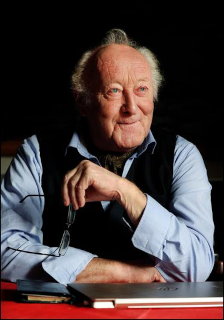
Carey enters the bookselling and printing business in 1775 and, at the age of seventeen, publishes a pamphlet criticizing dueling. He follows this with a work criticizing the severity of the Irish penal code, and another criticizing Parliament. As a result, the British House of Commons threatens him with prosecution. In 1781 he flees to Paris as a political refugee. There he meets Benjamin Franklin, the ambassador representing the American Revolutionary forces, which achieves independence that year. Franklin takes Carey to work in his printing office.
Carey works for Franklin for a year before returning to Ireland, where he edits two Irish nationalist newspapers, the Freeman’s Journal and The Volunteer’s Journal. He gains passage on a ship to emigrate to the newly independent United States in September 1784.
Upon Carey’s arrival in Philadelphia, he finds that Franklin has recommended him to Gilbert du Motier, Marquis de Lafayette, who gives him a $400 check to establish himself. He uses this money to set up a new publishing business and a book shop. He founds The Pennsylvania Herald (1785), Columbian Magazine (1786), and The American Museum (1787). None of these ventures proves very profitable. The American Museum is the first American periodical to treat American culture as rich and original, instead of a poor imitation of Great Britain’s. He prints the first American version of the Douay–Rheims Bible in 48 weekly installments, this Roman Catholic edition popularly known as the Carey Bible. It is the first Roman Catholic version of the Bible printed in the United States. He also prints numerous editions of the King James Version, fundamental to English-speaking peoples.
Carey frequently writes articles on various social topics, including events during the 1793 Philadelphia Yellow Fever Epidemic, which proves a crisis for the city. He reports on debates in the state legislature as well as providing political commentary in his essays. He is a Catholic and a founding member of the American Sunday-School Society, along with Quaker merchant Thomas P. Cope, Dr. Benjamin Rush and Episcopal bishop William White.
In 1822 Carey publishes Essays on Political Economy; or, The Most Certain Means of Promoting the Wealth, Power, Resources, and Happiness of Nations, Applied Particularly to the United States. This is one of the first treatises favoring Alexander Hamilton‘s protectionist economic policy.
During Carey’s lifetime, the publishing firm evolves to M. Carey & Son (1817–21), M. Carey & Sons (1821–24), and then to Carey & Lea (1824). He retires in 1825, leaving the publishing business to his son, Henry Charles Carey and son-in-law Isaac Lea. Lea and Henry Carey make the business economically successful and, for a time, it is one of the most prominent publishers in the country.
Upon arriving in America, Carey quickly develops political connections in the developing country. One of his most important supporters is John Adams, still a leading figure of the Federalist Party at the time. His passionate support for the establishment of an American Navy contributes significantly to his alliance with the Federalists.
Throughout his political career in America, Carey supports the development and maintenance of American naval strength, even after joining Thomas Jefferson’s Democratic-Republicans in 1796. His political realignment occurs shortly before the American ratification of the Jay Treaty, primarily intended to ensure peace with Britain, while distancing America from France. His publishing in America channels his energy toward productive political objectives. His published works are credited with swaying public opinion toward the establishment of a powerful American navy.
Carey’s book Naval History of the United States, is meant to influence the public. Its conspicuous omission of naval activity during the American Quasi-War with France shows his political intentions. It helps direct political energy against the British, with which the U.S. is at war at the time of the book’s publication on May 6, 1813.
Focus on the British, known around the world for their naval power, makes an influential case for extending the reach of the American navy. Along with his publication of Naval History, Carey writes Olive Branch, published in 1814. He tries to eliminate competition between the two American political parties to create unity during the War of 1812. To many people, these efforts, and his early relationship with Franklin, make him the logical choice as Franklin’s political successor. Scholars believe that he contributed significantly by his books and publications to the establishment of the United States Whig Party.
Carey is elected a member of the American Antiquarian Society (AAS) in 1815. A significant portion of his business papers, as well as a very large number of original copies of works printed and/or published by him reside in the collections of the AAS.
Collins is born in 1954 in Camlough, County Armagh, Northern Ireland, the son of Brian Collins, a farmer, livestock trader, and cattle smuggler, and Kathleen Collins (née Cumiskey). His extended family has no history of political involvement, though his upbringing is fervently Catholic and nationalist. He leaves secondary school at age 16 and briefly works as a clerk in the Ministry of Defence in London. He returns home for family reasons and resumes his education in 1971 through a scholarship to St. Colman’s College, Newry, County Down. In 1973 he goes to Queen’s University Belfast (QUB) to study law.
Collins develops ultra-leftist political beliefs in his late teens and supports the Northern Ireland civil rights movement but retains reservations about the use of violence. He is further radicalised by being beaten up by soldiers searching his family’s farm at Easter 1974 and by the downfall of the power sharing executive. He loses interest in his studies, leaves QUB in 1976 without completing his degree, and drifts for two years, joining an anarchist collective in Belfast. He comes back into contact with the republican movement through the blanket protest by Long Kesh inmates; he had known hunger strikerRaymond McCreesh as a teenager. In 1978 he joins the customs service in Newry and begins to pass information to the IRA, which he joins in 1979. He is central to IRA recruitment and intelligence in Newry and south Down. Without firing a shot himself he facilitates at least five murders, including that of a customs colleague.
In 1982 Collins marries and the couple has four children. By 1984 he has developed doubts about his activities. He antagonises the Belfast leadership, which is moving towards political engagement and away from the all-out revolutionary violence that he favours, and while he admires the hardline South Armagh IRA for its military professionalism, he regards its members as political primitives. On February 28, 1985, he is arrested after an IRA mortar attack in which nine Royal Ulster Constabulary (RUC) members are killed. He breaks down after six days of interrogation and is recruited as a “supergrass,” but retracts his evidence a fortnight later and is held on remand on the basis of his confessions.
In January–February 1987 Collins is tried for murder but acquitted after the judge rules his statements inadmissible. He completes an Open University degree while awaiting trial. After his release he is ostracised and is interrogated by the IRA, which in July 1987 orders him to leave Northern Ireland. He engages in youth work in Dublin from 1987 to 1990, taking a diploma in community work at Maynooth. His wife and children remain in Newry and he visits them regularly in defiance of the expulsion order. In 1990 he returns to live in Newry and teaches at the Ulster People’s College in Belfast. From 1992–94 he is a community worker in Edinburgh. His wife and children continue to live on the Barcroft Park estate in Newry.
In 1994 Collins returns permanently to Northern Ireland after securing a job at a youth club in Armagh. In April 1995 he describes his career in a television documentary, admitting the murders for which he had been tried. In 1997 he publishes a memoir, Killing Rage, a powerful account of life as a paramilitary, although it is not entirely reliable. After the 1995 documentary he experiences verbal and physical harassment. This intensifies after May 1998 when he testifies for The Sunday Times in a libel action by Thomas Murphy, whom the paper accuses of being a leading IRA member. Four months after Murphy loses the case, the family farmhouse in Camlough, which Collins is renovating, is burned down. After the Omagh bombing he publishes several articles denouncing the Real IRA, several of whose activists he had recruited into the IRA from the Irish National Liberation Army (INLA) in the early 1980s. Graffiti regularly appears outside his home in Newry denouncing him as a British agent.
Early in the morning of January 27, 1999, Collins paints out the latest graffiti, and is walking his dogs near the Barcroft Park Estate in Newry along a quiet stretch of country lane at Doran’s Hill, just within sight of Sliabh gCuircin (Camlough Mountain). His body also bears marks of having been struck by a car moving at speed. The subsequent police investigation and Coroner’s Inquest comments upon the extremity of weaponed violence to Collins’ head and face used during the attack.
Rumoured reasons behind the murder are that Collins had returned to Northern Ireland in breach of the IRA’s banning order, and further he had detailed IRA activities and publicly criticized in the media a multiplicity of Irish Republican paramilitary splinter groups that had appeared after the Provisional IRA’s 1994 ceasefire, and that he had testified in court against Murphy. Gerry Adams states the murder was “regrettable,” but adds that Collins had “many enemies in many places.”
After a traditional Irish wake, with a closed coffin necessitated due to the damage to his face, and a funeral service at St. Catherine’s Dominican Church in Newry, Collins’ body is buried at the city’s Monkshill Cemetery, not far from the grave of Albert White, a Catholic former Royal Ulster Constabulary Inspector, whose assassination he helped to organise in 1982.
In January 2014 the Police Service of Northern Ireland (PSNI) releases a statement that a re-examination of the evidence from the scene of the 1999 murder had revealed new DNA material of a potential perpetrator’s presence, and makes a public appeal for information, detailing the involvement of a specific car model, a white coloured Hyundai Pony, and a compasspommel that had broken off a hunting knife during the attack and had been left behind at the scene. In February 2014 detectives from the Serious Crime Branch arrest a 59-year-old man at an address in Newry in relation to the murder, but he is subsequently released without charge. In September 2014 the police arrest three men, aged 56, 55 and 42, in County Armagh in relation to inquiries into the murder, all of whom are subsequently released without charges after questioning. In January 2019 the police release a statement regarding the murder that one of the assailants had been seriously injured by an accidentally sustained knife wound during the attack, and had left traces of his own blood at the scene, and that recent scientific advances in DNA evidence had increased the possibility of his identification. In May 2019, three men aged 60 to 62 are arrested and questioned, but then released unconditionally.
Geraldine Dorothy Cummins, spiritualist medium, novelist and playwright, is born in Cork, County Cork, on January 24, 1890. She began her career as a creative writer, but increasingly concentrates on mediumship and “channelled” writings, mostly about the lives of Jesus and Saint Paul, though she also publishes on a range of other topics. Her novels and plays typically document Irish life in a naturalist manner, often exploring the pathos of everyday life.
Cummins is the daughter of the physician Ashley Cummins, professor of medicine at the National University of Ireland and sister to Mary Hearn and Iris Cummins. In her youth she is an athlete, becoming a member of the Irish Women’s International Hockey Team. She is also active as a suffragette. Her desire to follow her father in a medical career is vetoed by her mother, so she begins a literary career as a journalist and creative writer. From 1913 to 1917 she writes three plays for the Abbey Theatre in collaboration with Suzanne R. Day, the most successful of which is the comedy Fox and Geese (1917). She publishes the novel The Land they Loved in 1919, a naturalistic study of working class Irish life.
As she concentrates on mediumship, Cummins’s literary work tails off. However, she continues to publish creative literature in her later years. Her solo-written play, Till Yesterday Comes Again, is produced by the Chanticleer Theatre, London, in 1938. She also publishes another novel, Fires of Beltane (1936) and a short-story collection Variety Show (1959).
Literary critic Alexander G. Gonzalez says that Cummins work tries to encompass the full range of Irish social life, from the aristocracy to the lower classes. In this respect she is influenced by Somerville and Ross. Gonzalez considers her short story The Tragedy of Eight Pence to be the “finest” of her writings, the tale of a “happily married woman trying to shield her ill husband from the knowledge that his death will leave her penniless.”
Cummins begins to work as a medium following prompting from Hester Dowden and E. B. Gibbes. She receives alleged messages from her spirit-guide “Astor” and is an exponent of automatic writing. Her books are based on these communications. In 1928 she publishes The Scripts of Cleophas, which provides channelled material on early Christian history complementing Acts of the Apostles and St. Paul’s writings, supposed to have been communicated by the spirit of Cleophas, one of Paul’s followers. This is later supplemented by Paul in Athens (1930) and The Great Days of Ephesus (1933).
Cummins’s next work describes human progress through spiritual enlightenment. The Road to Immortality (1932) provides a glowing vision of the afterlife. Its contents are purportedly communicated from the “other side” by the psychologist and psychic researcher Frederic W. H. Myers. Unseen Adventures (1951) is a spiritual autobiography. She also publishes several books of spiritually-derived knowledge about details of the life of Jesus.
During World War II Cummins allegedly works as a British agent, using her personal contacts to identify pro-Nazi factions within the Irish Republican movement. She also employs her psychic activities to support the Allied cause, sending channelled messages from sympathetic spirits to Allied leaders to support the war effort. This includes information from Theodore Roosevelt, Arthur Balfour and Sara Roosevelt, Franklin D. Roosevelt‘s mother.
In the 1940s and 50s Cummins works with psychiatrists to develop a model for using spiritualism to treat mental illness, ideas she explores in Perceptive Healing (1945) and Healing the Mind (1957). She collaborates with a psychiatrist who uses the pseudonym R. Connell on both books. Their method is for her to “read” an object associated with the patient and thus identify either childhood traumas or experiences of ancestors which have created the problem. This includes treating a patient who is concerned about his homosexual desires by discovering that this derives from the fact that his Huguenot ancestors were humiliated by Catholics in the 18th century.
Cummins’s biography of writer and spiritualist Edith Somerville is published in 1952. She also writes The Fate of Colonel Fawcett (1955) which offers her psychic insights into the disappearance of the explorer Percy Fawcett in Brazil in 1925. She claims she had received psychic messages from Fawcett in 1936. He was still alive at that time, informing her that he had found relics of Atlantis in the jungle, but was ill. In 1948 she has a message from Fawcett’s spirit reporting his death. Her last book is an account of her conversations with the spirit of Winifred Coombe Tennant, Swan on a Black Sea; a Study in Automatic Writing; the Cummins-Willett Scripts (1965).
The automatic writing and alleged channeled material from Cummins have been examined and have been described by some psychical researchers to be the product of her own subconscious. For example, Harry Price, who studies various mental mediums including Cummins, writes that “there is no question that most of the automatic writing which has been published is the product of the subconscious.” Paranormal researcher Hilary Evans notes that unlike most spiritualists, Cummins does not accept the phenomena at face value and questions the source of the material.
According to the psychical researcher Eric Dingwall information published in Cummins’ scripts allegedly from Winifred Coombe Tennant are discovered to be erroneous. Biographer Rodger Anderson writes that although spiritualists consider Cummins completely honest “some suspected that she occasionally augmented her store of knowledge about deceased persons by normal means if by doing so she could bring comfort to the bereaved.”
Cummins’ book The Fate of Colonel Fawcett (1955), contains her automatist scripts allegedly from the spirit of Colonel Fawcett. Spiritualists claim the scripts are evidence for survival. However, the psychical researcher Simeon Edmunds notes that before his disappearance Fawcett had written articles for The Occult Review. Cummins also contributes articles to the same review and Edmunds suggests it is likely she had read the work of Fawcett. Edmunds concludes the scripts are a case of subliminal memory and unconscious dramatization.
Other researchers such as Mary Rose Barrington have suspected fraud as Cummins had long standing connections with friends and families of the deceased that she claimed to have contacted and could have easily obtained information by natural means. The classical scholar E. R. Dodds writes that Cummins worked as a cataloguer at the National Library of Ireland and could have taken information from various books that would appear in her automatic writings about ancient history. Her writings were heavily influenced by literature and religious texts. Dodds also studies her book Swan on a Black Sea which was supposed to be an account of spirit conversation but writes there is evidence suggestive of fraud as Cummins had received some of the information by natural means.