seamus dubhghaill

Promoting Irish Culture and History from Little Rock, Arkansas, USA


Leave a comment

Birth of Richard Colley Wellesley, 1st Marquess Wellesley

Richard Colley Wellesley, 1st Marquess Wellesley, Anglo-Irish politician and colonial administrator, is born on June 20, 1760, at Dangan Castle, County Meath. He, as governor of Madras (now Chennai) and governor-general of Bengal (both 1797–1805), greatly enlarges the British Empire in India and, as Lord Lieutenant of Ireland (1821–28, 1833–34), attempts to reconcile Protestants and Roman Catholics in a bitterly divided country. Throughout his life he displays an ever-increasing jealousy of his younger brother Arthur Wellesley, 1st Duke of Wellington, despite his own achievements.

Born Richard Colley Wesley, he is the eldest son of Garret Wesley, 1st Earl of Mornington (he changes the family surname to Wellesley in 1789). He is educated at the Royal School, Armagh, Harrow School, Eton College, and Christ Church, Oxford, although he leaves the latter in 1781, following his father’s death, before completing his degree. He enters the Irish House of Commons in 1780 and, after he inherits his father’s Irish titles in 1781, moves to the Irish House of Lords. A moderately liberal disciple of Prime Minister William Pitt the Younger, he wins a seat in the British House of Commons in 1784 and serves there until 1797. From 1793 he is a member of the British Privy Council and a commissioner of the India Board of Control.

As Governor-General of India, Wellesley uses military force and diplomacy to strengthen and expand British authority. East India Company forces defeat and kill Tipu Sultan, Indian Muslim ruler of the Kingdom of Mysore (present-day Mysuru) and sympathizer for Revolutionary France, in the Fourth Anglo-Mysore War (1799), and he then restores the Hindu dynasty there that had been deposed by Tipu’s father, Hyder Ali. He annexes much territory after his brother Arthur and General Gerard Lake defeat the Maratha Confederacy of states in the Deccan Plateau (peninsular India). In addition, he forces the Oudh State to surrender numerous important cities to the British, and he contracts with other states a series of “subsidiary alliances” by which all parties recognize British preponderance. He receives a barony in the British peerage in 1797 at the time of his appointment as governor-general, and in 1799 he is awarded a marquessate in the Irish peerage for his victory in the Mysore War.

When Wellesley is faced with an invasion by Zaman Shah Durrani, ruler (1793–1800) of Kabul (Afghanistan), he utilizes his envoy, Captain John Malcolm, to induce Fatḥ-Alī Shah Qajar of Qajar Iran to restrain Zaman Shah Durrani and to give British political and commercial interests preference over the French. On receiving a British government order to restore to France its former possessions in India, he refuses to comply. His policy is vindicated when the Treaty of Amiens (1802) is violated, and Great Britain resumes war against Napoleonic France.

Wellesley’s annexations and the vast military expenditure that he had authorized alarms the court of directors of the East India Company. In 1805, he is recalled, and soon afterward he is threatened with impeachment, although two years later he refuses an offer of the foreign secretaryship. In 1809, he goes to Spain to make diplomatic arrangements for the Peninsular War against France and later that year becomes foreign secretary under Prime Minister Spencer Perceval. In that office he antagonizes his colleagues, who consider him an indolent megalomaniac and welcome his resignation in February 1812. Unlike most of them, however, he had urged a stronger war effort in Spain and had advocated political rights for British Roman Catholics. After Perceval’s assassination on May 11, 1812, he attempts unsuccessfully to form a government at the request of the prince regent (the future King George IV).

As Lord Lieutenant of Ireland, Wellesley disappoints the anti-Catholic George IV, and he is about to be removed when his brother, Arthur, is appointed prime minister in January 1828. He then resigns because his brother is opposed to Roman Catholic emancipation, although the duke is constrained to accept that policy as a political necessity in 1829. His second term as Lord Lieutenant of Ireland (1833–34) ends with the fall of Charles Grey, 2nd Earl Grey’s reform government. When the Whig Party returns to power in April 1835, he is not sent back to Ireland, and in his rage, he threatens to shoot the prime minister, William Lamb, 2nd Viscount Melbourne. He wants to be created Duke of Hindustan so that his rank will equal that of his brother.

Wellesley dies at the age of 82 on September 26, 1842, at Knightsbridge, London. He is buried in Eton College Chapel, at his old school. He and Arthur, after a long estrangement, had been once more on friendly terms for some years. Arthur weeps at the funeral and says that he knows of no honour greater than being Lord Wellesley’s brother.

Wellesley’s library is sold at auction in London by R. H. Evans on January 17, 1843 (and three following days); a copy of the catalogue, annotated with prices and buyers’ names, is held at Cambridge University Library.

Wellesley has several children, including three sons, but none are legitimate. The marquessate thus becomes extinct upon his death. The earldom of Mornington goes to his next surviving brother, William Wellesley-Pole.

(From: “Richard Colley Wellesley, Marquess Wellesley, British statesman,” written and fact-checked by the Editors of Encyclopaedia Britannica, http://www.britannica.com, April 2024 | Pictured: “Richard Colley Wellesley, Marquess of Wellesley (1760-1842),” oil on canvas portrait by Thomas Lawrence, 1812-13)


Leave a comment

Birth of John Bruton, Fine Gael Politician & 10th Taoiseach of Ireland

John Gerard Bruton, Irish Fine Gael politician who serves as Taoiseach from 1994 to 1997 and Leader of Fine Gael from 1990 to 2001, is born to a wealthy, Catholic farming family in Dunboyne, County Meath, on May 18, 1947. He plays a crucial role in advancing the process that leads to the Good Friday Agreement in 1998.

Bruton is educated at Clongowes Wood College and then goes on to study economics at University College Dublin (UCD), where he receives an honours Bachelor of Arts degree and qualifies as a barrister from King’s Inns, but never goes on to practice law. He joins the Fine Gael party in 1965 and is narrowly elected to Dáil Éireann in the 1969 Irish general election, as a Fine Gael TD for Meath. At the age of 22, he is one of the youngest ever members of the Dáil at the time. He serves as a parliamentary secretary in the government of Liam Cosgrave (1973–77).

Following Fine Gael’s defeat at the 1977 Irish general election, the new leader, Garret FitzGerald, appoints Bruton to the front bench as Spokesperson on Agriculture. He is later promoted as Spokesperson for Finance. He plays a prominent role in Fine Gael’s campaign in the 1981 Irish general election, which results in another coalition with the Labour Party, with FitzGerald as Taoiseach. He receives a personal vote in Meath of nearly 23%, and at the age of only 34 is appointed Minister for Finance, the most senior position in the cabinet. In light of overwhelming economic realities, the government abandons its election promises to cut taxes. The government collapses unexpectedly on the night of January 27, 1982, when Bruton’s budget, that was to impose an unpopular value-added tax (VAT) on children’s shoes, is defeated in the Dáil.

The minority Fianna Fáil government which follows only lasts until November 1982, when Fine Gael once again returns to power in a coalition government with the Labour Party. However, when the new government is formed, Bruton is moved from Finance to become Minister for Industry and Energy. After a reconfiguration of government departments in 1983, he becomes Minister for Industry, Trade, Commerce and Tourism. In a cabinet reshuffle in February 1986, he is appointed again as Minister for Finance. Although he is Minister for Finance, he never presents his budget. The Labour Party withdraws from the government due to a disagreement over his budget proposals leading to the collapse of the government and another election.

Following the 1987 Irish general election, Fine Gael suffers a heavy defeat. Garret FitzGerald resigns as leader immediately, and a leadership contest ensues between Alan Dukes, Peter Barry and Bruton himself, with Dukes being the ultimate victor. Dukes’s term as leader is lackluster and unpopular. The party’s disastrous performance in the 1990 Irish presidential election, in which the party finishes in a humiliating and then unprecedented third in a national election, proves to be the final straw for the party and Dukes is forced to resign as leader shortly thereafter. Bruton, who is the deputy leader of Fine Gael at the time, is unopposed in the ensuing leadership election.

Bruton’s election is seen as offering Fine Gael a chance to rebuild under a far more politically experienced leader. However, his perceived right-wing persona and his rural background are used against him by critics and particularly by the media. However, to the surprise of critics and of conservatives, in his first policy initiative he calls for a referendum on a Constitutional amendment permitting the enactment of legislation allowing for divorce in Ireland.

By the 1992 Irish general election, the anti-Fianna Fáil mood in the country produces a major swing to the opposition, but that support goes to the Labour Party, not Bruton’s Fine Gael, which actually loses a further 10 seats. Even then, it initially appears that Fine Gael is in a position to form a government. However, negotiations stall in part from Labour’s refusal to be part of a coalition which would include the libertarian Progressive Democrats, as well as Bruton’s unwillingness to take Democratic Left into a prospective coalition. The Labour Party breaks off talks with Fine Gael and opts to enter a new coalition with Fianna Fáil.

In late 1994, the government of Fianna Fáil’s Albert Reynolds collapses. Bruton is able to persuade Labour to end its coalition with Fianna Fáil and enter a new coalition government with Fine Gael and Democratic Left. He faces charges of hypocrisy for agreeing to enter government with Democratic Left, as Fine Gael campaigned in the 1992 Irish general election on a promise not to enter government with the party. Nevertheless, on December 15, 1994, aged 47, he becomes the then youngest ever Taoiseach. This is the first time in the history of the state that a new government is installed without a general election being held.

Bruton’s politics are markedly different from most Irish leaders. Whereas most leaders had come from or identified with the independence movement Sinn Féin (in its 1917–22 phase), Bruton identifies more with the more moderate Irish Parliamentary Party (IPP) tradition that Sinn Féin had eclipsed at the 1918 Irish general election.

Continued developments in the Northern Ireland peace process and Bruton’s attitude to Anglo-Irish relations come to define his tenure as Taoiseach. In February 1995, he launches the Anglo-Irish “Framework Document” with the British prime minister John Major. It foreshadows the 1998 Good Friday Agreement, which, among other things, establishes an elected, power-sharing executive authority to be run by these onetime adversaries, ending 30 years of bloodletting that had claimed more than 3,000 lives. However, he takes a strongly critical position on the British Government‘s reluctance to engage with Sinn Féin during the Irish Republican Army‘s 1994–1997 ceasefire. He also establishes a working relationship with Gerry Adams of Sinn Féin; however, both are mutually distrustful of each other.

Bruton presides over a successful Irish Presidency of the European Union in 1996, and helps finalise the Stability and Growth Pact, which establishes macroeconomic parameters for countries participating in the single European currency, the euro. He is the fifth Irish leader to address a joint session of the United States Congress on September 11, 1996. He presides over the first official visit by a member of the British royal family since 1912, by Charles, Prince of Wales.

The coalition remains in force to contest the 1997 Irish general elections, which are indecisive, and Bruton serves as acting taoiseach until the Dáil convenes in late June and elects a Fianna Fáil–Progressive Democrats government. He retires from Irish politics in 2004 and serves as the European Union Ambassador to the United States (2004–09).

Bruton dies at the age of 76 on February 6, 2024, at the Mater Private Hospital in Dublin, following a long bout with cancer. A state funeral is held on February 10 at St. Peter’s and St. Paul’s Church in Dunboyne.


Leave a comment

Birth of William Brownlow, MP and Landowner

William Brownlow, MP and landowner, is born on April 10, 1726, the son of William Brownlow (1683–1739), landowner and MP for County Armagh (1711–27), and Lady Elizabeth Brownlow of County Armagh, and grandson of Arthur Brownlow. His mother is a daughter of James Hamilton, 6th Earl of Abercorn. He inherits the family estates around Lurgan in 1739 and spends some of his youth in France and Italy with his mother.

Brownlow’s father, grandfather, and great-grandfather had been MPs, and in 1753 he wins a hotly contested by-election in which his opponents accuse him of papist and Jacobite sympathies. The unsuccessful candidate is Francis Caulfeild, brother of James, 1st Earl of Charlemont, his petition to parliament causing a furor and is defeated by only one vote in one of the most celebrated electoral struggles of the day. Brownlow represents the county for over forty years, from 1753 until his death. In 1753, he supports the government on the controversial money bill.

Brownlow marries Judith, daughter of the Rev. Charles Meredyth, Dean of Ardfert, of County Meath, on May 25, 1754. They have two sons. After her death in Lyon, France, in October 1763, he marries Catherine, daughter of Roger Hall of Newry, County Down, on November 25, 1765. They have two sons and five daughters, three who marry into the nobility. In 1758, he is one of the Wide Streets commissioners in Dublin and owns an imposing house in Merrion Square. He is a trustee of the linen board in Ulster, and makes many improvements to his estate, castle, and demesne, the local church, and the town of Lurgan. However, it is alleged that private roads in his demesne were built with public money. He is one of a few landowners in County Armagh who are believed to have misappropriated the unusually high county cess levied by the grand jury, of which he is a member. In 1758, he suggests that salaries be paid to government officials, and one official, Henry Meredyth, his first wife’s uncle, subsequently receives an annual salary of £500.

In June 1763, large numbers of Presbyterian farmers and weavers, calling themselves the Hearts of Oak, in a notable show of dissatisfaction with the privileges of landlords, march on the homes of the gentry to demand redress. Brownlow is in England and avoids a confrontation. Despite the allegations of abuse of public money, he is generally recognised as one of the more independent and reform-minded MPs of the day. He captains a Volunteer troop of dragoons which march from Lurgan to assist Belfast after the French commander François Thurot lands at Carrickfergus in 1760. As one of the supporters of Henry Grattan, he is prominent in the Volunteer movement of the 1780s. He is captain of the Lurgan Volunteer company and lieutenant-colonel of the northern battalion and backs the movement in parliament until displeased by the Volunteer national convention (November 10 – December 2, 1783), which seeks franchise reform and seems to challenge the authority of the existing parliament.

Brownlow subscribes £9,000 to help found the Bank of Ireland in 1783, and in parliament on February 7, 1785, vigorously opposes William Pitt‘s proposals on Ireland’s commercial relations with England, seeing in them the danger that Ireland would become a “tributary nation.” He is appointed a privy councilor in 1765. He organises horse races in his locality and is a talented harpsichord player. After his death on October 28, 1794, the Belfast News Letter prints an unusually long and glowing tribute, expressing admiration for his “incorruptible integrity” and patriotism, as well as two poetic elegies. He is succeeded by his son William Brownlow.

(From: “Brownlow, William” by Linde Lunney, Dictionary of Irish Biography, http://www.dib.ie, October 2009 | Pictured: Portrait of the Right Honorable William Brownlow, oil on canvas by Gilbert Stuart, circa 1790)


Leave a comment

Death of Kathleen Napoli McKenna, Nationalist Activist & Journalist

Kathleen Napoli McKenna, Irish nationalist activist and journalist closely associated with Arthur Griffith, dies in Rome, Italy, on March 22, 1988.

McKenna is born Kathleen Maria Kenna on September 9, 1897, in Oldcastle, County Meath. Her parents are William, a draper and hardware merchant, and Mary Kenna (née Hanley). She is the eldest child of seven, with three sisters and three brothers. She and her siblings add “Mc” to their surname as teenagers. Her maternal grandfather, a Fenian, miller and land agitator, is a strong influence on her. Agnes O’Farrelly is her paternal great aunt. She attends the Oldcastle Endowed School and goes on to pass the National University of Ireland (NUI) matriculation examination. She attends University College Dublin (UCD) briefly, but the family’s circumstances prevent her from completing her course.

McKenna’s father had been an active member of the Irish National Land League and the Meath Labour Union. He is one of the organisers of a short-lived local newspaper, Sinn Féin – Oldcastle Monthly Review, in 1902. Both her parents are members of Conradh na Gaielge. Arthur Griffith and Brian O’Higgins frequently visit the family home. Denounced by the local parish priest, Fr. Robert Barry, her father’s business goes into decline. The family leaves Oldcastle and moves to Dundalk in August 1915, and to Rugby, Warwickshire, England, in March 1916. In Rugby, her father teaches typing and shorthand, and her mother works in an ammunition factory. She works as a secretary for an engineering firm. Members of the family return to Ireland from 1919 to 1922, and by the time of her father’s death in 1939, he is living back in Oldcastle.

McKenna spends some holidays in Ireland and, during a visit to Dublin in the summer of 1919, she presents herself to the Sinn Féin offices in Harcourt Street. She has a letter of introduction from her father to Griffith, which emphasises her willingness to work for Irish independence. For her holidays, she works in the Sinn Féin press bureau and is employed as one of the first “Dáil girls” of the clandestine government. She is informed that if a planned news bulletin comes through, she will be summoned back to Dublin. In October 1919, she receives that summons and, after a typing test on November 11, she joins the Irish Bulletin under Minister for Publicity, Desmond FitzGerald, and director of publicity, Robert Brennan. She also becomes a member of the Conradh na Gaielge Parnell branch.

The Irish Bulletin is published five times a week, circulating the misdeeds of the British government in Ireland. McKenna edits and mimeographs a summary of “acts of aggression” from British forces in Ireland weekly, compiled by Anna Kelly. Frank Gallagher does most of the writing, edited by FitzGerald, and later Erskine Childers. Though she is sometimes described as the Bulletin‘s editor, she is more akin to an editorial assistant. R. M. Smyllie later recalls that she was in regular contact with the media. She types out each issue on a wax stencil in a typewriter which is used to create mimeograph copies, and then circulated to England. In the beginning, about 30 recipients, mostly London journalists, receive the Bulletin but by October 1920 it has grown to 600, and by July 1921 over 1,200. She also keeps the accounts, takes dictation of statements, and at times works up articles from notes given to her by Griffith or others. She also acts as a confidential messenger, couriering between Dáil departments and Irish Republican Army (IRA) leaders such as Michael Collins. Through this, she meets Moya Llewelyn Davies.

The Bulletin becomes a symbol of the underground government and a target for British forces. This necessitates the frequent moving of the operation from one Dublin hideout to another. She fears that if she were captured, she would break under interrogation. When FitzGerald is arrested, he is asked about “the girl wearing a green tam” in reference to McKenna’s tam-o’-shanter hat which prompts her to change her choice of hat. Despite the capture of a number of the Bulletin staff, as well as the capture of the office files and equipment on March 26, 1921, it never misses an issue.

McKenna’s sister Winifred also works as a secretary to the clandestine government. Her brother, Tadhg (Timothy), is a member of Sinn Féin and in Greenore, County Louth, is involved in trade union affairs. He is detained, beaten, and interned in March 1921. He is later an activist with the Irish Labour Party. Her brother William is a messenger for the Irish government during this period and during the Irish Civil War serves in the Free State Army.

After the truce in 1921, McKenna is assigned to the Dáil cabinet secretarial staff at the Mansion House, where she continues to work in the publicity department. She travels as Griffith’s private secretary to London as part of the Irish delegation to the treaty negotiations in October 1921. She is an admirer of both Griffith and Collins and is a firm supporter of the Anglo-Irish Treaty. She works as Griffith’s secretary until just before his death and also does some secretarial work for Collins during the negotiations. One of her sisters is anti-Treaty, and she later recalls that she lost friends due to her support of the treaty.

When the Irish Free State government is established, McKenna becomes a private secretary to a number of Ministers for External Affairs, including FitzGerald, Kevin O’Higgins and W. T. Cosgrave. In 1924, she is a private secretary to the Boundary Commission, as well as one of a pair of secretaries who travels with the Irish delegation to the London Imperial Conference in 1924. From 1927 to 1931 she is James Dolan‘s secretary and parliamentary secretary to the Minister for Industry and Commerce. Before its closure in 1924, she writes a number of articles for the Freeman’s Journal.

McKenna marries Vittorio Napoli in 1931. He is a captain, and later a general, in the Italian royal grenadier guards. They meet when she is on holiday in Italy in 1927. For the first five years of their marriage, they live in the port of Derna in Cyrenaica, Libya, while her husband is stationed there. A son and daughter are born there. From September 1939 to June 1940, the family lives in Albania, but after Italy enters World War II, she and the children move to Viterbo. Her husband is taken prisoner in Greece in September 1943, and is detained in Germany and Poland. He returns to Italy in September 1945. Viterbo had been heavily bombed, and after Allied troops arrive, McKenna works as a translator and gives English language lessons to support her family. Her husband remains in the army, and they remain in Viterbo until 1956, later moving to Rome.

After the war, McKenna writes articles for the Irish Independent and other publications from Ireland, the United States and New Zealand, including The Irish Press, Irish Travel, Standard, Word, and Writer’s Digest. Sometimes she writes under her own name, as well as her pen name Kayn or Kayen MacKay. As the wives of Italian officers do not traditionally work, the money she earns from this is kept for travel and other leisure activities. This money allows her to visit her family in Ireland in 1947 for the first time since 1932. After their retirement, she and her husband visit Ireland regularly, and travel around Italy.

McKenna applies for an Irish military pension in 1950/51 and 1970, receiving references in support of her claim from Gallagher. As she had not served in a military organisation, her claims are rejected. As an Irish War of Independence veteran, she is awarded free travel in 1972, which is later extended to her husband. In her later years, she becomes concerned about the inaccuracies in the history around the Irish War of Independence and the Irish Civil War. She gives two talks to Radio Éireann in 1951, speaking about her time with the Irish Bulletin. Copies of these recordings are now held by the Bureau of Military History. During her lifetime, extracts of her memoir are published in the Capuchin Annual and The Irish Times. She drafted and redrafted these memoirs from the late 1940s to the early 1980s. A version edited by her daughter and niece is published in 2014 as A Dáil girl’s revolutionary recollections.

McKenna dies on March 22, 1988, in Rome. She is buried with an Irish flag which she had kept with her. A large collection of her papers is held in the National Library of Ireland (NLI). In 2010, 2011 and 2016, some of her memorabilia is sold in Dublin.


Leave a comment

The Irish Army Mutiny

The Army Mutiny is an Irish Army crisis that begins on March 7, 1924, provoked by a proposed reduction in army numbers in the immediate post-Civil War period. A second grievance concerns the handling of the Northern Boundary problem. As the prelude to a coup d’état, the decisions made by influential politicians and soldiers at the time have continuing significance for the Government of Ireland.

In the early weeks of the Irish Civil War, the National Army is comprised of 7,000 men. These come mainly from pro-Treaty Irish Republican Army (IRA) brigades, especially the Dublin Guard, whose members have personal ties to Michael Collins. They face around 15,000 anti-Treaty IRA men and Collins recruits experienced soldiers from wherever he can. The army’s size mushrooms to 55,000 men, many of whom are Irishmen with combat experience in World War I – 20,000 National Volunteers had joined the British Army on the urgings of Nationalist leader John Redmond.

Likewise, Irishmen who had served in the British forces account for over half of the 3,500 officers. W. R. E. Murphy, second-in-command (January–May 1923), had been a lieutenant colonel in the British Army, as had Emmet Dalton. Two more of the senior generals, John T. Prout and J. J. “Ginger” O’Connell, had served in the United States Army. Collins promotes fellow members of the Irish Republican Brotherhood (IRB) but is slow to put Squad members in high positions.

In December 1922, following Collins’s death, Liam Tobin forms the Irish Republican Army Organisation (IRAO), taking in Dublin Guard and other Irish Army officers who share his view that “higher command…was not sufficiently patriotic.” President of the Executive Council of the Irish Free State W. T. Cosgrave, head of the government, attempts to appease the IRAO. He meets with them several times before the 1923 Irish general election and persuades the opposing IRB faction of generals under Richard Mulcahy to keep quiet.

With the election over, Mulcahy now ignores the IRAO as he starts the process of demobilising 37,000 men. In November, sixty IRA officers mutiny and are dismissed without pay. The IRAO now pressures the Government into establishing a committee to supervise future demobilisation. The committee, consisting of Eoin MacNeill, Ernest Blythe, and IRAO sympathiser Joseph McGrath, effectively undermines the authority of the Army Council.

On March 7, 1924, a representative of the IRAO hands a demand to end demobilisation to W. T. Cosgrave. The ultimatum is signed by senior Army officers, Major-General Liam Tobin and Colonel Charles Dalton. Tobin knows his own position is to be scrapped in the demobilisation. Frank Thornton and Tom Cullen are also involved. That morning 35 men of the 36th Infantry Battalion refuse to parade, and the preceding week officers had absconded with arms from the McCan Barracks in Templemore, Gormanston Camp in County Meath, Baldonnel Aerodrome in Baldonnel, Dublin, and Roscommon. The immediate response is an order for the arrest of the two men on a charge of mutiny. This causes alarm throughout Dublin when announced.

On March 8, General Mulcahy makes an announcement to the Army:

“Two Army officers have attempted to involve the Army in a challenge to the authority of the Government. This is an outrageous departure from the spirit of the Army. It will not be tolerated…officers and men…will stand over their posts and do their duty today in this new threat of danger in the same wonderful, determined spirit that has always been the spirit of the Army.”

Leader of the Opposition, Thomas Johnson, issues a statement of support for the Government. In contrast, Minister for Industry and Commerce, Joseph McGrath, whose home Mulcahy orders to be searched, resigns because of dissatisfaction with the government’s attitude to the IRAO officers and support for their perception that the Irish Army treats former British officers better than former IRA officers. Fearing an incendiary speech by McGrath, Cosgrave first offers the IRAO an inquiry and an amnesty before then taking sick leave thus making Minister for Justice, Kevin O’Higgins, de facto head of the Government.

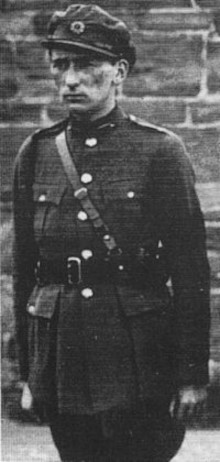
(Pictured: Major General Liam Tobin, a leading figure in the Army Mutiny)


Leave a comment

Birth of Dolours Price, Provisional Irish Republican Army Volunteer

Dolours Price, a Provisional Irish Republican Army (IRA) volunteer, is born in Belfast on December 16, 1950.

Price and her sister, Marian, also an IRA member, are the daughters of Albert Price, a prominent Irish republican and former IRA member from Belfast. Their aunt, Bridie Dolan, is blinded and loses both hands in an accident while handling IRA explosives. 

Price becomes involved in Irish republicanism in the late 1960s and she and Marian participate in the Belfast to Derry civil rights march in January 1969 and are attacked in the Burntollet Bridge incident.

In 1971 Price and her sister join the Provisional Irish Republican Army (IRA). In 1972 she joins an elite group within the IRA called “The Unknowns” commanded by Pat McClure.  The Unknowns are tasked with various secretive activities and transport several accused traitors across the border into the Republic of Ireland where they are “disappeared.” She personally states that she had driven Joe Lynskey across the border to face trial. In addition, she states that she, Pat McClure and a third Unknown were tasked with killing Jean McConville, with the third Unknown actually shooting her.

Price leads the car bombing attacks in London on March 8, 1973, which injure over 200 people and is believed to have contributed to the death of one person who suffers a fatal heart attack. The two sisters are arrested, along with Gerry Kelly, Hugh Feeney and six others, on the day of the bombing as they are boarding a flight to Ireland. They are tried and convicted at the Great Hall in Winchester Castle on November 14, 1973. Although originally sentenced to life imprisonment, which is to run concurrently for each criminal charge, their sentence is eventually reduced to 20 years. She serves seven years for her part in the bombing. She immediately goes on a hunger strike demanding to be moved to a prison in Northern Ireland. The hunger strike lasts for 208 days because the hunger strikers are force-fed by prison authorities to keep them alive.

On the back of the hunger-striking campaign, Price’s father contests Belfast West at the February 1974 United Kingdom general election, receiving 5,662 votes (11.9%). The Price sisters, Hugh Feeney, and Gerry Kelly are moved to Northern Ireland prisons in 1975 as a result of an IRA truce. In 1980 she receives the royal prerogative of mercy and is freed on humanitarian grounds in 1981, purportedly suffering from anorexia nervosa due to the invasive trauma of daily force feedings.

After her release in 1980, Price marries Irish actor Stephen Rea, with whom she has two sons, Danny and Oscar. They divorce in 2003.

The Price sisters remain active politically. In the late 1990s, Price and her sister claim that they have been threatened by their former colleagues in the IRA and Sinn Féin for publicly opposing the Good Friday Agreement (i.e. the cessation of the IRA’s military campaign). she is a contributor to The Blanket, an online journal, edited by former Provisional IRA member Anthony McIntyre, until it ceases publication in 2008.

In 2001, Price is arrested in Dublin and charged with possession of stolen prescription pads and forged prescriptions. She pleads guilty and is fined £200 and ordered to attend Alcoholics Anonymous meetings.

In February 2010, it is reported by The Irish News that Price had offered help to the Independent Commission for the Location of Victims’ Remains in locating graves of three men, Joe Lynskey, Seamus Wright, and Kevin McKee. The bodies of Wright and McKee are recovered from a singular grave in County Meath in August 2015. It is unclear if Price played a role in their recovery. The remains of Joe Lynskey have not been recovered as of April 2021.

Price is the subject of the 2018 feature-length documentary I, Dolours in which she gives an extensive filmed interview.

In 2010, Price claims Gerry Adams had been her officer commanding (OC) when she was active in the IRA. Adams, who has always denied being a member of the IRA, denies her allegation. She admits taking part in the murder of Jean McConville, as part of an IRA action in 1972. She claims the murder of McConville, a mother of ten, was ordered by Adams when he was an IRA leader in West Belfast. Adams subsequently publicly further denies Price’s allegations, stating that the reason for them is that she is opposed to the Provisional Irish Republican Army’s abandonment of paramilitary warfare in favour of politics in 1994, in the facilitation of which Adams has been a key figure.

Oral historians at Boston College interview both Price and her fellow IRA paramilitary Brendan Hughes between 2001 and 2006. The two give detailed interviews for the historical record of the activities in the IRA, which are recorded on condition that the content of the interviews is not to be released during their lifetimes. Prior to her death in May 2011, the Police Service of Northern Ireland (PSNI) subpoena the material, possibly as part of an investigation into the disappearance of a number of people in Northern Ireland during the 1970s. In June 2011, the college files a motion to quash the subpoena. A spokesman for the college states that “our position is that the premature release of the tapes could threaten the safety of the participants, the enterprise of oral history, and the ongoing peace and reconciliation process in Northern Ireland.” In June 2011, U.S. federal prosecutors ask a judge to require the college to release the tapes to comply with treaty obligations with the United Kingdom. On July 6, 2012, the United States Court of Appeals for the First Circuit agrees with the government’s position that the subpoena should stand. On October 17, 2012, the Supreme Court of the United States temporarily blocks the college from handing over the interview tapes. In April 2013, after Price’s death, the Supreme Court turns away an appeal that seeks to keep the interviews from being supplied to the PSNI. The order leaves in place a lower court ruling that orders Boston College to give the Justice Department portions of recorded interviews with Price. Federal officials want to forward the recordings to police investigating the murder of Jean McConville.

Price dies in her Malahide, County Dublin, home on January 23, 2013, from a toxic effect of mixing prescribed sedative and anti-depressant medication. Her body is found the following day. The inquest returns a verdict of death by misadventure. She is buried at Milltown Cemetery in West Belfast.


Leave a comment

Death of Elizabeth Burke-Plunkett, Countess of Fingall

The Rt. Hon. Elizabeth Mary Margaret Burke-Plunkett, Countess of Fingall, dies in Dublin on October 28, 1944.

Burke is born in Moycullen, County Galway, a daughter of George Edmond Burke of Danesfield and his wife Theresa Quin. She becomes an activist in Irish industrial, charitable and cultural groups, serving as second president of the Camogie Association and first president of the Irish Countrywomen’s Association. She is also a noted literary hostess, whose salon at Earlsfort House is a centre of Dublin intellectual life for many years.

In 1883, Burke marries Arthur James Francis Plunkett, 11th Earl of Fingall, 4th Baron Fingall (1859–1929), state steward to the administration in Dublin Castle and one of the few Catholics to hold an Irish peerage, thus becoming Countess of Fingall.

Burke-Plunkett befriends unionists such as Field Marshal Douglas Haig, 1st Earl Haig, and Chief Secretary for Ireland George Wyndham and also nationalist leaders such as Charles Stewart Parnell, Michael Collins and Éamon de Valera, as well as activists like the cooperative pioneer Sir Horace Plunkett. Her colourful memoir of those circles is published in 1937. She establishes a famous literary salon and for many years she is “at home” every Thursday at Earlsfort House to the leading figures in Dublin intellectual circles. Her main rival as a literary hostess is the artist Sarah Purser, who is “at home” every Tuesday.

A friendship with Máire Ní Chinnéide, forged through theatrical circles, leads to Burke-Plunkett accepting the patronage of Camogie Association of Ireland from 1910 to 1923. She also presents a cup and medals for the winners of the Dublin League. She serves largely in an honorary role, attending a few meetings of what is then known as Cualacht Luithchleas na mBan Gaedheal.

A liberal unionist, Burke-Plunkett becomes active in the promotion of Irish agriculture, industry and culture. She is a founder member of Horace Plunkett’s Irish co-operative movement, is the first president of the Society of United Irishwomen from 1912 to 1921, and of its successor, the Irish Countrywomen’s Association until 1942. She presides at suffragette meetings in Dublin, is a founder of the Irish Distressed Ladies Committee, and serves on the board of the Irish Industries Association. She is also the chairperson of the Irish Central Committee for the Employment of Women.

Burke-Plunkett dies on October 28, 1944, at Earlsfort House, her Dublin home, where she had held her famous Thursdays “at home” for many years. She is buried on the grounds of Killeen Castle, County Meath, following a Requiem Mass at University Church in Dublin.


Leave a comment

Birth of Irish Writer Gabriel Rosenstock

Gabriel Rosenstock, Irish writer who works chiefly in the Irish language, is born in Kilfinane, County Limerick, on September 29, 1949. A member of Aosdána, he is poet, playwright, haikuist, tankaist, essayist, and author/translator of over 180 books, mostly in Irish.

Rosenstock’s father, George, is a doctor and writer from Schleswig-Holstein, Germany, who serves as a medical officer with the Wehrmacht in World War II. His mother is a nurse from County Galway. He is the third of six children and the first born in Ireland. He is educated locally in Kilfinane, then in Mount Sackville, County Dublin.

Rosenstock exhibits an early interest in anarchism and is expelled from Gormanston College in County Meath and exiled to Rockwell College near Cashel, County Tipperary. Later, he attends University College Cork (UCC).

Rosenstock works for some time on the television series Anois is Arís on RTÉ, then on the weekly newspaper Anois. Until his retirement he works with An Gúm, the publications branch of Foras na Gaeilge, the North-South body which promotes the Irish language.

Although he has worked in prose, drama and translation, Rosenstock is primarily known as a poet. He has written or translated over 180 books.

Rosenstock has edited and contributed to books of haiku in Irish, English, Scots and Japanese. He is a prolific translator into Irish of international poetry (among others Ko Un, Seamus Heaney, K. Satchidanandan, Rabindranath Tagore, Muhammad Iqbal, Hilde Domin, Peter Huchel), plays (Samuel Beckett, Max Frisch, W. B. Yeats) and songs (Bob Dylan, Kate Bush, The Pogues, Leonard Cohen, Bob Marley, Van Morrison, Joni Mitchell). He also has singable Irish translations of Lieder and other art songs. His being named as Lineage Holder of Celtic Buddhism inspires the latest title in a rich output of haiku collections: Antlered Stag of Dawn (Onslaught Press, Oxford, 2015), haiku in Irish and English with translations into Japanese and Scots Lallans.

Rosenstock also writes for children, in prose and verse. Haiku Más É Do Thoil É! (An Gúm) wins the Children’s Books Judges’ Special Prize in 2015.

Rosenstock appears in the anthology Best European Fiction 2012, edited by Aleksandar Hemon, with a preface by Nicole Krauss (Dalkey Archive Press). He gives the keynote address to Haiku Canada in 2015.

Rosenstock has worked with American photographer Ron Rosenstock, Indian Photographer Debiprasad Mukherjee, Greek photographer Kon Markogiannis, Dublin photographer Jason Symes, French photographer Jean-Pierre Favreau and many more to create the new guise of a photo-haiku (or a haiga) – the interplay of visual aesthetic and literature.

Rosenstock currently resides in Dublin. His son, Tristan, is a member of the Irish traditional music quintet Téada, and impressionist/actor Mario Rosenstock is his nephew.


Leave a comment

Birth of John O’Callaghan, Musician & Disc Jockey

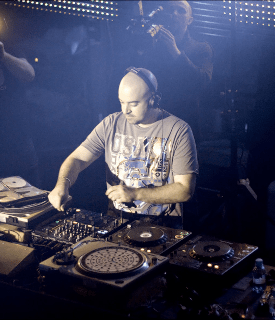
John O’Callaghan, Irish musician and disc jockey who mainly produces trance music, is born in Navan, County Meath, on September 24, 1981. He also produces music under the aliases of Joint Operations Centre, Mannix, Henrik Zuberstein, and Stenna.

O’Callaghan has collaborated with fellow Discover Recordings artists such as Bryan Kearney, Neal Scarborough (as Inertia), Thomas Bronzwaer (as Lost World), and Greg Downey as well as, more recently, trance hero Leon Bolier. His best-known tracks are “Exactly” with Bryan Kearney, “Big Sky”, in collaboration with vocalist Audrey Gallagher of the alternative metal band Scheer, and “Find Yourself” (featuring Sarah Howells). He has received remixes by trance artists such as The Thrillseekers, Sean Tyas, Gareth Emery, Cosmic Gate, Markus Schulz and Indecent Noise. He has also worked with Heatbeat and Aly & Fila.

O’Callaghan formerly has the majority of his work released on Discover Recordings, the British record label set up by John Askew. Later, his work is released by Armada Music and its sublabels — primarily on Armind and Soundpiercing. The remix of his vocal trance production “Big Sky” by Agnelli & Nelson is voted “Tune of The Year” by listeners of Armin van Buuren‘s A State of Trance radio show in 2007.

In 2008, O’Callaghan enters the DJ Magazine 100 at number 60 and picks up two awards at the Irish Dance Music Awards, winning Best Producer and Best DJ. He also becomes the first Irishman to play Trance Energy. In 2009, he rises 36 places to 24th in the DJ Magazine 100.

In addition to numerous single releases, O’Callaghan has released a live album (Discover “Live As” Volume 2) and two artist albums, Something To Live For and Never Fade Away.

Never Fade Away is released in 2009 on the Armada Music label shortly following the single release of “Find Yourself.” “Find Yourself” is tipped a future favorite on A State of Trance. The track receives recognition from many DJs, including Armin van Buuren, Tiësto, Judge Jules, Matt Hardwick and Gareth Emery. The track also receives a remix from Cosmic Gate, which makes a lot of headway in many DJs’ set lists following its release. He also releases another single from the album, “Surreal,” which includes vocals from an artist known as Jaren. In 2010, O’Callaghan starts his very own sublabel on Black Hole Recordings called Subculture.


Leave a comment

Death of Katherine Conolly, Hostess, Landowner & Philanthropist

Katherine Conolly, Irish political hostess, landowner, and philanthropist, dies at Castletown House, Celbridge, County Kildare, on September 23, 1752.

Katherine Conolly is born Katherine Conyngham around 1662. Her parents are Sir Albert Conyngham and Margaret (née Leslie). She is the eldest of their ten children, with one of her brother’s being Henry Conyngham. Her maternal grandfather is Henry Leslie. She marries William Conolly in 1694, Speaker of the Irish House of Commons (1715-29) and purported to be the wealthiest man in Ireland. The marriage is likely to have been a love match. The couple uses her dowry of £2,300 to purchase their first estates in County Meath. Through her connections, her husband is able to ally himself with the influential Protestant families such as the Gores, Montgomerys and Leslies. She becomes known as a political hostess, gaining a mention in a ballad detailing the 1723 Westmeath by-election.

Upon the death of her husband in 1729, Connolly inherits estates in Wales, as well as in counties Meath, Roscommon, Westmeath and Kildare. She continues to be influential in Irish public affairs, being asked for her opinions and counsel. Living on Capel Street, Dublin, and at Castletown House, County Kildare, she entertains a large circle of friends. She carries on her husband’s plan to build the residential Collegiate School, Celbridge, built from 1733 to 1737, then supports the school with £50 each year. She commissions a monument in her husband’s memory by Thomas Carter, in Kildrought Church, Celbridge. She also commissions Conolly’s Folly in 1740 and The Wonderful Barn in 1743 to generate employment in the area.

Connolly dies in Castletown House on September 23, 1752. A portrait of her by Charles Jervas still hangs there. Upon hearing of her death, Mary Delany notes that her death “is a general loss. Her table was open to all her friends of all ranks and her purse to the poor … she was clever at business, and wrote all her own letters … she was a plain and vulgar woman in her manner but had very valuable qualities.”

(Pictured: Reclining statue of Katherine Conolly by Thomas Carter, at Castletown House, Celbridge, County Kildare)