seamus dubhghaill

Promoting Irish Culture and History from Little Rock, Arkansas, USA


Leave a comment

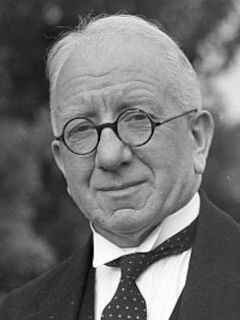
Birth of Sir Alfred Chester Beatty, First Honorary Citizen of Ireland

Sir Alfred Chester Beatty, mining engineer, philanthropist, art collector, and the first honorary citizen of Ireland (1957), is born in New York, New York, United States on February 7, 1875, on the site of what is now Rockefeller Center. He plays an important role in the development of copper deposits in Central Africa.

Beatty is the youngest of three sons born to Hetty and John Beatty, a banker and stockbroker. After studying engineering at the Columbia School of Mines and Princeton University, he helps to develop porphyry copper ores in the United States, first as a consulting engineer and later as a director on the boards of several copper-mining firms. In 1913 he relinquishes his mining interests in the United States and settles in Great Britain, becoming a naturalized British subject in 1933. In 1921 he forms a prospecting company that initiates the development of the Copperbelt region of Northern Rhodesia (now Zambia). For this, he becomes known as the “King of Copper.”

An early family anecdote recalls that, as a young boy, Beatty catches the collection bug, bidding at auction for mining samples. In 1931 an announcement in London‘s The Times casts him as a great collector. Between 1939 and 1949 he acquires over 140 nineteenth-century paintings to display in the Picture Gallery of his London home. These are now part of the collection of the National Gallery of Ireland.

Beatty supports the war effort, contributing a large number of raw materials to the Allies. He receives a belated knighthood by Queen Elizabeth II in the 1954 Birthday Honours list for his contribution to the wartime effort. By the late 1940s, however, he has become disillusioned with Britain. Political deviations from his free-market values, coupled with increased foreign exchange restrictions impacted both his personal and collecting interests in Britain.

In 1950, at the age of 75, Beattys over the reins of Selection Trust to his son Chester Jr. and relocates to Dublin. He purchases a large townhouse for himself on Ailesbury Road, in the Ballsbridge area of Dublin and a site on Shrewsbury Road for the construction of the Chester Beatty Library, which houses the collection, opening on August 8, 1953. The library is moved to its current location at Dublin Castle in 2000.

Beatty spends the remainder of his life between Dublin and the south of France. He is made a Freeman of the City of Dublin in 1954 and is the first person granted honorary citizenship of Ireland in 1957. He continues to collect in the 1950s and 1960s, acquiring important Ethiopian manuscripts and Japanese printed material during that period.

Beatty dies in Monte Carlo in Monaco on January 19, 1968. His Irish estate is valued at £7 million. He is accorded a state funeral by the Irish government, the first private citizen in Irish history to receive such an honour. He is buried in Glasnevin Cemetery in Dublin.


Leave a comment

Death of Thin Lizzy Guitarist Gary Moore

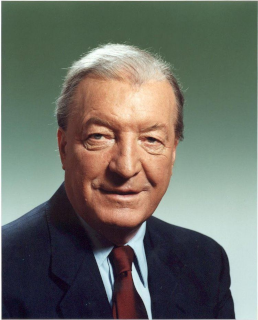
Robert William Gary Moore, Northern Irish musician, most widely recognised as a singer, songwriter, and virtuoso rock and blues guitarist, dies of a heart attack on February 6, 2011, in Estepona, Spain.

In a career dating back to the 1960s, Moore plays with musicians including Phil Lynott and Brian Downey during his teenage years, leading him to memberships of the Irish bands Skid Row and Thin Lizzy, and British band Colosseum II. Moore shares the stage with such blues and rock musicians as B. B. King, Albert King, Jack Bruce, Albert Collins, George Harrison, and Greg Lake, as well as having a successful solo career. He guests on a number of albums recorded by high-profile musicians.

Moore is born in Belfast, Northern Ireland on April 4, 1952. He starts performing at a young age, having picked up a battered acoustic guitar at the age of eight. He gets his first quality guitar at the age of 14, learning to play the right-handed instrument in the standard way despite being left-handed.

At the age of 16, aiming to become a musician, he moves to Dublin. Moore’s greatest influence in the early days is guitarist Peter Green of Fleetwood Mac who is a mentor to Moore when performing in Dublin. Other early musical influences are artists such as Albert King, Elvis Presley, Eric Clapton, The Shadows, and The Beatles. Later, having seen Jimi Hendrix and John Mayall’s Bluesbreakers in his hometown of Belfast, his own style develops into a blues-rock sound that becomes the dominant form of his career in music.

In Dublin, Moore joins the group Skid Row with Noel Bridgeman and Brendan “Brush” Shiels. It is with this group that he earns a reputation in the music industry, and his association with Phil Lynott begins.

Moore moves to England in 1970 and in 1973, under the name “The Gary Moore Band,” he releases his first solo album, Grinding Stone. Grinding Stone receives “Album of the Year” accolades on KTAC-FM/SeattleTacoma, Washington, in 1974.

In 1974 he joins Thin Lizzy after the departure of founding member Eric Bell. From 1975 to August 1978, he is a member of Colosseum II. In 1977, Moore rejoins Thin Lizzy, first as a temporary replacement for Brian Robertson, and on a permanent basis a year later.

In July 1979, he leaves the band permanently to focus on his solo career, again with help from Phil Lynott. After a series of rock records, Moore returns to blues music with Still Got the Blues (1990), with contributions from Albert King, Albert Collins, and George Harrison. Other collaborations during his solo years include a broad range of artists including Trilok Gurtu, Dr. Strangely Strange, Jimmy Nail, Mo Foster, Ginger Baker, Jack Bruce, Jim Capaldi, B.B. King, Vicki Brown, Cozy Powell, Rod Argent, The Beach Boys, Paul Rodgers, Keith Emerson, Roger Daltrey, and Otis Taylor.

Gary Moore dies of a heart attack in his sleep at the age of 58 during the early hours of February 6, 2011. At the time, he is on holiday with a girlfriend at the Kempinski Hotel in Estepona, Spain. Moore is laid to rest in St. Margaret’s Churchyard, Rottingdean, East Sussex, England, in a private ceremony with only family and close friends in attendance.


2 Comments

Death of William Drennan, Physician, Poet & Political Radical

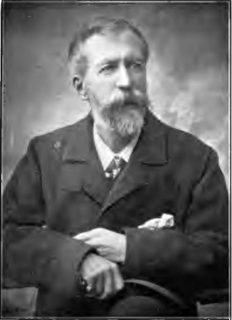
William Drennan, physician, poet and political radical, dies on February 5, 1820, in Belfast. He is one of the chief architects of the Society of United Irishmen and is known as the first to refer in print to Ireland as “the emerald isle” in his poem When Erin first rose.

Drennan is born on May 23, 1754, in Belfast, the son the son of Reverend Thomas Drennan (1696–1768), minister of Belfast’s First Presbyterian Church on Rosemary Street. Thomas Drennan is an educated man from the University of Glasgow and is ordained to the congregation of Holywood, County Down in 1731. Drennan is heavily influenced by his father, whose religious convictions serve as the foundation for his own radical political ideas. His sister, Martha, marries fellow future United Irishman Samuel McTier in 1773.

In 1769 Drennan follows in his father’s footsteps by enrolling in the University of Glasgow where he becomes interested in the study of philosophy. In 1772 he graduates in arts and then in 1773 he commences the study of medicine at Edinburgh. After graduating in 1778 he sets up practice in Belfast, specialising in obstetrics. He is credited with being one of the earliest advocates of inoculation against smallpox and of hand washing to prevent the spread of infection. He also writes much poetry, coining the phrase “Emerald Isle” and is the founder and editor of a literary periodical, Belfast Magazine. He moves to Newry in 1783 but eventually moves to Dublin in 1789 where he quickly becomes involved in nationalist circles.

Like many other Ulster Presbyterians, Drennan is an early supporter of the American Colonies in the American Revolution and joins the Volunteers who had been formed to defend Ireland for Britain in the event of French invasion. The Volunteer movement soon becomes a powerful political force and a forum for Protestant nationalists to press for political reform in Ireland eventually assisting Henry Grattan to achieve legislative independence for the Irish parliament in 1782. However, Drennan, like many other reformers, quickly becomes dismayed by the conservative and sectarian nature of the Irish parliament and in 1791 he co-founds the Society of United Irishmen with Wolfe Tone and Thomas Russell.

Drennan writes many political pamphlets for the United Irishmen and is arrested in 1794 for seditious libel, a political charge that is a major factor in driving the United Irishmen underground and into becoming a radical revolutionary party. Although he is eventually acquitted, he gradually withdraws from the United Irishmen but continues to campaign for Catholic Emancipation.

On February 8, 1800, Drennan marries Sarah Swanwick, “an English lady of some wealth” from Shropshire. They have one daughter and four sons.

Drennan settles in Belfast in 1807. In 1810 he co-founds the non-denominational Royal Belfast Academical Institution. As a poet, he is best remembered for his poem The Wake of William Orr, written in memory of a United Irishman executed by the British. Despite his links with revolutionary republicans, he gradually becomes alienated from the post-Union nationalism of the period. His abiding concern for Liberalism and post union realities make him contemplate his political ideas anew.

Drennan dies in Belfast on February 5, 1820. He directs that his coffin be carried by an equal number of Catholics and Protestants with clergy from different denominations in attendance.

Drennan’s son, John Swanwick Drennan, is a noted poet who, along with his brother William Drennan, write a biography of him for Richard Davis Webb‘s A Compendium of Irish Biography. Through his daughter Sarah, who marries John Andrews of a prominent family of flax merchants, he has several notable descendants, including William Drennan Andrews, judge of the High Court of Justice in Ireland, Sir James Andrews, 1st Baronet, Lord Chief Justice of Northern Ireland, John Miller Andrews, Prime Minister of Northern Ireland, Thomas Andrews who drew up the plans for the RMS Titanic and was aboard and drowned when she sank, and Thomas Drennan, performance artist known primarily for his seminal work ‘Journey to the Centre of Drennan.’


Leave a comment

Edna O’Brien Receives the Irish PEN Award for Literature

Josephine Edna O’Brien, novelist, memoirist, playwright, poet and short story writer, receives a lifetime achievement award from the society for Irish writers, the Irish PEN Award for Literature, on February 2, 2001, in recognition of her work which spans 25 years. Philip Roth describes her as “the most gifted woman now writing in English,” while Mary Robinson, former President of Ireland, cites her as “one of the great creative writers of her generation.”

O’Brien is born on December 15, 1930, the youngest child of farmer Michael O’Brien and Lena Cleary at Tuamgraney, County Clare, a place she would later describe as “fervid” and “enclosed.” Her father inherits a “thousand acres or more” and “a fortune from rich uncles,” but is a “profligate” hard drinker who gambles away his inheritance, the land sold off or bartered to pay debts. From 1941 to 1946 she is educated by the Sisters of Mercy at the Convent of Mercy boarding school at Loughrea, County Galway – a circumstance that contributes to a “suffocating” childhood. In 1950, having studied at night at pharmaceutical college and worked in a Dublin pharmacy during the day, she is awarded a licence as a pharmacist. She reads such writers as Leo Tolstoy, William Makepeace Thackeray, and F. Scott Fitzgerald.

In Dublin, O’Brien purchases Introducing James Joyce, with an introduction written by T. S. Eliot, and says that when she learned that James Joyce‘s A Portrait of the Artist as a Young Man was autobiographical, it made her realise where she might turn, should she want to write herself. “Unhappy houses are a very good incubation for stories”, she says. In London she starts work as a reader for Hutchinson, a publishing firm, where on the basis of her reports she is commissioned, for £50, to write a novel. She publishes her first book, The Country Girls, in 1960. This is the first part of a trilogy of novels (later collected as The Country Girls Trilogy), which includes The Lonely Girl (1962) and Girls in Their Married Bliss (1964). Shortly after their publication, these books are banned and, in some cases, burned in her native country due to their frank portrayals of the sex lives of their characters. She is accused of “corrupting the minds of young women.” She later says, “I felt no fame. I was married. I had young children. All I could hear out of Ireland from my mother and anonymous letters was bile and odium and outrage.”

In the 1960s, O’Brien is a patient of R. D. Laing. “I thought he might be able to help me. He couldn’t do that – he was too mad himself – but he opened doors,” she later says. Her novel A Pagan Place (1970) is about her repressive childhood. Her parents were vehemently against all things related to literature. Her mother strongly disapproved of her daughter’s career as a writer. Once when her mother found a Seán O’Casey book in her daughter’s possession, she tried to burn it.

O’Brien is a panel member for the first edition of BBC One‘s Question Time in 1979. In 2017 she becomes the sole surviving member.

In 1980, O’Brien writes a play, Virginia, about Virginia Woolf, and it is staged originally in June 1980 at the Stratford Festival, Ontario, Canada and subsequently in the West End of London at the Theatre Royal Haymarket with Maggie Smith and directed by Robin Phillips. It is staged at The Public Theater in New York City in 1985. Other works include a biography of James Joyce, published in 1999, and one of the poet Lord Byron, Byron in Love (2009). House of Splendid Isolation (1994), her novel about a terrorist who goes on the run and whose research involves visiting Irish republican Dominic McGlinchey who is later killed and whom she calls “a grave and reflective man,” marks a new phase in her writing career. Down by the River (1996) concerns an under-age rape victim who seeks an abortion in England, the “Miss X case.” In the Forest (2002) deals with the real-life case of Brendan O’Donnell, who abducts and murders a woman, her three-year-old son, and a priest, in rural Ireland.

In addition to the Irish PEN Award, O’Brien’s awards include The Yorkshire Post Book Award in 1970 for A Pagan Place, and the Los Angeles Times Book Prize in 1990 for Lantern Slides. In 2006, she is appointed adjunct professor of English Literature at University College Dublin.

In 2009, O’Brien is honoured with the Bob Hughes Lifetime Achievement Award during a special ceremony at the year’s Irish Book Awards in Dublin. Her collection Saints and Sinners wins the 2011 Frank O’Connor International Short Story Award, with judge Thomas McCarthy referring to her as “the Solzhenitsyn of Irish life.” RTÉ airs a documentary on her as part of its Arts strand in early 2012. For her contributions to literature, she is appointed an honorary Dame of the Order of the British Empire on April 10, 2018.

In 2019, O’Brien is awarded the David Cohen Prize for Literature at a ceremony in London. The £40,000 prize, awarded every two years in recognition of a living writer’s lifetime achievement in literature, has been described as the “UK and Ireland Nobel in literature.” Judge David Park says, “In winning the David Cohen Prize, Edna O’Brien adds her name to a literary roll call of honour.”

(Pictured: Edna O’Brien speaking at the 2016 Hay Festival, photo by Andrew Lih and licensed under the Creative Commons Attribution-Share Alike 3.0 Unported license)


Leave a comment

Founding of the Ladies’ Land League

Anna Parnell, younger sister of Irish Nationalist leader Charles Stewart Parnell, founds the Committee of the Ladies’ Land League, an auxiliary of the Irish National Land League, in Dublin on January 31, 1881. The organisation grows rapidly. By May 1881 there are 321 branches in Ireland, with branches also in Britain, the United States, Canada, Australia and New Zealand.

The organization is set up to take over the work of the Irish National Land League after its leadership is imprisoned. They raise money for the Land League prisoners and their dependants. They encourage women to resist eviction from their cottages. If families are evicted, the Ladies’ Land League provides wooden huts to the evicted families.

The ladies find themselves with additional work late in 1881. The Land League has started its own paper, United Ireland, in August 1881, but towards the end of the year the government tries to close it down. William O’Brien, the editor, continues to smuggle out copy from Kilmainham Gaol, but it falls to the ladies to get it printed. This is done first in London and then for a while in Paris. Eventually the ladies print and circulate it themselves from an office at 32 Lower Abbey Street.

On Sunday, March 12, 1881, just more than a month after the formation of the league, a pastoral letter of Archbishop of Dublin Edward McCabe is read out in all the churches of the diocese. It condemns the league in the strongest terms, deploring that “our Catholic daughters, be they matrons or virgins, are called forth, under the flimsy pretext of charity, to take their stand in the noisy street of life.” McCabe is not representative of all bishops, particularly Archbishop of Cashel Thomas Croke, a strong supporter of the original league. Croke publishes a letter in the Freeman’s Journal challenging the “monstrous imputations” in McCabe’s pastoral.

The dissension is revived somewhat in the summer of 1882. McCabe, now a Cardinal, and another bishop try to have a public condemnation of the Ladies’ Land League inserted into an address by the Catholic Bishops of Ireland in June. The other bishops resist on the basis that it would probably do more harm than good. They content themselves with expressing their hope that “the women of Ireland will continue to be the glory of their sex and the noble angels of stainless modesty.” When newspapers interpret this as a condemnation of the league, Croke writes again to the Freeman’s Journal to deny that this had been the intention of the bishops.

The order banning the Irish National Land League makes no direct reference to the Ladies’ Land League, but many police officers try to insist that the ban includes the women’s group. Eventually, on December 16, 1881, Inspector General Hillier of the Royal Irish Constabulary (RIC) orders the police to stop the women’s meetings. Anna Parnell defiantly issues a notice to all Ladies’ Land League branches in the country calling on them all to hold a meeting on January 1, 1882.

The prominent resident magistrate, Major Clifford Lloyd, claims that the huts built for evicted tenants are being used as posts from which the evicted tenants can intimidate anyone who attempts to take over their vacated holdings. In April 1882, he threatens that anyone attempting to erect huts will be imprisoned. That month, Anne Kirke is sent down from Dublin to Tulla, County Clare, to oversee the erection of huts for a large number of evicted tenants. Lloyd has her arrested and imprisoned for three months.

The government does not wish to be seen to use the Coercion Act to imprison women, but another stratagem is used. In December 1881 21-year-old Hannah Reynolds is imprisoned under an ancient statute from the reign of Edward III, the original purpose of which was to keep prostitutes off the streets. The statute empowers magistrates to imprison “persons not of good fame” if they do not post bail as a guarantee of their good behavior. Since Reynolds claims her behavior is good, she refuses to pay bail and spends a month in Cork gaol. In all, thirteen women serve jail sentences under this statute.

On May 3, 1882, Parnell and other leaders are released from jail after agreeing to the Kilmainham Treaty. This includes some improvement in the 1881 Land Act. He now wishes to turn his attention more to the Home Rule question. The Irish National Land League is replaced by the Irish National League. Parnell also wants to see an end to the Ladies’ Land League. There had been increased violence while he was in jail, and he sees Anna as too radical. The organization has an overdraft of £5,000 which Parnell agrees to clear from central funds only if the organization is dissolved. At a meeting of the Central Committee on August 10, 1882, the Ladies’ Land League votes to dissolve itself. Anna Parnell herself is not in attendance at that meeting having suffered a physical and mental collapse after the sudden death of her sister Fanny the previous month.

The records of the Ladies’ Land League are lost to history in 1916. Jennie Wyse Power, who had served on the Central Committee, had kept them in her house in Henry Street, Dublin. When fire spreads from Sackville Street during the 1916 Easter Rising, her house is destroyed, and the records perish in the blaze.

(Pictured: Lady Land Leaguers at work at the Dublin office)


Leave a comment

Death of Jim Larkin, Union Leader & Socialist Activist

James (Jim) Larkin, Irish trade union leader and socialist activist, dies in his sleep in Dublin on January 30, 1947. He is one of the founders of the Irish Labour Party, the Irish Transport and General Workers’ Union (ITGWU), the Workers’ Union of Ireland and the Irish Citizen Army (ICA).

Larkin is born to Irish parents in Liverpool, England, on January 21, 1876. He and his family later move to a small cottage in Burren, County Down. Growing up in poverty, he receives little formal education and begins working in a variety of jobs while still a child.

In 1905, Larkin is one of the few foremen to take part in a strike on the Liverpool docks. He is elected to the strike committee, and although he loses his foreman’s job as a result, his performance so impresses the National Union of Dock Labourers (NUDL) that he is appointed a temporary organiser.

Larkin moves to Belfast in 1907 to organise the city’s dock workers for the NUDL. He succeeds in unionising the workforce, and as employers refuse to meet the wage demands, he calls the dockers out on strike in June. Carters and coal men soon join in, the latter settling their dispute after a month.

In 1908, Larkin moves south and organises workers in Dublin, Cork, and Waterford, with considerable success. His involvement, against union instructions, in a dispute in Dublin results in his expulsion from the NUDL. The union later prosecutes him for diverting union funds to give strike pay to Cork workers engaged in an unofficial dispute. After trial and conviction for embezzlement in 1910, he is sentenced to prison for a year. This is widely regarded as unjust, and the Lord Lieutenant of Ireland, Lord Aberdeen, pardons him after he has served three months in prison.

After his expulsion from the NUDL, Larkin founds the Irish Transport and General Workers’ Union (ITGWU) at the end of December 1908. The organisation exists today as the Services Industrial Professional & Technical Union (SIPTU). In early 1909, Larkin moves to Dublin, which becomes the main base of the ITGWU and the focus of all his future union activity in Ireland.

In June 1911, Larkin establishes a newspaper, The Irish Worker and People’s Advocate, as a pro-labour alternative to the capitalist-owned press. In 1912, in partnership with James Connolly, Larkin helps form the Irish Labour Party.

In early 1913, Larkin achieves some successes in industrial disputes in Dublin. Two major employers, Guinness and the Dublin United Tramway Company, are the main targets of Larkin’s organising ambitions. The chairman of the Dublin United Tramway Company, industrialist and newspaper proprietor William Martin Murphy, is determined not to allow the ITGWU to unionise his workforce. On August 15, he dismisses 40 workers he suspects of ITGWU membership, followed by another 300 over the next week. On August 26, 1913, the tramway workers officially go on strike.

The resulting industrial dispute is the most severe in Ireland’s history. Employers in Dublin engage in a sympathetic lockout of their workers when the latter refuses to sign the pledge, employing blackleg labour from Britain and from elsewhere in Ireland. Guinness, the largest employer in Dublin, refuses the employers’ call to lock out its workers but it sacks 15 workers who struck in sympathy.

For seven months the lockout affects tens of thousands of Dublin workers and employers, with Larkin portrayed as the villain by Murphy’s three main newspapers, the Irish Independent, the Sunday Independent, and the Evening Herald, and by other bourgeois publications in Ireland. The lockout eventually concludes in early 1914 when calls by James Connolly and Larkin for a sympathetic strike in Britain are rejected by the British Trades Union Congress (TUC). Larkin’s attacks on the TUC leadership for this stance also lead to the cessation of financial aid to the ITGWU.

Some months after the lockout ends, Larkin leaves for the United States. He intends to recuperate from the strain of the lockout and raise funds for the union. Once there he becomes a member of the Socialist Party of America and is involved in the Industrial Workers of the World union (the Wobblies). He becomes an enthusiastic supporter of the Soviet Union and is expelled from the Socialist Party of America in 1919 along with numerous other sympathisers of the Bolsheviks during the Red Scare of that year.

Upon his return to Ireland in April 1923, Larkin receives a hero’s welcome and immediately sets about touring the country meeting trade union members and appealing for an end to the Irish Civil War. In September 1923, Larkin forms the Irish Worker League (IWL), which is soon afterwards recognised by the Communist International as the Irish section of the world communist movement.

James Larkin dies in his sleep on January 30, 1947, in the Meath Hospital in Dublin. Fr. Aloysius Travers, OFM, who had administered last rites to James Connolly in 1916, also administers extreme unction to Larkin. His funeral mass is celebrated by the Catholic Archbishop of Dublin, John Charles McQuaid, who had visited him in hospital before he died, and thousands line the streets of the city as the hearse passes through on the way to Glasnevin Cemetery.

Today a statue of “Big Jim” stands on O’Connell Street in Dublin, completed by Oisín Kelly and unveiled in 1979.


Leave a comment

Rev. Canon Paul Colton Elected Bishop of Cork, Cloyne and Ross

One of the youngest members of the Church of Ireland, Rev. Canon William Paul Colton is elected Bishop of Cork, Cloyne and Ross on January 29, 1999. He succeeds the Rt. Rev. Robert Warke.

Colton, born March 13, 1960, and known as Paul Colton, is perhaps best known for being the bishop who officiates the wedding of footballer David Beckham and Spice Girl Victoria Adams on July 4, 1999, at the medieval Luttrellstown Castle on the outskirts of Dublin.

Colton attends St. Luke’s National School, Douglas, Cork, Cork Grammar School and Ashton Comprehensive School, Cork before being awarded a scholarship to the Lester B. Pearson United World College of the Pacific, Victoria, British Columbia, Canada where he completes the International Baccalaureate in 1978. He studies law at University College Cork, part of the National University of Ireland, and is the first graduate of the university to be elected to a bishopric in the Church of Ireland. He studies theology at Trinity College Dublin. In 1987 he completes the degree of Master in Philosophy (Ecumenics) at Trinity College, Dublin and a Master of Laws at Cardiff University in 2006. His LL.M thesis is on the subject of legal definitions of church membership.

In 2013 Colton completes, and is conferred with, a PhD in Law also at Cardiff University. His academic areas of interest are church law, the law of the Church of Ireland, law within Anglicanism, the interface between the laws of religious communities and the laws of States (particularly in Ireland and Europe), human rights, education law, and charity law. In 2014 he is appointed as an honorary research fellow at the Cardiff School of Law and Politics of Cardiff University, and its Centre for Law and Religion.

Colton is elected Bishop of Cork, Cloyne and Ross by an Electoral College on January 29, 1999, and consecrated on the Feast of the Annunciation, March 25, 1999, in Christ Church Cathedral, Dublin. He is enthroned in Saint Fin Barre’s Cathedral, Cork on April 24, 1999, in St. Colman’s Cathedral, Cloyne on May 13, 1999, and in St. Fachtna’s Cathedral, Ross on May 28, 1999.

Colton is married to Susan Colton, who is deputy principal of a primary school, and they have two adult sons. He is the first Church of Ireland bishop to openly support same-sex marriage. He is involved in education debates and in charity work. He chairs the board of directors of Saint Luke’s Charity, Cork, which focuses on the elderly and dementia sufferers. He is also chairman of the board of governors of Midleton College.

At the episcopal ordination of Bishop Fintan Gavin as Catholic bishop of Cork and Ross in June 2019, Colton presents the crosier at Bishop Gavin’s own request.

As of June 2020, Colton is the longest-serving bishop of Cork, Cloyne and Ross since bishop William Lyon in 1617 and also the longest serving bishop still in office in the Anglican churches of Ireland, England, Scotland and Wales. He is the author of almost a dozen book chapters, mostly in the area of the interface between religion and law.


Leave a comment

Birth of George Fitzmaurice, Playwright & Writer

George Fitzmaurice, Irish dramatist and short story writer, some of whose plays were broadcast on Radio Éireann, is born at Bedford House, Listowel, County Kerry on the January 28, 1877.

Fitzmaurice attends Duagh National School and later St. Michael’s College, Listowel. He is brought up in the Protestant faith as his father is a Protestant clergyman and is the vicar of St. John’s Church, Listowel. His father dies when he is fourteen years old and the family fortune declines. He takes a job in Dublin as a clerk in the Congested Districts Board for Ireland. In 1916 he enlists in the British Army and returns to Dublin after the war and is diagnosed with neurasthenia, rendering him fearful of crowds. On his return to Dublin, he takes up a position working for the Irish Land Commission.

Fitzmaurice and his eleven siblings are the children of a mixed marriage. He and his brothers are brought up as Protestants and his sisters are brought up as Roman Catholics. His family home at Bedford, together with its extensive lands has to be given up as collateral in respect of a £60 debt owed to the local butcher. Neither Fitzmaurice nor any of his eleven siblings are to marry or have any offspring. He is the last Fitzmaurice of Duagh. There are no photographs of him other than a sketch of him in later life.

Fitzmaurice’s first success was in 1907, with an Abbey Theatre production of his comedy The Country Dressmaker which features one of his most famous characters, Luke Quilter, “The man from the mountain.” This character proves to be a favourite with the audience, to the surprise of William Butler Yeats. The play’s commercial success brings necessary income to the Abbey Theatre in 1907. The play is ultimately broadcast by the Radio Éireann Players.

Fitzmaurice’s second play is a dramatic fantasy called The Pie Dish. It is heavily rejected and slated by critics and considered blasphemous. This leads to the rejection of another of his plays called The Dandy Dolls which is now understood as another of his best plays. It is produced in the Abbey Theatre in 1969, six years after his death.

During Fitzmaurice’s lifetime, some of his dramatic works are produced by poet Austin Clarke in Lyric Theatre, Dublin. In 1923 his play Twixt by Giltinans and the Carmodys is also performed on Abbey and eight more of his plays are printed in the literary journey The Dublin Magazine from 1924 to 1925.

The effects of having fought in World War I lead to Fitzmaurice becoming increasingly reclusive over time. With a fear of travelling and people or crowds, he spends his later years following “monotonous routines in Dublin.” On May 12, 1963, he dies in poverty at his home at 3 Harcourt Street and is buried in Mount Jerome Cemetery. In his room there are no pictures of himself, few personal mementos, but he does have a copy of almost every play he had published, as well as some unpublished drafts. Besides his personal clothing, there is little else. He dies without leaving a will.

In 1965, RTÉ reports that “the works of George Fitzmaurice are now undergoing something of a revival.” A fellow Kerry playwright, John B. Keane, states at the time that Fitzmaurice is increasingly being recognised as the great dramatist he truly was. He also describes his work as having “practical clarity of speech coupled with a great conciseness, and a tightness in his writing and in his construction.” Michael Connor, the man who owns the Fitzmaurice property in Daugh, recounts that he often saw Fitzmaurice in the town after his retirement from the civil service but by that time the dramatist had completely lost interest in seeing his own plays on the stage.

In his native Daugh, The George Fitzmaurice Library is founded, and on October 14, 1995, a headstone that is sculpted by a local and commissioned by the Duagh Historical Society, is placed over Fitzmaurice’s grave.


2 Comments

Democratic Left Merges with the Labour Party

After months of negotiations and two special delegate conferences, Democratic Left merges with the Labour Party on January 24, 1999.

Democratic Left is formed after a split in the Workers’ Party of Ireland, which in turn has its origins in the 1970 split in Sinn Féin and, after seven years in existence, it is incorporated into the Labour Party in 1999. Although never formally styled as a communist party, the Workers’ Party has an internal organisation based on democratic centralism, strong links with the Soviet Union, and campaigns for socialist policies. However, between 1989 and 1992 the Workers’ Party is beset by a number of problems.

On February 15, 1992, a special conference is held in Dún Laoghaire to reconstitute the party. A motion proposed by Proinsias De Rossa and general secretary Des Geraghty seek to stand down the existing membership, elect an 11-member provisional executive council and make several other significant changes in party structures but it is defeated by nine votes.

After the conference it is clear a split is inevitable. At an Ard Chomhairle meeting held on February 22, 1992, in Wynn’s Hotel in Dublin, six of the party’s TDs resign from the party along with more than half of the Ard Chomhairle. The new breakaway party is provisionally named New Agenda with De Rossa becoming leader of the party.

In the 1997 Irish general election Democratic Left loses two of its six seats, both of its by-election victors, Eric Byrne in Dublin South-Central and Kathleen Lynch in Cork North-Central, being unseated. The party wins 2.5% of the vote. The party also is in significant financial debt because of a lack of access to public funds, due to its size. Between 1998 and 1999 the party enters discussions with the Labour Party which culminates in the parties’ merger in 1999, keeping the name of the larger partner but excluding members in Northern Ireland from organising. This leaves Gerry Cullen, their councillor in Dungannon Borough Council, in a state of limbo, representing a party for whom he can no longer seek election.

The launch of the merged party is in the Pillar Room of the Rotunda Hospital in Dublin on January 24, 1999. Labour Party leader Ruairi Quinn remains leader of the unified party, while De Rossa takes up the largely titular position of party president. Only 10% of Democratic Left delegates at the special conference had voted against the merger. De Rossa successfully contests the 1999 European Parliament election in Dublin. He holds his Dáil seat until he stands down at the 2002 Irish general election. He holds his European Parliament seat in the 2004 election and 2009 election.

In 2002, former Democratic Left TDs Pat Rabbitte and Liz McManus are elected as Labour Party leader and deputy leader respectively. When Rabbite steps down as Labour leader after the 2007 Irish general election, Eamon Gilmore is elected unopposed as his successor.

The party archives are donated to the National Library of Ireland by the Labour Party in 2014. The records can be accessed by means of the call number: MS 49,807.


Leave a comment

Birth of Raymond Crotty, Economist, Writer, Academic & Farmer

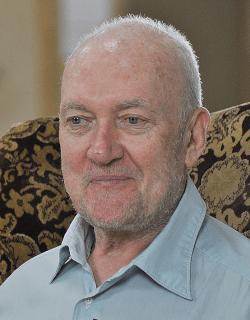
Raymond Dominick Crotty, economist, writer, academic and farmer who is known for his opposition to Ireland’s membership of the European Union, is born in Kilkenny, County Kilkenny on January 22, 1925.

Crotty grows up in Kilkenny and, while a student at St. Kieran’s College, Kilkenny, he begins breeding pigs in his spare time. Rather than move on to university, he pursues his interest in agriculture by going to work for a farmer relative in 1942. A year later he undertakes a 12-month course at the Albert Agricultural College in Glasnevin, Dublin. In 1945, he purchases a 204-acre farm in Dunbell, not far from Kilkenny, and spends the next two decades putting into practice his developing knowledge of agricultural production.

In 1956, while still a farmer, Crotty enrolls as a distance-learning student at the University of London, obtaining a BSc (Econ.) degree in 1959. He spends two further years studying for a MSc (Econ.) degree at the London School of Economics. In 1961, he obtains a post as lecturer in Agricultural Economics at University of Wales, Aberystwyth. During the 1960s, he sells his farm and becomes an economic adviser to various development agencies, including the World Bank. His work brings him to various parts of the developing world, including Latin America, India, and Africa. In 1976, he receives a fellowship at the University of Sussex. In 1982, he becomes a lecturer in statistics at Trinity College, Dublin.

Crotty’s knowledge and experience of agricultural economics shapes his attitude to Ireland’s participation in the European Economic Community. His years as a farmer teaches him that Irish agriculture is structured so as to discourage efficient use of the land.

Crotty grows to believe that agricultural efficiency can best be achieved by the imposition of an annual land tax. This would allow taxes on inputs and outputs to be removed or reduced and would encourage only those prepared to maximise the potential of their land to remain in farming. In putting forward this proposal, he is reflecting the influence of American economist Henry George, who held that land owned by private individuals should be subject to a tax on the land because of the advantage bestowed on the owner. He believes that Irish agriculture would be damaged if Ireland joined the European Economic Community (EEC) as, instead of becoming more efficient, farmers would grow to depend on external subsidies under the Common Agricultural Policy (CAP).

Furthermore, Crotty maintains that Ireland’s status as an ex-colony makes it unsuited for membership of a bloc of nations that include former colonial powers. In 1962, in the early stages of the public debate on whether Ireland should join the EEC, he expresses his concerns about the possible loss of Ireland’s national identity within what he termed a “European super state.”

In 1972, Crotty joins Trinity College academic Anthony Coughlan in opposing Ireland’s accession to the EEC. Over the next twenty years he campaigns against further integration of Ireland into the EEC, most notably during the attempts to ratify the Single European Act in the mid-1980s. He stands for election in the 1989 European Parliament election as a candidate in the Dublin constituency. He receives 25,525 votes (5.69% of the valid votes cast), not enough to elect him. In 1992, he once again allies himself with Coughlan in urging Irish voters to reject the Maastricht Treaty in the referendum held on June 18.

Despite failing to win majority support for his views in elections and referendums, Crotty continues until the end of his life his campaign against Ireland’s membership of the European Union.

Crotty is a prolific writer, producing books, pamphlets, articles, and letters on subjects such as economics, history, and Ireland’s involvement with Europe. His final work, When Histories Collide: The Development and Impact of Individualistic Capitalism, is edited by his son Raymond and published posthumously in 2001. It is an economic history of mankind from the earliest stages of human development to the present day. Reviewing it on behalf of the American Sociological Association, Professor Michael Mann of University of California, Los Angeles (UCLA) describes it as “an extraordinary book by an extraordinary man” and “a must-read.”

Raymond Crotty dies at St. Vincent’s Hospital, Dublin, at the age of 68, on January 1, 1994, and is buried in Tulla Cemetery outside Kilkenny.