seamus dubhghaill

Promoting Irish Culture and History from Little Rock, Arkansas, USA


Leave a comment

Death of Wilhelmina Geddes, Stained Glass Artist

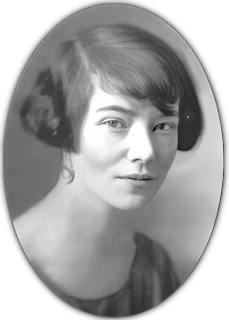
Wilhelmina Geddes, Irish stained glass artist who is an important figure within the Irish Arts and Crafts movement and also the twentieth-century British stained glass revival, dies in London, England, on August 10, 1955. Her notable works include windows at St. Bartholomew’s Anglican Church (Ottawa, Canada), St. Peter’s Church (LampeterWales), and the King Albert Memorial Window, St. Martin’s Cathedral (Ypres, Belgium).

Geddes is born on her maternal grandparent’s farm at Drumreilly Cottage in Leitrim, County Leitrim, on May 25, 1887. She is the eldest of four children, three girls and a boy, of William Geddes and his wife Eliza Jane Stafford. The family, who migrates to Ireland from Scotland, has mainly been farmers. Her father, a Methodist, who is born near his father’s farm at TandrageeCounty Armagh, emigrates to the United States as a young man, working as a labourer for the railway construction business. This serves a useful purpose as he had worked as a site engineer at the Cavan, Leitrim and Roscommon Railway Company. When she is still an infant her parents move to their native home in Belfast, so her father can set up in business as a building contractor.

Geddes begins drawing subjects from life and nature from the age of four. She learns first how to draw from the school mistress in Ayrshire, where her father occasionally goes shooting. She begins her studies at Methodist College Belfast along with her three younger sisters. She later moves to the Belfast School of Art. She is encouraged by Rosamond Praeger, a sculptor from County Down, to continue with her studies. She is accepted as a student to study at the Belfast School of ArtUlster University. This is where she adapts and improves her style and is introduced to a professional standard of art work.

While still studying at the Belfast School of Art, Geddes takes part in the Arts and Crafts Society of Ireland‘s fourth exhibition. For this exhibition, she contributes a glowingly coloured illustration of the book Cinderella Dressing the Ugly Sister (Dublin City Gallery), which she had created. It is at this exhibition that her work is spotted by Sarah Purser, a well established painter seeking newly trained students to introduce to stained glass artistry. Purser, who goes on to be her lifelong mentor, invites the young Geddes to join her in Dublin, working under the established stained glass artist William Orpen.

Geddes contributes a watercolour illustration of a Ballad Seller with the Belfast Art Society in 1907. She is elected as an Associate of the Belfast Art Society’s successor, the Ulster Academy of Arts, in 1933 before promotion to Honorary Academician in 1935. She shows five illustrations in the 1911 Oireachtas Exhibition. It is some twenty-one years before she returns to the Oireachtas when she exhibits three cartoons and three sketches for stained glass in 1932.

Geddes joins Purser at the acclaimed stained glass workshop called An Túr Gloine in 1910. The workshop is held in Dublin’s Metropolitan School of Art. It is here that she discovers her passion for the craftsmanship of stained glass artistry and creates her most important works.

During her early years at An Túr Gloine, Geddes’s originality shines, and important commissions come from St. Ann’s Church, Dawson Street, Dublin and the Presbyterian church in Rathgar. Dogged by illness, she returns to Belfast before 1916 and lives between there and Dublin until moving in 1925, as she has long wanted, to work in London at The Glass House, Fulham. While working at The Glass House, she instructs the Irish painter and stained glass artist Evie Hone.

Geddes’s work is considered pioneering and represents a rejection of the Late Victorian approach. She creates a new view of men in stained glass windows, portraying them with close-shaven crew cuts. The muscularity and tension of her portraiture is matched by the radical design of her constructions. Ambitious large-scale projects, as at the cathedral in Ypres, are equalled by the drama of smaller-scale work at Wallasey (Lancashire) and Wallsend (Northumberland), or war memorial windows in obscure country churches.

Despite the hardships of living in London during World War II, poverty, and ill health, Geddes designs seventeen full-scale stained glass masterpieces, sixteen of which she completes.

Geddes dies on August 10, 1955 in London of a pulmonary embolism. She is buried in Carnmoney Cemetery, County Antrim, along with her mother and sister Ethel. Even after moving to London, she claims that her native identity never wavered as she says she was always “a Belfast woman.”

Leave a comment

Heavy Fighting in Newcastle West, County Limerick

Nationalist forces enter Newcastle West, County Limerick, on Monday, August 7, 1922, after a twelve-hour battle, in which twelve anti-Treaty Irish Republican Army (IRA) members, sometimes referred to as Irregulars, are killed. The casualties of the Nationalists are less than those of the Irregulars.

Taking little respite after Sunday’s labors, the Nationals advance from Rathkele on Monday morning, and by midday are in sight of their fresh objective. Armored cars enter the town and machine gun fire is directed against a party of Irregulars, causing many casualties.

When the artillery goes into action against the headquarters of the Irregulars, the Irregulars flee precipitately along Cord road.

Owing to the slow progress in the operations in Southern Ireland, the meeting of Dáil Éireann, scheduled to open Saturday, is postponed again.

The official army bulletin announces that the Nationals captured Castle Island on Saturday, August 5. It says that the counties of Cork and Kerry with a part of South Tipperary and a small area in County Waterford are the only districts held by the Irregulars with any degree of security.

The streets of Dublin are lined with great crowds of people on Tuesday, August 8, for the military funeral of nine National Army soldiers who were killed in fighting the Republican Irregulars in County Kerry. Michael Collins, Chairman of the Provisional Government, and all the leading officers of the army in Dublin march beside the hearses. Each coffin is covered with the Republican tricolour. There are many clergymen and other civilians in the funeral procession.

Prominent Catholics of Dublin and Belfast are trying to effect a better understanding between the Ulster and Free State Governments, according to the Daily Mail. This newspaper further states that all efforts to this end, which have all been taken with the advice and approval of leading English Catholics, are without official character.

A message from Strabane, County Tyrone, received by the Exchange Telegraph Company on August 8 states that a settlement between the Ulster Government and the Free State authorities is imminent, the terms of agreement having been practically arranged in negotiations proceeding in London.

In Downing Street, however, all knowledge of any such Irish negotiations is disclaimed and a telegram from Belfast quotes Ulster Government officials as denying that a settlement with the Free State is imminent.

The Free State Government is also unaware of any negotiations for a settlement between the Ulster Government and the Free State authorities. It is further states that such negotiations are unlikely to take place.

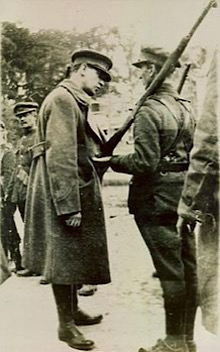
(From: “Irish Irregulars Routed With Loss,” The New York Times, August 9, 1922 | Pictured: General Michael Collins inspects a soldier at Newcastle West, County Limerick, August 8, 1922)


3 Comments

Brendan Foley, Writer, Film Producer & Director

Brendan Foley is a Northern Irish writerfilm producer and director. Raised in Belfast, Northern Ireland, he has written feature film and TV series scripts for producers and studios in the United Kingdom, Ireland, Hollywood, Canada, Denmark, Finland, Poland, South Africa, China and Thailand. He writes and produces the 2005 action-thriller Johnny Was, starring Vinnie JonesEriq La Salle and Patrick Bergin. The film wins awards including Audience Awards and Best Feature Awards from six film festivals.

Foley’s most recent work includes Cold Courage, a TV series thriller for LionsgateViaplay and Luminoir shot in Europe in 2019 and The Man Who Died, a series for Elisa-Viaplay.

Foley writes, produces and directs The Riddle in 2006, starring Jones, Sir Derek Jacobi and Vanessa Redgrave. In September 2007, The Riddle becomes the world’s first feature film to be released as a DVD premiere by a national newspaper. The UK’s The Mail on Sunday buys UK DVD rights and distributes 2.6 million copies, making the film one of the most widely watched independent films in the UK.

During 2006–07, Foley writes and directs Assault of Darkness, a satirical horror film set in rural Ireland, starring Jones, Jason Barry and Nora-Jane Noone. It is released by Lionsgate in the United States on DVD in 2009. He co-creates and is a writer on Shelldon, a children’s environmental animated TV series on NBC (2010–12) and Byrdland (five seasons of animated TV series in Asia with GMM Grammy).

In 2015, Foley starts developing a new TV detective series for BBC TelevisionFarmoor (makers of The Fall) and Northern Ireland Screen (UK home of Game of Thrones) and, in 2016, he develops Tunnel Kings, a mini-series on World War II POW “escape-artists” for the Canadian Broadcasting Corporation and Dream Street, Canada. He completes pilot scripts for SOS, a new eco-thriller series by Finnish producers Luminoir, and Kvenland, set in the Dark Ages. Previously he writes the pilot for drama Dr. Feelgood for Monday TV (Denmark).

Cold Courage, described as a Nordic noir series involving Finnish characters in present-day London made by Finnish producers Luminoir for Lionsgate and Viaplay, shot in London, Dublin, Belgium and Finland in 2019. Actor John Simm tells Variety that he is attracted to the series by the quality of the writing and the fact that it is a pan-European thriller.

In 2019, Foley is attached to produce an adaptation of Freeman Wills Crofts‘ Inspector French novels.

In 2025, Foley is Writer-Creator and Executive Producer for Sherlock & Daughter, a drama series starring David Thewlis and Blu Hunt for The CW, WarnerBrosDiscovery UK, Federation, Starlings and StoryFirst (UK).

Foley has written books for U.S. and UK publishers. Under The Wire, a World War II POW escape drama, which he writes along with its subject, pilot William Ash, is published by  Random House, London and St. Martin’s Press, New York, in 2005 and 2006. It becomes a best-seller, reaching number one on Amazon UK‘s history and biography charts. In 2018/19, a related TV series is developed as a future miniseries by CBC in Canada and Northern Ireland Screen.

Foley’s next book, Archerfield, a novel, published in 2015, covers 16,000 years of history in one square mile of Scotland.

Foley is a member of the Writers’ Guild of Great Britain, a Fellow of the British Association of Communicators in Business, and is made an honorary life member of the National Union of Journalists in June 2006.


Leave a comment

Opening of the Dublin to Carlow Branch of the GS&WR Line

The Great Southern & Western Railway (GS&WR) line between Dublin and Carlow opens on August 4, 1846.

The GS&WR is an Irish gauge (1,600 mm (5 ft. 3 in.)) railway company that operates in Ireland from 1844 until 1924. The GS&WR grows by building lines and making a series of takeovers, until in the late 19th and early 20th centuries it is the largest of Ireland’s “Big Four” railway networks. At its peak the GS&WR has an 1,100-mile (1,800 km) network, of which 240 miles (390 km) are double track.

The core of the GS&WR is the Dublin Kingsbridge – Cork main line, Ireland’s “Premier Line,” and still one of her most important main line railways. The company’s headquarters are at Kingsbridge station. At its greatest extent, the GS&WR includes, in addition to the Dublin – Cork main line, the Dublin – Waterford and Mallow – Waterford lines and numerous branch lines.

There are earlier attempts to set up main line railways into the south of Ireland, but the 1840s efforts of Peter Purcell, a wealthy landowner and mail coach operator, and his associates ultimately prove successful with the implementation of a bill passed on August 6, 1844, for the GS&WR. Purcell is actively assisted by engineer John Benjamin Macneill, who has done surveys for the London and Birmingham Railway and has connections in London. The GS&WR’s vision to provide a single railway for most of the south of Ireland finds favour with United Kingdom Prime Minister Robert Peel as having likely more profitably for wealthy investors and because a single company will be easier to control. These factors likely ease the passage of relevant legislation.

William Dargan, Ireland’s foremost railway contractor, builds much of the GS&WR’s main line and a number of its other routes.

The directors choose to begin by construction of the 32.5 mile (52.3 km) stretch of the Dublin – Cork main line as far as Cherryville Junction just west of Kildare and the 23.5 mile (37.8 km) branch to Carlow with contracts shared between McCormack and Dargan. Work begins in January 1845 with services commencing on August 4, 1846. Trains are scheduled to take about 2 hours, 35 minutes for the 56 mile (90 km) stretch to Carlow and coach connections are arranged to Kilkenny, Clonmel, Waterford and the evening mail coach for Cork.

In July 1848, the main line reaches Limerick Junction, where it meets the Waterford and Limerick Railway and thus links Dublin and Limerick by rail.

In October 1849, the main line reaches the outskirts of Cork, where the GS&WR opens a temporary terminus at Blackpool. The final 1-mile (1.6 km) of line from Blackpool to the centre of Cork includes a 1,355-yard (1,239 m) tunnel and is not completed for another six years. Services through the tunnel begin in December 1855, running to and from a second temporary terminus beside the River Lee. Finally, the present Cork terminus in Glanmire Road opens in July 1856.


Leave a comment

Birth of Sidney Czira, Journalist, Broadcaster, Writer & Revolutionary

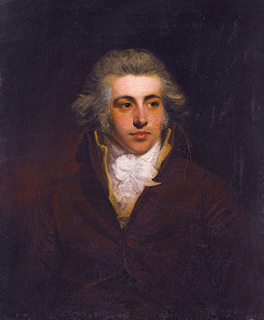
Sidney Sarah Madge Czira (née Gifford), journalistbroadcaster, writer and revolutionary, known by her pen name John Brennan, is born in Rathmines, Dublin, on August 3, 1889. She is an active member of the revolutionary group Inghinidhe na hÉireann (Daughters of Ireland) and writes articles for its newspaper, Bean na h-Éireann, and for Arthur Griffith‘s newspaper Sinn Féin.

Gifford is the youngest of twelve children of Frederick and Isabella Gifford. Isabella Gifford (née Burton), is a niece of the artist Frederic William Burton, and is raised with her siblings in his household after the death of her father, Robert Nathaniel Burton, a rector, during the Great Famine.

Gifford’s parents—her father is Catholic and her mother Anglican—are married in St. George’s Church, a Church of Ireland church on the north side of Dublin, on April 27, 1872. She grows up in Rathmines and is raised as a Protestant, as are her siblings.

Like her sisters, the socialist Nellie GiffordGrace Gifford, who marries Joseph Plunkett, and Muriel Gifford, who marries Thomas MacDonagh, she becomes interested and involved in the suffrage movement and the burgeoning Irish revolution.

Gifford is educated in Alexandra College in Earlsfort Terrace. After leaving school she studies music at the Leinster House School of Music. It is her music teacher, in her teens, who first gives her her first Irish national newspaper, The Leader. She begins reading this secretly and then starts reading Arthur Griffith’s newspaper, Sinn Féin.

Gifford is a member of Inghinidhe na hÉireann, a women’s political organisation active from the 1900s. It is founded by Maud Gonne and a group of working-class and middle-class women to promote Irish culture and help to alleviate the shocking poverty of Dublin and other cities at a time when Dublin’s slums are unfavourably compared with Calcutta‘s. Gifford, who is already writing under the name “John Brennan” for Sinn Féin, is asked to write for its newspaper Bean na h-Éireann. Her articles vary from those highlighting poor treatment of women in the workplace to fashion and gardening columns, some written under the pseudonym Sorcha Ní hAnlúan.

She also works, along with her sisters, in Maud Gonne’s and Constance Markievicz‘s dinner system in St. Audoen’s Church, providing good solid dinners for children in three Dublin schools – poor Dublin schoolchildren often arrive at school without breakfast, go without a meal for the day, and if their father has been given his dinner when they arrive home, might not eat or might only have a crust of bread that night.

In 1911, Gifford is elected (as John Brennan) to the executive of the political group Sinn Féin.

Gifford is a member of Cumann na mBan (The Irish Women’s Council) from its foundation in Dublin on April 2, 1914. Its members learn first aid, drilling and signalling and rifle shooting, and serve as an unofficial messenger and backup service for the Irish Volunteers. During the fight for Irish Independence the women carry messages, store and deliver guns and run safe houses where men on the run can eat, sleep and pick up supplies.

In 1914, Gifford moves to the United States to work as a journalist. Through her connection with Padraic Colum and Mary Colum, whom she had met through her brother-in-law Thomas MacDonagh, she meets influential Irish Americans such as Thomas Addis Emmet and Irish exiles like John Devoy, and marries a Hungarian lawyer, Arpad Czira, a former prisoner of war who is said to have escaped and fled to America. Their son, Finian, is born in 1922.

Czira writes both for traditional American newspapers and for Devoy’s newspaper, The Gaelic American. She and her sister Nellie found the American branch of Cumann na mBan, and she acts as its secretary. Both sisters tour and speak about the Easter Rising and those involved. She is an active campaigner for Irish independence and against the United States joining the war against Germany, seen as a war for profit and expansion of the British Empire, and so to the disadvantage of the work for Irish independence. She helps Nora Connolly O’Brien to contact German diplomats in the United States.

In 1922, Czira returns to Ireland with her son. As a member of the Women’s Prisoners’ Defence League, she is an activist against the ill-treatment of Republican prisoners during the Irish Civil War. She continues to work as a journalist, though she is stymied in her work, as are the women of her family and many of those who had taken the anti-Free State side. In the 1950s her memoirs are published in The Irish Times, and she moves into work as a broadcaster and produces a series of historical programmes.

Czira dies in Dublin on September 15, 1974, and is buried in Dean’s Grange Cemetery.


Leave a comment

Birth of Pierce McCan

Pierce McCan, Sinn Féin politician, is born at Prospect Lodge, Ballyanne Desmesne, County Wexford, on August 2, 1882. 

McCan is the son of Francis McCan, a land agent, and Jane Power. He is the nephew of Patrick Joseph Power, MP for East Waterford from 1885 to 1913. He attends Clongowes Wood College and Downside School. He resides at Ballyowen House, Dualla, Cashel, County Tipperary, and is an “extensive farmer” and is a member of the Tipperary Hunt.

McCan is a founder member of Sinn Féin in 1905. He joins the Gaelic League in 1909 and is a member of the Irish Volunteers from 1914 onward.

After more than 2,000 German and Austrian prisoners are imprisoned at Richmond BarracksTemplemore, County Tipperary, following the first battles of World War I in 1914, he plots to engineer a mass escape but is thwarted when the prisoners are removed to Leigh, Lancashire in 1915. He is interned in 1916 after the Easter Rising for several months in Richmond Barracks, Dublin, and KnutsfordEngland. In May 1918, he is arrested under the German Plot and detained in Gloucester Gaol.

McCan is president of the East Tipperary executive of Sinn Féin. While incarcerated, he is elected as a Sinn Féin MP for the East Tipperary constituency at the 1918 United Kingdom general election in Ireland.

In January 1919, Sinn Féin MPs refuse to recognise the Parliament of the United Kingdom and instead assembles in the Mansion House, Dublin as a revolutionary parliament called Dáil Éireann. McCan never sits in Dáil Éireann, dying in prison on March 6, 1919, during the Spanish flu pandemic. On March 9, 1919, he is buried in Dualla, Cashel, County Tipperary.

No by-election is called to replace him in the UK constituency. After April 1, 1922, the Irish Free State (Agreement) Act 1922 prohibits any by-election, and the constituency is abolished when parliament is dissolved on October 26, 1922, for the general election on November 15.

The First Dáil also considers how to fill the vacancy. A select committee in April recommends that the local Sinn Féin organisation which nominated him should nominate his replacement. A June proposal to postpone action, either for six months or until a Westminster by-election is held, is referred to another committee, which recommends that “in view of the circumstances which occasioned the vacancy, it was due to the memory of the late Pierce McCann that his place should not be filled at present.”

On April 10, 1919, Cathal Brugha tells the First Dáil: “Before I formally move the motion, as I have mentioned the name of Pierce McCan, I would ask the Members of the Dáil to stand up as a mark of our respect to the first man of our body to die for Ireland, and of our sympathy with his relatives. We are sure that their sorrow is lightened by the fact that his death was for the cause for which he would have lived, and that his memory will ever be cherished in the hearts of the comrades who knew him, and will be honoured by succeeding generations of his countrymen with that of the other martyrs of our holy cause.” The McCan Barracks in Templemore, County Tipperary, is named after him.

In the 1933 Irish general election, McCan’s brother, Joseph, a member of the National Farmers’ and Ratepayers’ Association, stands unsuccessfully for the National Centre Party in the Tipperary constituency.


Leave a comment

The Battle of Newtownbutler

The Battle of Newtownbutler takes place on July 31, 1689, near EnniskillenCounty Fermanagh. It is part of the Williamite War in Ireland between the forces of William III and Mary II and those of King James II.

In Enniskillen, armed Williamite civilians drawn from the local Protestant population organise a formidable irregular military force. The armed civilians of Enniskillen ignore an order from Robert Lundy that they should fall back to Derry and instead launch guerrilla attacks against the Jacobites. Operating with Enniskillen as a base, they carry out raids against the Jacobite forces in Connacht and Ulster, plundering Trillick, burning Augher Castle, and raiding Clones.

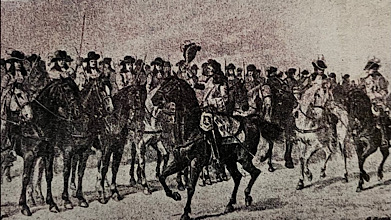
A Jacobite army of about 3,000 men, led by Justin McCarthy, Viscount Mountcashel (in the Jacobite peerage), advance on them from Dublin. Lord Mountcashel’s men consist of three regiments of infantry and two of dragoons. The regiments include his own regiment, Mountcashel (approx. 650 men in 13 companies), The O’Brien regiment (also 13 companies of 650 men), and the Lord Bophin (Burke) regiment. He also has the dragoon regiments of Cotter and Clare, each with seven companies of about 350 dragoons. On July 28, 1689, Mountcashel’s force encamps near Enniskillen and bombards the Williamite outpost of Crom Castle to the southeast of Enniskillen. Crom Castle is almost 20 miles (32 km) from Enniskillen by road and about 5 miles (8.0 km) from Newtownbutler.

Two days later, they are confronted by about 2,000 Williamite ‘Inniskilliniers’ under Colonel Berry, Colonel William Wolseley and Gustave Hamilton. The Jacobite dragoons under Antoine Hamilton stumble into an ambush laid by Berry’s men near Lisnaskea and are routed, taking 230 casualties. Mountcashel manages to drive off Berry’s cavalry with his main force but is then faced with the bulk of the Williamite strength under Wolseley. There is some debate in the sources over troop numbers, though it is believed that Mountcashel has a large number of poorly armed conscripts. Unwisely, Mountcashel halts and draws up his men for battle about a mile south of Newtownbutler.

Williamite histories claim that many of the Jacobite troops flee as the first shots are fired. Up to 1,500 of them are hacked down or drowned in Upper Lough Erne when pursued by the Williamite cavalry. Of the 500 men who try to swim across the Lough, only one survives. Approximately 400 Jacobite officers, along with Lord Mountcashel, the Jacobite commander, are captured and later exchanged for Williamite prisoners, with the other Jacobites being killed. These claims seem unlikely, for several reasons. Each Irish regiment includes approximately 40 officers. The entire force, therefore, would include only about 200 officers. Many of these officers are accounted for in an October 1689 roll call, which shows approximately a 15–20% change in the officer roll call since July for the infantry regiments and 5% for the dragoons. This totals some 20–30 officers in all. Also, the Mountcashel regiment’s roll call for October shows that companies which would normally have 50–60 men, have around 25, which results in a loss of approximately 300–400 men for this regiment. The Cotter and Clare dragoons who ride away from the battle do not have significant losses, based on the October 1689 roll call. Assuming the other two infantry regiments suffer similar losses, gives a total loss of 1,200–1,300. Given their officers are recorded in the October roll and show fewer losses than the Mountcashel regiment among officers, there may be fewer losses in the ranks as well. The Williamite histories acknowledge that they captured approximately 400, including men who are later sent to Derry, which would indicate a total loss of killed, wounded, and missing of 800–900, and likely less. This number is necessarily an estimate based on the available data but should be contrasted with Williamite claims that they killed and drowned 2,000. It appears likely that a couple of hundred men from Mountcashel’s regiment may have fled into the bogs toward Lough Erne, and some of them who made it to the river tried to swim and were drowned, leading to the story of the hundreds drowned.

Lord Mountcashel is wounded by a bullet and narrowly avoids being killed. He later escapes from Enniskillen and returns to lead the Irish Brigade in the French Royal Army. The Jacobite colonel, Sir Thomas Newcomen, 5th Baronet, is killed.

The Williamite victory at Newtownbutler ensures that a landing by Frederick Schomberg, 1st Duke of Schomberg, in County Down in August 1689 is unopposed.

The battle is still commemorated by the Orange Order in Ulster and is mentioned in the traditional unionist song, “The Sash.”

The battle is significant in another way: the regiments on both sides go on to have long and famous histories. On the Williamite side, the Innsikilling Regiment (27th Foot), and on the Jacobite side, the Clare and Mountcashel/Lee/Bulkeley regiments of the Irish Brigade. The two Irish regiments face off again at the Battle of Fontenoy in 1745, where the Irish Brigade famously drives the British army from the battlefield with a charge in the final stage of the battle.


Leave a comment

Birth of Lord Henry FitzGerald, Diplomat & Soldier

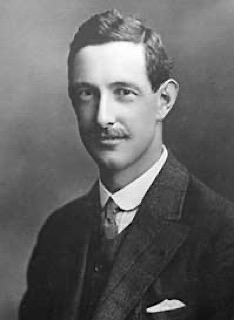
Lord Henry FitzGeraldPC (Ire), diplomat, soldier, and younger brother of revolutionary Lord Edward FitzGerald, is born on July 30, 1761. He is the fourth son among nine sons and ten daughters of James FitzGerald, 1st Duke of Leinster, and Emily FitzGerald, Duchess of Leinster (née Lady Emily Lennox).

FitzGerald joins the British Army and becomes a lieutenant in the 66th (Berkshire) Regiment of Foot in 1788, transferring as a captain in 1779 to the newly raised 85th Regiment of Foot (Westminster Volunteers), which is posted to garrison duty in Jamaica for the duration of the American Revolutionary War. He is there promoted to major in 1781 and lieutenant colonel in 1783, taking over command of the regiment from General Charles Stanhope, 3rd Earl of Harrington. After the 85th is disbanded in 1783 he becomes a captain and lieutenant colonel in the 2nd Foot Guards in 1789 and retires from active service in 1792.

FitzGerald is a Member of Parliament (MP) for Kildare Borough between 1783 and 1790 and represents Athy between 1790 and 1791. From 1790 to 1798, he sits in the Irish House of Commons for Dublin City. On July 8, 1806, he is appointed to the Privy Council of Ireland, and from 1807 until 1814, he serves in the Parliament of the United Kingdom for Kildare. He also holds the position of one of the joint Postmasters General of Ireland from April 1806 until May 1807.

FitzGerald is a member of the Kildare Street Club in Dublin. He dies at Boyle FarmThames Ditton, Surrey, England, on July 9, 1829. He is buried at St. Mary’s Paddington Green Churchyard, PaddingtonCity of WestminsterGreater London, England

FitzGerald marries Charlotte Boyle Walsingham in London on August 3, 1791. Together they live at Boyle Farm, Thames Ditton. In 1806, his wife succeeds to the Baron de Ros, the premier baron in the Peerage of England, as 20th Baroness de Ros. The family then takes the surname FitzGerald-de Ros. The couple has 13 children in 21 years, of which nine survive to adulthood.


Leave a comment

The Bachelor’s Walk Massacre

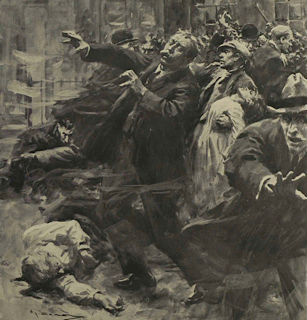
The Bachelor’s Walk massacre occurs in Dublin on July 26, 1914, when a column of troops of the King’s Own Scottish Borderers is accosted by a crowd on Bachelor’s Walk following the Howth gun-running operation. After some verbal baiting, the troops attack “hostile but unarmed” protesters with rifle fire and bayonets, resulting in the deaths of four civilians and injuries to in excess of 30 more. The four killed are Mary Duffy (50), Patrick Quinn (50), James Brennan (18) and Sylvester Pidgeon (40) who succumbs to his wounds on September 24. One of those shot is Luke Kelly, the father of folk singer Luke Kelly.

The events follow the landing of 1,500 rifles and ammunition, purchased for the Irish Volunteers in Hamburg, Germany, in May 1914. In a counter operation to the Unionists running guns into UlsterErskine Childers lands the cargo in Howth, County Dublin, and a thousand rifle-carrying Irish Volunteers marched into Dublin. The quantity is negligible when compared to the far greater numbers of weapons landed and distributed by the Ulster Volunteers, completely without hindrance, but the reaction this time is severe from the British ruling authorities.

The incident proves a moment of political opportunity for Irish nationalists as it sharply brings out the different treatment for the Unionists and for unarmed Dublin civilians. Patrick Pearse declares, “The army is an object of odium, and the Volunteers are the heroes of the hour. The whole movement, the whole country, has been re-baptised by bloodshed for Ireland.”


Leave a comment

Beginning of the Battle of Kilmallock

The Battle of Kilmallock begins on July 25, 1922, in County Limerick, ending on August 5. It is one of the largest engagements of the Irish Civil War.

The battle consists of ten days of fighting in the countryside around Kilmallock in County Limerick, in which the National Army of the Irish Free State, advancing south from Limerick city, find their path blocked by anti-Treaty IRA troops, dug into a number of villages at BruffBruree and Patrickswell. The fighting end with the retreat of the anti-Treaty fighters and the occupation of Kilmallock by Free State forces.

The prelude to the battle is the fall of Limerick city to Free State forces. The Republican forces in the city under Liam Deasy withdraw from their positions after a week of fighting and concentrate in Kilmallock and the nearby towns of Bruff and Bruree. The Free State forces, advancing south from the city, find their path blocked by the Republicans dug in at the three hilltop towns.

The National Army’s attempt to break through this position produces the only “line battle” of the war with the two sides facing each other along clear front-lines. The Kilmallock-Bruff-Bruree triangle sees some of the war’s most intense fighting.

Whereas in the fighting in Dublin, Limerick and Waterford, Free State troops equipped with artillery overcome Anti-Treaty resistance relatively easily, at Kilmallock they have a much harder time. The main reason for this is that the Free State troops, most of whom are new recruits, are facing some of the best of the IRA forces without an advantage in numbers or firepower. General Eoin O’Duffy complains of shortage of arms and ammunition. He estimates that while his forces have about 1,300 rifles, the Republicans could muster over 2,000. He is also critical of the quality of the troops at his disposal, whom he describes as, “a disgruntled, undisciplined and cowardly crowd.”

The Republicans know this and are confident of success. Nevertheless, the Republican commanders have their own issues with logistical support and lack of co-operation between forces from different counties. Deasy’s command includes Volunteers from counties Limerick itself, Cork and Kerry, all of whom have their own commanders. They have three improvised armoured cars, some mortars and heavy machine guns but no artillery.

O’Duffy draws up plans for the advance on Kilmallock with the assistance of his second-in-command Major General W. R. E. Murphy who had been a lieutenant colonel in World War I. His experience in the trenches has a major effect on his approach – pre-disposing him to cautious advances and use of trenches for cover.

The Republican forces have the better of the first clashes. On Sunday, July 23, Free State forces take Bruff and begin their advance on Kilmallock, but are twice beaten back by determined Republican resistance. The following day, the Republicans manage to retake Bruff in a counter-attack, taking 76 prisoners. As a result of this setback, O’Duffy calls off the advance for the time being and waits for reinforcements.

National Army forces quickly retake Bruff after reinforcements arrive. However, things get worse for the National Army as the week goes on. They make slow progress in taking the Republican strongpoints, and their casualties also mount. On Tuesday, July 25, a unit of the Dublin Guard under Tom Flood is ambushed on a narrow road. They fight their way clear, but only after losing four men. Three more Free State soldiers are killed two days later. On July 30, Major General Murphy launches an attack to take Bruree. The Dublin Guards attack the town from the southeast, supported by armoured cars and an 18-pound field gun. The Republicans hold out for five hours until Free State artillery is brought into action. At least 13 Free State soldiers and nine Anti-Treaty fighters are killed in the action and more are wounded before the Free State troops secure Bruree.

The Republican commander, Deasy, knows how important Bruree is to the defence of Kilmallock and draws up plans to recapture the town using three armoured cars, trench mortars and machine guns. On August 2, Republicans capture Patrickswell south of Limerick. The armoured cars then attack Bruree, taking Free State forces by surprise. One car attacks Commandant Flood’s headquarters at the Railway Hotel. The Commandant and his men manage to escape out the back of the building under the cover of Lewis gun fire. The second armoured car rams the front door of another post in the school house, which persuades the twenty-five troops inside to surrender.

However, when Free State reinforcements, along with armoured cars arrive, the Republican counter-attack stalls. The Free State reinforcements are led by Commandant General Seamus Hogan, who personally leads his forces, riding in the armoured car nicknamed “The Customs House.” Having failed to secure the surrender of the town, Republican forces retreat.

Having held Bruree against a Republican counterattack, Free State forces prepare to capture Kilmallock itself, but anticipate there will be heavy fighting. Republican Adjutant General Con Moloney comments on August 2, “Up to yesterday we have had the best of the operations there [the Kilmallock area]. There will, I fear, be a big change there now as the enemy have been reinforced very considerably.” In the 3rd Western Division area they have all but disbanded, unwilling to fight Free Staters, destroy roads, and now discouraged by the Catholic church.

On Thursday, August 3, a force of 2,000 Free State troops, backed up by armoured cars and artillery, advance on Kilmallock from Bruree, Dromin and Bulgaden. Seven hundred troops arrive the next day with an armoured car and a field gun. By Saturday, the town is surrounded by Free State forces. The Dublin Guard are also on hand to prevent Republican forces from escaping. Three miles away, Free State artillery is deployed and shells Republican forces on Kilmallock Hill and Quarry Hill. The two hills are soon controlled by Free State forces.

The National Army has, therefore, assembled sufficient force to smother resistance at Kilmallock. They are still, however, expecting hard fighting before they take the town. To their surprise, when the Free State troops enter the town, they encounter only light resistance from a Republican rearguard (volunteers from Cork). Most of the Republican troops have already abandoned their positions and retreated to Charleville.

They departed not because the Free State troops are stronger, but because they have been outflanked by Free State seaborne landings on the coasts of County Kerry and County Cork on August 2 and 8 respectively. The landings in Cork and Kerry force Commandant General Deasy to release units from this area to return home to their own areas. Although the landings in Cork occur after the retreat from Kilmallock, the subsequent loss of brigades from Cork adds to Commandant General Deasy’s problems. The final phase of the fighting in County Limerick comes when the Free State advance south is held up at Newcastle West. Another day of heavy fighting ensues in which the National Army troops have to bring up armoured cars and artillery to dislodge the Republicans, who reportedly lose up to 12 men before they retreat in the direction of Cork.

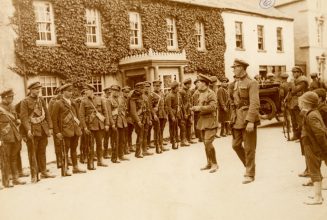
(Pictured: National Army troops lined up for a roll call during the Irish Civil War with local children casting an eye over the proceedings)