seamus dubhghaill

Promoting Irish Culture and History from Little Rock, Arkansas, USA


Leave a comment

Birth of Gordon Elliott, Racehorse Trainer

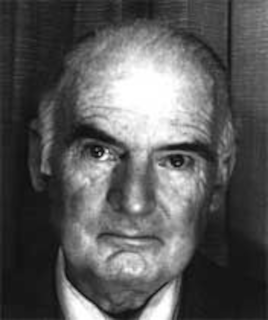
Gordon Elliott, a County Meath-based National Hunt racehorse trainer, is born on March 2, 1978. After riding as an amateur jockey, he takes out a trainer’s licence in 2006. He is 29 when his first Grand National entry, the 33 to 1 outsider Silver Birch, wins the 2007 race. In 2018 and 2019 he wins the Grand National with Tiger Roll, ridden by Davy Russell and owned by Gigginstown House Stud, the first horse since Red Rum to win the race twice. In 2018 he also wins the Irish Grand National, with General Principle. On two occasions, in 2017 and 2018, he is the top trainer at the Cheltenham Festival.

With little family background in racing, Elliott is sometimes described as Irish racing’s great “blow-in.” The son of a panel beater, he grows up in Summerhill, County Meath, and enters the racing world at the age of thirteen, working for trainer Tony Martin on weekends and holidays. He takes out a licence as an amateur jockey when he is sixteen and rides on the racecourse and in point-to-points. His first winner on the racecourse comes on Caitriona’s Choice in a bumper at Ballinrobe Racecourse. He goes on to ride a total of 200 point-to-point winners and 46 winners on the racecourse, with the highlight of his riding career being his win in the Champion INH Flat Race on the Nigel Twiston-Davies-trained King’s Road in 1998. He also has five winners in the United States. Although based mainly with Tony Martin during his riding career, he spends a year in England with trainer Martin Pipe. He retires as a jockey through injury in 2005.

Elliott takes out his trainer’s licence in 2006 and has his first winner at Perth Racecourse on June 11, 2006. On April 14, 2007, he becomes the youngest trainer ever to win the Grand National. The winner, Silver Birch, is owned by Brian Walsh of County Kildare, and ridden by Robbie Power. Despite having won the Grand National, Elliott has not at this stage trained a winner on the track back home in Ireland. The first winner he trains in Ireland is Toran Road at Kilbeggan Racecourse on May 5, 2007.

Although best known for his victories over jumps, Elliott has a major win on the flat in August 2010 when Dirar wins the Ebor Handicap at York Racecourse. He also has victories at Royal Ascot, with Commissioned winning the Queen Alexandra Stakes in 2016 and Pallasator winning the same race in 2018.

Originally based at Capranny Stables, a rented yard in Trim, County Meath, Elliott purchases the 78-acre Cullentra House Farm at Longwood, County Meath in 2011 and builds a training facility with stabling for over 200 horses, gallops, schooling grounds, and an equine pool.

Elliott’s first winner at the Cheltenham Festival as a trainer is Chicago Grey in the National Hunt Chase Challenge Cup in 2011. He wins the 2016 Cheltenham Gold Cup with Don Cossack. In 2017 he is top trainer at the Cheltenham Festival and the following year repeats the achievement.

On April 2, 2018, Elliott wins the Irish Grand National with General Principle, ridden by JJ Slevin. He has saddled 13 of the 30 horses in the field. That year he also wins the Aintree Grand National with his horse Tiger Roll, ridden by Davy Russell and owned by Michael O’Leary’s Gigginstown House Stud, narrowly beating the Willie Mullins runner Pleasant Company. He also trains the third place horse Bless The Wings. He wins the Aintree Grand National again in 2019 with Tiger Roll, only the sixth repeat winner in the race’s history.

On February 28, 2021, the Irish Horseracing Regulatory Board (IHRB) launches an investigation into an image of Elliott, which is widely circulated on social media, sitting on a dead horse and making a peace sign. Elliott confirms the photograph is genuine, issues an apology and says he is fully cooperating with the investigation. The animal rights organisation People for the Ethical Treatment of Animals (PETA) and the British Horseracing Authority condemn the photograph. On March 1, the British Horseracing Authority announces that Elliott will be banned from racing horses in Britain while the investigation in Ireland takes place, although the horses will be allowed to run if transferred to another trainer. It is confirmed that the photo was taken in 2019 and shows a horse owned by Gigginstown House Stud, Morgan, that had died while being ridden on the gallops.

Minister of State for Sport Jack Chambers says that Elliott must be “held fully accountable for his actions” and that the photograph shows “a complete and profound error of judgement.” He tells Morning Ireland that he is “shocked, appalled and horrified” by the image and that it is “really disturbing from an animal welfare perspective.”

On March 2, Cheveley Park Stud announces that they will move their horses Envoi Allen and Quilixios to Henry de Bromhead and Sir Gerhard to Willie Mullins. Elliott’s leading owners, Michael and Eddie O’Leary, through their Gigginstown House Stud, express their support for him despite being “deeply disappointed by the unacceptable photo.”

On March 5, 2021, the IHRB convenes a hearing and bans Elliott from racing for twelve months with six months suspended, leaving him unable to train or attend a race meeting or point-to-point until September. He is also ordered to pay costs of €15,000. He accepts the ruling. Later that month the stable employee who took the photograph is banned for nine months (with seven suspended).

In July 2021, Elliott is featured in a BBC Panorama programme that investigates the fate of British and Irish racehorses who end up in abattoirs. Three of the horses were formerly trained by Elliott, who denies having sent them to the abattoir. He says two of the horses were sent to a horse dealer to be re-homed or humanely euthanised, while the third was given to someone else at the owner’s request. The former horses were bay mare Kiss me Kayf, who had had no success on the racecourse, and bay gelding High Expectations, who had won seven races. The latter horse, owned by Simon Munir and Isaac Souede, was grey gelding Vyta Du Roc, who won the 2016 Reynoldstown Novices’ Chase. Following the programme, Munir and Souede remove their horses from Elliott’s yard.

In 2007, Elliott wins the inaugural Meath Sportsperson of the Year award. He wins the award again in 2018 and 2019.

Elliott is engaged to champion point-to-point rider Annie Bowles, with whom he sets up Cullentra House Stables. The couple separates and Bowles marries Ballarat trainer Archie Alexander.[28]


Leave a comment

Birth of Whitley Stokes, Irish Lawyer & Celtic Scholar

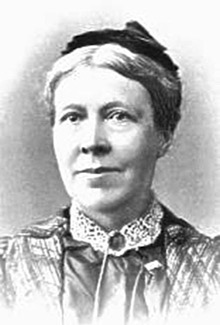
Whitley StokesCSICIEFBA, Irish lawyer and Celtic scholar, is born at 5 Merrion Square, Dublin, on February 28, 1830.

Stokes is a son of William Stokes (1804–78), and a grandson of Whitley Stokes, a physician and anti-Malthusian (1763–1845), each of whom is Regius Professor of Physic at Trinity College Dublin (TCD). His sister, Margaret Stokes, is a writer and archaeologist.

Stokes is educated at St. Columba’s College where he is taught the Irish language by Denis Coffey, author of Primer of the Irish Language. Through his father he comes to know the Irish antiquaries Samuel FergusonEugene O’CurryJohn O’Donovan and George Petrie. He enters Trinity College Dublin in 1846 and graduates with a BA in 1851. His friend and contemporary Rudolf Thomas Siegfried (1830–63) becomes assistant librarian at TCD in 1855, and the college’s first professor of Sanskrit in 1858. Stokes likely learns both Sanskrit and comparative philology from Siegfried, thus acquiring a skill-set rare among Celtic scholars in Ireland at the time.

Stokes qualifies for the bar at Inner Temple. His instructors in the law are Arthur CayleyHugh McCalmont Cairns, and Thomas Chitty. He becomes an English barrister on November 17, 1855, practicing in London before going to India in 1862, where he fills several official positions. In 1865 he marries Mary Bazely by whom he has four sons and two daughters. One of his daughters, Maïve, compiles a book of Indian Fairy Tales in 1879 when she is 12 years old, based on stories told to her by her Indian ayahs and a man-servant. It also includes some notes by Mrs. Mary Stokes. Mary dies while the family is still living in India. In 1877, Stokes is appointed legal member of the viceroy’s council, and he drafts the codes of civil and criminal procedure and does much other valuable work of the same nature. In 1879 he becomes president of the commission on Indian law. Nine books he writes on Celtic studies are published in India. He returns to settle permanently in London in 1881 and marries Elizabeth Temple in 1884. In 1887 he is made a Companion of the Order of the Star of India (CSI), and two years later an Order of the Indian Empire (CIE). He is an original fellow of the British Academy, an honorary fellow of Jesus College, Oxford and foreign associate of the Institut de France.

Stokes is perhaps most famous as a Celtic scholar, and in this field he works both in India and in England. He studies Irish, Breton and Cornish texts. His chief interest in Irish is as a source of material for comparative philology. Despite his learning in Old Irish and Middle Irish, he never acquires Irish pronunciation and never masters Modern Irish. In the hundred years since his death he continues to be a central figure in Celtic scholarship. Many of his editions have not been superseded during this time and his total output in Celtic studies comes to over 15,000 pages. He is a correspondent and close friend of Kuno Meyer from 1881 onwards. With Meyer he establishes the journal Archiv für celtische Lexicographie and is the co-editor, with Ernst Windisch, of the Irische Texteseries. In 1876 his translation of Vita tripartita Sancti Patricii, along with a written introduction, is published.

In 1862 Stokes is awarded the Cunningham Medal by the Royal Irish Academy.

Stokes dies at his London home, 15 Grenville Place, Kensington, on April 13, 1909, and is buried in Paddington Old Cemetery, Willesden Lane, where his grave is marked by a Celtic cross. Another Celtic cross is erected as a memorial to him at St. Fintan’s Cemetery, Sutton, Dublin. The Gaelic League newspaper An Claidheamh Soluis calls him “the greatest of the Celtologists” and expresses pride that an Irishman has excelled in a field which is at that time dominated by continental scholars. In 1929 the Canadian scholar James F. Kenney describes him as “the greatest scholar in philology that Ireland has produced, and the only one that may be ranked with the most famous of continental savants.”

A conference entitled “Ireland, India, London: The Tripartite Life of Whitley Stokes” takes place at the University of Cambridge on September 18-19, 2009. The event is organised to mark the centenary of Stokes’s death. A volume of essays based on the papers delivered at this conference, The Tripartite Life of Whitley Stokes (1830–1909), is published by Four Courts Press in autumn 2011.

In 2010 Dáibhí Ó Cróinín publishes Whitley Stokes (1830–1909): The Lost Celtic Notebooks Rediscovered, a volume based on the scholarship in Stokes’s 150 notebooks which had been resting unnoticed at the Leipzig University LibraryLeipzig since 1919.


Leave a comment

Birmingham Six on Verge of Freedom

After 17 years in prison, the Birmingham Six could be freed within weeks. An announcement on February 25, 1991, by the Director of Public Prosecutions, Alan Green, says the convictions of the Birmingham Six can no longer be considered safe and satisfactory. Hugh Callaghan, Paddy Joe Hill, Gerry Hunter, Richard McIlkenny, Billy Power, and Johnny Walker, all from Northern Ireland, were all jailed in 1975 for an Irish Republican Army (IRA) attack on two pubs in Birmingham, England, in November 1974 in which 21 people died. The Birmingham Six have consistently maintained their innocence. 

Speaking during a live radio broadcast by Irish broadcaster RTÉ, one of the six, Hugh Callaghan, speaks about his ordeal. “It should have happened a long time ago. It has been known for years and years that we were innocent,” he says. 

The February 25 preliminary hearing is told both scientific and police evidence presented at the original trial can no longer be relied upon and that therefore the Crown‘s case against the men has collapsed. 

Their third appeal is to be heard at the Court of Appeal on Monday, March 4, 1991. New evidence collected in the prior year is to be presented to the court, which will make the final decision on whether or not to release the men.

Friends, family and supporters are overjoyed by the news. The Irish government issues a statement saying it shares their relief and joy.

Gareth Peirce, the solicitor for five of the men, says the case is “a national disgrace” and calls for the evidence to be made public.

Patsy Power, William Power’s wife, says, “It’s over and done but the system has to be altered so nothing like this happens again.”

Former Master of the Rolls Tom Denning, Baron Denning, who rejected the men’s appeal in 1980, says he is saddened by the case. “As I look back I am very sorry, because I always thought that our police were splendid and am very sorry that in this case it appears the contrary,” he says.

The Birmingham Six are released amid scenes of wild jubilation on March 14, 1991, after their convictions are quashed by the Court of Appeal. Their case – and that of the Guildford Four freed in 1989 – lead to the creation of a Royal Commission on Criminal Justice which makes various recommendations in 1993.

The six men struggle to cope with freedom following their release. Several turn to drink and most of their marriages suffer as a result. 

Their fight for what they consider adequate compensation for one of Britain’s most notorious miscarriages of justice continues. Patrick Hill sets up his own pressure groupMiscarriages of Justice Organisation – and in 2002 says there are up to 4,000 people wrongfully imprisoned in the United Kingdom.

In February 1999, Gareth Peirce, the lawyer for five of the six, hands back an Order of the British Empire (CBE) awarded to her at the New Year Honours list.

The real Birmingham pub bombers have not been prosecuted.

(From: “1991: Birmingham Six on verge of freedom,” BBC ON THIS DAY, http://www.news.bbc.co.uk)


Leave a comment

Birth of John “Johnny” Carey, Professional Footballer

John Joseph “Johnny” Carey, professional footballer, manager and one of Manchester United F.C.’s great captains, is born in Dublin on February 23, 1919.

As a schoolboy, Carey plays football for Home Farm F.C. As a youth, he also plays Gaelic football and is selected to represent Dublin GAA at minor level before he signs for St. James’s Gate F.C. at the start of the 1936–1937 season.

After just two months of League of Ireland football, he is spotted by Billy Behan, a Dublin-based Manchester United scout. In November 1936, United signs him for a then League of Ireland record fee of £250. He makes his debut as an inside left for United on September 23, 1937, against Southampton F.C. During his first season with United, Carey, together with Harry BairdJack RowleyTommy BamfordTommy Breen and Stan Pearson, help United gain promotion to the First Division.

As a player Carey spends most of his career with Manchester United, where he is team captain from 1946 until he retires as a player in 1953. He also plays as a guest for several other clubs including Cardiff City F.C.Manchester City F.C.Everton F.C.Liverpool F.C. and Middlesbrough F.C.

Carey is also a dual internationalist, playing for and captaining both Ireland teams – the FAI XI and the IFA XI. In 1947 he also captains a Europe XI which plays a Great Britain XI at Hampden Park. In 1949 he is voted the Football Writers’ Association Footballer of the Year and in the same year captains the FAI XI that defeats England 2–0 at Goodison Park, becoming the first non-UK team to beat England at home.

Carey is also the first non-UK player and the first Irishman to captain a winning team in both an FA Cup Final and the First Division. Like his contemporary Con Martin, he is an extremely versatile footballer and plays in nine different positions throughout his career. He even plays in goal for United on one occasion.

One of Carey’s earliest experiences as a coach comes when he is still an active player. He takes charge of the Republic of Ireland national team at the 1948 Summer Olympics in London. Ireland loses 3–1 to the Netherlands in the opening round in a game played at Fratton Park. He retires as a player in 1953 and almost immediately accepts the position as manager of Blackburn Rovers. In 1958 he guides the Rovers into First Division. He then becomes manager at Everton but, despite leading them to fifth place in the 1960–61 season, their highest post-war position, he is sacked in the back of a taxi by director John Moores. As a result, the jibe, “Taxi for …!” has become a staple insult offered to any manager facing the threat of the sack. He next manages Leyton Orient and takes them into the First Division in 1962, their only season in the top division. However his greatest success as a manager comes with Nottingham Forest. In 1967, he guides them to the FA Cup semi-finals and to second place in the First Division behind his former club Manchester United. Between 1955 and 1967 Carey also serves as team manager of the Republic of Ireland national team. However he has very little power as the team itself is chosen by a selection committee. In October 1970, he returns to the manager’s role at Blackburn, after a spell as administrative manager. He is sacked on June 7, 1971.

By this time Carey has had enough of football management, and takes up a job in the treasurer’s office of Trafford Borough Council until his retirement in 1984. He continues to visit Old Trafford regularly, and during the 1970s acts as a scout for Manchester United.

Carey dies at Macclesfield District General Hospital in MacclesfieldCheshireEngland, on August 22, 1995. He is survived by his wife Margaret.


Leave a comment

Death of Evelyn Gleeson, Designer & Co-founder of Dun Emer Press

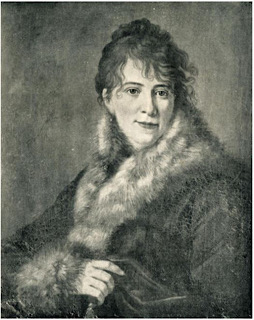
Evelyn Gleeson, English embroiderycarpet, and tapestry designer, dies at the age of 89 at Dun Emer, Dundrum, Dublin, on February 20, 1944. Along with Elizabeth and Lily Yeats, she establishes the Dun Emer Press.

Gleeson is born on May 15, 1855, in KnutsfordCheshireEngland, the daughter of Irish-born Edward Moloney Gleeson, a medical doctor, and Harriet (née Simpson), from BoltonLancashire. Her father has a practice in Knutsford but on a trip to Ireland he is struck by the poverty and unemployment and, with the advice of his brother-in-law, a textile manufacturer in Lancashire, he founds the Athlone Woollen Mills in 1859, investing all his money in the project. The family moves to Athlone in 1863, but Gleeson is educated in England, where she trains as a teacher. She later studies portraiture in London at the Atelier Ludovici from 1890–92. She goes on to study design with Alexander Millar, a follower of William Morris, who believes she has an exceptional aptitude for colour-blending. Many of her designs are bought by the exclusive Templeton Carpets of Glasgow.

Gleeson takes a keen interest in Irish affairs and, as a member of the Gaelic League and the Irish Literary Society, mixes with the Yeats family and the Irish artistic circle in London and is inspired by the Gaelic revival in art and literature. She is also involved in the suffrage movement and is chairwoman of the Pioneer Club, a women’s club in London. In 1900, an opportunity arises to make a practical contribution to the Irish renaissance and the emancipation of Irish women. She is suffering from ill-health, but her friend Augustine Henrybotanist and linguist, suggests she move away from the London smog to Ireland and open a craft centre with his financial assistance. She seizes the opportunity and discusses her plans with her friends the Yeats sisters, Elizabeth and Lily, who are talented craftswomen and have direct contact with William Morris and his followers. They have no money to contribute to the venture but are enthusiastic and can offer their skills and provide contacts. She seeks advice from W. B. and Jack Yeats, from Henry, who loans her £500, and from her cousin, T. P. Gill, secretary of the Department of Agriculture and Technical Instruction.

During the summer of 1902 Gleeson finds a suitable house in Dundrum, County Dublin, ten minutes from the railway station. The house, originally called Runnymede, is renamed Dun Emer, after the wife of Cú-Chulainn, renowned for her craft skills. The printing press arrives in November 1902, and soon three craft industries are in operation. Lily Yeats runs the embroidery section, since she had trained with Morris’s daughter May. Elizabeth Yeats operates the press, having learned printing at the Women’s Printing Society in London. Gleeson manages the weaving and tapestry and looks after the financial affairs of the industries. W. B. Yeats acts as literary adviser, an arrangement that often causes friction, and Gleeson’s sister, Constance McCormack, is also involved.

Local girls are employed and trained, and the industries seek to use the best of Irish materials to make beautiful, high-quality, lasting products of original design. Church patronage accounts for most of their orders and, in 1902–03, Loughrea cathedral commissions twenty-four embroidered banners portraying Irish saints. They also make vestments, traditional dresses, drapes, cushions and other items, all beautifully crafted and mostly employing Celtic design. The first book published is In the Seven Woods (1903), by W. B. Yeats, cased in full Irish linen.

Gleeson is in demand as an adjudicator in craft competitions around the country and at Feis na nGleann in 1904 she praises the workmanship of the entries but is critical of the lack of teaching in design. She gives lectures and tries to raise the status of craftwork from household occupation to competitive industry. There are tensions with the Yeats sisters, who complain that she is bad-tempered and arrogant. In truth she had taken on too much of a financial burden, even with the support of grants, and she is anxious to repay her debt to Augustine Henry, which he is prepared to forego. The sisters snub her and omit her name in an interview about Dun Emer in the magazine House Beautiful. Millar, her design teacher in London, likens the omission to Hamlet without the prince. In 1904, it is decided to split the industries on a cooperative basis: Dun Emer Guild Ltd. under Gleeson and Dun Emer Industries Ltd. under the Yeats sisters.

Work continues, and the guild and industries exhibit separately at the Royal Dublin Society (RDS) and other craft competitions. In 1907, the National Museum of Ireland commissions a copy of a Flemish tapestry. It takes far longer than anticipated to complete, but the result is beautiful and is exhibited at the Arts and Crafts Society of Ireland in 1910. The guild wins a silver medal at the Milan International exhibition in 1906. The guild and industries both show work at the New York exhibition of 1908. The guild alone shows work in Boston. By now cooperation has turned to rivalry, and there is a final split as the Yeats sisters leave, taking the printing press with them to their house in Churchtown, Dublin. Gleeson writes off a debt of £185 owed to her, on condition that they do not use the name Dun Emer.

The business thrives at Dundrum, with her niece Katherine (Kitty) MacCormack and Augustine Henry’s niece, May Kerley, assisting with design. Later they move the workshops to Hardwicke Street, Dublin. In 1909, Gleeson becomes one of the first members of the Guild of Irish Art Workers and is made master in 1917. The Irish Women Workers’ Union commissions a banner from her about 1919, and, among numerous other notable successes, a Dun Emer carpet is presented to Pope Pius XI in 1932, the year of the Eucharistic Congress of Dublin.

Gleeson dies at the age of 89 at Dun Emer, Dundrum, Dublin, on February 20, 1944, with Kitty carrying on the Guild after her death. The final home of Dun Emer is a shop on Harcourt Street, Dublin, which finally closes in 1964.

(From: “Gleeson, Evelyn” by Ruth Devine, Dictionary of Irish Biography, http://www.dib.ie, October 2009)


Leave a comment

Irish Brigade of France Participates in the Capture of Saint Kitts

On February 13, 1782, the Irish Brigade of France plays a significant role in the capture of Saint Kitts during the American Revolutionary War. The brigade, commanded by Arthur Dillon, is part of the French forces that besiege the British stronghold of Brimstone Hill. The siege lasts for 31 days, and after a fierce battle, the British forces surrender.

The Battle of Saint Kitts, also known as the Battle of Frigate Bay, is a naval battle fought on January 25 and 26, 1782, during the American Revolutionary War between a British fleet under Rear Admiral Sir Samuel Hood and a larger French fleet under François Joseph Paul de Grasse.

When Hood returns to the West Indies in late 1781 after the Battle of the Chesapeake, he is for a time in independent command owing to Admiral George Rodney‘s absence in England. The French admiral, François Joseph Paul de Grasse, attacks the British islands of Saint Kitts and Nevis with 7,000 troops and 50 warships, including the 110-gun Ville de Paris. He starts by besieging the British fortress on Brimstone Hill on January 11, 1782. Hoping to salvage the situation, Hood makes for Saint Kitts by departing Antigua on January 22 with twenty-two ships of the line, compared to de Grasse’s thirty-six.

The British fleet on January 24 consists of twenty-two sail of the line, and is close off the southeast end of Nevis. They run into and capture the French 16-gun cutter Espion, which carries a large amount of ammunition for the besieging French forces at Brimstone Hill.

At daybreak on January 25, the French fleet is discovered having stood to the southward of Basseterre, consisting of a 110-gun ship, 28 two-decked ships, and two frigates. Hood stands toward the French fleet with the apparent intention of bringing on action, and effectively draws the French fleet off the land. As soon as Hood effects this maneuver, he is aided by a favorable change in wind and is able to guide his fleet within the anchorage of Basseterre, which the French admiral has just quit. Hood orders his fleet in an L-formation and then orders his fleet to lay anchor. De Grasse makes three distinct attacks upon the British fleet on January 26 but is repulsed.

The Pluton, commanded by François Hector d’Albert de Rions, leads the French line, “receiving the crashing broadside of ship after ship until the splintered planking flew from her off side and her rigging hung in a tangled mass.” Chauvent goes on to describe the battle as “…a sulphurous hell, with cannon vomiting forth flame and death.” The entire battle lasts from 7:00 a.m. to 6:30 p.m., with the major action in the afternoon.

Damage on both sides is heavy, though the French suffer higher casualties. However, Hood is unable to stop the French and can only observe the land action. After the successful French siege of Brimstone Hill fortress, Saint Kitts and Nevis surrender on February 12. Hood leaves on February 14 and joins forces with the recently arrived Admiral George Rodney.

The capture of Saint Kitts marks a pivotal moment in the war, as it is the last major military action of the Irish Brigade of France. The regiment’s efforts are crucial in the French victory, and their legacy is remembered for their contributions to the fight for liberty.

In 1791, after the French Revolution, the Brigade’s close ties to the monarchy of France causes the leaders of the new Republic to disband the famous unit. Dillon, whose family and regiment sacrifice so much for France during its 100-years service, later dies on the Revolutionary government’s guillotine.

(Pictured: “The Battle of Frigate Bay, 26 January 1782,” oil on canvas painting by Nicholas Pocock, 1784, current location Royal Museums Greenwich)


Leave a comment

Birth of James Chichester-Clark, Prime Minister of Northern Ireland

James Dawson Chichester-Clark, Baron Moyola, the penultimate Prime Minister of Northern Ireland and eighth leader of the Ulster Unionist Party (UUP), is born as James Dawson Clark on February 12, 1923, at Moyola Park, near CastledawsonCounty Londonderry, his family’s ancestral home.

Chichester-Clark is the eldest of three children of James Lenox-Conyngham Clark and Marion Caroline Dehra (née Chichester). His brother is Robin Chichester-Clark and his sister is Penelope Hobhouse, the garden writer and historian.

In 1924, James Clark Snr. changes the family name to Chichester-Clark by deed poll, thus preventing the old Protestant Ascendancy name Chichester, his wife’s maiden name, from dying out. On his mother’s side the family are descended from the Donegall Chichesters and are the heirs of the Dawsons of Castledawson, who had originally held Moyola Park.

Educated, against his own wishes, at Selwyn House, Broadstairs, and then Eton College, Chichester-Clark leaves school and enters adulthood in the midst of World War II. On joining the Irish Guards, the regiment of his grandfather, in Omagh, he begins his year-long training at the Royal Military College, Sandhurst, before receiving his commission as a second lieutenant.

Chichester-Clark marries widow Moyra Haughton (née Morris) in 1959. Lady Moyola’s first husband, Capt. Thomas Haughton from Cullybackey, had been killed in the RAF Nutts Corner air crash in January 1953. She, while pregnant, is seriously injured in the crash and suffers a broken neck.  He and his wife have two daughters (Tara and Fiona), in addition to Moyra’s son Michael from her previous marriage. Lady Moyola is a cousin of Colonel Sir Michael McCorkellLord Lieutenant of County Londonderry (1975–2000). Chichester-Clark serves as his Vice Lord-Lieutenant.

Chichester-Clark is an officer in the 1st Battalion, Irish Guards, part of 24th Infantry Brigade attached to British 1st Infantry Division, and participates briefly in the Anzio landings. He is injured on February 23, 1944, by an 88m shell as he and his Platoon Sergeant take their first look at the ground in the “gullies” to the west of the AnzioAlbano Laziale road. His company is all but wiped out, and he spends most of the war in hospital recovering from injuries, the effects of which stay with him throughout his life.

Following the war, Chichester-Clark’s military career takes him from the dull duties of the post-war occupation of Germany, to Canada as aide-de-camp to Harold Alexander, 1st Earl Alexander of Tunis, then Governor General of Canada. The popularity and competence of his senior officer makes this uneventful two-year period of his life the most remarkable element of his pre-parliamentary career. On returning from Canada, he continues in the Army for several years, refusing promotion to seniority before retiring a major in 1960.

In an uncontested by-election in 1960, Chichester-Clark takes over the South Londonderry seat in the Northern Ireland Parliament that had been held by his grandmother, Dame Dehra Parker, since 1933. As Dehra Chichester, she is an MP for the county of Londonderry until 1929 when she stands down for a first time. Chichester-Clark’s father replaces her in 1929 when the county is split, but he suddenly dies in 1933. Dehra, by then remarried, willingly returns to Northern Ireland from England, and wins the ensuing by-election.

Chichester-Clark retains the seat for the remainder of the Parliament’s existence, and so the South Londonderry area is represented by three generations of the same family for the entire period of the Northern Ireland House of Commons. Between 1929 and the last election in 1969, the family is challenged for the seat on only two occasions, the second being in 1969, when future Westminster MP Bernadette Devlin stands, attracting 39% of the vote.

Chichester-Clark makes his maiden speech on February 8, 1961, during the Queen’s speech debate.

For the remainder of Basil Brooke, 1st Viscount Brookeborough‘s premiership, Chichester-Clark remains on the back benches. It is not until 1963, when Terence O’Neill becomes Prime Minister of Northern Ireland, that he is appointed assistant whip, and a month later when William Craig is promoted to the Ministry of Home Affairs, he takes over as Government Chief Whip. Accounts of the period are that he enjoys the Whip’s office more than any other he is to subsequently hold in politics. This despite including references to anti O’Neill MP and future Democratic Unionist Party (DUP) Westminster MP, John McQuade, and the occasional “good row.” From the outset, O’Neill takes the unusual decision to allow Chichester-Clark to attend and speak at all cabinet meetings while Chief Whip. Proving a competent parliamentary party administrator, O’Neill adds Leader of the House of Commons to Chichester-Clark’s duties in October 1966, a promotion that makes him a full member of the Cabinet. He is also sworn into the Privy Council of Northern Ireland in 1966.

In 1967, O’Neill sacks his Minister of Agriculture, Harry West, for ministerial impropriety, and Chichester-Clark is appointed in his place, a position he retains for two quiet years. On April 23, 1969, he resigns from the Cabinet one day prior to a crucial Parliamentary Party meeting, claiming that he disagrees with the Prime Minister’s decision to grant universal suffrage in local government elections at that time. He states that he disagrees not with the principle of one man one vote but with the timing of the decision, having the previous day expressed doubts over the expediency of the measure in Cabinet. It has since been suggested that his resignation was in order to accelerate O’Neill’s own resignation, and to improve his own position in the jostling to succeed him.

O’Neill “finally walked away” five days later on April 28, 1969. In order to beat his only serious rival, Brian Faulkner, Chichester-Clark needs the backing of O’Neill-ite MPs elected at the 1969 Northern Ireland general election, to which end he attends a tea party in O’Neill’s honour only days after causing his resignation.

Chichester-Clark beats Faulkner in the 1969 Ulster Unionist Party leadership election by one vote on May 1, 1969, with his predecessor using his casting vote in the tied election for his distant cousin because “Faulkner had been stabbing him in the back for a lot longer.” Although Faulkner believes, until his death, that he is the victim of an upper-class conspiracy to deny him the premiership, he becomes a high profile and loyal member of Chichester-Clark’s cabinet.

Chichester-Clark’s premiership is punctuated by civil unrest that erupts after August 1969. He suffers from the effects of the Hunt Report, which recommends the disbandment of the Ulster Special Constabulary, which his Government accepts to the consternation of many Unionists.

In April 1970, Chichester-Clark’s predecessor and another Unionist MP resign their seats in the Northern Ireland House of Commons. The by-election campaigns are punctuated by major liberal speeches by senior government figures like Brian Faulkner, Jack Andrews and the Prime Minister himself. Ian Paisley‘s Protestant Unionist Party (PUP), however, takes both seats in the House of Commons. Later that same month the O’Neill-ite group, the New Ulster Movement, becomes the Alliance Party of Northern Ireland, and his party begins passing votes of no confidence in him.

As the civil unrest grows, the British Government, particularly the Home SecretaryJames Callaghan, becomes increasingly involved in Northern Ireland’s affairs, forcing Chichester-Clark’s hand on many issues. These include the disbanding of the “B” Specials of the Ulster Special Constabulary and, importantly, the handing over of operational control of the security forces to the British Army General Officer Commanding Northern Ireland.

On March 9, 1971, the Provisional Irish Republican Army lures three off-duty soldiers from a pub in Belfast to a lane way outside the city, where they kill them. Chichester-Clark flies to London on March 18, 1971, to request a new security initiative from the new British prime minister Edward Heath, who offers an extra 1,300 troops, and resists what he sees as an attempt by Chichester-Clark to gain political control over them. Chichester-Clark resigns on March 20.

On March 23, 1971, Brian Faulkner is elected UUP leader in a vote by Unionist MP’s, defeating William Craig by twenty-six votes to four. He is appointed prime minister the same day.

On July 20, 1971, Chichester-Clark is created a life peer as Baron Moyola, of Castledawson in the County of Londonderry, his title taken from the name of his family’s estate. He endorses the Good Friday Agreement in the 1998 Northern Ireland Good Friday Agreement referendum. He remains quiet about his political career in his retirement. Lady Moyola, however, says that her husband does enjoy the time – contrary to popular opinion – and that he thinks of life as an MP as akin to that of an army welfare officer.

Chichester Clark dies on May 17, 2002, at the age of 79, following a short illness. His funeral takes place at Christ Church in Castledawson on May 21. He is the last surviving Prime Minister of Northern Ireland.


Leave a comment

Death of Charles Frederick Williams, Writer & Journalist

Charles Frederick Williams, a Scottish-Irish writer, journalist, and war correspondent, dies in Brixton, London, England, on February 9, 1904.

Williams is born on May 4, 1838, in Coleraine, County Londonderry. He claims to be descended on his father’s side from Worcestershire yeomen living in the parishes of Tenbury and Mamble. On his mother’s side he descends from Scottish settlers who planted Ulster in 1610. He is educated at Belfast Academy in Belfast under Dr. Reuben John Bryce and at a Greenwich private school under Dr. Goodwin. Later on, he goes to the southern United States for his health and takes part in a filibustering expedition to Nicaragua, where he sees some hard fighting and reportedly wins the reputation of a blockade runner. He is separated from his party and is lost in the forest for six days. Fevered, he discovers a small boat and manages to return to the nearest British settlement. He serves in the London Irish Rifles and has the rank of sergeant.

Williams returns to England in 1859, where he becomes a volunteer, and a leader writer for the London Evening Herald. In October 1859, he begins a connection with The Standard which lasts until 1884. From 1860 until 1863, he works as a first editor for the London Evening Standard and from 1882 until 1884, as editor of The Evening News.

Williams is best known for being a war correspondent. He is described as an admirable war correspondent, a daring rider as well as writer. For The Standard, he is at the headquarters of the Armée de la Loire, a French army, during the Franco-Prussian War in 1870. He is also one of the first correspondents in Strasbourg, where the French forces are defeated. In the summer and autumn of 1877, he is a correspondent to Ahmed Muhtar Pasha who commands the Turkish forces in Armenia during the Russo-Turkish War of 1877 and 1878. He remains constantly at the Turkish front, and his letters are the only continuous series that reaches England. In 1878, he publishes this series in a revised and extended form as The Armenian Campaign: A Diary of the Campaign on 1877, in Armenia and Koordistan, which is a large accurate record of the war, even though it is pro-Turkish. From Armenia, he follows Muhtar Pasha to European Turkey and describes his defence of the lines of Constantinople against the Imperial Russian Army. He is with General Mikhail Skobelev at the headquarters of the Imperial Russian Army when the Treaty of San Stefano is signed in March 1878. He reports this at the Berlin Congress.

At the end of 1878, Williams is in Afghanistan reporting the war, and in 1879 publishes the Notes on the Operations in Lower Afghanistan, 1878–9, with Special Reference to Transport.

In the autumn of 1884, representing the Central News Agency of London, Williams also joins the Gordon Relief Expedition, a British mission to relieve in Major-General Charles George Gordon in Khartoum, Sudan. His is the first dispatch to tell of the loss of Gordon. While in Sudan, he quarrels with Henry H. S. Pearse of The Daily News, who later unsuccessfully sues him. After leaving The Standard in 1884, he works with the Morning Advertiser, but later works with the Daily Chronicle as a war correspondent. He is the only British correspondent to be with the Bulgarian Army under Prince Alexander Joseph of Battenberg during the Serbo-Bulgarian War in November 1885. In the Greco-Turkish War of 1897, he is attached to the Greek forces in Thessaly. His last war reporting is on Herbert Kitchener‘s Sudanese campaign of 1898. His health does not permit his advance to South Africa, but he is still able to compile a diary of the South African War for The Morning Leader.

In 1887, Williams meets with then General of the United States Army, Philip Sheridan, in Washington, D.C. to update the general on European affairs and the prospects of upcoming conflicts.

Williams once tries to bid as a Conservative Party candidate for the House of Commons representative of Leeds West, a borough in Leeds, West Yorkshire, during the 1885 United Kingdom general election. He fails to win the seat against Liberal Party candidate Herbert Gladstone. He once serves as the Chairman of the London district of the Chartered Institute of Journalists from 1893 to 1894. He founds the London Press Club where he also serves as its President from 1896 to 1897.

Williams is wounded three times in action. He is shot in the leg in Egypt in 1885 during General Buller’s retreat from Gubat to Korti.

Williams is a member of the 1st Surrey Rifles, a volunteer unit of the British Army, a member of the London Irish Volunteers, and is a known marksman.

Williams is said to possess a voice of thunder and expresses with terrific energy. He conducts a lecture tour of the United States where he describes the six campaigns, illustrated by limelight photographs. His audience in Brooklyn, New York, is described by The New York Times as highly delighted by his lecture about the hardships and adventures. His presentation is “a feast for the eyes and ears and was highly appreciated by the large audience assembled.” He later tours England, Scotland, and Ireland speaking about his then seven campaigns.

A friend of explorer Henry Morton Stanley, Williams gives him a compass that has been on a number of his expeditions. Stanley takes it with him to Africa and it is now on display at the Royal Museum for Central Africa in Belgium.

Williams also writes fiction, including his book John Thaddeus Mackay, a tale about religious tolerance and understanding. With the sanction of Commander in Chief, Field Marshal Garnet Wolseley, he edits a book Songs for Soldiers for the March The Camp and the Barracks to improve morale and relieve boredom. Included in the book are a number of songs that he composed. He also writes about ecclesiastical questions, and contributes articles and stories to different periodicals.

Williams is a strong adherent to Wolseley’s military views and policy, and has considerable military knowledge. He also publishes military subjects in several publications such as the United Service Magazine, the National Review, and other periodicals. In 1892, he publishes Life of Sir H. Evelyn Wood, which is controversial as he defends the actions of Wood after the Battle of Majuba Hill in 1881. In 1902, he publishes a pamphlet, entitled Hush Up, in which he protests against the proposed limited official inquiry into the South African War and calls for an investigation.

Early in his career, Williams shares an office with friend and colleague Robert Gascoyne-Cecil, who later becomes Prime Minister of the United Kingdom. They have a standing tradition of always sending out for two beers with payment alternating between each man. Many years later, Williams is in the lobby of the House of Lords and Gascoyne-Cecil approaches him with an outstretched hand and asks, “By the way, Mr. Williams, whose turn is it to stand the beer?”

In 1884, the steamer carrying Williams and colleague Frederic Villiers of The Graphic overturns in the Nile River. Their rescue leads Williams to later commission a unique ivory and gold mitre for the Bishop of London as a thank-offering to God for his safe return from Khartoum.

In Rudyard Kipling‘s play, The Light That Failed, the character of Mr. Nilghai, the war correspondent, is based on Williams.

Williams receives a personal invitation from King Edward VII to attend the funeral of his mother, Queen Victoria.

Both of Williams‘a sons became journalists. Frederick is a noted parliamentary reporter, writer, and historian in Canada. Francis Austin Ward Williams practices journalism in Sydney, Australia.

In the Nile Campaign of 1884-85, application is made to the War Office with the support of the Commander in Chief Lord Wolseley for medals for Willams and correspondent Bennet Burleigh. Williams has been twice requested to take command of some of the men by senior officers on the spot. The Secretary of War is unable to grant the recognition under the rules of the day but writes a letter saying that he regrets that this must be his decision.

Williams is a recipient of the Queen’s Sudan Medal, an award given to British and Egyptian forces which took part in the Sudan campaign between 1896 and 1898.

Field Marshall Garnet Wolseley recognizes the contributions of Williams on the battlefield. He says in a speech that from “Charles Williams, he had at various times received the greatest possible help in the field.”

Williams dies in Brixton, London, on February 9, 1904. He is buried in Nunhead Cemetery in London. His son, journalist Fred Williams, first learns of his father’s death on the wire service he is monitoring at his newspaper in Toronto, Ontario, Canada.

Williams’s funeral is well attended by the press as well as members of the military including Field Marshal Sir Evelyn Wood. Colleague Henry Nevison writes a long reflection on Williams. It includes, “On the field he possessed a kind of instinctive sense of what was going to happen. When I went to big field-days with him he was already an elderly man, and much broken down with the hardships of a war correspondent’s life; but he invariably appeared at the critical place exactly at the right moment, and I once heard the Duke of Connaught, who was commanding, say, ‘When I see Charlie Williams shut up his telescope, I know it’s all over.’ And now he is gone, with his rage, his generosity, his innocent pride, his faithful championship of every friend, and his memories of so many a strange event. His greatest joy was to encourage youth to follow in his steps, and the world is sadder and duller for his going.”


Leave a comment

Death of Terry Wogan, Irish-British Radio & Television Broadcaster

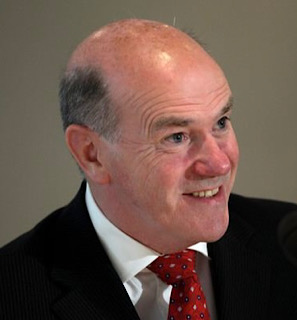
Sir Michael Terence Wogan KBE DLIrish-British radio and television broadcaster who works for the BBC in the United Kingdom (UK) for most of his career, dies on January 31, 2016, at his home in Taplow, Buckinghamshire, England. Between 1993 and his semi-retirement in December 2009, his BBC Radio 2 weekday breakfast programme Wake Up to Wogan regularly draws an estimated eight million listeners. He is believed at the time to be the most listened-to radio broadcaster in Europe.

Wogan, the elder of two children, is born at Cleary’s Nursing Home, Elm Park, LimerickCounty Limerick, on August 3, 1938. He is the son of the manager of Leverett & Frye, a high-class grocery store in Limerick, and is educated at Crescent College, a Jesuit school, from the age of eight. He experiences a strongly religious upbringing, later commenting that he had been brainwashed into believing by the threat of going to hell. Despite this, he often expresses his fondness for the city of his birth, commenting on one occasion that “Limerick never left me, whatever it is, my identity is Limerick.”

At the age of 15, after his father is promoted to general manager, Wogan moves to Dublin with his family. While living there he attends Crescent College’s sister school, Belvedere College. He participates in amateur dramatics and discovers a love of rock and roll. After leaving Belvedere in 1956, he has a brief career in the banking profession, joining the Royal Bank of Ireland. Still in his twenties, he joins the national broadcaster of Ireland, Raidió Teilifís Éireann (RTÉ), as a newsreader and announcer, after seeing a newspaper advertisement inviting applicants.

Wogan conducts interviews and presents documentary features during his first two years at RTÉ, before moving to the light entertainment department as a disc jockey and host of TV quiz and variety shows such as Jackpot, a top-rated quiz show on RTÉ in the 1960s.

Wogan is a leading media personality in Ireland and Britain from the late 1960s, and is often referred to as a “national treasure.” In addition to his weekday radio show, he is known for his work on television, including the BBC One chat show Wogan, presenting Children in Need, the game show Blankety Blank and Come Dancing. He is the BBC’s commentator for the Eurovision Song Contest from 1971 to 2008 (radio in 1971, 1974–1977; television in 1973, 1978, 1980–2008) and the Contest’s host in 1998. From 2010 to 2015 he presents Weekend Wogan, a two-hour Sunday morning show on BBC Radio 2.

In 2005, Wogan acquires British citizenship in addition to his Irish nationality and is awarded a knighthood in the same year and is therefore entitled to use the title “Sir” in front of his name.

Wogan’s health declines after Christmas 2015. He does not present Children in Need in November 2015, citing back pain as the reason for his absence from the long-running annual show. One of his friends, Father Brian D’Arcy, visits him during January and notices he is seriously ill. He dies of cancer at the age of 77 on January 31, 2016, at his home in Taplow, Buckinghamshire, England.

British Prime Minister David Cameron says, “Britain has lost a huge talent.” President of Ireland Michael D. Higgins praises Wogan’s career and his frequent visits to his homeland. Taoiseach Enda Kenny and Tánaiste Joan Burton remember Wogan for his role in helping Anglo-Irish relations during the Troubles. D’Arcy speculates that a public funeral would be logistically difficult, as there would be too many people wanting to pay their respects.

After Wogan’s death and his private funeral a few weeks later, a public memorial service is held on September 27 of the same year. This is held at Westminster Abbey and is opened by a recording of Wogan himself, and features a number of his celebrity friends making speeches, such as Chris Evans and Joanna Lumley. The service is broadcast live on BBC Radio 2.

On November 16, 2016, the BBC renames BBC Western House, home of BBC Radio 2, in his memory, to BBC Wogan House.


Leave a comment

The Murder of Robert McCartney

The murder of Robert McCartney occurs in Belfast, Northern Ireland, on the night of January 30, 2005, and is carried out by members of the Provisional Irish Republican Army.

McCartney, born in 1971, is a Roman Catholic and lives in the predominantly nationalist Short Strand area of east Belfast, and is said by his family to be a supporter of Sinn Féin. He is the father of two children and is engaged to be married in June 2005 to his longtime girlfriend, Bridgeen Hagans.

McCartney is involved in an altercation in Magennis’ Bar on May Street in Belfast’s city centre on the night of January 30, 2005. He is found unconscious with stab wounds on Cromac Street by a police patrol car and dies at the hospital the following morning. He is 33 years old.

The fight arises when McCartney is accused of making an insulting gesture or comment to the wife of an IRA member in the social club. When his friend, Brendan Devine, refuses to accept this or apologise, a brawl begins. McCartney, who is attempting to defend Devine, is attacked with a broken bottle and then dragged into Verner Street, beaten with metal bars and stabbed. Devine also suffers a knife attack, but survives. The throats of both men are cut and McCartney’s wounds include the loss of an eye and a large blade wound running from his chest to his stomach. Devine is hospitalised under armed protection.

When Police Service of Northern Ireland (PSNI) officers arrive at the scene, their efforts to investigate the pub and surrounding area are met with an impromptu riot. Rioting by youths, specifically attacking the police, force them to pull back from the area, which delays initial investigation. Police with riot gear arrive later in the evening and are also attacked. Alex Maskey of Sinn Féin claims, “It appears the PSNI is using last night’s tragic stabbing incident as an excuse to disrupt life within this community, and the scale and approach of their operation is completely unacceptable and unjustifiable.” There are suggestions that the rioting is organised by those involved in the murder, so that a cleanup operation can take place in and around where the murder took place. Clothes worn by McCartney’s attackers are burned, CCTV tapes are removed from the bar and destroyed and bar staff are threatened. No ambulance is called. McCartney and Devine are noticed by a police car on routine patrol, who call an ambulance to the scene.

When the police launch the murder investigation they are met with a “wall of silence” None of the estimated seventy or so witnesses to the altercation come forward with information. In conversations with family members, seventy-one potential witnesses claim to have been in the pub’s toilets at the time of the attacks. As the toilet measures just four feet by three feet, this leads to the toilets being dubbed the TARDIS, after the time machine in the television series Doctor Who, which is much bigger on the inside than on the outside.

Sinn Féin suspends twelve members of the party and the IRA expels three members some weeks later.

Gerry Adams, then president of Sinn Féin, urges witnesses to come forward to “the family, a solicitor, or any other authoritative or reputable person or body”. He continues, “I want to make it absolutely clear that no one involved acted as a republican or on behalf of republicans.” He suspends twelve members of Sinn Féin. He stops short of asking witnesses to contact the police directly. The usefulness of making witness statements to the victim’s family or to a solicitor is derided by the McCartneys and by a prominent lawyer and Social Democratic and Labour Party (SDLP) politician, Alban Maginness, soon afterward.

On February 16, 2005, the IRA issues a statement denying involvement in the murder and calls on the perpetrators to “take responsibility.”

On March 8, 2005, the IRA issues an unprecedented statement saying that four people are directly involved in the murder, that the IRA knows their identity, that two are IRA volunteers, and that the IRA has made an offer to McCartney’s family to shoot the people directly involved in the murder.

In May 2005, Sinn Féin loses its council seat in the Pottinger area, which covers the Short Strand, with the McCartney family attributing the loss to events surrounding the murder.

Since this time, the sisters of McCartney have maintained an increasingly public campaign for justice, which sees Sinn Féin chief negotiator Martin McGuinness make a public statement that the sisters should be careful that they are not being manipulated for political ends.

The McCartney family travels to the United States during the 2005 Saint Patrick’s Day celebrations where they are met by U.S. Senators (including Hillary Clinton and John McCain) and U.S. President George W. Bush who express support in their campaign for justice.

Support for Sinn Féin by some American politicians is diminished. Adams is not invited to the White House in 2005 and Senator Edward Kennedy backs out of a meeting that had been previously scheduled. The McCartney family, previously Sinn Féin supporters, pledge to never support the party again, and a cousin of the sisters who raised funds for Sinn Féin in the United States insist that she will not be doing so in the future.

On May 5, 2005, Terence Davison and James McCormick are remanded in custody, charged with murdering McCartney and attempting to murder Devine respectively. McCormick is originally from England. They are held in the republican wing of HM Prison Maghaberry. Roughly four months later the accused are released on bail, and in June 2006, the attempted murder charge against McCormick is dropped, leaving a charge of causing an affray. On June 27, 2008, Terence Davison is found not guilty of committing the murder. Two other men charged with affray are also cleared.

In November 2005, the McCartney sisters and Bridgeen Hagans, the former partner of McCartney, refuse to accept the Outstanding Achievement award at the Women of the Year Lunch, because it would mean their sharing a platform with Margaret Thatcher, whom they dislike.

In December 2005, the McCartney sisters meet with UK Prime Minister Tony Blair, and tell him they believe the murder had been ordered by a senior IRA member, and that Sinn Féin was still not doing all it could to help them.

On January 31, 2007, two years after the murder, and in line with the party’s new policy of supporting civil policing, Sinn Féin president Gerry Adams says that anyone with information about the murder should go to the police.

On May 5, 2015, an IRA man believed to have been involved in the death of McCartney, Gerard ‘Jock’ Davison, is shot dead. Early in the investigation the police rule out either a sectarian attack or the involvement of dissident republicans.

The McCartney family has lived in the Short Strand area of Belfast for five generations. However, some local people in the Short Strand area, which is a largely nationalist area, does not welcome their dispute with the IRA. A campaign of intimidation by republicans drives members of the family and McCartney’s former fiancée to relocate and also causes one member to close her business in the city centre. The last McCartney sister to leave the area, Paula, departs Short Strand on October 26, 2005.

The family remain in contact with the family of Joseph Rafferty of Dublin, who dies under similar circumstances on April 12, 2005.