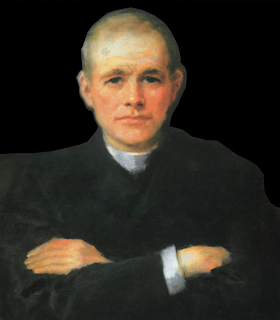
Dinneen is a leading figure in the Irish Texts Society, publishing editions of Geoffrey Keating‘s Foras Feasa ar Éirinn, poems by Aogán Ó Rathaille, Piaras Feiritéar, Tadhg Gaelach Ó Súilleabháin, and other poets. He also writes a novel and a play in Irish, and translates such works as Charles Dickens‘s A Christmas Carol into Irish. His best known work, however, is his Irish–English dictionary, Foclóir Gaedhilge agus Béarla, which is first published in 1904. The stock and plates of the dictionary are destroyed during the Easter Rising of 1916, so Dinneen takes the opportunity to expand the dictionary. A much larger second edition, compiled with the assistance of Liam S. Gógan, is published in 1927. His request to the Irish Texts Society to include Gogan’s name on the title page is refused. Gogan continues to work on the collection of words up to his death in 1979. This complementary dictionary is published online in 2011.
In March 1917, Ryan passes his final medical examinations. That June he sets up medical practice in Wexford. In 1921, he moves to Dublin where he opens a doctor’s practice at Harcourt Street, specialising in skin diseases at the Skin and Cancer Hospital on Holles Street. He leaves medicine in 1925, after he purchases Kindlestown, a large farm near Delgany, County Wicklow. He lives there and it remains a working farm until his death.
In July 1919, Ryan marries Máirín Cregan, originally from County Kerry and a close friend of Sinéad de Valera throughout her life. Cregan, like her husband, also fought in the Easter Rising and is subsequently an author of children’s stories in Irish. They have three children together.
While studying at university in 1913, Ryan joins the Gaelic League at Clonmel. The company commander recruits the young Catholicnationalist, who becomes a founder-member of the Irish Volunteers and is sworn into the Irish Republican Brotherhood (IRB) the following year. In 1916, he goes first to Cork to deliver a message from Seán Mac Diarmada to Tomás Mac Curtain that the Easter Rising is due to happen on Easter Sunday, then to Cork again in a 12-hour journey in a car to deliver Eoin MacNeill‘s cancellation order, which attempts to stop the rising. When he arrives back on Tuesday, he serves as the medical officer in the General Post Office (GPO) and treats many wounds, including James Connolly‘s shattered ankle, a wound which gradually turns gangrenous. He is, along with Connolly, one of the last people to leave the GPO when the evacuation takes place. Following the surrender of the garrison, he is deported to HM Prison Stafford in England and subsequently Frongoch internment camp. He is released in August 1916.
Ryan rejoins the Volunteers immediately after his release from prison, and in June 1917, he is elected Commandant of the Wexford Battalion. His political career begins the following year when he is elected as a Sinn Féin candidate for the constituency of South Wexford in the 1918 United Kingdom general election in Ireland. Like his fellow Sinn Féin MPs, he refuses to attend the Westminster Parliament. Instead he attends the proceedings of the First Dáil on January 21, 1919. As the Irish War of Independence goes on, he becomes Brigade Commandant of South Wexford and is also elected to Wexford County Council, serving as chairman on one occasion. In September 1919, he is arrested by the British and interned on Spike Island and later Bere Island. In February 1921, he is imprisoned at Kilworth Internment Camp, County Cork. He is later moved on Ballykinlar Barracks in County Down and released in August 1921.
In 1926, Ryan is among the Sinn Féin TDs who follow leader Éamon de Valera out of the party to found Fianna Fáil. They enter the Dáil in 1927 and spend five years on the opposition benches.
In 1947, after spending fifteen years as Minister for Agriculture, Ryan is appointed to the newly created positions of Minister for Health and Minister for Social Welfare. Following Fianna Fáil’s return to power at the 1951 Irish general election, he returns as Minister for Health and Social Welfare. Following the 1954 Irish general election, Fianna Fáil loses power and he moves to the backbenches once again.
Following the 1957 Irish general election, Fianna Fáil are back in office and de Valera’s cabinet has a new look to it. In a clear message that there will be a change to economic policy, Ryan, a close ally of Seán Lemass, is appointed Minister for Finance, replacing the conservative Seán MacEntee. The first sign of a new economic approach comes in 1958, when Ryan brings the First Programme for Economic Development to the cabinet table. This plan, the brainchild of T. K. Whitaker, recognises that Ireland will have to move away from self-sufficiency toward free trade. It also proposes that foreign firms should be given grants and tax breaks to set up in Ireland.
When Lemass succeeds de Valera as Taoiseach in 1959, Ryan is re-appointed as Minister for Finance. Lemass wants to reward him for his loyalty by also naming him Tánaiste. However, the new leader feels obliged to appoint MacEntee, one of the party elders to the position. Ryan continues to implement the First Programme throughout the early 1960s, achieving a record growth rate of 4 percent by 1963. That year an even more ambitious Second Programme is introduced. However, it overreaches and has to be abandoned. In spite of this, the annual growth rate averages five percent, the highest achieved since independence.
Ryan does not stand in the 1965 Irish general election, after which he is nominated by the Taoiseach to Seanad Éireann, where he joins his son, Eoin Ryan Snr. At the 1969 dissolution he retires to his farm at Kindlestown, County Wicklow, where he dies at age 77 on September 25, 1970. He is buried at Redford Cemetery, Greystones, County Wicklow. His grandson, Eoin Ryan Jnr, serves in the Oireachtas from 1989 to 2007 and later in the European Parliament from 2004 to 2009.
Newly widowed, Ceannt continues her republican activism, serving as Vice-President of Cumann na mBan and as a member of the Sinn Féin Standing Committee. She also plays a role in the development of the Sinn Féin Courts, a parallel legal system designed to offer an alternative to the British courts.
Ceannt is ardently opposed to the signature of the Anglo-Irish Treaty in December 1921. She is imprisoned by the Irish Free State government during the Irish Civil War in Mountjoy Prison for her anti-Treaty activity. Throughout the war, she serves at the highest levels within anti-Treaty Sinn Féin. In the years that follow, she spearheads efforts to secure state compensation for the widows and the children of those who had died in 1916 and in the Irish War of Independence. She serves as the head of the Children’s Fund of the Irish White Cross, an American-funded humanitarian organisation founded to assist victims of unrest in Ireland. She is a member of the Executive Committee of the Irish Red Cross.
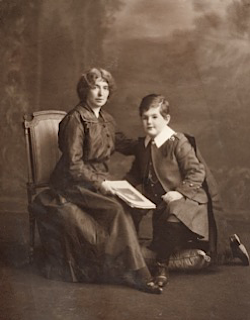
(Pictured: Photograph, circa 1917, of Áine and Ronan Ceannt, the family of Éamonn Ceannt, who is executed for his participation in the 1916 Easter Rising)
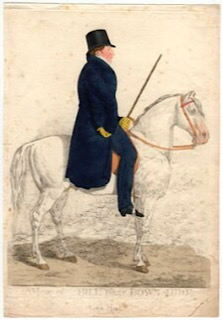
During his early political career, Hill is identified with the Whigs and supports the reform of Parliament. After the Grey Ministry comes to power, he receives a succession of appointments, becoming Colonel of the South Down Militia on March 25, 1831, and carrying the second sword at the coronation of William IV on September 8. He is appointed a deputy lieutenant of Berkshire on September 20, Lord Lieutenant of Down on October 17 (a new office replacing the Governor of Down), and finally a Knight of the Order of St Patrick on November 24, 1831. He receives an honorary LL.D. from the University of Cambridge on July 6, 1835.
Hill is a very strong supporter of the Irish language, and is president of the Ulster Gaelic Society (est. 1830). In this capacity he plays an important role in helping preserve records of the language, poetry, folk and song collections and much else.
Hill is disliked by Elizabeth Smith, diarist at Baltyboys House, County Wicklow, who feels snubbed by him when she and her husband first move into the area. Writing of him after his death she recalls “The late Lord never called upon me when I first came here although the Colonel waited upon him. The Colonel never went near him again.”
High-minded, if also at times high-handed in manner and self-important, Hill works hard himself and expects all his employees and tenants to be equally conscientious. Naturally, he is often disappointed. He is particularly concerned about his failure, despite all efforts and exhortations, to make his southern estates as efficient and well behaved as those in the north. Though an absentee owner in the south, he visits both Blessington and Edenderry regularly. It is during one of these periodic tours of inspection that he drops dead at Blessington on September 12, 1845. He is buried in St. Malachy Parish Churchyard at Royal Hillsborough, County Down. The funeral attracts an enormous crowd of mourners and is reported at some length in TheIllustrated London News. His memory is perpetuated in an impressive pillar monument, with his statue on top, erected at Hillsborough in 1848.
Smyllie is born on March 20, 1893, at Hill Street, Shettleston, Glasgow, Scotland. He is the eldest of four sons and one daughter of Robert Smyllie, a Presbyterian printer originally from Scotland who is working in Sligo, County Sligo, at the time, and Elisabeth Follis, originally from Cork, County Cork. His father marries in Sligo on July 20, 1892, and later becomes proprietor and editor of the unionistSligo Times. Smyllie attends Sligo Grammar School in 1906 and enrolls at Trinity College Dublin (TCD) in 1911.
After two years at TCD, Smyllie’s desire for adventure leads him to leave university in 1913. Working as a vacation tutor to an American boy in Germany at the start of World War I, he is detained in Ruhleben internment camp, near Berlin, during the war. As an internee, he is involved in drama productions with other internees. Following his release at the end of the war, he witnesses the German revolution of 1918–1919. During this period, he encounters revolutionary sailors from Kiel who temporarily make him a representative of the Workers’ and Soldiers’ Council, and he observes key events including the looting of the Kaiser’s Palace and violent clashes between rival factions in Berlin. It is also during this period that he secures a personal interview with David Lloyd George at the Paris Convention of 1919. This helps Smyllie gain a permanent position with TheIrish Times in 1920, where he quickly earns the confidence of editor John Healy. Together, they take part in secret but unsuccessful attempts to resolve the Irish War of Independence.
Smyllie contributes to the Irishman’s Diary column of the paper from 1927. In 1927, he publishes an exclusive report outlining a draft government including both Labour Party and Fianna FáilTDs, signaling the volatile politics of the early state years.
Smyllie’s knowledge of languages (particularly the German he had learned during his internment) led to numerous foreign assignments. His reports on the rise of National Socialism in 1930s Germany are notably prescient and instill in him a lasting antipathy towards the movement.
When Healy dies in 1934, Smyllie becomes editor of TheIrish Times and also takes on the role of Irish correspondent for The Times (London), a position that brings significant additional income. Under Healy’s leadership, The Irish Times shifted from representing the Anglo-Irish ascendancy to becoming an organ of liberal, southern unionism, and eventually becomes a critical legitimising force in the Irish Free State. Smyllie enthusiastically supports this change. He establishes a non-partisan profile and a modern Irish character for the erstwhile ascendancy paper. For example, he drops “Kingstown Harbour” for “Dún Laoghaire.” He also introduces the paper’s first-ever Irish-language columnist. He is assisted by Alec Newman and Lionel Fleming, recruits Patrick Campbell and enlists Flann O’Brien to write his thrice-weekly column “Cruiskeen Lawn” as Myles na gCopaleen. As editor, he introduces a more Bohemian and informal style, establishing a semi-permanent salon in Fleet Street’s Palace Bar. This becomes a hub for journalists and literary figures and a source of material for his weekly column, Nichevo.
One of Smyllie’s early political challenges as editor concerns the Spanish Civil War. At a time when Irish Catholic opinion is strongly pro-Franco, he ensures TheIrish Times coverage is balanced and fair, though advertiser pressure eventually forces the withdrawal of the paper’s young reporter, Lionel Fleming, from the conflict. His awareness of the looming European crisis earns him the Order of the White Lion of Czechoslovakia in 1939. However, during World War II, he clashes with Ireland’s censorship authorities, especially under Minister Frank Aiken. He challenges their views both publicly and privately, though his relationship with the editor of the Irish Independent, Frank Geary, is cold, reducing the effectiveness of their joint opposition to censorship.
During the 1943 Irish general election, Smyllie uses the paper to promote the idea of a national government that could represent Ireland with authority in the postwar world. He praises Fine Gael’s proposal for such a government and criticises Éamon de Valera for dismissing it as unrealistic. This leads to a public exchange between de Valera and Smyllie, with the latter defending The Irish Times’s role as a constructive voice for Ireland’s future rather than a partisan interest.
Following the war, Smyllie’s editorial stance shifts toward defending Ireland’s neutrality and diplomatic position. When Winston Churchill accuses de Valera of fraternising with Axis powers, Smyllie counters by revealing Ireland’s covert collaboration with the Allies, such as military and intelligence cooperation, despite official neutrality. In the same period, he continues to oppose censorship, particularly the frequent banning of Irish writers by the Censorship of Publications Board. This opposition features prominently in a controversy on TheIrish Times letters page in 1950, later published as the liberal ethic. The paper also adopts a critical stance toward the Catholic Church, notably during the 1951 resignation of Minister for HealthNoël Browne amid opposition from bishops and doctors to a national Mother and Child Scheme. His editorials suggest the Catholic Church is effectively the government of Ireland, though he maintains a cordial relationship with Archbishop of Dublin, John Charles McQuaid, who invites him annually for dinner.
Smyllie is also wary of American foreign policy, showing hostility particularly during the Korean War. American diplomats in Dublin allege that Smyllie is “pro-communist“. Despite growing readership among an educated Catholic middle class, TheIrish Times’s circulation in 1950 remains under 50,000, far below the Irish Independent and the Fianna Fáil-aligned The Irish Press.
In later years, Smyllie’s health declines, prompting a quieter lifestyle. He moves from his large house in Pembroke Park, Dublin, to Delgany, County Wicklow. As he does not drive, he becomes less present in the newspaper office in D’Olier Street, contributing to a decline in the paper’s dynamism. His health deteriorates further, resulting in frequent absences from his editorial duties, though he retains his position despite management attempts to limit his authority, especially over finances. He dies of heart failure on September 11, 1954.
In 1925, Smyllie marries Kathlyn Reid, eldest daughter of a County Meath landowner. They have no children.
Smyllie is an eccentric: he hits his tee shots with a nine iron, speaks in a curious mix of Latin phrases and everyday Dublin slang, and weighs 22 stone (308 lbs.; 140 kg) yet still cycles to work wearing a green sombrero.
Rosenstock first comes to the attention of the Irish public playing the role of Dr. David Hanlon in the soap operaGlenroe in the 1990s.
However, he is now best known for the popular Gift Grub segments which have featured on The Ian Dempsey Breakfast Show on Today FM since May 1999 which Rosenstock creates alongside Paul McLoone, a radio presenter with Today FM and frontman of the Northern Irish pop-punk/new-wave band, The Undertones.
Gift Grub is a series of comic sketches, impersonations and parodies that featured Rosenstock assuming the personae of Bertie Ahern, Ronan Keating, Colin Farrell and Roy Keane among many others. He also provides the manic voice of Right Price Tiles radio spokesperson “Daft Dave.”
Rosenstock performs an impersonation of José Mourinho in a parody of a song from the musical Joseph and the Amazing Technicolor Dreamcoat. This spreads like wildfire on Internet message boards and eventually it is played on a Sky Sports broadcast. Mourinho hears the song and enjoys the impersonation so much he asks Rosenstock to perform a private show for him and the Chelsea F.C. squad. Rosenstock later releases, with Mourinho’s blessing, a single version of “José and his Amazing Technicolor Overcoat.” He also releases another song (“I Sign a Little Player or Two“) on the internet with a parody of Mourinho in an interview then breaking into song.
In 2005, Rosenstock achieves the Christmas number one single in the Irish Singles Chart, with a parody of Will Young‘s song Leave Right Now (which itself is a Christmas number-one in 2003). The parody concerned Roy Keane’s controversial departure from Manchester United and his falling-out with Alex Ferguson.
Between December 2007 and May 2009, Rosenstock works on a puppet comedy series entitled Special 1 TV (originally known as I’m on Setanta Sports), which is presented as a parody weekly football talk show hosted by “José Mourinho.” He voices all the puppet characters on the sketch, with the exception of “Rafael Benitez,” who is performed by Keith Burke, including the main character Mourinho, his studio co-hosts “Sven-Göran Eriksson” and “Wayne Rooney,” and regular phone-in callers like “Alex Ferguson,” “Arsène Wenger,” “Roy Keane” and “Mick McCarthy,” as well as the non-football-related characters, Nelson Mandela, Willie Nelson, Barack Obama and Tom Cruise.
Rosenstock receives the Outstanding Achievement Award at the 11th annual PPI (Phonographic Performance Ireland) Radio Awards in 2011.
In November 2012 his new show called The Mario Rosenstock Show starts on RTÉ2. A second series of the show begins to air in September 2013.
Christened as William O’Brien, Ó Briain is born at 10 Church Street, North Wall, Dublin, on September 16, 1888, the seventh child of Arthur O’Brien, clerk, and Mary O’Brien (née Christie), who is from County Meath. He takes an interest in the Irish language from an early age and begins learning Irish by himself from a grammar book, as it is not encouraged by his teachers at the Christian Brothers’ O’Connell School nor spoken by his parents. While still at the O’Connell School, he starts using the Irish version of his name. He also attends meetings of the Gaelic League, then attends University College Dublin (UCD) on a scholarship, where he studies French, English and Irish, receiving a BA (1909) and an MA (1910).
UCD decides to start awarding one annual scholarship for overseas travel in 1911, and Ó Briain wins the first one, using it to visit Germany and study under Kuno Meyer and Rudolf Thurneysen. After three years, he returns home, where he rejoins the Gaelic League and begins teaching French at UCD. He also joins the Irish Volunteers then, the following year, Seán T. O’Kelly convinces him to join the Irish Republican Brotherhood (IRB).
Around this time, Ó Briain joins Sinn Féin, and he stands unsuccessfully for the party in Mid Armagh at the 1918 United Kingdom general election in Ireland, taking 5,689 votes. His campaign leads, indirectly, to his arrest and three months in jail in Belfast. In 1920, following his release, he is appointed a judge in the then-illegal republican court system in Galway, and visits both France and Italy to try to source weapons for the Irish Republican Army (IRA). In November 1920, he is arrested in the UCG dining room by Black and Tans, and is imprisoned for thirteen months, first in Galway and then in the Curragh camp in County Kildare, thereby missing the conclusion of the Irish War of Independence. By the time he is released, the Anglo-Irish Treaty has been signed. He supports the treaty and takes no further part in militant activity.
In the newly independent Ireland, Ó Briain remains a professor at Galway. He also stands in the 1925 Seanad election, although he is not successful. He is the founding secretary of the Taibhdhearc na Gaillimhe theatre, also acting in many of its productions, and spends much time translating works from English and the Romance languages into Irish. He stands to become president of UCG in 1945, but is not elected, and in the 1940s and 1950s is best known for his many appearances on television and radio.
From his retirement in 1959, Ó Briain lives in Dublin. In 1974, the National University of Ireland (NUI) confers an honorary doctorate on him. He dies on August 12, 1974, at St. Gabriel’s Hospital, Cabinteely, County Dublin. His funeral to Glasnevin Cemetery is almost a state occasion, with a huge attendance of public figures, and a military firing party at the graveside, where the oration is given by Micheál Mac Líammóir and a lesson is read by Siobhán McKenna. For days after his death, the newspapers carry tributes to his many-sided career and personality. On the one hundredth anniversary of his birth, Proinsias Mac Aonghusa and Art Ó Beoláin write commemorative articles in Feasta.
On September 1, 1921, Ó Briain marries Helen Lawlor, of Dublin, who dies two years before him. The couple’s only child is Eibhlín Ní Bhriain, who is a journalist for The Irish Times and other periodicals.
Martin is born on July 23, 1921, in Ballylongford, County Kerry, to a middle-class family in which the children are raised speaking Irish at the dinner table. His parents, Conor and Katherine Fitzmaurice Martin, have five sons and five daughters. Four of the five sons become priests, including his younger brother, Francis Xavier Martin.
Martin participates in the research on the Dead Sea Scrolls and publishes 24 articles on Semitic palaeography. He does archaeological research and works extensively on the Byblos syllabary in Byblos, in Tyre, and in the Sinai Peninsula. He assists in his first exorcism while working in Egypt for archaeological research. In 1958, he publishes a work in two volumes, The Scribal Character of the Dead Sea Scrolls.
In 1964, Martin requests a release from his vows and from the Jesuit Order. He receives a provisional release in May 1965 and a dispensation from his vows of poverty and obedience on June 30, 1965. Even if dispensed from his religious vow of chastity, he remains under the obligation of chastity if still an ordained secular priest. He maintains that he remains a priest, saying that he had received a dispensation from Paul VI to that effect.
Martin moves to New York City in 1966, working as a dishwasher, a waiter, and taxi driver, while continuing to write. He co-founds an antiques firm and is active in communications and media for the rest of his life.
In 1967, Martin receives his first Guggenheim Fellowship. In 1970, he publishes the book The Encounter: Religion in Crisis, winning the Choice Book Award of the American Library Association. He then publishes Three Popes and the Cardinal: The Church of Pius, John and Paul in its Encounter with Human History (1972) and Jesus Now (1973). In 1970, he becomes a naturalizedU.S. citizen.
In 1969, Martin receives a second Guggenheim Fellowship, allowing him to write his first of four bestsellers, Hostage to the Devil: The Possession and Exorcism of Five Living Americans (1976). In the book, he calls himself an exorcist, claiming he assisted in several exorcisms. According to McManus Darraugh, William Peter Blatty “wrote a tirade against Malachi, saying his 1976 book was a fantasy, and he was just trying to cash in.” Darraugh also says that Martin became “an iconic person in the paranormal world.”
Martin is a periodic guest on Art Bell‘s radio program, Coast to Coast AM, between 1996 and 1998. The show continues to play tapes of his interviews on Halloween.
The Vatican restores Martin’s faculty to celebrate Mass in 1989, at his request. He is strongly supported by some Traditionalist Catholic sources and severely criticized by other sources, such as the National Catholic Reporter. He serves as a guest commentator for CNN during the live coverage of the visit of Pope John Paul II to the United States in October 1995.
On July 27, 1999, Martin dies in Manhattan of an intracerebral haemorrhage, four days after his 78th birthday. It is caused by a fall in his Manhattan apartment. The documentary Hostage to the Devil claims that Martin says he was pushed from a stool by a demonic force.
McCann’s career includes parts in many plays from the Irish literary canon, including Tarry Flynn, The Shaughran, and the Gate Theatre‘s highly acclaimed production of Seán O’Casey‘s classic Juno and the Paycock in the 1980s (McCann plays the “Paycock” (Captain Boyle) opposite Geraldine Plunkett as Juno and John Kavanagh as Joxer Daly) as well as a subsequent production of O’Casey’s The Plough and the Stars.
McCann develops a particularly fruitful relationship with the playwright Brian Friel. He plays the role of Gar O’Donnell, the public figure, in a film adaptation of Philadelphia, Here I Come! in 1970 and, despite popular belief, he never plays either public or private Gar on stage. He gives a landmark performance as Frank Hardy, the title character, in Faith Healer in 1980 (a role he reprised in 1994), continuing his relationship with Friel through productions of Translations (1988) and Wonderful Tennessee (1993).
Friel says that McCann’s work “contains extraordinary characteristics that go beyond acting … it is deeply spiritual.” Perhaps McCann’s most renowned role is as Thomas Dunne in Sebastian Barry‘s The Steward of Christendom. He wins the London Critics’ Circle Theatre Award (Drama Theatre) as best actor for this role in 1995. He reprises this role in a 1996 production at the Gate Theatre, Dublin and, following a twelve-week run at the Brooklyn Academy of Music in 1997, his “performance of unarguable greatness” (The New York Observer) had Newsweekhailing him as “a world-class star,” and The New York Times referring to this “astonishing Irish actor…widely regarded as the finest of them all.”
On the London stage, McCann plays in Prayer for My Daughter opposite Antony Sher (1978), and is Jean to Dame Helen Mirren‘s Julie in Miss Julie (1971). This is filmed for the BBC, and he much later plays Judge Brack with Fiona Shaw in the title role of Henrik Ibsen‘s Hedda Gabler, a production filmed for the BBC in 1993.
His best-known film role is as Gabriel Conroy in The Dead (1987), starring opposite Anjelica Huston and directed by her father, John Huston. Significant late roles include Bernardo Bertolucci‘s Stealing Beauty (1996) and in John Turturro‘s Illuminata (released in 1999, after McCann’s death).
McCann’s television work includes the featured role of Phineas Finn in the BBC’s serialised adaptation of Anthony Trollope‘s The Pallisers, Willie Burke in RTÉ‘s Prix Italia drama entry The Burke Enigma (1979) and Barney Mulhall in RTÉ’s Strumpet City (1980), as well as many one-off parts.
McCann plays in Bob Quinn‘s Irish language film Poitín (1979) and in Quinn’s somewhat experimental The Bishop’s Story (1995). After hearing that McCann is ill, Tom Collins asks Quinn to make a TV documentary about McCann for RTÉ called It Must Be Done Right (1999), after a remark by McCann on his craft. The film airs on RTÉ a week before McCann’s death.
In his private life, McCann is a quiet and unassuming man, but he battles both depression and alcoholism all his life. He has many friends in Irish theatre and artistic circles but also across all strata of life. His hobbies include sketching and he is passionate about horse racing.
Remembering McCann on the 25th anniversary of his death, Gerald Smyth writes, “In the melancholy of that life-worn voice could be heard the cadences of a lyric heart.”
Hyde is born at Longford House in Castlerea, County Roscommon, on January 17, 1860. In 1867, his father is appointed prebendary and rector of Tibohine, and the family moves to neighbouring Frenchpark, in County Roscommon. He is home schooled by his father and his aunt due to a childhood illness. While a young man, he becomes fascinated with hearing the old people in the locality speak the Irish language.
Rejecting family pressure to follow previous generations with a career in the Church, Hyde instead becomes an academic. He enters Trinity College, Dublin (TCD), where he gains a great facility for languages, learning Latin, Greek, Hebrew, French, and German, but his great passion in life is the preservation of the Irish language.
After spending a year teaching modern languages in Canada, Hyde returns to Ireland. For much of the rest of his life he writes and collects hundreds of stories, poems, and folktales in Irish, and translates others. His work in Irish helps to inspire many other literary writers, such as W. B. Yeats and Lady Gregory.
In 1892, Hyde helps establish the Gaelic Journal and in November of that year writes a manifesto called The necessity for de-anglicising the Irish nation, arguing that Ireland should follow her own traditions in language, literature, and even in dress.
In 1893, Hyde founds the Gaelic League (Conradh na Gaeilge) along with Eoin MacNeill and Fr. Eugene O’Growney and serves as its first president. Many of the new generation of Irish leaders who play a central role in the fight for Irish independence in the early twentieth century, including Patrick Pearse, Éamon de Valera, Michael Collins, and Ernest Blythe first become politicised and passionate about Irish independence through their involvement in the Gaelic League. Hyde does not want the Gaelic League to be a political entity, so when the surge of Irish nationalism that the Gaelic League helps to foster begins to take control of many in the League and politicize it in 1915, Hyde resigns as president.
In 1938, Hyde is unanimously elected to the newly created position of President of Ireland, a post he holds until 1945. Hyde is inaugurated on June 26, 1938, in the first inaugural ceremony in the nation’s history. Despite being placed in a position to shape the office of the presidency via precedent, Hyde by and large opts for a quiet, conservative interpretation of the office. In April 1940, he suffers a massive stroke and plans are made for his lying in state and state funeral, but to the surprise of everyone he survives, albeit paralysed and confined to a wheelchair. One of his last presidential acts is a visit to the German ambassador Eduard Hempel on May 3, 1945, to offer his condolences on the death of Adolf Hitler, a visit which remains a secret until 2005.
Hyde leaves office on June 25, 1945, opting not to nominate himself for a second term. He opts not return to his Roscommon home due to his ill-health, but rather moves into the former Secretary to the Lord Lieutenant’s residence in the grounds of Áras an Uachtaráin, where he lived out the remaining four years of his life.
Hyde dies in Dublin on July 12, 1949, at age 89. As a former President of Ireland he is accorded a state funeral which, as a member of the Church of Ireland, takes place in Dublin’s St. Patrick’s Cathedral. Since contemporary rules of the Roman Catholic Church in Ireland at the time prohibit Roman Catholics from attending services in non-Catholic churches, all but one member of the Catholic cabinet remain outside the cathedral grounds while Hyde’s funeral takes place. Hyde is buried in Frenchpark, County Roscommon at Portahard Church.

 seamus dubhghaill