Known principally for his contribution to Ulster politics at local level, Armstrong serves as JP and is appointed High Sheriff of Armagh for 1875 and High Sheriff of Longford for 1894. He is a County Councillor for Armagh from 1899 to 1920, and a Member of the Irish Convention in 1917–18. Vice-Lieutenant of County Armagh in 1920, he is a Senator of Queen’s University Belfast from 1920 to 1937.
Armstrong is returned unopposed to the Imperial House of Commons for Mid-Armagh in the 1921 Mid Armagh by-election, at the advanced age of 76, becoming one of the oldest first-time MPs whose birth date is recorded. Certainly, he immediately becomes the oldest member of the current House of Commons. He is a Senator of Northern Ireland from 1921 to 1937, and Lord Lieutenant of Armagh from 1924 to 1939. For twenty-five years he is a member of the Representative Body of the Church of Ireland. He is Chairman of the County Armagh Education Committee from 1925 to 1931, and President of the Association of Education Committees of Northern Ireland. In 1932, he is made a Privy Councillor for Northern Ireland, and in 1938 he serves as a Justice for the Government of Northern Ireland in the absence of the Governor.
In his later years, Armstrong provides financial support for Jewish refugees fleeing Nazi-occupied Europe.
In 1883, Armstrong marries Margaret Leader, daughter of William Leader of Rosnalea, County Cork. They have five sons and three daughters, of whom C. W. Armstrong also becomes a politician.
Armstrong dies at his home in Dean’s Hill, Armagh, on December 4, 1943, at the age of 99 years.
Ware is born on November 16, 1594, in Castle Street, Dublin, eldest surviving son among ten children of Sir James Ware, auditor general, and his wife Mary Bryden, sister of Sir Ambrose Briden of Maidstone, Kent, England, whose house provides Ware’s base in England. His father, a Yorkshireman, comes to Ireland in the train of Lord Deputy of Ireland Sir William FitzWilliam in 1588 and builds up a substantial landed estate. He enters Trinity College Dublin (TCD), where his father is the college auditor, as a fellow commoner in 1605 and is presented a silver standing bowl in 1609. His association with the college continues, as he particularly remembers the philosophy lectures of Anthony Martin, who becomes a fellow in 1611. He takes his MA on January 8, 1628, but by then he has already launched on his future course. His father procures him the reversion of his office in 1613, and by 1620 he already owns the Annals of Ulster and is taking notes from the Black Book of Christ Church. In 1621, he marries Elizabeth Newman, daughter of Jacob Newman, one of the six clerks in chancery. Newman becomes clerk of the rolls in 1629, which apparently facilitates Ware’s assiduous research in the Irish public records.
From Ware’s numerous surviving notebooks, it is possible to follow his scholarly tracks over the rest of his life. He is particularly concerned to trace the succession of the Irish bishops. The first fruits appear in print in 1626, Archiepiscoporum Cassiliensium et Tuamensium . . . adjicitur historia coenobiorum Cisterciensium Hiberniae, followed in 1628 by De presulibus Lageniae . . ., the whole to be rounded off in 1665 with De presulibus Hiberniae. . . . However, he has wide interests in Irish history and in 1633 edits Edmund Spenser‘s A View of the Present State of Irelande and the Irish histories of Edmund Campion, Meredith Hanmer, and Henry of Marlborough. The first Irish biographical dictionary follows in 1639, De scriptoribus Hiberniae. Both publications are dedicated to the viceroy, Thomas Wentworth. In public life he is a supporter, first of Wentworth, later of James Butler, 1st Duke of Ormond, rather than a leader, and always a stout royalist. He is knighted in 1630 and following his father’s death in 1632 he succeeds as auditor general. He is elected member of parliament for Dublin University in 1634, 1640, and 1661, but is not admitted to the Privy Council of Ireland until 1640.
Shortly after the outbreak of rebellion in October 1641, Ware is in England, and in London at the time of the passing of the Adventurers’ Act 1640, presumably on the council’s business. During Ormond’s prolonged negotiations with the confederates, he is sent to advise the king at Oxford in November 1645. While there he works in the Bodleian Library and is incorporated into the university as a Doctor of Civil Law. On his way back to Ireland in January 1646, he is captured at sea by a parliament ship and held prisoner in the Tower of London until October 1646.
When Ormond is arranging the surrender of Dublin to the parliament in the summer of 1647, Ware is sent to London as one of the hostages for his performance of the terms. Back in Dublin he has been replaced as auditor general but is able to carry on his work on the public records. In 1648 he publishes the catalogue of his manuscript library. As a leading royalist he is unwelcome to those governing the city for the parliament and is sent into exile in France on April 7, 1649, with his eldest son, also James, who already holds the reversion of the auditor generalship and eventually succeeds his father. He is allowed to live in London from October 1650, and from 1653, when hostilities end in Ireland, he is allowed brief visits there, perhaps taking up residence again in 1658.
Ware’s years in London are spent in the library of Archbishop of ArmaghJames Ussher, then in Lincoln’s Inn, and in the Royal, Cotton, Carew, and Dodsworth libraries. He publishes his De Hibernia et antiquitatibus ejus disquisitiones in 1654, lamenting the inaccessibility of his notes, then in Dublin. The second edition, published in 1658, also includes the annals of Henry VII. His Opuscula Sancto Patricio . . . adscripta . . . appears in 1656. In it he remarks that his knowledge of the Irish language is not expert enough for an edition of the ‘Lorica’. According to Roderick O’Flaherty, Ware can read and understand but not speak Irish. For the older language he employs Irish scholars, Dubhaltach Mac Fhirbhisigh being the last and most learned. The 1660 Stuart Restoration sees him back as auditor general and one of the commissioners for the Irish land settlement. He publishes annals of Henry VIII in 1662, and in 1664 annals for 1485–1558.
Ware dies in his house in Castle Street on December 1, 1666, and is buried in the family vault in St. Werburgh’s Church, Dublin. He has numerous friends among the scholars of the day, including Irish Franciscans, across the sectarian divide. While clergy lists are still partly dependent on his work, his notebooks and manuscripts remain of first importance for the study of medieval Ireland. Of his ten children, two boys and two girls survive him. His wife dies on June 9, 1651. The engraving by George Vertue prefixed to Harris’ edition of Ware’s Works is claimed to be based on a portrait in the possession of the family.
(From: “Ware, Sir James” by William O’Sullivan, Dictionary of Irish Biography, http://www.dib.ie, October 2009)
Plunkett’s only grown sibling, a younger brother, from whom he is estranged from about 1916, for reasons not fully clear but connected to his mother’s will, is the noted British naval officer Sir Reginald Drax. Another younger brother dies in infancy.
The title passes to Plunkett at his father’s death in 1899 at a fairly young age. The young Lord Dunsany returns to Dunsany Castle in 1901 after war duty. In that year he is also confirmed as an elector for the Representative Peers for Ireland in the House of Lords.
In 1903, Plunkett meets Lady Beatrice Child Villiers (1880–1970), youngest daughter of Victor Child Villiers, 7th Earl of Jersey, who is then living at Osterley Park. They marry in 1904. Their one child, Randal, is born in 1906. Lady Beatrice is supportive of her husband’s interests and helps him by typing his manuscripts, selecting work for his collections, including the 1954 retrospective short story collection, and overseeing his literary heritage after his death.
The Plunketts are socially active in Dublin and London and travel between homes in Meath, London and Kent, other than during the First and Second World Wars and the Irish War of Independence. He circulates with many literary figures of the time. To many of these in Ireland he is first introduced by his uncle, the co-operative pioneer Sir Horace Plunkett, who also helps to manage his estate and investments for a time. He is friendly, for example, with George William Russell, Oliver St. John Gogarty, and for a time, W. B. Yeats. He also socialises at times with George Bernard Shaw and H. G. Wells and is a friend of Rudyard Kipling.
In 1910 Plunkett commissions a two-story extension to Dunsany Castle, with a billiard room, bedrooms and other facilities. The billiard room includes the crests of all the Lords Dunsany up to the 18th.
Plunkett serves as a second lieutenant in the Coldstream Guards in the Second Boer War. Volunteering in World War I and appointed Captain in the Royal Inniskilling Fusiliers, he is stationed for a time at Ebrington Barracks in Derry, Northern Ireland. Hearing while on leave of disturbances in Dublin during the Easter Rising of 1916, he drives in to offer help and is wounded by a bullet lodged in his skull. After recovery at Jervis Street Hospital and what is then the King George V Hospital (now St. Bricin’s Military Hospital), he returns to duty. His military belt is lost in the episode and later used at the burial of Michael Collins. Having been refused forward positioning in 1916 and listed as valuable as a trainer, he serves in the later war stages in the trenches and in the final period writing propaganda material for the War Office with MI7b. There is a book at Dunsany Castle with wartime photographs, on which lost members of his command are marked.
During the Irish War of Independence, Plunkett is charged with violating the Restoration of Order in Ireland Act 1920, tried by court-martial on February 4, 1921, convicted, and sentenced to pay a fine of 25 pounds or serve three months in prison without labour. The Crown Forces had searched Dunsany Castle and had found two double-barreled shotguns, two rook rifles, four Very pistols, an automatic pistol and a large quantity of pistol ammunition, along with shotgun and rifle ammunition.
During World War II, Plunkett signs up for the Irish Army Reserve and the British Home Guard, the two countries’ local defence forces, and is especially active in Shoreham, Kent, the English village bombed most during the Battle of Britain.
Plunkett’s fame arises chiefly from his prolific writings. He is involved in the Irish Literary Revival. Supporting the Revival, he is a major donor to the Abbey Theatre, and he moves in Irish literary circles. He is well acquainted with W. B. Yeats, Lady Gregory, Percy French, George “AE” Russell, Oliver St. John Gogarty, Padraic Colum and others. He befriends and supports Francis Ledwidge, to whom he gives the use of his library, and Mary Lavin.
Plunkett makes his first literary tour to the United States in 1919 and further such visits up to the 1950s, in the early years mostly to the eastern seaboard and later, notably, to California. His own work and contribution to the Irish literary heritage are recognised with an honorary degree from Trinity College Dublin.
In 1940, Plunkett is appointed Byron Professor of English in the University of Athens in Greece. Having reached Athens by a circuitous route, he is so successful that he is offered a post as Professor of English in Istanbul. However, he has to be evacuated due to the German invasion of Greece in April 1941, returning home by an even more complex route, his travels forming a basis for a long poem published in book form (A Journey, in 5 cantos: The Battle of Britain, The Battle of Greece, The Battle of the Mediterranean, Battles Long Ago, The Battle of the Atlantic, special edition January 1944). Olivia Manning‘s character Lord Pinkrose in her novel sequence the Fortunes of War is a mocking portrait of Dunsany in that period.
In 1947, Plunkett transfers his Meath estate in trust to his son and heir and settles in Kent at his Shoreham house, Dunstall Priory, not far from the home of Rudyard Kipling. He visits Ireland only occasionally thereafter and engages actively in life in Shoreham and London. He also begins a new series of visits to the United States, notably California, as recounted in Hazel Littlefield-Smith’s biographical Dunsany, King of Dreams.
In 1957, Plunkett becomes ill while dining with the Earl and Countess of Fingall at Dunsany, in what proves to be an attack of appendicitis. He dies in hospital in Dublin, at the age of 79, on October 25, 1957. He is buried in the churchyard of the ancient church of St. Peter and St. Paul, Shoreham, Kent. His funeral is attended by many family members, representatives of his old regiment and various bodies in which he had taken an interest, and figures from Shoreham. A memorial service is held at Kilmessan in County Meath, with a reading of “Crossing the Bar,” which coincides with the passing of a flock of geese.
Beatrice survives Plunkett, living mainly at Shoreham and overseeing his literary legacy until her death in 1970. Their son Randal succeeds to the barony and is in turn succeeded by his grandson, the artist Edward Plunkett. Plunkett’s literary rights pass from Beatrice to Edward.
Abraham is born on April 5, 1869, in Rathgar, County Dublin. She works to improve conditions for industrial workers and is also involved in women’s health and education. She is one of the first people to be appointed to the Order of the Companions of Honour in 1917.
Abraham is educated at home. Following her father’s death in 1887, she decides to move to London in search of employment. In London she becomes secretary to Emilia, Lady Dilke, who is a leader of the Women’s Trade Union League, an organisation of which she becomes treasurer. She supports the London Dock Strike of 1889 and helps organise laundresses.
In 1891, Abraham is appointed to the Royal Commission on Labour, set up to investigate the poor conditions faced by industrial workers, as one of four women assistant commissioners.
H. H. Asquith decides to appoint women factory inspectors in 1893, and Abraham is one of his first choices, soon superintending a team of five women inspectors. In this position, she is known for her good humour which helps relations with factory managers. In 1895, she joins the Departmental Committee on Dangerous Trades. She writes a book on factory legislation in 1896, The Laws Relating to Factories and Workshops, Including Laundries and Docks.
In 1896, Abraham marries Harold Tennant, brother-in-law of and parliamentary secretary to Asquith, and chairman of the Departmental Committee on Dangerous Trades. She resigns in 1897 shortly before the birth of her first son, to devote herself to her family. She goes on to have five children. Her eldest son, Henry, is killed in battle in 1917 during World War I.
Despite her new family life, Tennant does not give up her work entirely, remaining on the Committee on Dangerous Trades. In 1899, she becomes chairman of the Industrial Law Indemnity Fund, which provides compensation to victimised workers. She is on the Royal Commission on Divorce in 1909 and is a founder and treasurer of the Central Committee for Women’s Employment.
During World War I, Tennant takes on more work. She works initially for the War Office as welfare advisor, then briefly in the Women’s Department of the National Service Department, before moving to the Ministry of Munitions. After the war, she reduces her workload, but still serves on committees on maternal mortality and maternal health. She is also a governor of Bedford College in London, an institution founded for the education of women that is part of the University of London. From 1941 she is closely involved in campaigning for the Royal Air Force Benevolent Fund.
Tennant and her husband purchase and rebuild a country house, Great Maytham, at Rolvenden, Kent, a property whose old walled garden had earlier been the inspiration for The Secret Garden by Frances Hodgson Burnett. She develops expertise as a gardener, becoming prominent in the Royal Horticultural Society. After her husband’s death in 1935, she moves to a smaller house named Cornhill at Great Maytham, where she dies July 11, 1946. Some of her correspondence is in the British Library, London.
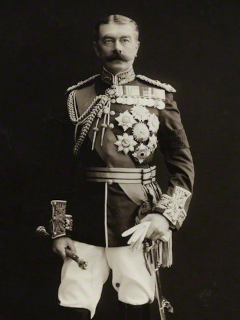
Kitchener is the second son of Lieutenant Colonel Henry Horatio Kitchener and his first wife, Frances Anne (née Chevallier), daughter of clergyman John Chevallier. Col. Kitchener resigns his commission in 1849 and purchases Ballygoghlan House estate near Tarbert, County Kerry, in early 1850 under the provisions of the Encumbered Estates Act of 1849. Ballygoghlan House is in a state of disrepair, however, and the family lives in Gunsborough Villa until the end of 1850. In 1857, Col. Kitchener purchases Crotta House, near Kilflynn, County Kerry, and the Kitcheners divide their time between the two residences. While innovative and successful in his agricultural methods, Col. Kitchener is harsh towards his tenants and, after carrying out many evictions, becomes extremely unpopular in the area. He is a rigid disciplinarian and occasionally punishes his son severely.
Although Kitchener attends Ballylongford village school, his education is largely neglected. When examined by his cousin Francis Elliot Kitchener, fellow of Trinity College Dublin (TCD), he is found to have only the most rudimentary knowledge of grammar and arithmetic. Education by private tutors follows. In 1864, his father sells his Irish estates and moves to Switzerland for the sake of his wife’s health. After further private tuition, he passes into the Royal Military Academy, Woolwich, in 1868, and is commissioned into the Royal Engineers in December 1870.
Kitchener begins his career on survey missions and carries out such work in Palestine (1874–78) and Cyprus (1878–82). He then enters the Egyptian Army and takes part in the Sudan campaign of 1883–85, organised to relieve Genral Charles George Gordon. Subsequent appointments include governor of Suakin (1886–88), adjutant-general of the Egyptian Army (1888–92), and Sirdar (Commander-in-Chief) of the Egyptian Army (1892–96). After the Dongola Expedition in 1896, he is promoted to major-general. He commands the Khartoum Expedition of 1898, defeating Mahdist forces at Atbara and Omdurman, and is raised to the peerage.
At the outbreak of the Second Boer War in 1899, he is appointed chief of staff to Frederick Roberts, 1st Earl Roberts, and assumes total command, with the rank of lieutenant-general, in 1900. While acting as commander-in-chief in South Africa he reorganises the British forces and, using new tactics, manages finally to defeat the Boers. He is severely criticised in the world press for the conditions in the concentration camps where Boer families are confined, but is made a viscount, promoted to general, and awarded £50,000 by parliament at the end of the war.
Kitchener serves as commander-in-chief in India beginning in 1902, is promoted to Field Marshal in 1909, and is a member of the Committee of Imperial Defence (1910) and consul-general in Egypt (1911–14). At the outbreak of World War I he is made Secretary of State for War and begins to reorganise the British Army, an immense achievement, raising 1,700,000 men in service battalions by May 1915, creating an army of volunteers to reinforce the depleted regular army in Belgium and France. An archconservative, he totally opposes Home Rule for Ireland, and initially blocks plans by John Redmond for the formation of a southern Irish division from members of the National Volunteers. Convinced that an all-Irish brigade or division would be a security risk, he rejects Redmond’s suggestions in a meeting of August 1915 and originally proposes dispersing Irish recruits through the numerous regiments in the army. Impressed by Redmond’s persistence, and impelled by the recruiting crisis of late 1915, he finally reverses his decision and sanctions the establishment of the 16th (Irish) Division.
On June 5, 1916, Kitchener is making his way to Russia on HMS Hampshire to attend negotiations with Tsar Nicholas II when in bad weather the ship strikes a German mine 1.5 miles (2.4 km) west of Orkney, Scotland, and sinks. He is among 737 who perish. He is the highest-ranking British officer to die in action in the entire war.
Although he only spends his early years in Kerry, Kitchener occasionally returns to Ireland. While on leave in June 1910 he goes on a tour of County Kerry, visiting places connected to his childhood. There are numerous portraits and memorials to him in England, including a marble effigy by W. Reid Dick in St. Paul’s Cathedral in London and a statue by John Tweed in Horse Guards Parade, London. There is a commemorative bible in the Church of Ireland church at Kilflynn, County Kerry, where he regularly attended Sunday service as a boy. There are some Kitchener letters in the John Redmond papers in the National Library of Ireland.
(From: “Kitchener, Horatio Herbert” by David Murphy, Dictionary of Irish Biography, http://www.dib.ie, October 2009)
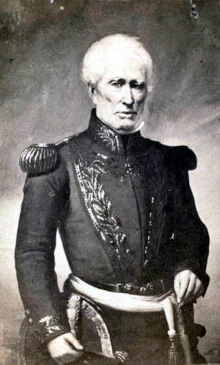
Brown is born on June 22, 1777, in Foxford, County Mayo. Comparatively little is known of his early life, and it has been suggested that he was illegitimate and took his mother’s surname and that his father’s surname was actually Gannon. He emigrates with his father to Baltimore, Maryland, in 1793, eventually settling in Philadelphia, Pennsylvania. A short time after their arrival, the friend who had invited them and offered them food and hospitality dies of yellow fever. Several days later, his father also succumbs to the same disease.
One morning, while Brown is wandering along the banks of the Delaware River, he meets the captain of a ship then moored in port. The captain inquires if he wants employment and Brown agrees. The captain engages him as a cabin boy, thereby setting him on the naval promotion ladder, where he works his way to the captaincy of a merchant ship. After ten years at sea, where he develops his skills as a sailor and reaches the rank of captain, Brown is press-ganged into a Royal Navy warship. British impressment of American sailors is one of the primary issues leading to the War of 1812.
During the Napoleonic Wars, Brown escapes the ship he is serving on, a galley, and scuttles the vessel. However, the French do not believe he had assisted them and imprison him in Lorient. On being transferred to Metz, he escapes, disguised in a French officer’s uniform. However, he is recaptured and is imprisoned in the fortress of Verdun. In 1809, he escapes from there in the company of a British Army officer named Clutchwell, and eventually reaches German territory.
Returning to England, Brown renounces his maritime career and on July 29, 1809, he marries Elizabeth Chitty, daughter of an English shipping magnate, in Kent. As he is a Catholic and she a Protestant, they agree to raise their sons as Catholics and their daughters as Protestants. Despite lengthy periods of enforced separation, they have nine children. He leaves the same year for the Río de la Plata on board Belmond and sets himself up as a merchant in Montevideo, Uruguay.
Late in 1811 Brown settles in Buenos Aires just as a criollo rebellion against Spanish colonial rule in Argentina is gaining strength. By April 1812, he is developing a coastal shipping business in fruit and hides. As the Spanish naval blockade of 1812–14 begins to choke trade, he is first commissioned by the patriot government as a privateer licensed to raid Spanish merchantmen, and then, on March 1, 1814, invited to take charge of a small rebel naval squadron to contest Spanish control of the Río de la Plata estuary. Leading a fleet of nineteen ships, he fixes with great speed on a set of wartime naval routines and signaling methods, and organises a system of discipline, founding the navy on principles that pay exceptional attention to the welfare of ordinary seamen.
In early March 1814, Brown shows personal courage and incisive skill in outwitting and defeating a more powerful Spanish force near Martín García Island, thereby dividing the Spanish blockade. A Spanish attempt in May 1814 to break his blockade of Montevideo is decisively crushed by him and his makeshift navy, and the Spanish strongholds on the Atlantic coast collapse, ending open war. In 1815 and 1816, however, he carries out skirmishing raids on military and commercial targets belonging to Spanish South American possessions, until detained by a British colonial governor in Barbados in July 1816 for alleged infringements of international rules of trade.
Illness, and a tortuous but ultimately successful appeal process, take up most of 1817–18, but when Brown returns to Argentina in October 1818, political enemies set in motion a prosecution for alleged disobedience of orders. Cashiered in August 1819, then restored in rank but forced to retire, he attempts suicide the following month. Convalescence and resumption of his trading concern occupies him for several years.
A repentant government renews Brown’s command of the navy in December 1825, when war breaks out with Brazil. Though vastly outnumbered by the Brazilian fleet, he shows audacity and great finesse in a number of successful engagements in the Plate estuary in 1826, roving up the Brazilian coast on occasion to create great confusion. In February 1827, he triumphs in a series of actions known as the Battle of Juncal. After another year of commercial privateering against the Brazilian merchant fleet, he is one of two delegates selected to sign peace terms with Brazil in October 1828.
Retiring from active service that month, Brown tries to remain neutral as civil war erupts in Argentina, but reluctantly accepts the post of governor of Buenos Aires under General Juan Lavalle from December 1828 to May 1829, when he resigns in disgust at government excesses. During 1829–37 he holds aloof from the despotic government of Juan Manuel de Rosas. After French and British encroachments on the region in the later 1830s, he offers to take charge of the navy again to protect national independence and is available to defend Argentine interests when war breaks out with a French-backed Uruguay in early 1841. Though exasperated by a long and “stupid war,” he blockades the Uruguayan navy effectively until French and British fleets intervene in July 1845 with overwhelming force to capture his squadron and bring the war to an end.
Idolised by the Argentinian population for his high-principled and humane advocacy of independent democracy, Brown passes his last years trading and farming a country estate. In late 1847, he journeys to Ireland, hoping to find relations in Mayo, and is shocked by the hunger and destitution of the Great Famine.
Brown dies on March 3, 1857, at his home in Buenos Aires and is buried with full military honours. The Argentine government issues a comuniqué: “With a life of permanent service to the national wars that our homeland has fought since its independence, William Brown symbolized the naval glory of the Argentine Republic.” During his burial, General Bartolomé Mitre famously says: “Brown in his lifetime, standing on the quarterdeck of his ship, was worth a fleet to us.” His grave is currently located in the La Recoleta Cemetery in Buenos Aires.
On February 21, 1910, Carson accepts the parliamentary leadership of the anti-Home Rule Irish Unionists and, forfeiting his chance to lead the British Conservative Party, devotes himself entirely to the Ulster cause. His dislike of southern Irish separatism is reinforced by his belief that the heavy industry of Belfast is necessary to the economic survival of Ireland. The Liberal government (1908–16) under H. H. Asquith, which in 1912 decides to prepare a Home Rule bill, cannot overcome the effect of his extra-parliamentary opposition. The Solemn League and Covenant of resistance to Home Rule, signed by Carson and other leaders in Belfast on September 28, 1912, and afterward by thousands of Ulstermen, is followed by his establishment of a provisional government in Belfast in September 1913. Early in that year he recruits a private Ulster army, the Ulster Volunteer Force, that openly drills for fighting in the event that the Home Rule Bill is enacted. In preparation for a full-scale civil war, he successfully organizes the landing of a large supply of weapons from Germany at Larne, County Antrim, on April 24, 1914. The British government, however, begins to make concessions to Ulster unionists, and on the outbreak of World War I he agrees to a compromise whereby the Home Rule Bill is enacted but its operation suspended until the end of the war on the understanding that Ulster’s exclusion will then be reconsidered.
Appointed Attorney General for England in Asquith’s wartime coalition ministry on May 25, 1915, Carson resigns on October 19 because of his dissatisfaction with the conduct of the war. In David Lloyd George’s coalition ministry (1916–22) he is First Lord of the Admiralty from December 10, 1916, to July 17, 1917, and then a member of the war cabinet as minister without portfolio until January 21, 1918.
Carson retires in October 1929. In July 1932, during his last visit to Northern Ireland, he witnesses the unveiling of a large statue of himself in front of Parliament Buildings at Stormont. The statue is sculpted by Leonard Stanford Merrifield, cast in bronze and placed upon a plinth. The inscription on the base reads “By the loyalists of Ulster as an expression of their love and admiration for its subject.” It is unveiled by James Craig, 1st Viscount Craigavon, in the presence of more than 40,000 people.
Carson lives at Cleve Court, a Queen Anne house near Minster-in-Thanet in the Isle of Thanet, Kent, bought in 1921. It is here that he dies peacefully on October 22, 1935. A warship brings his body to Belfast for the funeral. Thousands of shipworkers stop work and bow their heads as HMS Broke steams slowly up Belfast Lough, with his flag-draped coffin sitting on the quarterdeck. Britain gives him a state funeral on Saturday, October 26, 1935, which takes place in Belfast’s St. Anne’s Cathedral. He remains the only person to have been buried there. From a silver bowl, soil from each of the six counties of Northern Ireland is scattered onto his coffin, which had earlier been covered by the Union Jack. At his funeral service the choir sings his own favourite hymn, “I Vow to Thee, My Country.”
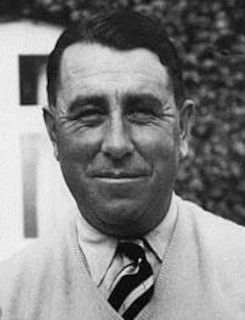
Harry Bradshaw, a leading Irish professional golfer of the 1940s and 1950s, dies on December 22, 1990, in St. Vincent’s hospital, County Dublin.
Bradshaw is born on October 9, 1913, in Killincarrig, County Wicklow, eldest among four sons and two daughters of Edward ‘Ned’ Bradshaw, golf caddie and later golf professional, and Elizabeth Bradshaw (née Walsh) of Killincarrig. He is educated locally. A golf prodigy, he has a hole-in-one at the age of ten on an 80-yard par three at Delgany Golf Club, County Wicklow. He joins Delgany Golf Club, where he progresses from caddie to assisting his father, who is the club’s professional. As a teenager, he tends to hook the ball wildly, before he develops a grip that allows him to hit with great accuracy. Thereafter, he concentrates on honing his peerless approach play from within 100 yards of the hole. Another feature of his game is what is called his “hit and hark” approach to putting: he never lifts his head to follow the ball until he hears it drop.
Bradshaw plays in his first tournament as a professional in 1932, the same year he shoots a course record 68 at Delgany. In 1938, he wins his first professional tournament, the Bromford-Adgey Cup at Skerries Golf Club, County Dublin. In 1941, he is appointed golf professional at Kilcroney, County Wicklow, and in 1950 he begins his long association with Portmarnock Golf Club, County Dublin, when he is appointed golf professional there. By then he has already made his mark on domestic Irish golf, having won the Irish Open in 1947 and 1949. In Ireland he wins the Irish Dunlop Trophy three times, the Willie Nolan Trophy eleven times, the Moran Cup twelve times and the Irish Professional Championship ten times, the last a record later equaled by Christy O’Connor Snr.
Bradshaw is not well known outside of Ireland prior to the famous “bottle” incident at the 1949 Open Championship at Royal St. George’s Golf Club in Sandwich, Kent, England. Having headed the qualifiers and shooting an opening 68, he continues his good form into the second round when his drive at the par four fifth hole just misses the fairway and lands in a beer bottle that is standing upright with the neck and shoulder broken off. The rules are unclear on whether the bottle constitutes a hazard, and he elects to play the ball where it lay, judging (correctly) that he is not entitled to a free drop. Closing his eyes and turning his head away, he swings, shattering the bottle and advancing the ball about twenty-five yards. He is shaken and records a lacklustre round of 77. Back to his best in the next two rounds, he would win the title had his putt on the last not stopped just short. Instead, he ties with the South AfricanBobby Locke who defeats him by twelve strokes in the thirty-six-hole play-off with superlative rounds of 67 and 68. As a result of his experience with the broken bottle, the rules are changed to cater for the possibility of such an incident recurring. It is the closest a golfer from the Republic of Ireland comes to winning the Open Championship until Pádraig Harrington’s victory in 2007.
Bradshaw subsequently revenges himself on Locke by narrowly beating him to the Irish Open title the following month. He is then one of four British and Irish golfers to participate in a sixteen-week tour of South Africa from December 1950 to March 1951 during which he engages in further jousts with Locke, deepening their new-found friendship.
Establishing himself on the international golf circuit, Bradshaw goes on to win the DunlopBritish Masters on two occasions (1953, 1955), and in 1958 he becomes the first Irishman to win the PGA Close Championship. He had also won the Dunbar Open Tournament in Scotland in 1953 and the Gleneagles Hotel Foursomes Tournament pro-am with Joe Carr in 1955. The highlight of his career comes in Mexico City in 1958, when, in partnership with Christy O’Connor Snr, he wins the Canada Cup, later known as the World Cup, for Ireland, also losing a play-off for the individual title. His performance is particularly impressive, given that he is forty-five and carrying weight while competing at altitude in oppressive heat. He and O’Connor are fêted upon their return home, and their victory is considered to play the determining role in popularising golf in Ireland. He caps a memorable year by receiving the Association of Golf Writers’ Trophy for 1958.
Bradshaw appears on three Ryder Cup teams. At the Wentworth Club in 1953, he wins his foursomes match partnering Fred Daly and his singles match against Fred Haas, but in 1955 he loses both his foursomes and singles matches at the Thunderbird Country Club in California. In 1957, he is a member of the side that defeats the American team 7–4 at Lindrick Golf Club in South Yorkshire, only the third victory by the Britain and Ireland side in the twelve matches played up to that time. He holes a five-footer to tie his match with U.S. Open champion Dick Mayer after a classic encounter. In 1963, he takes on Billy Casper, one of America’s top golfers, in a match at Portmarnock televised as part of the prestigious Shell’s Wonderful World of Golf series. Bradshaw’s three-stroke victory earns him $3,000, which is then considered a bonanza in golfing terms.
Bradshaw remains the golf professional at Portmarnock until 1983, latterly spending most of his day in the club shop. Even after his formal retirement, he remains on the payroll at Portmarnock as an informal ambassador for the club. Nicknamed “the Brad,” he is extremely popular with amateur and professional alike, is a great raconteur and tremendous company, and is noted for his lack of rancor towards, or criticism of, other players.
Bradshaw marries Elizabeth Foley from Carlow in 1944 and they have four children. His three brothers, Eddie, Hughie and Jimmy, are all professional golfers.
(From: “Bradshaw, Harry” by Jim Shanahan, Dictionary of Irish Biography, http://www.dib.ie, November 2022)
Twysden is born in Kent, in the South East England region, on September 7, 1713, the third son of Sir William Twysden, 5th Baronet of Roydon Hall, East Peckham, Kent, by his wife (and distant cousin) Jane Twisden.
By his second wife, Twysden has two children: Mary, who dies in infancy, and a posthumous daughter named Frances (1753–1821). Frances, later Countess of Jersey, is one of the many mistresses of King George IV when he is Prince of Wales.
Twysden dies on November 2, 1752, at home in Jermyn Street, St. James’s, London. However, according to ecclesiastical historian and author Henry Cotton, he dies at Roydon Hall, East Peckham, his father’s country house. He is buried in the south chancel of St. Michael’s Church, East Peckham, under a plain stone with no inscription.
A story grows up that, having been made bankrupt, Twysden is shot while attempting to rob a stagecoach. The location of his alleged attempted career as a highwayman is either Hounslow Heath (west of London) or Wrotham Heath in Kent.
(Pictured: The Cathedral of St Eunan, Raphoe, the episcopal seat of the pre-Reformation and Church of Ireland bishops of Raphoe)
The Tooreen ambush (also known as the Toureen ambush or Ballinhassig ambush) is an ambush carried out by the Irish Republican Army (IRA) on October 22, 1920, during the Irish War of Independence. It takes place near Roberts Farm, Tooreen, near Ballinhassig in County Cork. The IRA ambushes two lorries of British soldiers, killing three and wounding four others. The British surrender and their weapons and ammunition are seized by the IRA. Later that night, British soldiers go on a rampage in nearby Bandon.
Up until the Tooreen ambush, the 3rd Cork Brigade had finished its training, but had not previously engaged in battle with British troops stationed in County Cork. The Tooreen ambush is one of the first major ambushes carried out by the West Cork Brigade under Tom Barry.
The Essex Regiment of the British Army is deployed to West Cork and has a reputation for violently raiding houses throughout the countryside and arresting people believed to be IRA volunteers. They are also alleged to torture their prisoners in order to get information on the whereabouts of the flying columns, so this makes them a despised enemy to the West Cork IRA.
The Essex Regiment is known to travel on the road from Bandon to Cork City every morning and return in the evenings. The road goes through the hamlet of Toureen which the Third West Cork Brigade is stationed at nearby and it is decided to ambush this column of the Essex Regiment as it makes its way to Cork city.
Thirty-two ambushers, twenty-one being riflemen of the Third West Cork Brigade, occupy ambush positions outside Toureen and lay in wait for the approaching Essex Regiment. The Regiment normally goes in two or three lorries to Cork City so the IRA places a homemade mine on the road for use against them.
Scouts signal the approach of two lorries which are coming down the road toward the ambush site. As the first lorry passes, the order to fire is given and a homemade three-pound bomb is thrown. The bomb lands inside the lorry but does not explode. The mine that is placed on the road also fails to detonate. As the volunteers open fire, the second lorry stops and the soldiers inside leap out and return fire, but the volunteers are hidden behind a large timber gate which gives them cover. The first lorry continues on to Cork Barracks. As the fight goes on, the officer in command of the British troops, Captain Dixon, is shot in the head and killed as is one of his men.
The remaining British soldiers surrender soon after, and the IRA men cease firing. The British soldiers are relieved of their weapons and ammunition, but otherwise unharmed. Fourteen rifles, bayonets, equipment, several Mills bombs, around 1,400 rounds of ammunition and a couple of revolvers are taken from them.
Two British soldiers, Lt. Dixon MC of the Suffolk Regiment and Pte. Charles William Reid of the Essex Regiment, are killed in the ambush. Five are wounded, including Sergeant Thomas Bennett RASC who dies in Cork on the following day. Six are unhurt except for shock. None of the IRA volunteers are killed or wounded during the ambush and aid is given to the wounded soldiers, while the dead are pulled away from the lorry and it is then set on fire by the volunteers. The two soldiers who are not hurt during the ambush are released along with their wounded and they return to their barracks.
Later that night, members of the Essex Regiment go on a violent rampage through Bandon, destroying property and seeking out anyone they believe to be connected to the ambush. It is believed that at least some of the rampaging soldiers are those released unharmed by the IRA earlier in the day. The reprisal attacks are indiscriminate and include attacks on homes and properties of business owners with “establishment” connections – including the Brennan family of Kilbrogan House.
A Military Court of Inquiry into the soldiers killed, is conducted on October 28, 1920. There are mixed references to these proceedings in The Irish Times and the Irish Independent, both of which contain errors.
Lt. Dixon is buried with full military honours in St. Paul’s Church in Dover, Kent, England. Sergeant Bennett is buried in St. Peter & St. Paul Church in his home village of Shorne, near Gravesend in Kent.
(Pictured: Plaque on a farm wall marking the location of the Tooreen ambush)





 seamus dubhghaill