seamus dubhghaill

Promoting Irish Culture and History from Little Rock, Arkansas, USA


Leave a comment

Death of James Ryan, Doctor, Revolutionary & Fianna Fáil Politician

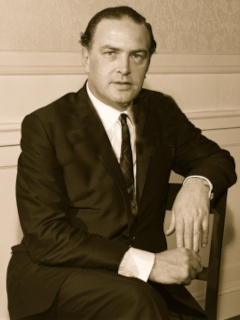
James Ryan, medical doctor, revolutionary and politician who serves in every Fianna Fáil government from 1932 to 1965, dies on his farm at Kindlestown, County Wicklow, on September 25, 1970.

Ryan is born on the family farm at Tomcoole, near TaghmonCounty Wexford, on December 6, 1892. The second-youngest of twelve children, he is educated at St. Peter’s College, Wexford, and Ring College, Waterford. In 1911, he wins a county council scholarship to University College Dublin (UCD) where he studies medicine.

In March 1917, Ryan passes his final medical examinations. That June he sets up medical practice in Wexford. In 1921, he moves to Dublin where he opens a doctor’s practice at Harcourt Street, specialising in skin diseases at the Skin and Cancer Hospital on Holles Street. He leaves medicine in 1925, after he purchases Kindlestown, a large farm near Delgany, County Wicklow. He lives there and it remains a working farm until his death.

In July 1919, Ryan marries Máirín Cregan, originally from County Kerry and a close friend of Sinéad de Valera throughout her life. Cregan, like her husband, also fought in the Easter Rising and is subsequently an author of children’s stories in Irish. They have three children together.

One of Ryan’s sisters, Mary Kate, marries Seán T. O’Kelly, one of Ryan’s future cabinet colleagues and a future President of Ireland. Following her death O’Kelly marries her sister, Phyllis Ryan. Another of Ryan’s sisters, Josephine (‘Min’) Ryan, marries Richard Mulcahy, a future leader of Fine Gael. Another sister, Agnes, marries Denis McCullough, a Cumann na nGaedheal TD from 1924 to 1927. He is also the great-grandfather of Ireland and Leinster Rugby player James Ryan.

While studying at university in 1913, Ryan joins the Gaelic League at Clonmel. The company commander recruits the young Catholic nationalist, who becomes a founder-member of the Irish Volunteers and is sworn into the Irish Republican Brotherhood (IRB) the following year. In 1916, he goes first to Cork to deliver a message from Seán Mac Diarmada to Tomás Mac Curtain that the Easter Rising is due to happen on Easter Sunday, then to Cork again in a 12-hour journey in a car to deliver Eoin MacNeill‘s cancellation order, which attempts to stop the rising. When he arrives back on Tuesday, he serves as the medical officer in the General Post Office (GPO) and treats many wounds, including James Connolly‘s shattered ankle, a wound which gradually turns gangrenous. He is, along with Connolly, one of the last people to leave the GPO when the evacuation takes place. Following the surrender of the garrison, he is deported to HM Prison Stafford in England and subsequently Frongoch internment camp. He is released in August 1916.

Ryan rejoins the Volunteers immediately after his release from prison, and in June 1917, he is elected Commandant of the Wexford Battalion. His political career begins the following year when he is elected as a Sinn Féin candidate for the constituency of South Wexford in the 1918 United Kingdom general election in Ireland. Like his fellow Sinn Féin MPs, he refuses to attend the Westminster Parliament. Instead he attends the proceedings of the First Dáil on January 21, 1919. As the Irish War of Independence goes on, he becomes Brigade Commandant of South Wexford and is also elected to Wexford County Council, serving as chairman on one occasion. In September 1919, he is arrested by the British and interned on Spike Island and later Bere Island. In February 1921, he is imprisoned at Kilworth Internment Camp, County Cork. He is later moved on Ballykinlar Barracks in County Down and released in August 1921.

In the 1922 Irish general election, Ryan and one of the other two anti-Treaty Wexford TDs lose their seats to pro-Treaty candidates. During the Irish Civil War, he is arrested and held in Mountjoy Prison before being transferred to Curragh Camp, where he embarks on a 36-day hunger strike. While interned he wins back his Dáil seat as an abstentionist at the 1923 Irish general election. He is released from prison in December 1923.

In 1926, Ryan is among the Sinn Féin TDs who follow leader Éamon de Valera out of the party to found Fianna Fáil. They enter the Dáil in 1927 and spend five years on the opposition benches.

Following the 1932 Irish general election, Fianna Fáil comes to office and Ryan is appointed Minister for Agriculture, a position he continuously holds for fifteen years. He faces severe criticism over the Anglo-Irish trade war with Britain as serious harm is done to the cattle trade, Ireland’s main export earner. The trade war ends in 1938 with the signing of the Anglo-Irish Trade Agreement between both governments, after a series of talks in London between the British Prime Minister Neville Chamberlain, de Valera, Ryan and Seán Lemass.

In 1947, after spending fifteen years as Minister for Agriculture, Ryan is appointed to the newly created positions of Minister for Health and Minister for Social Welfare. Following Fianna Fáil’s return to power at the 1951 Irish general election, he returns as Minister for Health and Social Welfare. Following the 1954 Irish general election, Fianna Fáil loses power and he moves to the backbenches once again.

Following the 1957 Irish general election, Fianna Fáil are back in office and de Valera’s cabinet has a new look to it. In a clear message that there will be a change to economic policy, Ryan, a close ally of Seán Lemass, is appointed Minister for Finance, replacing the conservative Seán MacEntee. The first sign of a new economic approach comes in 1958, when Ryan brings the First Programme for Economic Development to the cabinet table. This plan, the brainchild of T. K. Whitaker, recognises that Ireland will have to move away from self-sufficiency toward free trade. It also proposes that foreign firms should be given grants and tax breaks to set up in Ireland.

When Lemass succeeds de Valera as Taoiseach in 1959, Ryan is re-appointed as Minister for Finance. Lemass wants to reward him for his loyalty by also naming him Tánaiste. However, the new leader feels obliged to appoint MacEntee, one of the party elders to the position. Ryan continues to implement the First Programme throughout the early 1960s, achieving a record growth rate of 4 percent by 1963. That year an even more ambitious Second Programme is introduced. However, it overreaches and has to be abandoned. In spite of this, the annual growth rate averages five percent, the highest achieved since independence.

Ryan does not stand in the 1965 Irish general election, after which he is nominated by the Taoiseach to Seanad Éireann, where he joins his son, Eoin Ryan Snr. At the 1969 dissolution he retires to his farm at Kindlestown, County Wicklow, where he dies at age 77 on September 25, 1970. He is buried at Redford Cemetery, Greystones, County Wicklow. His grandson, Eoin Ryan Jnr, serves in the Oireachtas from 1989 to 2007 and later in the European Parliament from 2004 to 2009.


Leave a comment

Death of R. M. “Bertie” Smyllie, Editor of “The Irish Times”

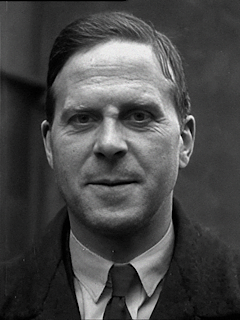
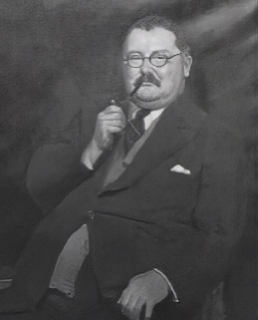
Robert Maire Smyllie, known as Bertie Smyllie, editor of The Irish Times for twenty years, dies on September 11, 1954.

Smyllie is born on March 20, 1893, at Hill Street, ShettlestonGlasgowScotland. He is the eldest of four sons and one daughter of Robert Smyllie, a Presbyterian printer originally from Scotland who is working in Sligo, County Sligo, at the time, and Elisabeth Follis, originally from Cork, County Cork. His father marries in Sligo on July 20, 1892, and later becomes proprietor and editor of the unionist Sligo Times. Smyllie attends Sligo Grammar School in 1906 and enrolls at Trinity College Dublin (TCD) in 1911.

After two years at TCD, Smyllie’s desire for adventure leads him to leave university in 1913. Working as a vacation tutor to an American boy in Germany at the start of World War I, he is detained in Ruhleben internment camp, near Berlin, during the war. As an internee, he is involved in drama productions with other internees. Following his release at the end of the war, he witnesses the German revolution of 1918–1919. During this period, he encounters revolutionary sailors from Kiel who temporarily make him a representative of the Workers’ and Soldiers’ Council, and he observes key events including the looting of the Kaiser’s Palace and violent clashes between rival factions in Berlin. It is also during this period that he secures a personal interview with David Lloyd George at the Paris Convention of 1919. This helps Smyllie gain a permanent position with The Irish Times in 1920, where he quickly earns the confidence of editor John Healy. Together, they take part in secret but unsuccessful attempts to resolve the Irish War of Independence.

Smyllie contributes to the Irishman’s Diary column of the paper from 1927. In 1927, he publishes an exclusive report outlining a draft government including both Labour Party and Fianna Fáil TDs, signaling the volatile politics of the early state years.

Smyllie’s knowledge of languages (particularly the German he had learned during his internment) led to numerous foreign assignments. His reports on the rise of National Socialism in 1930s Germany are notably prescient and instill in him a lasting antipathy towards the movement.

When Healy dies in 1934, Smyllie becomes editor of The Irish Times and also takes on the role of Irish correspondent for The Times (London), a position that brings significant additional income. Under Healy’s leadership, The Irish Times shifted from representing the Anglo-Irish ascendancy to becoming an organ of liberal, southern unionism, and eventually becomes a critical legitimising force in the Irish Free State. Smyllie enthusiastically supports this change. He establishes a non-partisan profile and a modern Irish character for the erstwhile ascendancy paper. For example, he drops “Kingstown Harbour” for “Dún Laoghaire.” He also introduces the paper’s first-ever Irish-language columnist. He is assisted by Alec Newman and Lionel Fleming, recruits Patrick Campbell and enlists Flann O’Brien to write his thrice-weekly column “Cruiskeen Lawn” as Myles na gCopaleen. As editor, he introduces a more Bohemian and informal style, establishing a semi-permanent salon in Fleet Street’s Palace Bar. This becomes a hub for journalists and literary figures and a source of material for his weekly column, Nichevo.

One of Smyllie’s early political challenges as editor concerns the Spanish Civil War. At a time when Irish Catholic opinion is strongly pro-Franco, he ensures The Irish Times coverage is balanced and fair, though advertiser pressure eventually forces the withdrawal of the paper’s young reporter, Lionel Fleming, from the conflict. His awareness of the looming European crisis earns him the Order of the White Lion of Czechoslovakia in 1939. However, during World War II, he clashes with Ireland’s censorship authorities, especially under Minister Frank Aiken. He challenges their views both publicly and privately, though his relationship with the editor of the Irish Independent, Frank Geary, is cold, reducing the effectiveness of their joint opposition to censorship.

During the 1943 Irish general election, Smyllie uses the paper to promote the idea of a national government that could represent Ireland with authority in the postwar world. He praises Fine Gael’s proposal for such a government and criticises Éamon de Valera for dismissing it as unrealistic. This leads to a public exchange between de Valera and Smyllie, with the latter defending The Irish Times’s role as a constructive voice for Ireland’s future rather than a partisan interest.

Following the war, Smyllie’s editorial stance shifts toward defending Ireland’s neutrality and diplomatic position. When Winston Churchill accuses de Valera of fraternising with Axis powers, Smyllie counters by revealing Ireland’s covert collaboration with the Allies, such as military and intelligence cooperation, despite official neutrality. In the same period, he continues to oppose censorship, particularly the frequent banning of Irish writers by the Censorship of Publications Board. This opposition features prominently in a controversy on The Irish Times letters page in 1950, later published as the liberal ethic. The paper also adopts a critical stance toward the Catholic Church, notably during the 1951 resignation of Minister for Health Noël Browne amid opposition from bishops and doctors to a national Mother and Child Scheme. His editorials suggest the Catholic Church is effectively the government of Ireland, though he maintains a cordial relationship with Archbishop of DublinJohn Charles McQuaid, who invites him annually for dinner.

Smyllie is also wary of American foreign policy, showing hostility particularly during the Korean War. American diplomats in Dublin allege that Smyllie is “pro-communist“. Despite growing readership among an educated Catholic middle class, The Irish Times’s circulation in 1950 remains under 50,000, far below the Irish Independent and the Fianna Fáil-aligned The Irish Press.

In later years, Smyllie’s health declines, prompting a quieter lifestyle. He moves from his large house in Pembroke Park, Dublin, to DelganyCounty Wicklow. As he does not drive, he becomes less present in the newspaper office in D’Olier Street, contributing to a decline in the paper’s dynamism. His health deteriorates further, resulting in frequent absences from his editorial duties, though he retains his position despite management attempts to limit his authority, especially over finances. He dies of heart failure on September 11, 1954.

In 1925, Smyllie marries Kathlyn Reid, eldest daughter of a County Meath landowner. They have no children.

Smyllie is an eccentric: he hits his tee shots with a nine iron, speaks in a curious mix of Latin phrases and everyday Dublin slang, and weighs 22 stone (308 lbs.; 140 kg) yet still cycles to work wearing a green sombrero.


Leave a comment

Birth of Michael Noonan, Former Fine Gael Politician

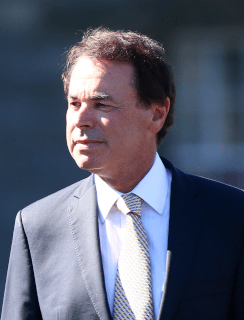
Michael Noonan, former Fine Gael politician, is born in Limerick, County Limerick, on May 21, 1943. He has been a member of every Fine Gael cabinet since 1982, serving in the cabinets of Garret FitzGeraldJohn Bruton and Enda Kenny.

The son of a local school teacher, Noonan is raised in Loughill, County Limerick. He is educated at the local National School and St. Patrick’s Secondary School in Glin, before studying to be a primary school teacher at St. Patrick’s CollegeDrumcondra, Dublin. He subsequently completes a BA and H.Dip. in English and Economics at University College Dublin (UCD). He begins to work as a secondary school teacher in Dublin. He develops an interest in politics from his mother, whose family had been heavily involved in Fine Gael at the local level in Limerick, and joins the Dublin branch of the party after graduating from university.

Having been involved in the local Fine Gael organisation in Limerick since the late 1960s, Noonan first holds political office in 1974, when he is elected as a member of Limerick County Council. Having built up a local profile he contests the 1981 Irish general election for the party and secures a seat in Limerick East. Upon taking his Dáil seat, he becomes a full-time politician, giving up his teaching post and resigning his seat on Limerick County Council. Though Fine Gael forms a coalition government with the Labour Party, as a first time Teachta Dála (TD), he remains on the backbenches. He serves as a TD from 1981 to 2020.

Noonan serves Minister for Justice from 1982 to 1986, Minister for Energy from January 1987 to March 1987, Minister for Industry and Commerce from 1986 to 1987, Minister for Health from 1994 to 1997, Leader of the Opposition and Leader of Fine Gael from 2001 to 2002, and Minister for Finance from 2011 to 2017.

In May 2017, Noonan announces he will be stepping down as Minister for Finance in the coming weeks when a new Taoiseach was appointed, and as a member of the Dáil at the next general election.

Noonan marries Florence Knightley, a native of CastlemaineCounty Kerry and a primary school teacher, in 1969. They have three sons (Tim, John and Michael) and two daughters (Orla and Deirdre). In May 2010, Noonan appears on RTÉ‘s The Frontline to talk about his wife’s battle with Alzheimer’s disease. Florence Noonan dies on February 23, 2012 of pneumonia.


Leave a comment

The Funeral of Tom O’Higgins, Former Chief Justice of Ireland

The funeral of Tom O’Higgins, former Chief Justice of Ireland and Minister for Health, takes place at St. Patrick’s Church in Monkstown, County Dublin, on February 27, 2003. He died two days earlier in Dublin.

O’Higgins is described at his removal as a great Christian gentleman whose secular activities were outstanding both to his country and to Europe.

The chief mourners in St. Patrick’s Church are joined by the President of Ireland, Mary McAleese, and many representatives of the judiciary and politics. The mourners are led by his widow Terry, his children Tom, Geraldine, Michael, Barry, Kevin, Derval and Shane, his thirty grandchildren, his brother Michael and sister Rosaleen.

The parish priest, Father Maurice O’Moore, tells many hundreds in the congregation that O’Higgins and his wife had been regular worshippers at the church.

“Tom was a man of deep faith and his demeanour at prayer was an inspiration to me personally and to parishioners. I think of him this evening as a man of faith, as a man of prayer and a great Christian gentleman. His secular activities through his legal expertise were outstanding both to his country and to Europe,” he says.

Father O’Moore adds that many tributes had been paid to O’Higgins in the media, and everybody can be proud of the contribution he made as an Irishman through his religious faith, his sincerity and love of his country.

Father Bruce Bradley SJ, a friend of the family, gives a reading from the Gospel.

At the removal, Taoiseach Bertie Ahern is represented by his aide-de-camp, Captain Ger O’Grady.

Attending from the judiciary are the Chief Justice Ronan Keane, the former Chief Justice Thomas Finlay, and many former Supreme Court and High Court judges, including Séamus Henchy, Anthony J. Hederman, Séamus Egan, Kevin Lynch and Donal Barrington who, like O’Higgins, was also a judge on the European Court of Justice.

Also attending is Harry Hill SC, retired master of the High Court, Feargus Flood, chairman of the Flood Tribunal, as well many Supreme Court and High Court judges and barristers. The director-general of the Law Society, Ken Murphy, is also present, as are many solicitors.

The world of politics is well represented, particularly by members of the Fine Gael party, for which O’Higgins was a Teachta Dála (TD) and minister in the 1940s and 1950s.

Two former taoisigh, Garret FitzGerald and Liam Cosgrave, attend. Also present is the leader of the Fine Gael party, Enda Kenny, and Tom Hayes, chairman of the Parliamentary Party, as well as many party TDs and former deputies.

Maureen Lynch, widow of former Fianna Fail Taoiseach Jack Lynch, and Dessie O’Malley, the former Progressive Democrats leader, also attend.

Internment in Shanganagh Cemetery in south County Dublin follows the 11:00 a.m. funeral Mass.

(From: “A great Christian gentleman’ whose secular activities served State, Europe,” by Christine Newman, The Irish Times, http://www.irishtimes.com, February 27, 2003)


Leave a comment

Birth of Alan Shatter, Lawyer, Author & Fine Gael Politician

Alan Joseph Shatter, Irish lawyer, author and former Fine Gael politician who serves as Minister for Justice and Equality and Minister for Defence (2011-14), is born into a Jewish family in Dublin on February 14, 1951. He also serves as a Teachta Dála (TD) for the Dublin South constituency (1981-2002, 2007-16). He leaves Fine Gael in early 2018 and unsuccessfully contests the 2024 Irish general election as an independent candidate for Dublin Rathdown.

Shatter is the son of Reuben and Elaine Shatter, an English couple who meet by chance when they are both on holiday in Ireland in 1947. He is educated at The High School, Dublin, Trinity College Dublin (TCD) and the Europa Institute of the University of Amsterdam. In his late teens, he works for two months in Israel on a kibbutz. He is a partner in the Dublin law firm Gallagher Shatter (1977-2011). As a solicitor he acts as advocate in many seminal and leading cases determined both by the Irish High and Supreme Courts. He is the author of one the major academic works on Irish family law which advocates substantial constitutional and family law reform.

Shatter enters politics at the 1979 Irish local elections, winning a seat on Dublin County Council for the Rathfarnham local electoral area. He retains this seat until 1999, becoming a member of South Dublin County Council in 1994. He is first elected to Dáil Éireann in 1981 as a Fine Gael TD and is re-elected at each subsequent election until he loses his seat in the 2002 Irish general election. He is re-elected at the 2007 Irish general election.

Shatter is Fine Gael Front Bench spokesperson on Law Reform (1982, 1987–88), the Environment (1989–91), Labour (1991), Justice (1992–93), Equality and Law Reform (1993–94), Health and Children (1997–2000), Justice, Law Reform and Defence (2000–02), Children (2007–10) and Justice and Law Reform (2010–11).

On March 9, 2011, Shatter is appointed by Taoiseach Enda Kenny as both Minister for Justice and Equality and Minister for Defence.

Under Shatter’s steerage, a substantial reform agenda is implemented with nearly 30 separate pieces of legislation published, many of which are now enacted including the Personal Insolvency Act 2012, Criminal Justice Act 2011, DNA Database Act, and the Human Rights and Equality Commission Act.

Under Shatter’s guidance, major reforms are introduced in 2011 into Ireland’s citizenship laws and a new Citizenship Ceremony is created. He both devises and pilots Ireland’s first ever citizenship ceremony which takes place in June 2011 and a new inclusive citizenship oath which he includes in his reforming legislation. During his time as Minister, he clears an enormous backlog of citizenship applications, and 69,000 foreign nationals become Irish citizens. Some applications had lain dormant for 3 to 4 years. He introduces a general rule that save where there is some real complication, all properly made citizenship applications should be processed within a six-month period. He also takes steps to facilitate an increased number of political refugees being accepted into Ireland and creates a special scheme to facilitate relations of Syrian families already resident in Ireland who are either caught up in the Syrian civil war, or in refugee camps elsewhere as a result of the Syrian civil war, to join their families in Ireland.

Shatter enacts legislation before the end of July 2011 to facilitate access to financial documentation and records held by third parties in investigations into banking scandals and white-collar crime. The legislation is first used by the Gardaí in September 2011.

During Ireland’s Presidency of the Council of the European Union in 2013, Shatter chairs the Justice and Home Affairs Council (JHA) meetings and, in January 2013, in Dublin Castle, the meeting of EU Defence Ministers. Under his guidance, Ireland plays a more active role than in the past in EU defence matters and in deepening Ireland’s participation in NATO’s partnership for peace. During the Irish Presidency, substantial progress is made at the European Union level in the adoption and development of new legislation and measures across a broad range of Justice and Home Affairs issues.

Shatter implements substantial reform in the Department of Defence and restructures the Irish Defence Forces. He is a strong supporter of the Irish Defence Forces participation in international peacekeeping and humanitarian engagements and is an expert on the Middle East. As a member of the Irish Parliament and as Minister on many occasions, he visits Irish troops participating in United Nations (UN) missions in the Middle East. Under his watch contracts are signed for the acquisition of two new naval vessels with an option to purchase a third. All three naval vessels are now part of the Irish Naval Service and have been actively engaged in recent years in rescuing drowning refugees in the Mediterranean Sea attempting to enter Europe.

As Minister for Defence he enacts legislation to grant a pardon and an amnesty to members of the Irish Defence Forces who deserted during World War II to fight on the allied side against Nazi Germany and gives a state apology for their post-war treatment by the Irish State.

Shatter is the minister responsible for two amendments to the Constitution of Ireland which are passed in referendums: the Twenty-ninth Amendment in 2011 to allow for the reduction of judges’ pay, and the Thirty-third Amendment in 2013 to establish a Court of Appeal. Just prior to his resignation from government, the draft legislation to create the court is published and the court is established and sitting by October 2014.

The jurisdictions of the courts are extended for the first time in 20 years and the maximum civil damages payable for the emotional distress of bereaved relations following a negligent death is increased.

As a politician, Shatter plays a lead role in effecting much of the constitutional and legislative change he advocates. He is a former chairperson of FLAC (the Free Legal Advice Centres), a former chairperson of CARE, an organisation that campaigns for childcare and children’s legislation reform in the 1970s and a former President of the Irish Council Against Blood Sports.

Shatter is a founder member of the Irish Soviet Jewry Committee in 1970 and pioneers a successful all party Dáil motion on the plight of Soviet Jewry (1984) and visits various refuseniks in Moscow in 1985. He is a former chairperson of the Oireachtas Foreign Affairs Committee (1996-97) and initiates the creation of an Ireland/Israel Parliamentary Friendship group in 1997, leading a number of visits to Israel by members of the Dáil Éireann and Seanad Éireann.

Shatter is the author of the satirical book Family Planning Irish Style (1979), and the novel Laura (1989). In 2017 his biography, Life is a Funny Business, is published by Poolbeg Press and in 2019 Frenzy and Betrayal: The Anatomy of a Political Assassination is published by Merrion Press. In 2023, his book Cyril’s Lottery of Life, a comedic book with an English solicitor from a small town as its protagonist, is published.


Leave a comment

Birth of Rory O’Hanlon, Fianna Fáil Politician

Rory O’Hanlon, former Fianna Fáil politician, is born in Dublin on February 7, 1934. He serves as Ceann Comhairle of Dáil Éireann (2002-07), Leas-Cheann Comhairle of Dáil Éireann (1997-2002), Minister for the Environment (1991-92), Minister for Health (1987-91) and Minister of State for Social Welfare Claims (1982). He serves as a Teachta Dála (TD) for the Cavan–Monaghan constituency (1977-2011).

O’Hanlon is brought up in a family that has a strong association with the republican tradition. His father is a member of the Fourth Northern Division of the Irish Republican Army (IRA) during the Irish War of Independence (1919-21). He is educated at Mullaghbawn National School, before later attending St. Mary’s College, Dundalk and Blackrock College in Dublin. He subsequently studies medicine at University College Dublin (UCD) and qualifies as a doctor. In 1965, he is appointed to Carrickmacross as the local general practitioner and is the medical representative on the North Eastern Health Board from its inception in 1970 until 1987.

O’Hanlon enters his first electoral contest when he is the Fianna Fáil candidate in the 1973 Monaghan by-election caused by the election of Erskine Childers to the Presidency. He is unsuccessful on this occasion but is eventually elected at the 1977 Irish general election for the Cavan–Monaghan constituency. He is one of a handful of new Fianna Fáil deputies who are elected in that landslide victory for the party and, as a new TD, he remains on the backbenches. Two years later he becomes a member of Monaghan County Council, serving on that authority until 1987.

In 1979, Jack Lynch suddenly resigns as Taoiseach and Leader of Fianna Fáil. The subsequent leadership election results in a straight contest between Charles Haughey and George Colley. The latter has the backing of the majority of the existing cabinet; however, a backbench revolt sees Haughey become Taoiseach. O’Hanlon supports Colley and is thus overlooked for appointment to the new ministerial and junior ministerial positions. Despite this, he does become a member of the powerful Public Accounts Committee in the Oireachtas.

When Fianna Fáil returns to power after a short-lived Fine GaelLabour Party government in 1982, O’Hanlon is once again overlooked for ministerial promotion. An extensive cabinet reshuffle toward the end of the year sees him become Minister of State for Social Welfare Claims. His tenure is short-lived as the government falls a few weeks later and Fianna Fáil are out of power.

In early 1983, Charles Haughey announces a new front bench, and O’Hanlon is promoted to the position of spokesperson on Health and Social Welfare.

Following the 1987 Irish general election, Fianna Fáil are back in power, albeit with a minority government, and O’Hanlon becomes Minister for Health. Immediately after taking office, he is confronted with several controversial issues, including the resolution of a radiographers’ dispute and the formation of an HIV/AIDS awareness campaign. While Fianna Fáil campaigns on a platform of not introducing any public spending cuts, the party commits a complete U-turn once in government. The savage cuts about healthcare earn O’Hanlon the nickname “Dr. Death.” Despite earning this reputation, he also introduces a law to curb smoking in public places.

O’Hanlon’s handling of the Department of Health means that he is one of the names tipped for promotion as a result of Ray MacSharry‘s departure as Minister for Finance. In the end, he is retained as Minister for Health and is disappointed not to be given a new portfolio following the 1989 Irish general election.

In 1991, O’Hanlon becomes Minister for the Environment following Albert Reynolds‘ failed leadership challenge against Charles Haughey.

When Reynolds eventually comes to power in 1992, O’Hanlon is one of several high-profile members of the cabinet who lose their ministerial positions.

In 1995, O’Hanlon becomes chair of the Fianna Fáil parliamentary party before being elected Leas-Cheann Comhairle (deputy chair) of Dáil Éireann in 1997. Following the 2002 Irish general election, he becomes Ceann Comhairle of Dáil Éireann. In this position, he is required to remain neutral and, as such, he is no longer classed as a representative of any political party. He is an active chair of the Dáil. However, on occasion, he is criticised, most notably by Labour’s Pat Rabbitte, for allegedly stifling debate and being overly protective of the government. Following the 2007 Irish general election, he is succeeded as Ceann Comhairle by John O’Donoghue. He is the vice-chair of the Joint Oireachtas Committee on Foreign Affairs.

O’Hanlon retires from politics at the 2011 Irish general election.

Two of O’Hanlon’s children have served as local politicians in Cavan-Monaghan. A son Shane is a former member of Monaghan County Council and a daughter Fiona O’Hea serves one term on Cootehill Town Council. The Sinn Féin TD Caoimhghín Ó Caoláin is also a relation of O’Hanlon. He is also the father of actor and comedian Ardal O’Hanlon.


Leave a comment

Birth of Donogh O’Malley, Fianna Fáil Politician & Rugby Union Player

Donogh Brendan O’Malley, Irish Fianna Fáil politician and rugby union player, is born on January 18, 1921, in Limerick, County Limerick. He serves as Minister for Education (1966-68), Minister for Health (1965-66) and Parliamentary Secretary to the Minister for Finance (1961-65). He also serves as a Teachta Dála (TD) for the Limerick East constituency (1954-68). He is best remembered as the Minister who introduces free secondary school education in the Republic of Ireland.

O’Malley is one of eight surviving children of Joseph O’Malley, civil engineer, and his wife, Mary “Cis” (née Tooher). Born into a wealthy middle-class family, he is educated by the Jesuits at Crescent College and later at Clongowes Wood College, County Kildare. He later studies at University College Galway (UCG), where he is conferred with a degree in civil engineering in 1943. He later returns to Limerick, where he works as an engineer before becoming involved in politics.

O’Malley plays rugby at provincial level for Munster, Leinster and Connacht and at club level for Bohemians and Shannon RFC. His chances at an international career are ruined by the suspension of international fixtures during World War II. It is at a rugby match in Tralee that he first meets Dr. Hilda Moriarty, who he goes on to marry in August 1947.

Although O’Malley runs as a Fianna Fáil candidate, he is born into a politically active family who supports Cumann na nGaedheal until a falling-out with the party in the early 1930s. He first becomes involved in local politics as a member of Limerick Corporation. He becomes Mayor of Limerick in 1961, the third O’Malley brother to hold the office (Desmond from 1941-43 and Michael from 1948-49). He is a strong electoral performer, topping the poll in every general election he runs in.

O’Malley is first elected to Dáil Éireann as a Fianna Fáil TD for Limerick East at the 1954 Irish general election. Fianna Fáil is not returned to government on that occasion. He spends the rest of the decade on the backbenches. However, his party is returned to power in 1957. Two years later, the modernising process begins when Seán Lemass takes over from Éamon de Valera as Taoiseach. Lemass introduces younger cabinet ministers, as the old guard who has served the party since its foundation in 1926 begin to retire.

In 1961, O’Malley joins the government as Parliamentary Secretary to the Minister for Finance. He is part of a new, brasher style of politician that emerges in the 1960s, sometimes nicknamed “the men in the mohair suits.” It is expected that this generation of politician, born after the Irish Civil War, will be a modernising force in post-de Valera Ireland.

Although his sporting background is in rugby and swimming, it is association football which O’Malley gets involved in at a leadership level, becoming President of the Football Association of Ireland despite never having played the sport.

Following Fianna Fáil’s retention of power in the 1965 Irish general election, O’Malley joins the cabinet as Minister for Health. He spends just over a year in this position before he is appointed Minister for Education, a position in which he displays renowned dynamism. Having succeeded Patrick Hillery, another dynamic young minister, he resolves to act swiftly to introduce the recommendations of an official report on education.

As Minister for Education, O’Malley extends the school transport scheme and commissions the building of new non-denominational comprehensive and community schools in areas where they are needed. He introduces Regional Technical Colleges (RTCs), now called Institutes of Technology, in areas where there is no third level college. The best example of this policy is the University of Limerick, originally an Institute of Higher Education, where O’Malley is credited with taking the steps to ensure that it becomes a university. His plan to merge Trinity College Dublin and University College Dublin arouses huge controversy, and is not successful, despite being supported by his cabinet colleague Brian Lenihan. Access to third-level education is also extended, the old scholarship system being replaced by a system of means-tested grants that give easier access to students without well-off parents.

Mid-twentieth century Ireland experiences significant emigration, especially to the neighbouring United Kingdom where, in addition to employment opportunities, there is a better state provision of education and healthcare. Social change in Ireland and policies intending to correct this deficit are often met with strong resistance, such as Noël Browne‘s proposed Mother and Child Scheme. As a former Health Minister, O’Malley has first-hand experience of running the department which had attempted to introduce this scheme and understood the processes that caused it to fail, such as resistance from Department of Finance and John Charles McQuaid. This influences his strategy in presenting the free-education proposal.

Shortly after O’Malley is appointed, he announces that from 1969 all education up to Intermediate Certificate level will be without cost, and free buses will bring students in rural areas to their nearest school, seemingly making this decision without consulting other ministers. However, he does discuss it with Lemass. Jack Lynch, who, as Minister for Finance, has to find the money to pay for the programme, is not consulted and is dismayed at the announcement.

By announcing the decision first to journalists and on a Saturday (during a month when the Dáil is in recess), the positive public reaction tempers resistance to the idea before the next cabinet meeting. O’Malley’s proposals are hugely popular with the public, and it is impossible for the government to go back on his word.

Some Irish commentators consider that O’Malley’s extension of education, changing Ireland from a land where the majority are schooled only to the age of 14 to a country with universal secondary-school education, indirectly leads to the Celtic Tiger boom of the 1990s-2000s when it is followed for some years by an extension of free education to primary degree level in university, a scheme that is launched in 1996 by the Labour Party and axed in 2009 by Fianna Fáil’s Batt O’Keeffe.

In 1967, O’Malley appoints Justice Eileen Kennedy to chair a committee to carry out a survey and report on the reformatory and industrial school systems. The report, which is published in 1970, is considered ground-breaking in many areas and comes to be known as the Kennedy Report. The Report makes recommendations about a number of matters, including the Magdalene laundries, in relation to which they are not acted upon. The report recommends the closure of a number of reformatories, including the latterly infamous reformatory at Daingean, County Offaly.

O’Malley’s reforms make him one of the most popular members of the government. He is affectionately known as “the School Man” for his work in education. His sudden death in Limerick on March 10, 1968, before his vision for the education system is completed, comes as a shock to the public. He is buried with a full Irish state funeral.

Following O’Malley’s death, his widow, Hilda O’Malley, does not run in the subsequent by-election for the seat he has left vacant. It is won narrowly by their nephew Desmond O’Malley. Hilda seeks the Fianna Fáil nomination for the 1969 Irish general election, but Fianna Fáil gives the party nomination to Desmond, as the sitting TD. Hilda runs as an Independent candidate in that election. After what proves a bitter campaign against her nephew, she fails to get the fourth seat in Limerick East by just 200 votes.


Leave a comment

Death of John Costello, Fine Gael Politician & 3rd Taoiseach

John Aloysius Costello, Fine Gael politician who serves as Taoiseach from 1948 to 1951 and from 1954 to 1957, Leader of the Opposition from 1951 to 1954 and from 1957 to 1959, and Attorney General of Ireland from 1926 to 1932, dies in Ranelagh, Dublin, on January 5, 1976. He serves as a Teachta Dála (TD) from 1933 to 1943 and from 1944 to 1969.

Costello is born on June 20, 1891, in Fairview, Dublin, the younger son of John Costello senior, a civil servant, and Rose Callaghan. He is educated at St. Joseph’s, Fairview, and then moves to O’Connell School, for senior classes, and later attends University College Dublin (UCD), where he graduates with a degree in modern languages and law. He studies at King’s Inns to become a barrister, winning the Victoria Prize there in 1913 and 1914. He is called to the Irish Bar in 1914, and practises as a barrister until 1922.

In 1922, Costello joins the staff at the office of the Attorney General in the newly established Irish Free State. Three years later he is called to the inner bar, and the following year, 1926, he becomes Attorney General of Ireland, upon the formation of the Cumann na nGaedheal government, led by W. T. Cosgrave. While serving in this position he represents the Free State at Imperial Conferences and League of Nations meetings.

Costello is also elected a Bencher of the Honourable Society of King’s Inns. He loses his position as Attorney General of Ireland when Fianna Fáil comes to power in 1932. The following year, however, he is elected to Dáil Éireann as a Cumann na nGaedheal TD. Cumann na nGaedheal soon merges with other parties to form Fine Gael.

During the Dáil debate on the Emergency Powers Act 1939, Costello is highly critical of the Act’s arrogation of powers, stating that “We are asked not merely to give a blank cheque, but to give an uncrossed cheque to the Government.” He loses his seat at the 1943 Irish general election but regains it when Éamon de Valera calls a snap election in 1944. From 1944 to 1948, he is the Fine Gael front-bench Spokesman on External Affairs.

In 1948, Fianna Fáil has been in power for sixteen consecutive years and has been blamed for a downturn in the economy following World War II. The 1948 Irish general election results show Fianna Fáil short of a majority, but still by far the largest party, with twice as many seats as the nearest rival, Fine Gael. It appears that Fianna Fáil is headed for a seventh term in government. However, the other parties in the Dáil realise that between them, they have only one seat fewer than Fianna Fáil, and if they band together, they would be able to form a government with the support of seven Independent deputies. Fine Gael, the Labour Party, the National Labour Party, Clann na Poblachta and Clann na Talmhan join to form the first inter-party government in the history of the Irish state.

While it looks as if cooperation between these parties will not be feasible, a shared opposition to Fianna Fáil and Éamon de Valera overcomes all other difficulties, and the coalition government is formed.

Since Fine Gael is the largest party in the government, it has the task of providing a suitable candidate for Taoiseach. Naturally, it is assumed that its leader, Richard Mulcahy, will be offered the post. However, he is an unacceptable choice to Clann na Poblachta and its deeply republican leader, Seán MacBride. This is due to Mulcahy’s record during the Irish Civil War. Instead, Fine Gael and Clann na Poblachta agree on Costello as a compromise candidate. Costello had never held a ministerial position nor was he involved in the Civil War. When told by Mulcahy of his nomination, Costello is appalled, content with his life as a barrister and as a part-time politician. He is persuaded to accept the nomination as Taoiseach by close non-political friends.

During the campaign, Clann na Poblachta had promised to repeal the Executive Authority (External Relations) Act 1936 but does not make an issue of this when the government is being formed. However, Costello and his Tánaiste, William Norton of the Labour Party, also dislike the act. During the summer of 1948, the cabinet discusses repealing the act, however, no firm decision is made.

In September 1948, Costello is on an official visit to Canada when a reporter asks him about the possibility of Ireland leaving the British Commonwealth. For the first time, he declares publicly that the Irish government is indeed going to repeal the External Relations Act and declare Ireland a republic. It has been suggested that this is a reaction to offence caused by the Governor General of Canada at the time, Harold Alexander, 1st Earl Alexander of Tunis, who is of Northern Irish descent and who allegedly arranges to have placed symbols of Northern Ireland in front of Costello at an official dinner. Costello makes no mention of these aspects on the second reading of the Republic of Ireland Bill on November 24 and, in his memoirs, claims that Alexander’s behaviour had in fact been perfectly civil and could have had no bearing on a decision which had already been made.

The news takes the Government of the United Kingdom and even some of Costello’s ministers by surprise. The former had not been consulted and following the declaration of the Republic in 1949, the UK passes the Ireland Act that year. This recognises the Republic of Ireland and guarantees the position of Northern Ireland within the United Kingdom for so long as a majority there want to remain in the United Kingdom. It also grants full rights to any citizens of the Republic living in the United Kingdom. Ireland leaves the Commonwealth on April 18, 1949, when The Republic of Ireland Act 1948 comes into force. Frederick Henry Boland, Secretary of the Department of External Affairs, says caustically that the affair demonstrates that “the Taoiseach has as much notion of diplomacy as I have of astrology.” The British envoy, John Maffey, 1st Baron Rugby, is equally critical of what he calls a “slipshod and amateur” move.

Many nationalists now see partition as the last obstacle on the road to total national independence. Costello tables a motion of protest against partition on May 10, 1949, without result.

In 1950, the independent-minded Minister for Health, Noël Browne, introduces the Mother and Child Scheme. The scheme would provide mothers with free maternity treatment and their children with free medical care up to the age of sixteen, which is the normal provision in other parts of Europe at that time. The bill is opposed by doctors, who fear a loss of income, and Roman Catholic bishops, who oppose the lack of means testing envisaged and fear the scheme could lead to birth control and abortion. The cabinet is divided over the issue, many feeling that the state cannot afford such a scheme priced at IR£2,000,000 annually. Costello and others in the cabinet make it clear that in the face of such opposition they will not support the Minister. Browne resigns from the government on April 11, 1951, and the scheme is dropped. He immediately publishes his correspondence with Costello and the bishops, something which had hitherto not been done. Derivatives of the Mother and Child Scheme are introduced in Public Health Acts of 1954, 1957 and 1970.

The Costello government has a number of noteworthy achievements. A new record is set in housebuilding, the Industrial Development Authority and Córas Tráchtála are established, and the Minister for Health, Noel Browne, with the then new Streptomycin, bring about an advance in the treatment of tuberculosis. Ireland also joins a number of organisations such as the Organization for European Economic Co-operation and the Council of Europe. However, the government refuses to join NATO, allegedly because the British remain in Northern Ireland. The scheme to supply electricity to even the remotest parts of Ireland is also accelerated.

While the “Mother and Child” incident does destabilise the government to some extent, it does not lead to its collapse as is generally thought. The government continues; however, prices are rising, a balance of payments crisis is looming, and two TDs withdraw their support for the government. These incidents add to the pressure on Costello and so he decides to call a general election for June 1951. The result is inconclusive but Fianna Fáil returns to power. Costello resigns as Taoiseach. It is at this election that his son Declan is elected to the Dáil.

Over the next three years while Fianna Fáil is in power a dual-leadership role of Fine Gael is taking place. While Richard Mulcahy is the leader of the party, Costello, who has proved his skill as Taoiseach, remains as parliamentary leader of the party. He resumes his practice at the Bar. In what is arguably his most celebrated case, the successful defence of The Leader against a libel action brought by the poet Patrick Kavanagh, dates from this period. Kavanagh generously praises Costello’s forensic skill, and the two men become friends.

At the 1954 Irish general election Fianna Fáil loses power. A campaign dominated by economic issues results in a Fine Gael-Labour Party-Clann na Talmhan government coming to power. Costello is elected Taoiseach for the second time.

The government can do little to change the ailing nature of Ireland’s economy, with emigration and unemployment remaining high, and external problems such as the Suez Crisis compounding the difficulty. Measures to expand the Irish economy such as export profits tax relief introduced in 1956 would take years have sizable impact. Costello’s government does have some success with Ireland becoming a member of the United Nations in 1955, and a highly successful visit to the United States in 1956, which begins the custom by which the Taoiseach visits the White House each Saint Patrick’s Day to present the U.S. President with a bowl of shamrock. Although the government has a comfortable majority and seems set for a full term in office, a resumption of Irish Republican Army (IRA) activity in Northern Ireland and Great Britain causes internal strains. The government takes strong action against the republicans.

In spite of supporting the government from the backbenches, Seán MacBride, the leader of Clann na Poblachta, tables a motion of no confidence, based on the weakening state of the economy and in opposition to the government’s stance on the IRA. Fianna Fáil also tables its own motion of no confidence, and rather than face almost certain defeat, Costello again asks President Seán T. O’Kelly to dissolve the Oireachtas. The general election which follows in 1957 gives Fianna Fáil an overall majority and starts another sixteen years of unbroken rule for the party. Some of his colleagues questioned the wisdom of his decision to call an election. The view is expressed that he was tired of politics and depressed by his wife’s sudden death the previous year.

Following the defeat of his government, Costello returns to the bar. In 1959, when Richard Mulcahy resigns the leadership of Fine Gael to James Dillon, he retires to the backbenches. He could have become party leader had he been willing to act in a full-time capacity. He remains as a TD until 1969, when he retires from politics, being succeeded as Fine Gael TD for Dublin South-East by Garret FitzGerald, who himself goes onto to become Taoiseach in a Fine Gael-led government.

During his career, Costello is presented with a number of awards from many universities in the United States. He is also a member of the Royal Irish Academy from 1948. In March 1975, he is made a freeman of the city of Dublin, along with his old political opponent Éamon de Valera. He practises at the bar until a short time before his death at the age of 84, in Ranelagh, Dublin, on January 5, 1976. He is buried at Dean’s Grange Cemetery in Dublin.


Leave a comment

Birth of Brendan Howlin, Labour Party Politician

Brendan Howlin, Irish Labour Party politician who has been a Teachta Dála (TD) for the Wexford constituency since 1987, is born on May 9, 1956. He previously serves as Leader of the Labour Party from 2016 to 2020, Minister for Public Expenditure and Reform from 2011 to 2016, Leas-Cheann Comhairle from 2007 to 2011, Deputy leader of the Labour Party from 1997 to 2002, Minister for the Environment from 1994 to 1997 and Minister for Health from 1993 to 1994. He is a Senator from 1983 to 1987, after being nominated by the Taoiseach.

Born into a political family in Wexford, Howlin is the son of John and Molly Howlin (née Dunbar), and named after Brendan Corish, the local Labour TD and later leader of the Labour Party. His father is a trade union official who serves as secretary of the Irish Transport and General Workers’ Union (ITGWU) in Wexford for 40 years. He also secures election as a Labour member of Wexford Corporation, where he serves for eighteen years, and is also election agent to Brendan Corish. His mother is also strongly involved in local Labour politics. His brother Ted is a former member of Wexford County Council and Lord Mayor of Wexford. He is raised on William Street in Wexford with his three siblings.

Howlin grows up in Wexford town and is educated locally in the Faythe and at Wexford CBS. He later attends St. Patrick’s College, Dublin, and qualifies as a primary school teacher. During his career as a teacher, he is active in the Irish National Teachers’ Organisation (INTO), before embarking on a career in full-time politics.

Howlin credits his introduction to politics to his involvement in the Irish anti-nuclear movement. The chair of Nuclear Opposition Wexford (NOW), he is involved in the organisation of a protest against the building of a nuclear power plant in Carnsore Point, which draws 40,000 protestors. In 1979, he is asked to run for Wexford Corporation and is selected in his absence but declines to run in order to continue as chair of NOW.

Howlin contests his first general election at the November 1982 Irish general election. He runs as a Labour candidate in the Wexford constituency, but despite the existence of a large left-wing vote in the area, he is not elected. In spite of this setback, a Fine Gael-Labour Party coalition government comes to power, and he is nominated by the Taoiseach, Garret FitzGerald, to serve in Seanad Éireann as a Senator. He secures election to Wexford County Council in 1985 and serves as Mayor of Wexford in 1986.

In 1987, the Labour Party withdraws from the coalition government and a general election is called. Howlin once again contests a seat in Wexford and is elected to Dáil Éireann. Labour are out of office as a Fianna Fáil government takes office. In spite of his recent entry to the Dáil, he is subsequently named Chief Whip of the Labour Party, a position he holds until 1993.

The 1992 Irish general election results in a hung Dáil once again. However, the Labour Party enjoys their best result to date at the time. After negotiations, a Fianna Fáil-Labour Party coalition government comes to office. Howlin joins the cabinet of Taoiseach Albert Reynolds as Minister for Health. During his tenure the development of a four-year health strategy, the identifying of HIV/AIDS prevention as a priority and the securing of a £35 million investment in childcare are advanced. He, however, is also targeted by anti-abortion groups after introducing an act which would allow information regarding abortion.

In 1994, the Labour Party withdraws from government after a disagreement over the appointment of Attorney General Harry Whelehan as a Judge of the High Court and President of the High Court. However, no general election is called and, while it is hoped that the coalition could be revived under the new Fianna Fáil leader Bertie Ahern, the arithmetic of the Dáil now allows the Labour Party to open discussions with other opposition parties. After negotiations a Rainbow Coalition comes to power involving Fine Gael, Labour and Democratic Left. In John Bruton‘s cabinet, he becomes Minister for the Environment.

Following the 1997 Irish general election, a Fianna Fáil-Progressive Democrats coalition government comes to power and the Labour Party returns to the opposition benches. In the announcement of the party’s new front bench, Howlin retains responsibility for the Environment.

In late 1997, Dick Spring resigns as leader of the Labour Party and Howlin immediately throws his hat into the ring in the subsequent leadership election. In a choice between Howlin and Ruairi Quinn, the former gains some early support; however, the leadership eventually goes to Quinn by a significant majority. As a show of unity, Howlin is later named deputy leader of the party and retains his brief as Spokesperson for the Environment and Local Government.

In 2002, following Quinn’s resignation as party leader after Labour’s relatively unsuccessful 2002 Irish general election campaign, Howlin again stands for the party leadership. For the second time in five years, he is defeated for the leadership of the party, this time by Pat Rabbitte, who is formerly a leading figure in Democratic Left. He is succeeded as deputy leader by Liz McManus.

While having been publicly supportive of Rabbitte’s leadership, Howlin is perceived as being the leader of the wing of the party which is sceptical of Rabbitte’s policy with regard to future coalition with Fianna Fáil. Rabbitte explicitly rules out any future coalition with Fianna Fáil, instead forming a formal alliance with Fine Gael in the run-up to the 2007 Irish general election (the so-called Mullingar Accord).

On June 26, 2007, Howlin is appointed the Leas-Cheann Comhairle (deputy chairperson) of Dáil Éireann.

After the 2011 Irish general election, Fine Gael and the Labour Party form a government, and Howlin is appointed to the new office of Minister for Public Expenditure and Reform. In May 2011, he says that over the next 20 years the number of people in Ireland over 65 is set to increase by almost half a million, a situation that could see the annual health budget soar – rising by €12.5 billion in the next decade alone. While reform is a major part of government attempts “to regain full sovereignty over economic policy,” he tells a meeting of the Association of Chief Executives of State Agencies they will in any event face key “imperatives” in coming years. He says a new public spending review, on which he has briefed the cabinet in recent days, will not be a simple assessment of where to make cuts, but will also consider the way public sector services are delivered. He reiterates the government’s commitment not to cut public sector pay, “if the Croke Park Agreement works.” “These are just some of the challenges that our society is facing in the coming decade – crisis or no crisis. In the good times, tackling them was going to be difficult. Today, in these difficult times, tackling them is going to be imperative.” He says Ireland is facing a profound and complex economic crisis “where we are fighting a battle on three fronts – mass unemployment, a major failure in banking, and a fiscal crisis.”

Howlin retains his seat in the Dáil following the 2016 Irish general election, though only six of his Labour colleagues do likewise and the party returns to the opposition benches. Following the resignation of Joan Burton, he contests the 2016 Labour Party leadership election unopposed and is elected Leader of the Labour Party on May 20, 2016.

In March 2018, Howlin criticises Taoiseach Leo Varadkar for failing to personally invite him to accompany him as he meets ambulance crews in Howlin’s constituency of Wexford. Varadkar replies that he has been far too busy dealing with the recent weather crisis and Brexit “to organise invitations to Deputies personally in order that they felt included.” It is separately said of Howlin’s complaint, “It appears that the Taoiseach, the chief executive of the State, needs the imprimatur of local politicians when he enters their bailiwick, and needs to be accompanied and monitored by those same politicians while he is in their realm.”

Alan Kelly challenges Howlin for the party leadership in 2018, stating that he has failed to “turn the ship around.” He states that Kelly’s comments are a disappointing and unnecessary distraction. He also says that there is not a single parliamentary party member that supports the challenge, and that Kelly has the backing of a minority of councillors.

In September 2018, Howlin states that winning 14 seats in the 33rd Dáil is a realistic goal. During the campaign in 2020, he states his wish to end the United States‘s use of Shannon Airport for military related activities. In the 2020 Irish general election, party first preference vote drops to 4.4% of first preference votes and returns 6 seats – a record low. Howlin announces his intention to step down as leader on February 12, 2020. He also says that the Labour Party should not formally enter government, a view that is backed by the parliamentary party. He also states that he will not back any candidate in the following contest. On February 15, 2020, he rules himself out as a candidate for Ceann Comhairle of the 33rd Dáil, with the polling day to elect his successor set for April 3, 2020.

In 2020, Howlin’s legislation (Harassment, Harmful Communications and Related Offences Bill) is passed and signed into law by Michael D. Higgins. This bill makes the distribution of intimate images or “revenge porn” a criminal offense and makes other forms of cyberbullying and harassment punishable.

On October 6, 2023, Howlin announces that he will not contest the next Irish general election.

Howlin is a single man. He has spoken publicly of receiving hate mail relating to his private life and questioning his sexual orientation. In an interview with The Star during the 2002 Labour Party leadership contest, in response to repeated speculation, he announces he is “not gay.”