seamus dubhghaill

Promoting Irish Culture and History from Little Rock, Arkansas, USA


Leave a comment

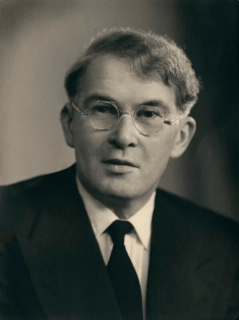
Birth of Alan Dukes, Former Fine Gael Politician

Alan Martin Dukes, former Fine Gael politician, is born in Drimnagh, Dublin, on April 20, 1945. He holds several senior government positions and serves as a Teachta Dála (TD) from 1981 to 2002. He is one of the few TDs to be appointed a minister on their first day in the Dáil.

His father, James F. Dukes, is originally from Tralee, County Kerry, and is a senior civil servant and the founding chairman and chief executive of the Higher Education Authority (HEA), while his mother is from near Ballina, County Mayo.

The Dukes family originally comes from the north of England. His grandfather serves with the Royal Engineers in World War I and settles in County Cork and then County Kerry afterward where he works with the Post Office creating Ireland’s telephone network.

Dukes is educated by the Christian Brothers at Coláiste Mhuire, Dublin, and is offered several scholarships for third level on graduation, including one for the Irish language. His interest in the Irish language continues to this day, and he regularly appears on Irish-language television programmes.

On leaving school he attends University College Dublin (UCD), where he captains the fencing team to its first-ever Intervarsity title.

Dukes becomes an economist with the Irish Farmers’ Association (IFA) in Dublin in 1969. After Ireland joins the European Economic Community (EEC) in 1973, he moves to Brussels where he is part of the IFA delegation. In this role, he is influential in framing Ireland’s contribution to the Common Agricultural Policy (CAP). He is appointed as chief of staff to Ireland’s EEC commissioner Richard Burke, a former Fine Gael politician.

In the 1979 European Parliament election, Dukes stands as a Fine Gael candidate in the Munster constituency. He has strong support among the farming community, but the entry of T. J. Maher, a former president of the IFA, as an independent candidate hurts his chances of election. Maher tops the poll.

He stands again for Fine Gael at the 1981 Irish general election in the expanded Kildare constituency, where he wins a seat in the 22nd Dáil. On his first day in the Dáil, he is appointed Minister for Agriculture by the Taoiseach, Garret FitzGerald, becoming one of only eight TDs so appointed. He represents Kildare for 21 years.

This minority Fine Gael–Labour Party coalition government collapses in February 1982 on the budget but returns to power with a working majority in December 1982. Dukes is again appointed to cabinet, becoming Minister for Finance less than two years into his Dáil career.

He faces a difficult task as finance minister. Ireland is heavily in debt while unemployment and emigration are high. Many of Fine Gael’s plans are deferred while the Fine Gael–Labour Party coalition disagrees on how to solve the economic crisis. The challenge of addressing the national finances is made difficult by electoral arithmetic and a lack of support from the opposition Fianna Fáil party led by Charles Haughey. He remains in the Department of Finance until a reshuffle in February 1986 when he is appointed Minister for Justice.

Fine Gael fails to be returned to government at the 1987 Irish general election and loses 19 of its 70 seats, mostly to the new Progressive Democrats. Outgoing Taoiseach and leader Garret FitzGerald steps down and Dukes is elected leader of Fine Gael, becoming Leader of the Opposition.

This is a difficult time for the country. Haughey’s Fianna Fáil runs on promises to increase spending and government services, and attacking the cutbacks favoured by Fine Gael. However, on taking office, the new Taoiseach and his finance minister Ray MacSharry immediately draw up a set of cutbacks including a spate of ward and hospital closures. This presents a political opportunity for the opposition to attack the government.

However, while addressing a meeting of the Tallaght Chamber of Commerce, Dukes announces, in what becomes known as the Tallaght Strategy that: “When the government is moving in the right direction, I will not oppose the central thrust of its policy. If it is going in the right direction, I do not believe that it should be deviated from its course, or tripped up on macro-economic issues.”

This represents a major departure in Irish politics whereby Fine Gael will vote with the minority Fianna Fáil Government if it adopts Fine Gael’s economic policies for revitalising the economy. The consequences of this statement are huge. The Haughey government is able to take severe corrective steps to restructure the economy and lay the foundations for the economic boom of the nineties. However, at a snap election in 1989, Dukes does not receive electoral credit for this approach, and the party only makes minor gains, gaining four seats. The outcome is the first-ever coalition government for Fianna Fáil, whose junior partner is the Progressive Democrats led by former Fianna Fáil TD Desmond O’Malley.

The party’s failure to make significant gains in 1989 leaves some Fine Gael TDs with a desire for a change at the top of the party. Their opportunity comes in the wake of the historic 1990 Irish presidential election. Fine Gael chooses Austin Currie TD as their candidate. He had been a leading member of the Northern Ireland Civil Rights Association (NICRA) movement in the 1960s and had been a member of the Social Democratic and Labour Party (SDLP) before moving south.

Initially, Fianna Fáil’s Brian Lenihan Snr is the favourite to win. However, after several controversies arise, relating to the brief Fianna Fáil administration of 1982, and Lenihan’s dismissal as Minister for Defence midway through the campaign, the Labour Party’s Mary Robinson emerges victorious. To many in Fine Gael, the humiliation of finishing third is too much to bear and a campaign is launched against Dukes’ leadership. He is subsequently replaced as party leader by John Bruton.

Bruton brings Dukes back to the front bench in September 1992, shortly before the November 1992 Irish general election. In February 1994, Dukes becomes involved in a failed attempt to oust Bruton as leader and subsequently resigns from the front bench. Bruton becomes Taoiseach in December 1994 and Dukes is not appointed to cabinet at the formation of the government.

In December 1996, Dukes returns as Minister for Transport, Energy and Communications following the resignation of Michael Lowry. At the 1997 Irish general election, he tops the poll in the new Kildare South constituency, but Fine Gael loses office. He becomes Chairman of the Irish Council of the European Movement. In this position, he is very involved in advising many of the Eastern European countries who are then applying to join the European Union.

In 2001, Dukes backs Michael Noonan in his successful bid to become leader of Fine Gael.

After 21 years, Dukes loses his Dáil seat at the 2002 Irish general election. This contest sees many high-profile casualties for Fine Gael, including Deputy Leader Jim Mitchell, former deputy leader Nora Owen and others. Many local commentators feel that Dukes’ loss is due to a lack of attention to local issues, as he is highly involved in European projects and has always enjoyed a national profile.

He retires from frontline politics in 2002 and is subsequently appointed Director General of the Institute of International and European Affairs. He remains active within Fine Gael and serves several terms as the party’s vice-president. From 2001 to 2011, he is President of the Alliance française in Dublin, and in June 2004, the French Government appoints him an Officer of the Legion of Honour. In April 2004, he is awarded the Commander’s Cross of the Order of Merit of the Republic of Poland.

In December 2008, Dukes is appointed by Finance Minister Brian Lenihan Jnr as a public interest director on the board of Anglo Irish Bank. The bank is subsequently nationalised, and he serves on the board until the Irish Bank Resolution Corporation (IBRC) is liquidated in 2013.

From 2011 to 2013, Dukes serves as chairman of the Board of Irish Guide Dogs for the Blind. In 2011, he founds the think tank Asia Matters, which inks an agreement with the Chinese People’s Association for Friendship with Foreign Countries in May 2019.

Dukes has lived in Kildare since first being elected to represent the Kildare constituency in 1981. His wife Fionnuala (née Corcoran) is a former local politician and serves as a member of Kildare County Council from 1999 until her retirement in 2009. She serves as Cathaoirleach of the council from 2006 to 2007, becoming only the second woman to hold the position in the body’s one-hundred-year history. They have two daughters.


Leave a comment

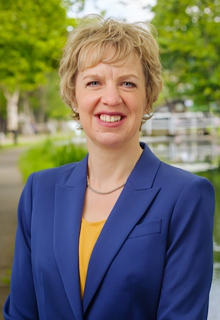
Birth of Ruth Coppinger, Socialist Party TD for Dublin West

Ruth Coppinger, Irish politician and member of the Socialist Party, and Teachta Dála (TD) for the Dublin West constituency, is born in Dublin on April 18, 1967.

Coppinger is a member of Fingal County Council for the Mulhuddart local electoral area from 2003 to 2014. She is co-opted to the council in 2003, replacing Joe Higgins, and is elected in 2004 and re-elected in 2009. She is an unsuccessful candidate for the Socialist Party at the 2011 Dublin West by-election.

Following victory in the 2014 Dublin West by-election, Coppinger joins her party colleague Joe Higgins in the Dáil. After being elected, she calls for a mass campaign of opposition to water charges being implemented by the Fine GaelLabour Party coalition.

In November 2014, Coppinger calls for the gradual nationalisation of U.S. multinationals to prevent job losses. In response, Fianna Fáil’s jobs spokesperson Dara Calleary calls the idea “reckless and ludicrous,” as it would “place a massive burden on taxpayers and the public finances.”

In September 2015, Coppinger joins homeless families from Blanchardstown, in occupying a NAMA-controlled property as part of a campaign to raise awareness of the housing crisis. In October 2015, she joins families in their occupation of a show house in her constituency, to protest the lack of availability of affordable social housing. She also supports the tenants of Tyrrelstown, who are made homeless when a Goldman Sachs vulture fund sells their houses.

Coppinger is re-elected to the Dáil at the 2016 Irish general election, this time under the Anti-Austerity Alliance–People Before Profit banner. On March 10. 2016, at the first sitting of the 32nd Dáil, she nominates Richard Boyd Barrett for the office of Taoiseach, quoting James Connolly from a hundred years previously when she says, “The day has passed for patching up the capitalist system. It must go,” and declaring, “We will not vote for the identical twin candidates” of Fine Gael and Fianna Fáil after they “imposed austerity.” On April 6, 2016, following the failure of the Dáil to elect a Taoiseach at that first sitting, she is nominated for the role of Taoiseach, becoming the first female nominee in the history of the state.

In 2018 Coppinger praises the MeToo movement for exposing patterns of abuse and systemic inequality. However, she also notes the limitations of achieving justice through traditional channels and calls for a stronger focus on combating intimate partner violence and societal tolerance of such abuse.

In April 2018, in the lead-up to the repeal of the Eighth Amendment, Coppinger, along with her colleague Paul Murphy, holds up a Repeal sign during leader’s questions and is reprimanded by the Ceann Comhairle. She is an advocate for abortion rights in Ireland, and is a founding member of ROSA, a movement for reproductive justice in Ireland. Earlier, in 2016, she tables the private members’ motion to repeal the Eighth Amendment.

In November 2018, Coppinger protests in the Dáil against the conduct of a rape trial in Ireland. During the trial, the defence team, as part of their argument that the sex had been consensual, states that the 17-year-old victim had worn a thong with a lace front. The defendant is subsequently found not guilty. During a sitting of the Dáil, Coppinger holds up a similar pair of underwear and admonishes the conduct of the trial, suggesting victim blaming tactics had been used and suggests this is a routine occurrence in Irish courts. She calls on Taoiseach Leo Varadkar to support her party’s bill that would increase sex education in Irish schools and provide additional training to the Irish judiciary and jurors on how to handle cases of rape. Varadkar responds that victims should not be blamed for what happens to them, irrespective of how they are dressed, where they are or if they have consumed alcohol.

In 2019 Coppinger sponsors a private member’s bill – the Domestic Violence (No-contact order) (Amendment) Bill 2019. The bill lapses with the dissolution of the Dáil and Seanad.

At the general election in February 2020, Coppinger is defeated in the Dublin West constituency. She unsuccessfully contests the 2020 Seanad election for the National University of Ireland constituency.

In June 2024, Coppinger is elected to Fingal County Council for the Castleknock local electoral area on the 7th Count. At the 2024 Irish general election, she is re-elected to the Dáil.

Coppinger is an advocate of secularism and believes in abolishing both the Angelus and the Dáil prayer, viewing them as relics of an outdated intertwining of religion and governance. She supports the separation of Church and State, criticising the Catholic Church‘s historical influence in education and health, as well as its financial privileges, including exemptions from accountability under regulations like SIPO. She has called for the requisitioning of Church lands and property, citing the Church’s failure to meet commitments to abuse victims and the necessity of addressing historical injustices.

On drug policy, Coppinger supports decriminalisation and endorses the Portuguese model, which treats addiction as a health issue rather than a criminal matter. She emphasises the hypocrisy of criminalising drug use while overlooking the societal harm caused by alcohol and advocates for expanding access to medicinal cannabis, criticising the political inertia in addressing this need.

In 2013, during referendum to abolish the Irish senate, Coppinger campaigns for a yes vote, calling the institution elitist and undemocratic. However, in 2020, following the loss of her Dáil seat, she runs unsuccessfully for a seat in the Senate. Challenged by the Irish Examiner on this, she states that so long as the Senate continues to exist, it should be used to further progressive causes.

Coppinger lives in Mulhuddart and is a secondary school teacher. Her eldest brother, Eugene Coppinger, serves on Fingal County Council from 2011 to 2019.


Leave a comment

Death of Timothy Harrington, Journalist, Barrister & Politician

Timothy Charles Harrington, Irish journalist, barrister, nationalist politician and Member of Parliament (MP) in the House of Commons of the United Kingdom, dies in Dublin on March 12, 1910, following a stroke.

Harrington is born on September 20, 1851, in Castletownbere, County Cork, son of Denis Harrington and his wife, Eileen (née O’Sullivan). He is educated at the Catholic University of Ireland and Trinity College Dublin (TCD).

As a member of the Irish Parliamentary Party (IPP), Harrington represents Westmeath from February 1883 to November 1885. In 1885 he is elected for the new constituency of Dublin Harbour, which he represents until his death. He serves as Lord Mayor of Dublin three times from 1901 to 1904.

Harrington owns two newspapers, United Ireland and the Kerry Sentinel, and is a member of the so-called Bantry band of prominent nationalist politicians from the Bantry vicinity. They are also more pejoratively known as the Pope’s brass band. Tim Healy is another prominent member of this unofficial group.

In 1884, Harrington publishes a pamphlet, “Maamtrasna Massacres – Impeachment of the Trials,” in which he dismantles the Crown Prosecution’s case against the eight men accused of the murders of the Joyce family on August 17, 1882. He provides evidence that Crown Prosecutor George Bolton had deliberately suppressed evidence that would have acquitted Maolra Seoighe (English: Myles Joyce), who was hanged, and four men who were sentenced to twenty years of penal servitude.

Harrington is secretary and chief organiser of the Irish National League (INL), a supporter of Charles Stewart Parnell and is largely responsible for devising the agrarian Plan of Campaign in 1886. He becomes a Parnellite Nationalist when the party splits in 1891, continuing as secretary of the INL. In 1897 he proclaims himself an Independent Nationalist and sides with William O’Brien‘s United Irish League (UIL) from its early days. He is briefly considered as a possible alternative to John Redmond as leader of the re-united Irish Parliamentary Party in 1900 when he stands in the 1900 United Kingdom general election Ireland as a Nationalist again.

Thereafter Harrington becomes excluded from Redmond’s closed circle of confidants, retains sympathy with O’Brien, and represents the interests of the tenant farmers at the 1902 Land Conference negotiations which lead to the enactment of the unprecedented Wyndham Land Purchase (Ireland) Act 1903.

On September 7, 1901, as the Lord Mayor of Dublin, Harrington kicks off at the official ceremony to open Bohemian F.C.‘s new home, Dalymount Park.

Harrington retains the party nomination for the Dublin Harbour constituency in the January 1910 United Kingdom general election, largely because of local divisions about who should succeed him and because an O’Brienite offer to pay his election expenses deters rivals from going to the polls. He decides that the finely balanced result of the general election means that every nationalist vote would be required at Westminster. He therefore travels to London, but shortly after attending the parliamentary party meeting on February 23 he suffers a stroke. After some days’ recuperation he is brought home to Dublin, but his condition deteriorates and he dies on March 12, 1910, at his home, 70 Harcourt Street. He is buried near the Parnell circle at Glasnevin Cemetery.

Harrington is celebrated by a statue erected in 2001 at the east end of Castletownbere near the Millbrook bar.


Leave a comment

Birth of David Ford, Northern Irish Politician

David Ford, former Northern Irish politician, is born on February 24, 1951, to Irish and Welsh parents in Orpington, Kent, England. He serves as leader of the Alliance Party of Northern Ireland from October 2001 until October 2016 and is Northern Ireland Minister of Justice from April 2010 until May 2016. He is a Member of the Northern Ireland Assembly (MLA) for South Antrim from 1998 to 2018.

Ford is educated at Warren Road Primary School, Orpington, and Dulwich College, London. He spends summer holidays on his uncle’s farm in Gortin, County Tyrone, and moves to Northern Ireland permanently in 1969 when he goes to study Economics at Queen’s University Belfast (QUB). There he joins the university’s student Alliance Party grouping. After graduating, he takes a year out to work as a volunteer at the ecumenical Corrymeela Community in Ballycastle, County Antrim, before starting work as a social worker in 1973.

Ford stands unsuccessfully for Antrim Borough Council in 1989 and enters politics full-time when he becomes general secretary of the Alliance Party. In that role, he is best known as a strong supporter of the then-leader John Alderdice and an advocate of better political organisation and community politics. He is elected to Antrim Borough Council in 1993, 1997 and – after leaving the Council in 2001 to concentrate on Assembly business – again in 2005.

In 1996, Ford stands unsuccessfully for election to the Northern Ireland Forum in South Antrim. In 1997, he obtains 12% of the vote in the general election in South Antrim, and in 1998 is elected to the Northern Ireland Assembly in the constituency of the same name. He sought South Antrim again in the 2000 South Antrim by-election and in the 2001 and 2005 United Kingdom general elections.

In 2001, Seán Neeson resigns from the Party leadership following poor election results. Ford wins the leadership election on October 6 by 86 votes to 45, ahead of Eileen Bell.

Ford gives Alliance a stability which it has lacked since the departure of John Alderdice, but the Party has declined seriously in the late 1990s and all he can do is stabilise the situation. Within a month of taking over the leadership, however, he has a chance to establish Alliance’s relevancy in the post-Good Friday Agreement environment. On November 6, 2001, the Northern Ireland Executive is to be re-established. Due to defections within his own Ulster Unionist Party (UUP), First Minister David Trimble has insufficient support within the Unionist bloc in the Assembly to be re-elected to his post. Ford and two of his five colleagues re-designate as Unionist for just 22 minutes in order to secure Trimble’s position and thereby enable the devolved institutions to operate for another year. However, Alliance fails to make any political gains from their move, and the UUP and Sinn Féin fail to reach agreement on the decommissioning issue, ensuring that the institutions collapse again in October 2002.

In the 2003 Northern Ireland Assembly election, Ford’s seat in the Assembly is perceived to be under severe threat from Sinn Féin’s Martin Meehan, with many commentators expecting him to lose it. However, his expertise in nuts-and-bolts electioneering stands him in good stead. Although Alliance’s vote almost halved, his own vote in South Antrim increases from 8.6% to 9.1%. Meehan’s vote increases dramatically, from 7.3% to 11.5%, and he starts the election count ahead. Ford has much greater transfer appeal and finishes 180 votes ahead of Meehan at the end of a dramatic three-way fight for the last two seats, with Thomas Burns of the Social Democratic and Labour Party (SDLP) just 14 votes ahead of Ford. Despite the dramatic fall in vote, Alliance holds on to its six seats in the Assembly, which remains suspended.

In 2004, Ford makes good his leadership election pledge to work with other parties, as Alliance joins with the Workers’ Party, Northern Ireland Conservatives and elements of the Northern Ireland Women’s Coalition to support Independent candidate John Gilliland in the European elections, achieving the best result for the centre ground for 25 years.

Ford’s greatest triumph comes in the 2007 Northern Ireland Assembly election, when the party achieves its highest vote share since Alderdice’s departure and picks up a seat in what is an otherwise poor election for the moderates. Despite media predictions once again of his demise, Ford himself is elected third in South Antrim, with over 13% of the poll.

On April 12, 2010, Ford is chosen by the Assembly to become Northern Ireland’s first Justice Minister in 38 years. He is supported in the Assembly by the Democratic Unionist Party (DUP), Sinn Féin, the Alliance Party, the Green Party and the Progressive Unionist Party (PUP). Separate candidates for the position are put forward by both the UUP and the SDLP, being Danny Kennedy and Alban Maginness respectively.

In the 2011 Northern Ireland Assembly election, the Alliance Party manages to increase their vote by 50% gaining an extra seat in Belfast East and surpassing the UUP in Belfast.

Ford announces his resignation as Leader in October 2016 on the fifteenth anniversary of his election as leader noting, “The team is working well, and I think it’s an appropriate time to hand over to a new leader who will lead the party forward in the next stage of its development and growth.”

Ford and his wife Anne have four grown children and live in rural County Antrim. Until the spring of 2013, he is an elder in the Second Donegore congregation of the Presbyterian Church in Ireland. He is removed from his role as a ruling elder over differences with fellow congregants on the subject of same-sex marriage. In a 2016 interview he says he is still hurt by the decision by his fellow elders who chose not to work with him because of his support for equal marriage. “It saddened me that there was, if I may put it, a lack of understanding from some people about the role I had as a legislator, compared to the role I have within the church.”


Leave a comment

Birth of Peadar O’Donnell, Irish Republican Politician & Writer

Peadar O’Donnell, Irish republican, socialist activist, politician, writer and one of the foremost radicals of 20th-century Ireland, is born on February 22, 1893, in Meenmore, near Dungloe, County Donegal.

O’Donnell is the youngest among six sons and three daughters of Biddy and James O’Donnell. He is greatly influenced by his upbringing in the Rosses, in northwest Donegal, one of the poorest and most remote parts of Ireland. His father, a popular local fiddler, earns a living through his smallholding, seasonal labouring in Scotland, and winter work in a local corn mill. His mother, who comes from a radical labour and nationalist political background, works in a local cooperative store. He attends Rampart national school and Roshine national school, near Burtonport, where he is a monitor for four years. In 1911 he wins a scholarship to attend St. Patrick’s College in Drumcondra, Dublin, and returns in 1913 to the Rosses, where he spends two years teaching on the islands of Inishfree. In 1915 he is appointed head of Derryhenny national school, near Dungloe, and the following year becomes principal of a national school on the island of Arranmore, where he begins to write.

O’Donnell had long been concerned by the poor conditions of the local ‘tatie-hokers’ (potato pickers) who migrate annually to Scotland. In the summer of 1918, he travels there to help organise the Scottish Farm Servants’ Union. While there he is influenced by left-wing radicals such as Willie Gallacher, later a communist Member of Parliament (MP), and Emanuel ‘Manny’ Shinwell, later Baron Shinwell. In September 1918, against a background of rising labour militancy, he leaves teaching to become a full-time organiser for the Irish Transport and General Workers’ Union (ITGWU) in the west Ulster area. The following year he organises one of Ireland’s first “soviets” when the attendants and nurses of the Monaghan District Lunatic Asylum occupy the grounds and appoint O’Donnell as governor until their demands are met.

In early 1919 O’Donnell joins the Irish Republican Army (IRA) in Monaghan, resigning from the ITGWU for full-time IRA service in late 1920. He leads the 2nd Battalion, Donegal IRA, from the summer of 1920. In December 1920 he goes “on the run” and leads a flying column in west Donegal until May 1921, when he is wounded. Regarded as insubordinate and militarily inexperienced, he is unpopular among the other senior officers of the 1st Northern Division. He, in turn, is disappointed by the lack of social radicalism among the nationalist leadership. He opposes the Anglo-Irish Treaty, is placed in command of the minority anti-treaty 1st Northern Division and is a member of the IRA executive that occupies the Four Courts in Dublin in defiance of the provisional government.

Arrested in June 1922, O’Donnell shares a prison cell with Liam Mellows and influences his radical “Notes from Mountjoy,” an important document for subsequent left-wing republicans. He spends the next two years in various prisons and internment camps. His execution is widely expected to follow those of December 8, 1922. In August 1923, he is elected as a Sinn Féin Teachta Dála (TD) for Donegal in the general election called after the end of the Irish Civil War. He goes on hunger strike for forty-one days in late 1923 and succeeds in escaping from the Curragh in March 1924. In June 1924, while on the run, he marries Lile O’Donel, a wealthy Cumann na mBan activist who had smuggled communications for republican prisoners. O’Donel, a radical and member of the Communist Party, is the daughter of Ignatius O’Donel, a prominent landowner from Mayo. They have no children but raise their nephew, Peadar Joe, as their own son after the death in New York of O’Donnell’s brother Joe.

O’Donnell begins writing seriously while in jail and remains a prolific writer, journalist, and editor until the 1960s. His first novel, Storm, set in the Irish War of Independence, is published in 1925. One of his most highly regarded books, Islanders, is published in 1928. Adrigoole, like Islanders a story of poverty and starvation in rural Ireland, is published the following year. The Knife (1930) and On the Edge of the Stream (1934) soon follow. The most significant of his later novels is probably The Big Windows (1954). Foremost among his qualities as a writer is his empathy for the people, life, and landscape of rural Ireland. But his novels have been criticised for their slow pace, excessive detail, and didactic nature. He claims his writing is incidental to his political activism. His trilogy of autobiographical non-fiction, The Gates flew Open (1932), Salud! An Irishman in Spain (1936), and There Will Be Another Day (1963), which respectively concern the Irish Civil War, his activism during the Spanish Civil War, and his role in the land annuities agitation, remain highly regarded. His other important literary achievement is with The Bell, an innovative literary and political magazine which plays a useful dissenting role in an insular and conservative period. He founds The Bell with the writer Seán Ó Faoláin in 1940 and edits it from 1946 until it ceases publication in 1954.

O’Donnell exercises an influential role in the interwar IRA, particularly through his editorship of An Phoblacht (1926–29), which he attempts to divert from militarism to socialist agitation. His ultimate aim is for a thirty-two-county socialist republic. His most successful campaign is organising small farmers against the payment of land annuities to the government in the late 1920s and early 1930s. This campaign is later adopted by Fianna Fáil and contributes to their electoral success in 1932. He is less successful in radicalising the IRA. After the failure of Saor Éire, a left-wing IRA front which provokes clerical and popular hostility against the IRA, increasing tensions between the IRA’s left-wing and the leadership lead O’Donnell, along with Frank Ryan and George Gilmore, to split from the IRA to establish the short-lived Republican Congress in 1934.

Although O’Donnell claims he was never a Communist Party member, he plays a central role in forging links between republicans and the revolutionary left both in Ireland and internationally and invariably supports the communist party line at critical junctures. After the failure of Republican Congress, he takes up the cause of the Spanish republic. His championing of unpopular causes such as communism and Spain entail a good deal of frustration. He is physically attacked at political meetings and in 1932, despite having never visited the Soviet Union, loses a high-profile libel action against the Dominican Irish Rosary, which claim he had studied in Moscow‘s Lenin College. He is banned from entering the United States for several decades, although he maintains: “My relations with all the great powers continue to be friendly.”

O’Donnell continues to support radical campaigns until his death. He is an outspoken advocate of Irish emigrants. He is prominent in the Irish Campaign for Nuclear Disarmament and serves as its president in the early 1960s. He is a leading protester against the Vietnam War and a supporter of African anti-colonial movements such as that against apartheid. In later years he is involved in the “Save the west” campaign, highlighting the problems of the west of Ireland.

After several months of ill-health following a heart attack, O’Donnell dies in Dublin, aged 93, on May 13, 1986. He leaves instructions that there are to be “no priests, no politicians and no pomp” at his funeral, and those wishes are granted. He is cremated in Glasnevin Cemetery and his ashes are buried at his wife’s home in Swinford, County Mayo. Although he once remarked that every cause he fought for was a failure, he is now regarded as one of the most influential socialist republican theorists and an important voice of dissent in twentieth-century Ireland.

(From: “O’Donnell, Peadar” by Fearghal McGarry, Dictionary of Irish Biography, http://www.dib.ie)


Leave a comment

Birth of Brendan Bracken, Politician & Businessman

Brendan Bracken, Irish-born businessman, politician and a Minister of Information and First Lord of the Admiralty in Winston Churchill‘s War Cabinet, is born on February 15, 1901, in Church Street, Templemore, County Tipperary.

Bracken is the third child and second of three sons of Joseph Kevin (J. K.) Bracken and Hannah Bracken (née Ryan). The family moves to Kilmallock, County Limerick, in 1903, the year before his father’s death. By 1908, his mother takes the family to live in Glasnevin, a new suburb in north Dublin, and subsequently off the North Circular Road. He is educated in St. Patrick’s National School, Drumcondra, and at the Christian BrothersO’Connell School in North Richmond Street. He is a mischievous, delinquent child, one time throwing a schoolfellow into the Royal Canal. In February 1915 he is sent to Mungret College, a Jesuit boarding school near Limerick. He is not amenable to the regime and runs away on several occasions, finding accommodation in local hotels under a false name.

At the end of 1915 Bracken goes to Australia with £14 in his pocket. He is first based in Echuca, Victoria, where he is put up in a convent. Later he moves to other houses run by religious orders. A voracious reader, he claims that he is doing research for a life of Cardinal Patrick Francis Moran, and signs himself “Brendan Newman Bracken.” He seeks admission as a pupil to Riverview, the fashionable Jesuit school in Sydney, claiming that he had been educated at Clongowes Wood College. Unfortunately for him, a priest who had just come out from Clongowes exposes him. Opinionated and argumentative, he does not conceal his skepticism about the Catholic religion. For a time, he teaches in a Protestant school in Orange, New South Wales.

Bracken returns to Ireland in 1919. By this time his mother has remarried and is living with her new husband, Patrick Laffan, on a farm in Beauparc, County Meath. After a short stay there, he moves to Liverpool and finds employment as a teacher at the Liverpool Collegiate School, claiming that he had been to the University of Sydney. He teaches at the school for two terms in 1920, earning extra money as tutor to a young boy. With his savings he is able to gain admission to Sedbergh School, a public school in the town of Sedbergh in Cumbria, North West England, giving his name as Brendan Rendall Bracken, born 1904, and stating that his parents had perished in a bush fire in Australia, leaving him money to complete his education. He remains only one term but distinguishes himself by winning a prize for history. After Sedbergh, Bracken teaches at Rottingdean preparatory school and then at Bishops Stortford School. He cuts a flamboyant figure and drops the name of famous acquaintances with gay abandon. He stands over 6 feet and has a powerful presence and a domineering personality; his mop of red hair and pale freckled skin combine with black teeth to give him a bizarre appearance.

In 1922 Bracken moves to London. He takes charge of the Illustrated Review when its editor, Hilaire Belloc, resigns. Renamed English Life and covering political and social events, it affords Bracken an opportunity to meet prominent people, including J. L. Garvin, editor of The Observer. In autumn 1923 Garvin introduces him to Winston Churchill, who had lost his parliamentary seat in 1922 and decided to contact Leicester West in the 1923 United Kingdom general election. Bracken offers his services as campaign manager. The friendship between Churchill and Bracken is soon so close that Bracken is rumoured to be Churchill’s natural son. Churchill’s wife Clementine dislikes Bracken and discourages the friendship.

Meanwhile Bracken enjoys the life of a ubiquitous socialite and builds up his career in publishing. He becomes a director of Eyre & Spottiswoode in 1926, starting The Banker, a monthly magazine, for them, and acquiring the Financial News in 1928 and a half-share in The Economist. To these are added in due course the Investors Chronicle and The Practitioner. His success in business enables him to acquire a home in North Street in 1928, near the Houses of Parliament. He is driven about in a chauffeured Hispano-Suiza car.

In 1929, Bracken has himself adopted as conservative candidate for Paddington North, a marginal seat. After a hard-fought campaign characterised by minor violence provoked by Bracken’s intemperate language, he wins the seat by 528 votes. At one point a rumour is put about that Bracken is in reality a Polish Jew, which he has to disprove by exhibiting a copy of his birth certificate. His background is a subject of speculation among acquaintances, and in throwaway remarks he gives different fictitious versions of it, Ireland figuring in none of them. He does however remain in constant touch with his mother, to whom he seems to have been deeply devoted, until her death in 1928. However, he has as little contact as possible with his brother and sisters, although he does give assistance to some of them and their families at various times.

In parliament Bracken voices right-wing views on economic issues and is an enthusiastic imperialist. After Churchill resigns from the conservative front bench in 1930 because they would not oppose the Labour government’s proposal for Indian self-government, he is supported by Bracken. During the 1930s, when Churchill is in the wilderness, disagreeing with the party leadership on India and on what he sees as a policy of appeasement toward Hitler‘s Germany, Bracken is his sole political ally. Stanley Baldwin calls him Churchill’s “faithful chela.”

In September 1939, Churchill joins Neville Chamberlain‘s war cabinet as First Lord of the Admiralty. Bracken is appointed his parliamentary private secretary, continuing in that role when Churchill becomes Prime Minister. Despite the king’s opposition, Churchill insists in June 1940 that Bracken should be appointed a privy councillor. Bracken shuts up his house and moves to the Prime Minister’s residence for the duration of the war. As a confidant of the Prime Minister, he often acts as a go-between with other politicians and newspapermen. He is allowed to oversee patronage and takes a special interest in ecclesiastical appointments. In July 1941, he is persuaded by Lord Beaverbrook and Churchill to become Minister for Information. He wins over most of the proprietors by giving them more news, often on a confidential basis, and censorship is kept to a minimum. The BBC is also allowed a fair measure of freedom as long as it behaves responsibly; under the leadership of Cyril Radcliffe, the civil service head of the ministry, it operates more smoothly. Bracken was generally acclaimed for that success.

After the resignation of the Labour ministers from the government at the end of the war in Europe, Bracken joins the cabinet as First Lord of the Admiralty. He is prominent in the general election campaign that follows and is the only conservative minister apart from Churchill to give more than one radio broadcast. He is accused, probably unjustly, of provoking Churchill to take extreme positions, and blamed when the conservatives are heavily defeated at the polls. Bracken himself loses Paddington North to Lt. Gen. Sir Noel Mason-MacFarlane. However, he is soon back in parliament representing Bournemouth, and as front-bench spokesman is an uncompromising opponent of the nationalisation measures of the Labour government (1945–51). He is out of sympathy with the leftward drift of the conservative party associated with Rab Butler and Harold Macmillan.

In December 1951, when Churchill is again Prime Minister, Bracken declines an invitation to serve as Colonial Secretary, pleading that his recurring sinusitis makes it impossible. He resigns his seat in the House of Commons and is created a peer, Viscount Bracken of Christchurch in Hampshire, but never takes his seat in the House of Lords. Although he retires from politics, he remains close to political events through his friendship with Churchill. He is deeply involved in concealing the severe stroke that Churchill suffers in 1953, so that he can carry on as Prime Minister.

In the postwar period, Bracken has important business interests. The Financial News group acquires the Financial Times in 1945, and he is returned as chairman of the expanded company. He writes a weekly Financial Times column until 1954. He oversees the building near St. Paul’s of a new head office, named “Bracken House” after his death. He is also chairman of the Union Corporation mining house, with interests in South Africa, which he frequently visits. From 1950 he is chairman of the board of governors of Sedbergh School, where he goes frequently and often walks for miles across the fells. He organises and finances the restoration of the eighteenth-century school building as a library, with a commemoratory inscription, “Remember Winston Churchill.”

From 1955 Bracken is a trustee of the National Gallery. He is an unrelenting opponent of the proposal to return to Ireland the impressionist paintings bequeathed to it by Hugh Lane, because a codicil willing them to Dublin has not been witnessed. Throughout the postwar period he carries on a prolific correspondence with friends such as Lord Beaverbrook, the American ambassador Lewis Douglas, and the Australian entrepreneur W. S. Robinson. These are a valuable and entertaining source on the political history of the time.

In January 1958, Bracken, who has always been a heavy smoker, is diagnosed with throat cancer. He lingers on until August 8, 1958, when he dies at the flat of his friend Sir Patrick Hennessy in Park Lane. He resists efforts made to reconcile him to the church of Rome. By his own wish he is cremated, and his ashes are scattered on Romney Marsh, Kent. On his instructions his papers are burned by his chauffeur. His estate comes to £145,032.

(From: “Bracken, Brendan” by Charles Lysaght, Dictionary of Irish Biography, www. dib.ie, October 2009 | Pictured: Brendan Bracken, bromide print by Elliott & Fry, January 13, 1950, National Portrait Gallery, London)


Leave a comment

Birth of Alan Shatter, Lawyer, Author & Fine Gael Politician

Alan Joseph Shatter, Irish lawyer, author and former Fine Gael politician who serves as Minister for Justice and Equality and Minister for Defence (2011-14), is born into a Jewish family in Dublin on February 14, 1951. He also serves as a Teachta Dála (TD) for the Dublin South constituency (1981-2002, 2007-16). He leaves Fine Gael in early 2018 and unsuccessfully contests the 2024 Irish general election as an independent candidate for Dublin Rathdown.

Shatter is the son of Reuben and Elaine Shatter, an English couple who meet by chance when they are both on holiday in Ireland in 1947. He is educated at The High School, Dublin, Trinity College Dublin (TCD) and the Europa Institute of the University of Amsterdam. In his late teens, he works for two months in Israel on a kibbutz. He is a partner in the Dublin law firm Gallagher Shatter (1977-2011). As a solicitor he acts as advocate in many seminal and leading cases determined both by the Irish High and Supreme Courts. He is the author of one the major academic works on Irish family law which advocates substantial constitutional and family law reform.

Shatter enters politics at the 1979 Irish local elections, winning a seat on Dublin County Council for the Rathfarnham local electoral area. He retains this seat until 1999, becoming a member of South Dublin County Council in 1994. He is first elected to Dáil Éireann in 1981 as a Fine Gael TD and is re-elected at each subsequent election until he loses his seat in the 2002 Irish general election. He is re-elected at the 2007 Irish general election.

Shatter is Fine Gael Front Bench spokesperson on Law Reform (1982, 1987–88), the Environment (1989–91), Labour (1991), Justice (1992–93), Equality and Law Reform (1993–94), Health and Children (1997–2000), Justice, Law Reform and Defence (2000–02), Children (2007–10) and Justice and Law Reform (2010–11).

On March 9, 2011, Shatter is appointed by Taoiseach Enda Kenny as both Minister for Justice and Equality and Minister for Defence.

Under Shatter’s steerage, a substantial reform agenda is implemented with nearly 30 separate pieces of legislation published, many of which are now enacted including the Personal Insolvency Act 2012, Criminal Justice Act 2011, DNA Database Act, and the Human Rights and Equality Commission Act.

Under Shatter’s guidance, major reforms are introduced in 2011 into Ireland’s citizenship laws and a new Citizenship Ceremony is created. He both devises and pilots Ireland’s first ever citizenship ceremony which takes place in June 2011 and a new inclusive citizenship oath which he includes in his reforming legislation. During his time as Minister, he clears an enormous backlog of citizenship applications, and 69,000 foreign nationals become Irish citizens. Some applications had lain dormant for 3 to 4 years. He introduces a general rule that save where there is some real complication, all properly made citizenship applications should be processed within a six-month period. He also takes steps to facilitate an increased number of political refugees being accepted into Ireland and creates a special scheme to facilitate relations of Syrian families already resident in Ireland who are either caught up in the Syrian civil war, or in refugee camps elsewhere as a result of the Syrian civil war, to join their families in Ireland.

Shatter enacts legislation before the end of July 2011 to facilitate access to financial documentation and records held by third parties in investigations into banking scandals and white-collar crime. The legislation is first used by the Gardaí in September 2011.

During Ireland’s Presidency of the Council of the European Union in 2013, Shatter chairs the Justice and Home Affairs Council (JHA) meetings and, in January 2013, in Dublin Castle, the meeting of EU Defence Ministers. Under his guidance, Ireland plays a more active role than in the past in EU defence matters and in deepening Ireland’s participation in NATO’s partnership for peace. During the Irish Presidency, substantial progress is made at the European Union level in the adoption and development of new legislation and measures across a broad range of Justice and Home Affairs issues.

Shatter implements substantial reform in the Department of Defence and restructures the Irish Defence Forces. He is a strong supporter of the Irish Defence Forces participation in international peacekeeping and humanitarian engagements and is an expert on the Middle East. As a member of the Irish Parliament and as Minister on many occasions, he visits Irish troops participating in United Nations (UN) missions in the Middle East. Under his watch contracts are signed for the acquisition of two new naval vessels with an option to purchase a third. All three naval vessels are now part of the Irish Naval Service and have been actively engaged in recent years in rescuing drowning refugees in the Mediterranean Sea attempting to enter Europe.

As Minister for Defence he enacts legislation to grant a pardon and an amnesty to members of the Irish Defence Forces who deserted during World War II to fight on the allied side against Nazi Germany and gives a state apology for their post-war treatment by the Irish State.

Shatter is the minister responsible for two amendments to the Constitution of Ireland which are passed in referendums: the Twenty-ninth Amendment in 2011 to allow for the reduction of judges’ pay, and the Thirty-third Amendment in 2013 to establish a Court of Appeal. Just prior to his resignation from government, the draft legislation to create the court is published and the court is established and sitting by October 2014.

The jurisdictions of the courts are extended for the first time in 20 years and the maximum civil damages payable for the emotional distress of bereaved relations following a negligent death is increased.

As a politician, Shatter plays a lead role in effecting much of the constitutional and legislative change he advocates. He is a former chairperson of FLAC (the Free Legal Advice Centres), a former chairperson of CARE, an organisation that campaigns for childcare and children’s legislation reform in the 1970s and a former President of the Irish Council Against Blood Sports.

Shatter is a founder member of the Irish Soviet Jewry Committee in 1970 and pioneers a successful all party Dáil motion on the plight of Soviet Jewry (1984) and visits various refuseniks in Moscow in 1985. He is a former chairperson of the Oireachtas Foreign Affairs Committee (1996-97) and initiates the creation of an Ireland/Israel Parliamentary Friendship group in 1997, leading a number of visits to Israel by members of the Dáil Éireann and Seanad Éireann.

Shatter is the author of the satirical book Family Planning Irish Style (1979), and the novel Laura (1989). In 2017 his biography, Life is a Funny Business, is published by Poolbeg Press and in 2019 Frenzy and Betrayal: The Anatomy of a Political Assassination is published by Merrion Press. In 2023, his book Cyril’s Lottery of Life, a comedic book with an English solicitor from a small town as its protagonist, is published.


Leave a comment

Birth of Roddy Connolly, Socialist, Trade Unionist & Politician

Roderick James Connolly, socialist, trade unionist, and politician, is born on February 11, 1901, at 54 Pimlico, Dublin. He is also known as “Roddy Connolly” and “Rory Connolly.”

Connolly is the only son and sixth among seven children of Irish socialist James Connolly and Lillie Connolly. A lieutenant in the Irish Citizen Army (ICA) boys’ corps, he is involved in the 1916 Easter Rising. At the age of 15, he serves in the General Post Office (GPO) under his father. He joins the Socialist Party of Ireland in 1917.

Connolly travels to Russia on several occasions in 1920 and 1921 and forms a close association with Vladimir Lenin and is hugely influenced by the Soviet leader. He is a delegate to the Second Congress of the Communist International (Comintern) as a delegate of the Industrial Workers of the World (IWW) in June 1920. It is here he meets Lenin at just 19 years of age following an introduction from journalist John Reed. According to Connolly, Lenin speaks English with a Rathmines accent which he acquired from his Irish tutor.

Connolly helps form and becomes President of the first Communist Party of Ireland (CPI) in October 1921. He is editor of the CPI newspaper, The Workers’ Republic. He opposes the 1921 Anglo-Irish Treaty between the representatives of the Irish Republic and the British state, and fights in the Irish Civil War on the anti-treaty side. The CPI is the first Irish political party to oppose the Treaty and urges the Irish Republican Army (IRA) to adopt socialist policies to defeat the new Irish Free State government. The CPI is dissolved in 1924 by the Comintern but in 1926, Connolly helps set up a second Marxist party, the Irish Workers’ Party. He is the party leader and editor of its journal, The Hammer and Plough. This party too is dissolved in 1927.

Connolly joins the Irish Labour Party in 1928 and in 1934 participates in the last socialist initiative of Inter-War Ireland, the Irish Republican Congress. He is imprisoned twice in 1935. At the 1943 Irish general election, he is elected to Dáil Éireann as a Labour Party Teachta Dála (TD) for Louth. He loses his seat at the 1944 Irish general election, but is re-elected at the 1948 Irish general election, before losing once more at the 1951 Irish general election. He is also financial secretary of the party from 1941 to 1949.

Connolly enters a semi-retirement between the mid-1950s and mid-1960s, but in the late 1960s, he begins a comeback. He is elected as party chairman in 1971 and holds this position until 1978. During his time as chairman, he oversees the expulsion of the Socialist Labour Alliance in 1971, some of whose members go on to form the Socialist Workers Network (SWN), which in turn eventually establishes People Before Profit (PBP).

Connolly also sits in Seanad Éireann from 1975 to 1977 on the Cultural and Educational Panel. He is a supporter of the Labour Party–Fine Gael coalition government that is in power from 1973 to 1977 and defends the coalition from left-wing critics by reminding them his father, James Connolly, had allied with the likes of Patrick Pearse in 1916.

Connolly dies of pneumonia and stomach cancer in St. Michael’s Hospital, Dún Laoghaire, on December 16, 1980. He is buried in Glasnevin Cemetery, Dublin.

In 1921, Connolly marries Jessica Maidment, a socialist activist in England and chartered accountant, who from 1928 works for Russian Oil Products in Dublin. She dies in 1930 from blood poisoning arising from an operation. He is survived by his second wife, Peggy, whom he marries in 1937, sons, and daughters. His recreations include chess and bridge; highly adept at both, he learns the former from Seán Mac Diarmada as prisoners after the Easter rising and is international bridge correspondent for the Irish Independent.

(Pictured: Roddy Connolly during an interview conducted for the RTÉ Television project “Portraits 1916” on January 9, 1966)


Leave a comment

Birth of Rory O’Hanlon, Fianna Fáil Politician

Rory O’Hanlon, former Fianna Fáil politician, is born in Dublin on February 7, 1934. He serves as Ceann Comhairle of Dáil Éireann (2002-07), Leas-Cheann Comhairle of Dáil Éireann (1997-2002), Minister for the Environment (1991-92), Minister for Health (1987-91) and Minister of State for Social Welfare Claims (1982). He serves as a Teachta Dála (TD) for the Cavan–Monaghan constituency (1977-2011).

O’Hanlon is brought up in a family that has a strong association with the republican tradition. His father is a member of the Fourth Northern Division of the Irish Republican Army (IRA) during the Irish War of Independence (1919-21). He is educated at Mullaghbawn National School, before later attending St. Mary’s College, Dundalk and Blackrock College in Dublin. He subsequently studies medicine at University College Dublin (UCD) and qualifies as a doctor. In 1965, he is appointed to Carrickmacross as the local general practitioner and is the medical representative on the North Eastern Health Board from its inception in 1970 until 1987.

O’Hanlon enters his first electoral contest when he is the Fianna Fáil candidate in the 1973 Monaghan by-election caused by the election of Erskine Childers to the Presidency. He is unsuccessful on this occasion but is eventually elected at the 1977 Irish general election for the Cavan–Monaghan constituency. He is one of a handful of new Fianna Fáil deputies who are elected in that landslide victory for the party and, as a new TD, he remains on the backbenches. Two years later he becomes a member of Monaghan County Council, serving on that authority until 1987.

In 1979, Jack Lynch suddenly resigns as Taoiseach and Leader of Fianna Fáil. The subsequent leadership election results in a straight contest between Charles Haughey and George Colley. The latter has the backing of the majority of the existing cabinet; however, a backbench revolt sees Haughey become Taoiseach. O’Hanlon supports Colley and is thus overlooked for appointment to the new ministerial and junior ministerial positions. Despite this, he does become a member of the powerful Public Accounts Committee in the Oireachtas.

When Fianna Fáil returns to power after a short-lived Fine GaelLabour Party government in 1982, O’Hanlon is once again overlooked for ministerial promotion. An extensive cabinet reshuffle toward the end of the year sees him become Minister of State for Social Welfare Claims. His tenure is short-lived as the government falls a few weeks later and Fianna Fáil are out of power.

In early 1983, Charles Haughey announces a new front bench, and O’Hanlon is promoted to the position of spokesperson on Health and Social Welfare.

Following the 1987 Irish general election, Fianna Fáil are back in power, albeit with a minority government, and O’Hanlon becomes Minister for Health. Immediately after taking office, he is confronted with several controversial issues, including the resolution of a radiographers’ dispute and the formation of an HIV/AIDS awareness campaign. While Fianna Fáil campaigns on a platform of not introducing any public spending cuts, the party commits a complete U-turn once in government. The savage cuts about healthcare earn O’Hanlon the nickname “Dr. Death.” Despite earning this reputation, he also introduces a law to curb smoking in public places.

O’Hanlon’s handling of the Department of Health means that he is one of the names tipped for promotion as a result of Ray MacSharry‘s departure as Minister for Finance. In the end, he is retained as Minister for Health and is disappointed not to be given a new portfolio following the 1989 Irish general election.

In 1991, O’Hanlon becomes Minister for the Environment following Albert Reynolds‘ failed leadership challenge against Charles Haughey.

When Reynolds eventually comes to power in 1992, O’Hanlon is one of several high-profile members of the cabinet who lose their ministerial positions.

In 1995, O’Hanlon becomes chair of the Fianna Fáil parliamentary party before being elected Leas-Cheann Comhairle (deputy chair) of Dáil Éireann in 1997. Following the 2002 Irish general election, he becomes Ceann Comhairle of Dáil Éireann. In this position, he is required to remain neutral and, as such, he is no longer classed as a representative of any political party. He is an active chair of the Dáil. However, on occasion, he is criticised, most notably by Labour’s Pat Rabbitte, for allegedly stifling debate and being overly protective of the government. Following the 2007 Irish general election, he is succeeded as Ceann Comhairle by John O’Donoghue. He is the vice-chair of the Joint Oireachtas Committee on Foreign Affairs.

O’Hanlon retires from politics at the 2011 Irish general election.

Two of O’Hanlon’s children have served as local politicians in Cavan-Monaghan. A son Shane is a former member of Monaghan County Council and a daughter Fiona O’Hea serves one term on Cootehill Town Council. The Sinn Féin TD Caoimhghín Ó Caoláin is also a relation of O’Hanlon. He is also the father of actor and comedian Ardal O’Hanlon.


Leave a comment

Birth of David Cook, Northern Ireland Solicitor & Politician

David Somerville Cook, English-born solicitor and politician, is born on January 25, 1944. He is a founding member of the nonsectarian, liberal-centre Alliance Party of Northern Ireland (APNI). He serves on Belfast City Council from 1973 to 1986, and in 1978 he becomes the first non-Unionist Lord Mayor of Belfast since 1898. He is elected as a member of the Northern Ireland Assembly of 1982 and serves on that body until its abolishment in 1986. He is appointed Chair of the Police Authority of Northern Ireland in 1994 and holds that position until his resignation from the role in 1996.

Cook is born to Francis John Granville Cook and Jocelyn McKay (née Stewart) in Leicester, England. As a child, he moves to Northern Ireland with his parents and sisters after his father is appointed headmaster of Campbell College in 1954.

Cook works as a solicitor, eventually becoming a senior partner at Sheldon and Stewart Solicitors.

In 1970, Cook is a founder member of the Alliance Party of Northern Ireland, a nonsectarian party, while he is elected to the party’s Central Executive in 1971.

Cook is elected to Belfast City Council in 1973, a position he holds until 1985. In 1978, he becomes the first non-Unionist Lord Mayor of Belfast since William James Pirrie, a Home Rule Liberal, in 1896–1898.

Cook stands for APNI in Belfast South in the February 1974 United Kingdom general election, taking just under 10% of the vote. He is able to improve to 27% of the vote at the 1982 Belfast South by-election. Following this, he wins a seat on the Northern Ireland Assembly representing Belfast South.

In the 1983 United Kingdom general election, 1986 Belfast South by-election and 1987 United Kingdom general election, Cook consistently wins over 20% of the votes cast in Belfast South. He also stands for Alliance in the 1984 European Parliament election but takes only 4% of the vote. From 1980 to 1984, he serves as the Deputy Leader of APNI.

In 1994, Cook becomes the Chairman of the Police Authority of Northern Ireland, but he is sacked from this role in 1996 after losing a vote of confidence. After a critical account of his role in an internal row in that authority appears in newspapers in 1998, he undertakes a lengthy libel case which is ultimately settled out of court. He subsequently sits on the Craigavon Health and Social Services Trust.

On September 20, 2020, it is announced that Cook has died after being diagnosed with COVID-19 during the pandemic. According to his family, he dies on September 19, 2020, at Craigavon Area Hospital. He had had a stroke two years earlier. He is survived by his wife Fionnuala, his sisters Alison and Nora, his daughter Barbary, his sons John, Patrick, Julius, and Dominic, and his granddaughters Romy and Imogen.