seamus dubhghaill

Promoting Irish Culture and History from Little Rock, Arkansas, USA


Leave a comment

The Capture of Bandon

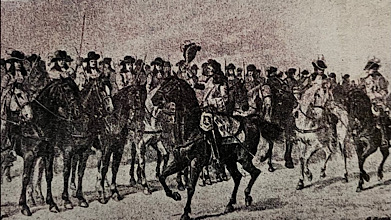
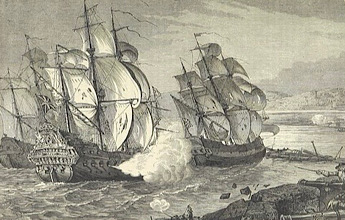
The Capture of Bandon begins on February 23, 1689, when the town of Bandon, County Cork, is forcibly seized from its rebellious Protestant inhabitants by force of Irish Army troops under Justin McCarthy. The skirmishing at the town takes place during the early stages of the Williamite War in Ireland. The Jacobite success at Bandon helps suppress any chance of a general Munster uprising against the rule of James II similar to that which occurs in Ulster the same year. The slogan “No Surrender!” is believed to have been first used at Bandon and subsequently taken up, more famously, by the defenders at the Siege of Derry later in the year.

In 1685, the Catholic James II comes to the throne. This leads to a sharp reversal of government policy in Ireland, which had previously favoured the Protestant inhabitants. This is quickly changed by James’ representative Richard Talbot, 1st Earl of Tyrconnell. Under Talbot’s administration, the army and civil government are mostly purged of Protestants, who are replaced by Catholics. In Bandon, the previous town burgesses are replaced by Catholic nominees.

Talbot’s actions lead to a growing hostility amongst the Protestant inhabitants across the island toward the King and his Irish government. Bandon is a historic centre of Protestants, dating back to the Plantation of Munster in the Elizabethan era and is a natural focus of dissent against James’s rule. In 1688, a similar opposition in England leads to the Glorious Revolution, in which William III successfully invades with a Dutch Army. Many Protestants now believe William to be their rightful King while Catholics, and some Protestants, remain loyal to James. During the growing turmoil, many rural County Cork Protestants come to shelter in Bandon.

Fearing a potential outbreak of rebellion in Bandon will occur, the government sends a detachment of the Irish Army under Captain Daniel O’Neill to take the town. They reportedly enter on a Sunday morning while the inhabitants are attending church services. The following day, February 24, sometimes referred to as “Black Monday,” the townspeople rise and attack the soldiers. Various sources say between three and eight of the redcoats are killed and the remainder are driven out of the town. Using their captured weapons, the Protestants then make an effort to prepare Bandon to withstand an assault.

Having received word about the growing rebellion in the county, Talbot in Dublin has already dispatched six companies of infantry under Justin McCarthy, an experienced Irish Catholic soldier. Instead of immediately assaulting Bandon, McCarthy first seizes nearby Cork, another major centre of Protestants in the south of the country and clamps down on other potential dissidents. He then proceeds to Bandon with his troops, plus some cavalry and artillery. Although they had previously hung out a banner proclaiming “No Surrender,” the defenders negotiate a surrender in exchange for generous conditions. Despite the usual punishment for rebellion being death, the town corporation is fined £1,000 and the walls are ordered to be demolished.

The comparatively light terms imposed on the town are part of a wider attempt by King James to convince Protestants of his goodwill toward them. It angers more hardline Catholics, including McCarthy’s nephew, Donough MacCarthy, 4th Earl of Clancarty, who wants a harsher punishment for the rebels.

The fighting at Bandon is part of a succession of defeats of locally raised Protestant troops both across Munster (at Castlemartyr) and Ireland as a whole, with the Ulster-raised Army of the North suffering heavy defeats at the Break of Dromore and the Battle of Cladyford. The advance of the mainly Catholic Jacobite Army is halted by the successful Protestant defence of Enniskillen and Derry. The arrival of large-scale reinforcements under Frederick Schomberg and King William reverse the tide, and Dublin is captured following the Battle of the Boyne in 1690. The same year, Bandon is re-taken by Protestant forces following John Churchill, 1st Duke of Marlborough‘s successful Siege of Cork. The walls are not rebuilt, as they are becoming increasingly militarily obsolete.


Leave a comment

Birth of Brendan Bracken, Politician & Businessman

Brendan Bracken, Irish-born businessman, politician and a Minister of Information and First Lord of the Admiralty in Winston Churchill‘s War Cabinet, is born on February 15, 1901, in Church Street, Templemore, County Tipperary.

Bracken is the third child and second of three sons of Joseph Kevin (J. K.) Bracken and Hannah Bracken (née Ryan). The family moves to Kilmallock, County Limerick, in 1903, the year before his father’s death. By 1908, his mother takes the family to live in Glasnevin, a new suburb in north Dublin, and subsequently off the North Circular Road. He is educated in St. Patrick’s National School, Drumcondra, and at the Christian BrothersO’Connell School in North Richmond Street. He is a mischievous, delinquent child, one time throwing a schoolfellow into the Royal Canal. In February 1915 he is sent to Mungret College, a Jesuit boarding school near Limerick. He is not amenable to the regime and runs away on several occasions, finding accommodation in local hotels under a false name.

At the end of 1915 Bracken goes to Australia with £14 in his pocket. He is first based in Echuca, Victoria, where he is put up in a convent. Later he moves to other houses run by religious orders. A voracious reader, he claims that he is doing research for a life of Cardinal Patrick Francis Moran, and signs himself “Brendan Newman Bracken.” He seeks admission as a pupil to Riverview, the fashionable Jesuit school in Sydney, claiming that he had been educated at Clongowes Wood College. Unfortunately for him, a priest who had just come out from Clongowes exposes him. Opinionated and argumentative, he does not conceal his skepticism about the Catholic religion. For a time, he teaches in a Protestant school in Orange, New South Wales.

Bracken returns to Ireland in 1919. By this time his mother has remarried and is living with her new husband, Patrick Laffan, on a farm in Beauparc, County Meath. After a short stay there, he moves to Liverpool and finds employment as a teacher at the Liverpool Collegiate School, claiming that he had been to the University of Sydney. He teaches at the school for two terms in 1920, earning extra money as tutor to a young boy. With his savings he is able to gain admission to Sedbergh School, a public school in the town of Sedbergh in Cumbria, North West England, giving his name as Brendan Rendall Bracken, born 1904, and stating that his parents had perished in a bush fire in Australia, leaving him money to complete his education. He remains only one term but distinguishes himself by winning a prize for history. After Sedbergh, Bracken teaches at Rottingdean preparatory school and then at Bishops Stortford School. He cuts a flamboyant figure and drops the name of famous acquaintances with gay abandon. He stands over 6 feet and has a powerful presence and a domineering personality; his mop of red hair and pale freckled skin combine with black teeth to give him a bizarre appearance.

In 1922 Bracken moves to London. He takes charge of the Illustrated Review when its editor, Hilaire Belloc, resigns. Renamed English Life and covering political and social events, it affords Bracken an opportunity to meet prominent people, including J. L. Garvin, editor of The Observer. In autumn 1923 Garvin introduces him to Winston Churchill, who had lost his parliamentary seat in 1922 and decided to contact Leicester West in the 1923 United Kingdom general election. Bracken offers his services as campaign manager. The friendship between Churchill and Bracken is soon so close that Bracken is rumoured to be Churchill’s natural son. Churchill’s wife Clementine dislikes Bracken and discourages the friendship.

Meanwhile Bracken enjoys the life of a ubiquitous socialite and builds up his career in publishing. He becomes a director of Eyre & Spottiswoode in 1926, starting The Banker, a monthly magazine, for them, and acquiring the Financial News in 1928 and a half-share in The Economist. To these are added in due course the Investors Chronicle and The Practitioner. His success in business enables him to acquire a home in North Street in 1928, near the Houses of Parliament. He is driven about in a chauffeured Hispano-Suiza car.

In 1929, Bracken has himself adopted as conservative candidate for Paddington North, a marginal seat. After a hard-fought campaign characterised by minor violence provoked by Bracken’s intemperate language, he wins the seat by 528 votes. At one point a rumour is put about that Bracken is in reality a Polish Jew, which he has to disprove by exhibiting a copy of his birth certificate. His background is a subject of speculation among acquaintances, and in throwaway remarks he gives different fictitious versions of it, Ireland figuring in none of them. He does however remain in constant touch with his mother, to whom he seems to have been deeply devoted, until her death in 1928. However, he has as little contact as possible with his brother and sisters, although he does give assistance to some of them and their families at various times.

In parliament Bracken voices right-wing views on economic issues and is an enthusiastic imperialist. After Churchill resigns from the conservative front bench in 1930 because they would not oppose the Labour government’s proposal for Indian self-government, he is supported by Bracken. During the 1930s, when Churchill is in the wilderness, disagreeing with the party leadership on India and on what he sees as a policy of appeasement toward Hitler‘s Germany, Bracken is his sole political ally. Stanley Baldwin calls him Churchill’s “faithful chela.”

In September 1939, Churchill joins Neville Chamberlain‘s war cabinet as First Lord of the Admiralty. Bracken is appointed his parliamentary private secretary, continuing in that role when Churchill becomes Prime Minister. Despite the king’s opposition, Churchill insists in June 1940 that Bracken should be appointed a privy councillor. Bracken shuts up his house and moves to the Prime Minister’s residence for the duration of the war. As a confidant of the Prime Minister, he often acts as a go-between with other politicians and newspapermen. He is allowed to oversee patronage and takes a special interest in ecclesiastical appointments. In July 1941, he is persuaded by Lord Beaverbrook and Churchill to become Minister for Information. He wins over most of the proprietors by giving them more news, often on a confidential basis, and censorship is kept to a minimum. The BBC is also allowed a fair measure of freedom as long as it behaves responsibly; under the leadership of Cyril Radcliffe, the civil service head of the ministry, it operates more smoothly. Bracken was generally acclaimed for that success.

After the resignation of the Labour ministers from the government at the end of the war in Europe, Bracken joins the cabinet as First Lord of the Admiralty. He is prominent in the general election campaign that follows and is the only conservative minister apart from Churchill to give more than one radio broadcast. He is accused, probably unjustly, of provoking Churchill to take extreme positions, and blamed when the conservatives are heavily defeated at the polls. Bracken himself loses Paddington North to Lt. Gen. Sir Noel Mason-MacFarlane. However, he is soon back in parliament representing Bournemouth, and as front-bench spokesman is an uncompromising opponent of the nationalisation measures of the Labour government (1945–51). He is out of sympathy with the leftward drift of the conservative party associated with Rab Butler and Harold Macmillan.

In December 1951, when Churchill is again Prime Minister, Bracken declines an invitation to serve as Colonial Secretary, pleading that his recurring sinusitis makes it impossible. He resigns his seat in the House of Commons and is created a peer, Viscount Bracken of Christchurch in Hampshire, but never takes his seat in the House of Lords. Although he retires from politics, he remains close to political events through his friendship with Churchill. He is deeply involved in concealing the severe stroke that Churchill suffers in 1953, so that he can carry on as Prime Minister.

In the postwar period, Bracken has important business interests. The Financial News group acquires the Financial Times in 1945, and he is returned as chairman of the expanded company. He writes a weekly Financial Times column until 1954. He oversees the building near St. Paul’s of a new head office, named “Bracken House” after his death. He is also chairman of the Union Corporation mining house, with interests in South Africa, which he frequently visits. From 1950 he is chairman of the board of governors of Sedbergh School, where he goes frequently and often walks for miles across the fells. He organises and finances the restoration of the eighteenth-century school building as a library, with a commemoratory inscription, “Remember Winston Churchill.”

From 1955 Bracken is a trustee of the National Gallery. He is an unrelenting opponent of the proposal to return to Ireland the impressionist paintings bequeathed to it by Hugh Lane, because a codicil willing them to Dublin has not been witnessed. Throughout the postwar period he carries on a prolific correspondence with friends such as Lord Beaverbrook, the American ambassador Lewis Douglas, and the Australian entrepreneur W. S. Robinson. These are a valuable and entertaining source on the political history of the time.

In January 1958, Bracken, who has always been a heavy smoker, is diagnosed with throat cancer. He lingers on until August 8, 1958, when he dies at the flat of his friend Sir Patrick Hennessy in Park Lane. He resists efforts made to reconcile him to the church of Rome. By his own wish he is cremated, and his ashes are scattered on Romney Marsh, Kent. On his instructions his papers are burned by his chauffeur. His estate comes to £145,032.

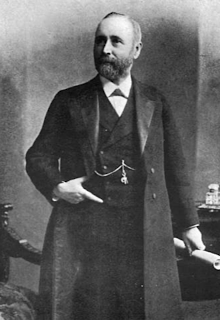
(From: “Bracken, Brendan” by Charles Lysaght, Dictionary of Irish Biography, www. dib.ie, October 2009 | Pictured: Brendan Bracken, bromide print by Elliott & Fry, January 13, 1950, National Portrait Gallery, London)


Leave a comment

Death of D. P. Moran, Journalist, Activist & Theorist

David Patrick Moran (Irish: Dáithí Pádraig Ó Móráin), better known as simply D. P. Moran, Irish journalist, activist and cultural-political theorist, dies on January 31, 1936. He is known as the principal advocate of a specifically Gaelic Catholic Irish nationalism during the early 20th century. Associated with the wider Celtic Revival, he promotes his ideas primarily through his journal, The Leader, and compilations of his articles such as the book The Philosophy of Irish Ireland.

Moran is born in Manor, a townland in Waterford, the youngest of twenty children born to James Moran, a builder, and Elizabeth Moran (née Casey). One of his brothers goes on to serve on the defense team of Patrick O’Donnell.

Moran is educated at Castleknock College, near Dublin, before working as a journalist in London, where he is a member of the Irish Literary Society. His brand of nationalism and concept of the decolonisation of Ireland is of a homogeneous Irish-speaking and Roman Catholic nation, promoting the revival of the Irish language and of Gaelic games in Irish cultural life. He often employes disparaging terms (West Brits, shoneens, sourfaces) in reference to Unionists and/or non-Catholics.

Despite the failure of the 1893 Home Rule Bill and the division of the Irish Parliamentary Party (IPP) in 1891, nationalists take heart from Douglas Hyde‘s 1892 speech, entitled “The Necessity for De-anglicising Ireland.” Moran builds upon this thesis and provides a wider ideology for enthusiasts, particularly after the re-unification of most of the nationalist parties from 1900.

In his 1905 text The Philosophy of Irish-Ireland, Moran argues that to be Irish requires:

  • the use of the Irish language
  • membership in the Roman Catholic Church
  • an anti-materialist outlook on life
  • the playing of only Gaelic games

Though a sponsor of the use of Irish, he never becomes fluent in the language himself. He emphasises the use of English in 1908–09 as “an active, vigilant, and merciless propaganda in the English language.” In the longer term, when Irish becomes again the language of the people, its use enables a de facto censorship of any foreign and unwelcome ideas written in English.

While Moran argues that the idea of “the Gael” is one that can assimilate others, he also feels that it will be hard if not impossible for members of the Church of Ireland who support the British Empire to ever qualify as Irish, being “resident aliens.” This extends to Anglo-Irish literature. He rejects the Abbey Theatre and questions Yeats‘ genius. He once speaks out against the influence Britain has over Irish Universities, stating, “We are all Palemen now.” In the matter of religious differences, Daniel O’Connell had said in 1826 that “the [Roman] Catholics of Ireland are a nation.” Moran moves beyond that, affirming in 1901 that “…the Irish Nation is de facto a Catholic nation.” He is virulent in his opposition to female suffrage.

Moran’s articles frequently contrast “Belfast” with “Ireland,” yet hope that Belfast can eventually change and assimilate. He feels that Ulster unionists should “… be grateful to the Irish nation for being willing to adopt them.” His paper publishes numerous articles by the future TD Arthur Clery (writing under the pen name “Chanel”), who advocates partition on the grounds that Ulster unionists are a separate nation, but Moran himself disagrees and refuses to concede the legitimacy of a northern Protestant identity.

When Irish republicans initiate the Irish War of Independence in 1919, widescale anti-Catholic rioting breaks out in Belfast in 1920 and 1922. Moran identifies this as being caused by Orangeism, which he describes as “a sore and a cancer” in Ireland. He also alleges that “bigotry on the part of Catholics in the Six Counties is immediately due to Orange bigotry.”

Moran is initially a supporter of the Irish Parliamentary Party, believing that the separatism advocated by Arthur Griffith‘s Sinn Féin is impracticable; however, he opposes John Redmond‘s support of the British World War I effort.

Moran supports the Anglo-Irish Treaty agreed in 1921–22 and sees the partition of Ireland as beneficial for a truly Irish culture in the Irish Free State. This causes a sea-change in his opinions; from now on Northern Ireland can be safely ignored, along with what he sees as the English evils of “free thought, free trade, and free literature.” He claims Irish life and culture has to be protected from foreign influences, including the twin evils of the music hall and the English press. The new jazz music of the 1920s and other imported cultural elements are deprecated as “imported debasement and rot.”

On January 9, 1901, Moran marries Theresa Catherine, daughter of Thomas Francis O’Toole, a former Parnellite mayor of Waterford. They have four sons and one daughter.

Moran dies suddenly at his home in Skerries, Dublin, on January 31, 1936. His daughter, Nuala, who has written for the paper since the early 1920s, generally on artistic and social matters, takes over the running of the paper on his death, though it is then much diminished in size and influence. Nuala, who never marries, retains control of The Leader until it ceases publication in 1971.


Leave a comment

Plantation Agreement Between the Crown & the Irish Society of London

The agreement on January 28, 1610, between the Crown and the Irish Society of London to carry out the plantation of Derry, Coleraine, and part of Tyrone refers to a significant historical event known as the Plantation of Ulster. This event takes place in the early 17th century and is part of the broader policy of the English and later British colonization of Ireland.

The Plantation of Ulster is a process initiated by the English Crown, primarily under King James I, to colonize the province of Ulster in the north of Ireland with English and Scottish Protestant settlers to defend against a future attack from within or without. This follows the Flight of the Earls in 1607, when several Gaelic Irish lords leave Ireland, leading to the confiscation of their lands by the Crown.

In his survey, James I finds that the town of Derry (renamed Londonderry) can become either a great asset as a control over the River Foyle and Lough Swilly, or it can become an inviting back door if the people of the area are against him. He pressures the guilds of the City of London to fund the resettlement of the area, including the building of a new walled city.

The Irish Society is formed by the City of London in response to James I’s royal request to participate in the plantation. The Society is a consortium of London livery companies, which are trade associations and guilds.

The Crown grants the Irish Society lands in Ulster, particularly in modern-day County Londonderry (then including what is now County Tyrone), to establish new settlements. The key areas are the city of Derry and the town of Coleraine.

The primary objective is to settle Ulster with loyal Protestant subjects, thus consolidating English influence in Ireland. The plantation aims to bring about economic development and to establish control over what is considered a rebellious and unruly region.

The livery companies of London undertake the establishment of new towns, fortifications, and the settlement of the land with tenants. However, the implementation faces various challenges, including resistance from the native Irish population, logistical difficulties, and issues of mismanagement.

The Plantation of Ulster has profound and lasting demographic, social, and political impacts. It leads to significant changes in land ownership and contributes to the religious and cultural diversification of the region. The plantation is also a root cause of the sectarian divide in Northern Ireland, contributing to centuries of conflict between the Protestant and Catholic communities.

The agreement between the Crown and the Irish Society of London to carry out the Plantation of Ulster is a pivotal event in Irish history. It plays a crucial role in shaping the historical trajectory of Ireland, particularly Northern Ireland, and its effects are still felt in the region’s complex socio-political landscape.

The Plantation of Ulster remains a subject of historical analysis and debate, reflecting the complex interplay of colonization, cultural identity, and conflict in Irish history.

(From: “The Crown and the Irish Society of London, Agree to Carry Out the Plantation of Derry, Coleraine and Part of Tyrone,” McManus Family History, http://www.mcmanusfamilyhistory.com | Pictured: The crest of the Irish Society of London)


Leave a comment

The Killing of Richard Jameson, Businessman & Loyalist

Richard Jameson, Northern Irish businessman and loyalist, who serves as the leader of the paramilitary Ulster Volunteer Force‘s (UVF) Mid-Ulster Brigade, is killed on January 10, 2000, outside his home in Portadown, County Armagh, Northern Ireland, during a feud with the rival Loyalist Volunteer Force (LVF). Following his death, the feud between the UVF and LVF escalates into a series of retaliatory killings. These go on intermittently until the LVF disbands in 2005.

Jameson is born in Portadown to a Protestant Church of Ireland family in about 1953, one of five sons. He has a twin brother, Stuart. A former reservist in the Royal Ulster Constabulary (RUC) (1973-81), he works as a manager in the Jameson Group, a building firm which is a family-owned business. The building firm is regularly awarded government contracts to carry out work for the security forces and it is for this reason that his brother David loses a leg in a 1991 Provisional Irish Republican Army bombing attack. He is a member of the Orange Order‘s Drumherriff Star of Erin LOL 8 Portadown district.

It is not known exactly when Jameson becomes a member of the Ulster Volunteer Force (UVF) nor the leader of its Mid-Ulster Brigade. The Portadown unit of the Mid-Ulster Brigade had been officially stood down by the Brigade Staff in Belfast in August 1996 when it carried out an unauthorised sectarian killing while the UVF were on ceasefire. The Mid-Ulster Brigade’s commander at the time, Billy Wright, was expelled from the UVF. Wright brazenly defies a Combined Loyalist Military Command (CLMC) order to leave Northern Ireland or face execution by establishing the breakaway Loyalist Volunteer Force (LVF), taking most of the Portadown Mid-Ulster UVF with him. The units of the Mid-Ulster Brigade that remain loyal to the Brigade Staff continue to operate and Jameson becomes commander. He is said by The Guardian to be a “staunch supporter of the Good Friday Agreement.”

In the weeks prior to his killing, Jameson is in a violent street altercation with LVF member Muriel Gibson, whom he accuses of involvement in drugs and slaps forcefully in the face. This is followed by a fracas at the Portadown F.C. Social Club on December 27, 1999, where LVF members are commemorating the death of their comrade Billy Wright, shot and killed inside the Maze Prison by the Irish National Liberation Army (INLA) exactly two years previously. When he enters the club, several LVF men begin to push and jostle him and challenge him to a fight, telling him to hit them instead of women. Deeply offended, he leaves and soon returns with a UVF gang armed with pickaxe handles and baseball bats. In the violent brawl that ensues, twelve people, including three LVF prisoners out on Christmas parole, receive severe injuries. The LVF leaders subsequently make the decision that Jameson is to pay for the attack with his life.

One of the LVF members, who lives near Dungannon, gets in touch with a family of north Belfast loyalists who had been members of the UVF but who had left after Wright’s expulsion. From these former UVF members the LVF obtains the gun with which to shoot Jameson. On the evening of January 10, 2000, Jameson returns from work and drives his Isuzu Trooper jeep into the driveway outside his home on the Derrylettiff Road near Portadown. Waiting in ambush, a single gunman suddenly approaches from the passenger side of the parked jeep. Before Jameson can emerge from the vehicle and with the engine still running, the gunman opens fire through the window with a 9mm semi-automatic pistol, shooting Jameson five times in the head and chest. His assassin escapes to a nearby getaway car. He is rushed to Craigavon Area Hospital but dies of his wounds minutes after his arrival. The RUC immediately begins a murder inquiry. Within hours of the killing, the UVF Brigade Staff convene an emergency meeting at “the Eagle,” their headquarters on the Shankill Road, where they compile a list of all those they believe to be involved in Jameson’s death and plan their retaliation against the LVF.

Among those who condemn the killing is Northern Ireland’s First Minister David Trimble who releases the following statement: “This is exactly the sort of thing we thought we had finally put behind us. I’m shocked by the news.”

Jameson’s funeral is held on January 13 at the Tartaraghan Parish Church and attended by several thousand mourners including Progressive Unionist Party (PUP) leaders David Ervine and Billy Hutchinson. Drumcree Orangeman Harold Gracey and Gary McMichael, the son of slain Ulster Defence Association (UDA) brigadier John McMichael, also attend as does local politicians representing the Ulster Unionist Party (UUP) and Democratic Unionist Party (DUP). The service is officiated by Reverend David Hilliard who speaks out against vengeance and describes Jameson as a “man admired and loved by many” and who “had been so cruelly murdered.” He is buried in the adjacent churchyard.

Despite Reverend Hilliard’s pleas and LVF leader Mark “Swinger” Fulton‘s claim that his organisation had nothing to do with Jameson’s shooting, the UVF/LVF feud intensifies. In the immediate aftermath members of Jameson’s family are filmed angrily defacing LVF murals in Portadown. A month after his killing, two Protestant teenagers, Andrew Robb (19) and David McIlwaine (18), are savagely beaten and repeatedly stabbed to death in a country lane outside Tandragee, County Armagh by a local UVF gang. The young men, believed to have been LVF members, are targeted by their UVF killers after they leave a nightclub together in search of a party. However, neither teenager is part of any paramilitary organisation and only Robb had tenuous links to the LVF. It is reported in the Belfast Telegraph that according to court hearings Robb had made disparaging remarks about Jameson’s death. Two of the UVF men, Stephen Leslie Brown and Noel Dillon, are infuriated by the comments and afterward Brown drives the victims to Druminure Road where he, Dillon and another man carry out the double killing. One of Jameson’s brothers, Bobby, is among the mourners at David McIlwaine’s funeral. The West Belfast Brigade of the Ulster Defence Association, whose brigadier Johnny Adair is close to the LVF, briefly becomes involved in the feud after Adair attends Andrew Robb’s funeral and joins LVF members at the Drumcree conflict. After the UVF track down Jameson’s killer to the Oldpark area of Belfast and attempt to shoot him, he is taken away under the protection of the West Belfast Brigade. The tit-for-tat killings continue intermittently until 2005 when the UVF makes a final assault against the LVF, leaving four members dead and the LVF leadership with no alternative but to order its military units to permanently disband.

Jameson’s family has persistently denied that he was a UVF member. They maintain that he was a vigilante who was murdered in retaliation for the firm stand he had taken against drug dealing in the Portadown area. The late PUP leader David Ervine expressed the same opinion the day after the killing by stating, “Mr. Jameson had been murdered by drug dealers masquerading as loyalists because he had been a bulwark in his community against dealers.” Ervine also described him as having been a “fine and honourable man, widely respected in the community.” Northern Ireland security sources, however, have repeatedly named Jameson as the Mid-Ulster UVF commander. He is listed as a UVF member in the CAIN: Sutton Index of Deaths, an online University of Ulster-sponsored project which chronicles the Northern Ireland conflict. It also emerges that for several days prior to his killing, he had been working at the Ballykinler British Army base. Immediately after his murder by the LVF, his family begins an anti-drug campaign in Portadown by putting up posters and handing out leaflets to passing motorists.


Leave a comment

Birth of Edmund Dwyer Gray, Journalist & Politician

Edmund William Dwyer Gray, Irish newspaper proprietor, politician and MP in the House of Commons of the United Kingdom of Great Britain and Ireland, is born on December 29, 1845, in Dublin. He is also Lord Mayor of Dublin and later Sheriff of Dublin City and becomes a strong supporter of Charles Stewart Parnell.

Gray is the second son of Sir John Gray and his wife, Anna Dwyer. He has three brothers and two sisters. After receiving his education, he joins his father in managing the Freeman’s Journal, the oldest nationalist newspaper in Ireland. When his father dies in 1875, he takes over proprietorship of the Journal, and his family’s other newspaper properties such as the Belfast Morning News and the Dublin Evening Telegraph.

In 1868, Gray saves five people from drowning in a wrecked schooner at Killiney Bay, an action for which he receives the Tayleur Fund Gold Medal for bravery from the Royal Humane Society. By coincidence, the rescue is witnessed by his future wife, Caroline Agnes Gray, whom he meets shortly afterwards. Agnes is the daughter of Caroline Chisholm, an English humanitarian renowned for her work in female immigrant welfare in Australia, and although Gray is descended from a Protestant family, he converts to Catholicism to marry her. The wedding in London on July 17, 1869, is conducted by the Bishop of Northampton, Francis Amherst. The couple has one son, Edmund Dwyer-Gray, who eventually takes over from his father as proprietor of his newspapers and goes on to become Premier of Tasmania.

From 1875 to 1883, Gray serves as a member of the Dublin Corporation, and in 1880 serves a term as Lord Mayor of Dublin. Unusual for an Irish nationalist politician, he is very much focused on urban rather than rural affairs, and like his father is heavily involved in public health and water provision for Dublin. He also promotes reform in the municipal health system.

Gray unsuccessfully runs for his father’s seat of Kilkenny City at Westminster in the 1875 by-election that follows Sir John Gray’s death. He wins a later by-election in 1877, becoming a Member of Parliament representing Tipperary for the Home Rule League. At the 1880 United Kingdom general election, he is elected for County Carlow. At the 1885 United Kingdom general election, as a member of the Irish Parliamentary Party (IPP), he wins representation of both County Carlow and the new constituency of Dublin St. Stephen’s Green and chooses to represent the latter.

Gray is imprisoned for six weeks in 1882 for remarks made in the Freeman’s Journal with regard to the composition of the jury in the case of a murder trial. He is actually Sheriff of Dublin City at the time of his imprisonment and, because of the conflict of office, is taken into custody by the city coroner. The defendant in the case in question is later hanged.

A heavy drinker and asthma sufferer, Gray dies at his home, Pembroke House, Upper Mount Street, Dublin, on March 27, 1888, at the age of 42 following a short illness. He is buried at Glasnevin Cemetery in Dublin.


Leave a comment

Birth of Stephen Hayes, Member & Leader of the IRA

Stephen Hayes, a member and leader of the Irish Republican Army (IRA) from April 1939 to June 1941, is born in Enniscorthy, County Wexford, on December 26, 1902.

During the Irish War of Independence (1919-21), Hayes is commandant of the Wexford Brigade of Fianna Éireann. He takes the Anti-Treaty side during the Irish Civil War (1922-23), during which he is interned.

Hayes is active in Gaelic Athletic Association circles in Wexford. In 1925, he helps Wexford win the Leinster Senior Football Championship. He also serves as secretary to the county board for ten years, from the 1920s to 1930s.

Hayes joins the IRA and is on the IRA Army Council in January 1939 when it declares war on the British government. When IRA Chief of Staff Seán Russell departs on IRA business to the United States, and subsequently to Nazi Germany, Hayes becomes IRA Chief of Staff. His time in office is marred by controversy and it is widely believed that he serves as an informer to the Garda Síochána.

Hayes sends a plan for the invasion of Northern Ireland by German troops to Germany in April 1940. This plan later becomes known as Plan Kathleen. He is also known to have met with German agent Hermann Görtz on May 21, 1940, in Dublin shortly after the latter’s parachuting into Ireland on May 5, 1940, as part of Operation Mainau. He is known to have asked Görtz for money and arms to wage a campaign in Northern Ireland, although shortly after this meeting the original Plan Kathleen is discovered. The discovery of the plan leads to the acceleration of joint British and Irish military planning for a German invasion known as Plan W.

Another meeting on August 15, 1940, on Rathgar Road, Dublin, organised by Hayes and attended by senior IRA men Paddy McGrath, Tom Harte and Tom Hunt, is also raided by the Garda Síochána.

McGrath and Harte are both arrested and tried by Military Tribunal, established under the Emergency Powers Act 1939. They challenge the legislation in the High Court, seeking a writ of habeas corpus, and ultimately appeal to the Supreme Court of Ireland. They are represented in the courts by Seán MacBride. The appeal is unsuccessful, and they are executed by firing squad at Dublin’s Mountjoy Prison on September 6, 1940.

On June 30, 1941, Northern-based IRA men kidnap Hayes, accusing him of being a spy. By his own account, he is tortured and “court-martialed” for “treason” by his comrades, and would have been executed, but he buys himself time composing an enormously long confession. He manages to escape on September 8, 1941, and hands himself in to the Garda for protection.

The Officer Commanding (O/C) of the IRA Northern Command, Seán McCaughey, is convicted on September 18, 1941, of the kidnapping. After a long hunger and thirst strike in Portlaoise Prison, he dies on May 11, 1946.

Hayes is later sentenced to five years’ imprisonment by the Special Criminal Court on account of his IRA activities.

Within IRA circles, Hayes is still considered a traitor and an informer. One of the main allegations against him is that he informed the Garda Síochána about IRA arms dumps in Wexford. However, this is later blamed on a Wexford man named Michael Deveraux, an officer of the Wexford Battalion of the IRA who is subsequently abducted and executed by an IRA squad in County Tipperary on Hayes’ orders. George Plant, a Protestant IRA veteran, is later executed in Portlaoise Prison for Devereux’s murder.

After his release, Hayes resumes his clerical position at Wexford County Council. He dies in Enniscorthy on December 28, 1974.


Leave a comment

Death of F. Scott Fitzgerald, Novelist, Essayist & Screenwriter

Francis Scott Key Fitzgerald, Irish American novelist, essayist, short story writer and screenwriter, whose works are the paradigmatic writings of the Jazz Age, dies of a heart attack at the age of forty-four on December 21, 1940, in Hollywood, Los Angeles, California.

Fitzgerald is born into an Irish Catholic middle-class family on September 24, 1896, in Saint Paul, Minnesota. His mother, Mary McQuillan Fitzgerald, is of Irish descent and his father, Edward Fitzgerald, has Irish and English ancestry. He is best known for his novels depicting the flamboyance and excess of the Jazz Age, a term he popularized. During his lifetime, he publishes four novels, four collections of short stories, and 164 short stories. Although he achieves temporary popular success and fortune in the 1920s, he receives critical acclaim only after his death and is now widely regarded as one of the greatest American writers of the 20th century.

Fitzgerald is raised primarily in New York. He attends Princeton University but owing to a failed relationship with socialite Ginevra King and a preoccupation with writing, he drops out in 1917 to join the United States Army. While stationed in Alabama, he romances Zelda Sayre, a Southern debutante who belongs to Montgomery‘s exclusive country-club set. Although she rejects Fitzgerald initially, because of his lack of financial prospects, she agrees to marry him after he publishes the commercially successful This Side of Paradise (1920). The novel becomes a cultural sensation and cements his reputation as one of the eminent writers of the decade.

Fitzgerald’s second novel, The Beautiful and Damned (1922), propels him further into the cultural elite. To maintain his affluent lifestyle, he writes numerous stories for popular magazines such as The Saturday Evening Post, Collier’s: The National Weekly, and Esquire. During this period, he frequents Europe, where he befriends modernist writers and artists of the “Lost Generation” expatriate community, including Ernest Hemingway. His third novel, The Great Gatsby (1925), receives generally favorable reviews but is a commercial failure, selling fewer than 23,000 copies in its first year. Despite its lackluster debut, The Great Gatsby is now widely praised, with some labeling it the “Great American Novel.” Following the deterioration of his wife’s mental health and her placement in a mental institute for schizophrenia, he completes his final novel, Tender Is the Night (1934).

Struggling financially because of the declining popularity of his works amid the Great Depression, Fitzgerald turns to Hollywood, writing and revising screenplays. While living in Hollywood, he cohabits with columnist Sheilah Graham, his final companion before his death. After a long struggle with alcoholism, he attains sobriety only to die of a heart attack on December 21, 1940, at the age of 44. His friend Edmund Wilson completes and publishes an unfinished fifth novel, The Last Tycoon (1941), after Fitzgerald’s death.

At the time of his death, the Roman Catholic Church denies the family’s request that Fitzgerald, a non-practicing Catholic, be buried in the family plot in the Catholic St. Mary’s Cemetery in Rockville, Maryland. He is buried instead with a simple Protestant service at Rockville Union Cemetery. When Zelda Fitzgerald dies in a fire at the Highland Mental Hospital in 1948, she is originally buried next to him at Rockville Union. In 1975, Fitzgerald’s daughter, Scottie, successfully petitions to have the earlier decision revisited, and her parents’ remains are moved to the family plot in St. Mary’s Cemetery.


Leave a comment

Death of John MacHale, Catholic Archbishop of Tuam

John MacHale, Irish Roman Catholic Archbishop of Tuam and Irish nationalist, dies in Tuam, County Galway on November 7, 1881.

MacHale is born in Tubbernavine, near Lahardane, County Mayo on March 6, 1791, to Patrick and Mary Mulkieran MacHale. He is so feeble at birth that he is baptised at home by Father Andrew Conroy. By the time he is five years of age, he begins attending a hedge school. Three important events happen during his childhood: the Irish Rebellion of 1798, the landing at Killala of French troops, whom the boy, hidden in a stacked sheaf of flax, watches marching through a mountain pass to Castlebar, and a few months later the brutal hanging of Father Conroy on a false charge of high treason.

Being destined for the priesthood, at the age of thirteen, he is sent to a school at Castlebar to learn Latin, Greek, and English grammar. In his sixteenth year the Bishop of Killala gives him a bursarship at St. Patrick’s College, Maynooth. At the age of 24, he is ordained a priest by Daniel Murray, Archbishop of Dublin. In 1825, Pope Leo XII appoints him titular bishop of Maronia, and coadjutor bishop to Dr. Thomas Waldron, Bishop of Killala.

With his friend and ally, Daniel O’Connell, MacHale takes a prominent part in the important question of Catholic emancipation, impeaching in unmeasured terms the severities of the former penal code, which had branded Catholics with the stamp of inferiority. During 1826 his zeal is omnipresent. He calls on the Government to remember how the Act of Union in 1800 was carried by William Pitt the Younger on the distinct assurance and implied promise that Catholic emancipation, which had been denied by the Irish Parliament, should be granted by the Parliament of the Empire.

Oliver Kelly, Archbishop of Tuam, dies in 1834, and the clergy selects MacHale as one of three candidates, to the annoyance of the Government who despatches agents to induce Pope Gregory XVI not to nominate him to the vacant see. Disregarding their request, the pope appoints MacHale Archbishop of Tuam. He is the first prelate since the Reformation who has received his entire education in Ireland. The corrupt practices of general parliamentary elections and the Tithe War cause frequent rioting and bloodshed and are the subjects of denunciation by the new archbishop, until the passing of a Tithes bill in 1838. He also leads the opposition to the Protestant Second Reformation, which is being pursued by evangelical clergy in the Church of Ireland, including the Bishop of Tuam, Killala and Achonry, Thomas Plunket.

The repeal of the Acts of Union 1800, advocated by O’Connell, enlists MacHale’s ardent sympathy and he assists the Liberator in many ways, and remits subscriptions from his priests for this purpose. In his zeal for the cause of the Catholic religion and of Ireland, so long downtrodden, but not in the 1830s, he frequently incurs from his opponents the charge of intemperate language, something not altogether undeserved. In his anxiety to reform abuses and to secure the welfare of Ireland, by an uncompromising and impetuous zeal, he makes many bitter and unrelenting enemies, particularly British ministers and their supporters.

The Great Famine of 1846–47 affects his diocese more than any. In the first year he announces in a sermon that the famine is a divine punishment on his flock for their sins. Then by 1846 he warns the Government as to the state of Ireland, reproaches them for their dilatoriness, and holds up the uselessness of relief works. From England as well as other parts of the world, cargoes of food are sent to the starving Irish. Bread and soup are distributed from the archbishop’s kitchen. Donations sent to him are acknowledged, accounted for, and disbursed by his clergy among the victims.

The death of O’Connell in 1847 is a setback to MacHale as are the subsequent disagreements within the Repeal Association. He strongly advises against the violence of Young Ireland. Over the next 30 years he becomes involved in political matters, particularly those involving the church. Toward the end of his life, he becomes less active in politics.

MacHale attends the First Vatican Council in 1869. He believes that the favourable moment has not arrived for an immediate definition of the dogma of papal infallibility. Better to leave it a matter of faith, not written down, and consequently he speaks and votes in the council against its promulgation. Once the dogma had been defined, he declares the dogma of infallibility “to be true Catholic doctrine, which he believed as he believed the Apostles’ Creed“. In 1877, to the disappointment of the archbishop who desires that his nephew should be his co-adjutor, Dr. John McEvilly, Bishop of Galway, is elected by the clergy of the archdiocese, and is commanded by Pope Leo XIII after some delay, to assume his post. He had opposed this election as far as possible but submits to the papal order.

Every Sunday MacHale preaches a sermon in Irish at the cathedral, and during his diocesan visitations he always addresses the people in their native tongue, which is still largely used in his diocese. On journeys he usually converses in Irish with his attendant chaplain and has to use it to address people of Tuam or the beggars who greet him whenever he goes out. He preaches his last Irish sermon after his Sunday Mass, April 1881. He dies in Tuam seven months later, on November 7, 1881, and is buried in the cathedral at Tuam on November 15.

A marble statue perpetuates his memory on the grounds of the Cathedral of the Assumption of the Blessed Virgin Mary, Tuam. MacHale Park in Castlebar, County Mayo and Archbishop McHale College in Tuam are named after him. In his birthplace the Parish of Addergoole, the local GAA Club, Lahardane MacHales, is named in his honour. The Dunmore GAA team, Dunmore MacHales, is also named after him.