seamus dubhghaill

Promoting Irish Culture and History from Little Rock, Arkansas, USA


Leave a comment

Death of William FitzGerald, 2nd Duke of Leinster

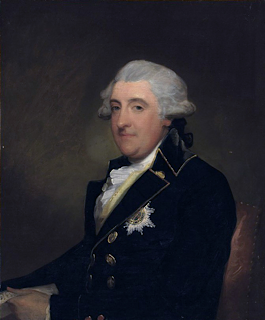
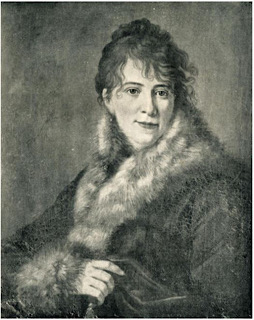
William Robert FitzGerald, 2nd Duke of LeinsterKPPC (Ire), an Irish liberal politician and landowner, dies at Carton House in Maynooth, County Kildare, on October 20, 1804.

FitzGerald is born on March 13, 1749, in Arlington Place, Piccadilly, London, the second son of nine sons and ten daughters of James Fitzgerald, 20th Earl of Kildare and later 1st Duke of Leinster, and his wife, Lady Emily Lennox. He is educated at Eton College (1758–63). He is the elder brother of the 1790s revolutionary Lord Edward FitzGerald, and is a first cousin of the English liberal politician Charles James Fox.

FitzGerald makes his Grand Tour between 1768 and 1769. During the same time, he is also a Member of Parliament (MP) for Kildare Borough. He then sits in the Irish House of Commons for Dublin City until 1773, when he inherits his father’s title and estates. He is appointed High Sheriff of Kildare for 1772. Politically he is a liberal supporter of Henry Grattan‘s Irish Patriot Party and he co-founds the Irish Whig Club in 1789. He controls about six Kildare members of the Irish House of Commons. In 1779, he is elected colonel of the Dublin Regiment of the Irish Volunteers.

In November 1775, FitzGerald marries Emilia Olivia Usher, daughter of the 1st Baron Saint George and Elizabeth Dominick and sole grand daughter of Sir Christopher Dominick. They have three sons and six daughters.

In 1770, FitzGerald is chosen Grandmaster of the masonic Grand Lodge of Ireland, a post he holds for two years. He is re-elected for another year in 1777. In 1783, he is among the first knights in the newly created Order of St. Patrick.

In 1788–89, FitzGerald is Master of the Rolls in Ireland. In theory a senior judicial office, it is then largely a sinecure, but so blatant a choice of a man who is wholly unqualified for it gives rise to unfavourable comment, and a few years later it becomes the rule that the Master must be a lawyer of repute.

FitzGerald is a supporter of Catholic emancipation and helps to found the Royal College of St. Patrick at Maynooth on land he donates, in 1795. Withdrawing from Parliament with Grattan in 1797, he moves to England to be with his sick wife and remains there during the Irish Rebellion of 1798.

FitzGerald’s homes are at Carton and Kilkea Castle in County Kildare, and at Leinster House in Dublin (now the home of the Oireachtas). He is a founder member of the Order of St. Patrick in 1783 and of the Royal Irish Academy in 1785, and is a large investor in the Royal Canal company launched in 1790. His family’s estates of 60,000 acres (25,000 Ha) in Kildare are in three main parts, around Maynooth, Rathangan and Athy. He rebuilds the main bridge in Athy over the River Barrow.

FitzGerald dies of strangury, a urinary tract disorder, at Carton House on October 20, 1804. He is buried in Kildare Abbey. His funeral is so well attended that the mourners reach across The Curragh. He is succeeded by his second, but eldest surviving, son, Augustus Frederick Fitzgerald, as 3rd Duke of Leinster.


Leave a comment

Death of Sybil le Brocquy, Playwright & Conservationist

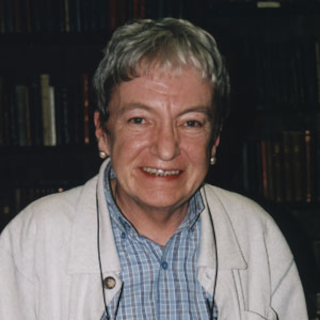
Sybil le Brocquy, Irish playwright, patron of the arts and conservationist, dies in Dublin on September 4, 1973. Two of her three children are involved with the arts: a son is the painter Louis le Brocquy and her daughter is the sculptor Melanie le Brocquy.

She is born Helen Mary Sybil Staunton on December 21, 1892, in Herbert Street, Dublin, to Dorothy Eleanor Redington and Peter Maurice Staunton. Her father is a barrister who later becomes a solicitor. Though he moves to Aram Lodge, CastlereaCounty Roscommon where he practises law, she grows up in Dublin and Howth, going to secondary school in Loreto AbbeyRathfarnham, and later at Loreto Convent, St. Stephen’s Green. She goes on to study German and singing in Koblenz. She marries Albert le Brocquy on December 30, 1915, and settles in Dublin. They have three children, Louis, Noel and Melanie.

Le Brocquy becomes involved in various women’s movements, helping to organise the Women’s International League for Peace and Freedom in July 1926. She is involved with the League of Nations Association as well as helps to establish Irish Civil Rights, PEN International, and Amnesty International in Ireland. She is an active member of Old Dublin Society and for a time president of the Irish Women Writers’ Society. She acts with the Drama League appearing as Helen Staunton. She writes plays and dramatic pieces which are staged by the Drama League at the Abbey Theatre and broadcast by Radio Éireann.

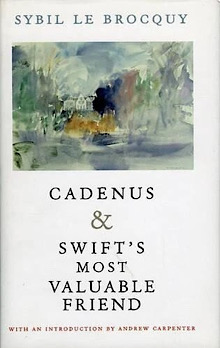
Her writings and work are often historically investigative, finding W. B. Yeats’s birthplace and arguing that Jonathan Swift had a child by Vanessa. She is involved in the Swift Tercentenary celebrations with Cearbhall Ó Dálaigh. As a result of her work, including with Trinity College Dublin Library and representing the Library on the Royal Irish Academy’s National Committee for Anglo-Irish Literature, she is co-opted to the Cultural Committee of the Department of External Affairs and appointed a Trustee of the National Library of Ireland. She is an excellent organiser and fundraiser and is heavily responsible for securing money for the Gate Theatre, Dublin, in 1970. She also initiates the literary prize, the Book of the Year award.

Le Brocquy becomes ill with an undiagnosed illness and dies on September 4, 1973, at the Meath Hospital, Dublin.


Leave a comment

Death of Emer Colleran, Microbiologist & Environmental Advocate

Emer Colleran, Irish microbiologist, academic and an environmental advocate, dies on June 30, 2018, at University Hospital Galway. She is professor of microbiology at the National University of Ireland, Galway, a member of the Royal Irish Academy, one of Mary Robinson‘s nominees on the Council of State, and chairwoman of An Taisce, the National Trust for Ireland.

Colleran, and her twin Noreen, are born in BallinrobeCounty Mayo, on October 12, 1945, to John and Josie Colleran. One of a family of five children, her father is a school principal and her mother, also a primary school teacher, dies when she is just 11 years old. She completes her secondary education at St. Louis secondary school in Kiltimagh. She spends a lot of time outdoors as a child, particularly fishing, which sparks her interest in the environment.

On entering higher education, Colleran has a grant from the Department of Education, which requires that she do her studies through the Irish language. Her first choice, Medicine, is not available in Irish so she chooses Science. She graduates with a first-class primary degree in Science at University College Galway (now National University of Ireland, Galway) in 1967.

Colleran specialises in anaerobic digestion as a postgraduate and in 1971 becomes a postdoctoral fellow for two years at the University of Bristol in the UK.

Colleran lectures in biology at Athlone Regional Technical College (now Athlone Institute of Technology) and Galway Regional Technical College (now Galway-Mayo Institute of Technology) before her appointment as a lecturer in microbiology at NUI Galway in 1976. She is appointed Associate Professor of Microbiology by the Senate of the National University of Ireland in 1990. She is a member of the university’s governing authority for a number of years, but steps down in May 2000 in connection with the selection procedure for the new university president. In October of that year, she is appointed professor of microbiology and chair of the department at NUI Galway.

Colleran is the first director of the Environment Change Institute at NUI Galway set up under the Higher Education Authority‘s Programme for Research in Third Level Institutions in 2000. In 2010, the Environmental Change Institute and the Martin Ryan Marine Research Institute are merged to form the current day Ryan Institute at NUI Galway.

In 1973, Colleran is elected to the committee of the Galway Association of An Taisce, part of a national voluntary organisation the aims of which are conservation in Ireland through education, publicity and positive action. She serves as membership secretary and then treasurer to the Galway branch before becoming chairman. In 1981, as chairman of the Galway branch, she hits back at claims from Galway County Council that An Taisce are “an anonymous group, wielding power unfairly.” She is involved in the compilation of a controversial planning report, published by An Taisce in 1983, which highlights abuse of planning laws by city and county councillors across Ireland, and in particular in counties Galway, Mayo, DonegalKerry and Louth.

Colleran serves as Environmental Officer for An Taisce before being elected National Chairman in 1987, the first time a chairman has come from one of the western county associations. She continues to use her position to campaign against misuse of planning laws, for a clamp down on pollution of rivers and lakes, and against a move to scrap An Foras Forbartha, a body that provides independent monitoring of pollution. During her three years as chairman, until May 1990, she is particularly involved in debates over local environmental and planning issues, in particular over gold mining in the west of Ireland, a proposed airport for Clifden, and the planned sewage treatment plant at Mutton Island, County Galway.

In 1991 plans are announced for a new visitor centre, to be located at Mullaghmore in The Burren. Colleran is among those who are part of an appeal, saying that while the plan for the national park is welcomed by An Taisce, they want the visitor centre to be located three or four miles from Mullaghmore.

President Mary Robinson appoints seven new members to her Council of State in February 1991, including Colleran. Other new members appointed at the time are Monica Barnes, Patricia O’Donovan, Quintan Oliver, Rosemarie Smith, Dónal Toolan and D. Kenneth Whitaker. The new Council of State represents a wide spectrum of Irish life and is widely welcomed, although Fine Gael is disappointed that its leader John Bruton is not included.

In 1991, Colleran is one of 15 people appointed to Taoiseach Charles Haughey‘s Green 2000 Advisory Group, to determine which problems will face the environment in the next century. The group is led by Dr. David Cabot, special advisor on environmental affairs.

Colleran is appointed a member of the National Heritage Council in 1995 by the Minister for Arts, Culture and the GaeltachtMichael D. Higgins. In the same year the Minister of State at the Department of the MarineEamon Gilmore, appoints her to the chair of the Sea Trout working group to oversee the implementation of recommendations to tackle a decline in sea trout stocks, particularly in the west of Ireland.

In 2003, Colleran is elected as a member of the Royal Irish Academy.

Colleran is recognised at the annual NUI Galway Alumni Awards in 2004 when she receives the award for Natural Science, sponsored by Seavite Bodycare Ltd., which acknowledges a graduate who has made an outstanding contribution in the field of natural science.


Leave a comment

Birth of Goddard Henry Orpen, Lawyer & Historian

Goddard Henry Orpen, lawyer and historian, is born in Dublin on May 8, 1852, the fourth son of the five sons and three daughters of John Herbert Orpen, barrister, of Dublin, and Ellen Susanna Gertrude Richards, youngest daughter of Rev. John Richards of Grange, County Wexford.

For most of his childhood Orpen’s family lives at 58 St. Stephen’s Green. He is educated at Abbey CBS, a Christian Brothers secondary school in Tipperary, County Tipperary, and in 1869 enters Trinity College Dublin (TCD), where he displays early academic aptitude, obtaining exhibitions and scholarships and being elected a foundation scholar. He graduates BA with first-class honours in 1873 and four years later is called to the English bar at the Inner Temple, London.

On August 18, 1880, in St. Peter’s Church, Aungier Street, Dublin, Orpen marries Adela Elizabeth Richards, the daughter and heiress of Edward Moore Richards, engineer and the landlord of Grange, County Wexford. Adela is his first cousin once removed, her great-grandfather and his grandfather being the Rev. John Richards. They live for two decades after their marriage at Bedford Park, Chiswick, London, with their daughter Lilian Iris (b. 1883) and son Edward Richards (b. 1884). Soon after their marriage, he begins taking lessons in the Irish language in line with his passionate interest in Irish historical and antiquarian research, which gradually supplants his languishing legal career. He translates and edits a French rhymed chronicle about the Anglo-Norman conquest of Ireland, entitled The Song of Dermot and the Earl (1892), the title which he gives it and by which it has since generally been known in English. He also translates Émile de Laveleye‘s Le Socialisme Contemporain (The Socialism of Today, 1884), to which he adds a chapter on English socialism.

After Adela’s father transfers ownership of his estate to her in 1900, now renamed Monksgrange, the Orpens reluctantly leave London to live there, enabling Orpen to devote his time fully to research and writing. His major work is Ireland Under the Normans (Vols. 1–2, 1911; Vols. 3–4, 1920), which argue that the Norman invasion benefited the Irish, leading to advances in agriculture and trade.

Both before and after his death Orpen’s work is the subject of hostile criticism from those with more nationalist inclinations, starting with Eoin MacNeill in a series of lectures delivered in 1917. Despite his own eminence as a scholar of medieval Ireland, MacNeill resorts to unfair polemic in his attack on Orpen, caricaturing his account of pre-Norman Irish society and disregarding the more subtle nuances in his views of the English Irish relationship. In this he has been followed by generations of other scholars and readers, overlooking the depth of Orpen’s research, the perceptiveness of his interpretations, and the extent of his fieldwork on the archaeological evidence from the medieval period. Orpen takes the study of Anglo-Norman Ireland out of the realm of vague antiquarianism and professionalises it. His standards are not those of “the gentleman-amateur” as might be expected from his background, but of the twentieth century “scientific” historian, and he is therefore now widely regarded as the founder of the professional study of Anglo-Norman Ireland. Perhaps the most striking evidence of the continued validity and relevance of his work is that his four-volume Ireland Under the Normans has been twice republished in more recent years, in 1968 by Oxford University Press and in 2002 in a one-volume version by Four Courts Press.

Orpen is elected a member of the Royal Society of Antiquaries of Ireland (RSAI), serving as president in 1930–32), and the Royal Irish Academy (RIA) (1911), and contributes historical articles to their journals as well as to periodicals such as The American Historical Review (1913–14) and The Cambridge Medieval History (1932, 1936). A lecture to the New Ross Literary Society is later published as New Ross in the Thirteenth Century (1911). He also contributes a major chapter on the medieval church to the second volume of Walter Alison Phillips‘s History of the Church of Ireland (1934). Though his literary work is recognised by an honorary doctorate from TCD in 1921, he feels increasingly isolated as Monksgrange is targeted during the Irish Civil War and raided on several occasions. On religion he lists himself as an agnostic in the 1911 census.

Orpen’s final work is The Orpen Family, a personal family history printed for private circulation in 1930. A portrait of Orpen (above) by Seán O’Sullivan hangs in Monksgrange.

Orpen dies on May 15, 1932, at Monksgrange, and is buried alongside his wife Adela in St. Anne’s Churchyard, Killanne, County Wexford. His very extensive papers, including correspondence, manuscripts and drawings, as well as records and papers of the Orpen family, are held at Monksgrange. Included there is a very large collection of his photographs, a skill in which he notably distinguishes himself. A small collection of his correspondence is also held in the National Library of Ireland (NLI).

(From: “Orpen, Goddard Henry” by Philip Bull, Dictionary of Irish Biography, http://www.dib.ie, October 2009, revised March 2021 | Pictured: Portrait of Goddard Henry Orpen by Seán O’Sullivan)


Leave a comment

Death of Charlotte Brooke, Poet, Dramatist & Author

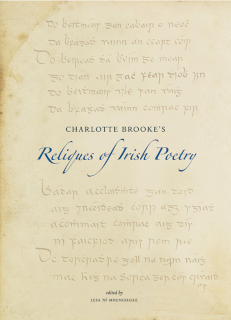
Charlotte Brooke, author of Reliques of Irish Poetry, a pioneering volume of poems collected by her in the Irish language, with facing translations, dies in Longford, County Longford, on March 29, 1793, of a malignant fever.

Brooke is born around 1740 in Rantavan House, Mullagh, County Cavan. She is one of twenty-two children of the writer Henry Brooke, author of the play Gustavus Vasa, and Catherine Brooke (née Meares) of County Westmeath. Only she and her brother Arthur survive childhood.

Brooke is educated by her father and immerses herself in reading history and literature at an early age. While the rest of her family is sleeping, she often goes down to the study where she spends hours reading.

Brooke is part of the first generation of the Protestant Anglo-Irish settler class who take a strong interest in the Irish language and Gaelic history. Her primary interest in Irish language and literature is generated by her hearing it being spoken and recited by the labourers in County Cavan and on the County Kildare estates where her family moves around 1758. She is led to the study of the Irish language, and in less than two years she finds herself in love with it. From reading Irish poetry and admiring its beauties, she proceeds to translate it into English, one of her earliest efforts being a song and monody by Turlough O’Carolan, which appears in Joseph Cooper Walker‘s Historical Memoirs of Irish Bards (1786).

Brooke, who is frail herself, takes care of her father after her mother dies in 1773. Meanwhile, the family has moved back to County Cavan, where they begin living in a house they name Longfield which has been built near the Rantavan Estate. A few years after her father dies in 1783, she runs into financial troubles, after a model industrial village set up in County Kildare by her cousin Captain Robert Brooke goes bankrupt in 1787. Walker and other members of the recently created Royal Irish Academy (RIA) seek to make an income for her, but she realises she has to rely on her writings and translations.

In 1792, though in declining health and poor circumstances, Brooke publishes a selection of her father’s writings in three volumes, prefacing the work with a memoir of her father and a defence of his reputation as a writer. She also publishes a direct and simple presentation of Christian doctrine for children using her father’s didactic method, The school for Christians in dialogue for the use of children (1791). She dies of a malignant fever on March 29, 1793, at Longford, County Longford, in the home of the Brownes, friends with whom she has lived for some years.


Leave a comment

Birth of Charles O’Conor, Priest & Historical Author

Charles O’Conor, Irish priest and historical author, is born at Bellanagare, County Roscommon, on March 15, 1764. He is chaplain and librarian to the Marchioness of Buckingham and catalogues many manuscripts, including the famous Stowe Missal, now in the Royal Irish Academy (RIA) in Dublin.

O’Conor is the second of six sons of Denis O’Conor and Catharine O’Conor (neé Browne), who also have six daughters. The O’Conors are Catholic, descendants of a princely family in the west of Ireland. His grandfather is the historian Charles O’Conor, his brother the historian Matthew O’Conor.

O’Conor is educated at the Pontifical Irish College, Rome, from 1779 to 1791 and is appointed parish priest of Kilkeevan, County Roscommon, in 1789. In 1796 he prepares for publication a memoir of his grandfather, the historian Charles O’Connor, which highlights the efforts made by him and other Irish Catholics of substance to obtain the constitutional repeal of the penal laws. The first volume is suppressed as dangerous to the family and the manuscript of the second is burned by O’Conor before reaching the printer. He destroys what he believes to be the whole run of the first volume and ten folios of the second, by casting them into a sewer, which communicates with the River Poddle. However, copies of the first volume survive in Trinity College Dublin (TCD) and the Barrister at Law (BL).

In 1798 O’Conor is invited to become chaplain to Mary Nugent, the Marchioness of Buckingham, and to organize and translate a collection of Gaelic manuscripts at Stowe, Buckinghamshire, England. With him he brings papers of his grandfather to Stowe, including fifty-nine Gaelic manuscripts. There he writes Columbanus ad Hibernos (1810–13), a series of letters supporting the royal veto on Catholic episcopal appointments in Ireland. These are answered by Francis Plowden and see him suspended from duties of parish priest by John Troy, Archbishop of Dublin. In his duties as librarian, he edits the Annals of the Four Masters, and other chronicles from the Stowe Library as Rerum Hibernicarum Scriptores Veteres (1814–26), an edition regarded as unreliable.

O’Conor experiences mental illness and by 1827 is suffering from the delusion that he is deliberately being starved by order of the Marquess of Buckingham. He leaves Stowe on July 4, 1827. The Nation (March 26, 1853) claims that he is thereafter a patient at Dr. Harty’s asylum in Finglas, Dublin, apparently along with John Lanigan, whom he knew in the Irish College. His family twice unavailingly demands that the paper’s editor issue a correction.

O’Conor dies on July 29, 1828, in his family’s house at Bellanagare. He is buried in Ballintober Cemetery, Castlerea, County Roscommon.


Leave a comment

Death of John Costello, Fine Gael Politician & 3rd Taoiseach

John Aloysius Costello, Fine Gael politician who serves as Taoiseach from 1948 to 1951 and from 1954 to 1957, Leader of the Opposition from 1951 to 1954 and from 1957 to 1959, and Attorney General of Ireland from 1926 to 1932, dies in Ranelagh, Dublin, on January 5, 1976. He serves as a Teachta Dála (TD) from 1933 to 1943 and from 1944 to 1969.

Costello is born on June 20, 1891, in Fairview, Dublin, the younger son of John Costello senior, a civil servant, and Rose Callaghan. He is educated at St. Joseph’s, Fairview, and then moves to O’Connell School, for senior classes, and later attends University College Dublin (UCD), where he graduates with a degree in modern languages and law. He studies at King’s Inns to become a barrister, winning the Victoria Prize there in 1913 and 1914. He is called to the Irish Bar in 1914, and practises as a barrister until 1922.

In 1922, Costello joins the staff at the office of the Attorney General in the newly established Irish Free State. Three years later he is called to the inner bar, and the following year, 1926, he becomes Attorney General of Ireland, upon the formation of the Cumann na nGaedheal government, led by W. T. Cosgrave. While serving in this position he represents the Free State at Imperial Conferences and League of Nations meetings.

Costello is also elected a Bencher of the Honourable Society of King’s Inns. He loses his position as Attorney General of Ireland when Fianna Fáil comes to power in 1932. The following year, however, he is elected to Dáil Éireann as a Cumann na nGaedheal TD. Cumann na nGaedheal soon merges with other parties to form Fine Gael.

During the Dáil debate on the Emergency Powers Act 1939, Costello is highly critical of the Act’s arrogation of powers, stating that “We are asked not merely to give a blank cheque, but to give an uncrossed cheque to the Government.” He loses his seat at the 1943 Irish general election but regains it when Éamon de Valera calls a snap election in 1944. From 1944 to 1948, he is the Fine Gael front-bench Spokesman on External Affairs.

In 1948, Fianna Fáil has been in power for sixteen consecutive years and has been blamed for a downturn in the economy following World War II. The 1948 Irish general election results show Fianna Fáil short of a majority, but still by far the largest party, with twice as many seats as the nearest rival, Fine Gael. It appears that Fianna Fáil is headed for a seventh term in government. However, the other parties in the Dáil realise that between them, they have only one seat fewer than Fianna Fáil, and if they band together, they would be able to form a government with the support of seven Independent deputies. Fine Gael, the Labour Party, the National Labour Party, Clann na Poblachta and Clann na Talmhan join to form the first inter-party government in the history of the Irish state.

While it looks as if cooperation between these parties will not be feasible, a shared opposition to Fianna Fáil and Éamon de Valera overcomes all other difficulties, and the coalition government is formed.

Since Fine Gael is the largest party in the government, it has the task of providing a suitable candidate for Taoiseach. Naturally, it is assumed that its leader, Richard Mulcahy, will be offered the post. However, he is an unacceptable choice to Clann na Poblachta and its deeply republican leader, Seán MacBride. This is due to Mulcahy’s record during the Irish Civil War. Instead, Fine Gael and Clann na Poblachta agree on Costello as a compromise candidate. Costello had never held a ministerial position nor was he involved in the Civil War. When told by Mulcahy of his nomination, Costello is appalled, content with his life as a barrister and as a part-time politician. He is persuaded to accept the nomination as Taoiseach by close non-political friends.

During the campaign, Clann na Poblachta had promised to repeal the Executive Authority (External Relations) Act 1936 but does not make an issue of this when the government is being formed. However, Costello and his Tánaiste, William Norton of the Labour Party, also dislike the act. During the summer of 1948, the cabinet discusses repealing the act, however, no firm decision is made.

In September 1948, Costello is on an official visit to Canada when a reporter asks him about the possibility of Ireland leaving the British Commonwealth. For the first time, he declares publicly that the Irish government is indeed going to repeal the External Relations Act and declare Ireland a republic. It has been suggested that this is a reaction to offence caused by the Governor General of Canada at the time, Harold Alexander, 1st Earl Alexander of Tunis, who is of Northern Irish descent and who allegedly arranges to have placed symbols of Northern Ireland in front of Costello at an official dinner. Costello makes no mention of these aspects on the second reading of the Republic of Ireland Bill on November 24 and, in his memoirs, claims that Alexander’s behaviour had in fact been perfectly civil and could have had no bearing on a decision which had already been made.

The news takes the Government of the United Kingdom and even some of Costello’s ministers by surprise. The former had not been consulted and following the declaration of the Republic in 1949, the UK passes the Ireland Act that year. This recognises the Republic of Ireland and guarantees the position of Northern Ireland within the United Kingdom for so long as a majority there want to remain in the United Kingdom. It also grants full rights to any citizens of the Republic living in the United Kingdom. Ireland leaves the Commonwealth on April 18, 1949, when The Republic of Ireland Act 1948 comes into force. Frederick Henry Boland, Secretary of the Department of External Affairs, says caustically that the affair demonstrates that “the Taoiseach has as much notion of diplomacy as I have of astrology.” The British envoy, John Maffey, 1st Baron Rugby, is equally critical of what he calls a “slipshod and amateur” move.

Many nationalists now see partition as the last obstacle on the road to total national independence. Costello tables a motion of protest against partition on May 10, 1949, without result.

In 1950, the independent-minded Minister for Health, Noël Browne, introduces the Mother and Child Scheme. The scheme would provide mothers with free maternity treatment and their children with free medical care up to the age of sixteen, which is the normal provision in other parts of Europe at that time. The bill is opposed by doctors, who fear a loss of income, and Roman Catholic bishops, who oppose the lack of means testing envisaged and fear the scheme could lead to birth control and abortion. The cabinet is divided over the issue, many feeling that the state cannot afford such a scheme priced at IR£2,000,000 annually. Costello and others in the cabinet make it clear that in the face of such opposition they will not support the Minister. Browne resigns from the government on April 11, 1951, and the scheme is dropped. He immediately publishes his correspondence with Costello and the bishops, something which had hitherto not been done. Derivatives of the Mother and Child Scheme are introduced in Public Health Acts of 1954, 1957 and 1970.

The Costello government has a number of noteworthy achievements. A new record is set in housebuilding, the Industrial Development Authority and Córas Tráchtála are established, and the Minister for Health, Noel Browne, with the then new Streptomycin, bring about an advance in the treatment of tuberculosis. Ireland also joins a number of organisations such as the Organization for European Economic Co-operation and the Council of Europe. However, the government refuses to join NATO, allegedly because the British remain in Northern Ireland. The scheme to supply electricity to even the remotest parts of Ireland is also accelerated.

While the “Mother and Child” incident does destabilise the government to some extent, it does not lead to its collapse as is generally thought. The government continues; however, prices are rising, a balance of payments crisis is looming, and two TDs withdraw their support for the government. These incidents add to the pressure on Costello and so he decides to call a general election for June 1951. The result is inconclusive but Fianna Fáil returns to power. Costello resigns as Taoiseach. It is at this election that his son Declan is elected to the Dáil.

Over the next three years while Fianna Fáil is in power a dual-leadership role of Fine Gael is taking place. While Richard Mulcahy is the leader of the party, Costello, who has proved his skill as Taoiseach, remains as parliamentary leader of the party. He resumes his practice at the Bar. In what is arguably his most celebrated case, the successful defence of The Leader against a libel action brought by the poet Patrick Kavanagh, dates from this period. Kavanagh generously praises Costello’s forensic skill, and the two men become friends.

At the 1954 Irish general election Fianna Fáil loses power. A campaign dominated by economic issues results in a Fine Gael-Labour Party-Clann na Talmhan government coming to power. Costello is elected Taoiseach for the second time.

The government can do little to change the ailing nature of Ireland’s economy, with emigration and unemployment remaining high, and external problems such as the Suez Crisis compounding the difficulty. Measures to expand the Irish economy such as export profits tax relief introduced in 1956 would take years have sizable impact. Costello’s government does have some success with Ireland becoming a member of the United Nations in 1955, and a highly successful visit to the United States in 1956, which begins the custom by which the Taoiseach visits the White House each Saint Patrick’s Day to present the U.S. President with a bowl of shamrock. Although the government has a comfortable majority and seems set for a full term in office, a resumption of Irish Republican Army (IRA) activity in Northern Ireland and Great Britain causes internal strains. The government takes strong action against the republicans.

In spite of supporting the government from the backbenches, Seán MacBride, the leader of Clann na Poblachta, tables a motion of no confidence, based on the weakening state of the economy and in opposition to the government’s stance on the IRA. Fianna Fáil also tables its own motion of no confidence, and rather than face almost certain defeat, Costello again asks President Seán T. O’Kelly to dissolve the Oireachtas. The general election which follows in 1957 gives Fianna Fáil an overall majority and starts another sixteen years of unbroken rule for the party. Some of his colleagues questioned the wisdom of his decision to call an election. The view is expressed that he was tired of politics and depressed by his wife’s sudden death the previous year.

Following the defeat of his government, Costello returns to the bar. In 1959, when Richard Mulcahy resigns the leadership of Fine Gael to James Dillon, he retires to the backbenches. He could have become party leader had he been willing to act in a full-time capacity. He remains as a TD until 1969, when he retires from politics, being succeeded as Fine Gael TD for Dublin South-East by Garret FitzGerald, who himself goes onto to become Taoiseach in a Fine Gael-led government.

During his career, Costello is presented with a number of awards from many universities in the United States. He is also a member of the Royal Irish Academy from 1948. In March 1975, he is made a freeman of the city of Dublin, along with his old political opponent Éamon de Valera. He practises at the bar until a short time before his death at the age of 84, in Ranelagh, Dublin, on January 5, 1976. He is buried at Dean’s Grange Cemetery in Dublin.


Leave a comment

Birth of Lawrence Parsons, 4th Earl of Rosse

Lawrence Parsons, 4th Earl of Rosse, KP, FRS, a member of the Irish peerage and an amateur astronomer, is born at Birr Castle, Parsonstown, King’s County (now County Offaly), on November 17, 1840. His name is often given as Laurence Parsons.

Parsons is the son and heir of the astronomer William Parsons, 3rd Earl of Rosse, who built the “Leviathan of Parsonstownreflecting telescope, largest of its day, and his wife, the Countess of Rosse (née Mary Field), an amateur astronomer and pioneering photographer. He succeeds his father in 1867 and is educated first at home by tutors, like John Purser, and after at Trinity College Dublin (TCD) and the University of Oxford. He is the brother of Charles Algernon Parsons, inventor of the steam turbine.

Parsons serves as the eighteenth Chancellor of Trinity College Dublin between 1885 and 1908. His father serves as the sixteenth Chancellor. He is Lord Lieutenant of King’s County and Custos Rotulorum of King’s County from 1892 until his death. He is also a Justice of the Peace for the county and is appointed High Sheriff of King’s County for 1867–68. He is knighted KP in 1890.

Parsons also performs some preliminary work in association with the practices of the electrodeposition of copper sulfate upon silver films circa 1865 while in search of the design for a truly flat mirror to use in a telescope. However, he finds it impossible to properly electroplate copper upon these silver films, as the copper contracts and detaches from the underlying glass substrate. His note has been cited as one of the earliest confirmations in literature that thin films on glass substrates experience residual stresses. He revives discussion in his work Nature’s August 1908 edition after witnessing similar techniques used to present newly devised searchlights before the Royal Society.

Although overshadowed by his father (when astronomers speak of “Lord Rosse”, it is almost always the father that they refer to), Parsons nonetheless pursues some astronomical observations of his own, particularly of the Moon. Most notably, he discovers NGC 2, a spiral galaxy in the constellation Pegasus.

Parsons is elected a Fellow of the Royal Society in December 1867 and delivers the Bakerian lecture there in 1873. He is vice-president of the society in 1881 and 1887. From 1896 he is President of the Royal Irish Academy. In May 1902 he is at Caernarfon to receive the honorary degree LL.D. (Legum Doctor) from the University of Wales during the ceremony to install the Prince of Wales (later King George V) as Chancellor of that university.

After some years of ill-health, Parsons dies on August 30, 1908, at Birr Castle and is buried in the local churchyard. He leaves a bequest to the Royal Society to establish the “Rosse Fund,” and a further £1,000 to the science school fund at TCD.


Leave a comment

Birth of George Francis Mitchell, Historian, Archaeologist & Educator

George Francis (Frank) Mitchell, FRSHonFRSEMRIA, environmental historian, archaeologist, geologist, and educator, is born on October 15, 1912, in Dublin.

Mitchell is the younger son of David William Mitchell, owner of a Dublin ironmongery and furniture business, and Francis Elizabeth Mitchell (née Kirby). His elder brother David becomes president of the Royal College of Physicians of Ireland (RCPI) and his sister Lillias is a noted weaver and teacher. He is educated at The High School, Dublin, and Trinity College Dublin (TCD), where he is a scholar in 1933 and receives a gold medal the following year. In 1934 he is appointed assistant to the professor of geology at TCD, and later is lecturer in geology (1940), reader in Irish archaeology (1959) and professor of Quaternary studies – a personal chair (1965). He is an efficient administrator and serves TCD successively as registrar, senior lecturer, and tutor, and after retirement is briefly a pro-chancellor of the university.

Mitchell’s major research focuses on the evolution of Ireland during the last two million years, particularly during the Quaternary since the retreat of the glacial ice over Ireland, and the effect man has had on this landscape. His interest in Quaternary studies begins in 1934, when he is appointed by the Royal Irish Academy (RIA) as an assistant to the Danish botanist and Quaternary geologist Knud Jessen, who uses the distribution of ancient pollen grains to reconstruct vegetational history. From 1940 he publishes a series of papers on topics such as the distribution of Irish giant deer and reindeer remains in Ireland, lacustrine deposits in County Meath, interglacial deposits in southeast Ireland, the palynology of Irish raised bogs, cave deposits, fossil pingos in County Wexford, bog flows, and the deposits of the older Pleistocene period in Ireland. His major study in this field is the documentation (1965) of the vegetational history of Littleton bog, County Tipperary, which has given its name to the present interglacial – the Littletonian warm stage.

Mitchell does not confine his studies to Ireland but also carries out work in Glasgow, Cornwall, and the Isle of Man. In 1957, he helps organise the British Association for the Advancement of Science meeting in Dublin and is later chairman of the Geological Society of London sub-commission on British and Irish Quaternary stratigraphy, which produces a comprehensive report in 1973. He is a frequent broadcaster on radio and a prolific author of academic papers, and in later life writes several acclaimed books, including The Irish Landscape (1976), which goes through two further editions as Reading the Irish Landscape (1986, 1997), and a volume of semi-autobiography, The Way That I Followed (1990).

Although the recipient of many honours, Mitchell is modest about his achievements. He is a member of the Royal Irish Academy (RIA) (1939), its president (1976–79), and Cunningham medalist (1989); president of the Dublin Naturalists’ Field Club (1945–46); Fellow of Trinity College Dublin (1945); president of the Royal Society of Antiquaries of Ireland (RSAI) (1957–60); president of the Royal Zoological Society of Ireland (RZSI) (1958–61); president of the International Union for Quaternary Research (1969–73); Fellow of the Royal Society (FRS) (1973); founder member and later president (1991–93) of An Taisce; Boyle medalist of the Royal Dublin Society (RDS) (1978); pro-chancellor of Dublin University (1985–87); personal chair in Quaternary studies, Trinity College Dublin (TCD) (1965–79); honorary member, Royal Hibernian Academy (RHA) (1981); honorary life member, Royal Dublin Society (RDS) (1981); honorary member, The Prehistoric Society (1983); honorary member, Quaternary Research Association (1983); honorary member, International Association for Quaternary Research (1985); and honorary fellow, Royal Society of Edinburgh (1984). He receives honorary degrees from Queen’s University Belfast (QUB) (D.Sc., 1976), the National University of Ireland (NUI) (D.Sc., 1977), and Uppsala University (fil.D., 1977).

Mitchell dies on November 25, 1997, in Townley Hall, County Louth.

In 1940, Mitchell marries Lucy Margaret (‘Pic’) (1911–87), daughter of E. J. Gwynn, provost of TCD. They have two daughters. For many years they live at Townley Hall, near Drogheda, County Louth, which had been TCD’s agricultural facility. A 1985 portrait by David Hone is displayed at Trinity College Dublin.

(From: “Mitchell, George Francis (‘Frank’)” by Patrick N. Wyse Jackson, Dictionary of Irish Biography, http://www.dib.ie, October 2009)


Leave a comment

Death of Osborn Bergin, Irish Language & Literature Scholar

Osborn Joseph Bergin, a scholar of the Irish language and early Irish literature, dies in a nursing home in Dublin at the age of 76 on October 6, 1950.

Bergin is born in Cork, County Cork on November 26, 1873, the sixth child and eldest son of Osborn Roberts Bergin and Sarah Reddin. He is educated at Queen’s College Cork, now University College Cork. He then goes to Germany for advanced studies in Celtic languages, working with Heinrich Zimmer at the Friedrich Wilhelm University in Berlin, now the Humboldt University of Berlin, and later with Rudolf Thurneysen at the University of Freiburg, where he writes his dissertation on palatalization in 1906. He then returns to Ireland and teaches at the School of Irish Learning and at University College Dublin (UCD).

Within one year of becoming Director of the School of Irish Studies in the Dublin Institute for Advanced Studies, Bergin resigns both the senior professorship and his office of director. The reason for his resignation is never made public.

Bergin, who never uses the name Joseph except when signing with his initials, does not seem to have felt the need of institutional religion, and during his lifetime, he rarely attends religious services. He develops Irish nationalist sympathies and remains a firm nationalist all his life but without party affiliations. From the number of Irish speakers living in Cork, he quickly masters the spoken Irish of West Munster. By 1897, his knowledge of spoken and literary Modern Irish is so strong that he is appointed lecturer in Celtic in Queen’s College, Cork. It is during this time that he becomes an active member of the Gaelic League.

Bergin publishes extensively in the journal for Irish scholarship, Ériu. He is best known for his discovery of Bergin’s Law, which states that while the normal order of a sentence in Old Irish is verb-subject-object, it is permissible for the verb, in the conjunct form, to be placed at the end of the sentence. His friend Frank O’Connor writes humorously that while he discovers the law “he never really believed in it.” He writes poetry in Irish and makes a number of well-received translations of Old Irish love poetry.

Bergin is celebrated in Brian O’Nolan‘s poem Binchy and Bergin and Best, originally printed in the Cruiskeen Lawn column in The Irish Times and now included in The Best of Myles. He is noted for his feuds with George Moore and William Butler Yeats, but he enjoys a lifelong friendship with George William Russell. Frank O’Connor describes Bergin’s eccentricities affectionately in his memoir My Father’s Son.

Osborn Bergin dies in a nursing home in Dublin at the age of 76 on October 6, 1950, having never married. He is buried in St. Finbarr’s Cemetery, Cork. He leaves the valuable contents of his library – over 1,200 volumes on philology and other scholarly subjects, many with important annotations – and a collection of personal papers to the Royal Irish Academy (RIA). There is a portrait of Bergin at UCD.