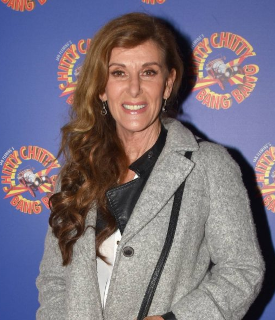
Mary Jennifer Guinness, English-born Irish socialite, member of the Guinness family and victim of a notorious 1986 kidnapping that lasts eight days, passes away peacefully at home on January 23, 2016, after a long battle with cancer. She is surrounded by her family, son Ian and daughters Gillian and Tania and long-term partner Alex Booth.
Guinness is born in England on August 22, 1937. On April 9, 1959, she marries merchant bankerJohn Henry Guinness, a member of the Guinness brewing dynasty and chairman of Guinness Mahon. She is predeceased by her husband, who dies two years after the kidnapping in 1988.
“She had been sick for a long time. We will remember her as a most loving mother,” her son Ian says.
Guinness had been an enthusiastic sailor and member of Howth Yacht Club. “It is with great sadness that the Commodore and Officers of Howth Yacht Club have to inform members of the passing of esteemed member Jennifer Guinness,” a posting on the club website says.
Guinness, at the age of 48, makes headlines around the world after she is abducted from her luxury home in Howth, Dublin on April 8, 1986, by three masked gunmen armed with an Uzisubmachine gun. They pistol-whip her husband and demand a £2.m ransom from him.
She is held for eight days in five various locations and is forced into the boot of a car and a cardboard box during her ordeal. She is also chained to a tree and a bed and at one point, even handcuffed to one of her captors. She is eventually rescued by Garda Síochána from a house on Waterloo Road in Ballsbridge following an all-night standoff with the kidnappers.
It does not take long for her kidnappers to be brought to justice. The following June, John “The Colonel” Cunningham is sentenced to seventeen years in prison, alongside his brother Michael Cunningham, who gets fourteen years. The notorious brothers, who have strong links with the gang led by Martin “The General” Cahill, are behind a string of armed robberies in the 1970s.
Michael Cunningham, who is released from prison in 1995, dies of a heart attack in January 2016. His brother escapes from the Shelton Abbey Prison in 1995 but is tracked down in Holland in 2000 where he serves four years in prison on drug charges before being extradited to Ireland in 2004 to serve out the rest of his sentence. He is released in 2007 and moves to Spain.
After her kidnap ordeal, Guinness says that she never gave in to despair during her eight-day ordeal. “I had no doubt at all, most of the time, that my life was in danger,” she says during a news conference, “but I couldn’t afford to allow myself to lose hope.”
When asked what kept her going during her captivity, Guinness says, “A certain amount of anger, a lot of determination and just a conviction that they weren’t going to get to me.” She draws laughter from reporters when she says, “I kept saying, ‘You’ve got the wrong branch of the family. John’s a banker, but two million is not our style of life.'”
Investigating Gardai praise her courage. Superintendent Frank Hanlon says she was “a considerable asset toward the ending of this incident through her advice to all parties.”
(From: “Jennifer Guinness – victim of a notorious 1986 kidnapping that lasted eight days – has died” by Jerome Reilly, Irish Independent, http://www.independent.ie, January 23, 2016)
Broy is a double agent within the DMP, with the rank of Detective Sergeant (DS). He works as a clerk inside G Division, the intelligence branch of the DMP. While there, he copies sensitive files for IRA leader Michael Collins and passes many of these files on to Collins through Thomas Gay, the librarian at Capel Street Library. On April 7, 1919, he smuggles Collins into G Division’s archives in Great Brunswick Street (now Pearse Street), enabling him to identify “G-Men,” six of whom are eventually killed by the IRA. He supports the Anglo-Irish Treaty of 1921 and joins the National Army during the Irish Civil War, reaching the rank of colonel. In 1925, he leaves the Army and joins the Garda Síochána.
Broy’s elevation to the post of Commissioner comes when Fianna Fáil replaces Cumann na nGaedheal as the government. Other more senior officers are passed over as being too sympathetic to the outgoing party.
In 1934, Broy oversees the creation of “The Auxiliary Special Branch” of the Garda, formed mainly of hastily trained anti-Treaty IRA veterans, who were opponents of Broy in the civil war. It is nicknamed the “Broy Harriers” by Broy’s opponents, a pun on the Bray Harriers athletics club or more likely on the Bray Harriers hunt club. It is used first against the quasi-fascistBlueshirts, and later against the diehard holdouts of the IRA, now set against former comrades. The “Broy Harriers” nickname persists into the 1940s, even though Broy himself is no longer in command, and for the bodies targeted by the unit is a highly abusive term, still applied by radical Irish republicans to the Garda Special Branch (now renamed the Special Detective Unit). The Broy Harriers engage in several controversial fatal shootings. They shoot dead a protesting farmer named Lynch in Cork, and when the matter is discussed in the Senate in 1934, the members who support Éamon de Valera‘s government walk out. They are detested by sections of the farming community. In the light of this latter history, their name is often used in reference to individuals or groups who attempt to disrupt contemporary dissident republicans, such as the remnants of the Provisional Irish Republican Army.
Broy is President of the Olympic Council of Ireland from 1935 to 1950. He is also a member of the Standing Committee of the Irish Amateur Handball Association.
Broy dies on January 22, 1972, at his residence in the Dublin suburb of Rathgar.
On September 17, 2016, a memorial to Broy is unveiled in Coolegagen Cemetery, County Offaly, close to his childhood home. His daughter Áine is in attendance, as are representatives of the government, the Air Corps, and the Garda Síochana.
Neil Jordan‘s film Michael Collins (1996) inaccurately depicts Broy (played by actor Stephen Rea) as having been arrested, tortured and killed by Secret Intelligence Service (SIS) agents. In addition, G Division was based not in Dublin Castle, as indicated in the film, but in Great Brunswick Street. Collins had a different agent in the Castle, David Neligan. Broy is also mentioned and makes an appearance in Michael Russell’s detective novel The City of Shadows, set partly in Dublin in the 1930s, published by HarperCollins in 2012.
Blount is born in 1563, the second son of James, 6th Baron Mountjoy, and Catherine, only daughter of Sir Thomas Legh. He is among the most distinguished of the family, succeeding as 8th Baron Mountjoy on the death in 1594 of his unmarried elder brother William, 7th Baron Mountjoy. The good fortune of his youthful and handsome looks find favour with Queen Elizabeth I which arouses the jealousy of Robert Devereux, 2nd Earl of Essex, leading to a duel between the two courtiers, who later become close friends.
The downfall of Lord Essex does not damage Blount’s career. After the failure of his rebellion, Essex shocks many by denouncing his sister Penelope, who is Blount’s mistress, as a traitor, which inevitably raises the question of his own possible involvement. But the Crown, anxious to retain Blount’s services, and also to show as much leniency as possible to the defeated rebels, simply ignore the accusation.
On February 24, 1600, Blount lands in Ireland as Lord Deputy following Lord Essex and in the ensuing years brings the Nine Years’ War to an end. The leader of the rebellion, Hugh O’Neill, Earl of Tyrone, writes about Blount’s “refined manners” that he would lose a whole season of campaigning “while waiting until breakfast is prepared to his mind!” Despite this, Blount proves that he is quite qualified to pursue the war.
In early 1600, Blount dispatches Sir Henry Docwra with an army of 4,200 troops to land at Culmore to erect a fortress commanding the shores of Lough Foyle in the northwest of Ulster. To prevent Hugh O’Neill from sending a strong force to repulse Dowcra’s forces, Blount advances in force from Dublin to Newry causing O’Neill to fear a southern advance into Tyrone.
Blount aims to avoid the mistakes of previous Lords-Deputy. After the Battle of Moyry Pass, he has it cleared, and a garrison is established there. It had long been a problem for English forces advancing into Ulster from the south. He also establishes posts with garrisons at Mountnorris and Armagh.
On July 13, 1601, Blount and his army along with Turlough McHenry O’Neill of the Fews who had recently switched to the English side in the war, have a stand-off with Hugh O’Neill’s forces at the River Blackwater. After a few shots in vain from either side, O’Neill’s forces withdraw, and Blount sends his forces to occupy the ruined Blackwater fort destroyed by O’Neill in 1595. Later O’Neill’s forces attack Blount’s camp before withdrawing. In response, the Lord-Deputy sends his forces across the river where they find strong artificially fortified fords, which would have held out against the English.
By July 15, 1601, the Lord-Deputy has secured the surrender of O’Neill’s ally Hugh Magennis. That month, he has a new fort near the old Blackwater fort erected.
Blount reports to the council in England that O’Neill is determined to prevent his forces from advancing into Tyrone and toward Dungannon. As such, he initiates a policy of burning large quantities of corn to induce a famine to drive the rebels out of their strongholds.
Blount sets about trying to entice Hugh’s forces to come out and attack by fetching some materials for the new fort from the Tyrone side of the river as well as burning more corn. Further skirmishes between Blount and O’Neill’s forces ensue during the summer of 1601.
Spanish forces land in Munster in August 1601, forcing Blount to send his forces southward leaving O’Neill remaining in his unbroken heartland of Tyrone. The Spanish arrival culminates in the Siege of Kinsale that December, which sees a major defeat of the rebels and their allies.
O’Neill during this time has also moved south to assist some of his allies, however, after some serious defeats at the hands of the forces of Richard Burke, 4th Earl of Clanricarde of Connacht, he is in no place to offer any effective resistance once Blount marches once more to Tyrone in the summer of 1602.
Blount advances to the location he found the previous summer at the River Blackwater, which commands safe and secure passage into Tyrone, previously inaccessible, and sets about erecting a new fort. Having observed this, O’Neill burns his capital at Dungannon and flees to his last refuge in Glenconkeyne.
Advancing northward through Tyrone, Blount erects a fort in the townland of Magheralamfield, afterward known as Mountjoy Castle. He also christens the new fort at the Blackwater Charlemont Fort after himself.
Once in Tyrone, Blount carries out a campaign of devastation throughout it resulting in the mass hunting of rebels, spoiling of corn, the burning of houses and the killing of churls so as to force the submission of O’Neill and his remaining allies. Most symbolically, Blount has the inauguration site of the O’Neill’s at Tullyhogue Fort destroyed.
On March 30, 1603, six days after the death of Elizabeth and the accession of James I, O’Neill makes peace with Blount, signing the Treaty of Mellifont. Blount continues in office with the more distinguished title of Lord-Lieutenant. He declares amnesty for the rebels and grants them honourable terms, which causes some severe criticism from England. He shows similar moderation in putting down the abortive risings in Cork, Waterford and Wexford, where the aldermen, apparently with some vague idea of gaining greater toleration for Roman Catholics, refuse to proclaim the new King. In Cork, three insurgents are hanged after a summary trial, but the rest are acquitted or pardoned.
As part of the Plantation of Ulster, the majority of the barony of Loughinsholin is detached from County Tyrone and made part of the newly created County Londonderry. The rest of Loughinsholin along with the northern parts of Dungannon barony are merged to create the short-lived barony of Mountjoy. It is later amalgamated with the barony of Dungannon.
On his return to England, Blount serves as one of Sir Walter Raleigh’s judges in 1603, and in the same year King James I appoints him Master-General of the Ordnance as well as creating him Earl of Devonshire, granting him extensive estates. He is one of the founder members of the Spanish Company re-founded by royal charter in 1605.
Toward the end of Blount’s life, on December 26, 1605, at Wanstead House near London, in a ceremony conducted by his chaplain William Laud, afterward Archbishop of Canterbury, he marries his long-time mistress Lady Penelope, formerly wife of Robert Rich, 3rd Baron Rich (later 1st Earl of Warwick) and sister of Robert Devereux, 2nd Earl of Essex.
Blount leaves no legitimate children, and so his hereditary titles become extinct at his death on April 3, 1606, at Savoy House, London.
Barry is the fourth of seven children born to Thomas Barry, dairyman, and Mary Barry (née Dowling), both originally from northeast County Carlow. His father dies of heart disease on February 8, 1908, at the age of 56. His mother then moves the family to the family’s farm at Tombeagh, Hacketstown, County Carlow, while retaining the family’s townhouse on Fleet Street. As a child he goes to the National School in Rathvilly. In 1915, he is sent to live in Dublin and attends the O’Connell Schools for three months, before enrolling in the Preparatory Grade at St. Mary’s College, Rathmines, in September 1915. He remains at that school until May 31, 1916, when it is closed by its clerical sponsors. With the closure of St. Mary’s College, he transfers to Belvedere College, a Jesuit school in Dublin. He joins the Irish Volunteers, the forerunner of the IRA, while still at Belvedere College, and enters University College Dublin (UCD) in 1919 to study medicine.
As a member of 1st Battalion, Dublin Brigade of the Irish Volunteers, he takes part in a successful raid for arms on the military post in King’s Inns, Dublin, on June 1, 1920. Within only six minutes the raiders secure rifles, light machine guns, and large quantities of ammunition, and depart the site with no casualties. He also takes part in an abortive attempt to burn Aughavanagh House, Aughrim, County Wicklow in July 1920, and an attack on a British ration party in Church Street, Dublin, on September 20, with the aim of seizing arms. The final operation fails. Gunfire breaks out, three soldiers of around Barry’s own age are killed or fatally wounded, and he becomes the first Volunteer to be captured in an armed attack since 1916.
During interrogation, Barry is threatened with a bayonet and is mistreated. A general court-martial on October 20, which he refuses to recognise, condemns him to death for murdering the three soldiers, although one of the bullets taken from Private Marshall Whitehead’s body is a .45 calibre, while all witnesses state that Barry was armed with a .38 Mauser Parabellum. Despite widespread appeals on grounds of both clemency and expediency, the cabinet in London and officials in Dublin decide separately against a reprieve, probably because of its likely effect on the morale of soldiers and police.
On October 28, the Irish Bulletin, the official propaganda newspaper produced by Dáil Éireann‘s Department of Publicity, publishes Barry’s statement alleging torture. The headline reads English Military Government Torture a Prisoner of War and are about to Hang him. The Irish Bulletin declares Barry to be a prisoner of war, suggesting a conflict of principles is at the heart of the conflict. The British do not recognise a war and treat all killings by the Irish Republican Army (IRA) as murder. The public learns on this day that the date of execution has been fixed for November 1.
He was hanged in Mountjoy Prison, Dublin, on November 1, after hearing two Masses in his cell. The timing of the execution, only seven days after the death by hunger strike of Terence MacSwiney, the republican Lord Mayor of Cork, brings public opinion to a fever-pitch. He is buried in unconsecrated ground on the jail property. His comrade and fellow student Frank Flood is buried alongside him four months later. A plain cross marks their graves and those of Patrick Moran, Thomas Whelan, Thomas Traynor, Patrick Doyle, Thomas Bryan, Bernard Ryan, Edmond Foley and Patrick Maher who are hanged in the same prison before the Anglo-Irish Treaty of July 1921 which ends hostilities between Irish republicans and the British. The graves go unidentified until 1934. They become known as the Forgotten Ten by republicans campaigning for the bodies to be reburied with honour and proper rites. On October 14, 2001, the remains of the ten men are given a state funeral and moved from Mountjoy Prison to be re-interred at Glasnevin Cemetery in Dublin.
Barry is the first person to be tried and executed for a capital offence under the Restoration of Order in Ireland Act 1920, passed twelve weeks earlier. Together with his youth, this makes him a republican martyr celebrated in many ballads and verses. The best-known, set to a tune popular with British servicemen, is recorded by the American singer Paul Robeson, among others. A memorial stained-glass window by Richard King of the Harry Clarke Studio is later installed in the former UCD council chamber (afterward called the Kevin Barry Room), Earlsfort Terrace, Dublin.
O’Malley comes from a political family. Her father, Desmond O’Malley, is a former Fianna Fáil cabinet minister and founder of the Progressive Democrats. Her granduncle, Donogh O’Malley, is a Fianna Fáil minister in the 1960s. She is also a cousin of another former Progressive Democrats TD, Tim O’Malley.
O’Malley is a member of the Oireachtas Committee on Arts, Sports and Tourism and the Oireachtas Committee on Health and Children. She is also a member of the Dáil All-Party group concerned with matters of sexual and reproductive health. She has traveled to South America and South Africa with the United Nations Population Fund and has spoken extensively of the need for a clear safe sex message both in Ireland and in the developing world.
O’Malley loses her Dáil seat at the 2007 Irish general election, but is nominated by the Taoiseach, Bertie Ahern, to the Seanad in August 2007. She is narrowly defeated in the race to become the leader of the Progressive Democrats by Ciarán Cannon.
O’Malley is an independent politician from the dissolution of the Progressive Democrats in 2009. She is an independent candidate at the 2011 Seanad election for the Dublin University constituency but is not elected.
O’Malley is one of eight surviving children of Joseph O’Malley, civil engineer, and his wife, Mary “Cis” (née Tooher). Born into a wealthy middle-class family, he is educated by the Jesuits at Crescent College and later at Clongowes Wood College, County Kildare. He later studies at University College Galway (UCG), where he is conferred with a degree in civil engineering in 1943. He later returns to Limerick, where he works as an engineer before becoming involved in politics.
O’Malley plays rugby at provincial level for Munster, Leinster and Connacht and at club level for Bohemians and Shannon RFC. His chances at an international career are ruined by the suspension of international fixtures during World War II. It is at a rugby match in Tralee that he first meets Dr. Hilda Moriarty, who he goes on to marry in August 1947.
Although O’Malley runs as a Fianna Fáil candidate, he is born into a politically active family who supports Cumann na nGaedheal until a falling-out with the party in the early 1930s. He first becomes involved in local politics as a member of Limerick Corporation. He becomes Mayor of Limerick in 1961, the third O’Malley brother to hold the office (Desmond from 1941-43 and Michael from 1948-49). He is a strong electoral performer, topping the poll in every general election he runs in.
O’Malley is first elected to Dáil Éireann as a Fianna Fáil TD for Limerick East at the 1954 Irish general election. Fianna Fáil is not returned to government on that occasion. He spends the rest of the decade on the backbenches. However, his party is returned to power in 1957. Two years later, the modernising process begins when Seán Lemass takes over from Éamon de Valera as Taoiseach. Lemass introduces younger cabinet ministers, as the old guard who has served the party since its foundation in 1926 begin to retire.
In 1961, O’Malley joins the government as Parliamentary Secretary to the Minister for Finance. He is part of a new, brasher style of politician that emerges in the 1960s, sometimes nicknamed “the men in the mohair suits.” It is expected that this generation of politician, born after the Irish Civil War, will be a modernising force in post-de Valera Ireland.
Although his sporting background is in rugby and swimming, it is association football which O’Malley gets involved in at a leadership level, becoming President of the Football Association of Ireland despite never having played the sport.
Following Fianna Fáil’s retention of power in the 1965 Irish general election, O’Malley joins the cabinet as Minister for Health. He spends just over a year in this position before he is appointed Minister for Education, a position in which he displays renowned dynamism. Having succeeded Patrick Hillery, another dynamic young minister, he resolves to act swiftly to introduce the recommendations of an official report on education.
As Minister for Education, O’Malley extends the school transport scheme and commissions the building of new non-denominational comprehensive and community schools in areas where they are needed. He introduces Regional Technical Colleges (RTCs), now called Institutes of Technology, in areas where there is no third level college. The best example of this policy is the University of Limerick, originally an Institute of Higher Education, where O’Malley is credited with taking the steps to ensure that it becomes a university. His plan to merge Trinity College Dublin and University College Dublin arouses huge controversy, and is not successful, despite being supported by his cabinet colleague Brian Lenihan. Access to third-level education is also extended, the old scholarship system being replaced by a system of means-tested grants that give easier access to students without well-off parents.
Mid-twentieth century Ireland experiences significant emigration, especially to the neighbouring United Kingdom where, in addition to employment opportunities, there is a better state provision of education and healthcare. Social change in Ireland and policies intending to correct this deficit are often met with strong resistance, such as Noël Browne‘s proposed Mother and Child Scheme. As a former Health Minister, O’Malley has first-hand experience of running the department which had attempted to introduce this scheme and understood the processes that caused it to fail, such as resistance from Department of Finance and John Charles McQuaid. This influences his strategy in presenting the free-education proposal.
Shortly after O’Malley is appointed, he announces that from 1969 all education up to Intermediate Certificate level will be without cost, and free buses will bring students in rural areas to their nearest school, seemingly making this decision without consulting other ministers. However, he does discuss it with Lemass. Jack Lynch, who, as Minister for Finance, has to find the money to pay for the programme, is not consulted and is dismayed at the announcement.
By announcing the decision first to journalists and on a Saturday (during a month when the Dáil is in recess), the positive public reaction tempers resistance to the idea before the next cabinet meeting. O’Malley’s proposals are hugely popular with the public, and it is impossible for the government to go back on his word.
Some Irish commentators consider that O’Malley’s extension of education, changing Ireland from a land where the majority are schooled only to the age of 14 to a country with universal secondary-school education, indirectly leads to the Celtic Tiger boom of the 1990s-2000s when it is followed for some years by an extension of free education to primary degree level in university, a scheme that is launched in 1996 by the Labour Party and axed in 2009 by Fianna Fáil’s Batt O’Keeffe.
In 1967, O’Malley appoints Justice Eileen Kennedy to chair a committee to carry out a survey and report on the reformatory and industrial school systems. The report, which is published in 1970, is considered ground-breaking in many areas and comes to be known as the Kennedy Report. The Report makes recommendations about a number of matters, including the Magdalene laundries, in relation to which they are not acted upon. The report recommends the closure of a number of reformatories, including the latterly infamous reformatory at Daingean, County Offaly.
O’Malley’s reforms make him one of the most popular members of the government. He is affectionately known as “the School Man” for his work in education. His sudden death in Limerick on March 10, 1968, before his vision for the education system is completed, comes as a shock to the public. He is buried with a full Irish state funeral.
Following O’Malley’s death, his widow, Hilda O’Malley, does not run in the subsequent by-election for the seat he has left vacant. It is won narrowly by their nephew Desmond O’Malley. Hilda seeks the Fianna Fáil nomination for the 1969 Irish general election, but Fianna Fáil gives the party nomination to Desmond, as the sitting TD. Hilda runs as an Independent candidate in that election. After what proves a bitter campaign against her nephew, she fails to get the fourth seat in Limerick East by just 200 votes.
She studies in the school of Old Irish established by Professor Osborn Bergin and is strongly influenced by the Irish Australian professor O’Daly. She later teaches Latin through Irish at Ballingeary and becomes proficient in French, German, Italian and Spanish.
She spends the last £100 of her scholarship on a dowry for her marriage to Sean MacGearailt, later first Accountant General of Revenue in the Irish civil service, with whom she lives originally in Glasnevin and then in Dalkey.
She is a founder member of the radical Craobh an Chéitinnigh, the Keating branch of Conradh na Gaeilge, composed mainly of Dublin-based Kerry people and regarded, by themselves at least, as the intellectual focus of the League.
In August 1904, some six years after the establishment of the earliest women’s hurling teams, the rules of camogie (then called camoguidheacht), first appears in Banba, a journal produced by Craobh an Chéitinnigh. Camogie had come to public attention when it was showcased at the annual Oireachtas (Conradh na Gaeilge Festival) earlier that year, and it differed from men’s hurling in its use of a lighter ball and a smaller playing-field. Ní Chinnéide and Cáit Ní Dhonnchadha, like Ní Chinnéide, an Irish-language enthusiast and cultural nationalist, are credited with having created the game, with the assistance of Ní Dhonnchadha’s scholarly brother Tadhg Ó Donnchadha, who drew up its rules. She is on the first camogie team to play an exhibition match in Navan, County Meath, in July 1904, becomes an early propagandist for the game and, in 1905, is elected president of the infant Camogie Association.
She first visits the Blasket Islands in 1932 with her daughter Niamh, who dies tragically young. In the summer of 1934, she puts the idea into Peig Sayers‘s head to write a memoir. According to a later interview with Ní Chinnéide “she knew and admired her gift for easy conversation, her gracious charm as a hostess, her talent for illustrating a point she was making by a story out of her own experience that was as rich in philosophy and thought as it was limited geographically.” Peig answers that she has “nothing to write.” She had learned only to read and write in English at school and most of it has been forgotten.
Ní Chinnéide suggests Peig should dictate her memoir to her son Micheal, known to everyone on the island as An File (“The Poet”), but Peig “only shook her head doubtfully.” At Christmas, a packet arrives from the Blaskets with a manuscript, she transcribes it word for word and the following summer brings it back to the Blaskets to read it to Peig. She then edits the manuscript for the Talbot Press. Peig becomes well known as a prescribed text on the Leaving Certificate curriculum in Irish.
Ní Chinnéide has an acting part in the first modern play performed in Irish on the stage, Casadh an tSugáin by Douglas Hyde in 1901. She is later author of children’s plays staged by An Comhar Drámuidhachta at the Oireachtas and the Peacock Theatre, of which Gleann na Sidheóg and An Dúthchas (1908) are published. She is a broadcaster in Irish on 2RN, a wholly owned subsidiary of Raidió Teilifís Éireann, after its foundation in 1926 and author of a translation of Grimms’ Fairy Tales (1923). She is president of the Gaelic Players Dramatic group during the 1930s and a founder of the Gaelic Writers Association in 1939.
She soon becomes interested in writing children’s plays, including Gleann na Sidheóg (Fairy Glen, 1905) and Sidheoga na mBláth (Flower Fairies, 1909. Although there is little information available on the staging of her first play, by the time her second children’s play, Sidheóga na mBláth, is published in An Claidheamh Soluis in December 1907, “Éire Óg” (“Young Ireland”) branches of Conradh na Gaeilge have been established in conjunction with adults’ branches. Patrick Pearse in particular voices the expectation that this play will be staged by many “Éire Óg” branches “before the New Year is very old,” thus indicating the immediate take up of such plays. Indeed, a week after the play’s publication, it is staged in the Dominican College in Donnybrook, Dublin, where Ní Chinnéide had spent several years as an Irish teacher.
Blackham is born in London, England, on December 16, 1891. His father, William George Blackham, is an Ulster Protestant from Newry, while his mother is an Englishwoman named Evison Elizabeth Saunders. An uncle is Robert J. Blackham who is the Surgeon-General to the British Army in Ireland. The family are evangelical Protestants, against which he rebels. Having been brought up to take the Bible literally, he suffers a religious crisis upon the realisation his teachers at school do not. He finds the transition to adulthood difficult, particularly due to the early death of his father.
For a time, Blackham moves in socialist circles, under the influence of Ulster socialist Robert Wilson Lynd. However, upon the discovery that his father had been a Protestant who had been in favour of Irish home rule and also had some republican sympathies, he turns toward Irish nationalism.
Blackham becomes involved in the Gaelic League while in London. he Gaelicizes his name to Aodh Sandrach de Blácam or Hugh de Blácam, despite his non-Gaelic ethnic origin. He learns the Irish language from the essayist Robert Wilson Lynd. During this time, he seeks to synthesize his urge to reclaim his sense of Irish nationality with the works and thoughts of hardline Catholic author G. K. Chesterton. It is partially because of Chesterton’s influence that he converts to Catholicism, although the conversion of Protestant Irish Nationalists to Catholicism is common throughout the early 20th century. Another influence upon his decision to convert is his desire to marry Catholic Mary McCarville of County Monaghan.
In May 1914 de Blácam returns to Ireland and begins working as a freelance journalist. He joins the Enniscorthy Echo as a journalist in 1915.
During the Irish War of Independence de Blácam writes nationalist propaganda alongside Arthur Griffith and Herbert Moore Pim. He is interned by the British in 1919. During this time period he writes two political manifestoes: Towards the Republic; a study of new Ireland’s social and political aims (1918) and What Sinn Féin Stands For (1921). The two books argue that at their root, Catholic social teaching (CST) and Bolshevism are essentially identical and that Ireland, having only experienced feudalism and capitalism because of external forces, can skip many of the phrases normally described in the Marxist Trajectory of historical development and go straight to a soviet-type society, an idea not dissimilar to the two-stage theory. He imagines this soviet-type society to be an Irish-speaking decentralised rural cooperative commonwealth. Critics of Sinn Féin frequently cite his works as proof of the infeasibility of Sinn Féin’s aims.
De Blácam opposes the Anglo-Irish Treaty and subsequently aids the Anti-Treaty Irish Republican Army (IRA) during the Irish Civil War. For this he is interned by the newly created Irish Free State in 1922. Following his release, he continues to pin his flag to the mast of Éamon de Valera and his newly formed Fianna Fáil party. He believes De Valera fully embodies his own political ideas.
During the 1920s de Blácam joins The Irish Times, which he later leaves to become editor of The Catholic Standard. For seventeen years he writes a feature in the Fianna Fáil aligned The Irish Press called “Roddy the Rover.”
It was also during the 1920s that de Blácam moves to Dublin, where he begins to move in the same circles as George Bernard Shaw, George Russell, and W. B. Yeats. He hopes all three men might one day convert to Catholicism as he did and is sorely disappointed when each do not. Upon the death of Yeats, he goes so far as to refer to Yeats’ poem as “Demonic.” He has similar hopes for Peadar O’Donnell but is similarly disappointed in his lack of interest in conversion.
In 1938 de Blácam publishes The Black North, a book which carries an introduction by de Valera. In the book he argues that Ulster Protestants are in actuality both Irish and Catholic, but they simply do not realise it. Among his arguments to support this idea are the suggestions that the presbyterian emphasis on self-government is derived from the Gaelic clan tradition, that presbyterian “kailyard” writers of rural nostalgia such as Lydia Mary Foster exemplify the naturally Irish piety and purity of her co-religionists, and that the fact that some workers commute from the Armagh borderland to work in Dundalk factories prove that the south is better off economically than the north.
It is suggested de Blácam is an influence upon de Valera’s 1943 broadcast “The Ireland That We Dreamed Of.” Politically he is highly considered about rural depopulation and is involved in a number of organisations seeking to end it. He advocates more economic autarky and cultural protectionism to combat rural depopulation and lamented urbanisation and industrialisation. He also tries to convince the Fianna Fáil executive that they should ban women from emigration as well as ban women from factories in order to force women to remain in rural Ireland. His ideas fail to impress the executive, with Seán MacEntee in particular standing in strong disagreement.
De Blácam is a member of the Fianna Fáil executive until 1947, when he defects to the upstart Irish Republican party Clann na Poblachta. For this move he is immediately fired from The Irish Press. He stands for Clann na Poblachta in the Louth constituency at the 1948 Irish general election but is not elected.
During the brief period in which Clann na Poblachta is in government, de Blácam serves as an official spokesman for the Department of Health and as a speechwriter to Noël Browne, the embattled Minister for Health.
De Blácam dies while working in the Custom House on January 16, 1951. His funeral is attended by many dignitaries including TaoiseachJohn A. Costello and former Taoiseach Éamon de Valera. He is buried in New Mellifont Abbey, County Louth.
Guiney is the second and eldest surviving son of James Roger Guiney, who is descended from Jacobites, and Judith Macrae. His father, impoverished after a failed runaway marriage, brings with him on his second voyage to New Brunswick his favourite child Patrick, not yet six years old. After some years, his mother and younger brother, William, rejoin her husband, recently crippled by a fall from his horse. They settle in Portland, Maine. The young Guiney works as a wheel boy in a rope factory, and at the age of fourteen apprenticed to a machinist in Lawrence, Massachusetts, but stays only a year and a half before returning to Portland.
Guiney hopes to better himself through education and attends the public grammar school. He matriculates at the College of the Holy Cross in Worcester, Massachusetts. His depleting finances cause him to leave after about a year, despite the fact that the college president offers to make some arrangement for him to stay, which his honor would not allow him to accept. His book-loving father having meanwhile died, he goes to study for the Bar under Judge Walton, and is admitted in Lewiston, Maine, in 1856, taking up the practice of criminal law.
Familiar with the manual of arms, Guiney enlists for example’s sake as a private, refusing a commission from GovernorJohn A. Andrew until he has worked hard to help recruit the 9th Massachusetts Infantry Regiment. By June 1861, he is a captain. In July 1862, the first colonel having died from a wound received in action, Lieutenant Colonel Guiney succeeds him to the command. He wins high official praise, notably for courage and presence of mind at the Battle of Gaines’ Mill in Hanover County, Virginia. Here, after three successive color-bearers had been shot down, he himself reportedly seizes the flag, throws aside coat and sword-belt, rises white-shirted and conspicuous in the stirrups, inspires a final rally, and turns the fortune of the day.
The 9th Massachusetts is present at Gettysburg, Pennsylvania, in second brigade first division V Corps on July 1, 1863. Col Jacob B. Sweitzer the brigade commander, detaches Guiney’s regiment for picket duty. Consequently, the regiment misses the second day’s fighting at the Battle of Gettysburg.
In 1864, through the Battle of the Wilderness, Guiney frequently has been in command of his brigade, the second brigade, first division, V Corps. After many escapes from dangerous combats without serious injury, he is shot in the face by a sharpshooter at the Battle of the Wilderness on May 5, 1864. The Minié ball destroys his left eye, and inflicts, it is believed, a fatal wound. During an interval of consciousness, however, he insists on an operation which saves his life. He is honorably discharged and mustered out of the U.S. Volunteers on June 21, 1864, just before the mustering out of his old regiment.
On February 21, 1866, PresidentAndrew Johnson nominates Guiney for the award of the honorary grade of brevetbrigadier general, to rank from March 13, 1865, for gallant and meritorious services during the war. The U.S. Senate confirms the award on April 10, 1866.
Kept alive for years by nursing, Guiney runs unsuccessfully for the United States Congress on a sort of “Christian Socialist” platform, is elected assistant district attorney (1866–70), and acts as consulting lawyer (no longer being able to plead) on many locally celebrated cases.
Guiney’s last exertions are devoted to the defeat of the corruption and misuse of the Probate Court of Suffolk County, Massachusetts, of which he had become registrar (1869–77). He dies suddenly on March 21, 1877, in Boston and is found kneeling against an elm in the little park near his home. General Guiney is Commandant of the Loyal Legion, Major-General Commandant of the Veteran Military League, member of the Charitable Irish Society of Boston, and one of the founders and first members of the Catholic Union of Boston. He also publishes some literary criticism, a few graphic prose sketches and some verse.
Hutchinson is born in Glasgow, Scotland, on February 16, 1927. His father, Harry Hutchinson, a Scottish printer whose own father had left Dublin to find work in Scotland, is Sinn Féin treasurer in Glasgow and is interned in Frongoch internment camp in 1919–21. His mother, Cathleen Sara, is born in Cowcaddens, Glasgow, of emigrant parents from County Donegal. She is a friend of Constance Markievicz. In response to a letter from Cathleen, Éamon de Valera finds work in Dublin for Harry as a clerk in the Labour Exchange, and later he holds a post in Stationery Office.
Hutchinson is five years old when the family moves to Dublin and is the last to be enrolled in St. Enda’s School before it closes. He then goes to school at Synge Street CBS where he learns Irish and Latin. One of his close friends there is the poet and literary critic John Jordan. In 1948 he attends University College Dublin (UCD) where he spends a year and a half, learning Spanish and Italian.
Having published some poems in The Bell in 1945, Hutchinson’s poetic development is greatly influenced by a 1950 holiday in Spain and Portugal. A short stop en route at Vigo brings him into contact for the first time with the culture of Galicia. Later, in Andalusia, he is entranced by the landscape and by the works of the Spanish poets Federico García Lorca, Emilio Prados and Luis Cernuda.
In 1951 Hutchinson leaves Ireland again, determined to live in Spain. Unable to get work in Madrid, as he had hoped, he travels instead to Geneva, where he gets a job as a translator with the International Labour Organization, which brings him into contact with Catalan exiles, speaking a language then largely suppressed in Spain. An invitation by a Dutch friend leads to a visit to the Netherlands, in preparation for which he teaches himself the Dutch language.
Hutchinson returns to Ireland in 1953 and becomes interested in the Irish language poetry of writers such as Piaras Feiritéar and Aonghus Fionn Ó Dálaigh and publishes a number of poems in Irish in the magazine Comhar in 1954. The same year he travels again to Spain, this time to Barcelona, where he learns the Catalan and Galician languages, and gets to know Catalan poets such as Salvador Espriu and Carles Riba. With the British poet P. J. Kavanagh, he organises a reading of Catalan poetry in the British Institute.
Hutchinson goes home to Ireland in 1957 but returns to Barcelona in 1961 and continues to support Catalan poets. An invitation by the publisher Joan Gili to translate some poems by Josep Carner leads to the publication of his first book, a collection of thirty of Carner’s poems in Catalan and English, in 1962. A project to publish his translation of Espriu’s La Pell de brau (The Bull-skin), falls through some years later. Some of the poems from this project are included in the collection Done into English.
In 1963, Hutchinson’s first collection of original poems in English, Tongue Without Hands, is published by Dolmen Press in Ireland. In 1967, having spent nearly ten years altogether in Spain, he returns to Ireland, making a living as a poet and journalist writing in both Irish and English. In 1968, a collection of poems in Irish, Faoistin Bhacach (A Lame Confession), is published. Expansions, a collection in English, follows in 1969. Friend Songs (1970) is a new collection of translations, this time of medieval poems originally written in Galician-Portuguese. In 1972 Watching the Morning Grow, a new collection of original poems in English, comes out, followed in 1975 by another, The Frost Is All Over.
In October 1971, Hutchinson takes up the Gregory Fellowship in Poetry at the University of Leeds, on the recommendation of Professor A. Norman Jeffares. There is some controversy around the appointment following accusations, later retracted, that Jeffares had been guilty of bias in the selection because of their joint Irish heritage. He holds tenure at the University for three years, and during that time contributes to the University’s influential poetry magazine Poetry & Audience.
From 1977 to 1978 Hutchinsonn compiles and presents Oró Domhnaigh, a weekly radio programme of Irish poetry, music and folklore for Ireland’s national network, RTÉ. He also contributes a weekly column on the Irish language to the station’s magazine RTÉ Guide for over ten years. A collaboration with Melita Cataldi of Old Irish lyrics into Italian is published in 1981. Another collection in English, Climbing the Light (1985), which also includes translations from Irish, Italian and Galician, is followed in 1989 by his last Irish collection, Le Cead na Gréine (By Leave of the Sun). The Soul that Kissed the Body (1990) is a selection of his Irish poems translated into English. His most recent English collection is Barnsley Main Seam (1995). His Collected Poems is published in 2002 to mark his 75th birthday. This is followed in 2003 by Done into English, a selection of many of the translated works he produced over the years.
A co-editor and founder of the literary journal Cyphers, Hutchinson receives the Butler Award for Irish writing in 1969. He is a member of Aosdána, the state-supported association of artists, from which he receives a cnuas (stipend) to allow him to continue writing. He describes this as “a miracle and a godsend” as he is fifty-four when invited to become a member and is at the end of his tether. A two-day symposium of events is held at Trinity College Dublin, to celebrate his 80th birthday in 2007, with readings from his works by writers including Macdara Woods, Eiléan Ní Chuilleanáin, Paul Durcan and Sujata Bhatt. His most recent collection, At Least for a While (2008), is shortlisted for the Poetry Now Award.
Hutchinson lives in Rathgar, Dublin, and dies of pneumonia in Dublin on January 14, 2012. His extensive archive is in the library of Maynooth University. Its opening on May 24, 2015, is accompanied by the inauguration of an annual Pearse Hutchinson seminar and the launch of a collection of unpublished Hutchinson poems, Listening to Bach.
Some critics argue that Hutchinson’s concern with simplicity and Ireland’s place in the comparative history of human oppression too often deteriorates into banality, didacticism, and regurgitation of sentimental revivalist tropes. Even these, however, acknowledge his occasional greatness, while his champions argue that his achievement has not yet been fully recognised and absorbed.