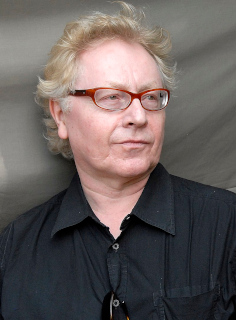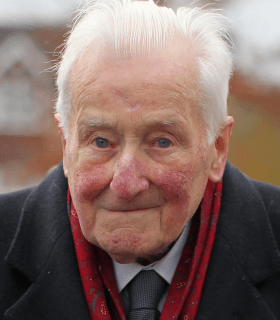
There are commercially available recordings of over fifty of Wilson’s works on labels including Diatribe Records, Riverrun, RTÉ Lyric fm, Black Box, Timbre, Guild, Meridian and Chandos Records. His music is published by Ricordi (London) and Universal Edition.
Price and her sister, Marian, also an IRA member, are the daughters of Albert Price, a prominent Irish republican and former IRA member from Belfast. Their aunt, Bridie Dolan, is blinded and loses both hands in an accident while handling IRA explosives.
Price becomes involved in Irish republicanism in the late 1960s and she and Marian participate in the Belfast to Derrycivil rights march in January 1969 and are attacked in the Burntollet Bridge incident.
In 1971 Price and her sister join the Provisional Irish Republican Army (IRA). In 1972 she joins an elite group within the IRA called “The Unknowns” commanded by Pat McClure. The Unknowns are tasked with various secretive activities and transport several accused traitors across the border into the Republic of Ireland where they are “disappeared.” She personally states that she had driven Joe Lynskey across the border to face trial. In addition, she states that she, Pat McClure and a third Unknown were tasked with killing Jean McConville, with the third Unknown actually shooting her.
Price leads the car bombing attacks in London on March 8, 1973, which injure over 200 people and is believed to have contributed to the death of one person who suffers a fatal heart attack. The two sisters are arrested, along with Gerry Kelly, Hugh Feeney and six others, on the day of the bombing as they are boarding a flight to Ireland. They are tried and convicted at the Great Hall in Winchester Castle on November 14, 1973. Although originally sentenced to life imprisonment, which is to run concurrently for each criminal charge, their sentence is eventually reduced to 20 years. She serves seven years for her part in the bombing. She immediately goes on a hunger strike demanding to be moved to a prison in Northern Ireland. The hunger strike lasts for 208 days because the hunger strikers are force-fed by prison authorities to keep them alive.
On the back of the hunger-striking campaign, Price’s father contests Belfast West at the February 1974 United Kingdom general election, receiving 5,662 votes (11.9%). The Price sisters, Hugh Feeney, and Gerry Kelly are moved to Northern Ireland prisons in 1975 as a result of an IRA truce. In 1980 she receives the royal prerogative of mercy and is freed on humanitarian grounds in 1981, purportedly suffering from anorexia nervosa due to the invasive trauma of daily force feedings.
After her release in 1980, Price marries Irish actor Stephen Rea, with whom she has two sons, Danny and Oscar. They divorce in 2003.
The Price sisters remain active politically. In the late 1990s, Price and her sister claim that they have been threatened by their former colleagues in the IRA and Sinn Féin for publicly opposing the Good Friday Agreement (i.e. the cessation of the IRA’s military campaign). she is a contributor to The Blanket, an online journal, edited by former Provisional IRA member Anthony McIntyre, until it ceases publication in 2008.
In 2001, Price is arrested in Dublin and charged with possession of stolen prescription pads and forged prescriptions. She pleads guilty and is fined £200 and ordered to attend Alcoholics Anonymous meetings.
In February 2010, it is reported by The Irish News that Price had offered help to the Independent Commission for the Location of Victims’ Remains in locating graves of three men, Joe Lynskey, Seamus Wright, and Kevin McKee. The bodies of Wright and McKee are recovered from a singular grave in County Meath in August 2015. It is unclear if Price played a role in their recovery. The remains of Joe Lynskey have not been recovered as of April 2021.
Price is the subject of the 2018 feature-length documentary I, Dolours in which she gives an extensive filmed interview.
In 2010, Price claims Gerry Adams had been her officer commanding (OC) when she was active in the IRA. Adams, who has always denied being a member of the IRA, denies her allegation. She admits taking part in the murder of Jean McConville, as part of an IRA action in 1972. She claims the murder of McConville, a mother of ten, was ordered by Adams when he was an IRA leader in West Belfast. Adams subsequently publicly further denies Price’s allegations, stating that the reason for them is that she is opposed to the Provisional Irish Republican Army’s abandonment of paramilitary warfare in favour of politics in 1994, in the facilitation of which Adams has been a key figure.
Oral historians at Boston College interview both Price and her fellow IRA paramilitary Brendan Hughes between 2001 and 2006. The two give detailed interviews for the historical record of the activities in the IRA, which are recorded on condition that the content of the interviews is not to be released during their lifetimes. Prior to her death in May 2011, the Police Service of Northern Ireland (PSNI) subpoena the material, possibly as part of an investigation into the disappearance of a number of people in Northern Ireland during the 1970s. In June 2011, the college files a motion to quash the subpoena. A spokesman for the college states that “our position is that the premature release of the tapes could threaten the safety of the participants, the enterprise of oral history, and the ongoing peace and reconciliation process in Northern Ireland.” In June 2011, U.S. federal prosecutors ask a judge to require the college to release the tapes to comply with treaty obligations with the United Kingdom. On July 6, 2012, the United States Court of Appeals for the First Circuit agrees with the government’s position that the subpoena should stand. On October 17, 2012, the Supreme Court of the United States temporarily blocks the college from handing over the interview tapes. In April 2013, after Price’s death, the Supreme Court turns away an appeal that seeks to keep the interviews from being supplied to the PSNI. The order leaves in place a lower court ruling that orders Boston College to give the Justice Department portions of recorded interviews with Price. Federal officials want to forward the recordings to police investigating the murder of Jean McConville.
Price dies in her Malahide, County Dublin, home on January 23, 2013, from a toxic effect of mixing prescribed sedative and anti-depressant medication. Her body is found the following day. The inquest returns a verdict of death by misadventure. She is buried at Milltown Cemetery in West Belfast.
Craig is born at Sydenham, Belfast, on January 8, 1871, the seventh of nine children of James Craig (1828–1900), a wealthy whiskey distiller who had entered the firm of Dunville & Co. as a clerk and by age 40 is a millionaire and a partner in the firm. Craig Snr. owns a large house called Craigavon, overlooking Belfast Lough. His mother, Eleanor Gilmore Browne, is the daughter of Robert Browne, a prosperous man who owned property in Belfast and a farm outside Lisburn. Craig is educated at Merchiston Castle School in Edinburgh, Scotland. After school he begins work as a stockbroker, eventually opening his own firm in Belfast.
Craig enlists in the 3rd (Militia) battalion of the Royal Irish Rifles on January 17, 1900, to serve in the Second Boer War. He is seconded to the Imperial Yeomanry, a cavalry force created for service during the war, as a lieutenant in the 13th battalion on February 24, 1900, and leaves Liverpool for South Africa on the SS Cymric in March 1900. After arrival he is soon sent to the front and is taken prisoner in May 1900, but released by the Boers because of a perforated colon. On his recovery he becomes deputy assistant director of the Imperial Military Railways, showing the qualities of organisation that are to mark his involvement in both British and Ulster politics. In June 1901 he is sent home suffering from dysentery, and by the time he is fit for service again the war is over. He is promoted to captain in the 3rd Royal Irish Rifles on September 20, 1902, while still seconded to South Africa.
On June 7, 1921, Craig is appointed the first Prime Minister of Northern Ireland by the Lord Lieutenant of Ireland. The House of Commons of Northern Ireland assembles for the first time later that day.
Craig had made his career in British as well as Northern Irish politics, but his premiership shows little sign of his earlier close acquaintance with the British political world. He becomes intensely parochial and suffers from his loss of intimacy with British politicians in 1938, when the British government concludes agreements with Dublin to end the Anglo-Irish trade war between the two countries. He never tries to persuade Westminster to protect Northern Ireland‘s industries, especially the linen industry, which is central to its economy. He is anxious not to provoke Westminster, given the precarious state of Northern Ireland’s position. In April 1939, and again in May 1940 during World War II, he calls for conscription to be introduced in Northern Ireland (which the British government, fearing a backlash from nationalists, refuses). He also calls for Winston Churchill to invade Ireland using Scottish and Welsh troops in order to seize the valuable ports and install a Governor-General at Dublin.
While still prime minister, Craig dies peacefully at his home at Glencraig, County Down at the age of 69 on November 24, 1940. He is buried on the Stormont Estate on December 5, 1940, and is succeeded as the Prime Minister of Northern Ireland by the Minister of Finance, J. M. Andrews.
(Pictured: James Craig, 1st Viscount Craigavon, bromide print by Olive Edis, National Portrait Gallery, London)
Shiels is born on June 24, 1881, in Milltown, Ballybrakes, near Ballymoney, County Antrim, one of seven sons of Robert Shiels, a railway worker, and Eliza Shiels (née Sweeney), who also has one daughter. The family soon moves to Castle Street, Ballymoney, where he attends the local Roman Catholicnational school. His elder brothers emigrate to the United States when young. With there being no chance of further schooling even if he wanted it, he leaves Ireland when he is 19 years old. He works as a casual labourer in many places in western North America: as a farmworker and miner in Idaho and Montana, and as a lumber camp worker in British Columbia, Canada. In 1904 he is employed by the Canadian Pacific Railway to supervise a gang of workers who are building a stretch of railway in Saskatchewan. In a serious accident, he is badly injured. Despite surgery on his back, he is never able to walk again, and he receives a disability pension from the railway company.
After a long convalescence in Canada, Shiels returns to his mother’s house in Ballymoney around 1908. He sets up in business in Main Street as a shipping agent and as an agent for the Canadian Pacific Railway, taking bookings from intending emigrants. He is encouraged by his parish priest, Fr. John Hasson, by a local solicitor, Jack Pinkerton, and by James Pettigrew, a teacher, to write short stories. To try to preserve anonymity in a small community, he at first uses the pseudonym “George Morshiel,” and is successful with Western stories and other short fiction. His friends urge him to try writing dramas, and in 1918 Away from the Moss is produced by the Ulster Literary Theatre in Belfast.
After further success there with two short plays in which Shiels is learning his craft, the Abbey Theatre in Dublin accepts a one-act play, Bedmates, which is performed in January 1921. With great regularity for the next twenty years, he writes twenty-two plays for the Abbey Theatre. His work forms the basis of the repertoire in the 1920s and 1930s and attracts large audiences. Plays such as The New Gossoon (1930) provide Dublin theatregoers with entertainment, but also help form the style of acting and production which for many years characterises the Abbey and its actors. Three of his plays, Paul Twyning (1922), Professor Tim (1925) and The New Gossoon, are later performed in theatres in London and are also published in a 1945 volume, which is twice reprinted. Professor Tim, produced by the touring Abbey Theatre, receives enthusiastic reviews in Philadelphia, and The New Gossoon appears successfully on Broadway in New York City in 1932, 1934, and 1937.
Shiels’s earlier work is perhaps easiest for audiences to enjoy. Comedies such as Moodie in Manitoba (1918) portray characters so realistic that north Antrim people believe with some alarm that it might be possible to identify who Shiels had in mind when he created them, and he is at first somewhat less than popular in Ballymoney. He superbly reproduces local language and thoroughly understands the local way of life. Plays he writes late in his career are first performed by the Group Theatre in Belfast, and in these productions (and in the radio versions broadcast by the BBC) his work becomes widely known, almost beloved, in the north of Ireland. During the first half of the twentieth century amateur drama groups throughout Ireland are much more important in local life than they have been since the advent of television. Probably all such societies have at some time staged a Shiels play, and this tradition continues. His plays contain amusing dialogue, carefully crafted plots, and usually more or less happy endings.
However, Shiels’s later works, notably The Passing Day (1936), first broadcast as a radio play, and The Rugged Path (1940), which breaks all records at the Abbey Theatre in a run of three months, tackle darker subject matter and feature characters still less sympathetic even than the rogues and hypocrites of the earlier work. In The Rugged Path and its sequel, The Summit (1941), he explores the moral crisis facing Ireland after the political changes of the 1920s. One critic sees in it an allegory for the contemporary struggle against Adolf Hitler. His view of life in the small towns and farms of Ireland is never in the slightest rosy-tinted, but in the symbolism of The Passing Day, he achieves “bitter intensity” (The Irish Times review, quoted by Casey).
Shiels’s modesty leads him to refuse an honorary doctorate from Queen’s University Belfast (QUB), in 1931. He is reticent about his experiences and beliefs and does little to foster his own reputation. In one early interview he expresses the belief that Ulster theatre needs dramatic material that reflects the psychology and setting of the region. His own work, at its best, achieves this and more. The very qualities which make his work popular in the north of Ireland permit some metropolitan literary critics to dismiss his plays as “kitchen comedies.” However, with the passage of time, his importance as a chronicler of a vanishing way of life can be set alongside the recognition due to him as a prolific and gifted dramatist.
Shiels suffers from a lengthy illness, and though he undergoes an operation in Ballymoney in 1949, dies soon afterwards at his house, New Lodge, in Carnlough, County Antrim, on September 19, 1949. He is buried in the graveyard of Our Lady and St. Patrick in Ballymoney. In the month that he dies, the Group Theatre and Garvagh Young Farmers’ Club are both rehearsing Shiels plays, and there have since been many productions of his plays in the north and elsewhere. Ballymoney Drama Festival presents a portrait of Shiels to the Abbey Theatre, and a new production of The Passing Day is staged there to celebrate his centenary in 1981.
Originally from west Belfast, Donaghy begins his football career as a goalkeeper with little-known Down and Connor League side team St. Agnes before moving on to play as an outfield player for works team Post Office Social Club. After barely six months, he is on the move again, this time joining Amateur League side Cromac Albion, where his blossoming talent is spotted by then Larne F.C. boss Brian Halliday.
Donaghy’s rapid rise in the game continues when, after just 20 matches with the Inver Park club, he is transferred to Luton Town F.C. in June 1978 for a fee of £20,000.
Donaghy spends ten years at Luton Town F.C., overseeing the most successful era of their history to date. He collects a Second Division title winner’s medal in 1982, enabling him to experience First Division football for the first time. He helps Luton Town F.C. retain their First Division status and is a key part of the team that finishes a club record high of seventh in the 1986–87 season. In 1987–88, he helps Luton Town F.C. win their first major trophy as they achieve a shocking 3–2 win over Arsenal F.C. in the 1988 Football League Cup Final.
In October 1988, Donaghy departs from Kenilworth Road in a £650,000 move to his boyhood heroes Manchester United F.C. It is at the time a big risk for Alex Ferguson to pay out a large sum of money for a 31-year-old, but Donaghy repays the United manager’s faith in him with some consistent performances in not only his favoured central defensive position but also as a full-back.
Immediately after joining United, Donaghy is the club’s first choice left-back for the 1988–89 season, missing only the League Cup game for which he is cup-tied. However, his opportunities are limited in the 1989–90 season, and he is unable to make even the substitutes bench for the 1990 FA Cup final triumph over Crystal Palace F.C. However, he does make the substitutes bench for the 1991 European Cup Winners’ Cup final triumph.
United are First Division runners-up in 1991–92 and win their first-ever League Cup, but Donaghy’s first-team chances continue to be restricted, and he is also left out of the side that beats Nottingham Forest F.C. in the League Cup final.
Donaghy’s next move is in August 1992 when, just a month short of his 35th birthday, Chelsea F.C. manager Ian Porterfield pays £100,000 for his services. He helps Chelsea finish 11th in the inaugural Premier League season and helps them reach the 1994 FA Cup final, although he does not make the squad for the team that loses 4–0 to double-winners Manchester United F.C. At the end of the season, he announces his retirement from club football.
Donaghy makes his final appearance for Northern Ireland against the Mexico national football team in Miami in June 1994, three months before his 37th birthday.
Shortly after his playing career ends, Donaghy returns to the province with his family and after a brief spell as manager at Newry City F.C., he has stints as a coach with Cliftonville F.C. and as a Youth Development Officer back on his home pitch with Donegal Celtic F.C. In 2000, he is appointed manager for the Northern Ireland national under-19 team. He serves in this capacity until 2008.
The first of Donaghy’s 91 international caps comes in May 1980 at Windsor Park in the 1–0 British Home Championship victory over Scotland. He further enhances his reputation during the 1982 and 1986 World Cup finals. In the former tournament, he plays in four of Northern Ireland’s five games. He is sent off after 60 minutes of the famous 1–0 win over Spain in Valencia, for the offence of shoving Spain’s José Antonio Camacho, but returns for Northern Ireland’s final match, a 4–1 defeat by France in Madrid.
Dillon is born in Belfast in 1915 or 1916. He leaves school at the age of fourteen and for seven years works as a painter and decorator, mostly in London. From an early age he is interested in art, cinema, and theatre. About 1936 he starts out as an artist.
Dillon’s Connemara landscapes provide the viewer with context, portraits of the characters who work the land, atmosphere and idiosyncratic colour interpretations. At the age of 18, Dillon goes to London, initially working as a decorator. With the outbreak of World War II, he returns to Belfast. Over the next five years he develops as a painter in Dublin and Belfast. His works during this period are more than simple depictions of the life and people around him, they are reactions and interactions in paint.
In 1942, Dillon’s first solo exhibition is opened by his friend and fellow artist, Mainie Jellett, at The Country Shop, St. Stephen’s Green, Dublin. “Father, Forgive Them Their Sins” features depicting his concerns about the new war that had broken out. Despite a growing reputation, he has to return to London in 1944 to work on demolition gangs to restore his finances. In the late 1940s and during the 1950s, he finds himself favouring the town of Roundstone, County Galway. In 1951 he is introduced to Noreen Rice by her piano teacher. She has no formal training and she takes Dillon and George Campbell as her mentors for decades and her work is of a similar surrealistic and primitive style.
In 1958, Dillon has the double honour of representing Ireland at the Guggenheim International, and Great Britain at the Pittsburg International Exhibition. He and his sister, Mollie, have a property on Abbey Road in 1958. They let out part of the house to Arthur Armstrong and they let a flat to Noreen Rice and her brother. He and Noreen tour junk yards to find objects like leather and string that they include in their artwork.
Dillon travels widely in Europe and teaches for brief periods in the London art schools.
In 1967, Dillon suffers a stroke and spends six weeks in hospital. From this time his work changes direction. A notion of imminent death sends his work almost into another world, a realm of dreams and paintings intimating his death. In 1968 he is back in Dublin, where he helps to design sets and costumes for Seán O’Casey‘s play Juno and the Paycock. He continues to paint and also to make tapestries, sitting at his Singer sewing machine.
In 1969, Dillon pulls his artworks from the Belfast leg of the Irish Exhibition of Living Art in purported protest during the Troubles against the “arrogance of the Unionist mob.” However, he does send work to Ulster when he donates work to Sheelagh Flanagan who had organised an exhibition for the relief of victims of the Belfast riots, in October 1969. His picture is hanged alongside the donated works of T. P. Flanagan, William Scott, F. E. McWilliam, Deborah Brown and Carolyn Mulholland as well as more than twenty others. Michael Longley retorts in a further letter, “Belfast needed creativity, it needed people like Gerard Dillon.” During his last years, he is invited to be involved in a children’s art workshop in the National Gallery of Ireland.
Dillon dies of a second stroke at the age of 55 on June 14, 1971. His grave, as requested, is unmarked in Belfast’s Milltown Cemetery. Danlann Gerard Dillon/The Gerard Dillon Gallery in Cultúrlann McAdam Ó Fiaich is named in his honour.
In his biography of the artist, James White briefly touches on the artists homosexuality: “such was his religious feeling that although he was drawn to people of that type, if he once had an encounter I believe that it never occurred again.” The artist’s nephew, Martin Dillon, recalls that after his uncle’s death he found a diary entry describing a homosexual encounter with a sense of guilt, but the author Gerard Keenan insists he was “a very well-adjusted homosexual.” Reihill expands on this, pointing to a probably unrequited love for the painter Daniel O’Neill and also highlighted Dillon’s association with Basil Rákóczi and The White Stag Group‘s Kenneth Hall both strong gay connections. Pictures with both overt and covert references are known.
The “no-go” areas, known as Free Derry, are areas where both the Irish Republican Army and Provisional Irish Republican Army can openly patrol, train and open offices with widespread support and without involvement of security services. Bogside, Creggan and Brandywell make up the area Free Derry, and it is still known by that name despite the barricades no longer being present.
The 10,000 strong march sets off from Irish Street at 1500 GMT to call for an end to the “no-go” areas on the east bank side of the River Foyle.
The biggest security operation since the start of the Troubles is set up for the march with soldiers on every corner. The bridge is the centre of the trouble as it joins the Protestant side of the town to the “no-go” Roman Catholic areas of Bogside and Creggan.
Despite pleas from march organisers for the violence to stop it does not end until the Ulster Defence Association (UDA) steps in. They form a human barrier between the protesters and the Army. The confrontation lasts an hour and results in one man being injured but no arrests.
A spokesman for the Army says, “Naturally it is regretted that we have to fire rubber bullets but there we are. The only alternative is the Bogside would be invaded by the Protestant marchers.”
Despite the violence, William Craig, the leader of the Ulster Vanguard movement, who organised the march, says the marches will go on. “We are no longer protesting – we are demanding action,” he says.
Williams’s father works as a butcher and her mother is a housewife. She receives her primary education from St. Teresa Primary School in Belfast and attends St. Dominic’s Grammar School for Girls for her secondary school studies. Upon completing her formal education, she takes up a job of office receptionist.
Rare for the time in Northern Ireland, Williams’s father is Protestant and her mother is Catholic, a family background from which she later says she derived religious tolerance and a breadth of vision that motivated her to work for peace. Early in the 1970s she joins an anti-violence campaign headed by a Protestant priest. She credits this experience for preparing her to eventually found her own peace movement, which focuses on creating peace groups composed of former opponents, practicing confidence-building measures, and the development of a grassroots peace process.
Williams is drawn into the public arena after witnessing the death of three children on August 10, 1976, when they are hit by a car whose driver, an Irish Republican Army (IRA) paramilitary named Danny Lennon, had been fatally shot in return fire by a soldier of the King’s Own Royal Border Regiment. As she turns the corner to her home, she sees the three Maguire children crushed by the swerving car and rushes to help. Their mother, Anne Maguire, who is with the children, dies by suicide in January 1980.
Williams is so moved by the incident that within two days of the tragic event, she obtains 6,000 signatures on a petition for peace and gains wide media attention. With Mairead Corrigan, she co-founds the Women for Peace which, with Ciaran McKeown, later becomes the Community of Peace People.
Williams soon organises a peace march to the graves of the slain children, which is attended by 10,000 Protestant and Catholic women. However, the peaceful march is violently disrupted by members of the IRA, who accuse them of being “dupes of the British.” The following week, she leads another march in Ormeau Park that concludes successfully without incident – this time with 20,000 participants.
In recognition of her efforts for peace, Williams, together with Corrigan, become joint recipients of the Nobel Peace Prize for 1976.
The Peace Prize money is divided equally between Williams and Corrigan. Williams keeeps her share of the money, stating that her intention is to use it to promote peace beyond Ireland, but faces criticism for her decision. She and Corrigan have no contact after 1976. In 1978, Williams breaks off links with the Peace People movement and becomes instead an activist for peace in other areas around the world.
Williams receives the People’s Peace Prize of Norway in 1976, the Golden Plate Award of the American Academy of Achievement in 1977, the Schweitzer Medallion for Courage, the Martin Luther King, Jr. Award, the Eleanor Roosevelt Award in 1984, and the Frank Foundation Child Care International Oliver Award. In 1995, she is awarded the Rotary International “Paul Harris Fellowship” and the Together for Peace Building Award.
At the 2006 Earth Dialogues forum in Brisbane, Williams tells an audience of schoolchildren during a speech on Iraq War casualties that “Right now, I would like to kill George W. Bush.” From September 17 to 20, 2007, she gives a series of lectures in Southern California. On September 18, she presents a lecture to the academic community of Orange County entitled “Peace in the World Is Everybody’s Business” and on September 20 she gives a lecture to 2,232 members of the general public, including 1,100 high school sophomores, at Soka University of America. In 2010, she gives a lecture at WE DayToronto, a WE Charity event that empowers students to be active within their communities, and worldwide.
Speaking at the University of Bradford before an audience of 200 in March 2011, Williams warns that young Muslim women on campus are vulnerable to attacks from angry family members, while the university does little to help protect them. “If you had someone on this campus these young women could go to say, ‘I am frightened’ – if you are not doing that here, you are dehumanising them by not helping these young women, don’t you think?”
At the time she receives the Nobel Prize, Williams works as a receptionist and is raising her two children with her first husband Ralph Williams. This marriage is dissolved in 1981. She marries businessman James Perkins in December 1982 and they live in Florida in the United States.
In 2004, Williams returns to live in Northern Ireland. She dies on March 17, 2020, at the age of 76 in Belfast.
Founded in 1970 from the New Ulster Movement, the Alliance Party originally represents moderate and non-sectarian unionism. However, over time, particularly in the 1990s, it moves towards neutrality on the Union, and has come to represent wider liberal and non-sectarian concerns. It supports the Good Friday Agreement but maintains a desire for the reform of the political system toward a non-sectarian future. In the Northern Ireland Assembly, it is designated as neither unionist nor Irish nationalist, but “Other.”
The Alliance Party wins their first seat in the UK House of Commons in the 2010 United Kingdom general election, unseating the former Belfast EastMPPeter Robinson, First Minister of Northern Ireland and leader of the Democratic Unionist Party (DUP). Naomi Long is the first MP from the Alliance Party since Stratton Mills, who joined the party from the Ulster Unionist Party (UUP) in 1973. However, the DUP regains the seat at the 2015 United Kingdom general election following an electoral pact with the UUP. In the 2019 United Kingdom general election, the Alliance Party regains its presence in the House of Commons when Stephen Farry wins the North Down seat vacated by the independent unionist, Sylvia Hermon. Earlier in the year, the party’s leader, Naomi Long, wins the party’s first seat in the European Parliament in the last European election before Brexit. Under Long’s leadership, the Alliance Party exceeds expectations in the 2022 Northern Ireland Assembly election and gains numerous seats in the Northern Ireland Assembly.
During the mid-1970s, the Royal Ulster Constabulary (RUC) describes Milne as one of its three “most wanted.” In 1977, he is arrested and sentenced to life for killing a British soldier. Serving time at Long Kesh Detention Centre, he participates in the blanket protest. He is released in 1992.