seamus dubhghaill

Promoting Irish Culture and History from Little Rock, Arkansas, USA


Leave a comment

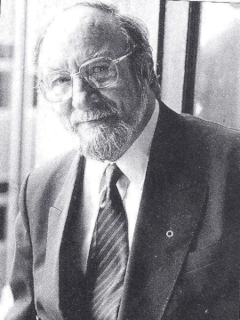
Birth of Éamonn Mac Thomáis, Irish Republican Author & Historian

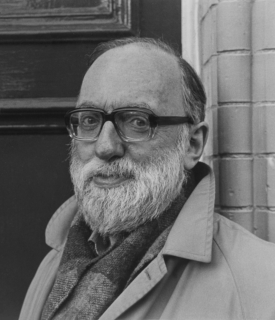
Éamonn Mac Thomáis, author, broadcaster, historian, Irish Republican, advocate of the Irish language and lecturer, is born Edward Patrick Thomas in the Dublin suburb of Rathmines on January 13, 1927. He presents his own series on Dublin on RTÉ during the 1970s and is well known for guided tours and lectures of his beloved Dublin.

Mac Thomáis comes from a staunch Republican family. His father, a fire-brigade officer, dies when he is five years old and his family moves to Goldenbridge, Inchicore, Dublin. He leaves school at thirteen to work as delivery boy for White Heather Laundry, learning Dublin neighbourhoods with great thoroughness. He says he found work to help his mother pay the rent. He later works as a clerk and is appointed credit controller for an engineering firm.

Mac Thomáis joins the Dublin Brigade of the Irish Republican Army as a young man and is active in the preparations for and prosecution of the 1956-62 border campaign. He is interned in Curragh Camp during the campaign and in December 1961 is sentenced to four months imprisonment under the Offences Against the State Act.

At the November 1959 Ardfheis Mac Thomáis is elected to the Ardchomhairle of Sinn Féin and edits and contributes to the Sinn Féin newspaper United Irishman. He is a close friend of Tomás Mac Giolla and is deeply affected by the 1970 split in Sinn Féin. He takes the Provisional side, opposing Mac Giolla.

Mac Thomáis takes over as editor of An Phoblacht in 1972. In July 1973, he is arrested and charged with IRA membership at the Special Criminal Court in Dublin. He refuses to recognise the court, but he gives a lengthy address from the dock. The following month he is sentenced to 15-months imprisonment. Within two months of completing his sentence he is again before the court on the same charge and again receives a 15-month sentence. Editors of six left-wing and Irish-language journals call for his release, as do a number of writers, and hundreds attend protest meetings – to no avail. He serves his full sentence.

Tim Pat Coogan, editor of The Irish Press, claims the charges against Mac Thomáis are politically motivated to a large degree as his activities are confined strictly to the newspaper An Phoblacht. Under Section 31 of the Broadcasting Act, due to his membership in Sinn Féin in the 1970s he is removed from his position in making some of the RTÉ historical programmes. As a historian he makes numerous contributions to various historical publications such as the Dublin Historical Review.

From 1974 Mac Thomáis writes a number of books on old Dublin. They sell well and remain in print for over 20 years. He also starts a number of walking tours of Dublin, which prove very popular.

Mac Thomáis dies in Dublin on August 16, 2002. He is buried in the republican plot in Dublin’s Glasnevin Cemetery, next to Frank Ryan.

Mac Thomáis’s son Shane, also a historian, runs similar walking tours and is resident historian at Glasnevin Cemetery before his death in 2014.


Leave a comment

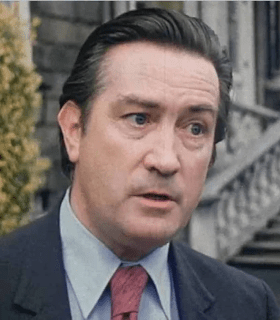
Death of Justin Keating, Politician, Broadcaster & Journalist

Justin Pascal Keating, Irish Labour Party politician, broadcaster, journalist, lecturer and veterinary surgeon, dies at Ballymore Eustace, County Kildare, on December 31, 2009. In later life he is president of the Humanist Association of Ireland.

Keating is twice elected to Dáil Éireann and serves in Liam Cosgrave‘s cabinet as Minister for Industry and Commerce from 1973 to 1977. He also gains election to Seanad Éireann and is a Member of the European Parliament (MEP). He is considered part of a “new wave” of politicians at the time of his entry to the Dáil.

Keating is born in Dublin on January 7, 1930, a son of the noted painter Seán Keating and campaigner May Keating. He is educated at Sandford Park School, and then at University College Dublin (UCD) and the University of London. He becomes a lecturer in anatomy at the UCD veterinary college from 1955 until 1960 and is senior lecturer at Trinity College Dublin from 1960 until 1965. He is RTÉ‘s head of agricultural programmes for two years before returning to Trinity College in 1967. While at RTÉ, he scripts and presents Telefís Feirme, a series for the agricultural community, for which he wins a Jacob’s Award in 1966.

In the 1950s and 1960s Keating is a member of the communist Irish Workers’ Party. He is first elected to the Dáil as a Labour Party Teachta Dála (TD) for the Dublin County North constituency at the 1969 Irish general election. From 1973 to 1977 he serves in the National Coalition government under Liam Cosgrave as Minister for Industry and Commerce. In 1973 he is appointed a Member of the European Parliament from the Oireachtas, serving on the short-lived first delegation.

During 1975 Keating introduces the first substantial legislation for the development of Ireland’s oil and gas. The legislation is modelled on international best practice and intended to ensure the Irish people would gain substantial benefit from their own oil and gas. Under his legislation the state could by right acquire a 50% stake in any viable oil and gas reserves discovered. Production royalties of between 8% and 16% with corporation tax of 50% would accrue to the state. The legislation specifies that energy companies would begin drilling within three years of the date of the issue of an exploration license.

Keating loses his Dáil seat at the 1977 Irish general election but is subsequently elected to Seanad Éireann on the Agricultural Panel, serving there until 1981. He briefly serves again in the European Parliament from February to June 1984 when he replaces Séamus Pattison.

In the aftermath of President of Iran Mahmoud Ahmadinejad‘s “World Without Zionism” speech in 2005, Keating publishes an op-ed in The Dubliner magazine, expressing his views on Israel. The article starts by claiming that “the Zionists have absolutely no right in what they call Israel.” He then proceeds to explain why he thinks Israel has no right to exist, claiming that the Ashkenazi Jews are descended from Khazars.

Keating dies at Ballymore Eustace, County Kildare, on December 31, 2009, at the age of 79, one week before his 80th birthday. Tributes come from the leaders of the Labour Party and Fine Gael at the time of his death, Eamon Gilmore and Enda Kenny, as well as former Fine Gael leader and Taoiseach John Bruton.


Leave a comment

Birth of Edmund Dwyer Gray, Journalist & Politician

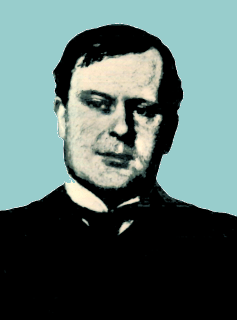
Edmund William Dwyer Gray, Irish newspaper proprietor, politician and MP in the House of Commons of the United Kingdom of Great Britain and Ireland, is born on December 29, 1845, in Dublin. He is also Lord Mayor of Dublin and later Sheriff of Dublin City and becomes a strong supporter of Charles Stewart Parnell.

Gray is the second son of Sir John Gray and his wife, Anna Dwyer. He has three brothers and two sisters. After receiving his education, he joins his father in managing the Freeman’s Journal, the oldest nationalist newspaper in Ireland. When his father dies in 1875, he takes over proprietorship of the Journal, and his family’s other newspaper properties such as the Belfast Morning News and the Dublin Evening Telegraph.

In 1868, Gray saves five people from drowning in a wrecked schooner at Killiney Bay, an action for which he receives the Tayleur Fund Gold Medal for bravery from the Royal Humane Society. By coincidence, the rescue is witnessed by his future wife, Caroline Agnes Gray, whom he meets shortly afterwards. Agnes is the daughter of Caroline Chisholm, an English humanitarian renowned for her work in female immigrant welfare in Australia, and although Gray is descended from a Protestant family, he converts to Catholicism to marry her. The wedding in London on July 17, 1869, is conducted by the Bishop of Northampton, Francis Amherst. The couple has one son, Edmund Dwyer-Gray, who eventually takes over from his father as proprietor of his newspapers and goes on to become Premier of Tasmania.

From 1875 to 1883, Gray serves as a member of the Dublin Corporation, and in 1880 serves a term as Lord Mayor of Dublin. Unusual for an Irish nationalist politician, he is very much focused on urban rather than rural affairs, and like his father is heavily involved in public health and water provision for Dublin. He also promotes reform in the municipal health system.

Gray unsuccessfully runs for his father’s seat of Kilkenny City at Westminster in the 1875 by-election that follows Sir John Gray’s death. He wins a later by-election in 1877, becoming a Member of Parliament representing Tipperary for the Home Rule League. At the 1880 United Kingdom general election, he is elected for County Carlow. At the 1885 United Kingdom general election, as a member of the Irish Parliamentary Party (IPP), he wins representation of both County Carlow and the new constituency of Dublin St. Stephen’s Green and chooses to represent the latter.

Gray is imprisoned for six weeks in 1882 for remarks made in the Freeman’s Journal with regard to the composition of the jury in the case of a murder trial. He is actually Sheriff of Dublin City at the time of his imprisonment and, because of the conflict of office, is taken into custody by the city coroner. The defendant in the case in question is later hanged.

A heavy drinker and asthma sufferer, Gray dies at his home, Pembroke House, Upper Mount Street, Dublin, on March 27, 1888, at the age of 42 following a short illness. He is buried at Glasnevin Cemetery in Dublin.


Leave a comment

Birth of Tom McGurk, Journalist, Radio Presenter & Sportscaster

Tom McGurk (Irish: Tomás Mag Oirc), Irish poet, journalist, radio presenter and sportscaster, is born on December 20, 1946, in Cookstown, County Tyrone, Northern Ireland. He attends Portadown College and studies English and Philosophy at Queen’s University Belfast (QUB). He is involved in the Civil Rights demonstrations while at Queen’s.

McGurk first joins RTÉ in 1972, as a news reporter, moving on to present Last House and First House on television. In 1972 he wins a Jacob’s Award for his RTÉ Radio documentaries on Ireland’s islands. For 20 years he is the presenter of RTÉ Sport‘s rugby coverage, most notable of the Six Nations Championship and Internationals with the panel of George Hook and Brent Pope. He also spends time in the 1980s and 1990s in the UK, working for BBC Radio 4‘s Start of the Week as a presenter on the regional ITV station for the North West of England, Granada Television. On his return to Ireland, he presents the Sunday Show on RTE Radio 1. He also guest presents Tonight with Vincent Browne, on TV3. He presents a drive-time radio show on 4FM when it launches in 2009.

Until 2019, McGurk is a columnist with The Sunday Business Post. He then writes for The Currency until 2020.

McGurk writes the script for the TV film Dear Sarah based on the letters from Sarah Conlon, campaigning for the release of her husband (Giuseppe Conlon), son (Gerry Conlon) and sister Anne Maguire, caught up in the Guildford Four miscarriage of justice.

Among his poems is “Big Ned” about a farmer from Brockagh, County Tyrone.

While working for 4FM, the Director of the National Women’s Council of Ireland, Susan McKay, speaks out against an “uncouth and objectionable” interview McGurk conducts with her. The National Women’s Council has since refrained from giving interviews to 4FM.

From 1983 to 1996 McGurk is married to the broadcaster Miriam O’Callaghan, with whom he has four daughters. In 2003 he marries PR consultant Caroline Kennedy.

On December 5, 2017, the Irish Revenue Commissioners list of tax defaulters reveal that McGurk had made a settlement of €76,000 with the Revenue for the underpayment of income tax.


Leave a comment

Death of P. S. O’Hegarty, Writer, Editor & Historian

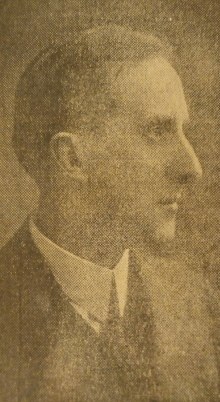
Patrick Sarsfield O’Hegarty (Irish: Pádraig Sáirséal Ó hÉigeartaigh), Irish writer, editor and historian and a member of the Supreme Council of the Irish Republican Brotherhood, dies on December 17, 1955.

O’Hegarty is born on December 29, 1879, at Carrignavar, County Cork, to John and Katherine (née Hallahan) Hegarty. His parents’ families emigrate to the United States after the Great Famine, and his parents are married in Boston, Massachusetts. His father is a member of the Irish Republican Brotherhood (IRB).

He is educated at North Monastery CBS, where he forms an enduring friendship with Terence MacSwiney. In 1888, his father dies of tuberculosis at the age of 42. Left destitute, his mother pawns her wedding ring to pay for an advertisement looking for work, and eventually becomes a cook.

He joins the postal service in Cork in 1897. Along with J. J. Walsh, he plays on the Head Post Office hurling team. He joins the IRB and represents Munster on the IRB Supreme Council. He starts writing for Arthur Griffith‘s United Irishman and the Shan van Vocht, a periodical established by Alice Milligan and Ethna Carbery.

He serves at the main Postal Sorting Office in Mount Pleasant, London, from 1902 to 1913. Along with J. J. Walsh, he spends three years at King’s College London, studying for the Secretary’s Office. While he succeeds in his studies, Walsh does not and returns to Ireland. O’Hegarty becomes the IRB representative for South East England and joins the Gaelic League and Sinn Féin and becomes a strong advocate of the Irish language. In 1905, he is elected secretary of the local Dungannon Club, which draws in as members Robert Lynd, Herbert Hughes and George Cavan. In 1907, as Sinn Féin’s London Secretary, he approves and signs the membership card of Michael Collins, later becoming friend and mentor to Collins.

He has to return to Ireland for a break due to overwork in 1909 and gives up some of his work for the Gaelic League. However, he takes over as editor of the IRB publication, Irish Freedom. It is in this publication that he famously writes, concerning the visit of King George V to Ireland in 1911: “Damn your concessions, England: we want our country!” In 1912, at the height of the Playboy riots, he writes four articles entitled “Art and the Nation” in Irish Freedom, which take a very liberal and inclusionist approach to Anglo-Irish literature and art in general but invokes the wrath of many of the paper’s readers.

In 1913, he is re-posted to Queenstown (present-day Cobh) as postmaster. He continues editing nationalist newspapers such as Irish Freedom (founded in 1910 and suppressed in December 1914 on account of its seditious content) and An tÉireannach and joins the Irish Volunteers. At the outbreak of war he is moved to Shrewsbury, probably on account of his political activities. In 1915, he marries Wilhelmina “Mina” Smyth, a schoolteacher and suffragist, and is then moved to Welshpool, Montgomeryshire. In the aftermath of the 1916 Easter Rising, he is opposed to physical force. In 1918, he refuses to take the British Oath of Allegiance and resigns his position in the Post Office.

O’Hegarty feels that the Abbey Theatre is “doing good for Ireland” and supports W. B. Yeats against attacks from Arthur Griffith and like-minded Nationalists. He opposes the extremist views of D. P. Moran, who seeks a Roman Catholic Irish-speaking Ireland.

He is Secretary of the Irish Department of Post and Telegraphs from 1922 to 1945. He is elected a member of the Irish Academy of Letters in 1954.

His son, Seán Ó hÉigeartaigh, is a founder of the Irish-language publishing house Sáirséal agus Dill. His daughter Gráinne, a harpist, marries Senator Michael Yeats, son of W. B. Yeats.

O’Hegarty’s papers are acquired by the Kenneth Spencer Research Library at the University of Kansas. This includes an outstanding collection of books, pamphlets and periodicals of W. B. Yeats.

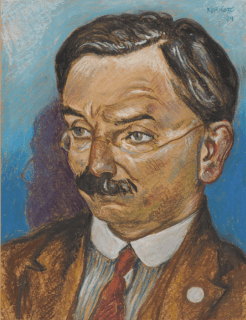
(Pictured: “P. S. O’Hegarty, 1929,” pastel on paper by Harry Kernoff, RHA, property from the Yeats family)


Leave a comment

Death of Katy French, Socialite, Model & TV Personality

Katy Ellen French, Irish socialite, model, writer, television personality and charity worker, dies on December 6, 2007, in Navan, County Meath, after collapsing at a friend’s house on December 2. According to the BBC, “in the space of less than two years, she had become one of Ireland’s best-known models and socialites.” Her cause of death is given as hypoxic ischemic brain injury caused by cocaine and ephedrine.

French is born on October 31, 1983, in Basel, Switzerland, to John and Janet French, from Australia and Britain respectively. At the age of two, she moves with her family to Ireland, briefly living in the Sandyford area before settling in Enniskerry, County Wicklow, and later to Stillorgan, County Dublin. She attends Alexandra College in Milltown, Dublin, from the age of seven. While still in school she works part-time as a hostess at the Dublin branch of the Planet Hollywood restaurant chain.

French studies psychology and marketing before working for the Assets Modelling Agency and later writing articles for several Dublin magazines and newspapers. She represents Sony Ericsson and Suzuki among many other brands, becoming more famous in 2007 as a result of her fiancé, restaurateur Marcus Sweeney, ending their relationship in a very public fashion after she is photographed for a lingerie shoot for the Sunday Independent in his restaurant in January of that year. As a result of this publicity, her image appears more regularly in daily Irish tabloid newspapers, and she makes numerous television appearances on shows such as RTÉ‘s The Podge and Rodge Show in April 2007 and Tubridy Tonight a week before her death.

French is known for deliberately courting controversy to promote her career. On Tubridy Tonight she speaks of her appearance on Celebrities Go Wild as well as her relationship break up with Sweeney. Mention is also made of her birthday party which she is to celebrate the following week, having missed her birthday due to Celebrities Go Wild. Host Ryan Tubridy is invited to the event. Footage is shown of the charity single “Down in the Bog” which is to be released as a Christmas single. She works for several Irish charities including Our Lady’s Children’s Hospital, Crumlin and GOAL in Calcutta, India. She writes a column for Social & Personal magazine.

In an interview with Hot Press‘s Jason O’Toole, French says that she would consider having an abortion if she became pregnant during the peak of her career, a controversial statement in Ireland where abortion is at that time effectively illegal, and that she loves fur despite being a “massive animal lover.” She also airs her religious beliefs, being a member of the Church of England as well as a practising Catholic and speaks highly of Islam and her Muslim friends saying, “When you read the Koran, you realise that Islam is a beautiful religion.” In the same interview she is asked if she has ever used cocaine and denies ever having done so. In November 2007, she tells an Irish tabloid that she has used cocaine but has stopped. A week before she dies, she celebrates her 24th birthday with celebrity and media friends.

French dies on the evening of December 6, 2007, in Our Lady’s Hospital, Navan, County Meath, having collapsed at a house in Kilmessan, County Meath, in the early hours of Sunday, December 2. There is widespread speculation in the media that her death is the result of a drug overdose. A postmortem finds she has suffered brain damage, and that traces of cocaine are found in her body. A senior Garda states, “We strongly suspect that drugs contributed to her death. This was a previously healthy person being brought to hospital in a collapsed state.” In 2010 two people are charged with supplying cocaine to French and in failing to get medical assistance in a timely fashion. She is buried in her hometown of Enniskerry, County Wicklow, on December 10. Taoiseach Bertie Ahern‘s aide de camp, Captain Michael Tracey, attends her funeral.

On November 13, 2012, two friends of French, Kieron Ducie and Ann Corcoran, plead guilty to possession of cocaine with intent to supply on the weekend of French’s death. Trim Circuit Court is told that a second charge against the pair is not being pursued, that they had intentionally or recklessly engaged in behaviour relating to the supply of cocaine to French and failed to get medical assistance in a timely fashion. In July 2013 the pair are sentenced to a 2-1⁄2 year suspended sentence and three-year good behaviour bond, and a two-year suspended sentence and two-year good behaviour bond respectively. At the verdict, French’s cause of death is given as hypoxic ischemic brain injury caused by cocaine and ephedrine.


Leave a comment

Death of Sir James Ware, Anglo-Irish Historian

Sir James Ware, historian, collector of manuscripts, and civil servant, dies at his home in Castle Street, Dublin, on December 1, 1666.

Ware is born on November 16, 1594, in Castle Street, Dublin, eldest surviving son among ten children of Sir James Ware, auditor general, and his wife Mary Bryden, sister of Sir Ambrose Briden of Maidstone, Kent, England, whose house provides Ware’s base in England. His father, a Yorkshireman, comes to Ireland in the train of Lord Deputy of Ireland Sir William FitzWilliam in 1588 and builds up a substantial landed estate. He enters Trinity College Dublin (TCD), where his father is the college auditor, as a fellow commoner in 1605 and is presented a silver standing bowl in 1609. His association with the college continues, as he particularly remembers the philosophy lectures of Anthony Martin, who becomes a fellow in 1611. He takes his MA on January 8, 1628, but by then he has already launched on his future course. His father procures him the reversion of his office in 1613, and by 1620 he already owns the Annals of Ulster and is taking notes from the Black Book of Christ Church. In 1621, he marries Elizabeth Newman, daughter of Jacob Newman, one of the six clerks in chancery. Newman becomes clerk of the rolls in 1629, which apparently facilitates Ware’s assiduous research in the Irish public records.

From Ware’s numerous surviving notebooks, it is possible to follow his scholarly tracks over the rest of his life. He is particularly concerned to trace the succession of the Irish bishops. The first fruits appear in print in 1626, Archiepiscoporum Cassiliensium et Tuamensium . . . adjicitur historia coenobiorum Cisterciensium Hiberniae, followed in 1628 by De presulibus Lageniae . . ., the whole to be rounded off in 1665 with De presulibus Hiberniae. . . . However, he has wide interests in Irish history and in 1633 edits Edmund Spenser‘s A View of the Present State of Irelande and the Irish histories of Edmund Campion, Meredith Hanmer, and Henry of Marlborough. The first Irish biographical dictionary follows in 1639, De scriptoribus Hiberniae. Both publications are dedicated to the viceroy, Thomas Wentworth. In public life he is a supporter, first of Wentworth, later of James Butler, 1st Duke of Ormond, rather than a leader, and always a stout royalist. He is knighted in 1630 and following his father’s death in 1632 he succeeds as auditor general. He is elected member of parliament for Dublin University in 1634, 1640, and 1661, but is not admitted to the Privy Council of Ireland until 1640.

Shortly after the outbreak of rebellion in October 1641, Ware is in England, and in London at the time of the passing of the Adventurers’ Act 1640, presumably on the council’s business. During Ormond’s prolonged negotiations with the confederates, he is sent to advise the king at Oxford in November 1645. While there he works in the Bodleian Library and is incorporated into the university as a Doctor of Civil Law. On his way back to Ireland in January 1646, he is captured at sea by a parliament ship and held prisoner in the Tower of London until October 1646.

When Ormond is arranging the surrender of Dublin to the parliament in the summer of 1647, Ware is sent to London as one of the hostages for his performance of the terms. Back in Dublin he has been replaced as auditor general but is able to carry on his work on the public records. In 1648 he publishes the catalogue of his manuscript library. As a leading royalist he is unwelcome to those governing the city for the parliament and is sent into exile in France on April 7, 1649, with his eldest son, also James, who already holds the reversion of the auditor generalship and eventually succeeds his father. He is allowed to live in London from October 1650, and from 1653, when hostilities end in Ireland, he is allowed brief visits there, perhaps taking up residence again in 1658.

Ware’s years in London are spent in the library of Archbishop of Armagh James Ussher, then in Lincoln’s Inn, and in the Royal, Cotton, Carew, and Dodsworth libraries. He publishes his De Hibernia et antiquitatibus ejus disquisitiones in 1654, lamenting the inaccessibility of his notes, then in Dublin. The second edition, published in 1658, also includes the annals of Henry VII. His Opuscula Sancto Patricio . . . adscripta . . . appears in 1656. In it he remarks that his knowledge of the Irish language is not expert enough for an edition of the ‘Lorica’. According to Roderick O’Flaherty, Ware can read and understand but not speak Irish. For the older language he employs Irish scholars, Dubhaltach Mac Fhirbhisigh being the last and most learned. The 1660 Stuart Restoration sees him back as auditor general and one of the commissioners for the Irish land settlement. He publishes annals of Henry VIII in 1662, and in 1664 annals for 1485–1558.

Ware dies in his house in Castle Street on December 1, 1666, and is buried in the family vault in St. Werburgh’s Church, Dublin. He has numerous friends among the scholars of the day, including Irish Franciscans, across the sectarian divide. While clergy lists are still partly dependent on his work, his notebooks and manuscripts remain of first importance for the study of medieval Ireland. Of his ten children, two boys and two girls survive him. His wife dies on June 9, 1651. The engraving by George Vertue prefixed to Harris’ edition of Ware’s Works is claimed to be based on a portrait in the possession of the family.

(From: “Ware, Sir James” by William O’Sullivan, Dictionary of Irish Biography, http://www.dib.ie, October 2009)


Leave a comment

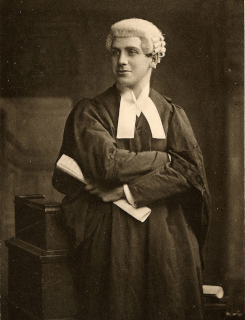
Death of Alexander Sullivan, Politician, Barrister & Journalist

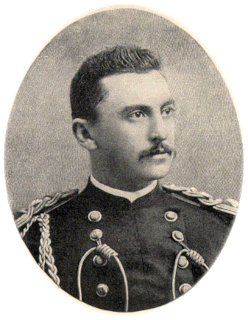
Alexander Martin Sullivan, Irish Nationalist politician, barrister, and journalist, dies in Rathmines, Dublin, on October 17, 1884.

Sullivan, the second of six sons of Daniel Sullivan, house painter, and his wife, Catherine (née Baylor), a teacher, is born on May 15, 1829, in Bantry, County Cork. A popular date for Sullivan’s birth appears in many histories as 1830, but his gravestone reads 1829. He is educated in the local national school. One of his brothers is Timothy Daniel Sullivan, the Lord Mayor of Dublin from 1886 to 1888.

During the Great Famine of 1845 to 1847, Sullivan is employed as a clerk in connection with the relief works started by the government. Deeply influenced by the distress he witnesses, he afterward joins the Confederate Club formed in Bantry in support of the revolutionary movement of the Young Irelanders and is the organiser of the enthusiastic reception given by the town to William Smith O’Brien in July 1848 during the insurgent leader’s tour of the southern counties. Early in 1853, he goes to Dublin to seek employment as an artist. An exhibition of the arts and industries of Ireland is held in Dublin that year, and he is engaged to supply pencil sketches to the Dublin Expositor, a journal issued in connection with the exhibition. Subsequently, he obtains a post as a draughtsman in the Irish valuation office, and afterward as a reporter on the Liverpool Daily Post.

In 1855, Sullivan becomes assistant editor of The Nation, and subsequently editor and proprietor. From 1861 to 1884, in conjunction with his elder brother, T. D. Sullivan, he makes The Nation one of the most potent factors in the Irish Nationalist cause and also issues the Weekly News and Zozimus. Called to the Irish bar in 1876, he is a “special call” of the Inner Temple in 1877 and is made QC in 1881. He mainly practices at the English bar, though he acts in some political cases in Ireland.

At the 1874 United Kingdom general election Sullivan is elected as Member of Parliament (MP) for County Louth, but although he does not formally resign, he does not take his seat. At the general election in April 1880, he is again returned for County Louth, but this time formally resigns from the Commons on May 18, 1880. However, Charles Stewart Parnell is elected for both Cork City and for Meath and chooses to sit for Cork City. At the resulting by-election on May 20, 1880, Sullivan is returned unopposed to fill the vacancy in Meath. Following the development of a severe heart condition, he nearly dies after a heart attack in mid-August 1881. He holds his seat until his resignation on February 3, 1882. He then concentrates on his work at the parliamentary bar.

As a member of the Dublin Corporation, Sullivan secures a magnificent site for the Grattan Monument, toward which he donates £400, the amount of a subscription by his admirers while he is undergoing imprisonment for a political offence in 1868. The monument is formally unveiled in January 1876. Between 1878 and 1882 he is engaged in many notable trials. His last great case is on November 30, 1883, when he is a colleague of Lord Russell in the defence of Patrick O’Donnell for the murder of James Carey, an informer.

Sullivan suffers another heart attack while on holiday in Bantry in September 1884 and spends his last days with William Martin Murphy at Dartry, County Dublin. Murphy regards him as a father figure, attributing his success to Sullivan’s early advice and journalistic training. Sullivan dies on October 17, 1884, at Dartry Lodge, Rathmines, Dublin. He is buried at Glasnevin Cemetery. With his wife, Frances Genevieve Donovan, whom he marries on April 27, 1861, and who outlives him by nearly forty years, he has a family of three sons and five daughters. His second son and namesake, Alexander Martin Sullivan, is the last to hold the rank of Serjeant-at-law (Ireland).

In addition to his labours, Sullivan is a great temperance reformer. He also writes two notable books, The Story of Ireland and New Ireland and contributes many sketches (including some verse) to Irish Penny Readings (1879–85). Some of his correspondence is located in the Isaac Butt papers in the National Library of Ireland.


Leave a comment

Birth of George Lee, Journalist, Presenter & Former Fine Gael Politician

George Lee, Irish economist, journalist, television and radio presenter, and former Fine Gael politician, is born in Templeogue, Dublin, on September 27, 1962. He has worked for RTÉ since 1992. Since 2019, he has been Environment Correspondent for RTÉ News. He previously was Economics Editor in 1996.

Lee’s father is a motor mechanic, and his mother is a hairdresser. He is the seventh in a family of eight children and grows up in Templeogue, Dublin. He attends Coláiste Éanna, a Christian Brothers’ School in the Dublin suburb of Ballyroan. He is a graduate of University College Dublin (UCD) and holds an MSc in Economics from the London School of Economics (LSE) where his specialist area is labour economics and unemployment.

Lee is married to Mary Lee (née Kitson) and they have two children, Alison and Harry, and live in Cabinteely. He famously travels to work at RTÉ using a Segway, once giving it a test ride live on Tubridy Tonight.

Lee joins the civil service as an executive officer in the Central Statistics Office (CSO). Two years later he enters University College Dublin where he studies economics under academics such as Brendan Walsh and Peter Neary.

Prior to his move into broadcasting, Lee lectures at NUI Galway and then works as a journalist with The Sunday Business Post. He is also a Senior Economist at Riada Stockbrokers. He also works as Treasury Economist with FTI and as a research economist with the Central Bank of Ireland.

From 1992 to 2009 Lee worked at RTÉ, the public broadcasting service of Ireland. He is appointed Economics Editor with RTÉ in 1996. He is named Irish Journalist of the Year, along with Charlie Bird, in 1998 after they uncover a major tax evasion and overcharging scandal at National Irish Bank. He has devised, researched and presented several television series, including Moneybox, More to Do, Winds of Change, and Beyond the Berlin Wall. He is thought of as an “economics guru.” He leaves RTÉ in the late 1990s to work for BCP Stockbrokers. He leaves the job and returns to his RTÉ post the next day.

Before embarking on his political career, Lee films a four-part series based on the fall of the Berlin Wall in 2008. It is aired on RTÉ One in November 2009.

Lee is parodied in the 1990s comedy Bull Island, where he is seen “menacingly staring down the lens of a camera,” and is also featured on RTÉ 2fm‘s Nob Nation.

On May 5, 2009, on RTÉ News at One on RTÉ Radio 1, Lee announces that he is resigning as Economic Editor with RTÉ and announces his intention to seek the Fine Gael nomination for the Dublin South by-election in 2009. He takes a year’s unpaid leave from RTÉ in May 2009. On May 6, 2009, he is chosen as the Fine Gael candidate for the by-election. He is the only candidate for the nomination.

Lee is elected on the first count to represent Dublin South on June 6, 2009. He receives over 53% of the 1st preference vote. In total he receives 27,768 1st preference votes. When elected, he is referred to as a “Celebrity TD.” His RTÉ position is filled by Europe editor Sean Whelan, but only as correspondent. Instead, David Murphy is promoted to Business Editor.

In an opinion poll concerning support for possible candidates in the 2011 Irish presidential election conducted by the Sunday Independent in October 2009, Lee places third, receiving 12% support, ahead of former Taoiseach Bertie Ahern and other high-profile politicians.

Lee highlights the failure of EMPG, the holding company for U.S. publisher Houghton Mifflin Harcourt, and the potential impact on the Irish taxpayers of the loans given by Anglo Irish Bank to the investors in EMPG on January 13, 2010. He sees this as another example for the urgent need of an investigation into the Irish banking crisis.

On February 8, 2010, Lee announces his resignation from Fine Gael and from Dáil Éireann, due to having “virtually no influence or input” into shaping Fine Gael’s economic policies at a time of economic upheaval. It emerges that on February 2, he met with the Fine Gael leader Enda Kenny and told him of his intention to resign. Kenny then offered Lee the frontbench position as spokesman on economic planning. Speaking to reporters outside Leinster House soon after his announcement, Lee says it would have been dishonest of him to accept the position. “I had absolutely no input for nine months. I think I had to be honest with myself and honest with the electorate about that and not pretend.” Asked if his resignation is a vote of no confidence in Kenny, he says there are “certainly lots of large mutterings at the moment in relation to the leader’s position.” He says he had “minimal involvement” with Fine Gael finance spokesman Richard Bruton.

Kenny notes Lee had been appointed chair of the party’s committee on economic policy and also its forum. “I had anticipated a very important role for [George Lee] in the coming period with Fine Gael.” Kenny’s spokesman later dismisses the proposition that the resignation had implications for his leadership. He cited the public endorsement of Kenny by 20 Dáil deputies over the course of the weekend. Former Fine Gael leader Michael Noonan says he is surprised at the decision. “I thought that George Lee was fitting in well,” adding that he believes he would have been a cabinet member in a Fine Gael-led government.

Lee is criticised after his resignation by Senator Eoghan Harris, who is speaking on the Lunchtime programme of Newstalk Radio. Harris suggests financial considerations and long working hours of politicians are the reasons for Lee’s resignation. Fine Gael TD Brian Hayes, who is Lee’s campaign manager in the Dublin South by-election, says that in discussions with Lee, the latter had complained about “a major reduction in his income” since leaving RTÉ to become a Dáil backbencher. Lee denies that financial considerations had anything to do with his decision to quit politics.

RTÉ receives a letter from Lee confirming his intentions to return after his leave of absence. The Sunday Tribune says on February 14, 2010, that he will have to wait for three months before returning to RTÉ. Exactly a year after leaving RTÉ, he returns to the broadcaster on May 5, 2010. He works as an advisor on the RTÉ business desk. He presents Mind Your Business on RTÉ Radio 1 on Saturday Mornings as a summer replacement for The Business.

When John Murray moves to present his own programme, Lee takes over The Business slot on September 4, 2010, on Saturday mornings on RTÉ Radio 1. In addition to the radio edition, he has presented a televised version on RTÉ One, also titled The Business.

Lee has been Environment Correspondent for RTÉ since June 27, 2019.


Leave a comment

Birth of Journalist Terry Keane

Terry Keane, Irish social columnist and fashion journalist, is born in Guildford, Surrey, England, on September 9, 1939.

Born Ann Teresa O’Donnell, she studies medicine at Trinity College Dublin (TCD). She drops out without taking a degree and later marries a young barrister, Ronan Keane. The couple separates in the 1990s, but never divorce. Ronan Keane goes on to become Chief Justice of Ireland (2000-2004).

Keane spends the majority of her career working for the Irish newspaper, the Sunday Independent, where she is the principal contributor of the newspaper’s long-running gossip column, “The Keane Edge.”

In “The Keane Edge” column there are often hints of a relationship with a prominent political figure, named in the column as Sweetie, and her relationship is apparently widely known in certain circles, though never openly confirmed. She leaves the paper on bad terms after selling the story of her 27-year affair with former Taoiseach Charles Haughey to the British newspaper The Sunday Times, a rival to the affiliated London Independent newspapers, though she admits her affair on The Late Late Show in 1999.

Keane’s death on May 31, 2008, after a long illness is announced by her son-in-law, the Irish garden designer and television personality Diarmuid Gavin. She is survived by her children Jane, Madeleine and Justine, who is married to Gavin. Her son Tim dies in 2004. One of her granddaughters, Holly Carpenter, is Miss Ireland in 2011.