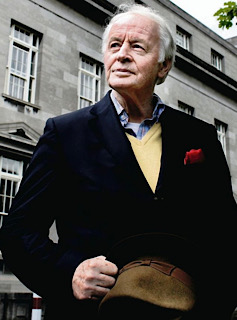
O’Connor is a well-known intellectual figure in contemporary Irish affairs and expresses strong opinions against censorship and the war on drugs. He contributes a regular poetry column to the Irish daily, the Evening Herald, also writes a column for the Sunday Mirror and a sporting column for TheSunday Times, as well as broadcasting on RTÉ.
O’Connor is also known for the autobiographical The Ulick O’Connor Diaries 1970-1981: A Cavalier Irishman (2001), which details his encounters with well-known Irish and international figures, ranging from political (Jack Lynch and Paddy Devlin) to the artistic (Christy Brown and Peter Sellers). It also documents the progress of the Northern Ireland peace process during the same time, and the progress of the Northern Ireland Assembly. Although he travels extensively, he lives in his parental home in Dublin’s Rathgar. He is a member of Aosdána.
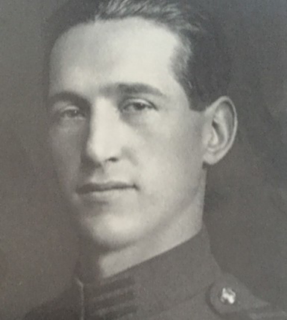
Against his father’s wishes, Neligan joins the Dublin Metropolitan Police (DMP) – also in 1917. Picking up travel documentation from the local Royal Irish Constabulary barracks, he declines a suggestion that he enlist in this armed rural force. After service as a uniformed constable with the DMP, he is promoted to Detective and transferred into the Department’s widely hated counterintelligence and anti-political-subversion unit, the G Division, in 1919. In May 1920, his elder brother Maurice (1895–1920), an Irish Republican Army (IRA) member and friend of Michael Collins, persuades him to resign from the DMP.
After his resignation, Neligan returns to his native County Limerick with the intention of joining the Limerick IRA. Shortly afterward, Maurice is killed in a motorcycle accident, near their home in Templeglantine. In the meantime, Neligan also receives word from a family friend that Michael Collins wishes to meet with him in Dublin. Collins is outraged that Neligan has been allowed to resign and persuades him to rejoin the DMP as a mole for the intelligence wing of the IRA. Along with Detectives Eamon Broy and James McNamara, Neligan acts as a highly valuable agent for Collins and passes on reams of vital information. He leaks documents about the relative importance of police and military personnel and also warns insurgents of upcoming raids and ambushes. There are unconfirmed rumors that Neligan might be a double agent working for British interests.
In 1921, Collins orders Neligan to let himself be recruited into MI5 and he uses the opportunity to memorise their passwords and the identities of their agents. All of this is passed on to Collins. After Broy and McNamara are dismissed in 1921, Neligan becomes Collins’ most important mole inside Dublin Castle.
In 1924, Neligan hands over his post to the youthful Colonel Michael Joe Costello and takes command of the DMP, which still continues as a force separate from the newly established Garda Síochána, with the rank of Chief Superintendent. The next year he transfers to the Garda when the two police forces are amalgamated, and is instrumental in the foundation of the Garda Special Branch. When Éamon de Valera becomes head of government in 1932, his republican followers demand Neligan’s dismissal. Instead, Neligan is transferred to an equivalent post in the Irish Civil Service. In June 1935, he is married to fellow civil servant Sheila Maeve Rogan. They have one son and three daughters, and reside at 15 St. Helen’s Road, Booterstown, Dublin.
Neligan draws pensions from the DMP, the British MI5, the Garda Síochána and the Irish Civil Service. He also receives an “Old IRA” pension through the Department of Defence.
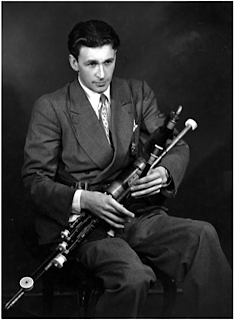
Séamus Ennis (Irish: Séamas Mac Aonghusa), Irish musician, singer and Irish music collector, dies in Naul, County Dublin, on October 5, 1982. He is most noted for his uilleann pipe playing and is partly responsible for the revival of the instrument during the twentieth century, having co-founded Na Píobairí Uilleann, a nonprofit organisation dedicated to the promotion of the uilleann pipes and its music. He is recognised for preserving almost 2,000 Irish songs and dance-tunes as part of the work he does with the Irish Folklore Commission. He is widely regarded as one of the greatest uilleann pipers of all time.
Ennis’s father, James, works for the Irish civil service at Naul, County Dublin. In 1908, James Ennis is in a pawn shop in London and purchases a bag containing the pieces of a set of old uilleann pipes. They were made in the mid nineteenth century by Coyne Pipemakers of Thomas Street in Dublin. In 1912, he comes in first in the Oireachtas competition for warpipes and second in the uilleann pipes. He is also a prize-winning dancer. In 1916, he marries Mary Josephine McCabe, an accomplished fiddle player from County Monaghan. They have six children, Angela, Séamus, Barbara, and twins, Cormac and Ursula (Pixie) and Desmond. Séamus is born on May 5, 1919, in Jamestown in Finglas, Dublin. James Ennis is a member of the Fingal trio, which includes Frank O’Higgins on fiddle and John Cawley on flute, and performs regularly with them on the radio. At the age of thirteen, Séamus starts receiving lessons on the pipes from his father. He attends a Gaelscoil, Cholmcille, and a Gaelcholáiste, Coláiste Mhuire, which gives him a knowledge of the Irish language that serves him well in later life. He sits in an exam to become Employment Exchange clerk but is too far down the list to be offered a job. He is twenty and unemployed.
Colm Ó Lochlainn is editor of Irish Street Ballads and a friend of the Ennis family. In 1938, Ennis confides in Colm that he intends to move to England to join the British Army. Colm immediately offers him a job at The Three Candles Press. There Ennis learns all aspects of the printing trade. This includes writing down slow airs for printed scores – a skill which later proves important. Colm is director of an Irish language choir, An Claisceadal, which Ennis joins. In 1942, during The Emergency, shortages and rationing mean that things become difficult in the printing trade. Professor Seamus Ó Duilearge of the Irish Folklore Commission hires the 23-year-old to collect songs. He is given “pen, paper and pushbike” and a salary of three pounds per week. Off he goes to Connemara.
From 1942 to 1947, working for the Irish Folklore Commission, Ennis collects songs in west Munster; counties Galway, Cavan, Mayo, Donegal, Kerry; the Aran Islands and the Scottish Hebrides. His knowledge of Scottish Gaelic enables him to transcribe much of the John Lorne Campbell collection of songs. Elizabeth Cronin of Ballyvourney, County Cork, is so keen to chat to Ennis on his visits that she writes down her own songs and hands them over as he arrives, and then gets down to conversation. He has a natural empathy with the musicians and singers he meets. In August 1947, he starts work as an outside broadcast officer with Raidió Éireann. He is a presenter and records Willie Clancy, Seán Reid and Micho Russell for the first time. There is an air of authority in his voice. In 1951, Alan Lomax and Jean Ritchie arrived from the United States to record Irish songs and tunes. The tables are turned as Ennis becomes the subject of someone else’s collection. There is a photograph from 1952/53 showing Ritchie huddled over the tape recorder while Ennis plays uilleann pipes.
Late in 1951, Ennis joins the BBC. He moves to London to work with producer Brian George. In 1952, he marries Margaret Glynn. They have two children, the organist Catherine Ennis and Christopher. His job is to record the traditional music of England, Scotland, Wales and Ireland and to present it on the BBC Home Service. The programme is called As I Roved Out and runs until 1958. Meeting up with Alan Lomax again, he is largely responsible for the album Folk and Primitive Music (volume on Ireland) on the Columbia Records label.
In 1958, after his contract with the BBC is not renewed, Ennis starts doing freelance work, first in England then back in Ireland, with the new TV station Teilifis Éireann. Soon he is relying totally on his musical ability to make a living. About this time, his marriage breaks down and he returns to Ireland. He suffers from tuberculosis and is ill for some time. In 1964, he performs at the Newport Folk Festival. His father gives him the pipes he had bought in 1908. Although most pipers can be classed as playing in a tight style or an open style, Ennis is in between. He is a master of the slow air, knowing how to decorate long notes with taste and discreet variation.
Two events will live in legend among pipers. The first is in Bettystown, County Meath, in 1968, when the society of Irish pipers, Na Píobairí Uilleann, is formed. Breandán Breathnach is playing a tape of his own piping. Ennis asks, “What year?” Breandán replies, “1948.” Ennis says, “So I thought.” For a couple of hours the younger players perform while Ennis sits in silence. Eventually he is asked to play. Slowly he takes off his coat and rolls up his sleeves. He spends 20 minutes tuning up his 130-year-old pipes. He then asks the gathering whether all the tape recorders are ready and proceeds to play for over an hour. To everyone’s astonishment he then offers his precious pipes to Willie Clancy to play a set. Clancy demurs but eventually gives in. Next, Liam O’Flynn is asked to play them, and so on, round the room. The second unforgettable session is in Dowlings’ Pub in Prosperous, County Kildare. Christy Moore is there, as well as most of the future members of Planxty.
Ennis never runs any school of piping but his enthusiasm infuses everyone he meets. In the early 1970s, he shares a house with Liam O’Flynn for almost three years. Finally, he purchases a piece of land in Naul and lives in a mobile home there. One of his last performances is at the Willie Clancy Summer School in 1982. He dies on October 5, 1982. His pipes are bequeathed to Liam O’Flynn. Radio producer Peter Browne produces a compilation of his performances, called The Return from Fingal, spanning 40 years.
Séamus Ennis Road in his native Finglas is named in his honour. The Séamus Ennis Arts Centre in Naul is opened in his honour, to commemorate his work and to promote the traditional arts. He is also the subject of Christy Moore’s song “The Easter Snow.” This is the title of a slow air Ennis used to play, and one after which he named his final home in Naul.
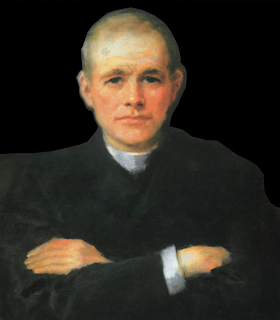
Born on March 13, 1831, in Lisburn, County Antrim, McCloy is the youngest of five children, born to Peter McCloy, a painter, and his wife Martha Phelan. He studies at the School of Design in Belfast from 1850 to 1851 while serving an apprenticeship in engraving, with J and T Smyth. He then spende a year at the Central School, Somerset House in London before being appointed Master at the Waterford School of Art around 1853, when he also becomes a visiting instructor to several other institutions. In the spring of 1865 he marries his student, the Waterford artist Ellen Lucy Harris, the fourth daughter of a banker named Richard Harris. The dismembered corpse of McCloy’s mother is recovered from the River Suir in September of the same year. She had been missing since the previous November.
McCloy shows just once at the Royal Academy of Arts with a work entitled The Haunt of Meditation in 1859. He exhibits infrequently at the Royal Hibernian Academy between 1862 and 1882, where he displays sixteen works in that time. He displays eleven works in the 1876 Industrial Exhibition at Belfast’s Ulster Hall. In 1880, he shows at Rodman and Company in London where the writer in the Belfast Telegraph indicates that McCloy is becoming a popular artist and is receiving extensive patronage.
After a year-long illness that prevents him from working, McCloy dies in Balham, South London, on October 4, 1904. He is survived by his wife, Ellen, and nine daughters. The Lisburn Museum in his hometown offers a belated retrospective of his work in 1981 to mark the one-hundred fiftieth anniversary of his birth. The exhibition is the first known solo display of McCloy’s work and consists of 58 works. The catalogue for this show is written by Eileen Black and funded by the Arts Council of Northern Ireland.
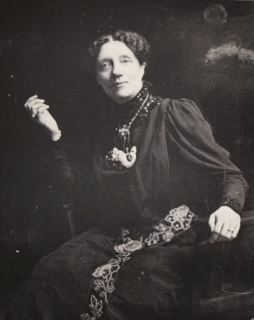
Horniman, the elder child of Frederick John Horniman and his first wife Rebekah (née Emslie). Her father is a tea merchant and the founder of the Horniman Museum. Her grandfather is John Horniman who founds the family tea business of Horniman and Company. She and her younger brother, Emslie, are educated privately at their home. Her father is opposed to the theatre, which he considers sinful, but their Germangoverness takes her and Emslie secretly to a performance of The Merchant of Venice at The Crystal Palace when she is fourteen years old.
Horniman’s father allows her to enter the Slade School of Fine Art in 1882. Here she discovers that her talent in art is limited but she develops other interests, particularly in the theatre and opera. She takes great pleasure in Richard Wagner‘s Der Ring des Nibelungen and in Henrik Ibsen‘s plays. She cycles in London and twice over the Alps, smokes in public and explores alternative religions. The “lonely rich girl” has become “an independent-minded woman.” In 1890 she joins the occult society, the Hermetic Order of the Golden Dawn, where she remains a member until disagreements with its leaders lead to her resignation in 1903. During this time she meets and becomes a friend of W. B. Yeats, acting as his amanuensis for some years. Their friendship endures. Frank O’Connor recalls that on the day Yeats hears of her death, he spends the entire evening speaking of his memories of her.
Horniman’s first venture into the theatre is in 1894 and is made possible by a legacy from her grandfather. She anonymously supports her friend Florence Farr in a season of new plays at the Royal Avenue Theatre, London. This includes a new play by Yeats, The Land of Heart’s Desire, and the première of George Bernard Shaw’s play Arms and the Man. In 1903, Yeats persuades her to go to Dublin to back productions by the Irish National Theatre Society. Here she discovers her skill as a theatre administrator. She purchases a property and develops it into the Abbey Theatre, which opens in December 1904. Although she moves back to live in England, she continues to support the theatre financially until 1910. Meanwhile, in Manchester she purchases and renovates the Gaiety Theatre in 1908 and develops it into the first regional repertory theatre in Britain.
At the Gaiety, Horniman appoints Ben Iden Payne as the director and employs actors on 40-week contracts, alternating their work between large and small parts. The plays produced include classics such as Euripides and Shakespeare, and she introduces works by contemporary playwrights such as Ibsen and Shaw. She also encourages local writers who form what becomes known as the Manchester School of dramatists, the leading members of which are Harold Brighouse, Stanley Houghton and Allan Monkhouse. The Gaiety company undertakes tours of the United States and Canada in 1912 and 1913. Horniman becomes a well-known public figure in Manchester, lecturing on subjects which include women’s suffrage and her views about the theatre. In 1910 she is awarded the honorary degree of MA by the University of Manchester. During World War I the Gaiety continues to stage plays but financial difficulties lead to the disbandment of the permanent company in 1917, following which productions in the theatre are by visiting companies. In 1921 she sells the theatre to a cinema company.
As a result of her tea connection, Horniman is known as “Hornibags.” She holds court at the Midland Hotel, wearing exotic clothing and openly smoking cigarettes, which is considered scandalous at the time. She introduces Manchester to what is called at the time “the play of ideas.” The theatre critic James Agate notes that her high-minded theatrical ventures have “an air of gloomy strenuousness” about them.
Horniman dies, unmarried, on August 6, 1937, while visiting friends in Shere, Surrey. Her estate amounts to a little over £50,000. The Annie Horniman Papers are held in the John Rylands Research Institute and Library at the University of Manchester. Her portrait, painted by John Butler Yeats in 1904, hangs in the public area of the Abbey Theatre.
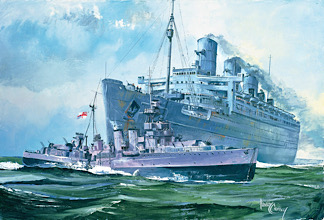
Twenty miles off the coast of County Donegal on October 2, 1942, the luxury Cunard liner RMS Queen Mary, converted into a troop carrier for World War II, smashes into her escort ship, the British Royal NavycruiserHMS Curaçoa (D41). The HMS Curacoa, which had connected with the RMS Queen Mary to escort her for the final two hundred miles to the port of Greenock, Scotland, sinks with the loss of 338 men. As are his orders, Captain Cyril Illingworth of the RMS Queen Mary, which is carrying an estimated 15,000 U.S. troops, does not stop to mount a rescue operation.
On a near perfect afternoon, the RMS Queen Mary is off the Irish coast. The vessel is setting a zigzag course to help evade U-boats and long-range Germanbombers. The RMS Queen Mary has caught up with her 4,290 tonne escort vessel, the HMS Curacoa, and is set to overtake her.
Aboard the HMS Curacoa, seaman Ernest Watson is admiring the RMS Queen Mary’s majestic lines when he notices the bow is swinging toward the cruiser. To his horror, she continues to swing and is soon on a collision course. The gap narrows inexorably as the stunned Watson finally finds his vocal cords and screams, “She’s going to ram us.” Later Watson describes how many of his mates are so shocked they cannot move.
Within seconds, there is a screech of twisted metal followed by the hiss of steam and the screams of those injured or trapped below. The RMS Queen Mary, twenty times larger than the cruiser, has been traveling at top revs giving her a speed of 28.5 knots. The impact swings the HMS Curacoa broadside on and the troopship slices through her 10 cm armour plating. It is all over in seconds, and the troopship continues on her zigzag course leaving the HMS Curacoa cut in two with the forward and aft sections separated by 100 metres of ocean.
At the moment of impact, as the HMS Curacoa reels in the water, Watson and many other seaman on deck are thrown into the freezing water. Even as they surface they watch in horror as the stern quickly sinks, taking with it the men trapped behind the water-tight doors. The forward section follows soon after, leaving the men in the murky water surrounded by debris, oil and drowned or mutilated bodies. It is every man for himself as survivors cling to floating wreckage. They are about 20 nautical miles off the Irish coast which, had boats or rafts been launched, would put them within easy reach of safety.
The survivors believe the RMS Queen Mary will turn back to pick them up, however, it is with obvious despair that they watch her disappear over the horizon. To sail on is probably the toughest decision Captain Illingworth ever has to make. The World War I veteran has many years of experience by the time he has risen to become Cunard-White Star Line’s senior commander and master of the RMS Queen Mary. He is obeying orders that under no circumstances is he to stop until the RMS Queen Mary has safely delivered the troops to Britain. His only option is to signal nearby British destroyers to rescue survivors.
Two destroyers react to Captain Illingworth’s message and steam toward the wreckage where two hours after the collision, they find many bodies of sailors who have died of hypothermia. Only the hardiest live long enough to land in Londonderry, County Londonderry, Northern Ireland, the next day. Of the HMS Curacoa’s 430 personnel, only 99 seamen and two officers survive. Because of war-time security the official inquiry is delayed until the war in Europe is over. Then, in June 1945, only a few weeks after VE Day, the Admiralty Commissioners sued Cunard-White Star Line claiming the RMS Queen Mary had been responsible.
It appears to be a clear-cut case. The HMS Curacoa’s captain, John Boutwood, gives evidence to a Royal Navy inquiry and is acquitted without a reprimand. Later he gains the Distinguished Service Order (DSO). Boutwood says the HMS Curacoa steamed at some 3 knots slower than the larger vessel which had been in the process of overtaking at the time of the collision. He says he had been amazed when the troopship continued turning to starboard and closed the gap between the vessels. When the collision occurred he, and all others on the bridge, had clung to whatever was nearest.
At first, Boutwood vainly hopes the damaged ship will stay afloat. He also says it was impossible to give orders because of the noise of escaping steam from the boiler room. The RMS Queen Mary’s first officer gives evidence that he had taken over the helm less than two minutes before she rams the cruiser. She is about 500m away and on the starboard bow. He is unconcerned at the narrow gap because he expects HMS Curacoa to take evasive action. He believes the cruiser, a more manoeuvrable vessel, would change course.
The first officer had also been reassured by Captain Illingworth, that the cruiser was “experienced in escorting and would keep out of the way.” At a later hearing some months after the opening, Illingworth says he had felt a bump at the time of the collision and had asked the quartermaster if they had been hit by a bomb. The answer was: “No sir, we have hit the cruiser.”
The judge holds the cruiser responsible saying the normal rules of an overtaking vessel keeping clear of the other does not apply in this case. He says the cruiser could have avoided the collision up to seconds before it occurred. The Admiralty, faced with huge compensation to the families of the dead sailors, appeals. In appeal the ruling is that the cruiser was responsible for two-thirds of the damage and the RMS Queen Mary for one-third. Still not satisfied, the case goes to the House of Lords where the verdict of the Appeal Court is upheld in February 1949. No survivor comes out unscathed but above all others, Illingworth has to live with the memory of leaving British sailors to fight for their lives in the ocean.
However, when asked at the first hearing if he felt Illingworth had made the right decision, the captain of the HMS Curacoa says, “I would say, yes.” The RMS Queen Mary continues as a troopship until August 11, 1945. The vessel is now a floating attraction at Long Beach, California.
(From: “SS Queen Mary & the loss of HMS Curacoa 1942” by A. N. Other and NHSA Webmaster, Naval Historical Society of Australia, https://navyhistory.au)
Daly studies Classics at Queen’s University Belfast (QUB). He earns his BA with Honours and also the Henry Medal in Latin Studies in 1937 and completes his MA the following year. He enters St. Patrick’s College, Maynooth and is ordained to the priesthood on June 22, 1941. He continues studies in theology in Maynooth, from where he obtains a doctorate in divinity (DD) in 1944. His first appointment is as Classics Master in St. Malachy’s College (1944–45).
In 1945, Daly is appointed Lecturer in Scholastic Philosophy at Queen’s University, Belfast, retaining the post for 21 years. In the academic year 1952–53 QUB grants him sabbatical leave, which he spends studying at the Catholic University of Paris where he receives a licentiate in philosophy. He returns to France at many points, particularly for holidays. He persists with his studies well into his retirement. He is a popular figure with the university and fondly remembered by his students. He is named a Canon of the Cathedral Chapter of Diocese of Down and Connor in 1966.
Daly is a peritus, or theological expert, at the Second Vatican Council (1962–65) to Bishop William Philbin during the first session of the Council and to Cardinal William Conway for the rest of the council. He dedicates himself to scholarship for 30 years, and publishes several books seeking to bring about understanding between the warring factions in Northern Ireland.
Daly is appointed Reader in Scholastic Philosophy at QUB in 1963, a post he holds until 1967, when he is appointed Bishop of Ardagh and Clonmacnoise on May 26.
Daly spends 15 years as bishop in Longford and is diligent about parish visitation and confirmations gradually assume a greater national profile. From 1974 onward, he devotes himself especially to ecumenical activities for the Pontifical Council for Promoting Christian Unity. His pastoral letter to Protestants, written in 1979, pleads for Christian unity.
Daly succeeded William Philbin as the 30th Bishop of Down and Connor when he is installed as bishop of his native diocese at a ceremony in St. Peter’s Cathedral, Belfast, on October 17, 1982.
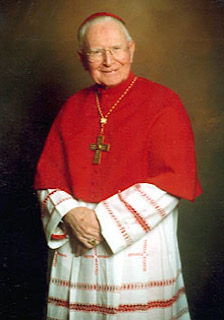
On November 6, 1990, Daly is appointed Archbishop of Armagh and, as such, Primate of All Ireland. His age makes him an unexpected occupant of the post. Despite this it is requested that he stay in the role for three years before usual age of episcopal retirement at 75. Cardinal Daly takes a notably harder line against the Irish Republican Army (IRA) than his predecessor, Cardinal Tomás Ó Fiaich.
Daly is respectful of Protestant rights and opposes integrated education of Catholics and Protestants. This policy is criticised by those who see segregated education as one of the causes of sectarianism in Northern Ireland, but is seen by the Catholic clergy as important for passing on their faith to future generations. He is utterly orthodox in opposing divorce, contraception, abortion, the ordination of women and any idea of dropping clerical celibacy.
Daly is heckled by the audience on live television during a broadcast of The Late Late Show on RTÉ One on the topic of pedophilia in the 1990s. After his retirement in 1996, he makes no public statement on the issue.
Daly retires as Archbishop of Armagh on his 79th birthday, October 1, 1996, and subsequently suffers ill health. Although it is announced that he will attend the funeral of Pope John Paul II, he stays home on the advice of his doctors. His age makes him ineligible to participate in the 2005 conclave that elects Pope Benedict XVI.
Daly is admitted to the coronary unit of Belfast City Hospital on December 28, 2009. His health has already been declining, leading to prayers being ordered for him. He dies in hospital in Belfast on December 31, 2009, aged 92. His family are at his bedside at the time. His death brings to an end a two-year period during which Ireland has, for the first time in its history, three living Cardinals.
Daly lay in state in Belfast and then his remains are taken to Armagh. Pope Benedict XVI pays tribute at this stage. Large numbers of people travel from as far as County Westmeath to attend Mass at Armagh on January 4, at which Monsignor Liam McEntaggart, the former parish priest of Coalisland, says, “When the history of peace making in Ireland comes to be written, the contribution of Cardinal Daly will be accorded a high place.” Monsignor McEntaggart himself dies on August 22, 2010, aged 81, less than eight months after Cardinal Daly’s passing.
The RHSI is founded with the purpose of encouraging the love and sharing the knowledge of gardening in all its forms, while fostering environmental awareness and building a sense of community. The inaugural meeting takes place at the Rose Tavern, Donnybrook, Dublin, as the Horticultural Society of Ireland with Francis Caulfeild, 2nd Earl of Charlemont, as its patron and Francis Hetherington as its chairman. The new society holds its first flower show on Easter Monday 1817, and flower and fruit show on August 18, 1817. After a number of shows in the intervening years, the society declines, and is re-established with a new committee in 1830. By 1848, the Society becomes known as the Royal Horticultural Society of Ireland.
The RHSI’s membership is made up of both professional and amateur gardeners from all walks of life who are united by a shared passion for gardens, plants, and growing. The members enjoy access to expert insights through the Society’s printed journal, monthly talks, regular bulletins, and visits to over 60 affiliated Partner Gardens across Ireland and abroad.
The RHSI acts as a central hub, proudly affiliated with horticultural, gardening and floral art societies and clubs across Ireland. These connections help support a nationwide exchange of knowledge, experience, and enthusiasm. From heritage landscapes to urban balconies, the RHSI celebrates the richness of gardening across Ireland. The RHSI remains committed to supporting those who grow, teach, study, and care for plants—helping to ensure that gardening continues to thrive for generations to come.
The RHSI celebrated its 200 anniversary in 2016.
In November 2023, the RHSI announces an extraordinary general meeting to consider changing its name by dropping “Royal” from the title.
For more information about the Royal Horticultural Society of Ireland, visit their website at https://rhsi.ie.
Dinneen is a leading figure in the Irish Texts Society, publishing editions of Geoffrey Keating‘s Foras Feasa ar Éirinn, poems by Aogán Ó Rathaille, Piaras Feiritéar, Tadhg Gaelach Ó Súilleabháin, and other poets. He also writes a novel and a play in Irish, and translates such works as Charles Dickens‘s A Christmas Carol into Irish. His best known work, however, is his Irish–English dictionary, Foclóir Gaedhilge agus Béarla, which is first published in 1904. The stock and plates of the dictionary are destroyed during the Easter Rising of 1916, so Dinneen takes the opportunity to expand the dictionary. A much larger second edition, compiled with the assistance of Liam S. Gógan, is published in 1927. His request to the Irish Texts Society to include Gogan’s name on the title page is refused. Gogan continues to work on the collection of words up to his death in 1979. This complementary dictionary is published online in 2011.
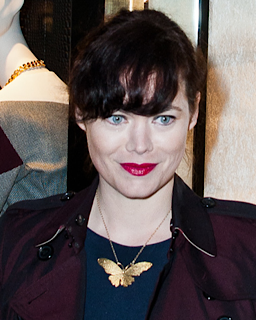
A portrait of Guinness is held at the National Portrait Gallery in London. She has modeled for various perfume and make-up campaigns, including Armani and Shu Uemura. She is the face of the Goffs Million horse races at the Curragh Racecourse in September 2007, an event that pays the highest winnings of any race meeting in Europe.
In 2009, Guinness is the face of the Arthur’s Day event celebrating her ancestor Arthur Guinness. In March and December 2011 she is again the subject of articles in Hello! magazine.
The year 2014 marks a revival of Guinness’s modeling career as she leads Jaeger‘s AW14 campaign alongside her mother Liz and fellow models Kirsty Hume and Jodie Kidd. Her range largely includes knitwear, including cardigans, skirts and sweater dresses.
Guinness is the great-granddaughter of Diana Mitford (later Lady Mosley), who is one of the Mitford sisters, and her first husband Bryan Guinness, later the 2nd Lord Moyne. Her paternal grandfather, Desmond Guinness, is a conservationist specialising in Georgian and classical architecture, while her paternal grandmother, Mariga Guinness, is born Marie-Gabrielle, Princess of Urach. Desmond and Mariga Guinness are co-founders of the Irish Georgian Society. Guinness’s maternal family is researched in the RTÉ programme Where Was Your Family During the Famine?


 seamus dubhghaill