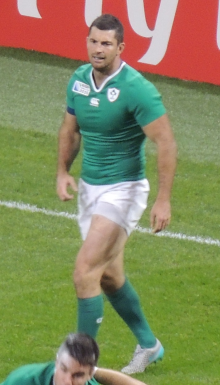
Kearney is the third of five children. He has an older brother, Richard, a younger brother Dave (who plays for Leinster) and a sister, Sara, the youngest of the five children. His elder brother Ross dies at the age of six following an accident in 1988. He is a seventh cousin of former U.S. PresidentJoe Biden.
Like many of his peers, Kearney gets involved in athletics at an early age. The dominant sport in the area is Gaelic football. As a youth, he plays Gaelic for Naomh Muire, and in the Cooley Kickhams underage setup, before graduating to the Cooley senior football team at the age of 17 in 2004 and also Louth at minor level.
Kearney attends Clongowes Wood College in County Kildare for his secondary education. After his Leaving Certificate he moves to University College Dublin (UCD) on a sports scholarship, where he plays for the rugby team. He graduates in April 2010 with a Bachelor of Arts degree in economics. In 2005 he helps the U-20s team win the McCorry Cup, beating Dublin University Football Club (DUFC) in the final. In 2018, he is awarded the UCD Alumni Award in Sport.
Kearney plays for Leinster at both schoolboy and U-19 level before going on to represent them as a senior. He scores a hat-trick of tries on his debut for Leinster in a pre-season friendly win over Parma.
Kearney makes his Celtic League debut for Leinster in 2005 in a 22–20 defeat away to the Ospreys. He makes 32 appearances in the competition, scoring eight tries, with three penalties during a period in September 2006, when usual place kicker, Felipe Contepomi, is injured. He plays in his first Heineken Cup game in a 19–22 defeat against Bath at the Royal Dublin Society (RDS) on October 22, 2005. It is the first of ten appearances scoring ten tries in the process. He is part of Leinster’s Heineken Cup winning team in 2009 but misses the 2011 final due to injury. On May 21, 2012, the day after Leinster wins their second straight Heineken Cup, he is announced as the ERC Player of the Year for 2012. During the 2011–12 campaign he starts all nine European matches scoring six tries. He is crowned Leinster player of the year for the 2011–12 season. He confirms his departure from Leinster on September 24, 2020.
In late September 2020, it is confirmed that Kearney has signed a one-year contract with Australian side Western Force. He makes his Force debut in an 11–27 defeat to the Brumbies on February 19, 2021. He announces his retirement from rugby after one season with Western Force in Super Rugby AU and Super Rugby Trans-Tasman. Following his retirement, he returns to Louth GAA club Cooley Kickhams where he begins training in August 2021 for the first time since 2005.
Kearney represents Ireland at schoolboy and U-19 level, and tours with Ireland A in the 2006 Churchill Cup. He is first called into the Irish training squad for 2005’s autumn internationals but does not play. He is named in the Irish squad to the 2007 summer tour of Argentina and earns his first cap against Argentina on June 2, 2007, in a 16–0 defeat. During the 2008 Six Nations Championship he scores two tries, one against Scotland and one against England. He is a member of the victorious Ireland team that wins the 2009 Six Nations Championship, Triple Crown and Grand Slam. One of the most famous incidents in his career is a high tackle incident involving Italy‘s Andrea Masi in the first minute of a game. The incident is taken as an indication of the danger posed by Kearney in attack. He misses almost a year – from November 2010 until August 2011 – due to a knee injury that requires surgery.
In the 2011 Rugby World Cup, Kearney is selected but is injured for the first game against the United States. However, he plays in all the other matches which take Ireland through to the quarterfinals, in which they are knocked out by Wales, 22–10. He is selected in the Ireland squad for the 2012 Six Nations Championship and named in the starting team to play Wales in the opening match. He plays in all the other games, which see Ireland finish third in the table. He is also in the first Irish rugby team in 39 years to beat Australia on Australian soil, in the 2018 summer series. He is named in the Ireland squad for the 2019 Rugby World Cup in Japan, starting three of Ireland’s five matches and splitting time at fullback with Jordan Larmour.
Kearney is named in the British & Irish Lions squad for the 2009 tour to South Africa. He makes his Lions test debut as a substitute in the 26–21 first test defeat in Durban. Due to an injury to Lee Byrne, he is selected again for the second test in Pretoria. He scores the only try for the Lions in a 28–25 defeat. He then plays in the final test in Johannesburg which the Lions win 28–9. On April 30, 2013, he is named in his second British & Irish Lions squad.
Kearney marries Jess Redden in 2021, and their son is born in 2023.
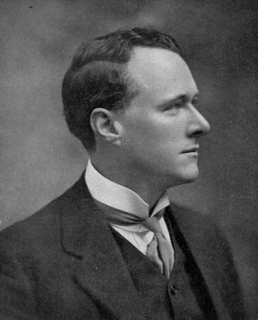
Fagan is born in Belfast on May 18, 1873, the eldest of the five children of Sir James Fagan, a surgeon at the Belfast Royal Hospital and an inspector of Irish reformatories, and Mary Catherine Fagan (née Hughes). He attends Clongowes Wood College near Clane, County Kildare and then moves to England. Initially interested in a career in the church, he begins studying law at Trinity College, Oxford in 1892 but leaves in 1893 without a degree. He works for a time in the Indian Civil Service but abandons this career for the stage.
Fagan begins his career as an actor with the company of Sir Frank Benson for two years, then joining, from 1895 to 1899, the company of Herbert Beerbohm Tree at Her Majesty’s Theatre. There he appears in Katherine and Petruchio, A Man’s Shadow, Julius Caesar, The Musketeers and Carnac Sahib. He starts writing plays in 1899, with The Rebels, for the time forsaking acting. In 1913, he returns to the stage touring as the Rt. Hon. Denzil Trevena in his own play, The Earth. He next writes The Fourth of August (1914) and Doctor O’Toole (1917). In 1917 he produces his first play, his own adaptation of the Eugène Brieux play Damaged Goods at St. Martin’s Theatre. He next produces The Wonder Tales and The Little Brother at the Ambassadors Theatre in London.
Fagan is persuaded by Jane Ellis, the actress who with Alfred Ballard founds the Oxford Playhouse “Red Barn” in 1923, to be its first manager. His first production at the Oxford Playhouse is a restaging of Shaw’s Heartbreak House and numbered Shaw among the audience. He produces The Cherry Orchard, at various theatres, to favourable reviews, popularising Anton Chekhov in Britain. From November 16, 1925, with Dennis Eadie, he presents Juno and the Paycock at the Royalty Theatre, thus bringing Seán O’Casey to the attention of London’s theatre-going public. O’Casey’s The Ploughand the Stars follows the next year.
Fagan receives little support from the University of Oxford or the play-going public and resigns in 1929. His successor is Stanford Holme, who broadens its appeal and, despite the straitened times, makes it financially viable. In 1929, he is a director of the Festival Theatre, Cambridge, where his friend Terence Gray is director. He also produces many works for the Irish Players.
Beginning in the 1920s, several of Fagan’s plays are adapted for film. He moves to Hollywood in 1929 for the filming by Paramount Pictures of his play The Wheel as The Wheel of Life. Other film work includes his co-adaptation of the screenplay for the 1932 film Smilin’ Through, and he co-writes Paramount’s Forgotten Commandments the same year. His play Bella Donna is filmed four times, including posthumously in 1946, and a 1936 film, The Improper Duchess is based on his 1931 play of the same name.
James Bernard Fagan dies in Hollywood, California, on February 17, 1933, at the age of 59 of a heart attack following a bout of influenza.
Bracken is the third child and second of three sons of Joseph Kevin (J. K.) Bracken and Hannah Bracken (née Ryan). The family moves to Kilmallock, County Limerick, in 1903, the year before his father’s death. By 1908, his mother takes the family to live in Glasnevin, a new suburb in north Dublin, and subsequently off the North Circular Road. He is educated in St. Patrick’s National School, Drumcondra, and at the Christian Brothers‘ O’Connell School in North Richmond Street. He is a mischievous, delinquent child, one time throwing a schoolfellow into the Royal Canal. In February 1915 he is sent to Mungret College, a Jesuit boarding school near Limerick. He is not amenable to the regime and runs away on several occasions, finding accommodation in local hotels under a false name.
At the end of 1915 Bracken goes to Australia with £14 in his pocket. He is first based in Echuca, Victoria, where he is put up in a convent. Later he moves to other houses run by religious orders. A voracious reader, he claims that he is doing research for a life of CardinalPatrick Francis Moran, and signs himself “Brendan Newman Bracken.” He seeks admission as a pupil to Riverview, the fashionable Jesuit school in Sydney, claiming that he had been educated at Clongowes Wood College. Unfortunately for him, a priest who had just come out from Clongowes exposes him. Opinionated and argumentative, he does not conceal his skepticism about the Catholic religion. For a time, he teaches in a Protestant school in Orange, New South Wales.
Bracken returns to Ireland in 1919. By this time his mother has remarried and is living with her new husband, Patrick Laffan, on a farm in Beauparc, County Meath. After a short stay there, he moves to Liverpool and finds employment as a teacher at the Liverpool Collegiate School, claiming that he had been to the University of Sydney. He teaches at the school for two terms in 1920, earning extra money as tutor to a young boy. With his savings he is able to gain admission to Sedbergh School, a public school in the town of Sedbergh in Cumbria, North West England, giving his name as Brendan Rendall Bracken, born 1904, and stating that his parents had perished in a bush fire in Australia, leaving him money to complete his education. He remains only one term but distinguishes himself by winning a prize for history. After Sedbergh, Bracken teaches at Rottingdean preparatory school and then at Bishops Stortford School. He cuts a flamboyant figure and drops the name of famous acquaintances with gay abandon. He stands over 6 feet and has a powerful presence and a domineering personality; his mop of red hair and pale freckled skin combine with black teeth to give him a bizarre appearance.
In 1922 Bracken moves to London. He takes charge of the Illustrated Review when its editor, Hilaire Belloc, resigns. Renamed English Life and covering political and social events, it affords Bracken an opportunity to meet prominent people, including J. L. Garvin, editor of The Observer. In autumn 1923 Garvin introduces him to Winston Churchill, who had lost his parliamentary seat in 1922 and decided to contact Leicester West in the 1923 United Kingdom general election. Bracken offers his services as campaign manager. The friendship between Churchill and Bracken is soon so close that Bracken is rumoured to be Churchill’s natural son. Churchill’s wife Clementine dislikes Bracken and discourages the friendship.
Meanwhile Bracken enjoys the life of a ubiquitous socialite and builds up his career in publishing. He becomes a director of Eyre & Spottiswoode in 1926, starting The Banker, a monthly magazine, for them, and acquiring the Financial News in 1928 and a half-share in The Economist. To these are added in due course the Investors Chronicle and The Practitioner. His success in business enables him to acquire a home in North Street in 1928, near the Houses of Parliament. He is driven about in a chauffeured Hispano-Suiza car.
In 1929, Bracken has himself adopted as conservative candidate for Paddington North, a marginal seat. After a hard-fought campaign characterised by minor violence provoked by Bracken’s intemperate language, he wins the seat by 528 votes. At one point a rumour is put about that Bracken is in reality a Polish Jew, which he has to disprove by exhibiting a copy of his birth certificate. His background is a subject of speculation among acquaintances, and in throwaway remarks he gives different fictitious versions of it, Ireland figuring in none of them. He does however remain in constant touch with his mother, to whom he seems to have been deeply devoted, until her death in 1928. However, he has as little contact as possible with his brother and sisters, although he does give assistance to some of them and their families at various times.
In parliament Bracken voices right-wing views on economic issues and is an enthusiastic imperialist. After Churchill resigns from the conservative front bench in 1930 because they would not oppose the Labour government’s proposal for Indian self-government, he is supported by Bracken. During the 1930s, when Churchill is in the wilderness, disagreeing with the party leadership on India and on what he sees as a policy of appeasement toward Hitler‘s Germany, Bracken is his sole political ally. Stanley Baldwin calls him Churchill’s “faithful chela.”
In September 1939, Churchill joins Neville Chamberlain‘s war cabinet as First Lord of the Admiralty. Bracken is appointed his parliamentary private secretary, continuing in that role when Churchill becomes Prime Minister. Despite the king’s opposition, Churchill insists in June 1940 that Bracken should be appointed a privy councillor. Bracken shuts up his house and moves to the Prime Minister’s residence for the duration of the war. As a confidant of the Prime Minister, he often acts as a go-between with other politicians and newspapermen. He is allowed to oversee patronage and takes a special interest in ecclesiastical appointments. In July 1941, he is persuaded by Lord Beaverbrook and Churchill to become Minister for Information. He wins over most of the proprietors by giving them more news, often on a confidential basis, and censorship is kept to a minimum. The BBC is also allowed a fair measure of freedom as long as it behaves responsibly; under the leadership of Cyril Radcliffe, the civil service head of the ministry, it operates more smoothly. Bracken was generally acclaimed for that success.
After the resignation of the Labour ministers from the government at the end of the war in Europe, Bracken joins the cabinet as First Lord of the Admiralty. He is prominent in the general election campaign that follows and is the only conservative minister apart from Churchill to give more than one radio broadcast. He is accused, probably unjustly, of provoking Churchill to take extreme positions, and blamed when the conservatives are heavily defeated at the polls. Bracken himself loses Paddington North to Lt. Gen. Sir Noel Mason-MacFarlane. However, he is soon back in parliament representing Bournemouth, and as front-bench spokesman is an uncompromising opponent of the nationalisation measures of the Labour government (1945–51). He is out of sympathy with the leftward drift of the conservative party associated with Rab Butler and Harold Macmillan.
In December 1951, when Churchill is again Prime Minister, Bracken declines an invitation to serve as Colonial Secretary, pleading that his recurring sinusitis makes it impossible. He resigns his seat in the House of Commons and is created a peer, Viscount Bracken of Christchurch in Hampshire, but never takes his seat in the House of Lords. Although he retires from politics, he remains close to political events through his friendship with Churchill. He is deeply involved in concealing the severe stroke that Churchill suffers in 1953, so that he can carry on as Prime Minister.
In the postwar period, Bracken has important business interests. The Financial News group acquires the Financial Times in 1945, and he is returned as chairman of the expanded company. He writes a weekly Financial Times column until 1954. He oversees the building near St. Paul’s of a new head office, named “Bracken House” after his death. He is also chairman of the Union Corporation mining house, with interests in South Africa, which he frequently visits. From 1950 he is chairman of the board of governors of Sedbergh School, where he goes frequently and often walks for miles across the fells. He organises and finances the restoration of the eighteenth-century school building as a library, with a commemoratory inscription, “Remember Winston Churchill.”
From 1955 Bracken is a trustee of the National Gallery. He is an unrelenting opponent of the proposal to return to Ireland the impressionist paintings bequeathed to it by Hugh Lane, because a codicil willing them to Dublin has not been witnessed. Throughout the postwar period he carries on a prolific correspondence with friends such as Lord Beaverbrook, the American ambassador Lewis Douglas, and the Australian entrepreneur W. S. Robinson. These are a valuable and entertaining source on the political history of the time.
In January 1958, Bracken, who has always been a heavy smoker, is diagnosed with throat cancer. He lingers on until August 8, 1958, when he dies at the flat of his friend Sir Patrick Hennessy in Park Lane. He resists efforts made to reconcile him to the church of Rome. By his own wish he is cremated, and his ashes are scattered on Romney Marsh, Kent. On his instructions his papers are burned by his chauffeur. His estate comes to £145,032.
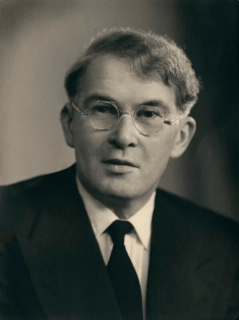
(From: “Bracken, Brendan” by Charles Lysaght, Dictionary of Irish Biography, www. dib.ie, October 2009 | Pictured: Brendan Bracken, bromide print by Elliott & Fry, January 13, 1950, National Portrait Gallery, London)
Thomas “Tom” Michael Kettle, parliamentarian, writer, and soldier, is born on February 9, 1880, in Artane, Dublin, the seventh among twelve children of Andrew Kettle, farmer and agrarian activist, and his wife, Margaret (née McCourt). His father’s record in nationalist politics and land agitation, including imprisonment in 1881, is a valuable political pedigree.
The family is prosperous. Kettle and his brothers attend Christian Brothers’ O’Connell School in Richmond Street, Dublin, before being sent to board at Clongowes Wood College, County Kildare. Popular, fiery, and something of a prankster, he soon proves to be an exceptional scholar and debater, as well as a keen athlete, cyclist, and cricketer. He enrolls in 1897 at University College Dublin (UCD), his contemporaries including Patrick Pearse, Oliver St. John Gogarty and James Joyce. He thrives in student politics, where his rhetorical genius soon wins him many admirers and is recognised in his election as auditor of the college’s Literary and Historical Society. He also co-founds the Cui Bono Club, a discussion group for recent graduates. In 1899, he distributes pro-Boer propaganda and anti-recruitment leaflets, arguing that the British Empire is based on theft, while becoming active in protests against the Irish Literary Theatre‘s staging of The Countess Cathleen by W. B. Yeats. In 1900, however, he is prevented from taking his BA examinations due to a mysterious “nervous condition” – very likely a nervous breakdown. Occasional references in his private diaries and notes suggest that he is prone to bouts of depression throughout his life. He spends the following two years touring in Europe, including a year at the University of Innsbruck, practising his French and German, before taking a BA in mental and moral science of the Royal University of Ireland (RUI) in 1902. He continues to edit the college newspaper, remaining active in student politics. He participates, for example, in protests against the RUI’s ceremonial playing of “God Save the King” at graduations as well as its senate’s apparent support for government policy, threatening on one occasion to burn publicly his degree certificate.
In 1903, Kettle is admitted to the Honourable Society of King’s Inns to read law and is called to the bar two years later. Nonetheless, he soon decides on a career in political journalism. Like his father, he is a keen supporter of the Irish Parliamentary Party (IPP), and in 1904 is a co-founder of the resonantly titled Young Ireland Branch of the United Irish League. Here he comes to the notice of John Redmond, who offers him the prospect of a parliamentary seat, but he chooses instead to put his energies into editing the avowedly pro-Irish-party paper, The Nationist, in which he promises that a home rule administration will uphold women’s rights, industrial self-sufficiency, and Gaelic League control of Irish education. He hopes that the paper will offer a corrective alternative to The Leader, run by D. P. Moran, but in 1905 he is compelled to resign the editorship due to an article thought to be anti-clerical. In July 1906, he is persuaded to stand in a by-election in East Tyrone, which he wins with a margin of only eighteen votes. As one of the youngest and most talented men in an ageing party, he is already tipped as a potential future leader. His oratory is immediately put to good use by the party in a propaganda and fund-raising tour of the United States, as well as on the floor of the House of Commons, where his oratorical skills earn him a fearsome reputation. He firmly advocates higher education for Catholics and the improvement of the Irish economy, while developing a close alliance with Joseph Devlin and the Ancient Order of Hibernians (AOH).
Kettle meanwhile makes good use of his connections to ArchbishopWilliam Walsh, the UCD Sodality of the Blessed Virgin Mary, and the Catholic Graduates and Undergraduates Association, as well as political support, to secure the professorship of national economics. T. P. Gill, of the Department of Agriculture and Technical Instruction, exceptionally acts as his referee. His detractors regard the appointment as a political sinecure and Kettle as a somewhat dilettantish “professor of all things,” who frequently neglects his academic duties. However, he takes a keen interest in imperial and continental European economies. He does publish on fiscal policy, even if always taking a pragmatic interest in wider questions, greatly impressing a young Kevin O’Higgins, later Vice-President of the Executive Council of the Irish Free State. He has little time for what he regards as the abstract educational and economic idealism of D. P. Moran. He acknowledges that the “Hungarian policy” of Arthur Griffith has contributed significantly to a necessary debate about the economy, but argues that the Irish are “realists,” that Ireland’s natural resources ought to be scientifically measured, and that the imperial connection is crucial to Ireland’s future development. The achievement of home rule would, he asserts, encourage a healthy self-reliance as opposed to naive belief in self-sufficiency.
Kettle is encouraged by the heightened atmosphere of the constitutional crisis over the 1909 David Lloyd Georgebudget, culminating in the removal of the House of Lords veto, which has been an obstacle to home rule. He is also a supporter of women’s enfranchisement, while stressing that the suffragist cause should not delay or deflect attention from the struggle for home rule. He holds his East Tyrone seat in the January 1910 United Kingdom general election but decides not to stand at the general election in December of the same year. Returning to an essentially journalistic career, he publishes a collection of essays outlining his constitutional nationalist position. He opposes suffragette attacks on private property, but, in contrast, supports the Dublin strikers in 1913, highlighting their harsh working and living conditions. He tries without success to broker an agreement between employers and workers though a peace committee he has formed, on which his colleagues include Joseph Plunkett and Thomas P. Dillon. His efforts are not assisted, however, by an inebriated appearance at a crucial meeting. Indeed, by this time his alcoholic excesses are widely known, forcing him to attend a private hospital in Kent.
In spite of deteriorating health, Kettle becomes deeply involved in the Irish Volunteers formed in November 1913 to oppose the Ulster Volunteers. His appraisal of Ulster unionism is somewhat short-sighted, dismissing it as being “not a party [but] merely an appetite,” and calling for the police to stand aside and allow the nationalists to deal with unionists, whose leaders should be shot, hanged, or imprisoned. These attitudes are mixed in with a developing liberal brand of imperialism based on dominion federalism and devolution, warmly welcoming a pro-home-rule speech by Winston Churchill with a Saint Patrick’s Day toast to “a national day and an empire day.” Nevertheless, he uses his extensive language skills and wide experience of Europe to procure arms for the Irish Volunteers. He is in Belgium when the Germans invade, and the arms he procured are confiscated by the Belgian authorities, to whom they were donated by Redmond on the outbreak of war.
On his return to Dublin, Kettle follows Redmond’s exhortation to support the war effort. He is refused an immediate commission on health grounds, but is eventually granted the rank of lieutenant, with responsibilities for recruitment in Ireland and England. He makes further enemies among the advanced nationalists of Sinn Féin, taunting the party for its posturing and cowardly refusal to confront Ulster unionists, the British Army, and German invaders alike. Coming from a staunchly Parnellite tradition, he is no clericalist, yet he is a devout if liberal Catholic, imbued by his Jesuit schooling with a cosmopolitan admiration for European civilisation which has been reinforced by his European travels, and in particular has been outraged by the German destruction of the ancient university library of Louvain. Despite a youthful flirtation with the philosophy of Friedrich Nietzsche, he comes to regard “Prussianism” as the deadliest enemy of European civilisation and the culture of the Ten Commandments, there not being “room on earth for the two.” He increasingly believes that the German threat is so great that Irish farmers’ sons ought to be conscripted to defend Ireland. He also believes that considerable good might come out of the conflict, exhorting voters in East Galway to support what is practically a future home rule prime minister, cabinet, and Irish army corps. He unsuccessfully seeks nomination as nationalist candidate in the 1914 East Galway by-election in December. Nevertheless, he continues to work tirelessly on behalf of the party, publishing reviews, translations, and treatises widely in such journals as the Freeman’s Journal, The Fortnightly Review, and the Irish Ecclesiastical Record.
As a recruiting officer based far from the fighting, Kettle is stung by accusations of cowardice from advanced nationalists. He had tried repeatedly to secure a front-line position, but was rejected, effectively because of his alcoholism. He is appalled by trench conditions and the prolongation of the war, a disillusionment further encouraged by the Easter Rising, in which his brother-in-law, Francis Sheehy-Skeffington, is murdered by a deranged Anglo-Irish officer, J. C. Bowen-Colthurst. He senses that opinion in Ireland is changing, anticipating that the Easter insurgents will “go down in history as heroes and martyrs,” while he will go down, if at all, as “a bloody British officer.” Nevertheless, he regards the cause of European civilisation as greater than that of Ireland, remaining as determined as ever to secure a combat role. Despite his own poor health and the continuing intensity of the Somme campaign, he insists on returning to his unit, the 9th Battalion, Royal Dublin Fusiliers.
Kettle’s writings demonstrate the mortal danger he is placing himself in, evident not least in his frequently quoted poem, “To my daughter, Betty, the gift of God,” as well as letters settling debts, apologising for old offences, and providing for his family – his wealth at death being less than £200. He has no death wish, wearing body armour frequently, but as Patrick Maume notes, “As with Pearse, there is some self-conscious collusion with the hoped-for cult.” He is killed on September 9, 1916, during the Irish assault on German positions at Ginchy.
Kettle marries Mary Sheehy, alumna of UCD, student activist, suffragist, daughter of nationalist MPDavid Sheehy, and sister-in-law of his friend Francis Sheehy Skeffington, on September 8, 1909. In 1913 the couple has a daughter, Elizabeth.
Kettle is commemorated by a bust in St. Stephen’s Green, Dublin, and in the House of Commons war memorial in London. He is a man of great passions and proven courage. George William Russell put his sacrifice on a par with Thomas MacDonagh and the Easter insurgents:
“You proved by death as true as they, In mightier conflicts played your part, Equal your sacrifice may weigh, Dear Kettle, of the generous heart (quoted in Summerfield, The myriad minded man, 187).
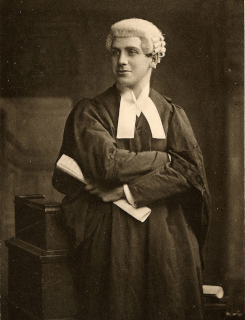
(From: “Kettle, Thomas Michael (‘Tom’)” by Donal Lowry, Dictionary of Irish Biography, http://www.dib.ie, October 2009 | Pictured: Tom Kettle as a barrister when called to the Irish law bar in 1905)
O’Malley is one of eight surviving children of Joseph O’Malley, civil engineer, and his wife, Mary “Cis” (née Tooher). Born into a wealthy middle-class family, he is educated by the Jesuits at Crescent College and later at Clongowes Wood College, County Kildare. He later studies at University College Galway (UCG), where he is conferred with a degree in civil engineering in 1943. He later returns to Limerick, where he works as an engineer before becoming involved in politics.
O’Malley plays rugby at provincial level for Munster, Leinster and Connacht and at club level for Bohemians and Shannon RFC. His chances at an international career are ruined by the suspension of international fixtures during World War II. It is at a rugby match in Tralee that he first meets Dr. Hilda Moriarty, who he goes on to marry in August 1947.
Although O’Malley runs as a Fianna Fáil candidate, he is born into a politically active family who supports Cumann na nGaedheal until a falling-out with the party in the early 1930s. He first becomes involved in local politics as a member of Limerick Corporation. He becomes Mayor of Limerick in 1961, the third O’Malley brother to hold the office (Desmond from 1941-43 and Michael from 1948-49). He is a strong electoral performer, topping the poll in every general election he runs in.
O’Malley is first elected to Dáil Éireann as a Fianna Fáil TD for Limerick East at the 1954 Irish general election. Fianna Fáil is not returned to government on that occasion. He spends the rest of the decade on the backbenches. However, his party is returned to power in 1957. Two years later, the modernising process begins when Seán Lemass takes over from Éamon de Valera as Taoiseach. Lemass introduces younger cabinet ministers, as the old guard who has served the party since its foundation in 1926 begin to retire.
In 1961, O’Malley joins the government as Parliamentary Secretary to the Minister for Finance. He is part of a new, brasher style of politician that emerges in the 1960s, sometimes nicknamed “the men in the mohair suits.” It is expected that this generation of politician, born after the Irish Civil War, will be a modernising force in post-de Valera Ireland.
Although his sporting background is in rugby and swimming, it is association football which O’Malley gets involved in at a leadership level, becoming President of the Football Association of Ireland despite never having played the sport.
Following Fianna Fáil’s retention of power in the 1965 Irish general election, O’Malley joins the cabinet as Minister for Health. He spends just over a year in this position before he is appointed Minister for Education, a position in which he displays renowned dynamism. Having succeeded Patrick Hillery, another dynamic young minister, he resolves to act swiftly to introduce the recommendations of an official report on education.
As Minister for Education, O’Malley extends the school transport scheme and commissions the building of new non-denominational comprehensive and community schools in areas where they are needed. He introduces Regional Technical Colleges (RTCs), now called Institutes of Technology, in areas where there is no third level college. The best example of this policy is the University of Limerick, originally an Institute of Higher Education, where O’Malley is credited with taking the steps to ensure that it becomes a university. His plan to merge Trinity College Dublin and University College Dublin arouses huge controversy, and is not successful, despite being supported by his cabinet colleague Brian Lenihan. Access to third-level education is also extended, the old scholarship system being replaced by a system of means-tested grants that give easier access to students without well-off parents.
Mid-twentieth century Ireland experiences significant emigration, especially to the neighbouring United Kingdom where, in addition to employment opportunities, there is a better state provision of education and healthcare. Social change in Ireland and policies intending to correct this deficit are often met with strong resistance, such as Noël Browne‘s proposed Mother and Child Scheme. As a former Health Minister, O’Malley has first-hand experience of running the department which had attempted to introduce this scheme and understood the processes that caused it to fail, such as resistance from Department of Finance and John Charles McQuaid. This influences his strategy in presenting the free-education proposal.
Shortly after O’Malley is appointed, he announces that from 1969 all education up to Intermediate Certificate level will be without cost, and free buses will bring students in rural areas to their nearest school, seemingly making this decision without consulting other ministers. However, he does discuss it with Lemass. Jack Lynch, who, as Minister for Finance, has to find the money to pay for the programme, is not consulted and is dismayed at the announcement.
By announcing the decision first to journalists and on a Saturday (during a month when the Dáil is in recess), the positive public reaction tempers resistance to the idea before the next cabinet meeting. O’Malley’s proposals are hugely popular with the public, and it is impossible for the government to go back on his word.
Some Irish commentators consider that O’Malley’s extension of education, changing Ireland from a land where the majority are schooled only to the age of 14 to a country with universal secondary-school education, indirectly leads to the Celtic Tiger boom of the 1990s-2000s when it is followed for some years by an extension of free education to primary degree level in university, a scheme that is launched in 1996 by the Labour Party and axed in 2009 by Fianna Fáil’s Batt O’Keeffe.
In 1967, O’Malley appoints Justice Eileen Kennedy to chair a committee to carry out a survey and report on the reformatory and industrial school systems. The report, which is published in 1970, is considered ground-breaking in many areas and comes to be known as the Kennedy Report. The Report makes recommendations about a number of matters, including the Magdalene laundries, in relation to which they are not acted upon. The report recommends the closure of a number of reformatories, including the latterly infamous reformatory at Daingean, County Offaly.
O’Malley’s reforms make him one of the most popular members of the government. He is affectionately known as “the School Man” for his work in education. His sudden death in Limerick on March 10, 1968, before his vision for the education system is completed, comes as a shock to the public. He is buried with a full Irish state funeral.
Following O’Malley’s death, his widow, Hilda O’Malley, does not run in the subsequent by-election for the seat he has left vacant. It is won narrowly by their nephew Desmond O’Malley. Hilda seeks the Fianna Fáil nomination for the 1969 Irish general election, but Fianna Fáil gives the party nomination to Desmond, as the sitting TD. Hilda runs as an Independent candidate in that election. After what proves a bitter campaign against her nephew, she fails to get the fourth seat in Limerick East by just 200 votes.
Healy is one of twins, the third son born to Maurice, a Poor Law Union clerk, and Eliza (née Sullivan) Healy. His mother dies during the birth. It is said that the nurse places him in his brother Tim‘s arms and said, “This little boy has no mother now and you will have to be a mother to him.” As he grows up, he becomes very close to his elder brother. The orphaned children are effectively raised by their maternal grandmother, Jane Sullivan. The family moves to Lismore, County Waterford, where he is educated at the local Christian Brothers school. Both brothers marry Sullivans who are first cousins to their husbands and to each other.
Admitted as a solicitor in 1882, Healy practises as such and is returned to parliament four times, first as a member of the Irish Parliamentary Party for Cork City from 1885 to 1900, in which year standing as a Healyite nationalist he is defeated by William O’Brien in a bitter campaign. He is returned again for Cork City in May 1909 to January 1910.
Healy’s force in parliament is land law. He is a close confidant of his brother Tim and although more retiring and stolid than his better-known elder brother, he is considered the more intelligent and often acts as a counterbalance to his brother’s emotionality. On the outbreak of World War I in 1914 a son of each enlists in one of the Irish Divisions.
Maurice (junior) moves to England after the founding of the Irish Free State where he is both a successful lawyer and a broadcaster for the BBC during the early years of World War II. He writes the well-known legal memoir The Old Munster Circuit and the popular Stay Me with Flagons: A Book about Wine and Other Things.
Thomas Pelham, the Chief Secretary for Ireland, introduces a bill for the foundation of a Catholic college, and this is enacted by parliament. It is built to hold up to 500 students for the Catholic priesthood of whom up to 90 are to be ordained each year. It is once the largest seminary in the world.
The town of Maynooth is the seat of the FitzGeralds, Earls of Kildare. The ivy-covered tower attached to St. Mary’s Church of Ireland is all that remains of the ancient college of St. Mary of Maynooth, founded and endowed by Gerald FitzGerald, 8th Earl of Kildare, and dedicated to the Blessed Virgin Mary. On October 7, 1515, Henry VIII grants licence for the establishment of a college. In 1518, the 9th Earl presents a petition to the Archbishop of Dublin, William Rokeby, for a license to found and endow a college at Maynooth, the College of the Blessed Virgin Mary. In 1535 the college is suppressed and its endowments and lands confiscated as part of the Reformation.
The present college is created in the 1790s against the background of the upheaval during the French Revolution and the gradual removal of the penal laws. The college is particularly intended to provide for the education of Catholic priests in Ireland, who until this Act had to go to Continental Europe for their formation and theological education. Many are educated in France, and the church and government are concerned at the Dechristianization of France during the French Revolution, and at the same time at the risk of revolutionary thinking arising from training in revolutionary France. A number of the early lecturers in Maynooth, are exiles from France. Also among the first professors is a layman, James Bernard Clinch, recommended by Edmund Burke. Also relevant is the enactment of the Roman Catholic Relief Act 1793.
The college is legally established on June 5, 1795, by the Maynooth College Act 1795 as The Royal College of St. Patrick, by act of the Parliament of Ireland, to provide “for the better education of persons professing the popish or Roman Catholic religion.” The college is originally established to provide a university education for Catholic lay and ecclesiastical students, the lay college is based in Riverstown House on the south campus from 1802. With the opening of Clongowes Wood College in 1814, the lay college is closed and the college functions solely as a Catholic seminary for almost 150 years.
In 1800, John Butler, 12th Baron Dunboyne, dies and leaves a substantial fortune to the college. Butler had been a Roman Catholic, and Bishop of Cork, who had embraced Protestantism in order to marry and guarantee the succession to his hereditary title. However, there are no children to his marriage, and it is alleged that he had been reconciled to the Catholic Church at his death. Were this the case, a Penal Law demands that the will is invalid, and his wealth is to pass to his family. Much litigation follows before a negotiated settlement in 1808 that leads to the establishment of a Dunboyne scholarship fund.
The land is donated by William FitzGerald, 2nd Duke of Leinster, who had argued in favour of Catholic emancipation in the Irish House of Lords. He lives nearby at Carton House and also at Leinster House. The building work is paid for by the British Government with the parliament continuing to give it an annual grant until the Irish Church Act 1869. When this law is passed the college receives a capital sum of £369,000. The trustees invest 75% of this in mortgages to Irish landowners at a yield of 4.25% or 4.75% per annum. This is considered a secure investment at the time but agitation for land reform and the depression of the 1870s erodes this security. The largest single mortgage is granted to the Earl of Granard. Accumulated losses on these transactions reaches £35,000 by 1906.
The first building to go up on the site is designed by, and named after, John Stoyte. Stoyte House, which can still be seen from the entrance to the old campus, is a well-known building to Maynooth students and stands very close to the very historic Maynooth Castle. Over the next 15 years, the site at Maynooth undergoes rapid construction so as to cater for the influx of new students, and the buildings which now border St. Joseph’s Square (to the rear of Stoyte House) are completed by 1824.
The Rev. Laurence F. Renehan (1797–1857), a noted antiquarian, church historian, and cleric, serves as president of St. Patrick’s from 1845 until 1857. Under Renehan, many of the college’s most important buildings are constructed by Augustus Pugin.
In 1876, the college becomes a constituent college of the Catholic University of Ireland, and later offers Royal University of Ireland degrees in arts and science. Even after the granting of the Pontifical Charter in 1896 the college becomes a recognised college of the National University of Ireland in 1910, and from this time its arts and science degrees are awarded by the National University of Ireland. However, during this time the Pontifical University of Maynooth continues to confer its degrees in theology, because until 1997 theology degrees are prohibited by the Royal University of Ireland and its successor the National University of Ireland.
In 1997, the Universities Act, 1997 is passed by the Oireachtas. Chapter IX of the Act provides for the creation of the separate Maynooth University. This new university is created from the college’s faculties of Arts, Celtic Studies and Philosophy, and Science.
In 1994, W. J. Smyth had been appointed to the position of Master of St. Patrick’s College Maynooth (NUI). In 1997, this position is converted into President of Maynooth University. After his 10-year term ends in 2004, he is replaced by John Hughes as president of Maynooth University and a new line of heads for the college.
By 2016, the number of resident seminarians has dropped from several hundreds to just 40 to 60. In August 2016, it is revealed that, due to frequent use of Grindr by college students, the then Archbishop of DublinDiarmuid Martin decides to transfer the students from his diocese to the Irish Pontifical College in Rome. According to Martin, “there are allegations on different sides,” one of which of an “atmosphere that was growing in Maynooth” of a “homosexual, a gay culture, that students have been using an app called Grindr,” which “would be fostering promiscuous sexuality, which is certainly not in any way the mature vision of sexuality one would expect a priest to understand.” Subsequently, the college trustees order a review of the college’s policy on social media use.
Following his exit from politics in 1957, having lost his Dáil seat, Finlay resumes practicing as a barrister. He successfully defends Captain James Kelly in the infamous 1970 arms trial.
In 1971, Finlay is tasked by the Fianna Fáil government with representing Ireland before the European Commission of Human Rights, when, in response to the ill treatment of detainees by security forces in Northern Ireland, they charge the British government with torture. Despite the notional recourse such prisoners would have within the British legal system, the Commission rules the complaint admissible.
During this period Finlay presides over a number of landmark cases, including Attorney General v X in 1992, when he overturns a High Court injunction preventing a pregnant teenage rape victim travelling to the UK for an abortion.
When, in the same year, Judge Liam Hamilton of the High Court, chair of the Beef Tribunal, seeks disclosure of the cabinet’s minutes for a particular meeting, Chief Justice Finlay along with the majority of the Supreme Court deny the request ruling that the concept of collective government responsibility in the Constitution takes precedence.
Finlay announces his resignation as Chief Justice of Ireland and retirement as a judge in 1994.
After his retirement, Finlay presides over a number of public inquiries.
In 1996, Finlay oversees the inquiry into the violence by English fans at the aborted 1995 friendly soccer match versus the Republic of Ireland at Lansdowne Road. His report to Bernard Allen, Minister for Sport, is critical of security arrangements on the night and recommends improvements to ticketing, seat-allocation, fan-vetting and policing arrangements. The Irish Government shares his report with the British Home Office.
After the collapse of The Irish Press group in 1995, the Minister for Enterprise and Employment, John Bruton, receives a damming report from the Competition Authority that Independent Newspapers has abused its dominant position and acted in an anti-competitive manner by purchasing a shareholding in The Irish Press. In September 1995, Bruton announces the Commission on the Newspaper Industry with an extremely wide remit to examine diversity and ownership, competitiveness, editorial freedom and standards of coverage in Irish newspapers as well as the impact of the sales of the British press in Ireland. Minister Bruton appoints 21 people to the commission and appoints Finlay chair. Due to the wide remit and huge number of submissions, the commission’s report is delayed but is eventually published at the end of July recommending widespread reforms.
Following the discovery of the BTSB anti-D scandal, in 1996, Finlay is appointed the chair and singular member of the Tribunal of Inquiry into the Blood Transfusion Service Board. The speed and efficiency with which his BTSB Tribunal conducts its business, restores confidence in the Tribunal as a mechanism of resolving great controversies in the public interest.
Finlay also sits on an Irish Rugby Football Union (IRFU) panel to adjudicate on the cases of Rugby players accused of using banned performance-enhancing substances.
Finlay is married to Alice Blayney, who predeceases him in 2012. They have five children, two of whom follow in his family’s legal tradition: his son John being a Senior Counsel and his daughter Mary Finlay Geoghegan a former judge of the High Court, Court of Appeal and Supreme Court. Whenever his work schedule allows, he escapes to County Mayo where he indulges his passion for fishing.
Thomas Finlay dies at the age of 95 in Irishtown, Dublin, on December 3, 2017.
Following Fine Gael’s defeat at the 1977 Irish general election, the new leader, Garret FitzGerald, appoints Bruton to the front bench as Spokesperson on Agriculture. He is later promoted as Spokesperson for Finance. He plays a prominent role in Fine Gael’s campaign in the 1981 Irish general election, which results in another coalition with the Labour Party, with FitzGerald as Taoiseach. He receives a personal vote in Meath of nearly 23%, and at the age of only 34 is appointed Minister for Finance, the most senior position in the cabinet. In light of overwhelming economic realities, the government abandons its election promises to cut taxes. The government collapses unexpectedly on the night of January 27, 1982, when Bruton’s budget, that was to impose an unpopular value-added tax (VAT) on children’s shoes, is defeated in the Dáil.
The minority Fianna Fáil government which follows only lasts until November 1982, when Fine Gael once again returns to power in a coalition government with the Labour Party. However, when the new government is formed, Bruton is moved from Finance to become Minister for Industry and Energy. After a reconfiguration of government departments in 1983, he becomes Minister for Industry, Trade, Commerce and Tourism. In a cabinet reshuffle in February 1986, he is appointed again as Minister for Finance. Although he is Minister for Finance, he never presents his budget. The Labour Party withdraws from the government due to a disagreement over his budget proposals leading to the collapse of the government and another election.
Following the 1987 Irish general election, Fine Gael suffers a heavy defeat. Garret FitzGerald resigns as leader immediately, and a leadership contest ensues between Alan Dukes, Peter Barry and Bruton himself, with Dukes being the ultimate victor. Dukes’s term as leader is lackluster and unpopular. The party’s disastrous performance in the 1990 Irish presidential election, in which the party finishes in a humiliating and then unprecedented third in a national election, proves to be the final straw for the party and Dukes is forced to resign as leader shortly thereafter. Bruton, who is the deputy leader of Fine Gael at the time, is unopposed in the ensuing leadership election.
Bruton’s election is seen as offering Fine Gael a chance to rebuild under a far more politically experienced leader. However, his perceived right-wing persona and his rural background are used against him by critics and particularly by the media. However, to the surprise of critics and of conservatives, in his first policy initiative he calls for a referendum on a Constitutional amendment permitting the enactment of legislation allowing for divorce in Ireland.
By the 1992 Irish general election, the anti-Fianna Fáil mood in the country produces a major swing to the opposition, but that support goes to the Labour Party, not Bruton’s Fine Gael, which actually loses a further 10 seats. Even then, it initially appears that Fine Gael is in a position to form a government. However, negotiations stall in part from Labour’s refusal to be part of a coalition which would include the libertarian Progressive Democrats, as well as Bruton’s unwillingness to take Democratic Left into a prospective coalition. The Labour Party breaks off talks with Fine Gael and opts to enter a new coalition with Fianna Fáil.
In late 1994, the government of Fianna Fáil’s Albert Reynolds collapses. Bruton is able to persuade Labour to end its coalition with Fianna Fáil and enter a new coalition government with Fine Gael and Democratic Left. He faces charges of hypocrisy for agreeing to enter government with Democratic Left, as Fine Gael campaigned in the 1992 Irish general election on a promise not to enter government with the party. Nevertheless, on December 15, 1994, aged 47, he becomes the then youngest ever Taoiseach. This is the first time in the history of the state that a new government is installed without a general election being held.
Bruton’s politics are markedly different from most Irish leaders. Whereas most leaders had come from or identified with the independence movement Sinn Féin (in its 1917–22 phase), Bruton identifies more with the more moderate Irish Parliamentary Party (IPP) tradition that Sinn Féin had eclipsed at the 1918 Irish general election.
Continued developments in the Northern Ireland peace process and Bruton’s attitude to Anglo-Irish relations come to define his tenure as Taoiseach. In February 1995, he launches the Anglo-Irish “Framework Document” with the British prime ministerJohn Major. It foreshadows the 1998 Good Friday Agreement, which, among other things, establishes an elected, power-sharing executive authority to be run by these onetime adversaries, ending 30 years of bloodletting that had claimed more than 3,000 lives. However, he takes a strongly critical position on the British Government‘s reluctance to engage with Sinn Féin during the Irish Republican Army‘s 1994–1997 ceasefire. He also establishes a working relationship with Gerry Adams of Sinn Féin; however, both are mutually distrustful of each other.
The coalition remains in force to contest the 1997 Irish general elections, which are indecisive, and Bruton serves as acting taoiseach until the Dáil convenes in late June and elects a Fianna Fáil–Progressive Democrats government. He retires from Irish politics in 2004 and serves as the European Union Ambassador to the United States (2004–09).
Bruton dies at the age of 76 on February 6, 2024, at the Mater Private Hospital in Dublin, following a long bout with cancer. A state funeral is held on February 10 at St. Peter’s and St. Paul’s Church in Dunboyne.
After spending a year on the continent, Rynne returns to Ireland in 1957 to join the antiquities division of the National Museum of Ireland (NMI) in Kildare Street. One of his first assignments is to participate in the excavations at the Hill of Tara, previously headed by his old mentor at UCD, the recently deceased Professor Seán P. Ó Ríordáin. Already an expert on the Iron Age, he expands his expertise to cover Irish Celtic and early Christian art. He becomes an influential figure at the museum, remaining until 1967 and gaining much valuable experience in archaeological research, cataloguing and display, and is once described as the “true master of the Kildare Street crypt.” Intimately acquainted with the museum’s early Christian artefacts, he is particularly drawn to the eighth-century Ardagh chalice, on which he compiles extensive research notes relating to its dismantling and conservation. Although he is recognised as a leading authority on the chalice, his workload at the NMI and various academic commitments, not least his thirty-five years as editor of the North Munster Antiquarian Journal (NMAJ), prevent publication of his great work on the treasure.
During Rynne’s time at the NMI, he develops a close friendship with its director, Dr. Anthony T. Lucas, and on April 1, 1967 marries his daughter Aideen in the Church of the Miraculous Medal, Clonskeagh, Dublin. That year, he leaves the museum to take up a lectureship in archaeology at University College Galway (UCG), remaining there for thirty-one years until his retirement as professor of Celtic archaeology in 1998. During his professorship, he introduces many innovative changes at UCG, placing great emphasis on the value of well-planned field trips to historical monuments and archaeological sites around Connacht and north Clare, including Poulnabrone in his beloved Burren and Dún Aonghasa on Inishmore, which in 1991 he is first to suggest was built for ceremonial rather than defensive purposes. He often ventures further afield to sites such as the Jorvik Viking Centre, York, and the West Kennet Long Barrow in Wiltshire. Many local expeditions include small excavations, which he continues to conduct on behalf of the NMI.
Despite his heavy workload, Rynne writes close to one hundred academic papers in local and international journals, his expansive subject matter including not only archaeology but also folklore and Irish War of Independence history, the latter interest stemming from his father’s involvement in the formation of the Irish state (1917–23). His editorial tenure at the NMAJ includes the publication in 1975 and 1978 of dedicated issues on Edward MacLysaght and John Hunt respectively, and he is editor of Figures from the Past (1987), the Festschrift for Helen Maybury Roe. He also uses the national press to express his sometimes-eccentric views on various subjects, such as Irish neutrality, the American justice system and running the M3 motorway through Tara. A highly engaging and entertaining speaker, he thrives in front of an audience, be it a small group of students standing in a muddy field or an official address to the Royal Society of Antiquaries of Ireland, of which he serves as president from 1985 to 1989. His lectures are marked by his erudite and characteristically passionate delivery, complete with subtle intonation, and he is as comfortable speaking French as he is English or Irish.
Rynne’s legacy cannot be fairly assessed without reference to his largely unpopular stance in the Wood Quay controversy of the late 1970s. When Dublin’s original Viking settlement at Wood Quay is unearthed by archaeologists, he sides with the NMI, which, under the directorship of Joseph Raftery, decides to excavate only a small section of the site before handing it over to developers. This results in the destruction of much unexcavated archaeology. The NMI’s decision results in serious damage to its reputation, with Rynne one of the few archaeologists publicly supporting its unpopular stance. His loyalty to the NMI administration, which includes his father-in-law Lucas, alienates many fellow archaeologists, and is described by Patrick Wallace, then director of excavations at Wood Quay and among the many scholars who campaign to save the site, as “excessive, unnecessary and so unquestioning that it led to his being on the … wrong side during the Wood Quay court case.”
Rynne’s contribution to the history and heritage of his adopted province of Connacht and city of Galway is, however, widely acknowledged as immense. Once settled in UCG, he makes his home in the medieval town of Athenry, where he engages enthusiastically with the local community via lectures, walks and talks on the town’s famous walls and castle. Although Dublin-born, he becomes firmly entrenched in Galway’s colourful past and is instrumental in the founding of the city’s first municipal museum in Comerford House, adjacent to the Spanish Arch, in 1971. Drawing on his considerable NMI experience, he acts as honorary curator for the Galway museum for over a decade, before its move to the present purpose-built building in 2007. Ever willing to disseminate the story of Galway’s past beyond the twin towers of its university, to its citizens and the wider public, he compiles the Tourist Trail of Old Galway (1977). This signposted walking tour of Galway communicates the city’s importance in the medieval world, not only from an Irish, but also from a European and global perspective, and represents an enduring legacy to the self-styled promoter and protector of the city’s heritage.
In the summer of 2012 Rynne suffers a stroke and dies at the age of 79 on June 22, 2012, at University Hospital Galway. He is survived by Aideen, his wife of forty-five years, and their four sons and one daughter. A fifth son pre-deceases him. He is buried in the New Cemetery, Athenry.
(From: “Rynne, Etienne Andrew” by Frank Cullen, Dictionary of Irish Biography, http://www.dib.ie, June 2018)





 seamus dubhghaill