seamus dubhghaill

Promoting Irish Culture and History from Little Rock, Arkansas, USA


Leave a comment

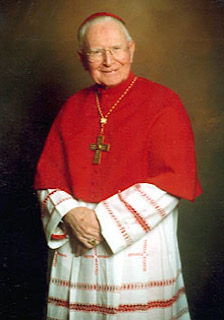
Birth of Cahal Daly, Archbishop of Armagh

Cahal Brendan Daly KGCHS, a Roman Catholic cardinaltheologian and writer, is born Charles Brendan Daly on October 1, 1917, in Ballybraddin, Loughguile, a village near Ballymoney in County Antrim.

Daly serves as the Catholic Primate of All Ireland and Archbishop of Armagh from late 1990 to 1996, the oldest man to take up this role in nearly 200 years. He is later created a Cardinal-Priest of San Patrizio by Pope John Paul II in the papal consistory of June 28, 1991.

Daly is the third child of seven born to Charles Daly and Susan Connolly. His father is a primary school teacher originally from KeadueCounty Roscommon, and his mother a native of Antrim. He is educated at St. Patrick’s National School in Loughguile, and then as a boarder in St. Malachy’s CollegeBelfast, in 1930. The writer Brian Moore is a near contemporary.

Daly studies Classics at Queen’s University Belfast (QUB). He earns his BA with Honours and also the Henry Medal in Latin Studies in 1937 and completes his MA the following year. He enters St. Patrick’s College, Maynooth and is ordained to the priesthood on June 22, 1941. He continues studies in theology in Maynooth, from where he obtains a doctorate in divinity (DD) in 1944. His first appointment is as Classics Master in St. Malachy’s College (1944–45).

In 1945, Daly is appointed Lecturer in Scholastic Philosophy at Queen’s University, Belfast, retaining the post for 21 years. In the academic year 1952–53 QUB grants him sabbatical leave, which he spends studying at the Catholic University of Paris where he receives a licentiate in philosophy. He returns to France at many points, particularly for holidays. He persists with his studies well into his retirement. He is a popular figure with the university and fondly remembered by his students. He is named a Canon of the Cathedral Chapter of Diocese of Down and Connor in 1966.

Daly is a peritus, or theological expert, at the Second Vatican Council (1962–65) to Bishop William Philbin during the first session of the Council and to Cardinal William Conway for the rest of the council. He dedicates himself to scholarship for 30 years, and publishes several books seeking to bring about understanding between the warring factions in Northern Ireland.

Daly is appointed Reader in Scholastic Philosophy at QUB in 1963, a post he holds until 1967, when he is appointed Bishop of Ardagh and Clonmacnoise on May 26.

Daly converts his forename Charles into Cahal ahead of his episcopal consecration in St. Mel’s CathedralLongford, on July 16, 1967, from Cardinal William Conway, with Archbishop Giuseppe Sensi and Bishop Neil Farren serving as co-consecrators.

Daly spends 15 years as bishop in Longford and is diligent about parish visitation and confirmations gradually assume a greater national profile. From 1974 onward, he devotes himself especially to ecumenical activities for the Pontifical Council for Promoting Christian Unity. His pastoral letter to Protestants, written in 1979, pleads for Christian unity.

Daly succeeded William Philbin as the 30th Bishop of Down and Connor when he is installed as bishop of his native diocese at a ceremony in St. Peter’s Cathedral, Belfast, on October 17, 1982.

On November 6, 1990, Daly is appointed Archbishop of Armagh and, as such, Primate of All Ireland. His age makes him an unexpected occupant of the post. Despite this it is requested that he stay in the role for three years before usual age of episcopal retirement at 75. Cardinal Daly takes a notably harder line against the Irish Republican Army (IRA) than his predecessor, Cardinal Tomás Ó Fiaich.

Daly is respectful of Protestant rights and opposes integrated education of Catholics and Protestants. This policy is criticised by those who see segregated education as one of the causes of sectarianism in Northern Ireland, but is seen by the Catholic clergy as important for passing on their faith to future generations. He is utterly orthodox in opposing divorce, contraception, abortion, the ordination of women and any idea of dropping clerical celibacy.

Daly is heckled by the audience on live television during a broadcast of The Late Late Show on RTÉ One on the topic of pedophilia in the 1990s. After his retirement in 1996, he makes no public statement on the issue.

Daly retires as Archbishop of Armagh on his 79th birthday, October 1, 1996, and subsequently suffers ill health. Although it is announced that he will attend the funeral of Pope John Paul II, he stays home on the advice of his doctors. His age makes him ineligible to participate in the 2005 conclave that elects Pope Benedict XVI.

Daly is admitted to the coronary unit of Belfast City Hospital on December 28, 2009. His health has already been declining, leading to prayers being ordered for him. He dies in hospital in Belfast on December 31, 2009, aged 92. His family are at his bedside at the time. His death brings to an end a two-year period during which Ireland has, for the first time in its history, three living Cardinals.

Daly lay in state in Belfast and then his remains are taken to Armagh. Pope Benedict XVI pays tribute at this stage. Large numbers of people travel from as far as County Westmeath to attend Mass at Armagh on January 4, at which Monsignor Liam McEntaggart, the former parish priest of Coalisland, says, “When the history of peace making in Ireland comes to be written, the contribution of Cardinal Daly will be accorded a high place.” Monsignor McEntaggart himself dies on August 22, 2010, aged 81, less than eight months after Cardinal Daly’s passing.

Daly’s funeral is held on January 5, 2010, and is attended by the president Mary McAleese and Taoiseach Brian Cowen. Daly is buried in the grounds of St. Patrick’s Roman Catholic Cathedral, Armagh, next to his three predecessors in the see, Cardinals Ó Fiaich, Conway and D’Alton.


Leave a comment

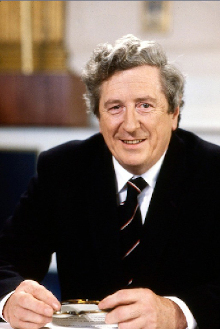
Birth of Des Hanafin, Fianna Fáil Politician

Desmond A. HanafinFianna Fáil politician who serves for over 30 years as a member of Seanad Éireann, is born in Thurles, County Tipperary, on September 9, 1930. He opposes social liberalisation, particularly the legalisation of abortion, divorce and same-sex marriage, and is one of the founders of the anti-abortion advocacy group, Pro Life Campaign (PLC).

Hanafin is the son of John Hanafin (1890–1953), a draper and newsagent who serves for many years as a Fianna Fáil councillor for North Tipperary County Council and previously is a member of the Irish Republican Brotherhood (IRB) and an elected Sinn Féin councillor.

Hanafin marries Mona Brady, daughter of J. P. Brady, on August 2, 1958, in Clonmel, County Tipperary. The wedding is followed by a reception at the Galtee Hotel, Cahir, which is attended by various notables including Rev. Father J. J. Hampson, president of Blackrock College. Their first child, Mary Hanafin, is born in June 1959, followed by John Hanafin in September 1960. Mary Hanafin is a former Fianna Fáil TD and government minister, and John Hanafin is a former Fianna Fáil senator.

Hanafin operates the Anner Hotel, located in Thurles during the 1960s. Initially successful, the business fails in 1967, which Mary Hanafin later blames on her father’s excess drinking. Subsequently, Hanafin is a director of the Transinternational Oil Company.

Hanafin’s first attempt for election to public office proves unsuccessful. In 1953, he seeks to be co-opted to fill the vacancy on North Tipperary County Council created by the death of his father. In the event councillors co-opt a Labour Party nominee, Michael Treacy, by eleven votes to seven.

Hanafin is elected a member of North Tipperary County Council in 1955, polling 934 first preference votes. Subsequently, in 1956, drawing support from the Clann na Poblachta representatives, he is elected Chairman of the County Council.

In 1957, Hanafin conducts a three-month tour of the United States, during which he is commissioned a Kentucky colonel by then Kentucky Governor Albert Benjamin “Happy” Chandler, Sr.. He is also awarded the freedom of Louisville, Kentucky, and is received by Mayor Richard J. Daley of Chicago.

Hanafin is re-elected to North Tipperary County Council in 1960, polling 797 first preference votes. In 1961, he votes against the Fianna Fáil nominee for Chair of the County Council, Thomas F. Meagher, and in favour of the Clann na Poblachta nominee, Michael F. Cronin, who is elected by 10 votes to 9. In 1964, he controversially votes in favour of Jeremiah Mockler, “a former school mate,” who is elected by 10 votes to 9 to the office of Rate Collector for Borrisokane, County Tipperary.

Hanafin holds the seat until 1985. He is first elected to Seanad Éireann in 1969 and retains his seat until the 1993 Seanad election at which he loses his seat by one vote. He regains his seat in the 1997 elections, and in 2002 announces his retirement from politics. He unsuccessfully contests the 1977 and 1981 Irish general elections for the Tipperary North constituency. He is a chief fundraiser of the Fianna Fáil party for many years.

In May 2015, Hanafin accuses “Yes” campaigners in the same-sex marriage referendum of spreading a “palpable climate of fear,” and calls for a “No” vote.

Hanafin opposes the legalisation of divorce, which is introduced in 1995, and attempts to overturn the referendum result in the Supreme Court, but is refused by the court.

An opponent of abortion, Hanafin is one of the promoters of the constitutional amendment that enshrines the legal ban on abortion in the Constitution of Ireland. He is co-founder, chairman and later honorary president of the Pro Life Campaign.

Hanafin dies in County Tipperary at the age of 86 on June 22, 2017. A Requiem Mass is held at the Cathedral of the Assumption, Thurles, on June 25, with burial afterward in St. Patrick’s Cemetery.


Leave a comment

Birth of Bobby Molloy, Independent Politician

Robert Molloy, independent politician, is born in Galway, County Galway, on July 9, 1936.

Molloy’s father, Michael Edward Molloy, is originally from Ballyhaunis, County Mayo, and runs a successful wholesale drapery business in the city. His mother, Rita Stanley, hails from Clifden, County Galway. He is educated at Coláiste Iognáid and University College Galway. Before entering politics, he works for several years in printing, the clothing industry and his family’s drapery firm.

Molloy is first elected to Dáil Éireann as a Fianna Fáil TD for the Galway West constituency at the 1965 Irish general election. In 1968, he is also elected Mayor of Galway. The following year he was appointed as Parliamentary Secretary to the Minister for Education

Molloy’s early political career is marked by his loyalty to Fianna Fáil’s leadership under Taoiseach Jack Lynch. He quickly rises through the ranks and is appointed Minister for Local Government in 1970, a position he holds until 1973. His tenure as Minister for Local Government is characterised by his efforts to modernise and streamline local government structures in Ireland. His tenure in Fianna Fáil sees him as a stalwart of the party’s establishment, though tensions with its leadership grow over the years, particularly with Charles Haughey.

In opposition from 1973, Molloy serves as the frontbench spokesman, where he becomes involved in a high-profile dispute with James Tully, the Labour Minister for Local Government, over the controversial redrawing of constituencies, known as the “Tullymander.” Molloy, along with fellow Fianna Fáil member Brendan Crinion, used Dáil privilege to accuse Tully of having an improper commercial relationship with a builder in County Meath. The accusation is strongly denied by Tully and Molloy and Crinion later withdraw the charge. Despite this, Molloy faces severe repercussions, being forced to resign from his frontbench position. He is subsequently condemned by a judicial tribunal and censured by the Dáil for abusing parliamentary privilege.

When Fianna Fáil returns to office in 1977, Molloy becomes Minister for Defence in the final government of Jack Lynch.

Molloy supports George Colley in the 1979 Fianna Fáil leadership electionCharles Haughey wins the contest and drops Molloy, alongside other opponents, from the cabinet. Thereafter Molloy becomes a member of the Gang of 22 who oppose Haughey’s leadership of the party.

In 1986, Molloy resigns from Fianna Fáil and joins the newly formed Progressive Democrats, spearheaded by Haughey’s arch-rival Desmond O’Malley. Molloy’s move is seen as a major break from the political establishment, as the Progressive Democrats advocate for low-tax, market-oriented economic policies and a more liberal economic agenda. His decision is driven by his dissatisfaction with the direction of Fianna Fáil under Haughey’s leadership and his belief that the party has become increasingly alienating. 

In 1989, Molloy contests the European Parliament elections but is unsuccessful in his attempt. Following the 1989 Irish general election, Molloy, along with newly elected MEP for Munster Pat Cox, represents the Progressive Democrats in the lengthy negotiations with Fianna Fáil to form a coalition government. Once the negotiations conclude, he is reinstated in the Cabinet as Minister for Energy under Taoiseach Charles Haughey, who had previously caused Molloy’s political humiliation a decade earlier. Over the following three years, Molloy and his Progressive Democrat colleague Desmond O’Malley have a working relationship with their former Fianna Fáil colleagues, though tensions grow due to resentment over their presence in the Cabinet. The issue comes to a head when Molloy and O’Malley make it clear they will not serve in a Cabinet that includes Brian Lenihan Snr, following his controversial remarks during the 1990 Irish presidential election about alleged phone calls to President Patrick Hillery from 1982.

In January 1992, Haughey faces further complications when Seán Doherty reveals information about the phone tapping of journalists dating back to 1982. Despite this, the coalition government ends when Albert Reynolds, Haughey’s successor, calls for a general election after accusing O’Malley of giving “dishonest” evidence to the Beef Tribunal. Molloy strongly denounces Reynolds’ accusation, describing it as “outrageous,” and criticises him for what he perceives as a “lack of generosity” in recent North-South negotiations, in which Molloy had represented the Progressive Democrats in talks with British Unionists.

Molloy stands at the European Parliament elections again in 1994 but is again unsuccessful.

Following the 1997 Irish general election, Molloy is part of the negotiations that lead to the formation of a coalition government between the Progressive Democrats and Fianna Fáil. On that occasion, he is appointed as Minister of State at the Department of the Environment and Local Government and sits at cabinet as Minister of State to the Government.

Molloy resigns as a minister and quits politics just before the 2002 Irish general election amid controversy surrounding his involvement in the rape case of Barbara Naughton. The controversy stems from a letter Molloy sent to then Minister for Justice, John O’Donoghue, on behalf of a constituent whose relative had been convicted of rape. The letter, which requests the temporary release of the individual pending an appeal, leads to public criticism. The case is high-profile, involving a Connemara man sentenced to eleven years for the systematic abuse of his young daughter. During the trial, the judge, Philip O’Sullivan, notes that someone acting on Molloy’s behalf had tried to contact him in his chambers to clarify whether he had received certain correspondence from the victim’s sister, which the judge describes as “quite improper.” In response to the backlash, Molloy resigns, describing the letter as a “human error of judgment,” but insisting it was not intended to be dishonest. He retires from politics after the election.

Molloy is a member of Fianna Fáil for over 20 years, but his views are not always in line with the mainstream of the party, particularly under the leadership of Charles Haughey. His decision to leave Fianna Fáil in 1986 and join the Progressive Democrats is motivated by ideological differences, notably the party’s move toward a more conservative, state-controlled economy. Molloy, on the other hand, embraces a platform of fiscal conservatism, with an emphasis on reducing taxes, deregulation, and the liberalisation of the economy.

In terms of social issues, Molloy is ahead of his time in advocating for progressive policies, particularly on women’s rights. In a survey conducted in 1976 by the Women’s Political Association (WPA), Molloy scores among the highest of any member of the Dáil for his progressive stance on issues affecting women. He supports measures such as divorce, contraception, and family law reform, which are seen as highly controversial at the time. His responses to the WPA’s questions reveal that he holds views that are in stark contrast to many of his colleagues within Fianna Fáil. His progressive views on women’s rights are notable, as he is the only member of Jack Lynch’s cabinet who consistently supports reformist policies on issues like family law and the role of women in public life.

In 1972, Molloy marries Phyllis Barry, a Montessori teacher from Foxrock, County Dublin, whose father is a cousin of the executed revolutionary Kevin Barry. The couple meet while campaigning in a by-election in mid-Cork. Together, they have four children: Sinead, Sorcha, Donnacha, and Dara.

Molloy dies at the age of 80 on October 2, 2016, in Salthill, Galway, County Galway. He is buried at Bohermore Cemetery, Bohermore, Galway.


Leave a comment

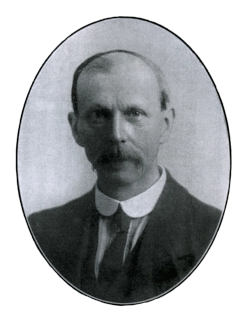
Death of William Thrift, Academic & Politician

William Edward Thrift, Irish academic and politician who serves as the 37th Provost of Trinity College Dublin (TCD) and a Teachta Dála (TD) for the Dublin University constituency from 1921 to 1937, dies in Dublin, on April 23, 1942.

Thrift was born in Halifax, West Yorkshire, England, on February 28, 1870, one of at least two sons and two daughters of Henry George Thrift, civil servant, and Sarah Anne Thrift (née Smith). The family moves in his childhood to Dublin, where his father is an officer in the Inland Revenue.

He is educated at The High School, Dublin, and enters Trinity College Dublin in 1889 with a second sizarship in mathematics, and commences a highly distinguished university career, scoring firsts in several examinations and winning numerous prizes. Elected fellow in mathematics and experimental science, and in mental and moral philosophy in 1896, he becomes Erasmus Smith’s Professor of Natural and Experimental Philosophy at TCD from 1901 to 1929. He is awarded a Doctor of Science (DSc) in 1936. He is appointed Provost of Trinity College Dublin in 1937, serving until his death in 1942.

Thrift is also active in politics. He is elected to the House of Commons of Southern Ireland at the 1921 Irish elections, representing the Dublin University constituency. As an independent Unionist, he does not participate in the Second Dáil. He is re-elected for the same constituency at the 1922 Irish general election and becomes a member of the Third Dáil. He is re-elected at the next five general elections until 1937 when he retires from politics.

While rarely speaking on controversial issues, Thrift opposes the 1925 legislation banning divorce, which he describes as an infringement of individual and minority rights, and a betrayal of commitments made by Arthur Griffith during the Anglo-Irish Treaty debates. His capable service on various Dáil committees is recognised by his election as Leas-Ceann Comhairle (deputy speaker). A long-serving council member of the Royal Dublin Society (RDS) (1902–42), he is a commissioner of charitable donations and bequests, and financial adviser to the General Synod of the Church of Ireland. He sits on the governing boards of the Erasmus Smith schools and of the Incorporated Society for Promoting Protestant Schools in Ireland.

Thrift’s portrait is painted by Leo Whelan. He marries Etta Robinson, a daughter of C. H. Robinson, a medical doctor, and they have three sons and three daughters. He dies at the provost’s house, Trinity College Dublin, on April 23, 1942. He is buried at Mount Jerome Cemetery, Harold’s Cross, County Dublin.


Leave a comment

Death of Irish Writer Denis Johnston

Irish writer (William) Denis Johnston dies on August 8, 1984, at Ballybrack, County Dublin. He writes mostly plays, but also works of literary criticism, a book-length biographical essay of Jonathan Swift, a memoir and an eccentric work on cosmology and philosophy. He also works as a war correspondent and as both a radio and television producer for the BBC.

Johnston is born in Dublin on June 18, 1901, the only child of William John Johnston from Magherafelt, a barrister and later an Irish Supreme Court judge, and his wife Kathleen (née King), a teacher and singer from Belfast. They are Presbyterians and liberal home rulers. He sees the family home in Dublin occupied by rebels during the 1916 Easter Rising.

Johnston is educated at St. Andrew’s College, Dublin (1908–15, 1917–19), and Merchiston Castle School, Edinburgh (1915–16). In 1918, he attempts to join Sinn Féin, offering to supply the party with weapons taken from his Officers’ Training Corps. In 1922, while reading history and law at Christ’s College, Cambridge (1919–23) he tries to enlist in the civil war Free State army. He goes on to study at the Harvard Law School (1923–24) and enters King’s Inns in Dublin and the Inner Temple in London.

In London, developing his interest in the theatre, Johnston abandons plans for a legal and political career.

Johnston is a protégé of W. B. Yeats and George Bernard Shaw, and has a stormy friendship with Seán O’Casey. He is a pioneer of television and war reporting. He works as a lawyer in the 1920s and 1930s before joining the BBC as a writer and producer, first in radio and then in the fledgling television service. His broadcast dramatic work includes both original plays and adaptation of the work of many different writers.

Johnston’s first play, The Old Lady Says “No!”, helps establish the worldwide reputation of Dublin’s Gate Theatre. His second play, The Moon in the Yellow River, has been performed around the globe in numerous productions featuring such storied names as James Mason, Jack Hawkins, Claude Rains, Barry Fitzgerald, James Coco and Errol Flynn. Later plays deal with the life of Jonathan Swift, the 1916 Rebellion, the pursuit of justice, and the fear of death. He writes two opera libretti and a pageant.

“Passionate in his radical skepticism and loathing of what he saw as the pernicious influence of the Roman Catholic Church,” at the end of 1933, Johnston joins the trade unionist John Swift, the Dublin novelist Mary Manning, and fellow northerner, the libertarian socialist Jack White, in forming The Secular Society of Ireland. “Convinced that clerical domination in the community is harmful to advance,” the society seeks “to establish in this country complete freedom of thought, speech and publication, liberty for mind, in the widest toleration compatible with orderly progress and rational conduct.” Among other things it aims to terminate the clerically-dictated ban on divorce, the Censorship of Publications Act and the system of clerical management, and consequent sectarian teaching, in schools.

This is at a time of heightened clerical militancy and as soon the meeting place of the Society (from which it distributed the British journal The Freethinker) is exposed, it has to shift to private houses outside of Dublin. In 1936, Johnston and the other members disband the society and donate the proceeds to the government of the beleaguered Spanish Republic. He has become a recognised man of the left. In 1930 he joins the Irish Friends of Soviet Russia, and though never a party member, until as late as the 1950s he professes faith in a communist future.

During World War II he serves as a BBC war correspondent, reporting from El Alamein, through the Italian campaign, to Buchenwald and Adolf Hitler‘s Berghof. For this he is awarded an OBE, a mention in dispatches, and the Yugoslav Partisans Medal. He then becomes Director of Programmes for the television service.

Johnston later moves to the United States and teaches at Mount Holyoke College, Smith College and other universities. He keeps extensive diaries throughout his life, now deposited in the Library of Trinity College, Dublin, and these together with his many articles and essays give a distinctive picture of his times and the people he knew. Another archive of his work is held at the library of Ulster University at Coleraine. He receives honorary degrees from Ulster University and Mount Holyoke College and is a member of Aosdána.

Johnston and actress Shelah Richards are the parents of Jennifer Johnston, a respected novelist and playwright, and a son, Micheal. His second wife is the actress Betty Chancellor, with whom he has two sons, Jeremy and Rory.

Johnston dies on August 8, 1984, at Ballybrack, County Dublin, and is buried in St. Patrick’s Cathedral close. His epitaph is a quotation from The Old Lady Says “No!” – Emmet’s lines praising Dublin “the strumpet city.”

Johnston’s war memoir, Nine Rivers from Jordan, reaches The New York Times‘ Best Seller list and is cited in the World Book Encyclopedia‘s 1950s article on World War II under “Books to Read,” along with Winston Churchill, Dwight D. Eisenhower, et al. Joseph Ronsley cites an unnamed former CBS Vietnam War correspondent who called the book the “Bible,” carrying it with him constantly, “reading it over and over in the field during his tour of duty.” In a profile in The New Yorker in 1938, Clifford Odets is quoted as saying that the only playwrights he admires are John Howard Lawson, Sean O’Casey, and Denis Johnston.

The Denis Johnston Playwriting Prize is awarded annually by Smith College Department of Theatre for the best play, screenplay or musical written by an undergraduate at Smith College, Mount Holyoke College, Amherst College, Hampshire College and the University of Massachusetts Amherst. The prize is endowed by his former student at Smith, Carol Sobieski.


Leave a comment

Birth of Garret FitzGerald, Eighth Taoiseach of Ireland

Garret Desmond FitzGerald, Fine Gael politician, economist and barrister who serves twice as Taoiseach (1981 to 1982 and 1982 to 1987), is born into a very politically active family in Ballsbridge, Dublin on February 9, 1926, during the infancy of the Irish Free State. He serves as Senator for the Industrial and Commercial Panel from 1965 to 1969, a Teachta Dála (TD) from 1969 to 1992, Minister for Foreign Affairs from 1973 to 1977, Leader of Fine Gael from 1977 to 1987 and twice Leader of the Opposition between 1977 and 1982.

FitzGerald’s father, Desmond FitzGerald, is the Free State’s first Minister for External Affairs. He is educated at the Jesuit Belvedere College, University College Dublin and King’s Inns, Dublin, and qualifies as a barrister. Instead of practicing law, however, in 1959 he becomes an economics lecturer in the department of political economy at University College, Dublin, and a journalist.

FitzGerald joins Fine Gael, attaching himself to the liberal wing of the party. and in 1969 is elected to Dáil Éireann, the lower house of the Oireachtas, the Irish parliament. He later gives up his university lectureship to become Minister for Foreign Affairs in the coalition government of Liam Cosgrave (1973–1977). When the coalition government is resoundingly defeated in the 1977 Irish general election, Cosgrave yields leadership of Fine Gael to FitzGerald. In his new role as Leader of the Opposition and party leader, he proceeds to modernize and strengthen the party at the grass roots. He briefly loses power in 1982 when political instability triggers two snap elections.

By the time of the 1981 Irish general election, Fine Gael has a party machine that can easily match Fianna Fáil. The party wins 65 seats and forms a minority coalition government with the Labour Party and the support of a number of Independent TDs. FitzGerald is elected Taoiseach on June 30, 1981. To the surprise of many FitzGerald excludes Richie Ryan, Richard Burke and Tom O’Donnell, former Fine Gael stalwarts, from the cabinet.

In his prime ministry, FitzGerald pushes for liberalization of Irish laws on divorce, abortion, and contraception and also strives to build bridges to the Protestants in Northern Ireland. In 1985, during his second term, he and British Prime Minister Margaret Thatcher sign the Anglo-Irish (Hillsborough) Agreement, giving Ireland a consultative role in the governing of Northern Ireland. After his party loses in the 1987 Irish general election, he resigns as its leader and subsequently retires in 1992.

On May 5, 2011, it is reported that FitzGerald is seriously ill in a Dublin hospital. Newly elected Fine Gael Taoiseach Enda Kenny sends his regards and calls him an “institution.” On May 6 he is put on a ventilator. On May 19, after suffering from pneumonia, he dies at the Mater Private Hospital in Dublin at the age of 85.

In a statement, Irish President Mary McAleese hails FitzGerald as “a man steeped in the history of the State who constantly strove to make Ireland a better place for all its people.” Taoiseach Enda Kenny pays homage to “a truly remarkable man who made a truly remarkable contribution to Ireland.” Henry Kissinger, the former United States Secretary of State, who serves as an opposite number to FitzGerald in the 1970s, recalls “an intelligent and amusing man who was dedicated to his country.”

FitzGerald’s death occurs on the third day of Queen Elizabeth II‘s state visit to the Republic of Ireland, an event designed to mark the completion of the Northern Ireland peace process that had been “built on the foundations” of FitzGerald’s Anglo-Irish Agreement with Margaret Thatcher in 1985. In a personal message, the Queen offers her sympathies and says she is “saddened” to learn of FitzGerald’s death.

On his visit to Dublin, United States President Barack Obama offers condolences on FitzGerald’s death. He speaks of him as “someone who believed in the power of education; someone who believed in the potential of youth; most of all, someone who believed in the potential of peace and who lived to see that peace realised.”

FitzGerald is buried at Shanganagh Cemetery in Shankill, Dublin.

FitzGerald is the author of a number of books, including Planning in Ireland (1968), Towards a New Ireland (1972), Unequal Partners (1979), All in a Life: An Autobiography (1991), and Reflections on the Irish State (2003).


Leave a comment

Death of John Cowley, Actor & Animal Welfare Activist

John Ultan Cowley, actor and animal welfare activist, dies on February 13, 1998, in Navan, County Meath. He is best known for his role as pater familias, Tom Riordan, in the long-running RTÉ Television drama series, The Riordans.

Cowley is born September 8, 1923, in Ardbraccan, Navan, County Meath, the third child of Patrick Cowley, a small farmer, and his wife Margaret. Educated at the local national school, he leaves at the age of thirteen to work on the family farm. He also works with a horse and cart drawing stones from a local quarry. He is an enthusiastic amateur actor and learns his trade in the fit ups of the forties and fifties. Moving to England, he gets parts in television shows such as Z-Cars and No Hiding Place. During the 1950s and 60s, he is also very active in theatre, and has a long association with the Globe theatre company in Dún Laoghaire, which he joins in 1956. He also plays in the Abbey, Gate and Olympia theatres, travels Europe in 1960–61 with John Millington Synge‘s The Playboy of the Western World, and stars in the early Hugh Leonard play I Loved You Last Summer.

Cowley is best known for his portrayal of the bluff countryman Tom Riordan in RTÉ’s rural drama, The Riordans. First airing on January 4, 1965, it runs until May 28, 1979. One of RTÉ’s most successful programmes, it has a huge audience and a considerable social impact through its treatment of controversial topics such as divorce, contraception, and mixed marriages. When it ends in 1979 Cowley is bitterly disappointed and accuses RTÉ of throwing him on the scrap heap. After this he continues to work in theatre and has occasional appearances on screen, including a part in Jim Sheridan‘s The Field (1991) and the British espionage television series, The Avengers.

Cowley also writes poetry and a play, A Fool and His Money. His other hobbies include a passion for history (particularly the 1798 period), hurling, Gaelic football, boxing, and swimming. A patron and a founder member of the Irish Council Against Blood Sports in 1967, he is a leading opponent of hare coursing, popularising the cause through an appearance on The Late Late Show in 1967.

In 1953 Cowley marries Annie D’Alton, an actor who later appears with him in The Riordans, two years after the death of her first husband, the dramatist Louis D’Alton. They have one son.

Cowley dies in Navan on February 13, 1998. His wife precedes him in death in March 1983.


Leave a comment

Death of Cardinal John Joseph Glennon

Cardinal John Joseph Glennon, prelate of the Roman Catholic Church, dies on March 9, 1946, in Dublin. He serves as Archbishop of St. Louis from 1903 until his death. He is elevated to the cardinalate in 1946.

Glennon is born on June 14, 1862, in Kinnegad, County Westmeath, to Matthew and Catherine (née Rafferty) Glennon. After graduating from St. Finian’s College, he enters All Hallows College near Dublin in 1878. He accepts an invitation from Bishop John Joseph Hogan in 1882 to join the newly erected Diocese of Kansas City in the United States. After arriving in Missouri in 1883, he is ordained to the priesthood by Bishop Hogan on December 20, 1884.

Glennon is then assigned to St. Patrick’s Church in Kansas City and, briefly returning to Europe, furthers his studies at the University of Bonn in Germany. Upon his return to Kansas City, he becomes rector of the Cathedral of the Immaculate Conception. He is later made vicar general (1892) and apostolic administrator (1894) for the diocese.

On March 14, 1896, Glennon is appointed Coadjutor Bishop of Kansas City and Titular Bishop of Pinara by Pope Leo XIII. He receives his episcopal consecration on the following June 29 from Archbishop John Joseph Kain, with Bishops Maurice Francis Burke and John Joseph Hennessy serving as co-consecrators. At age 34, he becomes one of the youngest bishops in the world.

Glennon is named Coadjutor Archbishop of St. Louis on April 27, 1903. He succeeds Archbishop Kain as the fourth Archbishop of St. Louis upon the latter’s death on October 13 of that year. Realizing the Cathedral of St. Louis can no longer accommodate its growing congregation, he quickly begins raising funds for a new cathedral, the cornerstone of which is later laid on October 18, 1908.

Glennon opens the new Kenrick Seminary in 1915, followed by the minor seminary in Shrewsbury. He delivers the eulogy at the funeral of Cardinal James Gibbons and is appointed an Assistant at the Pontifical Throne on June 28, 1921. He opposes British rule in Ireland and supports the leaders of the Easter Rising. He is an outspoken opponent of divorce, condemns gambling games, and prohibits dancing and drinking at church-sponsored events. He sometimes throws the opening ball for the St. Louis Cardinals, but does not play any sports himself, once saying, “I once tried golf, but I so disfigured the scenery that I never played again, in fear of public indignation and reprisal.”[2]

Despite a rather popular tenure, as Archbishop of St. Louis Glennon opposes racial integration in the city’s Catholic schools, colleges, and universities. During the early 1940s, many local priests, especially Jesuits, challenge the segregationist policies at the city’s Catholic schools. The St. Louis chapter of the Midwest Clergy Conference on Negro Welfare, formed locally in 1938, pushes the all-female Webster College to integrate first. However, in 1943, Glennon blocks the enrollment of a young black woman at the college by speaking privately with the Kentucky-based superior of the Sisters of Loretto, which staffs the college. When approached directly by pro-integration priests, he calls the integration plan a “Jesuit ploy,” and quickly transfers one of the complaining priests away from his mission at an African American parish.

The Pittsburgh Courier, an African American newspaper with national circulation, discovers Glennon’s intervention and runs a front-page feature on the Webster incident. In response, Father Claude Heithaus, professor of Classical Archaeology at the Catholic Saint Louis University, delivers an angry sermon accusing his own institution of immoral behavior in its segregation policies. Saint Louis University begins admitting African American students that summer when its president, Father Patrick Holloran, manages to secure approval from the reluctant Archbishop Glennon. Nevertheless, St. Louis maintains one of the largest numbers of African American parishes and schools in the country.

On Christmas Eve 1945, it is announced that the 83-year-old Glennon will be elevated to the College of Cardinals. He originally thinks himself too old to make the journey to Rome, but eventually joins fellow Cardinals-elect Francis Spellman and Thomas Tien Ken-sin on their flight, during which time he contracts a cold from which he does not recover. Pope Pius XII creates him Cardinal Priest of San Clemente al Laterano in the consistory of February 18, 1946.

During the return trip to the United States, Glennon stops in his native Ireland, where he is received by President Seán T. O’Kelly and Taoiseach Éamon de Valera. While in Dublin, he is diagnosed with uremic poisoning and dies on March 9, 1946, ending a 42-year tenure as Archbishop. The Cardinal’s body is returned to St. Louis and then buried at the Cathedral.

Glennon is the namesake of the community of Glennonville, Missouri. The only diocesan hospital for children, Cardinal Glennon Children’s Hospital, affiliated with Saint Louis University Hospital, is created in his name.

(Pictured: Cardinal John J. Glennon, photo by the St. Louis Dispatch)


Leave a comment

Garrett FitzGerald Becomes 8th Taoiseach of Ireland

garret-fitzgerald

Garret FitzGerald succeeds Charles Haughey to become the eighth Taoiseach of Ireland on June 30, 1981. He serves in the position from June 1981 to March 1982 and December 1982 to March 1987.

FitzGerald is born into a very politically active family in Ballsbridge, Dublin on February 9, 1926, during the infancy of the Irish Free State. His father, Desmond FitzGerald, is the free state’s first Minister for External Affairs. He is educated at the Jesuit Belvedere College, University College Dublin and King’s Inns, Dublin, and qualifies as a barrister. Instead of practicing law, however, in 1959 he becomes an economics lecturer in the department of political economy at University College, Dublin, and a journalist.

FitzGerald joins Fine Gael, attaching himself to the liberal wing of the party. and in 1969 is elected to Dáil Éireann, the lower house of the Oireachtas, the Irish parliament. He later gives up his university lectureship to become Minister for Foreign Affairs in the coalition government of Liam Cosgrave (1973–1977). When the coalition government is resoundingly defeated in the 1977 Irish general election, Cosgrave yields leadership of Fine Gael to FitzGerald. In his new role as Leader of the Opposition and party leader, he proceeds to modernize and strengthen the party at the grass roots. He briefly loses power in 1982 when political instability triggers two snap elections.

By the time of the 1981 Irish general election, Fine Gael has a party machine that can easily match Fianna Fáil. The party wins 65 seats and forms a minority coalition government with the Labour Party and the support of a number of Independent TDs. FitzGerald is elected Taoiseach on June 30, 1981. To the surprise of many FitzGerald excluded Richie Ryan, Richard Burke and Tom O’Donnell, former Fine Gael stalwarts, from the cabinet.

In his prime ministry, FitzGerald pushes for liberalization of Irish laws on divorce, abortion, and contraception and also strives to build bridges to the Protestants in Northern Ireland. In 1985, during his second term, he and British Prime Minister Margaret Thatcher sign the Anglo-Irish (Hillsborough) Agreement, giving Ireland a consultative role in the governing of Northern Ireland. After his party loses in the 1987 Irish general election, he resigns as its leader and subsequently retires in 1992.

On May 5, 2011, it is reported that FitzGerald is seriously ill in a Dublin hospital. Newly elected Fine Gael Taoiseach Enda Kenny sends his regards and calls him an “institution.” On May 6 he is put on a ventilator. On May 19, after suffering from pneumonia, he dies at the Mater Private Hospital in Dublin at the age of 85.

In a statement, Irish President Mary McAleese hails FitzGerald as “a man steeped in the history of the State who constantly strove to make Ireland a better place for all its people.” Taoiseach Enda Kenny pays homage to “a truly remarkable man who made a truly remarkable contribution to Ireland.” Henry Kissinger, the former United States Secretary of State, who serves as an opposite number to FitzGerald in the 1970s, recalls “an intelligent and amusing man who was dedicated to his country.”

FitzGerald’s death occurs on the third day of Queen Elizabeth II‘s state visit to the Republic of Ireland, an event designed to mark the completion of the Northern Ireland peace process that had been “built on the foundations” of FitzGerald’s Anglo-Irish Agreement with Margaret Thatcher in 1985. In a personal message, the Queen offers her sympathies and says she is “saddened” to learn of FitzGerald’s death.

On his visit to Dublin, United States President Barack Obama offers condolences on FitzGerald’s death. He speaks of him as “someone who believed in the power of education; someone who believed in the potential of youth; most of all, someone who believed in the potential of peace and who lived to see that peace realised.”

FitzGerald is buried at Shanganagh Cemetery in Shankill, Dublin.

FitzGerald is the author of a number of books, including Planning in Ireland (1968), Towards a New Ireland (1972), Unequal Partners (1979), All in a Life: An Autobiography (1991), and Reflections on the Irish State (2003).


Leave a comment

Pro-Abortion Dutch Ship “Aurora” Sails into Dublin Docks

aurora-the-abortion-shipPro-choice activists sail into Dublin docks aboard the controversial pro-abortion Dutch ship Aurora on June 14, 2001. Although the trawler is equipped to carry out abortions, the purpose of its visit to Ireland is to fuel debate on the need for Irish legislation to provide women with choice.

Abortion is perhaps the last taboo in Irish society. The question of abortion still has the power to unleash emotive arguments among both pro-life and pro-choice camps. The arrival of the Aurora thrusts the issue back into the frontline of public debate.

The 1990s are a time of spectacular change in the Republic of Ireland, where the will of the Roman Catholic church traditionally has had a direct influence on family life. Contraception became widely available and a referendum overturned the constitutional bar on divorce. But abortion on Irish soil remains outlawed in all but the most extreme circumstances. As it stands, a woman is only entitled to have her pregnancy terminated if otherwise she is likely to commit suicide. Pro-choice campaigners call the law hypocritical and point to the fact that every year an estimated 6,300 women travel across the Irish Sea to Great Britain, where they pay up to £1,000 to have the procedure done privately.

The 35-metre ship, a cannibalised Dutch deep-sea fishing boat, is chartered by the feminist action group Women on Waves, with the aim of carrying out abortions on board. A shipping container which has been converted into an abortion clinic, complete with gynaecological chair, has been welded to the deck of the Aurora. The mobile clinic is capable of carrying out 20 operations a day.

Originally, the ship had planned to sail 12 miles out into international waters, where it would carry out the terminations. Once there, doctors on board would also be able to distribute the RU486 abortion pill. But a question mark hangs over the mission after it is revealed that Dutch authorities did not issue the floating clinic with the appropriate paperwork that would allow it to carry out abortions.

While the Aurora‘s voyage makes news beyond Irish shores, reaction among pro-life campaigners in Ireland is mostly muted. Many feel that by keeping quiet they will starve the mission of publicity. But some organisations, such as Human Life International Ireland (HLII), do speak out. HLII has plans to launch what it calls a “Life” boat to shadow the Aurora. Spokesman for the group, David Walshe, says the aim is not to protest but to act as “a non-confrontational witness to the sanctity of human life.”

Until 1983, abortion is outlawed in Ireland under a 19th Century act instituted during British rule. In 1983 a constitutional amendment is enacted that outlaws abortion in all circumstances. But in 1992 the Supreme Court of Ireland pronounces that if a woman were suicidal she would be entitled to a termination. The law has remained largely unchanged since then and the Irish government shows no appetite for tackling the issue head-on.

(From: “Abortion ship in stormy waters,” BBC News Online, June 14, 2001)