seamus dubhghaill

Promoting Irish Culture and History from Little Rock, Arkansas, USA


Leave a comment

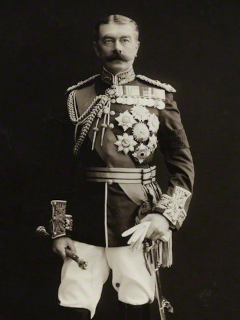
Birth of Horatio Herbert Kitchener, 1st Earl Kitchener

Horatio Herbert Kitchener, 1st Earl Kitchener of Khartoum and Broome in Kent, British Army officer and colonial administrator, is born on June 24, 1850, at Gunsborough Villa, north of Listowel, County Kerry.

Kitchener is the second son of Lieutenant Colonel Henry Horatio Kitchener and his first wife, Frances Anne (née Chevallier), daughter of clergyman John Chevallier. Col. Kitchener resigns his commission in 1849 and purchases Ballygoghlan House estate near Tarbert, County Kerry, in early 1850 under the provisions of the Encumbered Estates Act of 1849. Ballygoghlan House is in a state of disrepair, however, and the family lives in Gunsborough Villa until the end of 1850. In 1857, Col. Kitchener purchases Crotta House, near Kilflynn, County Kerry, and the Kitcheners divide their time between the two residences. While innovative and successful in his agricultural methods, Col. Kitchener is harsh towards his tenants and, after carrying out many evictions, becomes extremely unpopular in the area. He is a rigid disciplinarian and occasionally punishes his son severely.

Although Kitchener attends Ballylongford village school, his education is largely neglected. When examined by his cousin Francis Elliot Kitchener, fellow of Trinity College Dublin (TCD), he is found to have only the most rudimentary knowledge of grammar and arithmetic. Education by private tutors follows. In 1864, his father sells his Irish estates and moves to Switzerland for the sake of his wife’s health. After further private tuition, he passes into the Royal Military Academy, Woolwich, in 1868, and is commissioned into the Royal Engineers in December 1870.

Kitchener begins his career on survey missions and carries out such work in Palestine (1874–78) and Cyprus (1878–82). He then enters the Egyptian Army and takes part in the Sudan campaign of 1883–85, organised to relieve Genral Charles George Gordon. Subsequent appointments include governor of Suakin (1886–88), adjutant-general of the Egyptian Army (1888–92), and Sirdar (Commander-in-Chief) of the Egyptian Army (1892–96). After the Dongola Expedition in 1896, he is promoted to major-general. He commands the Khartoum Expedition of 1898, defeating Mahdist forces at Atbara and Omdurman, and is raised to the peerage.

At the outbreak of the Second Boer War in 1899, he is appointed chief of staff to Frederick Roberts, 1st Earl Roberts, and assumes total command, with the rank of lieutenant-general, in 1900. While acting as commander-in-chief in South Africa he reorganises the British forces and, using new tactics, manages finally to defeat the Boers. He is severely criticised in the world press for the conditions in the concentration camps where Boer families are confined, but is made a viscount, promoted to general, and awarded £50,000 by parliament at the end of the war.

Kitchener serves as commander-in-chief in India beginning in 1902, is promoted to Field Marshal in 1909, and is a member of the Committee of Imperial Defence (1910) and consul-general in Egypt (1911–14). At the outbreak of World War I he is made Secretary of State for War and begins to reorganise the British Army, an immense achievement, raising 1,700,000 men in service battalions by May 1915, creating an army of volunteers to reinforce the depleted regular army in Belgium and France. An archconservative, he totally opposes Home Rule for Ireland, and initially blocks plans by John Redmond for the formation of a southern Irish division from members of the National Volunteers. Convinced that an all-Irish brigade or division would be a security risk, he rejects Redmond’s suggestions in a meeting of August 1915 and originally proposes dispersing Irish recruits through the numerous regiments in the army. Impressed by Redmond’s persistence, and impelled by the recruiting crisis of late 1915, he finally reverses his decision and sanctions the establishment of the 16th (Irish) Division.

On June 5, 1916, Kitchener is making his way to Russia on HMS Hampshire to attend negotiations with Tsar Nicholas II when in bad weather the ship strikes a German mine 1.5 miles (2.4 km) west of Orkney, Scotland, and sinks. He is among 737 who perish. He is the highest-ranking British officer to die in action in the entire war.

Although he only spends his early years in Kerry, Kitchener occasionally returns to Ireland. While on leave in June 1910 he goes on a tour of County Kerry, visiting places connected to his childhood. There are numerous portraits and memorials to him in England, including a marble effigy by W. Reid Dick in St. Paul’s Cathedral in London and a statue by John Tweed in Horse Guards Parade, London. There is a commemorative bible in the Church of Ireland church at Kilflynn, County Kerry, where he regularly attended Sunday service as a boy. There are some Kitchener letters in the John Redmond papers in the National Library of Ireland.

(From: “Kitchener, Horatio Herbert” by David Murphy, Dictionary of Irish Biography, http://www.dib.ie, October 2009)


Leave a comment

Birth of Richard Colley Wellesley, 1st Marquess Wellesley

Richard Colley Wellesley, 1st Marquess Wellesley, Anglo-Irish politician and colonial administrator, is born on June 20, 1760, at Dangan Castle, County Meath. He, as governor of Madras (now Chennai) and governor-general of Bengal (both 1797–1805), greatly enlarges the British Empire in India and, as Lord Lieutenant of Ireland (1821–28, 1833–34), attempts to reconcile Protestants and Roman Catholics in a bitterly divided country. Throughout his life he displays an ever-increasing jealousy of his younger brother Arthur Wellesley, 1st Duke of Wellington, despite his own achievements.

Born Richard Colley Wesley, he is the eldest son of Garret Wesley, 1st Earl of Mornington (he changes the family surname to Wellesley in 1789). He is educated at the Royal School, Armagh, Harrow School, Eton College, and Christ Church, Oxford, although he leaves the latter in 1781, following his father’s death, before completing his degree. He enters the Irish House of Commons in 1780 and, after he inherits his father’s Irish titles in 1781, moves to the Irish House of Lords. A moderately liberal disciple of Prime Minister William Pitt the Younger, he wins a seat in the British House of Commons in 1784 and serves there until 1797. From 1793 he is a member of the British Privy Council and a commissioner of the India Board of Control.

As Governor-General of India, Wellesley uses military force and diplomacy to strengthen and expand British authority. East India Company forces defeat and kill Tipu Sultan, Indian Muslim ruler of the Kingdom of Mysore (present-day Mysuru) and sympathizer for Revolutionary France, in the Fourth Anglo-Mysore War (1799), and he then restores the Hindu dynasty there that had been deposed by Tipu’s father, Hyder Ali. He annexes much territory after his brother Arthur and General Gerard Lake defeat the Maratha Confederacy of states in the Deccan Plateau (peninsular India). In addition, he forces the Oudh State to surrender numerous important cities to the British, and he contracts with other states a series of “subsidiary alliances” by which all parties recognize British preponderance. He receives a barony in the British peerage in 1797 at the time of his appointment as governor-general, and in 1799 he is awarded a marquessate in the Irish peerage for his victory in the Mysore War.

When Wellesley is faced with an invasion by Zaman Shah Durrani, ruler (1793–1800) of Kabul (Afghanistan), he utilizes his envoy, Captain John Malcolm, to induce Fatḥ-Alī Shah Qajar of Qajar Iran to restrain Zaman Shah Durrani and to give British political and commercial interests preference over the French. On receiving a British government order to restore to France its former possessions in India, he refuses to comply. His policy is vindicated when the Treaty of Amiens (1802) is violated, and Great Britain resumes war against Napoleonic France.

Wellesley’s annexations and the vast military expenditure that he had authorized alarms the court of directors of the East India Company. In 1805, he is recalled, and soon afterward he is threatened with impeachment, although two years later he refuses an offer of the foreign secretaryship. In 1809, he goes to Spain to make diplomatic arrangements for the Peninsular War against France and later that year becomes foreign secretary under Prime Minister Spencer Perceval. In that office he antagonizes his colleagues, who consider him an indolent megalomaniac and welcome his resignation in February 1812. Unlike most of them, however, he had urged a stronger war effort in Spain and had advocated political rights for British Roman Catholics. After Perceval’s assassination on May 11, 1812, he attempts unsuccessfully to form a government at the request of the prince regent (the future King George IV).

As Lord Lieutenant of Ireland, Wellesley disappoints the anti-Catholic George IV, and he is about to be removed when his brother, Arthur, is appointed prime minister in January 1828. He then resigns because his brother is opposed to Roman Catholic emancipation, although the duke is constrained to accept that policy as a political necessity in 1829. His second term as Lord Lieutenant of Ireland (1833–34) ends with the fall of Charles Grey, 2nd Earl Grey’s reform government. When the Whig Party returns to power in April 1835, he is not sent back to Ireland, and in his rage, he threatens to shoot the prime minister, William Lamb, 2nd Viscount Melbourne. He wants to be created Duke of Hindustan so that his rank will equal that of his brother.

Wellesley dies at the age of 82 on September 26, 1842, at Knightsbridge, London. He is buried in Eton College Chapel, at his old school. He and Arthur, after a long estrangement, had been once more on friendly terms for some years. Arthur weeps at the funeral and says that he knows of no honour greater than being Lord Wellesley’s brother.

Wellesley’s library is sold at auction in London by R. H. Evans on January 17, 1843 (and three following days); a copy of the catalogue, annotated with prices and buyers’ names, is held at Cambridge University Library.

Wellesley has several children, including three sons, but none are legitimate. The marquessate thus becomes extinct upon his death. The earldom of Mornington goes to his next surviving brother, William Wellesley-Pole.

(From: “Richard Colley Wellesley, Marquess Wellesley, British statesman,” written and fact-checked by the Editors of Encyclopaedia Britannica, http://www.britannica.com, April 2024 | Pictured: “Richard Colley Wellesley, Marquess of Wellesley (1760-1842),” oil on canvas portrait by Thomas Lawrence, 1812-13)


Leave a comment

Death of Helen Maybury Roe, Librarian & Antiquarian

Helen Maybury Roe, Irish librarian and antiquarian and a champion of medieval Irish art and iconography, dies on May 28, 1988, at Grove Nursing Home in Killiney, County Dublin.

Born on December 18, 1895, Roe is the daughter of William Ernest Roe and Anne Lambert Sheilds of Mountrath, County Laois. Her grandfather is Francis Henry Sheilds of Parsonstown (now Birr, County Offaly), owner of the King’s County Chronicle. She is sent first to the local primary school and then to the Preston School in Abbeyleix. Although she attends Trinity College Dublin (TCD), she does not begin her career due to the outbreak of World War I. She joins the St. John’s Ambulance Brigade and serves at the Cambridge Military Hospital and at Aldershot Barracks. In the immediate aftermath, she continues her medical career with the Military Hospital in Bray, County Wicklow. She also spends time touring in Europe visiting museums and beginning her appreciation for medieval art. She is raised Protestant and has done her duty as part of the aristocracy by serving in the war. But the soldiers treat her as Irish and abuse her especially during the Easter Rising of 1916. The result is that she supports nationalism from that point forward. She goes back to TCD and completes her degree in modern languages in 1921. She finally completes her MA in 1924 and begins a teaching career. She spends time working in the Royal School, Dungannon, and Alexandra College, Milltown, Dublin.

In 1926, Roe’s parents need her, and she returns home. She then becomes the County Librarian in Laois. While working as a librarian she is able to study further and, as a rare person with a car, she tours sites and visits schools. One result of her presentations to schools is to inspire Ireland’s first female archaeologist, Ellen Prendergast. In 1940, she retires from the library and moves to Dublin where she is able to buy a house and garden. Apart from her antiquarian work, she is a regular supporter of charities and is honorary secretary of The Queen’s County Protestant Orphan’s Society and actively involved in The Dublin University Mission to Chota Nagpur, India.

Roe becomes a regular contributor to various journals and newspapers including Journal of the Royal Society of Antiquaries of Ireland, An Leabharlann, Béaloideas, Seanchas Ard Mhacha, Carloviana, the The Irish Press and the Leinster Express. From 1965 until 1968 she serves as the president of the Royal Society of Antiquaries of Ireland, the first woman to be elected to the position. She is elected to be a member of the Royal Irish Academy in 1984. She continues touring and lecturing into her nineties.

Roe lives at Santry, Dublin, and later at Oak House, Sussex Road, Dublin. She dies on May 28, 1988, at Grove Nursing Home, Killiney, County Dublin, and is buried beside her parents at St. Peter’s Churchyard, Mountrath, County Laois.

The Royal Society of Antiquaries of Ireland have an annual lecture in her honour and have named one of their lecture rooms after her.


Leave a comment

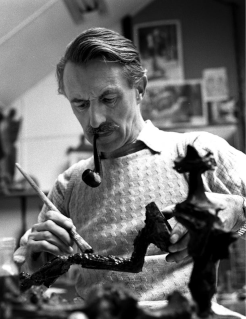
Death of Surrealist Sculptor F. E. McWilliam

Frederick Edward McWilliam CBE RA, Northern Irish surrealist sculptor, dies in London on May 13, 1992. He works chiefly in stone, wood and bronze. His style of work consists of sculptures of the human form contorted into strange positions, often described as modern and surreal.

McWilliam is born in Banbridge, County Down, on April 30, 1909, the son of Dr. William McWilliam, a local general practitioner. Growing up in Banbridge has a great influence on his work. He makes references to furniture makers such as Carson the Cooper and Proctors in his letters to his friend, Marjorie Burnett.

McWilliam attends Campbell College in Belfast and later attends Belfast College of Art from 1926. After 1928, he continues to study at the Slade School of Fine Art in London. He originally intends to become a painter, but influenced by Alfred Horace Gerrard, head of the sculpture department at the Slade, and by Henry Moore whom he meets there, he turns to sculpture. He receives the Robert Ross Leaving Scholarship which enables him and his wife, Beth (née Crowther), to travel to Paris where he visits the studio of Constantin Brâncuși.

During the first year of World War II, he joins the Royal Air Force and is stationed in England for four years where he is engaged in interpreting aerial reconnaissance photographs. He is then posted to India. While there he teaches art in the Hindu Art School in New Delhi.

After his return from India, McWilliam teaches for a year at the Chelsea School of Art. He is then invited by A. H. Gerrard to teach sculpture at the Slade. He continues in this post until 1968.

The 1950s see McWilliam receive many commissions including the Four Seasons Group for the Festival of Britain exhibition in 1951. A major commission in 1957 is Princess Macha for Altnagelvin Area Hospital in Waterside, Derry.

During the Northern Ireland Troubles McWilliam produces a series of bronzes in 1972 and 1973 known as Women of Belfast in response to the bombing at the Abercorn Tea-Rooms.

In 1964 McWilliam is awarded an Honorary Doctor of Letters from Queen’s University Belfast. In 1966 he is appointed CBE and in 1971 he wins the Oireachtas Gold Medal. He is represented in many public collections, including the Museum of Modern Art in New York City and Tate Britain in London. In 1984 the National Self-Portrait Gallery purchases a McWilliam self-portrait amongst acquisitions from fellow Northerners Brian Ballard, Brian Ferran and T. P. Flanagan.

The Arts Council of Northern Ireland organises a retrospective of his work in 1981 and a second retrospective is shown at the Tate Gallery in 1989 for his 80th birthday.

McWilliam continues carving up to his death. He dies of cancer in London on May 13, 1992.

In September 2009 Banbridge District Council opens a gallery and studio dedicated to the work of and named after McWilliam.


Leave a comment

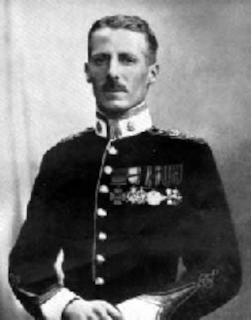
Birth of George Roupell, British Army Officer & Victoria Cross Recipient

Brigadier George Rowland Patrick Roupell, VC, CB, DL, a senior officer in the British Army and a recipient of the Victoria Cross, the highest award for gallantry in the face of the enemy that can be awarded to British and Commonwealth forces, is born on April 7, 1892, in Tipperary, County Tipperary.

Roupell is born into a military family. His father, Francis Frederick Fyler Roupell, having served with the British Army in the 70th (Surrey) Regiment of Foot and commanded the 1st Battalion, East Surrey Regiment from 1895 to 1899, is promoted to colonel in 1901. He had married Edith Maria Bryden at Kingston in 1887.

Roupell is educated at Rossall School and the Royal Military College, Sandhurst. He is commissioned into the East Surrey Regiment, his father’s regiment, on March 2, 1912, and is appointed a lieutenant on April 29, 1914, shortly before the outbreak of World War I.

At the outbreak of war in the summer of 1914, the 1st Battalion the East Surreys are deployed as part of the British Expeditionary Force (BEF) into northern Belgium. Roupell commands a platoon in the BEF’s first major action, the Battle of Mons, in August 1914. He keeps a diary throughout the war, which has since been a, sometimes humorous, source of insight and observation on the events that he witnessed and participated in. In the trenches at Mons, he recounts how he had to hit his men on the backside with his sword in order to gain their attention and remind them to fire low as they had been taught.

Soon after, following the retreat from Mons in September 1914, Roupell leads his platoon in the First Battle of the Aisne. Once again, he comes under heavy fire, this time while crossing the Aisne on a raft. The Surreys’ advance is pushed back with heavy casualties.

On April 20, 1915, during the continued fighting around Ypres, Roupell is commanding a company of his battalion in a front trench on “Hill 60,” which is subjected to a most severe bombardment throughout the day. Although wounded in several places, he remains at his post and leads his company in repelling a strong German assault. During a lull in the bombardment, he has his wounds hurriedly dressed, and then insists on returning to his trench, which is again being subjected to severe bombardment. Toward evening, his company being dangerously weakened, he goes back to his battalion headquarters, represents the situation to his commanding officer, and brings up reinforcements, passing back and forth over ground swept by heavy fire. With these reinforcements he holds his position throughout the night, and until his battalion is relieved next morning. For these actions he is awarded the Victoria Cross.

Roupell is presented with his VC by King George V on July 12, 1915. In addition to his Victoria Cross, he is awarded the Russian Order of St. George (4th Class) and the French Croix de guerre and is mentioned in dispatches. He is retrospectively appointed temporary captain with effect from December 29, 1914, to April 20, 1915, inclusive, and again later the same year.

Roupell is aboard TSS The Queen when it is captured and sunk in the English Channel in October 1916. He is appointed acting brigade major on December 29, 1917. On May 9, 1918, he is seconded to the general staff with the rank of temporary major.

Following the end of hostilities in Europe, Roupell, still an acting major, is promoted to acting lieutenant colonel in charge of a battalion from December 1918 to March 1919. His appointment to the general staff is confirmed on July 1, 1919. During this time, he is attached to the allied force under Edmund Ironside and sent to support Tsarist Russians as part of the Allied intervention in the Russian Civil War. On a visit to a Tsarist unit, they mutiny, and he and others are taken prisoner near Arkhangelsk, sent to Moscow, and finally repatriated in 1920.

Early in 1921, Roupell marries Doris P. Sant in Paddington. Daughter Phoebe and son Peter are born in 1922 and 1925, respectively.

Roupell’s inter-war military career continues with appointments as staff captain (1921), brigade major (1926), and promotion to substantive major (1928). During the inter-war period, he serves in Gibraltar, the Regimental Depot, India and the Sudan and he attends the Staff College, Camberley. As major (GSO2), he spends two years from 1929 at the Royal Military College of Canada, and in 1934 a year with the British troops in China. Following his return, he is promoted to lieutenant colonel in 1935.

At the outbreak of World War II, in September 1939, Roupell is promoted to colonel and made an acting brigadier, placed in command of 36th Infantry Brigade from October 7, 1939. His brigade is deployed as part of the 12th (Eastern) Division in April 1940 and becomes part of the British Expeditionary Force (BEF), taking part in the Battle of France. The German thrust near the river Somme toward Abbeville eventually cuts off the BEF, northern French and Belgian forces from the rest of France. His brigade headquarters near Doullens is attacked by enemy troops and, on being told of the threat, he exclaims, “Never mind the Germans. I’m just going to finish my cup of tea.”

When the brigade headquarters is overrun on May 20, 1940, Roupell gives the order for the survivors to split up into small groups and endeavour to re-contact Allied troops. He, with a captain and French interpreter, avoid capture, hiding by day and walking at night for over a month. They arrive at a farm near Rouen where the two officers remain for almost two years, working as labourers. With the help of the French Resistance, they are moved through unoccupied France into non-belligerent Spain, finally boarding a ship in Gibraltar and returning to the United Kingdom.

Following his return, Roupell is appointed commanding officer of the 114th Brigade, part of the 38th (Welsh) Infantry Division, on March 18, 1943, a command he holds until November 2 of that year. The brigade is not destined to see battle, however, and he is soon appointed as garrison commander at Chatham, where he remains until retirement.

In 1946, Roupell is formally retired from the army on retirement pay and granted the honorary rank of brigadier and, at the age of 58, is excused from the reserve list of officers in 1950. He is appointed a Deputy lieutenant of Surrey in 1953.

In 1954, Roupell is appointed Colonel of the East Surreys, succeeding Lieutenant General Arthur Dowler, and is to be the last Colonel of the East Surrey Regiment, relinquishing office in 1959 when amalgamation with the Queen’s Royal Regiment (West Surrey) takes place to form the Queen’s Royal Surrey Regiment. He is appointed a Companion of the Order of the Bath in 1956.

Roupell dies at the age of 81 in Shalford, Surrey, on March 4, 1974. His body is cremated at Guildford Crematorium, where his ashes are scattered.


Leave a comment

Birth of Arthur MacMurrough Kavanagh

Arthur MacMurrough Kavanagh, Irish politician, is born on March 25, 1831, at Borris House, a country house near Borris, County Carlow. His middle name is spelled MacMorrough in some contemporaneous sources.

Kavanagh is the son of Thomas Kavanagh MP and artist Lady Harriet Margaret Le Poer Trench, daughter of Richard Trench, 2nd Earl of Clancarty. His father traced his lineage to the medieval Kings of Leinster through Art Óg Mac Murchadha Caomhánach. He has two older brothers, Charles and Thomas, and one sister, Harriet or “Hoddy.” He is born with only the rudiments of arms and legs, though the cause of this birth defect is unknown.

Kavanagh’s mother insists that he be brought up and have opportunities like any other child and places him in the care of the doctor Francis Boxwell, who believes that an armless and legless child can live a productive life. Kavanagh learns to ride horses at the age of three by being strapped to a special saddle and managing the horse with the stumps of his arms. With the help of the surgeon Sir Philip Crampton, Lady Harriet has a mechanical wheelchair constructed for her son, and encourages him to ride horses and engage in other outdoor activities. He also goes fishing, hunting, draws pictures and writes stories, using mechanical devices supplementing his physical capacities. His mother teaches him how to write and paint holding pens and brushes in his mouth.

In 1846, Lady Harriet takes three of her children, Thomas, Harriet and Arthur, traveling to the Middle East for two years. Kavanagh nearly drowns in the Nile when he falls in while fishing and is rescued by a local antiquities salesman who dives in to pull him out.

In 1849, Kavanagh’s mother discovers that he has been having affairs with girls on the family estate, so she sends him into exile to Uppsala, and then to Moscow with his brother and a clergyman, whom he comes to hate. He travels extensively in Egypt, Anatolia, Persia, and India between 1846 and 1853. In India, his letter of credit from his mother is cancelled when she discovers that he has spent two weeks in a harem, so he persuades the East India Company to hire him as a despatch rider. Other sources say that this is due to the death of his eldest brother, Charles, of tuberculosis in December 1851, which leaves him with only 30 shillings.

In 1851, Kavanagh succeeds to the family estates and to the title of The MacMurrough following the death of his older brother Thomas. He serves as High Sheriff of County Kilkenny for 1856 and High Sheriff of Carlow for 1857. A Conservative and a Protestant, he sits in Parliament for County Wexford from 1866 to 1868, and for County Carlow from 1868 to 1880. On being elected, he has to be placed on the Tory benches by his manservant. The Speaker of the House of Commons, Evelyn Denison, gives a special dispensation to allow the manservant to stay in the chamber during sittings. He is opposed to the disestablishment of the (Anglican) Church of Ireland but supports the Landlord and Tenant (Ireland) Act 1870. On losing his seat in 1880, William Ewart Gladstone appoints him to the Bessborough Commission, but he disagrees with its conclusions and publishes his own dissenting report. In 1886, he is made a member of the Privy Council of Ireland.

Kavanagh dies of pneumonia in London at the age of 58 on December 25, 1889. He is buried in Ballicopagan cemetery. He is succeeded in the title of The MacMurrough by his son, Walter MacMurrough Kavanagh, who also serves as MP for County Carlow from 1908 to 1910. The 1901 novel The History of Sir Richard Calmady, written by Lucas Malet (pseudonym of Mary St. Leger Kingsley), is based on his life.

Kavanagh marries his cousin, Mary Frances Forde-Leathley, in 1855. Assisted by his wife, he is a philanthropic landlord, active county magistrate, and chairman of the board of guardians. Together, they have seven children.


Leave a comment

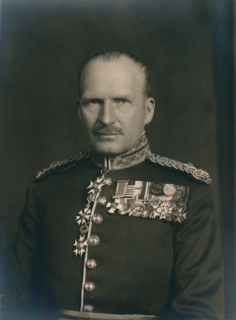
Birth of Sir John Greer Dill, Irish-born British Army Officer

Sir John Greer Dill, senior British Army officer with service in both World War I and World War II, is born on December 25, 1881, at Lurgan, County Armagh. From May 1940 to December 1941, he is the Chief of the Imperial General Staff (CIGS), the professional head of the British Army, and subsequently serves in Washington, D.C., as Chief of the British Joint Staff Mission and then Senior British Representative on the Combined Chiefs of Staff (CCS).

Dill is the only son of John Dill, bank manager, and Jane Dill (née Greer). He is educated at Cheltenham College in England before entering the Royal Military College (RMC), Sandhurst. Commissioned as a second lieutenant, he joins the Prince of Wales’s Leinster Regiment (Royal Canadians) in May 1901 and serves in South Africa for the remainder of the Second Boer War. Promoted to captain in 1911, he is a student at the Staff College, Camberley, at the outbreak of World War I. He holds several important staff appointments during the war, including brigade major of 25th Brigade (8th Division) and General Staff Officer (Grade 2) to the Canadian Corps. Present at the battles of Neuve Chapelle, Aubers Ridge, Arras, and Third Ypres, at the end of the war he is serving as chief of operations branch at GHQ with the temporary rank of brigadier general. He is awarded the Distinguished Service Order (DSO) (1915), the Order of St. Michael and St. George (CMG) (1918), the French Legion of Honour and the Belgian Order of the Crown.

Remaining active during the interwar years, Dill serves as chief assistant to the commandant of the Staff College (1919–22) before commanding the Welsh Border Brigade, TA (1922–23), and 2nd Infantry Brigade at Aldershot (1923–26). In late 1926, he is appointed army instructor at the newly established Imperial Defence College. A period in India follows as general staff officer of the Western Command (1929–31), based at Quetta. On return to England, he is promoted to major general and made commandant of the Staff College. Appointments as commander of the British forces in Palestine and Transjordan (1936–37) and the Aldershot Command (1937–39) follow. During this period, he shows a remarkable ability to both train and inspire those under his command. Most of his colleagues expect him to become the new chief of the Imperial General Staff and are surprised when Major General Lord Gort, junior to Dill in both rank and seniority, is appointed to the post.

At the outbreak of World War II Dill commands I Corps British Expeditionary Force (BEF) in France and is made a full general. In April 1940, he is made vice-CIGS and in May takes over as CIGS. His initial period in office is not a happy one, and he has to inform the public of setbacks in both Norway and France. His workload is enormous, and after the evacuation at Dunkirk in late May he devotes himself to preparing the defences of Britain against invasion. He clashes with Winston Churchill throughout 1941, advocating a more cautious and realistic approach to the situations in North Africa, Greece, and Crete.

The workload begins to affect his health adversely, and in November 1941 it is announced that he will resign as CIGS on reaching the age of 60 and serve as governor-designate of Bombay with the rank of field marshal. He seeks to be more actively involved in the war effort, however, and in December 1941 he visits the United States with Churchill, remaining there as head of the British joint staff mission in Washington, D.C. He plays a significant role in promoting Anglo–American military cooperation and attends the Casablanca, Quebec, and Tehran conferences.

In late 1944 his health again breaks down and he dies from aplastic anemia on November 4, 1944, at the Walter Reed General Hospital, Washington, D.C. After a memorial service at Washington National Cathedral, he is buried with full military honours at Arlington National Cemetery in Arlington County, Virginia. President Franklin D. Roosevelt later pays tribute to him as a great soldier and friend, “the most important figure in the remarkable accord which has been developed in the combined operations of our two countries.”

Dill first marries (1907) Ada Maud Le Mottée, daughter of Col. William Le Mottée of the 18th Regiment. Their son, Major John de Guerin Dill, serves as an artillery officer throughout World War II. In October 1941, Dill marries Nancy Isabelle Charrington, widow of Brigadier Denis Walter Furlong. Dill’s honours include a GCB (1942), an honorary degree from Princeton University (1944), the Howland Memorial Prize of Yale University (1944), and a posthumous Distinguished Service Medal (DSM) from the United States government. There are portraits of him in Cheltenham College and the Imperial War Museum, and a statue in Washington, D.C.

(From: “Dill, Sir John Greer” by David Murphy, Dictionary of Irish Biography, http://www.dib.ie, October 2009 | Pictured: Sir John Greer Dill, bromide print, 1932, by Walter Stoneman, National Portrait Gallery, London)


Leave a comment

Death of Major General William Hickie, Irish-Born British Army Officer

Major General Sir William Bernard Hickie, KCB, Irish-born senior British Army officer and Irish nationalist politician dies in Dublin on November 3, 1950. He sees active service in the Second Boer War from 1899 to 1902, is Assistant Quartermaster General in the Irish Command from 1912 to 1914 and serves in World War I from 1914 to 1918. He commands a brigade of the British Expeditionary Force in 1914 and is commander of the 16th (Irish) Division from 1915 on the Western Front.

Hickie is born on May 21, 1865, at Slevoir, Terryglass, near Borrisokane, County Tipperary, the eldest of the eight children of Colonel James Francis Hickie and his wife Lucila Larios y Tashara, originally of Castile. He is educated at St. Mary’s College, Oscott, Birmingham, England, a renowned seminary for training youths of prosperous Roman Catholic families.

Hickie attends the Royal Military College, Sandhurst, from 1882 to 1885. He is commissioned into his father’s regiment, the Royal Fusiliers at Gibraltar, in 1885 and serves with them for thirteen years in the Mediterranean, Egypt, and India, during which time he is promoted to captain on November 18, 1892. In 1899 he graduates as captain at the Staff College, Camberley, and is selected when the Second Boer War breaks out as a Special Service Officer in which capacity he acts in various positions of authority and command. He leaves Southampton for South Africa on board the SS Canada in early February 1900 and is promoted from captain of mounted infantry to battalion command as major on March 17, 1900. He is subsequently in command of a corps until eventually at the end of 1900 he is given command of an independent column of all arms. He holds this position for eighteen months. He serves with distinction at the Battle of Bothaville in November 1900 and receives the brevet promotion to lieutenant colonel on November 29, 1900. He serves in South Africa throughout the war, which ends with the Treaty of Vereeniging in June 1902. Four months later he leaves Cape Town on the SS Salamis with other officers and men of the 2nd battalion Royal Fusiliers, arriving at Southampton in late October, when the battalion is posted to Aldershot Garrison. In December 1902 he is elected a Fellow of the Royal Geographical Society (FRGS).

After the end of the war in South Africa there follows various staff appointments, the first from December 1902 as deputy-assistant adjutant general for district staff in the Cork district. In 1907 Hickie is back in regimental service in Dublin and Mullingar with the 1st Royal Fusiliers, where he is in command of the regiment for the last two years. From 1909 to 1912 is appointed to the Staff of the 8th Infantry Division in Cork where for four years he is well known in the hunting field and on the polo ground. In May 1912, he is promoted to colonel and becomes Quartermaster General of the Irish Command at Royal Hospital Kilmainham for which he is appointed a Companion of the Order of the Bath.

When war is declared, the Staff of the Irish Command becomes automatically the staff of the II Army Corps and accordingly with the outbreak of World War I in August 1914, Hickie is promoted to brigadier general and, as part of the British Expeditionary Force in France, takes charge of the Adjutant and Quartermaster-General’s Department during the retreat of the II Corps after the Battle of Mons, to Paris, and during the First Battle of the Marne. In mid-September 1914, he relieves one of the brigadiers in the fighting line as commander of the 13th Brigade (5th Infantry Division) and then commands the 53rd Brigade (18th Infantry Division) until December 1915, when he is ordered home to assume command of the 16th (Irish) Division at Blackburn.

Promoted to major general, Hickie takes over from Lieutenant General Sir Lawrence Parsons. It is politically a highly sensitive appointment which requires the professionalism and political awareness he, fortunately, possesses as the division is formed around a core of Irish National Volunteers in response to Edward Carson‘s Ulster Volunteers. He is much more diplomatic and tactful than his predecessors and speaks of the pride which his new command gives him but does not hesitate to make sweeping changes amongst the senior officers of the Irish Division. After putting the division through intensive training, it leaves under Irish command of which each man takes personal pride. It arrives in December 1915.

In the next two years and four months during which Hickie commands the 16th (Irish) Division, it earns a reputation for aggression and élan and wins many memorials and mentions for bravery in the engagements during the 1916 Battle of Guillemont and the capture of Ginchy, both of which form part of the Battle of the Somme, then during the Battle of Messines, the Third Battle of Ypres and in attacks near Bullecourt in the Battle of Cambrai offensive in November 1917.

During this period the Division makes considerable progress in developing its operational techniques but at a price in losses. The growing shortage of Irish replacement recruits, due to nationalist disenchantment with the war and the absence of conscription in Ireland, is successfully met by Hickie by integrating non-Irish soldiers into the division.

In February 1918, Hickie is invalided home on temporary sick leave, but when in the hospital the German spring offensive begins on March 21, with the result that after his division moves under the command of General Hubert Gough it is practically wiped out and ceases to exist as a division. Although promised a new command, this does not happen before the Armistice in November. He typifies the army’s better divisional commanders, is articulate, intelligent and is competent and resourceful during the BEF’s difficult period 1916–17, laying the foundations for its full tactical success in 1918. He is advanced to Knight Commander of the Order of the Bath in 1918.

Hickie retires from the army in 1922, when the six Irish line infantry regiments that have their traditional recruiting grounds in the counties of the new Irish Free State are all disbanded. He identifies himself strongly with the Home Rule Act and says that its scrapping is a disaster and is equally outspoken in condemning the activities of the Black and Tans. In 1925, he is elected as a member of Seanad Éireann, the Irish Free State Senate.

Hickie holds his seat until the Seanad is dissolved in 1936, to be replaced by Seanad Éireann in 1937. He is President of the Area Council (Southern Ireland) of the Royal British Legion from 1925 to 1948. He never marries.

Hickie dies on November 3, 1950, in Dublin and is buried in Terryglass, County Tipperary.


Leave a comment

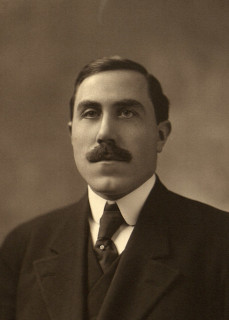
Death of Joseph McGarrity, Irish American Political Activist

Joseph McGarrity, Irish American political activist best known for his leadership in Clan na Gael in the United States and his support of Irish republicanism back in Ireland, dies of cancer on September 4, 1940.

McGarrity is born on March 28, 1874, in Carrickmore, County Tyrone. His family grows up in poverty, motivating his need to immigrate later in life. He grows up hearing his father discussing Irish politics, including topics such as the Fenians, the Irish Parliamentary Party (IPP), and Irish Home Rule. By the time he is an adult, he has developed a keen interest in politics himself.

McGarrity immigrates to the United States in 1892 at the age of 18. He is reputed to have walked to Dublin before boarding a cattle boat to Liverpool disguised as a drover, and then sailing to the United States using a ticket belonging to someone else. He settles in Philadelphia, Pennsylvania and becomes successful in the liquor business. His business fails, however, on three occasions, twice due to embezzlement by his business partner.

In 1893 McGarrity joins Clan na Gael, an Irish organisation based in the United States committed to aiding the establishment of an independent Irish state. Clan na Gael had been heavily involved with the Fenian Brotherhood that McGarrity had grown up hearing about, and by the latter half of the 19th century had become a sister organisation of the Irish Republican Brotherhood (IRB). In the decade just before McGarrity joins, Clan na Gael and the Fenian movement had waged the Fenian dynamite campaign, where they attempted to force the British state to make concessions in Ireland by bombing British infrastructure. However, this had caused a split within Clan na Gael that is not mended until seven years after McGarrity joins when, in 1900, the factions reunite and plead to support “the complete independence of the Irish people, and the establishment of an Irish republic.” In the years that follow the 1880s and 1890s, he is, amongst others, credited with helping to stitch the organisation back together and bring it renewed strength.

McGarrity helps sponsor several Irish Race Conventions and founds and runs a newspaper called The Irish Press from 1918-22 that supports the Irish War of Independence. He is the founder of the Philadelphia chapter of Clan Na Gael.

During World War I, while the United States is still neutral, McGarrity is involved in the Hindu–German Conspiracy. He arranges the Annie Larsen arms purchase and shipment from New York to San Diego for India.

When Éamon de Valera arrives in the United States in 1919 they strike up an immediate rapport and McGarrity manages de Valera’s tour of the country. He persuades de Valera of the benefits of supporting him and the Philadelphia branch against the New York branch of the Friends of Irish Freedom organisation led by John Devoy and Judge Daniel F. Cohalan. He becomes president of the American Association for the Recognition of the Irish Republic. He christens his newborn son Éamon de Valera McGarrity, although their relationship becomes strained upon de Valera’s entry back into Dáil Éireann in the Irish Free State.

McGarrity opposes the Anglo-Irish Treaty and travels to Dublin in 1922 and assists the development of the short-lived Collins/De Valera Pact by bringing de Valera and Michael Collins together before the 1922 Irish general election.

The Irish Civil War sees a split in Clan na Gael just as it had split Sinn Féin back in Ireland. McGarrity and a minority of Clan na Gael members support the anti-treaty side but a majority support the pro-treaty side, including John Devoy and Daniel Cohalan. Furthermore, in October 1920 Harry Boland informs the Clan na Gael leadership that the IRB will be cutting their ties to the Clan unless the IRB is given more influence over their affairs. Devoy and Cohalan resist this, but McGarrity sees the Clan’s connection with the IRB as vital. While McGarrity’s faction is initially labelled “Reorganised Clan na Gael,” they are able to inherit total control of the Clan na Gael name as Devoy is not able to keep effective organisation of the group. In general, however, the in-fighting amongst the Irish on both sides of the Atlantic is quite disheartening for Irish Americans and in the years to come neither pro nor anti-treaty sides of Clan na Gael see much in the way of donations.

With the scope of Clan na Gael now narrowed, and Devoy and Cohalan removed from the picture, McGarrity becomes chairman of the organisation. He does not support the founding of Fianna Fáil in 1926 and opposes the party’s entry into the Dáil in 1927. Even after the Irish Civil War, he still supports the idea that a 32-county Irish Republic can be achieved through force. in the spring of 1926, he receives Chief of Staff of the Irish Republican Army Andrew Cooney to the United States. Cooney and Clan na Gael formally agree that each organisation will support the other and that Clan na Gael will raise funds, purchase weapons and build support for the IRA in the United States.

Going into the late 1920s though Clan na Gael, as are most Irish American organisations, is struggling. Having limped past the split caused by the Irish Civil War, the rejection of Fianna Fáil has caused a second split in the membership. Many Irish Americans see the IRA and Fianna Fáil as one and the same at that point and Clan na Gael and McGarrity’s hostility to them causes much friction.

By July 1929, the Clan’s membership in one of its strongholds, New York City, is down to just 620 paid members. Then in October of that same year Wall Street crashes and the Great Depression hits. In 1933 McGarrity is left almost bankrupt after he is found guilty of “false bookkeeping entries.” His livelihood is saved when he becomes one of the main ticket agents in the United States for the Irish Hospitals’ Sweepstake. He is a personal friend of Joseph McGrath, one of the founders of the Sweepstake. The sweepstakes allow him to turn his fortunes around.

Despite the trying times of both Clan na Gael and his personal life, McGarrity holds fast in his belief in physical force Irish Republicanism. In 1939 he supports the demand from Seán Russell for the “S-Plan” bombing campaign in Britain, which proves disastrous. He allegedly meets Hermann Göring in Berlin in 1939 to ask for aid for the IRA, which leads indirectly to “Plan Kathleen.”

McGarrity is a lifelong friend of fellow Carrickmore native and avid Republican, Patrick McCartan. When he dies on September 4, 1940 a mass is held in the St. Mary’s Pro-Cathedral in Dublin. He remains an unrepentant physical force republican all his life. A number of McGarrity’s papers are in the National Library of Ireland. He donates his personal Library to Villanova University.

The IRA signs all its statements ‘J.J. McGarrity’ until 1969 when the organisation splits into the ‘Official‘ and ‘Provisional‘ movements. Thereafter the term continues to be used by the Officials while the Provisionals adopt the moniker ‘P.O’Neill.’


Leave a comment

Birth of Dehra Parker, MP in the House of Commons of Northern Ireland

The Rt Hon. Dame Dehra S. Parker, GBE, PC (NI), the longest serving female MP in the House of Commons of Northern Ireland, is born in a military hospital in Dehradun, north of Delhi, India, on August 13, 1882.

Parker is born Dehra Kerr-Fisher, the only child of James Kerr-Fisher and his wife Annie. Her father, a native of Kilrea, County Londonderry, is a successful financier. She is educated in the United States, where her father holds extensive property holdings, and in Germany. The surname has been spelled, alternatively, as Ker-Fisher or Ker Fisher.

Parker is married twice. Her first husband is Lieutenant Colonel Robert Peel Dawson Spencer Chichester, MP, with whom she has one son and one daughter, Robert James Spencer Chichester (1902–1920) and Marion Caroline Dehra Chichester (1904–1976). She is predeceased by her son. On June 4, 1928, she marries her second husband, Admiral Henry Wise Parker (CB, CMG).

Parker is first elected as a Member of Parliament (MP) for Londonderry, as Dehra Chichester, as she is known prior to her second marriage in 1928, in the 1921 Northern Ireland general election. She stands down at the 1929 election just before her second marriage but is elected unopposed as Dehra Parker in the March 15, 1933 by-election for the South Londonderry constituency following the death of her son-in-law James Lenox-Conyngham Chichester-Clark. She serves until her resignation on June 15, 1960. Her grandson, James Chichester-Clark, is elected unopposed at the subsequent by-election. He later serves as the fifth Prime Minister of Northern Ireland from 1969 to 1971.

From her re-election in 1933 until her retirement in 1960, Parker faces opposition only once. During the 1949 Northern Ireland general election, with anti-partition agitation a common theme across the region, she is opposed in South Londonderry by a Nationalist Party candidate, T. B. Agnew, whom she defeats. She is a Parliamentary Secretary to the Ministry of Education from December 1, 1937, to March 15, 1944. She is also Chair of the Northern Ireland General Health Services Board from 1948 to 1949. She serves as Minister of Health and Local Government from August 26, 1949, to March 13, 1957, and becomes a member of the Privy Council of Northern Ireland in 1949. She is elevated to Dame Commander of the Order of the British Empire in the 1949 Birthday Honours “for public services,” having previously been appointed as an OBE, and is advanced to be a Dame Grand Cross of the Order of the British Empire (GBE) in 1957.

Parker’s promotion to the Cabinet at the age of 67 under Sir Basil Brooke (later created the 1st Viscount Brookeborough) is part of his so-called “reforming” premiership, his predecessor, J. M. Andrews, having been criticised for appointing elderly members to Cabinet. She is the first woman to serve in the Northern Ireland Cabinet.

Outside of parliamentary activities, Parker is a long-serving local councilor on Magherafelt District Council, president of both the Northern Ireland Physical Training Association and the Girls’ Training Corps, and chairman of the Ancient Monuments Advisory Committee. In 1944, she is appointed senior vice-chairman of the Council for the Encouragement of Music and the Arts (CEMA NI), and in 1949 she succeeds Sir David Lindsay Keir as President for CEMA, a position she holds until 1960. She is made an honorary member of the Ulster Society of Women Artists in 1958.

Parker dies at her home, Shanemullagh House, Castledawson, in the south of County Londonderry, on November 28, 1963, at age 81. She is interred two days later in the grounds of Christ Church, Castledawson.