seamus dubhghaill

Promoting Irish Culture and History from Little Rock, Arkansas, USA


Leave a comment

John Boland Becomes First Irish Olympic Gold Medal Winner

On March 30, 1896, an Irishman wins an Olympic gold medal for the first time when John Mary Pius Boland triumphs in tennis at the first modern Olympics, which take place in Athens, Greece. In addition to being a gold medalist tennis player, he is an Irish Nationalist politician and Member of Parliament (MP) in the House of Commons of the United Kingdom of Great Britain and Ireland and as member of the Irish Parliamentary Party (IPP) for South Kerry from 1900 to 1918.

Boland is born on September 16, 1870, at 135 Capel Street, Dublin, to Patrick Boland, businessman, and Mary Donnelly. Following the death of his mother in 1882, he is placed with his six siblings under the guardianship of his uncle, Nicholas Donnelly, auxiliary bishop of Dublin.

Boland is educated at two private Catholic schools, the Catholic University School, Dublin, and Birmingham Oratory in Birmingham, England, where he becomes head boy. His secondary education at the two schools help give him the foundation and understanding to play an influential role in the politics of Great Britain and Ireland at the beginning of the 20th century, when he is a member of the Irish Parliamentary Party, which pursues constitutional Home Rule.

In 1892, Boland graduates with a BA from London University. He studies for a semester in Bonn, Germany, where he is a member of Bavaria Bonn, a student fraternity that is member of the Cartellverband. He studies law at Christ Church, Oxford, graduating with a BA in 1896 and MA in 1901. Although called to the Bar in 1897, he never practises.

Boland is the first Olympic champion in tennis for Great Britain and Ireland at the first modern Olympics, which take place in Athens in 1896. He visits his friend Thrasyvoulos Manos in Athens during the Olympics, and Manos, a member of the organising committee, enters Boland in the tennis tournament. He promptly wins the singles tournament, defeating Friedrich Traun of Germany in the first round, Evangelos Rallis of Greece in the second, Konstantinos Paspatis of Greece in the semifinals, and Dionysios Kasdaglis of Greece in the final.

Boland then enters the doubles event with Traun, the German runner whom he had defeated in the first round of the singles. Together, they win the doubles event. They defeat Aristidis and Konstantinos Akratopoulos of Greece in the first round, have a bye in the semifinals, and defeat Demetrios Petrokokkinos of Greece and Dimitrios Kasdaglis in the final. When the Union Jack and the German flag are run up the flagpole to honour Boland and Traun’s victory, Boland points out to the man hoisting the flags that he is Irish, adding “It [the Irish flag]’s a gold harp on a green ground, we hope.” The officials agreed to have an Irish flag prepared.

Following a visit to County Kerry, Boland becomes concerned about the lack of literacy among the native population. He also has a keen interest in the Irish Language.

Boland’s patriotic stand is well received in nationalist circles in Ireland. This and a lifelong friendship with John Redmond gain for him an invitation to stand as a candidate for the Irish Parliamentary Party in the safe seat of South Kerry, which he holds from 1900 to 1918. He is unopposed in the general elections of 1900 and 1906, and the first of 1910. In the second election of 1910 he is challenged by a local man, T. B. Cronin, who stands as an independent nationalist in the interest of William O’Brien. Boland stands down at the 1918 United Kingdom general election.

In 1908, Boland is appointed a member of the commission for the foundation of the National University of Ireland (NUI). From 1926 to 1947, he is General Secretary of the Catholic Truth Society. He receives a papal knighthood, becoming a Knight of St. Gregory in recognition for his work in education. In 1950, he is awarded an honorary Doctor of Law by the NUI.

Boland marries Eileen Moloney at SS Peter and Edward, Palace Street, Westminster, on October 22, 1902, the daughter of an Australian Dr. Patrick Moloney. They have one son and five daughters. His daughter Honor Crowley succeeds her husband Frederick Crowley upon his death sitting as Fianna Fáil TD for South Kerry from 1945 until her death in 1966. His daughter Bridget Boland is a playwright who notably writes The Prisoner and co-writes the script for Gaslight, and, among other books, co-authors Old Wives’ Lore for Gardeners with her sister, Maureen Boland.

Boland dies at his home, 40 St George’s Square, in London on Saint Patrick’s Day, March 17, 1958.


Leave a comment

Birth of Dermot Earley, Military Official in Ireland & the United Nations

Lieutenant General Dermot Earley DSM, high-ranking military official in Ireland and with the United Nations, is born on February 24, 1948, in Castlebar, County Mayo. He is the Chief of Staff of the Defence Forces from 2007 to 2010.

Earley is educated at Gorthaganny National School, where his father Peadar is a principal teacher, and later attends St. Nathy’s College in Ballaghaderreen, County Roscommon.

Earley first joins the Roscommon minor football team in 1963, at the age of fifteen. In that year, his side reaches the Connacht minor final, losing to Mayo. Two years later, in 1965, he lines out in a second Connacht minor decider. Five-in-a-row hopefuls Mayo are beaten by Roscommon, giving him a Connacht Minor Football Championship title. Roscommon are later defeated in the All-Ireland semi-final. He also plays under-21 hurling with Roscommon. In 1969, he plays in the All-Ireland under-21 final where Roscommon faces Kildare, however Kildare wins on the day.

Earley is only seventeen years-old when he makes his senior debut for Roscommon in 1965. Over the next fifteen years, Roscommon wins four Connacht Senior Football Championship titles. In 1985, he sustains a fractured jaw in the Connacht semi-final against Galway, with many expecting it to end his career. He confounds everybody and lines out in the Connacht final against Mayo two weeks later. In spite of kicking six points, Mayo still triumphs by 2–11 to 0–8. At the age of thirty-seven, he decides to retire from inter-county football.

During the 1990s, Earley manages both the Roscommon county football team (1992-94) and the Kildare county football team (1994-96).

After completing his Leaving Certificate in 1965, Earley joins the Defence Forces as a cadet and is commissioned in 1967. His first posting is as a platoon commander in the Recruit Training Depot at the Curragh Camp and, in 1969, he is appointed an Instructor at the Army School of Physical Culture (ASPC). Two years later, in 1971, he obtains a specialist diploma in physical education at St. Mary’s College, Twickenham.

Earley’s service record includes overseas service with the United Nations Truce Supervision Organization (UNTSO) in 1975, Adjutant to the 52nd Infantry Battalion of the United Nations Interim Force in Lebanon (UNIFIL). From 1987 to 1991, he serves as deputy military adviser to UN secretary general Javier Pérez de Cuéllar and Battalion Commander of the 81st Infantry Battalion UNIFIL in 1997. While serving with the UN up to 1991 he is a member of negotiating teams dealing with the Iraqis and Kuwaitis and is a key adviser during the setting up of the UN’s mission in Kuwait – Unikom. He is involved in negotiating an end to the Angolan Civil War. He is a graduate of the Royal College of Defence Studies, London (2001), and holds a Master of Arts (Hons) in peace and development studies from the University of Limerick (1999). He undertakes the Ranger Course in the Defence Forces, which leads to the establishment of special operations training and the establishment of the Army Ranger Wing (ARW). He is the last serving member of that course.

Earley is appointed school commandant of the ASPC. In 1991, he is appointed an instructor at the Command and Staff School of the Military College and in 1994-95 he helps establish the United Nations Training School Ireland (UNTSI) in the Military College.

Earley is promoted to lieutenant colonel in 1995. He commands the 27 Infantry Battalion on the Irish border. He is promoted to colonel in 2001. In December 2003, he is made brigadier general and is appointed major general in March 2004 when he receives his final appointment. He replaces Lieutenant General James Sreenan. He becomes chief of staff in April 2007, leading the Army, Air Corps and Naval Service.

On April 18, 2010, Earley indicates he plans to retire from the Defence Forces due to ill health. He is awarded a Distinguished Service Medal with Honour from Taoiseach Brian Cowen. His resignation is accepted on June 9, 2010, and one of his previous deputies, Major General Sean McCann, is appointed Chief of Staff.

Earley dies of Creutzfeldt–Jakob disease (CJD) on June 23, 2010, at the age of 62. His Newbridge funeral on June 24, 2010, is attended by Taoiseach Brian Cowen, Irish government ministers and leading GAA figures, while former Taoiseach Liam Cosgrave issues a statement calling him “one of the great figures of this country.”


Leave a comment

Birth of Sir Edward Carson, Politician, Barrister & Judge

Edward Henry Carson, Baron Carson, Irish unionist politician, barrister and judge, known as the “uncrowned king of Ulster,” is born on February 9, 1854, at 4 Harcourt Street, in Dublin. He serves as the Attorney General and Solicitor General for England, Wales and Ireland as well as the First Lord of the Admiralty for the British Royal Navy.

Although Carson is to become the champion of the northern province, he is born into a Protestant family in southern Ireland. He is educated at Portarlington School, Wesley College, Dublin, and Trinity College Dublin, where he reads law and is an active member of the College Historical Society. He graduates BA and MA.

From 1877, early in his Irish legal career, he comes to mistrust the Irish nationalists. As senior Crown prosecutor, he sternly enforces the Criminal Law and Procedure (Ireland) Act 1887, securing numerous convictions for violence against Irish estates owned by English absentee landlords. He is appointed Solicitor-General for Ireland and elected to the British House of Commons in 1892, is called to the English bar at Middle Temple on April 21, 1893, and serves as Solicitor General for England and Wales from 1900 to 1905. During these years he achieves his greatest success as a barrister. In 1895, his cross-examination of Oscar Wilde largely secures the Irish writer’s conviction for homosexuality.

On February 21, 1910, Carson accepts the parliamentary leadership of the anti-Home Rule Irish Unionists and, forfeiting his chance to lead the British Conservative Party, devotes himself entirely to the Ulster cause. His dislike of southern Irish separatism is reinforced by his belief that the heavy industry of Belfast is necessary to the economic survival of Ireland. The Liberal government (1908–16) under H. H. Asquith, which in 1912 decides to prepare a Home Rule bill, cannot overcome the effect of his extra-parliamentary opposition. The Solemn League and Covenant of resistance to Home Rule, signed by Carson and other leaders in Belfast on September 28, 1912, and afterward by thousands of Ulstermen, is followed by his establishment of a provisional government in Belfast in September 1913. Early in that year he recruits a private Ulster army, the Ulster Volunteer Force, that openly drills for fighting in the event that the Home Rule Bill is enacted. In preparation for a full-scale civil war, he successfully organizes the landing of a large supply of weapons from Germany at Larne, County Antrim, on April 24, 1914. The British government, however, begins to make concessions to Ulster unionists, and on the outbreak of World War I he agrees to a compromise whereby the Home Rule Bill is enacted but its operation suspended until the end of the war on the understanding that Ulster’s exclusion will then be reconsidered.

Appointed Attorney General for England in Asquith’s wartime coalition ministry on May 25, 1915, Carson resigns on October 19 because of his dissatisfaction with the conduct of the war. In David Lloyd George’s coalition ministry (1916–22) he is First Lord of the Admiralty from December 10, 1916, to July 17, 1917, and then a member of the war cabinet as minister without portfolio until January 21, 1918.

Disillusioned by the Government of Ireland Act 1920 that partitions Ireland and establishes what is essentially a Home Rule parliament in Belfast, Carson declines an invitation to head the Northern Ireland government and resigns as Ulster Unionist Party leader in February 1921. Accepting a life peerage, he serves from 1921 to 1929 as Lord of Appeal in Ordinary and takes the title Baron Carson of Duncairn.

Carson retires in October 1929. In July 1932, during his last visit to Northern Ireland, he witnesses the unveiling of a large statue of himself in front of Parliament Buildings at Stormont. The statue is sculpted by Leonard Stanford Merrifield, cast in bronze and placed upon a plinth. The inscription on the base reads “By the loyalists of Ulster as an expression of their love and admiration for its subject.” It is unveiled by James Craig, 1st Viscount Craigavon, in the presence of more than 40,000 people.

Carson lives at Cleve Court, a Queen Anne house near Minster-in-Thanet in the Isle of Thanet, Kent, bought in 1921. It is here that he dies peacefully on October 22, 1935. A warship brings his body to Belfast for the funeral. Thousands of shipworkers stop work and bow their heads as HMS Broke steams slowly up Belfast Lough, with his flag-draped coffin sitting on the quarterdeck. Britain gives him a state funeral on Saturday, October 26, 1935, which takes place in Belfast’s St. Anne’s Cathedral. He remains the only person to have been buried there. From a silver bowl, soil from each of the six counties of Northern Ireland is scattered onto his coffin, which had earlier been covered by the Union Jack. At his funeral service the choir sings his own favourite hymn, “I Vow to Thee, My Country.”


Leave a comment

Birth of John Hume, Northern Ireland Nationalist Politician

John Hume KCSG, Irish nationalist politician from Northern Ireland, is born into a working-class Catholic family in Derry, County Londonderry, on January 18, 1937. He is widely regarded as one of the most important figures in the recent political history of Ireland and is credited as being the thinker behind many political developments in Northern Ireland, from the power sharing Sunningdale Agreement to the Anglo-Irish Agreement and the Good Friday Agreement. He wins the Nobel Peace Prize in 1998 alongside the leader of the Ulster Unionist Party (UUP), David Trimble.

Hume is the eldest of seven children of Samuel Hume, a former soldier and shipyard worker, and Anne “Annie” (née Doherty), a seamstress. He has a mostly Irish Catholic background, though his surname derives from one of his great-grandfathers, a Scottish Presbyterian who migrated to County Donegal. He attends St. Columb’s College and goes on to St. Patrick’s College, Maynooth, the leading Catholic seminary in Ireland and a recognised college of the National University of Ireland, where he intends to study for the priesthood. Among his teachers is Tomás Ó Fiaich, the future cardinal and Primate of All Ireland.

Hume does not complete his clerical studies but does obtain an M.A. degree in French and history from the college in 1958. He then returns home to his native Derry, where he becomes a teacher at his alma mater, St. Columb’s College. He is a founding member of the Credit Union movement in the city and is chair of the University for Derry Committee in 1965, an unsuccessful fight to have Northern Ireland’s second university established in Derry in the mid-1960s.

Hume becomes the youngest ever President of the Irish League of Credit Unions at age 27. He serves in the role from 1964 to 1968. He once says that “all the things I’ve been doing, it’s the thing I’m proudest of because no movement has done more good for the people of Ireland, north and south, than the credit union movement.”

Hume becomes a leading figure in the civil rights movement in the late 1960s along with people such as Hugh Logue. He is a prominent figure in the Derry Citizens’ Action Committee. The DCAC is set up in the wake of the October 5, 1968, march through Derry which had caused much attention to be drawn towards the situation in Northern Ireland. The purpose of the DCAC is to make use of the publicity surrounding recent events to bring to light grievances in Derry that had been suppressed by the Unionist Government for years. The DCAC, unlike the Northern Ireland Civil Rights Association (NICRA), is aimed specifically at a local campaign, improving the situation in Derry for everyone, and maintaining a peaceful stance. The committee also has a Stewards Association that is there to prevent any violence at marches or sit-downs.

Hume becomes an Independent Nationalist member of the Parliament of Northern Ireland in 1969 at the height of the civil rights campaign. He is elected to the Northern Ireland Assembly in 1973 and serves as Minister of Commerce in the short-lived power-sharing Executive in 1974. He stands unsuccessfully for the Westminster Parliament for the Londonderry constituency in October 1974, and is elected for Foyle in 1983.

In October 1971, Hume joins four Westminster MPs in a 48-hour hunger strike to protest at the internment without trial of hundreds of suspected Irish republicans. State papers that have been released under the 30-year rule that an Irish diplomat eight years later in 1979 believes Hume supported the return of internment.

In 1977, Hume challenges a regulation under the Civil Authorities (Special Powers) Act (Northern Ireland) 1922 which allows any soldier to disperse an assembly of three or more people. The Lord Chief Justice of Northern Ireland, Robert Lowry, holds that the regulation is ultra vires under Section 4 of the Government of Ireland Act 1920 which forbids the Parliament of Northern Ireland to make laws in respect of the army.

A founding member of the Social Democratic and Labour Party (SDLP), Hume succeeds Gerry Fitt as its leader in 1979. He also serves as one of Northern Ireland’s three Members of the European Parliament and serves on the faculty of Boston College, from which he receives an honorary degree in 1995.

Hume is directly involved in secret talks with the British government and Sinn Féin, in an effort to bring Sinn Féin to the discussion table openly. The talks are speculated to lead directly to the Anglo-Irish Agreement in 1985.

The vast majority of unionists reject the agreement and stage a massive and peaceful public rally in Belfast City Centre to demonstrate their distaste. Many Republicans and nationalists also reject it, as they see it as not going far enough. Hume, however, continues dialogue with both governments and Sinn Féin. The “Hume–Adams process” eventually delivers the 1994 Irish Republican Army (IRA) ceasefire which ultimately provides the relatively peaceful backdrop against which the Good Friday agreement is brokered.

On February 4, 2004, Hume announces his complete retirement from politics and is succeeded by Mark Durkan as SDLP leader. He does not contest the 2004 European Parliament election where his seat is won by Bairbre de Brún of Sinn Féin, nor does he run in the 2005 United Kingdom general election, in which Mark Durkan retains the Foyle constituency for the SDLP.

Hume and his wife, Pat, continue to be active in promoting European integration, issues around global poverty and the Credit Union movement. He is also a supporter of the Campaign for the Establishment of a United Nations Parliamentary Assembly, an organisation which campaigns for democratic reformation of the United Nations.

In 2015, Hume is diagnosed with Alzheimer’s disease, of which he had first displayed symptoms in the late 1990s. He dies in the early hours of August 3, 2020, at a nursing home in Derry, at the age of 83. On his death, former Labour Party leader and prime minister Tony Blair says, “John Hume was a political titan; a visionary who refused to believe the future had to be the same as the past.” The Dalai Lama says on Twitter, “John Hume’s deep conviction in the power of dialogue and negotiations to resolve conflict was unwavering… It was his leadership and his faith in the power of negotiations that enabled the 1998 Good Friday Agreement to be reached. His steady persistence set an example for us all to follow.”

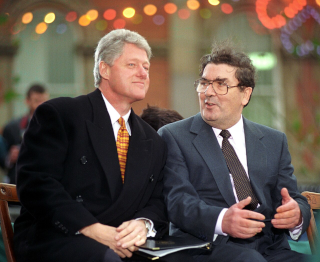
(Pictured: John Hume with U.S. President Bill Clinton in 1995)


Leave a comment

Death of Patrick Weston Joyce, Historian, Writer & Music Collector

Patrick Weston “P. W.” Joyce, Irish historian, writer and music collector, dies in Dublin on January 7, 1914. He is known particularly for his research in Irish etymology and local place names of Ireland.

Joyce is born in Ballyorgan, County Limerick, in the Ballyhoura Mountains, on the border of counties Limerick and Cork, and grows up in nearby Glenosheen. The family claims descent from one Seán Mór Seoighe (fl. 1680), a stonemason from Connemara, County Galway. Robert Dwyer Joyce is a younger brother.

Joyce is a native Irish speaker who starts his education at a hedge school. He then attends school in Mitchelstown, County Cork.

Joyce starts work in 1845 with the Commission of National Education. He becomes a teacher and principal of the Model School, Clonmel. In 1856 he is one of fifteen teachers selected to re-organize the national school system in Ireland. Meanwhile he earns his B.A. in 1861 and M.A. in 1863 from Trinity College Dublin.

Joyce is principal of the Training College, Marlborough Street, in Dublin from 1874 to 1893. As a member of the Society for the Preservation of the Irish Language he writes an Irish Grammar in 1878. He is President of the Royal Society of Antiquaries of Ireland from 1906 to 1908, an association of which he is a member from 1865.

Joyce is a key cultural figure of his time. His wide interests include the Irish language, Hiberno-English, music, education, Irish literature and folklore, Irish history and antiquities, place names and much else. He produces many works on the history and culture of Ireland. His most enduring work is the pioneering The Origin and History of Irish Names of Places (first edition published in 1869). He is a member of the Royal Irish Academy.

In 1856 Joyce marries Caroline Waters of Baltinglass, County Wicklow, with whom he has two daughters and three sons, one of whom is the author Weston St. John Joyce. He dies on January 7, 1914, at his home, Barnalee, Rathmines, Dublin, and is buried two days later in Glasnevin Cemetery.

The P.W. Joyce collection at the Cregan Library in St. Patrick’s College, Drumcondra, Dublin, reflects many of Joyce’s interests and includes several rarities. These include autographed presentation copies by Joyce and his brother Robert, as well as books from Joyce’s own library. The collection also contains nine manuscripts associated with Joyce and his family members, including a manuscript in P.W. Joyce’s own hand of Echtra Cormaic itir Tairngiri agus Ceart Claíd Cormaic (Adventures of Cormac in the Land of Promise), a passage from the Book of Ballymote, which Joyce translated into English.


Leave a comment

The Execution of William Joyce

William Brooke Joyce, an American-born fascist and Nazi propaganda broadcaster during World War II, is hanged in Wandsworth Prison by Albert Pierrepoint on January 3, 1946, making him the last person to be executed for treason in the United Kingdom.

Joyce is born on April 24, 1906, in Brooklyn, New York, the eldest of three sons of Michael Joyce, an Irish Catholic from a family of tenant farmers in Ballinrobe, County Mayo, and his wife, Gertrude (née Brooke), who although born in Shaw and Crompton, Lancashire, is from a well-off Anglican Anglo-Irish family of physicians associated with County Roscommon. The Joyces return to Ireland in 1909. William, a precocious child, attends Coláiste Iognáid SJ, a Jesuit school in County Galway, from 1915 to 1921. At the age of fourteen, he abandons Catholicism for Anglicanism, apparently after being told that all non-Catholics, including his mother, would be damned. In adult life he is nominally anglican, though his adherence to Christianity is tenuous.

The Joyces are unionists and teach their children fervent imperialism. During the Irish War of Independence, Joyce openly associates with the Black and Tans and acts as a scout for them. An acquaintance claims that his views are so extreme even loyalists dislike him. On December 9, 1921, he flees to England to join the Worcestershire Regiment and is followed to England in 1923 by the rest of the family. When he enlists, he claims to be eighteen, but after he contracts rheumatic fever, his age is discovered, and he is discharged in March 1922. For a time, he studies mathematics and chemistry at Battersea Polytechnic Institute as a pre-medical student (1922–23), but he leaves of his own accord, with a reputation for laziness and violent political views. His studies in English and history at Birkbeck College are more successful. He is a brilliant linguist and mathematician and graduates BA with first-class honours in 1927. He publishes an academic article on philology and considers progressing to an MA. He later falsely claims that his research had been plagiarised by a Jewish academic. In 1932, he enrolls at King’s College, London, for a Ph.D. in educational psychology.

Joyce is disturbed by the difference between depressed post-war Britain and the imperial ideal that he had imbibed in Galway and is mocked for his outspoken patriotism and obvious Irishness. He identifies strongly with Thomas Carlyle, an earlier angry anti-liberal from the provinces. His life is marked by repeated episodes of hero worship, followed by disillusion and bitter denunciation. In 1923, he joins the British Fascists, an organisation that has a significant Irish loyalist membership, and in 1924 he allies himself with a militant splinter group, the National Fascists. Most British fascists see themselves as Tory auxiliaries, and they often provide a security presence at conservative meetings. On October 22, 1924, while stewarding a meeting addressed by a Jewish conservative candidate, he has his face slashed and is left with a prominent scar across his right cheek. He joins the Conservative Party in 1928 and is active in the Chelsea constituency until 1930, when he is forced out because of his eccentricities and sexual misbehaviour. On April 30, 1927, he marries Hazel Kathleen Barr. They have two daughters but separate in 1935, largely because of his infidelities, heavy drinking, and temper. The marriage is dissolved in 1937.

In November 1933, Joyce abandons his Ph.D. studies to work for Sir Oswald Mosley‘s British Union of Fascists (BUF). By early 1934 he has become its paid publicity director, traveling throughout Britain to organise meetings. He is a powerful, rabble-rousing speaker, driven by an instinctive awareness that vitriolic verbal abuse gives speaker and audience a sense of power and solidarity. MI5 sees him as a compelling, though deranged, personality. On February 8, 1937, he marries Margaret Cairns White, a BUF activist from Lancashire, with whom he had cohabited since 1936.

Joyce leads a BUF faction that favours a recruitment strategy based on uncompromising ideological assertion. This is challenged by populists who prioritise marches and displays and hold that indoctrination should follow membership. In February 1937, he is BUF candidate for the London County Council in Shoreditch. The party wins 14 per cent of the vote. In March 1937, he, along with many full-time BUF staff, are sacked when the BUF cuts expenses. But his dismissal also reflects Mosley’s awareness that his obsessive rhetoric repels “respectable” recruits and that he is no longer a biddable, slavish admirer of “the Leader.” He later falsely claims near-exclusive credit for the BUF’s escalating antisemitism, a view that Mosley eventually finds it convenient to adopt in order to evade his own responsibility.

In April 1937, Joyce founds the National Socialist League, helped by a wealthy patron. He supports himself as a private tutor, refusing to take Jewish pupils. He is active in various antisemitic and pro-Nazi groups such as the Right Club and engages in “peace” campaigns based on the view that British interests lay with Germany against Russia. Political marginalisation intensifies his admiration for Nazi Germany and hero worship of Adolf Hitler. By the time of the Munich crisis in 1938, he has decided that if war comes, he will go to Germany, though he also considers moving to Ireland. He renews his British passport for one-year terms in August 1938 and August 1939.

On August 26, 1939, Joyce and his wife leave London for Berlin. He is allegedly tipped off about his impending arrest and internment by an MI5 officer, to whom he had supplied information on communists. His siblings, whom he recruited into his fascist organisations, are variously penalised for his activities. At a loose end in Berlin, he is persuaded by a British associate to become a radio announcer with the English-language service of the Reichs-Rundfunk-Gesellschaft (RRG). He makes his first broadcast on September 6, 1939, and receives a contract in October. He finds in radio an outlet for his forceful style and delight in saying the unsayable, and in the early years of the war takes an exultant pride in recounting Nazi victories. His performances are admired by Joseph Goebbels, whom Joyce, to his regret, never meets. On September 26, 1940, he acquires German citizenship.

The novel experience of hearing the enemy in one’s own living room attracts wide audiences in Britain. Joyce’s practice of naming newly captured prisoners of war in his broadcasts is also a compelling motive for listening. In fact, he tries to recruit British prisoners of war as collaborators. The name “Lord Haw-Haw,” invented by the Daily Express radio critic in September 1939, initially applies to several English-language broadcasters but in time becomes associated with Joyce. He is initially a figure of fun, imitated by comedians, but there are sinister undercurrents of terrifying omnipotence, intensified by his sneering, gloating delivery and his delighted deployment of the “big lie” technique. It is widely believed that British-based fifth columnists supply him with information, that he predicts air raids, and shows minute local knowledge. In time, fear and his growing notoriety feed popular hatred of him in Britain, though his anti-British taunts allegedly win appreciative Irish audiences. He exults that he is daily committing treason and rendering himself liable to the death penalty.

In 1940, Joyce publishes a commissioned self-justifying propaganda work, Twilight over England. His representation of himself echoes that of Hitler in Mein Kampf – the provincial patriot, whose martial sacrifices are betrayed by corrupt elites, learning through poverty the hollowness of bourgeois patriotism and the need to synthesise socialism with nationalism. He shares with his hero a paranoid belief in his own ability to create an alternative reality through language and obstinacy. He dreams of becoming the English Führer.

In Berlin, the Joyces’ marriage comes under increasing strain, marked by drunken rows, domestic violence, and infidelity on both sides, though they retain a fierce mutual fascination. They divorce on August 12, 1941, but remarry on February 11, 1942, while continuing their previous behaviour. As the Axis powers begin to fail, his broadcasts become more defensive, focusing on the Soviet threat. On October 14, 1944, he is awarded the German War Merit Cross, first class. On October 22, he is sworn into the Volkssturm (territorial army) and begins drilling. The Joyces are evacuated from Berlin in March 1945, initially to Apen near the Dutch border and then to Hamburg, where he makes a last, drunken, defiant broadcast on April 30, 1945, the day of Hitler’s death. After an unsuccessful attempt to escape to Sweden, the Joyces hide at Flensburg near the Danish border. On May 28, 1945, he is shot and captured while gathering firewood.

Joyce is brought back to Britain on June 16 after Parliament passed legislation simplifying treason trial procedures. At his September 17-20 trial, he proves his American citizenship, but the court holds that his illegally acquired British passport incurred duties of allegiance. His appeals are rejected by the Court of Appeal and the House of Lords. His fate is influenced by British public opinion, and possibly by a desire to avoid antagonising the Soviet Union. In his death cell he blames the defeat of national socialism on German limitations. He also fantasises that he could have saved Hitler from his incompetent subordinates.

Joyce is hanged at Wandsworth Prison on January 3, 1946. Unlike most of his fellow Nazis, he proclaims to the end his allegiance to national socialism and hatred of Jews. He corresponds cheerfully with Margaret, joking evasively about the death camps and expressing a belief that his spirit will survive, watch over her, and continue his work. To neo-Nazis he becomes a martyr. Even among those to whom his activities had been repellent, a significant body of opinion holds he should not have been condemned on a questionable and innovative technicality. The historian A. J. P. Taylor maintains that Joyce was executed for making a false declaration to obtain a passport, a misdemeanour that normally incurs a £2 fine.

In 1976, Joyce is reinterred in Galway as it is feared that a grave in England might become a fascist shrine. Thomas Kilroy‘s play Double Cross (1986) juxtaposes Joyce and Brendan Bracken as Irishmen who reinvented themselves through fantasies of Britishness. The BBC Sound Archive has recordings of some of Joyce’s broadcasts and transcripts of others, collected during the war as evidence for a future treason trial.

(From: “Joyce, William Brooke (‘Lord Haw-Haw’)” by Patrick Maume, Dictionary of Irish Biography, http://www.dib.ie, October 2009)
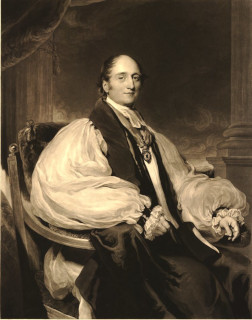

Leave a comment

Birth of John Neill, Church of Ireland Archbishop of Dublin

John Robert Winder Neill, the Church of Ireland Archbishop of Dublin until the end of January 2011, is born on December 17, 1945.

The fourth generation of his family to become a clergyman, Neill is educated at the Avoca School, Blackrock, Dublin, and Sandford Park School, Ranelagh, Dublin. He attends Trinity College Dublin studying Hebrew and oriental languages winning a scholarship in 1965 and graduating in 1966. He is awarded an MA degree at Jesus College, Cambridge, in 1972.

Ordained in 1969 for the curacy of St. Paul’s Glenageary, Dublin, Neill is the fourth generation of his family to enter the ministry. He is Bishop of Tuam, Killala and Achonry from 1986 to 1997 before his consecration as Bishop of Cashel and Ossory in 1997.

At the Lambeth Conference in 1988, Neill proposes all the approved resolutions in respect of Women in the Episcopate and is chairman of the Church of Ireland General Synod Committee on Ordination of Women (1988–91). He serves on many central committees of the Church of Ireland covering issues such as liturgical reform, education, communications, ministry, Christian unity and synodical structures.

Neill serves as President of the Council of Churches for Britain and Ireland (1990-94) and as President of Churches Together in Britain and Ireland (1999-2002) and is co-founder and chairman of the Church of Ireland/Methodist Church Joint Theological Working Party.

On August 29, 2002, the Church of Ireland announces that the Right Reverend John Neill, Bishop of Cashel and Ossory, is to succeed the Most Reverend Dr. Walton Empey as Archbishop of Dublin. The announcement is made at a meeting of the Church of Ireland Episcopal Electoral College in Christ Church Cathedral, Dublin.

Neill and his wife Betty have three sons, The Reverend Canon Stephen Neill, Rector of Celbridge, Andrew Neill, a member of Garda Síochána, and Peter Neill, a photographer.


Leave a comment

Death of Philip Twysden, Lord Bishop of Raphoe

Philip Twysden, Anglican clergyman who serves in the Church of Ireland as Lord Bishop of Raphoe from 1747 to 1752, dies bankrupt on November 2, 1752, after having been shot while allegedly masquerading as a highwayman. The circumstances of his death later become the subject of scandalous rumour.

Twysden is born in Kent, in the South East England region, on September 7, 1713, the third son of Sir William Twysden, 5th Baronet of Roydon Hall, East Peckham, Kent, by his wife (and distant cousin) Jane Twisden.

Twysden studies at University College, Oxford, from 1732. He is awarded a Master of Arts degree, and the honorary degree of Doctor of Civil Law in 1745.

Twysden marries twice: firstly, to Mary Purcell, who dies in 1743, and secondly to Frances Carter, daughter of The Rt Hon. Thomas Carter, Master of the Rolls in Ireland. After Twysden’s death, she marries her cousin, General James Johnston.

By his second wife, Twysden has two children: Mary, who dies in infancy, and a posthumous daughter named Frances (1753–1821). Frances, later Countess of Jersey, is one of the many mistresses of King George IV when he is Prince of Wales.

Twysden is ordained a priest in the Church of England. He is instituted in 1738 as rector of Eard and in 1745, for a short time, serves as the rector of Eastling in Kent. He accompanies Philip Stanhope, 4th Earl of Chesterfield, to Dublin as his chaplain, upon the Earl’s appointment as Lord Lieutenant of Ireland.

Twysden is nominated to the Bishopric of Raphoe in Ulster on March 3, 1746, and is consecrated by the Archbishop of Dublin, assisted by the bishops of Derry and Clonfert, at St. Michan’s Church, Dublin, on March 29, 1747.

Twysden dies on November 2, 1752, at home in Jermyn Street, St. James’s, London. However, according to ecclesiastical historian and author Henry Cotton, he dies at Roydon Hall, East Peckham, his father’s country house. He is buried in the south chancel of St. Michael’s Church, East Peckham, under a plain stone with no inscription.

A story grows up that, having been made bankrupt, Twysden is shot while attempting to rob a stagecoach. The location of his alleged attempted career as a highwayman is either Hounslow Heath (west of London) or Wrotham Heath in Kent.

(Pictured: The Cathedral of St Eunan, Raphoe, the episcopal seat of the pre-Reformation and Church of Ireland bishops of Raphoe)


Leave a comment

Birth of Archaeologist Etienne Andrew Rynne

Etienne Andrew Rynne, archaeologist, is born on September 11, 1932, at 20 Upper Pembroke Street, Dublin.

Rynne is one of six children (five boys and a girl) of Dr. Michael Rynne, a civil servant and diplomat, and Nathalie Rynne (née Fournier), from Auvergne, France. He has a twin brother, Michael, and is a nephew of the writer and broadcaster Stephen Rynne. He receives his early education in a number of institutions in Ireland and abroad, including Terenure College in Dublin, Clongowes Wood College in County Kildare, Coláiste na Rinne in County Waterford and École des Roches in Normandy. He then attends University College Dublin (UCD), where he graduates BA in archaeology and French (1953) and MA in archaeology (1955). He wins the prestigious National University of Ireland (NUI) travelling studentship for his thesis on Iron Age weapons.

After spending a year on the continent, Rynne returns to Ireland in 1957 to join the antiquities division of the National Museum of Ireland (NMI) in Kildare Street. One of his first assignments is to participate in the excavations at the Hill of Tara, previously headed by his old mentor at UCD, the recently deceased Professor Seán P. Ó Ríordáin. Already an expert on the Iron Age, he expands his expertise to cover Irish Celtic and early Christian art. He becomes an influential figure at the museum, remaining until 1967 and gaining much valuable experience in archaeological research, cataloguing and display, and is once described as the “true master of the Kildare Street crypt.” Intimately acquainted with the museum’s early Christian artefacts, he is particularly drawn to the eighth-century Ardagh chalice, on which he compiles extensive research notes relating to its dismantling and conservation. Although he is recognised as a leading authority on the chalice, his workload at the NMI and various academic commitments, not least his thirty-five years as editor of the North Munster Antiquarian Journal (NMAJ), prevent publication of his great work on the treasure.

During Rynne’s time at the NMI, he develops a close friendship with its director, Dr. Anthony T. Lucas, and on April 1, 1967 marries his daughter Aideen in the Church of the Miraculous Medal, Clonskeagh, Dublin. That year, he leaves the museum to take up a lectureship in archaeology at University College Galway (UCG), remaining there for thirty-one years until his retirement as professor of Celtic archaeology in 1998. During his professorship, he introduces many innovative changes at UCG, placing great emphasis on the value of well-planned field trips to historical monuments and archaeological sites around Connacht and north Clare, including Poulnabrone in his beloved Burren and Dún Aonghasa on Inishmore, which in 1991 he is first to suggest was built for ceremonial rather than defensive purposes. He often ventures further afield to sites such as the Jorvik Viking Centre, York, and the West Kennet Long Barrow in Wiltshire. Many local expeditions include small excavations, which he continues to conduct on behalf of the NMI.

Despite his heavy workload, Rynne writes close to one hundred academic papers in local and international journals, his expansive subject matter including not only archaeology but also folklore and Irish War of Independence history, the latter interest stemming from his father’s involvement in the formation of the Irish state (1917–23). His editorial tenure at the NMAJ includes the publication in 1975 and 1978 of dedicated issues on Edward MacLysaght and John Hunt respectively, and he is editor of Figures from the Past (1987), the Festschrift for Helen Maybury Roe. He also uses the national press to express his sometimes-eccentric views on various subjects, such as Irish neutrality, the American justice system and running the M3 motorway through Tara. A highly engaging and entertaining speaker, he thrives in front of an audience, be it a small group of students standing in a muddy field or an official address to the Royal Society of Antiquaries of Ireland, of which he serves as president from 1985 to 1989. His lectures are marked by his erudite and characteristically passionate delivery, complete with subtle intonation, and he is as comfortable speaking French as he is English or Irish.

Rynne’s legacy cannot be fairly assessed without reference to his largely unpopular stance in the Wood Quay controversy of the late 1970s. When Dublin’s original Viking settlement at Wood Quay is unearthed by archaeologists, he sides with the NMI, which, under the directorship of Joseph Raftery, decides to excavate only a small section of the site before handing it over to developers. This results in the destruction of much unexcavated archaeology. The NMI’s decision results in serious damage to its reputation, with Rynne one of the few archaeologists publicly supporting its unpopular stance. His loyalty to the NMI administration, which includes his father-in-law Lucas, alienates many fellow archaeologists, and is described by Patrick Wallace, then director of excavations at Wood Quay and among the many scholars who campaign to save the site, as “excessive, unnecessary and so unquestioning that it led to his being on the … wrong side during the Wood Quay court case.”

Rynne’s contribution to the history and heritage of his adopted province of Connacht and city of Galway is, however, widely acknowledged as immense. Once settled in UCG, he makes his home in the medieval town of Athenry, where he engages enthusiastically with the local community via lectures, walks and talks on the town’s famous walls and castle. Although Dublin-born, he becomes firmly entrenched in Galway’s colourful past and is instrumental in the founding of the city’s first municipal museum in Comerford House, adjacent to the Spanish Arch, in 1971. Drawing on his considerable NMI experience, he acts as honorary curator for the Galway museum for over a decade, before its move to the present purpose-built building in 2007. Ever willing to disseminate the story of Galway’s past beyond the twin towers of its university, to its citizens and the wider public, he compiles the Tourist Trail of Old Galway (1977). This signposted walking tour of Galway communicates the city’s importance in the medieval world, not only from an Irish, but also from a European and global perspective, and represents an enduring legacy to the self-styled promoter and protector of the city’s heritage.

Elected a member of the Royal Irish Academy (RIA) in 1966, Rynne is a fellow of the Society of Antiquaries of London (1975), and president of both the Cambrian Society of Wales (1999) and the Galway Archaeological and Historical Society (1989–94). Although diagnosed with heart disease in 1991, he remains active long after his retirement in 1998, continuing to publish papers on aspects of Irish archaeology up to his death.

In the summer of 2012 Rynne suffers a stroke and dies at the age of 79 on June 22, 2012, at University Hospital Galway. He is survived by Aideen, his wife of forty-five years, and their four sons and one daughter. A fifth son pre-deceases him. He is buried in the New Cemetery, Athenry.

(From: “Rynne, Etienne Andrew” by Frank Cullen, Dictionary of Irish Biography, http://www.dib.ie, June 2018)


1 Comment

Death of Arthur Hill, 2nd Marquess of Downshire

Arthur Hill, 2nd Marquess of Downshire PC, FRS, British peer and MP styled Viscount Fairford until 1789 and Earl of Hillsborough from 1789 to 1793, dies by suicide on September 7, 1801.

Hill is born on March 3, 1753, the eldest son of Wills Hill, 1st Earl of Hillsborough (later Marquess of Downshire). He matriculates at Magdalen College, Oxford, in 1771, and receives his MA in 1773.

Hill sits as a Tory for the rotten borough of Lostwithiel from 1774 to 1780, and then for Malmesbury until 1784. He also represents County Down in the Irish House of Commons from 1776 until succeeding to the peerage in 1793.

Hill enjoys a number of civil and military appointments in both England and Ireland during this period. He is commissioned a captain in the Hertfordshire Militia on March 22, 1775, and a lieutenant colonel in the regiment on May 4, 1787, resigning his commission on June 4, 1794. Appointed the deputy governor of County Down on August 6, 1779, he is picked as High Sheriff of Down in 1785. He is chosen a Fellow of the Royal Society on January 22, 1790, and a deputy lieutenant of Berkshire on May 12, 1792.

Upon the death of his father on October 7, 1793, Hill succeeds him as Marquess of Downshire, in the Peerage of Ireland, as well as in his other subsidiary titles, including that of Earl of Hillsborough in the Peerage of Great Britain. He also succeeds his father as Hereditary Constable of Hillsborough Fort, and as Custos Rotulorum of County Down (October 16) and Governor of Down (October 17). On November 7, he is appointed to the Privy Council of Ireland.

Hill vigorously exerts himself against the Union of Great Britain and Ireland in 1800 and is punished by the Government for his opposition by being dismissed from the Governorship of Down and the colonelcy of the Downshire Militia and struck off the roll of the Privy Council on February 12, 1800.

On June 29, 1786, Hill marries Mary Sandys, by whom he has seven children:

Hill’s last son, Lord George Hill, is born posthumously, as he dies by suicide on September 7, 1801. His widow, Mary, feels his early death is in part due to his humiliation by the Government, and thereafter is a bitter enemy to Robert Stewart, Viscount Castlereagh. She is the heiress of her uncle, Edwin Sandys, 2nd Baron Sandys, and to the estates of her grandfather, William Trumbull, including Easthampstead Park. In 1802, after Hill’s death, she is created Baroness Sandys, with a special remainder to her younger sons and their male heirs in succession and then to her eldest son and his male heirs.

Hill also has a son, William Arthur Dore-Hill, born in 1778, with his mistress Sarah Dore (who later marries William Garrow).