seamus dubhghaill

Promoting Irish Culture and History from Little Rock, Arkansas, USA


Leave a comment

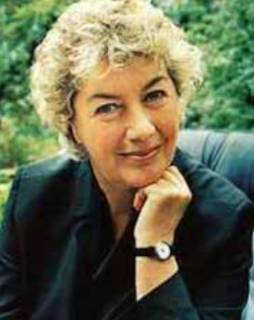
Birth of Máire Mhac an tSaoi, Diplomat, Poet & Memoirist

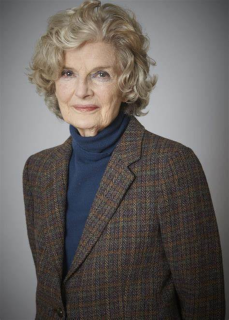
Máire Mhac an tSaoi, Irish civil service diplomat, writer of Modernist poetry in the Dingle Peninsula dialect of Munster Irish, a memoirist, and a highly important figure within modern literature in Irish, is born Máire MacEntee in Dublin on April 4, 1922. Along with Seán Ó Ríordáin and Máirtín Ó Direáin, she is, in the words of Louis de Paor, “one of a trinity of poets who revolutionised Irish language poetry in the 1940s and 50s.” She has a lifelong passion for the Irish language and is one of the leading authorities on Munster Irish.

Mhac an tSaoi’s father, Seán MacEntee, is born in Belfast and is a veteran of the Irish Volunteers during the 1916 Easter Rising and the subsequent Irish War of Independence, and of the Anti-Treaty Irish Republican Army (IRA) during the Irish Civil War. He is also a founding member of Fianna Fáil, a long-serving TD and Tánaiste in the Dáil. Her mother, Margaret Browne (or de Brún) of County Tipperary, is also an Irish republican and a distinguished Celticist who teaches courses in Irish literature in the Irish language at Alexandra College and University College Dublin (UCD).

Mhac an tSaoi is influenced by her stays in the Dingle Peninsula in County Kerry with her uncle, Monsignor De Brún, at his parish of Dún Chaoin. Monsignor de Brún, similarly to his sister, is a distinguished linguist and Celticist, the literary translator of Homer, Dante Alighieri, Sophocles, and Jean Racine into Modern Irish, “and one of the most distinguished literary figures of his time.”

Mhac an tSaoi studies Modern Languages and Celtic Studies at UCD, before going to further research at the Dublin Institute for Advanced Studies and at the University of Paris. She writes the famous work of Christian poetry in Munster Irish, Oíche Nollag (“Christmas Eve”), when she is only 15-years of age.

Mhac an tSaoi spends two years studying in post-war Paris (1945–47) before joining the Irish diplomatic service and is working at the Irish embassy in Madrid when she commits herself to writing poetry in Irish following her discovery of the works of Federico García Lorca.

She remains a prolific poet and is credited, along with Seán Ó Ríordáin and Máirtín Ó Direáin, with reintroducing literary modernism into Irish literature in the Irish language, where it had been dormant since the 1916 execution of Patrick Pearse, in the years and decades following World War II. Her poetry draws on the vernacular spoken by the native Irish speakers of the Munster Gaeltacht of West Kerry during the first half of the twentieth century. Formally, she draws on the song metres of the oral tradition and on older models from the earlier literary tradition. In later work, she explores looser verse forms but continues to draw on the remembered dialect of Dún Chaoin and on a scholarly knowledge of the older literature.

Mhac an tSaoi is elected to Aosdána in 1996 but resigns in 1997 after Francis Stuart is elevated to the position of Saoi. She had voted against Stuart because of his role as an Abwehr spy and in radio propaganda broadcasts from Nazi Germany aimed at neutral Ireland during World War II.

In 2001, she publishes an award-winning novel A Bhean Óg Ón… about the relationship between the 17th-century County Kerry poet and Irish clan chief Piaras Feiritéar and Meg Russell, the woman for whom he composed some of the greatest works of love poetry ever written in the Irish language.

Her poems Jack and An Bhean Óg Ón are both featured on the Leaving Certificate Irish course, at both Higher and Ordinary Levels, from 2006 to 2010. Her literary translation of Rainer Maria Rilke‘s Duino Elegies from Austrian German into the Irish language is published in 2013.

Mhac an tSaoi marries Irish politician, writer, and historian Conor Cruise O’Brien in a Roman Catholic wedding Mass in Dublin in 1962. This makes her the stepmother to O’Brien’s children from his 1939 civil marriage. Her mother is deeply embarrassed by the exposure of the relationship and staunchly opposes the match, as she has long been a close friend of O’Brien’s Presbyterian first wife. Despite their subsequent marriage, the exposure of their extramarital relationship ends Mhac an tSaoi’s diplomatic and civil service career. They later adopted two children, Patrick and Margaret.

She then lives with her husband in New York City, where he becomes a professor at New York University (NYU) after the Congo Crisis destroys O’Brien’s diplomatic career. He is long blamed by the United Nations for the escalation of the Congo Crisis.

Mhac an tSaoi and her husband, who is then serving as Albert Schweitzer Professor of the Humanities at NYU, are both staunchly opposed to the Vietnam War. They are both arrested by the New York City Police Department (NYPD), along with Dr. Benjamin Spock and Beat Generation poet Allen Ginsberg, during an allegedly violent protest outside a United States military induction centre in New York City on December 5, 1967. Afterward, during an interview with The New York Times, she accuses the NYPD of using excessive force both during and after her husband’s arrest.

She later returns with O’Brien to live in Dublin, where she attends another protest rally against the Vietnam War along O’Connell Street in 1969.

Mhac an tSaoi dies peacefully at the age of 99 on October 16, 2021, at home where she has been cared for by her daughter Margaret.
Leave a comment

Birth of Charles O’Conor, Priest & Historical Author

Charles O’Conor, Irish priest and historical author, is born at Bellanagare, County Roscommon, on March 15, 1764. He is chaplain and librarian to the Marchioness of Buckingham and catalogues many manuscripts, including the famous Stowe Missal, now in the Royal Irish Academy (RIA) in Dublin.

O’Conor is the second of six sons of Denis O’Conor and Catharine O’Conor (neé Browne), who also have six daughters. The O’Conors are Catholic, descendants of a princely family in the west of Ireland. His grandfather is the historian Charles O’Conor, his brother the historian Matthew O’Conor.

O’Conor is educated at the Pontifical Irish College, Rome, from 1779 to 1791 and is appointed parish priest of Kilkeevan, County Roscommon, in 1789. In 1796 he prepares for publication a memoir of his grandfather, the historian Charles O’Connor, which highlights the efforts made by him and other Irish Catholics of substance to obtain the constitutional repeal of the penal laws. The first volume is suppressed as dangerous to the family and the manuscript of the second is burned by O’Conor before reaching the printer. He destroys what he believes to be the whole run of the first volume and ten folios of the second, by casting them into a sewer, which communicates with the River Poddle. However, copies of the first volume survive in Trinity College Dublin (TCD) and the Barrister at Law (BL).

In 1798 O’Conor is invited to become chaplain to Mary Nugent, the Marchioness of Buckingham, and to organize and translate a collection of Gaelic manuscripts at Stowe, Buckinghamshire, England. With him he brings papers of his grandfather to Stowe, including fifty-nine Gaelic manuscripts. There he writes Columbanus ad Hibernos (1810–13), a series of letters supporting the royal veto on Catholic episcopal appointments in Ireland. These are answered by Francis Plowden and see him suspended from duties of parish priest by John Troy, Archbishop of Dublin. In his duties as librarian, he edits the Annals of the Four Masters, and other chronicles from the Stowe Library as Rerum Hibernicarum Scriptores Veteres (1814–26), an edition regarded as unreliable.

O’Conor experiences mental illness and by 1827 is suffering from the delusion that he is deliberately being starved by order of the Marquess of Buckingham. He leaves Stowe on July 4, 1827. The Nation (March 26, 1853) claims that he is thereafter a patient at Dr. Harty’s asylum in Finglas, Dublin, apparently along with John Lanigan, whom he knew in the Irish College. His family twice unavailingly demands that the paper’s editor issue a correction.

O’Conor dies on July 29, 1828, in his family’s house at Bellanagare. He is buried in Ballintober Cemetery, Castlerea, County Roscommon.


Leave a comment

Birth of Nuala O’Faolain, Journalist, TV Producer, Teacher & Writer

Nuala O’Faolain, Irish journalist, television producer, book reviewer, teacher and writer, is born in Clontarf, Dublin on March 1, 1940. She becomes well known after the publication of her memoirs Are You Somebody? and Almost There. She also writes a biography of Irish criminal Chicago May and two novels.

O’Faolain is the second eldest of nine children. Her father, known as ‘TerryO’ is a well-known Irish journalist, writing the “Dubliners Diary” social column under the pen name Terry O’Sullivan for the Evening Press. She is educated at University College Dublin (UCD), the University of Hull, and the University of Oxford. She teaches for a time at Morley College in London and works as a television producer for the BBC and Raidió Teilifís Éireann.

O’Faolain describes her early life as growing up in a Catholic country which, in her view, fears sexuality and forbids her even information about her body. In her writings she often discusses her frustration at the sexism and rigidity of roles in Catholic Ireland that expect her to marry and have children, neither of which she does.

O’Faolain becomes internationally well known for her two volumes of memoir, Are You Somebody? and Almost There; a novel, My Dream of You; and a history with commentary, The Story of Chicago May. The first three are all featured on The New York Times Best Seller list. Her posthumous novel Best Love, Rosie is published in 2009.

O’Faolain’s formative years coincide with the emergence of the women’s movement, and her ability to expose misogyny in all its forms is formidable, forensic and unremitting. However, her feminism stems from a fundamental belief in social justice. Unlike most commentators, who maintain a detached, lofty tone, she places herself at the centre of things, a high-risk strategy that works because of her broad range of erudition, worn lightly, her courage and a truthfulness that sometimes borders on the self-destructive.

O’Faolain is engaged at least once but never marries. In Are You Somebody? she speaks candidly about her fifteen-year relationship with the journalist Nell McCafferty, who publishes her own memoir, Nell. From 2002 until her death, she lives much of the time with Brooklyn-based attorney John Low-Beer and his daughter Anna. They are registered as domestic partners in 2003.

O’Faolain splits her time between Ireland and New York City. She is diagnosed with metastatic cancer and is interviewed on the Marian Finucane radio show on RTÉ Radio 1 on April 12, 2008, in relation to her terminal illness. She tells Finucane, “I don’t want more time. As soon as I heard I was going to die, the goodness went from life.”

In a last attempt to grasp as much of life as she can, O’Faolain holidays with family members in Sicily and visits Berlin with a group of friends to hear music and see art. She previously tended to avoid Berlin because, through contact with Jewish friends and lovers, she associated it with the Holocaust. She dies at the Blackrock Hospice, Dublin, on May 9, 2008.

O’Faolain wins a Jacob’s Award in 1985 for her work as the producer of the RTÉ One television programme Plain Tales. In 2006, she wins the Prix Femina étranger, a French literary award, for The Story of Chicago May.

O’Faolain is the subject of a film documentary, Nuala: A Life and Death (2011), directed by Patrick Farrelly and Kate O’Callaghan, and produced and narrated by Marian Finucane. Hugo Hamilton‘s novel Every Single Minute (2014) is based on his experiences when accompanying O’Faolain to Berlin shortly before her death.


Leave a comment

Death of J. J. Walsh, Politician & Businessman

James Joseph Walsh, generally referred to as J. J. Walsh, Postmaster General (later Minister for Posts and Telegraphs) of the Irish Free State from 1922 to 1927, dies in Dublin on February 3, 1948. He is also a senior Gaelic Athletic Association (GAA) organiser and Cumann na nGaedheal politician. Later, he has heavy connections with fascism, including his association with Ailtirí na hAiséirghe.

Walsh is born in the townland of Rathroon, near Bandon, County Cork, on February 20, 1880. His family comes from a farming background, “working a substantial holding of medium but well-cultivated land.” Until the age of fifteen, he attends a local school in Bandon, but by his own account “as far as learning went, I may as well have been at home.” Together with his school friend P. S. O’Hegarty, he passes the Civil Service exams for the Postal service. He later works locally as a clerk in the Post Office. Like O’Hegarty, he spends three years in London at King’s College, studying for the Secretary’s Office “a syllabus (which) differed little from the Indian Civil Service.” While O’Hegarty succeeds in his studies, Walsh does not, and returns to Cork where a friend, Sir Edward Fitzgerald, arranges work for him on the Entertainments Committee of the Cork International Exhibition.

Walsh is active in the GAA, promoting Gaelic games in many areas, but particularly in Cork city and county. His interest in organised sports has a strong political dimension.

“I happened to be one of those who realised the potentialities of the GAA as a training ground for Physical Force. Contamination with the alien and all his works was taboo. I gathered around me a force of youthful enthusiasts from the University, Civil Service and Business. With this intensely organised instrument, war was declared on foreign games which were made to feel the shock so heavily that one by one, Soccer and Rugby Clubs began to disappear.”

Walsh is also instrumental in establishing the “revived” Tailteann Games. He is Chairman of the Cork County Council GAA and is involved in the founding of the Cork City Irish Volunteers.

Walsh participates in the Easter Rising in 1916 in the General Post Office (GPO). He claims he is responsible for mobilising 20 members of the Hibernian Rifles and takes them to the GPO. However, Rifles commandant John J. Scollan contradicts this account. He is promoted from Rifleman to Vice-Commandant of the Hibernian Rifles in 1915.

Walsh is arrested following the general surrender and sentenced to death after a court-martial at Richmond Barracks. This is almost immediately commuted to life imprisonment, but he is released the following year under a general amnesty.

In later 1917 Walsh is arrested and imprisoned after making a speech declaring “the only way to address John Bull is through the barrel of a rifle.”

In the autumn of 1919 Walsh is involved in a failed assassination attempt on John French, 1st Earl of Ypres.

Walsh is elected as a Sinn Féin Member of Parliament (MP) in the 1918 United Kingdom general election for the Cork City constituency. As a member of the First Dáil he is arrested for partaking in an illegal government. He is released in 1921 and supports the Anglo-Irish Treaty and goes on to become a founding member of the new political party, Cumann na nGaedheal. He serves as Postmaster General from 1922 until 1924 and joins the cabinet of W. T. Cosgrave between 1924 and 1927, after the office is reconstituted as the Department of Posts and Telegraphs. He is elected at every election for the Cork Borough constituency until 1927 when he retires from government.

In August 1922 Walsh is part of a government committee which is intended to consider what the Irish Free State’s policy towards north-east Ulster will be.

During World War II, known at the time in Ireland as “the Emergency,” Walsh’s connections with fascism, including his association with Ailtirí na hAiséirghe, bring him to the attention of the Directorate of Military Intelligence, the Intelligence branch of the Irish Army. Their request to the Minister for Justice, Gerald Boland, to place a tap on Walsh’s phone is, however, refused. He is closely associated with Irish-based pro-Nazi initiatives through his association with Ailtirí na hAiséirghe, frequently expressing his views with anti-semitic rhetoric.

After leaving politics Walsh founds a bus company which operates with great success between the city centre and south Dublin. When private bus services are bought out by the Dublin Tramway Co., he invests his profits in other Irish companies including Clondalkin Paper Mills, Solus Teoranta and Benbulben Barytes. He is also a director of Killeen and Newbrook Paper Mills, timber exporters Dinan Dowds, the Moore Clothing Co., and Fancy Goods. In 1937 he is elected president of the Federation of Irish Manufacturers, having previously held the vice-presidency. His businesses benefit greatly from the protectionist measures introduced by Fianna Fáil after 1932. Nonetheless, he complains that not enough has been done to make capital available to native entrepreneurs, and that “alien” interests are allowed too much scope to penetrate the Irish market.

In 1944 Walsh publishes a short memoir, Recollections of a Rebel. In his later years he suffers from deteriorating health, leading to his resignation from the presidency of the Federation of Irish Manufacturers in 1946. He dies in Dublin on February 3, 1948. He is buried in St. Finbarr’s Cemetery, Cork, County Cork.

On April 24, 2016, a plaque commemorating Walsh is unveiled in Kilbrittain, County Cork.


Leave a comment

Birth of Máire Ní Chinnéide, Language Activist & Playwright

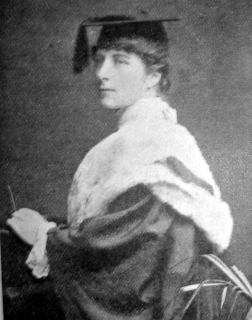
Máire Ní Chinnéide (English: Mary or Molly O’Kennedy) Irish language activist, playwright, first president of the Camogie Association and first female president of Oireachtas na Gaeilge, is born in Rathmines, an affluent inner suburb on the Southside of Dublin, on January 17, 1879.

Ní Chinnéide attends Muckross Park College and the Royal University of Ireland (later the National University of Ireland) where she is a classmate of Agnes O’Farrelly, Helena Concannon, and Hanna Sheehy-Skeffington. She learns the Irish language on holiday in Ballyvourney, County Cork, and earns the first scholarship in Irish language from the Royal University of Ireland, worth £100 a year, which is spent on visits to the Irish college in Ballingeary.

She studies in the school of Old Irish established by Professor Osborn Bergin and is strongly influenced by the Irish Australian professor O’Daly. She later teaches Latin through Irish at Ballingeary and becomes proficient in French, German, Italian and Spanish.

She spends the last £100 of her scholarship on a dowry for her marriage to Sean MacGearailt, later first Accountant General of Revenue in the Irish civil service, with whom she lives originally in Glasnevin and then in Dalkey.

She is a founder member of the radical Craobh an Chéitinnigh, the Keating branch of Conradh na Gaeilge, composed mainly of Dublin-based Kerry people and regarded, by themselves at least, as the intellectual focus of the League.

In August 1904, some six years after the establishment of the earliest women’s hurling teams, the rules of camogie (then called camoguidheacht), first appears in Banba, a journal produced by Craobh an Chéitinnigh. Camogie had come to public attention when it was showcased at the annual Oireachtas (Conradh na Gaeilge Festival) earlier that year, and it differed from men’s hurling in its use of a lighter ball and a smaller playing-field. Ní Chinnéide and Cáit Ní Dhonnchadha, like Ní Chinnéide, an Irish-language enthusiast and cultural nationalist, are credited with having created the game, with the assistance of Ní Dhonnchadha’s scholarly brother Tadhg Ó Donnchadha, who drew up its rules. She is on the first camogie team to play an exhibition match in Navan, County Meath, in July 1904, becomes an early propagandist for the game and, in 1905, is elected president of the infant Camogie Association.

Ní Chinnéide later serves as Vice-President of Craobh an Chéitinnigh, to Cathal Brugha. She is active in Cumann na mBan during the Irish War of Independence and takes the pro-treaty side during the Irish Civil War and attempts to set up a woman’s organisation “in support of the Free State” alongside Jennie Wyse Power.

She first visits the Blasket Islands in 1932 with her daughter Niamh, who dies tragically young. In the summer of 1934, she puts the idea into Peig Sayers‘s head to write a memoir. According to a later interview with Ní Chinnéide “she knew and admired her gift for easy conversation, her gracious charm as a hostess, her talent for illustrating a point she was making by a story out of her own experience that was as rich in philosophy and thought as it was limited geographically.” Peig answers that she has “nothing to write.” She had learned only to read and write in English at school and most of it has been forgotten.

Ní Chinnéide suggests Peig should dictate her memoir to her son Micheal, known to everyone on the island as An File (“The Poet”), but Peig “only shook her head doubtfully.” At Christmas, a packet arrives from the Blaskets with a manuscript, she transcribes it word for word and the following summer brings it back to the Blaskets to read it to Peig. She then edits the manuscript for the Talbot Press. Peig becomes well known as a prescribed text on the Leaving Certificate curriculum in Irish.

Ní Chinnéide has an acting part in the first modern play performed in Irish on the stage, Casadh an tSugáin by Douglas Hyde in 1901. She is later author of children’s plays staged by An Comhar Drámuidhachta at the Oireachtas and the Peacock Theatre, of which Gleann na Sidheóg and An Dúthchas (1908) are published. She is a broadcaster in Irish on 2RN, a wholly owned subsidiary of Raidió Teilifís Éireann, after its foundation in 1926 and author of a translation of Grimms’ Fairy Tales (1923). She is president of the Gaelic Players Dramatic group during the 1930s and a founder of the Gaelic Writers Association in 1939.

She soon becomes interested in writing children’s plays, including Gleann na Sidheóg (Fairy Glen, 1905) and Sidheoga na mBláth (Flower Fairies, 1909. Although there is little information available on the staging of her first play, by the time her second children’s play, Sidheóga na mBláth, is published in An Claidheamh Soluis in December 1907, “Éire Óg” (“Young Ireland”) branches of Conradh na Gaeilge have been established in conjunction with adults’ branches. Patrick Pearse in particular voices the expectation that this play will be staged by many “Éire Óg” branches “before the New Year is very old,” thus indicating the immediate take up of such plays. Indeed, a week after the play’s publication, it is staged in the Dominican College in Donnybrook, Dublin, where Ní Chinnéide had spent several years as an Irish teacher.

Ní Chinnéide dies on April 25, 1967, and is buried in Dean’s Grange Cemetery.

In 2007 the camogie trophy (Máire Ní Chinnéide Cup) for the annual inter-county All-Ireland Junior Camogie Championship is named in her honour.

(Pictured: Máire Ní Chinéide at her graduation, photograph from Banba, 1903)


Leave a comment

Birth of “Alphie” McCourt, Irish American Writer

Alphonsus Joseph “Alphie” McCourt, Irish American writer and memoirist, is born in Limerick, County Limerick, on July 29, 1940. He is the youngest son of Malachy Gerard McCourt, Sr. (1901–1985) and Angela Sheehan (1908–1981), and brother of Michael McCourt, Frank McCourt, the Pulitzer Prize-winning author of Angela’s Ashes, and Malachy McCourt, the writer and actor.

McCourt comes to New York as a young man to live for a time with Frank, ten years his elder. He finds work wherever he can and eventually owns two restaurants in Manhattan. In 1975, he marries Lynn Rockman, with whom he has a daughter, Allison.

For twenty years, from 1993 until he retires in 2013, McCourt works for the Penn South Co-op in the Chelsea neighborhood of Manhattan, in charge of apartment restorations in the 2,800-unit residential complex.

Brendan Keany, general manager of Penn South, recalls meeting McCourt in the late 1980s at Allison’s, a restaurant named for his daughter. The restaurant on Eighth Avenue near Penn South closes after a time, but McCourt goes on to run Los Panchos on Columbus Avenue near 71st Street. However, as a man with a family, running bars and restaurants is not ideal, so he finds the job at Penn South, inspecting apartments and directing their restoration.

The author of short stories, newspaper essays, songs, and verse, McCourt, in 2008, publishes a memoir, A Long Stone’s Throw. Surveying the range of jobs he had taken on in a review of that memoir in Manhattan Express’ sister publication The Villager, the late Jerry Tallmer writes, “Working on a great glop-a-da-glop mainframe computer on Wall Street; issuing tickets for British and Irish Railways; a one-day job as bellhop in a Montreal hotel; a bank teller in Montreal; an encyclopedia salesman — for a month; working at the Army and Air Force Exchange Service on 14th Street as a buyer of luggage and musical instruments, knowing nothing about luggage and less about musical instruments; filing clerk; and, oh yes, teacher.”

Lynn McCourt recalls first meeting her future husband. “We were friends for a long time before we were married,” she says. “He was working as a bartender at the White Horse Tavern when I came in with a writer friend. He told me that he ‘saw the light behind’ me when I came in. He could twist words and turn something ordinary into something poignant. Just before he went to California around 1970, we spent a whole night walking and talking. He came back from California in 1974 and we got married in 1975.”

Then, recalling the devoted relationship McCourt has with Allison, Lynn continues, “Our daughter has special needs and has learning and speech problems. Alphie sang to her every night as a baby and eventually she sang back to him. They were inseparable. He’d have breakfast with her every morning. He was a great father — he, who hadn’t seen his own father very much. When we went to Ireland in 1980, he went north to find his father, and he did find him. I’m a Jewish girl from the Bronx who wanted to marry an Irishman with a brogue, and I did.”

Joe Hurley, of Joe Hurley’s Allstar Irish Rock Review, says McCourt, in his later years, had gotten into singing with the group, performing tunes from “The Great Irish Songbook,” like “The Auld Triangle.” He recalls, “He just performed with us at the Highline Ballroom in March. He loved being around young people. The place was full of young people and rock and roll, and then Alphie comes out — you could hear a pin drop. He would talk about how he had these incredible older brothers… fantastic storyteller. He never tooted his own horn.”

McCourt dies suddenly on July 2, 2016, at his home on the Upper West Side while taking an afternoon nap, just 27 days before his 76th birthday. His brother Michael dies the previous September, nine months earlier. He is survived by his brother Malachy.


Leave a comment

Birth of Julia O’Faolain, Novelist & Short Story Writer

Julia O’Faolain, Irish novelist and short story writer, is born in London on June 6, 1932. She works as a writer, language teacher, editor and translator and lives in France, Italy, and the United States.

Although born in England when her father, Irish writer Seán Ó Faoláin, is lecturing at the Catholic college, St. Mary’s College, at Strawberry Hill, London, O’Faolain grows up in Ireland. The family returns to Ireland when she is just one year old. They live first in Killough House in County Wicklow, where future Taoiseach Garret FitzGerald is a playmate, artist Paul Henry a neighbour and Cork writer Frank O’Connor a regular visitor. The family then moves to Knockaderry House in Killiney, County Dublin, where her father publishes the literary journal The Bell from an outhouse at the bottom of the garden. Writers, poets and intellectuals such as Patrick Kavanagh, Brendan Behan and Conor Cruise O’Brien are regular visitors and often have to entertain her while waiting to speak with her father.

O’Faolain does not begin school until she is eight years old as her mother, Irish writer and teacher Eileen Gould, has little time for nuns. Following her schooling, she completes an arts degree at University College Dublin (UCD) and then further studies at the Sapienza University of Rome and the Sorbonne in Paris. A formidable student and strikingly beautiful, she makes a strong impression on those who meet her.

In search of love, literature and freedom from 1950s Ireland, the young O’Faolain remains abroad working variously as a translator, language teacher, editor and writer in London. She makes lifelong friends who speak highly of her generosity, loyalty and kindness. As well as maintaining a strong interest in politics throughout her life, she attains a black belt in karate and attends karate classes until her early 70s.

In her 2013 memoir, O’Faolain recounts a number of her adult loves before she meets and marries Lauro Martines in Florence in 1957. The couple lives in Florence for a year while Martines completes a travelling fellowship from Harvard University. They then move to Portland, Oregon, where their son Lucien is born in 1959. While in the United States, she teaches French at Reed College in Portland. The family returns to live in Florence from 1962-66 while her husband carries out research. When he is offered a professorship at the University of California, Los Angeles in 1966, they move back to the United States. However, not keen to live full-time in the United States, they purchase a house in Hampstead in 1970 and later in central London where she spends a good deal of time. From the 1990s onwards, she and Lauro spend more and more time in London, and they visit Ireland more during these years. Lucian, a painter and picture repairer, lives in London.

O’Faolain’s novels include No Country for Young Men, which is nominated for the Booker Prize in 1980, Women in the Wall (1975), The Obedient Wife (1982) and The Judas Cloth (1992) which is set in 19th-century Italy. Her first collection of short stories, We Might See Sights and Other Stories, is published in 1968, followed by Man in the Cellar (1974), Melancholy Baby (1978) and Daughters of Passion (1982). And with her husband, she edits Not in God’s Image: Women in History from the Greeks to the Victorians (1973).

O’Faolain’s writings are suffused with themes of clerical intrigue, women’s role in society, power, faith and sexuality. She says once that she is more detached from her characters than her father was. “He was fond of his characters whereas I was more impatient of mine… The fact that he often forgave their foolishness showed that he was fond of Ireland itself, where he lived for the most of his life. I instead left it and found I was happier elsewhere.”

As a writer, O’Faolain is not particularly well-known in Ireland. Following the publication of her memoir in 2013, she is asked by The Irish Times journalist Arminta Wallace if it bothers her that her name does not often figure in lists of famous Irish writers, perhaps because she did not live here. She replies, “Not only do I not live here but when my last book came out someone wrote an article naming me as a ‘forgotten writer’… which was not a cheerful read. It wasn’t in any way offensive, but it wasn’t very comforting…I suppose I didn’t write enough. You mustn’t let too many years go by between books – and I did that.”

O’Faolain dies at the age of 88 in London on October 27, 2020, following a long illness. Her papers, which include manuscripts of her writing and a significant correspondence between her and her father, are donated to UCD in 2018. At the time, archivists expect them to be available to researchers by 2022.


2 Comments

Death of Seán Ó Faoláin, Short Story Writer

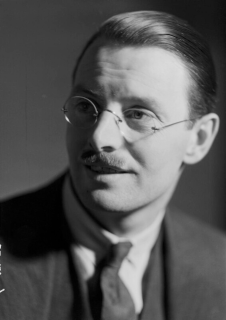
Seán Proinsias Ó Faoláin, short story writer of international repute and one of the most influential figures in 20th-century Irish culture, dies in Dublin on April 20, 1991. He is also a leading commentator and critic.

Ó Faoláin is born John Francis Whelan in Cork, County Cork, on February 27, 1900. He is educated at the Presentation Brothers College secondary school in Cork. He comes under the influence of Daniel Corkery, joining the Cork Dramatic Society, and increasing his knowledge of the Irish language, which he had begun in school. Shortly after entering University College Cork (UCC), he joins the Irish Volunteers and fights in the Irish War of Independence. During the Irish Civil War, he serves as censor for The Cork Examiner and as publicity director for the Irish Republican Army (IRA). After the Republican loss, he receives MA degrees from the National University of Ireland (NUI) and from Harvard University where he studies for three years. He is a Commonwealth Fellow from 1926 to 1928 and is a Harvard Fellow from 1928 to 1929.

Ó Faoláin writes his first stories in the 1920s, eventually completing ninety stories over a period of sixty years. From 1929 to 1933 he lectures at the Catholic college, St. Mary’s College, at Strawberry Hill, London, during which period he writes his first two books. His first book, Midsummer Night Madness, is published in 1932. It is a collection of stories partly based on his Civil War experiences. He afterward returns to Ireland. He publishes four novels, seven additional volumes of short stories, six biographies, three travel books, a play, a memoir, a history book, translations and literary criticism, including one of the rare full-length studies of the short story, The Short Story (1948). He also writes a cultural history, The Irish, in 1947. His last short story volume, Foreign Affairs, is published in 1976. His Collected Stories is published in 1983.

Ó Faoláin produces critical studies of the novel and the short-story form, introduces texts of historical and literary merit, and contributes scores of articles, reviews, and uncollected stories to periodicals in Ireland, Britain, and the United States.

Ó Faoláin is a founder member and editor of the Irish literary periodical The Bell from 1940 to 1946. Under his editorship, The Bell participates in many key debates of the day. It also provides a crucial outlet for established and emerging writers during the lean war years. The list of contributors to The Bell include many of Ireland’s foremost writers, among them Patrick Kavanagh, Patrick Swift, Flann O’Brien, Frank O’Connor and Brendan Behan.

A recurring thread in Ó Faoláin’s work is the idea that national identities are historically produced and culturally hybrid; an additional thesis is that Irish history should be conceived in international terms, and that it should be read, in particular, in the context of social and intellectual developments across Europe.

Ó Faoláin serves as director of the Arts Council of Ireland from 1956 to 1959.

Ó Faoláin marries Eileen Gould, a children’s book writer who publishes several books of Irish folk tales, in 1929. They have two children: Julia (1932–2020), who becomes a Booker-nominated novelist and short story writer, and Stephen (b. 1938).

Ó Faoláin dies in Dublin at the age of 91 on April 20, 1991.

Ó Faoláin is a controversial figure in his own lifetime and two of his books are banned for “indecency” in Ireland — his debut collection of short stories and his second novel, Bird Alone (1936). His legacy has proven divisive. If some consider him a social liberal cosmopolitan who challenges “proscriptive” definitions of Irish culture, others see him as a chauvinistic snob who paradoxically restricts the development of Irish writing. Proto-revisionist or nascent postcolonial, O’Faoláin has been considered both, sometimes within the same critical survey. Either way, his work is central to the evolution of a post–Literary Revival aesthetic, and his voice is one of the most prominent, and eloquent, in the fight against censorship in Ireland.

(Pictured: Portrait of Seán Ó Faoláin by Howard Coster, 1930s, National Portrait Gallery)


Leave a comment

Birth of Edna O’Brien, Novelist, Playwright & Poet

Edna O’Brien, novelist, memoirist, playwright, poet and short story writer, is born in Tuamgraney, County Clare on December 15, 1930. Philip Roth describes her as “the most gifted woman now writing in English,” while the former President of Ireland Mary Robinson cites her as “one of the great creative writers of her generation.” Her works often revolve around the inner feelings of women, and their problems in relating to men, and to society as a whole.

O’Brien is the youngest child of “a strict, religious family.” From 1941 to 1946 she is educated by the Sisters of Mercy, a circumstance that contributes to a “suffocating” childhood. “I rebelled against the coercive and stifling religion into which I was born and bred. It was very frightening and all pervasive. I’m glad it has gone.” She is fond of a nun as she deeply misses her mum and tries to identify the nun with her mother.

In 1950, O’Brien is awarded a licence as a pharmacist. In Ireland, she reads such writers as Leo Tolstoy, William Makepeace Thackeray, and F. Scott Fitzgerald. In 1954, she marries, against her parents’ wishes, the Irish writer Ernest Gébler and the couple moves to London. They have two sons, but the marriage is dissolved in 1964. Gébler dies in 1998.

In London, O’Brien purchases Introducing James Joyce, with an introduction written by T. S. Eliot. When she learns that James Joyce‘s A Portrait of the Artist as a Young Man is autobiographical, it makes her realise where she might turn, should she decide to write herself. In London she starts work as a reader for Hutchinson, where on the basis of her reports she is commissioned, for £50, to write a novel. Her first novel, The Country Girls (1960), is often credited with breaking silence on sexual matters and social issues during a repressive period in Ireland following World War II.

This novel is the first part of a trilogy of novels which includes The Lonely Girl (1962) and Girls in Their Married Bliss (1964). Shortly after their publication, these books are banned and, in some cases burned, in her native country due to their frank portrayals of the sex lives of their characters. Her novel A Pagan Place (1970) is about her repressive childhood. Her parents are vehemently against all things related to literature and her mother strongly disapproves of her daughter’s career as a writer.

O’Brien is a panel member for the first edition of the BBC‘s Question Time in 1979. In 2017, she becomes the sole surviving member.

In 1980, she writes a play, Virginia, about Virginia Woolf, and it is staged originally in June 1980 at the Stratford Festival, Ontario, Canada and subsequently in the West End of London at the Theatre Royal Haymarket with Maggie Smith and directed by Robin Phillips. It is staged at The Public Theater in New York City in 1985.

Other works include a biography of James Joyce, published in 1999, and one of the poet Lord Byron, Byron in Love (2009). House of Splendid Isolation (1994), her novel about a terrorist who goes on the run, marks a new phase in her writing career. Down by the River (1996) concerns an under-age rape victim who seeks an abortion in England, the “Miss X case.” In the Forest (2002) deals with the real-life case of Brendan O’Donnell, who abducts and murders a woman, her three-year-old son, and a priest, in rural Ireland.

O’Brien now lives in London. She receives the Irish PEN Award in 2001. Saints and Sinners wins the 2011 Frank O’Connor International Short Story Award, the world’s richest prize for a short story collection. Faber and Faber publishes her memoir, Country Girl, in 2012. In 2015, she is bestowed Saoi by Aosdána.


Leave a comment

Death of Frank O’Connor, Poet & Novelist

Frank O’Connor, Irish writer of over 150 works and best known for his short stories and memoirs, dies of a heart attack in Dublin on March 10, 1966. The Frank O’Connor International Short Story Award is named in his honour.

O’Connor is born Michael Francis O’Donovan in Cork, County Cork, on September 17, 1903. The only child of Minnie (née O’Connor) and Michael O’Donovan, he attends Saint Patrick’s School on Gardiner’s Hill and North Monastery CBS. His early life is marked by his father’s alcoholism, debt, and ill-treatment of his mother. His childhood is shaped in part by his mother, who supplies much of the family’s income by cleaning houses, because his father is unable to keep steady employment due to his drunkenness. He adores his mother and is bitterly resentful of his father. In his memoirs, he recalls his childhood as “those terrible years,” and admits that he has never been able to forgive his father for his abuse of himself and his mother. When his mother is seventy, O’Connor is horrified to learn from his own doctor that she has suffered for years from chronic appendicitis, which she has endured with great stoicism, as she has never had the time nor the money to see a doctor.

In 1918 O’Connor joins the First Brigade of the Irish Republican Army (IRA) and serves in combat during the Irish War of Independence. He opposes the Anglo-Irish Treaty of 1921 and joins the Anti-Treaty IRA during the Irish Civil War, working in a small propaganda unit in Cork city. He is one of twelve thousand Anti-Treaty combatants who are interned by the government of the new Irish Free State. Between 1922 and 1923 he is imprisoned in Cork City Gaol and in Gormanston, County Meath.

Following his release, O’Connor takes various positions including that of teacher of the Irish language, theatre director, and librarian. He begins to move in literary circles and is befriended by George William Russell (Æ), through whom he comes to know most of the well-known Irish writers of the day, including William Butler Yeats, Lennox Robinson, F. R. Higgins and Lady Gregory. In his memoirs, he pays tribute to both Yeats and Russell for the help and encouragement they gave him.

In 1935, O’Connor becomes a member of the board of directors of the Abbey Theatre in Dublin, founded by Yeats and other members of the Irish National Theatre Society. In 1937, he becomes managing director of the Abbey. Following Yeats’s death in 1939, O’Connor’s long-standing conflict with other board members comes to a head and he leaves the Abbey later that year. In 1950, he accepts invitations to teach in the United States, where many of his short stories have been published in The New Yorker and have won great acclaim. He spends much of the 1950s in the United States, although it is always his intention to return eventually to Ireland.

From the 1930s to the 1960s O’Connor is a prolific writer of short stories, poems, plays, and novellas. His work as an Irish teacher complements his plethora of translations into English of Irish poetry, including his initially banned translation of Brian Merriman‘s Cúirt an Mheán Oíche (The Midnight Court). Many of his writings are based on his own life experiences – notably his well-known The Man of the House in which he reveals childhood details concerning his early life in County Cork. The Sullivan family in this short story, like his own boyhood family, is lacking a proper father figure.

O’Connor’s early years are recounted in An Only Child, a memoir published in 1961 which has the immediacy of a precocious diary. He continues his autobiography through his time with the Abbey Theatre in Dublin in his book My Father’s Son, which is published posthumously in 1968. It contains valuable character sketches of many of the leading Irish literary figures of the 1930s, in particular Yeats and Æ.

Frank O’Connor has a stroke while teaching at Stanford University in 1961, and he later dies from a heart attack in Dublin on March 10, 1966. He is buried in Deans Grange Cemetery two days later.