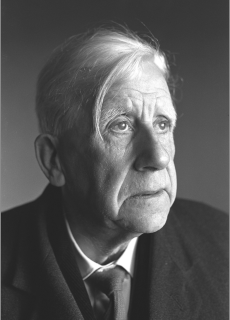
Eugene Rutherford Watters is the eldest of two sons and two daughters born to Thomas Watters, a soldier, and his wife, Maud Sproule. His second name comes from his grandfather, Rutherford Sproule. He is educated at Garbally College. He enters St. Patrick’s Teacher Training College, Drumcondra, Dublin, in 1939, graduating with a Diploma in Education in 1945. He is awarded an MA, by University College Dublin in 1947.
Ó Tuairisc writes novels, verse, drama and criticism in both Irish and English. His first major publication is his controversial novel Murder in Three Moves (1960), followed by the Irish-language prose epic L’Attaque (1962), which wins an Irish Book Club award. Both works have a strong poetic flavour. His next book is a volume of verse entitled Week-End. His narrative poem The Weekend of Dermot and Grace (1964), an Irish version of Venus and Adonis, is considered his finest work.
Ó Tuairisc’s first wife, the Irish artist Una McDonnell, dies in 1965. He produces little during the five years following McDonnell’s death, which is an unsettled period of limited productivity, changing residence and jobs, and, ultimately, serious depression. In 1972 he marries the writer Rita Kelly, also of Ballinasloe. They live in the lock house at the Maganey Lock on the River Barrow that he had bought near Carlow, County Carlow.
In 1981 Ó Tuairisc publishes The Road to Brightcity: and other stories (Swords: Poolbeg Press, 1981), a translation of nine of the best short stories written originally in Irish by Máirtín Ó Cadhain. Also in 1981, he and Rita Kelly publish a joint collection of their poems, Dialann sa Díseart.
Like Diarmaid Ó Súilleabháin, Ó Tuairisc “challenged the critical orthodoxy by openly proclaiming that their standards could not be those of the Gaeltacht and by demanding a creative freedom that would acknowledge hybridity and reject the strictures of the linguistic purists.”
Ó Tuairisc is an inaugural member of Aosdána, when it is founded in 1981, and the first of its members to die. He is a recipient of an Arts Council of Ireland prize, as well as an Abbey Theatre prize for a Christmas pantomime in Irish.
Ó Tuairisc dies on August 24, 1982. He is survived by his second wife, Rita. A bibliography of his work, together with biographical information, is published in Irish in 1988.
Clarke is born in 83 Manor Street, Stoneybatter, Dublin, on May 9, 1896. His main contribution to Irish poetry is the rigour with which he uses technical means borrowed from classical Irish language poetry when writing in English. Effectively, this means writing English verse based not so much on metre as on complex patterns of assonance, consonance, and half rhyme. Describing his technique to Robert Frost, he says, “I load myself down with chains and try to wriggle free.”
Clarke’s early poetry clearly shows the influence of Yeats. His first book, The Vengeance of Fionn, is a long narrative poem retelling an Ossianic legend. It meets with critical acclaim and, unusually for a first book of poetry, goes to a second edition. Between this and the 1938 volume Night and Morning, he publishes a number of collections, all of which, to one extent or another, can be seen as being written in the shadow of Yeats. There is, however, one significant difference. Unlike the older poet, Clarke is a Catholic, and themes of guilt and repentance run through this early work.
Between 1938 and 1955, Clarke publishes no new lyric or narrative poetry. He is co-founder of the Lyric Theatre, Dublin and writes a number of verses plays for them. He also works as a journalist and has a weekly poetry programme on RTÉ radio. It seems likely that he also experiences some kind of personal crisis during this time, and this has significant consequences for his later poetry.
Clarke returns to publishing poetry with the 1955 collection Ancient Lights and is to continue writing and publishing prolifically for the remainder of his life. Although he continues to use the same Gaelic-derived techniques, this late poetry is markedly different from his earlier work. Many of the later poems are satires of the Irish church and state, while others are sensual celebrations of human sexuality, free of the guilt of the earlier poems. He also publishes the intensely personal Mnemosyne Lay in Dust, which is a poem sequence detailing the fictional Maurice Devanes’s nervous breakdown and subsequent recovery.
Clarke also comes to admire the work of more avant-garde poets like Ezra Pound and Pablo Neruda, both of whom he writes poems about. A number of the late long poems, such as, for instance, the 1971 Tiresias, show the effects of studying these poets and their looser formal structures. He sets up the Bridge Press to publish his own work, which allows him the freedom to publish work that many mainstream Irish publishers of the time might have been reluctant to handle. His Collected Poems is published in 1974 and a Selected Poems in 1976.
In addition to some twenty volumes of poetry and numerous plays, Clarke publishes three novels: The Bright Temptation (1932), The Singing Men at Cashel (1936), and The Sun Dances at Easter (1952). All of these are banned by the Censorship of Publications Board (Ireland). He also publishes two volumes of memoirs, Twice Round the Black Church (1962) and A Penny in the Clouds (1968), and a number of scattered critical essays and book reviews. While all of these prose writings are of interest, his reputation rests firmly on his poetry.
In 1920 Clarke marries Cornelia (Lia) Cummins. The marriage effectively lasts only a few days, and he spends several months in St. Patrick’s Hospital recovering from it, but they do not divorce before Cummins dies in 1943. He meets, has three sons with, and later marries (1945) Norah Esmerelda Patricia Walker (1900–1985), granddaughter of Matthew Harris, MP for East Galway from 1885 to 1890.
Clarke lives in Bridge House beside Templeogue Bridge which spans the River Dodder in the south Dublin suburb of Templeogue. After his death on March 19, 1974, there is a proposal to preserve the house and his library of 6,500 books as a memorial. This is not possible owing to long-term plans to demolish the house and widen the road. The old Templeogue Bridge, built in 1800, and Bridge House are removed. A new bridge is opened by CouncillorBernie Malone, Chairman Dublin City Council, on December 11, 1984, which is renamed Austin Clarke Bridge in his honour.
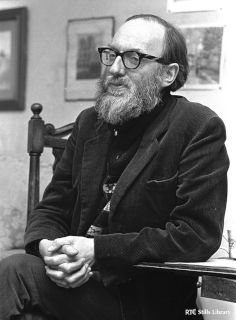
Shawcross studies at Bolton College of Art from 1955 to 1958, and Lancaster College of Art from 1958 to 1960, before moving to Belfast in 1962 to take up a part-time lecturer’s post at the Belfast College of Art, becoming full-time in 1968. He continues to lecture there until his retirement in 2004.
Shawcross has exhibited nationally, with one-man shows in London, Manchester, Dublin and Belfast, and internationally in Hong Kong and the United States, and his work is found in many private and corporate collections.
Shawcross is elected an Associate of the Royal Ulster Academy of Art in 1975, and is made a full Academician in 1977. He wins the Academy’s Conor Award in 1975, its gold medal in 1978, 1982, 1987, 1994, 1997 and 2001, and its James Adam Prize in 1998. He is also a member of the Royal Hibernian Academy (RHA). He is awarded the Gallaher Portrait Prize in 1966.
In 2010, the Merrion Hotel, Dublin, hosts a private collection of the works of Shawcross. In 2015, he exhibits a collection of six foot tall book covers inspired by original Penguin paperbacks at the National Opera House in Wexford, County Wexford. In 2018, he donates to Belfast City Council a collection of 36 paintings dedicated to ‘Writers of Belfast’ in a show of appreciation to his adopted home city. A major retrospective of his works are exhibited at the F.E. McWilliam Gallery and Studio, Banbridge, County Down, in the same year.
Shawcross is a Patron of the charity YouthAction Northern Ireland. He lives in Hillsborough, County Down, Northern Ireland.
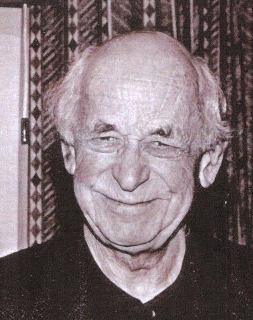
Hutchinson’s father, Harry Hutchinson, a Scottish printer whose own father had left Dublin to find work in Scotland, is Sinn Féin treasurer in Glasgow and is interned in Frongoch internment camp in 1919–21. His mother, Cathleen Sara, is born in Cowcaddens, Glasgow, of emigrant parents from County Donegal. She is a friend of Constance Markievicz. In response to a letter from Cathleen, Éamon de Valera finds work in Dublin for Harry as a clerk in the Labour Exchange, and later he holds a post in Stationery Office.
Hutchinson is five years old when the family moves to Dublin and is the last to be enrolled in St. Enda’s School before it closes. He then goes to school at Synge Street CBS where he learns Irish and Latin. One of his close friends there is the poet and literary critic John Jordan. In 1948 he attends University College Dublin (UCD) where he spends a year and a half, learning Spanish and Italian.
Having published some poems in The Bell in 1945, Hutchinson’s poetic development is greatly influenced by a 1950 holiday in Spain and Portugal. A short stop en route at Vigo brings him into contact for the first time with the culture of Galicia. Later, in Andalusia, he is entranced by the landscape and by the works of the Spanish poets Federico García Lorca, Emilio Prados and Luis Cernuda.
In 1951 Hutchinson leaves Ireland again, determined to live in Spain. Unable to get work in Madrid, as he had hoped, he travels instead to Geneva, where he gets a job as a translator with the International Labour Organization, which brings him into contact with Catalan exiles, speaking a language then largely suppressed in Spain. An invitation by a Dutch friend leads to a visit to the Netherlands, in preparation for which he teaches himself the Dutch language.
Hutchinson returns to Ireland in 1953 and becomes interested in the Irish language poetry of writers such as Piaras Feiritéar and Aonghus Fionn Ó Dálaigh and publishes a number of poems in Irish in the magazine Comhar in 1954. The same year he travels again to Spain, this time to Barcelona, where he learns the Catalan and Galician languages, and gets to know Catalan poets such as Salvador Espriu and Carles Riba. With the British poet P. J. Kavanagh, he organises a reading of Catalan poetry in the British Institute.
Hutchinson goes home to Ireland in 1957 but returns to Barcelona in 1961 and continues to support Catalan poets. An invitation by the publisher Joan Gili to translate some poems by Josep Carner leads to the publication of his first book, a collection of thirty of Carner’s poems in Catalan and English, in 1962. A project to publish his translation of Espriu’s La Pell de brau (The Bull-skin), falls through some years later. Some of the poems from this project are included in the collection Done into English.
In 1963, Hutchinson’s first collection of original poems in English, Tongue Without Hands, is published by Dolmen Press in Ireland. In 1967, having spent nearly ten years altogether in Spain, he returns to Ireland, making a living as a poet and journalist writing in both Irish and English. In 1968, a collection of poems in Irish, Faoistin Bhacach (A Lame Confession), is published. Expansions, a collection in English, follows in 1969. Friend Songs (1970) is a new collection of translations, this time of medieval poems originally written in Galician-Portuguese. In 1972 Watching the Morning Grow, a new collection of original poems in English, comes out, followed in 1975 by another, The Frost Is All Over.
In October 1971, Hutchinson takes up the Gregory Fellowship in Poetry at the University of Leeds, on the recommendation of Professor A. Norman Jeffares. There is some controversy around the appointment following accusations, later retracted, that Jeffares had been guilty of bias in the selection because of their joint Irish heritage. He holds tenure at the University for three years, and during that time contributes to the University’s influential poetry magazine Poetry & Audience.
From 1977 to 1978 Hutchinsonn compiles and presents Oró Domhnaigh, a weekly radio programme of Irish poetry, music and folklore for Ireland’s national network, RTÉ. He also contributes a weekly column on the Irish language to the station’s magazine RTÉ Guide for over ten years. A collaboration with Melita Cataldi of Old Irish lyrics into Italian is published in 1981. Another collection in English, Climbing the Light (1985), which also includes translations from Irish, Italian and Galician, is followed in 1989 by his last Irish collection, Le Cead na Gréine (By Leave of the Sun). The Soul that Kissed the Body (1990) is a selection of his Irish poems translated into English. His most recent English collection is Barnsley Main Seam (1995). His Collected Poems is published in 2002 to mark his 75th birthday. This is followed in 2003 by Done into English, a selection of many of the translated works he produced over the years.
A co-editor and founder of the literary journal Cyphers, Hutchinson receives the Butler Award for Irish writing in 1969. He is a member of Aosdána, the state-supported association of artists, from which he receives a cnuas (stipend) to allow him to continue writing. He describes this as “a miracle and a godsend” as he is fifty-four when invited to become a member and is at the end of his tether. A two-day symposium of events is held at Trinity College Dublin, to celebrate his 80th birthday in 2007, with readings from his works by writers including Macdara Woods, Eiléan Ní Chuilleanáin, Paul Durcan and Sujata Bhatt. His most recent collection, At Least for a While (2008), is shortlisted for the Poetry Now Award.
Hutchinson lives in Rathgar, Dublin, and dies of pneumonia in Dublin on January 14, 2012.
Higgins is born on April 24, 1896, on the west coast of Ireland in Foxford, County Mayo. He is the eldest son of Joseph, a policeman stationed in Foxford at the time of his son’s birth, and Annie Higgins. His poem “Father and Son” is a loving tribute to his father. He grows up in Ballivor, County Meath, where his family has farmed for several generations. He spends the largest part of his adult life in Dublin, in a house he has built beside the River Dodder in Rathfarnham. His health is poor, and though his friends are inclined to regard him as a hypochondriac, his frequent predictions that he would die young prove to be accurate.
Higgins marries Beatrice May Moore in 1921. The marriage is a happy one. Even Frank O’Connor, who dislikes him, praises him as a kind and considerate husband. He is however reputed to have had a number of affairs, notably with the actress Ria Mooney.
Higgins is a student of William Butler Yeats and serves on the board of the Abbey Theatre from 1935 until his death. His best-known book of poetry is The Gap of Brightness (1940). He is also well known for his poem “Father and Son.” He writes a moving elegy for his fellow poet Pádraic Ó Conaire. He is generally acknowledged to be a fine poet but is less successful in his Abbey Theatre work. Frank O’Connor says unkindly that Higgins could not direct a children’s poetry recitation.
In 1937 Higgins is tour manager of the Abbey Theatre production of Teresa Deevy‘s Katie Roche, which tours to the Ambassador Theatre in New York City. There are five performances from October 2-6. His Abbey career can be seen in the Abbey Theatre archives.
Higgins is a popular and convivial man. Even O’Connor, who comes to regard him with deep suspicion, admits that he is a delightful person to know. His circle of friends includes many of the leading Irish literary figures of his time, including Yeats, Padraic O Conaire, George William Russell, Lennox Robinson, and for a time O’Connor. O’Connor, however, comes to regard him as untrustworthy and a troublemaker, and describes him unflatteringly in his memoir My Father’s Son. For Yeats, Higgins seems to feel a genuine affection, once remarking that he never left Yeats’ house without “feeling like a thousand dollars.” He is also capable of great kindness and generosity to younger writers like Patrick Kavanagh.
(Pictured: “F. R. Higgins,” Oil on Canvas by Sean O’Sullivan, courtesy of the Abbey Theatre, Dublin)
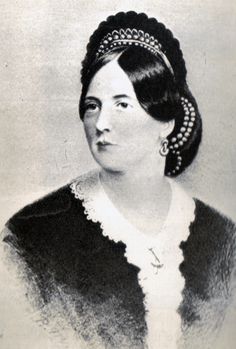
Jane is the last of the four children of Charles Elgee, the son of Archdeacon John Elgee, a Wexford solicitor, and his wife Sarah (née Kingsbury). Her great-grandfather is an Italian who had come to Wexford in the 18th century. She has a special interest in Irish folktales, which she helps to gather. She marries Sir William Wilde on November 12, 1851, and they have three children, William Charles Kingsbury Wilde (1852–1899), Oscar Fingal O’Flahertie Wills Wilde (1854–1900), and Isola Francesca Emily Wilde (1857–1867).
Wilde, who is the niece of Charles Maturin, writes for the Young Ireland movement of the 1840s, publishing poems in The Nation under the pseudonym of “Speranza.” Her works include pro-Irish independence and anti-British writing. She is sometimes known as “Speranza of the Nation.” Charles Gavan Duffy is the editor when “Speranza” writes commentary calling for armed revolution in Ireland. The authorities at Dublin Castle shut down the paper and bring the editor to court. Duffy refuses to name who has written the offending article. “Speranza” reputedly stands up in court and claims responsibility for the article. The confession is ignored by the authorities. But in any event the newspaper is permanently shut down by the authorities.
Wilde is an early advocate of women’s rights, and campaigns for better education for women. She invites the suffragistMillicent Fawcett to her home to speak on female liberty. She praises the passing of the Married Women’s Property Act 1882, preventing women from having to enter marriage “as a bond slave, disenfranchised of all rights over her fortune.”
William Wilde is knighted in January 1864, but the family celebrations are short-lived, for in the same year Sir William and Lady Wilde are at the centre of a sensational Dublin court case regarding a young woman called Mary Travers, the daughter of a colleague of Sir William’s, who claims that he had seduced her and who then brings an action against Lady Wilde for libel. Mary Travers wins the case and costs of £2,000 are awarded against Lady Wilde. Then, in 1867, their daughter Isola dies of fever at the age of nine. In 1871 the two illegitimate daughters of Sir William are burned to death and in 1876 Sir William himself dies. The family discovers that he is virtually bankrupt.
Lady Wilde leaves Dublin for London in 1879, where she joins her two sons, Willie, a journalist, and Oscar, who is making a name for himself in literary circles. She lives with her older son in poverty, supplementing their meagre income by writing for fashionable magazines and producing books based on the researches of her late husband into Irish folklore.
Lady Wilde contracts bronchitis in January 1896 and, dying, asks for permission to see Oscar, who is in prison. Her request is refused. It is claimed that her “fetch” appears in Oscar’s prison cell as she dies at her home, 146 Oakley Street, Chelsea, on February 3, 1896. Willie Wilde, her older son, is penniless, so Oscar pays for her funeral, which is held on February 5, at Kensal Green Cemetery in London. A headstone proves too expensive and she is buried anonymously in common ground. A monument to her, in the form of a Celtic cross, is erected at Kensal Green Cemetery by the Oscar Wilde Society in 1999.
McFadden is born to Roland Victor MCFadden and his wife Maud Steele. A short time after his birth the family relocates to Belfast. He is educated at Knock Grammar School, Regent House School in Newtownards, and later graduates in Law from Queen’s University Belfast in 1944. He becomes a prominent lawyer and an influential figure in the Belfast literary scene.
McFadden’s first poem is published before he is thirteen. His earliest influences are from magazines and journals that his father brings home, and by Francis Turner Palgrave‘s Golden Treasury. He first comes to prominence as a promoter of Ulster literature in the 1940s when he edits two anthologies of poetry, Ulster Voices and Irish Voices in 1943. In 1948, he co-founds with Barbara Edwards (née Hunter) the Northern Irish poetry magazine Rann and then, co-edits it with her during its whole run, until 1953. Like its predecessor Lagan, it is unapologetically regionalist.
McFadden is the author of nine volumes of poetry, from Swords and Ploughshares (1943) to the posthumously published Last Poems (2002). Among his poems are “Saint Francis and the Birds” and “Independence”. His book, The Garryowen, is published by Chatto & Windus in the Phoenix Living Poets series. Most recently, his poem “Post-War” has been anthologised in Armistice: A Laureate’s Choice of Poems of War and Peace (Faber Poetry) (2018). There is a long gap between 1947 and 1971 when he publishes no collections of his work, however he continues to write and publishes in periodicals and newspapers such as The Irish Times where in that time he has sixty poems printed. His voice is well known on local BBC Radio through the Poetry Notebooks series, and he also has several verse-plays broadcast.
In 1952 McFadden marries Margaret Ferguson. Together they produce three sons and two daughters. He lives for a number of years in Lisburn, County Antrim. Inspired by Herbert Read and Alex Comfort, he describes himself as a pacifist and an anarchist in 1999. McFadden dies at his Belfast home on September 15, 1999.
The Roy McFadden Papers, comprising the poet’s personal manuscripts and papers, are lodged at Queen’s University Belfast. The Roy McFadden Library at Trinity College Dublin comprises books and journals on Irish and world literature from his collection. A comprehensive collection of his published work is held at the National Poetry Library, Southbank Centre, London.
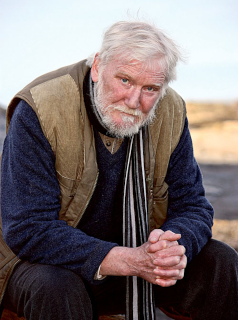
Healy is the son of a Guard. As a child the family moves to Cavan, where he attends the local secondary school. In his late teens he moves to London and works in a succession of jobs, including barman, security man and as a labourer. He later returns to Ireland, settling in Ballyconnell, County Sligo, a small settlement on the Atlantic coast.
Often overlooked due to his relatively low public profile, Healy’s work is admired by his Irish literary predecessors, peers and successors alike, many of whom idolise him. Among the writers to have spoken highly of him are Seamus Heaney, Eugene McCabe, Roddy Doyle, Patrick McCabe and Anne Enright.
Healy dies at his home in Ballyconnell on June 29, 2014, while awaiting an ambulance after suddenly being taken ill. He is laid to rest at Carrigans Cemetery following funeral mass by Fr. Michael Donnelly at St. Patrick’s Church in Maugherow.
David Whyte, Anglo-Irishpoet, is born in Mirfield, West Yorkshire, England on November 2, 1955. He has said that all of his poetry and philosophy are based on “the conversational nature of reality.” His book The Heart Aroused: Poetry and the Preservation of the Soul in Corporate America (1994) topped the best-seller charts in the United States.
Whyte’s mother is from Waterford, County Waterford, and his father is a Yorkshireman. He attributes his poetic interest to both the songs and the poetry of his mother’s Irish heritage and to the landscape of West Yorkshire. He grows up in West Yorkshire and comments that he had “a Wordsworthian childhood,” in the fields and woods and on the moors. He has a degree in marine zoology from Bangor University, a public university in Bangor, Gwynedd, Wales.
During his twenties, Whyte works as a naturalist and lives in the Galápagos Islands, where he experiences a near drowning on the southern shore of Hood Island. He leads anthropological and natural history expeditions in the Andes, the Amazon and the Himalayas.
Whyte moves to the United States in 1981 and begins a career as a poet and speaker in 1986. From 1987, he begins taking his poetry and philosophy to larger audiences, including consulting and lecturing on organisational leadership models in the United States and UK exploring the role of creativity in business. He has worked with companies such as Boeing, AT&T, NASA, Toyota, the Royal Air Force and the Arthur Andersen accountancy group.
Work and vocation, and “Conversational Leadership” are the subjects of several of Whyte’s prose books, including Crossing the Unknown Sea: Work as Pilgrimage of Identity, The Three Marriages: Reimagining Work, Self and Relationship, and The Heart Aroused: Poetry and the Preservation of The Soul in Corporate America which tops the business best seller lists, selling 155,000 copies.
Whyte has written ten volumes of poetry and four books of prose. Pilgrim, published in May 2012, is based on the human need to travel, “From here to there.” The House of Belonging looks at the same human need for home. He describes his collection Everything Is Waiting For You (2003) as arising from the grief at the loss of his mother. His latest book is Consolations: The Solace, Nourishment and Underlying Meaning of Everyday Words, an attempt to ‘rehabilitate’ many everyday words we often use only in pejorative or unimaginative ways. He has also written for newspapers, including The Huffington Post and The Observer. He leads group poetry and walking journeys regularly in Ireland, England and Italy.
Whyte has spent a portion of every year for the last twenty-five years in County Clare. Over the years and over a number of volumes of poetry he has built a cycle of poems that evoke many of the ancient pilgrimage sites of The Burren mountains of North Clare and of Connemara.
Whyte runs the “Many Rivers” organisation and “Invitas: The Institute for Conversational Leadership,” which he founds in 2014. He has lived in Seattle and on Whidbey Island and currently lives in the U.S. Pacific Northwest. He holds U.S., British and Irish citizenship. He is married to Gayle Karen Young, former Chief Talent and Culture Officer of the Wikimedia Foundation. He has a son, Brendan, from his first marriage to Autumn Preble and a daughter, Charlotte, from his second marriage to Leslie Cotter. He has practised Zen and was a regular rock climber. He is a close friend of the late Irish poet John O’Donohue.
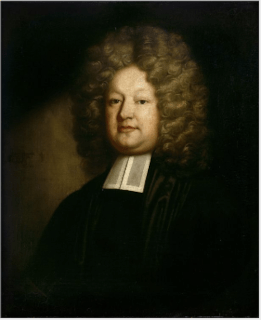
Brady is a zealous promoter of the Glorious Revolution and suffers for his beliefs in consequence. When the Williamite War in Ireland breaks out in 1690, he, by his influence, thrice prevented the burning of the town of Bandon, after James II gives orders for its destruction following the Capture of Bandon. The same year he is employed by the people of Bandon to lay their grievances before the Parliament of England. He soon afterward settles in London, where he obtains various preferments. At the time of his death, he holds the livings of Clapham and Richmond.
Brady’s best-known work, written with his collaborator Nahum Tate, is New Version of the Psalms of David, a metrical version of the Psalms. It is licensed in 1696 and largely ousts the old Sternhold and Hopkins Psalter. His ode Hail! Bright Cecilia, based on a similar ode by John Dryden, is written in 1692 in honour of the feast day of Saint Cecilia, patron saint of musicians. It is set to music by Henry Purcell in 1697. Like Dryden, he also translates Virgil‘s Aeneid, and writes several smaller poems and dramas, as well as sermons.
Brady marries Letitia Synge and has four sons and four daughters. He dies on May 20, 1726, and is buried in the church at Richmond, London. Notable descendants of Brady include Maziere Brady, Lord Chancellor of Ireland.
(Pictured: “Portrait of Nicholas Brady (1659-1726),” oil on canvas by Hugh Howard (1675-1737), circa 1715, National Gallery of Ireland)





 seamus dubhghaill