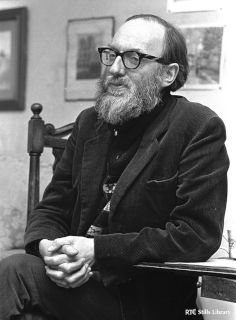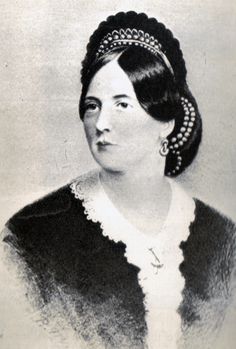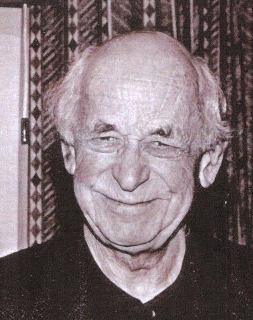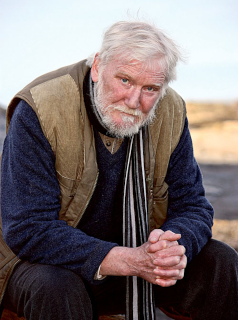
Healy is the son of a Guard. As a child the family moves to Cavan, where he attends the local secondary school. In his late teens he moves to London and works in a succession of jobs, including barman, security man and as a labourer. He later returns to Ireland, settling in Ballyconnell, County Sligo, a small settlement on the Atlantic coast.
Often overlooked due to his relatively low public profile, Healy’s work is admired by his Irish literary predecessors, peers and successors alike, many of whom idolise him. Among the writers to have spoken highly of him are Seamus Heaney, Eugene McCabe, Roddy Doyle, Patrick McCabe and Anne Enright.
Healy dies at his home in Ballyconnell on June 29, 2014, while awaiting an ambulance after suddenly being taken ill. He is laid to rest at Carrigans Cemetery following funeral mass by Fr. Michael Donnelly at St. Patrick’s Church in Maugherow.
David Whyte, Anglo-Irishpoet, is born in Mirfield, West Yorkshire, England on November 2, 1955. He has said that all of his poetry and philosophy are based on “the conversational nature of reality.” His book The Heart Aroused: Poetry and the Preservation of the Soul in Corporate America (1994) topped the best-seller charts in the United States.
Whyte’s mother is from Waterford, County Waterford, and his father is a Yorkshireman. He attributes his poetic interest to both the songs and the poetry of his mother’s Irish heritage and to the landscape of West Yorkshire. He grows up in West Yorkshire and comments that he had “a Wordsworthian childhood,” in the fields and woods and on the moors. He has a degree in marine zoology from Bangor University, a public university in Bangor, Gwynedd, Wales.
During his twenties, Whyte works as a naturalist and lives in the Galápagos Islands, where he experiences a near drowning on the southern shore of Hood Island. He leads anthropological and natural history expeditions in the Andes, the Amazon and the Himalayas.
Whyte moves to the United States in 1981 and begins a career as a poet and speaker in 1986. From 1987, he begins taking his poetry and philosophy to larger audiences, including consulting and lecturing on organisational leadership models in the United States and UK exploring the role of creativity in business. He has worked with companies such as Boeing, AT&T, NASA, Toyota, the Royal Air Force and the Arthur Andersen accountancy group.
Work and vocation, and “Conversational Leadership” are the subjects of several of Whyte’s prose books, including Crossing the Unknown Sea: Work as Pilgrimage of Identity, The Three Marriages: Reimagining Work, Self and Relationship, and The Heart Aroused: Poetry and the Preservation of The Soul in Corporate America which tops the business best seller lists, selling 155,000 copies.
Whyte has written ten volumes of poetry and four books of prose. Pilgrim, published in May 2012, is based on the human need to travel, “From here to there.” The House of Belonging looks at the same human need for home. He describes his collection Everything Is Waiting For You (2003) as arising from the grief at the loss of his mother. His latest book is Consolations: The Solace, Nourishment and Underlying Meaning of Everyday Words, an attempt to ‘rehabilitate’ many everyday words we often use only in pejorative or unimaginative ways. He has also written for newspapers, including The Huffington Post and The Observer. He leads group poetry and walking journeys regularly in Ireland, England and Italy.
Whyte has spent a portion of every year for the last twenty-five years in County Clare. Over the years and over a number of volumes of poetry he has built a cycle of poems that evoke many of the ancient pilgrimage sites of The Burren mountains of North Clare and of Connemara.
Whyte runs the “Many Rivers” organisation and “Invitas: The Institute for Conversational Leadership,” which he founds in 2014. He has lived in Seattle and on Whidbey Island and currently lives in the U.S. Pacific Northwest. He holds U.S., British and Irish citizenship. He is married to Gayle Karen Young, former Chief Talent and Culture Officer of the Wikimedia Foundation. He has a son, Brendan, from his first marriage to Autumn Preble and a daughter, Charlotte, from his second marriage to Leslie Cotter. He has practised Zen and was a regular rock climber. He is a close friend of the late Irish poet John O’Donohue.
Brady is a zealous promoter of the Glorious Revolution and suffers for his beliefs in consequence. When the Williamite War in Ireland breaks out in 1690, he, by his influence, thrice prevented the burning of the town of Bandon, after James II gives orders for its destruction following the Capture of Bandon. The same year he is employed by the people of Bandon to lay their grievances before the Parliament of England. He soon afterward settles in London, where he obtains various preferments. At the time of his death, he holds the livings of Clapham and Richmond.
Brady’s best-known work, written with his collaborator Nahum Tate, is New Version of the Psalms of David, a metrical version of the Psalms. It is licensed in 1696 and largely ousts the old Sternhold and Hopkins Psalter. His ode Hail! Bright Cecilia, based on a similar ode by John Dryden, is written in 1692 in honour of the feast day of Saint Cecilia, patron saint of musicians. It is set to music by Henry Purcell in 1697. Like Dryden, he also translates Virgil‘s Aeneid, and writes several smaller poems and dramas, as well as sermons.
Brady marries Letitia Synge and has four sons and four daughters. He dies on May 20, 1726, and is buried in the church at Richmond, London. Notable descendants of Brady include Maziere Brady, Lord Chancellor of Ireland.
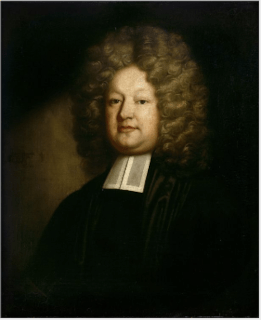
(Pictured: “Portrait of Nicholas Brady (1659-1726),” oil on canvas by Hugh Howard (1675-1737), circa 1715, National Gallery of Ireland)
O’Hara is born and raised in Rosses Point, the daughter of Major John Charles O’Hara, an officer in the British Corps of Royal Engineers and his wife, Mai (née Kirwan). One of her sisters, Mary (born 1935), is a soprano/harpist. Her brother Dermot (born 1934) now lives with his family in Canada. She attends the same Ursulineconvent school as fellow actress and friend Pauline Flanagan.
More recently, O’Hara is best known for appearing in the popular Irish television soap operaFair City, broadcast on RTÉ One. She joins the soap in 1994, portraying the character Eunice Dunstan until her death in 2007. Thus, she is described as both one of Ireland’s most popular actresses and as one of the finest actors of her generation on her death. She admires in particular Samuel Beckett, Federico García Lorca and Ingmar Bergman. While she takes a no-nonsense approach to her craft, famously giving the advice that when in doubt, one should relate to the fireplace, she is educated at the Abbey School of Acting and has a deep appreciation and knowledge of theoretical approaches to acting and is an admirer of the European and American avant-garde. As actor Alan Stanford said after her death, “She had the most amazing energy. She was in the truest sense one of the last of the greats.”
Joan O’Hara Barry (she keeps her maiden name as her stage name) dies in Dublin on July 23, 2007, of complications from heart disease, aged 76. Her death is announced on RTÉ News the following day.
Michael Hartnett, Irish poet who writes in both English and Irish, is born in Croom Hospital in Croom, County Limerick, on September 18, 1941. He is one of the most significant voices in late 20th-century Irish writing and has been called “Munster‘s de facto poet laureate.”
Although Hartnett’s parents’ name is Harnett, he is registered in error as Hartnett on his birth certificate. In later life he declines to change this as his legal name is closer to the Irish Ó hAirtnéide. He grows up in the Maiden Street area of Newcastle West, County Limerick, spending much of his time with his grandmother, Bridget Halpin, who resides in the townland of Camas, in the countryside nearby. He claims that his grandmother is one of the last native speakers to live in County Limerick, though she is originally from northern County Kerry. Although she speaks to him mainly in English, he listens to her conversing with her friends in Irish, and as such, he is quite unaware of the imbalances between English and Irish. When he begins school, he is made aware of the tensions between both languages, and is surprised to discover that Irish is considered an endangered language, taught as a contrived, rule-laden code, with little of the literary attraction which it holds for him. He is educated in the local national and secondary schools in Newcastle West. He emigrates to England the day after he finishes his secondary education and goes to work as a tea boy on a building site in London.
Hartnett has started writing by this time and his work comes to be known of the poet John Jordan, who is professor of English at University College Dublin. Jordan invites him to attend the university for a year. While back in Dublin, he co-edits the literary magazine Arena with James Liddy. He also works as curator of James Joyce‘s tower at Sandycove for a time. He returns briefly to London, where he meets Rosemary Grantley on May 16, 1965, and they are married on April 4, 1966. His first book, Anatomy of a Cliché, is published by Poetry Ireland in 1968 to critical acclaim and he returns to live permanently in Dublin that same year.
Hartnett works as a night telephonist at the telephone exchange on Exchequer Street. He now enters a productive relationship with New Writers Press, run by Michael Smith and Trevor Joyce. They publish his next three books. The first of these is a translation from the Irish, The Old Hag of Beare (1969), followed by Selected Poems (1970) and Tao (1972). This last book is a version of the Chinese Tao Te Ching. His Gypsy Ballads (1973), a translation of the Romancero Gitano of Federico García Lorca, is published by the Goldsmith Press.
In 1974 Hartnett decides to leave Dublin and return to his rural roots, as well as deepen his relationship with the Irish language. He goes to live in Templeglantine, five miles from Newcastle West, and works for a time as a lecturer in creative writing at Thomond College of Education, Limerick.
In his 1975 book, A Farewell to English, Hartnett declares his intention to write only in Irish in the future, describing English as “the perfect language to sell pigs in.” A number of volumes in Irish follow including Adharca Broic (1978), An Phurgóid (1983) and Do Nuala: Foighne Chrainn (1984). A biography on this period of his life entitled A Rebel Act Michael Hartnett’s Farewell To English by Pat Walsh is published in 2012 by Mercier Press.
In 1984 Hartnett returns to Dublin to live in the suburb of Inchicore. The following year marks his return to English with the publication of Inchicore Haiku, a book that deals with the turbulent events in his personal life over the previous few years. This is followed by a number of books in English including A Necklace of Wrens (1987), Poems to Younger Women (1989) and The Killing of Dreams (1992).
Hartnett also continues working in Irish, and produces a sequence of important volumes of translation of classic works into English. These include Ó Bruadair, Selected Poems of Dáibhí Ó Bruadair (1985) and Ó Rathaille The Poems of Aodhaghán Ó Rathaille (1999). His Collected Poems appear in two volumes in 1984 and 1987 and New and Selected Poems in 1995.
Hartnett dies from Alcoholic Liver Syndrome on October 13, 1999. A new Collected Poems appears in 2001.
Every April a literary and arts festival is held in Newcastle West in honour of Hartnett. Events are organised throughout the town and a memorial lecture is given by a distinguished guest. Former speakers include Nuala O’Faolain, Paul Durcan, David Whyte and Fintan O’Toole. The annual Michael Hartnett Poetry Award of € 4,000 also forms part of the festival. Funded by the Limerick City and County Council Arts Office and the Arts Council of Ireland, it is intended to support and encourage poets in the furtherance of their writing endeavours. Previous winners include Sinéad Morrissey and Peter Sirr.
During the 2011 Éigse, Paul Durcan unveils a bronze life-sized statue of Hartnett sculpted by Rory Breslin, in the Square, Newcastle West. Hartnett’s son Niall speaks at the unveiling ceremony.
Casey is born to a teacher during the height of the Great Famine of 1846. Eight years later he moves to Gurteen, near Ballymahon in County Longford, when his father is given the post of headmaster at the local school. His work would come to be closely associated with Ballymahon.
As a teenager Casey works as an assistant to his father and is expected to follow him into teaching. However, he is disillusioned by the insufficiently nationalistic nature of the curriculum and spends a great deal of time writing poetry. It is at this time, reputedly at the age of fifteen, that he writes his best-known song, “The Rising of the Moon,” which commemorates the Irish Rebellion of 1798.
Following the increasing popularity of his songs and ballads at nationalist gatherings, Casey moves to Dublin in the 1860s and becomes active in the Fenian movement. He is a major contributor to The Nation newspaper, for which he assumes his pen name of ‘Leo.’
In 1866, at the age of 20, Casey publishes a collection of poems, entitled A Wreath of Shamrocks. Most of the poems therein had already been published elsewhere, primarily in The Nation. The further fame engendered by the success of the book leads him to be sought after as a speaker. He addresses mass rallies in Dublin, Liverpool and London that year, in the lead up to the Fenian Rising in 1867.
When the uprising fails, Casey is imprisoned without trial for eight months in Mountjoy Prison. He is released on the understanding that he would leave for Australia and not return to Ireland. However, he chooses to stay on in Summerhill, Dublin in disguise, living as a Quaker and continuing to write and publish in secret.
Casey marries Mary Josephine Briscoe in January 1868 and they have a son Michael, who dies shortly after birth in October 1869. Casey’s health had been broken by the treatment he had received in prison. He falls from a cab on or near O’Connell Bridge in the centre of Dublin in 1870. He dies from his injuries on St. Patrick’s Day, March 17, 1870.
Following his death, Casey is buried in Glasnevin Cemetery. The newspapers report that between fifty and one hundred thousand mourners walk in his funeral procession.
Sweeney meets Rosemary Barber in 1972 and they marry in 1979. Two offspring – daughter Nico and son Malvin – are produced before the couple goes their separate ways in the early 21st century. Having lived in London for many years until 2001, he separates from Rosemary and goes to live in Timișoara, Romania and Berlin. In 2007, he meets his partner, Mary Noonan, and in early 2008 he moves to Cork to live with her there.
Sweeney produces numerous collections of poetry for which he wins several awards. His novels for children include The Snow Vulture (1992) and Fox (2002). He authors a satirical thriller, co-written with John Hartley Williams, and entitled Death Comes for the Poets (2012).
As Bill Swainson, Sweeney’s editor at Allison & Busby in the 1980s, recalls: “As well as writing his own poetry, Matthew was a great encourager of poetry in others. The workshops he animated, and later the residencies he undertook, were famous for their geniality and seriousness and fun. Sometime in the late 1980s I attended one of these workshops in an upstairs room of a pub in Lamb’s Conduit Street, Bloomsbury, where the poems were circulated anonymously and carefully read and commented on by all. Around the pushed-together tables were Ruth Padel, Eva Salzman, Don Paterson, Maurice Riordan, Jo Shapcott, Lavinia Greenlaw, Michael Donaghy, Maura Dooley and Tim Dooley.” Sweeney later has residencies at the University of East Anglia and Southbank Centre, among many others. He reads at three Rotterdam Poetry Festivals, in 1998, 2003 and 2009.
According to the poet Gerard Smyth: “I always sensed that in the first instance [Sweeney] regarded himself as a European rather than an Irish poet – and rightly so: like the German Georg Trakl whom he admired he apprehended the world in a way that challenged our perceptions and commanded our attention.” Sweeney’s work has been considered “barely touched by the mainstream of English writing” and more so by the German writers Heinrich von Kleist, Georg Büchner, Franz Kafka, Günter Grass and Heinrich Böll, as well as the aforementioned Georg Trakl. According to Poetry International Web, he would be among the top five most famous Irish poets on the international scene.
Having been diagnosed with motor neuron disease the previous year, Sweeney dies at the age of 65 at Cork University Hospital on August 5, 2018, surrounded by family and friends. He continues writing up until three days before his death. In an interview shortly before his death he is quizzed on his legacy, to which he gives the response, “Mostly what awaits the poet is posthumous oblivion. Maybe there will be a young man in Hamburg, or Munich, or possibly Vienna, for whom my German translations will be for a while important – and might just contribute to him becoming a German language poet with Irish leanings.”
Among those attending a special ceremony on August 8, 2018 at the Triskel Arts Centre in Cork to celebrate Sweeney’s life are fellow poets Jo Shapcott, Thomas McCarthy, Gerry Murphy, Maurice Riordan and Padraig Rooney. On August 9, 2018, he is buried in Clonmany New Cemetery in County Donegal.
Makem’s mother, Sarah Makem, is an important source of traditional Irish music, who is visited and recorded by, among others, Diane Guggenheim Hamilton, Jean Ritchie, Peter Kennedy and Sean O’Boyle. His father, Peter Makem, is a fiddler who also plays the bass drum in a local pipe band named “Oliver Plunkett,” after a Roman Catholic martyr of the reign of Charles II of England. His brother and sister are folk musicians as well. Makem, from the age of eight, is member of the St. Patrick’s church choir for 15 years where he sings Gregorian chant and motets. He does not learn to read music but he makes it in his “own way.”
Makem starts to work at 14 as a clerk in a garage and later he works for a while as a barman at Mone’s Bar, a local pub, and as a local correspondent for The Armagh Observer.
Makem emigrates to the United States in 1955, carrying his few possessions and a set of bagpipes from his time in a pipe band. Arriving in Dover, New Hampshire, he works at Kidder Press, where his hand was accidentally crushed by a press in 1956. With his arm in a sling, he leaves Dover for New York City to pursue an acting career.
The Clancys and Makem are signed to Columbia Records in 1961. The same year, at the Newport Folk Festival, Makem and Joan Baez are named the most promising newcomers on the American folk scene. During the 1960s, the Clancy Brothers and Tommy Makem perform sellout concerts at such venues as Carnegie Hall, and make television appearances on shows like The Ed Sullivan Show and The Tonight Show. The group performs for President John F. Kennedy. They also play in smaller venues such as the Gate of Horn in Chicago. They appear jointly in the UK Albums Chart in April 1966, when Isn’t It Grand Boys reaches number 22.
Makem leaves the group in 1969 to pursue a solo career. In 1975, he and Liam Clancy are both booked to play a folk festival in Cleveland, Ohio, and are persuaded to do a set together. Thereafter they often perform as Makem and Clancy, recording several albums together. He once again goes solo in 1988. Throughout the 1970s and 1980s he performs both solo and with Liam Clancy on The Irish Rovers‘ various television shows, which are filming in Canada and Ireland.
In the 1980s and 1990s, Makem is a principal in a well-known Irish music venue in New York, “Tommy Makem’s Irish Pavilion.” This East 57th Street club is a prominent and well-loved performance spot for a wide range of musicians. Among the performers and visitors are Paddy Reilly, Joe Burke, and Ronnie Gilbert. Makem is a regular performer, often solo and often as part of Makem and Clancy, particularly in the late fall and holiday season. The club is also used for warm-up performances in the weeks before the 1984 reunion concert of The Clancy Brothers and Tommy Makem at Lincoln Center for the Performing Arts. In addition, the after-party for Bob Dylan‘s legendary 30th Anniversary Concert Celebration at Madison Square Garden in 1992 is held at the Irish Pavilion.
In 1997 Makem writes a book, Tommy Makem’s Secret Ireland, and in 1999 premiers a one-man theatre show, Invasions and Legacies, in New York. His career includes various other acting, video, composition, and writing credits. He also establishes the Tommy Makem International Festival of Song in South Armagh in 2000.
Tommy Makem dies in Dover, New Hampshire, on August 1, 2007, following a lengthy battle with lung cancer. He continues to record and perform until very close to the end. Paying tribute to him after his death, Liam Clancy says, “He was my brother in every way.” He is buried next to his wife at New Saint Mary Cemetery in Dover.
Born on August 19, 1887, to a poor family in Slane, County Meath, Ledwidge starts writing at an early age, and is first published in a local newspaper at the age of fourteen. Finding work as a labourer and miner, he is also a trade union activist and a keen patriot and nationalist, associated with Sinn Féin. He becomes friendly with a local landowner, the writer Lord Dunsany, who gives him a workspace in the library of Dunsany Castle and introduces him to literary figures including William Butler Yeats and Katherine Tynan, with whom he has a long-term correspondence. He is elected to a local authority post and helps organise the local branch of the Irish Volunteers, while Dunsany edits and helps him secure publication for a first volume of his poetry.
Having sided with the faction of the Irish Volunteers which oppose participation in the war, he enlists in the Royal Inniskilling Fusiliers in October 1914, and continues to write poetry on assignment, sending work to Lord Dunsany and to family and other friends. The poems he writes on active service reveal his pride at being a soldier, as he believes, in the service of Ireland. He often wonders whether he would find a soldier’s death.
On July 31, 1917, a group from Ledwidge’s battalion of the Royal Inniskilling Fusiliers are road-laying in preparation for an assault during the Third Battle of Ypres, near the village of Boezinge, northwest of Ypres.
According to Irish author and lecturer Alice Curtayne, “Ledwidge and his comrades had been toiling since the early morning at roadmaking. The army’s first need was men; their second, guns; their third roads. These latter consisted mainly of heavy beech planks bolted together, which could be rapidly laid down. No advance could be supported in that sodden land without a sufficiency of these communications tracks, six or seven feet wide. Supplies were conveyed by pack mules over the wooden paths. Survivors concur in placing the road work done by B Company that day one mile northeast of Hellfire Corner, so called because it was very exposed to German shelling. There was a violent rainstorm in the afternoon, shrouding the region in a gray monochrome. Sullenly, the enemy’s long-range guns continued to fling their shells far behind the lines. Roadwork could not be suspended, however, as the tracks were in use as fast as they were laid down. Tea was issued to the men and, drenched to the skin, they stopped to swallow it. A shell exploded beside Ledwidge and he was instantly killed.”
A Roman Catholicmilitary chaplain, Father Devas, is the first on the scene. That night, Father Devas writes in his diary, “Crowds at Holy Communion. Arranged for service but washed out by rain and fatigues. Walk in rain with dogs. Ledwidge killed, blown to bits; at Confession yesterday and Mass and Holy Communion this morning. R.I.P.”
Ledwidge is first buried at Carrefour de Rose, and later re-interred in the nearby Artillery Wood Military Cemetery, at Boezinge, where the Welsh poet Hedd Wyn, who was killed in action on the same day, also lies buried.
Dunsany arranges for the publication of more of Ledwidge’s poems, and a collected edition in 1919. Further poems, from the archives at Dunsany Castle and some material held by family, are later published by Ledwdige’s biographer, Alice Curtayne, and by one of the Ledwidge memorial societies. Ledwidge is selected as one of twelve prominent war poets for the exhibition Anthem for Doomed Youth at the Imperial War Museum in London in 2002, and memorialised at an event in Inchicore, Dublin, in 2017, with his work set to music by Anúna. A museum of his life and work is opened in his birthplace cottage in 1982. Some of his manuscripts are held in the National Library of Ireland and more in the archives of Dunsany Castle.
Campbell is born into a Catholic and Irish nationalist family from County Down. He is educated at St. Malachy’s College, Belfast. After working for his father he teaches for a while. He travels to Dublin in 1902, meeting leading nationalist figures. His literary activities begin with songs, as a collector in Antrim, County Antrim and working with the composer Herbert Hughes. He is then a founder of the Ulster Literary Theatre in 1904. He contributes a play, The Little Cowherd of Slainge, and several articles to its journal Uladh edited by Bulmer Hobson. The Little Cowherd of Slainge is performed by the Ulster Literary Theatre at the Clarence Place Hall in Belfast on May 4, 1905, along with Lewis Purcell’s The Enthusiast.
Campbell moves to Dublin in 1905 and, failing to find work, moves to London the following year where he is involved in Irish literary activities while working as a teacher. He marries Nancy Maude in 1910, and they move shortly thereafter to Dublin, and then later to County Wicklow. His play Judgement is performed at the Abbey Theatre in April 1912.
Campbell takes part as a supporter in the Easter Rising of 1916, doing rescue work. The following year he publishes a translation from Irish of the short stories of Patrick Pearse, one of the leaders of the Rising.
Campbell becomes a Sinn FéinCouncillor in Wicklow in 1921. Later in the Irish Civil War he is on the Republican side, and is interned in 1922-23. His marriage breaks up, and he emigrates to the United States in 1925 where he settles in New York City. He lectures at Fordham University, and works in academic Irish studies, founding the University’s School of Irish Studies in 1928, which lasts four years. He is the editor of The Irish Review (1934), a short lived “magazine of Irish expression.” The business manager is George Lennon, former Officer Commanding of the County WaterfordFlying Column during the Irish War of Independence. The managing editor is Lennon’s brother-in-law, George H. Sherwood.
Campbell returns to Ireland in 1939, settling at Glencree, County Wicklow. He dies at Lacken Daragh, Enniskerry, County Wicklow on June 6, 1944.