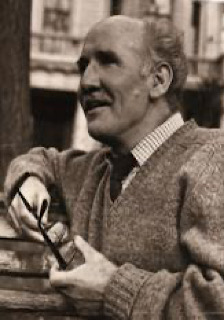
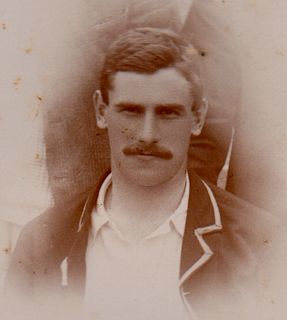
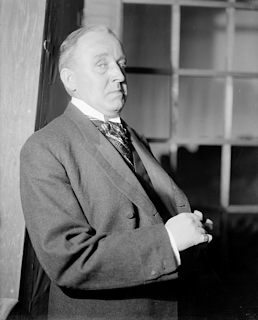
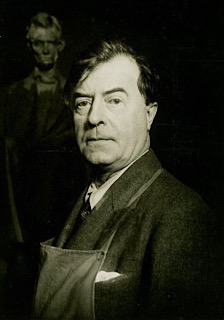
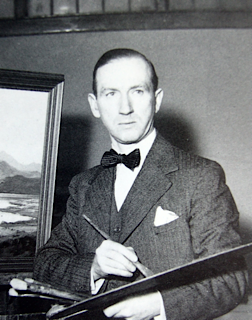
In 1908, at the age of 15, McGuinness leaves home, stowing away in a ship and traveling extensively throughout the world for several years. At the age of 17 he is involved in the first of several shipwrecks, drifting for two weeks on a lifeboat before being rescued near Tahiti. He works as a pearl fisher in the South Seas for a year before resuming his nautical career.
Disillusioned with the war, McGuinness resumes his travels. In 1920, he returns to Derry and joins the Irish Republican Army (IRA), leading a flying column in northwest Ireland. McGuinness, who reputedly introduces the first monkey to Derry, is viewed locally as an eccentric adventurer but is much celebrated for his instrumental role in the daring escape of Frank Carty, the IRA Sligo Brigade commander, from Derry jail.
Wanted for the murder of Inspector Robert Johnson in Glasgow, a charge he denies, McGuinness is captured by the British army in June 1921 after a failed bank raid in Glenties, County Donegal, but escapes from Derry’s Ebrington Barracks before his identity is established. Shortly after the truce in July 1921 he is sent by Liam Mellows to Germany, from where he smuggles arms to Ireland. After the treaty split, he continues to smuggle arms for the republican side but leaves the IRA, having become disillusioned with its incompetence. He claims to have been arrested in Berlin in 1922 for conspiring with Bulgarian revolutionaries, and released on condition that he leaves the state.
McGuinness emigrates to New York in 1923 where, following an alleged spell of employment by Chiang Kai-shek‘s forces in China, he establishes himself as a building contractor. In 1928, he joins Admiral Richard E. Byrd‘s expedition to the Antarctic, serving as a navigation officer. At a reception on his return in 1929, he presents the mayor of New York City, Jimmy Walker, with an Irish tricolour which, he claims, Byrd had flown over the South Pole. He is not, as he claims, awarded a congressional medal by the secretary of the navy.
In 1930, McGuinness embarks on a new career, smuggling rum between Canada and the United States (his memoirs of which are subsequently published in the American press under the pseudonym “Night-Hawk”). After losing his fortune when his boat and cargo are impounded in the summer of 1931, he travels to the Soviet Union to observe communism at first hand. He remains in the Soviet Union around two years, where he claims to work as a harbourmaster in Murmansk, and forms an unfavourable opinion of the Soviet Union.
McGuinness’s autobiography, Nomad, is published in 1934. His publisher, Methuen Publishing, is sued for considerable damages by the notorious Alderman John William Nixon, MP, as a result of McGuinness’s veiled reference to him as the former Royal Ulster Constabulary (RUC) detective inspector who led a murder gang in Belfast in 1922, believed responsible for the murder of the McMahon family.
In late 1936, McGuinness joins the International Brigades in the Spanish Civil War but soon deserts after disagreements with the authorities. He returns to Ireland, where he pens a sensational exposé of the International Brigades, I fought with the Reds, which is published by the Irish Independent. He also writes colourful accounts of life under communism, such as Behind the Iron Curtain, under the pseudonym “Peter Dawson.”
In 1942, while serving as chief petty officer in the marine service at Haulbowline, McGuinness offers to assist the German legation by smuggling spies out of Ireland. Despite his British naval service, he is virulently anti-British. According to local legend he has the sole of both feet tattooed with the Union Jack so wherever he goes he is safe in the knowledge that he is “trampling on the butcher’s apron.” He is arrested and sentenced to seven years imprisonment but is released shortly after the end of the Emergency.
McGuinness is believed to have died on December 4, 1947, when he supposedly drowns alongside four other crew members of the schoonerIsaalt that he is piloting on Ballymoney Strand near Gorey, County Wexford. Two members of the crew survive, managing to swim ashore, the ship is a mere 100 metres from land. However, members of McGuinness’ family express doubt over the years. A nephew claims to have encountered McGuinness on the London Underground in 1955. Upon their gazes meeting, McGuinness is reported to smile and say four simple words: “You never saw me.”
(From: “McGuinness, Charles John” by Fearghal McGarry, Dictionary of Irish Biography, http://www.dib.ie, October 2009)
Doyle is awarded the Military Cross for his bravery during the assault on the village of Ginchy during the Battle of the Somme in 1916. He is also posthumously recommended for both the Victoria Cross and the Distinguished Service Order, but is awarded neither. It is possible that anti-Catholicism played a role in the British Army’s decision not to grant him both awards.
General William Hickie, the commander-in-chief of the 16th (Irish) Division, describes Father Doyle as “one of the bravest men who fought or served out here.”
Irish folk singer Willie ‘Liam’ Clancy is named after Doyle due to his mother’s fondness for him, although they never meet.
In August 2022, the Father Willie Doyle Association is established to petition the Catholic Church to introduce a cause for canonisation for Doyle. In January 2022, the Supplex Libellus, the formal petition, is presented to Bishop Thomas Deenihan. Having consulted with the Irish Bishops’ Conference and the Dicastery for the Causes of Saints, Deenihan issues an edict on October 27, 2022, announcing the opening of a cause. The Opening Session takes place on November 20, 2022, at the Cathedral of Christ the King, Mullingar.
Stokes is educated at St. Columba’s College where he is taught the Irish language by Denis Coffey, author of Primer of the Irish Language. Through his father he comes to know the Irish antiquariesSamuel Ferguson, Eugene O’Curry, John O’Donovan and George Petrie. He enters Trinity College Dublin in 1846 and graduates with a BA in 1851. His friend and contemporary Rudolf Thomas Siegfried (1830–63) becomes assistant librarian at TCD in 1855, and the college’s first professor of Sanskrit in 1858. Stokes likely learns both Sanskrit and comparative philology from Siegfried, thus acquiring a skill-set rare among Celtic scholars in Ireland at the time.
Stokes qualifies for the bar at Inner Temple. His instructors in the law are Arthur Cayley, Hugh McCalmont Cairns, and Thomas Chitty. He becomes an English barrister on November 17, 1855, practicing in London before going to India in 1862, where he fills several official positions. In 1865 he marries Mary Bazely by whom he has four sons and two daughters. One of his daughters, Maïve, compiles a book of Indian Fairy Tales in 1879 when she is 12 years old, based on stories told to her by her Indian ayahs and a man-servant. It also includes some notes by Mrs. Mary Stokes. Mary dies while the family is still living in India. In 1877, Stokes is appointed legal member of the viceroy’s council, and he drafts the codes of civil and criminal procedure and does much other valuable work of the same nature. In 1879 he becomes president of the commission on Indian law. Nine books he writes on Celtic studies are published in India. He returns to settle permanently in London in 1881 and marries Elizabeth Temple in 1884. In 1887 he is made a Companion of the Order of the Star of India (CSI), and two years later an Order of the Indian Empire (CIE). He is an original fellow of the British Academy, an honorary fellow of Jesus College, Oxford and foreign associate of the Institut de France.
Stokes is perhaps most famous as a Celtic scholar, and in this field he works both in India and in England. He studies Irish, Breton and Cornish texts. His chief interest in Irish is as a source of material for comparative philology. Despite his learning in Old Irish and Middle Irish, he never acquires Irish pronunciation and never masters Modern Irish. In the hundred years since his death he continues to be a central figure in Celtic scholarship. Many of his editions have not been superseded during this time and his total output in Celtic studies comes to over 15,000 pages. He is a correspondent and close friend of Kuno Meyer from 1881 onwards. With Meyer he establishes the journal Archiv für celtische Lexicographie and is the co-editor, with Ernst Windisch, of the Irische Texteseries. In 1876 his translation of Vita tripartita Sancti Patricii, along with a written introduction, is published.
Stokes dies at his London home, 15 Grenville Place, Kensington, on April 13, 1909, and is buried in Paddington Old Cemetery, Willesden Lane, where his grave is marked by a Celtic cross. Another Celtic cross is erected as a memorial to him at St. Fintan’s Cemetery, Sutton, Dublin. The Gaelic League newspaper An Claidheamh Soluis calls him “the greatest of the Celtologists” and expresses pride that an Irishman has excelled in a field which is at that time dominated by continental scholars. In 1929 the Canadian scholar James F. Kenney describes him as “the greatest scholar in philology that Ireland has produced, and the only one that may be ranked with the most famous of continental savants.”
A conference entitled “Ireland, India, London: The Tripartite Life of Whitley Stokes” takes place at the University of Cambridge on September 18-19, 2009. The event is organised to mark the centenary of Stokes’s death. A volume of essays based on the papers delivered at this conference, The Tripartite Life of Whitley Stokes (1830–1909), is published by Four Courts Press in autumn 2011.
In 2010 Dáibhí Ó Cróinín publishes Whitley Stokes (1830–1909): The Lost Celtic Notebooks Rediscovered, a volume based on the scholarship in Stokes’s 150 notebooks which had been resting unnoticed at the Leipzig University Library, Leipzig since 1919.
“No. 1539 Colour Serjeant Frederick William Hall, 8th Canadian Battalion. On 24th April, 1915, in the neighbourhood of Ypres, when a wounded man who was lying some 15 yards from the trench called for help, Company Serjeant Major Hall endeavoured to reach him in the face of a very heavy enfilade fire which was being poured in by the enemy. The first attempt failed, and a Non-commissioned Officer and private soldier who were attempting to give assistance were both wounded. Company Serjeant Major Hall then made a second most gallant attempt, and was in the act of lifting up the wounded man to bring him in when he fell mortally wounded in the head.”
During the Second Battle of Ypres in Belgium, Hall discovers a number of men are missing. On the ridge above he can hear moans from the wounded men. Under cover of darkness, he goes to the top of the ridge on two separate occasions and returns each time with a wounded man.
By nine o’clock on the morning of April 24 there are still men missing. In full daylight and under sustained and intense enemy fire, Hall, Corporal Payne and Private Rogerson crawl out toward the wounded. Payne and Rogerson are both wounded, but return to the shelter of the front line. When a wounded man who is lying some 15 yards from the trench calls for help, Hall endeavours to reach him in the face of heavy fire by the enemy but is shot in the head. The soldier he was attempting to help, Private Arthur Edwin Clarkson, is also killed.
Hall lives on Pine Street in Winnipeg. In 1925, Pine Street is renamed Valour Road because three Victoria Cross recipients resided on the same 700 block of that street: Hall, Leo Clarke and Robert Shankland. It is believed to be the only street in the Commonwealth of Nations to have three Victoria Cross recipients live on it. A bronze plaque is mounted on a street lamp at the corner of Portage Avenue and Valour Road to tell the tale of the three men.
Hill’s medals are in the Canadian War Museum. The museum has acquired all three Valour Road Victoria Cross medals and they are on permanent display in Ottawa.
George Johnstone StoneyFRS, Irish physicist, is born on February 15, 1826, at Oakley Park, near Birr, County Offaly, in the Irish Midlands. He is most famous for introducing the term “electron” as the “fundamental unit quantity of electricity.” He introduces the concept, though not the word, as early as 1874, initially naming it “electrine,” and the word itself comes in 1891. He publishes around 75 scientific papers during his lifetime.
Stoney is the son of George Stoney and Anne (née Bindon Blood). His only brother is Bindon Blood Stoney, who becomes chief engineer of the Dublin Port and Docks Board. The Stoney family is an old-established Anglo-Irish family. During the time of the famine (1845–52), when land prices plummet, the family property is sold to support his widowed mother and family. He attends Trinity College Dublin (TCD), graduating with a BA degree in 1848. From 1848 to 1852 he works as an astronomy assistant to William Parsons, 3rd Earl of Rosse, at Birr Castle, County Offaly, where Parsons had built the world’s largest telescope, the 72-inch Leviathan of Parsonstown. Simultaneously he continues to study physics and mathematics and is awarded an MA by TCD in 1852.
From 1852 to 1857, Stoney is professor of physics at Queen’s College Galway. From 1857 to 1882, he is employed as Secretary of the Queen’s University of Ireland, an administrative job based in Dublin. In the early 1880s, he moves to the post of superintendent of Civil Service Examinations in Ireland, a post he holds until his retirement in 1893. He continues his independent scientific research throughout his decades of non-scientific employment duties in Dublin. He also serves for decades as honorary secretary and then vice-president of the Royal Dublin Society (RDS), a scientific society modeled after the Royal Society of London and, after his move to London in 1893, he serves on the council of that society as well. Additionally, he intermittently serves on scientific review committees of the British Association for the Advancement of Science from the early 1860s.
Stoney publishes seventy-five scientific papers in a variety of journals, but chiefly in the journals of the Royal Dublin Society. He makes significant contributions to cosmic physics and to the theory of gases. He estimates the number of molecules in a cubic millimeter of gas, at room temperature and pressure, from data obtained from the kinetic theory of gases. His most important scientific work is the conception and calculation of the magnitude of the “atom of electricity.” In 1891, he proposes the term “electron” to describe the fundamental unit of electrical charge, and his contributions to research in this area lays the foundations for the eventual discovery of the particle by J. J. Thomson in 1897.
Stoney proposes the first system of natural units in 1881. He realizes that a fixed amount of charge is transferred per chemical bond affected during electrolysis, the elementary chargee, which can serve as a unit of charge, and that combined with other known universal constants, namely the speed of lightc and the Newtonian constant of gravitationG, a complete system of units can be derived. He shows how to derive units of mass, length, time and electric charge as base units. Due to the form in which Coulomb’s law is expressed, the constant 4πε0 is implicitly included, ε0 being the vacuum permittivity.
Like Stoney, Max Planck independently derives a system of natural units (of similar scale) some decades after him, using different constants of nature.
Hermann Weyl makes a notable attempt to construct a unified theory by associating a gravitational unit of charge with the Stoney length. Weyl’s theory leads to significant mathematical innovations, but his theory is generally thought to lack physical significance.
Stoney marries his cousin, Margaret Sophia Stoney, by whom he has had two sons and three daughters. One of his sons, George Gerald Stoney FRS, is a scientist. His daughter Florence StoneyOBE is a radiologist while his daughter Edith is considered to be the first woman medical physicist. His most scientifically notable relative is his nephew, the Dublin-based physicist George Francis FitzGerald. He is second cousin of the grandfather of Ethel Sara Turing, mother of Alan Turing.
After moving to London, Stoney lives first at Hornsey Rise, north London, before moving to 30 Chepstow Crescent, Notting Hill, West London. In his later years illness confines him to a single floor of the house, which is filled with books, papers, and scientific instruments, often self-made. He dies at his home in Notting Hill, on July 5, 1911. His cremated ashes are buried in St. Nahi’s Church, Dundrum, Dublin.
Patterson is born in Belfast on April 18, 1802, the eldest son among three sons and a daughter of Robert Patterson, ironmonger, who supplies equipment for linen mills, and his wife Catherine Patterson (neé Clarke), who is from Dublin. He attends Belfast Royal Academy, and from 1814 is one of the first pupils of the Belfast Academical Institution. He is apprenticed in 1818 to his father, and takes over the business on his father’s death in 1831. Even as a boy, he devotes his leisure time to the study of natural history, and during summer holidays investigates the flora and fauna of the countryside and seaside resorts near Belfast. One of his brothers, William (1805–37), has similar interests.
At the age of 18, Patterson is a founder along with seven others, including James Lawson Drummond, James MacAdam and George Crawford Hyndman, of the Belfast Natural History Society in 1821 (from 1842 “and Philosophical” is added to the society’s name). He is the society’s president for many years, taking a leading role in setting up its museum in 1830–31, and over the years giving many lectures, mostly published in its proceedings. Like many contemporaries, he is an enthusiast for the study of phrenology, and lectures on the subject in Belfast in 1836.
In 1871, Patterson is presented with an illuminated address by the BNHPS for his work to promote the study of natural history, especially as a subject in education. He is the only recipient of the Society’s Templeton medal. Though still engaged in business, he makes a reputation as Belfast’s most distinguished amateur naturalist, publishing monographs such as Letters on the Insects Mentioned by Shakespeare (1838). During dredging excursions in Belfast Lough he discovers several forms of marine life new to Great Britain and Ireland. He is one of the earliest members of the British Association for the Advancement of Science, and secretary of its natural history section from 1839 to 1844. When the Association meets in Belfast in 1852, he acts as local treasurer. He corresponds with prominent naturalists, including Charles Darwin.
In 1843, Patterson publishes in The Zoologist magazine The Reptiles Mentioned by Shakespeare. His Zoology for Schools (2 volumes, 1846, 1848) is followed by First Steps in Zoology (2 volumes, 1849, 1851). A large volume, Zoological Diagrams, with colour illustrations, is published in 1853. All his books have a wide circulation, particularly in the national schools, and stimulates the study of zoology. In accordance with the will of his friend William Thompson, Patterson and James Ramsey Garrett begin to prepare the final volume of Thompson’s Natural History of Ireland for publication. Garrett dies in 1855 and Patterson completes the volume in 1856. He is elected Member of the Royal Irish Academy (MRIA) in 1856, and Fellow of the Royal Society (FRS) in 1859.
Patterson is in the vanguard of a generation of Ulster naturalists who through their work encourage the study of Irish flora and fauna and the establishment of field clubs and natural history societies. He also takes an active part in the public life of Belfast, and in philanthropy. He is a member of the unitarian congregation. He is one of the founders of the Ulster Society for the Prevention of Cruelty to Animals and is particularly interested in the Belfast Society for Promoting Knowledge (the Linen Hall Library), in the Botanic Gardens, and in his old school, Royal Belfast Academical Institution. As a Belfast harbour commissioner (1858–70), he brings commercial and environmental insights to decisions concerning port development.
Patterson marries Mary Elizabeth Ferrar in 1833. She is the daughter of a Belfast magistrate, William H. Ferrar, and writes poetry. Patterson also writes poetry, as well as hymns. Many of their poems are collected in Verses by Robert and Mary Patterson (1886), and they are represented in Selections from the British Poets, published for the use of national schools in 1849. They have five sons and six daughters. His second son, Robert Lloyd Patterson, is also a naturalist. Another son was William H. Patterson. His grandson Robert Patterson, editor of the Irish Naturalist, is secretary of the Belfast Natural History and Philosophical Society, secretary and president of the Belfast Naturalists’ Field Club and secretary of the Ulster Fisheries and Biology Association, which he founds. Robert M. Patterson, a grandson, is a prominent businessman and highly regarded amateur artist. Rosamond Praeger is a granddaughter, and Robert Lloyd Praeger a grandson. The latter writes of his grandfather: “After seventy-five years I can still see him – a man of middle height, and rather formal manner, pursuing his country rambles on Saturday afternoons in black frock-coat and top hat, and pointing out to us delighted children lady-birds and tree-creepers.”
Patterson retires from business in 1865, and dies on February 14, 1872, at his residence in College Square North, Belfast. He is buried in Belfast City Cemetery, where there is a monument to his memory.
(From: “Patterson, Robert” by Andrew O’Brien, Dictionary of Irish Biography, http://www.dib.ie, October 2009 | Pictured: “Robert Patterson” by Thomas Herbert Maguire, printed by M & N Hanhart lithograph, 1849, National Portrait Gallery)
Williams is born on May 4, 1838, in Coleraine, County Londonderry. He claims to be descended on his father’s side from Worcestershireyeomen living in the parishes of Tenbury and Mamble. On his mother’s side he descends from Scottish settlers who planted Ulster in 1610. He is educated at Belfast Academy in Belfast under Dr. Reuben John Bryce and at a Greenwich private school under Dr. Goodwin. Later on, he goes to the southern United States for his health and takes part in a filibustering expedition to Nicaragua, where he sees some hard fighting and reportedly wins the reputation of a blockade runner. He is separated from his party and is lost in the forest for six days. Fevered, he discovers a small boat and manages to return to the nearest British settlement. He serves in the London Irish Rifles and has the rank of sergeant.
Williams returns to England in 1859, where he becomes a volunteer, and a leader writer for the London Evening Herald. In October 1859, he begins a connection with The Standard which lasts until 1884. From 1860 until 1863, he works as a first editor for the London Evening Standard and from 1882 until 1884, as editor of The Evening News.
Williams is best known for being a war correspondent. He is described as an admirable war correspondent, a daring rider as well as writer. For The Standard, he is at the headquarters of the Armée de la Loire, a French army, during the Franco-Prussian War in 1870. He is also one of the first correspondents in Strasbourg, where the French forces are defeated. In the summer and autumn of 1877, he is a correspondent to Ahmed Muhtar Pasha who commands the Turkish forces in Armenia during the Russo-Turkish War of 1877 and 1878. He remains constantly at the Turkish front, and his letters are the only continuous series that reaches England. In 1878, he publishes this series in a revised and extended form as The Armenian Campaign: A Diary of the Campaign on 1877, in Armenia and Koordistan, which is a large accurate record of the war, even though it is pro-Turkish. From Armenia, he follows Muhtar Pasha to European Turkey and describes his defence of the lines of Constantinople against the Imperial Russian Army. He is with General Mikhail Skobelev at the headquarters of the Imperial Russian Army when the Treaty of San Stefano is signed in March 1878. He reports this at the Berlin Congress.
At the end of 1878, Williams is in Afghanistan reporting the war, and in 1879 publishes the Notes on the Operations in Lower Afghanistan, 1878–9, with Special Reference to Transport.
In 1887, Williams meets with then General of the United States Army, Philip Sheridan, in Washington, D.C. to update the general on European affairs and the prospects of upcoming conflicts.
Williams is said to possess a voice of thunder and expresses with terrific energy. He conducts a lecture tour of the United States where he describes the six campaigns, illustrated by limelight photographs. His audience in Brooklyn, New York, is described by The New York Times as highly delighted by his lecture about the hardships and adventures. His presentation is “a feast for the eyes and ears and was highly appreciated by the large audience assembled.” He later tours England, Scotland, and Ireland speaking about his then seven campaigns.
Williams also writes fiction, including his book John Thaddeus Mackay, a tale about religious tolerance and understanding. With the sanction of Commander in Chief, Field MarshalGarnet Wolseley, he edits a book Songs for Soldiers for the March The Camp and the Barracks to improve morale and relieve boredom. Included in the book are a number of songs that he composed. He also writes about ecclesiastical questions, and contributes articles and stories to different periodicals.
Williams is a strong adherent to Wolseley’s military views and policy, and has considerable military knowledge. He also publishes military subjects in several publications such as the United Service Magazine, the National Review, and other periodicals. In 1892, he publishes Life of Sir H. Evelyn Wood, which is controversial as he defends the actions of Wood after the Battle of Majuba Hill in 1881. In 1902, he publishes a pamphlet, entitled Hush Up, in which he protests against the proposed limited official inquiry into the South African War and calls for an investigation.
Early in his career, Williams shares an office with friend and colleague Robert Gascoyne-Cecil, who later becomes Prime Minister of the United Kingdom. They have a standing tradition of always sending out for two beers with payment alternating between each man. Many years later, Williams is in the lobby of the House of Lords and Gascoyne-Cecil approaches him with an outstretched hand and asks, “By the way, Mr. Williams, whose turn is it to stand the beer?”
In 1884, the steamer carrying Williams and colleague Frederic Villiers of The Graphic overturns in the Nile River. Their rescue leads Williams to later commission a unique ivory and gold mitre for the Bishop of London as a thank-offering to God for his safe return from Khartoum.
Williams receives a personal invitation from King Edward VII to attend the funeral of his mother, Queen Victoria.
Both of Williams‘a sons became journalists. Frederick is a noted parliamentary reporter, writer, and historian in Canada. Francis Austin Ward Williams practices journalism in Sydney, Australia.
In the Nile Campaign of 1884-85, application is made to the War Office with the support of the Commander in Chief Lord Wolseley for medals for Willams and correspondent Bennet Burleigh. Williams has been twice requested to take command of some of the men by senior officers on the spot. The Secretary of War is unable to grant the recognition under the rules of the day but writes a letter saying that he regrets that this must be his decision.
Williams is a recipient of the Queen’s Sudan Medal, an award given to British and Egyptian forces which took part in the Sudan campaign between 1896 and 1898.
Field Marshall Garnet Wolseley recognizes the contributions of Williams on the battlefield. He says in a speech that from “Charles Williams, he had at various times received the greatest possible help in the field.”
Williams dies in Brixton, London, on February 9, 1904. He is buried in Nunhead Cemetery in London. His son, journalist Fred Williams, first learns of his father’s death on the wire service he is monitoring at his newspaper in Toronto, Ontario, Canada.
Williams’s funeral is well attended by the press as well as members of the military including Field Marshal Sir Evelyn Wood. Colleague Henry Nevison writes a long reflection on Williams. It includes, “On the field he possessed a kind of instinctive sense of what was going to happen. When I went to big field-days with him he was already an elderly man, and much broken down with the hardships of a war correspondent’s life; but he invariably appeared at the critical place exactly at the right moment, and I once heard the Duke of Connaught, who was commanding, say, ‘When I see Charlie Williams shut up his telescope, I know it’s all over.’ And now he is gone, with his rage, his generosity, his innocent pride, his faithful championship of every friend, and his memories of so many a strange event. His greatest joy was to encourage youth to follow in his steps, and the world is sadder and duller for his going.”
Spring Rice is educated at Trinity College, Cambridge, and later studies law at Lincoln’s Inn, but is not called to the Bar. His family is politically well-connected, both in Ireland and Great Britain, and he is encouraged to stand for Parliament by his father-in-law, Lord Limerick.
Spring Rice first stands for election in Limerick City in 1818 but is defeated by the Tory incumbent, John Vereker, by 300 votes. He wins the seat in 1820 and enters the House of Commons. He positions himself as a moderate unionist reformer who opposes the radical nationalist politics of Daniel O’Connell and becomes known for his expertise on Irish and economic affairs. In 1824 he leads the committee which establishes the Ordnance Survey in Ireland.
Spring Rice’s fluent debating style in the Commons brings him to the attention of leading Whigs and he comes under the patronage of the Marquess of Lansdowne. As a result, he is made Under-Secretary of State for the Home Department under George Canning and Lord Goderich in 1827, with responsibility for Irish affairs. This requires him to accept deferral of Catholic emancipation, a policy which he strongly supports. He then serves as joint Secretary to the Treasury from 1830 to 1834 under Lord Grey. Following the Reform Act 1832, he is elected to represent Cambridge from 1832 to 1839. In June 1834, Grey appoints him Secretary of State for War and the Colonies, with a seat in the cabinet, a post he retains when Lord Melbourne becomes Prime Minister in July. A strong and vocal unionist throughout his life, he leads the Parliamentary opposition to Daniel O’Connell’s 1834 attempt to repeal the Acts of Union 1800. In a six-hour speech in the House of Commons on April 23, 1834, he suggests that Ireland should be renamed “West Britain.” In the Commons, he also champions causes such as the worldwide abolition of slavery and the introduction of state-supported education.
The Whig government falls in November 1834, after which Spring Rice attempts to be elected Speaker of the House of Commons in early 1835. When the Whigs return to power under Melbourne in April 1835, he is made Chancellor of the Exchequer. As Chancellor, he has to deal with crop failures, a depression and rebellion in North America, all of which create large deficits and put considerable strain on the government. His Church Rate Bill of 1837 is quickly abandoned and his attempt to revise the charter of the Bank of Ireland ends in humiliation. Unhappy as Chancellor, he again tries to be elected as Speaker but fails. He is a dogmatic figure, described by Lord Melbourne as “too much given to details and possessed of no broad views.” Upon his departure from office in 1839, he has become a scapegoat for the government’s many problems. That same year he is raised to the peerage as Baron Monteagle of Brandon, in the County of Kerry, a title intended earlier for his ancestor Sir Stephen Rice. He is also Comptroller General of the Exchequer from 1835 to 1865, despite Lord Howick‘s initial opposition to the maintenance of the office. He differs from the government regarding the exchequer control over the treasury, and the abolition of the old exchequer is already determined upon when he dies.
From 1839 Spring Rice largely retires from public life, although he occasionally speaks in the House of Lords on matters generally relating to government finance and Ireland. He vehemently opposes John Russell, 1st Earl Russell‘s policy regarding the Irish famine, giving a speech in the Lords in which he says the government had “degraded our people, and you, English, now shrink from your responsibilities.”
Spring Rice is well regarded in Limerick, where he is seen as a compassionate landlord and a good politician. An advocate of traditional Whiggism, he strongly believes in ensuring society is protected from conflict between the upper and lower classes. Although a pious Anglican, his support for Catholic emancipation wins him the favour of many Irishmen, most of whom are Roman Catholic. He leads the campaign for better county government in Ireland at a time when many Irish nationalists are indifferent to the cause. During the Great Famine of the 1840s, he responds to the plight of his tenants with benevolence. The ameliorative measures he implements on his estates almost bankrupts the family and only the dowry from his second marriage saves his financial situation. A monument in honour of him still stands in the People’s Park in Limerick.
Even so, Spring Rice’s reputation in Ireland is not entirely favourable. In a book regarding assisted emigration from Ireland, a process in which a landlord pays for their tenants’ passage to the United States or Australia, Moran suggests that Spring Rice was engaged in the practice. In 1838, he is recorded as having “helped” a boat load of his tenants depart for North America, thereby allowing himself the use of their land. However, he is also recorded as being in support of state-assisted emigration across the British Isles, suggesting that his motivation is not necessarily selfish.
Hanna is born on February 25, 1821, near Dromara, County Down, the eldest among three sons and two (possibly three) daughters of Peter Hanna, of Dromara farming stock, and his wife Ellen (née Finiston), whose father served in the Black Watch regiment during the Napoleonic Wars. In the 1820s, leaving their children behind, his parents move to Belfast, where his father establishes a business turing out horse–cars. Hanna does not join them until the mid-1830s. His education reflects the modest nature of his upbringing. It is patchy and always combined with paid employment. In the 1830s he attends Bullick’s Academy, a privately run commercial college in Belfast. In the 1840s, seemingly with the intention of preparing for the Presbyterian ministry, he takes classes at Belfast Academical Institution. In 1847, he enters the general assembly’s newly established Theological College and, after some absences, obtains his licence to preach in 1851. During this time he works, first as a woolen draper‘s assistant in High Street and then, after 1844, as a teacher in the national school associated with Townsend Street Presbyterian Church, where he is a member. He resigns his teaching post in January 1852, only a month before being ordained to full-time ministry. On August 25, 1852, he marries Frances (‘Fanny’) Spence Rankin, daughter of James Rankin, a Belfast salesman. Together they have four daughters and two sons.
Hanna’s first, and only, pastorate is in a congregation that emerges out of the evangelistic efforts he and other Townsend Street members had conducted among the working people of north Belfast. In 1852, they begin meeting in the old Berry Street church and quickly grow from 75 to over 750 families. By 1869 a new building is essential and in 1870 the foundation stone for St. Enoch’s church is laid in Carlisle Circus, on property purchased from the Belfast Charitable Society. Opened in 1872 at a cost of nearly £10,000, it seats over 2,000 people and has two galleries. With 800 families and 2,500 Sunday-school scholars, it is one of the largest congregations in Belfast.
Hanna’s influence as the leader of such a large flock is not translated into advancement within the Presbyterian church. Although he serves as the Presbyterian chaplain to the Belfast garrison (1869–91) and as moderator of the presbytery (1879) and synod (1870–71) of Belfast, he does not achieve any position of note within the denomination as a whole. This is most likely because of his penchant for public controversy. Letters to the newspapers, calls for action in presbytery, and public platform debates over issues such as public-house licensing laws, Sabbath observance and property rights, brand him a destablising force. It is no doubt for this reason, rather than for his open-air preaching, of which he does very little, that he acquires his famous sobriquet, “Roaring Hugh.” His aggressive manner in debate is noted by the Belfast News Letter early in his career.
Hanna’s political views contribute to his reputation as an intolerant firebrand. He is part of a small group of Presbyterian clergy, led by the Rev. Henry Cooke, who are staunch defenders of the Protestant interest and active supporters of the conservative cause. He hosts ”anti-popery” lectures in his church and joins the Orange Order, serving briefly, in 1871, as the deputy grand chaplain for Belfast (County Grand Lodge). His determination to uphold the “right” of Protestants to preach in the open air sparks a series of violent sectarian riots and a government inquiry in Belfast in 1857. As the century progresses, and as the Presbyterian community’s political allegiances begin to shift, he becomes one of a group of prominent figures associated with two populist campaigns: opposition in the 1860s to the disestablishment of the Church of Ireland and subsequently to the introduction of home rule. In 1886, as one of the honorary secretaries of the Ulster Constitutional Club, he helps to found the Ulster Loyalist Anti-Repeal Union, a forerunner of what eventually becomes the Ulster Unionist Party.
Such activity overshadows Hanna’s impressive contribution to education. Within St. Enoch’s he establishes an enormous network of Sunday schools and evening classes, including a training institute for teachers. As a former teacher, and later as a commissioner of national education (1880–92), he is a firm advocate of the national system, and sets up six national schools in north and west Belfast.
Hanna receives only two honours: a Doctor of Divinity (DD) from the theological faculty of the Presbyterian Church in Ireland (1885) and a Doctor of Laws (LL.D.) from Galesville University in Galesville, Wisconsin (1888). In good health throughout his life, he dies suddenly of a heart attack on February 3, 1892. Buried with much fanfare in Balmoral Cemetery, Belfast, he is clearly held in high regard by surviving friends and colleagues. In 1892, the Orange Order approves the naming of LOL 1956 as the “Hanna Memorial,” and in 1894 a bronze statue depicting him in full ecclesiastical garb is erected in Carlisle Circus. Since then, his achievements have fallen on hard times. In March 1970, an Irish Republican Army bomb blast topples his statue from its plinth; several high-profile attempts to re-erect it fail. After an arson attack in 1985, and with falling numbers, the decision is taken in 1992 to demolish St. Enoch’s and unite with the neighbouring Duncairn church in a new, much smaller, building on the site.
(From: “Hanna, Hugh” by Janice Holmes, Dictionary of Irish Biography, http://www.dib.ie, October 2009 | Pictured: Portrait of Reverend Hugh Hanna by Augustus George Whichelo in 1876, which is part of the collection owned by the National Museums Northern Ireland and is located in the Ulster Museum)
Daniel O’Connell (1775-1847) kills John D’Esterre in a duel on February 1, 1815.
O’Connell is sometimes referred to as an equivalent to Martin Luther King, Jr. or Mahatma Gandhi. Like King and Gandhi, O’Connell attempts to change the circumstances of his people, Irish Catholics in this case, through the use of nonviolence. He can take a great deal of credit for the passage of the Roman Catholic Relief Act 1829, which revokes the remaining discriminatory Penal Laws. This political success is achieved in significant part through mass protest and is notable for the absence of violence. O’Connell, however, is not always non-violent. He is known for being hot-tempered and capable of violence in his early days.
Rosmanagher Bridge and Toll Gate are built by D’Esterre in 1784 at his own expense. The large inscription stone on the bridge commemorates this piece of engineering. He owns extensive lands in the region and the Ratty River hinders both farming and communication, especially as the nearest bridge is at Sixmilebridge, County Clare. Despite objections that the structure will interfere with navigation on the river, he builds his bridge and then tries to recover his costs by erecting toll gates on the western side of the river. O’ Connell refuses to pay the toll according to local tradition and this leads to his famous duel with D’Esterre, a Limerick-born Protestant and former marine who is also a member of the Dublin Corporation. D’Esterre takes exception to O’Connell’s description of the Corporation as being “beggarly.”
D’Esterre is in difficult financial circumstances at the time of the duel. Some thought indicates that he is possibly encouraged into violent confrontation by influential figures who wish to break the forty-year-old O’Connell’s growing political power. Regardless of the motivation, the crack shot D’Esterre arranges to meet O’Connell to settle the matter on February 1, 1815, at the Bishopscourt estate in County Kildare.
D’Esterre shoots first and misses. O’Connell returns fire, wounding his opponent in the groin. The wound proves to be fatal two days later. It seems O’Connell is distressed by the deadly outcome and offers D’Esterre’s widow a pension as compensation. The offer is refused, but an allowance for D’Esterre’s daughter is accepted. O’Connell fulfills this obligation for the subsequent 30 years of his life.
(From: “OTD: O’Connell – D’Esterre Duel – 1815” by Martin Nutty, Irish Stew Podcast, http://www.irishstewpodcast.com, February 1, 2022)