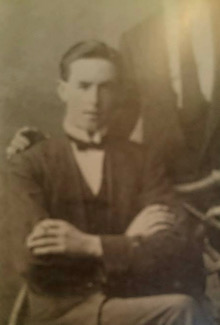
Pilkington is born to John Pilkington and Margaret Mary Pilkington (née Torsney), the second of twelve children born to the couple. Only nine of his siblings survive into adulthood. He receives his education at the local Marist Brothers convent school and the Day Trades Preparatory School. Later he is a student at the Department of Agriculture Forestry College in County Wicklow. When the Irish War of Independence begins, the college is closed and he is forced to return to Sligo. He then gains employment with Wehrly Brothers Ltd., a jewelry and watchmaking store in Sligo.
Several notable incidents occur in Pilkington’s military career. On October 25, 1920, at Moneygold, eight miles from Sligo (between Grange and Cliffoney), IRA men led by him ambush a nine-man Royal Irish Constabulary (RIC) patrol, killing four (Sergeant Patrick Perry, Constables Patrick Keown, Patrick Laffey, Patrick Lynch) and wounding two others (Constables Clarke and O’Rourke). In January 1922, he makes clear his opposition to the IRAs General Headquarters (GHQ) support for the Anglo-Irish Treaty. “We intend to cut away from this headquarters, all of you (pointing to the staff and officers of the GHQ) want to build up a Free State Army so you can march in step into the British Empire. Do it openly. We stand by the Republic.” On April 6, 1922, a meeting addressed by Arthur Griffith in Sligo, is proclaimed illegal by Pilkington, who is the local Anti-Treaty IRA divisional commander. His troops take over a number of buildings in the town. Seán Mac Eoin brings Provisional Government troops from Athlone and on the day of the meeting, he is joined by further troops led by J. J. “Ginger” O’Connell. A tense situation ensues but, at the last minute, Pilkington backs down and the meeting goes ahead. On September 4, 1922, an Anti-Treaty IRA unit under Pilkington takes the Dromhaire barracks in County Sligo after the Free State garrison surrenders.
On August 27, 1923, Pilkington runs unsuccessfully in the general election for the 4th Dáil as a Republican candidate, polling 2,089 first preference votes.
Pilkington is a prominent member of the Anti-Treaty IRA for many years, but his most important role as part of the Anti-Treaty IRA comes on April 20, 1923. The Executive of the Anti-Treaty IRA meets in Poulacappal (four miles southwest of Callan and three miles from Mullinahone). Present in addition to Pilkington (who is replacing Liam Lynch) are Frank Aiken, Sean Hyde, Sean Dowling, Bill Quirke, Tom Barry, Tom Ruane (replacing Michael Kilroy), Tom Sullivan (replacing Sean Lehane), Sean McSwiney, Tom Crofts, P. J. Ruttledge and Sean O’Meara (substitute for Séumas Robinson). Frank Aiken is elected Chief-of-Staff and an Army Council of Aiken, Pilkington and Barry is appointed. Aiken proposes that peace should be made with the Pro-Treaty Government on the basis that “the sovereignty of the Irish Nation and the integrity of its territory is inalienable.” This is passed by nine votes to two.
Pilkington becomes a Catholic priest after his foray into politics and due to the disillusionment of the Irish War of Independence. He joins the Redemptorist Order and becomes known as Father William Pilkington CSsR. He serves as a priest in the Archdiocese of Cape Town, South Africa, priest of Monmouthshire, Wales, and retires to Bishop Eton Monastery, Liverpool.
In 1954, Pilkington is guest of honour at a dinner sponsored by Clan na Gael and the IRA Veterans of America in New York City where he says he is returning to the mission fields of Africa, but he remains faithful to the All Ireland Republic. He dies at Bishop Eton Monastery on March 26, 1977, and is buried in Liverpool.
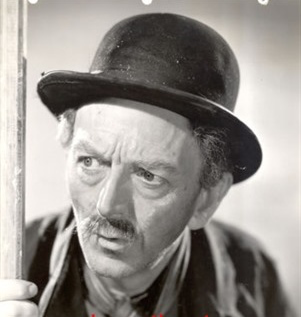
F. J. McCormick (real name Peter Christopher Judge), an Irish actor who becomes known for his work at Dublin‘s Abbey Theatre, is born in Skerries, County Dublin, on June 1, 1890. He acquires the stage name “F.J. McCormick” to disguise his identity from his current and future employers, and to avoid parental disapproval. He joins the Abbey at age 19, and acts in some 500 productions there. He is especially remembered for his work in the plays of Seán O’Casey.
After living in Skerries in his early years, at age ten McCormick moves to Dublin and proceeds to live there for the majority of the duration of his life. He is educated locally in Skerries. His father, Michael Judge, is a maltser and later becomes a brewery manager. He is of medium height, with “expressive eyes” and thick brown hair. As a young man, he begins writing by contributing articles to the press. He works briefly as a post office clerk in London but returns to Dublin to work as a junior clerk in the Civil Service. He resigns from his public service career in 1918 and decides to embrace acting as a full-time career as a member of the Abbey Theatre at age 19.
McCormick’s mother dies when he is 2 years old. He and his family move to Dublin when he is 10 or 12 years old. He is raised in Skerries and attends the Holy Faith Convent for primary education. He describes his childhood in Skerries “as a very happy one.” He marries Eileen Crowe on December 2, 1925, in Rathdown. They meet at the Abbey where Crowe is also an actor. In describing their performances together, Seamus De Burca writes, “F. J. McCormick and Eileen Crowe lived a life together of perfect bliss.” The couple has two children, a son, David, and a daughter, Marie.
After moving briefly to London, McCormick returns to Dublin, where he works in the Civil Service. He also takes acting roles in the Workmen’s Club on York Street, and for the first time under the pseudonym by which he becomes known for roles with the Queen’s Theatre, Dublin. By May 1919, he has a leading role in an independent production of The Curate of St. Chad’s by Constance Powell Anderson at the Abbey Theatre. An attack on Irish acting by Edward Martyn is answered by McCormick in the pages of the journal Banba in June 1921.
McCormick acts in over 500 plays at the Abbey Theatre, becoming particularly associated with the plays of Sean O’Casey staged there. From 1923 to 1925, he is also stage manager at the Abbey. Of his performance as Seumus Sheilds in The Shadow of a Gunman, O’Casey says that the actor created a character greater than that which he had written. He plays Capt. Brennan in the filmed version of O’Casey’s The Plough and the Stars but it is his return to film in Carol Reed‘s Odd Man Out (1947) that sees him singled out for praise in contemporaneous reviews. The Irish Times writes that “the acting of the Irish players was unremittingly professional, and, in the case of F. J. McCormick, as Shell, a weak-minded and elderly corner-boy, quite outstanding.” The Times of London finds “it is Mr. F. J. McCormick as a sly, bird-like creature, who stops just the right side of informing, who catches most surely at the imagination.”
In their review of the film Hungry Hill (1947), The New York Times writes, “As the butler who served John Brodrick, his sons, and their sons in turn, the late F. J. McCormick is truly magnificent, giving an even more subtle portrayal of Irish character than he did as the wily tramp in Odd Man Out.”
In the last five years of McCormick’s life he continues to work in the Abbey where he acts in over 70 plays before his death. He only stars in one play in the theatre in the final year of his life, the play They Got What They Wanted playing the role of Bartley Murnaghan. He secures more leading roles in the film industry. He dies in Dublin at the age of 56 from a brain tumour on April 24, 1947. He is buried in Dean’s Grange Cemetery, Deansgrange, County Dublin. He continues to work right up until his death.
It is said that people regarded McCormick as one of the greatest actors in his era. This comes from his work in 500 plays and 4 films over his career. A year after his death, Barry Fitzgerald says he only knew of two actors with the gift that McCormick had and they were Charles Laughton and Charlie Chaplin.
There are many popular plays and films that McCormick is part of which are still remembered to this day by many, some of them include the original The Plough and the Stars in 1926 where he originates the role of Commandant Jack Clitheroe. He also plays the role of Captain Brennan in the John Ford film version of the play in 1936. In his appreciation for McCormick, Gabriel Fallon remembers him as both a great actor and a great man.
It is said that McCormick was one of the most versatile actors of his generation, his early death was a huge loss to the Irish arts and more specifically the Abbey Theatre where he carried most of his work.
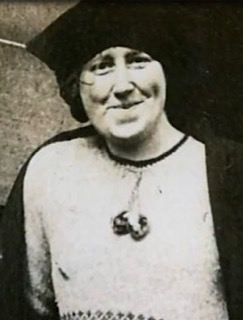
Robb is the daughter of the managing director of J. Robb & Co., Charles Robb and his wife Agnes (née Arnold), daughter of Dr. Wilberforce Arnold. She attends Richmond Lodge, and then Somerville College, Oxford to study modern languages in 1924. She receives a Bachelor of Arts (BA) in 1927, a Master of Arts (MA) in 1931 and then a Doctor of Philosophy (DPhil) in 1932. She publishes her research as Neoplatonism of the Italian renaissance in 1935. She is a member of the Northern Ireland committee of the National Trust, to which she presents the family home, Lisnabreeny House, Castlereagh, in 1937. She engages in social and voluntary work for a time, before moving to London in 1938 to take up a position at the London Institute of Italian Studies.
Robb publishes her first volume with Wiley-Blackwell in 1939 as Poems. She is the registrar and advisory officer to the Women’s Employment Federation between 1940 and 1944, during which time she writes a partial account of her experiences in An Ulsterwoman in England in 1942. She returns to Northern Ireland in 1944, working for a number of public bodies including International PEN and the National Trust, and writing. She serves as a member of the Committee for the Encouragement of Music and the Arts in 1951. In the same year she edits The Arts in Ulster with John Hewitt and Sam Hanna Bell, which argues that any mention of politics should be excluded from collections.
In 1962 and 1966 Robb produces a large two-volume history of William of Orange. In 1963, she becomes a member of the Maatschappij der Nederlandse Letterkunde. She produces a final volume of poetry in 1970, Ards eclogues, and is elected a Fellow of the Royal Society of Literature. Over her lifetime she writes seven volumes of poetry, history and art criticism.
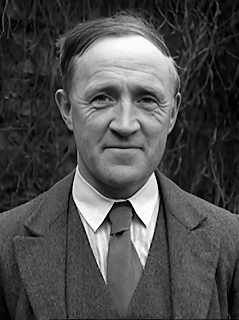
Boland is enrolled in the IRB along with his younger brothers Harry in 1904, following in the footsteps of his father. He and his brothers Harry and Ned subsequently join the Irish Volunteers when that organisation is established in 1913, serving in the same company as Arthur Griffith. When news breaks out of the Easter Rising in 1916 he immediately leaves his job, however, he is bitterly disappointed when he finds out that the order has been countermanded. When the rebellion begins in earnest on Easter Monday, he makes his way to Jacob’s Mill where he fights under Thomas MacDonagh. Following the official surrender, he is arrested and interned at Frongoch internment camp in Wales, where he comes into contact with other notable revolutionary leaders, including his brother Harry’s friend Michael Collins.
Boland is released after a general amnesty in December 1916, however, he remains involved in revolutionary circles, although he declines to rejoin the IRB, believing the organisation is no longer needed. He is arrested and imprisoned in Belfast from May to December 1918 for practising military drills in the Dublin Mountains. Meanwhile, a number of his colleagues secure their release by winning seats in the 1918 United Kingdom general election.
Boland and his brothers are opposed to the Anglo-Irish Treaty of 1921. He is Battalion Commandant of 3 Battalion, 2 Dublin Brigade (South Dublin) in Blessington, County Wicklow, but is captured early on in the Irish Civil War on July 7, 1922, and is interned until his release in July 1924. On the outside, his brother Harry dies some days after being shot, in August 1922, after two National Army officers attempt to arrest him at the Grand Hotel in Skerries, County Dublin. Boland applies to the Irish government for a service pension under the Military Service Pensions Act of 1934 and is awarded 11 and 5/12 years of service at Grade C for his service with the Irish Volunteers and the IRA between April 1, 1916 and September 30, 1923.
Following the end of the Irish Civil War, Boland helps to build up Sinn Féin as the main Republican party. While still imprisoned, he is selected to stand for Dáil Éireann as the Teachta Dála (TD) for Roscommon, Harry’s old seat, for the 1923 Irish general election, in which he is successful. He is among those in Kilmainham Gaol who go on hunger strike in October 1923. The hunger strike does not result in his release and he credits his practice of yoga with keeping him alive at the time.[3]
Boland is eventually released from the custody of the state in July 1924. Upon his release, he becomes secretary of Sinn Féin and stands on the executive of the party.
Boland is among the first in Sinn Féin to call for an end to the party’s abstentionism from DáilÉireann, believing it to be a political dead end. Party leader Éamon de Valera proposes that the party abandon this policy and take their seats in the Dáil if changes are made to the oath of allegiance to the British monarch. His proposal is defeated and de Valera and his supporters, including Boland, leave Sinn Féin. Shortly after this split, a new party emerges called Fianna Fáil, with de Valera acting as leader and the other disillusioned Republican TDs joining. Boland is vital in transferring many members from Sinn Féin to Fianna Fáil. Fianna Fáil briefly also has an abstentionist policy but in 1927 a new law forces Fianna Fáil TDs to take the oath of allegiance and take their seats in the Dáil. Fianna Fáil dismisses the oath as “an empty formula.”
Boland works alongside Seán Lemass in building up Fianna Fáil’s grassroots support and organisation, giving particular attention to the party’s rural apparatus. In the September 1927 Irish general election Fianna Fáil comes within four seats of the ruling Cumann na nGaedheal party. The latter forms a coalition of sorts with the Farmers’ Party and returns to government.
Following the 1932 Irish general election, Fianna Fáil forms a new government. Boland is appointed Government Chief Whip, a position which allows him to attend cabinet meetings but not vote at them.
Fianna Fáil remains in power with an increased mandate following the 1933 Irish general election and Boland is promoted to the position of Minister for Posts and Telegraphs. Despite being the Minister in charge of the postal service, he does not own a telephone until some time later. During his tenure, the postal service makes considerable progress. It is also during this time that the Post Office becomes a paying concern. During his time as minister, he oversees a major expansion of the telephone service in Ireland, improvements in the transmission capacity of Radio Éireann, and construction of new provincial post offices and a new central postal sorting office.
Boland is acting Minister for Justice briefly for a time when P. J. Ruttledge is ill. It is during this time that he declares the Irish Republican Army a proscribed organisation.
A cabinet reshuffle in 1936 sees Boland become Minister for Lands. The Land Act 1939 reforms land distribution, broadening the criteria by which the state can take control over undeveloped land while offering the tenant of the land more favourable terms of compensation. He is critical of the policy of the Minister for Industry and Commerce, Seán Lemass, of centralising industrial development in Dublin. He instead wishes to see a more decentralised economy based around food production. The differing viewpoint causes a rift between Boland and Lemass, but despite this Boland favoured Lemass’s policy of state intervention in the economy over Seán MacEntee‘s more laissez-faire approach.
In 1937 Boland is highly vocal during the drafting of a new constitution of Ireland by Fianna Fáil against any word which would give the Catholic Church special status, something heavily considered at the time. He declares that if the constitution elevates the position of the Catholic Church above others, it would be sectarian, anti-republican, and a hindrance to any prospects of Irish reunification. As a compromise, the term “special position” is used in the approved text of the Constitution.
Following the outbreak of World War II in 1939, known in Ireland as the Emergency, there is a cabinet reshuffle, and Boland is appointed as Minister for Justice. He takes over at a time when the IRA has once again declared war against the British state and has begun their Sabotage Campaign. He is charged with the task of crushing the organisation and preventing the IRA from drawing the Irish state into conflict with the United Kingdom. Although he always considers himself a republican, he takes a hardline against the IRA and uses his powers to order the internment of hundreds of IRA members before introducing military courts and special criminal courts.
In 1940, several imprisoned IRA members go on hunger strike but Boland refuses to grant their release. Two of the men eventually die, one of whom is the nephew of one of his Fianna Fáil colleagues. Tony D’Arcy dies at the age of 32 on April 16, 1940, as a result of a 52-day hunger strike, and Jack McNeela dies three days later after 55 days on hunger strike. These deaths spark reprisals by the IRA on the Garda Síochána. Boland subsequently introduces tougher measures by setting up a military court with the death penalty and no provision for appeal except for a review by the government. In all, twelve men are found guilty with six of them facing death and the remaining six having their sentences changed to imprisonment. Among those executed is Charlie Kerins, an acting Chief of Staff of the IRA.
As Minister of Justice, Boland is also asked to enforce policies of wartime censorship, however, finding the idea of the state censorship distasteful he establishes a censorship board to avoid accusations of bias.
During the Emergency, Boland is also responsible for the detention of several foreign agents in pursuit of Ireland’s strict policy of neutrality. During this time some 500 individuals are interned and 600 are sentenced under the newly introduced Offences against the State Act, 1939. By 1943 the IRA is in disarray, particularly after the Chief of Staff is arrested and imprisoned, leaving the organisation without leadership. Boland and Fianna Fáil feel their hardline is backed by the electorate following strong returns for the party at the 1944 Irish general election.
In 1947, Boland is among four leading Fianna Fáil figures (including de Valera) involved in the “Locke’s Distillery Scandal”, an accusation brought by Oliver J. Flanagan that foreign businessmen are bribing members of Fianna Fáil to gain the right to purchase the distillery. A tribunal of inquiry finds no evidence to support the claims, but the event taints the public’s view of Fianna Fáil.
By 1948, Fianna Fáil has been in government for an uninterrupted 16 years. With World War II finally over, the electorate seeks change and a fresh start. Arising to meet this desire is the new political party Clann na Poblachta. Led by Seán MacBride, this new party seeks to kick off a new post-war political era in Ireland, and to do this means removing Fianna Fáil from power. Many in Clann na Poblachta have republican backgrounds and in some ways, the party can be partially described as an organic reaction to Fianna Fáil and Boland’s hardline stance during the war years. Many in political circles, including inside Fianna Fáil, believe Clann na Poblachta can be a new force to reckon with.
However, de Valera always holds a reputation for being cunning in selecting the dates of general elections, and he once again cements that notion, when he calls for a general election in early 1948 before Clann na Poblachta is completely ready to contest a national election. At the 1948 Irish general election Clann na Poblachta and other Fianna Fáil opponents do well, but not as well as expected. To remove Fianna Fáil from government, every single party in the Dáil and several independents have to form the unwieldy “First Inter-Party Government.” The coalition sees Clann na Poblachta forced to work with Fine Gael, considered the traditional “enemy” of Irish republicanism. By 1951, the coalition collapses and Fianna Fáil returns to government following that year’s election, with Boland re-appointed Minister for Justice.
Boland does not seek ministerial office in 1957 when Fianna Fáil returns to power after its defeat in 1954. However, his son, Kevin, is appointed to the cabinet as Minister for Defence at the beginning of his first term in the Dáil. By this stage, Boland is beginning to be seen as an aging warhorse, with his base in Roscommon starting to slip and Fianna Fáil unhappy that he is unable to get a Fianna Fáil running mate elected alongside himself.
At the 1961 Irish general election, Boland is defeated for the first time in fourteen general election campaigns. Despite losing his Dáil seat, he subsequently secures election to Seanad Éireann. Four years later in 1965, he returns to the Seanad, this time as a nominee by the Taoiseach Seán Lemass.
In 1970, the outbreak of the Arms Crisis sees Kevin Boland resign as a Minister and as Secretary of Fianna Fáil in protest at the government’s policy on Northern Ireland and in response to the sackings of Charles Haughey and Neil Blaney from the cabinet over allegations they had arranged for weapons to be provided to the Provisional IRA. Gerald Boland, in a similar protest, resigns as a vice president and as a trustee of Fianna Fáil, although he remains a member of the party. He also articulates his loss of confidence in the leadership of TaoiseachJack Lynch.
Boland dies in Dublin at the age of 87 on January 5, 1973. He is buried in the republican plot in Glasnevin Cemetery, Glasnevin, County Dublin. His wife, Annie Boland, predeceases him in 1970. He is survived by his three daughters and four sons.
MacNeill is one of five children born to Archibald McNeill, a Roman Catholic working-class baker, sailor and merchant, and his wife, Rosetta McNeill (née McAuley), also a Catholic. He is raised in Glenarm, an area which “still retained some Irish-language traditions.” His niece is nationalist and teacher, Máirín Beaumont.
MacNeill marries Agnes Moore on April 19, 1898. The couple has eight children, four sons and four daughters (though the 1911 census entry for MacNeill notes eleven children, seven of whom are still alive).
The Gaelic League is from the start strictly non-political, but in 1915, a proposal is put forward to abandon that policy and become a semi-political organisation. MacNeill strongly supports this and rallies to his side a majority of delegates at the 1915 Oireachtas. Douglas Hyde, a non-political Protestant, who had co-founded the League and been its president for 22 years, resigns immediately afterward.
Through the Gaelic League, MacNeill meets members of Sinn Féin, the Irish Republican Brotherhood (IRB), and other nationalists and republicans. One such colleague, The O’Rahilly, runs the league’s newspaper An Claidheamh Soluis, and in October 1913 asks MacNeill to write an editorial for it on a subject broader than Irish language issues. He submits a piece called “The North Began,” encouraging the formation of a nationalist volunteer force committed to Irish Home Rule, much as the unionists had done earlier in the year with the Ulster Volunteers to thwart Home Rule in Ireland. In July 1915, he comments on the threat that the unarmed nationalists in Ulster might face: “…a demented…English driven Orange Army would be let loose upon the helpless Catholic people of Ulster, who would be driven out of the province or massacred where they stood.”
Bulmer Hobson, a member of the IRB, approaches MacNeill about bringing the idea to fruition, and, through a series of meetings, MacNeill becomes chair of the council that forms the Irish Volunteers, later becoming its chief of staff. Unlike the IRB, he is opposed to the idea of an armed rebellion, except in resisting any suppression of the Volunteers, seeing little hope of success in open battle against the British army.
The Irish Volunteers have been infiltrated by the Irish Republican Brotherhood, which plan on using the organisation to stage an armed rebellion, to separate Ireland from the United Kingdom and establishing an Irish Republic. The entry of the UK into World War I is, in their view, a perfect opportunity to do that. With the cooperation of James Connolly and the Irish Citizen Army, a secret council of IRB officials plan a general rising at Easter 1916. On the Wednesday before Easter, they present MacNeill with a letter, allegedly stolen from high-ranking British staff in Dublin Castle, indicating that the British are going to arrest him and all the other nationalist leaders. Unbeknownst to MacNeill, the letter—called the Castle Document—is a forgery.
When MacNeill learns about the IRB’s plans, and when he is informed that Roger Casement is about to land in County Kerry with a shipment of German arms, he is reluctantly persuaded to go along with them, believing British action is now imminent and that mobilization of the Irish Volunteers will be justified as a defensive act. However, after learning that the German arms shipment has been intercepted and Casement arrested, and having confronted Patrick Pearse, who refuses to relent, MacNeill countermands the order for the Rising by sending written messages to leaders around the country, and placing a notice in the Sunday Independent cancelling the planned “manoeuvres.” This greatly reduces the number of volunteers who report for duty on the day of the Easter Rising.
Pearse, Connolly and the others agree that the uprising will go ahead anyway, but it begins one day later than originally intended to ensure that the authorities are taken by surprise. Beginning on Easter Monday, April 24, 1916, the Rising lasts less than a week. After the surrender of the rebels, MacNeill is arrested although he has taken no part in the insurrection. The rebel leader Tom Clarke, according to his wife Kathleen, warns her on the day before his execution, “I want you to see to it that our people know of his treachery to us. He must never be allowed back into the National life of this country, for so sure as he is, so sure will he act treacherously in a crisis. He is a weak man, but I know every effort will be made to whitewash him.”
In 1923, MacNeill, a committed internationalist, is also a key member of the diplomatic team that oversees Ireland’s entry to the League of Nations.
MacNeill’s family is split on the treaty issue. One son, Brian, takes the anti-Treaty side and is killed in disputed circumstances near Sligo by Free State troops during the Irish Civil War in September 1922. Two other sons, Niall and Turloch, as well as nephew Hugo MacNeill, serve as officers in the Free State Army. One of his brothers, James McNeill, is the second and penultimate Governor-General of the Irish Free State.
In 1924, the three-man Irish Boundary Commission is set up to settle the border between Northern Ireland and the Irish Free State. MacNeill represents the Irish Free State. He is the only member of the Commission without legal training and has been described as being “pathetically out of his depth.” However, each of the Commissioners is selected out of political expediency rather than for any established competence or insight into boundary making. On November 7, 1925, a conservative British newspaper, The Morning Post, publishes a leaked map showing a part of eastern County Donegal (mainly The Laggan district) that is to be transferred to Northern Ireland, the opposite of the main aims of the commission. Perhaps embarrassed by that, especially since he said that it had declined to respect the terms of the Treaty, MacNeill resigns from the commission on November 20. Hus performance in the Boundary Commission has been deemed highly negative in a 2025 study The Root of All Evil: The Irish Boundary Commission.
On November 24, 1925, MacNeill also resign as Minister for Education, a position unrelated to his work on the commission.
On December 3, 1925, the Free State government agrees with the governments in London and Belfast to end its onerous treaty requirement to pay its share of the United Kingdom’s “imperial debt” and, in exchange, agrees that the 1920 boundary will remain as it is, overriding the commission. This angers many nationalists and MacNeill is the subject of much criticism, but in reality, he and the commission have been sidestepped by the intergovernmental debt renegotiation. In any case, despite his resignations, the intergovernmental boundary deal is approved by a Dáil vote of 71–20 on December 10, 1925, and MacNeill is listed as voting with the majority in favour. He loses his Dáil seat at the June 1927 Irish general election.
MacNeill is an important scholar of Irish history and among the first to study Early Irish law, offering both his interpretations, which at times are coloured by his nationalism, and translations into English. He is also the first to uncover the nature of succession in Irish kingship, and his theories are the foundation for modern ideas on the subject.
MacNeill is a contributor to the Royal Irish Academy‘s Clare Island Survey, recording the Irish place names of the island. His disagreements and disputes with Goddard Henry Orpen, particularly over the latter’s book Ireland under the Normans, generate controversy.
MacNeill retires from politics completely and becomes Chair of the Irish Manuscripts Commission. In his later years he devotes his life to scholarship and publishes several books on Irish history. He dies in Dublin of natural causes, aged 78, on October 15, 1945. He is buried in Kilbarrack Cemetery.
The Catholic Association is the latest in a series of similar associations formed over the previous ten years or so, none of which had prospered. Like the other associations, this new association is composed mainly of the middle class elite: an annual subscription amounting to a guinea, an amount equivalent to what an average farmer would pay for six months’ rent. In 1824, the Catholic Association begins to use the money that it has raised to campaign for Catholic emancipation.
In 1824, the association creates a new category of associate members at the cost of a penny per month, the so-called Catholic Rent. The reasoning behind the creation of this new membership category is to stimulate a swelling in association numbers. This new, cheaper category ensures Catholics from a poorer background can join, and thus the association’s initial class-based entry barriers are removed. The Catholic rent transforms the association and Catholic political advocacy more broadly. In terms of the association, the rent catalyzes a transformation in a number of ways. Firstly, as previously mentioned, it gives the Catholic Association a constant source of money, which enables O’Connell to run a consistent campaign. Secondly, it facilitates easy calculation of total association membership numbers so that O’Connell can say with confidence that he has the support of so many people. This is important as it can be used to apply pressure against the British government. Third, and perhaps most importantly, however, it announces the arrival of mass mobilization politics, being the first such populist movement in Europe. O’Connell decides to add this additional membership level, at a reduced price of a penny a month, deliberately. The benefits are clear. With the membership subscription set at a relatively cheap price, a large number of the peasant and working classes can join. Affordability ensures large numbers. In effect, it becomes a universal Catholic organization that is transparent and populist. The fact that each member contributes financially to the association also ensures that they are more deeply involved in pushing the cause of Catholic emancipation. People want value for their money. Thus, this ensures a cheap method for O’Connell to get the message of Catholic emancipation spread throughout Ireland.
The Catholic Association’s funds are diffused widely in a variety of areas. Some is spent campaigning for Catholic emancipation, defraying the costs of sending petitions to Westminster, and training of priests. Following the 1826 election campaign, funds are used to support the members of the organization who had voted against their landlords. The money is used for those who have been evicted from land by the landlords because of their connection to the Catholic organization or for those who were boycottingabsentee landlord. For the Catholic peasants that are in this situation, the future would be grim as they would be unable to continue the boycott without food and money, and they would be unable to lease land from any landlord as the peasants would be boycotted against in return. The Catholic Association’s funds are used to support these boycotts so that they can continue and live well enough to have enough food to survive.
The Catholic Association is originally aristocratic in its composition, and some of the gentry (such as Richard Lalor Sheil) hold relatively conservative views. However, O’Connell holds an enormous influence over society and largely dictates the policies it pursues. It is radical in nature but also extremely loyal to the Crown in appearance. This had been the strategy of the previous major Catholic group, the Catholic Committee of the 1790s, which achieved major Catholic Relief in 1793.
Since the aims of the Catholic Association are fairly moderate and the organization remains loyal to the monarch, British MPs are conceptually more willing to pass Catholic emancipation. The matter had been discussed in London since the Acts of Union 1800, when Prime MinisterWilliam Pitt and most of his colleagues resign from the cabinet when emancipation is denied by the king. Henry Grattan continues to support the cause, and Catholic emancipation had been passed by the House of Commons previously by a majority of six, but it is rejected in the House of Lords and generally by King George III, who reigns until 1820.
The biggest strength of the Catholic Association is that the Catholic Church helps in the collection of the Catholic rent. Catholic priests also hold sermons in favor of Catholic emancipation. This means that it is easy for the members to pay the Catholic rent, and it will attract more members as the message of Catholic emancipation is being spread throughout Ireland. Sir Robert Peel believes the alliance of the Catholic Association and the Catholic Church is a “powerful combination.”
In 1826, the Catholic Association begins to use its funds to support pro-emancipation MPs in elections. They use their money and manpower to campaign for the candidate to be elected into parliament to pressure the government from within to pass Catholic emancipation.
The turning point comes in 1828, when two factors come into play. The first is that the Catholic Church takes over the collection of the Catholic Rent and effectively the Catholic Association itself. The other is that by 1828, O’Connell’s reputation has increased dramatically. He is an internationally recognized figure and is seen as one of the leading figures in liberal thinking. This successful campaign leads on to, but is distinguished from, his later efforts to end the union with Britain, to increase the franchise, and to end the payment of tithes. His particular talent is to push the emancipation process along in an organized way.
In May 1828, the Sacramental Test Act 1828 repeals the Test Acts 1673 & 1678 against non-AnglicanProtestants. This gives non-Catholic non-conformists greater political freedom and equality in Britain. The repeal has two effects: it gives Catholics hope that a similar act will be passed that will include Catholics; it also alienates Catholics, as they have become the only Christians not to have political freedom and equality.
In May 1828, William Huskisson resigns from the cabinet, and William Vesey-Fitzgerald is chosen as the President of the Board of Trade. According to the law, there is to be a by-election in his constituency of Clare. O’Connell decides to exploit a loophole in the Acts of Union 1800. It requires MPs to take the Oath of Allegiance, but the oath is not required of candidates for election. He stands in the by-election and wins. Since he is a Catholic, he cannot take his seat in parliament. Demand rises to allow him to become an MP for Clare, as it does not have representation.
Sir Robert Peel and Arthur Wellesley, 1st Duke of Wellington, see that if O’Connell is not allowed to take his seat, then there could be a revolution in Ireland. While using non-violent methods, O’Connell hints that he will get more Catholics elected to force the situation. In an emotive speech, he says, “They must crush us or conciliate us.”
Peel decides to change the government’s approach and submits the Roman Catholic Relief Act 1829 in February 1829. The bill is passed. It is a momentous victory for O’Connell and the Catholic middle class, and he becomes known as “the liberator” and the “uncrowned king of Ireland.” However, the simultaneous enactment of the Parliamentary Elections (Ireland) Act 1829 restricts the franchise in the county constituencies in Ireland. The archive of the Catholic Association is housed with the archives of Dublin Diocese in Holy Cross College, Dublin.
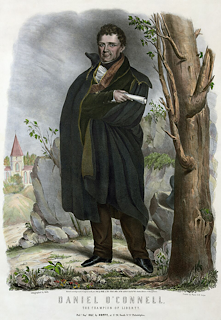
(Pictured: “Daniel O’Connell: The Champion of Liberty” poster published in Pennsylvania, 1847)
Deasy is the third among six sons of William Deasy, seaman, and Mary Deasy (née Murray). He is educated locally at Ballinadee before leaving school at the age of thirteen to work in nearby Bandon.
During the Irish War of Independence (1919–21), Deasy is adjutant of the IRA’s 3rd Cork Brigade (West Cork). He serves under Tom Barry in one of the unit’s best known actions, the Crossbarry ambush in March 1921. His younger brother, Pat, dies in action at the Kilmichael ambush in November 1920, an engagement at which Deasy is not present. He also takes part in the Tooreen ambush.
Deasy opposes the Anglo-Irish Treaty. In the months that follow he tries to persuade Collins to renegotiate aspects of the treaty, especially to remove an oath to the British king from the constitution of the new Irish Free State. When fighting breaks out in Dublin in June 1922 between pro and anti-Treaty forces, he sides with the Anti-Treaty IRA in the ensuing Irish Civil War. However, he is reluctant to fight his former comrades and voices the opinion that the fighting should have ended with the Free State seizure of the Four Courts.
In late July 1922, Deasy commands 1,500 anti-Treaty fighters who hold a line around Kilmallock south of Limerick city against about 2,000 Free State troops under Eoin O’Duffy. His men are the most experienced IRA fighters of the 1919-21 war and hold their position until August 8, when they are outflanked by seaborne landings on the southern coast. His men then disperse. He goes on the run in the southeast of the country.
In August 1922, Deasy is in command of a band of republican guerrillas in West Cork when they hear that Collins is in the area. Deasy has his men prepare an ambush for Collins’ convoy at Béal na Bláth, should it return by the same route it had taken earlier.
Deasy and most of his men do not take part in the ambush as they had retired to a nearby pub, assuming that they had missed Collins. However, Collins arrives as the last of Deasy’s men are clearing the mine and barricade that had been erected on the road at Béal na Bláth. Collins is killed in the ensuing firefight. Deasy later writes in his memoirs that he profoundly regrets the death of his former commander.
In January 1923, by which time Deasy has become Deputy Chief of Staff of the IRA, he is captured by Free State forces near Clonmel, County Tipperary, and sentenced to death. He is aware that the newly formed government plans on wholesale executions and knows that the IRA will retaliate with reprisals. He decides that it is now time to end the war. He signs a document (written by his captors) ordering the men under his command to surrender themselves and their arms to the government. He is spared execution. On the day that his order is published, Free State authorities demand that the prisoners in a jail in Limerick sign a statement agreeing to unconditional surrender, threatening wholescale executions to those who refused. Some republicans denounce Deasy as a traitor and a coward for this action, but he argues in his book, Brother against Brother, that he was opposed to continuing the civil war anyway and would have called on republicans to surrender whether or not he had been captured.
Deasy takes no further part in politics following the end of the Irish Civil War. In 1924, he sets up a business making weatherproof textiles. On November 24, 1927, he marries Margaret Mary O’Donoghue. They have three daughters together.
During The Emergency, Deasy serves in the Irish Army from 1940 to 1945, reaching the rank of commandant. He later writes two memoirs about his experiences during the revolutionary period: Toward Ireland Free and Brother against Brother, the latter being published after his death.
Deasy dies at St. Anne’s Hospital, Northbrook Road, Dublin, on August 20, 1974. He is buried in Bohernabreena Cemetery in Dublin.
Morrison grows up in a community steeped in traditional Irish culture especially music and at the age of seventeen he is employed by the Gaelic League to tutor the Connacht style of step dancing at the Gaelic League school in County Mayo.
In 1915, at the age of 21, Morrison immigrates to the United States and settles in New York City. In 1918, he wins the fiddle competition at the New York Feis. He becomes associated with other leading Irish musicians such as Michael Coleman and Paddy Killoran, who are also from County Sligo.
Morrison is one of the leading Irish music teachers in New York in the 1930s and 1940s. In addition to the fiddle, he can play the flute, tenor banjo and button accordion, and teaches hundreds of young Irish American students to play traditional music.
The Sligo style of fiddle music Morrison plays is typically highly ornamented and fast, with a fluid bowing style. Recordings of his playing are imported to Ireland in great numbers, and have an extraordinary impact. In many areas, local playing styles fall into disuse because of the popularity of the style and repertoire of Morrison and Michael Coleman. This repertoire includes predominantly reels, rather than jigs and hornpipes, and are often played by Irish musicians in the same order as on the original recordings. According to Séamus Mac Mathúna, “More than thirty years after Coleman’s death … one seldom hears ‘Bonny Kate’ without ‘Jenny’s Chickens.’ ‘Tarbolton’ is inevitably followed by ‘The Longford Collector’ and the ‘Sailor’s Bonnet.'” The great Canadian fiddler Jean Carignan was is influenced by Morrison. Morrison is well regarded by Frankie Gavin: “the approach he had to fiddle playing and the approach he had to any tune he touched just…can’t be beaten…nobody can play like that today.”
Morrison dies on November 11, 1947, and is interred, like many of his great musical contemporaries, in Saint Raymond’s Cemetery in the Bronx.
Elvery is the second among seven children of William Elvery , merchant, and Theresa Elvery (née Moss), singer and music teacher, whose parents are English Quakers. Her father’s ancestors were silk merchants from Spain, called Alvarez. Her early childhood is spent in Carrickmines, County Dublin. In 1896 the family moves to Foxrock and she attends the Dublin Metropolitan School of Art. Her mother’s family is artistic – one aunt is the artist Phoebe Anna Traquair – and she and her sisters are talented artists and singers. Her younger sister, Dorothy Kay, becomes a noted portrait painter in South Africa. At the age of sixteen, she wins a three-week scholarship to study at the Royal College of Art in South Kensington, London. Back in Dublin, she models for William Orpen, then teaching in the school. They become friends, and she regrets never studying painting under him. She concentrates on sculpture under John Hughes and has great success, winning the Taylor scholarship three years in a row (1901–03). The first year she wins, the judges, seeking evidence that she had worked unaided, asks her to model a head from life in their presence.
Elvery’s first exhibit in the Royal Hibernian Academy (RHA) is a bronze statuette of a boy in 1902. Thereafter she is a lifelong exhibitor with the RHA, showing almost annually until her death. Friendship with the older Sarah Purser introduces her to Dublin’s artistic milieu and to the arts and crafts movement. In the movement’s 1904 exhibition she shows ten items, including terracotta statuettes, a holy water stoup, and a plaster cast of a lectern, which is cast in bronze in Paris that year and placed in her former parish church in Carrickmines. The movement’s historian, Paul Larmour, calls this lectern “a remarkable piece of organic Art Nouveau . . . There is nothing else like it in Ireland.”
In 1904, after a brief period studying in Paris with her sister and fellow students Estella Solomons and Frances “Cissie” Beckett, Elvery takes lessons in stained glass from Alfred E. Child, and is then persuaded by Purser to join her Tower of Glass (An Túr Gloine) studio. She remains six years, executing windows for St. Stephen’s Church, Mount Street, Dublin; St. Nicholas Church, Carrickfergus; and a war memorial at the Church of Ireland church, Carrickmines. Although her work is generally well received, she does not rate her skill in the medium highly – “I never got the right feeling for glass or the detached, austere quality necessary for ecclesiastical art” – and her window for a Gortconvent leads to a critical review of Purser’s studio by W. B. Yeats. She does not, however, confine herself to glass but also designs for silversmiths and illustrated books for children. For Iosagán agus Sgealta Eile (1907), by Patrick Pearse, she provides a black-and-white frontispiece and four colour illustrations. For the Cuala Press, run by Lily and Elizabeth Yeats, she designs calendars, Christmas cards, and fifteen hand-coloured prints, which continue to be issued until after World War II.
Elvery’s social life in Dublin is busy. An active member of the United Arts Club, she is called by Lady Gregory “the beautiful Miss Elvery,” and Orpen’s portrait, showing her long-necked, graceful, and vivacious, bears out this description. Tiring of glass, and wishing to become a painter, she leaves in 1910 for the Slade School of Fine Art in London. There Henry Tonks is less complimentary than her Dublin teachers. He finds her work facile: “The speed, the slickness, the skill. It is horrible!” Orpen also comes to this view: “her only fault was that the transmission of her thoughts from her brain to paper or canvas, clay or stained glass, became so easy to her that all was said in a few hours. Nothing on earth could make her go on and try to improve on her first translation of her thought.”
Back in Dublin, Elvery takes a studio in Kildare Street and teaches for a time in the Metropolitan School of Art, before her parents arrange a marriage with Charles Henry Gordon Campbell, eldest son of the future Lord Chancellor of Ireland, James Campbell. They marry on August 1, 1912, and move to London where he is called to the English bar. It is not initially a love match but they are well-suited – he likes artistic, Bohemian circles and they become friends with D. H. and Frieda Lawrence, the painter Mark Gertler, the publisher John Middleton Murry, and his wife, the writer Katherine Mansfield, who describes Campbell as “a queer mixture for she is loving and affectionate, and yet she is malicious.”
Campbell’s husband becomes secretary of the Department of Industry and Commerce in the Irish Free State and in 1922 the family moves to Clonard, Terenure, Dublin. His government position means that within six months the house is burned down by anti-Treatyites, who are, however, almost comically accommodating – local men, they express distress at the job and allow her to save the children’s Christmas presents. In 1931 she becomes Lady Glenavy after her husband succeeds to his father’s title, an important member of Dublin’s social and artistic scene. She helps establish the Dublin Drama League and assists Shelah Richards in the production of two plays in 1936. Her friendships are wide and varied and her conversation imaginative and engaged. Dressed in beige – what her son calls “variations on a theme of porridge” – she entertains constantly. Her house has what she terms a “caravanserai” character and is constantly full of people.
Appointed an associate of the RHA in 1932, Campbell becomes a full member in 1934 and takes her turn at teaching. She also joins the more radical Society of Dublin Painters and holds in February 1935 a one-person show at their premises, 7 Stephen’s Green, but she never shows with the Irish Exhibition of Living Art, though her work is more avant-garde than that of most academicians. At its best in still lifes and figure compositions, her work has “a sense of drama and an enigmatic or near-surrealist appearance.” Brian Kennedy notes that she is the first Irish painter to go surrealist (though she never thinks of herself in this way) and although she is serious about her work – taking lessons at an advanced age from Patrick Hennessy – she is also diffident. Her memoir does not trace her development as an artist and mentions only one work with approbation – The Intruder (exhibited at the RHA in 1932). Now in the National Gallery of Ireland, it depicts in bold, rich colours a female centaur beckoning a young man from a group of picnickers. It immediately attracts attention. Richard Orpen wants the academy to buy it, but they think it obscene.
About 1941 the Campbells move to a large Georgian house in Rathfarnham, and twenty years later they transfer to a smaller house in Sandycove. After her husband’s death in 1962, she publishes her memoirs, And Today We Will Only Gossip (1964). The title is well chosen as the book is not self-revelatory but full of characters she encountered. Monk Gibbon calls her a “unique mixture: of talent and diffidence; of gregariousness and contempt for the herd; of gentle consideration and a savage determination to wound. Only those who knew her well knew her at all; and even to them she remained something of a mystery” (The Irish Times, December 2, 1980).
Campbell dies in Dublin on May 21, 1970, and is survived by her two sons, the writer and humorist Patrick Campbell and the novelist Michael Campbell, and predeceased by her daughter, Bridget, an Irish international lacrosse player and talented scientist, who is killed by a bomb during the London blitz.
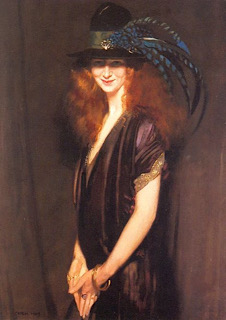
(From: “Campbell, Beatrice Moss” by Bridget Hourican and Pauric J. Dempsey, Dictionary of Irish Biography, http://www.dib.ie, October 2009 | Pictured: “Bridgit – a picture of Miss Elvery (Beatrice Elvery),” oil on canvas by William Orpen, 1909)
O’Riordan is the youngest child among two sons and three daughters of Daniel O’Connell O’Riordan, a barrister and justice of the peace (JP), and Katharine O’Riordan (née O’Neil), who is her husband’s first cousin. At age of four he witnesses his mother’s death in a carriage accident. His formal education, firstly as a day student at Belvedere College, Dublin (1881–85), and secondly as a boarder at Clongowes Wood College, County Kildare (1887–88), is interrupted by ill health and periods of self-education at home, marked by omnivorous reading in his father’s library.
While engaged in military studies in Bonn, Germany (March–September 1890), preparatory to entering Royal Military Academy Sandhurst in Great Britain, he falls from a horse during riding lessons, suffering a back injury that results in permanent spinal damage, thus precluding a military career.
Left with limited means after his father’s death, O’Riordan moves to London in 1891, where, after attempting suicide, he finds work as a stage actor with the Independent Theatre Society of J. T. Grein and other companies, both in London and touring the provinces, and is noted for his interpretations of Henrik Ibsen. Active in the Irish Literary Society, where he meets W. B. Yeats, he writes fiction under the pseudonym “F. Norreys Connell,” which he also adopts for his stage work.
O’Riordan’s early publications include In the Green Park (1894), a collection of connected short stories, The House of the Strange Woman (1895), a provocative novel of sexual promiscuity in upper-class London bohemia, boycotted by some booksellers as being “morally tainted,” and several books reflecting his deep interest in all things military, most notably The pity of war (1906), a collection of Kiplingesque short stories. Largely abandoning fiction for some years to concentrate on writing for the stage, he returns to Dublin for the first time in fourteen years to direct his controversial one-act play The Piper, which opens at the Abbey Theatre on February 13, 1908. It is jeered as a slander on Irish patriots in disturbances mildly reminiscent of the “Playboy” riots thirteen months previously. The audience on the third night is placated by Yeats, who in a speech from the stage interprets the play – in which a party of rebels in the 1798 rising disdain to set sentries as they argue interminably and discursively, only to be surprised and slaughtered by yeomanry – as a satirical allegory on the fruitless debate that followed the Parnellite split. The work can more usefully be read as a meditation on the propensity of democracy to disintegrate at moments of crisis into ineffectual and dillusory demagoguery. The Piper weathers the controversy to become a frequently performed staple of the Abbey Theatre repertoire during the 1910s.
After the death of John Millington Synge, O’Riordan serves briefly as managing director of the Abbey Theatre from March 25 to July 2, 1909, during which time he produces and directs two of his own one-act plays – Time on April 1, in which he also acts, and An Imaginary Conversation on May 13 – as well as the first revival of Synge’s The Playboy of the Western World on May 27. Wearied by the repeated interferences in the theatre’s affairs by its financial backer, Annie Horniman, he resigns abruptly during her fit of pique when the actress Sara Allgood recites poetry at a private gathering of suffragettes.
O’Riordan scores a major triumph on the London stage with Captain Hannibal (1909), his adaptation of a novel by Stanley Weyman, on the proceeds of which he lives for many years. Settling permanently in London, in 1910 he purchases a house at 106 Meadvale Road, Ealing, his home for the rest of his life. Rejected by the British Army at the outset of World War I owing to his disability, after several failed attempts to secure war work he eventually goes to the front in 1918 in charge of YMCA rest huts at Étaples railway junction, where he befriends the doomed soldier poet Wilfred Owen.
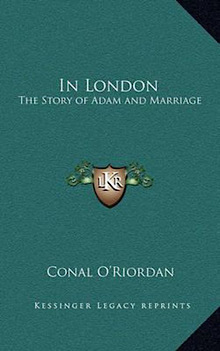
O’Riordan achieves his most accomplished writing within a cycle of twelve novels, published under his own name, chronicling the experiences of several inter-connected Irish and English families from the Napoleonic Wars to the 1920s. First of the series to appear was Adam of Dublin (1920), a combined Bildungsroman and roman-à-clef of the literary revival, with vignettes of Dublin slum life, Belvedere College, and the early years of the Abbey Theatre. He follows his protagonist, Adam Quinn, through the sexual turmoil of adolescence, an itinerant acting career, and an unhappy marriage in three sequels: Adam and Caroline (1921), In London (1922), and Married life (1924). These four novels chronologically conclude the narrative of the completed cycle. The narrative commences with the “Soldier” tetralogy – Soldier Born (1927), Soldier of Waterloo (1928), Soldier’s Wife (1935), and Soldier’s End (1938) – a picaresque treatment of the multifarious and farflung experiences of David Quinn, a forebear of Adam, from an Irish childhood and English education, to the Battle of Waterloo, where he suffers horrible facial mutilation, through the Irish famine and the American Civil War, to his death at the hands of Versaillais troops during the suppression of the Paris commune. Judith Quinn (1939) and Judith’s Love (1940), about the disappointments in love and marriage of a late-Victorian Dublin woman, link the narratives of the “Adam” and “Soldier” tetralogies, while The Age of Miracles(1925) and Young Lady Dazincourt (1926) are chronologically contemporaneous with the latter “Adam” novels. Inconsistent in intention, and uneven in execution, the cycle is strongest in its evocative descriptions of Dublin, London, and other cities, with their varied social strata, in different historical periods, in the sharp-edged, witty dialogue, and in the juxtaposition of dazzling comedy and an ironic sense of tragedy.
O’Riordan continues to write successful, if lightweight, stage plays. His 1928 production of Napoleon’s Josephine features a stellar cast including Edith Evans. Among his published plays are Shakespeare’s End, and Other Irish Plays (1912), Rope Enough (1914), His Majesty’s Pleasure (1925), The King’s Wooing (1929), and Captain Falstaff and Other Plays (1935). The historical commentary Napoleon Passes (1933) reflects his abiding interest in the French emperor. President of the Irish Literary Society from 1937 to 1939, he resigns after failing to persuade his colleagues to repudiate Ireland’s wartime neutrality. Despite age, disability, and increasing reclusivity, throughout World War II he serves as an air raid warden from 1940 to 1945. Elected a fellow of the Royal Society of Literature (1945–48), he represents the society on the council of the newly formed National Book League, and is the society’s Tredegar lecturer in 1946. Charming and convivial, a witty and erudite conversationalist, he cultivates numerous literary friendships, and is an inveterate womaniser, enjoying countless intimate relationships, both sexual and platonic.
O’Riordan marries firstly Florence Derby in 1903, a nurse eight years his senior, with whom he has one son. They are estranged by the time of her death in 1923. In 1924, he marries secondly Olga Buckley, his lover since 1920, and secretary to the wife of G. K. Chesterton. They have two sons (both born before the marriage) and one daughter. Despite considerable contemporary celebrity and critical acclaim, his work compared to that of Charles Dickens and Honoré de Balzac, he has been ignored by posterity. The best of his writing, especially the “Adam” and “Soldier” novels, merit rediscovery.
O’Riordan dies at his London home on June 18, 1948, the anniversary of the Battle of Waterloo. A special O’Riordan number of the Journal of Irish Literature (September 1985), edited by his daughter Judith, includes a portrait photograph, the text of The Piper, and a detailed chronology.
(From: “O’Riordan, Conal Holmes O’Connell (‘Norreys Connell’)” by Lawrence William White and Aideen Foley, Dictionary of Irish Biography, http://www.dib.ie, October 2009)