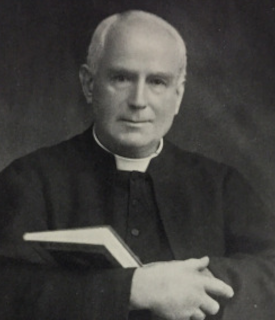
Maturin is born on February 15, 1847, at All Saints’ vicarage, Grangegorman, Dublin, the third of the ten children of the Rev. William Basil Maturin and his wife, Jane Cooke (née Beatty). The Maturins, a prominent Anglo-Irish family of Huguenot ancestry, have produced many influential Church of Ireland clergymen over the generations, the most notable being Maturin’s grandfather, the writer Charles Robert Maturin. His own father, whose tractarian convictions are considered too “high church” for many in Dublin, is a somewhat controversial figure in the church. Religion plays a huge part in the Maturin children’s lives. Two of his brothers enter the church and two sisters become nuns. As a young man, he assists in training the choir and playing the organ at his father’s church. Educated at home and at a Dublin day school, he goes on to attend Trinity College Dublin (TCD), from where he graduates BA in 1870.
Though he initially intends to make a career in the army as an engineer, a severe attack of scarlet fever around 1868, and the death of his brother Arthur, changes his outlook on life, and he decides to become a clergyman. He is ordained a deacon in 1870 and later that year goes as a curate to Peterstow, Herefordshire, England, where his father’s friend Dr. John Jebb is rector. He subsequently joins the Society of St. John the Evangelist, entering the novitiate at Cowley, Oxford, in February 1873. As a Cowley father he is sent in 1876 to establish a mission in Philadelphia, Pennsylvania, where he works as an assistant priest and, from 1881, as rector of Saint Clement’s Church. Though he proves to be an effective clergyman and popular preacher, his growing religious doubts and increasing interest in Catholicism results in his returning to Oxford in 1888. Then follows a six-month visit in 1889–90 to a society house in Cape Town, South Africa. He returns to Britain, where he preaches, and conducts retreats around the country and occasionally on the continent. In 1896 he produces the first in a series of religious publications, Some Principles and Practices of Spiritual Life.
Maturin’s continuing religious anxieties eventually lead to his conversion to Catholicism on March 5, 1897, at the JesuitBeaumont College outside London. He then studies theology at the Canadian College, Rome, and is ordained there in 1898. Following his return to England he lives initially at Archbishop’s House, Westminster, and undertakes missionary work. He then serves at St. Mary’s, Cadogan Street, in 1901. He becomes parish priest of Pimlico and, in 1905, having joined the newly established Society of Westminster Diocesan Missionaries, organises the opening of St. Margaret’s chapel on St. Leonard’s Street, where huge crowds come to hear his sermons. As a Catholic priest, he returns to Ireland on several occasions, and frequently preaches at the Carmelite church, Clarendon Street, Dublin. His attempt, at the age of sixty-three, to enter into monastic life at the Benedictinemonastery at Downside, in 1910, proves unsuccessful. He returns to London and begins working in St. James’s, Spanish Place, while maintaining his preaching commitments. He continues to write, publishing Self-Knowledge and Self-Discipline (1905), Laws of the Spiritual Life (1907) and his autobiographical The Price of Unity (1912), in which he traces his gradual move toward Catholicism. His sermons, like his approach when hearing confessions, are said to have much appeal for their integrity. Despite his influence as a preacher, he seems often feel that his life and vocation lack real purpose and at times he suffers from depression.
After a brief visit to the United States in 1913, Maturin accepts the post of Catholic chaplain at the University of Oxford in 1914. He travels to New York in 1915 and, after preaching there throughout the spring, boards the RMS Lusitania in May to return to England. The liner is torpedoed and sinks on May 7, 1915, off the southern coast of Ireland. He assists his fellow passengers in the last minutes, and it is presumed that he refuses a life jacket, as they are in short supply. His body washes ashore. A service is held for him at Westminster Cathedral.
Maturin’s friend Wilfrid Philip Ward edits a collection of his spiritual writings, Sermons and Sermon Notes, in 1916.
(From: “Maturin, Basil William” by Frances Clarke, Dictionary of Irish Biography, http://www.dib.ie, October 2009)
Coogan’s particular focus is on Ireland’s nationalist/independence movement in the 20th century, a period of unprecedented political upheaval. He blames the Troubles in Northern Ireland on “Paisleyism.”
In 2000, Irish writer and editor Ruth Dudley Edwards is awarded £25,000 damages and a public apology by the High Court in London against Coogan for factual errors in references to her in his book Wherever Green is Worn: The Story of the Irish Diaspora (2000). In the book, he writes that Dudley Edwards had “groveled to and hypocritically ingratiated herself with the English establishment to further her writing career.” He also alleges that Dudley Edwards “had abused the position of chairwoman of the British Association for Irish Studies (BAIS) by trying to impose her political views on it” and that her commission to write True Brits had been awarded because of political favouritism.
When TaoiseachEnda Kenny causes confusion following a speech at Béal na Bláth by incorrectly claiming Michael Collins had brought Lenin to Ireland, Coogan comments, “Those were the days when bishops were bishops and Lenin was a communist. How would that have gone down with the churchyard collections?”
Coogan has been criticised by the Irish historians Liam Kennedy and Diarmaid Ferriter, as well as Cormac Ó Gráda, for a supposed lack of thoroughness in his research and bias:
“Well, I waited in this book to hear some great revelation, and it just isn’t there. It’s anticlimactic. I could not see the great plot, and indeed there is no serious historian who … I can’t think of a single historian who has researched the Famine in depth – and Tim Pat has not researched it in depth” (The Famine Plot).
“Coogan is not remotely interested in looking at what others have written on 20th-century Irish history…. he does not appear interested in context and shows scant regard for evidence. He does not attempt to offer any sustained analysis in relation to the challenges of state building, the meaning of sovereignty, economic and cultural transformations, or comparative perspectives on the evolution of Irish society. There is no indication whatsoever that Coogan has engaged with the abundant archival material relating to the subject matter he pronounces on. There is no rhyme or reason when it comes to the citation of the many quotations he uses; the vast majority are not referenced. For the 300-page text, 21 endnotes are cited and six of them relate to Coogan’s previous books, a reminder that much of this tome consists of recycled material…. Tim Pat Coogan… he is a decent, compassionate man who has made a significant contribution to Irish life. But he has not read up on Irish history; indeed, such is the paucity of his research efforts that this book amounts to a travesty of 20th-century Irish history” (1916: The Mornings After).
Muldoon, the eldest of three children, is born on June 20, 1951, on a farm in County Armagh, Northern Ireland, outside The Moy, near the boundary with County Tyrone. His father works as a farmer (among other jobs) and his mother is a school mistress. In 2001, Muldoon says of the Moy:
“It’s a beautiful part of the world. It’s still the place that’s ‘burned into the retina,’ and although I haven’t been back there since I left for university 30 years ago, it’s the place I consider to be my home. We were a fairly non-political household; my parents were nationalists, of course, but it was not something, as I recall, that was a major area of discussion. But there were patrols; an army presence; movements of troops; and a sectarian divide. And that particular area was a nationalist enclave, while next door was the parish where the Orange Order was founded; we’d hear the drums on summer evenings. But I think my mother, in particular, may have tried to shelter us from it all. Besides, we didn’t really socialise a great deal. We were ‘blow-ins’ – arrivistes – new to the area, and didn’t have a lot of connections.”
Talking of his home life, Muldoon continues, “I’m astonished to think that, apart from some Catholic Truth Society pamphlets, some books on saints, there were, essentially, no books in the house, except one set, the Junior World Encyclopedia, which I certainly read again and again. People would say, I suppose that it might account for my interest in a wide range of arcane bits of information. At some level, I was self-educated.” He is a “Troubles poet” from the beginning.
In 1969, Muldoon reads English at Queen’s University Belfast (QUB), where he meets Seamus Heaney and becomes close to the Belfast Group of poets which include Michael Longley, Ciaran Carson, Medbh McGuckian and Frank Ormsby. He says of the experience, “I think it was fairly significant, certainly to me. It was exciting. But then I was 19, 20 years old, and at university, so everything was exciting, really.” He is not a strong student at QUB. He recalls, “I had stopped. Really, I should have dropped out. I’d basically lost interest halfway through. Not because there weren’t great people teaching me, but I’d stopped going to lectures, and rather than doing the decent thing, I just hung around.” During his time at QUB, his first collection New Weather (1973) is published by Faber & Faber. He meets his first wife, fellow student Anne-Marie Conway, and they are married after their graduation in 1973. The marriage breaks up in 1977.
For thirteen years (1973–86), Muldoon works as an arts producer for the BBC in Belfast. In this time, which sees the most bitter period of the Troubles, he published the collections Why Brownlee Left (1980) and Quoof (1983). After leaving the BBC, he teaches English and Creative Writing at the University of East Anglia and at Gonville and Caius College and Fitzwilliam College, Cambridge, where his students include Lee Hall (Billy Elliot) and Giles Foden (The Last King of Scotland). In 1987, he emigrates to the United States, where he teaches in the creative writing program at Princeton University. He is Professor of Poetry at Oxford University for the five-year term 1999–2004, and is an Honorary Fellow of Hertford College, Oxford.
MacCarthy is born in Lower O’Connell Street, Dublin, on May 26, 1817, and educated there and at St. Patrick’s College, Maynooth. He acquires an intimate knowledge of Spanish from a learned priest, who had spent much time in Spain, which he is later to turn to good advantage. In April 1834, before turning seventeen, he contributes his first verses to the Dublin Satirist. He is one of a coterie of writers whose works appear in The Nation, which is started by Charles Gavan Duffy in 1842. Writing under the pseudonym “Desmond,” most of MacCarthy’s patriotic verse appears in this organ.
In 1846, MacCarthy is called to the Irish bar but never practises. In the same year he edits The Poets and Dramatists of Ireland, which he prefaces with an essay on the early history and religion of his countrymen. About this time, he also edits The Book of Irish Ballads (by various authors), with an introductory essay on ballad poetry in general. His Ballads, Poems, and Lyrics appears in 1850, original and translated. His attention is first directed to Pedro Calderón de la Barca by a passage in one of Percy Bysshe Shelley‘s essays, and from then on, the interpretation of the “Spanish Shakespeare” claims the greater part of his attention.
The first volume of MacCarthy’s translations, containing six plays, appears in 1853, and is followed by further instalments in 1861, 1867, 1870, and 1873. His version of Daybreak in Capacabana is completed only a few months before his death.
Until 1864, MacCarthy resides principally on Killiney Hill, overlooking Dublin Bay. The delicate health of some members of his family then renders a change of climate imperative, and he pays a prolonged visit to continental Europe. On his return, he settles in London in 1871, where he publishes – in addition to his translations – Shelley’s Early Life, which contains an account of that poet’s visit to Dublin in 1812.
MacCarthy’s poems are distinguished by a sense of harmony and sympathy with natural beauty. Such poems as “The Bridal of the Year,” “Summer Longings” (alias “Waiting for the May”), and his long narrative poem, “The Voyage of St. Brendan,” are among his most enduring works. The last-mentioned, which paraphrases the “Ave Maria Stella” as the evening song of the sailors, is also marked by the earnest religious feeling which mark its author throughout life. But it is by his version of Calderon that he is considered to have won a permanent place in English letters. His success is sufficiently testified by George Ticknor, who declares in his History of Spanish Literature that MacCarthy “has succeeded in giving a faithful idea of what is grandest and most effective in [Calderon’s] genius… to a degree which I had previously thought impossible. Nothing, I think, in the English language will give us so true an impression of what is most characteristic of the Spanish drama, and of Spanish poetry generally.”
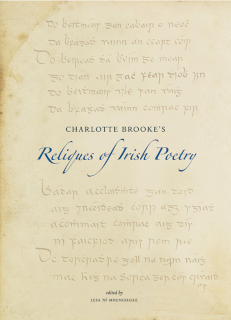
Charlotte Brooke, author of Reliques of Irish Poetry, a pioneering volume of poems collected by her in the Irish language, with facing translations, dies in Longford, County Longford, on March 29, 1793, of a malignant fever.
Brooke is born around 1740 in Rantavan House, Mullagh, County Cavan. She is one of twenty-two children of the writer Henry Brooke, author of the play Gustavus Vasa, and Catherine Brooke (née Meares) of County Westmeath. Only she and her brother Arthur survive childhood.
Brooke is educated by her father and immerses herself in reading history and literature at an early age. While the rest of her family is sleeping, she often goes down to the study where she spends hours reading.
Brooke is part of the first generation of the ProtestantAnglo-Irish settler class who take a strong interest in the Irish language and Gaelic history. Her primary interest in Irish language and literature is generated by her hearing it being spoken and recited by the labourers in County Cavan and on the County Kildare estates where her family moves around 1758. She is led to the study of the Irish language, and in less than two years she finds herself in love with it. From reading Irish poetry and admiring its beauties, she proceeds to translate it into English, one of her earliest efforts being a song and monody by Turlough O’Carolan, which appears in Joseph Cooper Walker‘s Historical Memoirs of Irish Bards (1786).
Brooke, who is frail herself, takes care of her father after her mother dies in 1773. Meanwhile, the family has moved back to County Cavan, where they begin living in a house they name Longfield which has been built near the Rantavan Estate. A few years after her father dies in 1783, she runs into financial troubles, after a model industrial village set up in County Kildare by her cousin Captain Robert Brooke goes bankrupt in 1787. Walker and other members of the recently created Royal Irish Academy (RIA) seek to make an income for her, but she realises she has to rely on her writings and translations.
In 1792, though in declining health and poor circumstances, Brooke publishes a selection of her father’s writings in three volumes, prefacing the work with a memoir of her father and a defence of his reputation as a writer. She also publishes a direct and simple presentation of Christian doctrine for children using her father’s didactic method, The school for Christians in dialogue for the use of children (1791). She dies of a malignant fever on March 29, 1793, at Longford, County Longford, in the home of the Brownes, friends with whom she has lived for some years.
McLaverty is born on July 5, 1904, at Magheross, near Carrickmacross, County Monaghan, the son of Michael McLaverty, a waiter, and Kathleen McLaverty (née Brady). His father works in a hotel in the town until they move to Rathlin Island, and later to Belfast, when he is five years old. He attends St. Malachy’s College in the city, where an inspiring teacher instills in him a love of William Shakespeare‘s writings. He entered Queen’s University Belfast (QUB) in October 1924 and studies physics. He obtains a B.Sc. in 1928 and immediately takes his H.Dip.Ed., completing his teaching practice in St. Mary’s University College, Strawberry Hill, London. The following year he begins teaching at St. John’s Primary School in Colinward Street, west Belfast. He is admitted to the degree of M.Sc. at QUB in 1933.
In 1933, McLaverty marries Mary Conroy (formerly Giles), a young widow and fellow teacher at St. John’s. They have two sons and two daughters.
During his time at St. John’s, McLaverty writes his first five novels and fifteen short stories. In the 1930s he has developed a distinctive style in precise, unsentimental, but compassionate short stories. By the late 1930s, however, he switches his energies from short stories to the novel. Call My Brother Back (1939) contrasts the traditional world of Rathlin Island with the northern troubles in a family context. Another novel, Lost Fields (1941), and his collection of short stories, The White Mare (1943), explore the Belfast of his childhood and deal with the underlying tensions in Irish rural life. In the period 1949–55 he publishes five other novels: Three Brothers (1948), Truth in the Night (1951), School for Love (1954), The Choice (1958), and Brightening Day (1965). These novels deal with ordinary people and the dilemmas they encounter in their families and communities. His writings are influenced by Anton Chekhov, Leo Tolstoy, Katherine Mansfield, Gerard Manley Hopkins, and the Irish short story writers Liam O’Flaherty and Daniel Corkery.
As headmaster of St. Thomas’s intermediate school, a large school for boys in Ballymurphy, off the Falls Road, McLaverty gives his first job to the young Seamus Heaney, in whom he cultivates an interest in the writings of Chekhov and Tolstoy and the Irish writers Mary Lavin and Patrick Kavanagh. He deems Heaney to be the only genius he has ever met, and his work and success are a great source of pride and joy to him. His encouragement of the young John McGahern is of as much benefit to McLaverty himself, as their short but intense correspondence give him the energy to resume his writings.
Between his resignation from St. Thomas’s in 1963 and the early 1970s he teaches part-time at St. Joseph’s training college and St. Dominic’s High School, one of Belfast’s best-known grammar schools. In 1981 his old alma mater recognises his contribution to literature by awarding him an honorary master’s degree. In the same year he wins the American Irish literary fellowship, a prestigious literary award of $10,000, in recognition of his “impressive body of work as a short story writer and novelist.”
McLaverty dies on March 22, 1992, in County Down, Northern Ireland.
(From: “McLaverty, Michael” by Éamonn Ó Ciardha, Dictionary of Irish Biography, http://www.dib.ie, October 2009)
Sterne is born on November 24, 1713, in Clonmel, County Tipperary, to a British military officer stationed there. Following his father’s postings, the family moves briefly to Yorkshire before returning to Ireland, where they live largely in poverty and move frequently throughout the rest of Sterne’s youth. When the elder Sterne is dispatched to Jamaica, where he would die in 1731, he places his son with a wealthy uncle who supports the boy’s education.
Sterne attends Jesus College, Cambridge, following in the footsteps of his grandfather, Richard Sterne, who had been Master of the College. After being ordained as an Anglican priest, he takes up the vicarship of Sutton-on-the-Forest, where he marries Elizabeth Lumley. The couple lives there for the next 20 years.
Through his paternal family line, Sterne is connected to several powerful clergymen. His uncle, Archdeacon Jaques Sterne, encourages him to contribute to Whig political journals, and consequently he writes several articles supporting Sir Robert Walpole. However, when his political fervency fails to match his uncle’s, prompting him to abandon the role of political controversialist, Jaques Sterne cuts ties with his nephew and refuses to support his career. Nevertheless, Sterne continues writing.
Sterne’s first long work, a sharp satire of the spiritual courts entitled A Political Romance, makes him as many enemies as allies. Though the work is not widely distributed and indeed is burned at the request of those targeted by its Swiftian-style criticism, it represents Sterne’s first foray into the kind of humorous satire for which he would become famous. At age 46, he steps back from managing his parishes and turns his full attention to writing.
Sterne begins what becomes his best-known work, The Life and Opinions of Tristram Shandy, Gentleman, at a moment of personal crisis. He and his wife are both ill with tuberculosis and, in the same year that the first volumes of his long comic novel appear, his mother and uncle Jaques die. The blend of sentiment, humour and philosophical exploration that characterises his works matures during this difficult period. Tristram Shandy is an enormous success, and Sterne becomes, for the first time in his life, a famous literary figure in London. Still suffering from tuberculosis, he leaves England for Continental Europe, where his travels influence his second major work, A Sentimental Journey Through France and Italy (1768).
Sterne’s narrator in A Sentimental Journey is Parson Yorick, a sensitive but also comic figure who first appears in Tristram Shandy and who becomes Sterne’s fictive alter ego. In A Sentimental Journey, Parson Yorick wears a “little picture of Eliza around his neck,” and in the last year of his life Sterne writes the autobiographical Journal to Eliza under the pseudonym Yorick. Eliza is Eliza Draper, the wife of an East India Company official, and the literary and emotional muse of Sterne’s final years. After Draper returns to India, the two continue to exchange letters, some of which Draper allows to be published after Sterne’s death in the volume Letters from Yorick to Eliza.
In early 1768, less than a month after A Sentimental Journey is published, Sterne’s strength fails him and he dies in his lodgings at 41 Old Bond Street in London on March 18, 1768, at the age of 54. He is buried in the churchyard of St. George’s Hanover Square Church.
(Pictured: Portrait of Laurence Sterne (1713-1768), oil on canvas by Joshua Reynolds, 1760)
O’Faolain describes her early life as growing up in a Catholic country which, in her view, fears sexuality and forbids her even information about her body. In her writings she often discusses her frustration at the sexism and rigidity of roles in Catholic Ireland that expect her to marry and have children, neither of which she does.
O’Faolain becomes internationally well known for her two volumes of memoir, Are You Somebody? and Almost There; a novel, My Dream of You; and a history with commentary, The Story of Chicago May. The first three are all featured on The New York Times Best Seller list. Her posthumous novel Best Love, Rosie is published in 2009.
O’Faolain’s formative years coincide with the emergence of the women’s movement, and her ability to expose misogyny in all its forms is formidable, forensic and unremitting. However, her feminism stems from a fundamental belief in social justice. Unlike most commentators, who maintain a detached, lofty tone, she places herself at the centre of things, a high-risk strategy that works because of her broad range of erudition, worn lightly, her courage and a truthfulness that sometimes borders on the self-destructive.
O’Faolain is engaged at least once but never marries. In Are You Somebody? she speaks candidly about her fifteen-year relationship with the journalist Nell McCafferty, who publishes her own memoir, Nell. From 2002 until her death, she lives much of the time with Brooklyn-based attorney John Low-Beer and his daughter Anna. They are registered as domestic partners in 2003.
O’Faolain splits her time between Ireland and New York City. She is diagnosed with metastaticcancer and is interviewed on the Marian Finucane radio show on RTÉ Radio 1 on April 12, 2008, in relation to her terminal illness. She tells Finucane, “I don’t want more time. As soon as I heard I was going to die, the goodness went from life.”
In a last attempt to grasp as much of life as she can, O’Faolain holidays with family members in Sicily and visits Berlin with a group of friends to hear music and see art. She previously tended to avoid Berlin because, through contact with Jewish friends and lovers, she associated it with the Holocaust. She dies at the Blackrock Hospice, Dublin, on May 9, 2008.
O’Faolain wins a Jacob’s Award in 1985 for her work as the producer of the RTÉ One television programme Plain Tales. In 2006, she wins the Prix Femina étranger, a French literary award, for The Story of Chicago May.
O’Faolain is the subject of a film documentary, Nuala: A Life and Death (2011), directed by Patrick Farrelly and Kate O’Callaghan, and produced and narrated by Marian Finucane. Hugo Hamilton‘s novel Every Single Minute (2014) is based on his experiences when accompanying O’Faolain to Berlin shortly before her death.
O’Donnell is the youngest among six sons and three daughters of Biddy and James O’Donnell. He is greatly influenced by his upbringing in the Rosses, in northwest Donegal, one of the poorest and most remote parts of Ireland. His father, a popular local fiddler, earns a living through his smallholding, seasonal labouring in Scotland, and winter work in a local corn mill. His mother, who comes from a radical labour and nationalist political background, works in a local cooperative store. He attends Rampart national school and Roshine national school, near Burtonport, where he is a monitor for four years. In 1911 he wins a scholarship to attend St. Patrick’s College in Drumcondra, Dublin, and returns in 1913 to the Rosses, where he spends two years teaching on the islands of Inishfree. In 1915 he is appointed head of Derryhenny national school, near Dungloe, and the following year becomes principal of a national school on the island of Arranmore, where he begins to write.
O’Donnell had long been concerned by the poor conditions of the local ‘tatie-hokers’ (potato pickers) who migrate annually to Scotland. In the summer of 1918, he travels there to help organise the Scottish Farm Servants’ Union. While there he is influenced by left-wing radicals such as Willie Gallacher, later a communistMember of Parliament (MP), and Emanuel ‘Manny’ Shinwell, later Baron Shinwell. In September 1918, against a background of rising labour militancy, he leaves teaching to become a full-time organiser for the Irish Transport and General Workers’ Union (ITGWU) in the west Ulster area. The following year he organises one of Ireland’s first “soviets” when the attendants and nurses of the Monaghan District Lunatic Asylum occupy the grounds and appoint O’Donnell as governor until their demands are met.
In early 1919 O’Donnell joins the Irish Republican Army (IRA) in Monaghan, resigning from the ITGWU for full-time IRA service in late 1920. He leads the 2nd Battalion, Donegal IRA, from the summer of 1920. In December 1920 he goes “on the run” and leads a flying column in west Donegal until May 1921, when he is wounded. Regarded as insubordinate and militarily inexperienced, he is unpopular among the other senior officers of the 1st Northern Division. He, in turn, is disappointed by the lack of social radicalism among the nationalist leadership. He opposes the Anglo-Irish Treaty, is placed in command of the minority anti-treaty 1st Northern Division and is a member of the IRA executive that occupies the Four Courts in Dublin in defiance of the provisional government.
Arrested in June 1922, O’Donnell shares a prison cell with Liam Mellows and influences his radical “Notes from Mountjoy,” an important document for subsequent left-wing republicans. He spends the next two years in various prisons and internment camps. His execution is widely expected to follow those of December 8, 1922. In August 1923, he is elected as a Sinn FéinTeachta Dála (TD) for Donegal in the general election called after the end of the Irish Civil War. He goes on hunger strike for forty-one days in late 1923 and succeeds in escaping from the Curragh in March 1924. In June 1924, while on the run, he marries Lile O’Donel, a wealthy Cumann na mBan activist who had smuggled communications for republican prisoners. O’Donel, a radical and member of the Communist Party, is the daughter of Ignatius O’Donel, a prominent landowner from Mayo. They have no children but raise their nephew, Peadar Joe, as their own son after the death in New York of O’Donnell’s brother Joe.
O’Donnell begins writing seriously while in jail and remains a prolific writer, journalist, and editor until the 1960s. His first novel, Storm, set in the Irish War of Independence, is published in 1925. One of his most highly regarded books, Islanders, is published in 1928. Adrigoole, like Islanders a story of poverty and starvation in rural Ireland, is published the following year. The Knife (1930) and On the Edge of the Stream (1934) soon follow. The most significant of his later novels is probably The Big Windows (1954). Foremost among his qualities as a writer is his empathy for the people, life, and landscape of rural Ireland. But his novels have been criticised for their slow pace, excessive detail, and didactic nature. He claims his writing is incidental to his political activism. His trilogy of autobiographical non-fiction, The Gates flew Open (1932), Salud! An Irishman in Spain (1936), and There Will Be Another Day (1963), which respectively concern the Irish Civil War, his activism during the Spanish Civil War, and his role in the land annuities agitation, remain highly regarded. His other important literary achievement is with The Bell, an innovative literary and political magazine which plays a useful dissenting role in an insular and conservative period. He founds The Bell with the writer Seán Ó Faoláin in 1940 and edits it from 1946 until it ceases publication in 1954.
O’Donnell exercises an influential role in the interwar IRA, particularly through his editorship of An Phoblacht (1926–29), which he attempts to divert from militarism to socialist agitation. His ultimate aim is for a thirty-two-county socialist republic. His most successful campaign is organising small farmers against the payment of land annuities to the government in the late 1920s and early 1930s. This campaign is later adopted by Fianna Fáil and contributes to their electoral success in 1932. He is less successful in radicalising the IRA. After the failure of Saor Éire, a left-wing IRA front which provokes clerical and popular hostility against the IRA, increasing tensions between the IRA’s left-wing and the leadership lead O’Donnell, along with Frank Ryan and George Gilmore, to split from the IRA to establish the short-lived Republican Congress in 1934.
Although O’Donnell claims he was never a Communist Party member, he plays a central role in forging links between republicans and the revolutionary left both in Ireland and internationally and invariably supports the communist party line at critical junctures. After the failure of Republican Congress, he takes up the cause of the Spanish republic. His championing of unpopular causes such as communism and Spain entail a good deal of frustration. He is physically attacked at political meetings and in 1932, despite having never visited the Soviet Union, loses a high-profile libel action against the Dominican Irish Rosary, which claim he had studied in Moscow‘s Lenin College. He is banned from entering the United States for several decades, although he maintains: “My relations with all the great powers continue to be friendly.”
O’Donnell continues to support radical campaigns until his death. He is an outspoken advocate of Irish emigrants. He is prominent in the Irish Campaign for Nuclear Disarmament and serves as its president in the early 1960s. He is a leading protester against the Vietnam War and a supporter of African anti-colonial movements such as that against apartheid. In later years he is involved in the “Save the west” campaign, highlighting the problems of the west of Ireland.
After several months of ill-health following a heart attack, O’Donnell dies in Dublin, aged 93, on May 13, 1986. He leaves instructions that there are to be “no priests, no politicians and no pomp” at his funeral, and those wishes are granted. He is cremated in Glasnevin Cemetery and his ashes are buried at his wife’s home in Swinford, County Mayo. Although he once remarked that every cause he fought for was a failure, he is now regarded as one of the most influential socialist republican theorists and an important voice of dissent in twentieth-century Ireland.
(From: “O’Donnell, Peadar” by Fearghal McGarry, Dictionary of Irish Biography, http://www.dib.ie)
Shatter is the son of Reuben and Elaine Shatter, an English couple who meet by chance when they are both on holiday in Ireland in 1947. He is educated at The High School, Dublin, Trinity College Dublin (TCD) and the Europa Institute of the University of Amsterdam. In his late teens, he works for two months in Israel on a kibbutz. He is a partner in the Dublin law firm Gallagher Shatter (1977-2011). As a solicitor he acts as advocate in many seminal and leading cases determined both by the Irish High and Supreme Courts. He is the author of one the major academic works on Irish family law which advocates substantial constitutional and family law reform.
Under Shatter’s steerage, a substantial reform agenda is implemented with nearly 30 separate pieces of legislation published, many of which are now enacted including the Personal Insolvency Act 2012, Criminal Justice Act 2011, DNA Database Act, and the Human Rights and Equality Commission Act.
Under Shatter’s guidance, major reforms are introduced in 2011 into Ireland’s citizenship laws and a new Citizenship Ceremony is created. He both devises and pilots Ireland’s first ever citizenship ceremony which takes place in June 2011 and a new inclusive citizenship oath which he includes in his reforming legislation. During his time as Minister, he clears an enormous backlog of citizenship applications, and 69,000 foreign nationals become Irish citizens. Some applications had lain dormant for 3 to 4 years. He introduces a general rule that save where there is some real complication, all properly made citizenship applications should be processed within a six-month period. He also takes steps to facilitate an increased number of political refugees being accepted into Ireland and creates a special scheme to facilitate relations of Syrian families already resident in Ireland who are either caught up in the Syrian civil war, or in refugee camps elsewhere as a result of the Syrian civil war, to join their families in Ireland.
Shatter enacts legislation before the end of July 2011 to facilitate access to financial documentation and records held by third parties in investigations into banking scandals and white-collar crime. The legislation is first used by the Gardaí in September 2011.
During Ireland’s Presidency of the Council of the European Union in 2013, Shatter chairs the Justice and Home Affairs Council (JHA) meetings and, in January 2013, in Dublin Castle, the meeting of EU Defence Ministers. Under his guidance, Ireland plays a more active role than in the past in EU defence matters and in deepening Ireland’s participation in NATO’s partnership for peace. During the Irish Presidency, substantial progress is made at the European Union level in the adoption and development of new legislation and measures across a broad range of Justice and Home Affairs issues.
Shatter implements substantial reform in the Department of Defence and restructures the Irish Defence Forces. He is a strong supporter of the Irish Defence Forces participation in international peacekeeping and humanitarian engagements and is an expert on the Middle East. As a member of the Irish Parliament and as Minister on many occasions, he visits Irish troops participating in United Nations (UN) missions in the Middle East. Under his watch contracts are signed for the acquisition of two new naval vessels with an option to purchase a third. All three naval vessels are now part of the Irish Naval Service and have been actively engaged in recent years in rescuing drowning refugees in the Mediterranean Sea attempting to enter Europe.
As Minister for Defence he enacts legislation to grant a pardon and an amnesty to members of the Irish Defence Forces who deserted during World War II to fight on the allied side against Nazi Germany and gives a state apology for their post-war treatment by the Irish State.
Shatter is the minister responsible for two amendments to the Constitution of Ireland which are passed in referendums: the Twenty-ninth Amendment in 2011 to allow for the reduction of judges’ pay, and the Thirty-third Amendment in 2013 to establish a Court of Appeal. Just prior to his resignation from government, the draft legislation to create the court is published and the court is established and sitting by October 2014.
The jurisdictions of the courts are extended for the first time in 20 years and the maximum civil damages payable for the emotional distress of bereaved relations following a negligent death is increased.
As a politician, Shatter plays a lead role in effecting much of the constitutional and legislative change he advocates. He is a former chairperson of FLAC (the Free Legal Advice Centres), a former chairperson of CARE, an organisation that campaigns for childcare and children’s legislation reform in the 1970s and a former President of the Irish Council Against Blood Sports.
Shatter is a founder member of the Irish Soviet Jewry Committee in 1970 and pioneers a successful all party Dáil motion on the plight of Soviet Jewry (1984) and visits various refuseniks in Moscow in 1985. He is a former chairperson of the Oireachtas Foreign Affairs Committee (1996-97) and initiates the creation of an Ireland/Israel Parliamentary Friendship group in 1997, leading a number of visits to Israel by members of the Dáil Éireann and Seanad Éireann.
Shatter is the author of the satirical book Family Planning Irish Style (1979), and the novel Laura (1989). In 2017 his biography, Life is a Funny Business, is published by Poolbeg Press and in 2019 Frenzy and Betrayal: The Anatomy of a Political Assassination is published by Merrion Press. In 2023, his book Cyril’s Lottery of Life, a comedic book with an English solicitor from a small town as its protagonist, is published.





 seamus dubhghaill