seamus dubhghaill

Promoting Irish Culture and History from Little Rock, Arkansas, USA


2 Comments

Death of Nelly O’Brien, Miniaturist, Artist & Activist

Ellen Lucy or Nelly O’Brien, Irish miniaturist, landscape artist, and Gaelic League activist, dies suddenly on April 1, 1925, while visiting her brother Dermod at 66 Elm Park Gardens, London.

O’Brien is born Ellen Lucy O’Brien on June 4, 1864, at Cahirmoyle, County Limerick. She is the eldest child of Edward William O’Brien and Mary O’Brien (née Spring Rice). Her siblings are Lucy and Dermod, with Dermod also becoming an artist. Her father is a landowner, and her mother is a sculptor and painter and sister of Thomas Spring Rice. Her grandfather is William Smith O’Brien.

While a young child, O’Brien spends two years living on the French Riviera from 1866 to 1868. Her mother later dies of tuberculosis, and the three children are raised by their aunt, the writer and nationalist, Charlotte Grace O’Brien. Their father remarries in 1880, to Julia Marshall, with whom he has two sons and two daughters.

O’Brien attends school in England from 1879, and later enrolls to study painting at the Slade School of Fine Art. She meets Walter Osborne through her brother Dermod, and considers herself engaged to him, but Osborne dies on April 24, 1903. A portrait of O’Brien by Osborne is held in the Hugh Lane Gallery.

O’Brien returns to Ireland and begins to paint miniatures on ivory using a magnifying glass. She also paints watercolour landscapes. Her first exhibition with the Royal Hibernian Academy (RHA) is in 1896, where she shows three works including Sketch near Malahide. She exhibits with the RHA on and off until 1922. During some of her time in Dublin, she lives with her half-brother, Edward Conor Marshall O’Brien, on Mount Street.

As part of an exhibition of Irish painters, O’Brien exhibits a number of portrait miniatures at the London Guildhall in 1904. The 1906 Oireachtas na Gaeilge features a number of her paintings, and in the same year she becomes honorary secretary of a newly established art committee. At the MunsterConnacht exhibition in Limerick of 1906, she exhibits a miniature of William Smith O’Brien amongst her 12 works on show. She produces many portraits, including one of Douglas Hyde, which is exhibited by the RHA in 1916.

O’Brien is an early member of the Gaelic League, being present at its first Oireachtas na Gaeilge in 1897 and founding the Craobh na gCúig gCúigí (Branch of the Five Provinces). In 1905, she writes a long letter in defence of Douglas Hyde and the Gaelic League in The Church of Ireland Gazette. She holds meetings of Craobh na gCúig gCúigí in her flat at 7 St. Stephen’s Green every Saturday night in 1907. In 1911, she founds Coláiste Eoghain Uí Chomhraí (O’Curry Irish College) in Carrigaholt, County Clare, which is named in honour of Eugene O’Curry, with the help of her cousin and friend Mary Spring Rice.

One of her ultimate goals is to create a national Irish church, which would unite Protestants and Catholics through the Irish language. To this end, she establishes the Irish Guild of the Church with Seoirse de Rút in 1914. The aim of the organisation is to provide a communal union for members of the Church of Ireland who are dedicated to “Irish Ireland” ideals.

Acting as a representative for the Gaelic League, she travels to the United States with Fionan MacColuim in 1914 to 1915, to fund raise and promote Irish art and industries. At Coláiste Eoghain Uí Chomhraí, she stresses the importance of the Irish language in the home, as well as the skills of housewives and those in domestic service in strengthening the language and Irish culture.

O’Brien notes that she initially thought that the 1916 Easter Rising was “in the nature a demonstration against conscription as it had been announced that the volunteers would resist disarmament.” She is staying with the Hydes at 1 Earlsfort Place during the Rising, as her flat at College Park Chambers had been destroyed. She protests the conscription bill in Ireland as a mass meeting of women at the Mansion House in 1918. She launches the Gaelic Churchman in 1919 as the official publication of the Irish Guild of the Church. In one article entitled A plea for the Irish services, she promotes her campaign for Irish language services in Protestant churches. In her capacity of vice-president of the guild, she invites Éamon de Valera to attend one of their meetings in 1921.

O’Brien dies suddenly on April 1, 1925, while visiting Dermod at 66 Elm Park Gardens, London. She is buried at the family plot in Cahirmoyle.

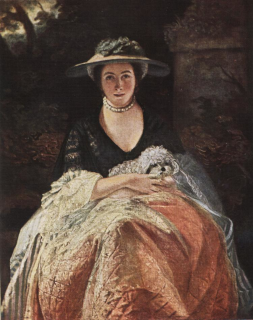
(Pictured: Nelly O’Brien by Sir Joshua Reynolds, 1723-1792)


Leave a comment

Birth of Jeremiah Newman, Bishop of Limerick

Jeremiah Newman, Bishop of Limerick from 1974 to 1995 after having served as Professor and President of St. Patrick’s College, Maynooth, is born in Dromcolliher, County Limerick, on March 31, 1926.

Following a local primary education, Newman attends St. Munchin’s College, Limerick. He studies for the priesthood at St. Patrick’s College, Maynooth, and is ordained there on June 18, 1950.

Newman begins postgraduate studies in Philosophy at the Catholic University of Leuven and is awarded a Doctorate in Philosophy there in 1951. After that he takes up studies in Sociology at the University of Oxford for four years before taking up a teaching post at Queen’s University, Belfast.

In 1953 Newman is appointed Professor of Sociology at St. Patrick’s College, Maynooth, succeeding Peter McKevitt. It is an institution he remains within, and eventually leads with distinction, until he is appointed Bishop of Limerick in May 1974. He publishes two books about the college: Maynooth and Georgian Ireland (1979) followed by Maynooth and Victorian Ireland (1983).

Newman arrives in Limerick with a strong reputation for reform having served a number of years as President of Maynooth where he adapted and shaped the college to the new challenges of the 1970s. His academic background in sociology gives him an informed understanding of the changing dynamic in Irish life, especially rural life which he has been writing about since the early 1960s, especially the dangers of depopulation.

Newman often makes comment on national matters particularly about church-state relations which has been his special area of study for over 20 years. He takes what might be called a broadly ‘conservative’ approach which, as time goes on, jars with wider public opinion especially as Ireland faces a number of constitutional referenda in the 1980s. At least one modern author has quoted the epithet alleged to have been conferred on Newman by Conor Cruise O’Brien, The Mullah of Limerick, for articulating a neo-conservative position more commonly associated with the United States.

Newman’s later years are dogged by periodic bouts of ill-health, and he dies in office on April 3, 1995, of hepatoma. He is buried in St. John’s Cathedral, Limerick. He is the subject of many obituaries not least because of his extensive public statements in his years as Bishop of Limerick. The Tablet suggests he was most “well known for his conservatism and taste for controversial remarks” before quoting the homily by Cardinal Cahal Daly that “he seemed to have a strange sense of inadequacy; and, for one who was so lovable, he seemed to have difficulties in believing that others respected and admired and indeed loved him.” The Irish Times obituary says he was a man “who kept fighting the battles of long ago.”

Newman is succeeded as Bishop of Limerick by Bishop Donal Murray.

Limerick City Library holds an extensive set of newspaper articles about Bishop Jeremiah Newman which have been made available online.


Leave a comment

Birth of Rosaleen Brigid Ganly, Painter & Sculptor

Brigid Ganly HRHA, Irish painter and sculptor, is born Rosaleen Brigid O’Brien on January 29, 1909, in Dublin.

Ganly is one of five children born to Dermod O’Brien, a painter, and his wife Mabel Smiley. Her great-grandfather is the Irish Republican William Smith O’Brien. She grows up on a farm in Cahirmoyle, County Limerick, until the family moves to Fitzwilliam Square in Dublin. She goes on to attend the Metropolitan School of Art where she has the opportunity to study under Patrick Tuohy, Seán Keating and Oliver Sheppard. She is a talented sculptor and wins several awards, including the Taylor scholarship in 1929, for her allegorical male nude, Pity. She spends time in Paris in 1951 where she trains with André Lhote. She travels to Greece where Lhote continues to influence her work.

Ganly also studies painting in the Royal Hibernian Academy School where she has Margaret Clarke and Seán O’Sullivan as teachers. She is made an associate of the Royal Hibernian Academy (RHA) in 1928 and becomes a member in 1935 though, in 1969, resigns her membership in protest of the lack of young artists being given the opportunity to exhibit. In 1972 she is made an honorary member and returns.

Ganly is a representational artist and while known as a portrait artist, she also paints landscapes, interiors and may be best known for her still lifes. Some of her best works are portraits of her husband, her sister Ethel, her father, and her friend Sheila Pim. She illustrates the book-jackets of Sheila Pim’s works. She has many exhibitions, with the RHA and the Water Colour Society of Ireland. There is a retrospective of her life in 1998 at the Hugh Lane Gallery and her works are in the collections there. She is also in the collections of the Waterford Municipal Gallery, Crawford Art Gallery, Cork and in The National Self-Portrait Collection of Ireland. She is part of the 2014 exhibition ‘Irish Women Artists: 1870-1970.’

Ganly’s sister-in-law is Kitty Wilmer O’Brien with whom she often exhibits. She marries Andrew Ganly, a dental surgeon and writer with a strong involvement in theatre, in 1936. He dies in 1982. They have two children, Eoghan and Phillida.

Brigid Ganly dies on March 25,2002.

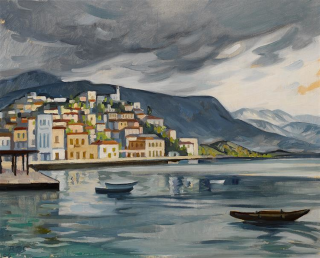
(Pictured: “Storm Over Poros” (1964) by Rosaleen Brigid Ganly, HRHA)


Leave a comment

Death of T. P. Gill, Member of the Irish Parliamentary Party

Thomas Patrick (T. P.) Gill, a prominent member of the Irish Parliamentary Party (IPP) in the late 19th and early 20th century, dies on January 19, 1931. He is a Member of Parliament (MP) in the British House of Commons representing the South Louth constituency unopposed from 1885 to 1892. His uncle Peter is an unsuccessful election candidate in 1868 in County Tipperary.

Gill is born on October 25, 1858, in Ballygraigue, Nenagh, County Tipperary, the first of four sons of Robert Gill, a civil engineer who is assistant county surveyor, and Mary (née Clampett), daughter of a woolen merchant, James Clampett of Mount Kennett, County Limerick. He attends St. Joseph’s CBS Nenagh, St. John’s College, Kilkenny, and Trinity College Dublin becoming a journalist, firstly as editor of the Catholic World magazine of New York, and an associate editor of the North American Review (1883–85). He marries Annie Fennell of Dublin in 1882 and they have two sons, Donat and Roy, and a daughter Finola.

Gill is a friend and political ally of Charles Stewart Parnell. After the death of Parnell, he remains with the Irish Parliamentary Party. He works with Horace Plunkett in developing the Irish co-operative movement. He is member and honorary secretary to the 1895 Recess Committee which leads to the formation of both the Department of Agriculture and Technical Instruction (DATI), forerunner of the Irish Department of Agriculture, and the Vocational Education Committee (VEC). His key work for the Recess Committee is research into the state aid to agriculture in France and Denmark. In February 1900, he is appointed Secretary of the new Department of Agriculture and Technical Instruction in Ireland. In 1907, he is appointed Chairman of the Departmental Committee on Irish Forestry. He also serves on a number of governmental committees concerning agriculture and agricultural production. He is President of the Irish Technical Instruction Association from 1925 to 1929.

A raconteur with, in the words of R. A. Anderson, ‘a queer charm about him,’ Gill moves in Dublin literary circles, and in his retirement, he makes a translation of Louis Paul-Dubois’ Le drame irlandais et l’Irlande nouvelle (1927), published posthumously as The Irish struggle and its results (1934).

Gill is an uncle of former Workers’ Party of Ireland president and Dublin West TD Tomás Mac Giolla.

Gill dies in a Dublin hospital on January 19, 1931. His papers are in the National Library of Ireland.

(Pictured: “Portrait of T.P. Gill, Journalist, Secretary, Department of Agriculture and Technical Instruction,” oil on canvas by Sarah Purser, 1898, National Gallery of Ireland)


Leave a comment

Death of Henry Ireton, General in the Parliamentarian Army

Henry Ireton, an English general in the Parliamentarian army during the Wars of the Three Kingdoms and the son-in-law of Oliver Cromwell, dies in Limerick, County Limerick on November 26, 1651.

Ireton is the eldest son of a German Ireton of Attenborough, Nottinghamshire, and is baptised in St. Mary’s Church on November 3, 1611. He becomes a gentleman commoner of Trinity College, Oxford, in 1626, graduates with a Bachelor of Arts in 1629, and enters the Middle Temple the same year.

At the outbreak of the First English Civil War, Ireton joins the Parliamentary army, commanding a cavalry force in the indecisive Battle of Edgehill in October 1642, and at the Battle of Gainsborough in July 1643. In 1643 he meets and befriends Oliver Cromwell, then a colonel in the army of eastern England. Cromwell appoints him deputy governor of the Isle of Ely in 1644, and he fights at the Parliamentary victories in the Battle of Marston Moor (July 1644), and the Battle of Naseby (June 1645). In the summer of 1646, he marries Cromwell’s eldest daughter, Bridget. The marriage brings Ireton’s career into parallel with Cromwell’s.

Although Ireton’s military record is distinguished, he earns his fame in politics. Elected to Parliament in 1645, he looks on while a conflict develops between the Independents in the army and the Presbyterians who control the House of Commons. In 1647 he presents his “Heads of the Proposals,” a constitutional scheme calling for division of political power among army, Parliament, and king and advocating religious tolerance for Anglicans and Puritans. These proposals for a constitutional monarchy are rejected by the king. At the same time, they are attacked by the Levellers, a group that calls for manhood suffrage and an unfettered liberty of conscience in matters of religion.

Ireton then turns against the king. When the Independents in the army triumph over Parliament during the second phase of the Civil War, his “Remonstrance of the Army” provides the ideological foundation for the assault on the monarchy. He helps to bring Charles I to trial and is one of the signatories of the king’s death warrant. From 1649 to 1651 he prosecutes the government’s case against Roman Catholic rebels in Ireland, becoming Lord Deputy of Ireland and acting commander in chief in 1650.

In early June 1650, Ireton mounts a counter-guerrilla expedition into the Wicklow Mountains to secure his lines of supply for the Siege of Waterford in southeast Ireland. Thomas Preston surrenders Waterford after a three-month siege. Ireton then advances to Limerick by October but has to call off the siege due to cold and bad weather. He returns to Limerick in June 1651 and besieges the city for five months until it surrenders in October 1651. At the same time, parliamentarian forces conduct the Siege of Galway, and he rides to inspect the command of Charles Coote, who is blockading that city. The physical strain of his command takes hold, and he falls ill.

After the capture of Limerick, Ireton has dignitaries of Limerick hanged for their defence of the city, including Alderman Thomas Stritch, Bishop Terence O’Brien, and an English Royalist officer, Colonel Fennell. He also wants the Irish commander, Hugh Dubh O’Neill hanged, but Edmund Ludlow cancels the order after Ireton’s death.

Ireton falls ill of the plague that is raging through the town and dies on November 26, 1651. His loss reportedly “struck a great sadness into Cromwell” and he is considered a great loss to the administration. At his funeral in Westminster Abbey, John Watson and others wear new tabards that replace the royal arms with the new arms of the commonwealth.

On January 30, 1661, following the Restoration of the English monarchy of 1660, Charles II has Ireton’s corpse exhumed from Westminster and mutilated in a posthumous execution, along with those of Cromwell and John Bradshaw, in retribution for signing his father’s death warrant. The date is symbolic, being the 12th anniversary of the execution of Charles I.

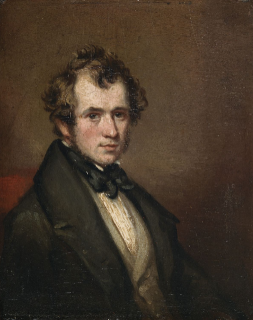
(Pictured: Painting of Henry Ireton, circa 1650, National Portrait Gallery: NPG 3301)


Leave a comment

Birth of Brian Cleeve, Writer of Novels & Short Stories

Brian Brendon Talbot Cleeve, writer whose published works include twenty-one novels and over a hundred short stories, is born in Southend-on-Sea, Essex, England, on November 22, 1921. He is also an award-winning television broadcaster on RTÉ One.

Cleeve is the second of three sons to Charles Edward Cleeve and his wife Josephine (née Talbot). His father, who was born in Limerick, County Limerick, is a scion of a famous and wealthy family that runs several successful Irish enterprises in the late-nineteenth and early twentieth centuries. His mother is a native of Essex. The Cleeves came from Canada originally and emigrated to Ireland in the mid-nineteenth century. As a result of labour troubles and the effects of the Irish Civil War, the Cleeve business fails, and the family moves to England.

Cleeve’s mother dies in 1924 and his maternal grandparents, Alfred and Gertrude Talbot, take over responsibility for his upbringing. At age eight, he is sent as a boarder to Selwyn House in Kent, followed at age 12 by three years at St. Edward’s School, Oxford. He is by nature a free-thinker and rejects the assumptions and prejudices that are then part of upper-middle class English life. His unwillingness to conform means that school life is very difficult for him. In the late summer of 1938, he decides not to return to St. Edward’s for his final year. Instead, he runs away to sea.

Cleeve leads an eventful life during the next fifteen years. He serves on the RMS Queen Mary as a commis waiter for several months. At age 17 he joins the Queen’s Own Cameron Highlanders as a private soldier, and, because of his age, just misses being sent to Europe as part of the British Expeditionary Force (BEF) when World War II breaks out. In 1940, he is selected for officer training, is commissioned into the Somerset Light Infantry, and sent to Kenya as a second lieutenant in the King’s African Rifles. A year later he is court-martialed as a result of his objections to the treatment by colleagues of an African prisoner. Stripped of his commission and sentenced to three years’ penal servitude, he is transferred to Wakefield Prison in West Yorkshire. There, through the intervention of Sir Alexander Paterson, he is offered parole if he agrees to work for British Intelligence. For the remainder of the war, he serves as a counterspy in neutral ports such as Lisbon and Dublin. As cover, he works as an ordinary seaman in the Merchant Navy.

In 1945, Cleeve takes an Irish passport and comes to Ireland where, in the space of three weeks, he meets and marries Veronica McAdie. A year later, they leave Ireland with baby daughter Berenice on a protracted odyssey that takes them to London, Sweden, the West Indies, and finally South Africa. In 1948, the family settles in Johannesburg where they set up their own perfume business. A second daughter, Tanga, is born to the couple there in 1953. As a result of his friendship with Fr. Trevor Huddleston, he witnesses the conditions in which the black population has to live in townships such as Sophiatown. He becomes an outspoken critic of Apartheid, and, in 1954, he is branded by the authorities as a ‘political intractable’ and ordered to leave South Africa. He returns to Ireland where he lives for the remainder of his life.

Cleeve starts writing poems in his teens, a few of which are published in his school paper, the St. Edward’s Chronicle. During the war he continues to produce poems of a spiritual or metaphysical nature, most of which are never published. In 1945, he turns to novel-writing. After his first two attempts are rejected, his third novel, The Far Hills, is published in 1952. Two further novels about South Africa follow and their unvarnished descriptions of the reality of life for the native population probably contributes to his eventual expulsion from the country.

In the mid-1950s, Cleeve begins to concentrate on the short story form. During the next 15 years over 100 of his short stories are published in magazines and periodicals across five continents. He sells nearly thirty to The Saturday Evening Post alone. In 1966, his story Foxer is honoured with a scroll at the annual Edgar Awards.

During the 1960s and 1970s, Cleeve returns to writing novels with considerable success. He produced a series of well-received mystery and spy thrillers that do not sacrifice character to plot. In 1971, he publishes Cry of Morning, his most controversial and successful novel to date. It is a panoramic depiction of the economic and social changes that affected Ireland during the 1960s as seen through the eyes of a disparate collection of well-drawn characters. He subsequently achieves even greater commercial success, especially in the United States, with a number of historical novels featuring a strong female character as protagonist.

Cleeve also writes several works of non-fiction, principally the Dictionary of Irish Writers. This is a 20-year project to provide to scholars and the general public alike a comprehensive resource on Irish writers at an affordable price. It is a labour of love that consumes a great deal of his time and is effectively subsidised by his more commercial pursuits. The last edition is published in 1985.

On December 31, 1961, Telefís Éireann is launched as the Republic of Ireland‘s first indigenous television station. Cleeve joins the station as a part-time interviewer on the current affairs programme, Broadsheet. Following appearances on two additional programmes, Telefís Éireann does not renew his contract when it expires in 1973.

Following his wife’s death in 1999, Cleeve moves to the village of Shankill, Dublin. His health deteriorates rapidly following a series of small strokes. In November 2001, he marries his second wife, Patricia Ledwidge, and she cares for him during his final months. He suddenly dies of a heart attack on March 11, 2003. His body now lies under a headstone bearing the inscription “Servant of God.”


Leave a comment

Death of Painter William Dermod O’Brien

William Dermod O’Brien, Irish painter commonly known as Dermod O’Brien, dies in Dublin on October 3, 1945. Most of his paintings are landscapes and portraits. His work is part of the painting event in the art competition at the 1928 Summer Olympics in Amsterdam, Netherlands.

O’Brien is born on June 10, 1865, at Mount Trenchard House near Foynes in County Limerick, the son of Edward William O’Brien and Hon. Mary Spring Rice, granddaughter of Thomas Spring Rice, 1st Baron Monteagle of Brandon. For a time after his mother’s death, he is raised by his aunt Charlotte Grace O’Brien, along with his sisters, Nelly and Lucy. His father subsequently remarries in 1880. He is educated at Harrow School and Trinity College, Cambridge.

O’Brien marries Mabel Emmeline Smyly, daughter of Sir Philip Crampton Smyly, on March 8, 1902. Together they have five children. His son Brendan, a surgeon in Dublin, marries artist Kitty Wilmer O’Brien. His daughter Rosaleen Brigid becomes an artist, also known as Brigid Ganly after her marriage to Andrew Ganly. Another artistic relative is Geraldine O’Brien.

Unlike many of his Irish contemporaries, after graduating from Cambridge O’Brien does not study art in Dublin, opting instead to travel to Paris, where he studies the paintings at the Louvre. In 1887, he visits galleries in Italy and then enrolls at the Royal Academy of Fine Arts in Antwerp, Belgium. At the Academy he is a fellow student of Walter Osborne. He leaves Antwerp in 1891 and returns to Paris, where he studies at Académie Julian. He relocates to London in 1893 and then Dublin in 1901.

O’Brien is designated an associate of the Royal Hibernian Academy in 1906, a member in 1907, and is later president between 1910 and 1945. He is made an honorary member of the Royal Academy of Arts, London in 1912.

O’Brien holds the office of High Sheriff of County Limerick in 1916 and serves as Deputy Lieutenant of County Limerick. He serves in the Artists Rifles during World War I.

(Pictured: Dermod O’Brien by Howard Coster, print, late 1930s, given to the National Portrait Gallery, London by the estate of Howard Coster, 1978)


Leave a comment

Birth of Poet Michael Hartnett

Michael Hartnett, Irish poet who writes in both English and Irish, is born in Croom Hospital in Croom, County Limerick, on September 18, 1941. He is one of the most significant voices in late 20th-century Irish writing and has been called “Munster‘s de facto poet laureate.”

Although Hartnett’s parents’ name is Harnett, he is registered in error as Hartnett on his birth certificate. In later life he declines to change this as his legal name is closer to the Irish Ó hAirtnéide. He grows up in the Maiden Street area of Newcastle West, County Limerick, spending much of his time with his grandmother, Bridget Halpin, who resides in the townland of Camas, in the countryside nearby. He claims that his grandmother is one of the last native speakers to live in County Limerick, though she is originally from northern County Kerry. Although she speaks to him mainly in English, he listens to her conversing with her friends in Irish, and as such, he is quite unaware of the imbalances between English and Irish. When he begins school, he is made aware of the tensions between both languages, and is surprised to discover that Irish is considered an endangered language, taught as a contrived, rule-laden code, with little of the literary attraction which it holds for him. He is educated in the local national and secondary schools in Newcastle West. He emigrates to England the day after he finishes his secondary education and goes to work as a tea boy on a building site in London.

Hartnett has started writing by this time and his work comes to be known of the poet John Jordan, who is professor of English at University College Dublin. Jordan invites him to attend the university for a year. While back in Dublin, he co-edits the literary magazine Arena with James Liddy. He also works as curator of James Joyce‘s tower at Sandycove for a time. He returns briefly to London, where he meets Rosemary Grantley on May 16, 1965, and they are married on April 4, 1966. His first book, Anatomy of a Cliché, is published by Poetry Ireland in 1968 to critical acclaim and he returns to live permanently in Dublin that same year.

Hartnett works as a night telephonist at the telephone exchange on Exchequer Street. He now enters a productive relationship with New Writers Press, run by Michael Smith and Trevor Joyce. They publish his next three books. The first of these is a translation from the Irish, The Old Hag of Beare (1969), followed by Selected Poems (1970) and Tao (1972). This last book is a version of the Chinese Tao Te Ching. His Gypsy Ballads (1973), a translation of the Romancero Gitano of Federico García Lorca, is published by the Goldsmith Press.

In 1974 Hartnett decides to leave Dublin and return to his rural roots, as well as deepen his relationship with the Irish language. He goes to live in Templeglantine, five miles from Newcastle West, and works for a time as a lecturer in creative writing at Thomond College of Education, Limerick.

In his 1975 book, A Farewell to English, Hartnett declares his intention to write only in Irish in the future, describing English as “the perfect language to sell pigs in.” A number of volumes in Irish follow including Adharca Broic (1978), An Phurgóid (1983) and Do Nuala: Foighne Chrainn (1984). A biography on this period of his life entitled A Rebel Act Michael Hartnett’s Farewell To English by Pat Walsh is published in 2012 by Mercier Press.

In 1984 Hartnett returns to Dublin to live in the suburb of Inchicore. The following year marks his return to English with the publication of Inchicore Haiku, a book that deals with the turbulent events in his personal life over the previous few years. This is followed by a number of books in English including A Necklace of Wrens (1987), Poems to Younger Women (1989) and The Killing of Dreams (1992).

Hartnett also continues working in Irish, and produces a sequence of important volumes of translation of classic works into English. These include Ó Bruadair, Selected Poems of Dáibhí Ó Bruadair (1985) and Ó Rathaille The Poems of Aodhaghán Ó Rathaille (1999). His Collected Poems appear in two volumes in 1984 and 1987 and New and Selected Poems in 1995.

Hartnett dies from Alcoholic Liver Syndrome on October 13, 1999. A new Collected Poems appears in 2001.

Every April a literary and arts festival is held in Newcastle West in honour of Hartnett. Events are organised throughout the town and a memorial lecture is given by a distinguished guest. Former speakers include Nuala O’Faolain, Paul Durcan, David Whyte and Fintan O’Toole. The annual Michael Hartnett Poetry Award of € 4,000 also forms part of the festival. Funded by the Limerick City and County Council Arts Office and the Arts Council of Ireland, it is intended to support and encourage poets in the furtherance of their writing endeavours. Previous winners include Sinéad Morrissey and Peter Sirr.

During the 2011 Éigse, Paul Durcan unveils a bronze life-sized statue of Hartnett sculpted by Rory Breslin, in the Square, Newcastle West. Hartnett’s son Niall speaks at the unveiling ceremony.


Leave a comment

Death of Charlotte Grace O’Brien, Philanthropist & Activist

Charlotte Grace O’Brien, author, philanthropist and an activist in nationalist causes and the protection of female emigrants, dies on June 3, 1909. She is known also as a plant collector.

Born on November 23, 1845, at Cahirmoyle, County Limerick, O’Brien is the younger daughter in a family of five sons and two daughters. Her father is William Smith O’Brien, the Irish nationalist and her mother is Lucy Caroline, eldest daughter of Joseph Gabbett, of High Park, County Limerick. On her father’s return in 1854 from the penal colony in Tasmania, she rejoins him in Brussels and stays there until he comes back to Cahirmoyle in 1856. On her mother’s death in 1861, she moves with her father to Killiney, near Dublin, and is his constant companion until his death at Bangor, Gwynedd in 1864.

From 1864, O’Brien lives at Cahirmoyle with her brother Edward, caring for his motherless children until his remarriage in 1880. Having been hard of hearing since childhood, by 1879 she has become entirely deaf. She goes to live at Ardanoir near Foynes on the River Shannon and spends time writing. She becomes a staunch supporter of Charles Stewart Parnell.

A bad harvest in Ireland in 1879, combined with Irish political turmoil, causes many Irish people to emigrate to the United States. In articles and letters to newspapers and reviews, O’Brien exposes the awful conditions that exist in the Queenstown (Cobh) lodging houses, on board the emigrant ships, and in the dock slums of New York City, where the Irish have to stay upon landing. A notable piece she writes is the Horrors of the Immigrant Ship which appears in The Pall Mall Gazette on May 6, 1881.

A visit to Queenstown, the port of embarkation, and a tour of the White Star Line‘s Germanic leads her to successfully lobby to get a Catholic priest aboard the emigrant ship to help ease the passage, at least spiritually. That achievement captures even more public attention by virtue of the fact that O’Brien herself is Protestant. Despite the limit of 1,000 passengers, she notes the steamer has carried as many as 1,775 at one time.

O’Brien presses the Board of Trade for greater vigilance, and in April 1882, founds a 105-bed boarding house at Queenstown for the reception and protection of girls on the point of emigrating. The O’Brien Emigrants Home at The Beach, Queenstown fails because it is boycotted by other boardinghouse keepers and local merchants, forcing her to order provisions from Cork.

O’Brien also daily visits three or four of the ships for which her lodgers are destined along with a medical officer. She makes passages herself to America, using the occasion to investigate shipboard conditions and lobby for the reform and enforcement of health and safety standards.

O’Brien finds little effort to provide food, drink or accommodation at the Castle Garden entry facility. She also finds that often the illiterate young women are being tricked into prostitution through spurious offers of employment. Additionally, she notes the high infant mortality rates in the tenements where the women live. She proposes to Archbishop John Ireland of Minnesota an information bureau at Castle Garden, a temporary shelter to provide accommodation for immigrants and a chapel. Archbishop Ireland agrees to raise the matter at the May 1883 meeting of the Irish Catholic Association which endorses the plan and votes to establish an information bureau at Castle Garden. Ireland also contacts Cardinal John McCloskey, Archbishop of New York, about providing a priest for immigrants arriving at Castle Garden.

The Mission opens on January 1, 1884, with Rev. John J. Riordan appointed as the first chaplain at Castle Garden. Immigrant girls needing accommodation are placed in local boarding houses until May 1 when a Home for Immigrant Girls is opened at 7 Broadway. In 1885, the James Watson House at 7 State Street is purchased from Isabella Wallace for the Mission of Our Lady of the Rosary for the Protection of Irish Immigrant Girls to serve as a way station for young immigrant women. Between 1884 and 1890, the Mission provides assistance to 25,000 Irish immigrant women.

In 1881–82, O’Brien embarks on a campaigning lecture tour in the United States. She encounters problems, however, particularly given her Protestant background and the need to enlist support from Catholic clergy. Poor health, and her profound deafness cause her to curtail her activities in America. When she returns to Ireland in 1883, she finds herself suspected of being a British agent whose Emigrant Boarding house and whose plans for an American home for Irish immigrant girls facilitate the government’s assisted emigrant scheme. Supposedly, this would be the scheme that helps landlords clear their estates of poor tenants. In fact, O’Brien opposes assisted emigration, but she continues to assist those who are sent to her.

O’Brien retires from active public work in 1886, moving to Ardanoir, Foynes, on the Shannon Estuary. She spends considerable time in Dublin, where she socialises with Douglas Hyde and the painter William Osbourne. She joins the Roman Catholic Church in 1887. She dies of heart failure on June 3, 1909, at Foynes, and is buried at Knockpatrick.


Leave a comment

Birth of Humanitarian John O’Shea

John O’Shea, founder and former CEO of GOAL, an Irish non-governmental organization devoted to assisting the poorest of the poor, is born in Limerick, County Limerick on February 28, 1944.

O’Shea’s father, a banker, moves the family to Dublin when he is age 11. He is schooled in CBC Monkstown and is a sports fanatic playing rugby at school and a keen golfer and tennis player in Monkstown. He remains a keen fan of rugby, tennis and golf, playing tennis every Saturday and also giving opinions on Irish sports to radio and newspapers. He goes on to study Economics, English and Philosophy at University College Dublin (UCD) and has a career as a sports journalist in the Evening Press for many years after meeting Tim Pat Coogan while studying.

In 1977, O’Shea begins his charitable organisation with a 10,000 punts donation for a feeding project in Calcutta after which he founds GOAL. The charity has a major sporting backbone. John McEnroe, Pat Cash and Gordon D’Arcy are amongst the sport stars to have become “Goalies”(volunteers).

In its 36 years of operation, GOAL has distributed €790 million and has had over 1,400 volunteers. It has operated in over 50 countries worldwide. O’Shea cites watching the “Goalies” working around the world as the best part of his years involved in the charity. He believes that governments of developed countries should be far more involved in the distribution of aid.

A sometimes controversial figure, O’Shea is known for his forthright public statements, particularly when he feels political correctness is getting in the way of assisting those in need, and a hands on approach to tackling poverty related issues. He has been criticised by some in the INGO community for advocating military invasion and intervention in Sudan by the United States, UK and NATO, under the guise of humanitarian intervention. He has also been critical of perceived inaction by the UN in humanitarian crises in conflict zones and of governmental aid agencies in giving aid directly to allegedly corrupt African governments. He has advocated using private companies to provide aid and military forces to directly force aid on countries. Most other Irish Aid agencies disagree stating that every type of aid channels must be used and have described his policies as recolonisation.

In 2012, O’Shea is asked to slow down by his doctor. In November 2012, former Fianna Fáil politician, Barry Andrews, is appointed chief executive of GOAL.

O’Shea’s list of achievements and awards include the People of the Year Awards 1987 and 1992, The Ballygowan Outstanding Achievement Award 1988, MIR Award 1992, The Late Late Show Tribute 1995 and 2007, Texaco Outstanding Achievement Award 1995 and the Tipperary International Peace Award 2003, Ernst & Young Social Entrepreneur of the Year 2005.

In 2008, O’Shea is conferred with an honorary doctorate of laws from the University of Notre Dame in recognition of his work. He is shortlisted in the top 40 of the 2010 RTÉ poll to find Ireland’s Greatest person.

O’Shea currently gives talks at NUI Galway and interpersonal skills class UCD. He has become involved with the university for a few years where he shares his story. He is an advocate for social (non-profit) entrepreneurs and tries to convince students to go down that path.