seamus dubhghaill

Promoting Irish Culture and History from Little Rock, Arkansas, USA


Leave a comment

Birth of Fr. Alec Reid, Facilitator in the Northern Ireland Peace Process

Alexander Reid CSsR, Irish Catholic priest noted for his facilitator role in the Northern Ireland peace process, is born in Dublin on August 5, 1931. BBC journalist Peter Taylor subsequently describes Reid’s role as “absolutely critical” to the success of the peace process.

Reid is raised in Nenagh, County Tipperary, from the age of six following the death of his father. He studies English, history and philosophy at University College Galway.

Reid is professed as a Redemptorist in 1950 and ordained a priest seven years later. For the next four years, he gives Parish Missions in Limerick, Dundalk and Galway (Esker), before moving to Clonard Monastery in Belfast, where he spends almost the next forty years. The Redemptorist Monastery at Clonard stands on the interface between the Catholic nationalist Falls Road and the Protestant loyalist Shankill Road areas of west Belfast.

In the late 1980s, Reid facilitates a series of meetings between Gerry Adams and John Hume, in an effort to establish a “Pan-Nationalist front” to enable a move toward renouncing violence in favour of negotiation. Reid, himself a staunch nationalist who favours a united Ireland and the withdrawal of British forces from Northern Ireland, then acts as their contact person with the Irish Government in Dublin from a 1987 meeting with Charles Haughey up to the signing of the Good Friday Agreement in 1998. In this role, which is not public knowledge at the time, he holds meetings with various Taoisigh, and particularly with Martin Mansergh, advisor to various Fianna Fáil leaders. After the eventual success of the peace negotiations, Gerry Adams says, “there would not be a peace process at this time without [Father Reid’s] diligent doggedness and his refusal to give up.”

In 1988 in Belfast, Reid delivers the last rites to two British Army corporals, David Howes and Derek Wood of the Royal Corps of Signals, who are killed by the Provisional Irish Republican Army (IRA) – an event known as the corporals killings – after they drive into the funeral cortège of IRA member Kevin Brady, who had been killed in the Milltown Cemetery attack. A photograph of his involvement in that incident becomes one of the starkest and most enduring images of the Troubles. Unknown until years later, he is carrying a letter from Sinn Féin President Gerry Adams to Social Democratic and Labour Party (SDLP) leader John Hume outlining Adams’ suggestions for a political solution to the Troubles. Adams later tells the BBC in 2019 that Reid also advised U.S Ambassador to Ireland Jean Kennedy Smith during the peace process, stating “He was talking to her on the side and she was talking to her brother Teddy.”

After he moves to Dublin, Reid is involved in peace efforts in the Basque Country. In January 2003, he is awarded the Sabino Arana 2002 “World Mirror” prize, by the Sabino Arana Foundation in Bilbao, in recognition of his efforts at promoting peace and reconciliation. He and a Methodist minister, the Rev. Harold Good, announce that the IRA has decommissioned their arms at a news conference in September 2005.

Reid is involved in controversy in November 2005 when he makes comments during a meeting in Fitzroy Presbyterian Church concerning the Unionist community in Northern Ireland. When the loyalist activist Willie Frazer makes remarks that Catholics had butchered Protestants during the Troubles, Reid angrily responds, “You don’t want to hear the truth. The reality is that the nationalist community in Northern Ireland were treated almost like animals by the unionist community. They were not treated like human beings. They were treated like the Nazis treated the Jews.” Reid later apologises, saying his remarks had been made in the heat of the moment. In an interview with CNN, he says that “The IRA were, if you like, a violent response to the suppression of human rights.”

Reid dies in a Dublin hospital on November 22, 2013. He is survived by two sisters and an aunt, and is buried in Milltown Cemetery, Belfast.


Leave a comment

Preparations Commence for the Plantation of Ulster

On July 19, 1608, preparations commence for the plantation of six Ulster counties of Armagh, Cavan, Coleraine, Donegal, Fermanagh, and Tyrone.

The Plantation of Ulster is the organised colonisation, or plantation, of the Irish province of Ulster by people from Great Britain during the reign of King James I. Most of the settlers, or planters, come from southern Scotland and northern England. Their culture differs from that of the native Irish. Small privately funded plantations by wealthy landowners begin in 1606, while the official plantation begins in 1609. Most of the colonised land had been confiscated from the native Gaelic chiefs, several of whom had fled Ireland for mainland Europe in 1607 following the Nine Years’ War against English rule. The official plantation comprises an estimated half a million acres of arable land in counties Armagh, Cavan, Fermanagh, Tyrone, Donegal, and Coleraine. Land in counties Antrim, Down, and Monaghan is privately colonised with the king’s support.

Among those involved in planning and overseeing the plantation are King James, the Lord Deputy of Ireland, Arthur Chichester, and the Attorney-General for Ireland, John Davies. They see the plantation as a means of controlling, anglicising, and “civilising” Ulster. The province is almost wholly Gaelic, Catholic, and rural and has been the region most resistant to English control. The plantation is also meant to sever Gaelic Ulster’s links with the Gaelic Highlands of Scotland. The colonists, or “British tenants,” are required to be English-speaking, Protestant and loyal to the king. Some of the undertakers and settlers, however, are Catholic. The Scottish settlers are mostly Presbyterian Lowlanders and the English mostly Anglican Northerners. Although some “loyal” natives are granted land, the native Irish reaction to the plantation is generally hostile, and native writers bewail what they see as the decline of Gaelic society and the influx of foreigners.

The Plantation of Ulster is the biggest of the Plantations of Ireland. It leads to the founding of many of Ulster’s towns and creates a lasting Ulster Protestant community in the province with ties to Britain. It also results in many of the native Irish nobility losing their land and leads to centuries of ethnic and sectarian animosity, which at times spills into conflict, notably in the Irish Rebellion of 1641 and, more recently, the Troubles.


Leave a comment

Birth of Bernard “Barney” Hughes, Master Baker & Entrepreneur

Bernard “Barney” Hughes, master baker, entrepreneur, and liberal reformer, is born on July 8, 1808, second among eight children of Peter Hughes, probably a tradesman or labourer, and Catherine Hughes (née Quinn), of Blackwatertown, near Armagh in what is now Northern Ireland.

Hughes is brought up as a devout Roman Catholic and speaks both Irish and English fluently. He starts working at age 12 as a baker’s boy in Armagh and around 1822 tries unsuccessfully to set up his own bakery. To enhance his career prospects, he moves to Belfast in the mid-1820s and becomes a journeyman baker. He soon proves to be a highly skilled and reliable worker and in 1833 is appointed operations manager at the Public Bakery, Church Street.

Hughes is a great admirer of Daniel O’Connell and is part of the delegation that meets him when he visits Belfast in 1840. However, his employer does not share his views on liberal reform, and strained relations lead to Hughes setting up his own bakery in December 1840. At this point he must have already gained a reputation as a highly respected citizen in Belfast, as he is able to borrow £1,400 for the new factory that is built at 71 Donegall Street. This proves a wise investment, as within two years his factory produces more bread than any other bakery in the town. Demand for his loaves and his famous “Belfast bap” is fueled by the thousands of poor Catholics who migrate to the city in search of employment in the two decades before the famine.

Hughes is probably the first entrepreneur in Ireland to appreciate how machinery can create economies of scale in food production. He keeps enlarging his factory by adding ovens (using his own patent design) and dough‐mixing machines, and in 1847 opens another bakery on Donegall Place, which becomes known as the “railway bakery” on account of the rails that are used to transport raw materials by cart between various parts of the site. By using new technology, he is able to produce large quantities of consistently high‐quality bread at prices that are up to 20% cheaper than his local competitors. By 1851 he employs up to a third of those in the Belfast baking trade. He removes much of the human drudgery in the baking process, and higher productivity means that his employees can sleep at home rather than on the bakery floor. The population growth of Belfast continues to increase steeply after the famine years, and in 1858 he opens a third bakery on Divis Street, in the Falls area of the town. Distribution problems during the 1840s had convinced Hughes that he needs tighter control over all elements of the food production chain. By the 1870s his empire includes flour mills, ships to import grain, a brewery, shops, and a fleet of horse‐drawn vans.

Hughes is an enlightened employer and throughout his life he gives generously to the poor in Belfast. During the famine years of the 1840s he keeps the price of bread as low as possible, and on special days such as Christmas gives away thousands of loaves. In July 1842 he confronts a mob of up to 2,000 hungry and agitated weavers who are intent on causing damage to his bakery. He convinces them that he is a friend of the people. This is borne out by the fact that he is the largest single donor to both the Belfast Relief Committee and the Belfast Relief Fund for Ireland during the great famine. Though he is not politically ambitious, he does feel that he can use his status as one of the largest employers in Belfast and the wealthiest Catholic layman to promote the liberal cause. He is particularly appalled by the way in which the members of the conservative‐dominated council are able to indemnify themselves against the £84,000 debt which they had accrued while in office during the 1840s and 1850s.

Hughes is the first Catholic to be elected to the Belfast town council (1855–58, 1871–72) and the first Catholic alderman (1872–78). There are numerous attempts to smear his reputation, and articles in the Belfast News Letter lampoon his thick Armagh accent. As councillor he imprudently remarks on one public occasion that Belfast is “governed by Protestants, but the bone and sinew of the town is Roman Catholic.” This is seized upon by his conservative adversaries as evidence of an anti‐Protestant stance. In reality, he is always even‐handed and against any form of violent action. In his Smithfield ward there are large groups of poor Catholics and Protestants in close proximity to each other and this leads to regular disturbances. As a JP (1867–78) he urges fellow members of the Belfast Home Rule Association to avoid the tactics of the Fenians. In 1878 he is one of a group of magistrates who upholds the right of the Protestant shipyard workers to hold processions in Belfast.

Hughes’s fair mindedness sometimes brings him into collision with his more zealous Catholic friends. In 1876 he is heavily criticised for supporting the campaign to have a statue of the Rev. Henry Cooke, the Presbyterian preacher with strong anti‐Catholic views, erected in a prominent position in Belfast. He contributes funds to the Catholic Institute in Belfast, donates the site for St. Peter’s Church in 1858, and pays for the Lady Chapel. Despite his generosity, Patrick Dorrian, the coadjutor bishop of Down and Connor, vetoes a plan by the Vatican to award him a papal honour.

Hughes dies on September 23, 1878, and is buried privately at Friar’s Bush Graveyard. His son Edward, later appointed the first chairman of The Irish News at its launch in 1891, takes over the business and builds a large “model bakery” on a two‐acre site on the Springfield Road which is one of the largest and most technically sophisticated factories of its kind in Europe.

(From: “Hughes, Bernard (‘Barney’)” by Daniel Beaumont, Dictionary of Irish Biography, http://www.dib.ie, October 2009)


Leave a comment

Protestant March Ends in Bloody Battle on the Craigavon Bridge

A Protestant march against the creation of “no-go” areas in Londonderry on June 3, 1972, ends in a bloody battle on the Craigavon Bridge. Soldiers use rubber bullets and water cannon to control the crowd when the so-called “Tartan gangs” at the tail end of the march begin to throw bottles and stones at the British Army.

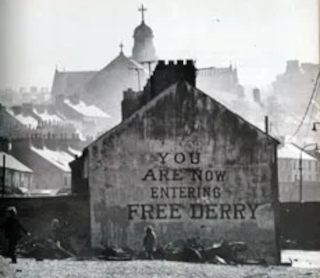
The “no-go” areas, known as Free Derry, are areas where both the Irish Republican Army and Provisional Irish Republican Army can openly patrol, train and open offices with widespread support and without involvement of security services. Bogside, Creggan and Brandywell make up the area Free Derry, and it is still known by that name despite the barricades no longer being present.

The 10,000 strong march sets off from Irish Street at 1500 GMT to call for an end to the “no-go” areas on the east bank side of the River Foyle.

The biggest security operation since the start of the Troubles is set up for the march with soldiers on every corner. The bridge is the centre of the trouble as it joins the Protestant side of the town to the “no-go” Roman Catholic areas of Bogside and Creggan.

Despite pleas from march organisers for the violence to stop it does not end until the Ulster Defence Association (UDA) steps in. They form a human barrier between the protesters and the Army. The confrontation lasts an hour and results in one man being injured but no arrests.

A spokesman for the Army says, “Naturally it is regretted that we have to fire rubber bullets but there we are. The only alternative is the Bogside would be invaded by the Protestant marchers.”

Despite the violence, William Craig, the leader of the Ulster Vanguard movement, who organised the march, says the marches will go on. “We are no longer protesting – we are demanding action,” he says.

On July 31, 1972, the then Secretary of State for Northern Ireland William Whitelaw orders 20,000 soldiers to dismantle IRA barricades in the “no-go” areas of Derry and Belfast.

1972 becomes the bloodiest year of the Troubles. Some 470 people are killed that year, the overwhelming majority of them civilians.

(From: “1972: Protestant march ends in battle,” BBC On This Day, http://news.bbc.co.uk/onthisday)


Leave a comment

The Glenanne Barracks Bombing

The Glenanne barracks bombing is a large truck bomb attack carried out by the Provisional Irish Republican Army (IRA) against a British Army (Ulster Defence Regiment) base at Glenanne, near Mountnorris, County Armagh, on May 31, 1991. The bombing leaves three soldiers dead and 14 people wounded, four of them civilians.

The bombing takes place at a time when the Northern Ireland Office arranges multi-party talks, known as the Brooke/Mayhew talks, on the future of Northern Ireland. Sinn Féin members are not invited to attend because of their links with the IRA, which prevents them from being recognised as a “constitutional” party. The talks end in failure soon after.

Built in 1972, the barracks house two companies of the 2nd Battalion, Ulster Defence Regiment (UDR). Seen as an outpost, it sits on the dividing line between a Protestant area and a Catholic area. Although the military barracks itself had not been attacked by the IRA previously, seven UDR soldiers from the base had already been killed during the Troubles.

At 11:30 PM, a driverless truck loaded with 2,500 lb (1,100 kg) of a new type of homemade explosive is rolled down a hill at the rear of the barracks and crashes through the perimeter fence. According to a witness, a UDR lance corporal who alerts the base, the truck is a Mercedes, and a Toyota HiAce van carrying at least two men acts as a support vehicle. The men are seen outside the parked van, masked and armed, one with a handgun and the other with a submachine gun. This same witness alerts the base believing the IRA team are about to carry out a mortar attack, and debris thrown up on the roof by the lorry as it plunges down the hill is misinterpreted by some inside the base as a mortar projectile. Automatic fire is heard by other witnesses just before the main blast. A Reuters report claims that IRA members trigger the bomb by firing upon the driverless vehicle. It is later determined that the lorry had been stolen the day before in Kingscourt, County Cavan, in the Republic of Ireland.

The blast leaves a crater 200 ft. (61 m) deep and throws debris and shrapnel as far as 300 yards (270 m). The explosion can be heard over 30 miles (48 km) away, as far as Dundalk. This is the biggest bomb detonated by the IRA up to this point. Most of the UDR base is destroyed by the blast and the fire that follows. At first, a massive mortar attack is suspected. Some livestock are killed and windows broken around the nearby Mossfield housing as a result of the explosion. The cars parked outside the base are obliterated. Ceilings are brought down and the local primary school is also damaged.

The barracks is usually manned by eight soldiers, but at the time there are 40 people in the complex, attending a social event. Three UDR soldiers – Lance Corporal Robert Crozier (46), Private Sydney Hamilton (44) and Private Paul Blakely (30) – are killed and ten are wounded. Two of them are caught by the explosion when they come out to investigate after a sentry gives the alarm. A third dies inside the base. Four civilians are also wounded. The Provisional IRA claims responsibility two days later.

Author Kevin Toolis lists the destruction of Glenanne UDR barracks in County Armagh as part of the cycle of violence and tit-for-tat killings in neighbouring County Tyrone. The IRA later claims that the death of three of its men in the town of Coagh is a Special Air Service (SAS) retaliation for the Glenanne bombing.

The base is never rebuilt. It had outlived its operational usefulness and a decision had already been taken to close it down. The decision not to rebuild the compound raises some controversy among unionists. A memorial stone is erected by the main entrance road with the names of the UDR soldiers killed over the years while serving in Glenanne.


Leave a comment

Death of Bill O’Herlihy, Broadcaster & Public Relations Executive

Bill O’Herlihy, Irish television broadcaster and public relations executive, dies in Dublin on May 25, 2015. He is best known for his broadcasts for Raidió Teilifís Éireann (RTÉ), primarily in the sporting arena.

Born and raised in Glasheen in Cork, County Cork, O’Herlihy is the son of a local government official and the grandson of William O’Herlihy, a news editor for The Cork Examiner. He is educated at Glasheen boys’ national school and later at St. Finbarr’s College, Farranferris.

After finishing his schooling at fifteen, O’Herlihy follows his grandfather into journalism and secures a job in the reading room of The Cork Examiner. He is only seventeen years-old when he subsequently becomes sub-editor of the Evening Echo, a position he holds for five years. He also graduates to the positions of news, features and sports reporter.

In the early 1960s O’Herlihy begins his broadcasting career when he starts to do local association football reports from Cork for Radio Éireann. In 1965, he makes his first television broadcast in a programme commemorating the sinking of the RMS Lusitania off the Cork coast. After three years O’Herlihy is asked to join RTÉ’s current affairs programme 7 Days to add the required field-reporting skills to the studio-based interviews. The programme has a reputation for its hard-hitting investigative reporting, and he reports on many varying stories from illegal fishing in Cork to the outbreak of the crisis in Northern Ireland. In November 1970, the 7 Days programme comes into controversy when O’Herlihy reports a story on illegal money lending. The report is unconventional as it is one of the first television pieces to use hidden cameras, it claims the government is not responding to illegal moneylending. A tribunal of inquiry follows, and O’Herlihy is forced to move away from current affairs.

Following this controversy, while O’Herlihy is not sacked as he has fifteen months left on his contract with RTÉ, he is moved to the RTÉ Sports department. There he works under Michael O’Hehir, who dislikes him and his broadcasting style. In spite of this O’Herlihy fronts RTÉ’s television coverage of the Olympic Games that year. He also becomes involved in the production of various sports programmes.

O’Herlihy is not long in the RTÉ Sports department when he becomes a regular presenter for such programmes as Sunday Sport and Sports Stadium. In 1978 he becomes RTÉ Soccer host alongside Eamon Dunphy and, in 1984, Johnny Giles joins the panel and Liam Brady follows in 1998. Since 1974 O’Herlihy becomes RTÉ’s chief sports presenter for such events as all Olympic Games until 2012, FIFA World Cups until 2014, UEFA European Football Championships until 2012 and European and World Track and Field Championships. He hosts RTÉ highlights of the Ryder Cup in 2006 when it is at the K Club in County Kildare and continues to present coverage of Ireland’s soccer internationals for RTÉ, along with Dunphy, Giles and Brady.

O’Herlihy hosts RTÉ’s coverage of rugby union in the 1980s and early 1990s. However, when RTÉ attains the rights to cover the English Premier League in 1992, Tom McGurk takes over as host of RTÉ’s coverage of rugby union. O’Herlihy covers the Premier League, Irish Internationals and The Champions League before dropping the Premier League in 2008. He continues to cover the Olympic Games and International Athletic Championships such as the European and World Athletics. He presents the first Rugby World Cup on RTÉ television in 1987 and, with Jim Carney, co-presents the first edition of The Sunday Game in 1979.

In 2012, while covering Chloe Magee‘s progress at the 2012 Summer Olympics O’Herlihy remarks that badminton was once considered “a mainly Protestant sport.” RTÉ subsequently receives a number of complaints, and while Magee criticises the remarks, the argument is made that the incident inadvertently reflected a complex historical reality.

O’Herlihy presents RTÉ Sport‘s coverage of the 2010 FIFA World Cup, his ninth FIFA World Cup. He fronts 18 European Championships and FIFA World Cups for RTÉ, the last of which comes in 2014. This proves to be the final tournament with O’Herlihy at the helm. He retires at its conclusion and dies the following year.

O’Herlihy attends the 12th Irish Film & Television Awards on Sunday, May 24, 2015. He dies peacefully in his sleep at his home the following day at the age of 76 nearly a year after his retirement. He is survived by wife Hillary and daughters Jill and Sally. Giles, Brady and Dunphy appear on The Late Late Show in tribute later that week. At the time of his death O’Herlihy is working on a sports version of Reeling in the Years, which RTÉ immediately cancels.


Leave a comment

Death of John Arden, English Playwright

John Arden, English playwright, dies on March 28, 2012, in Galway, County Galway. At the time of his death, he is lauded as “one of the most significant British playwrights of the late 1950s and early 60s.”

Arden is born in Barnsley, South Yorkshire, England, on October 26, 1930. He is the son of the manager of a glass factory. He is educated at Sedbergh School in Cumbria, King’s College, Cambridge and the Edinburgh College of Art, where he studies architecture. He first gains critical attention for the radio play The Life of Man in 1956 shortly after finishing his studies.

Arden is initially associated with the English Stage Company at the Royal Court Theatre in London. His 1959 play, Serjeant Musgrave’s Dance, in which four army deserters arrive in a northern mining town to exact retribution for an act of colonial violence, is considered to be his best. His work is influenced by Bertolt Brecht and epic theatre as in Left-Handed Liberty (1965, on the anniversary of Magna Carta). Other plays include Live Like Pigs, The Workhouse Donkey, and Armstrong’s Last Goodnight, the last of which is performed at the 1963 Chichester Festival by the Royal National Theatre after it was rejected by the Royal Court.

Arden’s 1978 radio play Pearl is considered in a Guardian survey to be one of the best plays in that medium. He also writes several novels, including Silence Among the Weapons, which is shortlisted for the Booker Prize in 1982, and Books of Bale, about the Protestant apologist John Bale. He is a member of the Royal Society of Literature.

With his wife and co-writer Margaretta D’Arcy, Arden pickets the Royal Shakespeare Company (RSC) premiere of his Arthurian play The Island of the Mighty, because they believe the production to be pro-imperialist. They write several plays together which are highly critical of British presence in Ireland, where he and D’Arcy live from 1971 onward.

In 1961, Arden is a founder member of the anti-nuclear Committee of 100, and he also chairs the pacifist weekly Peace News. In Ireland, he is for a while a member of Official Sinn Féin. He is an advocate of civil liberties, and opposes anti-terror legislation, as demonstrated in his 2007 radio play The Scam.

Arden is elected to Aosdána in 2011 before dying in Galway on March 28, 2012. He is waked in a wicker casket.

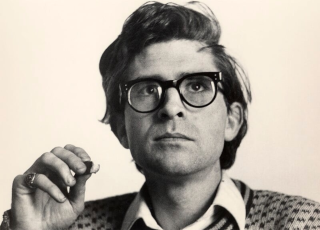
(Pictured: Photograph of John Arden, 1960 bromide print on card mount, credit to Roger Mayne, National Portrait Gallery, London)


Leave a comment

Birth of Garret FitzGerald, Eighth Taoiseach of Ireland

Garret Desmond FitzGerald, Fine Gael politician, economist and barrister who serves twice as Taoiseach (1981 to 1982 and 1982 to 1987), is born into a very politically active family in Ballsbridge, Dublin on February 9, 1926, during the infancy of the Irish Free State. He serves as Senator for the Industrial and Commercial Panel from 1965 to 1969, a Teachta Dála (TD) from 1969 to 1992, Minister for Foreign Affairs from 1973 to 1977, Leader of Fine Gael from 1977 to 1987 and twice Leader of the Opposition between 1977 and 1982.

FitzGerald’s father, Desmond FitzGerald, is the Free State’s first Minister for External Affairs. He is educated at the Jesuit Belvedere College, University College Dublin and King’s Inns, Dublin, and qualifies as a barrister. Instead of practicing law, however, in 1959 he becomes an economics lecturer in the department of political economy at University College, Dublin, and a journalist.

FitzGerald joins Fine Gael, attaching himself to the liberal wing of the party. and in 1969 is elected to Dáil Éireann, the lower house of the Oireachtas, the Irish parliament. He later gives up his university lectureship to become Minister for Foreign Affairs in the coalition government of Liam Cosgrave (1973–1977). When the coalition government is resoundingly defeated in the 1977 Irish general election, Cosgrave yields leadership of Fine Gael to FitzGerald. In his new role as Leader of the Opposition and party leader, he proceeds to modernize and strengthen the party at the grass roots. He briefly loses power in 1982 when political instability triggers two snap elections.

By the time of the 1981 Irish general election, Fine Gael has a party machine that can easily match Fianna Fáil. The party wins 65 seats and forms a minority coalition government with the Labour Party and the support of a number of Independent TDs. FitzGerald is elected Taoiseach on June 30, 1981. To the surprise of many FitzGerald excludes Richie Ryan, Richard Burke and Tom O’Donnell, former Fine Gael stalwarts, from the cabinet.

In his prime ministry, FitzGerald pushes for liberalization of Irish laws on divorce, abortion, and contraception and also strives to build bridges to the Protestants in Northern Ireland. In 1985, during his second term, he and British Prime Minister Margaret Thatcher sign the Anglo-Irish (Hillsborough) Agreement, giving Ireland a consultative role in the governing of Northern Ireland. After his party loses in the 1987 Irish general election, he resigns as its leader and subsequently retires in 1992.

On May 5, 2011, it is reported that FitzGerald is seriously ill in a Dublin hospital. Newly elected Fine Gael Taoiseach Enda Kenny sends his regards and calls him an “institution.” On May 6 he is put on a ventilator. On May 19, after suffering from pneumonia, he dies at the Mater Private Hospital in Dublin at the age of 85.

In a statement, Irish President Mary McAleese hails FitzGerald as “a man steeped in the history of the State who constantly strove to make Ireland a better place for all its people.” Taoiseach Enda Kenny pays homage to “a truly remarkable man who made a truly remarkable contribution to Ireland.” Henry Kissinger, the former United States Secretary of State, who serves as an opposite number to FitzGerald in the 1970s, recalls “an intelligent and amusing man who was dedicated to his country.”

FitzGerald’s death occurs on the third day of Queen Elizabeth II‘s state visit to the Republic of Ireland, an event designed to mark the completion of the Northern Ireland peace process that had been “built on the foundations” of FitzGerald’s Anglo-Irish Agreement with Margaret Thatcher in 1985. In a personal message, the Queen offers her sympathies and says she is “saddened” to learn of FitzGerald’s death.

On his visit to Dublin, United States President Barack Obama offers condolences on FitzGerald’s death. He speaks of him as “someone who believed in the power of education; someone who believed in the potential of youth; most of all, someone who believed in the potential of peace and who lived to see that peace realised.”

FitzGerald is buried at Shanganagh Cemetery in Shankill, Dublin.

FitzGerald is the author of a number of books, including Planning in Ireland (1968), Towards a New Ireland (1972), Unequal Partners (1979), All in a Life: An Autobiography (1991), and Reflections on the Irish State (2003).


Leave a comment

Murder of Nicholas Walsh, Church of Ireland Bishop of Ossory

Nicholas Walsh, (Irish: Nicolás Bhailis), Church of Ireland Bishop of Ossory and a pioneer of printing in Irish type, is murdered on December 14, 1585, by James Dullerde, against whom he had proceeded in his court for adultery.

Walsh is born in Waterford, County Waterford, in or before 1538. He is the son of Patrick Walsh, Bishop of Waterford and Lismore (d. 1578). The identity of his mother is unknown. She was Patrick’s concubine for many years and they apparently married only after 1558, meaning their son was born outside marriage. About 1551 Walsh leaves Ireland to study at the universities of Paris, Oxford, and Cambridge, eventually graduating BA at Cambridge in 1562 or 1563. He receives the MA from Cambridge in 1567. He is appointed chancellor of St. Patrick’s Cathedral, Dublin, in 1571.

As a fluent Irish speaker, Walsh is deeply committed to the propagation of the Protestant faith through the medium of the Irish language. In 1571 he helps to secure the publication in Dublin of a catechism written in Irish by John Kearney (Irish: Seán Ó Cearnaigh), whom he has known since his time at Cambridge. He then procures a government order for printing the Book of Common Prayer in Irish, and for the liturgy and a sermon to be communicated in Irish in a church in each large town. In practice this order has no effect. From about 1573 he and Kearney begin work on an Irish translation of the New Testament. This project is finally completed and published in 1602 or 1603. He also writes a collection of sermons in Latin.

In 1572 Walsh is offered the bishopric of Kilmacduagh in Connacht but declines as this diocese lay in a dangerous part of the country. In February 1578 he becomes Bishop of Ossory, upon which he resigns his chancellorship at St. Patrick’s Cathedral and presumably sets aside his translation of the New Testament. Through his family he has links with the area of his diocese, and he is assured of the protection of the dominant magnate, Thomas Butler, Earl of Ormond. However, Catholicism is very strong in Ossory, particularly in the diocesan capital of Kilkenny. His arrival at Kilkenny is ignored by the citizens, and he finds himself presiding over an empty St. Canice’s Cathedral during Sunday services. In November 1578 he writes for support to the Lord Justice of Ireland, Sir William Drury, who empowers Walsh to fine recusants. That month Drury comes to Kilkenny and heavily fines a number of prominent citizens of Kilkenny for recusancy. However, these punitive efforts have little long-term impact and only increased Walsh’s unpopularity.

Walsh is further hampered by a lack of revenues from his diocese, which leads him in April 1581 to seek additional benefices that he can hold in commendam. in July 1582 he seeks a licence to solicit charitable donations in England. He also initiates legal proceedings to recover church property. At a time when the Church of Ireland episcopate is characterised by venality, cynicism, and crypto-Catholicism, he stands head and shoulders above his colleagues owing to his dedication, ability, and evangelising zeal. At the installation of the Bishop of Meath in 1584 he criticises his fellow bishops for neglecting their spiritual duties for political concerns. He is married to an Englishwoman and has four children.

Walsh’s life comes to a violent end on December 14, 1585, when he is stabbed to death in his own house at Kilkenny by James Dullerde, whom he had cited for adultery in his consistory court. He is buried in a tomb in St. Canice’s Cathedral, Kilkenny. Dullerde is caught and beheaded by Domhnall Spanaigh Kavanagh MacMurrough and his brother Cahir Carroughe.

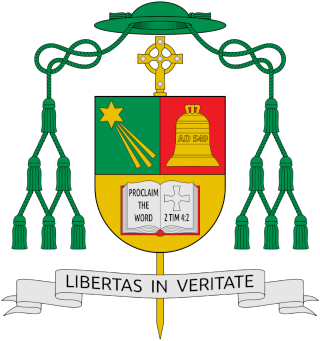
(From: “Walsh, Nicholas (Nicolás Bhailis)” by Anthony M. McCormack and Terry Clavin, Dictionary of Irish Biography, http://www.dib.ie, October 2009 | Pictured: Coat of arms of the Bishop of Ossory)


Leave a comment

The Battle of Lisnagarvey

The Battle of Lisnagarvey is fought on December 6, 1649, near Lisnagarvey, County Antrim, during the Irish Confederate Wars, an associated conflict of the Wars of the Three Kingdoms (1638-51). Forces loyal to the Commonwealth of England defeat an army supporting Charles II of England, composed of Royalists and Scots Covenanters.

The Irish Confederate Wars, sparked by the Irish Rebellion of 1641, are initially fought between the predominantly Catholic Confederation, and a largely Protestant government army led by James Butler, 1st Duke of Ormond. Both claims to be loyal to Charles I, while there is a three-sided war in Ulster. The latter involves Royalists, Gaelic Catholic leader Eoghan Ó Néill, and Presbyterian militia known as the Laggan Army, supported by Scots Covenanters under Robert Monro.

In September 1643, Ormond agrees to a truce, or ‘Cessation’, with the Confederation, freeing his troops for use in England against Parliament in the First English Civil War. Some Irish Protestants object, and switch sides, including Sir Charles Coote, who becomes Parliamentarian commander in Connacht. Charles surrenders in 1646, while a Covenanter/Royalist uprising is quickly suppressed in the 1648 Second English Civil War. On January 17, 1649, the Confederation allies with Ormond’s Royalists. Following the execution of Charles on January 30, they are joined by the Laggan Army and remaining Scots troops in Ulster.

There are various reasons for this. The Covenanter government, who provides support for Scottish settlers in Ulster, considers Oliver Cromwell and other leaders of the new Commonwealth of England dangerous political and religious radicals. As Scots, they object to the execution of their king by the English; as Presbyterians, they view monarchy as divinely ordained, making it also sacrilegious, and transfer their allegiance to his son, Charles II of England.

However, this is offset by a split within the Confederation, between Catholic landowners who want to preserve the position prevailing in 1641, and those like Ó Néill, whose estates had been confiscated in 1607. As a result, he agrees a truce with Coote, and refuses to join the Alliance, depriving them of their most effective fighting force in the north. Despite this, by late July, Ormond’s combined Royalist/Confederate army controls most of Ireland.

In Ulster, Derry is the only major town still held by forces loyal to the Commonwealth. The garrison is commanded by Coote, who is besieged by the Laggan Army under George Munro, Robert’s nephew. In July, Munro is forced to lift the siege by Ó Néill, an example of the impact of the truce between two unlikely allies.

Ormond’s defeat at Rathmines on August 2 allows Cromwell and an army of 12,000 to land in Dublin unopposed. After capturing Drogheda on September 11, his main force heads south towards Wexford. Colonel Robert Venables is sent north with three regiments, or around 2,500 men, to take control of Ulster. Munro’s garrisons surrender with minimal resistance, and by the end of September, Venables has occupied Dundalk, Carlingford, Newry, and Belfast. These are accompanied by the mass expulsion of Scots settlers, as punishment for their defection. When Coote captures Coleraine on September 15, he massacres the largely Scottish garrison.

At the end of October, Coote joins Venables at Belfast. They spend November reducing remaining Royalist garrisons in the north, and in early December, assemble 3,000 men to attack Carrickfergus. After lifting the siege of Derry, Munro has retreated to Enniskillen with the remainder of the Laggan Army. Since the loss of Carrickfergus would effectively cut communications with Scotland, he is determined to prevent this if at all possible.

He combines forces with Royalist leader James Hamilton, 1st Earl of Clanbrassil, creating an army of around 5,000. However, it comprises remnants from many different regiments, its men are poorly equipped, and demoralised, while most have not been paid for over two years. As they march north, their numbers dwindle due to desertion.

Learning of their advance, Coote and Venables move to intercept Munro, and the two advance guards make contact outside Lisnagarvey, near Lisburn, on December 6. Despite superior numbers, the Royalists cannot hold their ground against their far more experienced opponents. When the main body of the Parliamentarian force appears, the retreat rapidly turns into a rout, the majority fleeing without firing a shot. In the pursuit that follows, they lose 1,500 men, killed or captured, along with their baggage train and supplies. Clandeboye and the remnants of his army surrender shortly afterwards, although Monro escapes to Enniskillen.

Lisnagarvey ends resistance by Scottish forces to the Parliamentarian army. Carrickfergus surrenders on December 13, and as with other towns, its Scottish settlers are expelled. Early in 1650, Monro agrees to evacuate Enniskillen for £500, and returns to Scotland, leaving Ó Néill’s army as the only remaining obstacle to Parliamentarian control of the north. However, his death in November 1649 proves a major blow to its morale and fighting ability. In June 1650, it is destroyed by Coote and Venables at Scarrifholis.

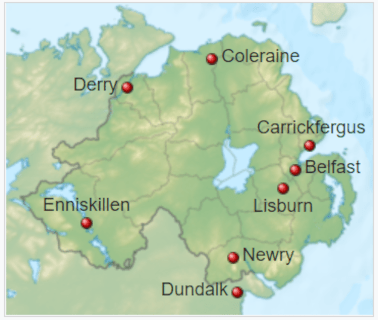
(Pictured: Map of key locations of the 1649 campaign in Ulster)