Nathanael Greene‘s keel is laid down on May 21, 1962, at the Portsmouth Naval Shipyard in Kittery, Maine. The construction of the ship is supervised by Commander Lawrence Dennis Ballou. She is launched on May 12, 1964, sponsored by Mrs. Neander W. Wade, a descendant of Nathanael Greene, and commissioned on December 19, 1964, with Commander Robert E. Crispin in command of the Blue Crew and Commander William M. Cossaboom in command of the Gold Crew.
Nathanael Greene departs Portsmouth for shakedown on December 30, 1964, with her Gold Crew embarked. It is relieved on February 1, 1965, by the Blue Crew. Her shakedown period is followed by repairs and alterations at Portsmouth Naval Shipyard, after which the submarine, with her Blue Crew embarked, departs the shipyard for ballistic missile loading and her initial Polaris missile deterrent patrol.
In 1970-71 Nathanael Greene is refueled and receives its conversion to launch Poseidon missiles at Newport News Shipbuilding. Following Yard period and shakedown, she proceeds to Cape Canaveral for a test missile launch. In March 1972, she departs for her first deterrent patrol following conversion ending up in Holy Loch, Scotland.
On January 29, 1970, while making a surface run into port in thick fog, Nathanael Greene runs aground in about sixteen feet of water. She is refloated after about seven hours.
On August 11, 1984, Nathanael Greene loses her propeller in the Irish Sea. While proceeding back to Holy Loch at about 3 knots using her secondary propulsion motor, a transit of about 5 or 6 days, she is redirected to Her Majesty’s Naval Base, Clyde at Faslane as the U.S. dry dock in Holy Loch is fully committed and unavailable, while Admiralty Floating Dock No. 60 at Faslane is available. While in the Faslane dry dock, a fire occurs in one of the dock’s enclosed machinery spaces on August 18, 1984. The fire is quickly extinguished and does not affect the Nathanael Greene. While in dry dock, it is established that the main shaft had broken with the loss of about a third of its length along with the propeller. Repairs are completed in about twelve days and the Nathanael Green is undocked on September 3, 1984.
On March 13, 1986, Nathanael Greene runs aground in the Irish Sea, suffering severe damage to her rudder and ballast tanks. Her grounding is a serious accident involving a U.S. Navy nuclear-powered ballistic missile submarine. She is deactivated while still in commission in May 1987. Her early deactivation is decided both as a result of the damage sustained in the accident as well as in accordance with the limitations set by the SALT II Treaty.
Nathanael Greene is decommissioned on December 15, 1986, and stricken from the Naval Vessel Register (NVR) on January 31, 1987. Her removal from service allows the United States to comply easily with the ballistic missile limits of the SALT II strategic arms limitation treaty.
Nathanael Greene‘s sail has been restored and is now on display in Port Canaveral, Florida, as a memorial to the original 41 for Freedom fleet ballistic missile submarines.
(Pictured: USS Nathanael Greene (SSBN-636), probably during her sea trials off New England in the mid-1960s.)
The fourth of four paramilitary bombings in the centre of Dublin takes place in Sackville Place on January 20, 1973.
The first bombing takes place in Burgh Quay on November 26, 1972. The next two bombings take place on December 1, 1972, in Eden Quay and Sackville Place. Three civilians are killed and 185 people are injured in the four bombings. No group has ever claimed responsibility for the attacks, and nobody has ever been charged in connection with the bombings.
On Saturday, January 20, 1973, at 3:08 p.m., a male caller with an English accent calls the telephone exchange in Exchequer Street, Dublin, with the following bomb warning: “Listen love, there is a bomb in O’Connell Street at the Bridge.” Although the call is placed from a coin box in the Dublin area, the exact location is never determined. The receiver of the call immediately contacts the Garda Síochána. The streets of central Dublin are more crowded than usual as Ireland is playing the All Blacks at an international rugby match being held that afternoon in Lansdowne Road.
At 3:18 p.m., a man leaving Kilmartin’s betting shop in Sackville Place notices smoke or steam emanating from the boot of a red Vauxhall Victor car parked outside Egan’s pub facing the direction of O’Connell Street. Its registration number was EOI 1229. About five seconds later the bomb inside the red car’s boot explodes, scattering sections of the vehicle and throwing the man off his feet. The explosion is so powerful that it hurls the car’s roof over adjacent Abbey Street where it lands in Harbour Place. The right-hand rear hub and axle sections are blasted through a metal grill on a shop window.
A CIÉ bus conductor, 21-year-old Thomas Douglas, originally from Stirling, Scotland, is passing the betting shop just as the bomb goes off and the force of the blast hurls him through a shop front window where he dies minutes later of shock and hemorrhage from the multiple injuries he received in the explosion. The entire shop front is devastated and spattered with blood. Fourteen people are badly injured in the bombing which causes bedlam as hysterical Saturday afternoon shoppers seek to flee the area in panic and confusion. The car bomb detonates at almost the exact location of the December 1 bomb. Later eyewitness accounts suggest that the car had been parked at the curb several hours before it exploded. According to journalists Jim Cusack and Henry McDonald in their book UVF: The Endgame (Poolbeg Press, 2008), the bomb is designed to cause widespread chaos and alarm throughout the city, and to inflict massive injuries upon shoppers and pedestrians as Saturday is traditionally the busiest shopping day of the week for Dubliners.
Suspicion initially falls on the Provisional Irish Republican Army (IRA) and other republican groups. Shortly afterwards, however the blame shifts to loyalist paramilitary organisations, in particular, the Ulster Volunteer Force (UVF). Gardaí receives a telephone call from a male caller in Belfast who gives the names of five men who he claims are responsible for January 20 car bombing. The caller says that the five men were originally from Belfast’s Sailortown area but had since relocated to new housing estates in the city. It is not known what action, if any, was ever undertaken by the Garda Síochána to follow up this telephone call. The UVF has never admitted responsibility for the bombing.
Irish Supreme Court Justice Henry Barron commissions an official inquiry into the four bombings. The findings are published in a report in November 2004. The Inquiry concludes that it “seemed more likely than not” that the bombing of the Film Centre Cinema on November 26, 1972, was “carried out by Republican subversives as a response to a Government ‘crackdown’ on the IRA and their associates” and to influence the outcome of the voting in the Dáil regarding the passage of the controversial amendment to the Offences Against the State Acts. Regarding December 1, 1972, and January 20, 1973, car bombings, the Inquiry concludes that confidential information obtained by the Gardaí indicates the three attacks were perpetrated by the UVF, “but no evidence was ever found to confirm this. Nor was there any evidence to suggest the involvement of members of the security forces in the attacks.”
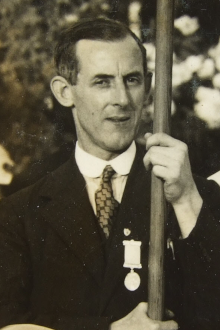
Best’s parents are Henry Best and Margaret Jane Best (née Irvine). His father is an excise officer working in Paisley, Renfrewshire, Scotland, at the time of his birth.
Best’s education takes place locally at Foyle College, a grammar school in County Londonderry which dates back to 1617, schooling children ages eleven to eighteen. Following his time at Foyle College, he does not attend university, however he is a member of the Irish Literary Society in London. Instead of attending university he works as a banking assistant for a time before an inheritance allows him to travel to Paris, France.
It is in Paris that Best meets, and becomes friends with, John Millington Synge, who recommends the lectures of Marie Henri d’Arbois de Jubainville at the Collège de France. He later goes on to translate and annotate Henri d’Arbois de Jubainville’s work, Le cycle mythologique irlandais et la mythologie celtique into The Irish Mythological Cycle and Celtic Mythology.
Upon returning to Dublin from Paris, Best becomes Honorary Secretary of the School of Irish Learning from its inception in 1903. It is incorporated into the Royal Irish Academy in 1926. He acts as joint editor of the school’s journal Ériu, and continues after the transfer of the journal to the Academy. In 1904, he joins the staff of the National Library of Ireland as an assistant director. He succeeds as Chief Librarian in 1924, and subsequently Library Director, a post he holds until 1940. Throughout his career, he becomes a prolific expert on Celtic studies, and is widely attributed to the survival and success of the subject as it is known today.
Best’s work earns him several accolades. He receives the Leibniz Medal of the Royal Prussian Academy in 1914, an honorary D.Litt. by the National University of Ireland in 1920, and an Honorary D.Litt. by Trinity College Dublin in 1923. In 1936, he is awarded the Medal of the Pontifical Academy of Sciences by Pope Pius XI for his facsimile edition of the Milan codex. He is elected as President of the Royal Irish Academy in 1942. His works, Bibliography of Irish Philology and of Irish Printed Literature (1913) and Bibliography of Irish Philology and Manuscript Literature, 1913-41 (1942), are considered to be some of his most important scholarly outputs.
Upon his retirement from the National Library, Best becomes a Senior Professor at the Dublin Institute for Advanced Studies (DIAS). He retires from the DIAS in 1947 at the age of seventy-five. From 1948 to 1956, he becomes chairman of the Irish Manuscripts Commission, a position previously held by Eoin MacNeill. While in this role, he supervises several facsimiles, including RIA MS 23 N 10, later renamed the Book of Ballycummin in 2019.
Following his retirement from the Irish Manuscripts Commission, Best spends much of the final three years of his life “sorting out his large correspondence,” much of which is currently held in the National Library. He also continues to publish new work throughout his later life. He works on a translation of the Book of Leinster alongside Osborn Bergin and Professor M. A. O’Brien, who takes over after Bergin’s death in 1950. The first fasciculus is published in 1954, the second in 1956 and the third in 1959. His work also appears in multiple academic journals, including Éiriu, and the Zeitschrift für celtische Philologie, Revue Celtique, Études Celtiques, Hermathena, The Dublin Magazine, and The Proceedings of the Royal Irish Academy. He also continues with his work in palaeography, including the last paper he completes on the Book of Armagh in 1958, which appeared in Éiriu vol. xviii. His aid in the writing of others is particularly visible in his surviving correspondence with George Moore.
Best marries his wife, Edith Best (née Oldham), in 1906, he being seven years her junior. She is the older sister of Charles Hubert Oldham, who goes on to become Professor of Economics at University College Dublin. She herself is a musician, a pianist, who had studied at the Royal College of Music in London. The couple has no children, and also claims to have no affiliation with any religion. Edith passes away at their home on March 9, 1950.
Best dies on September 25, 1959, at his home on 57 Upper Leeson Street in Dublin. The Richard I. Best Papers are currently held at the National Archives of Ireland and have been instrumental in the foundation of The Richard Irvine Best Memorial lecture. This discussion and celebration of Best’s work, organised by Richard Irvine Best Memorial Lecture Trust, has taken place since 1969.
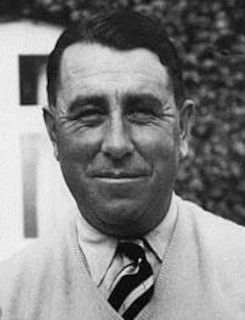
Harry Bradshaw, a leading Irish professional golfer of the 1940s and 1950s, dies on December 22, 1990, in St. Vincent’s hospital, County Dublin.
Bradshaw is born on October 9, 1913, in Killincarrig, County Wicklow, eldest among four sons and two daughters of Edward ‘Ned’ Bradshaw, golf caddie and later golf professional, and Elizabeth Bradshaw (née Walsh) of Killincarrig. He is educated locally. A golf prodigy, he has a hole-in-one at the age of ten on an 80-yard par three at Delgany Golf Club, County Wicklow. He joins Delgany Golf Club, where he progresses from caddie to assisting his father, who is the club’s professional. As a teenager, he tends to hook the ball wildly, before he develops a grip that allows him to hit with great accuracy. Thereafter, he concentrates on honing his peerless approach play from within 100 yards of the hole. Another feature of his game is what is called his “hit and hark” approach to putting: he never lifts his head to follow the ball until he hears it drop.
Bradshaw plays in his first tournament as a professional in 1932, the same year he shoots a course record 68 at Delgany. In 1938, he wins his first professional tournament, the Bromford-Adgey Cup at Skerries Golf Club, County Dublin. In 1941, he is appointed golf professional at Kilcroney, County Wicklow, and in 1950 he begins his long association with Portmarnock Golf Club, County Dublin, when he is appointed golf professional there. By then he has already made his mark on domestic Irish golf, having won the Irish Open in 1947 and 1949. In Ireland he wins the Irish Dunlop Trophy three times, the Willie Nolan Trophy eleven times, the Moran Cup twelve times and the Irish Professional Championship ten times, the last a record later equaled by Christy O’Connor Snr.
Bradshaw is not well known outside of Ireland prior to the famous “bottle” incident at the 1949 Open Championship at Royal St. George’s Golf Club in Sandwich, Kent, England. Having headed the qualifiers and shooting an opening 68, he continues his good form into the second round when his drive at the par four fifth hole just misses the fairway and lands in a beer bottle that is standing upright with the neck and shoulder broken off. The rules are unclear on whether the bottle constitutes a hazard, and he elects to play the ball where it lay, judging (correctly) that he is not entitled to a free drop. Closing his eyes and turning his head away, he swings, shattering the bottle and advancing the ball about twenty-five yards. He is shaken and records a lacklustre round of 77. Back to his best in the next two rounds, he would win the title had his putt on the last not stopped just short. Instead, he ties with the South AfricanBobby Locke who defeats him by twelve strokes in the thirty-six-hole play-off with superlative rounds of 67 and 68. As a result of his experience with the broken bottle, the rules are changed to cater for the possibility of such an incident recurring. It is the closest a golfer from the Republic of Ireland comes to winning the Open Championship until Pádraig Harrington’s victory in 2007.
Bradshaw subsequently revenges himself on Locke by narrowly beating him to the Irish Open title the following month. He is then one of four British and Irish golfers to participate in a sixteen-week tour of South Africa from December 1950 to March 1951 during which he engages in further jousts with Locke, deepening their new-found friendship.
Establishing himself on the international golf circuit, Bradshaw goes on to win the DunlopBritish Masters on two occasions (1953, 1955), and in 1958 he becomes the first Irishman to win the PGA Close Championship. He had also won the Dunbar Open Tournament in Scotland in 1953 and the Gleneagles Hotel Foursomes Tournament pro-am with Joe Carr in 1955. The highlight of his career comes in Mexico City in 1958, when, in partnership with Christy O’Connor Snr, he wins the Canada Cup, later known as the World Cup, for Ireland, also losing a play-off for the individual title. His performance is particularly impressive, given that he is forty-five and carrying weight while competing at altitude in oppressive heat. He and O’Connor are fêted upon their return home, and their victory is considered to play the determining role in popularising golf in Ireland. He caps a memorable year by receiving the Association of Golf Writers’ Trophy for 1958.
Bradshaw appears on three Ryder Cup teams. At the Wentworth Club in 1953, he wins his foursomes match partnering Fred Daly and his singles match against Fred Haas, but in 1955 he loses both his foursomes and singles matches at the Thunderbird Country Club in California. In 1957, he is a member of the side that defeats the American team 7–4 at Lindrick Golf Club in South Yorkshire, only the third victory by the Britain and Ireland side in the twelve matches played up to that time. He holes a five-footer to tie his match with U.S. Open champion Dick Mayer after a classic encounter. In 1963, he takes on Billy Casper, one of America’s top golfers, in a match at Portmarnock televised as part of the prestigious Shell’s Wonderful World of Golf series. Bradshaw’s three-stroke victory earns him $3,000, which is then considered a bonanza in golfing terms.
Bradshaw remains the golf professional at Portmarnock until 1983, latterly spending most of his day in the club shop. Even after his formal retirement, he remains on the payroll at Portmarnock as an informal ambassador for the club. Nicknamed “the Brad,” he is extremely popular with amateur and professional alike, is a great raconteur and tremendous company, and is noted for his lack of rancor towards, or criticism of, other players.
Bradshaw marries Elizabeth Foley from Carlow in 1944 and they have four children. His three brothers, Eddie, Hughie and Jimmy, are all professional golfers.
(From: “Bradshaw, Harry” by Jim Shanahan, Dictionary of Irish Biography, http://www.dib.ie, November 2022)
The 32CSM has been described as the “political wing” of the now defunct Real Irish Republican Army (RIRA), but this is denied by both organisations. The group originates in a split from Sinn Féin over the Mitchell Principles.
Those present at the initial meeting are opposed to the direction taken by Sinn Féin and other mainstream republican groups in the Northern Ireland peace process, which leads to the Belfast Agreement (also known as the Good Friday Agreement) the following year. The same division in the republican movement leads to the paramilitary group now known as the Real IRA breaking away from the Provisional Irish Republican Army at around the same time.
Most of the 32CSM’s founders had been members of Sinn Féin. Some had been expelled from the party for challenging the leadership’s direction, while others felt they had not been properly able to air their concerns within Sinn Féin at the direction its leadership had taken. Bernadette Sands McKevitt, wife of Michael McKevitt and a sister of hunger strikerBobby Sands, is a prominent member of the group until a split in the organisation.
The name refers to the 32 counties of Ireland which are created during the Lordship and Kingdom of Ireland. With the partition of Ireland in 1920–22, twenty-six of these counties form the Irish Free State which is abolished in 1937 and is now known as Ireland since 1949. The remaining six counties of Northern Ireland remain part of the United Kingdom. Founder Bernadette Sands McKevitt says in a 1998 interview with the Irish Mirror that people did not fight for “peace” – “they fought for independence” – and that the organisation reaffirms to the republican position in the 1919 Irish Declaration of Independence.
Before the referendums on the 1998 Good Friday Agreement, the 32CSM lodges a legal submission with the United Nations challenging British sovereignty in Ireland. The referendums are opposed by the 32CSM but are supported by 71% of voters in Northern Ireland and by 94% in the Republic of Ireland. It is reported in February 2000 that the group established a “branch” in Kilburn, London.
In November 2005, the 32CSM launches a political initiative titled Irish Democracy, A Framework for Unity.
On May 24, 2014, Gary Donnelly, a member of the 32CSM, is elected to the Derry City and Strabane District Council. In July 2014, a delegation from the 32CSM travels to Canada to take part in a six-day speaking tour. On arrival the delegation is detained and refused entry into Canada.
In 2015, the 32CSM organises a demonstration in Dundee, Scotland, in solidarity with the men convicted of shooting Constable Stephen Carroll, the first police officer to be killed in Northern Ireland since the formation of the PSNI. The organisation says the “Craigavon Two” are innocent and have been victims of a miscarriage of justice.
The group is currently considered a Foreign Terrorist Organization (FTO) in the United States, because the group is considered to be inseparable from the Real IRA, which is designated as an FTO. At a briefing in 2001, a spokesman for the U.S. Department of State states that “evidence provided by both the British and Irish governments and open-source materials demonstrate clearly that the individuals who created the Real IRA also established these two entities to serve as the public face of the Real IRA. These alias organizations engage in propaganda and fundraising on behalf of and in collaboration with the Real IRA.” The U.S. Department of State’s designation makes it illegal for Americans to provide material support to the Real IRA, requires U.S. financial institutions to block the group’s assets and denies alleged Real IRA members visas into the U.S.
The 32CSM also operates outside of the island of Ireland to some extent. The Gaughan/Stagg Cumann covers England, Scotland and Wales, and has an active relationship of mutual promotion with a minority of British left-wing groups and anti-fascist organisations. The James Larkin Republican Flute Band in Liverpool, and the West of Scotland Band Alliance, the largest section of which is the Glasgow-based Parkhead Republican Flute Band, are also supporters of the 32CSM. As of 2014, the 32CSM’s alleged paramilitary wing, the Real IRA, is reported to have been still involved in attempts to perpetrate bombings in Britain as part of the Dissident Irish Republican campaign, which has been ongoing since 1998.
Craig is born at Sydenham, Belfast, on January 8, 1871, the seventh of nine children of James Craig (1828–1900), a wealthy whiskey distiller who had entered the firm of Dunville & Co. as a clerk and by age 40 is a millionaire and a partner in the firm. Craig Snr. owns a large house called Craigavon, overlooking Belfast Lough. His mother, Eleanor Gilmore Browne, is the daughter of Robert Browne, a prosperous man who owned property in Belfast and a farm outside Lisburn. Craig is educated at Merchiston Castle School in Edinburgh, Scotland. After school he begins work as a stockbroker, eventually opening his own firm in Belfast.
Craig enlists in the 3rd (Militia) battalion of the Royal Irish Rifles on January 17, 1900, to serve in the Second Boer War. He is seconded to the Imperial Yeomanry, a cavalry force created for service during the war, as a lieutenant in the 13th battalion on February 24, 1900, and leaves Liverpool for South Africa on the SS Cymric in March 1900. After arrival he is soon sent to the front and is taken prisoner in May 1900, but released by the Boers because of a perforated colon. On his recovery he becomes deputy assistant director of the Imperial Military Railways, showing the qualities of organisation that are to mark his involvement in both British and Ulster politics. In June 1901 he is sent home suffering from dysentery, and by the time he is fit for service again the war is over. He is promoted to captain in the 3rd Royal Irish Rifles on September 20, 1902, while still seconded to South Africa.
On June 7, 1921, Craig is appointed the first Prime Minister of Northern Ireland by the Lord Lieutenant of Ireland. The House of Commons of Northern Ireland assembles for the first time later that day.
Craig had made his career in British as well as Northern Irish politics, but his premiership shows little sign of his earlier close acquaintance with the British political world. He becomes intensely parochial and suffers from his loss of intimacy with British politicians in 1938, when the British government concludes agreements with Dublin to end the Anglo-Irish trade war between the two countries. He never tries to persuade Westminster to protect Northern Ireland‘s industries, especially the linen industry, which is central to its economy. He is anxious not to provoke Westminster, given the precarious state of Northern Ireland’s position. In April 1939, and again in May 1940 during World War II, he calls for conscription to be introduced in Northern Ireland (which the British government, fearing a backlash from nationalists, refuses). He also calls for Winston Churchill to invade Ireland using Scottish and Welsh troops in order to seize the valuable ports and install a Governor-General at Dublin.
While still prime minister, Craig dies peacefully at his home at Glencraig, County Down at the age of 69 on November 24, 1940. He is buried on the Stormont Estate on December 5, 1940, and is succeeded as the Prime Minister of Northern Ireland by the Minister of Finance, J. M. Andrews.
(Pictured: James Craig, 1st Viscount Craigavon, bromide print by Olive Edis, National Portrait Gallery, London)
Duff is born in Dublin on June 7, 1889, at 97 Phibsboro Road, the eldest of seven children of John Duff and his wife, Susan Letitia (née Freehill). The wealthy family lives in the city at St. Patrick’s Road, Drumcondra. He attends Blackrock College.
In 1908, Duff enters the Civil Service and is assigned to the Irish Land Commission. In 1913, he joins the Society of Saint Vincent de Paul and is exposed to the real poverty of Dublin. Many who live in tenement squalor are forced to attend soup kitchens for sustenance, and abject poverty, alcoholism, and prostitution are rife in parts of Dublin. He joins and soon rises through the ranks to President of the St. Patrick’s Conference at St. Nicholas of Myra Parish. Having concern for people he sees as materially and spiritually deprived, he gets the idea to picket Protestant soup kitchens as he considers they are giving aid in the form of food and free accommodation at hostels in return for not attending Catholic services. He sets up rival Catholic soup kitchens and, with his friend, Sergeant Major Joe Gabbett, discourages Catholics from patronizing Protestant soup kitchens. They succeeded in closing down two of them over the years.
Duff publishes his first pamphlet, Can we be Saints?, in 1916. In it, he expresses the conviction that all, without exception, are called to be saints, and that through Christian faith, all have the means necessary.
Duff briefly acts as private secretary to Michael Collins, the chairman of the Provisional Government and the commander-in-chief of the National Army. In 1924, he is transferred to the Department of Finance.
On September 7, 1921, Duff is a part of a meeting alongside Fr. Michael Toher and fifteen women which becomes the nucleus of what would become the Legion of Mary. The Legion of Mary is created to organise lay Catholics to perform voluntary work. He models the organisation on Roman legions. Some of the first causes the Legion pursues is to become involved with homelessness and prostitution in Dublin. In 1922, he defies the wishes of the Archbishop of Dublin and the widespread Crypto-Calvinism, or Jansenism, within the Catholic Church in Ireland, which had created an intense hostility towards both prostitutes and other allegedly “fallen women.” Similarly, to St. Vitalis of Gaza before him, he begins an outreach to the prostitutes living in often brutal and inhuman conditions in the “kip houses” of “the Monto,” as Dublin’s red-light district, one of the largest in Europe at the time, is then called. Although middle-class Dubliners dismissively view these women as “whores,” the impoverished but devoutly Catholic residents of the Monto tenements refer to local prostitutes as “unfortunate girls,” and understand that they often turn to prostitution as a last resort. As part of his work, Duff establishes the Sancta Maria hostel, a safe house for former prostitutes who had run away from their “kip keepers.” Following the Irish War of Independence and Irish Civil War, he also persuades the first Catholic Commissioner of the Dublin Metropolitan Police, former Irish Army General W. R. E. Murphy, to launch a crackdown and, even though prostitution in the Republic of Ireland, rooted in human trafficking, still exists, the closure of the Monto’s last “Kip-Houses” is announced on March 12, 1925.
In 1927, Duff establishes the Morning Star hostel for homeless men, followed shortly by the Regina Coeli hostel for homeless women in 1930. Unlike the Magdalen Asylums, the Regina Coeli hostel reflects his view that unwed mothers should be taught how to be able to provide for and raise their children. This defies the norm of the era which holds that the children of unwed mothers should be saved from the stigma of their illegitimacy by being put up for adoption as quickly as possible.
While Duff enjoys the support of W. T. Cosgrave, Ireland’s head of government, and in May 1931 is granted an audience with Pope Pius XI, his efforts are opposed internally in the Dublin diocese. The Archbishop of Dublin Edward Joseph Byrne and his successor John Charles McQuaid seek to censor him because of his involvement with prostitutes. McQuaid also does not approve of his ecumenical efforts. In the 1930s and 1940s Duff creates the Mercier Society, a study group designed to bring together Catholics and Protestants, as well as the Pillar of Fire, a group designed to promote dialogue with Ireland’s Jewish community. In communication with Irish social dissidents Seán Ó Faoláin and Peadar O’Donnell, he suggests he is far more censored than even they are.
Duff does have some supporters amongst the Catholic hierarchy though. With the backing of Cardinal Joseph MacRory and Francis Bourne of Westminster, the Legion is able to expand rapidly and internationally. In 1928 the Legion establishes its first presidium in Scotland. In 1932 he is able to use the occasion of the Eucharistic Congress of Dublin to introduce the concept of the Legion of Mary to several visiting bishops, leading to further international growth.
Duff retires from the Civil Service in 1934 to devote all of his time to the Legion of Mary.
In July 1940, an overseas club for Afro-Asian students in Dublin is created. At that time Ireland is a popular destination for students from Asia and Africa because of its recent anti-imperial, anti-colonial history. Duff personally funds the purchase of a building for the club using funds from an inheritance. The club lasts until 1976 and facilitate many notable students, including Jaja Wachuku.
For the rest of his life, and with the help of many others, Duff guides the Legion’s worldwide extension. Today, the Legion of Mary has an estimated four million active members and 10 million auxiliary members in close to 200 countries in almost every diocese in the Catholic Church.
In 1965, Pope Paul VI invites Duff to attend the Second Vatican Council as a lay observer. When he is introduced to the assembly by the Archbishop of Liverpool, John Heenan, he receives a standing ovation.
Duff dies in Dublin at the age of 91 on November 7, 1980, and is interred at Glasnevin Cemetery. In July 1996, the cause of his beatification is introduced by Cardinal Desmond Connell.
Carroll marries clothing designer Helena Reilly in Glasgow in 1923. They have four children, actress Helena Carroll, musician and producer Theresa Perez, journalist Kathleen Carroll and son Brian Carroll who resides in London. He is grandfather to Helena Perez Reilly and great grandfather to Paul Vincent Reilly. His brother, Niall Carroll, is a film critic.
Carroll founds two theater groups in Glasgow: the Curtain Theatre company, with Grace Ballantine and Molly Urquhart, in 1933 and the Glasgow Citizens Theatre in 1943. He remains the director and playwright in residence of the Citizens Theatre until his death.
The Wayward Saint is made into an opera in Germany in the 1960’s and his daughter Theresa commissions and produces an opera of his Beauty is Fled from the collection Plays for My Children which opens at Phoenix Symphony Hall in the 1970s as part of Theresa’s “Children’s Opera Series.”
Carroll dies at the age of 68 from undisclosed causes in Bromley, Kent, England on October 20, 1968.
Ó Brádaigh is born into a middle-class republican family. His father, Matt Brady, is an IRA volunteer who is severely wounded in an encounter with the Royal Irish Constabulary (RIC) in 1919. His mother, May Caffrey, is a Cumann na mBan volunteer and a 1922 graduate of University College Dublin (UCD). His father dies when he is ten and is given a paramilitary funeral led by his former IRA colleagues. His mother, prominent as the Secretary for the County Longford Board of Health, lives until 1974. He is educated at Melview National School at primary level and attends secondary school at St. Mel’s College, leaving in 1950, and graduates from University College Dublin in 1954. That year he takes a job teaching Irish language at Roscommon Vocational School in Roscommon. He is a deeply religious Catholic who refrains from smoking or drinking.
Ó Brádaigh joins Sinn Féin in 1950. While at university, in 1951, he joins the Irish Republican Army. In September 1951, he marches with the IRA at the unveiling of the Seán Russell monument in Fairview Park, Dublin. A teacher by profession, he is also a Training Officer for the IRA. In 1954, he is appointed to the Military Council of the IRA, a subcommittee set up by the IRA Army Council in 1950 to plan a military campaign against Royal Ulster Constabulary (RUC) barracks in Northern Ireland.
On August 13, 1955, Ó Brádaigh leads a ten-member IRA group in an arms raid on Hazebrouck Barracks, near Arborfield, Berkshire, England, a depot for the No. 5 Radar Training Battalion of the Royal Electrical and Mechanical Engineers. It is the biggest IRA arms raid in Britain. Most, if not all, of the weapons are recovered in a relatively short period of time. A van, traveling too fast, is stopped by the police and IRA personnel are arrested. Careful police work leads to weapons that had been transported in a second van and stored in London.
The IRA Border Campaign commences on December 12, 1956. As an IRA General Headquarters Staff (GHQ) officer, Ó Brádaigh is responsible for training the Teeling Column in the west of Ireland. During the Campaign, he serves as second-in-command of the Teeling Column. On December 30, 1956, he partakes in the Teeling Column attack on RUC barracks in Derrylin, County Fermanagh. RUC Constable John Scally is killed in the attack and is the first fatality of the new IRA campaign. Ó Brádaigh and others are arrested by the Garda Síochána across the border in County Cavan the day after the attack. They are tried and jailed for six months in Mountjoy Prison. A leading abstentionist, upon his arrest he refuses to recognize the authority of the Irish government and refuses to renounce violence in exchange for his release.
Upon completing his prison sentence, Ó Brádaigh is immediately interned at the Curragh Camp along with other republicans. On September 27, 1958, he escapes from the camp along with Dáithí Ó Conaill. While a football match is in progress, the pair cuts through a wire fence and escapes from the camp under a camouflage grass blanket. This is an official escape, authorised by the officer commanding (OC) of the IRA internees, Tomás Óg Mac Curtain. He is the first Sinn Féin TD on the run since the 1920s.
In October 1958, Ó Brádaigh becomes the IRA Chief of Staff, a position he holds until May 1959, when Seán Cronin is elected as his replacement. He is arrested in November 1959, refuses to answer questions, and is jailed in Mountjoy Prison under the Offences against the State Act. He is released in May 1960 and, after Cronin is arrested, again becomes Chief of Staff. Although he always emphasises that it is a collective declaration, he is the primary author of the statement ending the IRA Border Campaign in 1962. At the IRA 1962 Convention he indicates that he is not interested in continuing as Chief of Staff.
After Ó Brádaigh’s arrest in December 1956, he takes a leave from teaching at Roscommon Vocational School. He is re-instated and begins teaching again in late 1962, just after he is succeeded by Cathal Goulding in the position of Chief of Staff of the IRA. He remains an active member of Sinn Féin and is also a member of the IRA Army Council throughout the decade.
Ó Brádaigh opposes the decision of the IRA and Sinn Féin to drop abstentionism and to recognise the Westminster parliament in London, the Stormont parliament in Belfast and the Leinster House parliament in 1969/1970. On January 11, 1970, along with Seán Mac Stíofáin, he leads the walkout from the 1970 Sinn Féin Ard Fheis after the majority votes to end the policy of abstentionism, although the vote to change the Sinn Féin constitution fails to receive the required two-thirds majority. The delegates who walk out reconvene at the Kevin Barry Hall in Parnell Square, Dublin, and establish Provisional Sinn Féin.
Ó Brádaigh is voted chairman of the Caretaker Executive of Provisional Sinn Féin. That October, he formally becomes president of the party. He holds this position until 1983. In his presidential address to the 1971 Provisional Sinn Féin Ard Fheis, he says that the first step to achieving a United Ireland is to make Northern Ireland ungovernable. He apparently also serves on the Army Council or the executive of the Provisional Irish Republican Army until he is seriously injured in a car accident on January 1, 1984.
On May 31, 1972, Ó Brádaigh is arrested under the Offences Against the State Act and immediately commences a hunger strike. A fortnight later the charges against him are dropped and he is released. With Dáithí Ó Conaill he develops the Éire Nua policy, which is launched on June 28, 1972. The policy calls for a federal Ireland.
On December 3, 1972, Ó Brádaigh appears on the London Weekend TelevisionWeekend World programme. He is arrested by the Gardaí again on December 29, 1972, and charged in the newly established Special Criminal Court with Provisional IRA membership. In January 1973 he is the first person convicted under the Offences Against the State (Amendment) Act 1972 and is sentenced to six months in the Curragh Camp.
On December 10, 1974, Ó Brádaigh participates in the Feakle talks between the IRA Army Council and Sinn Féin leadership and the leaders of the Protestant churches in Ireland. Although the meeting is raided and broken up by the Gardaí, the Protestant churchmen pass on proposals from the IRA leadership to the British government. These proposals call on the British government to declare a commitment to withdraw, the election of an all-Ireland assembly to draft a new constitution and an amnesty for political prisoners.
The IRA subsequently calls a “total and complete” ceasefire intended to last from December 22, 1974, to January 2, 1975, to allow the British government to respond to proposals. British government officials also hold talks with Ó Brádaigh in his position as president of Sinn Féin from late December to January 17, 1975.
On February 10, 1975, the IRA Army Council, unanimously endorses an open-ended cessation of IRA “hostilities against Crown forces,” which becomes known as the 1975 truce. The IRA Chief of Staff at the time is Seamus Twomey of Belfast. It is reported in some quarters that the IRA leaders mistakenly believe they had persuaded the British Government to withdraw from Ireland and the protracted negotiations between themselves and British officials are the preamble to a public declaration of intent to withdraw. In fact, as British government papers now show, the British entertain talks with the IRA in the hope that this would fragment the movement further and score several intelligence coups during the talks. This bad faith embitters many in the republican movement, and another ceasefire does not happen until 1994.
In late December 1976, along with Joe Cahill, Ó Brádaigh meets two representatives of the Ulster Loyalist Central Co-ordinating Committee (ULCCC), John McKeague and John McClure, at the request of the latter body. Their purpose is to try to find a way to accommodate the ULCCC proposals for an independent Northern Ireland with the Sinn Féin’s Éire Nua programme. It is agreed that if this can be done, a joint Loyalist-Republican approach can then be made to request the British government to leave Ireland. Desmond BoalQC and Seán MacBrideSC are requested and accepted to represent the loyalist and republican positions. For months they have meetings in various places including Paris. The dialogue eventually collapses when Conor Cruise O’Brien, then Minister for Posts and Telegraphs and vociferous opponent of the Provisional IRA, becomes aware of it and condemns it on RTÉ Radio. As the loyalists had insisted on absolute secrecy, they feel unable to continue with the talks as a result.
In the aftermath of the 1975 truce, the Ó Brádaigh/Ó Conaill leadership comes under severe criticism from a younger generation of activists from Northern Ireland, headed by Gerry Adams, who becomes a vice-president of Sinn Féin in 1978. By the early 1980s, Ó Brádaigh’s position as president of Sinn Féin is openly under challenge and the Éire Nua policy is targeted in an effort to oust him. The policy is rejected at the 1981 Sinn Féin Ard Fheis and finally removed from the Sinn Féin constitution at the 1982 Ard Fheis. At the following year’s Ard Fheis, Ó Brádaigh and Ó Conaill resign from their leadership positions, voicing opposition to the dropping of the Éire Nua policy by the party.
On November 2, 1986, the majority of delegates to the Sinn Féin Ard Fheis vote to drop the policy of abstentionism if elected to Dáil Éireann, but not the British House of Commons or the Northern Ireland parliament at Stormont, thus ending the self-imposed ban on Sinn Féin elected representatives from taking seats at Leinster House. Ó Brádaigh and several supporters walk out and immediately assemble at Dublin’s West County Hotel and set up Republican Sinn Féin (RSF). As an ordinary member, he had earlier spoken out against the motion (resolution 162) in an impassioned speech. The Continuity IRA becomes publicly known in 1996. Republican Sinn Féin’s relationship with the Continuity IRA is similar to the relationship between Sinn Féin and the Provisional IRA when Ó Brádaigh was Sinn Féin’s president.
Ó Brádaigh believes RSF to be the sole legitimate continuation of the pre-1986 Sinn Féin, arguing that RSF has kept the original Sinn Féin constitution. RSF readopts and enhances his Éire Nua policy. His party has electoral success in only a few local elections.
Ó Brádaigh remains a vociferous opponent of the Good Friday Agreement, viewing it as a programme to copperfasten Irish partition and entrench sectarian divisions in the north. He condemns his erstwhile comrades in Provisional Sinn Féin and the Provisional IRA for decommissioning weapons while British troops remain in the country. In his opinion, “the Provo sell-out is the worst yet – unprecedented in Irish history.” He condemns the Provisional IRA’s decision to seal off a number of its arms dumps as “an overt act of treachery,” “treachery punishable by death” under IRA General Army Order Number 11.
In July 2005, Ó Brádaigh hands over a portion of his personal political papers detailing discussions between Irish Republican leaders and representatives of the British Government during 1974–1975 to the James Hardiman Library, National University of Ireland, Galway.
In September 2009, Ó Brádaigh announces his retirement as leader of Republican Sinn Féin. His successor is Des Dalton. He is also a long-standing member of the Celtic League, an organization which fosters cooperation between the Celtic people and promotes the culture, identity and eventual self-determination for the people, in the form of six sovereign states, for the Celtic nations – Wales, Cornwall, Brittany, Scotland, Isle of Man and Ireland.
After suffering a period of ill-health, Ó Brádaigh dies on June 5, 2013, at Roscommon County Hospital. His funeral is attended by 1,800 mourners including Fine Gael TD Frank Feighan and is policed by the Garda Emergency Response Unit and Gardaí in riot gear, for “operational reasons,” a show of force believed to have been to deter the republican tradition of firing a three-volley salute of shots over the final place of rest during the graveyard oration. As a result, there are some minor scuffles between gardai and mourners.
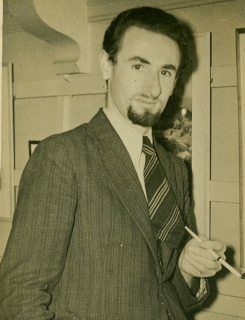
Patrick Anthony HennessyRHA, Irish realist painter known for his highly finished still lifes, landscapes and trompe-l’œil paintings, is born in Cork, County Cork, on August 28, 1915. The hallmark of his style is his carefully observed realism and his highly finished surfaces, the result of a virtuoso painting technique.
Hennessy is the son of John Hennessy an army sergeant major from County Kerry and Bridget Hennessy from Cork. His father is killed in World War I at the Battle of Passchendaele in 1917. In 1921, when he is five years old, his mother remarries in Cork. Her second husband is a Scot named John Duncan and shortly afterwards the whole family moves to Arbroath, Scotland, where Duncan has relatives.
Hennessy is educated in Arbroath at St. Thomas RC Primary School followed by secondary education at Arbroath High School, where he begins to show an aptitude for art, leaving in 1933 with the Dux for Art and an accompanying medal. In the autumn of 1933 he enrolls at the Dundee of Jordanstone College of Art & Design, for a four-year Diploma course in Drawing and Painting under James McIntosh Patrick and Edward Baird. Here he meets Harry Robertson Craig who becomes his lifelong companion. He plays a full part in the social activities of the college, winning a fancy-dress award at the Christmas revels in 1935 and producing a ballet “Paradise Lost” the following year. He gains a First-Class Pass in each year of the course along with winning first prize in 1934 and 1936 for work done during the summer vacation. He graduates with a First-Class Distinction in 1937.
Having gained a scholarship, Hennessy continues his studies at the Dundee of Jordanstone College of Art & Design for a further year by doing a Post-Graduate Diploma course in Drawing and Painting. Within a month of gaining his Post-Graduate Diploma he holds his first joint exhibition at the Art Galleries in Arbroath. In June 1938 he is awarded the Annual Travelling Scholarship for further studies in Paris and Italy. In Paris he meets up with the artists Robert Colquhoun and Robert MacBryde, whom he had met the previous year, the three travelling south together to Marseilles towards the end of that year. On his return to Scotland he is selected for the residential summer school course at Hospitalfield House near Arbroath under James Cowie. Two of his paintings, a still life and a self-portrait, are accepted that year by the Royal Scottish Academy for their Annual Exhibition. However, by the autumn of 1939 with war looming and feeling somewhat disenchanted on his return to Scotland, he decides to return to Ireland.
On arrival in Dublin Hennessy is offered an exhibition in December 1939 at the Country Shop on St. Stephen’s Green which is opened by Mainie Jellett. This attracts favourable attention. During the early 1940s he lives at various addresses in and around Dublin with frequent trips to Cork. In 1940 he is invited to join the Society of Dublin Painters and holds regular annual exhibitions of his work there during the 1940s and early 1950s. These exhibitions are supplemented by an eclectic mix of commissions, mostly portraits which he undertakes during this period. In 1941 he has three of his paintings accepted by the Royal Hibernian Academy (RHA) for their annual exhibition. This is the beginning of a long relationship with the RHA. He exhibits there virtually every year from 1941 until 1979, the year before his death.
From the early 1940s onwards, Hennessey’s work sometimes incorporates a homosexual visual subtext. He re-unites with Harry Robertson Craig in 1946 and soon after they move to Crosshaven, County Cork, and later to Cobh. In 1947, Time magazine selects him as one of Ireland’s outstanding painters, in recognition of the important position he has then attained in the art world. In 1948 he has an exhibition at the Victor Waddington Gallery, Dublin, and that same year is elected an associate of the Royal Hibernian Academy and a full member the following year. In 1950 his painting De Profundis is selected for the Contemporary Irish Painting exhibition that tours North America. As a result of this tour, the American public and critics begin to take notice of his work. In 1951 he visits Italy, taking in Venice and Sicily and returning to Dublin with many of his canvases painted abroad. One of these paintings, Bronze Horses of St. Marks, is exhibited at the Royal Academy of Arts in London in 1954.
In 1956, a friend of Hennessy, David Hendriks, opens the Ritchie Hendriks Gallery on St. Stephen’s Green, Dublin and it is this gallery that is to be the main outlet for his work over the following 22 years. In October 1956 the Thomas Agnew Gallery in London holds an exhibition of his work comprising 38 of his paintings. However, during the winter of 1959 he becomes seriously ill with pneumonia. As a consequence of this, in the autumn of that year he and Craig decide to winter in Morocco. This is the beginning of a new era in both their lives. They would never again spend a full year in Ireland. His exhibitions at the Ritchie Hendriks Gallery had for many years enjoyed favourable reviews from the art critics but in the 1960s this changes with critics claiming his paintings to be dull, repetitive and suggest he needs to explore new areas. Despite the barrage of criticism, in 1965 the Guildhall Gallery in Chicago offers him a major exhibition. Shortly after this exhibition takes place in 1966, he becomes one of the artists on permanent display at the gallery with an annual exhibition. The North American market is extremely lucrative for him and by the end of the decade he is selling more of his work in the United States than in Ireland. In 1968 he finally moves to Tangier, Morocco on a permanent basis and in 1970 sells his studio on Raglan Lane, Dublin.
In Morocco, Hennessy paints prolifically for nine years to keep up with demand from the Hendriks Gallery and Guildhall Gallery along with the RHA. In 1975 the Guildhall Gallery mounts a highly successful Retrospective of his work. In 1978 he has his last exhibition in Dublin at the Hendriks Gallery. By this time he has moved to the Algarve, Portugal and is beginning to have health problems.
In November 1980, with his health deteriorating, Craig brings Hennessy to a hospital in London for treatment. However, on December 30, 1980 he dies from cancer. Following cremation his ashes are buried in nearby Golders Green Crematorium. He leaves his entire estate to Harry Robertson Craig with the proviso that on Craig’s death the Royal Hibernian Academy should be the beneficiary. This legacy has been used to set up the annual Hennessy Craig Scholarship for aspiring artists.
Hennessy falls into the category of painter who develops a distinctive personal style, labelled at various times in his life as a Traditional Realist, Romantic, Photo Realist, Illusionary and Surrealist. However, he always remains intrinsically himself. His subjects range from still life and interiors to landscapes and portraits.






 seamus dubhghaill