seamus dubhghaill

Promoting Irish Culture and History from Little Rock, Arkansas, USA


Leave a comment

Death of John Daly, Leading Member of the Irish Republican Brotherhood

John Daly, Irish republican and a leading member of the Irish Republican Brotherhood (IRB), dies in Limerick, County Limerick, on June 30, 1916. He is uncle to Kathleen Clarke, wife of Tom Clarke who is executed for his part in the 1916 Easter Rising and who is a leading member of the IRB, and her brother Edward “Ned” Daly who is also executed in 1916. Daly briefly serves as a member of the British Parliament but is resented for having previously been convicted for treason against the British state. He also serves as Mayor of Limerick for three years at the turn of the century.

Daly is born in Limerick on October 18, 1845. His father works in James Harvey & Son’s Timber Yard. At the age of sixteen, he joins his father working as a lath splitter. At eighteen he is sworn in as a member of the IRB, also known as the Fenians, and becomes fully involved in Republican activities. When he is refused absolution in confession because he admits to being a Fenian, he decides that from then on, his loyalty will no longer be to “faith and Fatherland” but to “God and Fatherland.”

On November 22, 1866, Daly and his brother Edward are arrested at their family home having been betrayed by an informer, for running a munitions factory in the Pennywell district close to their home. He is released on bail in February 1867 toughened and more dedicated by the experience.

On March 5, 1867, the ill-prepared Fenian Rising takes place. Daly takes charge of the Limerick detachment of the IRB. Limerick is one of the few areas where the Fenians are able to make some show of force, however weak. Through lack of numbers, they fail to make a significant impact on the vastly superior forces arrayed against them. Moving out of the city, he moves his men into the country and joins up with other Fenians in an attack on the Royal Irish Constabulary (RIC) barracks at Kilmallock. The attack is repelled, and Daly disperse his men.

After this Daly flees the country by stowing away first on a boat, the Hollywood, to England, and from London then on board the Cornelius Grenfel to the United States.

Life in America for working class immigrants is particularly tough and Daly’s first job on leaving the ship is digging a cellar. He then obtains work in a white lead factory and works for a while as a mason’s helper before getting a reasonably good job as a brakeman on a tram system. He is to recall these experiences in his Recollections of Fenians and Fenianism.

In 1869, Daly return to Ireland and takes up his old job in the timber yard, and also his Republican activities. He begins to help reorganise the IRB and takes part in a number of agitations to keep the IRB agenda in the public view. He becomes a leading voice in the Amnesty Association to help in the release of those Fenians still in jail.

In November 1869, a major tenants’ right meeting takes place in the city. The IRB objects to the meeting because the issue of the prisoners is not on the agenda. In what comes to be known as “The Battle of the Markets,” the IRB charges the platform and succeeds in dismantling it. Though the organisers of the meeting attempt to hold some form of gathering, Daly and the IRB refuse to relent. It is Daly’s opinion that “it was one of the greatest moral victories ever achieved.” The issue of the political prisoners is to keep him occupied for much of the 1870s. In 1876, he is again arrested for disturbing another home rule gathering, though on being brought before the court he is acquitted.

During the Land War Daly is a member of the Supreme Council of the IRB and becomes organiser for Connacht and Ulster.

In the summer of 1883, Daly moved to Birmingham, England, and settles in the home of James Egan, an old friend from Limerick and a generally inactive IRB man. E.G. Jenkinson, head of Special Branch, is informed that Daly is on his way to Britain from the United States. He has been asked by the Supreme Council to deliver the graveside oration at the funeral of Charles J. Kickham while in the United States. When he arrives, a plain-clothes detective is assigned to follow him at all times. As a result of this, Special Branch are alerted to the importance of John Torley in Glasgow, Robert Johnston in Belfast and Mark Ryan in London of the IRB.

Jenkinson uses agent provocateurs in his attempts to convict Republicans. One such recruit is a publican and local IRB man named Dan O’Neill. Both Jenkinson and a Major Nicholas Gosselin persuade O’Neill to betray Daly. O’Neill then asks Daly to deliver sealed cases to some associates in London, and on April 11, he is arrested as he is about to board the train for London, and explosives are found in the case he is carrying. The police then raid the home of James Egan where explosives are “allegedly found buried” in Egan’s garden in addition to some documents.

In Chatham prison Daly becomes friends with Tom Clarke, who would later marry his niece Kathleen and who was a leader of the 1916 Easter Rising. While in prison he claims that he is being poisoned with belladonna which causes an investigation by a commission of inquiry in 1890. It is admitted by prison officials as an error by a warder. A series of articles in the Daily Chronicle in 1894 analyse prison methods. Daly gives an interview to the Chronicle which appears on September 12, 1896.

Daly is elected unopposed as a member of parliament (MP) for Limerick City at the 1895 United Kingdom general election in Ireland, as a member of the Parnellite Irish National League (INL). However, he is disqualified on August 19, 1895, as a treason-felon. In August 1896, he goes on a lecture tour of England with Maud Gonne and in 1897 on a tour of the United States which is organised by John Devoy. He later founds a prosperous bakery business in Limerick and goes on to become Mayor of his native city.

Daly is elected three times as Mayor of Limerick City, from 1899 to 1901. He jointly finances with Patrick McCartan the IRB newspaper Irish Freedom in 1910.

Daly dies on June 30, 1916, at his home, 15 Barrington Street, Limerick. He never marries. A tall, energetic, and gregarious man, he is a simple but often effective propagandist for the separatist cause.

In 1928, Madge Daly, a niece of Daly, presents the Daly cup to William P. Clifford, the then-chairman of the Limerick GAA county board. Since then, the Daly cup is presented to the winners of the Limerick Senior Hurling Championship.

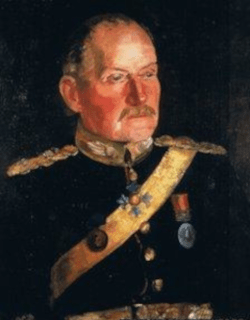
(Pictured: Irish Republican and Fenian John Daly in the ceremonial garb of the Mayor of Limerick, circa 1900)


Leave a comment

Birth of Cathal O’Byrne, Antiquarian, Writer & Entertainer

Cathal O’Byrne, an antiquarian, writer, and entertainer, is born on June 1, 1876, in Kilkeel, County Down.

O’Byrne is the son of James Burns, a farmer, and his wife Isabella (née Arnett). His biographer states that his parents came from County Wicklow, which would imply that their name had been anglicised from the form “O’Byrne,” which their son readopts. He never marries and spends most of his life living with his unmarried sister Teresa. He has other siblings, as he is survived by four nieces and two nephews.

O’Byrne’s childhood is spent in the Balmoral district of south Belfast in a comfortable but slightly precarious middle-class Catholic environment. Although sparse in direct autobiographical references, his writings contain references to excursions around the Malone and Stranmillis areas, with particular reference to the Botanic Gardens. He is educated at St. Malachy’s College. After leaving school, he manages a spirit grocery on the Beersbridge Road in east Belfast and is active in the Sexton Debating Society, named after Thomas Sexton, then home rule MP for Belfast West, and led by Joseph Devlin, who remains a lifelong friend despite their later political differences. He also studiess music with Carl Hardebeck, acquiring an extensive knowledge of Irish folk music and becoming an accomplished singer of Irish tunes in Hardebeck’s arrangements.

O’Byrne subsequently joins the Belfast Gaelic League, becoming a leading member, though he never masters the Irish language. He moves in the literary and antiquarian circles around Francis Joseph Bigger, whose friendship becomes central to his career and self-definition. He is a regular participant in Bigger’s soirées and establishes friendships with many prominent political and cultural figures, among them Roger Casement and Alice Milligan. Although he is usually seen as a specifically northern writer, he draws extensively on a wider Irish tradition of defensively self-glorifying Catholic-nationalist antiquarianism, including the works of W. H. Grattan Flood and Archbishop of Tuam, John Healy, a major source for his later pamphlet on Saint Patrick and for the descriptions of Ulster monasteries in As I Roved Out: A Book of the North (1946).

In 1900, O’Byrne publishes a collection of verses, A Jug of Punch, of which no copies are known to survive, and in 1905 collaborates with Cahir Healy on another collection, The Lane of the Thrushes, which applies Celtic revival imagery to rural Ulster. He publishes another collection, The Grey Feet of the Wind, in 1917. The manuscript of his unpublished Collected Poems (1951) is in the Public Record Office of Northern Ireland.

In 1902, O’Byrne gives up the spirit grocery to work full time as a journalist, singer, and storyteller. He appears at a wide variety of concerts, where he cuts a striking figure in Gaelic dress with saffron kilt. He provides musical interludes at productions by the Ulster Literary Theatre, and his recitation of Eleanor Alexander’s humorous piece on the battle of Scarva inspires Harry Morrow’s celebrated satirical play Thompson in Tir-na-nOg (1912). In 1913, he founds and manages the Celtic Players, a theatre company which stages some plays of his own composition, including The Dream of Bredyeen Dara, possibly a nativity story incorporating Saint Brigid of Kildare.

During World War I O’Byrne achieves immense cross-community success with a weekly dialect column in the Unionist paper Ireland’s Saturday Night, describing the domestic activities of “Mrs. Twigglety” and her working-class friends. At the same time, he has abandoned his earlier support for Devlin’s home rule politics to embrace physical-force republicanism under the influence of Denis McCullough. During Casement’s imprisonment and trial, he carries on an intense correspondence with him, comforting him, urging him to convert to Catholicism, and sending him religious icons. Some commentators have detected homoerotic undertones in their exchanges, though this is a matter of opinion.

After the Easter Rising of 1916, O’Byrne is active in the reconstituted Irish Republican Army (IRA), and in 1919–20 he smuggles arms from Belfast to Dublin. In August 1920, he emigrates to the United States, where he goes on a six-month lecture tour to raise funds for victims of the Belfast pogroms. He allegedly raises $100,000 and funds the construction of Amcomri Street in west Belfast. He spends the next eight years in the United States as a speaker and entertainer, contributing to American Catholic publications. He develops an abiding fondness for Chicago and considers applying for American citizenship. At one point he corresponds with the film star Rudolph Valentino, who admires his verses on Italian themes.

O’Byrne returns to Belfast in September 1928 with the intention of opening a bookshop in Dublin, but this has to be abandoned after the loss of his savings in the Wall Street crash of October 1929. He settles into respectable semi-poverty in Cavendish Street, off the Falls Road, and remains a presence on the fringes of Belfast literary life. In 1930, he founds the Cathal O’Byrne Comedy Company, which performs plays of his own composition, notably the slight comedies The Returned Swank and The Burden, drawing on The Drone, by Samuel Waddell. In 1932, he sings at a concert in the Dublin Mansion House held to mark the Eucharistic Congress. He writes extensively for Catholic publications in Ireland and elsewhere, in particular the Capuchin Annual, Irish Monthly, and Irish Rosary, and publishes several pamphlets with the Catholic Truth Society (CTS). The sensibility displayed in these writings has much in common with that of Brian O’Higgins, Aodh de Blácam, Daniel Corkery and Gearoid Ó Cuinneagáin.

O’Byrne also publishes The Gaelic Source of the Brontë Genius (1932), Pilgrim in Italy (1930), and the story collection From Far Green Hills (1935), which retells gospel episodes in the style of an Irish storyteller with elements of Wildean orientalist exoticism. Pilgrim in Italy is published by the Three Candles Press of Colm Ó Lochlainn, an old friend through the Bigger circle, as is his last story collection, Ashes on the Hearth (1948), a series of slight reveries in which the narrator, wandering the back streets of Dublin, relives such resonant moments as the last days of James Clarence Mangan.

O’Byrne is best remembered, however, for As I Roved Out (1946), a collection of 128 articles on Belfast history originally published from the late 1930s in the Belfast Irish News. It displays considerable knowledge of Belfast history, drawn from lifelong reading and from conversations with Bigger, and can be seen as at once the summation of and a lament for the northern branch of the Irish revival associated with such figures as Bigger and Alice Milligan. The pieces, moving out from central Belfast to surrounding rural districts are held together by the storyteller surveying the landscape. Surveys of Belfast by journalistic flâneurs are not unprecedented, O’Byrne dismisses the mercantile and unionist establishment of Belfast as hopelessly materialistic and oppressive, casting himself and, by implication, his Catholic/nationalist readers as internal exiles forced into the side streets of history, treasuring a martyred religious faith and gazing back wistfully to the bright and fleeting hope represented by the Society of United Irishmen and the cultural revival. The book is punctuated by expressions of anger against the whole heritage of the Ulster plantation. The economic success of the planters is attributed solely to their plunder of the natives. The textile industry is discussed solely in terms of exploitation and starvation wages. Shipbuilding is dismissed with a remark that ships were built in Ulster long before the planters arrived. Finally, the history of Belfast is summed up in the confrontation between the Belfast merchant, ancestor of the unionist “establishment,” and would-be slave-trader Waddell Cunningham and the United Irishman and self-declared “Irish slave” William Putnam McCabe.

There are numerous contemptuous references to the Sabbatarianism and respectable dullness of late Victorian Belfast, contrasted with the lively artistic activities of the volunteer period. The book is reprinted three times in O’Byrne’s lifetime and is seen by nationalists as an underground classic. Its image of Belfast layered with fragmentary and hidden memories has been drawn on by authors as diverse as Ciaran Carson and Gerry Adams, and in the early twenty-first century O’Byrne is commemorated as one of the city’s significant writers. A plaque is placed on his Cavendish Street house in 2004. It is ironic that his reputation should rest on his memorialisation of Belfast, for he denounced it as “interminable miles of mean streets . . . one of the ugliest cities in the world.”

O’Byrne is believed by some, though not all, of his acquaintances to be homosexual. This view is supported by references to the descriptions of male beauty (based on Gaelic saga models) which recur in his writings and by the expressions of longing which permeate his work (which might also reflect a wider sense of loneliness or cultural displacement). His last years, 1954–57, are spent in the Nazareth Nursing Home in Ormeau Road, Belfast, where he dies on August 1, 1957, a month after suffering a stroke. His funeral is crowded, and his gravestone describes him as “singer, poet and writer who brought joy into the lives of others.”

(From: “O’Byrne, Cathal” by Patrick Maume, Dictionary of Irish Biography, http://www.dib.ie, October 2009)


Leave a comment

Death of Alexander McCabe, Teacher, Revolutionary & Politician

Alexander McCabe (Irish: Alasdar Mac Cába), teacher, revolutionary, Sinn Féin politician, and founder of the Educational Building Society (EBS), dies in Dublin on May 31, 1972.

McCabe is born in Keash, County Sligo, on June 5, 1886. He is educated at Summerhill College, Sligo. He wins a scholarship to St. Patrick’s College of Education, Drumcondra, Dublin, and later obtains a diploma from University College Dublin (UCD). He is appointed headmaster of Drumnagranchy national school, County Sligo, in 1907. He joins the Irish Republican Brotherhood (IRB) in 1913.

McCabe is elected as a Sinn Féin MP for the South Sligo constituency at the 1918 Irish general election. In January 1919, Sinn Féin MPs refuse to recognise the Parliament of the United Kingdom and instead assemble at the Mansion House in Dublin as a revolutionary parliament called Dáil Éireann, though McCabe does not attend as he is in prison in Lincoln Gaol.

At the 1921 Irish elections, McCabe is re-elected for Sligo–Mayo East. He supports the Anglo-Irish Treaty and votes in favour of it. He is again re-elected for Sligo–Mayo East at the 1922 Irish general election, this time as pro-Treaty Sinn Féin Teachta Dála (TD). During the Treaty debate, he asserts that the counties of Ulster which comprise “Northern Ireland” can never be incorporated into an Irish Republic while the British Empire is what it is.

At the 1923 Irish general election, McCabe is elected as a Cumann na nGaedheal TD for Leitrim–Sligo. He resigns from Cumann na nGaedheal in 1924 because of dissatisfaction with government attitude to certain army officers and joins the National Party led by Joseph McGrath.

McCabe resigns his Dáil seat on October 30, 1924, along with several other TDs, and the resulting by-election on March 11, 1925, is won by the Cumann na nGaedheal candidate Martin Roddy. He does not stand for public office again and returns to his post as a schoolteacher.

In the 1930s McCabe is involved with the short-lived but widely followed Irish Christian Front (ICF), serving as the organisation’s secretary and announcing its creation to the public on August 22, 1936. He is also a member of the Blueshirts during this period and later the Irish Friends of Germany (later known as the “National Club”) during World War II, a would-be Nazi Collaborator group in the event Germany were to invade Ireland. He chairs their meetings, denies the group is a fifth column and expresses the belief that a German victory will lead to a United Ireland. He is interned in 1940–41 because of his pro-German sympathies, which he claims resulted from the desire to “see the very lifeblood squeezed out of England.”

In 1935, McCabe co-founds the Educational Building Society with Thomas J. O’Connell. He retires from teaching in the 1940s and becomes the full-time managing director of the EBS.

McCabe dies in Dublin on May 31, 1972, leaving his wife, son, and three daughters. There is a bronze bust of him in the headquarters of the Educational Building Society, Westmoreland Street, Dublin.


1 Comment

The Battle of Farsetmore

The Battle of Farsetmore is fought near Letterkenny in County Donegal, on May 8, 1567, between the O’Neill and O’Donnell Túath. Shane O’Neill, chief of the O’Neills of Tír Eoghain, is defeated by Aodh mac Maghnusa Ó Domhnaill (Hugh O’Donnell) and the O’Donnells free themselves from O’Neill aspirations of ruling Ulster as its King.

Shane O’Neill had, in the previous 20 years, eliminated his rivals within the O’Neills and asserted his authority over neighbouring clans (or “septs“) the MacDonnells of Antrim in battle and O’Donnells by kidnapping the O’Donnell leader Calvagh, in Donegal. In 1566, the English Lord Deputy of Ireland, Henry Sidney, gives support to the O’Donnells by ransoming the long tortured Calvagh O’Donnell, against O’Neill who is regarded as a destabilising and anti-English power in the north of Ireland. O’Neill forces out these English troops, but the new O’Donnell chieftain, Hugh O’Donnell, who takes over after the long tortured Calvagh dies, takes the opportunity to assert his independence and raids O’Neill’s lands at Strabane. In response, O’Neill musters his armed forces and marches into O’Donnell territory.

O’Neill crosses into Tir Connell (O’Donnell territory) the traditional way by crossing the River Swilly at an Fearsaid mhór (known as Porterfields today), about 3 km (2 miles) east of the modern town of Letterkenny. O’Donnell has advance warning of this impending incursion so has prepared for the forthcoming attack by dispatching messengers to all his people. Both sides are not equal in size. O’Neills army is estimated at 2,000 men and are composed of cavalry (Nobility), Gallowglass, kearn and a small body of English soldiers who have deserted to him to provide modern weapon skills to his host. O’Donnell’s initial force is only about 40-foot and 80 horse (his personal guard).

O’Donnell’s horsemen harass O’Neill’s men immediately after his fording of the river, leaving O’Donnell a short breathing space to locate his small force in a more defensible position, at Magherennan (near today’s entrance to the Letterkenny Rugby club). When their lord is in position the O’Donnell cavalry withdraws and there O’Donnell awaits his reinforcements. While his opponent waits, O’Neill sets up his camp in Cluain Aire beside the river to cover the ford. When O’Donnell’s troops finally arrive, they number 400 Gallowglass from all the MacSweeney septs. With this virtual parity in the usually decisive heavy infantry, the O’Donnell host proceeds to advance on O’Neill’s camp. When first perceiving their attack, Shane says, “It is very wonderful and amazing to me that those people should not find it easier to make full concessions to us, and submit to our awards, than thus come forward to us to be immediately slaughtered and destroyed.”

This statement, made just as the armies meet, is possibly a late attempt to put heart into his own surprised army. Significantly, the main O’Donnell war host has employed rising ground to successfully cover their advance until it is far too late for O’Neill to deploy his own Gallowglass spars into proper line of battle to hold the enemy while the O’Neill horse mount up. The O’Neill army are caught utterly unprepared, in much the same way as O’Neill himself had taken a MacDonnell host by surprise at Glentaisie in 1565. Despite the element of surprise and O’Neill’s lack of manoeuvre room, the resistance of the surprised O’Neill Gallowglass in this encounter battle is at first successful for the Four Masters state that the action lasted “for a long time.” Eventually, with their loose protective screen of Gallowglass cut down, a panicked rout of Shane’s force ensues. The O’Donnell pressure of attack continues so fiercely that the broken O’Neill host is forced back on the ford and attempts to recross the Swilly. As the tide is now coming in, many of them drown in the speeding rush of waters. O’Neill’s losses are estimated by their enemies at 1,400 men killed and no prisoners are mentioned, although the English sources note a more credible total of 680 dead. With many of his most senior commanders and advisors killed amid the chaos of the first onslaught, O’Neill himself escapes the final slaughter with the timely aid of a party of the Gallaghers. They guide him to Ath an Tairsi (Ford of protection), near Crieve Smith in Oldtown today, where they escort him to his own territory and relative safety.

Many of the Donnelleys, Shane’s foster family and the source of his strongest support, defend him to the last and are decimated at Farsetmore. Abandoned by his tanisté and all of his Urríthe, literally under-kings, and with the destruction of his army, the “most powerful force Gaelic Ireland had yet witnessed,” Shane begins looking for a mercenary force to sustain him until he can make good his losses. With all other options closed, he turns to a warband hired to fight against him the previous winter by William Piers from among the MacDonald’s of Dunnyveg. He arrives at their camp at Cushendun with a small retinue and during their negotiations an altercation occurs, in which Shane is killed. Despite being engineered by Piers, this assassination has gone down in history as retribution for Shane’s military action against the MacDonalds in 1565. Shane is buried in a place called CrossSkern Church at Ballyterrim townland in the hills above Cushendun. Later his remains are exhumed with his head then being sent to Dublin.

(Pictured: An artist’s impression of an O’Donnell gallowglass dispatching an O’Neill kern in the waters of the Swilly, with Glebe Hill in the background, May 8, 1567)


Leave a comment

Death of James Orr, Weaver, Radical & Poet

James Orr, weaver, radical, and poet, dies on April 24, 1816.

Orr is the son of James Orr, who farms a few acres and is a linen weaver. His mother’s name is unknown. They live in the small village of Ballycarry, in the parish of Broadisland, County Antrim. He is an only child, born when his parents are middle-aged. They are unwilling to risk sending him to school, so they carefully educate him at home, his father having been very well educated. A near-contemporary source George Pepper (1829), claims that the youngster is something of a prodigy, able to read Spectator essays at the age of six. Later in life, partly thanks to membership of a local reading society, he is remarkably well read. Handloom weavers are reputedly one of the most literate and politically radical groups in the period, and he certainly fits the stereotype. Pepper also claims that William Orr is James Orr’s uncle, and that the younger man lives for three years with William Orr and his family, where his literary talents are nurtured and where he develops an interest in radical politics. Other sources do not support this account, but if there is a relationship it might explain an almost morbid interest in assizes, executions, and gallows, evident in several poems. This also might have been prompted by witnessing William Orr’s trial and execution.

Pepper “heard from good authority” that Orr in 1797 is secretary to the Antrim Association, of which William Orr is president; presumably this means the Society of United Irishmen. He sings a patriotic song called “The Irishman,” one of his most celebrated compositions, at a meeting of that body. The earliest publications traced are poems published pseudonymously (1796–97) in the Northern Star newspaper. This paper, edited by Samuel Neilson, is sympathetic to United Irish views, and it is clear that Orr, like many of his neighbours, is actively involved in the 1798 rebellion. Several poems dealing with the events of June 1798, provide a rare participant’s perspective. He takes part in the skirmish at Donegore, and flees after the defeat at the Battle of Antrim. Local sources record his successful efforts to prevent cruelty and looting by his colleagues. He goes into hiding in an Irish-speaking area, perhaps in the Glens of Antrim or in the Sperrin Mountains. After a short time, he escapes to the United States, but unlike many of his former comrades he finds himself unable to settle there, and very soon returns home to Ballycarry, and thenceforth makes his living as a weaver. In 1800, he seeks to join the militia set up to counter a feared Napoleonic invasion, but the local gentry in command rejects his application because of his United Irish associations.

Orr’s first verses are composed at meetings of a local singing school, where rival versifiers produce impromptu verses for the company to sing to the psalm tunes being practised, and he later writes songs for masonic meetings. He publishes poems in the Belfast newspapers. A few carefully written essays on morality and education, signed “Censor, Ballycarry,” are apparently also his work. A collection of poems is published in 1804, with almost 400 subscribers, and another selection is published in 1817 after his death by his friend Archibald McDowell. Orr had requested that the proceeds should go to help the poor of Ballycarry. His poems are an excellent source of information about the life and concerns of a fairly humble stratum of late eighteenth-century Ulster society.

Many of Orr’s best poems deal with subjects of interest to his community – weaving, social life, and farming – and are written in the Scots language still widely spoken in the area. He expertly uses Scots stanza forms, and joyously participates in the almost competitive composition of verse typical of the Scots tradition. Several of his poems rework themes found in Robert Burns or other earlier writers. His An Irish Cottier’s Death and Burial is derived from a Burns poem, The Cottier’s Saturday Night, but later critics acknowledge that the Orr poem is much more successful. He and his friend Samuel Thomson are pioneers in the use of written Scots in Ulster and are regarded as the two most skillful Scots poets in Ulster. Both are celebrated in their day, and their work in Scots has been rediscovered in the twentieth-century revival of interest in the traditional literature and history of the north of Ireland.

Orr’s verse in standard English is equally competent, even more ambitious and almost as interesting. The best of his work, particularly in Scots, is characterised by pleasing cadences and assured control of tone and technique. His novel and generally impressive experiments with soliloquies, verse epistles, and versified direct speech, in English and Scots, parallel his interest in extending the registers in which he could use the vernacular Scots language. He seems not to have known of William Wordsworth‘s poetry, but, apparently independently and arguably more successfully, produces verse written in “the language really used by men” (Wordsworth, preface to Lyrical Ballads (1798)). As well as fascinating foreshadowings of romanticism, his work more often reveals the influence of the enlightenment and of New Light presbyterianism. He is a member of the congregation of the Rev. John Bankhead, whose theological views are decidedly liberal, tending even towards unitarianism. His poems provide a great deal of evidence on his reading, interests, radical aspirations and convictions; and in them and in the prose essays, the reader encounters a humane and generous personality. Like many other United Irishmen, he is an enthusiastic freemason, and believes that freemasonry and education will help to usher in a peaceful millennium. His poetry reveals humanitarian concerns, not yet common in the period. He opposess slavery and cruelty to animals and children and expresses support for a contemporary popular rising in Haiti. In 1812, he signs a petition in favour of Catholic emancipation.

Orr never marries. His friend McDowell believes that the resulting lack of domestic comforts drives the poet to socialise in taverns, and it is said that local fame and popularity encourages his excessive drinking. He suffers from ill health in later life. A neglected cold in 1815 leads to tuberculosis. He dies on April 24, 1816, and is buried in the old Templecorran graveyard at Ballycarry. Some years later, freemasons erect an impressive monument over the grave.

Orr’s poems are republished by a group of local enthusiasts in 1935. Another selection appears in 1992. A plaque put up by the local district council commemorates “the bard of Ballycarry,” probably the most significant eighteenth-century English-language poet in Ulster.

(From: “Orr, James” by Linde Lunney, Dictionary of Irish Biography, http://www.dib.ie, October 2009)


Leave a comment

The Roman Catholic Relief Act 1829 Receives Royal Assent

The Roman Catholic Relief Act 1829, also known as the Catholic Emancipation Act 1829, receives royal assent on April 13, 1829. The act removes the sacramental tests that bar Roman Catholics in the United Kingdom from Parliament and from higher offices of the judiciary and state. It is the culmination of a fifty-year process of Catholic emancipation which had offered Catholics successive measures of “relief” from the civil and political disabilities imposed by Penal Laws in both Great Britain and in Ireland in the seventeenth and early eighteenth centuries.

Convinced that the measure is essential to maintain order in Catholic-majority Ireland, Arthur Wellesley, 1st Duke of Wellington, helps overcome the opposition of King George IV and of the House of Lords by threatening to step aside as Prime Minister and retire his Tory government in favour of a new, likely-reform-minded Whig ministry.

In Ireland, the Protestant Ascendancy has the assurance of the simultaneous passage of the Parliamentary Elections (Ireland) Act 1829. Its substitution of the British ten-pound for the Irish forty-shilling freehold qualification disenfranchises over 80% of Ireland’s electorate. This includes a majority of the tenant farmers who had helped force the issue of emancipation in 1828 by electing to parliament the leader of the Catholic Association, Daniel O’Connell.

O’Connell had rejected a suggestion from “friends of emancipation,” and from the English Roman Catholic bishop, John Milner, that the fear of Catholic advancement might be allayed if the Crown were accorded the same right exercised by continental monarchs: a veto on the confirmation of Catholic bishops. O’Connell insists that Irish Catholics would rather “remain forever without emancipation” than allow the government “to interfere” with the appointment of their senior clergy. Instead, he relies on their confidence in the independence of the priesthood from Ascendancy landowners and magistrates to build his Catholic Association into a mass political movement. On the basis of a “Catholic rent” of a penny a month (typically paid through the local priest), the Association mobilises not only the Catholic middle class, but also poorer tenant farmers and tradesmen. Their investment enables O’Connell to mount “monster” rallies that stay the hands of authorities and embolden larger enfranchised tenants to vote for pro-emancipation candidates in defiance of their landlords.

O’Connell’s campaign reaches its climax when he himself stands for parliament. In July 1828, he defeats a nominee for a position in the British cabinet, William Vesey-FitzGerald, in a County Clare by-election, 2057 votes to 982. This makes a direct issue of the parliamentary Oath of Supremacy by which, as a Catholic, he will be denied his seat in the Commons.

As Lord Lieutenant of Ireland, Wellington’s brother, Richard Wellesley, had attempted to placate Catholic opinion, notably by dismissal of the long-serving Attorney-General for Ireland, William Saurin, whose rigid Ascendancy views and policy made him bitterly unpopular, and by applying a policy of prohibitions and coercion against not only the Catholic Ribbonmen but also the Protestant Orangemen. But now both Wellington and his Home Secretary, Robert Peel, are convinced that unless concessions are made, a confrontation is inevitable. Peel concludes, “though emancipation was a great danger, civil strife was a greater danger.” Fearing insurrection in Ireland, he drafts the Relief Bill and guides it through the House of Commons. To overcome the vehement opposition of both the King and of the House of Lords, Wellington threatens to resign, potentially opening the way for a new Whig majority with designs not only for Catholic emancipation but also for parliamentary reform. The King initially accepts Wellington’s resignation and the King’s brother, Ernest Augustus, Duke of Cumberland, attempts to put together a government united against Catholic emancipation. Though such a government would have considerable support in the House of Lords, it would have little support in the Commons and Ernest abandons his attempt. The King recalls Wellington. The bill passes the Lords and becomes law.

The key, defining, provision of the Acts is its repeal of “certain oaths and certain declarations, commonly called the declarations against transubstantiation and the invocation of saints and the sacrifice of the mass, as practised in the Church of Rome,” which had been required “as qualifications for sitting and voting in parliament and for the enjoyment of certain offices, franchises, and civil rights.” For the Oath of Supremacy, the act substitutes a pledge to bear “true allegiance” to the King, to recognise the Hanoverian succession, to reject any claim to “temporal or civil jurisdiction” within the United Kingdom by “the Pope of Rome” or “any other foreign prince … or potentate,” and to “abjure any intention to subvert the present [Anglican] church establishment.”

This last abjuration in the new Oath of Allegiance is underscored by a provision forbidding the assumption by the Roman Church of episcopal titles, derived from “any city, town or place,” already used by the United Church of England and Ireland. (With other sectarian impositions of the Act, such as restrictions on admittance to Catholic religious orders and on Catholic-church processions, this is repealed with the Roman Catholic Relief Act 1926.)

The one major security required to pass the Act is the Parliamentary Elections (Ireland) Act 1829. Receiving its royal assent on the same day as the relief bill, the act disenfranchises Ireland’s forty-shilling freeholders, by raising the property threshold for the county vote to the British ten-pound standard. As a result, “emancipation” is accompanied by a more than five-fold decrease in the Irish electorate, from 216,000 voters to just 37,000. That the majority of the tenant farmers who had voted for O’Connell in the Clare by-election are disenfranchised as a result of his apparent victory at Westminster is not made immediately apparent, as O’Connell is permitted in July 1829 to stand unopposed for the Clare seat that his refusal to take the Oath of Supremacy had denied him the year before.

In 1985, J. C. D. Clark depicts England before 1828 as a nation in which the vast majority of the people still believed in the divine right of kings, and the legitimacy of a hereditary nobility, and in the rights and privileges of the Anglican Church. In Clark’s interpretation, the system remained virtually intact until it suddenly collapsed in 1828, because Catholic emancipation undermined its central symbolic prop, the Anglican supremacy. He argues that the consequences were enormous: “The shattering of a whole social order. … What was lost at that point … was not merely a constitutional arrangement, but the intellectual ascendancy of a worldview, the cultural hegemony of the old elite.”

Clark’s interpretation has been widely debated in the scholarly literature, and almost every historian who has examined the issue has highlighted the substantial amount of continuity before and after the period of 1828 through 1832.

Eric J. Evans in 1996 emphasises that the political importance of emancipation was that it split the anti-reformers beyond repair and diminished their ability to block future reform laws, especially the great Reform Act of 1832. Paradoxically, Wellington’s success in forcing through emancipation led many Ultra-Tories to demand reform of Parliament after seeing that the votes of the rotten boroughs had given the government its majority. Thus, it was an ultra-Tory, George Spencer-Churchill, Marquess of Blandford, who in February 1830 introduced the first major reform bill, calling for the transfer of rotten borough seats to the counties and large towns, the disfranchisement of non-resident voters, the preventing of Crown officeholders from sitting in Parliament, the payment of a salary to MPs, and the general franchise for men who owned property. The ultras believed that a widely based electorate could be relied upon to rally around anti-Catholicism.

In Ireland, emancipation is generally regarded as having come too late to influence the Catholic-majority view of the union. After a delay of thirty years, an opportunity to integrate Catholics through their re-emerging propertied and professional classes as a minority within the United Kingdom may have passed. In 1830, O’Connell invites Protestants to join in a campaign to repeal the Act of Union and restore the Kingdom of Ireland under the Constitution of 1782. At the same, the terms under which he is able to secure the final measure of relief may have weakened his repeal campaign.

George Ensor, a leading Protestant member of the Catholic Association in Ulster, protests that while “relief” bought at the price of “casting” forty-shilling freeholders, both Catholic and Protestant, “into the abyss,” might allow a few Catholic barristers to attain a higher grade in their profession, and a few Catholic gentlemen to be returned to Parliament, the “indifference” demonstrated to parliamentary reform will prove “disastrous” for the country.

Seeking, perhaps, to rationalise the sacrifice of his freeholders, O’Connell writes privately in March 1829 that the new ten-pound franchise might actually “give more power to Catholics by concentrating it in more reliable and less democratically dangerous hands.” The Young Irelander John Mitchel believes that the intent is to detach propertied Catholics from the increasingly agitated rural masses.

In a pattern that had been intensifying from the 1820s as landlords clear land to meet the growing livestock demand from England, tenants have been banding together to oppose evictions and to attack tithe and process servers.

One civil disability not removed by 1829 Act are the sacramental tests required for professorships, fellowships, studentships and other lay offices at universities. These are abolished for the English universities – Oxford, Cambridge and Durham – by the Universities Tests Act 1871, and for Trinity College Dublin by the “Fawcett’s Act” 1873.

Section 18 of the 1829 act, “No Roman Catholic to advise the Crown in the appointment to offices in the established church,” remains in force in England, Wales and Scotland, but is repealed with respect to Northern Ireland by the Statute Law Revision (Northern Ireland) Act 1980. The entire act is repealed in the Republic of Ireland by the Statute Law Revision Act 1983.


Leave a comment

Birth of William Brownlow, MP and Landowner

William Brownlow, MP and landowner, is born on April 10, 1726, the son of William Brownlow (1683–1739), landowner and MP for County Armagh (1711–27), and Lady Elizabeth Brownlow of County Armagh, and grandson of Arthur Brownlow. His mother is a daughter of James Hamilton, 6th Earl of Abercorn. He inherits the family estates around Lurgan in 1739 and spends some of his youth in France and Italy with his mother.

Brownlow’s father, grandfather, and great-grandfather had been MPs, and in 1753 he wins a hotly contested by-election in which his opponents accuse him of papist and Jacobite sympathies. The unsuccessful candidate is Francis Caulfeild, brother of James, 1st Earl of Charlemont, his petition to parliament causing a furor and is defeated by only one vote in one of the most celebrated electoral struggles of the day. Brownlow represents the county for over forty years, from 1753 until his death. In 1753, he supports the government on the controversial money bill.

Brownlow marries Judith, daughter of the Rev. Charles Meredyth, Dean of Ardfert, of County Meath, on May 25, 1754. They have two sons. After her death in Lyon, France, in October 1763, he marries Catherine, daughter of Roger Hall of Newry, County Down, on November 25, 1765. They have two sons and five daughters, three who marry into the nobility. In 1758, he is one of the Wide Streets commissioners in Dublin and owns an imposing house in Merrion Square. He is a trustee of the linen board in Ulster, and makes many improvements to his estate, castle, and demesne, the local church, and the town of Lurgan. However, it is alleged that private roads in his demesne were built with public money. He is one of a few landowners in County Armagh who are believed to have misappropriated the unusually high county cess levied by the grand jury, of which he is a member. In 1758, he suggests that salaries be paid to government officials, and one official, Henry Meredyth, his first wife’s uncle, subsequently receives an annual salary of £500.

In June 1763, large numbers of Presbyterian farmers and weavers, calling themselves the Hearts of Oak, in a notable show of dissatisfaction with the privileges of landlords, march on the homes of the gentry to demand redress. Brownlow is in England and avoids a confrontation. Despite the allegations of abuse of public money, he is generally recognised as one of the more independent and reform-minded MPs of the day. He captains a Volunteer troop of dragoons which march from Lurgan to assist Belfast after the French commander François Thurot lands at Carrickfergus in 1760. As one of the supporters of Henry Grattan, he is prominent in the Volunteer movement of the 1780s. He is captain of the Lurgan Volunteer company and lieutenant-colonel of the northern battalion and backs the movement in parliament until displeased by the Volunteer national convention (November 10 – December 2, 1783), which seeks franchise reform and seems to challenge the authority of the existing parliament.

Brownlow subscribes £9,000 to help found the Bank of Ireland in 1783, and in parliament on February 7, 1785, vigorously opposes William Pitt‘s proposals on Ireland’s commercial relations with England, seeing in them the danger that Ireland would become a “tributary nation.” He is appointed a privy councilor in 1765. He organises horse races in his locality and is a talented harpsichord player. After his death on October 28, 1794, the Belfast News Letter prints an unusually long and glowing tribute, expressing admiration for his “incorruptible integrity” and patriotism, as well as two poetic elegies. He is succeeded by his son William Brownlow.

(From: “Brownlow, William” by Linde Lunney, Dictionary of Irish Biography, http://www.dib.ie, October 2009 | Pictured: Portrait of the Right Honorable William Brownlow, oil on canvas by Gilbert Stuart, circa 1790)


Leave a comment

Death of Lord George Augusta Hill

Lord George Augusta Hill, Anglo-Irish military officer, politician and landowner, dies in Ramelton, County Donegal, on April 6, 1879.

Hill is the posthumous son of Arthur Hill, 2nd Marquess of Downshire, and his wife Mary, Marchioness of Downshire, granddaughter of Samuel Sandys, 1st Baron Sandys. He is born on December 9, 1801, three months after his father’s death by suicide.

Hill enters the British Army in May 1817, initially a cornet in the Royal Horse Guards, promoted to lieutenant in 1820. He transfers to the 4th Royal Irish Dragoon Guards as a captain in 1825. In April 1830, he becomes aide-de-camp to Sir John Byng, Commander-in-Chief of the forces in Ireland, at the rank of major, but on July 6 he takes half-pay.

Hill is proposed as a candidate for MP for Carrickfergus in the 1826 United Kingdom general election, but withdraws in favor of Sir Arthur Chichester, stating that he had been unaware of the nomination. In the 1830 United Kingdom general election, he is elected MP for Carrickfergus, unseating Chichester. His brother, Arthur Hill, 3rd Marquess of Downshire, is a minor landowner in Carrickfergus.

Although Hill is considered a friend of the Tory government of Arthur Wellesley, 1st Duke of Wellington, when elected, he is absent from the vote of confidence on November 15, 1830, which causes the government to fall. Thereafter he supports the government of Charles Grey, 2nd Earl Grey, and its Reform Bill, like his brothers. Due to ill health, he does not contest the 1832 United Kingdom general election, instead supporting his brother, Lord Marcus Hill, who is elected for Newry.

Hill serves as Comptroller of the Household to the Lord Lieutenant of Ireland, 1833–34, and as High Sheriff of Donegal in 1845.

In 1838, Hill purchases land in Gweedore (Irish: Gaoth Dobhair), a “district” in northwest County Donegal in the west of Ulster, and, over the next few years, he expands his holdings to 23,000 acres. He himself describes the condition of the local population as “more deplorable than can well be conceived.” According to the schoolmaster, Patrick McKye, they are in the “most needy, hungry and naked condition of any people.” Among other improvements, he builds a port, Bunbeg Harbour, to encourage fishing, improves the roads and other infrastructure, and constructs The Gweedore Hotel to attract wealthy tourists.

However, Hill’s attempts to reform local farming practices, in particular, his suppression of the rundale system of shared landholding, proves unpopular and controversial. While his reforms may have protected Gweedore from the worst effects of the Great Famine of the 1840s, as the local population did not decrease, as it did elsewhere in Ireland, his attitude to the famine is uncompromising and unsympathetic:

“The Irish people have profited much by the Famine, the lesson was severe; but so were they rooted in old prejudices and old ways, that no teacher could have induced them to make the changes which this Visitation of Divine Providence has brought about, both in their habits of life and in their mode of agriculture.”

Hill’s book Facts from Gweedore (1845) provides an account of conditions in Gweedore and seeks to explain and justify Hill’s agricultural reforms. It runs to five editions and plays a large part in the bitter public debates about the effects of Irish landlordism. In June 1858, he gives evidence to a House of Commons select committee on Irish poverty. The committee is critical of his actions.

Hill is twice married, to two sisters, daughters of Edward Austen Knight, brother of Jane Austen. On October 21, 1834, he marries Cassandra Jane Knight (1806–42). They have four children:

  • Norah Mary Elizabeth Hill (December 12, 1835 – April 24, 1920)
  • Captain Arthur Blundell George Sandys Hill (May 13, 1837 – June 16, 1923)
  • Augustus Charles Edward Hill (March 9, 1839 – December 9, 1908)
  • Cassandra Jane Louisa Hill (March 12, 1842 – August 16, 1901)

On May 11, 1847, Hill marries Louisa Knight (1804–89), niece and goddaughter of Jane Austen. She had moved to Ulster after Cassandra’s death to look after the children. The marriage prompts a parliamentary investigation into the legality of a marriage between a widower and his deceased wife’s sister. They have one son:

  • George Marcus Wandsbeck Hill (April 9, 1849 – March 22, 1911)

Hill dies at his residence, Ballyare House, in Ramelton, County Donegal, on April 6, 1879. He is buried at Conwal Parish Church in Letterkenny, alongside his first wife.


Leave a comment

Ahern and Paisley Publicly Shake Hands for the First Time

History is made on April 4, 2007, as Taoiseach Bertie Ahern and Democratic Unionist Party (DUP) leader Ian Paisley shake hands for the first time in public prior to their milestone meeting at Farmleigh, the official Irish state guest house in Dublin.

Ahern is urged by Paisley to ensure that criminals who flee across the Irish border are arrested. The Democratic Unionist leader makes the proposal during a cordial one-and-a-half-hour meeting at Farmleigh in Phoenix Park, where the two leaders exchange their first public handshake.

Afterwards Paisley, who receives an invitation from the taoiseach to visit the Battle of the Boyne site later in the year, says that they had also discussed the need for the new administrations in Northern Ireland and in the Republic of Ireland to work for each other’s best interests. “We can confidently state that we are making progress to ensure our two countries can develop and grow side by side in the spirit of generous cooperation,” he declares. “I trust that old barriers and threats will be removed in my day. Business opportunities are flourishing. Genuine respect for the understanding of each other’s differences and, for that matter, similarities is now developing.”

Earlier the DUP leader, who becomes the First Minister of the new power-sharing government on May 8 alongside Sinn Féin‘s Martin McGuinness as deputy First Minister, firmly shakes the hand of Ahern in public for the first time. As he arrives at Farmleigh, he quips, “I better shake the hands of this man. I’ll give him a firm handshake.”

Paisley, who is accompanied by his son, Ian Paisley, Jr., affectionately grabs the taoiseach by the shoulder. There is another handshake after the meeting at Farmleigh is finished.

Paisley says, “Mr. Ahern has come to understand me as an Ulsterman of plain speech. He didn’t ever need a dictionary to find out what I was saying. We engaged in clear and plain speech about our hopes and our aspirations for the people we both serve. The prime minister kindly congratulated me on my election victory.”

Paisley says that he had raised a number of issues crucial to unionists. “I have taken the opportunity to raise with the prime minister a number of key matters including ensuring that fugitives from justice who seek to use the border to their advantage are quickly apprehended and returned without protracted legal wrangle.” He adds, “I raised other legal issues of interests to unionists, and we discussed cooperation of an economic nature that will be to our mutual benefit.” He also says he had raised the issue of bringing Northern Ireland’s corporation tax into line with that of Ireland.

Regarding the invitation to visit the site of the Battle of the Boyne, Paisley says, “We both look forward to the visit to the battle site at the Boyne… Not to refight it, because that would be unfair, for he would have the home advantage. No Ulsterman ever gives his opponents an advantage. He adds, “Such a visit would help to demonstrate how far we have come when we can celebrate and learn from the past, so the next generation more clearly understands.”

Ahern pays tribute to the leadership shown by Paisley in helping to deliver a better future for the people of Northern Ireland. As Northern Ireland’s politicians continue at great pace to prepare for the return of power sharing, the taoiseach says that the progress has been very encouraging. “At this important time in our history, we must do our best to put behind us the terrible wounds of our past and work together to build a new relationship between our two traditions,” he says. “That new relationship can only be built on a basis of open dialogue and mutual respect. I fervently believe that we move on from here in a new spirit of friendship. The future for this island has never been brighter. I believe that this is a future of peace, reconciliation and rising prosperity for all. We stand ready to work with the new executive. We promise sincere friendship and assured cooperation. I believe that we can and will work together in the interests of everyone on this island.”

Ahern says he believes that the Battle of the Boyne site can be a symbol of the new beginning in the relationship between governments in Belfast and Dublin. “I believe that this site can become a valuable and welcome expression of our shared history and a new point of departure for an island, north and south, which is at ease with itself and respectful of its past and all its traditions,” he declared.

The Battle of the Boyne was fought in 1690 between the followers of England‘s King William of Orange, a Protestant, and the deposed King James, a Catholic, in Drogheda, eastern Ireland. Ireland was at that point under English rule. The battle is commemorated by many Northern Irish loyalists on July 12 each year.

Ministerial posts within the new devolved Stormont government have yet to be finalised. Already Sinn Féin has announced that MPs Michelle Gildernew and Conor Murphy and assembly members Gerry Kelly and Caitríona Ruane will be members of the government. However, the party has not yet indicated which of the four will take the three senior cabinet posts in education, agriculture and regional development and which one will be the junior minister in the Office of First and Deputy First Minister.

The DUP has also yet to name its ministers, but it has chosen finance, economy, environment and culture arts and leisure as the government departments it will head. The DUP’s deputy leader, Peter Robinson, and Nigel Dodds, the Belfast North MP, who both served in the last devolved government, are tipped to be the finance and economy ministers.

The Social Democratic and Labour Party (SDLP) announces the previous day that Margaret Ritchie, the assembly member for South Down, will be its only minister in the executive, taking charge of the Department of Social Development.

The Ulster Unionist Party (UUP) has yet to declare who their two ministers will be at the Departments of Health and Employment and Learning.

(From: “Upbeat Paisley shares first handshake with Irish PM” by Hélène Mulholland and agencies, The Guardian, http://www.theguardian.com, April 4, 2007)


Leave a comment

Charles Gavan Duffy Buried at Glasnevin Cemetery

Charles Gavan Duffy, Young Ireland leader, Irish nationalist, journalist, poet, and Australian politician, is buried in Glasnevin Cemetery, Glasnevin, Dublin, on March 8, 1903. He is the 8th Premier of Victoria and one of the most colourful figures in Victorian political history.

Duffy is born on April 12, 1816, in Dublin Street, Monaghan, County Monaghan. Both of his parents die while he is still a child and his uncle, Fr. James Duffy, who is the Catholic parish priest of Castleblayney, becomes his guardian for a number of years. He is educated at St. Malachy’s College in Belfast and is admitted to the Irish Bar in 1845. He becomes a leading figure in Irish literary circles.

Duffy, along with Thomas Osborne Davis and John Blake Dillon, founds The Nation and becomes its first editor. Davis and Dillon later become Young Irelanders. All three are members of Daniel O’Connell‘s Repeal Association. This paper, under Duffy, transforms from a literary voice into a “rebellious organisation.”

In August 1850, Duffy forms the Tenant Right League to bring about reforms in the Irish land system and protect tenants’ rights, and in 1852 is elected to the House of Commons for New Ross. By 1855, the cause of Irish tenants seems more hopeless than ever. Broken in health and spirit, Duffy publishes a farewell address to his constituency, declaring that he has resolved to retire from parliament, as it is no longer possible to accomplish the task for which he has solicited their votes.

In 1856, Duffy emigrates with his family to Australia, settling in the newly formed Colony of Victoria. A public appeal is held to enable him to buy the freehold property necessary to stand for the colonial Parliament. He is immediately elected to the Legislative Assembly for Villiers and Heytesbury in the Western District in 1856. He later represented Dalhousie and then North Gippsland. With the collapse of the Victorian Government‘s Haines Ministry during 1857, another Irish Catholic, John O’Shanassy, unexpectedly becomes Premier with Duffy his second-in-charge.

In 1871, Duffy leads the opposition to Premier Sir James McCulloch‘s plan to introduce a land tax, on the grounds that it unfairly penalised small farmers. When McCulloch’s government is defeated on this issue, he becomes Premier and Chief Secretary.  The majority of the colony is Protestant, and he is accused of favouring Catholics in government appointments. In June 1872, his government is defeated in the Assembly on a confidence motion allegedly motivated by sectarianism.

When Graham Berry becomes Premier in 1877, he makes Duffy Speaker of the Legislative Assembly, a post he holds without much enthusiasm until 1880, when he quits politics and retires to the south of France. Duffy remains interested in both the politics of his adoptive country and of Ireland. He is knighted in 1873 and is made KCMG in 1877.

Duffy spends his last years in Nice and dies at the age of 86 on February 9, 1903, at his home there, 12 Boulevard Victor Hugo. He is buried at Glasnevin Cemetery, Glasnevin, Dublin on March 8. 1903. The length of his career, the breadth of his experience, and his voluminous labours as a chronicler make him an important figure in the history of Ireland and the Irish diaspora in the nineteenth century. He also deserves attention as the most prominent and articulate Ulster catholic nationalist of his time. There are Duffy papers in the Royal Irish Academy and National Library of Ireland.