McCarrison is credited with being the first to experimentally demonstrate the effect of deficient dietaries upon animal tissues and organs. He also carries out human experiments aimed at identifying the cause of goitre, and includes himself as one of the experimental subjects. Much of his work is pioneering. His 1921 book Studies in Deficiency Disease is considered notable at the time, being published at a time when knowledge of vitamins and their role in nutrition is crystallizing.
McCarrison qualifies in Medicine at Queen’s College, Belfast in 1900. At age 23, he goes to India, where he spends 30 years on nutritional problems. His research in India on the cause of goitre wins widespread recognition and in 1913 he is promoted to do research. He attains the rank of major-general in the Indian Medical Service and founds the Nutritional Research Laboratories in Coonoor, where he remains until his retirement from the Indian Medical Service in 1935. After retiring, he returns to England and gives a series of three Cantor lectures on successive Mondays at the Royal Society of Arts, about the influence of diet on health. The first lecture focuses on the processes of nutrition; the second, on food essentials and their relationship to bodily structure and function; the third on disease prevention and physique improvement by attention to diet. The lectures are subsequently published in book form under the title Nutrition and Health, and at the time of the third edition in 1962, are still seen as relevant, with the advances of the preceding 25 years largely filling the details of the principles previously recognised by McCarrison.
Samuel Haughton, scientist, mathematician, and doctor, is born in Carlow, County Carlow on December 21, 1821. He is “famous” for calculating the drop required to kill a hanged man instantly.
Haughton has a distinguished career at Trinity College, Dublin and in 1844 he is elected a fellow. Working on mathematical models under James MacCullagh, he is awarded in 1848 the Cunningham Medal by the Royal Irish Academy. In 1847 he has his ordination to the priesthood, but he is not someone who preaches. He is appointed as professor of geology at Trinity College in 1851 and holds the position for thirty years. He begins to study medicine in 1859. He earns his MD degree in 1862 from the University of Dublin.
Haughton becomes registrar of the Medical School. He focuses on improving the status of the school and representing the university on the General Medical Council from 1878 to 1896. In 1858 he is elected fellow of the Royal Society. He gains honorary degrees from Oxford, Cambridge and Edinburgh. At Trinity College Dublin he moves the first-ever motion at the Academic Council to admit women to the University on March 10, 1880. Through his work as Professor of Geology and his involvement with the Royal Zoological Society, he has witnessed the enthusiasm and contribution of women in the natural sciences. Although thwarted by opponents on the Council he continues to campaign for the admission of women to TCD until his death in 1897. It is 1902 before his motion is finally passed, five years after his death.
In 1866, Haughton develops the original equations for hanging as a humane method of execution, whereby the neck is broken at the time of the drop, so that the condemned person does not slowly strangle to death. “On hanging considered from a Mechanical and Physiological point of view” is published in the London, Edinburgh, and Dublin Philosophical Magazine and Journal of Science, Vol. 32 No. 213 (July 1866), calling for a drop energy of 2,240 ft-lbs. From 1886 to 1888, he serves as a member of the Capital Sentences Committee, the report of which suggests an Official Table of Drops based on 1,260 ft-lbs. of energy.
Haughton is president of the Royal Irish Academy from 1886 to 1891, and secretary of the Royal Zoological Society of Ireland for twenty years. In 1880 he gives the Croonian Lecture on animal mechanics to the Royal Society.
Haughton is also involved in the Dublin and Kingstown Railway company, in which he looks after the building of the first locomotives. It is the first railway company in the world to build its own locomotives.
Samuel Haughton dies on October 31, 1897, and is buried in the Church of the Holy Cross Cemetery in Killeshin, County Laois.
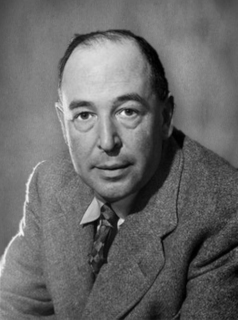
Lewis is schooled by private tutors until age nine when his mother dies in 1908 from cancer. His father then sends him to live and study at Wynyard School in Watford, Hertfordshire. After the school is closed soon afterward, he attends Campbell College in the east of Belfast about a mile from his home, but leaves after a few months due to respiratory problems. He is then sent to the health-resort town of Malvern, Worcestershire, where he attends the preparatory school Cherbourg House. It is during this time that he abandons his childhood Christian faith and becomes an atheist. In September 1913, he enrolls at Malvern College. After leaving Malvern, he studies privately with William T. Kirkpatrick, his father’s old tutor and former headmaster of Lurgan College.
Lewis and fellow novelist J. R. R. Tolkien are close friends. They both serve on the English faculty at Oxford University and are active in the informal Oxford literary group known as the Inklings. He returns to Anglicanism at the age of 32, owing to the influence of Tolkien and other friends, and he becomes an “ordinary layman of the Church of England.” His faith profoundly affects his work, and his wartime radio broadcasts on the subject of Christianity bring him wide acclaim.
Lewis writes more than 30 books which have been translated into more than 30 languages and have sold millions of copies. The books that make up The Chronicles of Narnia have sold the most and have been popularised on stage, television, radio and cinema. His philosophical writings are widely cited by Christian apologists from many denominations.
In early June 1961, Lewis begins suffering from nephritis, which results in blood poisoning. He recovers but on July 15 of that year he falls ill and is admitted to the hospital where he suffers a heart attack the following day, lapses into a coma and awakens the next day. After he is discharged from the hospital his condition continues to decline. He is diagnosed with end-stage renal failure in mid-November. He collapses and dies in his bedroom on November 22. He is buried in the churchyard of Holy Trinity Church, Headington, Oxford.
Media coverage of Lewis’s death is almost completely overshadowed by news of the assassination of United States PresidentJohn F. Kennedy, which takes place approximately 55 minutes after Lewis’s collapse.
Louis MacNeice, British poet and playwright, is born in Belfast on September 12, 1907. He is a member, along with Wystan Hugh Auden, Cecil Day-Lewis, and Stephen Spender, of a group whose low-keyed, unpoetic, socially committed, and topical verse is the “new poetry” of the 1930s. His body of work is widely appreciated by the public during his lifetime, due in part to his relaxed but socially and emotionally aware style.
MacNeice’s first book of poetry, Blind Fireworks, appears in 1929, followed by more than a dozen other volumes, such as Poems (1935), Autumn Journal (1939), Collected Poems, 1925–1948 (1949), and, posthumously, The Burning Perch (1963). An intellectual honesty, Celtic exuberance, and sardonic humour characterize his poetry, which combines a charming natural lyricism with the mundane patterns of colloquial speech. His most characteristic mood is that of the slightly detached, wryly observant, ironic and witty commentator. Among MacNeice’s prose works are Letters from Iceland (with W.H. Auden, 1937) and The Poetry of W.B. Yeats (1941). He is also a skilled translator, particularly of Horace and Aeschylus (The Agamemnon of Aeschylus, 1936).
By the early 1960s, MacNeice is “living on alcohol,” and eating very little, but still writing. In August 1963 he goes caving in Yorkshire to gather sound effects for his final radio play, Persons from Porlock. Caught in a storm on the moors, he does not change out of his wet clothes until he is home in Hertfordshire. Bronchitis evolves into viral pneumonia and he is admitted to hospital in London on August, 27. He dies there on September 3, 1963 at the age of 55. He is buried in Carrowdore churchyard in County Down, alongside his mother.
MacNeice’s final book of poems, The Burning Perch, is published a few days after his funeral. His life-long friend from Oxford, W.H. Auden, who gives a reading at MacNeice’s memorial service, describes the poems of his last two years as “among his very best.”
When World War I breaks out in 1914 Lea-Wilson joins the British army where he reaches the rank of captain in the 18th Royal Irish Regiment. An injury during the war forces him back to Ireland where he is stationed in Dublin, just in time for the Easter Rising in 1916.
When the weeklong rising ends, the rebels who had fought in the Four Courts and the GPO are marched to the Rotunda Hospital where they are kept overnight under the glare of British troops. Among those detained are leaders of the rebellion such as Sean Mac Diarmada and Tom Clarke. Clarke is singled out and subjected to public humiliation by 28-year-old British army Captain Percival Lea-Wilson.
Lea-Wilson and his soldiers walk among the captured rebels, and he picks the 58-year-old Clarke out of the group. He marches Clarke to the steps of the hospital where he orders soldiers to strip him bare as nurses look on in horror from the windows above. Clarke is beaten and left there overnight in his tattered clothes. One of the prisoners, Michael Collins, who witnesses Clarke’s mistreatment at the hands of the British captain vows vengeance.
In the years following the Easter Rising, Lea-Wilson settles in Wexford where he attains the role of RIC district inspector.
On the morning of June 15, 1920, Lea-Wilson is walking back home after paying a visit to the RIC barracks in Gorey. Dressed in his civilian clothes, he stops at the local railway station where he purchases a newspaper and meets Constable Alexander O’Donnell, who accompanies him on part of his walk home.
O’Donnell and Lea-Wilson part company at the railway bridge on Ballycanew Road while further up that very same stretch of road there is a number of men standing around a parked car with its hood raised. Michael Collins had sent Liam Tobin and Frank Thornton from Dublin to meet with Joe McMahon, Michael McGrath and Michael Sinnott in Enniscorthy. They were then driven by Jack Whelan to Ballycanew Road to carry out the assassination of Lea-Wilson.
Unaware of his assassins lying in wait, Lea-Wilson is reading his paper while strolling along the road. The men by the parked car pull out revolvers when their target comes into range and two bullets strike him down. He manages to quickly get back on his feet and attempts to make an escape, but his six assassins run after him and finally bring him down in a hail of bullets. A coroner’s report later states that Lea-Wilson had been shot seven times.
When the shooting ends, one of Lea-Wilson’s executioners calmly walks up to the body to make sure he is dead. He then picks up the newspaper from the ground and takes it with him. Later that evening Michael Collins is in the Wicklow Hotel in Dublin when word reaches him from Wexford of the shooting death of Lea-Wilson. Collins greets the news with glee and mentions to one of his comrades, “Well we finally got him!”
Percival Lea-Wilson is buried in Putney Vale Cemetery in southwest London. His grave is marked by a plaque which mentions his assassination in Gorey in 1920, a death which has its roots in the Easter Rising four years previously.
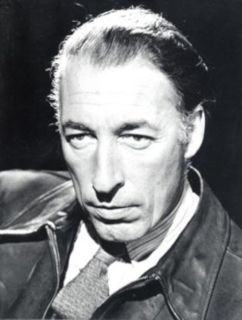
In 1962 Jordan re-founds and edits the literary magazine Poetry Ireland in hopes of contributing towards the recreation of Dublin as a literary centre. In this journal, he introduces a number of poets who are to become quite famous later, including Paul Durcan, Michael Hartnett and Seamus Heaney. This series of Poetry Ireland lasts until 1968–69.
In 1981 Jordan becomes the first editor of the new magazine published by the Poetry Ireland Society, called Poetry Ireland Review. He serves as a reviewer of novels for The Irish Times, writes a column for Hibernia, contributes to Envoy, A Review of Literature and Art and The Irish Press among others, and serves as a TV presenter and arts interviewer. He is a defender of Gaelic literature, translates Pádraic Ó Conaire, edits The Pleasures of Gaelic Literature (Mercier Press, 1977), and champions the later plays of Seán O’Casey. His translation of one of Aogán Ó Rathaille‘s essays is published in The Pleasures of Gaelic Poetry (London: Allen Lane, 1982).
Jordan’s Collected Poems (Dedalus Press) and Collected Stories (Poolbeg Press) are edited by his literary executor, Hugh McFadden, and published in Dublin in 1991. His Selected Prose, Crystal Clear, also edited by McFadden, is published by The Lilliput Press in Dublin in 2006. His Selected Poems, edited with an introduction by McFadden, is published in February 2008 by Dedalus Press. Uncollected stories appear in Penguin Book of Irish Short Stories, Cyphers, and The Irish Press, among other places.
Jordan’s literary papers and letters are held in the National Library of Ireland. In 1953 the young Irish artist Reginald Gray is commissioned by University College Dublin to design the decor and costumes for their production of “The Kings Threshold” by William Butler Yeats. The leading role is given to Jordan. During the preparations for the production, Gray starts a portrait of Jordan, which he never finishes. This work now hangs in the Dublin Writers Museum.
(Pictured: John Jordan, by Patrick Swift, c. 1950)
As a historian of sixteenth- and seventeenth-century Ireland, Bagwell works for nearly sixty years to produce his two three-volume works, Ireland under the Tudors (1885–90) and Ireland under the Stuarts (1909–16), using manuscript sources throughout. He is the first to treat this period in a systematic and scholarly fashion. For this solid work he is made Member of the Royal Irish Academy (MRIA) and honoured by the University of Dublin and the University of Oxford in 1918. He also writes the historical entry on “Ireland” for the Encyclopædia Britannica (Chicago 1911).
A one-time liberal, Bagwell is a founder member (1885) of the Irish Loyal and Patriotic Union, renamed the Irish Unionist Alliance (IUA) in 1891. A “diehard” unionist, he is one of the most prominent and respected southern unionists. A tireless political publicist, he is an assiduous letter-writer to the newspapers, a didactic pamphleteer, and a regular speaker at political meetings throughout Ireland. He opposes the majority report of the Irish Convention (1917) and is one of the original signatories of the “Call to unionists” that splits the IUA.
Bagwell serves as a Commissioner on National Education between 1905 and 1918 and a member of the Patriotic Union (Southern Unionists). He holds the position of High Sheriff of Tipperary in 1869. He is a Justice of the Peace for County Tipperary, and later for County Waterford, and holds the office of Deputy Lieutenant of Tipperary. He is also Special Local Government Commissioner between 1898 and 1903 and President of the Borstal Association of Ireland.
Bagwell marries Harriet Philippa Joscelyn, fourth daughter of P. J. Newton of Dunleckney Manor, County Carlow, on January 9, 1873. The couple has one son, John Philip Bagwell, and three daughters, Emily Georgiana, Margaret and Lilla Minnie.
Richard Bagwell dies one hundred years ago today on December 4, 1918 at Marlfield, having suffered from gout for many years.
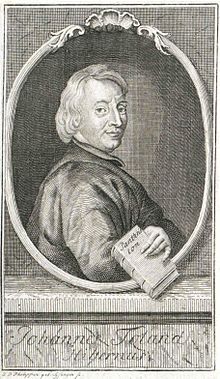
Very little is known of Toland’s early life. His parents are unknown. He later writes that he had been baptised Janus Junius, a play on his name that recalls both the Roman two-faced god Janus and Lucius Junius Brutus, reputed founder of the Roman Republic. According to his biographer, Pierre des Maizeaux, he adopts the name John as a schoolboy with the encouragement of his schoolteacher.
In Toland’s first and best-known book, Christianity not Mysterious (1696), he argues that the divine revelation of the Bible contains no true mysteries. Rather, all the dogmas of the faith can be understood and demonstrated by properly trained reason from natural principles. For this argument he is prosecuted by a grand jury in London. As he is a subject of the Kingdom of Ireland, members of the Parliament of Ireland propose that he should be burned at the stake. In his absence three copies of the book are burned by the public hangman in Dublin as the content is contrary to the core doctrines of the Church of Ireland. Toland bitterly compares the Protestant legislators to “Popish Inquisitors who performed that Execution on the Book, when they could not seize the Author, whom they had destined to the Flames.”
After his departure from Oxford, Toland resides in London for most of the rest of his life but is also a somewhat frequent visitor to Continental Europe, particularly Germany and the Netherlands. He lives on the Continent from 1707 to 1710.
John Toland dies in Putney on March 10, 1722. Just before he dies, he composes his own epitaph: “He was an assertor of liberty, a lover of all sorts of learning … but no man’s follower or dependent. Nor could frowns or fortune bend him to decline from the ways he had chosen.” The 1911 Encyclopædia Britannica says of him that at his death in London at age 51 “he died… as he had lived, in great poverty, in the midst of his books, with his pen in his hand.”
Very shortly after his death a lengthy biography of Toland is written by Pierre des Maizeaux.
Stanford is born into a well-off and highly musical family, the only son of John James Stanford, a prominent Dublin lawyer, Examiner to the Court of Chancery in Ireland and Clerk of the Crown for County Meath, and his second wife, Mary, née Henn. He is educated at the University of Cambridge before studying music in Leipzig and Berlin. He is instrumental in raising the status of the Cambridge University Musical Society, attracting international stars to perform with it.
While still an undergraduate, Stanford is appointed organist of Trinity College, Cambridge. In 1882, at the age of 29, he is one of the founding professors at the Royal College of Music, where he teaches composition for the rest of his life. From 1887 he is also Professor of Music at Cambridge. As a teacher, he is skeptical about modernism and bases his instruction chiefly on classical principles as exemplified in the music of Johannes Brahms. Among his pupils are rising composers whose fame go on to surpass his own, such as Gustav Holst and Ralph Vaughan Williams. As a conductor, he holds posts with the Bach Choir and the Leeds Triennial Music Festival.
Stanford composes a substantial number of concert works, including seven symphonies, but his best-remembered pieces are his choral works for church performance, chiefly composed in the Anglican tradition. He is a dedicated composer of opera, but none of his nine completed operas has endured in the general repertory. Some critics regard him, together with Hubert Parry and Alexander Mackenzie, as responsible for a renaissance in music from the British Isles. However, after his conspicuous success as a composer in the last two decades of the 19th century, his music is eclipsed in the 20th century by that of Edward Elgar as well as former pupils.
In September 1922, Stanford completes the sixth Irish Rhapsody, his final work. Two weeks later he celebrates his 70th birthday and thereafter his health declines. On March 17, 1924, he suffers a stroke and dies on March 29 at his home in London, survived by his wife and children. He is cremated at Golders Green Crematorium on April 2 and his ashes are buried in Westminster Abbey the following day.
Stanford’s last opera, The Travelling Companion, composed during World War I, is premiered by amateur performers at the David Lewis Theatre, Liverpool in 1925 with a reduced orchestra. The work is given complete at Bristol in 1928 and at Sadler’s Wells Theatre, London, in 1935.
Fagan is the eldest of the five children of Sir James Fagan, a surgeon at the Belfast Royal Hospital and an inspector of Irish reformatories, and Mary Catherine Fagan, née Hughes. He attends Clongowes Wood College near Clane, County Kildare and then moves to England. Initially interested in a career in the church, he begins studying law at Trinity College, Oxford in 1892 but leaves in 1893 without a degree. He works for a time in the Indian Civil Service but abandons this career for the stage.
Fagan begins his career as an actor with the company of Sir Frank Benson for two years, then joining, from 1895 to 1899, the company of Herbert Beerbohm Tree at Her Majesty’s Theatre. There he appears in Katherine and Petruchio, A Man’s Shadow, Julius Caesar, The Musketeers and Carnac Sahib. He starts writing plays in 1899, with The Rebels, for the time forsaking acting. In 1913 he returns to the stage touring as the Rt Hon. Denzil Trevena in his own play, The Earth. He next writes The Fourth of August (1914) and Doctor O’Toole (1917). In 1917 he produces his first play, his own adaptation of the Brieux play Damaged Goods at St. Martin’s Theatre. He next produces The Wonder Tales and The Little Brother at the Ambassadors Theatre in London.
Fagan takes over the Court Theatre in London’s Sloane Square as a Shakespearean playhouse in 1920. The Times calls his revivals of Twelfth Night, The Merchant of Venice, Henry the Fourth (Part Two) and A Midsummer Night’s Dream “memorable for their freshness, sanity and distinction, and [deserving of] a place in theatrical history.” At the Court, he revives Damaged Goods and, in 1921, with the assistance of the author, produces George Bernard Shaw‘s Heartbreak House, with Edith Evans as “Lady Utterwood.” In 1922 he produces his play The Wheel at the Apollo Theatre. Its success allows him to repay his creditors. Even more successful is his adaptation of Treasure Island at the Savoy Theatre with Arthur Bourchier as “Long John Silver,” which opens December 26, 1922. It is revived every Christmas until the outbreak of World War II.
Fagan is persuaded by Jane Ellis, the actress who with Alfred Ballard founds the Oxford Playhouse “Red Barn” in 1923, to be its first manager. His first production at the Oxford Playhouse is a restaging of Shaw’s Heartbreak House and numbered Shaw among the audience. He produces The Cherry Orchard, at various theatres, to favourable reviews, popularising Anton Chekhov in Britain. From November 16, 1925, with Dennis Eadie, he presents Juno and the Paycock at the Royalty Theatre, thus bringing Seán O’Casey to the attention of London’s theatre-going public. O’Casey’s The Plough follows the next year.
Fagan receives little support from the University of Oxford or the play-going public and resigns in 1929. His successor is Stanford Holme, who broadens its appeal and, despite the straitened times, makes it financially viable. In 1929, he is a director of the Festival Theatre, Cambridge, where his friend Terence Gray is director. He also produces many works for the Irish Players.
Beginning in the 1920s, several of Fagan’s plays are adapted for film. He moves to Hollywood in 1929 for the filming by Paramount Pictures of his play The Wheel as The Wheel of Life. Other film work includes his co-adaptation of the screenplay for the 1932 film Smilin’ Through, and he co-writes Paramount’s Forgotten Commandments the same year. His play Bella Donna is filmed four times, including posthumously in 1946, and a 1936 film, The Improper Duchess is based on his 1931 play of the same name.
James Bernard Fagan dies in Hollywood, California, on February 17, 1933, at the age of 59 of a heart attack following a bout of influenza.