seamus dubhghaill

Promoting Irish Culture and History from Little Rock, Arkansas, USA


Leave a comment

Birth of Willie John McBride, Rugby Union Footballer

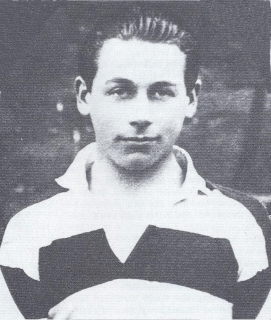
William James McBride, former rugby union footballer better known as Willie John McBride, is born at Toomebridge, County Antrim, Northern Ireland on June 6, 1940. He plays as a lock for Ireland and the British and Irish Lions. He plays 63 tests for Ireland including eleven as captain, and tours with the Lions five times, a record that gives him 17 Lions test caps. He also captains the most successful ever Lions side, which tours South Africa in 1974.

Owing to his father’s death when he is four years old, McBride spends most of his spare time helping out on his family farm. Because of this he does not start playing rugby until he is seventeen. He is educated at Ballymena Academy and plays for the school’s First XV. After he leaves he joins Ballymena R.F.C.

In 1962 McBride is selected to play for Ireland. His first Test on February 10, 1962 is against England at Twickenham Stadium. Later that year he is selected to tour South Africa with the British and Irish Lions.

McBride continues to play for Ireland throughout the 1960s and plays for Ireland when they first defeat South Africa in 1965, and when Ireland defeats Australia in Sydney, the first time a Home Nations team had defeated a major southern hemisphere team in their own country. He is again selected for the Lions in 1966, this time touring New Zealand and Australia. He tours South Africa with the Lions again in 1968.

McBride is selected to play for the Lions in their 1971 tour of New Zealand. Despite being criticized by some as being “over the hill,” he is made pack leader and helps the Lions to a test series win over New Zealand, their first and last series win over New Zealand. He receives an MBE in 1971 for services to rugby football.

McBride’s leadership qualities lead to his appointment as captain of the British and Irish Lions in their 1974 tour to South Africa. The test series is won 3–0, with one match drawn, the first Lions series ever won in South Africa. It is one of the most controversial and physical test match series ever played. At the time there are only substitutions if a doctor agrees that a player is physically unable to continue and there are no video cameras and sideline officials to keep the punching, kicking and head butting to a minimum. If the South Africans are to resort to foul play then the Lions decide “to get their retaliation in first.” The signal for this is to call “99,” which is a signal for the Lions to clobber their nearest rival players.

In 1975 as his international career is ending McBride plays his last game for Ireland at Lansdowne Road. The game is against France, and near the end of the match he scores his first test try for Ireland. It is the crowning moment of a great playing career. His last international game is against Wales on March 15, 1975. After retiring from playing the game, McBride coaches the Irish team and is manager of the 1983 Lions tour to New Zealand. Despite the test results being mainly poor, team camaraderie is high and some good wins are recorded in other games.

In 1997 McBride is an inaugural inductee into the International Rugby Hall of Fame. He has been asked to present test jerseys and give motivational speeches to Lions players prior to matches. In 2004 he is named in Rugby World magazine as “Rugby Personality of the Century.” He is a major supporter of the Wooden Spoon Society.

McBride is awarded a CBE in the 2019 New Year Honours list for services to Rugby Union.


Leave a comment

Death of Horatio Herbert Kitchener, 1st Earl Kitchener

Horatio Herbert Kitchener, 1st Earl Kitchener, Irish-born senior British Army officer and colonial administrator, drowns in the sinking of the HMS Hampshire west of Orkney, Scotland, on June 5, 1916. He wins notoriety for his imperial campaigns, especially his scorched earth policy against the Boers, his expansion of Lord Robertsinternment camps during the Second Boer War and his central role in the early part of World War I.

Kitchener is born in Ballylongford near Listowel, County Kerry, son of army officer Henry Horatio Kitchener and Frances Anne Chevallier, daughter of John Chevallier, a priest, of Aspall Hall, and his third wife, Elizabeth. The family moves to Switzerland when he is young, where he is educated at Montreux, then at the Royal Military Academy, Woolwich. He joins a French field ambulance unit in the Franco-Prussian War but is returned to England after he comes down with pneumonia.

Kitchener is credited in 1898 for winning the Battle of Omdurman and securing control of the Sudan for which he is made Baron Kitchener of Khartoum. As Chief of Staff (1900–1902) in the Second Boer War he plays a key role in Lord Roberts’ conquest of the Boer Republics, then succeeds Roberts as commander-in-chief, by which time Boer forces have taken to guerrilla warfare and British forces imprison Boer civilians in concentration camps. His term as Commander-in-Chief (1902–09) of the Army in India sees him quarrel with another eminent proconsul, the Viceroy Lord Curzon, who eventually resigns. He then returns to Egypt as British Agent and Consul General.

In 1914, at the start of World War I, Kitchener becomes Secretary of State for War, a Cabinet Minister. One of the few to foresee a long war, lasting for at least three years, and with the authority to act effectively on that perception, he organises the largest volunteer army that Britain had ever seen, and oversees a significant expansion of materials production to fight on the Western Front. Despite having warned of the difficulty of provisioning for a long war, he is blamed for the shortage of shells in the spring of 1915, one of the events leading to the formation of a coalition government and is stripped of his control over munitions and strategy.

On June 5, 1916, Kitchener is making his way to Russia on HMS Hampshire to attend negotiations with Tsar Nicholas II. At the last minute, Admiral Sir John Jellicoe changes the HMS Hampshire‘s route on the basis of a misreading of the weather forecast and ignoring (or not being aware of) recent intelligence and sightings of German U-boat activity in the vicinity of the amended route. Shortly before 7:30 PM the same day, steaming for the Russian port of Arkhangelsk during a Force 9 gale, HMS Hampshire strikes a mine laid by the newly launched German U-boat U-75 and sinks 1.5 miles west of the Orkney. Only twelve men survive. Amongst the dead are Kitchener and all ten members of his entourage. He is seen standing on the quarterdeck during the approximately twenty minutes that it takes the ship to sink. His body is never recovered.


Leave a comment

Death of Séamus O’Donovan, IRA Volunteer & Nazi Collaborator

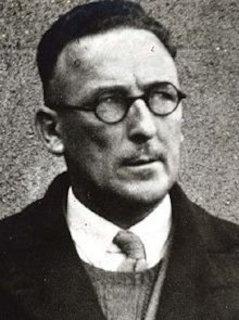
James O’Donovan, a leading volunteer in the Irish Republican Army (IRA) and Nazi collaborator also known as Séamus or Jim O’Donovan, dies in Dublin on June 4, 1979. He is best known for his contacts with the Abwehr military intelligence of Nazi Germany.

Born on November 3, 1896, in County Roscommon, O’Donovan is an explosives expert and reputedly invents the “Irish War Flour” (named after the flour sacks in which it was smuggled into Dublin aboard ships) and “Irish Cheddar” devices. He subsequently becomes IRA Director of Chemicals in 1921. During the Irish War of Independence, he is imprisoned in Mountjoy Prison and Kilmainham Gaol and later interned in Newbridge, County Kildare.

In addition to fighting in the Irish War of Independence, O’Donovan fights on the Anti-Treaty side during the Irish Civil War. In 1930 he becomes manager at Electricity Supply Board (ESB) headquarters in Dublin.

In August 1938, at the request of IRA Chief of Staff Seán Russell, O’Donovan writes the S-Plan, a bombing campaign targeting the United Kingdom. In his unpublished memoirs he writes that he “conducted the entire training of cadre units, was responsible for all but locally derived intelligence, carried out small pieces of research and, in general, controlled the whole explosives and munitions end” of S-Plan. During this time, he and Russell are the only GHQ members of the old IRA still in the organisation.

As “Agent V-Held”, O’Donovan visits Germany three times in 1939 on behalf of the IRA. On February 28 he negotiates an arms and radio equipment delivery at the Abwehrstelle in Hamburg. On April 26 he concludes a new arms deal with the Abwehrstelle and establishes, with the help of a Breton, a secret courier connection to Ireland via France. On August 23, he receives the last instructions for the event of war.

On February 9, 1940, Abwehr II agent Ernst Weber-Drohl lands at Killala Bay, County Sligo aboard U-37. He is equipped with an ‘Ufa’ transmitter, cash, and instructions for O’Donovan, who by this time is the chief IRA contact for Abwehr I/II. The transmitter is lost upon landing, but when Weber-Drohl reaches O’Donovan at Shankill, Killiney, County Dublin, he is able to deliver new transmission codes, $14,450 in cash, and a message from “Pfalzgraf Section” asking that the IRA concentrate its S-Plan attacks on military rather than civilian targets.

O’Donovan becomes increasingly enamoured of Nazi ideology during this time, and visits Germany three times. In 1942 he writes an article arguing that Ireland’s future lay in an alliance with a victorious Germany and attacks Britain and the United States for being “centres of Freemasonry, international financial control and Jewry.” Even long after the pact with the Germans falls apart, he continues to express his sympathy for the Nazi regime. His son, Gerard O’Donovan, recalls that every Saturday night a visitor would come to the family home and send messages to Germany.

In 1940, O’Donovan is involved in setting up Córas na Poblachta, a minor Irish republican political party which proves unsuccessful.

O’Donovan dies in Dublin on June 4, 1979.


Leave a comment

Death of Charlotte Grace O’Brien, Philanthropist & Activist

Charlotte Grace O’Brien, author, philanthropist and an activist in nationalist causes and the protection of female emigrants, dies on June 3, 1909. She is known also as a plant collector.

Born on November 23, 1845, at Cahirmoyle, County Limerick, O’Brien is the younger daughter in a family of five sons and two daughters. Her father is William Smith O’Brien, the Irish nationalist and her mother is Lucy Caroline, eldest daughter of Joseph Gabbett, of High Park, County Limerick. On her father’s return in 1854 from the penal colony in Tasmania, she rejoins him in Brussels and stays there until he comes back to Cahirmoyle in 1856. On her mother’s death in 1861, she moves with her father to Killiney, near Dublin, and is his constant companion until his death at Bangor, Gwynedd in 1864.

From 1864, O’Brien lives at Cahirmoyle with her brother Edward, caring for his motherless children until his remarriage in 1880. Having been hard of hearing since childhood, by 1879 she has become entirely deaf. She goes to live at Ardanoir near Foynes on the River Shannon and spends time writing. She becomes a staunch supporter of Charles Stewart Parnell.

A bad harvest in Ireland in 1879, combined with Irish political turmoil, causes many Irish people to emigrate to the United States. In articles and letters to newspapers and reviews, O’Brien exposes the awful conditions that exist in the Queenstown (Cobh) lodging houses, on board the emigrant ships, and in the dock slums of New York City, where the Irish have to stay upon landing. A notable piece she writes is the Horrors of the Immigrant Ship which appears in The Pall Mall Gazette on May 6, 1881.

A visit to Queenstown, the port of embarkation, and a tour of the White Star Line‘s Germanic leads her to successfully lobby to get a Catholic priest aboard the emigrant ship to help ease the passage, at least spiritually. That achievement captures even more public attention by virtue of the fact that O’Brien herself is Protestant. Despite the limit of 1,000 passengers, she notes the steamer has carried as many as 1,775 at one time.

O’Brien presses the Board of Trade for greater vigilance, and in April 1882, founds a 105-bed boarding house at Queenstown for the reception and protection of girls on the point of emigrating. The O’Brien Emigrants Home at The Beach, Queenstown fails because it is boycotted by other boardinghouse keepers and local merchants, forcing her to order provisions from Cork.

O’Brien also daily visits three or four of the ships for which her lodgers are destined along with a medical officer. She makes passages herself to America, using the occasion to investigate shipboard conditions and lobby for the reform and enforcement of health and safety standards.

O’Brien finds little effort to provide food, drink or accommodation at the Castle Garden entry facility. She also finds that often the illiterate young women are being tricked into prostitution through spurious offers of employment. Additionally, she notes the high infant mortality rates in the tenements where the women live. She proposes to Archbishop John Ireland of Minnesota an information bureau at Castle Garden, a temporary shelter to provide accommodation for immigrants and a chapel. Archbishop Ireland agrees to raise the matter at the May 1883 meeting of the Irish Catholic Association which endorses the plan and votes to establish an information bureau at Castle Garden. Ireland also contacts Cardinal John McCloskey, Archbishop of New York, about providing a priest for immigrants arriving at Castle Garden.

The Mission opens on January 1, 1884, with Rev. John J. Riordan appointed as the first chaplain at Castle Garden. Immigrant girls needing accommodation are placed in local boarding houses until May 1 when a Home for Immigrant Girls is opened at 7 Broadway. In 1885, the James Watson House at 7 State Street is purchased from Isabella Wallace for the Mission of Our Lady of the Rosary for the Protection of Irish Immigrant Girls to serve as a way station for young immigrant women. Between 1884 and 1890, the Mission provides assistance to 25,000 Irish immigrant women.

In 1881–82, O’Brien embarks on a campaigning lecture tour in the United States. She encounters problems, however, particularly given her Protestant background and the need to enlist support from Catholic clergy. Poor health, and her profound deafness cause her to curtail her activities in America. When she returns to Ireland in 1883, she finds herself suspected of being a British agent whose Emigrant Boarding house and whose plans for an American home for Irish immigrant girls facilitate the government’s assisted emigrant scheme. Supposedly, this would be the scheme that helps landlords clear their estates of poor tenants. In fact, O’Brien opposes assisted emigration, but she continues to assist those who are sent to her.

O’Brien retires from active public work in 1886, moving to Ardanoir, Foynes, on the Shannon Estuary. She spends considerable time in Dublin, where she socialises with Douglas Hyde and the painter William Osbourne. She joins the Roman Catholic Church in 1887. She dies of heart failure on June 3, 1909, at Foynes, and is buried at Knockpatrick.


Leave a comment

Birth of Tony Award Nominated Actor Milo O’Shea

Milo Donal O’Shea, Irish actor twice nominated for the Tony Award for Best Actor in a Play for his performances in Staircase (1968) and Mass Appeal (1982), is born in Dublin on June 2, 1926.

O’Shea is raised in Dublin and educated by the Christian Brothers at Synge Street CBS, along with his friend Donal Donnelly. His father is a singer and his mother a ballet teacher. Because he is bilingual, he performs in English-speaking theatres and in Irish in the Abbey Theatre Company. At age 12, he appears in George Bernard Shaw‘s Caesar and Cleopatra at the Gate Theatre. He later studies music and drama at the Guildhall School of Music and Drama in London and is a skilled pianist.

O’Shea is discovered in the 1950s by Harry Dillon, who runs the 37 Theatre Club on the top floor of his shop, the Swiss Gem Company, 51 Lower O’Connell Street, Dublin. Early in his career he tours with the theatrical company of Anew McMaster.

O’Shea begins acting on the stage, then moves into film in the 1960s. He becomes popular in the United Kingdom, as a result of starring in the BBC sitcom Me Mammy alongside Yootha Joyce. In 1967–68 he appears in the drama Staircase, co-starring Eli Wallach and directed by Barry Morse, which stands as Broadway‘s first depiction of homosexual men in a serious light. For his role in that drama, he is nominated for the Tony Award for Best Actor in a Play in 1968.

O’Shea stars as Leopold Bloom in Joseph Strick‘s 1967 film version of Ulysses. Among his other memorable film roles in the 1960s are the well-intentioned Friar Laurence in Franco Zeffirelli‘s Romeo and Juliet (1968) and the villainous Dr. Durand Durand in Roger Vadim‘s counterculture classic Barbarella (1968). In 1984, he reprises his role as Dr. Durand Durand, credited as Dr. Duran Duran, for the 1985 Duran Duran concert film Arena (An Absurd Notion), since his character inspired the band’s name. He plays Inspector Boot in the 1973 Vincent Price horror/comedy film Theatre of Blood.

O’Shea is active in American films and television, such as his memorable supporting role as the trial judge in the Sidney Lumet-directed movie The Verdict (1982) with Paul Newman, an episode of The Golden Girls in 1987, and portraying Chief Justice of the United States Roy Ashland in the television series The West Wing. In 1992, he guest stars in the season 10 finale of the sitcom Cheers, and, in 1995, in an episode of the show’s spin-off Frasier. He appears in the pilot episode of Early Edition as Sherman.

Other stage appearances include Mass Appeal (1981) in which he originates the role of Father Tim Farley, for which he is nominated for the Tony Award for Best Actor in a Play in 1982, the musical Dear World in which he plays the Sewer Man opposite Angela Lansbury as Countess Aurelia, Corpse! (1986) and a 1994 Broadway revival of Philadelphia, Here I Come!.

O’Shea receives an honorary degree from Quinnipiac University in 2010.

O’Shea’s first wife is Maureen Toal, an Irish actress, with whom he has two sons, Colm and Steven. They divorce in 1974. His second wife is Irish actress Kitty Sullivan, whom he meets in Italy, where he is filming Barbarella and she is auditioning for Man of La Mancha. The couple occasionally act together, such as in a 1981 Broadway revival of My Fair Lady. O’Shea and Sullivan have no children together. They both adopt United States citizenship and reside in New York City, where they both live from 1976.

O’Shea dies on April 2, 2013, in New York City following a short illness at the age of 86. He is buried at Deans Grange Cemetery.


Leave a comment

Birth of Blessed Edmund Ignatius Rice

Blessed Edmund Ignatius Rice, educator, philanthropist, and the founder of the Congregation of Christian Brothers, is born in Westcourt, Callan, County Kilkenny on June 1, 1762.

Rice is born into a Catholic family and is one of nine children. It comes as a surprise that a Catholic family can be prosperous in these days but they have a lease of a good-sized farm and are industrious people. In view of his future work in education it is fortunate that he receives a very good education himself, first at a local hedge school and then at a private secondary school in Kilkenny.

Rice is apprenticed to his uncle, Michael Rice, in Waterford at the age of 17. Waterford is then the second largest port in Ireland with an expanding trade with England, France and Spain and has very special trading links across the Atlantic with Newfoundland. His uncle is involved in providing food and services for the crews and passengers of the ships trading in and out of the port of Waterford. His uncle becomes a very prosperous businessman, and his business expands even more after it is handed over to his nephew. His great wealth is later to be used in transforming the lives of countless young boys.

At the age of 25 Rice marries Mary Elliot and is left a widower two years later when she dies after falling from a horse. He is left with a handicapped daughter, Mary. He calls in his stepsister Joan Murphy to help him care for his daughter so he can develop the business he inherited from his uncle.

In 1802, having properly cared for his daughter, Rice begins a night school for the uneducated boys from the quays of Waterford. His deep desire is to found a religious order of men who will educate these poor boys so that they can live with dignity and high self-esteem. But his volunteer assistants cannot stick with it. Neither can the paid teachers he later employs. Just when his spirits are lowest, and he looks to be a failure to all his business colleagues, two men from his native Callan join him not only to educate these unruly boys but also to join him in his plan to found a religious order. To do such a thing is contrary to the law. Nevertheless, Rice and his growing number of companions proceed. In 1808 seven of them take religious vows under Bishop Power of Waterford. They are called Presentation Brothers. This is the first congregation of men to be founded in Ireland and one of the few ever founded in a Church by a layman. Rice has in the meantime built a substantial school out of his own money, but it is already proving too small for the many boys who flock to him for an education.

Gradually an extraordinary transformation takes place in the “quay kids” of Waterford. Rice and his Brothers educate them, clothe and feed them. Other Bishops in Ireland supply him with men whom he prepares for religious life and teaching. In this way the Presentation Brothers spread throughout Ireland. However, the groups in separate dioceses are not under his control but that of the bishop. This creates problems when Brothers need to be transferred. Rice seeks and ultimately obtains approval from Pope Pius VII for his Brothers to be made into a pontifical congregation with Rice as Superior General. He is then able to move Brothers to wherever they are most needed. From this time on they are called Christian Brothers. By 1825 there are 30 Christian Brothers working in 12 towns and cities and educating 5,500 boys, free of charge. Many of these boys are also being clothed and fed.

Rice’s life is steeped in a spirituality that is strong and practical. He is forever caring for the poor in the wretched circumstances of their lives, for he believes there is a great need “to give to the poor in handfuls.” Many people, both men and women, from many cultures, young and old are helped and given hope and purpose and a new footing in life. He and his Brothers even card for the inmates of the jails of Waterford. He is privileged to comfort and accompany many a condemned man to the gallows. The poor never forget his love for them and see him as “a man raised up by God.”

Rice endures many and severe trials and in 1829 it seems the Christian Brothers are going to be suppressed by the law of the land. They face extinction but this does not happen. An even worse trial comes to him personally when some of his own Brothers try to undermine his work. Fortunately, they are unsuccessful. He gave his Brothers as their motto a text from the Book of Job that means so much to him in his life: “The Lord has given, and the Lord has taken away; blessed be the name of the Lord forever.”

In 1838, at the age of 76, Rice retires from leadership of the congregation and returns to Waterford. After living in a near-comatose state for more than two years, he dies at Mount Sion, Waterford on August 29, 1844, where his remains lie in a casket to this day.

Rice is declared to be Blessed Edmund Rice by Pope John Paul II in Rome on October 6, 1996. His Feast Day in the Catholic Church is 5 May.

(From: “Blessed Edmund Ignatius Rice,” Diocese of Waterford & Lismore, http://www.waterfordlismore.ie)


Leave a comment

Birth of Richard Lovell Edgeworth, Politician, Writer & Inventor

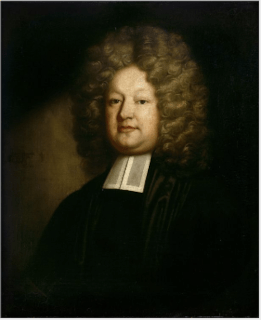
Richard Lovell Edgeworth, Anglo-Irish politician, writer and inventor, is born on May 31, 1744, in Pierrepont Street, Bath, Somerset, England.

Edgeworth is the son of Richard Edgeworth senior, and great-grandson of Sir Salathiel Lovell through his mother, Jane Lovell, granddaughter of Sir Salathiel. The Edgeworth family comes to Ireland in the 1580s. He is descended from Francis Edgeworth, appointed joint Clerk of the Crown and Hanaper in 1606, who inherits a fortune from his brother Edward Edgeworth, Bishop of Down and Connor.

A Trinity College, Dublin and Corpus Christi College, Oxford alumnus, Edgeworth is credited for creating, among other inventions, a machine to measure the size of a plot of land. He also makes strides in developing educational methods. He anticipates the caterpillar track with an invention that he plays around with for forty years but never successfully develops. He describes it as a “cart that carries its own road.”

Edgeworth is married four times, including both Honora Sneyd and Frances Beaufort, older sister of Francis Beaufort of the Royal Navy. He is the father of 22 children by his four wives. Beaufort and he install a semaphore line for Ireland. He is a member of the Lunar Society of Birmingham. The Lunar Society evolves through various degrees of organization over a period of years but is only ever an informal group. No constitution, minutes, publications or membership lists survive from any period, and evidence of its existence and activities is found only in the correspondence and notes of those associated with it. Dates given for the society range from sometime before 1760 to it still operating as late as 1813. Fourteen individuals have been identified as having verifiably attended Lunar Society meetings regularly over a long period during its most productive time: these are Matthew Boulton, Erasmus Darwin, Thomas Day, Richard Lovell Edgeworth, Samuel Galton, Jr., James Keir, Joseph Priestley, William Small, Jonathan Stokes, James Watt, Josiah Wedgwood, John Whitehurst and William Withering.

Edgeworth and his family live in Ireland at his estate at Edgeworthstown, County Longford, where he reclaims bogs and improves roads. He sits in Grattan’s Parliament for St. Johnstown (County Longford) from 1798 until the Act of Union 1801 and advocates Catholic Emancipation and parliamentary reform. He is a founder-member of the Royal Irish Academy.

Edgeworth dies in Edgeworthstown on June 13, 1817.

(Pictured: “Portrait of Richard Lovell Edgeworth (1744-1817)” oil on canvas by Hugh Douglas Hamilton)


Leave a comment

Death of Michael Davitt, Founder of the Irish National Land League

Michael Davitt, Irish republican and agrarian agitator, dies in Elphis Hospital in Dublin from blood poisoning on May 30, 1906. He is the founder of the Irish National Land League, which organizes resistance to absentee landlordism and seeks to relieve the poverty of the tenant farmers by securing fixity of tenure, fair rent, and free sale of the tenant’s interest.

Davitt is born in Strade, County Mayo, on March 25, 1846, the son of an evicted tenant farmer. Following their eviction, the family emigrates to England. In 1856, at the age of 10, he starts work in a cotton mill, where he loses an arm in a machinery accident a year later. As is typical for the era, he does not receive any compensation.

In 1865, Davitt joins the revolutionary Fenian Brotherhood, an international secret society that seeks to secure political freedom for Ireland. He becomes secretary of its Irish analogue, the Irish Republican Brotherhood (IRB), in 1868. Arrested in Paddington Station in London for sending firearms to Ireland on May 14, 1870, he is sentenced to 15 years in Dartmoor Prison and there lays plans to link Charles Stewart Parnell’s constitutional reform with Fenian activism to achieve political-agrarian agitation.

Paroled from prison in 1877, Davitt rejoins the IRB and goes to the United States, where the Fenian movement originated. There he is deeply influenced by Henry George’s ideas about the relationship between land monopoly and poverty.

Back in Ireland, using funds raised by John Devoy and Clan na Gael in the United States, Davitt wins Parnell’s cooperation in organizing the Irish National Land League in 1879, which leads, however, to his expulsion from the supreme council of the IRB in 1880. He is also imprisoned for seditious speeches in 1881 and 1883. He is elected to Parliament representing North Meath in the 1892 United Kingdom general election, but his election is overturned on petition because he had been supported by the Roman Catholic hierarchy. He stands unopposed for North East Cork at a by-election in February 1893, making his maiden speech in favour of the Home Rule Bill in April, which passes the House of Commons but is defeated in the House of Lords in September.

Because of his public championing of Henry George’s theories of land reform, Parnell repudiates him. Davitt actively defends the Nationalists before the Parnell Commission, which meets between 1887 and 1889. When the Irish party splits in 1890 over Parnell’s involvement in Capt. William Henry O’Shea’s divorce case, Davitt is among the first to oppose Parnell’s continuance as leader. He is elected again, for South Mayo in 1895, but resigns in 1899 in protest against the Second Boer War.

Davitt dies in Elphis Hospital, Dublin on May 30, 1906, at the age of 60, from blood poisoning. The fact that the Lord Lieutenant of Ireland attends his funeral is a public indication of the dramatic political journey this former Fenian prisoner has taken. There is no plan for public funeral, and hence Davitt’s body is brought quietly to the Carmelite Friary, Clarendon Street, Dublin. However, the next day over 20,000 people file past his coffin. His remains are taken by train to Foxford, County Mayo, and buried in the grounds of Strade Abbey at Strade, near his place of birth.

Davitt’s book, The Fall of Feudalism in Ireland (1904), is a valuable record of his time.


Leave a comment

Birth of John F. Kennedy, 35th President of the United States

John Fitzgerald Kennedy, Irish American politician who serves as the 35th president of the United States, is born in Brookline, Massachusetts on May 29, 1917. He serves from 1961 until his assassination in 1963 during the height of the Cold War, with the majority of his work as president concerning relations with the Soviet Union and Cuba.

Kennedy is born into the wealthy, political Kennedy family, the son of Joseph P. Kennedy Sr., a businessman and politician, and Rose Kennedy (née Fitzgerald), a philanthropist and socialite. All four of his grandparents are children of Irish immigrants. He graduates from Harvard University in 1940, before joining the United States Naval Reserve the following year. During World War II, he commands a series of PT boats in the Pacific theater and earns the Navy and Marine Corps Medal for his service.

Following a brief stint in journalism, Kennedy, a Democrat, represents a working-class Boston district in the U.S. House of Representatives from 1947 to 1953. He is subsequently elected to the U.S. Senate and serves as the junior senator for Massachusetts from 1953 to 1960. While in the Senate, Kennedy publishes his book, Profiles in Courage, which wins a Pulitzer Prize.

Kennedy meets his future wife, Jacqueline Lee “Jackie” Bouvier (1929–1994), while he is a congressman. Charles L. Bartlett, a journalist, introduces the pair at a dinner party. They are married a year after he is elected senator, on September 12, 1953. Following a miscarriage in 1955 and a stillbirth in 1956, they produce three children, Caroline, John, Jr., and Patrick, who dies of complications two days after birth.

In the 1960 presidential election, Kennedy narrowly defeats Republican opponent Richard Nixon, who is the incumbent vice president. His humor, charm, and youth in addition to his father’s money and contacts are great assets in the campaign. His campaign gains momentum after the first televised presidential debates in American history. He is the first Catholic elected president of the United States.

Kennedy’s administration includes high tensions with communist states in the Cold War. As a result, he increases the number of American military advisors in South Vietnam. The Strategic Hamlet Program begins in Vietnam during his presidency. In April 1961, he authorizes an attempt to overthrow the Cuban government of Fidel Castro in the failed Bay of Pigs Invasion. He authorizes the Cuban Project, also known as Operation Mongoose, in November 1961. He rejects Operation Northwoods, plans for false flag attacks to gain approval for a war against Cuba, in March 1962. However, his administration continues to plan for an invasion of Cuba in the summer of 1962.

In October 1962, U.S. spy planes discover Soviet missile bases have been deployed in Cuba. The resulting period of tensions, termed the Cuban Missile Crisis, nearly results in the breakout of a global thermonuclear conflict. He also signs the first nuclear weapons treaty in October 1963.

Kennedy presides over the establishment of the Peace Corps, Alliance for Progress with Latin America, and the continuation of the Apollo space program with the goal of landing a man on the Moon. He also supports the civil rights movement but is only somewhat successful in passing his New Frontier domestic policies.

On November 22, 1963, Kennedy is assassinated in Dallas, Texas. Vice President Lyndon B. Johnson assumes the presidency upon Kennedy’s death. Marxist and former U.S. Marine Lee Harvey Oswald is arrested for the state crime but is shot and killed by Jack Ruby two days later. The FBI and the Warren Commission both conclude Oswald had acted alone in the assassination, but various groups contest the Warren Report and believe that Kennedy was the victim of a conspiracy.

After Kennedy’s death, Congress enacts many of his proposals, including the Civil Rights Act of 1964 and the Revenue Act of 1964. Despite his truncated presidency, he ranks highly in polls of U.S. presidents with historians and the general public. His personal life has also been the focus of considerable sustained interest following public revelations in the 1970s of his chronic health ailments and extramarital affairs. He is the last U.S. President to have been assassinated as well as the last U.S. president to die in office.

(Pictured: John F. Kennedy, photograph in the Oval Office, July 11, 1963)


Leave a comment

Birth of Architect George Coppinger Ashlin

George Coppinger Ashlin, Irish architect particularly noted for his work on churches and cathedrals, is born in County Cork on May 28, 1837. He becomes President of the Royal Institute of the Architects of Ireland.

Ashlin is the son of J. M. Ashlin, J.P. He receives his early education at the Collège de St. Servais in Liège, Belgium. He later enrolls at St. Mary’s College, Oscott (1851-55) where he is subsequently a pupil of Edward Welby Pugin. It is during this time that he develops an interest in architecture. By 1858, he enters the Royal Academy Schools, London.

When Pugin receives the commission for SS Peter and Paul’s, Carey’s Lane, Cork, in 1859, he makes Ashlin a partner with responsibility for their Irish work. This partnership lasts until late 1868. In 1861 they open their office at St. Stephen’s Green, Dublin. The practice is primarily ecclesiastical, designing some 25 religious buildings. Their churches and Cathedrals are mainly located in the counties of Wexford, Cork and Kerry, and are all of similar design. By far the most important commission undertaken by this partnership is the building of St. Colman’s Cathedral, Cobh for Bishop William Keane.

In 1867 Ashlin marries Mary Pugin (1844-1933), sister of Edward Welby Pugin and daughter of Augustus Welby Pugin, the Gothic revivalist. Their only daughter, Miriam, is born ten years later.

The partnership with Pugin is dissolved in 1870. Thereafter Ashlin practises in his own right, branching out to cover the entire island nation. His works of this period include Ballycotten (1901), Ballybunion (1892), Church of the Most Holy Rosary, Midleton (1893) and the Munster & Leinster Bank, both of Midleton, and finally Kildare (1898).

Ashlin is a member of the Royal Hibernian Academy and Fellow of the Royal Institute of British Architects.

George Coppinger Ashlin dies at the age of 84 on December 10, 1921. He is buried at Glasnevin Cemetery in Dublin.