McGeown joins the IRA’s youth wing, Fianna Éireann, in 1970. He is first arrested at the age of 14, and in 1973 he is again arrested and interned in Long Kesh Detention Centre until 1974. In November 1975, he is arrested and charged with possession of explosives, bombing the Europa Hotel, and IRA membership. At his trial in 1976 he is convicted and receives a five-year sentence for IRA membership and two concurrent fifteen-year sentences for the bombing and possession of explosives, and is imprisoned at Long Kesh with Special Category Status.
In March 1978, McGeown attempts to escape along with Brendan McFarlane and Larry Marley. The three have wire cutters and dress as prison officers, complete with wooden guns. The escape is unsuccessful, and results in McGeown receiving an additional six-month sentence and the loss of his Special Category Status.
McGeown is transferred into the Long Kesh Detention Centre’s H-Blocks where he joins the blanket protest and dirty protest, attempting to secure the return of Special Category Status for convicted paramilitary prisoners.He describes the conditions inside the prison during the dirty protest in a 1985 interview:
“There were times when you would vomit. There were times when you were so run down that you would lie for days and not do anything with the maggots crawling all over you. The rain would be coming in the window and you would be lying there with the maggots all over the place.“
In late 1980, the protest escalates and seven prisoners take part in a fifty-three-day hunger strike, aimed at restoring political status by securing what are known as the “Five Demands:”
The right not to wear a prison uniform.
The right not to do prison work.
The right of free association with other prisoners, and to organise educational and recreational pursuits.
The right to one visit, one letter and one parcel per week.
Full restoration of remission lost through the protest.
The strike ends before any prisoners die and without political status being secured. A second hunger strike begins on March 1, 1981, led by Bobby Sands, the IRA’s former Officer Commanding (OC) in the prison. McGeown joins the strike on July 9, after Sands and four other prisoners have starved themselves to death. Following the deaths of five other prisoners, his family authorises medical intervention to save his life after he lapses into a coma on August 20, the 42nd day of his hunger strike.
McGeown is released from prison in 1985, resuming his active role in the IRA’s campaign and also working for Sinn Féin, the republican movement’s political wing. In 1988, he is charged with organising the Corporals killings, an incident where two plain-clothes British Army soldiers are killed by the IRA. At an early stage of the trial his solicitor, Pat Finucane, argues there is insufficient evidence against McGeown, and the charges are dropped in November 1988. McGeown and Finucane are photographed together outside Crumlin Road Courthouse, a contributing factor to Finucane being killed by the Ulster Defence Association (UDA) in February 1989. Despite suffering from heart disease as a result of his participation in the hunger strike, McGeown is a member of Sinn Féin’s Ard Chomhairle and is active in its Prisoner of War Department. In 1993, he is elected to Belfast City Council.
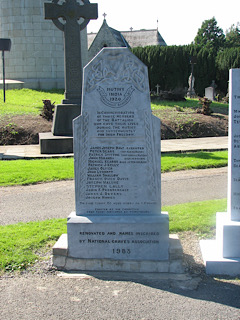
McGeown is found dead in his home on October 1, 1996, after suffering a heart attack. Sinn Féin chairman Mitchel McLaughlin says his death is “a great loss to Sinn Féin and the republican struggle.” McGeown is buried in the republican plot at Belfast’s Milltown Cemetery. His death is often referred to as the “11th hunger striker.” In 1998, the Pat McGeown Community Endeavour Award is launched by Sinn Féin president Gerry Adams, with Adams describing McGeown as “a modest man with a quiet, but total dedication to equality and raising the standard of life for all the people of the city.” A plaque in memory of McGeown is unveiled outside the Sinn Féin headquarters on the Falls Road on November 24, 2001, and a memorial plot on Beechmount Avenue is dedicated to the memory of McGeown, Kieran Nugent and Alec Comerford on March 3, 2002.
In the 19th century, association football outside of Ulster is largely confined to Dublin and a few provincial towns. The British Army teams play a role in the spread of the game to these areas, especially in Munster, as local clubs are initially reliant on them to form opposition teams, leading to the nickname “the garrison game.” Association football is played in relatively few Catholic schools as middle-class schools favour rugby union while others favour Gaelic games. The Irish Football Association (IFA) had been founded in 1880 in Belfast as the football governing body for the whole of Ireland, which was then a part of the United Kingdom and considered a Home Nation. The Leinster Football Association was an affiliate, founded in 1892 to foster the game in Leinster, outside of the Ulster heartlands. This was followed by the establishment of the Munster Football Association in 1901.
By 1913, the Leinster FA becomes the largest divisional association within the IFA, displacing the North East Ulster Football Association, yet all but two clubs in the 1913–14 Irish League are based in Ulster. While this largely reflects the balance of footballing strength within Ireland, southern members feel the IFA is doing little to promote the game outside of the professional clubs in its northern province. In the other provinces, association football is also under pressure from the Gaelic Athletic Association (GAA), which has banned members from playing or watching the sport as it is considered a “foreign” game. Furthermore, there is a growing feeling in Dublin of alleged Belfast bias when it comes to hosting matches and player selection for internationals. This view is not helped by the composition of the IFA’s sub-committees, with over half of the membership consisting of delegates hailing from the North-East, and the International Committee, who chooses the national team, containing just one member from Leinster. The Belfast members are mainly unionist, while the Dublin members are largely nationalist. World War I increases the gulf between the northern teams and the clubs in the south as the Irish League is suspended and replaced by regional leagues, foreshadowing the ultimate split. Tensions are then exacerbated by the Irish War of Independence of 1919–21, which disrupts contact between northern and southern clubs further and prevents resumption of the Irish League. The security situation prompts the IFA to order the March 1920-21 Irish Cup semi-final replay between Glenavon and Shelbourne to be replayed in Belfast, rather than in Dublin as convention dictates. This proves to be the final straw and the Leinster FA confirms their decision to disaffiliate from the IFA at a meeting on June 8, 1921.
The Football Association of Ireland (FAI) is formed in Dublin on September 2, 1921, by the Leinster FA. The Free State League (originally the Football League of Ireland and now the League of Ireland) is founded in June of that year when the Leinster FA withdraws from the IFA. This is the climax of a series of disputes about the alleged Belfast bias of the IFA. Both bodies initially claim to represent the entire island. The split between Southern Ireland (which becomes the Irish Free State in December 1922) and Northern Ireland (which comes into existence as a jurisdiction in 1921) does not produce a split in the governing bodies of other sports, such as the Irish Rugby Football Union (IRFU). The Munster Football Association, originally dominated by British Army regiments, falls into abeyance on the outbreak of World War I, and is re-established in 1922 with the help of the FAI, to which it affiliates. The Falls League, based in the Falls Road of nationalist West Belfast, affiliates to the FAI, and from there Alton United wins the FAI Cup in 1923. However, when the FAI applies to join FIFA in 1923, it is admitted as the Football Association of the Irish Free State (FAIFS) based on a 26-county jurisdiction. (This jurisdiction remains, although Derry City, from Northern Ireland, are given an exemption, by agreement of FIFA and the IFA, to join the League of Ireland in 1985.) Attempts at reconciliation followed. At a 1923 meeting, the IFA rejects an FAIFS proposal for it to be an autonomous subsidiary of the FAIFS. A 1924 meeting in Liverpool, brokered by the English FA, almost reaches agreement on a federated solution, but the IFA insists on providing the chairman of the International team selection committee. A 1932 meeting agrees on sharing this role, but founders when the FAIFS demands one of the IFA’s two places on the International Football Association Board (IFAB). Further efforts to reach agreement are made through a series of conferences between the IFA and FAI from 1973 to 1980 during the height of the Troubles in Northern Ireland.
The IFA does not feel obliged to refrain from selecting Free State players for its international team. The name Football Association of Ireland is readopted by the FAIFS in 1936, in anticipation of the change of the state’s name in the pending Constitution of Ireland, and the FAI begins to select players from Northern Ireland based on the Constitution’s claim to sovereignty there. A number of players play for both the FAI “Ireland” (against FIFA members from mainland Europe) and the IFA “Ireland” (in the British Home Championship, whose members had withdrawn from FIFA in 1920). Shortly after the IFA rejoins FIFA in 1946, the FAI stops selecting Northern players. The IFA stops selecting southern players after the FAI complains to FIFA in 1950.
From the late 1960s, association football begins to achieve more widespread popularity. Donogh O’Malley, TD and then Minister for Education, begins a new programme of state-funded schools in 1966, many with association football pitches and teams. The Gaelic Athletic Association’s ban on members playing “foreign” games is lifted in 1971. RTÉ television, founded in 1962, and British television (available nearly everywhere on cable or microwave relay from the 1970s), broadcast association football regularly. Above all, the increasing success of the international side from the late 1980s gives increased television exposure, more fans, and more funds to the FAI.
However, increased media exposure also highlights some inadequacies of its hitherto largely amateur organisation. In January 1999, the FAI announces a planned national association football stadium, to be called Eircom Park after primary sponsors Eircom. This is to be a 45,000-seat stadium in City West, modeled on the GelreDome in Arnhem. It gradually becomes apparent that the initial forecasts of cost and revenue have been very optimistic. FAI and public support for the project is also undermined by the announcement of the Stadium Ireland in Abbotstown, which would have 65,000 seats and be available free to the FAI, being funded by the state. The Eircom Park project is finally abandoned in March 2001, amid much rancour within the FAI.
During preparation for the 2002 FIFA World Cup, the captain of the senior football team, Roy Keane, leaves the training camp and returns to his home. He is critical of many aspects of the organisation and preparation of the team for the upcoming games, and public opinion in Ireland is divided. As a result of the incident, the FAI commissions a report from consultants Genesis into its World Cup preparations. The “Genesis Report” makes a number of damning criticisms regarding corruption and cronyism within the association, but is largely ignored. The complete report is never published for legal reasons. The FAI subsequently produces its own report of itself titled “Genesis II” and implements a number of its recommendations.
In 2002, the FAI announces a deal with British Sky Broadcasting to sell broadcasting rights to Ireland’s international matches, as well as domestic association football, to be televised on its satellite subscription service. The general public feels it should be on RTÉ, the free-to-air terrestrial service, in spite of their offering much lower rates. Faced with the prospect of the government legislating to prevent any deal, the FAI agrees to accept an improved, but still lower, offer from RTÉ.
Following the respectable performance of the national team in the 2002 FIFA World Cup, the team’s fortunes decline under the management of Mick McCarthy, Brian Kerr and Steve Staunton.
In September 2006, Lars-Christer Olsson, CEO of UEFA, is quoted as anticipating that Lansdowne Road in Dublin (actually owned by the Irish Rugby Football Union) will stage the UEFA Cup Final in 2010, and that the FAI and the IFA will co-host the 2011 UEFA European Under-21 Championship. The 2010 final is ultimately awarded to Hamburg, but in January 2009, UEFA nameS Lansdowne Road as the host stadium for the renamed 2011 UEFA Europa League Final. In August 2010, an FAI spokesman says they will have repaid all of their stadium debt of €46 million within 10 years despite the disastrous sale of 10-year tickets for premium seats at the Aviva Stadium.
In November 2007, the FAI moves to new headquarters at the National Sports Campus in Abbotstown. Its headquarters since the 1930s had been a Georgian terraced house at 80 Merrion Square, which is sold for a sum variously reported as “in excess of €6m” and “almost €9m.”
Cronin is the only son among three children of Con Cronin, a member of the Irish Republican Army (IRA), and his wife Kate. After his father’s death, his mother works as a cook in a boarding school while the children are brought up by relatives in Ballinskelligs in the County KerryGaeltacht. Educated locally, he is deeply influenced by his Gaeltacht childhood; his later writings often refer to the hypocrisy of a state that romanticises the Gaeltacht while neglecting its social problems.
During World War II, Cronin’s sisters emigrate to England to train as nurses while he works as a labourer for Kerry County Council. In December 1941, he joins the Irish Army and is selected in 1943 for an officers’ training course, on which he forms a lifelong friendship with the future theatre directorAlan Simpson. He is commissioned and remains in the army until 1948.
Shortly thereafter Cronin emigrates to New York City, where he finds work as a journalist writing for The Advocate, an Irish American newspaper. He is strongly influenced by interviewing 1916 veterans for The Advocate and by contact with left-wing Irish American associates of Michael Quill, who played leading roles in the foundation of the Transport Workers Union of America. He becomes active in the semi-secret separatist organisation Clan na Gael, and in autumn 1955 returns to Ireland with the aim of helping the IRA to prepare for another military campaign.
Cronin begins work as a sub-editor with the Evening Press and also contributes summaries of world affairs to The Irish Times.
Cronin establishes contact with the IRA, and his military experience leads to his rapid assignment to GHQ staff. He is initially placed in charge of training and instruction, composing a manual on guerrilla warfare and twelve lectures on battlefield training. He teaches new military techniques and new recruits, such as the future IRA Chief of Staff Ruairí Ó Brádaigh, find him deeply impressive.
Cronin becomes a leading advocate of an early IRA campaign against Northern Ireland and becomes the chief strategist for Operation Harvest, a campaign which sees the carrying out of a range of military operations from direct attacks on security installations to disruptive actions against infrastructure. He is arrested on January 8, 1957, near the border in County Cavan. He is imprisoned several times over the course of the campaign (1956–1962).
Most of the IRA and Sinn Féin leadership are interned by the Dublin government on July 6, 1957. Cronin, one of the few to escape, becomes IRA Chief of Staff. He also acts for a time as editor of the movement’s newspaper, United Irishman. He tries to secure weapons from various sources, leading an unsuccessful raid on a British Army base at Blandford Camp in Dorset on February 16, 1958, and through contacts with Spanish republican exiles in Paris. The Irish American community remains the IRA’s main source of external support.
Cronin is arrested on September 30, 1958, and interned, causing considerable disarray, as he had been running much of the campaign single-handed. When the internees are released in March 1959, he resumes his position as Chief of Staff after a factional dispute causes the resignations of Tomás Óg Mac Curtain and the former Chief of Staff Tony Magan. He continues to argue that a sustained guerrilla campaign might yet succeed, but in June 1960 is again arrested and imprisoned for six months.
In November 1960, the Irish Freedom Committee (IFC), a Clan na Gael splinter group, accuses Cronin of being a communist and a “Free State agent,” supposedly implicated in the 1944 execution of Charlie Kerins. The IRA supports Cronin, but he nevertheless decides to resign successively as Chief of Staff, as a member of the Army Council, and as an IRA volunteer, on the grounds that his presence endangers the American support necessary for the continuance of the campaign. He then secures a job as a journalist on the Irish Independent. He withdraws his resignation in November 1961 after the Irish government reinstates military tribunals to try suspected IRA men. He is subsequently sentenced to six months’ imprisonment by a military tribunal and is in prison when the border campaign ends on February 26, 1962. Released on amnesty on April 19, 1962, he finally resigns from the IRA the next day.
By February 1966, Cronin has returned to the United States, where he resides for the remainder of his life, with regular visits to Ireland. He works as a journalist on the Newark Evening News and the Dow Jones News Service and is the U.S. correspondent of The Irish Times from 1967 to 1991, becoming that paper’s first Washington, D.C. correspondent.
In the 1970s Cronin takes a degree at New York University, then teaches and studies for a doctorate at The New School for Social Research in New York under Hans Morgenthau. His dissertation forms the basis for his magnum opus, Irish nationalism: its roots and ideology (1980). Although limited by its colonial model and socialist-republican intellectual framework, this historically oriented account draws on his extensive research and personal contacts to some effect.
Cronin is the author of a dozen books and pamphlets, including a biography of republican Frank Ryan, Washington’s Irish Policy 1916-1986: independence, partition, neutrality (1987), an authoritative account of Irish-US relations, Our Own Red Blood: The Story of the 1916 Rising (1966), and a number of works on guerrilla strategy, including an early Sinn Féin pamphlet Resistance under the pseudonym of J. McGarrity.
After the death of his first wife in 1974, Cronin marries Reva Rubinstein, a toxicologist. In 1980 they move to Washington, D.C. He has no children by either marriage, though his second wife brings him a stepson. After several years of illness, he dies in Baltimore, Maryland, on March 9, 2011. He is survived by his second wife, Reva Rubenstein Cronin.
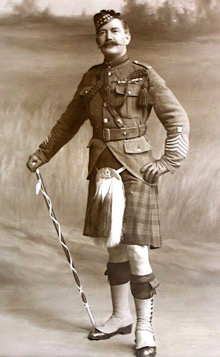
On October 23, 1914, near Ypres, Belgium, Drummer Kenny rescues wounded men on five occasions under very heavy fire. Twice previously he saves machine guns by carrying them out of action, and on numerous occasions he conveys urgent messages under very dangerous circumstances over fire-swept ground.
On March 20, 1999, Kenny’s grave receives a new headstone, arranged by The Gordon Highlanders London Association (Lt. Col. M. H. Burge). He is not otherwise commemorated. His Victoria Cross and other medals are on display at the Gordon Highlanders Museum, Aberdeen, Scotland.
The Irish Times reports that “This stretch of road has been a favourite ambush spot for successive generations of IRA men since the 1920s.” The Provisional IRA has been attacking British Army patrols and convoys with roadside bombs regularly since the beginning of the Troubles in the early 1970s. Most of these attacks take place in rural parts of Northern Ireland, especially eastern and southern County Tyrone (where the IRA’s Tyrone Brigade is active) and southern County Armagh (heartland of the South Armagh Brigade). In August 1979, the IRA ambushes a British Army convoy with two large roadside bombs near Warrenpoint, killing eighteen soldiers. This is the deadliest attack on the British Army in Northern Ireland during the Troubles. In December 1979, four more British soldiers are killed on Ballygawley Road in the Dungannon land mine attack. In May 1981, five British soldiers are killed when their Saracen APC is ripped apart by a roadside bomb at Altnaveigh, County Armagh. In July 1983, four Ulster Defence Regiment (UDR) soldiers are killed when their vehicle strikes an IRA land mine near Ballygawley, County Tyrone. In December 1985, the Tyrone IRA launches an assault on the police barracks in Ballygawley, shooting dead two officers and destroying the barracks with a bomb.
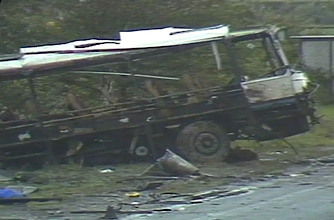
On the night of August 19/20, 1988, an unmarked 52-seater bus is transporting 36 soldiers of The Light Infantry from Aldergrove Flying Station to a military base near Omagh. The soldiers, who came from England, have just finished 18 months of a two-year tour of duty in Northern Ireland and are returning to the base after a short holiday.
As it is driving along the main road from Ballygawley to Omagh, at about 12:30 a.m., IRA members remotely detonate a roadside bomb containing 200 pounds (91 kg) of Semtex. According to police, the bomb had been planted in a vehicle by the roadside and had been detonated by command wire from 330 yards (300 m) away. A statement by one of the survivors claims instead that the roadside bomb was made of “two fertilizer bags filled with Semtex.” The blast hurls the bus 30 metres down the road and throws the soldiers into neighbouring hedges and fields. It leaves a crater 6 feet deep and scatters body parts and twisted metal over a wide area. Witnesses describe finding dead, dying and wounded soldiers strewn on the road and caught in the wreckage of the bus. Others are walking around “stunned.” Some of the first to arrive on the scene and offer help are loyalist bandsmen of the Omagh Protestant Boy’s Band returning from a parade in Portadown, who have also been traveling in buses.
Eight of the soldiers are killed and the remaining 28 are wounded. The soldiers killed are: Jayson Burfitt (aged 19), Richard Greener (aged 21), Mark Norsworthy (aged 18), Stephen Wilkinson (aged 18), Jason Winter (aged 19), Blair Bishop (aged 19), Alexander Lewis (aged 18) and Peter Bullock (aged 21). This is the single biggest loss of life for the British Army from an IRA attack in Northern Ireland since the Warrenpoint ambush in 1979, although eleven off-duty British soldiers had been killed in the Droppin Well bombing in 1982, carried out by the Irish National Liberation Army (INLA). An account from one of the survivors is published in Ken Wharton‘s book A Long Long War: Voices from the British Army in Northern Ireland, 1969–98 (2008).
An inquest into the attack is told that the road is usually off-limits to military vehicles, due to the threat from the IRA. The driver of the bus, who is also a soldier, claims he had been directed on to the road by diversion signs. The inquest hears that signs had not been placed by the police or the roads service. The IRA denies placing any signs and says that military buses often use the road. The mother of one of those killed accuses the British military of negligence and claims it is “trying to conceal the truth.”
Shortly thereafter, the Provisional IRA issues a statement claiming responsibility. It says that the attack had been carried out by its Tyrone Brigade and adds: “We will not lay down our arms until the peace of a British disengagement from Ireland.” The security forces suspect that an informer may have told the IRA of the bus’s route and the time it would pass a specific spot. After the attack, the British military decides to start ferrying their troops to and from East Tyrone by helicopter to avoid any future attacks like this.
Tom King, then Secretary of State for Northern Ireland, says there is “some evidence” that the explosives used are part of a consignment from Libya. He also states that the possibility of reintroducing internment is “under review”. Libyan weaponry enables the IRA to mount some of its biggest operations during its campaign. The Ballygawley bus bombing is believed to be one of these attacks. One former IRA member later suggests that Semtex explosive was not crucial to the outcome of the attack, saying, “we were having plenty of success without Semtex… at Ballygawley we ‘only’ got eight, but it was a bus of about fifty-six. If we’d used a fertiliser bomb, the whole bus would have been destroyed.”
On August 30, 1988, three IRA members are ambushed and killed by the Special Air Service (SAS) at Drumnakilly, County Tyrone. According to author Nick Van der Bijl, the men—Gerard Harte, Martin Harte and Brian Mullin—are identified by British intelligence as the perpetrators of the bombing. Peter Taylor, instead, says that only Mullin is suspected, and that plans for the SAS operation were already underway at the time of the IRA attack.
Two months after the attack, the British Government introduces the broadcasting ban. It means that the voices of Sinn Féin and IRA members are not allowed to be broadcast on television or radio. The Ballygawley bus bombing is believed to have influenced the Government’s decision to introduce the ban.
According to state papers declassified in 2019, the attack sparks “panic” in the British Government, and tension between the Royal Ulster Constabulary (RUC) and the British Army over who is at fault for the security lapse. British Prime MinisterMargaret Thatcher warns RUC chief, John Hermon, that she will no longer send British troops over “in waves to be killed.”
In Enniskillen, armed Williamite civilians drawn from the local Protestant population organise a formidable irregular military force. The armed civilians of Enniskillen ignore an order from Robert Lundy that they should fall back to Derry and instead launch guerrilla attacks against the Jacobites. Operating with Enniskillen as a base, they carry out raids against the Jacobite forces in Connacht and Ulster, plundering Trillick, burning Augher Castle, and raiding Clones.
A Jacobite army of about 3,000 men, led by Justin McCarthy, Viscount Mountcashel (in the Jacobite peerage), advance on them from Dublin. Lord Mountcashel’s men consist of three regiments of infantry and two of dragoons. The regiments include his own regiment, Mountcashel (approx. 650 men in 13 companies), The O’Brien regiment (also 13 companies of 650 men), and the Lord Bophin (Burke) regiment. He also has the dragoon regiments of Cotter and Clare, each with seven companies of about 350 dragoons. On July 28, 1689, Mountcashel’s force encamps near Enniskillen and bombards the Williamite outpost of Crom Castle to the southeast of Enniskillen. Crom Castle is almost 20 miles (32 km) from Enniskillen by road and about 5 miles (8.0 km) from Newtownbutler.
Two days later, they are confronted by about 2,000 Williamite ‘Inniskilliniers’ under Colonel Berry, Colonel William Wolseley and Gustave Hamilton. The Jacobite dragoons under Antoine Hamilton stumble into an ambush laid by Berry’s men near Lisnaskea and are routed, taking 230 casualties. Mountcashel manages to drive off Berry’s cavalry with his main force but is then faced with the bulk of the Williamite strength under Wolseley. There is some debate in the sources over troop numbers, though it is believed that Mountcashel has a large number of poorly armed conscripts. Unwisely, Mountcashel halts and draws up his men for battle about a mile south of Newtownbutler.
Williamite histories claim that many of the Jacobite troops flee as the first shots are fired. Up to 1,500 of them are hacked down or drowned in Upper Lough Erne when pursued by the Williamite cavalry. Of the 500 men who try to swim across the Lough, only one survives. Approximately 400 Jacobite officers, along with Lord Mountcashel, the Jacobite commander, are captured and later exchanged for Williamite prisoners, with the other Jacobites being killed. These claims seem unlikely, for several reasons. Each Irish regiment includes approximately 40 officers. The entire force, therefore, would include only about 200 officers. Many of these officers are accounted for in an October 1689 roll call, which shows approximately a 15–20% change in the officer roll call since July for the infantry regiments and 5% for the dragoons. This totals some 20–30 officers in all. Also, the Mountcashel regiment’s roll call for October shows that companies which would normally have 50–60 men, have around 25, which results in a loss of approximately 300–400 men for this regiment. The Cotter and Clare dragoons who ride away from the battle do not have significant losses, based on the October 1689 roll call. Assuming the other two infantry regiments suffer similar losses, gives a total loss of 1,200–1,300. Given their officers are recorded in the October roll and show fewer losses than the Mountcashel regiment among officers, there may be fewer losses in the ranks as well. The Williamite histories acknowledge that they captured approximately 400, including men who are later sent to Derry, which would indicate a total loss of killed, wounded, and missing of 800–900, and likely less. This number is necessarily an estimate based on the available data but should be contrasted with Williamite claims that they killed and drowned 2,000. It appears likely that a couple of hundred men from Mountcashel’s regiment may have fled into the bogs toward Lough Erne, and some of them who made it to the river tried to swim and were drowned, leading to the story of the hundreds drowned.
The battle is still commemorated by the Orange Order in Ulster and is mentioned in the traditional unionist song, “The Sash.”
The battle is significant in another way: the regiments on both sides go on to have long and famous histories. On the Williamite side, the Innsikilling Regiment (27th Foot), and on the Jacobite side, the Clare and Mountcashel/Lee/Bulkeley regiments of the Irish Brigade. The two Irish regiments face off again at the Battle of Fontenoy in 1745, where the Irish Brigade famously drives the British army from the battlefield with a charge in the final stage of the battle.
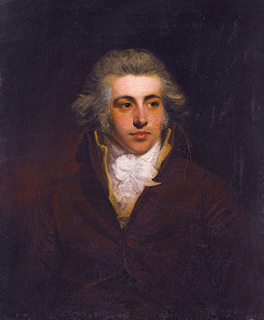
FitzGerald marries Charlotte Boyle Walsingham in London on August 3, 1791. Together they live at Boyle Farm, Thames Ditton. In 1806, his wife succeeds to the Baron de Ros, the premier baron in the Peerage of England, as 20th Baroness de Ros. The family then takes the surname FitzGerald-de Ros. The couple has 13 children in 21 years, of which nine survive to adulthood.
Pack is born on October 7, 1775 in Kilkenny, County Kilkenny, the younger son of Rev. Thomas Pack, Dean of Ossory, and Catherine Pack (née Sullivan), of St. Andrew’s parish, Dublin. In June 1790, he enters Trinity College Dublin (TCD), aged 15, but does not take his degree. His elder brother, Thomas Pack, previously attends TCD, but dies in December 1786.
Promoted to lieutenant colonel in December 1800, Pack commands the 71st (Highland) Regiment of Foot and takes part in the expedition to the Cape of Good Hope in 1806. He then takes part in General John Whitelocke‘s expedition to South America and is captured after an unsuccessful attack on Montevideo. His fellow-prisoner is William Carr Beresford, later 1st Viscount Beresford, and the two men remain friends for the rest of their lives. Refusing to give their parole to General Santiago de Liniers, they escape from La Plata in a boat, meeting a British cruiser at sea. Pack later takes part in the successful attack on Montevideo on February 9, 1807.
Pack is posted to Portugal in 1808 and is present at the Battle of Roliça on August 17 and the Battle of Vimeiro on August 21. In 1809, he takes part in the Walcheren Campaign and, promoted to colonel in July 1810, he is made aide-de-camp to George III. Returning to Portugal in 1810, he serves under Beresford, commanding a Portuguese brigade, and takes part in the Battle of Bussaco on September 27, 1810. Promoted to brigadier general in January 1812, he takes part in the Siege of Ciudad Rodrigo and is present at the Battle of Salamanca on July 22, 1812. In June 1813, he is promoted to major general and later is present at the battles of Vitoria (June 21, 1813), Nivelle (November 10, 1813), Nive (December 10-13, 1813), Orthez (February 27, 1814) and the final French defeat at Toulouse (April 10, 1814). In January 1815, he is made a Knight Commander of the Order of the Bath (KCB) in recognition of his services in the Peninsula.
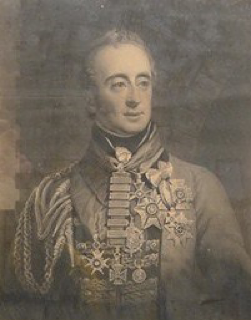
In July 1816, Pack marries Lady Elizabeth Louisa de la Poer Beresford, daughter of George Beresford, 1st Marquess of Waterford. They have two sons and two daughters. His descendants adopted “Pack-Beresford” as their family name. He dies on July 24, 1823, at Lord Beresford’s house in Upper Wimpole Street, London. A monument to him is later erected in St. Canice’s Cathedral, Kilkenny. A portrait by G. L. Saunders is in family possession; another by Charles Turner, showing Pack wearing his numerous orders and decorations, is in the National Portrait Gallery, London. A collection of his papers is held by the University of Southampton.
On June 28, 1920, four men from C Company of the 1st Battalion, Connaught Rangers, based at Wellington Barracks, Jalandhar in the Punjab Province, India, protest against martial law in Ireland by refusing to obey orders. One of them, Joe Hawes, had been on leave in County Clare in October 1919 and had seen a hurling match prevented from happening by British forces with bayonets drawn. Poor accommodation conditions in the Wellington Barracks likely provide an additional cause of the dispute.
The protestors are soon joined by other Rangers, including several English soldiers, such as John Miranda from Liverpool and Sergeant Woods. By the following morning, when a rebel muster takes place, 350 Irish members of the Rangers are involved in the mutiny.
On June 30, 1920, two mutineers from the Jalandhar barracks (Frank Geraghty and Patrick Kelly) travel to Solon barracks where C Company are stationed and, despite arrest, help spark a mutiny there, led by PrivateJames Daly, whose brother William also takes part in the protest.
Initially, the protests are peaceful with the men involved donning green, white and orange rosettes and singing Irish nationalist songs. At Solon, however, on the evening of July 1, a party of about thirty men led by James Daly, carrying bayonets, attempt to seize their company’s rifles, stored in the armoury. The troops guarding the magazine open fire and two men are killed: Private Smythe who is with Daly’s party, and Private Peter Sears, who had not been involved in the attack on the magazine but is returning to his billet when hit by a stray bullet. Within days, both garrisons are occupied by other British troops. Daly and his followers surrender and are arrested. Eighty-eight mutineers are court-martialed: seventy-seven are sentenced to imprisonment and ten are acquitted. James Daly is shot by a firing squad at Dagshai Prison on November 2, 1920. He is the last member of the British Armed Forces to be executed for mutiny. The bodies of Privates Sears and Smythe are buried at Solan, while Daly and Miranda (who later dies in prison) are buried at a cemetery in Dagshai. Among those who receive a sentence of life in prison is Martin Conlon, a half brother to the eight brothers from Sligo town who fight in World War I, in which four are killed in action.
In 1923, following Irish Independence, the imprisoned mutineers are released and returned to Ireland. In 1936, the Irish Free State‘s Fianna Fáil government awards pensions to those whose British Army pensions were forfeited by conviction for their part in the mutiny. The bodies of Privates Sears, Smythe, and Daly are repatriated from India to Ireland for reburial in 1970.
On June 25, 1990, shortly after 8:30 p.m., the Provisional Irish Republican Army detonates a bomb at the Carlton Club, a club in London popular among MPs and supporters of the ruling Conservative Party. The ground floor collapses to the basement and windows are shattered. The blast is felt up to half a mile away. The bombing injures twenty people, including Lord Donald Kaberry, a former Vice-Chairman of the Conservative Party, and a much-loved porter, Charles Henry. Neither ever regains full health. Kaberry dies the following March, though Henry is able to return to his duties after a serious operation, but dies three years later.
In a statement, the IRA says, “Like Brighton in 1984, the IRA has brought the war directly to those who keep the British Army on the streets and in the fields of Ireland. While such occupation continues, and the Nationalist people face daily oppression, the policy makers and their military arm will not be safe.” The attack is part of the IRA’s escalating campaign that started in early 1990 and which has claimed two lives and 27 injuries since May of that year. The conservative MP for FulhamMatthew Carrington calls the attack very “worrying” as it is a non-military target, suggesting a dangerous tactic from the IRA against members of the public.
The bomb contains 15 lbs. (6.8 kg) of Semtex explosives. Prime MinisterMargaret Thatcher arrives at the club shortly after the bombing and speaks with some of the victims.
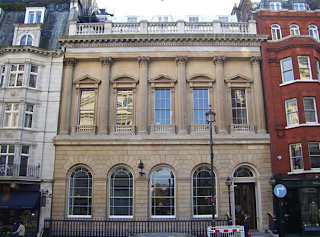
(Pictured: Building of Arthur’s which has hosted the Carlton Club since 1943)