seamus dubhghaill

Promoting Irish Culture and History from Little Rock, Arkansas, USA


Leave a comment

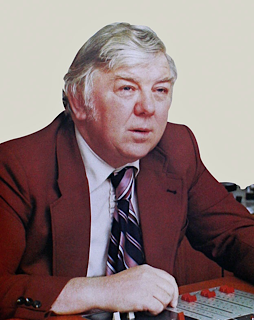
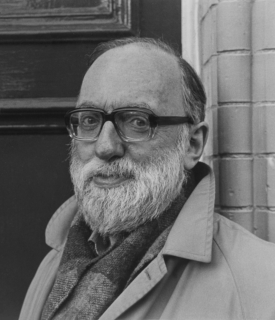
Birth of Ciarán Mac Mathúna, Broadcaster & Music Collector

Ciarán Mac Mathúna, broadcaster and music collector, is born on November 26, 1925, in Limerick, County Limerick. He is a recognised authority on Irish traditional music and lectures extensively on the subject. He travels around Ireland, England, Scotland and the United States collecting music.

According to Sam Smyth in the Irish Independent, Mac Mathúna is “on a mission to collect songs and stories, music, poetry and dance before they were buried under the coming tsunami of pop music.”

Mac Mathúna presents the radio programme, Mo Cheol Thú, for 35 years. Upon his retirement in 2005, the managing director of RTÉ Radio, Adrian Moynes, describes him as “inseparable from RTÉ Radio.” Upon his death in 2009, the Irish Independent describes him as “a national treasure.”

Mac Mathúna spends his early years in Mulgrave Street in Limerick. He is schooled at CBS Sexton Street, and later graduates from University College Dublin (UCD) with a BA in modern Irish and Latin. Subsequently, he completes an MA in Irish.

After college Mac Mathúna works as a teacher and later at the Placenames Commission. In 1954, he joins Radio Éireann where his job is to record Irish traditional musicians playing in their own locales. This entails visiting such places as Sliabh LuachraCounty Clare and County Sligo, and the resulting recordings feature in his radio programmes: Ceolta Tire, A Job of Journeywork and Humours of Donnybrook.

Director General of RTÉ Cathal Goan later recalls that Mac Mathúna interviewed him for his first job at the station. He assists in the organisation of Mac Mathúna’s music collection for the RTÉ Libraries and Archives.

Mac Mathúna’s long-running Sunday morning radio series, Mo Cheol Thú (You are my music), begins in 1970 and continues until November 2005, when he retires from broadcasting. Each 45-minute programme offers a miscellany of archive music, poetry and folklore, mainly of Irish origin. It is one of radio’s longest running programmes. The last episode is broadcast on November 27, 2005, at 8:10 a.m.

Mac Mathúna wins two Jacob’s Awards, in 1969 and 1990, for his RTÉ Radio programmes promoting Irish traditional music. He receives the Freedom of Limerick city in June 2004. He is also awarded honorary doctorates by NUI Galway and the University of Limerick. In 2007, he receives the Musicians Award at the 10th annual TG4 Traditional Music Awards.

Joe Kennedy in the Sunday Independent in 2007 compares Mac Mathúna to “an amiable rock, rolling gently along, still picking up some moss and morsels of music that he may have missed.”

Mac Mathúna‘s wife, Dolly MacMahon (using the English version of her surname), is a singer of traditional songs. She comes from Galway and meets her husband in 1955. He has two sons named Padraic and Ciarán, one daughter named Déirdre, and four grandchildren at the time of his death: Eoin, Colm, Conor and Liam.

Mac Mathúna dies in St. Gladys nursing home, Harold’s Cross, Dublin, on December 11, 2009. His funeral on December 15, 2009, is attended by hundreds of people, including aides-de-camp of the President and Taoiseach, RTÉ Director-General Cathal Goan, poet Seamus Heaney and others.

Musicians performing at the ceremony include Peadar Ó RiadaCór Cúil Aodha and members of The Chieftains and Planxty. The corpse is then taken to Mount Jerome Crematorium. Journalist Kevin Myers says Mac Mathúna’s legacy will be the “rebirth of Irish music,” adding, “Well, if Ciarán Mac Mathúna can die, I suppose anyone can. Actually, I had always thought that he was immortal. He certainly appeared to have all the ingredients.”


Leave a comment

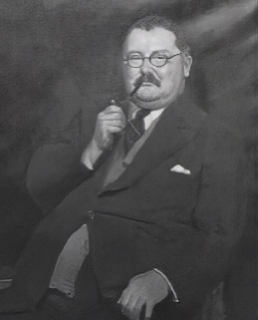
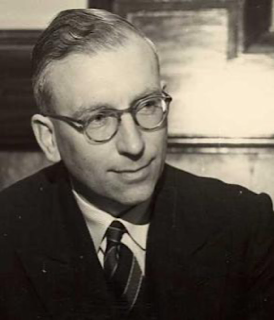
Death of R. M. “Bertie” Smyllie, Editor of “The Irish Times”

Robert Maire Smyllie, known as Bertie Smyllie, editor of The Irish Times for twenty years, dies on September 11, 1954.

Smyllie is born on March 20, 1893, at Hill Street, ShettlestonGlasgowScotland. He is the eldest of four sons and one daughter of Robert Smyllie, a Presbyterian printer originally from Scotland who is working in Sligo, County Sligo, at the time, and Elisabeth Follis, originally from Cork, County Cork. His father marries in Sligo on July 20, 1892, and later becomes proprietor and editor of the unionist Sligo Times. Smyllie attends Sligo Grammar School in 1906 and enrolls at Trinity College Dublin (TCD) in 1911.

After two years at TCD, Smyllie’s desire for adventure leads him to leave university in 1913. Working as a vacation tutor to an American boy in Germany at the start of World War I, he is detained in Ruhleben internment camp, near Berlin, during the war. As an internee, he is involved in drama productions with other internees. Following his release at the end of the war, he witnesses the German revolution of 1918–1919. During this period, he encounters revolutionary sailors from Kiel who temporarily make him a representative of the Workers’ and Soldiers’ Council, and he observes key events including the looting of the Kaiser’s Palace and violent clashes between rival factions in Berlin. It is also during this period that he secures a personal interview with David Lloyd George at the Paris Convention of 1919. This helps Smyllie gain a permanent position with The Irish Times in 1920, where he quickly earns the confidence of editor John Healy. Together, they take part in secret but unsuccessful attempts to resolve the Irish War of Independence.

Smyllie contributes to the Irishman’s Diary column of the paper from 1927. In 1927, he publishes an exclusive report outlining a draft government including both Labour Party and Fianna Fáil TDs, signaling the volatile politics of the early state years.

Smyllie’s knowledge of languages (particularly the German he had learned during his internment) led to numerous foreign assignments. His reports on the rise of National Socialism in 1930s Germany are notably prescient and instill in him a lasting antipathy towards the movement.

When Healy dies in 1934, Smyllie becomes editor of The Irish Times and also takes on the role of Irish correspondent for The Times (London), a position that brings significant additional income. Under Healy’s leadership, The Irish Times shifted from representing the Anglo-Irish ascendancy to becoming an organ of liberal, southern unionism, and eventually becomes a critical legitimising force in the Irish Free State. Smyllie enthusiastically supports this change. He establishes a non-partisan profile and a modern Irish character for the erstwhile ascendancy paper. For example, he drops “Kingstown Harbour” for “Dún Laoghaire.” He also introduces the paper’s first-ever Irish-language columnist. He is assisted by Alec Newman and Lionel Fleming, recruits Patrick Campbell and enlists Flann O’Brien to write his thrice-weekly column “Cruiskeen Lawn” as Myles na gCopaleen. As editor, he introduces a more Bohemian and informal style, establishing a semi-permanent salon in Fleet Street’s Palace Bar. This becomes a hub for journalists and literary figures and a source of material for his weekly column, Nichevo.

One of Smyllie’s early political challenges as editor concerns the Spanish Civil War. At a time when Irish Catholic opinion is strongly pro-Franco, he ensures The Irish Times coverage is balanced and fair, though advertiser pressure eventually forces the withdrawal of the paper’s young reporter, Lionel Fleming, from the conflict. His awareness of the looming European crisis earns him the Order of the White Lion of Czechoslovakia in 1939. However, during World War II, he clashes with Ireland’s censorship authorities, especially under Minister Frank Aiken. He challenges their views both publicly and privately, though his relationship with the editor of the Irish Independent, Frank Geary, is cold, reducing the effectiveness of their joint opposition to censorship.

During the 1943 Irish general election, Smyllie uses the paper to promote the idea of a national government that could represent Ireland with authority in the postwar world. He praises Fine Gael’s proposal for such a government and criticises Éamon de Valera for dismissing it as unrealistic. This leads to a public exchange between de Valera and Smyllie, with the latter defending The Irish Times’s role as a constructive voice for Ireland’s future rather than a partisan interest.

Following the war, Smyllie’s editorial stance shifts toward defending Ireland’s neutrality and diplomatic position. When Winston Churchill accuses de Valera of fraternising with Axis powers, Smyllie counters by revealing Ireland’s covert collaboration with the Allies, such as military and intelligence cooperation, despite official neutrality. In the same period, he continues to oppose censorship, particularly the frequent banning of Irish writers by the Censorship of Publications Board. This opposition features prominently in a controversy on The Irish Times letters page in 1950, later published as the liberal ethic. The paper also adopts a critical stance toward the Catholic Church, notably during the 1951 resignation of Minister for Health Noël Browne amid opposition from bishops and doctors to a national Mother and Child Scheme. His editorials suggest the Catholic Church is effectively the government of Ireland, though he maintains a cordial relationship with Archbishop of DublinJohn Charles McQuaid, who invites him annually for dinner.

Smyllie is also wary of American foreign policy, showing hostility particularly during the Korean War. American diplomats in Dublin allege that Smyllie is “pro-communist“. Despite growing readership among an educated Catholic middle class, The Irish Times’s circulation in 1950 remains under 50,000, far below the Irish Independent and the Fianna Fáil-aligned The Irish Press.

In later years, Smyllie’s health declines, prompting a quieter lifestyle. He moves from his large house in Pembroke Park, Dublin, to DelganyCounty Wicklow. As he does not drive, he becomes less present in the newspaper office in D’Olier Street, contributing to a decline in the paper’s dynamism. His health deteriorates further, resulting in frequent absences from his editorial duties, though he retains his position despite management attempts to limit his authority, especially over finances. He dies of heart failure on September 11, 1954.

In 1925, Smyllie marries Kathlyn Reid, eldest daughter of a County Meath landowner. They have no children.

Smyllie is an eccentric: he hits his tee shots with a nine iron, speaks in a curious mix of Latin phrases and everyday Dublin slang, and weighs 22 stone (308 lbs.; 140 kg) yet still cycles to work wearing a green sombrero.


Leave a comment

Birth of Anthony Farquhar, Auxiliary Bishop Emeritus of Down & Connor

Anthony J. FarquharIrish Catholic prelate who is the Auxiliary Bishop of the Roman Catholic Diocese of Down and Connor, is born in South BelfastNorthern Ireland, on September 6, 1940.

Farquhar is educated at St. Malachy’s College. He later studies classics at Queen’s University, Belfast. He is then sent to study theology at the Pontifical Lateran UniversityRome. He is ordained to the priesthood at the age of 24 on March 13, 1965.

Farquhar is assistant priest at Dunsford and Ardglass Parish. He is a hospital chaplain in 1966. He is later assigned to teach Latin at St. MacNissi’s College, Garron Tower, where he stays as a teacher from 1966 to 1970. From 1970 to 1975 he is assistant chaplain, along with Ambrose Macaulay, to Queen’s University Belfast, and finally as Chaplain/Lecturer at the University of Ulster from 1975 to 1983.

Farquhar’s main outside interests are folk music and football, particularly student football. He is president of Queen’s University Belfast A.F.C. and also serves as patron of the Irish Universities Football Union.

On April 6, 1983, aged 42, Farquhar is appointed Titular Bishop of Hermiana and, with Patrick Walsh, as Auxiliary Bishop of Down and Connor. The principal consecrator is the Bishop of Down and Connor, Cahal Daly, (later Cardinal Archbishop of the Archdiocese of Armagh) and principal co-consecrators are Archbishop Gaetano Alibrandi, the Apostolic Nuncio to Ireland and William J. Philbin (Bishop Emeritus of Down and Connor). During the ordination ceremony, the assistant Priests to Bishop Farquhar are his priest uncles, Canon Walter Larkin and Fr. Thomas Aquinas Larkin O.C.D.

Farquhar’s episcopal motto is “Sapientia Proficere” (“to increase in wisdom”) from Luke 2:52. He takes an active and ongoing interest in interchurch relations and serves as Chairman of the Irish Catholic Bishops’ Conference on Ecumenism.

Farquhar travels to Rome for the quinquennial visit ad limina visit in October 2006.

In December 2007, he officiates at the dedication of the new altar in the Church of the Good Shepherd in his native parish of the Most Holy Rosary, Belfast, following the renovation programme.

A book titled Inter-Church Relations: Developments and Perspectives, published by Veritas Communications to mark the 25th anniversary of Farquhar’s ordination as a bishop, contains contributions by a number of people praising Farquhar’s work. Seán Brady notes he was “engaged actively in promoting bonds of friendship and understanding at times when it has been far from easy to do so.”

On December 3, 2015, Pope Francis accepts Farquhar’s resignation on the grounds of age. He is at the time the longest serving bishop in Ireland.

Farquhar dies in Belfast on November 18, 2023, at the age of 83. His funeral requiem mass is celebrated in the Church of the Good Shepherd, Ormeau Road, Belfast, on November 23 followed by interment in the adjoining cemetery.


Leave a comment

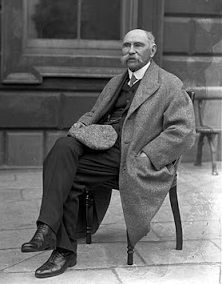
Death of Dr. Douglas Hyde, First President of Ireland

Dr. Douglas Hyde, Gaelic scholar and the first President of Ireland, dies in Dublin on July 12, 1949, at the age of 89.

Hyde is born at Longford House in Castlerea, County Roscommon, on January 17, 1860. In 1867, his father is appointed prebendary and rector of Tibohine, and the family moves to neighbouring Frenchpark, in County Roscommon. He is home schooled by his father and his aunt due to a childhood illness. While a young man, he becomes fascinated with hearing the old people in the locality speak the Irish language.

Rejecting family pressure to follow previous generations with a career in the Church, Hyde instead becomes an academic. He enters Trinity College, Dublin (TCD), where he gains a great facility for languages, learning Latin, Greek, Hebrew, French, and German, but his great passion in life is the preservation of the Irish language.

After spending a year teaching modern languages in Canada, Hyde returns to Ireland. For much of the rest of his life he writes and collects hundreds of stories, poems, and folktales in Irish, and translates others. His work in Irish helps to inspire many other literary writers, such as W. B. Yeats and Lady Gregory.

In 1892, Hyde helps establish the Gaelic Journal and in November of that year writes a manifesto called The necessity for de-anglicising the Irish nation, arguing that Ireland should follow her own traditions in language, literature, and even in dress.

In 1893, Hyde founds the Gaelic League (Conradh na Gaeilge) along with Eoin MacNeill and Fr. Eugene O’Growney and serves as its first president. Many of the new generation of Irish leaders who play a central role in the fight for Irish independence in the early twentieth century, including Patrick PearseÉamon de ValeraMichael Collins, and Ernest Blythe first become politicised and passionate about Irish independence through their involvement in the Gaelic League. Hyde does not want the Gaelic League to be a political entity, so when the surge of Irish nationalism that the Gaelic League helps to foster begins to take control of many in the League and politicize it in 1915, Hyde resigns as president.

Hyde takes no active part in the armed upheaval of the 1910s and 1920s, but does serve in Seanad Éireann, the upper house of the Irish Free State’s Oireachtas, as a Free State senator in 1925-26. He then returns to academia, as Professor of Irish at University College Dublin (UCD), where one of his students is future Attorney General and President of Ireland Cearbhall Ó Dálaigh.

In 1938, Hyde is unanimously elected to the newly created position of President of Ireland, a post he holds until 1945. Hyde is inaugurated on June 26, 1938, in the first inaugural ceremony in the nation’s history. Despite being placed in a position to shape the office of the presidency via precedent, Hyde by and large opts for a quiet, conservative interpretation of the office. In April 1940, he suffers a massive stroke and plans are made for his lying in state and state funeral, but to the surprise of everyone he survives, albeit paralysed and confined to a wheelchair. One of his last presidential acts is a visit to the German ambassador Eduard Hempel on May 3, 1945, to offer his condolences on the death of Adolf Hitler, a visit which remains a secret until 2005.

Hyde leaves office on June 25, 1945, opting not to nominate himself for a second term. He opts not return to his Roscommon home due to his ill-health, but rather moves into the former Secretary to the Lord Lieutenant’s residence in the grounds of Áras an Uachtaráin, where he lived out the remaining four years of his life.

Hyde dies in Dublin on July 12, 1949, at age 89. As a former President of Ireland he is accorded a state funeral which, as a member of the Church of Ireland, takes place in Dublin’s St. Patrick’s Cathedral. Since contemporary rules of the Roman Catholic Church in Ireland at the time prohibit Roman Catholics from attending services in non-Catholic churches, all but one member of the Catholic cabinet remain outside the cathedral grounds while Hyde’s funeral takes place. Hyde is buried in Frenchpark, County Roscommon at Portahard Church.


Leave a comment

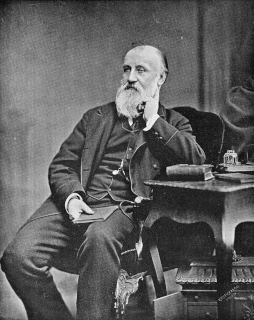
Death of Sir Robert Prescott Stewart, Organist, Conductor & Composer

Sir Robert Prescott Stewart, organist, conductor, composer, teacher, and academic, dies in Dublin on March 24, 1894. He is one of the most influential (classical) musicians in 19th-century Ireland.

Stewart is born on December 16, 1825, the second of two sons of Charles Frederick Stewart of 6 Pitt Street (now Balfe Street), Dublin, librarian of King’s Inns. Nothing is known of his mother other than that she studies music with one of the Logier family, presumably the noted military musician and piano teacher Johann Bernhard Logier, a resident of Dublin from 1809.

Stewart is educated at Christ Church Cathedral school in Dublin, where he is a chorister. He begins to accompany choral services in his early teens, and in 1844 is appointed organist of Christ Church Cathedral and the Trinity College Dublin (TCD) chapel. In addition, in 1852 he becomes de facto organist of St. Patrick’s Cathedral, and holds all three positions concurrently for the rest of his life.

Stewart’s first conducting appointment is with the Dublin University Choral Society in 1846, to which he later adds similar appointments in Dublin, Bray, and Belfast. He is active as a teacher, both privately and from 1869 at the Royal Irish Academy of Music (RIAM), and as a critic with the Dublin Daily Express. On occupying the University of Dublin‘s chair of music in 1862, he takes steps to formalise requirements for the music baccalaureate, introducing examinations in a modern language, Latin (or a second modern language), English (literature and composition), arithmetic, and music history. As a result, though not until 1878, similar examinations are introduced at the University of Oxford and the University of Cambridge. In his professorial capacity he delivers in the 1870s public lectures on Bach, Handel, Wagner, church music, music education, organology, and, most notably, Irish music, in which he reveals an uncanny knowledge of the wire-strung harp and the uilleann pipes. He also contributes entries on Irish music and musicians to the first edition of George Grove‘s A Dictionary of Music and Musicians.

By all accounts, Stewart is a very adept musician, having perfect pitch, a formidable memory, and astonishing facility in transposition. Apparently an autodidact, he is the first Irish organist to cultivate pedal technique, while in the art of improvisation both Joseph Robinson and Sir John Stainer hold him to be the equal of Mendelssohn.

Intent on broadening his musical horizons, Stewart travels widely. From 1851 he is a regular visitor to London, and from 1857 makes frequent trips to Continental Europe, attending the Beethoven and Schumann festivals at Bonn in 1871 and 1873 respectively and Wagner’s first Bayreuth Festival in 1876. On the initiative of the Dublin University Choral Society, he is conferred with the simultaneous degrees of Mus.B. and Mus.D. at a special ceremony on April 9, 1851. On February 28, 1872, he is knighted at Dublin Castle by John Poyntz Spencer, 5th Earl Spencer, a social climb that Stewart, who has no independent income, can afford only by accumulating professional appointments and by relentless private teaching. In addition to successive townhouses in the vicinity of Merrion Square, he owns a smaller property on Bray Esplanade, named Holyrood.

Among Stewart’s compositions, his disciple James Culwick lists about forty part songs (of which several win prizes), more than twenty solo songs, fifteen anthems, several church services, a quantity of shorter liturgical music, and sixteen choral cantatas with orchestra. Three of the cantatas set texts by John Francis Waller: the 24-movement A Winter Night’s Wake (1858), The Eve of St. John (1860) and Inauguration Ode for the Opening of the National Exhibition of Cork (1852) for the opening of the Irish Industrial Exhibition in Cork. Other occasional pieces are Who Shall Raise the Bell? (The Belfry Cantata) for the inauguration of Trinity College campanile in 1854, Ode to Shakespeare (1870) for the Birmingham Triennial Music Festival, Orchestral Fantasia (1872) for the Boston Peace Festival, How Shall We Close Our Gates? (1873) for the Dublin Exhibition and Tercentenary Ode (1892) for the tercentenary of Trinity College Dublin.

Though Stewart destroys many of his works, his surviving music is consistently well crafted, and the rapid decline in the popularity of the odes is at least partly attributable to the tawdry and ephemeral character of their texts. Yet despite his esteem for Wagner, he never shakes off the conservative stylistic influences of Handel, Beethoven, and Mendelssohn, and the posthumous performance of his music has been restricted almost entirely to the Dublin cathedrals.

In August 1846 Stewart marries Mary Emily Browne, the daughter of Peter Browne of Rahins House, Castlebar, County Mayo. They have four daughters, of whom the eldest dies in 1858. Following Mary’s death on August 7, 1887, he marries on August 9, 1888, Marie Wheeler of Hyde, Isle of Wight, the daughter of Joseph Wheeler of Westlands, Queenstown (now Cobh).

Stewart dies in Dublin on March 24, 1894, and is buried at Mount Jerome Cemetery alongside his first wife and eldest daughter. Portraits of him are in the possession of the Dublin University Choral Society and the Royal Irish Academy of Music (RIAM), and his statue, erected on Leinster Lawn in 1898, still stands.

(From: “Stewart, Sir Robert Prescott” by Andrew Johnstone, Dictionary of Irish Biography, http://www.dib.ie, October 2009)


Leave a comment

Birth of Máire Ní Chinnéide, Language Activist & Playwright

Máire Ní Chinnéide (English: Mary or Molly O’Kennedy) Irish language activist, playwright, first president of the Camogie Association and first female president of Oireachtas na Gaeilge, is born in Rathmines, an affluent inner suburb on the Southside of Dublin, on January 17, 1879.

Ní Chinnéide attends Muckross Park College and the Royal University of Ireland (later the National University of Ireland) where she is a classmate of Agnes O’Farrelly, Helena Concannon, and Hanna Sheehy-Skeffington. She learns the Irish language on holiday in Ballyvourney, County Cork, and earns the first scholarship in Irish language from the Royal University of Ireland, worth £100 a year, which is spent on visits to the Irish college in Ballingeary.

She studies in the school of Old Irish established by Professor Osborn Bergin and is strongly influenced by the Irish Australian professor O’Daly. She later teaches Latin through Irish at Ballingeary and becomes proficient in French, German, Italian and Spanish.

She spends the last £100 of her scholarship on a dowry for her marriage to Sean MacGearailt, later first Accountant General of Revenue in the Irish civil service, with whom she lives originally in Glasnevin and then in Dalkey.

She is a founder member of the radical Craobh an Chéitinnigh, the Keating branch of Conradh na Gaeilge, composed mainly of Dublin-based Kerry people and regarded, by themselves at least, as the intellectual focus of the League.

In August 1904, some six years after the establishment of the earliest women’s hurling teams, the rules of camogie (then called camoguidheacht), first appears in Banba, a journal produced by Craobh an Chéitinnigh. Camogie had come to public attention when it was showcased at the annual Oireachtas (Conradh na Gaeilge Festival) earlier that year, and it differed from men’s hurling in its use of a lighter ball and a smaller playing-field. Ní Chinnéide and Cáit Ní Dhonnchadha, like Ní Chinnéide, an Irish-language enthusiast and cultural nationalist, are credited with having created the game, with the assistance of Ní Dhonnchadha’s scholarly brother Tadhg Ó Donnchadha, who drew up its rules. She is on the first camogie team to play an exhibition match in Navan, County Meath, in July 1904, becomes an early propagandist for the game and, in 1905, is elected president of the infant Camogie Association.

Ní Chinnéide later serves as Vice-President of Craobh an Chéitinnigh, to Cathal Brugha. She is active in Cumann na mBan during the Irish War of Independence and takes the pro-treaty side during the Irish Civil War and attempts to set up a woman’s organisation “in support of the Free State” alongside Jennie Wyse Power.

She first visits the Blasket Islands in 1932 with her daughter Niamh, who dies tragically young. In the summer of 1934, she puts the idea into Peig Sayers‘s head to write a memoir. According to a later interview with Ní Chinnéide “she knew and admired her gift for easy conversation, her gracious charm as a hostess, her talent for illustrating a point she was making by a story out of her own experience that was as rich in philosophy and thought as it was limited geographically.” Peig answers that she has “nothing to write.” She had learned only to read and write in English at school and most of it has been forgotten.

Ní Chinnéide suggests Peig should dictate her memoir to her son Micheal, known to everyone on the island as An File (“The Poet”), but Peig “only shook her head doubtfully.” At Christmas, a packet arrives from the Blaskets with a manuscript, she transcribes it word for word and the following summer brings it back to the Blaskets to read it to Peig. She then edits the manuscript for the Talbot Press. Peig becomes well known as a prescribed text on the Leaving Certificate curriculum in Irish.

Ní Chinnéide has an acting part in the first modern play performed in Irish on the stage, Casadh an tSugáin by Douglas Hyde in 1901. She is later author of children’s plays staged by An Comhar Drámuidhachta at the Oireachtas and the Peacock Theatre, of which Gleann na Sidheóg and An Dúthchas (1908) are published. She is a broadcaster in Irish on 2RN, a wholly owned subsidiary of Raidió Teilifís Éireann, after its foundation in 1926 and author of a translation of Grimms’ Fairy Tales (1923). She is president of the Gaelic Players Dramatic group during the 1930s and a founder of the Gaelic Writers Association in 1939.

She soon becomes interested in writing children’s plays, including Gleann na Sidheóg (Fairy Glen, 1905) and Sidheoga na mBláth (Flower Fairies, 1909. Although there is little information available on the staging of her first play, by the time her second children’s play, Sidheóga na mBláth, is published in An Claidheamh Soluis in December 1907, “Éire Óg” (“Young Ireland”) branches of Conradh na Gaeilge have been established in conjunction with adults’ branches. Patrick Pearse in particular voices the expectation that this play will be staged by many “Éire Óg” branches “before the New Year is very old,” thus indicating the immediate take up of such plays. Indeed, a week after the play’s publication, it is staged in the Dominican College in Donnybrook, Dublin, where Ní Chinnéide had spent several years as an Irish teacher.

Ní Chinnéide dies on April 25, 1967, and is buried in Dean’s Grange Cemetery.

In 2007 the camogie trophy (Máire Ní Chinnéide Cup) for the annual inter-county All-Ireland Junior Camogie Championship is named in her honour.

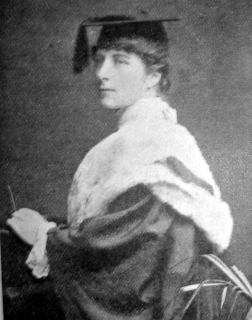
(Pictured: Máire Ní Chinéide at her graduation, photograph from Banba, 1903)


Leave a comment

Death of Pearse Hutchinson, Poet, Broadcaster & Translator

Pearse Hutchinson, Irish poet, broadcaster and translator, dies of pneumonia in Dublin on January 14, 2012.

Hutchinson is born in Glasgow, Scotland, on February 16, 1927. His father, Harry Hutchinson, a Scottish printer whose own father had left Dublin to find work in Scotland, is Sinn Féin treasurer in Glasgow and is interned in Frongoch internment camp in 1919–21. His mother, Cathleen Sara, is born in Cowcaddens, Glasgow, of emigrant parents from County Donegal. She is a friend of Constance Markievicz. In response to a letter from Cathleen, Éamon de Valera finds work in Dublin for Harry as a clerk in the Labour Exchange, and later he holds a post in Stationery Office.

Hutchinson is five years old when the family moves to Dublin and is the last to be enrolled in St. Enda’s School before it closes. He then goes to school at Synge Street CBS where he learns Irish and Latin. One of his close friends there is the poet and literary critic John Jordan. In 1948 he attends University College Dublin (UCD) where he spends a year and a half, learning Spanish and Italian.

Having published some poems in The Bell in 1945, Hutchinson’s poetic development is greatly influenced by a 1950 holiday in Spain and Portugal. A short stop en route at Vigo brings him into contact for the first time with the culture of Galicia. Later, in Andalusia, he is entranced by the landscape and by the works of the Spanish poets Federico García Lorca, Emilio Prados and Luis Cernuda.

In 1951 Hutchinson leaves Ireland again, determined to live in Spain. Unable to get work in Madrid, as he had hoped, he travels instead to Geneva, where he gets a job as a translator with the International Labour Organization, which brings him into contact with Catalan exiles, speaking a language then largely suppressed in Spain. An invitation by a Dutch friend leads to a visit to the Netherlands, in preparation for which he teaches himself the Dutch language.

Hutchinson returns to Ireland in 1953 and becomes interested in the Irish language poetry of writers such as Piaras Feiritéar and Aonghus Fionn Ó Dálaigh and publishes a number of poems in Irish in the magazine Comhar in 1954. The same year he travels again to Spain, this time to Barcelona, where he learns the Catalan and Galician languages, and gets to know Catalan poets such as Salvador Espriu and Carles Riba. With the British poet P. J. Kavanagh, he organises a reading of Catalan poetry in the British Institute.

Hutchinson goes home to Ireland in 1957 but returns to Barcelona in 1961 and continues to support Catalan poets. An invitation by the publisher Joan Gili to translate some poems by Josep Carner leads to the publication of his first book, a collection of thirty of Carner’s poems in Catalan and English, in 1962. A project to publish his translation of Espriu’s La Pell de brau (The Bull-skin), falls through some years later. Some of the poems from this project are included in the collection Done into English.

In 1963, Hutchinson’s first collection of original poems in English, Tongue Without Hands, is published by Dolmen Press in Ireland. In 1967, having spent nearly ten years altogether in Spain, he returns to Ireland, making a living as a poet and journalist writing in both Irish and English. In 1968, a collection of poems in Irish, Faoistin Bhacach (A Lame Confession), is published. Expansions, a collection in English, follows in 1969. Friend Songs (1970) is a new collection of translations, this time of medieval poems originally written in Galician-Portuguese. In 1972 Watching the Morning Grow, a new collection of original poems in English, comes out, followed in 1975 by another, The Frost Is All Over.

In October 1971, Hutchinson takes up the Gregory Fellowship in Poetry at the University of Leeds, on the recommendation of Professor A. Norman Jeffares. There is some controversy around the appointment following accusations, later retracted, that Jeffares had been guilty of bias in the selection because of their joint Irish heritage. He holds tenure at the University for three years, and during that time contributes to the University’s influential poetry magazine Poetry & Audience.

From 1977 to 1978 Hutchinsonn compiles and presents Oró Domhnaigh, a weekly radio programme of Irish poetry, music and folklore for Ireland’s national network, RTÉ. He also contributes a weekly column on the Irish language to the station’s magazine RTÉ Guide for over ten years. A collaboration with Melita Cataldi of Old Irish lyrics into Italian is published in 1981. Another collection in English, Climbing the Light (1985), which also includes translations from Irish, Italian and Galician, is followed in 1989 by his last Irish collection, Le Cead na Gréine (By Leave of the Sun). The Soul that Kissed the Body (1990) is a selection of his Irish poems translated into English. His most recent English collection is Barnsley Main Seam (1995). His Collected Poems is published in 2002 to mark his 75th birthday. This is followed in 2003 by Done into English, a selection of many of the translated works he produced over the years.

A co-editor and founder of the literary journal Cyphers, Hutchinson receives the Butler Award for Irish writing in 1969. He is a member of Aosdána, the state-supported association of artists, from which he receives a cnuas (stipend) to allow him to continue writing. He describes this as “a miracle and a godsend” as he is fifty-four when invited to become a member and is at the end of his tether. A two-day symposium of events is held at Trinity College Dublin, to celebrate his 80th birthday in 2007, with readings from his works by writers including Macdara Woods, Eiléan Ní Chuilleanáin, Paul Durcan and Sujata Bhatt. His most recent collection, At Least for a While (2008), is shortlisted for the Poetry Now Award.

Hutchinson lives in Rathgar, Dublin, and dies of pneumonia in Dublin on January 14, 2012. His extensive archive is in the library of Maynooth University. Its opening on May 24, 2015, is accompanied by the inauguration of an annual Pearse Hutchinson seminar and the launch of a collection of unpublished Hutchinson poems, Listening to Bach.

Some critics argue that Hutchinson’s concern with simplicity and Ireland’s place in the comparative history of human oppression too often deteriorates into banality, didacticism, and regurgitation of sentimental revivalist tropes. Even these, however, acknowledge his occasional greatness, while his champions argue that his achievement has not yet been fully recognised and absorbed.


Leave a comment

Death of John MacHale, Catholic Archbishop of Tuam

John MacHale, Irish Roman Catholic Archbishop of Tuam and Irish nationalist, dies in Tuam, County Galway on November 7, 1881.

MacHale is born in Tubbernavine, near Lahardane, County Mayo on March 6, 1791, to Patrick and Mary Mulkieran MacHale. He is so feeble at birth that he is baptised at home by Father Andrew Conroy. By the time he is five years of age, he begins attending a hedge school. Three important events happen during his childhood: the Irish Rebellion of 1798, the landing at Killala of French troops, whom the boy, hidden in a stacked sheaf of flax, watches marching through a mountain pass to Castlebar, and a few months later the brutal hanging of Father Conroy on a false charge of high treason.

Being destined for the priesthood, at the age of thirteen, he is sent to a school at Castlebar to learn Latin, Greek, and English grammar. In his sixteenth year the Bishop of Killala gives him a bursarship at St. Patrick’s College, Maynooth. At the age of 24, he is ordained a priest by Daniel Murray, Archbishop of Dublin. In 1825, Pope Leo XII appoints him titular bishop of Maronia, and coadjutor bishop to Dr. Thomas Waldron, Bishop of Killala.

With his friend and ally, Daniel O’Connell, MacHale takes a prominent part in the important question of Catholic emancipation, impeaching in unmeasured terms the severities of the former penal code, which had branded Catholics with the stamp of inferiority. During 1826 his zeal is omnipresent. He calls on the Government to remember how the Act of Union in 1800 was carried by William Pitt the Younger on the distinct assurance and implied promise that Catholic emancipation, which had been denied by the Irish Parliament, should be granted by the Parliament of the Empire.

Oliver Kelly, Archbishop of Tuam, dies in 1834, and the clergy selects MacHale as one of three candidates, to the annoyance of the Government who despatches agents to induce Pope Gregory XVI not to nominate him to the vacant see. Disregarding their request, the pope appoints MacHale Archbishop of Tuam. He is the first prelate since the Reformation who has received his entire education in Ireland. The corrupt practices of general parliamentary elections and the Tithe War cause frequent rioting and bloodshed and are the subjects of denunciation by the new archbishop, until the passing of a Tithes bill in 1838. He also leads the opposition to the Protestant Second Reformation, which is being pursued by evangelical clergy in the Church of Ireland, including the Bishop of Tuam, Killala and Achonry, Thomas Plunket.

The repeal of the Acts of Union 1800, advocated by O’Connell, enlists MacHale’s ardent sympathy and he assists the Liberator in many ways, and remits subscriptions from his priests for this purpose. In his zeal for the cause of the Catholic religion and of Ireland, so long downtrodden, but not in the 1830s, he frequently incurs from his opponents the charge of intemperate language, something not altogether undeserved. In his anxiety to reform abuses and to secure the welfare of Ireland, by an uncompromising and impetuous zeal, he makes many bitter and unrelenting enemies, particularly British ministers and their supporters.

The Great Famine of 1846–47 affects his diocese more than any. In the first year he announces in a sermon that the famine is a divine punishment on his flock for their sins. Then by 1846 he warns the Government as to the state of Ireland, reproaches them for their dilatoriness, and holds up the uselessness of relief works. From England as well as other parts of the world, cargoes of food are sent to the starving Irish. Bread and soup are distributed from the archbishop’s kitchen. Donations sent to him are acknowledged, accounted for, and disbursed by his clergy among the victims.

The death of O’Connell in 1847 is a setback to MacHale as are the subsequent disagreements within the Repeal Association. He strongly advises against the violence of Young Ireland. Over the next 30 years he becomes involved in political matters, particularly those involving the church. Toward the end of his life, he becomes less active in politics.

MacHale attends the First Vatican Council in 1869. He believes that the favourable moment has not arrived for an immediate definition of the dogma of papal infallibility. Better to leave it a matter of faith, not written down, and consequently he speaks and votes in the council against its promulgation. Once the dogma had been defined, he declares the dogma of infallibility “to be true Catholic doctrine, which he believed as he believed the Apostles’ Creed“. In 1877, to the disappointment of the archbishop who desires that his nephew should be his co-adjutor, Dr. John McEvilly, Bishop of Galway, is elected by the clergy of the archdiocese, and is commanded by Pope Leo XIII after some delay, to assume his post. He had opposed this election as far as possible but submits to the papal order.

Every Sunday MacHale preaches a sermon in Irish at the cathedral, and during his diocesan visitations he always addresses the people in their native tongue, which is still largely used in his diocese. On journeys he usually converses in Irish with his attendant chaplain and has to use it to address people of Tuam or the beggars who greet him whenever he goes out. He preaches his last Irish sermon after his Sunday Mass, April 1881. He dies in Tuam seven months later, on November 7, 1881, and is buried in the cathedral at Tuam on November 15.

A marble statue perpetuates his memory on the grounds of the Cathedral of the Assumption of the Blessed Virgin Mary, Tuam. MacHale Park in Castlebar, County Mayo and Archbishop McHale College in Tuam are named after him. In his birthplace the Parish of Addergoole, the local GAA Club, Lahardane MacHales, is named in his honour. The Dunmore GAA team, Dunmore MacHales, is also named after him.


Leave a comment

Birth of John D’Alton, Cardinal of the Roman Catholic Church

John Francis D’Alton, Irish Cardinal of the Roman Catholic Church who serves as Archbishop of Armagh and thus Primate of All Ireland from 1946 until his death, is born in Claremorris, County Mayo, on October 11, 1882. He is elevated to the cardinalate in 1953.

D’Alton is born to Joseph D’Alton and his wife Mary Brennan, at the height of the Land Wars in Ireland. He is baptised four days later, on October 15, 1882, with Michael and Mary Brennan acting as his godparents. His mother has a daughter, Mollie Brennan, from a previous marriage, she remarries again after the Cardinal’s father dies in 1883.

D’Alton obtains an extensive education at Blackrock College, Holy Cross College in Drumcondra, University College Dublin (UCD) and the Irish College in Rome. He is a contemporary of Éamon de Valera, whom he befriends at Blackrock College. In his first year in Blackrock, de Valera beats D’Alton in two subjects – Maths, which he later goes on to teach, and Religion.

D’Alton is ordained to the priesthood on April 18, 1908, for service in the Archdiocese of Dublin. He undertakes further postgraduate studies in Rome from 1908 to 1910, gaining a Doctor of Divinity and is appointed to teach Ancient Classics, Latin, and Greek at St. Patrick’s College, Maynooth.

D’Alton occupies important roles at the National Seminary and is successively Professor of Ancient Classics (1912), Greek (1922), Vice-President (1934), and President (1936). He is raised to the rank of Monsignor on June 27, 1938.

On April 25, 1942, D’Alton is appointed coadjutor bishop of Meath and titular bishop of Binda. He receives his episcopal consecration on the following June 29 from Cardinal Joseph MacRory, with Bishops Edward Mulhern and William MacNeely serving as co-consecrators, in the chapel of St. Patrick’s College. He succeeds Thomas Mulvany as Bishop of Meath on June 16, 1943.

D’Alton is named Archbishop of Armagh and thus Primate of All Ireland on June 13, 1946, and is created Cardinal Priest of Sant’ Agata de’ Goti in Rome by Pope Pius XII in the consistory of January 12, 1953. As a cardinal elector in the 1958 papal conclave, he gives a hint of the difficulties involved in that papal conclave and achieving unanimity in the voting.

D’Alton is a member of the Central Preparatory Commission of the Second Vatican Council but lives long enough to attend only the Council’s first session in 1962.

One highlight of D’Alton’s time in Armagh is the Patrician Year Celebrations in 1961, marked by the Irish Catholic hierarchy as the 1,500th anniversary of the death of Saint Patrick and as such an opportunity to promote the “spiritual empire” created by the Irish Catholic church in the wider anglophone world. He writes a pastoral letter to mark the occasion.

Cardinal D’Alton is seen to be more ecumenical in outlook than other members of the Irish hierarchy. He tries to broker talks between the Irish Free State and the United Kingdom to ease the tensions between both countries, even going so far as to address the situation regarding the Irish ports, but to little avail.

In 1952, D’Alton becomes the first individual from the Republic of Ireland to receive an honorary degree from Queen’s University Belfast (QUB), when he is conferred with a Doctorate in Literature. He already possesses a Doctor of Divinity, so this degree is a recognition of his earlier works such as Horace and His Age: A Study in Historical Background (1917), Roman Literary Theory and Criticism: A Study in Tendencies (1931), and Selections from St. John Chrysostom (1940).

D’Alton dies from a heart attack in Dublin at age 80 on February 1, 1963, and is buried on the grounds of St. Patrick’s Cathedral, Armagh. He is succeeded by his auxiliary bishop, William Conway.

In D’Alton’s hometown of Claremorris, the Dalton Inn Hotel and Dalton Street (formerly Church Street) are named after him. A plaque commemorating him is unveiled at the Dalton Inn Hotel on September 28, 2023. Plans to canonise him have been discussed.


Leave a comment

Dedication of the Fusiliers’ Arch in Dublin

The Fusiliers’ Arch, a monument which forms part of the Grafton Street entrance to St. Stephen’s Green in Dublin, is dedicated on August 19, 1907, to the officers, non-commissioned officers and enlisted men of the Royal Dublin Fusiliers who fought and died for “King and country” in the Second Boer War (1899–1902).

Funded by public subscription, the arch is designed by John Howard Pentland and built by Henry Laverty and Sons. Thomas Drew consults on the design and construction.

The proportions of the structure are said to be modelled on the Arch of Titus in Rome. It is approximately 8.5 m (28 ft.) wide and 10 m (33 ft.) high. The internal dimensions of the arch are 5.6 m high and approximately 3.7 m wide (18 by 12 ft.). The main structure of the arch is granite, with the inscriptions carried out in limestone and a bronze adornment on the front of the arch.

The arch is commissioned to commemorate the four battalions (two regular and two militia) of the Royal Dublin Fusiliers that served in the Second Boer War. The names of 222 dead are inscribed on the underside of the arch.

The construction of the arch coincides with a time of political and social change in Ireland, and the colonial and imperial background to the dedication are anathema to a burgeoning nationalist movement – who label the structure “Traitor’s Gate.” Though damaged in a crossfire between the Irish Citizen Army and British forces during the 1916 Easter Rising, the arch remains “one of the few colonialist monuments in Dublin not blown up” in Ireland’s post-independence history.

Engraved on the western face of the monument is the Latin text, Fortissimis suis militibus hoc monumentum Eblana dedicavit MCMVII, “To its strongest soldiers, Dublin dedicates this monument, 1907.” (Eblana is a name that appears on Ptolemy‘s 2nd century AD map of Ireland, traditionally taken as a Latin name for Dublin, although it more likely refers to a site further north, around Loughshinny.) Six battlefields are inscribed on the arch: