seamus dubhghaill

Promoting Irish Culture and History from Little Rock, Arkansas, USA


Leave a comment

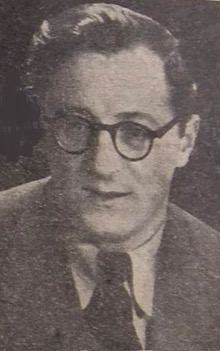
Death of Leslie Daiken, Copywriter, Editor & Writer

Leslie Herbert Daiken, an Irish advertising copywriter, editor, and writer on children’s toys and games, dies in London on August 15, 1964.

Born Leslie Yodaiken into a RussianJewish family in Portobello, Dublin, Daiken is the son of Samuel and Rosa Yodaiken. His father is a dealer in rubber and scrap metal, with premises in Dublin and Glasgow, and he is educated at two independent fee-paying schools, St. Andrew’s College and Wesley College, and then in 1930 he enters Trinity College Dublin. In his first year, one of his lecturers in French literature was Samuel Beckett. He is an active member of the Dublin University Socialist Society and a founding member of the college’s Gaelic Society.

In 1932, and again in 1933, as Yodaiken he wins the Vice-Chancellor’s Prize for English Prose, and while at Trinity, he publishes short stories and verse in ChoiceThe Dublin Magazine, and The New English Weekly.

In 1933, Daiken is present at the house of Charlotte Despard in Eccles Street, Dublin, also used as a Workers’ College, when it is attacked by a mob of Blueshirts. He leads the immediate defence of the building, which is saved on that occasion by the intervention of Irish Republican Army (IRA) men posing as the police.

In 1934, as Yodaiken, he graduates with a BA from Trinity in English and French Literature, with a Second Class degree. After graduating, Daiken works briefly as a schoolteacher in Dublin. In April 1935, his short story “Angela” is published in The New English Weekly under the pen name of Ned Kiernan. That year, he migrates to London.

Soon after his arrival in London, Daiken is one of the three founders of a duplicated publication called Irish Front, together with two other poets, Charles Donnelly and Ewart Milne.

In England, Daiken starts to shorten his surname from Yodaiken to Daiken, for his publications, but he does not make this change formally until doing so by deed poll in 1943.

In December 1935, The Irish Times reviews a production in Camden Town of Ireland Unfree, a stage version by Daiken of Patrick Pearse’s poem “The Rebel.” It states that “Mr. Daiken carries Pearse’s theme beyond his idealistic conclusion to the revolutionary viewpoint of the Irish workers.”

Daiken keeps up his links with leftist Irish writers and dissidents and edits the collection of working-class political verse Goodbye Twilight: songs of the struggle in Ireland (1936), illustrated by Harry KernoffThe Irish Press describes this as “forty young poets with blazing eyes and clenched fists.” In another review, Louis MacNeice calls the book a “collection of proletarian poems – some communist, some Irish republican, and all written in a defiant spirit of opposition … a violent reaction against Yeats and all that he stood for.”

Daiken does not go to fight in the Spanish Civil War, although his Irish Front colleague Charles Donnelly does, and is killed; but he is active in fundraising for the Connolly Column, the Irish section of the International Brigades. He is also a contributor to the branch of Republican Congress in London, an Irish republican and Marxist-Leninist pressure group which aims to engage Irish emigrants working in the city on socialist issues.

In 1939, Mairin Mitchell is highly critical of the Irish leftists, and in particular Daiken, for their views on the Molotov–Ribbentrop Pact, and writes to Desmond Ryan in September, “Brian O’Neill, Bloomsbury, and Daiken will sing Russia right or wrong.”

In October 1939, at the time of the wartime National Registration Act, Daiken is living in a studio at Old Castle Wharf, Twickenham, and describes himself as “Script-writer and advertising copywriter.”

During World War II, Daiken enlists in the Corps of Signals of the Irish Army, a neutral force, and also works for Reuters as a correspondent on education. In 1944, he edits They Go, the Irish, a collection of essays, including one from Seán O’Casey. In 1945, a collection of his verse is published under the title Signatures of All Things. In the summer of that year, Samuel Beckett gives Daiken his unpublished novel Watt, in the hope that he can find a publisher for it, but he fails to do so. They continue to write to each other and meet in London and Paris in the 1950s. He also keeps up with another friend from Trinity, Con Leventhal.

After he becomes a father in 1945, Daiken’s main interest moves on from political activism to children’s games and toys, and by 1951 the basement of his London home has become a toy museum. He writes on the subject and makes television and radio programmes for the BBC about it. His film One potato, two potato, a compilation of children’s street rhymes, wins the Festival Mondial du Film prize in 1958. His radio play The Circular Road is about a Jewish-Irish child.

In the 1950s Daiken founds the National Toy Museum and Institute of Play, today part of the Toy Collection at Hove Museum of Creativity.

Daiken returns to Ireland many times as a visitor. In the early 1960s he completes a radio play about the Jewish community of Dublin in the 1920s, which is broadcast on RTÉ.

In October 1963, Conor Cruise O’Brien, Vice Chancellor of the University of Ghana, recruits Daiken as a lecturer in education, and not long before his death he makes a film called The Piano about teaching white and black children in a school in Africa. He dies on August 15, 1964, while spending the summer vacation at home in London, leaving an estate valued at £3,865. He is cremated. His widow survives him until 1981.

In a tribute to Daiken, his 1930s communist associate Brian O’Neill writes, “He was always busy, always with a half dozen irons in the fire, always trying to give a hand to some Irish writer who needed it.”

In the early 1990s, Katrina Goldstone interviews Daiken’s brother, Aubrey Yodaiken, and later reports: “I was left with a faint sense of melancholy, as my interviewee had become distressed speaking about his brother, Leslie Daiken, and recalling his irrepressible and exasperating personality, his many projects, half-started novels…”

Aubrey Yodaiken is distressed by the lack of appreciation of his brother’s many cultural efforts and by the fact that his “scattershot literary endeavours” seem to have come to naught.

The National Library of Ireland holds a collection of Daiken’s papers, in particular his publications and correspondence, presented to it in 1995 by his elder daughter, by then Melanie Cuming, and his younger brother, Aubrey Yodaiken. The papers are mostly in English, French, German, Dutch, Italian, Hebrew, and Irish.


Leave a comment

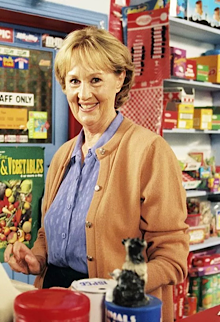
Death of Joan O’Hara, Stage, Film & Television Actress

Joan O’Hara, Irish stagefilm and television actress, dies in Dublin on July 23, 2007. She is one of Ireland’s most popular actresses and is, at the time of her death, recognisable to television viewers as Eunice Dunstan, a gossip in Fair City on RTÉ One.

O’Hara is born in Rosses PointCounty Sligo, on October 10, 1930, the daughter of Major John Charles O’Hara, an officer in the British Corps of Royal Engineers and his wife, Mai (née Kirwan). One of her sisters, Mary (born 1935), is a soprano/harpist. Her brother Dermot (born 1934) now lives with his family in Canada. She attends the same Ursuline convent school as fellow actress and friend Pauline Flanagan.

O’Hara lives most of her life in Monkstown, Dublin, with a stay in London, with her husband, the poet and architect Francis J. Barry. The couple has four children: Siubhan, Jane, Guy, and Sebastian, an author/playwright, whose works include The Steward of Christendom, and the Booker-shortlisted novels A Long Long Way and The Secret Scripture. She is also a year-round sea-swimmer.

O’Hara is a member of the renowned Abbey Players and performs in many plays in the Abbey Theatre in Dublin, including those by Seán O’CaseyLady Gregory and W.B. Yeats. She appears as Maurya in the 1988 film The Dawning. She appears in a number of other films, including Ron Howard‘s Far and AwayDaFootfallsHome is the Hero and just before her death, How About You. In this her final film, she stars with Vanessa Redgrave and her friend Brenda Fricker. The strength of her performance and bravery in carrying it out is acknowledged by the cast and crew in a standing ovation.

More recently, O’Hara is best known for appearing in the popular Irish television soap opera Fair City, broadcast on RTÉ One. She joins the soap in 1994, portraying the character Eunice Dunstan until her death in 2007. Thus, she is described as both one of Ireland’s most popular actresses and as one of the finest actors of her generation on her death. She admires in particular Samuel BeckettFederico García Lorca and Ingmar Bergman. While she takes a no-nonsense approach to her craft, famously giving the advice that when in doubt, one should relate to the fireplace, she is educated at the Abbey School of Acting and has a deep appreciation and knowledge of theoretical approaches to acting and is an admirer of the European and American avant-garde. As actor Alan Stanford says after her death, “She had the most amazing energy. She was in the truest sense one of the last of the greats.”

Joan O’Hara Barry (she keeps her maiden name as her stage name) dies in Dublin on July 23, 2007, of complications from heart disease, aged 76. Her death is announced on RTÉ News the following day.


Leave a comment

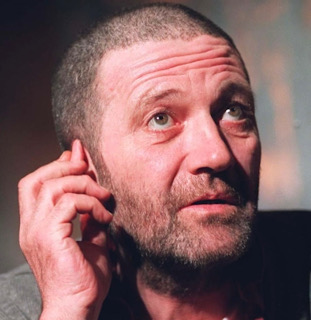
Death of Donal McCann, Stage, Film & Television Actor

Donal McCann, Irish stage, film, and television actor, dies from pancreatic cancer in Dublin on July 17, 1999. He is best known for his roles in the works of Brian Friel and for his lead role in John Huston‘s last film, The Dead (1987). In 2020, he is listed as number 45 on The Irish Times list of Ireland’s greatest film actors.

McCann is born on May 7, 1943, in Terenure, Dublin. His father is John J. McCann, a playwright and politician who serves twice as Lord Mayor of Dublin. Although he acts in a production of his father’s Give Me a Bed of Roses at Terenure College in 1962, he briefly studies architecture before taking a job as a trainee sub-editor at the Evening Press which allows him to pursue part-time acting classes at the Abbey School of Acting at the same time. He joins the Abbey Players in the late 1960s.

Among his most important early roles are Cú Chulainn in W. B. Yeats‘s On Baile Strand (1966), and as Estragon in a seminal production of Samuel Beckett‘s Waiting for Godot, partnering with Peter O’Toole as Vladimir (1969).

McCann’s career includes parts in many plays from the Irish literary canon, including Tarry FlynnThe Shaughran, and the Gate Theatre‘s highly acclaimed production of Seán O’Casey‘s classic Juno and the Paycock in the 1980s (McCann plays the “Paycock” (Captain Boyle) opposite Geraldine Plunkett as Juno and John Kavanagh as Joxer Daly) as well as a subsequent production of O’Casey’s The Plough and the Stars.

McCann develops a particularly fruitful relationship with the playwright Brian Friel. He plays the role of Gar O’Donnell, the public figure, in a film adaptation of Philadelphia, Here I Come! in 1970 and, despite popular belief, he never plays either public or private Gar on stage. He gives a landmark performance as Frank Hardy, the title character, in Faith Healer in 1980 (a role he reprised in 1994), continuing his relationship with Friel through productions of Translations (1988) and Wonderful Tennessee (1993).

Friel says that McCann’s work “contains extraordinary characteristics that go beyond acting … it is deeply spiritual.” Perhaps McCann’s most renowned role is as Thomas Dunne in Sebastian Barry‘s The Steward of Christendom. He wins the London Critics’ Circle Theatre Award (Drama Theatre) as best actor for this role in 1995. He reprises this role in a 1996 production at the Gate Theatre, Dublin and, following a twelve-week run at the Brooklyn Academy of Music in 1997, his “performance of unarguable greatness” (The New York Observer) had Newsweek hailing him as “a world-class star,” and The New York Times referring to this “astonishing Irish actor…widely regarded as the finest of them all.”

On the London stage, McCann plays in Prayer for My Daughter opposite Antony Sher (1978), and is Jean to Dame Helen Mirren‘s Julie in Miss Julie (1971). This is filmed for the BBC, and he much later plays Judge Brack with Fiona Shaw in the title role of Henrik Ibsen‘s Hedda Gabler, a production filmed for the BBC in 1993.

McCann begins his film career early, in 1966, in Walt Disney Pictures’s The Fighting Prince of Donegal (this later becomes a TV series). More significant roles include the title character’s father Shamie in Cal and one of the feuding brothers in Thaddeus O’Sullivan‘s December Bride (1990). He works a number of times with Neil Jordan (in AngelThe Miracle and High Spirits).

His best-known film role is as Gabriel Conroy in The Dead (1987), starring opposite Anjelica Huston and directed by her father, John Huston. Significant late roles include Bernardo Bertolucci‘s Stealing Beauty (1996) and in John Turturro‘s Illuminata (released in 1999, after McCann’s death).

McCann’s television work includes the featured role of Phineas Finn in the BBC’s serialised adaptation of Anthony Trollope‘s The Pallisers, Willie Burke in RTÉ‘s Prix Italia drama entry The Burke Enigma (1979) and Barney Mulhall in RTÉ’s Strumpet City (1980), as well as many one-off parts.

McCann plays in Bob Quinn‘s Irish language film Poitín (1979) and in Quinn’s somewhat experimental The Bishop’s Story (1995). After hearing that McCann is ill, Tom Collins asks Quinn to make a TV documentary about McCann for RTÉ called It Must Be Done Right (1999), after a remark by McCann on his craft. The film airs on RTÉ a week before McCann’s death.

In his private life, McCann is a quiet and unassuming man, but he battles both depression and alcoholism all his life. He has many friends in Irish theatre and artistic circles but also across all strata of life. His hobbies include sketching and he is passionate about horse racing.

Remembering McCann on the 25th anniversary of his death, Gerald Smyth writes, “In the melancholy of that life-worn voice could be heard the cadences of a lyric heart.”


Leave a comment

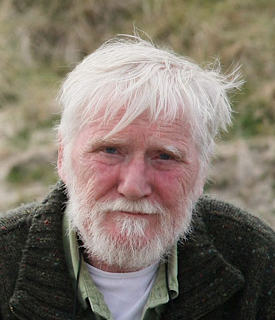
Death of Dermot Healy, Novelist, Playwright, Poet & Short Story Writer

Dermot Healy, Irish novelistplaywrightpoet and short story writer, dies at his home in Ballyconnell, Sligo, County Sligo, on June 29, 2014. A member of Aosdána, he is also part of its governing body, the Toscaireacht. He is described variously as a “master,” a “Celtic Hemingway” and as “Ireland’s finest living novelist.”

Healy is born in FinneaCounty Westmeath, on November 9, 1947, the son of a Guard. As a child the family moves to Cavan, County Cavan, where he attends the local secondary school. In his late teens he moves to London and works in a succession of jobs, including barman, security man and as a labourer. He later returns to Ireland, settling in Ballyconnell, County Sligo, a small settlement on the Atlantic coast.

Often overlooked due to his relatively low public profile, Healy’s work is admired by his Irish literary predecessors, peers and successors alike, many of whom idolise him. Among the writers to have spoken highly of him are Seamus HeaneyEugene McCabeRoddy DoylePatrick McCabe and Anne Enright.

Healy’s work is influenced by an eclectic range of writers from around the world, including Anna AkhmatovaJohn ArdenIsaac BabelMatsuo BashōSamuel BeckettJorge Luis BorgesAngela CarterJ. M. CoetzeeEmily DickinsonMaria EdgeworthT. S. EliotHermann HesseNâzım HikmetAidan HigginsMiroslav HolubEugène IonescoFranz KafkaMary LavinFederico García LorcaGuy de MaupassantEdgar Allan PoeSylvia PlathEzra PoundWilliam Shakespeare and Robert Louis Stevenson. Healy writes in a shed and is fascinated by etymology. However, on being a writer, he is quoted as saying, “I know writing is what I do but I still don’t see myself as one.”

Healy is longlisted for the Booker Prize with his novel A Goats Song. He wins the Hennessy Literary Award (1974 and 1976), the Tom-Gallon Trust Award (1983), and the Encore Award (1995). In 2011, he is shortlisted for the Poetry Now Award for his 2010 poetry collection, A Fool’s ErrandLong Time, No See is nominated for the International Dublin Literary Award, the world’s most valuable literary award for a single work in the English language, by libraries in Russia and Norway.

Healy dies at his home in Ballyconnell on June 29, 2014, while awaiting an ambulance after suddenly being taken ill. He is laid to rest at Carrigans Cemetery following funeral mass by Fr. Michael Donnelly at St. Patrick’s Church in Maugherow, County Sligo.


Leave a comment

Birth of Irish Artist Estella Solomons

Estella Frances Solomons, one of the leading Irish artists of her generation, is born into a prominent Jewish family in Dublin on April 2, 1882. She is noted for her portraits of contemporaries in the republican movement and her studio is a safe house during the Irish War of Independence.

Solomons is born to Maurice Solomons and poet Rosa Jane Jacobs. Her father is an optician whose practice in 19 Nassau Street, Dublin, is mentioned in Ulysses. Her father is also the Vice-Consul of Austria-Hungary. The Solomons family, who came to Dublin from England in 1824, are one of the oldest continuous lines of Jews in Ireland.

Solomons grandmother, Rosa Jacobs Solomons, who is born in Hull in England, is the author of a book called Facts and Fancies (Dublin 1883). Her brother, Bethel Solomons, a renowned physician, a master of the Rotunda Hospital and Irish international rugby player, is mentioned in Finnegans Wake. Her brother Edwin is a stockbroker and prominent member of the Dublin Jewish community. Her younger sister Sophie is a trained opera singer. A portrait of Sophie, by her cousin the printmaker Louise Jacobs, survives in the Estella Solomons archives in the Library of Trinity College Dublin (TCD).

In 1898, at the age of 16, Solomons enters the Dublin Metropolitan School of Art where she wins a significant prize. Her classmates include future Irish artists including Mary Swanzy, Eva Hamilton and William J. Leech. She also attends the Chelsea School of Art from 1903 to 1906. A visit to the tercentenary exhibition of the work of Rembrandt in Amsterdam in 1903 impacts her creative practice and possibly influences her adoption of printmaking as her principal vehicle of expression. She studies under two of Ireland’s leading artists, Walter Osborne, who is another major influence, and William Orpen. With her friends Cissie Beckett (aunt of Samuel Beckett) and Beatrice Elvery, she goes to study in Paris at Académie Colarossi. On her return she exhibits in Leinster Hall, Molesworth Street, with contemporaries such as Beatrice Elvery, Eva Hamilton and Grace Gifford. Her work is also included in joint exhibitions with other artists at Mills Hall and the Arlington Gallery, London. She also exhibits at her Great Brunswick Street studio in December 1926.

Solomons illustrates Padraic Colum‘s The Road Round Ireland (1926) and DL Kelleher’s The Glamour of Dublin in 1928. Originally published after the devastation of the 1916 Easter Rising, the later edition features eight views of familiar locations in the city centre including Merchant’s Arch and King’s Inns. Her etching “A Georgian Doorway” is included in Katherine MacCormack’s Leabhar Ultuin in 1920. This publication features illustrations by several prominent Irish artists and is sold in aid of the new Saint Ultan’s Children’s Hospital in Charlemont Street, Dublin, that had been founded by two prominent members of Cumann na mBan, Dr. Kathleen Lynn and Madeleine ffrench-Mullen.

Solomons paints landscapes and portraits, including of artist Jack Yeats, politician Arthur Griffith, poet Austin Clarke, and writers James Stephens and George Russell (Æ).

Solomons is elected an associate of the Royal Hibernian Academy (RHA) in July 1925, but it is not until 1966 that she is elected an honorary member. Her work is included in the Academy’s annual members’ exhibition every year for sixty years.

Solomons is married to poet and publisher Seumas O’Sullivan, whose birth name is James Sullivan Starkey. Her parents oppose the relationship as O’Sullivan is not of the Jewish faith. They marry in 1925, when she is 43 and he 46, after her parents have died. She collaborates with her husband on The Dublin Magazine (1923–58), the renowned literary and art journal, of which O’Sullivan is editor for 35 years. She provides vital financial support to the magazine, particularly in sourcing advertising, which is difficult in the tough economic climate of the new Free State. She is helped in this endeavour by poet and writer, Kathleen Goodfellow, a lifelong friend. When Solomons and O’Sullivan are looking to move from their house in Rathfarnham because of a damp problem, Goodfellow offers them the house beside her own on Morehampton Road for a nominal rent. Two of Solomons’ portraits of Goodfellow are in the Model Arts and Niland Gallery in Sligo.

Solomons joins the Ranelagh branch of Cumann na mBan at the same time as Goodfellow. They are taught first aid, drilling and signaling by Phyllis Ryan. She is active before and during the Irish War of Independence. She conceals ammunition in the family vegetable garden before delivering it to a Sinn Féin agent. Her studio at Great Brunswick Street is used as a safe house by republican volunteers. During this time, she paints the portraits of a number of revolutionaries, some of which she has to later destroy to avoid incriminating them. Her work includes a portrait of Frank Aiken when we was chief of staff of the Irish Republican Army (IRA).

Solomons takes up a teaching position at Bolton Street College, Dublin. In 1939, she organises an exhibition in Dublin to help refugee artists from Europe.

Solomons dies on November 2, 1968, and is buried in Woodtown Cemetery, Rathfarnham. Her friend Kathleen Goodfellow gifts the Morehampton Road Wildlife Sanctuary, where Solomons liked to paint, to An Taisce. Two plaques have subsequently been erected there, one in memory of Solomons and one for Goodfellow.

Some of Solomons works are held in the Niland Collection, at The Model gallery in Sligo and in the National Gallery of Ireland. Her archives, which include artwork and photographs (and prints by Louise Jacobs), and the archives of The Dublin Magazine are in the Library of Trinity College Dublin.


Leave a comment

Death of Con Leventhal, Lecturer, Essayist & Critic

A.J. Con Leventhal, Irish lecturer, essayist, and critic, dies in Paris on October 3, 1979, following a battle with cancer.

Leventhal is born Abraham Jacob Leventhal in Lower Clanbrassil Street, Dublin, on May 9, 1896. His parents are Moses (Maurice) Leventhal and Rosa (née Levenberg). His father is a draper, and his mother is a poet. She is a Zionist, who is a founding member of the Women’s Zionist Society. He lives in the “Little Jerusalem” area of Dublin, the area around the South Circular Road, in his youth. He attends Wesley College, Dublin, and then Trinity College Dublin (TCD) to study modern languages. He edits the TCD student magazine in 1918. It is in TCD that he acquires the nickname “Con,” an allusion to his father’s job as a “Continental” agent. He joins the first Zionist commission and travels to Palestine after World War I and helps to found the newspaper Palestine Weekly. He is then invited to join the Jewish National Fund‘s London office and begins working on the Zionist Review. He returns to Dublin to complete his degree in 1920, and in 1921 travels to Paris where he meets James Joyce.

Leventhal marries Gertrude Zlotover in October 1922. He works with his father-in-law, Joseph Zlotover, at the family furniture business on Mary Street for a time. After, he starts a number of unsuccessful businesses of his own, including the Irish Book Shop on Dawson Street from 1924 to 1925. It is possibly his business failures that inspire the idea of the TCD Students Appointment Association, which would give students pragmatic business skills. TCD accepts this proposal and employes him as the first administrator.

Leventhal completes a PhD in contemporary French literature, and in 1932 is appointed to the staff of the French department at TCD. He replaces his friend Samuel Beckett. During his time in TCD, he is an assistant editor to Hermathena, to which he also contributes his translations of French poetry. He is associated with a number of progressive cultural movements in Dublin of the 1920s and 1930s. He is a regular attendee at meetings held to promote Jewish culture and nationalism and lectures this group on Joyce. Through his interest in Joyce, he becomes an associate of Seumas O’Sullivan, and The Dublin Magazine. When the printers refuse to set his review of Ulysses in 1923 for The Dublin Magazine, he is moved to found his own magazine, The Klaxon, in response to the censorship. The only issue of the magazine publishes a shortened version of the review under the pseudonym “Lawrence K. Emery.” He is also associated with Francis Stuart‘s Tomorrow magazine. He is also interested in drama and is a member of the avant-garde Dublin Drama League, occasionally performing with them. Among his close friends are Daisy Bannard Cogley, Micheál Mac Liammóir, and Lennox Robinson. From 1943 to 1958 his column, “Dramatic commentary”, is published in The Dublin Magazine. He is also published in The Irish Times, The Irish Press, The Listener, Westminster Weekly, Financial Times, and International Herald Tribune. He is a regular contributor to Radio Éireann and BBC broadcasts.

Leventhal begins a long-term relationship with Ethna MacCarthy, marrying her after the death of his first wife in 1956. She dies in 1959. He retires from TCD in 1963 and moves to Paris, where he becomes Beckett’s literary assistant. He lives on Boulevard du Montparnasse with his partner Marion Leigh.

Leventhal dies of cancer in Paris on October 3, 1979. There are two known portraits of Leventhal, one by John Russell (1920) and a second by Avigdor Arikha. The Leventhal Scholarship at TCD is founded in his memory. TCD and the Harry Ransom Center hold papers relating to Leventhal.


Leave a comment

Death of Christopher Nolan, Irish Poet & Author

Christopher Nolan, Irish poet and author, dies of asphyxiation in Dublin on February 20, 2009.

Nolan is born to parents Joseph and Bernadette Nolan in Mullingar, County Westmeath on September 6, 1965. Due to asphyxiation at birth, he is born with permanent impairment of his nerve-signaling system, a condition now labelled dystonia. Because of these complications, he is born with cerebral palsy and can only move his head and eyes. Due to the severity of the cerebral palsy, he uses a wheelchair. In an interview, his father, Joseph, explains how, at the age of 10, he is placed on medication that “relaxed him so he could use a pointer attached to his head to type.” To write, he uses a special computer and keyboard. In order to help him type, his mother holds his head in her cupped hands while he painstakingly picks out each word, letter by letter, with a pointer attached to his forehead.

Nolan communicates with others by moving his eyes, using a signal system. When he is young, his father tells him stories and reads passages from James Joyce, Samuel Beckett and D. H. Lawrence to keep his mind stimulated. His mother strings up letters of the alphabet in the kitchen, where she keeps up a stream of conversation. His sister, Yvonne, sings songs and acts out skits. His mother states that “he wrote extensively since the age of 11 and went on to write many poems, short stories and two plays, many of which were published.” Many of the writings are compiled for his first publication, the chapbook Dam-Burst of Dreams.

Upon becoming a teenager, Nolan receives his education from the Central Remedial Clinic School, Mount Temple Comprehensive School and at Trinity College, Dublin. His first book is published at the age of fifteen. He is also awarded an Honorary Doctorate of Letters in the UK, the medal of excellence from the United Nations Society of Writers, and a Person of the Year award in Ireland. He writes an account of his childhood, Under the Eye of the Clock, published by St. Martin’s Press, which wins him the UK’s Whitbread Book of the Year Award in 1987 at the age of 21. He soon drops out of Trinity College to write a novel entitled The Banyan Tree (1999).

Nolan spends more than a decade writing The Banyan Tree. According to The New York Times, the book is a multigenerational story of a dairy-farming family in Nolan’s native county of Westmeath. The story is seen through the eyes of the aging mother. It is inspired, he tells Publishers Weekly, by the image of “an old woman holding up her skirts as she made ready to jump a rut in a field.” A review of the book is done in The New York Times by Meghan O’Rourke. She reviews the book and relates it to James Joyce’s A Portrait of the Artist as a Young Man; in the story the protagonist leaves his mother in Ireland while he moves on to travel the world. Nolan, however, gives the reader a version of the mother’s story. “And so, in the end, one suspects that he wants Minnie’s good-natured, commonplace ways to stand as their own achievement, reminding us that life continues in the places left behind.”

At the age of 43, while working on a new novel, Nolan dies in Beaumont Hospital in Dublin at 2:30 a.m. on February 20, 2009. His death is the result of a piece of salmon becoming trapped in his airway. Nothing from the novel he was working on has been released since his death.

Upon hearing the news of Nolan’s death, President of Ireland Mary McAleese says, “Christopher Nolan was a gifted writer who attained deserved success and acclaim throughout the world for his work, his achievements all the more remarkable given his daily battle with cerebral palsy.”


Leave a comment

Birth of Anthony Cronin, Poet, Activist, Critic & Editor

Anthony Gerard Richard Cronin, Irish poet, arts activist, biographer, commentator, critic, editor and barrister, is born in Enniscorthy, County Wexford, on December 28, 1923.

After obtaining a B.A. from the National University of Ireland, Cronin enters the King’s Inns and is later called to the Bar.

Cronin is known as an arts activist as well as a writer. He is Cultural Adviser to Taoiseach Charles Haughey and briefly to Garret FitzGerald. He involves himself in initiatives such as Aosdána, the Irish Museum of Modern Art and the Heritage Council. He is a founding member of Aosdána, and is a member of its governing body, the Toscaireacht, for many years. He is elected Saoi, a distinction for exceptional artistic achievement, in 2003. He is also a member of the governing bodies of the Irish Museum of Modern Art and the National Gallery of Ireland, of which he is for a time Acting Chairman.

With Flann O’Brien, Patrick Kavanagh and Con Leventhal, Cronin celebrates the first Bloomsday in 1954. He contributes to many television programmes, including Flann O’Brien: Man of Parts (BBC) and Folio (RTÉ).

From 1966 to 1968 Cronin is a visiting lecturer at the University of Montana in Missoula, Montana, and from 1968 to 1970 he is poet in residence at Drake University in Des Moines, Iowa. He reads a selection of his poems for the Irish Poetry Reading Archive in 2015. He has honorary doctorates from several institutions, including the University of Dublin, the National University of Ireland and the Adam Mickiewicz University in Poznań, Poland.

Cronin begins his literary career as a contributor to Envoy, A Review of Literature and Art. He is editor of The Bell in the 1950s and literary editor of Time and Tide (London). He writes a weekly column, “Viewpoint,” in The Irish Times from 1974 to 1980. Later he contributes a column on poetry to the Sunday Independent.

His first collection of poems, called simply Poems (Cresset Press, London), is published in 1958. Several collections follow and his Collected Poems (New Island Books, Dublin) is published in 2004. The End of the Modern World (New Island Books, 2016), written over several decades, is his final publication.

Cronin’s novel, The Life of Riley, is a satire on Bohemian life in Ireland in the mid-20th century, while his memoir Dead as Doornails addresses the same subject.

Cronin knows Samuel Beckett from when they do some work for the BBC during the 1950s and 1960s. He gives a prefatory talk to Patrick Magee‘s reading of The Unnamable on the BBC Third Programme. Beckett is not impressed, saying, “Cronin delivered his discourse… It was all right, not very exciting.” Cronin later publishes a biography of him, Samuel Beckett: The Last Modernist (1996), followed on from No Laughing Matter: The Life and Times of Flann O’Brien (1989).

In his later years, Cronin suffers from failing health, which prevents him from traveling abroad, thus limiting his dealings to local matters. He dies in Dublin on December 27, 2016, one day short of his 93rd birthday.

Cronin firstly marries Thérèse Campbell, from whom he separates in the mid-1980s. She dies in 1999. They have two daughters, Iseult and Sarah. Iseult is killed in a road accident in Spain. He secondly marries the writer Anne Haverty who, along with daughter Sarah, survives him.


Leave a comment

Birth of Irish Writer Gabriel Rosenstock

Gabriel Rosenstock, Irish writer who works chiefly in the Irish language, is born in Kilfinane, County Limerick, on September 29, 1949. A member of Aosdána, he is poet, playwright, haikuist, tankaist, essayist, and author/translator of over 180 books, mostly in Irish.

Rosenstock’s father, George, is a doctor and writer from Schleswig-Holstein, Germany, who serves as a medical officer with the Wehrmacht in World War II. His mother is a nurse from County Galway. He is the third of six children and the first born in Ireland. He is educated locally in Kilfinane, then in Mount Sackville, County Dublin.

Rosenstock exhibits an early interest in anarchism and is expelled from Gormanston College in County Meath and exiled to Rockwell College near Cashel, County Tipperary. Later, he attends University College Cork (UCC).

Rosenstock works for some time on the television series Anois is Arís on RTÉ, then on the weekly newspaper Anois. Until his retirement he works with An Gúm, the publications branch of Foras na Gaeilge, the North-South body which promotes the Irish language.

Although he has worked in prose, drama and translation, Rosenstock is primarily known as a poet. He has written or translated over 180 books.

Rosenstock has edited and contributed to books of haiku in Irish, English, Scots and Japanese. He is a prolific translator into Irish of international poetry (among others Ko Un, Seamus Heaney, K. Satchidanandan, Rabindranath Tagore, Muhammad Iqbal, Hilde Domin, Peter Huchel), plays (Samuel Beckett, Max Frisch, W. B. Yeats) and songs (Bob Dylan, Kate Bush, The Pogues, Leonard Cohen, Bob Marley, Van Morrison, Joni Mitchell). He also has singable Irish translations of Lieder and other art songs. His being named as Lineage Holder of Celtic Buddhism inspires the latest title in a rich output of haiku collections: Antlered Stag of Dawn (Onslaught Press, Oxford, 2015), haiku in Irish and English with translations into Japanese and Scots Lallans.

Rosenstock also writes for children, in prose and verse. Haiku Más É Do Thoil É! (An Gúm) wins the Children’s Books Judges’ Special Prize in 2015.

Rosenstock appears in the anthology Best European Fiction 2012, edited by Aleksandar Hemon, with a preface by Nicole Krauss (Dalkey Archive Press). He gives the keynote address to Haiku Canada in 2015.

Rosenstock has worked with American photographer Ron Rosenstock, Indian Photographer Debiprasad Mukherjee, Greek photographer Kon Markogiannis, Dublin photographer Jason Symes, French photographer Jean-Pierre Favreau and many more to create the new guise of a photo-haiku (or a haiga) – the interplay of visual aesthetic and literature.

Rosenstock currently resides in Dublin. His son, Tristan, is a member of the Irish traditional music quintet Téada, and impressionist/actor Mario Rosenstock is his nephew.


Leave a comment

Birth of Actress & Author Pauline McLynn

Pauline McLynn, Irish character actress and author, is born in Sligo, County Sligo, on July 11, 1962. She is best known for her roles as Mrs. Doyle in the Channel 4 sitcom Father Ted, Libby Croker in the Channel 4 comedy drama Shameless, Tip Haddem in the BBC One comedy Jam & Jerusalem, and Yvonne Cotton in the BBC soap opera EastEnders.

McLynn grows up with two younger brothers in Galway. She studies History of Art and Modern English at Trinity College Dublin but is more heavily involved in the college’s drama society. She graduates with an MA.

Although McLynn is in her early thirties when playing Mrs. Doyle in Father Ted, makeup is used to make her look far older to fit the character’s elderly profile. She receives a British Comedy Award for her performances in 1996. The award is presented to her by Tony Blair.

Subsequent televised appearances include a similar elderly role in the “Yesterday Island” episode of youth sci-fi series Life Force, sketches on Bremner, Bird and Fortune, and panel shows Just a Minute, Have I Got News for You, and If I Ruled the World. In 1999, she appears in the film adaptation of Angela’s Ashes. She also appears in Jennifer SaundersJam & Jerusalem. Between 2001 and 2003 she reprises Mrs. Doyle in an advert for online tax return filing by the Inland Revenue.

McLynn is critically acclaimed for her performance in the 2005 film Gypo, receiving an Irish Film & Television Academy award nomination for Best Actress.

McLynn appears as Libby Croker in Shameless, which is produced by the British broadcaster Channel 4. In January 2011 it is announced that she has left the show, reportedly after a “difficult year.” She also plays the role of Alice’s mother in the Comedy Central show Threesome. She stars in Samuel Beckett’s Happy Days at the Crucible Theatre, Sheffield, in 2011. She plays Mary Whyte in the BBC’s 2013 sitcom Father Figure.

In 2014, McLynn plays the part of Evelyn in “Kiss for the Camera”, a series three episode of the BBC comedy Pramface. On May 12, 2014, she joins the cast of EastEnders as Yvonne Cotton, the mother of Charlie Cotton (Declan Bennett) and ex-daughter-in-law of Dot Branning (June Brown). After starting as a recurring character, she quickly becomes a regular when her character’s storylines escalate. She makes her final appearance on January 13, 2015, at the end of her contract. However, she returns to the soap opera on May 14, 2015 for one single episode to give evidence against Dot during Nick Cotton‘s (John Altman) murder trial.

In 2017, McLynn appears as the mother of lead character Marcella in Roisin Conaty‘s E4 comedy GameFace, and in April 2018 she portrays Sister Mary in the BBC Two biopic Dave Allen At Peace. She appears as a minor character named Mrs. Trattner in the 2018 film Johnny English Strikes Again.

In 2020, McLynn is one of the celebrity pilgrims on the Sultans Trail in the BBC series Pilgrimage: Road to Istanbul. She also appears in Riverdance: The Animated Adventure.

In 2021 McLynn appears as Oona in the E4 S6 of Inside No. 9. She also appears as Carol, a bar landlady, in the film Last Night in Soho, which is released in October 2021. She also appears in Doctor Who, as Mary in the New Year’s special “Eve of the Daleks.”

McLynn is married to theatrical agent Richard Cook. She is a patron of the children’s charity World Vision Ireland and is president of Friends of Innisfree Housing Association. She is also a patron for Littlehill Animal Rescue, Sanctuary in Ireland and Birmingham Greyhound Protection.

McLynn is a fan of the Premier League football team Aston Villa. She says her best moment supporting Villa came in 1996 when she watched them beat Leeds United in the Football League Cup final with her Father Ted co-star Ardal O’Hanlon, who is a Leeds supporter. She is raised as a Roman Catholic but is now an atheist.

McLynn is involved with many charities against the racing and export of greyhounds. She is a patron of Greyhound Protection UK.