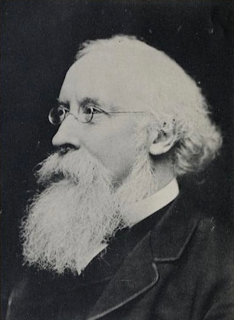
Stokes is educated at St. Columba’s College where he is taught the Irish language by Denis Coffey, author of Primer of the Irish Language. Through his father he comes to know the Irish antiquariesSamuel Ferguson, Eugene O’Curry, John O’Donovan and George Petrie. He enters Trinity College Dublin in 1846 and graduates with a BA in 1851. His friend and contemporary Rudolf Thomas Siegfried (1830–63) becomes assistant librarian at TCD in 1855, and the college’s first professor of Sanskrit in 1858. Stokes likely learns both Sanskrit and comparative philology from Siegfried, thus acquiring a skill-set rare among Celtic scholars in Ireland at the time.
Stokes qualifies for the bar at Inner Temple. His instructors in the law are Arthur Cayley, Hugh McCalmont Cairns, and Thomas Chitty. He becomes an English barrister on November 17, 1855, practicing in London before going to India in 1862, where he fills several official positions. In 1865 he marries Mary Bazely by whom he has four sons and two daughters. One of his daughters, Maïve, compiles a book of Indian Fairy Tales in 1879 when she is 12 years old, based on stories told to her by her Indian ayahs and a man-servant. It also includes some notes by Mrs. Mary Stokes. Mary dies while the family is still living in India. In 1877, Stokes is appointed legal member of the viceroy’s council, and he drafts the codes of civil and criminal procedure and does much other valuable work of the same nature. In 1879 he becomes president of the commission on Indian law. Nine books he writes on Celtic studies are published in India. He returns to settle permanently in London in 1881 and marries Elizabeth Temple in 1884. In 1887 he is made a Companion of the Order of the Star of India (CSI), and two years later an Order of the Indian Empire (CIE). He is an original fellow of the British Academy, an honorary fellow of Jesus College, Oxford and foreign associate of the Institut de France.
Stokes is perhaps most famous as a Celtic scholar, and in this field he works both in India and in England. He studies Irish, Breton and Cornish texts. His chief interest in Irish is as a source of material for comparative philology. Despite his learning in Old Irish and Middle Irish, he never acquires Irish pronunciation and never masters Modern Irish. In the hundred years since his death he continues to be a central figure in Celtic scholarship. Many of his editions have not been superseded during this time and his total output in Celtic studies comes to over 15,000 pages. He is a correspondent and close friend of Kuno Meyer from 1881 onwards. With Meyer he establishes the journal Archiv für celtische Lexicographie and is the co-editor, with Ernst Windisch, of the Irische Texteseries. In 1876 his translation of Vita tripartita Sancti Patricii, along with a written introduction, is published.
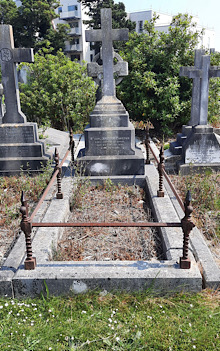
Stokes dies at his London home, 15 Grenville Place, Kensington, on April 13, 1909, and is buried in Paddington Old Cemetery, Willesden Lane, where his grave is marked by a Celtic cross. Another Celtic cross is erected as a memorial to him at St. Fintan’s Cemetery, Sutton, Dublin. The Gaelic League newspaper An Claidheamh Soluis calls him “the greatest of the Celtologists” and expresses pride that an Irishman has excelled in a field which is at that time dominated by continental scholars. In 1929 the Canadian scholar James F. Kenney describes him as “the greatest scholar in philology that Ireland has produced, and the only one that may be ranked with the most famous of continental savants.”
A conference entitled “Ireland, India, London: The Tripartite Life of Whitley Stokes” takes place at the University of Cambridge on September 18-19, 2009. The event is organised to mark the centenary of Stokes’s death. A volume of essays based on the papers delivered at this conference, The Tripartite Life of Whitley Stokes (1830–1909), is published by Four Courts Press in autumn 2011.
In 2010 Dáibhí Ó Cróinín publishes Whitley Stokes (1830–1909): The Lost Celtic Notebooks Rediscovered, a volume based on the scholarship in Stokes’s 150 notebooks which had been resting unnoticed at the Leipzig University Library, Leipzig since 1919.
Corrigan is the son of a dealer in agricultural tools. He is educated in St. Patrick’s College, Maynooth, which then has a department for secular students apart from the ecclesiastical seminary. He is attracted to the study of medicine by the physician in attendance, and spends several years as an apprentice to the local doctor, Edward Talbot O’Kelly. He studies medicine in Dublin later transferring to Edinburgh Medical School where he receives his degree as MD in August 1825.
Corrigan returns to Dublin in 1825 and sets up a private practice at 11 Ormond Street. As his practice grows, he moves to 12 Bachelors Walk in 1832, and in 1837 to 4 Merrion Square West. Apart from his private practice, he holds many public appointments. He is a physician to St. Patrick’s College, Maynooth, the Sick Poor Institute, the Charitable Infirmary Jervis Street (1830–43) and the House of Industry Hospitals (1840–66). His work with many of Dublin’s poorest inhabitants leads to him specialising in diseases of the heart and lungs, and he lectures and published extensively on the subject. He is known as a very hard-working physician, especially during the Great Famine of Ireland. At the 1870 Dublin City by-election he is elected a LiberalMember of Parliament for Dublin City. In parliament he actively campaigns for reforms to education in Ireland and the early release of Fenian prisoners. He does not stand for re-election in 1874. His support for temperance and Sunday closing (of pubs) antagonises his constituents and alcohol companies
In 1847, Corrigan is appointed physician-in-ordinary to the Queen in Ireland. Two years later he is given an honorary MD from Trinity College Dublin (TCD). In 1846, his application to become a fellow of the Royal College of Physicians of Ireland (RCPI) is blocked. In 1855, he gets around this opposition by sitting the college’s entrance exam with the newly qualified doctors. He becomes a fellow in 1856, and in 1859 is elected president, the first Catholic to hold the position. He is re-elected president an unprecedented four times. There is a statue of Corrigan in the Graves’ Hall of the college by John Henry Foley.
Corrigan is President of the Royal Zoological Society of Ireland, the Dublin Pathological Society, and the Dublin Pharmaceutical Society. From the 1840s he is a member of the senate of the Queen’s University and in 1871 becomes its vice-chancellor. In 1866, he is created a baronet, of Cappagh and Inniscorrig in County Dublin and of Merrion Square in the City of Dublin, partly as a reward for his services as Commissioner of Education for many years. He is a member of the board of Glasnevin Cemetery and a member of the Daniel O’Connell Memorial Committee. Armand Trousseau, the French clinician, proposes that aortic heart disease should be called Corrigan’s disease.
The Corrigan Ward, a cardiology ward in Beaumont Hospital, Dublin is named in his honour. Part of his family crest is also part of the Beaumont Hospital crest.
Corrigan marries Joanna Woodlock, the daughter of a wealthy merchant, and sister of the Bishop Dr. Bartholomew Woodlock, in 1827. They have six children, three girls and three boys. Hus eldest son, Captain John Joseph Corrigan, Dragoon Guards, dies on January 6, 1866, aged 35 years and is interred at the Melbourne General Cemetery, Melbourne, Australia.
Corrigan dies at Merrion Square, Dublin, on February 1, 1880, having suffered a stroke the previous December. He is buried in the crypt of St. Andrews Church on Westland Row, Dublin. His grandson succeeds him to the baronetcy.
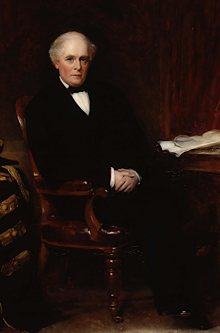
Christian is considered one of the best Irish lawyers of his time, but as a judge, he regularly courts controversy. His bitter and sarcastic temper and open contempt for most of his colleagues leads to frequent clashes both in Court and in the Press. Though he is rebuked for misconduct several times by the House of Commons, no serious thought is given to removing him from office.
Christian’s early years at the Bar are not successful, and he admits to being near to despair at times about his prospects. His practice lays in the Court of Chancery, with procedures that are extremely complex and he finds at first almost unintelligible. Gradually he masters the intricacies of Chancery practice becoming a leader of the Bar, and took silk in 1841. It is said that his expertise in Chancery procedures leave even the Lord Chancellor himself quite unable to argue with him.
Christian is appointed Law Adviser to the Lord Lieutenant of Ireland, an influential post which involves assisting the Attorney-General and Solicitor-General in advising the Crown in 1850, but resigns after only a few months on the grounds that it interferes with his private practice. He is appointed Third Sergeant later the same year but resigns in 1855, allegedly because he is disappointed at not receiving further promotion. Promotion does in time come his way. He is appointed Solicitor-General the following year and a judge of the Court of Common Pleas in 1858. He is unusual in having no strong political loyalty; it is said that his political allegiance is known only to himself.
As a judge of the Court of Common Pleas, Christian gets on well with his colleagues, and any dissenting judgements he writes are short and courteous. It is after his appointment as a Lord Justice of Appeal in Chancery in 1867 that his behaviour begins to attract unfavourable comment, as he goes out of his way to court controversy on a wide variety of topics.
His criticisms of legal rulings and arguments are invariably delivered in the form of a personal attack. Such exchanges are frequently continued through the letters page of The Times. Conservative in politics, he objects to the appointment of Thomas O’Hagan as Lord Chancellor in December 1868, dismissing him as a liberal “political necessity.” He goes to great lengths to point out legal flaws in the Landlord and Tenant (Ireland) Act 187, to the great annoyance of the Prime Minister, William Ewart Gladstone. His final public diatribe comes in 1877 when he launches an attack on the quality of law reporting, dismissing the contents of the Irish Reports as “a mass of utterly worthless rubbish.” He is vilified in the legal press and is the subject of cartoons in Dublin satirical journals. Pleading deafness, he retires in December 1878.
In the 19th century, association football outside of Ulster is largely confined to Dublin and a few provincial towns. The British Army teams play a role in the spread of the game to these areas, especially in Munster, as local clubs are initially reliant on them to form opposition teams, leading to the nickname “the garrison game.” Association football is played in relatively few Catholic schools as middle-class schools favour rugby union while others favour Gaelic games. The Irish Football Association (IFA) had been founded in 1880 in Belfast as the football governing body for the whole of Ireland, which was then a part of the United Kingdom and considered a Home Nation. The Leinster Football Association was an affiliate, founded in 1892 to foster the game in Leinster, outside of the Ulster heartlands. This was followed by the establishment of the Munster Football Association in 1901.
By 1913, the Leinster FA becomes the largest divisional association within the IFA, displacing the North East Ulster Football Association, yet all but two clubs in the 1913–14 Irish League are based in Ulster. While this largely reflects the balance of footballing strength within Ireland, southern members feel the IFA is doing little to promote the game outside of the professional clubs in its northern province. In the other provinces, association football is also under pressure from the Gaelic Athletic Association (GAA), which has banned members from playing or watching the sport as it is considered a “foreign” game. Furthermore, there is a growing feeling in Dublin of alleged Belfast bias when it comes to hosting matches and player selection for internationals. This view is not helped by the composition of the IFA’s sub-committees, with over half of the membership consisting of delegates hailing from the North-East, and the International Committee, who chooses the national team, containing just one member from Leinster. The Belfast members are mainly unionist, while the Dublin members are largely nationalist. World War I increases the gulf between the northern teams and the clubs in the south as the Irish League is suspended and replaced by regional leagues, foreshadowing the ultimate split. Tensions are then exacerbated by the Irish War of Independence of 1919–21, which disrupts contact between northern and southern clubs further and prevents resumption of the Irish League. The security situation prompts the IFA to order the March 1920-21 Irish Cup semi-final replay between Glenavon and Shelbourne to be replayed in Belfast, rather than in Dublin as convention dictates. This proves to be the final straw and the Leinster FA confirms their decision to disaffiliate from the IFA at a meeting on June 8, 1921.
The Football Association of Ireland (FAI) is formed in Dublin on September 2, 1921, by the Leinster FA. The Free State League (originally the Football League of Ireland and now the League of Ireland) is founded in June of that year when the Leinster FA withdraws from the IFA. This is the climax of a series of disputes about the alleged Belfast bias of the IFA. Both bodies initially claim to represent the entire island. The split between Southern Ireland (which becomes the Irish Free State in December 1922) and Northern Ireland (which comes into existence as a jurisdiction in 1921) does not produce a split in the governing bodies of other sports, such as the Irish Rugby Football Union (IRFU). The Munster Football Association, originally dominated by British Army regiments, falls into abeyance on the outbreak of World War I, and is re-established in 1922 with the help of the FAI, to which it affiliates. The Falls League, based in the Falls Road of nationalist West Belfast, affiliates to the FAI, and from there Alton United wins the FAI Cup in 1923. However, when the FAI applies to join FIFA in 1923, it is admitted as the Football Association of the Irish Free State (FAIFS) based on a 26-county jurisdiction. (This jurisdiction remains, although Derry City, from Northern Ireland, are given an exemption, by agreement of FIFA and the IFA, to join the League of Ireland in 1985.) Attempts at reconciliation followed. At a 1923 meeting, the IFA rejects an FAIFS proposal for it to be an autonomous subsidiary of the FAIFS. A 1924 meeting in Liverpool, brokered by the English FA, almost reaches agreement on a federated solution, but the IFA insists on providing the chairman of the International team selection committee. A 1932 meeting agrees on sharing this role, but founders when the FAIFS demands one of the IFA’s two places on the International Football Association Board (IFAB). Further efforts to reach agreement are made through a series of conferences between the IFA and FAI from 1973 to 1980 during the height of the Troubles in Northern Ireland.
The IFA does not feel obliged to refrain from selecting Free State players for its international team. The name Football Association of Ireland is readopted by the FAIFS in 1936, in anticipation of the change of the state’s name in the pending Constitution of Ireland, and the FAI begins to select players from Northern Ireland based on the Constitution’s claim to sovereignty there. A number of players play for both the FAI “Ireland” (against FIFA members from mainland Europe) and the IFA “Ireland” (in the British Home Championship, whose members had withdrawn from FIFA in 1920). Shortly after the IFA rejoins FIFA in 1946, the FAI stops selecting Northern players. The IFA stops selecting southern players after the FAI complains to FIFA in 1950.
From the late 1960s, association football begins to achieve more widespread popularity. Donogh O’Malley, TD and then Minister for Education, begins a new programme of state-funded schools in 1966, many with association football pitches and teams. The Gaelic Athletic Association’s ban on members playing “foreign” games is lifted in 1971. RTÉ television, founded in 1962, and British television (available nearly everywhere on cable or microwave relay from the 1970s), broadcast association football regularly. Above all, the increasing success of the international side from the late 1980s gives increased television exposure, more fans, and more funds to the FAI.
However, increased media exposure also highlights some inadequacies of its hitherto largely amateur organisation. In January 1999, the FAI announces a planned national association football stadium, to be called Eircom Park after primary sponsors Eircom. This is to be a 45,000-seat stadium in City West, modeled on the GelreDome in Arnhem. It gradually becomes apparent that the initial forecasts of cost and revenue have been very optimistic. FAI and public support for the project is also undermined by the announcement of the Stadium Ireland in Abbotstown, which would have 65,000 seats and be available free to the FAI, being funded by the state. The Eircom Park project is finally abandoned in March 2001, amid much rancour within the FAI.
During preparation for the 2002 FIFA World Cup, the captain of the senior football team, Roy Keane, leaves the training camp and returns to his home. He is critical of many aspects of the organisation and preparation of the team for the upcoming games, and public opinion in Ireland is divided. As a result of the incident, the FAI commissions a report from consultants Genesis into its World Cup preparations. The “Genesis Report” makes a number of damning criticisms regarding corruption and cronyism within the association, but is largely ignored. The complete report is never published for legal reasons. The FAI subsequently produces its own report of itself titled “Genesis II” and implements a number of its recommendations.
In 2002, the FAI announces a deal with British Sky Broadcasting to sell broadcasting rights to Ireland’s international matches, as well as domestic association football, to be televised on its satellite subscription service. The general public feels it should be on RTÉ, the free-to-air terrestrial service, in spite of their offering much lower rates. Faced with the prospect of the government legislating to prevent any deal, the FAI agrees to accept an improved, but still lower, offer from RTÉ.
Following the respectable performance of the national team in the 2002 FIFA World Cup, the team’s fortunes decline under the management of Mick McCarthy, Brian Kerr and Steve Staunton.
In September 2006, Lars-Christer Olsson, CEO of UEFA, is quoted as anticipating that Lansdowne Road in Dublin (actually owned by the Irish Rugby Football Union) will stage the UEFA Cup Final in 2010, and that the FAI and the IFA will co-host the 2011 UEFA European Under-21 Championship. The 2010 final is ultimately awarded to Hamburg, but in January 2009, UEFA nameS Lansdowne Road as the host stadium for the renamed 2011 UEFA Europa League Final. In August 2010, an FAI spokesman says they will have repaid all of their stadium debt of €46 million within 10 years despite the disastrous sale of 10-year tickets for premium seats at the Aviva Stadium.
In November 2007, the FAI moves to new headquarters at the National Sports Campus in Abbotstown. Its headquarters since the 1930s had been a Georgian terraced house at 80 Merrion Square, which is sold for a sum variously reported as “in excess of €6m” and “almost €9m.”
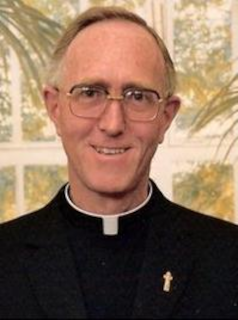
Ryan is Professor of Oriental Languages at University College Dublin before his appointment by Pope Paul VI as Archbishop of Dublin and Primate of Ireland on December 29, 1971. Maintaining his connection and interest in oriental studies, he serves as chairman of the trustees of the Chester Beatty Library from 1978 to 1984.
During his term, Ryan consolidates much of the expansion of the archdiocese which had taken place during the term of his predecessor. He also oversees the fuller implementation of the reforms of Vatican II. He is particularly interested in liturgical reform.
Ryan also takes a traditional stand on social issues, including poverty, family life and opposition to abortion. He strongly promotes the Eighth Amendment of the Constitution of Ireland in 1983, granting the equal right to life to mother and unborn.
As Archbishop, Ryan gives the people of Dublin a public park on a site earmarked by his predecessors for a proposed cathedral. It is named “Archbishop Ryan Park” in his honour. The land, at Merrion Square, is a gift from the archbishop to the city of Dublin.
Ryan dies at the age of 60 in Rome on February 21, 1985, following a heart attack. He is buried in St. Mary’s Pro-Cathedral.
In 1802 Corry is dismissed from the Exchequer and replaced by John Foster (later Lord Oriel), he is awarded, however, £2,000 p.a. in compensation. In 1806 the changes in ownership of the Newry estates alters his position. The lands pass to a senior line of the Needham family and they support General Francis Needham, 1st Earl of Kilmorey, at the general election. Corry does not have the funds needed, in excess of £5000, to purchase a seat elsewhere. However, Lady Downshire is inclined to support the Grenville ministry and comes to a formal agreement with Corry to give him £1000 towards his expenses should he be successful in Newry, and, if not, to bring him in for another borough. He fails against the Needham interest in Newry, but a seat at Newport, Isle of Wight, is purchased for him, with £4000 from Lady Downshire, and he is appointed to the Board of Trade. Six months later Grenville’s ministry has fallen and there is another general election. Corry stands, again unsuccessfully, for Newry.
Corry is unmarried but has a long-term relationship with Jane Symms. They have three sons and three daughters. His daughter Ann marries Lt. Col. Henry Westenra, the brother of Robert Cuninghame, 1st Baron Rossmore. His residence in Newry is the Abbey Yard, now a school, and Derrymore House, Bessbrook, County Armagh, which he had inherited from his father and sold in 1810. It is now the property of the National Trust. During his life, a road is constructed from near the main entrance of Derrymore House around Newry and links up with the Dublin Road on the southern side of the town primarily for his use. This road subsequently becomes known as “The Chancellor’s Road,” as a result of his term as the Irish Chancellor of the Exchequer. A local legend has it that the road is constructed after an incident in which Corry’s stagecoach is stoned while passing through Newry by people angry at an unpopular window tax he had introduced. The road has retained this name, but it is cut in half by the Newry by-pass in the mid-1990s, however, as a result of works associated with the new A1 dual carriageway, the two-halves of the road are now reconnected.
Corry dies at his house in Merrion Square, Dublin, on May 15, 1813, his 60th birthday. He is buried in St. Patrick’s Cathedral, Dublin.
Stewart is born on December 16, 1825, the second of two sons of Charles Frederick Stewart of 6 Pitt Street (now Balfe Street), Dublin, librarian of King’s Inns. Nothing is known of his mother other than that she studies music with one of the Logier family, presumably the noted military musician and piano teacher Johann Bernhard Logier, a resident of Dublin from 1809.
Stewart is educated at Christ Church Cathedral school in Dublin, where he is a chorister. He begins to accompany choral services in his early teens, and in 1844 is appointed organist of Christ Church Cathedral and the Trinity College Dublin (TCD) chapel. In addition, in 1852 he becomes de facto organist of St. Patrick’s Cathedral, and holds all three positions concurrently for the rest of his life.
Stewart’s first conducting appointment is with the Dublin University Choral Society in 1846, to which he later adds similar appointments in Dublin, Bray, and Belfast. He is active as a teacher, both privately and from 1869 at the Royal Irish Academy of Music (RIAM), and as a critic with the Dublin Daily Express. On occupying the University of Dublin‘s chair of music in 1862, he takes steps to formalise requirements for the music baccalaureate, introducing examinations in a modern language, Latin (or a second modern language), English (literature and composition), arithmetic, and music history. As a result, though not until 1878, similar examinations are introduced at the University of Oxford and the University of Cambridge. In his professorial capacity he delivers in the 1870s public lectures on Bach, Handel, Wagner, church music, music education, organology, and, most notably, Irish music, in which he reveals an uncanny knowledge of the wire-strung harp and the uilleann pipes. He also contributes entries on Irish music and musicians to the first edition of George Grove‘s A Dictionary of Music and Musicians.
By all accounts, Stewart is a very adept musician, having perfect pitch, a formidable memory, and astonishing facility in transposition. Apparently an autodidact, he is the first Irish organist to cultivate pedal technique, while in the art of improvisation both Joseph Robinson and Sir John Stainer hold him to be the equal of Mendelssohn.
Intent on broadening his musical horizons, Stewart travels widely. From 1851 he is a regular visitor to London, and from 1857 makes frequent trips to Continental Europe, attending the Beethoven and Schumann festivals at Bonn in 1871 and 1873 respectively and Wagner’s first Bayreuth Festival in 1876. On the initiative of the Dublin University Choral Society, he is conferred with the simultaneous degrees of Mus.B. and Mus.D. at a special ceremony on April 9, 1851. On February 28, 1872, he is knighted at Dublin Castle by John Poyntz Spencer, 5th Earl Spencer, a social climb that Stewart, who has no independent income, can afford only by accumulating professional appointments and by relentless private teaching. In addition to successive townhouses in the vicinity of Merrion Square, he owns a smaller property on Bray Esplanade, named Holyrood.
Among Stewart’s compositions, his disciple James Culwick lists about forty part songs (of which several win prizes), more than twenty solo songs, fifteen anthems, several church services, a quantity of shorter liturgical music, and sixteen choral cantatas with orchestra. Three of the cantatas set texts by John Francis Waller: the 24-movement A Winter Night’s Wake (1858), The Eve of St. John (1860) and Inauguration Ode for the Opening of the National Exhibition of Cork (1852) for the opening of the Irish Industrial Exhibition in Cork. Other occasional pieces are Who Shall Raise the Bell? (The Belfry Cantata) for the inauguration of Trinity College campanile in 1854, Ode to Shakespeare (1870) for the Birmingham Triennial Music Festival, Orchestral Fantasia (1872) for the Boston Peace Festival, How Shall We Close Our Gates? (1873) for the Dublin Exhibition and Tercentenary Ode (1892) for the tercentenary of Trinity College Dublin.
Though Stewart destroys many of his works, his surviving music is consistently well crafted, and the rapid decline in the popularity of the odes is at least partly attributable to the tawdry and ephemeral character of their texts. Yet despite his esteem for Wagner, he never shakes off the conservative stylistic influences of Handel, Beethoven, and Mendelssohn, and the posthumous performance of his music has been restricted almost entirely to the Dublin cathedrals.
In August 1846 Stewart marries Mary Emily Browne, the daughter of Peter Browne of Rahins House, Castlebar, County Mayo. They have four daughters, of whom the eldest dies in 1858. Following Mary’s death on August 7, 1887, he marries on August 9, 1888, Marie Wheeler of Hyde, Isle of Wight, the daughter of Joseph Wheeler of Westlands, Queenstown (now Cobh).
Stewart dies in Dublin on March 24, 1894, and is buried at Mount Jerome Cemetery alongside his first wife and eldest daughter. Portraits of him are in the possession of the Dublin University Choral Society and the Royal Irish Academy of Music (RIAM), and his statue, erected on Leinster Lawn in 1898, still stands.
(From: “Stewart, Sir Robert Prescott” by Andrew Johnstone, Dictionary of Irish Biography, http://www.dib.ie, October 2009)
Corrigan is born in Thomas Street, Dublin, on December 2, 1802, the son of a dealer in agricultural tools. He is educated in St. Patrick’s College, Maynooth, which then has a department for secular students apart from the ecclesiastical seminary. He is attracted to the study of medicine by the physician in attendance and spends several years as an apprentice to the local doctor, Edward Talbot O’Kelly. He studies medicine in Dublin later transferring to Edinburgh Medical School where he receives his degree as MD in August 1825.
Corrigan returns to Dublin in 1825 and sets up a private practice at 11 Ormond Street. As his practice grows, he moves to 12 Bachelors Walk in 1832, and in 1837 to 4 Merrion Square West. Apart from his private practice, he holds many public appointments; he is a physician to St. Patrick’s College, Maynooth, the Sick Poor Institute, the Charitable Infirmary Jervis Street (1830–43) and the House of Industry Hospitals (1840–66). His work with many of Dublin’s poorest inhabitants leads to him specialising in diseases of the heart and lungs, and he lectures and publishes extensively on the subject. He is known as a very hard-working physician, especially during the Great Famine. At the 1870 Dublin City by-election he is elected a LiberalMember of Parliament for Dublin City. In parliament he actively campaigns for reforms to education in Ireland and the early release of Fenian prisoners. He does not stand for re-election in 1874. His support for temperance and Sunday closing of pubs apparently antagonises his constituents and alcohol companies.
In 1847, Corrigan is appointed physician-in-ordinary to the Queen in Ireland. Two years later he is given an honorary MD from Trinity College Dublin (TCD). In 1846 his application to become a fellow of the Royal College of Physicians of Ireland (RCPI) is blocked. In 1855 he gets around this opposition by sitting the college’s entrance exam with the newly qualified doctors. He becomes a fellow in 1856, and in 1859 is elected president, the first Catholic to hold the position. He is re-elected president an unprecedented four times. There is a statue of him in the Graves’ Hall of the college by John Henry Foley.
Corrigan is President of the Royal Zoological Society of Dublin, the Dublin Pathological Society, and the Dublin Pharmaceutical Society. From the 1840s he is a member of the senate of the Queen’s University and in 1871 becomes its vice-chancellor. In 1866 he is created a baronet, of Cappagh and Inniscorrig in the County of Dublin and of Merrion Square in the City of Dublin, partly as a reward for his services as Commissioner of Education for many years. He is a member of the board of Glasnevin Cemetery and a member of the Daniel O’Connell Memorial Committee. Armand Trousseau, the French clinician, proposes that aortic heart disease should be called Corrigan’s disease.
Corrigan marries Joanna Woodlock, the daughter of a wealthy merchant, and sister of the Bishop Dr. Bartholomew Woodlock, in 1827. They have six children, three girls and three boys. His eldest son, Captain John Joseph Corrigan, Dragoon Guards, dies on January 6, 1866, and is interred at the Melbourne General Cemetery, Melbourne, Australia.
Corrigan dies at Merrion Square, Dublin, on February 1, 1880, having suffered a stroke the previous December. He is buried in the crypt of St. Andrew’s Church, Westland Row, Dublin. His grandson succeeds him to the baronetcy.
The Corrigan Ward, a cardiology ward in Beaumont Hospital, Dublin, is named in his honour. Part of his family crest is also part of the Beaumont Hospital crest.
Cox is the younger of two sons of Dr. Michael Cox, physician originally of Roscommon and Sligo, and Elizabeth Cox (née Nolan). Like his father, he supports the Irish Parliamentary Party (IPP) and maintains an interest in a wide range of subjects outside his chosen career throughout his life. He attends Belvedere College (1900-09), where he often obtains first place in his class and wins the Union prize for essay writing three years in a row (1905–07). He is the first auditor of the Belvedere Debating Society and is succeeded in the post by George O’Brien, who remains his lifelong friend. In 1909, he wins both a Royal University of Ireland (RUI) scholarship and an entrance exhibition to University College Dublin (UCD), a college of the new National University of Ireland (NUI).
Working for an arts degree at UCD, then housed at 86 St. Stephen’s Green, Cox overcomes an innate shyness to cultivate a reputation as a skillful and humorous orator in the Literary and Historical Society (L&H), where he befriends both Kevin O’Higgins and John A. Costello. He has immense respect for both men, and they remain firm friends. The respect is reciprocal, and during their subsequent careers O’Higgins and Costello often have occasion to seek Cox’s wise counsel. In 1912, Cox defeats Costello for the auditorship of the L&H by 112 votes to 63, and in the same year attains a first-class honours BA. His role as auditor means that he is involved with UCD for a further year. He attends lectures at the Incorporated Law Society while at the same time he pursues both the LL. B course, a one-year postgraduate law degree, and an MA at UCD. By the end of 1913 he has achieved first place in the LL. B and first-class honours in his MA. In addition, he has become auditor of the Solicitors’ Apprentices’ Debating Society.
After university Cox is apprenticed to a solicitor, Francis Joseph Scallan, who runs a firm in partnership with his brother, John Louis Scallan. On qualifying in 1915, he remains with the firm as an assistant solicitor until 1920, when he forms a partnership with another solicitor, John McAreavey. The firm is called Arthur Cox & Co. and has its offices at 5 St. Stephen’s Green. Initially the new firm’s clients are predominantly made up of those for whom he worked at his previous firm, and friends from his university days. Through George O’Brien he meets Sir Horace Plunkett, president of the Irish Agricultural Organisation Society (IAOS), a connection of enormous benefit, which sees the firm both become solicitor to the IAOS and gain a large number of clients through its membership.
Despite his relative youth, Cox is held in high esteem by those attempting to construct the apparatus of the newly independent Irish Free State in 1922. This is clear when he provides Hugh Kennedy, law officer to the provisional government and future Chief Justice of Ireland, with a lengthy opinion on the status of the Anglo–Irish Treaty, in the context of drafting a constitution for the new state. He is conscious of the need to counter claims that the treaty does not go far enough in acknowledging Irish nationhood; and he advises that the first article of the new constitution should explicitly state that the sovereignty of the new state derives from the Irish people. This is ultimately done in the preamble of the Constitution of the Irish Free State (1922).
In 1923, Cox is appointed solicitor to Siemens-Schuckert, the German engineering firm, and helps to negotiate the terms of an agreement with the Irish government for the construction of a hydro-electric station at Ardnacrusha, County Clare. In 1926, the Electricity (Supply) Act is passed, on which he advises. Although he experiences much success in these years, he is very much affected by the death of his friend Kevin O’Higgins, who is shot and dies from his injuries on July 10, 1927. He visits O’Higgins on his deathbed. Arthur Cox & Co. expands rapidly in its early years, and in 1926 Cox and McAreavey purchase new premises at 42–3 St. Stephen’s Green. Four years later he buys his partner out of the firm.
Given his friendships with various members of the original Free State administration, and the amount of work he receives from it, government work for Cox dries up when Fianna Fáil comes to power in 1932. However, the protectionist corporate policies and implementing legislation of the new administration bring new opportunities. The legislation places severe restrictions on foreign companies owning and operating enterprises in Ireland. He develops a reputation for assisting corporate clients to circumnavigate the restrictive laws. Along with his friend James Beddy, chief executive of the Industrial Credit Corporation, he realises that foreign investment is essential to the growth of the Irish economy. He introduces many clients to Beddy, and between them they find ways to assist the firms in investing in various enterprises without breaching the law. During this period, he cements his reputation as the foremost corporate lawyer in Ireland. This is evident when James Marmion Gilmor Carroll appoints him, as one of only two non-family members, to the board of the tobacco manufacturers P. J. Carroll & Co. He plays a key role in transforming the archaic practices of the firm by persuading Carroll to recruit Kevin McCourt as executive director. He and McCourt later convince Carroll to employ his nephew, Don Carroll, who plays a key role in the modernisation and diversification of the firm. In 1960 He and Carroll negotiate the sale of 40 per cent of the company to Rothmans International.
Despite his reputation as a corporate lawyer, Cox also represents non-corporate clients, some of whom include well-known personalities. In 1946, he agrees to assist Hungarian film-maker Gabriel Pascal in attempting to persuade the Irish government to establish an Irish film studio, with a view to filming the plays of George Bernard Shaw. He puts much time and energy into trying to convince the government to provide finance for the venture, but to no avail.
In 1942, Cox is elected to the council of the Incorporated Law Society and becomes president of the society for the 1951-52 term, presiding over the celebrations to commemorate the centenary of the society’s charter of incorporation. In 1951, he also becomes chairman of the company law reform committee, which produces its report, known as “the Cox report,” in 1958. Renowned for his eccentricities, he is almost as well known for his shabby mode of dress as he is for his incisive mind and immense capacity for work. His reputation is also based on a strict adherence to discretion and confidentiality. This is clear in 1948 when his old friend John A. Costello, having been offered the office of Taoiseach in the first inter-party government, turns to him for advice on whether he should accept the post. In 1954, Costello nominates him to the 8th Seanad.
In October 1953, the London firm of Nicholl Manisty & Co. retains him to represent British Prime Minister Sir Winston Churchill in a libel action brought by BrigadierEric Dorman O’Gowan, arising from comments in Churchill’s The Second World War: The Hinge of Fate. Churchill also relies on the advice of his friend Sir Hartley Shawcross, leader of the English bar, who makes several visits to Dublin to meet Cox and counsel (including John A. Costello). Cox and Shawcross believe it necessary to reach some form of settlement to avoid Churchill having to appear in court. The action is therefore withdrawn in return for an undertaking that certain corrections will be made.
On August 5, 1940, Cox marries Brigid O’Higgins (née Cole), widow of his friend Kevin O’Higgins. Prior to this he lives with his mother at 26 Merrion Square. He had purchased Carraig Breac in Howth in 1936 and moves there on his marriage. His commitment to his work means that he often works seven days a week and he therefore keeps a flat on Mespil Road, Dublin, from 1940. In 1959, he sells Carraig Breac and moves to 8 Shrewsbury Road, Dublin.
On February 14, 1961, Brigid Cox dies. Soon after, Cox decides to retire from his profession and study for the priesthood. He is intent on becoming a Jesuit and discusses his intentions with the Archbishop of Dublin, John Charles McQuaid, who agrees to ordain him after two years of private tuition at the Jesuit theologate at Milltown Park, Dublin. On being accepted by the Jesuits, he makes arrangements to settle his worldly affairs by selling his home on Shrewsbury Road and leaving his practice to the existing partners. He enters Milltown Park on October 15, 1961, and is ordained on December 15, 1963. His impact on Irish life over the previous forty years is evident by the presence at his ordination of John A. Costello, W. T. Cosgrave, Seán T. O’Kelly, and James Dillon, among others.
Following ordination Cox is appointed to serve at the Jesuit mission in Monze, Northern Rhodesia (Zambia). He arrives at Monze in August 1964 and is appointed extraordinary chaplain to the local convent and hospital. On June 8, 1965, he suffers head injuries in a car accident while traveling to Namwada in Zambia. Taken to Choma hospital, he initially appears to be relatively unscathed but collapses and dies on June 11, 1965. He is found to have suffered from a cerebral haemorrhage and a fractured skull. He is buried in the grounds of the Jesuit retreat house in Chikuni, Zambia.
Many of the Cox family papers are housed at the UCD archives.
(From: “Cox, Arthur Conor Joseph” by Shaun Boylan, Dictionary of Irish Biography, http://www.dib.ie, October 2009)
MacEoin is born Vincent O’Rahilly McGuone to Malachy McGuone, owner of the Central Hotel in Pomeroy and a wine and spirit merchant, and Catherine (née Fox). He has three siblings. Both of his parents are nationalists, and name all their children after leaders of the Easter Rising in 1916. Under the First Dáil in 1918, his father is appointed a judge. This results in him being interned on the prison ship Argenta on Larne Lough from 1922 to 1923. The family moves to Dublin after his release. His father dies in 1933, which leads to his wife running a workingmen’s café in East Essex Street. The family later lives on Marlborough Road, Donnybrook.
MacEoin attends boarding school at Blackrock College and is then articled to the architectural practice of Vincent Kelly in Merrion Square. As an active republican, he lives in a house on Northumberland Road from late 1939 to May 1940 where he helps in the production and distribution of an Irish Republican Army (IRA) weekly newspaper, War News. The IRA is banned by the Irish government in 1936, and its bombing campaign in Britain in 1939 is viewed by the government as a threat to Irish neutrality. MacEoin is among a group of republicans arrested in June 1940 and imprisoned in Arbour Hill Prison for a year. Once released, he is rearrested and interned at the Curragh for three years. He is sentenced to 3-months imprisonment in October 1943 for possession of incriminating documents. He is also charged with possession of ammunition, but testifies he was given the rounds against his will and never appears to have engaged in any violence. During his internment, he is taught the Irish language by Máirtín Ó Cadhain and is exposed to the socialist views of his fellow inmates. It is at this time that he adopts the Irish form of his name, Uinseann MacEoin.
While imprisoned in the 1940s, MacEoin continues his studies by correspondence and qualifies as an architect in 1945 at University College Dublin (UCD). His designs for a memorial garden in 1946 to those who died during the Irish War of Independence are commended. In 1959, he designs the site in Ballyseedy, County Kerry, for a monument by Yann Goulet commemorating those killed in the Irish Civil War and members of the IRA from Kerry who died. In 1948, he qualifies in town planning and takes up a position with Michael Scott‘s architectural practice. He works for a short time with Dublin Corporation, with their housing department, before establishing his own practice in 1955.
During the 1950s, MacEoin is a contributing editor on interior design in Hugh McLaughlin‘s magazine Creation, becoming editor of Irish Architect and Contractor in 1955. He enters into a partnership with Aidan Kelly in 1969 as MacEoin Kelly and Associates. In the early 1970s, he designs a shopping and housing development outside Dundalk, called Ard Easmuinn. Throughout the 1960s and 1970s, he continues as an influential architectural journalist, founding and editing Build from 1965 to 1969, and later Plan. His company, Pomeroy Press, publishes Plan along with other serials such as Stream and Field. He writes a large proportion of the copy in these periodicals, much under his own name, but he also uses pseudonyms, in particular in Plan as “Michael O’Brien.” He writes about his strong views on social housing, national infrastructure, and foreign and slum landlords, often libelously.
Despite his republican and socialist views, MacEoin is a staunch advocate for the preservation of Georgian Dublin, and campaigns for their preservation. On this topic, he writes letters to newspapers, takes part in television and radio discussions, writes comment pieces and editorials, speaks at public hearings, and takes part in direct protests such as sit-ins in buildings including those on Baggot Street, Pembroke Street, Hume Street, and Molesworth Street. He is also an active member of the Irish Georgian Society, and he campaigns actively against the road widening schemes in Dublin the 1970s and 1980s.
MacEoin and his wife purchase five Georgian houses on Mountjoy Square and three on Henrietta Street in the 1960s, all almost derelict. They refurbish them and lease them out, under the company name Luke Gardiner Ltd. He renames the 5 Henrietta Street property James Bryson House. His architectural practice moves into one of the Mountjoy Square houses. Along with fellow campaigners, Mariga Guinness and Deirdre Kelly, this demonstrates that these buildings can be salvaged and are not the dangerous structures other architects and developers claim them to be. He also purchases and saves Heath House, near Portlaoise, County Laois, living there toward the end of his life. He offers free conservation and architectural advice to community groups and is a volunteer on the renovation works on projects including Tailors’ Hall.
MacEoin remains politically active, joining Clann na Poblachta, the Wolfe Tone Societies (WTS), the Dublin Civic Group, the Northern Ireland Civil Rights Association (NICRA) and the Irish Anti-Apartheid Movement. To what extent he is involved in republican or IRA activities after 1945 is not clear. However, in March 1963, he is called a witness to a case in Scotland involving a Glasgowbookmaker by the name of Samuel Docherty and the Royal Bank of Scotland. Docherty claims the bank owes him £50,000. MacEoin testifies that in February 1962 he had travelled with £50,000 in cash from Dublin to lodge to Docherty’s account in the Royal Bank of Scotland in Belfast, as a loan. When asked about the origin of this large sum of money, he states it was supplied by another person but does not divulge that person’s name. This immediately triggers the court’s suspicions, and the judge warns MacEoin he will be contempt of court if he does not name the supplier of the money. He is placed in police custody for the day, and eventually he agrees to give the name in writing in confidence to the judge. The judge ultimately rules that Docherty is guilty of attempted fraud and perjury and that MacEoin’s involvement reeks of criminality. However, no further action is ever brought forward against Docherty or MacEoin.
In Sinn Féin‘s 1971 Éire Nua social and economic programme, MacEoin writes the chapter on “Planning,” and attends meetings in Monaghan in the early 1970s on the Dáil Uladh, a parliament for the 9-county Ulster province. In 1981, during the republican hunger strikes, one of his Mountyjoy Square houses is used as the national headquarters of the National H-Block Committee. Following the 1986 Sinn Féin split, he supports Republican Sinn Féin. He is a founding member of the Constitutional Rights Campaign in 1987, a group which aims to protect the rights of Irish citizens in the European Economic Community (EEC), having campaigned against Ireland joining the EEC in the early 1970s. In 1978, he is sentenced to two weeks in Mountjoy Prison for non-payment of a fine issued for not having a television licence. He had refused to buy one to protest the lack of Irish language programming.
As an environmentalist, MacEoin opposes private car ownership, and advocates for cycleways and the redevelopment of the railway lines. He writes about the “greenhouse effect” as early as 1969. As a hill walker and mountaineer, he claims to be the first Irishman to register successful climbs of all 284 Scottish peaks, known as the Munros, in 1987. He also climbs in the Alps and the Pyrenees.
MacEoin writes three books on his memories, and those of his former comrades: Survivors (1980), on the lives of leading Irish republicans, Harry (1986), a part biography part autobiography of Harry White, and The IRA in the twilight years 1923–48 (1997). He also publishes a novel, Sybil: a tale of innocence (1992) with his publishing house, Argenta, under the name Eoin O’Rahilly. He also interviews and records dozens of Republicans as part of his research for his books. These recordings are later converted into a digital oral history archive held in trust by the Irish Defence Forces.
MacEoin marries Margaret Russell in 1956 in Navan, County Meath. They have a daughter and two sons.
MacEoin dies in a nursing home in Shankill, Dublin, on December 21, 2007. His estate at the time of his death is valued at over €3 million. His son, Nuada, takes over his father’s architectural practice.





 seamus dubhghaill