seamus dubhghaill

Promoting Irish Culture and History from Little Rock, Arkansas, USA


Leave a comment

Death of Séamus Ennis, Musician, Singer & Music Collector

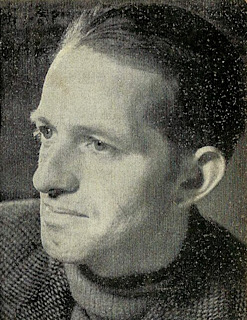
Séamus Ennis (Irish: Séamas Mac Aonghusa), Irish musician, singer and Irish music collector, dies in Naul, County Dublin, on October 5, 1982. He is most noted for his uilleann pipe playing and is partly responsible for the revival of the instrument during the twentieth century, having co-founded Na Píobairí Uilleann, a nonprofit organisation dedicated to the promotion of the uilleann pipes and its music. He is recognised for preserving almost 2,000 Irish songs and dance-tunes as part of the work he does with the Irish Folklore Commission. He is widely regarded as one of the greatest uilleann pipers of all time.

Ennis’s father, James, works for the Irish civil service at Naul, County Dublin. In 1908, James Ennis is in a pawn shop in London and purchases a bag containing the pieces of a set of old uilleann pipes. They were made in the mid nineteenth century by Coyne Pipemakers of Thomas Street in Dublin. In 1912, he comes in first in the Oireachtas competition for warpipes and second in the uilleann pipes. He is also a prize-winning dancer. In 1916, he marries Mary Josephine McCabe, an accomplished fiddle player from County Monaghan. They have six children, Angela, Séamus, Barbara, and twins, Cormac and Ursula (Pixie) and Desmond. Séamus is born on May 5, 1919, in Jamestown in Finglas, Dublin. James Ennis is a member of the Fingal trio, which includes Frank O’Higgins on fiddle and John Cawley on flute, and performs regularly with them on the radio. At the age of thirteen, Séamus starts receiving lessons on the pipes from his father. He attends a Gaelscoil, Cholmcille, and a Gaelcholáiste, Coláiste Mhuire, which gives him a knowledge of the Irish language that serves him well in later life. He sits in an exam to become Employment Exchange clerk but is too far down the list to be offered a job. He is twenty and unemployed.

Colm Ó Lochlainn is editor of Irish Street Ballads and a friend of the Ennis family. In 1938, Ennis confides in Colm that he intends to move to England to join the British Army. Colm immediately offers him a job at The Three Candles Press. There Ennis learns all aspects of the printing trade. This includes writing down slow airs for printed scores – a skill which later proves important. Colm is director of an Irish language choir, An Claisceadal, which Ennis joins. In 1942, during The Emergency, shortages and rationing mean that things become difficult in the printing trade. Professor Seamus Ó Duilearge of the Irish Folklore Commission hires the 23-year-old to collect songs. He is given “pen, paper and pushbike” and a salary of three pounds per week. Off he goes to Connemara.

From 1942 to 1947, working for the Irish Folklore Commission, Ennis collects songs in west Munster; counties GalwayCavanMayoDonegalKerry; the Aran Islands and the Scottish Hebrides. His knowledge of Scottish Gaelic enables him to transcribe much of the John Lorne Campbell collection of songs. Elizabeth Cronin of BallyvourneyCounty Cork, is so keen to chat to Ennis on his visits that she writes down her own songs and hands them over as he arrives, and then gets down to conversation. He has a natural empathy with the musicians and singers he meets. In August 1947, he starts work as an outside broadcast officer with Raidió Éireann. He is a presenter and records Willie ClancySeán Reid and Micho Russell for the first time. There is an air of authority in his voice. In 1951, Alan Lomax and Jean Ritchie arrived from the United States to record Irish songs and tunes. The tables are turned as Ennis becomes the subject of someone else’s collection. There is a photograph from 1952/53 showing Ritchie huddled over the tape recorder while Ennis plays uilleann pipes.

Late in 1951, Ennis joins the BBC. He moves to London to work with producer Brian George. In 1952, he marries Margaret Glynn. They have two children, the organist Catherine Ennis and Christopher. His job is to record the traditional music of England, ScotlandWales and Ireland and to present it on the BBC Home Service. The programme is called As I Roved Out and runs until 1958. Meeting up with Alan Lomax again, he is largely responsible for the album Folk and Primitive Music (volume on Ireland) on the Columbia Records label.

In 1958, after his contract with the BBC is not renewed, Ennis starts doing freelance work, first in England then back in Ireland, with the new TV station Teilifis Éireann. Soon he is relying totally on his musical ability to make a living. About this time, his marriage breaks down and he returns to Ireland. He suffers from tuberculosis and is ill for some time. In 1964, he performs at the Newport Folk Festival. His father gives him the pipes he had bought in 1908. Although most pipers can be classed as playing in a tight style or an open style, Ennis is in between. He is a master of the slow air, knowing how to decorate long notes with taste and discreet variation.

Two events will live in legend among pipers. The first is in Bettystown, County Meath, in 1968, when the society of Irish pipers, Na Píobairí Uilleann, is formed. Breandán Breathnach is playing a tape of his own piping. Ennis asks, “What year?” Breandán replies, “1948.” Ennis says, “So I thought.” For a couple of hours the younger players perform while Ennis sits in silence. Eventually he is asked to play. Slowly he takes off his coat and rolls up his sleeves. He spends 20 minutes tuning up his 130-year-old pipes. He then asks the gathering whether all the tape recorders are ready and proceeds to play for over an hour. To everyone’s astonishment he then offers his precious pipes to Willie Clancy to play a set. Clancy demurs but eventually gives in. Next, Liam O’Flynn is asked to play them, and so on, round the room. The second unforgettable session is in Dowlings’ Pub in Prosperous, County KildareChristy Moore is there, as well as most of the future members of Planxty.

Ennis never runs any school of piping but his enthusiasm infuses everyone he meets. In the early 1970s, he shares a house with Liam O’Flynn for almost three years. Finally, he purchases a piece of land in Naul and lives in a mobile home there. One of his last performances is at the Willie Clancy Summer School in 1982. He dies on October 5, 1982. His pipes are bequeathed to Liam O’Flynn. Radio producer Peter Browne produces a compilation of his performances, called The Return from Fingal, spanning 40 years.

Séamus Ennis Road in his native Finglas is named in his honour. The Séamus Ennis Arts Centre in Naul is opened in his honour, to commemorate his work and to promote the traditional arts. He is also the subject of Christy Moore’s song “The Easter Snow.” This is the title of a slow air Ennis used to play, and one after which he named his final home in Naul.


Leave a comment

Birth of Annie Horniman, Theatre Patron & Manager

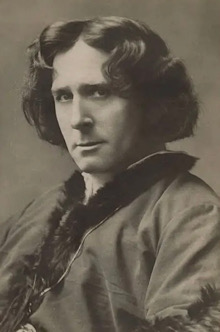
Annie Elizabeth Fredericka Horniman CH, English theatre patron and manager, is born at Surrey Mount, Forest Hill, London, on October 3, 1860. She establishes the Abbey Theatre in Dublin and founds the first regional repertory theatre company in Britain at the Gaiety Theatre in Manchester. She encourages the work of new writers and playwrights, including W. B. YeatsGeorge Bernard Shaw and members of what become known as the Manchester School of dramatists.

Horniman, the elder child of Frederick John Horniman and his first wife Rebekah (née Emslie). Her father is a tea merchant and the founder of the Horniman Museum. Her grandfather is John Horniman who founds the family tea business of Horniman and Company. She and her younger brother, Emslie, are educated privately at their home. Her father is opposed to the theatre, which he considers sinful, but their German governess takes her and Emslie secretly to a performance of The Merchant of Venice at The Crystal Palace when she is fourteen years old.

Horniman’s father allows her to enter the Slade School of Fine Art in 1882. Here she discovers that her talent in art is limited but she develops other interests, particularly in the theatre and opera. She takes great pleasure in Richard Wagner‘s Der Ring des Nibelungen and in Henrik Ibsen‘s plays. She cycles in London and twice over the Alps, smokes in public and explores alternative religions. The “lonely rich girl” has become “an independent-minded woman.” In 1890 she joins the occult society, the Hermetic Order of the Golden Dawn, where she remains a member until disagreements with its leaders lead to her resignation in 1903. During this time she meets and becomes a friend of W. B. Yeats, acting as his amanuensis for some years. Their friendship endures. Frank O’Connor recalls that on the day Yeats hears of her death, he spends the entire evening speaking of his memories of her.

Horniman’s first venture into the theatre is in 1894 and is made possible by a legacy from her grandfather. She anonymously supports her friend Florence Farr in a season of new plays at the Royal Avenue Theatre, London. This includes a new play by Yeats, The Land of Heart’s Desire, and the première of George Bernard Shaw’s play Arms and the Man. In 1903, Yeats persuades her to go to Dublin to back productions by the Irish National Theatre Society. Here she discovers her skill as a theatre administrator. She purchases a property and develops it into the Abbey Theatre, which opens in December 1904. Although she moves back to live in England, she continues to support the theatre financially until 1910. Meanwhile, in Manchester she purchases and renovates the Gaiety Theatre in 1908 and develops it into the first regional repertory theatre in Britain.

At the Gaiety, Horniman appoints Ben Iden Payne as the director and employs actors on 40-week contracts, alternating their work between large and small parts. The plays produced include classics such as Euripides and Shakespeare, and she introduces works by contemporary playwrights such as Ibsen and Shaw. She also encourages local writers who form what becomes known as the Manchester School of dramatists, the leading members of which are Harold BrighouseStanley Houghton and Allan Monkhouse. The Gaiety company undertakes tours of the United States and Canada in 1912 and 1913. Horniman becomes a well-known public figure in Manchester, lecturing on subjects which include women’s suffrage and her views about the theatre. In 1910 she is awarded the honorary degree of MA by the University of Manchester. During World War I the Gaiety continues to stage plays but financial difficulties lead to the disbandment of the permanent company in 1917, following which productions in the theatre are by visiting companies. In 1921 she sells the theatre to a cinema company.

As a result of her tea connection, Horniman is known as “Hornibags.” She holds court at the Midland Hotel, wearing exotic clothing and openly smoking cigarettes, which is considered scandalous at the time. She introduces Manchester to what is called at the time “the play of ideas.” The theatre critic James Agate notes that her high-minded theatrical ventures have “an air of gloomy strenuousness” about them.

Horniman moves to London where she keeps a flat in Portman Square. In 1933 she is made a Companion of Honour. She and Algernon Blackwood might be the only past or present members of an occult society to receive a United Kingdom honour.

Horniman dies, unmarried, on August 6, 1937, while visiting friends in Shere, Surrey. Her estate amounts to a little over £50,000. The Annie Horniman Papers are held in the John Rylands Research Institute and Library at the University of Manchester. Her portrait, painted by John Butler Yeats in 1904, hangs in the public area of the Abbey Theatre.


Leave a comment

Birth of Jasmine Guinness, Designer & Fashion Model

Jasmine Leonora Guinness, Irish designer and a fashion model active since 1994, is born on September 28, 1976. She is a member of Anglo-Irish brewing Guinness family.

Guinness is the daughter of Patrick Guinness and Liz Casey. She is educated at St. Columba’s CollegeRathfarnham, in Dublin. She also spends a year at Winchester School of Art, the art school of the University of Southampton, situated 10 miles (14 km) north of Southampton in the city of Winchester near the south coast of England.

Guinness and Gawain O’Dare Rainey are engaged on January 31, 2005, and married on July 1, 2006, in Leixlip, County Kildare. The wedding is extensively covered in the July 18, 2006 issue of Hello! magazine and is attended by 500 guests, including the designer of her draped silk dress, Jasper ConranMario TestinoPaddy MoloneyAnjelica HustonJacquetta WheelerJade ParfittErin O’ConnorGarech Browne and Philip Treacy.

Her husband is the son of Michael Rainey and the Hon. Jane Ormsby-Gore, a daughter of David Ormsby-Gore, 5th Baron Harlech. They have two sons and a daughter together.

Guinness opens the toy shop Honeyjam on London‘s Portobello Road in 2006.

A portrait of Guinness is held at the National Portrait Gallery in London. She has modeled for various perfume and make-up campaigns, including Armani and Shu Uemura. She is the face of the Goffs Million horse races at the Curragh Racecourse in September 2007, an event that pays the highest winnings of any race meeting in Europe.

In 2009, Guinness is the face of the Arthur’s Day event celebrating her ancestor Arthur Guinness. In March and December 2011 she is again the subject of articles in Hello! magazine.

The year 2014 marks a revival of Guinness’s modeling career as she leads Jaeger‘s AW14 campaign alongside her mother Liz and fellow models Kirsty Hume and Jodie Kidd. Her range largely includes knitwear, including cardigans, skirts and sweater dresses.

Guinness is the great-granddaughter of Diana Mitford (later Lady Mosley), who is one of the Mitford sisters, and her first husband Bryan Guinness, later the 2nd Lord Moyne. Her paternal grandfather, Desmond Guinness, is a conservationist specialising in Georgian and classical architecture, while her paternal grandmother, Mariga Guinness, is born Marie-Gabrielle, Princess of Urach. Desmond and Mariga Guinness are co-founders of the Irish Georgian Society. Guinness’s maternal family is researched in the RTÉ programme Where Was Your Family During the Famine?


Leave a comment

Death of James Ryan, Doctor, Revolutionary & Fianna Fáil Politician

James Ryan, medical doctor, revolutionary and politician who serves in every Fianna Fáil government from 1932 to 1965, dies on his farm at Kindlestown, County Wicklow, on September 25, 1970.

Ryan is born on the family farm at Tomcoole, near TaghmonCounty Wexford, on December 6, 1892. The second-youngest of twelve children, he is educated at St. Peter’s College, Wexford, and Ring College, Waterford. In 1911, he wins a county council scholarship to University College Dublin (UCD) where he studies medicine.

In March 1917, Ryan passes his final medical examinations. That June he sets up medical practice in Wexford. In 1921, he moves to Dublin where he opens a doctor’s practice at Harcourt Street, specialising in skin diseases at the Skin and Cancer Hospital on Holles Street. He leaves medicine in 1925, after he purchases Kindlestown, a large farm near Delgany, County Wicklow. He lives there and it remains a working farm until his death.

In July 1919, Ryan marries Máirín Cregan, originally from County Kerry and a close friend of Sinéad de Valera throughout her life. Cregan, like her husband, also fought in the Easter Rising and is subsequently an author of children’s stories in Irish. They have three children together.

One of Ryan’s sisters, Mary Kate, marries Seán T. O’Kelly, one of Ryan’s future cabinet colleagues and a future President of Ireland. Following her death O’Kelly marries her sister, Phyllis Ryan. Another of Ryan’s sisters, Josephine (‘Min’) Ryan, marries Richard Mulcahy, a future leader of Fine Gael. Another sister, Agnes, marries Denis McCullough, a Cumann na nGaedheal TD from 1924 to 1927. He is also the great-grandfather of Ireland and Leinster Rugby player James Ryan.

While studying at university in 1913, Ryan joins the Gaelic League at Clonmel. The company commander recruits the young Catholic nationalist, who becomes a founder-member of the Irish Volunteers and is sworn into the Irish Republican Brotherhood (IRB) the following year. In 1916, he goes first to Cork to deliver a message from Seán Mac Diarmada to Tomás Mac Curtain that the Easter Rising is due to happen on Easter Sunday, then to Cork again in a 12-hour journey in a car to deliver Eoin MacNeill‘s cancellation order, which attempts to stop the rising. When he arrives back on Tuesday, he serves as the medical officer in the General Post Office (GPO) and treats many wounds, including James Connolly‘s shattered ankle, a wound which gradually turns gangrenous. He is, along with Connolly, one of the last people to leave the GPO when the evacuation takes place. Following the surrender of the garrison, he is deported to HM Prison Stafford in England and subsequently Frongoch internment camp. He is released in August 1916.

Ryan rejoins the Volunteers immediately after his release from prison, and in June 1917, he is elected Commandant of the Wexford Battalion. His political career begins the following year when he is elected as a Sinn Féin candidate for the constituency of South Wexford in the 1918 United Kingdom general election in Ireland. Like his fellow Sinn Féin MPs, he refuses to attend the Westminster Parliament. Instead he attends the proceedings of the First Dáil on January 21, 1919. As the Irish War of Independence goes on, he becomes Brigade Commandant of South Wexford and is also elected to Wexford County Council, serving as chairman on one occasion. In September 1919, he is arrested by the British and interned on Spike Island and later Bere Island. In February 1921, he is imprisoned at Kilworth Internment Camp, County Cork. He is later moved on Ballykinlar Barracks in County Down and released in August 1921.

In the 1922 Irish general election, Ryan and one of the other two anti-Treaty Wexford TDs lose their seats to pro-Treaty candidates. During the Irish Civil War, he is arrested and held in Mountjoy Prison before being transferred to Curragh Camp, where he embarks on a 36-day hunger strike. While interned he wins back his Dáil seat as an abstentionist at the 1923 Irish general election. He is released from prison in December 1923.

In 1926, Ryan is among the Sinn Féin TDs who follow leader Éamon de Valera out of the party to found Fianna Fáil. They enter the Dáil in 1927 and spend five years on the opposition benches.

Following the 1932 Irish general election, Fianna Fáil comes to office and Ryan is appointed Minister for Agriculture, a position he continuously holds for fifteen years. He faces severe criticism over the Anglo-Irish trade war with Britain as serious harm is done to the cattle trade, Ireland’s main export earner. The trade war ends in 1938 with the signing of the Anglo-Irish Trade Agreement between both governments, after a series of talks in London between the British Prime Minister Neville Chamberlain, de Valera, Ryan and Seán Lemass.

In 1947, after spending fifteen years as Minister for Agriculture, Ryan is appointed to the newly created positions of Minister for Health and Minister for Social Welfare. Following Fianna Fáil’s return to power at the 1951 Irish general election, he returns as Minister for Health and Social Welfare. Following the 1954 Irish general election, Fianna Fáil loses power and he moves to the backbenches once again.

Following the 1957 Irish general election, Fianna Fáil are back in office and de Valera’s cabinet has a new look to it. In a clear message that there will be a change to economic policy, Ryan, a close ally of Seán Lemass, is appointed Minister for Finance, replacing the conservative Seán MacEntee. The first sign of a new economic approach comes in 1958, when Ryan brings the First Programme for Economic Development to the cabinet table. This plan, the brainchild of T. K. Whitaker, recognises that Ireland will have to move away from self-sufficiency toward free trade. It also proposes that foreign firms should be given grants and tax breaks to set up in Ireland.

When Lemass succeeds de Valera as Taoiseach in 1959, Ryan is re-appointed as Minister for Finance. Lemass wants to reward him for his loyalty by also naming him Tánaiste. However, the new leader feels obliged to appoint MacEntee, one of the party elders to the position. Ryan continues to implement the First Programme throughout the early 1960s, achieving a record growth rate of 4 percent by 1963. That year an even more ambitious Second Programme is introduced. However, it overreaches and has to be abandoned. In spite of this, the annual growth rate averages five percent, the highest achieved since independence.

Ryan does not stand in the 1965 Irish general election, after which he is nominated by the Taoiseach to Seanad Éireann, where he joins his son, Eoin Ryan Snr. At the 1969 dissolution he retires to his farm at Kindlestown, County Wicklow, where he dies at age 77 on September 25, 1970. He is buried at Redford Cemetery, Greystones, County Wicklow. His grandson, Eoin Ryan Jnr, serves in the Oireachtas from 1989 to 2007 and later in the European Parliament from 2004 to 2009.


Leave a comment

Death of Oliver St. John Gogarty, Poet, Author, Athlete & Politician

Oliver Joseph St. John Gogarty, Irish poet, authorotolaryngologist, athlete, politician, and well-known conversationalist, dies in New York City on September 22, 1957. He serves as the inspiration for Buck Mulligan in James Joyce‘s novel Ulysses.

Gogarty is born on August 17, 1878, in Rutland SquareDublin. In 1887, his father dies of a burst appendix, and he is sent to Mungret College, a boarding school near Limerick. He is unhappy in his new school, and the following year he transfers to Stonyhurst College in LancashireEngland, which he likes little better, later referring to it as “a religious jail.” He returns to Ireland in 1896 and boards at Clongowes Wood College while studying for examinations with the Royal University of Ireland. In 1898, he switches to the medical school at Trinity College Dublin (TCD), having failed eight of his ten examinations at the Royal.

A serious interest in poetry and literature begins to manifest itself during his years at TCD. In 1900, he makes the acquaintance of W. B. Yeats and George Moore and begins to frequent Dublin literary circles. In 1904 and 1905 he publishes several short poems in the London publication The Venture and in John Eglinton‘s journal Dana. His name also appears in print as the renegade priest Fr. Oliver Gogarty in George Moore’s 1905 novel The Lake.

In 1905, Gogarty becomes one of the founding members of Arthur Griffith‘s Sinn Féin, a non-violent political movement with a plan for Irish autonomy modeled after the Austro-Hungarian dual monarchy.

In July 1907, his first son, Oliver Duane Odysseus Gogarty, is born, and in autumn of that year he leaves for Vienna to finish the practical phase of his medical training. Returning to Dublin in 1908, he secures a post at Richmond Hospital, and shortly afterward purchases a house in Ely Place opposite George Moore. Three years later, he joins the staff of the Meath Hospital and remains there for the remainder of his medical career.

As a Sinn Féiner during the Irish War of Independence, Gogarty participates in a variety of anti-Black and Tan schemes, allowing his home to be used as a safe house and transporting disguised Irish Republican Army (IRA) volunteers in his car. Following the ratification of the Anglo-Irish Treaty, he sides with the pro-Treaty government and is made a Free State Senator. He remains a senator until the abolition of the Seanad in 1936, during which time he identifies with none of the existing political parties and votes according to his own whims.

Gogarty maintains close friendships with many of the Dublin literati and continues to write poetry in the midst of his political and professional duties. He also tries his hand at playwriting, producing a slum drama in 1917 under the pseudonym “Alpha and Omega,” and two comedies in 1919 under the pseudonym “Gideon Ouseley,” all three of which are performed at the Abbey Theatre. He devotes less energy to his medical practice and more to his writing during the twenties and thirties.

With the onset of World War II, Gogarty attempts to enlist in the Royal Air Force (RAF) and the Royal Army Medical Corps (RAMC) as a doctor. He is denied on grounds of age. He then departs in September 1939 for an extended lecture tour in the United States, leaving his wife to manage Renvyle House, which has since been rebuilt as a hotel. When his return to Ireland is delayed by the war, he applies for American citizenship and eventually decides to reside permanently in the United States. Though he regularly sends letters, funds, and care-packages to his family and returns home for occasional holiday visits, he never again lives in Ireland for any extended length of time.

Gogarty suffers from heart complaints during the last few years of his life, and in September 1957 he collapses in the street on his way to dinner. He dies on September 22, 1957. His body is flown home to Ireland and buried in Cartron Church, Moyard, near Renvyle, County Galway.

(Pictured: 1911 portrait of Oliver St. John Gogarty painted by Sir William Orpen, currently housed at the Royal College of Surgeons in Ireland)


Leave a comment

Birth of Fenian Leader Jeremiah O’Donovan Rossa

Jeremiah O’Donovan Rossa, Irish Fenian leader and prominent member of the Irish Republican Brotherhood (IRB), is born Jeremiah O’Donovan at Reenascreena, RosscarberyCounty Cork, on September 10, 1831.

Rossa becomes a shopkeeper in Skibbereen where, in 1856, he establishes the Phoenix National and Literary Society, the aim of which is “the liberation of Ireland by force of arms.” This organisation later merges with the IRB, founded two years later in Dublin.

In December 1858, Roosa is arrested and jailed without trial until July 1859. He is charged with plotting a Fenian rising in 1865, put on trial for high treason, and sentenced to penal servitude for life due to previous convictions. He serves his time in PentonvillePortland, and Chatham prisons in England.

In an 1869 by-election, Roosa is returned to the British House of Commons for the Tipperary constituency, defeating the Liberal Catholic Denis Caulfield Heron by 1,054 to 898 votes. The election is declared invalid because Rossa is an imprisoned felon.

After giving an understanding that he will not return to Ireland, Rossa is released as part of the Fenian amnesty of 1870. Boarding the S.S. Cuba, he leaves for the United States with his friend John Devoy and three other exiles. Together they were dubbed “The Cuba Five.”

Rossa takes up residence in New York City, where he joins Clan na Gael and the Fenian Brotherhood. He organises the first ever bombings by Irish republicans of English cities in what is called the “dynamite campaign.” The campaign lasts through the 1880s and makes him infamous in Britain. The British government demands his extradition from America but without success.

In 1885, Rossa is shot outside his office near Broadway by an Englishwoman, Yseult Dudley, but his wounds are not life-threatening. He is allowed to visit Ireland in 1894, and again in 1904. On the latter visit, he is made a “Freeman of the City of Cork.”

Rossa is seriously ill in his later years and is finally confined to a hospital bed in St. Vincent’s Hospital, Staten Island, where he dies suddenly at the age of 83 on June 29, 1915. His body is returned to Ireland for burial and a hero’s welcome. The funeral at Glasnevin Cemetery on August 1, 1915, is a huge affair, garnering substantial publicity for the Irish Volunteers and the IRB at time when a rebellion, later to emerge as the Easter Rising, is being actively planned. The graveside oration given by Patrick Pearse remains one of the most famous speeches of the Irish independence movement stirring his audience to a call to arms.


Leave a comment

The Irish Brigade Fights at the Battle of Chiari

On September 1, 1701, the Irish Brigade of France fights at the Battle of Chiari in northern Italy during the War of the Spanish Succession. The engagement is part of Prince Eugene of Savoy‘s campaign to seize the Spanish controlled Duchy of Milan in the Italian peninsula, and follows his victory over Marshal Nicolas Catinat at the Battle of Carpi in July. Marshal François de Neufville, 2nd Duke of Villeroy, replaces Catinat as commander of the Franco–Spanish–Savoyard forces in the theatre, carrying with him orders from King Louis XIV to push the Imperialists out of Italy.

Eugene welcomes the prospect of a decisive battle, and waits on the eastern side of the Oglio to be attacked. The Imperial commander has chosen his ground carefully, entrenching his troops and guns in front of the small fortress of Chiari. Streams protect his position on three sides so, as there is not enough room for a cavalry engagement, Eugene can count on a frontal attack by the French infantry. Two battalions and a few pieces of artillery are placed in Chiari itself.

Villeroy ignores Catinat’s warning that Eugene is in a strong position, remarking that the King, “had not sent so many brave men just to look at the enemy through their spy glasses.” On September 1, the Franco-Spanish infantry advances. Deceived by the report of spies that the Imperialists are retiring, Villeroy crosse the Oglio and pushes on to Chiari expecting to attack their rearguard. The attack begins around 2:00 p.m. when three French brigades approach Chiari and overpower the Imperial troops there without much difficulty. However, instead of facing the rearguard, the French commander encounters the whole Imperial army securely entrenched in their positions. As the Bourbons’ army approaches the Imperial positions, Eugene forbids his men to fire. Loading their artillery with canister shot, they only unleash a withering fire when the Bourbon army enters point-blank range. This disorders the attackers and chaos ensues which the French and Spanish commanders cannot suppress. While this is going on, Chiari is recaptured by the Imperials after a fierce struggle. The Bourbons are driven back with heavy casualties in a contest as destructive as any battle during the war in Italy. With only minor losses, the Imperial army inflicts over 3,000 casualties in the ranks, and over 250 officers. This number grows rapidly as fever attacks the wounded.

Villeroy loses personal control during the battle, and Catinat, despite being wounded, has to organise a retreat. The French dig themselves in only a mile or so away from the Austrians on the same side of the Oglio. Here, the two opposing sides remain for the next two months: the French are too much discouraged by their repulse to resume the assault, and Eugene is unwilling to risk the advantages he had gained by attacking the French in their strong defensive position. However, as autumn advances, conditions deteriorate in both camps: fodder is so short that Eugene’s horses are forced to eat fallen leaves. But the French, whose camp is built on marshy ground, suffers most, and they move out first in mid-November, crossing the Oglio before entering winter quarters in the Duchy of Milan.

In Milan, the French presence proves increasingly unpopular: five million French livres for soldiers’ pay and lodgings, and two million for fodder, has soon been imposed on the local population, most of which has to be taken by force. For his winter quarters, Eugene proceeds to reduce the whole Duchy of Mantua, except the capital and Goito, which he closely blockades. Shortly after he occupies Mirandola and Guastalla. Eugene’s relationship with the local population has been good and he has kept a tight control: he has executed 48 of his men for looting, telling the Emperor that he had “imposed more severe discipline than has possibly ever been seen in an army.” Eugene receives little cash from the Emperor, far less than he expects, but he secures a sound footing in northern Italy and, as hoped, his success helps to encourage the Maritime Powers to come to the aid of Leopold I. Since the beginning of the year Count Johann Wenzel Wratislaw von Mitrowitz has been in London as Imperial minister, pressing for assistance. With Eugene’s two victories (Carpi and Chiari), Leopold I has proven he would fight to protect his interests, giving Wratislaw the arguments he needs to push through the alliance with the Maritime Powers. On September 7, 1701, within a week of the battle, England and the Dutch Republic sign the second treaty of the Grand Alliance, backing the Emperor’s claims to the Spanish possessions in Italy.

The French are still in Milan, but their position is weak: morale is poor and desertion is high. Louis XIV writes to Villeroy urging him to work closely with Catinat and “not again to attack the enemy without advantage.” “If you do … the King, my grandson, will lose Italy.” By October, French optimism for the campaign is gone, but Louis XIV hopes to send reinforcements for the next year’s campaign, believing the Emperor will not be able to make a comparable increase in Eugene’s strength. However, the campaign season is not yet over. As Villeroy settles down for the winter, Eugene is preparing to attack him at his headquarters in Cremona.


Leave a comment

Birth of Mario Rosenstock, Actor, Comedian, Impressionist & Musician

Mario Rosenstock, Irish actor, comedianimpressionist and musician, is born in London, England, on August 31, 1970.

Rosenstock first comes to the attention of the Irish public playing the role of Dr. David Hanlon in the soap opera Glenroe in the 1990s.

However, he is now best known for the popular Gift Grub segments which have featured on The Ian Dempsey Breakfast Show on Today FM since May 1999 which Rosenstock creates alongside Paul McLoone, a radio presenter with Today FM and frontman of the Northern Irish pop-punk/new-wave band, The Undertones.

Gift Grub is a series of comic sketches, impersonations and parodies that featured Rosenstock assuming the personae of Bertie AhernRonan KeatingColin Farrell and Roy Keane among many others. He also provides the manic voice of Right Price Tiles radio spokesperson “Daft Dave.”

Rosenstock performs an impersonation of José Mourinho in a parody of a song from the musical Joseph and the Amazing Technicolor Dreamcoat. This spreads like wildfire on Internet message boards and eventually it is played on a Sky Sports broadcast. Mourinho hears the song and enjoys the impersonation so much he asks Rosenstock to perform a private show for him and the Chelsea F.C. squad. Rosenstock later releases, with Mourinho’s blessing, a single version of “José and his Amazing Technicolor Overcoat.” He also releases another song (“I Sign a Little Player or Two“) on the internet with a parody of Mourinho in an interview then breaking into song.

In 2005, Rosenstock stars as Keano in the comedy musical play I, Keano, which concerns Keane storming out of the Republic of Ireland national football squad during preparations for the 2002 FIFA World Cup.

In 2005, Rosenstock achieves the Christmas number one single in the Irish Singles Chart, with a parody of Will Young‘s song Leave Right Now (which itself is a Christmas number-one in 2003). The parody concerned Roy Keane’s controversial departure from Manchester United and his falling-out with Alex Ferguson

Between December 2007 and May 2009, Rosenstock works on a puppet comedy series entitled Special 1 TV (originally known as I’m on Setanta Sports), which is presented as a parody weekly football talk show hosted by “José Mourinho.” He voices all the puppet characters on the sketch, with the exception of “Rafael Benitez,” who is performed by Keith Burke, including the main character Mourinho, his studio co-hosts “Sven-Göran Eriksson” and “Wayne Rooney,” and regular phone-in callers like “Alex Ferguson,” “Arsène Wenger,” “Roy Keane” and “Mick McCarthy,” as well as the non-football-related characters, Nelson MandelaWillie NelsonBarack Obama and Tom Cruise.

Rosenstock receives the Outstanding Achievement Award at the 11th annual PPI (Phonographic Performance Ireland) Radio Awards in 2011.

In November 2012 his new show called The Mario Rosenstock Show starts on RTÉ2. A second series of the show begins to air in September 2013.

Rosenstock is married, with two children. His uncle, Gabriel Rosenstock, is one of Ireland’s most notable Irish language poets and member of Innti with Michael DavittNuala Ní Dhomhnaill and Liam Ó Muirthile. Rosenstock’s grandfather George is a doctor and writer from Schleswig-Holstein, Germany. He never speaks German again after the war out of shame. His grandmother is a nurse from AthenryCounty Galway.


Leave a comment

Birth of Seán Cronin, Journalist & Irish Army Officer

Seán Gerard Croninjournalist and former Irish Army officer and twice Chief of Staff of the Irish Republican Army (IRA), is born in Dublin on August 29, 1922.

Cronin is the only son among three children of Con Cronin, a member of the Irish Republican Army (IRA), and his wife Kate. After his father’s death, his mother works as a cook in a boarding school while the children are brought up by relatives in Ballinskelligs in the County Kerry Gaeltacht. Educated locally, he is deeply influenced by his Gaeltacht childhood; his later writings often refer to the hypocrisy of a state that romanticises the Gaeltacht while neglecting its social problems.

During World War II, Cronin’s sisters emigrate to England to train as nurses while he works as a labourer for Kerry County Council. In December 1941, he joins the Irish Army and is selected in 1943 for an officers’ training course, on which he forms a lifelong friendship with the future theatre director Alan Simpson. He is commissioned and remains in the army until 1948.

Shortly thereafter Cronin emigrates to New York City, where he finds work as a journalist writing for The Advocate, an Irish American newspaper. He is strongly influenced by interviewing 1916 veterans for The Advocate and by contact with left-wing Irish American associates of Michael Quill, who played leading roles in the foundation of the Transport Workers Union of America. He becomes active in the semi-secret separatist organisation Clan na Gael, and in autumn 1955 returns to Ireland with the aim of helping the IRA to prepare for another military campaign.

Cronin begins work as a sub-editor with the Evening Press and also contributes summaries of world affairs to The Irish Times.

Cronin establishes contact with the IRA, and his military experience leads to his rapid assignment to GHQ staff. He is initially placed in charge of training and instruction, composing a manual on guerrilla warfare and twelve lectures on battlefield training. He teaches new military techniques and new recruits, such as the future IRA Chief of Staff Ruairí Ó Brádaigh, find him deeply impressive.

Cronin becomes a leading advocate of an early IRA campaign against Northern Ireland and becomes the chief strategist for Operation Harvest, a campaign which sees the carrying out of a range of military operations from direct attacks on security installations to disruptive actions against infrastructure. He is arrested on January 8, 1957, near the border in County Cavan. He is imprisoned several times over the course of the campaign (1956–1962).

Most of the IRA and Sinn Féin leadership are interned by the Dublin government on July 6, 1957. Cronin, one of the few to escape, becomes IRA Chief of Staff. He also acts for a time as editor of the movement’s newspaper, United Irishman. He tries to secure weapons from various sources, leading an unsuccessful raid on a British Army base at Blandford Camp in Dorset on February 16, 1958, and through contacts with Spanish republican exiles in Paris. The Irish American community remains the IRA’s main source of external support.

Cronin is arrested on September 30, 1958, and interned, causing considerable disarray, as he had been running much of the campaign single-handed. When the internees are released in March 1959, he resumes his position as Chief of Staff after a factional dispute causes the resignations of Tomás Óg Mac Curtain and the former Chief of Staff Tony Magan. He continues to argue that a sustained guerrilla campaign might yet succeed, but in June 1960 is again arrested and imprisoned for six months.

In November 1960, the Irish Freedom Committee (IFC), a Clan na Gael splinter group, accuses Cronin of being a communist and a “Free State agent,” supposedly implicated in the 1944 execution of Charlie Kerins. The IRA supports Cronin, but he nevertheless decides to resign successively as Chief of Staff, as a member of the Army Council, and as an IRA volunteer, on the grounds that his presence endangers the American support necessary for the continuance of the campaign. He then secures a job as a journalist on the Irish Independent. He withdraws his resignation in November 1961 after the Irish government reinstates military tribunals to try suspected IRA men. He is subsequently sentenced to six months’ imprisonment by a military tribunal and is in prison when the border campaign ends on February 26, 1962. Released on amnesty on April 19, 1962, he finally resigns from the IRA the next day.

By February 1966, Cronin has returned to the United States, where he resides for the remainder of his life, with regular visits to Ireland. He works as a journalist on the Newark Evening News and the Dow Jones News Service and is the U.S. correspondent of The Irish Times from 1967 to 1991, becoming that paper’s first Washington, D.C. correspondent.

In the 1970s Cronin takes a degree at New York University, then teaches and studies for a doctorate at The New School for Social Research in New York under Hans Morgenthau. His dissertation forms the basis for his magnum opusIrish nationalism: its roots and ideology (1980). Although limited by its colonial model and socialist-republican intellectual framework, this historically oriented account draws on his extensive research and personal contacts to some effect.

Cronin is the author of a dozen books and pamphlets, including a biography of republican Frank RyanWashington’s Irish Policy 1916-1986: independence, partition, neutrality (1987), an authoritative account of Irish-US relations, Our Own Red Blood: The Story of the 1916 Rising (1966), and a number of works on guerrilla strategy, including an early Sinn Féin pamphlet Resistance under the pseudonym of J. McGarrity.

After the death of his first wife in 1974, Cronin marries Reva Rubinstein, a toxicologist. In 1980 they move to Washington, D.C. He has no children by either marriage, though his second wife brings him a stepson. After several years of illness, he dies in Baltimore, Maryland, on March 9, 2011. He is survived by his second wife, Reva Rubenstein Cronin.


Leave a comment

Death of Piers Butler, 8th Earl of Ormond

Piers Butler, 8th Earl of Ormond, 1st Earl of Ossory, also known as Red Piers, dies on August 26, 1539. He is from the Polestown branch of the Butler family of Ireland. In the succession crisis at the death of Thomas Butler, 7th Earl of Ormond, he succeeds to the earldom as heir male, but loses the title in 1528 to Thomas Boleyn. He regains it after Boleyn’s death in 1538.

Butler is born c. 1467, the third son of James Butler and Sabh Kavanagh. His father is Lord Deputy of Ireland, Lord of the Manor of Advowson of Callan (1438–87). His father’s family is the Polestown cadet branch of the Butler dynasty that started with Sir Richard Butler of Polestown, second son of James Butler, 3rd Earl of Ormond. His mother, whose first name is variously given as Sabh, Sadhbh, Saiv, or Sabina, is a princess of Leinster, eldest daughter of Donal Reagh Kavanagh, MacMurrough (1396–1476), King of Leinster.

In 1485, Butler marries Lady Margaret FitzGerald, daughter of Gerald FitzGerald, 8th Earl of Kildare and Alison FitzEustace. The marriage is political, arranged with the purpose of healing the breach between the two families. In the early years of their marriage, Margaret and her husband are reduced to penury by James Dubh Butler, a nephew, heir to the earldom and agent of the absentee Thomas Butler, 7th Earl of Ormond, who resides in England. Butler retaliates by murdering James Dubh in an ambush in 1497. He is pardoned for his crime on February 22, 1498.

Butler and Margaret have three sons: James (1496–1546), also called “the Lame,” who succeeds him as the 9th Earl, Richard (1500–1571), who becomes the 1st Viscount Mountgarret, and Thomas, who is slain by Dermoid Mac Shane, MacGillaPatrick of Upper Ossory, and six daughters: Margaret, Catherine (1506–53), Joan (born 1528), married James Butler, 10th Baron Dunboyne, Ellice (1481–1530), Eleanor, married Thomas Butler, 1st Baron Cahir, and Helen, also called Ellen (1523–97), married Donough O’Brien, 2nd Earl of Thomond.

Butler also has an illegitimate son, Edmund Butler, who becomes Archbishop of Cashel and conforms to the established religion in 1539.

During the prolonged absence from Ireland of the earls, Butler’s father lays claim to the Ormond land and titles. This precipitates a crisis in the Ormond succession when the seventh earl later dies without a male heir. On March 20, 1489, King Henry VII appoints him High Sheriff of County Kilkenny. He is knighted before September 1497. The following year (1498) he seizes Kilkenny Castle and with his wife, the dynamic daughter of the Earl of Kildare, likely improve the living accommodations there. On February 28, 1498, he receives a pardon for crimes committed in Ireland, including the murder of James Ormonde, heir to the 7th Earl. He is also made Seneschal of the Liberty of Tipperary on June 21, 1505, succeeding his distant relation, James Butler, 9th Baron Dunboyne. 

Henry VII is succeeded by Henry VIII in 1509. On the death of Thomas Butler, 7th Earl of Ormonde on August 3, 1515, Butler becomes the 8th Earl of Ormond.

In March 1522, Henry VIII appoints him Chief Governor of Ireland as Lord Deputy. He holds this office until August 1524 when he is succeeded by Thomas FitzGerald, 10th Earl of Kildare. However, he holds on to the position of Lord Treasurer.

One of the heirs general to the Ormond inheritance is Thomas Boleyn, whose mother is Lady Margaret Butler, second daughter of the 7th Earl. Thomas Boleyn is the father of Anne, whose star is rising at the court of King Henry VIII. As the king wants the titles of Ormond and Wiltshire for Thomas Boleyn, he induces Butler and his coheirs to resign their claims on February 17, 1528. Aided by the king’s Chancellor, Cardinal Thomas Wolsey, Butler is created Earl of Ossory instead. On February 22, 1538, the earldom of Ormond is restored to him.

Butler dies on August 26, 1539, and is buried in St. Canice’s Cathedral, Kilkenny.