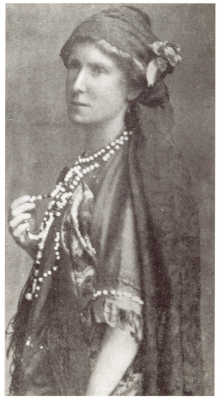
O’Farrelly is born Agnes Farrelly on June 24, 1874, in Raffony House, Virginia, County Cavan, one of five daughters and three sons of Peter Dominic Farrelly and Ann Farrelly (née Sheridan), a family with a traditional interest in the Irish language. After her articles Glimpses of Breffni and Meath are published in The Anglo-Celt in 1895, the editor, E. T. O’Hanlon, encourages her to study literature. Graduating from the Royal University of Ireland (BA 1899, MA 1900), she is appointed a lecturer in Irish at Alexandra College and Loreto College. A founder member in 1902, along with Mary Hayden, of the Irish Association of Women Graduates and Candidate Graduates, to promote equal opportunity in university education, she gives evidence to the Robertson (1902) and Fry (1906) commissions on Irish university education, arguing successfully for full co-education at UCD. Appointed lecturer in modern Irish at UCD in 1909, she is also a member of the first UCD governing body and the National University of Ireland (NUI) senate (1914–49). In 1932, on the retirement of Douglas Hyde, she is appointed professor of modern Irish at UCD, holding the position until her retirement in 1947. She is also president of the Irish Federation of University Women (1937–39) and of the National University Women Graduates’ Association (NUWGA) (1943–47).
One of the most prominent women in the Gaelic League, a member of its coiste gnótha (executive committee) and a director of the Gaelic press An Cló-Chumann Ltd, O’Farrelly is a close friend of most of its leading figures, especially Douglas Hyde, Kuno Meyer, and Eoin MacNeill. One of Hyde’s allies in his battle to avoid politicising the league, she is so close to him that students at UCD enjoy speculating about the nature of their friendship. She advocates pan-Celticism, but does not get involved in disputes on the matter within the league. A founder member, and subsequently principal for many years, of the Ulster College of Irish, Cloghaneely, County Donegal, she is also associated with the Leinster and Connacht colleges and serves as chairperson of the Federation of Irish Language Summer Schools.
Having presided at the inaugural meeting of Cumann na mBan in 1914, espousing its subordinate role in relation to the Irish Volunteers, O’Farrelly leaves the organisation soon afterward because of her support for recruitment to the British Army during World War I. A close friend of Roger Casement, in 1916, along with Col. Maurice Moore she gathers a petition that seeks a reprieve of his death sentence. She is a member of a committee of women which negotiate unsuccessfully with Irish Republican Army (IRA) leaders to avoid civil war in 1922, and is heavily defeated as an independent candidate for the NUI constituency in the general elections of 1923 and June 1927. In 1937 she is actively involved in the National University Women Graduates’ Association’s campaign against the constitution, seeking deletion of articles perceived as discriminating against women.
Popular among students at UCD, O’Farrelly has a reputation as a social figure and entertains frequently at her homes in Dublin and the Donegal Gaeltacht. A founder member (1914) and president (1914–51) of the UCD camogie club, she persuades William Gibson, 2nd Baron Ashbourne, to donate the Ashbourne Cup for the camogie intervarsities. She is also president of the Camogie Association of Ireland in 1941–42. A supporter of native Irish industry, she is president of the Irish Industrial Development Association and the Homespun Society, and administrator of the John Connor Magee Trust for the development of Gaeltacht industry. A poet and writer in both Irish and English, often using the pseudonym ‘Uan Uladh’, her principal publications in prose are The reign of humbug (1900), Leabhar an Athar Eoghan (1903), Filidheacht Segháin Uí Neachtáin (1911), and her novel Grádh agus crádh (1901); and in poetry Out of the depths (1921) and Áille an domhain (1927).
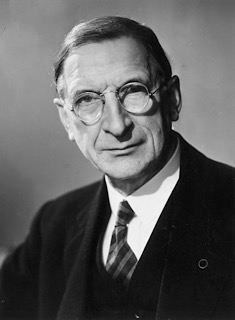
In the 1916 Easter Rising in Dublin, de Valera commands an occupied building and is the last commander to surrender. Because of his American birth, he escapes execution by the British but is sentenced to penal servitude. Released in 1917 but arrested again and deported in May 1918 to England, where he is imprisoned, he is acclaimed by the Irish as the chief survivor of the uprising and in October 1917 is elected president of the Irish republican and democratic socialistSinn Féin political party, which wins three-fourths of all the Irish constituencies in December 1918.
After Dáil Éireann ratifies the treaty by a small majority in 1922, de Valera supports the republican resistance in the ensuing Irish Civil War. W. T. Cosgrave’s Irish Free State ministry imprisons him, but he is released in 1924 and then organizes a republican opposition party that does not sit in Dáil Éireann. In 1927, however, he persuades his followers to sign the oath of allegiance as “an empty political formula,” and his new Fianna Fáil (“Soldiers of Destiny”) party then enters the Dáil, demanding abolition of the oath of allegiance, of the governor-general, of the Seanad Éireann (senate) as then constituted, and of land-purchase annuities payable to Great Britain. The Cosgrave ministry is defeated by Fianna Fáil in 1932, and de Valera, as head of the new ministry, embarks quickly on severing connections with Great Britain. He withholds payment of the land annuities, and an “economic war” results. Increasing retaliation by both sides enables de Valera to develop his program of austere national self-sufficiency in an Irish-speaking Ireland while building up industries behind protective tariffs. In the new Constitution of Ireland, ratified by referendum in 1937, the Irish Free State becomes Ireland, a sovereign, independent democracy tenuously linked with the British Commonwealth (under the Executive Authority (External Relations) Act 1936) only for purposes of diplomatic representation.
De Valera’s prestige is enhanced by his success as president of the council of the League of Nations in 1932 and of its assembly in 1938. He also enters negotiations with British Prime MinisterNeville Chamberlain in which he guarantees that he will never allow Ireland to be used as a base for attacking Britain in the event of war. This culminates in the Anglo-Irish defense agreement of April 1938, whereby Britain relinquishes the naval bases of Cobh, Berehaven, and Lough Swilly (retained in a defense annex to the 1921 treaty), and in complementary finance and trade treaties that end the economic war. This makes possible de Valera’s proclamation in September 1939, upon the outbreak of World War II, that Ireland will remain neutral and will resist attack from any quarter. In secret, however, de Valera also authorizes significant military and intelligence assistance to both the British and the Americans throughout the war. He realizes that a German victory will imperil Ireland’s independence, of which neutrality is the ultimate expression. By avoiding the burdens and destruction of the war, de Valera achieves a relative prosperity for Ireland in comparison with the war-torn countries of Europe, and he retains office in subsequent elections.
In 1948, a reaction against the long monopoly of power and patronage held by de Valera’s party enables the opposition, with the help of smaller parties, to form an interparty government under John A. Costello. Ironically, this precarious coalition collapses within three years after Ireland becomes a republic by means of the repeal of the Executive Authority (External Relations) Act 1936 and the severance of all ties with the British Commonwealth, an act de Valera had avoided. De Valera resumes office until 1954, when he appeals unsuccessfully for a fresh mandate, and Costello forms his second interparty ministry. No clearly defined difference now exists between the opposing parties in face of rising prices, continued emigration, and a backward agriculture. De Valera claims, however, that a strong single-party government is indispensable and that all coalitions must be weak and insecure. On this plea he obtains, in March 1957, the overall majority that he demands.
In 1959, de Valera agrees to stand as a candidate for the presidency. He resigns his position as Taoiseach and leader of the Fianna Fáil party. In June he is elected president, and is reelected in 1966. He retires to a nursing home near Dublin in 1973 and dies there on August 29, 1975.
De Valera’s career spans the dramatic period of Ireland’s modern cultural and national revolution. As an anticolonial leader, a skillful constitutionalist, and a symbol of national liberation, he dominates Ireland in the half century following the country’s independence.
(From: “Éamon de Valera, president of Ireland,” Encyclopedia Britannica, http://www.britannica.com, last updated August 14, 2025)
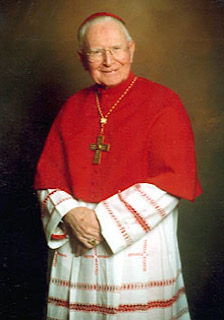
Daly studies Classics at Queen’s University Belfast (QUB). He earns his BA with Honours and also the Henry Medal in Latin Studies in 1937 and completes his MA the following year. He enters St. Patrick’s College, Maynooth and is ordained to the priesthood on June 22, 1941. He continues studies in theology in Maynooth, from where he obtains a doctorate in divinity (DD) in 1944. His first appointment is as Classics Master in St. Malachy’s College (1944–45).
In 1945, Daly is appointed Lecturer in Scholastic Philosophy at Queen’s University, Belfast, retaining the post for 21 years. In the academic year 1952–53 QUB grants him sabbatical leave, which he spends studying at the Catholic University of Paris where he receives a licentiate in philosophy. He returns to France at many points, particularly for holidays. He persists with his studies well into his retirement. He is a popular figure with the university and fondly remembered by his students. He is named a Canon of the Cathedral Chapter of Diocese of Down and Connor in 1966.
Daly is a peritus, or theological expert, at the Second Vatican Council (1962–65) to Bishop William Philbin during the first session of the Council and to Cardinal William Conway for the rest of the council. He dedicates himself to scholarship for 30 years, and publishes several books seeking to bring about understanding between the warring factions in Northern Ireland.
Daly is appointed Reader in Scholastic Philosophy at QUB in 1963, a post he holds until 1967, when he is appointed Bishop of Ardagh and Clonmacnoise on May 26.
Daly spends 15 years as bishop in Longford and is diligent about parish visitation and confirmations gradually assume a greater national profile. From 1974 onward, he devotes himself especially to ecumenical activities for the Pontifical Council for Promoting Christian Unity. His pastoral letter to Protestants, written in 1979, pleads for Christian unity.
Daly succeeded William Philbin as the 30th Bishop of Down and Connor when he is installed as bishop of his native diocese at a ceremony in St. Peter’s Cathedral, Belfast, on October 17, 1982.
On November 6, 1990, Daly is appointed Archbishop of Armagh and, as such, Primate of All Ireland. His age makes him an unexpected occupant of the post. Despite this it is requested that he stay in the role for three years before usual age of episcopal retirement at 75. Cardinal Daly takes a notably harder line against the Irish Republican Army (IRA) than his predecessor, Cardinal Tomás Ó Fiaich.
Daly is respectful of Protestant rights and opposes integrated education of Catholics and Protestants. This policy is criticised by those who see segregated education as one of the causes of sectarianism in Northern Ireland, but is seen by the Catholic clergy as important for passing on their faith to future generations. He is utterly orthodox in opposing divorce, contraception, abortion, the ordination of women and any idea of dropping clerical celibacy.
Daly is heckled by the audience on live television during a broadcast of The Late Late Show on RTÉ One on the topic of pedophilia in the 1990s. After his retirement in 1996, he makes no public statement on the issue.
Daly retires as Archbishop of Armagh on his 79th birthday, October 1, 1996, and subsequently suffers ill health. Although it is announced that he will attend the funeral of Pope John Paul II, he stays home on the advice of his doctors. His age makes him ineligible to participate in the 2005 conclave that elects Pope Benedict XVI.
Daly is admitted to the coronary unit of Belfast City Hospital on December 28, 2009. His health has already been declining, leading to prayers being ordered for him. He dies in hospital in Belfast on December 31, 2009, aged 92. His family are at his bedside at the time. His death brings to an end a two-year period during which Ireland has, for the first time in its history, three living Cardinals.
Daly lay in state in Belfast and then his remains are taken to Armagh. Pope Benedict XVI pays tribute at this stage. Large numbers of people travel from as far as County Westmeath to attend Mass at Armagh on January 4, at which Monsignor Liam McEntaggart, the former parish priest of Coalisland, says, “When the history of peace making in Ireland comes to be written, the contribution of Cardinal Daly will be accorded a high place.” Monsignor McEntaggart himself dies on August 22, 2010, aged 81, less than eight months after Cardinal Daly’s passing.
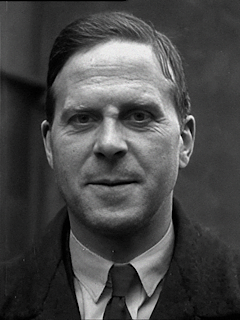
In March 1917, Ryan passes his final medical examinations. That June he sets up medical practice in Wexford. In 1921, he moves to Dublin where he opens a doctor’s practice at Harcourt Street, specialising in skin diseases at the Skin and Cancer Hospital on Holles Street. He leaves medicine in 1925, after he purchases Kindlestown, a large farm near Delgany, County Wicklow. He lives there and it remains a working farm until his death.
In July 1919, Ryan marries Máirín Cregan, originally from County Kerry and a close friend of Sinéad de Valera throughout her life. Cregan, like her husband, also fought in the Easter Rising and is subsequently an author of children’s stories in Irish. They have three children together.
While studying at university in 1913, Ryan joins the Gaelic League at Clonmel. The company commander recruits the young Catholicnationalist, who becomes a founder-member of the Irish Volunteers and is sworn into the Irish Republican Brotherhood (IRB) the following year. In 1916, he goes first to Cork to deliver a message from Seán Mac Diarmada to Tomás Mac Curtain that the Easter Rising is due to happen on Easter Sunday, then to Cork again in a 12-hour journey in a car to deliver Eoin MacNeill‘s cancellation order, which attempts to stop the rising. When he arrives back on Tuesday, he serves as the medical officer in the General Post Office (GPO) and treats many wounds, including James Connolly‘s shattered ankle, a wound which gradually turns gangrenous. He is, along with Connolly, one of the last people to leave the GPO when the evacuation takes place. Following the surrender of the garrison, he is deported to HM Prison Stafford in England and subsequently Frongoch internment camp. He is released in August 1916.
Ryan rejoins the Volunteers immediately after his release from prison, and in June 1917, he is elected Commandant of the Wexford Battalion. His political career begins the following year when he is elected as a Sinn Féin candidate for the constituency of South Wexford in the 1918 United Kingdom general election in Ireland. Like his fellow Sinn Féin MPs, he refuses to attend the Westminster Parliament. Instead he attends the proceedings of the First Dáil on January 21, 1919. As the Irish War of Independence goes on, he becomes Brigade Commandant of South Wexford and is also elected to Wexford County Council, serving as chairman on one occasion. In September 1919, he is arrested by the British and interned on Spike Island and later Bere Island. In February 1921, he is imprisoned at Kilworth Internment Camp, County Cork. He is later moved on Ballykinlar Barracks in County Down and released in August 1921.
In 1926, Ryan is among the Sinn Féin TDs who follow leader Éamon de Valera out of the party to found Fianna Fáil. They enter the Dáil in 1927 and spend five years on the opposition benches.
In 1947, after spending fifteen years as Minister for Agriculture, Ryan is appointed to the newly created positions of Minister for Health and Minister for Social Welfare. Following Fianna Fáil’s return to power at the 1951 Irish general election, he returns as Minister for Health and Social Welfare. Following the 1954 Irish general election, Fianna Fáil loses power and he moves to the backbenches once again.
Following the 1957 Irish general election, Fianna Fáil are back in office and de Valera’s cabinet has a new look to it. In a clear message that there will be a change to economic policy, Ryan, a close ally of Seán Lemass, is appointed Minister for Finance, replacing the conservative Seán MacEntee. The first sign of a new economic approach comes in 1958, when Ryan brings the First Programme for Economic Development to the cabinet table. This plan, the brainchild of T. K. Whitaker, recognises that Ireland will have to move away from self-sufficiency toward free trade. It also proposes that foreign firms should be given grants and tax breaks to set up in Ireland.
When Lemass succeeds de Valera as Taoiseach in 1959, Ryan is re-appointed as Minister for Finance. Lemass wants to reward him for his loyalty by also naming him Tánaiste. However, the new leader feels obliged to appoint MacEntee, one of the party elders to the position. Ryan continues to implement the First Programme throughout the early 1960s, achieving a record growth rate of 4 percent by 1963. That year an even more ambitious Second Programme is introduced. However, it overreaches and has to be abandoned. In spite of this, the annual growth rate averages five percent, the highest achieved since independence.
Ryan does not stand in the 1965 Irish general election, after which he is nominated by the Taoiseach to Seanad Éireann, where he joins his son, Eoin Ryan Snr. At the 1969 dissolution he retires to his farm at Kindlestown, County Wicklow, where he dies at age 77 on September 25, 1970. He is buried at Redford Cemetery, Greystones, County Wicklow. His grandson, Eoin Ryan Jnr, serves in the Oireachtas from 1989 to 2007 and later in the European Parliament from 2004 to 2009.
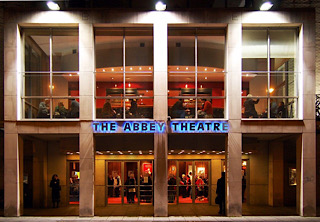
The newly unveiled Abbey Theatre opens its doors for the first time on July 18, 1966.
Fifteen years earlier, in 1951, the original buildings of the theatre are destroyed by fire during the run of The Plough and the Stars. Ironically, the play closes to the strains of “Keep the Home Fires Burning.” The fire forces the theatre company to find a new home.
They relocate to the Queen’s Theater on Pearse Street for what is intended to be a temporary stay but instead lasts for a decade and a half. A week before the brand new premises on Abbey Street are opened, the company has its final performance at the Queen’s Theatre in what is a bittersweet evening. For the Abbey Theatre it signals the end of an era and the beginning a new one, but the future of the Queen’s Theatre is far less bright.
After the final performances from the Abbey, Never the Time and the Place by Lennox Robinson and The Irishwoman of the Year by John Power, uncertainty shrouds the fate of the theatre with the Irish Independent reporting that “It will be used for variety performances up to the end of September, but after that it is just a matter for speculation.” It is ultimately closed in 1969 and is demolished in 1975.
The jubilee year of the 1916 Easter Rising, the 1966 Abbey opening recalls memories of the events that had taken place fifty years earlier.
In an article published the day after opening night, the Irish Independent recalls that “Thomas MacDonagh, one of the executed leaders of the Rising was himself an Abbey playwright and when news of the seizure of the General Post Office reached the theatre at a rehearsal, members of the Abbey players and other hands made a hurried exit to join the fighting. And by then others of the company were already at the barricades.”
A world away from the battleground of the Rising, the opening of the new Abbey Theatre is attended by a who’s who of arts, culture and politics.
The Abbey’s new home is opened by President Éamon de Valera, who once graced the Abbey Stage as an amateur actor.
The new building is designed by Irish architectMichael Scott, who also designed the nearby Busáras building. He is considered one of the great modern architects and his vision for the new Abbey is thought to be the last word in modern-day design.
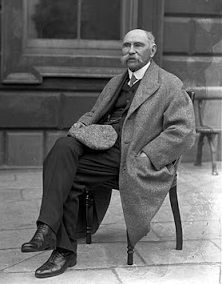
Hyde is born at Longford House in Castlerea, County Roscommon, on January 17, 1860. In 1867, his father is appointed prebendary and rector of Tibohine, and the family moves to neighbouring Frenchpark, in County Roscommon. He is home schooled by his father and his aunt due to a childhood illness. While a young man, he becomes fascinated with hearing the old people in the locality speak the Irish language.
Rejecting family pressure to follow previous generations with a career in the Church, Hyde instead becomes an academic. He enters Trinity College, Dublin (TCD), where he gains a great facility for languages, learning Latin, Greek, Hebrew, French, and German, but his great passion in life is the preservation of the Irish language.
After spending a year teaching modern languages in Canada, Hyde returns to Ireland. For much of the rest of his life he writes and collects hundreds of stories, poems, and folktales in Irish, and translates others. His work in Irish helps to inspire many other literary writers, such as W. B. Yeats and Lady Gregory.
In 1892, Hyde helps establish the Gaelic Journal and in November of that year writes a manifesto called The necessity for de-anglicising the Irish nation, arguing that Ireland should follow her own traditions in language, literature, and even in dress.
In 1893, Hyde founds the Gaelic League (Conradh na Gaeilge) along with Eoin MacNeill and Fr. Eugene O’Growney and serves as its first president. Many of the new generation of Irish leaders who play a central role in the fight for Irish independence in the early twentieth century, including Patrick Pearse, Éamon de Valera, Michael Collins, and Ernest Blythe first become politicised and passionate about Irish independence through their involvement in the Gaelic League. Hyde does not want the Gaelic League to be a political entity, so when the surge of Irish nationalism that the Gaelic League helps to foster begins to take control of many in the League and politicize it in 1915, Hyde resigns as president.
In 1938, Hyde is unanimously elected to the newly created position of President of Ireland, a post he holds until 1945. Hyde is inaugurated on June 26, 1938, in the first inaugural ceremony in the nation’s history. Despite being placed in a position to shape the office of the presidency via precedent, Hyde by and large opts for a quiet, conservative interpretation of the office. In April 1940, he suffers a massive stroke and plans are made for his lying in state and state funeral, but to the surprise of everyone he survives, albeit paralysed and confined to a wheelchair. One of his last presidential acts is a visit to the German ambassador Eduard Hempel on May 3, 1945, to offer his condolences on the death of Adolf Hitler, a visit which remains a secret until 2005.
Hyde leaves office on June 25, 1945, opting not to nominate himself for a second term. He opts not return to his Roscommon home due to his ill-health, but rather moves into the former Secretary to the Lord Lieutenant’s residence in the grounds of Áras an Uachtaráin, where he lived out the remaining four years of his life.
Hyde dies in Dublin on July 12, 1949, at age 89. As a former President of Ireland he is accorded a state funeral which, as a member of the Church of Ireland, takes place in Dublin’s St. Patrick’s Cathedral. Since contemporary rules of the Roman Catholic Church in Ireland at the time prohibit Roman Catholics from attending services in non-Catholic churches, all but one member of the Catholic cabinet remain outside the cathedral grounds while Hyde’s funeral takes place. Hyde is buried in Frenchpark, County Roscommon at Portahard Church.
Molloy’s father, Michael Edward Molloy, is originally from Ballyhaunis, County Mayo, and runs a successful wholesale drapery business in the city. His mother, Rita Stanley, hails from Clifden, County Galway. He is educated at Coláiste Iognáid and University College Galway. Before entering politics, he works for several years in printing, the clothing industry and his family’s drapery firm.
Molloy’s early political career is marked by his loyalty to Fianna Fáil’s leadership under TaoiseachJack Lynch. He quickly rises through the ranks and is appointed Minister for Local Government in 1970, a position he holds until 1973. His tenure as Minister for Local Government is characterised by his efforts to modernise and streamline local government structures in Ireland. His tenure in Fianna Fáil sees him as a stalwart of the party’s establishment, though tensions with its leadership grow over the years, particularly with Charles Haughey.
In opposition from 1973, Molloy serves as the frontbench spokesman, where he becomes involved in a high-profile dispute with James Tully, the Labour Minister for Local Government, over the controversial redrawing of constituencies, known as the “Tullymander.” Molloy, along with fellow Fianna Fáil member Brendan Crinion, used Dáil privilege to accuse Tully of having an improper commercial relationship with a builder in County Meath. The accusation is strongly denied by Tully and Molloy and Crinion later withdraw the charge. Despite this, Molloy faces severe repercussions, being forced to resign from his frontbench position. He is subsequently condemned by a judicial tribunal and censured by the Dáil for abusing parliamentary privilege.
When Fianna Fáil returns to office in 1977, Molloy becomes Minister for Defence in the final government of Jack Lynch.
In 1986, Molloy resigns from Fianna Fáil and joins the newly formed Progressive Democrats, spearheaded by Haughey’s arch-rival Desmond O’Malley. Molloy’s move is seen as a major break from the political establishment, as the Progressive Democrats advocate for low-tax, market-oriented economic policies and a more liberal economic agenda. His decision is driven by his dissatisfaction with the direction of Fianna Fáil under Haughey’s leadership and his belief that the party has become increasingly alienating.
In 1989, Molloy contests the European Parliament elections but is unsuccessful in his attempt. Following the 1989 Irish general election, Molloy, along with newly elected MEP for MunsterPat Cox, represents the Progressive Democrats in the lengthy negotiations with Fianna Fáil to form a coalition government. Once the negotiations conclude, he is reinstated in the Cabinet as Minister for Energy under Taoiseach Charles Haughey, who had previously caused Molloy’s political humiliation a decade earlier. Over the following three years, Molloy and his Progressive Democrat colleague Desmond O’Malley have a working relationship with their former Fianna Fáil colleagues, though tensions grow due to resentment over their presence in the Cabinet. The issue comes to a head when Molloy and O’Malley make it clear they will not serve in a Cabinet that includes Brian Lenihan Snr, following his controversial remarks during the 1990 Irish presidential election about alleged phone calls to PresidentPatrick Hillery from 1982.
In January 1992, Haughey faces further complications when Seán Doherty reveals information about the phone tapping of journalists dating back to 1982. Despite this, the coalition government ends when Albert Reynolds, Haughey’s successor, calls for a general election after accusing O’Malley of giving “dishonest” evidence to the Beef Tribunal. Molloy strongly denounces Reynolds’ accusation, describing it as “outrageous,” and criticises him for what he perceives as a “lack of generosity” in recent North-South negotiations, in which Molloy had represented the Progressive Democrats in talks with British Unionists.
Molloy stands at the European Parliament elections again in 1994 but is again unsuccessful.
Molloy resigns as a minister and quits politics just before the 2002 Irish general election amid controversy surrounding his involvement in the rape case of Barbara Naughton. The controversy stems from a letter Molloy sent to then Minister for Justice, John O’Donoghue, on behalf of a constituent whose relative had been convicted of rape. The letter, which requests the temporary release of the individual pending an appeal, leads to public criticism. The case is high-profile, involving a Connemara man sentenced to eleven years for the systematic abuse of his young daughter. During the trial, the judge, Philip O’Sullivan, notes that someone acting on Molloy’s behalf had tried to contact him in his chambers to clarify whether he had received certain correspondence from the victim’s sister, which the judge describes as “quite improper.” In response to the backlash, Molloy resigns, describing the letter as a “human error of judgment,” but insisting it was not intended to be dishonest. He retires from politics after the election.
Molloy is a member of Fianna Fáil for over 20 years, but his views are not always in line with the mainstream of the party, particularly under the leadership of Charles Haughey. His decision to leave Fianna Fáil in 1986 and join the Progressive Democrats is motivated by ideological differences, notably the party’s move toward a more conservative, state-controlled economy. Molloy, on the other hand, embraces a platform of fiscal conservatism, with an emphasis on reducing taxes, deregulation, and the liberalisation of the economy.
In terms of social issues, Molloy is ahead of his time in advocating for progressive policies, particularly on women’s rights. In a survey conducted in 1976 by the Women’s Political Association (WPA), Molloy scores among the highest of any member of the Dáil for his progressive stance on issues affecting women. He supports measures such as divorce, contraception, and family law reform, which are seen as highly controversial at the time. His responses to the WPA’s questions reveal that he holds views that are in stark contrast to many of his colleagues within Fianna Fáil. His progressive views on women’s rights are notable, as he is the only member of Jack Lynch’s cabinet who consistently supports reformist policies on issues like family law and the role of women in public life.
In 1972, Molloy marries Phyllis Barry, a Montessori teacher from Foxrock, County Dublin, whose father is a cousin of the executed revolutionary Kevin Barry. The couple meet while campaigning in a by-election in mid-Cork. Together, they have four children: Sinead, Sorcha, Donnacha, and Dara.
Betty Ann Norton, Irish drama teacher and founder of the Betty Ann Norton Theatre School and actor agency, is born on July 5, 1936.
Norton grows up in Dublin near the South Circular Road. Her mother, Frances, plays the violin and her father, Eugene, is a baritone singer. Frances is a full-time homemaker while Eugene works as manager of the Bacon Shops on Grafton Street. One of two children, her younger brother, Jim Norton, also becomes a successful actor. She attends school at St. Louis High School, Rathmines.
Norton attends the Ena Mary Burke School of Drama and Elocution on Kildare Street, Dublin, where Hollywood starMaureen O’Hara had also trained. Her acting school offers an annual Ena Mary Burke scholarship in Burke’s honour.
Norton originally plans to become an actor, but her family does not approve and her mother encourages her to become a teacher. In 1959, she establishes the Betty Ann Norton Theatre School on Harcourt Street in Dublin. Her husband, Michael, is co-director of the school. According to Norton, changes to traffic by the new Luas tram system causes the business to change premises to her childhood school, St. Louis High School in Rathmines in 2006.
Norton meets her husband, Michael J. Cunneen, on the Aran Islands in 1965 and they marry in 1967. They lived in Dún Laoghaire. Michael dies in the Blackrock Clinic on May 12, 2017.
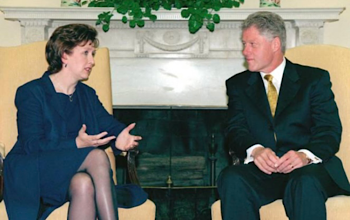
As this is not a state visit, there is no formal welcome for President McAleese or official functions at the White House as there was for President Mary Robinson‘s state visit two years earlier. McAleese arrives the previous day by government jet, accompanied by her husband, Dr. Martin McAleese, and the Minister for Foreign Affairs, David Andrews, and his wife. The McAleese’s son, thirteen-year-old Justin McAleese, travels to the United States separately and joined his parents in Washington, D.C..
Within hours of her arrival, McAleese attends a reception in the Four Seasons Hotel mainly for the Irish American community and hosted by the Irish ambassador, Sean O Huiginn, and his wife. In her remarks to the several hundred guests, President McAleese praises the role of President Clinton in the Northern Ireland peace process and of former Senator George Mitchell. She says Clinton’s contribution has been “remarkable.” She says, “He was prepared to take risks for peace: without his courage and leadership we could not have made the progress we have.”
McAleese says many of those present “have descended from some of the first settlers of the early colonies – some of whom, like myself, come from the northern part of the island of Ireland. I am deeply honoured that all of you have retained such a close bond and pride in your Irish heritage and that you demonstrated your affection by the strength of the many vibrant organisations in this area.”
McAleese says when our forebears crossed the Atlantic Ocean they retained a yearning that someday the Ireland they left would be a better place. “Regrettably, they did not live to see a new Ireland but it is now a reality in the economic, cultural and social progress of the last number of years.” Arranging the meeting at the White House is a problem for U.S. and Irish officials because of Clinton’s extremely busy schedule, as he prepares for his China visit. But the fact that he makes time for it is an indication of the importance he attaches to U.S.-Irish relations.
In the evening, McAleese attends a dinner in her honour at the Irish Embassy residence, to which leading political and administration figures are invited. On June 24, following a press conference at the National Press Club and a lunch on Capitol Hill with members of Congress, she flies to New York. There she pays a courtesy visit on the UN Secretary-General, Kofi Annan, and later attends a trade show organised by the Irish Business Organisation. In the evening she attends the “Dreamer of Dreams” awards ceremony organised by the Irish Voice newspaper.
On Thursday, June 25, McAleese has more engagements and prior to her return to Ireland on Friday, June 26.
(From: “McAleese for courtesy call on Clinton today” by Joe Carroll, The IrishTimes, http://www.irishtimes.com, July 23, 1998)
O’Brien is one of five children of Pierce O’Brien, a gentleman landowner, and Sophia Angel St John O’Brien. Her first cousin is woodcarver Sophia St John Whitty. She attends the Mercy Convent in Ennis, going on to win a scholarship to the Dublin Metropolitan School of Art. While there she studies under William Orpen and Alfred E. Child who teach her the art of stained glass.
Among O’Brien’s first commissions is the St. Ita window for St. Brendan’s cathedral in Loughrea, County Galway, in 1904, which is designed by Sarah Purser. She joins An Túr Gloine in 1906, beginning her career there by designing Angel of the Annunciation window in the Enniskillen convent chapel. For a window in the Wilson private chapel at Coolcarrigan House, Naas, County Kildare, in 1912, she incorporates Celtic design, some drawing on the Book of Durrow. In 1914, she tours the cathedrals of Paris, Rouen, and Chartres with Purser and Wilhelmina Geddes. She designs three windows depicting St. John, St. Flannan, and St. Munchin, for the Honan Chapel at University College Cork in 1916. Her 1923 design of the centenary memorial window in St. Andrew’s church, Lucan, represents the parable of the Good Shepherd. When in 1925 An Túr Gloine becomes a cooperative society, she becomes a shareholder along with Ethel Rhind, Evie Hone, and Michael Healy.
O’Brien’s 1926 lunetteThe Spirit of Night represents night, twilight, and dawn, and is for the private home of Keng Chee in Singapore, which is later demolished. The window of St. Catherine of Siena for the Sacred Heart convent chapel in Newton, Massachusetts dates from 1927. Her 1931 St. Patrick window, for the De La Salle school, East Coast Rd., Singapore, commissioned by architect Denis Santry, is the only extant stained-glass work by an Irish artist in that country. Much like Rhind, O’Brien also employs opus sectile, such as in her 1936 Mass in Penal Days in the Franciscan friary, Athlone, County Westmeath. She contributes two windows, Pelican and Lamb and Host and Chalice: Wheat and Grapes, to the ten windows An Túr Gloine produces for Brophy College Chapel, Phoenix, Arizona in 1937. From 1937 until 1947, she works on 22 opus sectile panels for the Protestant Church in Ennis.
Purser retires from An Túr Gloine in 1940, and O’Brien succeeds her as director, going on to purchase it and the contents in 1944. She rents a section of the premises to fellow stained-glass artist Patrick Pollen from 1954 onwards. She exhibits at the 1953 Irish Exhibition of Living Art, and the 1958 exhibition of the Arts and Crafts Society of Ireland. When the An Túr Gloine studios are damaged by fire in 1958, she rebuilds them and reopens by 1959. She is an active member of the Soroptimists and the Guild of Irish Art Workers. The last work she completes is a three-light window for the Church of St. Multose, Kinsale, County Cork, in 1962. A commission for two windows for the private chapel of Áras an Uachtaráin for PresidentÉamon de Valera is left unfinished at her death.
O’Brien dies in Dublin on July 18, 1963, and is buried in Whitechurch Parish Graveyard, County Dublin. She is commemorated in a window designed by Pollen in St. Laurence O’Toole chapel, Christ Church Cathedral, Dublin, where for forty years she made floral arrangements. Over 150 of her An Túr Gloine drawings from notebooks are now in the National Gallery of Ireland.
(Pictured: Stained glass window in the south wall of Ferns Cathedral, Ferns, County Wexford)




 seamus dubhghaill