seamus dubhghaill

Promoting Irish Culture and History from Little Rock, Arkansas, USA


Leave a comment

Birth of Irish Playwright Jimmy Murphy

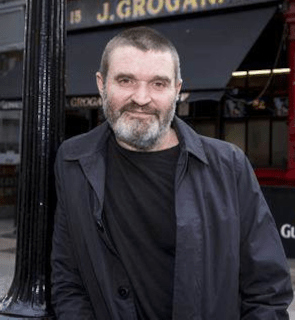
Irish playwright Jimmy Murphy is born to Irish parents in Salford, Lancashire, England, on September 30, 1962. He is a former writer-in-residence at the National University of Ireland, Maynooth (2000–01), a member of the Abbey Theatre’s Honorary Advisory Council, a recipient of three bursaries in literature from the Arts Council (Irish: An Chomhairle Ealaíon) and is elected a member of Aosdána in 2004.

When Murphy is six, his family returns to Dublin, settling in the South inner-city district of Islandbridge. He first goes to school in nearby Inchicore, attending the Oblate Fathers’ primary school there, then moves to Ballyfermot, a working-class heartland of suburban Dublin, in his teens. There, he attends secondary school at St. John’s De La Salle College. After failing the Irish Intermediate Certificate he leaves school to pursue an apprenticeship in painting and decorating, taking his Junior and Senior Irish Trade Certificates, and the City and Guilds of London exams at the Dublin Institute of Technology, Bolton Street.

Murphy’s stage plays include Brothers of the Brush (Dublin, The Peacock, Dublin Theatre Festival 1993), which is awarded best new Irish play; A Picture of Paradise (The Peacock, 1997); The Muesli Belt (Dublin, The Abbey Theatre, 2000); Aceldama (1998); The Kings of the Kilburn High Road (Waterford, Red Kettle Theatre Company, 2000); The Castlecomer Jukebox (Red Kettle, 2004); and What’s Left of The Flag (Theatre Upstairs at The Plough, 2010), nominated for The Irish Times Best New Play Award. His last play, with an all-female cast, The Hen Night Epiphany, premieres at the Focus Theatre, Dublin, in September 2011 and is published by Oberon Books. It has recently been translated into Hebrew.

Plays for radio include Mandarin Lime (BBC Radio 4, 1995), Peel’s Brimstone (BBC Radio 4, 1995), and The Jangle of the Keys (BBC Radio 4 1997). His awards include the Stewart Parker Trust Award in 1994. The play The Kings of the Kilburn High Road is adapted by Tommy Collins as the Irish language film Kings, and is selected as Ireland’s entry for best foreign-language film for the Academy Awards by the Irish Film & Television Academy.

Three of Murphy’s plays have been presented at the Acting Irish International Theatre Festival: Brothers of the Brush (2001 Festival, presented by the Tara Players of Winnipeg), The Kings of the Kilburn High Road (2005 Festival, first North American production, presented by the Irish Players of Rochester), and The Muesli Belt (2008 Festival, presented by the Toronto Irish Players).

A one act play, Perfida, premieres at Theatre Upstairs in July 2012. In October 2012, The Muesli Belt receives its United States premiere at the Banshee Theater, Burbank, California, and in 2013 The Hen Night Epiphany receives its U.S. premiere at the Wade James Theater, Edmonds, Washington. In June 2013 a new production of Perfidia is staged by Red Kettle Theatre Company at their new theatre in Waterford. In May 2017 his second Verabtim piece for the Abbey, looking at police corruption, A Whisper Anywhere Else, is produced at the Peacock theatre. His first Verbatim play for the Abbey, Of This Brave Time, commissioned to commemorate the 1916 Easter Rising, tours the United Kingdom in 2016 and later returns to the Peacock stage for a short run. A new full length play, The Cartographer’s Pen, commissioned to mark the centenary of the drawing of the Irish border, opens at the Town Hall Theatre, Cavan, in May 2022.

Murphy is currently living in Dublin.


Leave a comment

Death of Frank Hall, Broadcaster, Journalist, Satirist & Film Censor

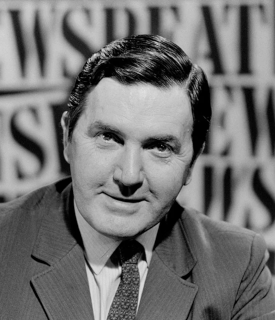
Frank Hall, Irish broadcaster, journalist, satirist and film censor, dies in Dublin on September 21, 1995. He is best remembered for his satirical revue programme Hall’s Pictorial Weekly.

Born in Newry, County Down, on February 24, 1921, Hall receives little more than a primary education as he leaves school at the age of twelve to work in a local shop. He later works as a waiter in London before moving to Dublin. On his return he joins the art department of the Irish Independent. He subsequently works with the Evening Herald where he writes a column on dance bands.

After that, Hall moves to RTÉ where he works in the newsroom. From 1964 to 1971 he presents Newsbeat, a regional news programme. He also presents The Late Late Show for the opening of the 1964 season, but his lack of success in that seat leads to the return of the previous presenter, Gay Byrne. When Newsbeat ends, he starts writing and presenting Hall’s Pictorial Weekly, a political satire show that runs for over 250 episodes until 1980. A successor show, Hall and Company, runs from 1980 until his retirement from television in 1986. He serves as spokesperson for the Irish jury in the Eurovision Song Contest 1965 and 1966.

Hall wins two Jacob’s Awards, in 1966 and 1975, for his work on Newsbeat and Hall’s Pictorial Weekly respectively.

In 1978, Hall is appointed Ireland’s national film censor. During his period as censor, he is known for his strict application of Irish censorship and his defence of family values. Among the films banned by him is Monty Python’s Life of Brian, which he describes as “offensive to Christians and to Jews as well, because it made them appear a terrible load of gobshites.”

Hall has a long running affair with a young colleague from RTÉ, though married to Aideen Kearney at the time. It is also widely accepted that he has a daughter in 1956 with RTÉ presenter Frankie Byrne, although this is disputed at the time by his family members. His relationship with Frankie Byrne is placed in the public domain in a Mint Productions programme, Dear Frankie, screened on RTÉ in January 2006. In 2010, a play written by Niamh Gleeson, also entitled Dear Frankie, opens in the Liberty Hall theatre. Later in 2012, it opens again in the Gaiety Theatre, going on to play in theatres across the country.

Hall dies of a heart attack in Dublin on September 21, 1995. He is buried in Dardistown Cemetery in Northside, Dublin.


Leave a comment

Birth of Denis “Denny” Barry, Irish Volunteer & Trade Unionist

Denis “Denny” Barry, Irish Volunteer, commandant of the Cork No. 1 Brigade and trade unionist, is born into a farming family on July 15, 1883, in Riverstick, Cullen, County Cork.

Barry learns Irish from a young age. He attends Ballymartle National School but is unable to attend secondary school due to a lack of facilities in the area. He begins work on the family farm after primary school. In 1903, he moves to Cork to work as a draper‘s apprentice with the firm O’Sullivan and Howard, where he becomes involved in the Gaelic League and the Ancient Order of Hibernians. A successful athlete, he also plays for the Blackrock National Hurling Club and wins four senior county hurling championships between 1910–13.

In 1913, Barry joins the newly formed Irish Volunteers. In 1915, he moves to Kilkenny to take up employment there, where he continues his volunteer activities. Shortly after the 1916 Easter Rising, he is arrested in Kilkenny in a British Government crackdown, and sent to Frongoch internment camp in North Wales. In 1919, he returns to Cork, where he is Commandant of the Irish Republican Police (IRP) in Cork during the Irish War of Independence. In the Cork No. 1 Brigade of the Irish Republican Army (IRA), he helps with prisoner escapes and returning looted goods after the burning of Cork by Black and Tans. After the Anglo-Irish Treaty and the split that follows, he chooses the anti-Treaty branch of the IRA. He is captured by Irish Free State troops and is sent to Newbridge internment camp on October 6, 1922. He is not charged or convicted of any crime.

Irish Republican prisoners in Mountjoy Prison begin the 1923 Irish hunger strikes, protesting being interned without charges or trial and poor prison conditions. The strike quickly spreads to other camps and prisons, and Barry takes part starting on October 16. He dies 35 days later on November 20, 1923, at the hospital at Curragh Camp. IRA Volunteers Joseph Whitty from Newbawn, County Wexford, dies on September 2, 1923 and Andy O’Sullivan from Denbawn, County Cavan, dies as a result of hunger on November 22, 1923, in Mountjoy Prison. The 41-day hunger strike is called off the following day, November 23. Whitty, Barry and O’Sullivan are three of the 22 Irish Republicans who die on hunger-strike during the twentieth century. Barry is initially buried by the Free State army in the Curragh, but three days later, following a court order, his remains are disinterred. He is buried in the Republican plot at St. Finbarr’s Cemetery, Cork.

Prior to Barry’s body arriving in County Cork, the Bishop of Cork, Daniel Cohalan, issues a letter to the Catholic churches which forbids them to open their doors to his body. Bishop Cohalan expresses far different opinions on the 1920 death, also by hunger strike, of the Lord Mayor of Cork Terence MacSwiney. “Terence MacSwiney takes his place among the martyrs in the sacred cause of the Freedom of Ireland. We bow in respect before his heroic sacrifice. We pray that God may have mercy on his soul.”

In Barry’s hometown of Riverstick there stands a stone memorial, unveiled in 1966, in his honor and he is remembered with a wreath-laying commemoration every November.


1 Comment

Birth of Fra McCann, IRA Volunteer & Sinn Féin Politician

Fra McCann, Irish politician, is born in Belfast, Northern Ireland, on June 19, 1953. He becomes active in the Irish republican movement and is imprisoned in the 1970s for membership of the Provisional Irish Republican Army. He also takes part in the blanket protest while in prison. In 1987, he is elected to Belfast City Council in a by-election, representing Sinn Féin.

McCann grows up in the Falls Road area of West Belfast. He is educated at St. Comgalls Primary School on Divis Street and later at St. Peters Secondary School off the Whiterock Road.

McCann is interned on the prison ship HMS Maidstone from February 14 until March 14, 1972, when he is moved to Long Kesh Detention Centre.

McCann is released from Long Kesh on May 9, 1972, then rearrested in November 1972 and re-interned until December 1975. During this period of internment, he is sentenced to nine months for escaping from Long Kesh through a tunnel. During this escape, IRA volunteer Hugh Coney is murdered by British soldiers.

McCann is arrested again in November 1976 and imprisoned in Crumlin Road Gaol where he spends six months on remand before being sentenced to three years. He joins the blanket protest in Crumlin Road Gaol where he and his comrades are held in solitary confinement until August 1978 when they are moved to the H-Blocks in Long Kesh, joining hundreds more on the blanket protest. He is released on November 22, 1979.

Upon his release, McCann travels throughout Ireland with other ex-prisoner’s highlighting the inhumanity in the H-Blocks. He travels throughout the United States in 1980 during which time he is arrested and spends 17 days in prison in New York. In 1981, he travels to Canada where he helps form H-Block committees and raises awareness about the hunger strike.

On his return to Ireland McCann is elected to sit on the National H-Block Committee and speaks at many events in support of the hunger strike. In the aftermath of the hunger strike he helps reorganise Sinn Féin in the Falls area.

McCann is elected to Belfast City Council in 1987 and sits on the Strategic Policy and Resources Committee and the Parks and Leisure committee. He is elected to the Northern Ireland Assembly representing Belfast West in 2003 and again in 2007, 2012 and 2018. While there he sits on the Finance and Personnel Committee and the Committee for Social Development.

In June 2006, McCann is charged with assault and disorderly behaviour following an incident in west Belfast. The incident occurs as the Police Service of Northern Ireland (PSNI) are attempting to arrest a teenager for attempted robbery. However, he claims heavy-handedness by the police and states, “I tried to put myself between one of the officers and the girl when the police officer radioed for assistance.” He is released on bail.

In October 2021, McCann announces that he would be stepping down as Member of the Legislative Assembly (MLA) for Belfast West and would not be contesting the next election.


Leave a comment

Birth of Mary Laffoy, Retired High Court & Supreme Court Judge

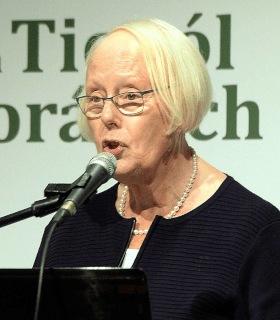
Mary Eleanor Laffoy, SC, retired Irish judge who is currently President of the Law Reform Commission, is born on North Circular Road, Dublin, on June 17, 1945. She previously serves as a Judge of the Supreme Court of Ireland from 2013 to 2017, and a Judge of the High Court from 1995 to 2013. She chairs the Citizens’ Assembly between 2016 and 2018.

Laffoy moves to Manorhamilton and Swinford, before returning to Dublin to live in Donabate following the death of her father. She attends Tourmakeady College in Toormakeady, County Mayo.

Initially after leaving school Laffoy tries primary school teaching at Carysfort College and joins the civil service. She is subsequently educated at University College Dublin (UCD) and King’s Inns. She receives the John Brooks Scholarship at the Inns for achieving the highest marks. She receives a BA from UCD in 1968 and a BCL in 1971.

Laffoy is called to the Bar in 1971 and to the Inner Bar in 1987. She devils for Brian McCracken. She becomes a Senior Counsel on the same day as future Supreme Court colleagues Susan Denham and Liam McKechnie and at the time is only one of four women seniors.

Laffoy’s expertise at the Bar is in property law. She appears in the Cityview Press case which clarifies the law on the nondelegation doctrine in Ireland. In 1983, she is appointed by the Supreme Court to argue against the constitutionality of the Electoral (Amendment) Bill 1983 following a reference made by President Patrick Hillery under Article 26 of the Constitution of Ireland. She appears in another Article 26 reference made by Mary Robinson regarding the Matrimonial Home Bill 1993. For both references, the Supreme Court finds for her side.

In 1986, Laffoy appears on The Late Late Show in a simulated court case to argue for a vote against the Fifteenth Amendment of the Constitution of Ireland.

Laffoy is appointed as a judge of the High Court in 1995, primarily presiding over cases involving chancery law.

Laffoy presides over the Commission to Inquire into Child Abuse from 1999 to 2003, an inquiry into child abuse. Her decision to resign as chair before the commission completes its report is controversial. In her letter of resignation from the commission of September 2, 2003, she outlines her belief that the actions of the Government and the Department of Education have frustrated her efforts and have slowed the commission’s work. She feels that “the cumulative effect of those factors effectively negated the guarantee of independence conferred on the Commission and militated against it being able to perform its statutory functions.” The commission is chaired from 2003 to 2009 by Judge Sean Ryan.

Laffoy presides over the High Court hearing in A v Governor of Arbour Hill Prison, ordering the release of a prisoner convicted of statutory rape due an earlier finding that the offence he was convicted of was contrary to the Constitution of Ireland. Her decision is overturned on appeal to the Supreme Court. In 2012, she dismisses an action taken by Thomas Pringle regarding the legality of the European Stability Mechanism. The European Court of Justice, after reference from the Supreme Court, also rejects his claim. During her time at the High Court, ten percent of reported judgments are written by her.

Laffoy is appointed to the Supreme Court of Ireland in July 2013. She retires from the Supreme Court on June 16, 2017. A portrait of her is unveiled in the King’s Inns in March 2020.

In July 2016, Laffoy is appointed by Taoiseach Enda Kenny to chair the Citizens’ Assembly, which she chairs until June 2018. She becomes the president of the Law Reform Commission in 2018.


Leave a comment

The Glenanne Barracks Bombing

The Glenanne barracks bombing is a large truck bomb attack carried out by the Provisional Irish Republican Army (IRA) against a British Army (Ulster Defence Regiment) base at Glenanne, near Mountnorris, County Armagh, on May 31, 1991. The bombing leaves three soldiers dead and 14 people wounded, four of them civilians.

The bombing takes place at a time when the Northern Ireland Office arranges multi-party talks, known as the Brooke/Mayhew talks, on the future of Northern Ireland. Sinn Féin members are not invited to attend because of their links with the IRA, which prevents them from being recognised as a “constitutional” party. The talks end in failure soon after.

Built in 1972, the barracks house two companies of the 2nd Battalion, Ulster Defence Regiment (UDR). Seen as an outpost, it sits on the dividing line between a Protestant area and a Catholic area. Although the military barracks itself had not been attacked by the IRA previously, seven UDR soldiers from the base had already been killed during the Troubles.

At 11:30 PM, a driverless truck loaded with 2,500 lb (1,100 kg) of a new type of homemade explosive is rolled down a hill at the rear of the barracks and crashes through the perimeter fence. According to a witness, a UDR lance corporal who alerts the base, the truck is a Mercedes, and a Toyota HiAce van carrying at least two men acts as a support vehicle. The men are seen outside the parked van, masked and armed, one with a handgun and the other with a submachine gun. This same witness alerts the base believing the IRA team are about to carry out a mortar attack, and debris thrown up on the roof by the lorry as it plunges down the hill is misinterpreted by some inside the base as a mortar projectile. Automatic fire is heard by other witnesses just before the main blast. A Reuters report claims that IRA members trigger the bomb by firing upon the driverless vehicle. It is later determined that the lorry had been stolen the day before in Kingscourt, County Cavan, in the Republic of Ireland.

The blast leaves a crater 200 ft. (61 m) deep and throws debris and shrapnel as far as 300 yards (270 m). The explosion can be heard over 30 miles (48 km) away, as far as Dundalk. This is the biggest bomb detonated by the IRA up to this point. Most of the UDR base is destroyed by the blast and the fire that follows. At first, a massive mortar attack is suspected. Some livestock are killed and windows broken around the nearby Mossfield housing as a result of the explosion. The cars parked outside the base are obliterated. Ceilings are brought down and the local primary school is also damaged.

The barracks is usually manned by eight soldiers, but at the time there are 40 people in the complex, attending a social event. Three UDR soldiers – Lance Corporal Robert Crozier (46), Private Sydney Hamilton (44) and Private Paul Blakely (30) – are killed and ten are wounded. Two of them are caught by the explosion when they come out to investigate after a sentry gives the alarm. A third dies inside the base. Four civilians are also wounded. The Provisional IRA claims responsibility two days later.

Author Kevin Toolis lists the destruction of Glenanne UDR barracks in County Armagh as part of the cycle of violence and tit-for-tat killings in neighbouring County Tyrone. The IRA later claims that the death of three of its men in the town of Coagh is a Special Air Service (SAS) retaliation for the Glenanne bombing.

The base is never rebuilt. It had outlived its operational usefulness and a decision had already been taken to close it down. The decision not to rebuild the compound raises some controversy among unionists. A memorial stone is erected by the main entrance road with the names of the UDR soldiers killed over the years while serving in Glenanne.


Leave a comment

Dom Columba Marmion Beatified by Pope John Paul II

Dom Columba Marmion, a Dublin priest who is credited with curing an American woman of cancer, is beatified by Pope John Paul II on September 3, 2000.

Marmion is born April 1, 1858, in Dublin, the seventh of nine children of William Marmion and Herminie Marmion (née Cordier). He attends St. Laurence O’Toole’s, a primary school run by the Augustinian Fathers of John’s Lane. On January 11, 1869, he transfers to Belvedere College, where he receives an excellent grounding in Greek and Latin from the Jesuit Fathers. From there, he proceeded in January 1874 to Clonliffe College, where he remains until December 1879, when the new Archbishop of Dublin, Dr. Edward MacCabe, selects him for further theological studies in Rome.

Marmion is in Rome at the Pontifical Irish College, studying theology at the Propaganda College, for eighteen months (December 1879 – July 1881). Although invited by the authorities at Propaganda to present himself for the doctorate degree, he turns down the offer for health reasons, on account of the necessary extra year in Rome which this would entail. On returning to Dublin, he spends the first year as curate in Dundrum parish. This is followed by four years (1882–86) as professor of philosophy at Clonliffe. On October 25, 1886, he receives from the newly appointed Archbishop of Dublin, Dr. William Walsh, his dimissorial letters, granting him permission to join the Benedictine order. On November 21, 1886, he enters the newly founded Belgian Maredsous Abbey, with which, by virtue of the Benedictine vow of stability, he is to be associated for the rest of his life.

The first thirteen years of his monastic life (1886–99) are spent at Maredsous Abbey itself. After an unsuccessful start in the abbey school as a kind of housemaster to the junior boys, he finds his feet within the community through congenial work, notably the teaching of Thomistic philosophy to the junior monks. He also gradually builds up a reputation as a spiritual guide through the exercise of ministry on a small scale in the surrounding area. The next decade (1899–1909) finds him in Leuven as prior and professor of dogmatic theology at Mont César Abbey, which is founded and staffed by Maredsous. This decade provides a wide outlet for his matured spiritual doctrine through his lectures on dogmatic theology in Mont César, his retreats to priests and religious, and his private correspondence. The third and final phase of his monastic life begins when the chapter of Maredsous elects him as its third abbot in 1909.

An invitation is received from the Belgian government from December 1909 to April 1910 to undertake a Benedictine foundation in Katanga, part of the Belgian Congo. In spite of pressure from government quarters the chapter of Maredsous refuses the offer, and Marmion accepts this negative decision. In 1913 the entire community of Anglican Benedictines of Caldey Island, Wales, transfer their allegiance from Canterbury to Rome. Marmion becomes deeply involved in the spiritual and canonical process of the reception of the community into the Catholic church.

The outbreak of World War I ushers in four years of grave anxiety for Marmion. Belgium is not completely occupied but retains sovereignty over an area extending inland about twenty miles to the Ypres Salient. This enables the young monks of Maredsous, for whom Marmion had found a temporary home in Edermine, County Wexford, to travel to and from the Western Front, where they are being called up to serve as stretcher bearers in the Belgian army. He does his utmost to maintain the unity of his community between those who had remained in Maredsous and the Edermine group.

The first of Marmion’s great spiritual books, Christ, the Life of the Soul, appears in 1916, and its phenomenal success has been described as a silent plebiscite. This is followed by Christ in His Mysteries (1919), Christ the Ideal of the Monk (1922), and Sponsa Verbi (1923). The books are able to appear in rapid succession since they are compiled from his existing conference notes.

One final piece of important monastic and ecclesiastical and even political business absorbs much of Marmion’s energies, although strictly speaking it is not of his remit. His strenuous efforts to install Belgian monks in the Abbey of the Dormition on Mount Zion in Jerusalem following the internment (November 1918) of the original German Benedictine community by the victorious British forces are of no avail, the question being finally settled by the reinstallation of the German (Beuronese) monks in 1921.

Marmion dies at Maredsous on January 30, 1923, following a brief illness which originates in a chill and is aggravated by influenza.

Marmion is beatified by Pope John Paul II on September 3, 2000. This is the outcome of a popular reputation for holiness which had increased steadily since his death and the procedures for beatification prompted in 1954 by Mgr. Montini, the future Pope Paul VI. The canonical steps are: diocesan process at Namur (1957–61); examination at Rome of Marmion’s writings (1960–73); a critical biography (1987–94), written by Mark Tierney, OSB, for the Roman process on the ‘heroicity’ of Marmion’s virtues which concluded in June 1999; and finally, an inexplicable cure of cancer through Marmion’s intercession, judged as miraculous by Rome on January 25, 2000.

The originality of Marmion’s spiritual doctrine lay in his truly central emphasis on the doctrine of our adoption as the children of God in baptism. Many of his predecessors had also emphasised this doctrine, but few had made it the focus from which everything radiated and to which everything returned. The second characteristic of Marmion’s teaching, a much more personal trait, is the conviction of authenticity communicated by his writings, of the greatness of our sharing in the sonship of the Word. This makes a deep and lasting impression on the reader and gives an infinitely sacred meaning to the title ‘children of God’ and thereby to the whole of life. The third characteristic of Marmion’s teaching is the simplicity with which the deepest theological truths are presented – truths which preachers often feel their people cannot ‘take,’ and hence are left unsaid. Marmion presents these truths directly from St. John and St. Paul, and not merely in familiar extracts but in the whole sweep of their texts.

(From: “Marmion, Dom Columba” by Placid Murray, Dictionary of Irish Biography, http://www.dib.ie)


Leave a comment

Birth of Joseph Tomelty, Actor & Playwright

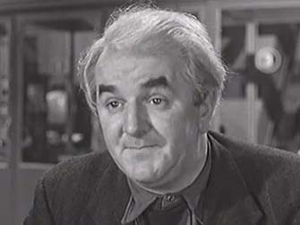
joseph-tomeltyJoseph Tomelty, Irish character actor and playwright, is born at Portaferry, County Down, on March 5, 1911. He works in film, television, radio, and on the stage, starring in Sam Thompson‘s 1960 play Over the Bridge.

Tomelty is the eldest of seven children. His father is known as “Rollickin’ James” for his skill on the fiddle. He leaves his local primary school at the age of 12 and is apprenticed to the trade of housepainter, his father’s trade. He moves to Belfast and attends classes at Belfast Technical College.

Tomelty first acts with St. Peter’s Players and with others in 1937 and 1938 takes part in discussions which lead to the formation of the Northern Ireland Players on a more professional basis. Radio plays Barnum is Right and Elopement are broadcast in December 1938 and February 1939 respectively. The Northern Ireland Players choose the stage version of Barnum is Right for their first major commercial venture at the Empire Theatre in June 1939.

In 1940 the Northern Ireland Players join forces with the Ulster Theatre and the Jewish Institute Dramatic Society to form the Group Theatre. In 1942 Tomelty becomes its general manager remaining in the post until 1951. His play, Idolatry at Innishargie, enjoys a short run at the Group Theatre in 1942, but The End House, a controversial political play, does not even appear there. The play deals with what he describes as “the inhumanity that resulted from the Special Powers Act.” It is however performed at the Abbey Theatre in Dublin in 1944.

Meanwhile, his career as a character actor rapidly develops and a successful stage and film career is underway. In 1948 he is commissioned by the BBC in Belfast to write the weekly radio comedy drama series The McCooeys. This radio series lasts for seven years with Tomelty writing 6,000 word scripts for each episode. He continues to write plays, including his masterpiece, and a modern Irish theatre classic, All Souls’ Night in 1948.

In 1954 Tomelty is injured in an automobile accident while filming Bhowani Junction in England and, while he recovers, he is never as productive again. He dies in Belfast on June 7, 1995.