On July 14, 1910, the Irish Socialist Federation (ISF) in New York City hosts a farewell dinner for James Connolly, marking the end of his time as its leader. This event is a significant moment in his career, as he had been instrumental in founding the Federation on March 29, 1907, and has been its driving force in organizing Irish socialist and trade union activity in the United States.
By 1910, Connolly has been active in the socialist movement in the United States for several years. He initially joins the Socialist Labor Party of America but becomes a full-time organizer for the Industrial Workers of the World (IWW) from 1905 to 1910, aligning with its syndicalist approach. His work with the Irish Socialist Federation has been central to building a network of Irish workers in America, linking them to socialist principles and Irish nationalist aspirations.
The July 14, 1910, dinner is a public acknowledgment of Connolly’s contributions and a symbolic send-off as he prepares to return to Ireland. Upon his return, he takes on a major role in the Irish Transport and General Workers Union (ITGWU), first in Belfast and then in Dublin, and later becomes acting General Secretary and Commandant of the Irish Citizen Army (ICA).
The political and labor impact of the event underscores Connolly’s growing influence in both the Irish socialist movement abroad and the domestic labor struggle. It reflects the Federation’s commitment to supporting Irish socialist leaders and their work in the United States and Ireland. It is also remembers as a key moment in Connolly’s transition from U.S. organizer to a central figure in the Irish labor and republican movements.
In short, the July 14, 1910, farewell dinner is both a personal farewell and a political milestone, highlighting Connolly’s role as a bridge between Irish socialism in the United States and the emerging labor and republican movements in Ireland.
The Dublin Harp Society is founded on July 13, 1809, by John Bernard Trotter, a former secretary to Charles James Fox and a passionate supporter of Irish music, to revive and preserve the ancient Irish harp tradition, and it flourishes briefly with contributions from prominent patrons and musicians before closing in 1812 due to financial difficulties.
Inspired by the Belfast Irish Harp Society, Trotter aims to create a society that will extend the revival of the Irish harp to the capital and broaden its audience across Ireland. The society’s purpose is to rescue the old Irish harp from oblivion, teach blind and talented harpers, and promote Irish music through public events, publications, and performances.
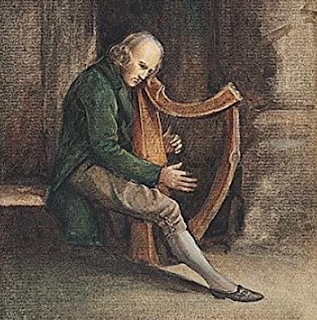
Trotter gathers an influential list of subscribers, including Thomas Moore, the poet and songwriter, and Sir Walter Scott, the Scottish novelist. He brings to Dublin Patrick Quin (pictured), a blind harper from Portadown, County Armagh, as the society’s instructor. Quin is one of the last of the traditional blind harpers and performs extensively at society events, including Turlough O’Carolan commemorations, delighting patrons and audiences. The Bishop of Kildare, Charles Dalrymple Lindsay, also supports the society by providing a house in Glasnevin for the instruction of harpers.
The society engages in multiple avenues to revive Irish harp music. In addition to the previously mentioned Turlough O’Carolan commemorations, circulars and subscription notices are published to drum up public support and secure funding. The Society hosts concerts and gatherings at prominent Dublin locations, offering elaborate performances for subscribers. Tuition and mentorship to young Irish harpers is provided, particularly to blind musicians, as part of a broader cultural and philanthropic effort. Trotter also personally subsidizes the society, contributing £200 annually, which helps maintain performances and attract participants.
Despite early enthusiasm, the society struggles financially due to Trotter’s generous hospitality and personal funding of its activities. By the close of 1812, the Dublin Harp Society becomes defunct when Trotter goes bankrupt. The society attempts to publish rules and regulations in 1810 and conduct active recruitment of subscribers and pupils, but it cannot be sustained beyond three years.
Although short-lived, the Dublin Harp Society contributes significantly to the preservation and promotion of the Irish harp, inspiring subsequent societies and harp revival initiatives in Ireland. It highlights the importance of cultural patrimony, music education, and public patronage, acting as a bridge between the older harp traditions and the modern revival movements seen in later 19th-century Ireland.
In summary, the Dublin Harp Society represents an early 19th-century endeavor to revive Ireland’s venerable harp tradition through education, sponsorship, and celebration of master harpers, leaving a lasting mark on the cultural memory of Irish music.
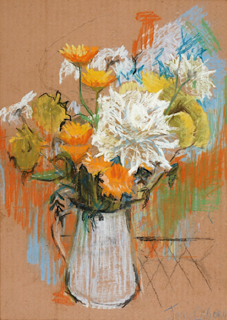
Sheridan begins exhibiting in the late 1950s, participating in the annual Living Art exhibitions and the Biennale de Paris in 1960. He wins the Carroll Prize for Painting in 1965 and 1969. Initially focused on abstract landscapes, his work evolves to include conceptual, performance, and installation art, integrating multimedia elements. Notable works include Everybody Should Get Stones (1975) and On Reflection (2001).
Sheridan is also deeply engaged in the international art scene. He represents Ireland at the 1962 UNESCO Convention of Young Painters in Paris and contributes to avant-garde movements in Australia, including serving as the first Professor of Conceptual Arts in Sydney during the 1970s. He directs the Experimental Art Foundation in Adelaide from 1975 to 1980, introducing experimental and post-object art to Australian audiences.
From 1980 to 2002, Sheridan serves as Director of the National College of Art and Design (NCAD) in Dublin, with a four-year hiatus to direct the Perth Institute of Contemporary Arts in Australia. His leadership shapes art education in Ireland and helps modernize institutional structures, curricula, and multimedia practices.
Sheridan is also a member of Aosdána, an elite Irish association of artists, and a committee member of Rosc, an important art exhibition initiative in Ireland.
Sheridan’s early works consist of abstract and lyrical landscapes, which later expand to include conceptual and performance art, often engaging audience participation and multimedia formats. He is known for his wit, charisma, and generosity as both a teacher and an arts administrator, influencing a generation of artists in Ireland and Australia.
Sheridan’s art is represented in major institutions, including the Irish Museum of Modern Art and the Centro de Arte Moderna Gulbenkian in Lisbon, with numerous works having been sold at auction, achieving prices up to $7,624 USD for pieces like Window. Retrospectives of his work are held at the Royal Hibernian Academy in Dublin in 2001, accompanied by publications that compile his artistic philosophy and contributions.
Sheridan is married to Liz Murphy, and they have five children. His commitment to both art and education continues throughout his life until he dies on July 12, 2006, in Perth, Western Australia. Paul Durcan writes a poem in his honour after his death.
In summary, Sheridan’s career spans painting, performance, installation, and education. His innovative approach, international influence, and dedication to teaching and institutional development mark him as a pivotal figure in postwar and contemporary Irish art.
Will is on duty when he is killed by a bomb during the attack. The IRA’s assault is unsuccessful, but it results in Will’s death and the serious injuries of two other RIC officers. His service number is 70974.
Posthumously, Will is awarded the Constabulary Medal for Gallantry for his bravery under fire. According to RIC forum records, the medal is presented on December 22, 1920.
Will serves in the Scottish Horse Regiment during World War I, where he is wounded just a week before the Armistice. After his death, his body is brought back to Scotland by steamer, and his funeral is attended by RIC officers. His family has roots in Kincardineshire, Scotland, with his father, William Will, and grandfather also named Alexander Will.
Will is remembered as one of the early RIC officers to die in the Irish War of Independence, and his death marked a significant moment in the conflict’s early years. His story is commemorated in police remembrance records and in centenary tributes.
Mathew’s family spends time abroad while his father manages business interests. He comes from a Roman Catholic family. His uncle is Theobald Mathew, the famous temperance campaigner. At the age of fifteen, he enters Trinity College Dublin (TCD), where he excels as a gold medalist and senior moderator, graduating in 1850. He then studies law at Lincoln’s Inn, London, and is called to the English Bar in 1851, building a strong foundation for a legal career despite a slow start at the junior bar.
Initially, Mathew’s legal career progresses slowly, though he is active in debating as a founding member of the Hardwicke Society. He handles numerous jury cases at the Guildhall sittings in London, where he gains experience in commercial law. He becomes treasury counsel during the Tichborne Claimant prosecution in 1873, noted for his composed handling of arguments without quarrel with opposing counsel. Despite opportunities, he refrains from applying for Queen’s Counsel due to a naturally weak voice, though his legal acumen and advocacy are highly respected.
In March 1881, Mathew is appointed to the Queen’s Bench Division of the High Court of Justice and is knighted. He becomes known for his keen judgment, practical approach to legal issues, and eventual standing as one of the best nisi prius judges of his time. In 1895, he persuades fellow judges to establish a Commercial List, the precursor to today’s Commercial Court, and serves as the first judge presiding over it. He advances efficiency in commercial law by minimizing procedural delays, focusing on substantive issues, and producing concise judgments that inspire confidence in the mercantile community.
Mathew also chairs a 1892 royal commission on the evicted tenants in Ireland, despite challenges and disputes with landlords and Edward Carson. His recommendations influence the Wyndham Land Purchase Act (1903). In 1901, he is appointed to the Court of Appeal and continues to emphasize clarity and practicality in legal proceedings until a stroke in 1905 forces his resignation.
Mathew marries Elizabeth Biron in December 1861, with whom he has two sons and three daughters. His family includes notable figures, such as his daughter Elizabeth, who marries Irish MPJohn Dillon, and his grandson, James Matthew Dillon, a later politician. He has a deep cultural appreciation, enjoying music and literature, and maintains friendships across religious and political divides.
Mathew dies on November 9, 1908, at his London home, aged 78. He is buried in St. Joseph’s Cemetery, Cork. His legacy is most strongly associated with founding the Commercial Court, reforming commercial law procedures, and demonstrating a balanced mixture of legal rigor and practical common sense that influenced generations of judges and barristers. His contributions remain a cornerstone in the evolution of modern English and Welsh commercial law.
Osborne (née Meikle) is born on February 21, 1926 in Larne, County Antrim, the daughter of William Meikle who is a fitter at Harland & Wolff. She displays artistic talent from a young age, recognized at 20 by painter Paul Nietsche, and earns a scholarship from the Ministry of Education to pursue further studies. She trains at the Camberwell School of Arts & Crafts in London and later completes her National Diploma in Art and Design at the Belfast School of Art.
Osborne’s early career includes exhibitions in Belfast, London, and prominent Canadian galleries after she emigrates to Canada with her husband, fellow artist Dennis H. Osborne, in 1953. She exhibits works such as The Harmonica Player, a portrait of poet Barbara Hunter, and other pieces across Canada, gaining recognition for her skill in landscapes, portraits, and abstract forms.
Declining health due to a brain tumour forces Osborne to return to Northern Ireland in 1959. She settles first in Portadown and later in Lisburn, where she continues to paint despite her illness. She participates in exhibitions, including those of the Royal Ulster Academy of Arts and local art societies, maintaining her influence on the Northern Irish art scene.
Osborne dies at the age of 39 on July 9, 1965, in Lisburn Hospital due to complications from a brain tumour, which had been a long-standing health struggle. She leaves behind her husband, Dennis, and their daughter, Moya. Posthumously, her work is celebrated in memorial exhibitions, including those organized by the Arts Council of Northern Ireland and the Ulster Society of Women Artists, and several of her paintings, like Roots and Grief, are preserved in the Ulster Museum and Armagh County Museum.
Osborne is remembered as a gifted painter whose contributions to mid-20th-century art in both the United Kingdom and Canada reflect emotional depth, modernist abstraction, and a commitment to capturing natural forms, despite her life and career being cut tragically short.
Wilson begins his priestly career as a hospital chaplain, where he becomes aware of the systemic neglect and exploitation of women. This experience shapes his later advocacy for marginalized groups. In 1966, he is assigned to St. John’s parish in Ballymurphy, a heavily working class and nationalist area. Confronted with poverty, deprivation, and social neglect, he rejects a purely clerical role and chooses to live among his parishioners, earning deep community trust.
Wilson facilitates grassroots initiatives such as the Springhill Community House and the Conway Education Centre, establishing spaces for alternative education, vocational training, small business incubators, and cultural engagement. These efforts emphasize the empowerment of local communities, adult education, and economic development, drawing inspiration from liberation theology and Worker Priest models.
Wilson’s ministry coincides with some of the most violent years of the Northern Ireland Troubles. He provides support to families affected by violence, offers shelter and practical assistance, and maintains dialogue channels between republican and loyalist communities. He criticizes the Catholic Church for its detachment from the struggles of working class Catholics and refuses to condemn paramilitary groups acting as “alternative police and armies,” reflecting his nuanced approach to community protection and justice. Alongside figures like Fr. Alec Reid, he is instrumental in mediating discussions that contribute toward the peace process.
Wilson’s work earns widespread admiration for his courage, humanity, and commitment to justice. He hosts Mother Teresa in west Belfast, helping to establish charitable outreach in the community. Despite periods of estrangement with his bishop and being barred from celebrating Mass in churches, he continues his ministry at home and through community projects.
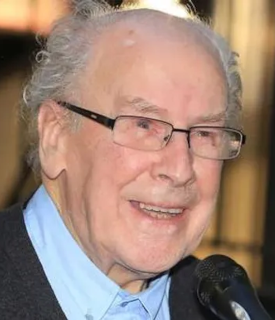
Wilson is also a prolific writer, recording diaries, pamphlets, and weekly columns, later commemorated in the documentary “Fr. Des – The Way He Saw It” narrated by Stephen Rea, and in theatre productions celebrating his life. PresidentMichael D. Higgins and countless individuals recognize his significant role in civil rights, education, and peacemaking.
Wilson dies in Belfast on November 5, 2019, at the age of 94, leaving a lasting impact on Belfast and a model for socially committed clergy worldwide. His approach to ministry stands as a testament to living faith in solidarity with marginalized communities, emphasizing education, dialogue, and justice over institutional authority.
The institutions Wilson helps create, notably the Springhill Community House and Conway Mill, continue to support education, enterprise, and community engagement in Belfast, embodying Wilson’s vision of an empowered, inclusive society. His life remains an inspiration for those committed to social justice, peacebuilding, and community-centered ministry.
Wilson is remembered as a priest,educator, community activist, and mediator, whose dedication to the underprivileged and commitment to peace has left an indelible mark on Northern Ireland.
McCullough turns professional in 1993, moving to Las Vegas, Nevada, to train under legendary coach Eddie Futch. Less than 2½ years after his debut, he captures the WBC bantamweight title on July 30, 1995, by defeating Yasuei Yakushiji in Japan, becoming the first Irish or UK boxer to win a world title there. He successfully defends the WBC belt twice before moving up in weight. He challenges for championships in super bantamweight and featherweight, including notable bouts against Daniel Zaragoza, Naseem Hamed, Erik Morales, and Oscar Larios. He is renowned for his relentless attacking style and exceptional durability, never being knocked down in his professional career.
McCullough’s career record consists of 34 professional bouts with 27 wins (18 by knockout) and 7 losses. He retires after a bout against Juan Ruiz in June 2008 due to injury, ending a career spanning 15 years.
McCullough marries Cheryl Rennie in 1993, and they have a daughter, Wynona, pursuing a career in entertainment. During his career, he faces mental health challenges, including depression and suicidal thoughts, which he overcomes with the support of his family and faith. He becomes a United States citizen in 2005.
After retiring, McCullough becomes a trainer for amateur and professional fighters and works to promote goodwill in sports as WBC World Ambassador for Peace. He is also involved in mixed martial artspublic relations and founds his charity initiative, IHOW. He publishes his autobiography, Pocket Rocket: Don’t Quit, in 2005. In 2019, he is inducted into the Nevada Boxing Hall of Fame for his contributions to the sport.
McCullough’s courage, low knockdown susceptibility, and international successes have cemented him as a revered figure in boxing, both in Ireland and globally. His story is one of triumph, resilience, and overcoming personal and professional adversity.
The unrest was triggered by the Orange Order’s permission to march its traditional route through the Garvaghy Road in Portadown, County Armagh, a Catholic/nationalist area, as part of the annual Drumcree parading dispute. The Orange Order, a Protestant fraternal organization, has marched this route since 1807 to commemorate the Battle of the Boyne. For decades, Catholic residents object to the route, seeing it as a sectarian provocation.
The decision to allow the march comes after death threats from loyalistparamilitaries to target Catholics if the parade is stopped. This concession outrages nationalists, who also resent the Royal Ulster Constabulary (RUC)’s aggressive policing of protesters.
On July 6, around 1,000 Orangemen march under a sealed-off Garvaghy Road, with about 1,500 RUC and British Army personnel present. The next day, mass protests erupt in areas like North Belfast, Lurgan, and west Belfast’s Lenadoon district. Rioters hurl stones, petrol bombs, and other projectiles at security forces, while Republican paramilitaries engage in gun battles with police.
Security forces responded with plastic bullets and other riot control measures, firing over 2,500 plastic bullets at rioters. A 13-year-old boy is critically injured after being struck by one. Hundreds of vehicles are hijacked, set on fire, and used to block roads in Belfast, Newry, Armagh, and Dungannon. The RUC and British Army have to withdraw entirely from some nationalist areas of Belfast.
One civilian is killed in the rioting and over 100 people are injured, including 62 RUC officers and at least three soldiers. One hundred seventeen arrests are made and some armoured vehicles are either damaged or destroyed. An indirectly related incident sees a loyalist Ulster Defence Association (UDA) member killed by a pipe bomb he is handling.
The riots highlight the fragility of peace efforts and deepen divisions over parading rights. The episode leads Secretary of State for Northern IrelandMo Mowlam to urge Orange leaders to reroute future marches. For the Provisional Irish Republican Army, the riots are its last major action in a 27-year campaign. It declares its final ceasefire on July 19, 1997.
The 1997 riots are the last widespread sectarian violence in Northern Ireland before the Good Friday Agreement, underscoring the unresolved nature of the Drumcree dispute and the challenges of achieving lasting peace.
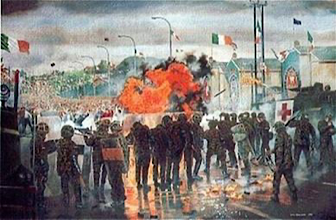
(Pictured: “Drumcree, The Garvaghy Road July 1997” by military artist David Rowlands, oil on canvas, owned by the 1st Battalion (The Cheshires) The Mercian Regiment which depicts British soldiers during the rioting on Garvaghy Road)
On July 5, 1790, the Irish mail coach service makes its first run from Dublin to Waterford, marking a significant milestone in Ireland’s postal history. This is part of the broader expansion of the General Post Office’s (GPO) mail coach network, which had been introduced in Ireland in 1789.
A twice-weekly mail coach service operates between Dublin and Drogheda to the north, Kilkenny to the south and Athlone to the west as early as 1737 and for a short period from 1740, a Dublin to Belfast mail coach exists. In winter, this route takes three days, with overnight stops at Drogheda and Newry. In summer, travel time is reduced to two days. In 1789, mail coaches begin a scheduled service from Dublin to Belfast. They meet the mail boats coming from Portpatrick in Scotland at Donaghadee, County Down.
The Irish mail coach system is modeled on the successful English service introduced in 1784 by John Palmer, which uses specially built coaches to carry the Royal Mail under contract to independent operators. These coaches are designed for speed and efficiency, stopping only for mail collection and delivery, and are protected by armed guards. The Dublin–Waterford route is one of the early inland services added to the network, complementing other major routes such as London–Norwich, Liverpool–Leeds, and London–Dover.
The July 5, 1790 run from Dublin to Waterford is notable because it is the first scheduled mail coach service on that route, replacing slower and less secure methods like mounted riders or carts. It demonstrates the GPO’s ability to extend its network to key inland towns, improving communication between Dublin and the southeast of Ireland. It also reflects the rapid expansion of the mail coach system in Ireland by 1790, with many towns already having daily mail delivery and collection.
While the primary purpose is to carry the Royal Mail, passengers can also travel at a premium fare. The coaches can carry four seated passengers inside and more standing outside, with the driver and guard occupying the front seats. The journey from Dublin to Waterford is relatively short for the time, but still requires careful scheduling to meet the strict post office timetable.
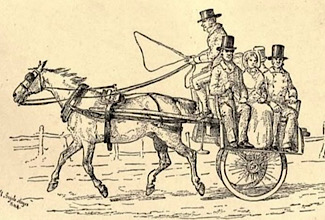
This first run lays the foundation for a regular mail service that becomes a vital part of Ireland’s transport and communication infrastructure until the advent of railways in the 1830s. By the mid-19th century, most of the mail coaches in Ireland are eventually out-competed by Charles Bianconi’s country-wide network of open carriages, before this system in turn succumbs to the railways. The Dublin–Waterford route, like others, is eventually replaced by the faster rail services, but its role in modernizing Ireland’s postal system is crucial.