The 1973 Northern Ireland border poll is a referendum held in Northern Ireland on March 8, 1973, on whether Northern Ireland should remain part of the United Kingdom or join with the Republic of Ireland to form a united Ireland. It is the first time that a major referendum has been held in any region of the United Kingdom. The referendum is boycotted by nationalists and results in a conclusive victory for remaining in the UK. On a voter turnout of 58.7 percent, 98.9 percent vote to remain in the United Kingdom, meaning the outcome among registered voters is not affected by the boycott.
The Unionist parties support the “UK” option, as do the Northern Ireland Labour Party (NILP) and the Alliance Party of Northern Ireland (APNI). However, the Alliance Party is also critical of the poll. While it supports the holding of periodic plebiscites on the constitutional link with Great Britain, the party feels that to avoid the border poll becoming a “sectarian head count,” it should ask other relevant questions such as whether the people support the UK’s white paper on Northern Ireland. Nevertheless, on February 5, 1973, the party’s chairman, Jim Hendron, states that “Support for the position of Northern Ireland as an integral part of the United Kingdom is a fundamental principle of the Alliance Party, not only for economic reasons but also because we firmly believe that a peaceful solution to our present tragic problems is only possible within a United Kingdom context. Either a Sinn Féin all-Ireland republic or a Vanguard-style Ulster republic would lead to disaster for all our people.”
The Social Democratic and Labour Party (SDLP), however, calls for a boycott of the referendum, urging its members on January 23, 1973 “to ignore completely the referendum and reject this extremely irresponsible decision by the British Government.” Gerry Fitt, leader of the SDLP, says he has organised a boycott to stop an escalation in violence.
The civil authorities are prepared for violence on polling day. They put in place mobile polling stations which can be rushed into use if there is bomb damage to scheduled poll buildings. Two days before the referendum a British soldier, Guardsman Anton Brown of the 2nd Battalion, Coldstream Guards, is shot dead in Belfast as the army searches for weapons and explosives which can be used to disrupt the upcoming referendum.
As a political response to the referendum, the Provisional Irish Republican Army also plants four car bombs in London that day, two of which detonate, causing one death and injuring over two hundred.
The vote results in an overwhelming majority of those who voted stating they wish to remain in the UK. The nationalist boycott contributes to a turnout of only 58.7% of the electorate. In addition to taking a majority of votes cast, the UK option receives the support of 57.5% of the total electorate. According to the BBC, less than 1% of the Catholic population turn out to vote.
The referendum electorate consists of 1,030,084 adults registered to vote out of a total population of approximately 1,529,993.
The Government of the United Kingdom takes no action on receipt of the referendum result, as the result is in favour of the status quo (Northern Ireland remaining part of the UK). It is followed by an Assembly election on June 28, 1973.
Brian Faulkner, who had been the sixth and last Prime Minister of Northern Ireland, claims the result leaves “no doubt in any one’s mind what the wishes of Ulster’s people are. Despite an attempted boycott by some, almost 600,000 electors voted for the maintenance of the union with Great Britain.” He also claims that the poll showed that a “quarter of the [N.I.] Catholic population who voted … voted for the maintenance of the union” and that the result is a “blow … against IRA mythology.”
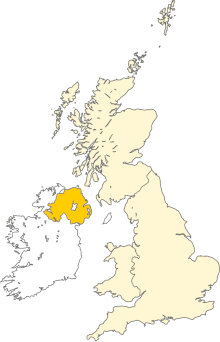
(Pictured: Map of Northern Ireland (yellow) within the United Kingdom.)
William Richard English-Murphy, DSOMC, Irish soldier and policeman known as W. R. E. Murphy, dies on March 5, 1975, in Ardee, County Louth. He serves as an officer with the British Army in World War I and later in the National Army. In the Irish Civil War, he is second in overall command of the National Army from January to May 1923. He is first Irish Commissioner of the Dublin Metropolitan Police (DMP) and the last Commissioner of the force before its merger with the Garda Síochána in 1925. Thereafter he is the Deputy Commissioner of the Gardaí until his retirement in 1955.
Murphy is born in Danecastle, Bannow, County Wexford, on January 26, 1890. His parents die when he is four years old. His grandparents also die during his childhood. He and his sister Mae (Mary Sarah) are separately raised by relatives in Belfast and Waterford. He is completing his master’s degree at Queens University Belfast (QUB) when he follows the call of John Redmond to join the war effort and ensure Irish independence. Ulster regiments reject him because he is Catholic. Seeking a regiment that treats Irish volunteers with respect, he joins the British Army in Belfast in 1915 as an officer cadet in the South Staffordshire Regiment.
Murphy serves in the Battle of Loos in 1915 and is wounded but returns to action for the start of the Battle of the Somme in July 1916. He becomes commanding officer of the 1st Battalion, the South Staffordshire Regiment in August 1918, reaching the rank of temporary lieutenant colonel. In 1918, his regiment is posted to the Italian Front, at the Piave River, where they are when the armistice is declared on November 4, 1918. He is granted the rank of substantive lieutenant colonel on the retired list on May 16, 1922.
After he returns to Ireland, Murphy resumes his career as a teacher. At some point, he joins the Irish Republican Army (IRA), an organisation fighting to end British rule in Ireland.
In December 1921, the Anglo-Irish Treaty is signed between British and Irish leaders, resulting in the setting up of the Irish Free State. Conflict over the Treaty among Irish nationalists ultimately leads to the outbreak of the Irish Civil War in June 1922. Murphy enlists as a general in the new National Army of the Irish Free State. After the start of the Irish Civil War, he is put in command of troops charged with taking posts held by the anti-Treaty IRA in Limerick.
At the Battle of Kilmallock in July–August 1922, Murphy is second in command to Eoin O’Duffy. His troops successfully dislodge the anti-Treaty IRA from positions around Kilmallock in County Limerick, but he is criticised for his tendency to “dig in” and resort to trench warfare rather than rapid offensive action.
Afterward, Murphy is put in overall command of Free State forces in County Kerry until January 1923. He lobbies Richard Mulcahy, commander in chief, for 250 extra troops, to bring his command up to 1,500 and help to put down the guerrilla resistance there. In the early stages of the guerrilla war, he organises large-scale “sweeps” to break up the republican concentrations in west Cork and east Kerry. These meet with little success, however. He exercises overall command in the county, but day-to-day operations are largely run by Brigadier Paddy Daly, of the Dublin Guard.
In October, in response to continuing guerrilla attacks on his troops, Murphy orders a nightly curfew to be put into place in Tralee.
In December, Murphy writes to Mulcahy that the “Irregular [Anti-Treaty] organisation here is well-nigh broken up,” and suggests the end of the war in the county is in sight. His optimistic prediction, however, proves premature.
On December 20, Murphy sentences four captured republican fighters to death under the fictitious “Public Safety Act” for possession of arms and ammunition. However, the sentences are to be called off if local guerrilla activity ceases. Humphrey Murphy, the local IRA Brigade commander, threatens to shoot eight named government supporters in reprisal if the men are executed. Eventually, their sentence is commuted to penal servitude.
In January 1923, Murphy is promoted from his command in Kerry to “responsibility for operations and organisation at the national level” in the army. Paddy Daly takes over as commanding officer in Kerry. Murphy later voices the opinion that Daly had been a bad choice, given his implication in the Ballyseedy massacre and other events of March 1923, in which up to 30 anti-Treaty prisoners were killed in the county.
Murphy leaves the National Army after the end of the Irish Civil War in May 1923 and becomes the first Irish commissioner of the Dublin Metropolitan Police. He later becomes deputy commissioner of the Garda Síochána, when DMP is merged with the new national police force in 1925. He holds this post until his retirement in 1955.
Murphy is at the forefront of efforts to close down Dublin’s red-light district, the Monto, in the early 1920s. Between 1923 and 1925, religious missions led by Frank Duff of the Legion of Mary, a Roman Catholic organisation, and Fr. R.S. Devane work to close down the brothels. They receive the cooperation of Murphy in his role as Dublin Police Commissioner, and the campaign ends with 120 arrests and the closure of the brothels following a police raid on March 12, 1925.
Murphy lives with his daughter, Joan McMahon, in Ardee, County Louth, after his wife, Mary Agnes Fortune, dies on July 31, 1958. He dies on March 5, 1975, and is buried in St. Peter’s Churchyard, Bray, County Wicklow.
(Pictured: Major-General W. R. E. Murphy, as depicted on a Wills’ Irish Sportsmen cigarette card, from their boxing series)
Although nobody is ever charged in connection with the killings, it is widely believed by nationalists and much of the press that the attack had been planned and led by Billy Wright, the leader of the Mid-Ulster Brigade’s Portadown unit. Wright himself takes credit for this and boasts to The Guardian newspaper, “I would look back and say Cappagh was probably our best,” though some sources are sceptical about his claim.
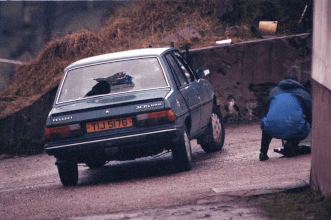
On the evening of Sunday, March 3, 1991, a unit of the UVF’s Mid-Ulster Brigade drive into the heartland of the East Tyrone IRA, intent on wiping out an entire IRA unit that is based in the County Tyrone village of Cappagh. One team of the UVF men wait outside Boyle’s Bar, while a second team waits on the outskirts of the town. At 10:30 p.m. a car pulls into the car park outside the bar and the UVF gunmen open fire with vz. 58assault rifles, killing Provisional IRA volunteers John Quinn (23), Dwayne O’Donnell (17) and Malcolm Nugent (20). The victims and car are riddled with bullets. According to author Thomas G. Mitchell, Quinn, O’Donnell and Nugent are part of an IRA active service unit (ASU). The gunmen then attempt to enter the pub but are unable to after the civilians inside realise what is happening and barricade the door. Unable to get into the bar, a UVF gunman shoots through a high open toilet window killing local civilian, Thomas Armstrong (50) and badly wounding a 21-year-old man. Their intended target, IRA commander Brian Arthurs, escapes with his life by crouching behind the bar during the shooting. According to the Conflict Archive on the Internet (CAIN), the three IRA volunteers chose to go to the pub “on the spur of the moment,” thus are unlikely to be the UVF’s original target.
After the attack, the UVF issues a statement: “This was not a sectarian attack on the Catholic community, but was an operation directed at the very roots of the Provisional IRA command structure in the Armagh–Tyrone area.” The statement concludes with the promise that “if the Provisional IRA were to cease its campaign of terror, the Ulster Volunteer Force would no longer deem it necessary to continue with their military operations.” Privately the UVF are hugely pleased with the attack in a republican heartland and Billy Wright, leader of the Portadown unit of the UVF’s Mid-Ulster Brigade, who is alleged to be centrally involved, tells Jim Cusack and Henry McDonald the killings were “one of things we did militarily in thirty years. We proved we could take the war to the Provos in one of their strongest areas.” Cusack and McDonald assert that a wealthy UVF supporter with a business in South Belfast helped the UVF purchase the cars used in the attack at auctions in the city.
The Provisional IRA initially does not acknowledge that three of the victims are within its ranks, apparently with the aim of garnering sympathy from the wider world, particularly in the Republic of Ireland, toward nationalists in Northern Ireland.
The first reprisal takes place on April 9, 1991, when alleged UVF member Derek Ferguson, a cousin of local MP Reverend William McCrea, is shot and killed in Coagh by members of the East Tyrone Brigade. His family denies any paramilitary links. In the months following the 1991 shootings, two former UDR soldiers are killed by the IRA near Cappagh. One of them is shot dead while driving along Altmore Road on August 5, 1991. The other former soldier is blown up by an IRA bomb planted inside his car at Kildress on April 25, 1993. It is claimed that he has loyalist paramilitary connections. The 1993 bombing leads to allegations that the IRA is killing Protestant landowners in Tyrone and Fermanagh in an orchestrated campaign to drive Protestants out of the region. There are at least five botched IRA attempts against the life of Billy Wright before the Irish National Liberation Army (INLA) succeeds in killing him in 1997 inside the Maze Prison.
This is not the first time the UVF carries out an attack on Boyle’s Bar in Cappagh. On January 17, 1974, at around 7:40 p.m. two masked UVF gunmen enter the pub and open fire indiscriminately on the customers with a Sterling submachine gun and a Smith & Wessonrevolver, firing at least 35 shots. A Catholic civilian and retired farmer Daniel Hughes (73) is shot eleven times and killed in the attack and three other people are injured. A group calling itself the “Donaghmore-Pomeroy Battalion of the UVF” claim responsibility for the shooting. The attack is linked to the notorious Glenanne gang.
(Pictured: The scene of the UVF attack outside Boyle’s Bar in Cappagh in March 1991. Photo: Pacemaker Archive Belfast 153-91-BW)
O’Faolain describes her early life as growing up in a Catholic country which, in her view, fears sexuality and forbids her even information about her body. In her writings she often discusses her frustration at the sexism and rigidity of roles in Catholic Ireland that expect her to marry and have children, neither of which she does.
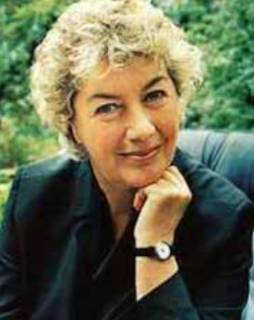
O’Faolain becomes internationally well known for her two volumes of memoir, Are You Somebody? and Almost There; a novel, My Dream of You; and a history with commentary, The Story of Chicago May. The first three are all featured on The New York Times Best Seller list. Her posthumous novel Best Love, Rosie is published in 2009.
O’Faolain’s formative years coincide with the emergence of the women’s movement, and her ability to expose misogyny in all its forms is formidable, forensic and unremitting. However, her feminism stems from a fundamental belief in social justice. Unlike most commentators, who maintain a detached, lofty tone, she places herself at the centre of things, a high-risk strategy that works because of her broad range of erudition, worn lightly, her courage and a truthfulness that sometimes borders on the self-destructive.
O’Faolain is engaged at least once but never marries. In Are You Somebody? she speaks candidly about her fifteen-year relationship with the journalist Nell McCafferty, who publishes her own memoir, Nell. From 2002 until her death, she lives much of the time with Brooklyn-based attorney John Low-Beer and his daughter Anna. They are registered as domestic partners in 2003.
O’Faolain splits her time between Ireland and New York City. She is diagnosed with metastaticcancer and is interviewed on the Marian Finucane radio show on RTÉ Radio 1 on April 12, 2008, in relation to her terminal illness. She tells Finucane, “I don’t want more time. As soon as I heard I was going to die, the goodness went from life.”
In a last attempt to grasp as much of life as she can, O’Faolain holidays with family members in Sicily and visits Berlin with a group of friends to hear music and see art. She previously tended to avoid Berlin because, through contact with Jewish friends and lovers, she associated it with the Holocaust. She dies at the Blackrock Hospice, Dublin, on May 9, 2008.
O’Faolain wins a Jacob’s Award in 1985 for her work as the producer of the RTÉ One television programme Plain Tales. In 2006, she wins the Prix Femina étranger, a French literary award, for The Story of Chicago May.
O’Faolain is the subject of a film documentary, Nuala: A Life and Death (2011), directed by Patrick Farrelly and Kate O’Callaghan, and produced and narrated by Marian Finucane. Hugo Hamilton‘s novel Every Single Minute (2014) is based on his experiences when accompanying O’Faolain to Berlin shortly before her death.
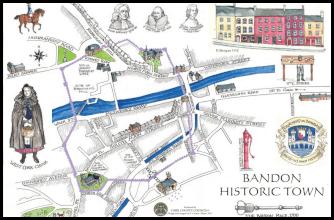
The Capture of Bandon begins on February 23, 1689, when the town of Bandon, County Cork, is forcibly seized from its rebellious Protestant inhabitants by force of Irish Army troops under Justin McCarthy. The skirmishing at the town takes place during the early stages of the Williamite War in Ireland. The Jacobite success at Bandon helps suppress any chance of a general Munster uprising against the rule of James II similar to that which occurs in Ulster the same year. The slogan “No Surrender!” is believed to have been first used at Bandon and subsequently taken up, more famously, by the defenders at the Siege of Derry later in the year.
In 1685, the Catholic James II comes to the throne. This leads to a sharp reversal of government policy in Ireland, which had previously favoured the Protestant inhabitants. This is quickly changed by James’ representative Richard Talbot, 1st Earl of Tyrconnell. Under Talbot’s administration, the army and civil government are mostly purged of Protestants, who are replaced by Catholics. In Bandon, the previous town burgesses are replaced by Catholic nominees.
Talbot’s actions lead to a growing hostility amongst the Protestant inhabitants across the island toward the King and his Irish government. Bandon is a historic centre of Protestants, dating back to the Plantation of Munster in the Elizabethan era and is a natural focus of dissent against James’s rule. In 1688, a similar opposition in England leads to the Glorious Revolution, in which William III successfully invades with a Dutch Army. Many Protestants now believe William to be their rightful King while Catholics, and some Protestants, remain loyal to James. During the growing turmoil, many rural County Cork Protestants come to shelter in Bandon.
Fearing a potential outbreak of rebellion in Bandon will occur, the government sends a detachment of the Irish Army under Captain Daniel O’Neill to take the town. They reportedly enter on a Sunday morning while the inhabitants are attending church services. The following day, February 24, sometimes referred to as “Black Monday,” the townspeople rise and attack the soldiers. Various sources say between three and eight of the redcoats are killed and the remainder are driven out of the town. Using their captured weapons, the Protestants then make an effort to prepare Bandon to withstand an assault.
Having received word about the growing rebellion in the county, Talbot in Dublin has already dispatched six companies of infantry under Justin McCarthy, an experienced Irish Catholic soldier. Instead of immediately assaulting Bandon, McCarthy first seizes nearby Cork, another major centre of Protestants in the south of the country and clamps down on other potential dissidents. He then proceeds to Bandon with his troops, plus some cavalry and artillery. Although they had previously hung out a banner proclaiming “No Surrender,” the defenders negotiate a surrender in exchange for generous conditions. Despite the usual punishment for rebellion being death, the town corporation is fined £1,000 and the walls are ordered to be demolished.
The comparatively light terms imposed on the town are part of a wider attempt by King James to convince Protestants of his goodwill toward them. It angers more hardline Catholics, including McCarthy’s nephew, Donough MacCarthy, 4th Earl of Clancarty, who wants a harsher punishment for the rebels.
The fighting at Bandon is part of a succession of defeats of locally raised Protestant troops both across Munster (at Castlemartyr) and Ireland as a whole, with the Ulster-raised Army of the North suffering heavy defeats at the Break of Dromore and the Battle of Cladyford. The advance of the mainly Catholic Jacobite Army is halted by the successful Protestant defence of Enniskillen and Derry. The arrival of large-scale reinforcements under Frederick Schomberg and King William reverse the tide, and Dublin is captured following the Battle of the Boyne in 1690. The same year, Bandon is re-taken by Protestant forces following John Churchill, 1st Duke of Marlborough‘s successful Siege of Cork. The walls are not rebuilt, as they are becoming increasingly militarily obsolete.
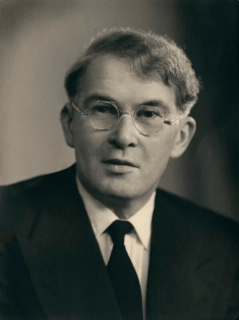
Bracken is the third child and second of three sons of Joseph Kevin (J. K.) Bracken and Hannah Bracken (née Ryan). The family moves to Kilmallock, County Limerick, in 1903, the year before his father’s death. By 1908, his mother takes the family to live in Glasnevin, a new suburb in north Dublin, and subsequently off the North Circular Road. He is educated in St. Patrick’s National School, Drumcondra, and at the Christian Brothers‘ O’Connell School in North Richmond Street. He is a mischievous, delinquent child, one time throwing a schoolfellow into the Royal Canal. In February 1915 he is sent to Mungret College, a Jesuit boarding school near Limerick. He is not amenable to the regime and runs away on several occasions, finding accommodation in local hotels under a false name.
At the end of 1915 Bracken goes to Australia with £14 in his pocket. He is first based in Echuca, Victoria, where he is put up in a convent. Later he moves to other houses run by religious orders. A voracious reader, he claims that he is doing research for a life of CardinalPatrick Francis Moran, and signs himself “Brendan Newman Bracken.” He seeks admission as a pupil to Riverview, the fashionable Jesuit school in Sydney, claiming that he had been educated at Clongowes Wood College. Unfortunately for him, a priest who had just come out from Clongowes exposes him. Opinionated and argumentative, he does not conceal his skepticism about the Catholic religion. For a time, he teaches in a Protestant school in Orange, New South Wales.
Bracken returns to Ireland in 1919. By this time his mother has remarried and is living with her new husband, Patrick Laffan, on a farm in Beauparc, County Meath. After a short stay there, he moves to Liverpool and finds employment as a teacher at the Liverpool Collegiate School, claiming that he had been to the University of Sydney. He teaches at the school for two terms in 1920, earning extra money as tutor to a young boy. With his savings he is able to gain admission to Sedbergh School, a public school in the town of Sedbergh in Cumbria, North West England, giving his name as Brendan Rendall Bracken, born 1904, and stating that his parents had perished in a bush fire in Australia, leaving him money to complete his education. He remains only one term but distinguishes himself by winning a prize for history. After Sedbergh, Bracken teaches at Rottingdean preparatory school and then at Bishops Stortford School. He cuts a flamboyant figure and drops the name of famous acquaintances with gay abandon. He stands over 6 feet and has a powerful presence and a domineering personality; his mop of red hair and pale freckled skin combine with black teeth to give him a bizarre appearance.
In 1922 Bracken moves to London. He takes charge of the Illustrated Review when its editor, Hilaire Belloc, resigns. Renamed English Life and covering political and social events, it affords Bracken an opportunity to meet prominent people, including J. L. Garvin, editor of The Observer. In autumn 1923 Garvin introduces him to Winston Churchill, who had lost his parliamentary seat in 1922 and decided to contact Leicester West in the 1923 United Kingdom general election. Bracken offers his services as campaign manager. The friendship between Churchill and Bracken is soon so close that Bracken is rumoured to be Churchill’s natural son. Churchill’s wife Clementine dislikes Bracken and discourages the friendship.
Meanwhile Bracken enjoys the life of a ubiquitous socialite and builds up his career in publishing. He becomes a director of Eyre & Spottiswoode in 1926, starting The Banker, a monthly magazine, for them, and acquiring the Financial News in 1928 and a half-share in The Economist. To these are added in due course the Investors Chronicle and The Practitioner. His success in business enables him to acquire a home in North Street in 1928, near the Houses of Parliament. He is driven about in a chauffeured Hispano-Suiza car.
In 1929, Bracken has himself adopted as conservative candidate for Paddington North, a marginal seat. After a hard-fought campaign characterised by minor violence provoked by Bracken’s intemperate language, he wins the seat by 528 votes. At one point a rumour is put about that Bracken is in reality a Polish Jew, which he has to disprove by exhibiting a copy of his birth certificate. His background is a subject of speculation among acquaintances, and in throwaway remarks he gives different fictitious versions of it, Ireland figuring in none of them. He does however remain in constant touch with his mother, to whom he seems to have been deeply devoted, until her death in 1928. However, he has as little contact as possible with his brother and sisters, although he does give assistance to some of them and their families at various times.
In parliament Bracken voices right-wing views on economic issues and is an enthusiastic imperialist. After Churchill resigns from the conservative front bench in 1930 because they would not oppose the Labour government’s proposal for Indian self-government, he is supported by Bracken. During the 1930s, when Churchill is in the wilderness, disagreeing with the party leadership on India and on what he sees as a policy of appeasement toward Hitler‘s Germany, Bracken is his sole political ally. Stanley Baldwin calls him Churchill’s “faithful chela.”
In September 1939, Churchill joins Neville Chamberlain‘s war cabinet as First Lord of the Admiralty. Bracken is appointed his parliamentary private secretary, continuing in that role when Churchill becomes Prime Minister. Despite the king’s opposition, Churchill insists in June 1940 that Bracken should be appointed a privy councillor. Bracken shuts up his house and moves to the Prime Minister’s residence for the duration of the war. As a confidant of the Prime Minister, he often acts as a go-between with other politicians and newspapermen. He is allowed to oversee patronage and takes a special interest in ecclesiastical appointments. In July 1941, he is persuaded by Lord Beaverbrook and Churchill to become Minister for Information. He wins over most of the proprietors by giving them more news, often on a confidential basis, and censorship is kept to a minimum. The BBC is also allowed a fair measure of freedom as long as it behaves responsibly; under the leadership of Cyril Radcliffe, the civil service head of the ministry, it operates more smoothly. Bracken was generally acclaimed for that success.
After the resignation of the Labour ministers from the government at the end of the war in Europe, Bracken joins the cabinet as First Lord of the Admiralty. He is prominent in the general election campaign that follows and is the only conservative minister apart from Churchill to give more than one radio broadcast. He is accused, probably unjustly, of provoking Churchill to take extreme positions, and blamed when the conservatives are heavily defeated at the polls. Bracken himself loses Paddington North to Lt. Gen. Sir Noel Mason-MacFarlane. However, he is soon back in parliament representing Bournemouth, and as front-bench spokesman is an uncompromising opponent of the nationalisation measures of the Labour government (1945–51). He is out of sympathy with the leftward drift of the conservative party associated with Rab Butler and Harold Macmillan.
In December 1951, when Churchill is again Prime Minister, Bracken declines an invitation to serve as Colonial Secretary, pleading that his recurring sinusitis makes it impossible. He resigns his seat in the House of Commons and is created a peer, Viscount Bracken of Christchurch in Hampshire, but never takes his seat in the House of Lords. Although he retires from politics, he remains close to political events through his friendship with Churchill. He is deeply involved in concealing the severe stroke that Churchill suffers in 1953, so that he can carry on as Prime Minister.
In the postwar period, Bracken has important business interests. The Financial News group acquires the Financial Times in 1945, and he is returned as chairman of the expanded company. He writes a weekly Financial Times column until 1954. He oversees the building near St. Paul’s of a new head office, named “Bracken House” after his death. He is also chairman of the Union Corporation mining house, with interests in South Africa, which he frequently visits. From 1950 he is chairman of the board of governors of Sedbergh School, where he goes frequently and often walks for miles across the fells. He organises and finances the restoration of the eighteenth-century school building as a library, with a commemoratory inscription, “Remember Winston Churchill.”
From 1955 Bracken is a trustee of the National Gallery. He is an unrelenting opponent of the proposal to return to Ireland the impressionist paintings bequeathed to it by Hugh Lane, because a codicil willing them to Dublin has not been witnessed. Throughout the postwar period he carries on a prolific correspondence with friends such as Lord Beaverbrook, the American ambassador Lewis Douglas, and the Australian entrepreneur W. S. Robinson. These are a valuable and entertaining source on the political history of the time.
In January 1958, Bracken, who has always been a heavy smoker, is diagnosed with throat cancer. He lingers on until August 8, 1958, when he dies at the flat of his friend Sir Patrick Hennessy in Park Lane. He resists efforts made to reconcile him to the church of Rome. By his own wish he is cremated, and his ashes are scattered on Romney Marsh, Kent. On his instructions his papers are burned by his chauffeur. His estate comes to £145,032.
(From: “Bracken, Brendan” by Charles Lysaght, Dictionary of Irish Biography, www. dib.ie, October 2009 | Pictured: Brendan Bracken, bromide print by Elliott & Fry, January 13, 1950, National Portrait Gallery, London)
Thomas “Tom” Michael Kettle, parliamentarian, writer, and soldier, is born on February 9, 1880, in Artane, Dublin, the seventh among twelve children of Andrew Kettle, farmer and agrarian activist, and his wife, Margaret (née McCourt). His father’s record in nationalist politics and land agitation, including imprisonment in 1881, is a valuable political pedigree.
The family is prosperous. Kettle and his brothers attend Christian Brothers’ O’Connell School in Richmond Street, Dublin, before being sent to board at Clongowes Wood College, County Kildare. Popular, fiery, and something of a prankster, he soon proves to be an exceptional scholar and debater, as well as a keen athlete, cyclist, and cricketer. He enrolls in 1897 at University College Dublin (UCD), his contemporaries including Patrick Pearse, Oliver St. John Gogarty and James Joyce. He thrives in student politics, where his rhetorical genius soon wins him many admirers and is recognised in his election as auditor of the college’s Literary and Historical Society. He also co-founds the Cui Bono Club, a discussion group for recent graduates. In 1899, he distributes pro-Boer propaganda and anti-recruitment leaflets, arguing that the British Empire is based on theft, while becoming active in protests against the Irish Literary Theatre‘s staging of The Countess Cathleen by W. B. Yeats. In 1900, however, he is prevented from taking his BA examinations due to a mysterious “nervous condition” – very likely a nervous breakdown. Occasional references in his private diaries and notes suggest that he is prone to bouts of depression throughout his life. He spends the following two years touring in Europe, including a year at the University of Innsbruck, practising his French and German, before taking a BA in mental and moral science of the Royal University of Ireland (RUI) in 1902. He continues to edit the college newspaper, remaining active in student politics. He participates, for example, in protests against the RUI’s ceremonial playing of “God Save the King” at graduations as well as its senate’s apparent support for government policy, threatening on one occasion to burn publicly his degree certificate.
In 1903, Kettle is admitted to the Honourable Society of King’s Inns to read law and is called to the bar two years later. Nonetheless, he soon decides on a career in political journalism. Like his father, he is a keen supporter of the Irish Parliamentary Party (IPP), and in 1904 is a co-founder of the resonantly titled Young Ireland Branch of the United Irish League. Here he comes to the notice of John Redmond, who offers him the prospect of a parliamentary seat, but he chooses instead to put his energies into editing the avowedly pro-Irish-party paper, The Nationist, in which he promises that a home rule administration will uphold women’s rights, industrial self-sufficiency, and Gaelic League control of Irish education. He hopes that the paper will offer a corrective alternative to The Leader, run by D. P. Moran, but in 1905 he is compelled to resign the editorship due to an article thought to be anti-clerical. In July 1906, he is persuaded to stand in a by-election in East Tyrone, which he wins with a margin of only eighteen votes. As one of the youngest and most talented men in an ageing party, he is already tipped as a potential future leader. His oratory is immediately put to good use by the party in a propaganda and fund-raising tour of the United States, as well as on the floor of the House of Commons, where his oratorical skills earn him a fearsome reputation. He firmly advocates higher education for Catholics and the improvement of the Irish economy, while developing a close alliance with Joseph Devlin and the Ancient Order of Hibernians (AOH).
Kettle meanwhile makes good use of his connections to ArchbishopWilliam Walsh, the UCD Sodality of the Blessed Virgin Mary, and the Catholic Graduates and Undergraduates Association, as well as political support, to secure the professorship of national economics. T. P. Gill, of the Department of Agriculture and Technical Instruction, exceptionally acts as his referee. His detractors regard the appointment as a political sinecure and Kettle as a somewhat dilettantish “professor of all things,” who frequently neglects his academic duties. However, he takes a keen interest in imperial and continental European economies. He does publish on fiscal policy, even if always taking a pragmatic interest in wider questions, greatly impressing a young Kevin O’Higgins, later Vice-President of the Executive Council of the Irish Free State. He has little time for what he regards as the abstract educational and economic idealism of D. P. Moran. He acknowledges that the “Hungarian policy” of Arthur Griffith has contributed significantly to a necessary debate about the economy, but argues that the Irish are “realists,” that Ireland’s natural resources ought to be scientifically measured, and that the imperial connection is crucial to Ireland’s future development. The achievement of home rule would, he asserts, encourage a healthy self-reliance as opposed to naive belief in self-sufficiency.
Kettle is encouraged by the heightened atmosphere of the constitutional crisis over the 1909 David Lloyd Georgebudget, culminating in the removal of the House of Lords veto, which has been an obstacle to home rule. He is also a supporter of women’s enfranchisement, while stressing that the suffragist cause should not delay or deflect attention from the struggle for home rule. He holds his East Tyrone seat in the January 1910 United Kingdom general election but decides not to stand at the general election in December of the same year. Returning to an essentially journalistic career, he publishes a collection of essays outlining his constitutional nationalist position. He opposes suffragette attacks on private property, but, in contrast, supports the Dublin strikers in 1913, highlighting their harsh working and living conditions. He tries without success to broker an agreement between employers and workers though a peace committee he has formed, on which his colleagues include Joseph Plunkett and Thomas P. Dillon. His efforts are not assisted, however, by an inebriated appearance at a crucial meeting. Indeed, by this time his alcoholic excesses are widely known, forcing him to attend a private hospital in Kent.
In spite of deteriorating health, Kettle becomes deeply involved in the Irish Volunteers formed in November 1913 to oppose the Ulster Volunteers. His appraisal of Ulster unionism is somewhat short-sighted, dismissing it as being “not a party [but] merely an appetite,” and calling for the police to stand aside and allow the nationalists to deal with unionists, whose leaders should be shot, hanged, or imprisoned. These attitudes are mixed in with a developing liberal brand of imperialism based on dominion federalism and devolution, warmly welcoming a pro-home-rule speech by Winston Churchill with a Saint Patrick’s Day toast to “a national day and an empire day.” Nevertheless, he uses his extensive language skills and wide experience of Europe to procure arms for the Irish Volunteers. He is in Belgium when the Germans invade, and the arms he procured are confiscated by the Belgian authorities, to whom they were donated by Redmond on the outbreak of war.
On his return to Dublin, Kettle follows Redmond’s exhortation to support the war effort. He is refused an immediate commission on health grounds, but is eventually granted the rank of lieutenant, with responsibilities for recruitment in Ireland and England. He makes further enemies among the advanced nationalists of Sinn Féin, taunting the party for its posturing and cowardly refusal to confront Ulster unionists, the British Army, and German invaders alike. Coming from a staunchly Parnellite tradition, he is no clericalist, yet he is a devout if liberal Catholic, imbued by his Jesuit schooling with a cosmopolitan admiration for European civilisation which has been reinforced by his European travels, and in particular has been outraged by the German destruction of the ancient university library of Louvain. Despite a youthful flirtation with the philosophy of Friedrich Nietzsche, he comes to regard “Prussianism” as the deadliest enemy of European civilisation and the culture of the Ten Commandments, there not being “room on earth for the two.” He increasingly believes that the German threat is so great that Irish farmers’ sons ought to be conscripted to defend Ireland. He also believes that considerable good might come out of the conflict, exhorting voters in East Galway to support what is practically a future home rule prime minister, cabinet, and Irish army corps. He unsuccessfully seeks nomination as nationalist candidate in the 1914 East Galway by-election in December. Nevertheless, he continues to work tirelessly on behalf of the party, publishing reviews, translations, and treatises widely in such journals as the Freeman’s Journal, The Fortnightly Review, and the Irish Ecclesiastical Record.
As a recruiting officer based far from the fighting, Kettle is stung by accusations of cowardice from advanced nationalists. He had tried repeatedly to secure a front-line position, but was rejected, effectively because of his alcoholism. He is appalled by trench conditions and the prolongation of the war, a disillusionment further encouraged by the Easter Rising, in which his brother-in-law, Francis Sheehy-Skeffington, is murdered by a deranged Anglo-Irish officer, J. C. Bowen-Colthurst. He senses that opinion in Ireland is changing, anticipating that the Easter insurgents will “go down in history as heroes and martyrs,” while he will go down, if at all, as “a bloody British officer.” Nevertheless, he regards the cause of European civilisation as greater than that of Ireland, remaining as determined as ever to secure a combat role. Despite his own poor health and the continuing intensity of the Somme campaign, he insists on returning to his unit, the 9th Battalion, Royal Dublin Fusiliers.
Kettle’s writings demonstrate the mortal danger he is placing himself in, evident not least in his frequently quoted poem, “To my daughter, Betty, the gift of God,” as well as letters settling debts, apologising for old offences, and providing for his family – his wealth at death being less than £200. He has no death wish, wearing body armour frequently, but as Patrick Maume notes, “As with Pearse, there is some self-conscious collusion with the hoped-for cult.” He is killed on September 9, 1916, during the Irish assault on German positions at Ginchy.
Kettle marries Mary Sheehy, alumna of UCD, student activist, suffragist, daughter of nationalist MPDavid Sheehy, and sister-in-law of his friend Francis Sheehy Skeffington, on September 8, 1909. In 1913 the couple has a daughter, Elizabeth.
Kettle is commemorated by a bust in St. Stephen’s Green, Dublin, and in the House of Commons war memorial in London. He is a man of great passions and proven courage. George William Russell put his sacrifice on a par with Thomas MacDonagh and the Easter insurgents:
“You proved by death as true as they, In mightier conflicts played your part, Equal your sacrifice may weigh, Dear Kettle, of the generous heart (quoted in Summerfield, The myriad minded man, 187).
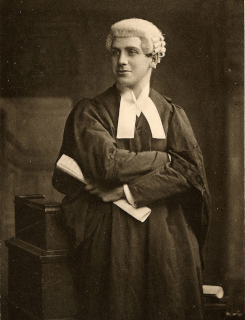
(From: “Kettle, Thomas Michael (‘Tom’)” by Donal Lowry, Dictionary of Irish Biography, http://www.dib.ie, October 2009 | Pictured: Tom Kettle as a barrister when called to the Irish law bar in 1905)
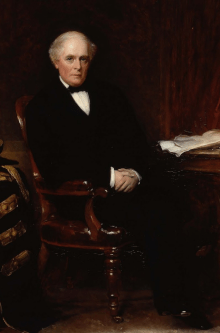
Corrigan is born in Thomas Street, Dublin, on December 2, 1802, the son of a dealer in agricultural tools. He is educated in St. Patrick’s College, Maynooth, which then has a department for secular students apart from the ecclesiastical seminary. He is attracted to the study of medicine by the physician in attendance and spends several years as an apprentice to the local doctor, Edward Talbot O’Kelly. He studies medicine in Dublin later transferring to Edinburgh Medical School where he receives his degree as MD in August 1825.
Corrigan returns to Dublin in 1825 and sets up a private practice at 11 Ormond Street. As his practice grows, he moves to 12 Bachelors Walk in 1832, and in 1837 to 4 Merrion Square West. Apart from his private practice, he holds many public appointments; he is a physician to St. Patrick’s College, Maynooth, the Sick Poor Institute, the Charitable Infirmary Jervis Street (1830–43) and the House of Industry Hospitals (1840–66). His work with many of Dublin’s poorest inhabitants leads to him specialising in diseases of the heart and lungs, and he lectures and publishes extensively on the subject. He is known as a very hard-working physician, especially during the Great Famine. At the 1870 Dublin City by-election he is elected a LiberalMember of Parliament for Dublin City. In parliament he actively campaigns for reforms to education in Ireland and the early release of Fenian prisoners. He does not stand for re-election in 1874. His support for temperance and Sunday closing of pubs apparently antagonises his constituents and alcohol companies.
In 1847, Corrigan is appointed physician-in-ordinary to the Queen in Ireland. Two years later he is given an honorary MD from Trinity College Dublin (TCD). In 1846 his application to become a fellow of the Royal College of Physicians of Ireland (RCPI) is blocked. In 1855 he gets around this opposition by sitting the college’s entrance exam with the newly qualified doctors. He becomes a fellow in 1856, and in 1859 is elected president, the first Catholic to hold the position. He is re-elected president an unprecedented four times. There is a statue of him in the Graves’ Hall of the college by John Henry Foley.
Corrigan is President of the Royal Zoological Society of Dublin, the Dublin Pathological Society, and the Dublin Pharmaceutical Society. From the 1840s he is a member of the senate of the Queen’s University and in 1871 becomes its vice-chancellor. In 1866 he is created a baronet, of Cappagh and Inniscorrig in the County of Dublin and of Merrion Square in the City of Dublin, partly as a reward for his services as Commissioner of Education for many years. He is a member of the board of Glasnevin Cemetery and a member of the Daniel O’Connell Memorial Committee. Armand Trousseau, the French clinician, proposes that aortic heart disease should be called Corrigan’s disease.
Corrigan marries Joanna Woodlock, the daughter of a wealthy merchant, and sister of the Bishop Dr. Bartholomew Woodlock, in 1827. They have six children, three girls and three boys. His eldest son, Captain John Joseph Corrigan, Dragoon Guards, dies on January 6, 1866, and is interred at the Melbourne General Cemetery, Melbourne, Australia.
Corrigan dies at Merrion Square, Dublin, on February 1, 1880, having suffered a stroke the previous December. He is buried in the crypt of St. Andrew’s Church, Westland Row, Dublin. His grandson succeeds him to the baronetcy.
The Corrigan Ward, a cardiology ward in Beaumont Hospital, Dublin, is named in his honour. Part of his family crest is also part of the Beaumont Hospital crest.
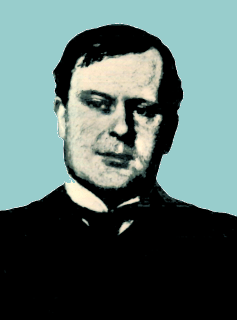
David Patrick Moran (Irish: Dáithí Pádraig Ó Móráin), better known as simply D. P. Moran, Irish journalist, activist and cultural-political theorist, dies on January 31, 1936. He is known as the principal advocate of a specifically Gaelic CatholicIrish nationalism during the early 20th century. Associated with the wider Celtic Revival, he promotes his ideas primarily through his journal, The Leader, and compilations of his articles such as the book The Philosophy of Irish Ireland.
Moran is born in Manor, a townland in Waterford, the youngest of twenty children born to James Moran, a builder, and Elizabeth Moran (née Casey). One of his brothers goes on to serve on the defense team of Patrick O’Donnell.
Despite the failure of the 1893 Home Rule Bill and the division of the Irish Parliamentary Party (IPP) in 1891, nationalists take heart from Douglas Hyde‘s 1892 speech, entitled “The Necessity for De-anglicising Ireland.” Moran builds upon this thesis and provides a wider ideology for enthusiasts, particularly after the re-unification of most of the nationalist parties from 1900.
In his 1905 text The Philosophy of Irish-Ireland, Moran argues that to be Irish requires:
the use of the Irish language
membership in the Roman Catholic Church
an anti-materialist outlook on life
the playing of only Gaelic games
Though a sponsor of the use of Irish, he never becomes fluent in the language himself. He emphasises the use of English in 1908–09 as “an active, vigilant, and merciless propaganda in the English language.” In the longer term, when Irish becomes again the language of the people, its use enables a de facto censorship of any foreign and unwelcome ideas written in English.
While Moran argues that the idea of “the Gael” is one that can assimilate others, he also feels that it will be hard if not impossible for members of the Church of Ireland who support the British Empire to ever qualify as Irish, being “resident aliens.” This extends to Anglo-Irish literature. He rejects the Abbey Theatre and questions Yeats‘ genius. He once speaks out against the influence Britain has over Irish Universities, stating, “We are all Palemen now.” In the matter of religious differences, Daniel O’Connell had said in 1826 that “the [Roman] Catholics of Ireland are a nation.” Moran moves beyond that, affirming in 1901 that “…the Irish Nation is de facto a Catholic nation.” He is virulent in his opposition to female suffrage.
Moran’s articles frequently contrast “Belfast” with “Ireland,” yet hope that Belfast can eventually change and assimilate. He feels that Ulster unionists should “… be grateful to the Irish nation for being willing to adopt them.” His paper publishes numerous articles by the future TDArthur Clery (writing under the pen name “Chanel”), who advocates partition on the grounds that Ulster unionists are a separate nation, but Moran himself disagrees and refuses to concede the legitimacy of a northern Protestant identity.
When Irish republicans initiate the Irish War of Independence in 1919, widescale anti-Catholic rioting breaks out in Belfast in 1920 and 1922. Moran identifies this as being caused by Orangeism, which he describes as “a sore and a cancer” in Ireland. He also alleges that “bigotry on the part of Catholics in the Six Counties is immediately due to Orange bigotry.”
Moran is initially a supporter of the Irish Parliamentary Party, believing that the separatism advocated by Arthur Griffith‘s Sinn Féin is impracticable; however, he opposes John Redmond‘s support of the British World War I effort.
Moran supports the Anglo-Irish Treaty agreed in 1921–22 and sees the partition of Ireland as beneficial for a truly Irish culture in the Irish Free State. This causes a sea-change in his opinions; from now on Northern Ireland can be safely ignored, along with what he sees as the English evils of “free thought, free trade, and free literature.” He claims Irish life and culture has to be protected from foreign influences, including the twin evils of the music hall and the English press. The new jazz music of the 1920s and other imported cultural elements are deprecated as “imported debasement and rot.”
On January 9, 1901, Moran marries Theresa Catherine, daughter of Thomas Francis O’Toole, a former Parnellite mayor of Waterford. They have four sons and one daughter.
Moran dies suddenly at his home in Skerries, Dublin, on January 31, 1936. His daughter, Nuala, who has written for the paper since the early 1920s, generally on artistic and social matters, takes over the running of the paper on his death, though it is then much diminished in size and influence. Nuala, who never marries, retains control of The Leader until it ceases publication in 1971.
The agreement on January 28, 1610, between the Crown and the Irish Society of London to carry out the plantation of Derry, Coleraine, and part of Tyrone refers to a significant historical event known as the Plantation of Ulster. This event takes place in the early 17th century and is part of the broader policy of the English and later British colonization of Ireland.
The Plantation of Ulster is a process initiated by the English Crown, primarily under King James I, to colonize the province of Ulster in the north of Ireland with English and ScottishProtestant settlers to defend against a future attack from within or without. This follows the Flight of the Earls in 1607, when several Gaelic Irish lords leave Ireland, leading to the confiscation of their lands by the Crown.
In his survey, James I finds that the town of Derry (renamed Londonderry) can become either a great asset as a control over the River Foyle and Lough Swilly, or it can become an inviting back door if the people of the area are against him. He pressures the guilds of the City of London to fund the resettlement of the area, including the building of a new walled city.
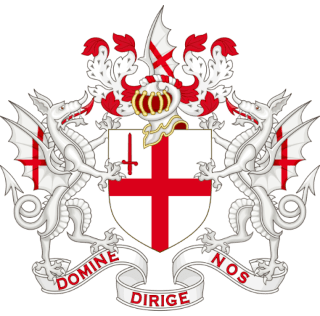
The Irish Society is formed by the City of London in response to James I’s royal request to participate in the plantation. The Society is a consortium of Londonlivery companies, which are trade associations and guilds.
The Crown grants the Irish Society lands in Ulster, particularly in modern-day County Londonderry (then including what is now County Tyrone), to establish new settlements. The key areas are the city of Derry and the town of Coleraine.
The primary objective is to settle Ulster with loyal Protestant subjects, thus consolidating English influence in Ireland. The plantation aims to bring about economic development and to establish control over what is considered a rebellious and unruly region.
The livery companies of London undertake the establishment of new towns, fortifications, and the settlement of the land with tenants. However, the implementation faces various challenges, including resistance from the native Irish population, logistical difficulties, and issues of mismanagement.
The Plantation of Ulster has profound and lasting demographic, social, and political impacts. It leads to significant changes in land ownership and contributes to the religious and cultural diversification of the region. The plantation is also a root cause of the sectarian divide in Northern Ireland, contributing to centuries of conflict between the Protestant and Catholic communities.
The agreement between the Crown and the Irish Society of London to carry out the Plantation of Ulster is a pivotal event in Irish history. It plays a crucial role in shaping the historical trajectory of Ireland, particularly Northern Ireland, and its effects are still felt in the region’s complex socio-political landscape.
The Plantation of Ulster remains a subject of historical analysis and debate, reflecting the complex interplay of colonization, cultural identity, and conflict in Irish history.
(From: “The Crown and the Irish Society of London, Agree to Carry Out the Plantation of Derry, Coleraine and Part of Tyrone,” McManus Family History, http://www.mcmanusfamilyhistory.com | Pictured: The crest of the Irish Society of London)


 seamus dubhghaill