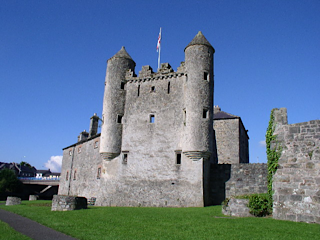
The siege of Enniskillen takes place at Enniskillen in Fermanagh, in present day Northern Ireland, in 1594 and 1595, during the Nine Years’ War. In February 1594, the English capture Enniskillen Castle from the Irish following a waterborne assault and massacre the defenders after they surrender. From May 1594, an Irish army under Hugh Maguire and Cormac MacBaron O’Neill besiege the English garrison in the castle, and in August they defeat an English relief force in the Battle of the Ford of the Biscuits. A second relief force is allowed to resupply the garrison, but the castle remains cut off. Eventually, in May 1595, the English garrison surrenders to the Irish and are then massacred.
Enniskillen Castle sits on the River Erne and commands the strategic bottleneck between Upper and Lower Lough Erne. On January 25, 1594, English Captain John Dowdall arrives at Enniskillen by boat with three infantry companies. They dig trenches in which they place light cannons and musketeers, but the cannons are too small to make much of an impact on the castle walls. On January 30, Captain George Bingham arrives with 300 men.
They launch a waterborne assault on the castle. While musketeers in boats and artillery on land fire at the castle, a large boat holding 67 men anchors at a vulnerable part of the walls. They make a breach in the wall with pickaxes, forcing the Irish to take shelter in the keep. Dowdall threatens to destroy the castle with gunpowder if the garrison does not surrender. An Irish witness claims there are 36 fighting men and 40 women and children in the castle, while Dowdall claims there are 200. After they surrender, Dowdall has them put to the sword and claims to have killed 150. Captain Thomas Lee, who is present, describes this as a great dishonor to the Queen as the defenders had surrendered “uppon composicion, And your majesties worde being past to the poore beggars that kept it, they were all notwithstandinge dishonourably putt to the sworde in a most miserable state.”
Dowdall writes on February 2 to the Lord Deputy of Ireland that he has captured the castle from the “rebel” Hugh Maguire. An English garrison is left in place. A detailed coloured illustration of the siege is made shortly after.
On May 17, 1594, now acting with the covert support of Hugh O’Neill, Earl of Tyrone, Hugh Maguire and Cormac MacBaron O’Neill lay siege to Enniskillen which is now isolated in hostile country. Their army consists of 1,400 foot soldiers and 600 horsemen. It quickly grows with support arriving from Hugh Roe O’Donnell. The English commander, James Eccarsall, has only 50 foot soldiers and 24 horsemen to defend the castle, along with some light artillery. Eccarsall launches a sortie by boat but has to retreat under heavy fire. Irish fortifications cut off access by river and the castle is attacked nightly. Many of the garrison fall sick due to food shortages and exhaustion brought on by incessant skirmishing with the Irish.
On August 7, Maguire and his allies defeat an English relief force for Enniskillen at the Battle of the Ford of the Biscuits. A second relief force commanded by the Lord Deputy of Ireland, William Russell, is sent by another route. Although it is not attacked by the Irish, none of Russell’s scouts or messengers reach the castle nor return. Russell relieves the beleaguered garrison by August 30 with six months supplies, then withdraws. Following this, there is a truce, but “subterfuge and deception were the hallmarks of this stage of the war.”
Maguire raises the clan and the castle is again attacked in January 1595 (Third Siege of Enniskillen). This time, forty selected men dressed in chain mail and armed with Lochaber axes attack at night. His men overrun the outer defences but the garrison holds out in the tower. The Irish withdraw but take with them the garrison’s three boats, preventing the English from patrolling the Erne and cutting them off.
The garrison’s plight is not lost on the authorities in Dublin, but the Crown does not have enough troops for a relief force, and Lord Deputy Russell considers withdrawing the garrison. A report to the Lord Deputy of Ireland suggests that Clan Maguire plans to bring down the walls with gunpowder. In May 1595, the garrison agrees to surrender Enniskillen to the Irish in exchange for their lives. However, the entire garrison is then massacred. Russell claims that the garrison had surrendered on terms to Cormac MacBaron O’Neill, who then reneged upon his word and had the surrendered garrison executed en masse. This is inconsistent with the treatment of other English garrisons, such as the Blackwater Fort, who are granted liberal terms to leave their position in February 1595. However, the Enniskillen garrison may also have been slain as retaliation for Dowdall’s similar violation of the surrender terms and massacre of Clan Maguire’s defenders of the castle and their families in the year before.
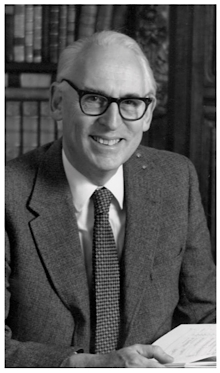
Whyte is born on April 30, 1928, in Penang, Malaysia. His father is manager of a rubber plantation on the mainland. His family leaves Malaysia and returns to Europe when he is three, eventually settling in Rostrevor, County Down, Northern Ireland. The Whytes are a well-known County Down family recorded in the area since at least 1713. The family is said to have come to Ireland from South Wales with Strongbow in 1170 and settled in Leinster. He is educated locally, at Ampleforth College and Oriel College Oxford, from which he takes a degree in Modern History in 1949. Continuing studies some two years later he is awarded a B.Litt degree for further research, which is to form the nebula of his first book which is published in 1958.
Whyte undertakes national service during the 1950s and works as a history teacher in his old school before being appointed lecturer in Modern History at Makerere University, Uganda. In 1962, he returns to Ireland having been appointed first “lecturer in empirical politics” at the then expanding University College Dublin (UCD). In 1966, he weds fellow academic Dr. Jean Murray and moves to Queen’s University Belfast (QUB) to undertake further studies.
In his book, Preventing the Future: Why Was Ireland So Poor for So Long?, Whyte’s successor as Professor of Politics at UCD, Tom Garvin, gives an account as to the clerical politics prevalent at the time at UCD which causes Whyte’s untimely departure:
A little later, in 1966, McQuaid provoked, possibly unintentionally, the resignation of John Whyte, a distinguished Catholic political scientist, from University College Dublin’s Department of Ethics and Politics. This resignation and move to Belfast on Whyte’s part in 1966 almost certainly was the unintended result of an extraordinary piece of clerical interference and bullying that rebounded upon McQuaid and on UCD. Whyte was in the midst of writing his standard history of the Catholic Church in independent Ireland, later published in 1969; at McQuaid’s apparent instigation, his professor and head of Department attempted to forbid him from continuing with this work. The irony was that the resultant scholarly book, finished in Belfast rather than Dublin, deeply underestimated clerical power in the Irish state and gave the Catholic Church a rather easy ride. Another irony was that Whyte, as a Roman Catholic historian and political scientist, was apparently rather favoured by McQuaid. However in 1966 bishops didn’t know they needed friends. Whyte was to come back to UCD and was professor of Ethics and Politics between 1984 and 1990. In a very real sense, McQuaid was the patriarchal and eccentric governor of Dublin Archdiocese, where one-third of the stat’s population lived; he attempted to run an urban society of a million people as though it were a large feudal community.
At Queen’s, Whyte spends seventeen years as lecturer and reader, and from 1982 Professor of Irish Politics during which he seeks to bring together political scientists from across the island and develop an All-Ireland political science fellowship. From 1973 to 1974 he works at as a research fellow at Harvard University’s Centre for International Affairs, and in 1975 he helps lead a team of researchers investigating the Northern Ireland conflict, then at its height. He also works as research fellow at the Netherlands Institute for Advanced Studies during the late 1970s and is elected Member of the Royal Irish Academy (RIA) in 1977, serving as Vice-President from 1989 to 1990.
In 1984, Whyte returns to University College Dublin, then faced with stringent fiscal cuts and wider problems in Irish third-level education. In his second period at UCD, he leads the Department, which he now heads, through a troubled period of financial cuts while supervising a reorganisation of the undergraduate curriculum. In his last years at UCD he completes his seminal work, the widely regarded Interpreting Northern Ireland. He finishes correcting the proofs and compiling the index of this work only a week before his death. While en route to an academic conference at Airley House, Virginia, he collapses at John F. Kennedy International Airport, New York, is taken to a local hospital, and dies there on May 16, 1990. He is survived by his wife, two sons, and one daughter.
Following his death, Whyte’s family, friends, and colleagues set up the John Whyte Trust Fund to continue Whyte’s work, honour his memory and encourage “informed dialogue and interaction at graduate level among people who are likely to be leaders and opinion-shapers.” To date the fund has awarded one fully paid scholarship and a number of part-paid scholarships as well as essay prizes annually. The fund also hosts an annual John Whyte Memorial Lecture. Speakers have included Paul Bew and Brendan O’Leary.
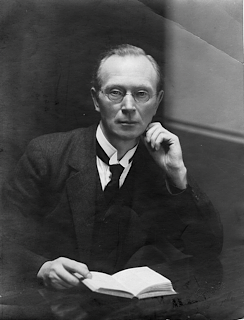
MacNeill is one of five children born to Archibald McNeill, a Roman Catholic working-class baker, sailor and merchant, and his wife, Rosetta McNeill (née McAuley), also a Catholic. He is raised in Glenarm, an area which “still retained some Irish-language traditions.” His niece is nationalist and teacher, Máirín Beaumont.
MacNeill marries Agnes Moore on April 19, 1898. The couple has eight children, four sons and four daughters (though the 1911 census entry for MacNeill notes eleven children, seven of whom are still alive).
The Gaelic League is from the start strictly non-political, but in 1915, a proposal is put forward to abandon that policy and become a semi-political organisation. MacNeill strongly supports this and rallies to his side a majority of delegates at the 1915 Oireachtas. Douglas Hyde, a non-political Protestant, who had co-founded the League and been its president for 22 years, resigns immediately afterward.
Through the Gaelic League, MacNeill meets members of Sinn Féin, the Irish Republican Brotherhood (IRB), and other nationalists and republicans. One such colleague, The O’Rahilly, runs the league’s newspaper An Claidheamh Soluis, and in October 1913 asks MacNeill to write an editorial for it on a subject broader than Irish language issues. He submits a piece called “The North Began,” encouraging the formation of a nationalist volunteer force committed to Irish Home Rule, much as the unionists had done earlier in the year with the Ulster Volunteers to thwart Home Rule in Ireland. In July 1915, he comments on the threat that the unarmed nationalists in Ulster might face: “…a demented…English driven Orange Army would be let loose upon the helpless Catholic people of Ulster, who would be driven out of the province or massacred where they stood.”
Bulmer Hobson, a member of the IRB, approaches MacNeill about bringing the idea to fruition, and, through a series of meetings, MacNeill becomes chair of the council that forms the Irish Volunteers, later becoming its chief of staff. Unlike the IRB, he is opposed to the idea of an armed rebellion, except in resisting any suppression of the Volunteers, seeing little hope of success in open battle against the British army.
The Irish Volunteers have been infiltrated by the Irish Republican Brotherhood, which plan on using the organisation to stage an armed rebellion, to separate Ireland from the United Kingdom and establishing an Irish Republic. The entry of the UK into World War I is, in their view, a perfect opportunity to do that. With the cooperation of James Connolly and the Irish Citizen Army, a secret council of IRB officials plan a general rising at Easter 1916. On the Wednesday before Easter, they present MacNeill with a letter, allegedly stolen from high-ranking British staff in Dublin Castle, indicating that the British are going to arrest him and all the other nationalist leaders. Unbeknownst to MacNeill, the letter—called the Castle Document—is a forgery.
When MacNeill learns about the IRB’s plans, and when he is informed that Roger Casement is about to land in County Kerry with a shipment of German arms, he is reluctantly persuaded to go along with them, believing British action is now imminent and that mobilization of the Irish Volunteers will be justified as a defensive act. However, after learning that the German arms shipment has been intercepted and Casement arrested, and having confronted Patrick Pearse, who refuses to relent, MacNeill countermands the order for the Rising by sending written messages to leaders around the country, and placing a notice in the Sunday Independent cancelling the planned “manoeuvres.” This greatly reduces the number of volunteers who report for duty on the day of the Easter Rising.
Pearse, Connolly and the others agree that the uprising will go ahead anyway, but it begins one day later than originally intended to ensure that the authorities are taken by surprise. Beginning on Easter Monday, April 24, 1916, the Rising lasts less than a week. After the surrender of the rebels, MacNeill is arrested although he has taken no part in the insurrection. The rebel leader Tom Clarke, according to his wife Kathleen, warns her on the day before his execution, “I want you to see to it that our people know of his treachery to us. He must never be allowed back into the National life of this country, for so sure as he is, so sure will he act treacherously in a crisis. He is a weak man, but I know every effort will be made to whitewash him.”
In 1923, MacNeill, a committed internationalist, is also a key member of the diplomatic team that oversees Ireland’s entry to the League of Nations.
MacNeill’s family is split on the treaty issue. One son, Brian, takes the anti-Treaty side and is killed in disputed circumstances near Sligo by Free State troops during the Irish Civil War in September 1922. Two other sons, Niall and Turloch, as well as nephew Hugo MacNeill, serve as officers in the Free State Army. One of his brothers, James McNeill, is the second and penultimate Governor-General of the Irish Free State.
In 1924, the three-man Irish Boundary Commission is set up to settle the border between Northern Ireland and the Irish Free State. MacNeill represents the Irish Free State. He is the only member of the Commission without legal training and has been described as being “pathetically out of his depth.” However, each of the Commissioners is selected out of political expediency rather than for any established competence or insight into boundary making. On November 7, 1925, a conservative British newspaper, The Morning Post, publishes a leaked map showing a part of eastern County Donegal (mainly The Laggan district) that is to be transferred to Northern Ireland, the opposite of the main aims of the commission. Perhaps embarrassed by that, especially since he said that it had declined to respect the terms of the Treaty, MacNeill resigns from the commission on November 20. Hus performance in the Boundary Commission has been deemed highly negative in a 2025 study The Root of All Evil: The Irish Boundary Commission.
On November 24, 1925, MacNeill also resign as Minister for Education, a position unrelated to his work on the commission.
On December 3, 1925, the Free State government agrees with the governments in London and Belfast to end its onerous treaty requirement to pay its share of the United Kingdom’s “imperial debt” and, in exchange, agrees that the 1920 boundary will remain as it is, overriding the commission. This angers many nationalists and MacNeill is the subject of much criticism, but in reality, he and the commission have been sidestepped by the intergovernmental debt renegotiation. In any case, despite his resignations, the intergovernmental boundary deal is approved by a Dáil vote of 71–20 on December 10, 1925, and MacNeill is listed as voting with the majority in favour. He loses his Dáil seat at the June 1927 Irish general election.
MacNeill is an important scholar of Irish history and among the first to study Early Irish law, offering both his interpretations, which at times are coloured by his nationalism, and translations into English. He is also the first to uncover the nature of succession in Irish kingship, and his theories are the foundation for modern ideas on the subject.
MacNeill is a contributor to the Royal Irish Academy‘s Clare Island Survey, recording the Irish place names of the island. His disagreements and disputes with Goddard Henry Orpen, particularly over the latter’s book Ireland under the Normans, generate controversy.
MacNeill retires from politics completely and becomes Chair of the Irish Manuscripts Commission. In his later years he devotes his life to scholarship and publishes several books on Irish history. He dies in Dublin of natural causes, aged 78, on October 15, 1945. He is buried in Kilbarrack Cemetery.
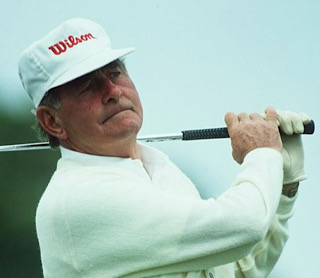
Christy O’Connor Snr, an Irish professional golfer born Patrick Christopher O’Connor, dies in Dublin on May 14, 2016. He is one of the leading golfers on the British and Irish circuit from the mid-1950s.
O’Connor wins over twenty tournaments on the British PGA and finishes in the top 10 in The Open Championship many times. Later he has considerable success in senior events, twice winning the World Senior Championship. In team events he plays in ten successive Ryder Cup matches and plays in fifteen Canada Cup/World Cup matches for Ireland, winning the Canada Cup in 1958 in partnership with Harry Bradshaw.
O’Connor is born in Knocknacarra, a village in Galway, on December 21, 1924. He catches his first glimpse of golf at the nearby Galway Golf Club, and from the age of 10 spends most of his spare time there. His foray into professional golf begins with caddying, first at Galway and then over at Tuam Golf Club.
In 1951, O’Connor turns professional with Tuam members funding his first tournament at The Open Championship at Royal Portrush Golf Club in County Antrim, Northern Ireland, that same year. His 19th-place finish garners a membership invitation from Bundoran Golf Club in Bundoran, County Donegal, which he accepts.
O’Connor’s first professional win is at the Swallow-Penfold Tournament held in 1955, the first £1,000 prize to be offered in British golf. He goes on to win the 1956 and 1959 British Masters. In 1958, he helps Ireland to win the Canada Cup in Mexico City playing with Harry Bradshaw. A year later, he moves to Dublin and joins The Royal Dublin Golf Club. Throughout the 1960s he wins at least one professional event during each year on the British Tour, a level of consistent success matched by very few other players. He rarely plays professional tournaments outside Britain or Ireland, at one stage saying he forwent playing at the Masters Tournament in Augusta, Georgia, because he could not afford to participate.
The only major championship O’Connor plays is The Open Championship. He plays the event twenty-six times between 1951 and 1979. His best performance comes at the 1965 Open Championship where he ties for second place with Brian Huggett, two behind five-time winner Peter Thomson. He easily outplays international stars like Jack Nicklaus, Arnold Palmer, Sam Snead, and Gary Player. He receives an astonishing twenty invitations to play in the Masters Tournament but rejected all of them, citing prohibitive financial costs.
O’Connor plays in every Ryder Cup from 1955 to 1973, setting a record of ten appearances in the event which stands until it is surpassed by Nick Faldo in 1997. He is the Irish professional champion on ten occasions, including in 1978 (at the age of 53), and is twice (1961 and 1962) recipient of the Harry Vardon Trophy for leading the British Tour’s “Order of Merit.”
In the 1966 Carroll’s International at The Royal Dublin Golf Club, O’Connor finishes 2-3-3 (eagle-birdie-eagle) to win the tournament by two strokes. At the par-4 16th, he drives the green and holes a 20-foot putt. He then holes a 12-foot putt at the 17th and, at the par-5 18th, hits a 3-iron to eight feet and holes the putt. A plaque by the 16th tee commemorates the achievement. In 1970, he wins the John Player Classic, at the time its £25,000 first prize is the richest offered in golf (in 1970, even The Open Championship winner receives just a little over £5,000), making him the season’s leading money-winner, although not “Order of Merit” leader, which is decided by a points system not directly related to prize money.
Later in his career, O’Connor becomes the leading “senior” (over-50s) professional player of his day, just before the lucrative U.S.-based Senior PGA Tour, now known as the PGA Tour Champions, takes off. He wins the PGA Seniors Championship six times and the World Senior Championship in 1976 and 1977. He is elected to the World Golf Hall of Fame in 2009 in the Veterans category.
O’Connor meets his wife, Mary Collins, in Donegal while he is a member of Bundoran Golf Club. They marry in 1954 and have six children together. During his early career he is known simply as Christy O’Connor, but his nephew of the same name also becomes a prominent golfer, and from that point forward they are referred to as Christy O’Connor Senior and Christy O’Connor Junior, respectively. He is known as “Himself” among his golfing peers. He dies at the age of 91 in Dublin’s Mater Misericordiae University Hospital, on May 14, 2016.
John William Nixon, MBE, a unionistpolitician and police leader in Northern Ireland, dies on May 11, 1949, at his home in Woodvale House, Ballygomartin Road, Belfast. He is allegedly responsible for several sectarian atrocities, including the McMahon killings and the Arnon Street killings. Eyewitnesses to the Arnon street killings claim they can identify the police involved and allege that their leader is District Inspector Nixon. It is widely believed that Nixon’s “murder gang” within the Royal Irish Constabulary (RIC) hunted down and murdered Catholics as reprisals for the killing of police.
Nixon is born on June 1, 1877, in Graddum, a townland located between the village of Kilnaleck and the hamlet of Crosskeys in County Cavan. He becomes a district inspector in the RIC, and transfers to its successor in the newly created region of Northern Ireland, the Royal Ulster Constabulary (RUC). By 1922, he is responsible for controlling access to the Roman Catholic Ardoyne and Marrowbone areas of Belfast, and works closely with the Ulster Special Constabulary (USC).
Irish nationalist writer and activist Michael Farrell alleges that during this period Nixon leads the Cromwell Club, an unofficial organisation of security officials responsible for killing several Catholic civilians. These allegations are not independently confirmed and during his lifetime Nixon successfully sues the Derry Journal and a book publisher for libel. He is appointed a Member of the Order of the British Empire (MBE) in 1923 “… for services rendered by him during the troubled period.”
In 1924, Nixon, long a member of the Orange Order, makes a political speech at an Orange lodge. This contravenes RUC regulations, and he is dismissed on the orders of Sir James Craig, the first Prime Minister of Northern Ireland.
Nixon holds his seat until his death on May 11, 1949, at home in Woodvale House, Ballygomartin Road, Belfast. He denies the murder allegations against him until the end of his life.
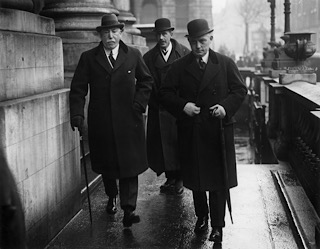
(Pictured: Captain John William Nixon (right) with Northern Ireland Prime Minister James Craig and Colonel Spencer, attending a conference with Michael Collins at City Hall, Dublin in February 1922)
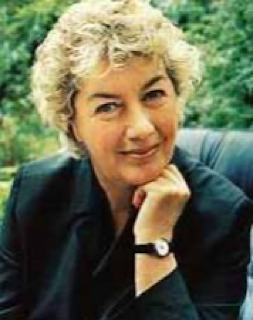
O’Faolain is born in Dublin on March 1, 1940, the second of nine children of Tomás O’Faolain and Kathleen O’Sullivan. Originally a schoolteacher and Army lieutenant, under the pen name Terry O’Sullivan, her father becomes a prominent social diarist for the Evening Press in Dublin. He is distant from his children and engages in extra-marital affairs which produce at least two half-siblings. Despite earning as much money as the newspaper’s editor, Douglas Gageby, he does not share his income with his family. The family lives in poor conditions, frequently going hungry. Her mother becomes an alcoholic, going to the pub every day at 4 p.m. and not returning home until midnight.
O’Faolain attends convent school in Dublin but is expelled at the age of fourteen after going home from dances with a married man. She then goes to a boarding school in County Monaghan, whose austere environment and strict educational standards benefit her. From there, she studies English literature at University College Dublin (UCD), where she runs in a social circle that includes Mary Lavin, John McGahern, Patrick Kavanagh, and Louis MacNeice. Although she drops out of her studies temporarily and spends time working menial jobs in England, with financial assistance from Lavin and others, she graduates in 1961. On scholarships, she studies medieval English at the University of Hull before completing a postgraduate degree in 19th-century English literature at the University of Oxford. She then returns to Dublin to work at UCD as an academic in the English literature department, which brings her into contact with the bohemian Dublin literary scene of the late 1960s and early 1970s.
In 1970, O’Faolain moves to London to work for the BBC. She is a producer at the Community Programme Unit, which seeks to allow members of the public to create programmes for national broadcast on human interest topics like transgender people, anti-pornography protests, and community organising in the Bogside. She also makes programmes with the arts faculty of the Open University, and teaches evening classes at Morley College. During this period, she shows little interest in Ireland, regarding the country as backward and unsophisticated, but a visit to the Merriman Summer School in County Clare in 1974 sparks new enthusiasm. In 1977, she moves back to Dublin to work for the public broadcaster, RTÉ, where she becomes a colleague of female journalists like Doireann Ní Bhriain, Marian Finucane, and Nell McCafferty – later her partner – who are making programmes about Irish society with a feminist bent. She Is the producer of Women Today, a pioneering radio programme, from 1983 to 1986. One series she works on, Plain Tales, a televised interview programme in which women speak directly to camera about their life experiences, wins a Jacob’s Award in 1985.
O’Faolain has an interest in books from an early age, and credits voracious reading for helping her through a difficult childhood. She works as a book reviewer for The Times. Between 1990 and 1993, she co-presents Booklines, a television programme about books for RTÉ, a programme she says “nobody ever watched because it was on terribly late at night.”
In 1986, Conor Brady, the editor of The Irish Times, offers O’Faolain a newspaper column after hearing her being interviewed by Gay Byrne on the radio. Brady is struck by her ability to “infuse ordinary people’s everyday activities with value and interest.” The column becomes a major success and she is awarded journalist of the year in 1986.
O’Faolain acts as a roving commentator for The Irish Times, covering the 1994 Cregg Wood murders in County Clare, and visiting Northern Ireland at the time of the Good Friday Agreement in 1998. Following periods of leave while she works on her books, she leaves the paper in 2002, and writes a column in the Sunday Tribune from 2005 until her death.
O’Faolain never marries and has no children. Although she writes about her relationships with men and women, she does not identify as bisexual, though others have described her as such. She suffers from alcoholism. After Are You Somebody?, she divides her time between Ireland and New York City. During the final years of her life, she is in a relationship with a Brooklyn-based lawyer, John Low-Beer, whom she meets on Match.com.
O’Faolain is diagnosed with metastatic cancer while living in New York City in early 2008. She experiences a strange feeling in the right side of her body and presents at the emergency department of a hospital, where she is told that she has primary tumours in her lungs which has spread to her brain and liver, and that her cancer is incurable. She refuses chemotherapy.
O’Faolain returns to Ireland and is interviewed by her friend, Marian Finucane, on her radio show about her terminal illness on April 12, 2008. Both O’Faolain and Finucane are in tears during the interview, which is recorded in Galway, where she is undergoing radiotherapy. She tells Finucane: “I don’t want more time. As soon as I heard I was going to die, the goodness went from life”. Her frank discussion of her illness leads to the interview being preceded by a warning that her comments may be upsetting to others with life-threatening conditions. She says that she does not believe in God or an afterlife, but as in the song “Thíos i Lár an Ghleanna,” she is asking for help she knows will not come from a god she does not believe in. The interview has a major public impact in Ireland. After Finucane’s death in 2020, the Irish Independent describes it as “one of the most extraordinary [interviews] in the history of Irish broadcasting.”
In the final weeks of her life, O’Faolain travels Europe with close friends and family, staying in the Ritz Hotel in Paris and visiting the Berlin State Opera and the Prado Museum in Madrid for the first time. She dies in a hospice in Blackrock, Dublin, late on May 9, 2008. Her funeral takes place in the Church of Our Lady of the Visitation in Fairview in north Dublin on May 13. Her ashes are buried in Kilbarrack Cemetery in north Dublin with her maternal grandparents, Terence and Marion O’Sullivan, and her brother, Dermot Phelan.
Praeger works in the National Library of Ireland in Dublin from 1893 to 1923. He co-founds and edits The Irish Naturalist, and writes papers on the flora and other aspects of the natural history of Ireland. He organises the Lambay Survey in 1905-06 and, from 1909 to 1915, the wider Clare Island Survey. He is an engineer by qualification, a librarian by profession and a naturalist by inclination.
Praeger is instrumental in developing advanced methodologies in Irish botany by inviting Knud Jessen, the acclaimed Danish expert in Glacial and Post-Glacial flora, to undertake research and teaching in Ireland. This leads to the establishment of “paleoecology” as a distinct field of study in Ireland.
A vice-county system is adopted by Praeger, dividing Ireland into forty vice-counties based on the counties. However, the boundaries between them does not always correspond to the administrative boundaries and there are doubts as to the correct interpretation of them.
Praeger dies in a Belfast hospital on May 5, 1953 and is buried in Dean’s Grange Cemetery, Dublin, together with his wife Hedwig. His younger sister Rosamond Praeger is a sculptor and botanical artist.
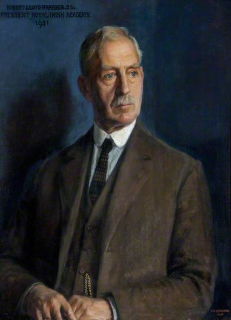
(Pictured: Portrait of Robert Lloyd Praeger by Sarah Cecilia Harrison, National Museums Northern Ireland)
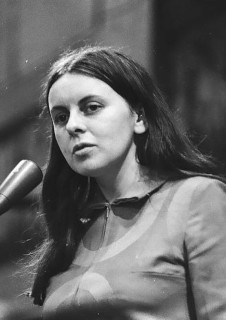
Devlin is born into a Roman Catholic family and attends St. Patrick’s Girls Academy in Dungannon. She is studying Psychology at Queen’s University Belfast (QUB) in 1968 when she takes a prominent role in a student-led civil rights organisation, People’s Democracy. She is subsequently excluded from the university.
After engaging on the side of the residents in the Battle of the Bogside, Devlin is convicted of incitement to riot in December 1969, for which she serves a short jail term.
Having witnessed the events of Bloody Sunday, Devlin is infuriated that she is consistently denied the floor in the House of Commons by the Speaker Selwyn Lloyd, despite the fact that parliamentary convention decrees that any MP witnessing an incident under discussion would be granted an opportunity to speak about it. She slaps Reginald Maudling, the Home Secretary in the Conservative government, across the face when he states in the House of Commons that the paratroopers had fired in self-defence on Bloody Sunday.
In 1971, Devlin gives birth to a daughter, Róisín, which costs her some political support because she is unmarried. She later marries Róisín’s father, Michael McAliskey, on her 26th birthday on April 23, 1973.
McAliskey stands as an independent candidate in support of the prisoners at Long Kesh prison in the 1979 European Parliament elections in Northern Ireland and wins 5.9% of the vote. She is a leading spokesperson for the Smash H-Block Campaign, which supports the hunger strikes of 1980 and 1981.
On January 16, 1981, McAliskey and her husband are shot by members of the Ulster Defence Association (UDA), who break into their home near Coalisland, County Tyrone. She is shot fourteen times in front of her children. British soldiers are watching the McAliskey home at the time but fail to prevent the assassination attempt. The couple are taken by helicopter to a hospital in nearby Dungannon for emergency treatment and then transported to the Musgrave Park Hospital, Military Wing, in Belfast, under intensive care. The attackers, all three members of the South Belfast UDA, are captured by the army patrol and subsequently jailed.
In 1982, McAliskey twice fails in an attempt to be elected to the Dublin North–Central constituency of Dáil Éireann. In 2003, she is barred from entering the United States and is deported on the grounds that the United States Department of State has declared that she “poses a serious threat to the security of the United States,” apparently referring to her conviction for incitement to riot in 1969.
On May 12, 2007, McAliskey is the guest speaker at Éirígí‘s first Annual James Connolly commemoration in Arbour Hill, Dublin. She currently co-ordinates a not-for-profit community development organisation based in Dungannon, the South Tyrone Empowerment Programme, and works with migrant workers to improve their treatment in Northern Ireland.
O’Donnell is one of the few senior Catholic judges on the Northern Irish bench and he frequently comes under threat. In 1979, he tries the Shankill Butchers and gives out 42 life sentences, a record in British legal history.
O’Donnell is Chairman of the Northern Ireland Bar Council from 1970 to 1971 and of the Council of Legal Education (Northern Ireland) from 1980 to 1990.
O’Donnell marries Eileen McKinley (died 2008) in 1954. They have two sons and two daughters. Of his sons, Turlough O’Donnell SC is Chairman of the General Council of the Bar of Ireland from 2016 to 2018, and Donal O’Donnell is directly appointed from the Irish Bar to the Supreme Court of Ireland in 2010, before becoming Chief Justice of Ireland in 2021.
O’Donnell dies in Blackrock on April 21, 2017. He is buried at Blackrock/Haggardstown Old Cemetery in Dundalk, County Louth.
Maher is born on April 29, 1922, at Castlemoyle, Boherlahan, Cashel, County Tipperary, the seventh child of Thomas Maher, farmer, and his wife Julianne Maher. Raised on the family’s forty-five-acre holding and educated locally at Ardmaylenational school and at the Christian Brothers school and VEC school in Cashel, he takes over the farm in 1948 when ill health forces his father into retirement. He subsequently enlarges it to 120 acres. Mechanically adept, a talented sportsman, and a member of Cashel Dramatic Society, he joins Macra na Feirme and is a founder member of the National Farmers’ Association (NFA) in January 1955.
Maher is a member and chairman of the dairy committee of the NFA before coming to national attention through his participation in the historic farmers’ rights march to Dublin led by Rickard Deasy (October 7-19, 1966), part of the militant campaign for fairer agricultural prices and for reform of taxation and rates on farmland. His part in the subsequent three-week sit-down protest and meeting with incoming minister Neil Blaney, at the Department of Agriculture, confirms his reputation as a tenacious campaigner for agricultural causes. In August 1967, shortly after 100 farmers have served prison sentences for withholding rates, he succeeds Deasy as NFA president. Charismatic, articulate, and decisive, he also has a strong sense of personal responsibility, which governs his expectations of colleagues and associates. With exhausting rounds of travel and meetings, he is impossible to ignore and grist to the media mill, with his apparently impromptu but, in reality, carefully rehearsed speeches criticising politicians, parties, bureaucracy, and tardy national policy. He warns of national economic failure unless government and public services take radical modernising initiatives. He is at once nationalist, internationalist, and a revolutionary campaigner for change, an idealistic firebrand who is essentially conservative in social matters.
Maher’s campaign for agriculture is tempered by a wider interest in the social and economic future of Ireland ahead of crucial negotiations for membership of the European Economic Community (EEC). He becomes a household name, gadfly of bureaucrats and hero of farmers. In November 1967 he attends the European Congress of the International Federation of Agricultural Producers in Rome as an advance action prior to taking part in the subsequent negotiations leading to Ireland’s “entry to Europe” in January 1973. He is re-elected president of the NFA in 1970.
Amalgamating the NFA with several of the agricultural producers’ organisations, Maher oversees its reemergence as the Irish Farmers’ Association (IFA) in January 1971 and remains president until 1976. Strengthened by his pro-European leadership, the IFA withstands the counter-propaganda which, in the referendum of May 1972, urges rejection of the EEC on economic, social, and religious grounds. Despite his own moderately conservative social views and unequivocal opposition to abortion in Ireland, his commitment to European integration is not in question.
Maher is a director of prestigious state-sponsored bodies including Bord Bainne, the Irish Sugar Company, and the B & I shipping line. He also serves six terms between 1976 and 1983 as president of the Irish Co-operative Organisation Society (ICOS). Such relative sinecures are balanced by adherence to humanitarian causes that occupy most of his subsequent life. Passionate about practical support for developing countries, he becomes a founder and chairman of Bóthar, the Irish self-help relief agency for supply of livestock overseas. He urges prison reform and supports Amnesty International in its prisoners’ rights campaigns. Running as an independent candidate, he is elected Member of the European Parliament (MEP) for Munster in 1979, beating the strong Fine Gael candidate Alan Dukes. Describing himself as a public representative rather than a politician, he sits in the Liberal and Democratic parliamentary group and continues to fly agricultural and other kites as a non-party deputy. Typically, he criticises the scale of Irish embassies abroad, suggesting alternative teams of trade and tourism personnel. He advocates fairer agricultural policies towards developing countries in spite of prevailing European attitudes of self-interest, and urges the transfer of Northern Ireland from British jurisdiction to European protectorate status. At home he seeks all-party consensus on economic recovery from the depressed condition of the mid 1980s, well intentioned and lonely causes that fail to draw significant political support.
Maher’s habit of traveling with tools to unlock sealed hotel windows is an example of his sometimes eccentric practicality. His unsuccessful attempt to win a Dáil seat for Tipperary South in the 1981 Irish general election postpones his return to Ireland, although he is twice reelected an MEP before retiring in 1994. During his time in Strasbourg he is a quaestor of the European Parliament and a member of its committees on rural development, regions and petitions. He advocates decentralisation of power in Ireland while also criticising local authorities for laxity in their commitment to environmental protection.
For all his outspokenness, Maher is widely respected for the courageous positions he adopts. When time permits, he is an avid reader of history. He maintains his rural pastimes, especially attendance at Gaelic sports, where he can test the political pulse of his constituents. Following a short illness, he dies on April 19, 2002, aged 79, at St. Vincent’s Hospital, Dublin. He is buried at Boherlahan cemetery following a Requiem Mass, celebrated by his surviving brother, the Rev. Michael Maher CSSp (a former veterinary surgeon), and his cousin Denis.
Maher marries Elizabeth (Betty) Kennedy from Bansha, near Cashel, on January 8, 1958. They live at Castlemoyle and have one daughter, Julianne, and two sons, Thomas and Denis. His brother James (Jamesie), who predeceases him in October 1975, had been a medical consultant at St. Vincent’s and consultant surgeon to the Irish Rugby Football Union (IRFU).
(From: “Maher, Thomas Joseph” by Patrick Long, Dictionary of Irish Biography, http://www.dib.ie, October 2009)