seamus dubhghaill

Promoting Irish Culture and History from Little Rock, Arkansas, USA


Leave a comment

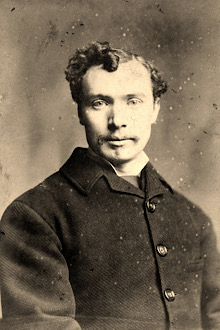
Birth of Eoin MacNeill, Gaelic Revivalist, Nationalist & Politician

Eoin MacNeill, Irish scholarIrish language enthusiast, Gaelic revivalist, nationalist and politician, is born John McNeill in Glenarm, County Antrim, on May 15, 1867.

MacNeill is one of five children born to Archibald McNeill, a Roman Catholic working-class baker, sailor and merchant, and his wife, Rosetta McNeill (née McAuley), also a Catholic. He is raised in Glenarm, an area which “still retained some Irish-language traditions.” His niece is nationalist and teacher, Máirín Beaumont.

MacNeill is educated at St. Malachy’s College and Queen’s College, Belfast. He is interested in Irish history and immerses himself in its study. He achieves a Bachelor of Arts degree in economics, jurisprudence and constitutional history in 1888, and then works in the British Civil Service.

MacNeill co-founds the Gaelic League in 1893, along with Douglas Hyde. He is unpaid secretary from 1893 to 1897 and then becomes the initial editor of the League’s official newspaper An Claidheamh Soluis (1899–1901). He is also editor of the Gaelic Journal from 1894 to 1899. In 1908, he is appointed professor of early Irish history at University College Dublin (UCD).

MacNeill marries Agnes Moore on April 19, 1898. The couple has eight children, four sons and four daughters (though the 1911 census entry for MacNeill notes eleven children, seven of whom are still alive).

The Gaelic League is from the start strictly non-political, but in 1915, a proposal is put forward to abandon that policy and become a semi-political organisation. MacNeill strongly supports this and rallies to his side a majority of delegates at the 1915 Oireachtas. Douglas Hyde, a non-political Protestant, who had co-founded the League and been its president for 22 years, resigns immediately afterward.

Through the Gaelic League, MacNeill meets members of Sinn Féin, the Irish Republican Brotherhood (IRB), and other nationalists and republicans. One such colleague, The O’Rahilly, runs the league’s newspaper An Claidheamh Soluis, and in October 1913 asks MacNeill to write an editorial for it on a subject broader than Irish language issues. He submits a piece called “The North Began,” encouraging the formation of a nationalist volunteer force committed to Irish Home Rule, much as the unionists had done earlier in the year with the Ulster Volunteers to thwart Home Rule in Ireland. In July 1915, he comments on the threat that the unarmed nationalists in Ulster might face: “…a demented…English driven Orange Army would be let loose upon the helpless Catholic people of Ulster, who would be driven out of the province or massacred where they stood.”

Bulmer Hobson, a member of the IRB, approaches MacNeill about bringing the idea to fruition, and, through a series of meetings, MacNeill becomes chair of the council that forms the Irish Volunteers, later becoming its chief of staff. Unlike the IRB, he is opposed to the idea of an armed rebellion, except in resisting any suppression of the Volunteers, seeing little hope of success in open battle against the British army.

The Irish Volunteers have been infiltrated by the Irish Republican Brotherhood, which plan on using the organisation to stage an armed rebellion, to separate Ireland from the United Kingdom and establishing an Irish Republic. The entry of the UK into World War I is, in their view, a perfect opportunity to do that. With the cooperation of James Connolly and the Irish Citizen Army, a secret council of IRB officials plan a general rising at Easter 1916. On the Wednesday before Easter, they present MacNeill with a letter, allegedly stolen from high-ranking British staff in Dublin Castle, indicating that the British are going to arrest him and all the other nationalist leaders. Unbeknownst to MacNeill, the letter—called the Castle Document—is a forgery.

When MacNeill learns about the IRB’s plans, and when he is informed that Roger Casement is about to land in County Kerry with a shipment of German arms, he is reluctantly persuaded to go along with them, believing British action is now imminent and that mobilization of the Irish Volunteers will be justified as a defensive act. However, after learning that the German arms shipment has been intercepted and Casement arrested, and having confronted Patrick Pearse, who refuses to relent, MacNeill countermands the order for the Rising by sending written messages to leaders around the country, and placing a notice in the Sunday Independent cancelling the planned “manoeuvres.” This greatly reduces the number of volunteers who report for duty on the day of the Easter Rising.

Pearse, Connolly and the others agree that the uprising will go ahead anyway, but it begins one day later than originally intended to ensure that the authorities are taken by surprise. Beginning on Easter Monday, April 24, 1916, the Rising lasts less than a week. After the surrender of the rebels, MacNeill is arrested although he has taken no part in the insurrection. The rebel leader Tom Clarke, according to his wife Kathleen, warns her on the day before his execution, “I want you to see to it that our people know of his treachery to us. He must never be allowed back into the National life of this country, for so sure as he is, so sure will he act treacherously in a crisis. He is a weak man, but I know every effort will be made to whitewash him.”

MacNeill is released from prison in 1917 and is elected Member of Parliament (MP) for the National University and Londonderry City constituencies for Sinn Féin in the 1918 United Kingdom general election. In line with abstentionist Sinn Féin policy, he refuses to take his seat in the British House of Commons in London and sits instead in the newly convened Dáil Éireann in Dublin, where he is made Secretary for Industries in the second ministry of the First Dáil. He is a member of the Parliament of Northern Ireland for Londonderry between 1921 and 1925, although he never takes his seat. In 1921, he supports the Anglo-Irish Treaty. In 1922, he is in a minority of pro-Treaty delegates at the Irish Race Convention in Paris. Following the establishment of the Irish Free State, he becomes Minister for Education in its second (provisional) government, the third Dáil. He strongly supports the execution of Richard BarrettLiam MellowsJoe McKelvey and Rory O’Connor during the Irish Civil War.

In 1923, MacNeill, a committed internationalist, is also a key member of the diplomatic team that oversees Ireland’s entry to the League of Nations.

MacNeill’s family is split on the treaty issue. One son, Brian, takes the anti-Treaty side and is killed in disputed circumstances near Sligo by Free State troops during the Irish Civil War in September 1922. Two other sons, Niall and Turloch, as well as nephew Hugo MacNeill, serve as officers in the Free State Army. One of his brothers, James McNeill, is the second and penultimate Governor-General of the Irish Free State.

In 1924, the three-man Irish Boundary Commission is set up to settle the border between Northern Ireland and the Irish Free State. MacNeill represents the Irish Free State. He is the only member of the Commission without legal training and has been described as being “pathetically out of his depth.” However, each of the Commissioners is selected out of political expediency rather than for any established competence or insight into boundary making. On November 7, 1925, a conservative British newspaper, The Morning Post, publishes a leaked map showing a part of eastern County Donegal (mainly The Laggan district) that is to be transferred to Northern Ireland, the opposite of the main aims of the commission. Perhaps embarrassed by that, especially since he said that it had declined to respect the terms of the Treaty, MacNeill resigns from the commission on November 20. Hus performance in the Boundary Commission has been deemed highly negative in a 2025 study The Root of All Evil: The Irish Boundary Commission.

On November 24, 1925, MacNeill also resign as Minister for Education, a position unrelated to his work on the commission.

On December 3, 1925, the Free State government agrees with the governments in London and Belfast to end its onerous treaty requirement to pay its share of the United Kingdom’s “imperial debt” and, in exchange, agrees that the 1920 boundary will remain as it is, overriding the commission. This angers many nationalists and MacNeill is the subject of much criticism, but in reality, he and the commission have been sidestepped by the intergovernmental debt renegotiation. In any case, despite his resignations, the intergovernmental boundary deal is approved by a Dáil vote of 71–20 on December 10, 1925, and MacNeill is listed as voting with the majority in favour. He loses his Dáil seat at the June 1927 Irish general election.

MacNeill is an important scholar of Irish history and among the first to study Early Irish law, offering both his interpretations, which at times are coloured by his nationalism, and translations into English. He is also the first to uncover the nature of succession in Irish kingship, and his theories are the foundation for modern ideas on the subject.

MacNeill is a contributor to the Royal Irish Academy‘s Clare Island Survey, recording the Irish place names of the island. His disagreements and disputes with Goddard Henry Orpen, particularly over the latter’s book Ireland under the Normans, generate controversy.

MacNeill is President of the Royal Society of Antiquaries of Ireland (RSAI) from 1937 to 1940 and President of the Royal Irish Academy (RIA) from 1940 to 1943.

MacNeill retires from politics completely and becomes Chair of the Irish Manuscripts Commission. In his later years he devotes his life to scholarship and publishes several books on Irish history. He dies in Dublin of natural causes, aged 78, on October 15, 1945. He is buried in Kilbarrack Cemetery.

MacNeill’s grandson Michael McDowell serves as TánaisteMinister for Justice, Equality and Law ReformTD and a Senator. Another grandson, Myles Tierney, serves as a member of Dublin County Council, where he is Fine Gael whip on the council.


Leave a comment

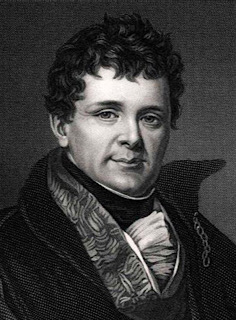
Founding of the Catholic Association by Daniel O’Connell

The Catholic Association, an Irish Roman Catholic political organization, is founded by Daniel O’Connell on May 12, 1823, to campaign for Catholic emancipation within the United Kingdom of Great Britain and Ireland. It is one of the first mass-membership political movements in Europe. It organizes large-scale public protests in Ireland.

The Catholic Association is the latest in a series of similar associations formed over the previous ten years or so, none of which had prospered. Like the other associations, this new association is composed mainly of the middle class elite: an annual subscription amounting to a guinea, an amount equivalent to what an average farmer would pay for six months’ rent. In 1824, the Catholic Association begins to use the money that it has raised to campaign for Catholic emancipation.

In 1824, the association creates a new category of associate members at the cost of a penny per month, the so-called Catholic Rent. The reasoning behind the creation of this new membership category is to stimulate a swelling in association numbers. This new, cheaper category ensures Catholics from a poorer background can join, and thus the association’s initial class-based entry barriers are removed. The Catholic rent transforms the association and Catholic political advocacy more broadly. In terms of the association, the rent catalyzes a transformation in a number of ways. Firstly, as previously mentioned, it gives the Catholic Association a constant source of money, which enables O’Connell to run a consistent campaign. Secondly, it facilitates easy calculation of total association membership numbers so that O’Connell can say with confidence that he has the support of so many people. This is important as it can be used to apply pressure against the British government. Third, and perhaps most importantly, however, it announces the arrival of mass mobilization politics, being the first such populist movement in Europe. O’Connell decides to add this additional membership level, at a reduced price of a penny a month, deliberately. The benefits are clear. With the membership subscription set at a relatively cheap price, a large number of the peasant and working classes can join. Affordability ensures large numbers. In effect, it becomes a universal Catholic organization that is transparent and populist. The fact that each member contributes financially to the association also ensures that they are more deeply involved in pushing the cause of Catholic emancipation. People want value for their money. Thus, this ensures a cheap method for O’Connell to get the message of Catholic emancipation spread throughout Ireland.

The Catholic Association’s funds are diffused widely in a variety of areas. Some is spent campaigning for Catholic emancipation, defraying the costs of sending petitions to Westminster, and training of priests. Following the 1826 election campaign, funds are used to support the members of the organization who had voted against their landlords. The money is used for those who have been evicted from land by the landlords because of their connection to the Catholic organization or for those who were boycotting absentee landlord. For the Catholic peasants that are in this situation, the future would be grim as they would be unable to continue the boycott without food and money, and they would be unable to lease land from any landlord as the peasants would be boycotted against in return. The Catholic Association’s funds are used to support these boycotts so that they can continue and live well enough to have enough food to survive.

The Catholic Association is originally aristocratic in its composition, and some of the gentry (such as Richard Lalor Sheil) hold relatively conservative views. However, O’Connell holds an enormous influence over society and largely dictates the policies it pursues. It is radical in nature but also extremely loyal to the Crown in appearance. This had been the strategy of the previous major Catholic group, the Catholic Committee of the 1790s, which achieved major Catholic Relief in 1793.

Since the aims of the Catholic Association are fairly moderate and the organization remains loyal to the monarch, British MPs are conceptually more willing to pass Catholic emancipation. The matter had been discussed in London since the Acts of Union 1800, when Prime Minister William Pitt and most of his colleagues resign from the cabinet when emancipation is denied by the king. Henry Grattan continues to support the cause, and Catholic emancipation had been passed by the House of Commons previously by a majority of six, but it is rejected in the House of Lords and generally by King George III, who reigns until 1820.

The biggest strength of the Catholic Association is that the Catholic Church helps in the collection of the Catholic rent. Catholic priests also hold sermons in favor of Catholic emancipation. This means that it is easy for the members to pay the Catholic rent, and it will attract more members as the message of Catholic emancipation is being spread throughout Ireland. Sir Robert Peel believes the alliance of the Catholic Association and the Catholic Church is a “powerful combination.”

In 1826, the Catholic Association begins to use its funds to support pro-emancipation MPs in elections. They use their money and manpower to campaign for the candidate to be elected into parliament to pressure the government from within to pass Catholic emancipation.

The turning point comes in 1828, when two factors come into play. The first is that the Catholic Church takes over the collection of the Catholic Rent and effectively the Catholic Association itself. The other is that by 1828, O’Connell’s reputation has increased dramatically. He is an internationally recognized figure and is seen as one of the leading figures in liberal thinking. This successful campaign leads on to, but is distinguished from, his later efforts to end the union with Britain, to increase the franchise, and to end the payment of tithes. His particular talent is to push the emancipation process along in an organized way.

In May 1828, the Sacramental Test Act 1828 repeals the Test Acts 1673 & 1678 against non-Anglican Protestants. This gives non-Catholic non-conformists greater political freedom and equality in Britain. The repeal has two effects: it gives Catholics hope that a similar act will be passed that will include Catholics; it also alienates Catholics, as they have become the only Christians not to have political freedom and equality.

In May 1828, William Huskisson resigns from the cabinet, and William Vesey-Fitzgerald is chosen as the President of the Board of Trade. According to the law, there is to be a by-election in his constituency of Clare. O’Connell decides to exploit a loophole in the Acts of Union 1800. It requires MPs to take the Oath of Allegiance, but the oath is not required of candidates for election. He stands in the by-election and wins. Since he is a Catholic, he cannot take his seat in parliament. Demand rises to allow him to become an MP for Clare, as it does not have representation.

Sir Robert Peel and Arthur Wellesley, 1st Duke of Wellington, see that if O’Connell is not allowed to take his seat, then there could be a revolution in Ireland. While using non-violent methods, O’Connell hints that he will get more Catholics elected to force the situation. In an emotive speech, he says, “They must crush us or conciliate us.”

Peel decides to change the government’s approach and submits the Roman Catholic Relief Act 1829 in February 1829. The bill is passed. It is a momentous victory for O’Connell and the Catholic middle class, and he becomes known as “the liberator” and the “uncrowned king of Ireland.” However, the simultaneous enactment of the Parliamentary Elections (Ireland) Act 1829 restricts the franchise in the county constituencies in Ireland. The archive of the Catholic Association is housed with the archives of Dublin Diocese in Holy Cross College, Dublin.

(Pictured: “Daniel O’Connell: The Champion of Liberty” poster published in Pennsylvania, 1847)


Leave a comment

Death of John William Nixon, Politician & N.I. Police Leader

John William NixonMBE, a unionist politician and police leader in Northern Ireland, dies on May 11, 1949, at his home in Woodvale House, Ballygomartin Road, Belfast. He is allegedly responsible for several sectarian atrocities, including the McMahon killings and the Arnon Street killings. Eyewitnesses to the Arnon street killings claim they can identify the police involved and allege that their leader is District Inspector Nixon. It is widely believed that Nixon’s “murder gang” within the Royal Irish Constabulary (RIC) hunted down and murdered Catholics as reprisals for the killing of police.

Nixon is born on June 1, 1877, in Graddum, a townland located between the village of Kilnaleck and the hamlet of Crosskeys in County Cavan. He becomes a district inspector in the RIC, and transfers to its successor in the newly created region of Northern Ireland, the Royal Ulster Constabulary (RUC). By 1922, he is responsible for controlling access to the Roman Catholic Ardoyne and Marrowbone areas of Belfast, and works closely with the Ulster Special Constabulary (USC).

Irish nationalist writer and activist Michael Farrell alleges that during this period Nixon leads the Cromwell Club, an unofficial organisation of security officials responsible for killing several Catholic civilians. These allegations are not independently confirmed and during his lifetime Nixon successfully sues the Derry Journal and a book publisher for libel. He is appointed a Member of the Order of the British Empire (MBE) in 1923 “… for services rendered by him during the troubled period.”

In 1924, Nixon, long a member of the Orange Order, makes a political speech at an Orange lodge. This contravenes RUC regulations, and he is dismissed on the orders of Sir James Craig, the first Prime Minister of Northern Ireland.

Nixon is elected to Belfast Corporation as an Independent Unionist, but at the 1925 Northern Ireland general election, he stands unsuccessfully as an Ulster Unionist Party (UUP) candidate in Belfast North. At the 1929 Northern Ireland general election, running once again as an Independent Unionist, he is narrowly elected as the MP for Belfast Woodvale. From September 1932 until the 1933 Northern Ireland general election, he is the only opposition MP attending the Parliament of Northern Ireland. He is founder in 1931 of the Ulster Protestant League (UPL), whose object is to safeguard Protestant jobs, and is also connected with the Ulster Protestant Association (UPA), which includes a hard core of loyalist gunmen who carried out assassinations on Catholics during the mid-1930s. Until the end of his life, fearful that the Irish Republican Army (IRA) would catch up with him, he carries a revolver in the glove compartment of his car.

Nixon holds his seat until his death on May 11, 1949, at home in Woodvale House, Ballygomartin Road, Belfast. He denies the murder allegations against him until the end of his life.

(Pictured: Captain John William Nixon (right) with Northern Ireland Prime Minister James Craig and Colonel Spencer, attending a conference with Michael Collins at City Hall, Dublin in February 1922)


Leave a comment

Birth of John Thomas Troy, Archbishop of Dublin

John Thomas Troy, an Irish Dominican friar who serves as Archbishop of Dublin from 1786 to 1823, is born at Annefield House, near Porterstown, County Dublin on May 10, 1739.

Troy receives his early education at Liffey Street, Dublin. At the age of sixteen he joins the Dominican Order and proceeds to their house of San Clemente at Rome. Historian Edward D’Alton notes that he is “amenable to discipline, diligent in his studies, and talented.” He makes rapid progress, and while still a student is appointed to give lectures in philosophy. Subsequently, he teaches theology and canon law, and finally becomes prior/rector of the convent in 1772.

When Thomas Burke, the Bishop of Ossory, dies in 1776, the priests of the diocese recommend one of their number, Father Molloy, to Rome for the vacant see, and the recommendation is endorsed by many of the Irish bishops. But Troy, who is held in high esteem at Rome, has already been appointed Bishop of Ossory. He is consecrated at Leuven in June 1777 by the nuncio to Flanders, Archbishop (later Cardinal) Ignazio Busca.

Troy arrives at Kilkenny in August 1777 and for the next nine years he Labour a hard for the spiritual interests of his diocese. Maddened by excessive rents and tithes, and harried by grinding tithe-proctors, farmers have banded themselves together in a secret society called the “Whiteboys,” so called from the white smocks the members wear in their nightly raids. They attack landlords, bailiffs, agents, and tithe-proctors, and often commit fearful outrages. Bishop Troy frequently and sternly denounces them, declaring any who join the secret society to be excommunicated. He has no sympathy with oppression, but he had lived long in Rome, and does not fully appreciate the extent of misery in which the poor Catholic masses live.

Troy is ready to condemn all violent efforts for reform, and has no hesitation in denouncing not only all secret societies in Ireland, but also “our American fellow-subjects, seduced by specious notions of liberty.” This makes him unpopular. He is zealous in correcting abuses in his diocese and in promoting education. So well is this recognized at Rome that in 1781, in consequence of some serious troubles which have arisen between the primate and his clergy, Troy is appointed Administrator of Armagh. He holds this office until 1782.

Upon the death of Archbishop John Carpenter of Dublin in 1786, Troy is appointed to succeed him. At Dublin, as at Ossory, he shows his zeal for religion, his sympathy with authority, and his distrust of popular movements, especially when violent means are employed. Though his circular, issued on March 15, 1792, disavowing the authority of any ecclesiastical power to absolve subjects from their allegiance, is believed to influence the concession in that year of the relaxations embodied in Langrishe’s Act, and the extension of the franchise to Roman Catholics in 1793, he declines to associate himself with John Keogh and other Catholic reformers in their demands for further relief.

In early 1798, the French Directory conquers Rome, and establishes the Roman Republic. Its ally in Ireland, the Society of United Irishmen, starts a rebellion in May 1798. Troy issues a sentence of excommunication against all those of his flock who decide to join the rebellion. In a pastoral read in all the churches, he speaks of the clerical organisers of the rebellion as “vile prevaricators and apostates from religion, loyalty, honour, and decorum, degrading their sacred character, and the most criminal and detestable of rebellious and seditious culprits.” Hus action at this time appears to endanger his life. But the influence he has acquired with the government enables him to moderate the repressive measures taken by the authorities. Believing that Catholic emancipation can never be conceded by the Irish parliament, he is one of the most determined supporters of the Union.

In 1799, Troy agrees to accept the veto of government on the appointment of bishops in Ireland, and even when the other bishops, feeling they have been tricked by Pitt and Castlereagh, repudiate the veto, he continues to favour it. However, in 1809, he recommends Daniel Murray be appointed his coadjutor. Murray is an uncompromising opponent of the veto, and while Troy’s coadjutor, makes trips in 1814 and 1815 to Rome concerning the controversy.

In April 1815, Archbishop Troy lays the foundation of St. Mary’s Pro-Cathedral in Marlborough Street, Dublin, but does not live to see it completed. He dies in Dublin on May 11, 1823, at the age of eighty-four. He dies very poor, leaving scarce sufficient to pay for his burial, and is interred in the unfinished St. Mary’s Pro-Cathedral.

In the administration of his diocese and in his private life, Troy is eminently zealous, pious, and charitable. Although his cordial relations with the government expose him to many suspicions and accusations, there is no ground for questioning the integrity of his motives and conduct, which are inspired by his views of the interest of his church. His distrust of revolutionary tendencies in civil affairs is fully aligned with the policy of the Vatican throughout his career. John D’Alton speaks of Troy as “a truly learned and zealous pastor, … a lover and promoter of the most pure Christian morality, vigilant in the discharge of his duty, and devotedly solicitous not only for the spiritual good of those consigned to his charge, but also for the public quiet of the state.”


Leave a comment

Death of Fiach MacHugh O’Byrne, Lord of Ranelagh

Fiach mac Aodha Ó Broin (anglicised as Feagh or Fiach MacHugh O’Byrne), the son of the chief of the O’Byrnes of the Gabhail Raghnaill, is executed in Farranerin, County Wicklow, on May 8, 1597.

His sept, a minor one, claims descent from the 11th century King of Leinster, Bran Mac Máel Mórda, and is centered at Ballinacor North in Glenmalure, a steep valley in the fastness of the Wicklow Mountains. Their chiefs style themselves as Lords of Ranalagh. The territory of the Gabhail Rabhnaill stretches from Glendalough south to the Forest of Shillelagh in Wexford and west to the borders of present-day County Carlow, an area of some 150,000 acres.

By the time of his death in 1579, O’Byrne’s father, Hugh MacShane O’Byrne, has brought his sept to prominence much to the discomfort of the senior branch of the clan, the Crioch Branagh. The Gabhaill Rabhaill has allied themselves to several leading clans in Leinster and are related by blood and marriage to the Kavanaghs, O’ Tooles, O’Connors and the O’Moores.

O’Byrne makes a name for himself as an enemy of the English. Resenting the greed and cruelty of the Elizabethan adventurers and settlers, he raids their villages and kills them or drives them out. He is appalled at the ruthless cruelty of the seneschals (Stewarts) Thomas Masterson and Sir Henry Harrington and in 1580 goes into open rebellion when Masterson summarily execute many Kavanagh clansmen.

Other clans join with O’Byrne and when James Eustace, 3rd Viscount Baltinglass, angered by the treatment of the Catholic Old English also rebells, O’Byrne joins with him. The English are appalled at this, already Munster is in turmoil as the Earl of Desmond is in rebellion and in the north the O’ Neills are moving also against the English.

An army of 3,000 men is sent into the Wicklow Mountains but O’Byrne and Eustace are waiting for them in Glenmalure. Over 800 English lose their lives at the Battle of Glenmalure and the rest flee back to Dublin. The following year the English offer terms, Eustace refuses and flees to Spain but O’Byrne and the other clan chiefs accept the terms and are pardoned.

In the following years, O’Byrne keeps a low profile. He makes no overt moves against the English, instead of holding them at bay and even giving them hostages.

In 1592, Hugh Roe O’Donnell, with brothers Art and Henry MacShane O’Neill, escapes from Dublin Castle. The breakout has been planned with the help of Hugh O’Neill, Earl of Tyrone, and the escapees fled to the safety of Glenmalure. It is a severe winter and Art dies from exposure and is buried in O’Byrne land but O’Byrne is able to transport Hugh Roe and Henry away to safety.

In January 1594, the English decide to move against O’Byrne, claiming that he is involved in treason. The Lord Deputy of Ireland Sir William Russell manages to take Ballinacor but O’Byrne and his wife Rose escape.

The English spend a long time collecting heads and plundering, they spare few. In April, Russell again goes hunting for O’Byrne who once again escapes. His wife, however, is captured and sentenced to be burned to death. The sentence is not carried out.

O’Byrne is once again forced to seek terms which he is granted for renewable 3 monthly terms. He stays quiet until September 1596 when his son successfully attacks a munitions transport and is able to overrun the English garrison that had been placed in Ballinacor.

Lord Deputy Russell spends the next year unsuccessfully scouring the country for O’Byrne. However O’ Byrne’s luck eventually runs out. A traitor in his camp gives information to Russell that O’Byrne will be in Ballinacorr on May 8, 1597. The Lord Deputy is able to surprise him and capture him in a cave. There he is hacked to death and decapitated with his own sword.

The head of O’Bryne is put on a spike at Dublin Castle then later sent to London to Queen Elizabeth. Angry that it would be even sent to England, she disdains to accept the head of such a base “Robin Hood.”

(From: “Feagh MacHugh O’Byrne 1543-1597” by Pádraig Mac Donnchadha, YourIrish.com, http://www.yourirish.com | Pictured: The armorial achievements (coat of arms, crest and motto) recorded by the Chief Herald of Ireland and the Ulster King of Arms as being awarded to Fiach MacHugh O’Byrne)


Leave a comment

Death of John Gregg, Church of Ireland Archbishop of Armagh

John Allen Fitzgerald Gregg, Church of Ireland Archbishop of Armagh, dies at his home in Dún Laoghaire, County Dublin, on May 2, 1961.

Gregg is born on July 4, 1873, at North Cerney, Gloucestershire, England, into a distinguished family, youngest and only son among four children of the Rev. John Robert Gregg, vicar of Deptford, Kent, and Sarah Caroline Frances Gregg (née French), sister of Thomas Valpy French, Bishop of Lahore, India (in Pakistan since 1947). His grandfather, John Gregg, is Bishop of Cork. He is educated at Bedford School, enters Christ’s College, Cambridge, on a foundation scholarship in 1891, and graduates BA in 1894, distinguishing himself in sport and scholarship and winning the Hulsean prize in 1896 for his thesis Decian persecution (1897), taking his MA in 1897, BD in 1909, and DD in 1929. From the University of Dublin he graduates BD ad eundem in 1911 and DD in 1913.

His uncle Robert Gregg, Archbishop of Armagh, welcomes his decision to enter the church, but not his proposal to settle in Ireland, warning him that he will “find it very rough.” Ordained deacon at St. Luke’s Church, Belfast in 1896, he is successively appointed curate at Ballymena, County Antrim in 1896, curate and residentiary preacher at Saint Fin Barre’s Cathedral in Cork, County Cork, in 1899, and rector of St Michael’s, Blackrock, Cork from 1906 to 1912. On his appointment as Archbishop King’s professor of divinity at Trinity College Dublin (TCD) in 1911, he moves to Dublin and becomes canon of St. Patrick’s Cathedral, Dublin, chaplain to the Lord Lieutenant of Ireland from 1912 to 1915, and examining chaplain to the Archbishop of Dublin from 1913 to 1915, before joining the episcopal bench as Bishop of Ossory, Ferns and Leighlin from 1915 to 1920.

Though Gregg is instinctively conservative, his awareness of contemporary trends make him responsive to demands for change: he supports the resolution for women to hold parochial office and presents a petition to the General Synod in 1914, signed by 1,400 women. Though the motion is lost, he perseveres undaunted, and a bill for the ecclesiastical enfranchisement of women is finally carried in 1920. A unionist, he is also one of three Anglican and seventeen Catholic bishops to sign the declaration against partition in 1917, which is organised by the Catholic Bishop of DerryCharles McHugh.

From the 1920s the Irish church is dominated by Gregg, first as Archbishop of Dublin (1920–39) and later as Archbishop of Armagh and Primate of All Ireland (1939–59). He provides stability to the church during a turbulent period of political and social change and is outspoken in defence of its interests, pragmatically espousing policies that will lead to the greater integration of the Protestant community into the new Irish state, as in his acceptance of the teaching of compulsory Irish in national schools. Despite a declining Protestant community in the south of Ireland, he maintains the unity of the church, overcoming the political division of the country into two entities. He regrets constitutional change but pledges the loyalty of the church to the Irish Free State. While recognising that the Protestant ethos is different from that of the majority of Irishmen, he maintains that “whatever our religious or political outlook may be, here is our home, and we have a right to be here.” He is elected to the first Irish Free State senate, and is subsequently consulted by Éamon de Valera, who later describes him as “a most learned and kindly gentleman, and . . . a highly valued friend,” in framing the text of the 1937 constitution. In 1949, he adapts, albeit with sadness, the state prayers to fit the republican form of government, observing that “the republic is a fact” and that “in our prayers, above all, there must be reality.”

Gregg is an able administrator, and his courage and integrity in facing difficult situations and his scholarship and devotion to the church earn him respect in the councils of the wider Anglican communion. He is known as “the churchman’s bishop” for his emphasis on doctrinal orthodoxy, ecclesiastical discipline, and loyalty to the clergy. Though conservative in his approach to church unity, he seeks closer relations between the Christian churches and frequently visits the reformed churches of the Iberian Peninsula, where a portrait plaque is unveiled in 1950 in St. John’s Church, Vila Nova de Gaia, Portugal. A baptistry in St. Paul’s Cathedral, Lisbon, is dedicated to his memory. Well known in England as a writer and preacher, he is appointed select preacher at the University of Cambridge (1916, 1930, 1936) and the University of Oxford (1946, 1947) and supports the institution of annual theological lectures at Queen’s University Belfast (QUB). His publications include Epistle of St. Clement of Rome (1899) and The Primitive Faith and Roman Catholic Developments (1909) – a minor classic which is used as a textbook for ordinands of the Church of England. He writes the introduction and notes to the revised version of the Wisdom of Solomon for the Cambridge Bible for Schools (1909) and publishes sermons and articles in religious journals. Elected Member of the Royal Irish Academy (MRIA) in 1914, he is elected to honorary fellowship in 1934 by Christ’s College, Cambridge, is awarded an honorary Doctor of Divinity (DD) in 1949 by QUB, and is created Order of the Companions of Honour (CH) in 1957.

A commanding figure, tall, thin, with raven-black hair, piercing eyes, and fine features, Gregg has an air of sacerdotal austerity, lightened on occasion by his dry sense of humour. He maintains a well regulated daily timetable and keeps a diary, writing his most personal thoughts in Greek. He makes time for recreation, a daily walk of two miles, tennis, and (from 1929) sailing, and holidays in Ireland and on the Continent. He has a great love of English literature and church music. In 1959, he retires to the Woodhouse, Rostrevor, County Down. Though incapacitated by blindness, deafness, and lameness, he never complains, and according to his wife, his life of prayer is enriched. He dies on May 2, 1961, at his home and is buried in Enniskerry, County Wicklow, beside his first wife and son.

Gregg marries Anna Alicia Jennings on November 26, 1902. They have two sons and two daughters. Anna dies in 1945. On January 22, 1947, he marries secondly Leslie Alexandra, daughter of the Rev. T. J. McEndoo, dean of Armagh, who officiates at the marriage of his daughter and of his archbishop.

(From: “Gregg, John Allen Fitzgerald” by Helen Andrews, Dictionary of Irish Biography, http://www.dib.ie, October 2009)


Leave a comment

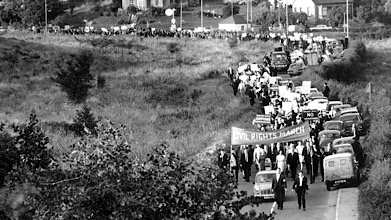
Birth of Bernadette Devlin, Civil Rights Leader & Politician

Bernadette Devlin, Irish civil rights leader and former politician, is born in CookstownCounty Tyrone, Northern Ireland, on April 23, 1947. She serves as the Member of Parliament (MP) for Mid Ulster in Northern Ireland from the 1969 Mid Ulster by-election on April 17, 1969 until February 1974.

Devlin is born into a Roman Catholic family and attends St. Patrick’s Girls Academy in Dungannon. She is studying Psychology at Queen’s University Belfast (QUB) in 1968 when she takes a prominent role in a student-led civil rights organisation, People’s Democracy. She is subsequently excluded from the university.

Devlin stands unsuccessfully against James Chichester-Clark in the 1969 Northern Ireland general election. When George Forrest, the MP for Mid Ulster, dies, she fights the subsequent by-election on the “Unity” ticket, defeating Forrest’s widow Anna, the Ulster Unionist Party (UUP) candidate, and is elected to the Parliament of the United Kingdom. At age 21, she is the youngest MP at the time, and remains the youngest woman ever elected to Westminster until the 2015 United Kingdom general election when 20-year-old Mhairi Black succeeds to the title.

After engaging on the side of the residents in the Battle of the Bogside, Devlin is convicted of incitement to riot in December 1969, for which she serves a short jail term.

Having witnessed the events of Bloody Sunday, Devlin is infuriated that she is consistently denied the floor in the House of Commons by the Speaker Selwyn Lloyd, despite the fact that parliamentary convention decrees that any MP witnessing an incident under discussion would be granted an opportunity to speak about it. She slaps Reginald Maudling, the Home Secretary in the Conservative government, across the face when he states in the House of Commons that the paratroopers had fired in self-defence on Bloody Sunday.

Devlin helps to form the Irish Republican Socialist Party (IRSP), a revolutionary socialist breakaway from Official Sinn Féin, with Seamus Costello in 1974. She serves on the party’s national executive in 1975 but resigns when a proposal that the Irish National Liberation Army (INLA) become subordinate to the party executive is defeated. In 1977, she joins the Independent Socialist Party, but it disbands the following year.

In 1971, Devlin gives birth to a daughter, Róisín, which costs her some political support because she is unmarried. She later marries Róisín’s father, Michael McAliskey, on her 26th birthday on April 23, 1973.

McAliskey stands as an independent candidate in support of the prisoners at Long Kesh prison in the 1979 European Parliament elections in Northern Ireland and wins 5.9% of the vote. She is a leading spokesperson for the Smash H-Block Campaign, which supports the hunger strikes of 1980 and 1981.

On January 16, 1981, McAliskey and her husband are shot by members of the Ulster Defence Association (UDA), who break into their home near Coalisland, County Tyrone. She is shot fourteen times in front of her children. British soldiers are watching the McAliskey home at the time but fail to prevent the assassination attempt. The couple are taken by helicopter to a hospital in nearby Dungannon for emergency treatment and then transported to the Musgrave Park Hospital, Military Wing, in Belfast, under intensive care. The attackers, all three members of the South Belfast UDA, are captured by the army patrol and subsequently jailed.

In 1982, McAliskey twice fails in an attempt to be elected to the Dublin North–Central constituency of Dáil Éireann. In 2003, she is barred from entering the United States and is deported on the grounds that the United States Department of State has declared that she “poses a serious threat to the security of the United States,” apparently referring to her conviction for incitement to riot in 1969.

On May 12, 2007, McAliskey is the guest speaker at Éirígí‘s first Annual James Connolly commemoration in Arbour Hill, Dublin. She currently co-ordinates a not-for-profit community development organisation based in Dungannon, the South Tyrone Empowerment Programme, and works with migrant workers to improve their treatment in Northern Ireland.

During the 2016 Northern Ireland Assembly election, McAliskey is an election agent for People before Profit‘s candidate in FoyleEamonn McCann. McCann is successfully elected.

During the campaigning for the 2024 European Parliament election in Ireland, McAliskey endorses Clare Daly in the Dublin constituency.


Leave a comment

Death of Turlough O’Donnell, Irish Lawyer & Judge

Turlough O’DonnellPC, Irish lawyer and judge, dies in Blackrock, County Louth, on April 21, 2017. He is a Lord Justice of Appeal of Northern Ireland from 1979 to 1989.

O’Donnell is born on August 5, 1924, in Newry, County Down, to a Catholic family, the son of Charles and Eileen O’Donnell. He is educated at Abbey Grammar School, Newry and Queen’s University Belfast (QUB), where he takes a Bachelor of Laws (LLB). He is called to the Bar of Northern Ireland in 1947. He is appointed a Queen’s Counsel in 1964. As a lawyer, he defends Robert McGladdery, the last man to be hanged in Northern Ireland.

In 1971, O’Donnell is appointed a Justice of the High Court of Northern Ireland. In 1979, he is promoted a Lord Justice of Appeal and is sworn of the Privy Council, having declined the customary knighthood. He retires in 1989.

O’Donnell is one of the few senior Catholic judges on the Northern Irish bench and he frequently comes under threat. In 1979, he tries the Shankill Butchers and gives out 42 life sentences, a record in British legal history.

O’Donnell is Chairman of the Northern Ireland Bar Council from 1970 to 1971 and of the Council of Legal Education (Northern Ireland) from 1980 to 1990.

O’Donnell marries Eileen McKinley (died 2008) in 1954. They have two sons and two daughters. Of his sons, Turlough O’Donnell SC is Chairman of the General Council of the Bar of Ireland from 2016 to 2018, and Donal O’Donnell is directly appointed from the Irish Bar to the Supreme Court of Ireland in 2010, before becoming Chief Justice of Ireland in 2021.

O’Donnell dies in Blackrock on April 21, 2017. He is buried at Blackrock/Haggardstown Old Cemetery in Dundalk, County Louth.


Leave a comment

Hunger Striker Bobby Sands Wins Seat in the British Parliament

On April 9, 1981, imprisoned Irish Republican Army (IRA) hunger striker Bobby Sands is elected to the Parliament of the United Kingdom as the MP for Fermanagh and South Tyrone.

Sands stands as a candidate of the “Anti-H Block” campaign – the section of the Maze prison in Maze, County Down, Northern Ireland, reserved for republicans and loyalists convicted of terrorist offences. He wins just over 52% of the vote in the Northern Ireland by-election compared to 49% for the candidate of the Official Unionist party, Harry West. His winning margin is 1,400 but over 3,000 ballot papers are spoiled.

Recriminations over his victory begin almost immediately. Unionist parties come under fire for not mounting an effective challenge. There is also sharp criticism of the failure of the moderate Catholic Social Democratic and Labour Party (SDLP) to contest the seat. Many believe the absence of an alternative Catholic candidate ensures victory for Sands in a seat with a Catholic majority.

Sands’ election agent, Owen Carron, says the British Government has been sent a message. “The nationalist people have voted against Unionism and against the H-blocks. It is time Britain got out of Ireland and put an end to the torture of this country,” he says.

At the time of his election, Sands, 27, has served four years of a fourteen-year sentence for firearms possession. He began his hunger strike 41 days earlier to press the republican prisoners’ claim to be treated as prisoners of war.

The government has to decide how to respond to Sands’ victory.  It can try to have him expelled on the grounds that he is an “unacceptable member.” However, unless he starts to eat again, he is not expected to live for more than another few weeks. He has already lost two stone and is too weak to leave his bed in the prison’s hospital wing.

Sand’s victory is the second time the voters of Fermanagh and South Tyrone have elected a republican prisoner as their MP. The first, Philip Clarke, in 1955, is disqualified because the law then does not allow convicts to take up political office.

In spite of attempts by the European Commission of Human Rights to mediate, Sands dies on May 5, 1981. He is the first of ten republican prisoners to die after hunger strikes. They attract international media attention and sympathy for the republicans.

The hunger strikes come to an end in October 1981. However, the Conservative Government of Margaret Thatcher grants the republicans only a few minor concessions.

(From: “1981: Hunger striker elected MP” on “On The Day 1950-2005,” BBC, news.bbc.co.uk)


Leave a comment

Death of John Charles McQuaid, Archbishop of Dublin

John Charles McQuaidC.S.Sp., the Catholic Primate of Ireland and Archbishop of Dublin between December 1940 and January 1972, dies in LoughlinstownCounty Dublin, on April 7, 1973. He is known for the unusual amount of influence he has over successive governments.

McQuaid is born on July 28, 1895, in CootehillCounty Cavan, the eldest son of Eugene McQuaid and Jennie Corry McQuaid. He comes from a medical family, with his father, paternal uncle, sister and half-brother all being doctors. He is educated at St. Patrick’s College, Cavan, followed by Blackrock College in Blackrock, Dublin, which is run by the Holy Ghost Fathers, and the Jesuit Clongowes Wood College. He enters the Holy Ghost novitiate at Kimmage, Dublin, in 1913 and is professed in 1914. He graduates from the University College Dublin (UCD) in 1917 with first-class honors in classics. He continues his postgraduate studies at UCD with a master’s degree and a teaching diploma and subsequently earns a doctorate in theology at the Pontifical Gregorian University in Rome.

Ordained in 1924, the theology in which McQuaid is trained is conservative — strongly neo-scholastic and hostile to modernism and liberalism. His hatred of the French Revolution is expressed in several pastorals and speeches throughout his career. He also regards Protestantism as a fundamental error from which Irish Catholics should be quarantined as much as possible.

Appointed Dean of Studies at Blackrock College, McQuaid becomes a prominent figure in Catholic education and chairs the Catholic Headmasters’ Association for several years. In 1931 he is appointed president of Blackrock College, in which capacity he becomes acquainted with Éamon de Valera, the future Irish Taoiseach whose sons attend the school. In 1936, while drafting a new Irish constitution, de Valera consults McQuaid, although he rejects McQuaid’s draft “One, True Church” clause which states, among other things, that the Catholic Church is the one true church in Ireland.

When McQuaid is appointed Archbishop of Dublin in 1940, the appointment of a priest from the regular clergy causes considerable surprise. Irish government archives reveal that de Valera, as is suspected at the time, presses McQuaid’s claims at the Vatican. However, it is doubtful whether the Vatican needs much persuasion. There is a dearth of potential episcopal talent and McQuaid has an outstanding reputation as a Catholic educationalist.

Once appointed, McQuaid proves to be one of the ablest administrators in the history of the Irish Church. In the first two years of his episcopate, he sets up the Catholic Social Service Conference to alleviate the poverty and distress in Dublin which is aggravated by the war, and the Catholic Social Welfare Bureau to help the thousands of Irish emigrants going to Britain for war work. These two organizations fill a much-needed gap and continue to exist after the war. The expansion of Dublin city and its suburbs during his episcopate requires the building of new churches, schools, and hospitals. Meeting these demands also necessitates a considerable increase in the number of clergies, secular and regular, whose numbers more than double in the period from 1941 to 1972.

Given his previous career, the importance McQuaid assigns to education is not surprising. He is critical of the low priority accorded to education by successive governments and is particularly critical of the poor and pay conditions of teachers. His intervention in the primary teachers’ strike in 1946 is poorly received by the government and marks the souring of his relationship with de Valera. During his episcopate the number of primary schools increases by a third while the number of secondary schools more than double but, as with social welfare, the government increasingly assumes a dominant role in education from the 1960s onwards. Almost immediately after his appointment in 1940, he takes a hardline stand against the attendance of Catholic students at Trinity College Dublin (TCD). The ban lasts until 1970, when the increase in student numbers renders it untenable and he accedes reluctantly.

McQuaid has a formidable list of achievements in health care, especially maternity and pediatric services, physical and mental handicap services, and the treatment of alcoholism. It is ironic, therefore, that the most controversial episode of his career occurs in this area — the Irish hierarchy’s rejection in 1951 of a free mother-and-child health service. This leads to the resignation of the Minister for Health, Dr. Noël Browne, and is a watershed in Church-State relations in Ireland. With Irish tuberculosis and infant mortality statistics ranking among the highest in the world, the hierarchy, and particularly McQuaid, lose considerable support by lining up with the conservative medical establishment to resist efforts at socialized medicine.

From various pastorals that McQuaid issues at the time, it is clear that he does not see the need for the Second Vatican Council. As its deliberations proceed, his unease grows, and he becomes increasingly preoccupied with the issue of episcopal power and independence that he believes are being threatened by the Council. In the areas of liturgical reform, greater lay participation, and ecumenism, he is slow in implementing the Vatican II reforms. His views on ecumenism had always been lukewarm and had led to allegations that he was anti-Protestant. His personality and policies are criticized by a more assertive Dublin laity, but being a shy, reserved man who increasingly feels the isolation of office, he never responds to such comments. In 1968 the reaction to Humanae vitae causes open rebellion in the Dublin diocese, the force of which catches him unaware. His last pastoral as archbishop in 1971 betrays his anger and bemusement at the response to Humanae vitae in Dublin.

At the age of 75, McQuaid submits his resignation to the Vatican, and it is accepted. His resignation is announced in January 1972, when he is replaced by Dermot Ryan. McQuaid dies in Loughlinstown, County Dublin, the following year on April 7, 1973. He is buried in St. Mary’s Pro-Cathedral in Dublin, the seat of the Roman Catholic Archdiocese of Dublin.

McQuaid’s substantial archives are released by the Dublin Diocesan Archives in the late 1990s. In 1999 journalist John Cooney publishes a hostile biography of McQuaid, which makes controversial allegations of sexual abuse against McQuaid. The allegations are based on tenuous evidence gathered by McQuaid’s nemesis from the 1951 Mother and Child controversy, Dr. Noël Browne, who had died in 1997. No corroborating evidence is produced or has since emerged.